Blog

  • Michelle Donelan – 2020 Statement on Higher Education in Spring Term

    Michelle Donelan – 2020 Statement on Higher Education in Spring Term

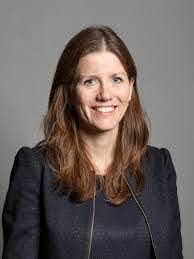
    The statement made by Michelle Donelan, the Minister for Universities, in the House of Commons on 3 December 2020.

    As a Government we made the commitment that students living at university will be able to go home at the end of term if they need or choose to do so. We also recognise the importance of ensuring that students are able to return to university for the spring term. We understand that students, staff and providers need to be aware of the arrangements that will be in place for the spring term before students travel home so it has been our priority to communicate these plans as early as possible. Today, I am announcing those measures which we are putting in place to enable students to return to higher education following the winter break as safely as possible.

    Government, students, staff and our wider communities greatly value the vital work of universities. That is why we are committed to ensuring that in-person teaching and university life can continue as far as possible during these unprecedented times. Universities have remained open throughout this pandemic, continuing to deliver high quality education through a blended learning approach.

    The Government have prioritised education, including higher education, so we have worked to create a plan that supports the safe return of all students who left for the winter break and the resumption of blended learning. We remain committed to ensuring that in-person teaching and university life can continue as far as possible during these unprecedented times. We also recognise the huge amount of work that higher education providers have undertaken to set up asymptomatic test sites, provide covid-secure teaching and learning to students, and carefully manage any outbreaks, and we welcome the early successes of the asymptomatic testing programme.

    That said, the large numbers of students planning to travel in the new year has been identified by public health experts as a possible risk factor for transmission of infection. The January term start dates are naturally staggered but this staggering is much more compressed than at the start of the autumn term, so we are asking providers to plan for students to return over a longer, five-week period. This will enable universities and higher education providers to test every student upon their return.

    HE providers should first plan to welcome back those students on practical courses and placements, with these students returning to campus in line with their planned start dates from 4 January. We expect providers to make assessments of the courses and students that should be brought back first, based on the requirements of the curriculum, taking into account elements of clinical, practical and specialist teaching and learning as well as the needs of their students and staff. Providers may accommodate some other students to return to campus earlier but should only do so where there is a genuine need or extenuating circumstances. These students should be able to access campus facilities but should not commence in-person lessons until face-to-face teaching of their course formally restarts.

    Students who do not have a clearly defined practical element to their course will still be able to continue their studies from the start of term remotely but providers should plan for students to return gradually from 25 January 2021 and staggered over a two-week period.

    Staggering the return of students to campus over five weeks has three primary purposes:

    to provide more time and capacity for universities in partnership with national health service test and trace to continue their rapid work to roll out asymptomatic test sites within university campuses;

    to help manage the flow of students so that as many students and staff as possible can be tested immediately upon arrival at university; and

    to help ensure that students who have practical/assessment elements to their learning in the early part of the term can physically return to campus.

    In recent months there have been developments on testing which we plan to use to facilitate the safe return of all students. We will work with higher education providers to put in place asymptomatic testing arrangements for all students on arrival to university. However, individual institutions may choose to offer tests using different testing technologies (e.g. polymerase chain reaction, known as a PCR test), or to partner with neighbouring providers.

    We also realise that this year has been incredibly difficult for students and we recognise that in these exceptional circumstances some may face financial hardship. I have now announced that we will be making available up to £20 million on a one-off basis to support those that need it most, particularly disadvantaged students. We will work with the Office for Students to do this, and further detail will be set out in due course.

    I want to assure students, staff and their families that their welfare is our top priority. I want to thank universities for their tireless dedication in seeking to ensure safe environments for students and staff. The hard work of university staff has meant we are able to keep students and staff as safe as possible during term. We are pleased we can now announce how students can return to university for the spring term, while keeping themselves, their families, and their communities, as safe as possible.

    As with all advice, this will be kept under review in light of scientific evidence, and the Government will provide further advice if necessary.

  • Ben Wallace – 2020 Statement on the Mali Deployment

    Ben Wallace – 2020 Statement on the Mali Deployment

    The statement made by Ben Wallace, the Secretary of State for Defence, in the House of Commons on 3 December 2020.

    I would like to provide an update to the statement made by my predecessor, my right hon. Friend the Member for Portsmouth North (Penny Mordaunt), on 22 July 2019 (HCWS1779) in which we announced the Government’s intention to deploy a contribution from our armed forces to the United Nations multidimensional integrated stabilisation mission in Mali (MINUSMA).

    I can confirm that 300 UK personnel will have deployed to MINUSMA and completed required in-country quarantine by 22 December. The deployment comprises 250 troops from the Light Dragoons, the Royal Anglian Regiment and other attached personnel, and a further 50 forming a national support element.

    The UK has committed to a three-year deployment to MINUSMA, with a review to be held at the 18-month point. UK personnel will deploy on six-month operational tours with a two-week rest and recuperation break. Accordingly, the first deployment of Light Dragoons will be replaced by a second contingent led by the Royal Anglian Regiment and Queens Dragoon Guards in summer 2021.

    As the Foreign Secretary recently said, working alongside our development and diplomatic efforts, the UK’s military contribution to UN peacekeeping is a clear illustration of how our defence and security capabilities can contribute to the UK’s role as a force for good in the world. This deployment reflects our continued commitment to multilateralism and international peace and security, a responsibility we take seriously as a permanent member of the UN Security Council. It is part of a wider Government response in support of progress towards long-term and sustainable stability in Mali and the Sahel. It will help to minimise the impact of violent conflict on UK interests and strengthen partnerships between the international community and Sahel Governments to improve the overall response to the crisis.

    Mali is at the forefront of countries in west Africa affected by instability, with terrorist violence and conflict between communities sharply on the rise. The violence is costing lives, hindering development across one of the poorest countries in the world, and spreading to the wider region. Our contribution will provide critical capabilities to the UN mission at a vital time. We can have genuine impact on the mission’s overall approach, to help reduce the spread of conflict and insecurity, contribute to the protection of civilians, and build a sustainable peace.

    Led by the Swedish UN mission force commander, Lieutenant General Dennis Gyllensporre, we will be working alongside over 60 nations all contributing to MINUSMA. It is a truly global collaboration with contributions being made by west African nations in the region and our traditional western allies including Sweden, Germany, Canada, France and Ireland. The largest contingents of solders on MINUSMA will be coming from Guinea, Chad, Bangladesh, Burkina Faso, and Egypt.

    The UK taskforce will be under the command of the Light Dragoons’ Commanding Officer, Lieutenant Colonel Thomas Robinson. The taskforce is configured for reconnaissance with their initial objective to understand the operating environment in the area around Gao so that they are well placed to support the UN mission. This will allow MINUSMA to better plan operations and deter and respond to threats.

    Our MINUSMA commitment complements existing distinct and separate commitments we have in the region, including helicopter support to the Operation Barkhane (the French-led counter-terrorism initiative in Africa’s Sahel region), and sits within wider UK Government seeking to build stability, and support the most vulnerable populations in the region.

    This is a dangerous mission. We have done all we can to mitigate the risk. Our forces are among the best in the world and they have the right training, equipment and preparation to succeed. I am confident that they will have a strong impact on the ground in Mali, will bolster our standing in the United Nations and will help us in our endeavours to make the UN and its peacekeeping missions as effective as possible.

  • Chloe Smith – 2020 Statement on Election Spending Limits Uprating

    Chloe Smith – 2020 Statement on Election Spending Limits Uprating

    The statement made by Chloe Smith, the Minister for the Constitution and Devolution, in the House of Commons on 3 November 2020.

    Elections rely upon political parties and candidates’ ability to communicate their views and commitments so that voters can make an informed decision. To this end, it is right that registered parties and nominated candidates can incur campaign expenditure, but it is also right that there are limits on this expenditure to ensure a level playing field. Many of the current statutory spending limits have not been changed since they were set out 20 years ago, with a small number raised more recently in 2014. This is a significant length of time, and has the effect of reducing the ability to campaign given inflationary costs of printing and communication.

    With elections scheduled for 6 May 2021, I am making this statement to outline the Government’s intention to raise the spending limits by inflation for candidates at local council elections in England in time for those May elections. This uplift would take into account the change in the value of money since these amounts were last changed and ensure that limits remain consistent with the initial intent of spending limits when considered by previous Parliaments. It makes no other substantive or real-terms change. I am keen to ensure that, where possible, parties are given notice of potential updates to electoral law well in advance of those elections. The Government are also mindful that the backdrop of the covid-19 pandemic may result in a greater emphasis on postal and digital campaigning ahead of May’s elections; this adds to the case for limits to be updated and uprated.

    It is the Government’s intention to review party and candidate spending limits for all other polls (within the legislative competence of the UK Government) next year, with a view to uprating them in line with inflation since they were originally set. This will create a baseline for regular and consistent reviews of all limits in future. We will work with stakeholders, including the Electoral Commission and the Parliamentary Parties Panel, on this process.

  • Alok Sharma – 2020 Speech at UN Climate Change Dialogues

    Alok Sharma – 2020 Speech at UN Climate Change Dialogues

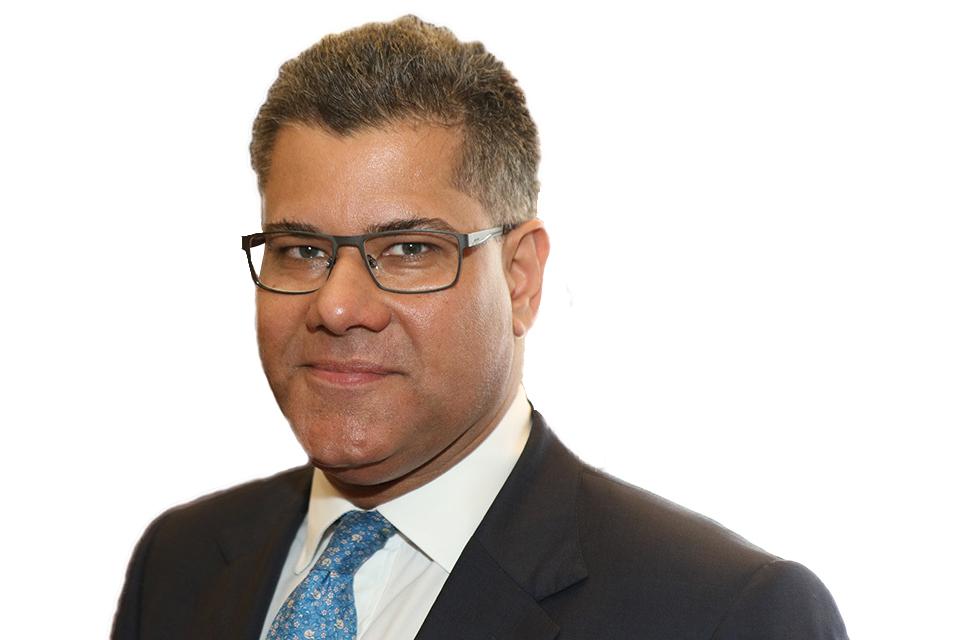
    The speech made by Alok Sharma, the Secretary of State for Business, Energy and Industrial Strategy, on 4 December 2020.

    Greetings to everyone on this event and thank you so much for dialling in. Many of you will be dialling in from places where it is late in the day or really very early. So, thank you so much for your commitment, we really are incredibly grateful.

    At the opening of the Climate Change Dialogues last Monday, I made the point that, despite the great difficulties we have faced this year, it is absolutely vital that we that maintain momentum on climate action.

    Over the past months I’ve spoken to very many colleagues across the world and individual governments,

    I have spoken at almost 50 events virtually. And whilst we’ve all acknowledged the need to do as much as we can to support our populations, protect jobs, protect livelihoods, in terms of our individual countries, it is also the case that climate change hasn’t taken time off. The clock is still ticking and those two hands on the face of the clock are getting closer to midnight.

    So, it is important that we keep encouraging ambition across the world. Archie talked about some of the areas that we are looking for leaders to come forward at the Climate Ambition Summit on 12 December. What we want to do is to encourage that ambition on mitigation, on adaptation and support.

    So that we are in prime position to realise the full potential of the Paris Agreement in Glasgow next year. We absolutely owe that not just to our generation but actually generations to come in the future.

    All of you are vital, you’re absolutely integral to that. That is how we’re going to make progress at COP26. And I’ve said this before but I want to repeat this point – the UK and our friends in Italy may have the presidency of COP but success at COP is going to belong to each and every one of us as individuals and as countries.

    It’s only by working together that we will succeed in tackling climate change.

    Whether that’s in Governments, regions, cities, indigenous peoples, business, civil society, and or as individuals, it is going to be vital that we all play our part.

    That is why events like this Open Dialogue are so important. Bringing together representatives from a whole range of constituencies.

    And it is also why our COP26 campaigns are bringing people together to focus on these five critical areas: clean energy, clean transport, adaption and resilience, nature based solutions, and finance, which ties the whole thing together.

    I’d like to speak for one moment directly to all our representatives from observer organisations.

    The reality is reaching net zero and building our resilience will only be achieved through this joint effort.

    And for this, you are absolutely vital. You are vital for helping to raise awareness, for generating support, and asking us to do more.

    And very rightly you encourage us to go further.

    And help to create the conditions for the Parties to raise their ambition around the negotiating table.

    We saw this in Paris in 2015.

    And we continue to see this drive for us to go further today as well.

    For me what is really important is that you are working on the ground. You are building that resilience you are helping us reduce emissions.

    You are creating the changes we need.

    Whether that is indigenous leaders applying their knowledge to protect our biodiversity and ecosystems.

    Or indeed, International Trade Union Confederation’s campaign to climate-proof work and jobs.

    Or the advocacy we have seen from YOUNGO members around the world.

    Your role within the official UNFCCC process is equally important. It really matters, and it really matters to me on a personal level.

    And I want to thank the nine UNFCCC constituency groups for the leadership they have shown.

    As you know, we are committed to a comprehensive agreement in Glasgow.

    One that covers each of the key issues.

    And, really importantly, any agreement has to be informed by the voices that have too often been marginalised. I make this point again and again in public and private.

    By representing those voices. And by contributing your expertise and support. You strengthen our work.

    Whether that’s the Women’s Environment and Development Organisation. Supporting equal participation in UN climate negotiations. Through the Women Delegates Fund.

    Or indeed, the expertise of the Women and Gender Constituency. Which, at COP25, informed the renewed Gender Action Plan, placing gender equality at the heart of climate action.

    This is again a really important thing we need to keep pressing on.

    The UK has committed to implementing the Plan. And I urge all Parties to do the same.

    I am very much committed to working with observers to make COP26 a success.

    I’ve had quite a few engagements over the past few months and will absolutely be ramping up the engagement in the year coming up to COP26.

    That is why I spoke at the Local Governments for Sustainability’s event in October. And it was about encouraging climate ambition among city leaders.

    And supported Indigenous People’s Day in August. To emphasise how important Indigenous People’s knowledge and experiences are in tackling the climate crisis that we all face.

    I know our Italian partners are working closely with YOUNGO too. Preparing for Youth COP, and hosting the Youth4Climate series. And I was very pleased to join one other their webinars recently.

    It’s also really good to see the Research and Independent NGOs working closely with our COP26 universities network. Ensuring the academic sector, which is so important, and universities play a role in delivering a successful COP.

    And of course, universities are part of the Race to Zero campaign as well.

    So I am really looking forward to hearing from you in today’s discussion on the vital issue of the green recovery.

    Urging countries to build back better in response to the coronavirus pandemic is absolutely central to the UK’s COP26 presidency.

    But we really have to do this in a way that involves the whole of society. We have to excite everyone across the world and ensure that COP26 really has meaning for them.

    Just as our work to reduce emissions and build resilience, we must take all interests into account.

    That means bringing in the voices of civil society, young people, Indigenous Peoples, businesses and others in government decision-making.

    And here, non-state actors can help.

    So I urge all parties to look at how you can work more closely with observer groups and non-state actors. To increase ambition in your countries in a way that is fair to all.

    And I am keen to hear examples of successful initiatives from both Parties and Observers today.

    By listening to each other, learning from each other, and working together, we can boost ambition, take action, and strengthen this process. All of this will help pave the way for a successful COP26.

    Thank you so much for being with us today.

  • Alok Sharma – 2020 Comments on Unfair Employment Causes

    Alok Sharma – 2020 Comments on Unfair Employment Causes

    The comments made by Alok Sharma, the Secretary of State for Business, Energy and Industrial Strategy, on 4 December 2020.

    We want to ensure every worker has the freedom and flexibility to work in the way they want, where they want – whether that’s topping up their pay packet by taking on additional work, or being able to start their own business with the skills they’ve gained throughout their career.

    Today’s reforms are another step on our path to making sure the UK is the best place in the world to work, start and grow a business as we build back better from the pandemic.

  • Jim McMahon – 2020 Comments on “High Value” Travellers

    Jim McMahon – 2020 Comments on “High Value” Travellers

    The comments made by Jim McMahon, the Shadow Secretary of State for Transport, on 4 December 2020.

    If this Government was serious about supporting the economy and jobs it would bring forward a proper package of financial support for businesses and the self-employed and a comprehensive plan for airport testing.

    Instead we have Tory ministers announcing loopholes for those they consider ‘high-value.’

    With this Government it is always one rule for some and another rule for everyone else.

  • Andy McDonald – 2020 Comments on Restrictive Employment Contracts

    Andy McDonald – 2020 Comments on Restrictive Employment Contracts

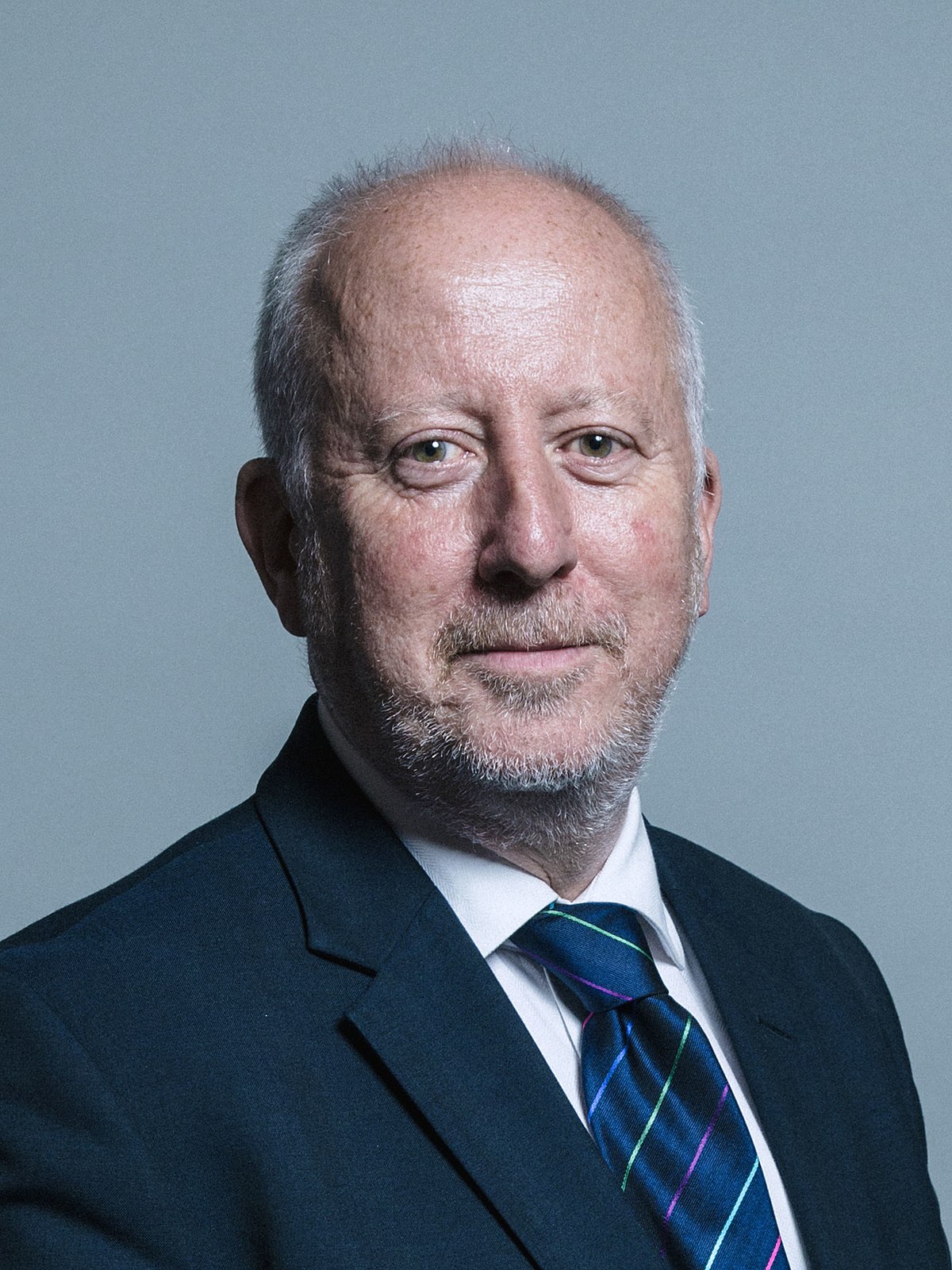
    The comments made by Andy McDonald, the Shadow Secretary of State for Employment Rights and Protections, on 4 December 2020.

    The pandemic has exposed the lack of rights and protections afforded to millions of workers. A consultation on restrictive contracts falls far short of making the changes necessary to provide all workers with rights and protections in the workplace and financial security.

    It is deeply concerning that this consultation seems to be taking place instead of the introduction of the Employment Bill that the government pledged in the Queens Speech, which has been kicked into the long grass.

  • Ken Maginnis – 2020 House of Lords Conduct Committee Report

    Ken Maginnis – 2020 House of Lords Conduct Committee Report

    The report issued by the House of Lords Conduct Committee on 3 December 2020.

    Copy of Report (in .pdf format)

  • Paul Scully – 2020 Comments on Arcadia and Debenhams

    Paul Scully – 2020 Comments on Arcadia and Debenhams

    The comments made by Paul Scully, the Parliamentary Under-Secretary of State for Business, Energy and Industrial Strategy, in the House of Commons on 2 December 2020.

    Speaking as the retail Minister, let me say that I hope the right hon. Member for Doncaster North (Edward Miliband) realises that although the Secretary of State is not here, we take this incredibly seriously. That is why I want to focus on the detail, because it is a worrying time for the retail sector, particularly for those affected by the announcements this week.

    On Monday, Arcadia Group Ltd, which employs approximately 13,000 people, appointed administrators, who are assessing all options available to the group. They will honour orders made over the black Friday weekend. No redundancies have yet been announced and existing sales channels will continue to operate while administrators evaluate options. The Secretary of State has written to the Insolvency Service asking that it expedites consideration of the administrators’ report. Yesterday, Debenhams, which employs approximately 12,000 people, announced the decision of administrators to wind down the company. No redundancies have been announced and existing sales channels will continue to operate while administrators evaluate options. We know that this will be a worrying time for employees and their families, and we stand ready to support them. I pay a particular tribute to the hard-working staff, who have kept these well recognised businesses going in difficult times for so long.

    Although the Government have no role in the strategic direction or management of private retail companies, we are in regular contact with both companies and the administrators in order to understand fully the situation they are facing. The coronavirus crisis has made life difficult for retailers such as Arcadia and Debenhams, particularly those that were already facing challenging trading conditions before the pandemic. We acted quickly at the start of the pandemic to deliver one of the most generous and comprehensive economic packages in the world. It included: the coronavirus job retention scheme, which up to 30 September had provided £7.7 billion-worth of support to companies in the retail and wholesale sector; removing all eligible properties in the retail, hospitality and leisure sectors from business rates for 12 months—that is worth more than £10 billion; cash grants of up to £25,000 for retail, hospitality and leisure businesses with a rateable value of between £15,000 and £51,000; more than £50 billion in business loans, which supported 9.6 million jobs and provided flexibility; and legislation to protect commercial tenants from eviction.

    Through the plan for jobs, we have also announced a series of measures to protect, support and create jobs, including our £2 billion kickstart scheme and a doubling of the number of frontline work coaches, which will be important in this situation in particular. The Government have committed to supporting the retail sector, and we are working closely with industry through these unprecedented times, particularly to ensure the safe reopening of non-essential retail today. On Monday, my right hon. Friend the Communities Secretary encouraged local authorities to allow shops to open for extended hours, to accommodate more shoppers safely in the lead-up to Christmas. I will continue to work with the sector to meet future challenges. Indeed, I will co-chair the next meeting of the Retail Sector Council tomorrow to discuss our strategic approach to the sector. I have regular retail calls, including one last week, with representatives from Arcadia among the retailers on that call. We are confident that the sector has the skills, knowledge and drive to bounce back.

  • Tracy Brabin – 2020 Speech on Coronation Street

    Tracy Brabin – 2020 Speech on Coronation Street

    The speech made by Tracy Brabin, the Labour MP for Batley and Spen, in the House of Commons on 2 December 2020.

    What an enormous pleasure it is to be able to discuss the much-loved British institution of “Coronation Street”, as it reaches the grand old age of 60 and is still going strong. Our constituents have gone through so much in these last few months, and it is nice to be in this place to discuss something upbeat and positive. Reaching its diamond anniversary is a phenomenal achievement, especially as it remains so incredibly popular, attracting an average audience of—can you believe that it is more than that of the Parliament channel?—7 million viewers for each show.

    First screened on 9 December 1960, “Corrie” was part of a new realism that was sweeping through the theatre, with “Look Back in Anger”, James Dean, Brando, and kitchen-sink dramas. Hardly anyone had a colour telly—remember that?—and there was no such thing as a remote. There were certainly no streaming channels, and we turned the telly off at 11 and went to bed. Created by scriptwriter Tony Warren, “Coronation Street” did not have a straightforward beginning, and was originally rejected by Granada television before being commissioned to run for 13 episodes. It was a slow burn, with Daily Mirror columnist, Ken Irwin, saying that it would “only last three weeks.” Earlier this year its 10,000th episode was broadcast, and in 2010, it became the longest running television soap opera in the world, earning a place in the “Guinness Book of Records.”

    Set in the fictional working-class Weatherfield in Salford, “Coronation Street” has never disguised its roots. It is warm and authentic, at times laugh-out-loud funny, and at other times deeply affecting. From the very beginning, the northern dialect was used. I do not know if any hon. Members are old enough to remember those early episodes, with a young man by the name of Ken Barlow achieving a university place and finding himself embarrassed about his working-class upbringing. As a proud northerner, that is not something I have ever felt, and I am proud that this show, which is as much a part of British culture as a nice cuppa, a fish ’n’ chip supper, or sitting down to the Queen’s speech on Christmas day, is played out in a working-class community in the north.

    In among the love stories, the breakups, the punch-ups, and the laughs over a hotpot, “Corrie” has always been true to the everyday difficulties that life, particularly working-class life, can bring, with strong feisty women at the centre of the action. As Ena Sharples classically said, “I don’t expect life to be easy. I’d think very little of it if it was”—a good rule of thumb for the moment.

    Since those early days on the street, we have witnessed one or two things happen to the people of Weatherfield over the decades—many things—and those famous cobbles have been the stage to storylines that have gripped our country. We have cried together, gasped together, laughed together, and learned together. There have been iconic storylines that caused the nation to take a breather from people’s busy lives, make a cuppa, and pop “Corrie” on the telly—the train crash, the tram crash, the whodunnits, Richard Hillman’s reign of terror, Alan Bradley being killed by a tram in Blackpool, Deirdre, Ken, and Mike’s love-triangle! A certain Tony Blair got involved in the campaign to Save the Weatherfield One, when Deidre was falsely imprisoned, and a certain Tricia Armstrong was sent to prison for not paying her TV licence, and then gave birth behind the bar in the Rovers Return. Alongside all the entertainment, “Coronation Street” has bravely challenged us and our way of thinking with groundbreaking storylines.

    Jim Shannon (Strangford) (DUP)

    Will the hon. Lady give way?

    Mr Speaker

    Mr Shannon, you are more than welcome to intervene. You might even want to speak later, as we have a little time. Northern Ireland’s answer to Albert Tatlock, come on in.

    Jim Shannon

    I am not sure how to respond, Mr Speaker. “Coronation Street” has been going all my life, and a wee bit more; and I understand, Mr Speaker, it has been going all your life, and a wee bit more as well. My wife is a tremendous fan of “Coronation Street”. She never misses it. Last week, in self-isolation for the second time, I sat and watched “Coronation Street” on numerous occasions with my wife in control of the remote, so I was not able to turn over.

    There was a poignant storyline last week about the loss of a young boy called Oliver. We watched every night it was on during the week, and a person would need a heart of stone not to be moved by that story, how they portrayed in a soap what affects people in reality. The soaps have a tremendous role to play in telling the stories of real life out there, and last week “Coronation Street” did that with real passion, understanding, carefulness and caution—

    Mr Speaker

    Mr Shannon, I said you could intervene. I will put you down to speak. You do not need to make a speech in an intervention.

    Tracy Brabin

    That was a really excellent intervention, because it highlights the quality of the writing and the pressure that the crew and the actors are under, in this time of covid, to deliver those performances while being two metres apart, while wearing masks in public areas and while having all those other restrictions, and often in one or two takes, if they are lucky. Those authentic, passionate, emotional performances absolutely gripped the nation, and it is now on record in Parliament that they are two extraordinary actors. They will definitely be in line for awards.

    The stories I spoke of have helped untold numbers to understand their own personal difficulties, to speak out and to get help if they need it. Hayley, the first ever transgender British soap character, was portrayed wonderfully by my good friend Julie Hesmondhalgh, who gripped us right to the end when she committed suicide in Roy’s arms.

    Kate Osborne  (Jarrow) (Lab)

    I congratulate my hon. Friend on securing this debate, and I congratulate all the team who work on “Coronation Street” on reaching this milestone. Does she agree that “Coronation Street” should be recognised for its groundbreaking storylines over the years? She mentioned the first trans character in a British soap in, I think, 1998 and how “Coronation Street” has sensitively highlighted social issues such as that, teen pregnancy, domestic violence and male rape.

    Tracy Brabin

    That is a great intervention, because wasn’t it groundbreaking? So many families watching that storyline in their living room may not have understood the humanity or the difficulties of being trans in 21st-century Britain, but they loved Hayley. It opens people’s mind to things they may not necessarily have experienced, so my hon. Friend is absolutely right. Those script writers pushed the boundaries. They were very brave to have that storyline, but we loved her. We really did love that couple so much. It was absolutely heartbreaking.

    To pick up on a couple of other storylines: Aidan’s suicide, which led to more calls to the Samaritans than they have ever had; Shona’s memory loss; revenge porn; racism, with the writers working closely with Doreen Lawrence to make it authentic and to give it credibility; and James, a young gay footballer struggling against homophobia. And, right up to recent days, with Bethany Platt’s sexual exploitation, David Platt’s male rape ordeal, Yasmeen’s marital coercive control and, as was mentioned, the sad death of baby Oliver. Never shying away from a difficult storyline and shining a light into the lived experience of others is what our soap operas do best. They strive to inform as well as to entertain.

    Rob Butler  (Aylesbury) (Con)

    I congratulate the hon. Lady on securing this debate. As a long-time fan of the programme and, indeed, her role in it, I am a little bit jealous, having only graced the small screen reading the news—nothing as glamorous as the Street. She mentioned the topical storyline of the challenge of being a gay footballer, but I would submit that the Street has done a great deal over many years to support challenging attitudes to homosexuality, particularly by following the experiences of existing and well-loved characters such as Todd Grimshaw or Sophie Webster as they came out, and more recently gay parents. Does she agree that it is by being entertaining that information is often best imparted and taboos are overcome?

    Tracy Brabin

    I thank the hon. Gentleman so much for that intervention—he is absolutely right. As we were saying about the trans character, these things could not be discussed in any other forum than that of a show. Looking at fictional characters, we wonder, “What would I think if I was that person?” Storytelling has huge power to change people’s mind.

    If my history of soaps is correct, the first ever male gay kiss on television was on “EastEnders” and the first female gay kiss on “Brookside”. We must not forget the power of those shows to get that liberal view and those conversations going in people’s living rooms. As Dame Carol Ann Duffy said at the funeral of the creator of “Coronation Street”, Tony Warren,

    “the millions who have loved Coronation Street for over half a century have lost their Dickens.”

    Isn’t that the truth? He and others are commentators on our lives; they amplify and give opportunities to share experiences.

    “Corrie” has given us actors and characters so well written and so brilliantly acted that they could be part of the family. Names such as Jack, Vera, Roy, Rita, Steve, Gail, Ken, Sally, Jim, Betty, Mike, Fred—the list could go on and on of characters so distinctive that they are recognised across the country by their first name alone. It is also a show that incubates talent, giving new actors a chance to cut their teeth on great storylines and powerful emotions. “Corrie” gave us early moments in the careers of Ben Kingsley, Sir Patrick Stewart, Joanna Lumley, Sarah Lancashire, Joanne Froggatt and Bradley Walsh. Even Sir Ian McKellen dropped by, wearing a very dodgy hat and scarf, I seem to recall.

    Writers including Jack Rosenthal, Kay Mellor, Sally Wainwright and Paul Abbott have all worked in the writers room carving out brilliant plotlines and one-liners. So powerful is the writing that as a young girl I felt the trials and tribulations facing the Duckworths were as vivid as those of my own family. To go on to become part of “Coronation Street” was almost an impossible dream.

    Andy Carter  (Warrington South) (Con)

    I happened to switch on my TV, and when I saw “Corrie” was being discussed I had to come down and pay tribute as a north-west MP. It is not just the actors and the writers that “Coronation Street” has developed. There are also the back room staff who are so critical to delivering brilliant television day in, day out—the wardrobe team, the make-up artists, the camera operators and so on. “Coronation Street” and Granada Television have fostered and developed that talent, transforming the north-west of England into a TV powerhouse. I am sure the hon. Lady agrees, having spent time at Granada studios, that that embryonic development has played a significant role in transforming the north-west media environment.

    Tracy Brabin

    I could not agree more, and I will go on to talk about how creativity and the creative industries can be a powerhouse and an engine of regeneration in our communities in the north.

    Let me speak a little more personally for a minute. I grew up in a housing estate in Howden Clough in Batley, watching acts at the Batley Variety Club. For a working-class kid like me, it was a source of pride and wonder that huge stars of the day, such as Shirley Bassey and Louis Armstrong, came to my bit of the world. Seeing photographs of Eartha Kitt eating chips in Dewsbury market is sort of mind-blowing. It set me on a path that was hard. I worked in precarious jobs trying to make it, sleeping on couches and living hand to mouth, like so many aspiring actors do. We all know how tough it is to get on in such industries for those who do not have rich parents,. For working-class northern actors, working on “Coronation Street” meant you had arrived. We had grown up watching it, and we wanted to be in it. I got the chance to work with the legends of “Corrie”—Jack and Vera, Raquel, Bet Lynch and Betty Turpin—watching and learning. As someone who had not been to drama school, the ability to memorise pages and pages of script overnight and bring authentic emotions and truth to the work was a skill I learned on that job.

    Many may know me as Tricia Armstrong, but aficionados may also know that I joined the show for three episodes playing Chloe, a toy shop manageress. It was a Christmas episode, and I ended up on top of the roof of the toy shop with Peter Baldwin dressed as Father Christmas. I must have impressed in that role, because I was then invited to come back a number of years later as Tricia Armstrong. That first day was, as the House can imagine, very overwhelming. Everybody in the green room was a famous face. When you have William Roache—he is now, unbelievably, 88—saying, “Would you like a cup of tea, Tracy?”, it is quite a surreal experience, as was working with Liz Dawn, who had her lines stuck all over the set like in “The Generation Game”, because she could not remember all of it. As long as there was a bit of script somewhere, she was all right. Famously one Christmas she pulled out the chicken and the lines were on the bum of the chicken as it came out—I thought, “Very convenient.” Then there was Annie Kirkbride, who we all sadly miss, who played Deirdre. Her wicked sense of humour creased us up in serious scenes.

    Having struggled with the feast and famine nature of the freelance life, it was such a huge relief to have regular paid work, a paid holiday and a chance to save. More than that, it was the honour of being part of something so associated with my class and being in the homes of people every night who shared my accent and my experiences.

    “Corrie” is not just about portrayal or about telling working-class stories brilliantly; it is, as the hon. Member for Warrington South (Andy Carter) says, absolutely about jobs in the north. It is not just about actors and directors, but schedulers, designers, editors, costume and make-up, researchers, the props team, office staff, accountants, carpenters, electricians, painters, security guards and canteen staff—the list goes on.

    Mr Speaker, you may know I am standing to be the candidate for the West Yorkshire Mayor. If I am elected, that experience on “Coronation Street” will drive my creative new deal, because our entertainment industries also have the power to build our economies, to deliver regeneration and to provide opportunity, hope and skills, and that process will take inspiration from “Coronation Street”, as it has shown us how important television can be for the economy.

    “Coronation Street” has a bespoke 7.7 acre set in the north-west. It employs about 450 people and hundreds and hundreds of freelancers. It firmly cements the importance of the north in TV’s history, and in its future, too. We know it is a creative powerhouse, and the skills and talent it nurtures and develops have aided and continue to aid the gentrification of Salford.

    I know that ITV takes the development of skills very seriously. To this day, it supports Tony Warren’s determination to be a champion of local talent. Tony wanted to support disadvantaged young people to get a career in an industry that is famously difficult to get started in. Shortly before his death in 2016, he worked with “Coronation Street” and ITV to establish a bursary to support local actors from disadvantaged backgrounds to train at drama schools. I can think of no better legacy for a man whose creation has brought us 60 years of public service broadcasting at its best.

    The success of “Coronation Street” is built on a healthy and well-supported public service broadcasting system. In order to preserve these valuable national treasures, reforms need to be made to protect and support our PSB. I hope that the Minister, when he gets to his feet, will also reflect on that and work with the broadcasters and Ofcom to ensure public service broadcasters can continue to deliver for their audiences and, more urgently, for our regions.

    Like all parts of life, covid has put massive obstacles in the path of “Coronation Street”, and the team has worked hard to overcome them. The Rovers Return is not that busy these days. The desks in the factory are slightly more spread out than they used to be, reflecting the regulations of real life, and keeping cast and crew as safe as possible while bringing familiar entertainment to our homes. While the Minister is here, let me say that large parts of film and television production have been able to get back on track thanks to the support of the Government around insurance. Screen production is part of a creative ecosystem, and to get it fully functioning once again our performing arts, theatres, music festivals and venues also need that insurance support to keep as buoyant as they can be.

    During the last few months of pain and frustration, there have been many times when I am sure that many of us would have found familiarity and comfort in these words from the legendary Blanche, written by my good friend Damon Rochefort: “In my day, summit bad ‘appened you stayed home, got drunk and bit on a shoe.” I think that is quite a good metaphor for the times we live in.

    If there is one thing in our country that can cross political divides, it is our love of “Coronation Street”. I am incredibly proud to have been part of the show’s history. I am one of thousands of actors, writers, producers, directors, costume makers and off-screen staff who have worked around the clock—trust me, I absolutely mean around the clock—to bring this programme to our screens year after year, decade after decade, never slipping in quality. Now I am proudly one of the millions of fans of “Coronation Street” who make the show so special, and I know that history is still there to be made, so here’s to the next 60 years.

    Mr Speaker

    Thank you. As somebody who was born and brought up in Granadaland and who has seen “Coronation Street” develop, it would be remiss of me not to be in the Chair at the start of this debate. Shortly I am going to hand over to another north-west Chair from Lancashire—Nigel Evans, no less. It is interesting that in “Coronation Street”, they always talk about going to Chorley market, because they know the good value of Chorley market. The other thing, of course, is that Ken Morley is from Chorley; he is just one of the stars who have been in “Coronation Street”. At home I have a tray from Newton and Ridley from the set of “Coronation Street”. Both myself and Mr Evans were on “The Politics Show” and we had to answer a certain number of questions. Guess who won—I’ve got the tray!

    No more from me. I call Conor Burns.