Blog

  • Marsha de Cordova – 2020 Comments on Scrapping Unconscious Bias Training

    Marsha de Cordova – 2020 Comments on Scrapping Unconscious Bias Training

    The comments made by Marsha de Cordova, the Shadow Women and Equalities Secretary, on 15 December 2020.

    It is deeply worrying that the Government can decide to end a programme seeking to address racism and discrimination in its own workplaces without saying what it’s going to do to combat it instead.

    The Government should have a plan to tackle these inequalities which lead to poor pay, poor career progression, and a lack of diversity at senior levels. Inaction shouldn’t be an option.

  • Alan Whitehead – 2020 Comments on Energy Bills

    Alan Whitehead – 2020 Comments on Energy Bills

    The comments made by Alan Whitehead, the Shadow Energy Minister, on 16 December 2020.

    It’s deeply worrying to see so many households getting behind on their energy bills, as people across the country struggle with the worst recession of any major economy, job losses and lower incomes as a result of Covid-19.

    The UK has some of the worst insulated homes in Europe, meaning higher energy bills and one in ten households experiencing fuel poverty. The Government must make their Green Homes Scheme work better to help retrofit homes at the pace and scale needed.

    And Ministers must put in place the package of business support needed to save jobs and livelihoods during this crisis and beyond.

  • Jim McMahon – 2020 Comments on Government’s Rail Fare Increases

    Jim McMahon – 2020 Comments on Government’s Rail Fare Increases

    The comments made by Jim McMahon, the Shadow Secretary of State for Transport, on 16 December 2020.

    By allowing yet another fare hike, the government will make rail travel unaffordable for many and discourage people from getting back on to the network when restrictions ease.

    The government’s failure means Britain is facing the worst recession of any major economy. This will be yet another kick in the teeth for families struggling to get by.

  • Andy McDonald – 2020 Comments on High Pay Centre

    Andy McDonald – 2020 Comments on High Pay Centre

    The comments made by Andy McDonald, the Shadow Secretary of State for Employment Rights and Protections, on 16 December 2020.

    This report shows how imbalances of power in the workplace contribute to poverty pay and huge inequalities in the workplace.

    The research drives home the importance of worker representation, with trade unions the key to securing better wages and conditions. If the Government is serious about improving living standards and reducing inequalities, they must strengthen workers’ rights.

  • Angela Rayner – 2020 Comments on UNICEF Involvement in UK

    Angela Rayner – 2020 Comments on UNICEF Involvement in UK

    The comments made by Angela Rayner, the Deputy Leader of the Labour Party, on 16 December 2020.

    The fact that UNICEF is having to step in to feed our country’s hungry children is a disgrace and Boris Johnson and Rishi Sunak should be ashamed.

    We are one of the richest countries in the world. Our children should not have to rely on humanitarian charities that are used to operating in war zones and in response to natural disasters.

    Charities and businesses across the country have done a brilliant job stepping in where the Government has failed, but it should have never come to this.

  • Theresa Villiers – 2020 Speech on the Future on the High Street

    Theresa Villiers – 2020 Speech on the Future on the High Street

    The speech made by Theresa Villiers, the Conservative MP for Chipping Barnet, in the House of Commons on 10 December 2020.

    As everyone has acknowledged, high streets have had a tough time for several years because of the shift to online shopping, and that trend has been intensified by the covid outbreak. Throughout my time in Parliament, I have tried to campaign in support of local town centres such as High Barnet, New Barnet, East Barnet, Hampden Square, Whetstone, Friern Barnet and all the other small shopping parades in my constituency. I pressed for reductions in business rates, and was pleased to be able to help persuade the previous Chancellor, Philip Hammond, to do that in two successive Budgets. But I do think that the Government need to go further to reform the system in order to reduce business rates for small independent retailers, and to ensure that the big online retailers pay their fair share of tax.

    I welcome the introduction of the digital services tax and the international work being led by the UK Government on this important issue, but if our high streets are to survive and thrive, we need urgently to get to the end of this covid crisis. The Government’s programme of covid support has been bigger than anything ever attempted in our nation’s history, including an 18-month business rates holiday, furlough for 9.6 million jobs and £11 billion in business grants. But the only way to safeguard the future of our high streets is to get hospitality businesses fully reopened, especially the wet pubs, which have suffered the greatest restrictions over the longest period. We now have rapid mass testing and the delivery of the vaccine, so I urge Ministers to get covid restrictions lifted the moment that it is safe to do so, including the controversial 10 pm curfew. Let people get back to the pub for a few drinks with their friends and family once again—and please, please, please do not put London into tier 3.

    If our high streets and town centres go into terminal decline, it would be a huge loss to our society and our communities. If we value them, we need to use them. Therefore, I encourage everyone, in a covid-secure way, to head out to their local shops, restaurants and pubs, both in the run-up to Christmas and in the months to follow. Our local businesses and high streets need us. It is time to back Barnet and give them our support.

  • Mary Robinson – 2020 Speech on the Future on the High Street

    Mary Robinson – 2020 Speech on the Future on the High Street

    The speech made by Mary Robinson, the Conservative MP for Cheadle, in the House of Commons on 10 December 2020.

    Lockdown has given us all a preview of life without our high street shops, and has brought that shuttered vision closer to becoming our permanent reality. The pandemic has accelerated pressures that were already threatening the future of high street retail, in particular small independent shops. It has also demonstrated that we cannot simply replace high street shops with online commerce; it is self-evident that we cannot get a haircut online.

    Online shopping does not have the capacity in storage or delivery to carry the entire retail sector on its back, but we must address its competitive advantage. The digital services tax introduced earlier this year has helped level the playing field, but it does not rebalance the burden of business rates, and although relief has been helpful, businesses in Cheadle would welcome it if the Minister considered a more permanent solution.

    To truly thrive, high streets need local communities and local involvement to build the right infrastructure and plan for the future. The future high streets fund and the towns fund, through which Cheadle has already been allocated £500,000 in the accelerated scheme, will help. High streets should be accessible, with parking and electric charging points for the cars of the future and good public transport links. That is why Cheadle’s towns fund bid includes a new station connecting it with nearby communities.

    Covid forced businesses and employees to do things differently; by moving out of the office and into home working, communities have rediscovered their local high streets. For many, the shift to home working will be permanent. That presents an opportunity for future high streets and businesses in the Zoom towns of the future to do things differently too.

    I do not believe that we should rush to restore the pre-pandemic status quo, as it was not working before for many of our high streets, but we need to build back better and reimagine for the future. Retail expert Bill Grimsey has used his 45 years of retail experience to offer thought-provoking ideas for making our high streets succeed amid the tech revolution. His reviews have informed the reports of the Housing, Communities and Local Government Committee, of which I am a member. They highlight the importance of local authorities, viewing high streets as community hubs bringing together not just retail but entertainment, the arts, leisure, health and education. That will require support for our arts and culture sectors, and the funding we have already given must be followed up as we emerge from the pandemic.

    It is important that we get behind our local high streets, our local high street shops and our businesses. Without them, the vision of closed-down communities and closed-down high streets will be a permanent feature of our local economies, and we must avoid that.

  • Damien Moore – 2020 Speech on the Future on the High Street

    Damien Moore – 2020 Speech on the Future on the High Street

    The speech made by Damien Moore, the Conservative MP for Southport, in the House of Commons on 10 December 2020.

    It is a pleasure to speak in this debate. Such is the depth of feeling on this issue of many right hon. and hon. Members that it has been well over-subscribed. Many may get up to talk about their high streets, but no high street has the international repute of my main high street, Lord Street in Southport, which was the basis on which the Champs Élysées was built—the most glamorous street in the world.

    Before I go into further detail on that, may I just add that we have great shopping high streets: Ainsdale, Churchdown and Birkdale. You know that, Mr Deputy Speaker, because you have shopped there yourself and took away some great gifts for the people whom you know.

    I would just like to thank the Minister and the Government for all the support that has been given throughout the covid crisis. It has been invaluable to many businesses in enabling them to stay open, and we need to move forward into the future with more sustained support. One thing that we all know—this is absolutely clear—is that the internet is the biggest challenge to our high street. It has already been said that a fifth of sales and a third of retail sales during the pandemic have been online. If we were to reverse that trend, there are things that we need to do. We need to have a look at business rates. Business rates need recalibration because it is absolutely clear that, under the current model, businesses will not be sustainable. If we get to grips with business rates, it gives those businesses on our high streets a thriving chance.

    When we look at the future of our high streets, we have not only to look at business rates, but to increase footfall. Getting people into our towns, villages and cities is absolutely vital to their survival. The mess that we see in London, where roads are closed and people are prohibited from going down streets, is happening elsewhere. It is happening in my local area as well. I point out to the hon. Member for Croydon North (Steve Reed) that my local Labour council is stopping people from going down streets, from getting to the high street and from getting into the places that they want to get to. People want ease of access. Having worked in retail for 20 years, I know that ease of access is the best way to get people into our towns and cities.

    I say to the Minister that we do need to intervene when it comes to parking charges. The biggest issue for every retailer in my town is parking charges. The Road Traffic Regulation Act 1984 says that parking charges should be proportionate, and not undermine the vitality of our towns. In my town, those charges do just that, and I want this Government to intervene on that.

    We have a town deal, which is great. Not just Conservative towns, but Labour towns, too, will benefit from this significant funding stream. In our town, this will be matched by the private sector, which has committed more than £300 million if we get the £50 million that we put in for.

    Last week, we all went out, I hope, to celebrate Small Business Saturday. That should not be an annual celebration; it should be a way of life, and we should all support our local businesses weekly.

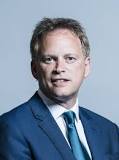
  • Grant Shapps – 2020 Comments on Coaches for Christmas

    Grant Shapps – 2020 Comments on Coaches for Christmas

    The comments made by Grant Shapps, the Secretary of State for Transport, on 12 December 2020.

    We’ve already set out important measures so journeys can run as smoothly as possible this Christmas. Today’s funding announcement for the coach sector goes one step further, ensuring there are more options available for people wanting to travel to celebrate with loved ones and friends.

    We remind everyone that it’s essential to plan their journey and book ahead, be considerate of other passengers and staff across our transport network, and follow the guidance, including keeping space and wearing a face covering, unless exempt, on public transport.

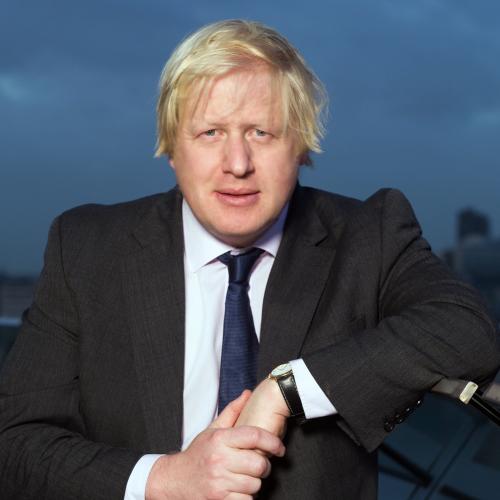
  • Boris Johnson – 2020 Statement at the Climate Ambition Summit

    Boris Johnson – 2020 Statement at the Climate Ambition Summit

    The statement made by Boris Johnson, the Prime Minister, on 12 December 2020.

    Thank you very much Zeinab, thank you Secretary-General Antonio, thank you to my fellow leaders, excellences.

    Good afternoon from London, where we are coming to the end of an extraordinary and difficult year, I think with a sudden surge of scientific optimism.

    Because after barely 12 months of the pandemic, we’re seeing the vaccine going into the arms of the elderly and vulnerable, vaccines that have been products each and every one of them of vast international efforts in laboratories around the world.

    And so my message to you all, is that together we can use scientific advances to protect our entire planet, our biosphere against a challenge far worse, far more destructive even than coronavirus.

    By the promethean power of our invention we can begin to defend the earth against the disaster of global warming.

    And by that I mean that together we can reduce our emissions, we can radically cut our dependence on fossil fuels, we can change our agricultural practices, and in short we can reverse the process by which for centuries, humanity has been quilting our planet in a toxic tea-cosy of greenhouse gases.

    And at the same, we can create hundreds of thousands of jobs, millions of jobs across the planet as we collectively recover from coronavirus.

    If you doubt our ability to do that, let me tell you that when I was a child of six, this country depended on coal for 70% of our energy needs. That coal dependency is now down to 3% or less and since 1990, the UK has cut our CO2 emissions by 43% – more than any other G20 nation – and yet our economy has grown by 75%.

    Today, we’re putting our foot to the accelerator – in a carbon friendly way of course – with a Ten Point Plan for a Green Industrial Revolution.

    We want to turn the UK into the Saudi Arabia of wind power generation, enough wind power by 2030 to supply every single one of our homes with electricity.

    We’re going ahead with massive solar programme, even though we can’t hope to emulate the incredible things being done by India, Australia or Morocco for instance. Hydro of course – we’re liberating the awesome potential of hydrogen, whether for homes or all sorts of uses.

    On electric vehicles we’re going to ban ICEs, new internal combustion engines by 2030, with a very ambitious programme. We’ll continue to develop new nuclear power.

    We want to lengthen the lead of London, the UK, as the natural home of green finance. We want our homes to be emitting progressively less and less CO2 and doing more and more retrofitting of our homes. And wherever the UK may be accused of lagging, we won’t be lagging my friends in lagging.

    We want to encourage all modes of green transport, cycling, walking and so on. We want to use the relatively new miracle of carbon capture and storage actually to take carbon from power generation and industrial processes and bury it in under-sea caverns created by the extraction of hydrocarbons.

    And we’re now consecrating 30% of our waters, 30% of our land surface, to nature, because we think wild nature is the best way and most effective way of retaining carbon in a natural balance.

    We do all these things because they’re right for the world, they’re right for our country – but also because we know that this green industrial revolution will generate as I say hundreds of thousands of high skilled, high paying, good quality jobs for generations to come.

    And we’re going to help our friends around the world by moving away from supporting drilling and mining for hydrocarbons, but putting £11.6 billion of our overseas aid to support green technology and decarbonisation across the planet.

    We want to work with all of you on this call, on this conference – let’s do it together. Let’s make it our collective commitment, as Antonio has just said, to get to net zero by 2050.

    We in the UK, as he says, are going to do our bit, we’re reducing our emissions by 68% at least on 1990 levels over the next decade. And I’m really awed and humbled by the efforts of other countries around the world to set their own targets.

    And I just want to repeat that key message. We’re doing this not because we are hair shirt-wearing, tree-hugging, mung bean-munching eco freaks – though I’ve got nothing against any of those categories, mung beans are probably delicious. We’re doing it because we know that scientific advances will allow us collectively as humanity to save our planet and create millions of high skilled jobs as we recover from COVID.

    So thank you all very much for joining this conference, this Ambition Summit, thank you to Secretary General Antonio, thank you to my co-host Emmanuel Macron, who I know shares my keen interest in protecting the ecosystems of our seas and oceans, and I look forward to seeing you all in Glasgow face-to-face next year.