Blog

  • Nicola Sturgeon – 2021 Comments on Ireland’s Seat on the UN Security Council

    Nicola Sturgeon – 2021 Comments on Ireland’s Seat on the UN Security Council

    The comments made by Nicola Sturgeon, the Scottish First Minister, on 1 January 2021.

    As independent Ireland takes up her seat on the UN Security Council today, not (yet) independent Scotland is taken out of the EU against our will. Time to put ourselves in the driving seat of our own future, Scotland #indyref2

  • Jim McMahon – 2021 Comments on the Aviation Sector

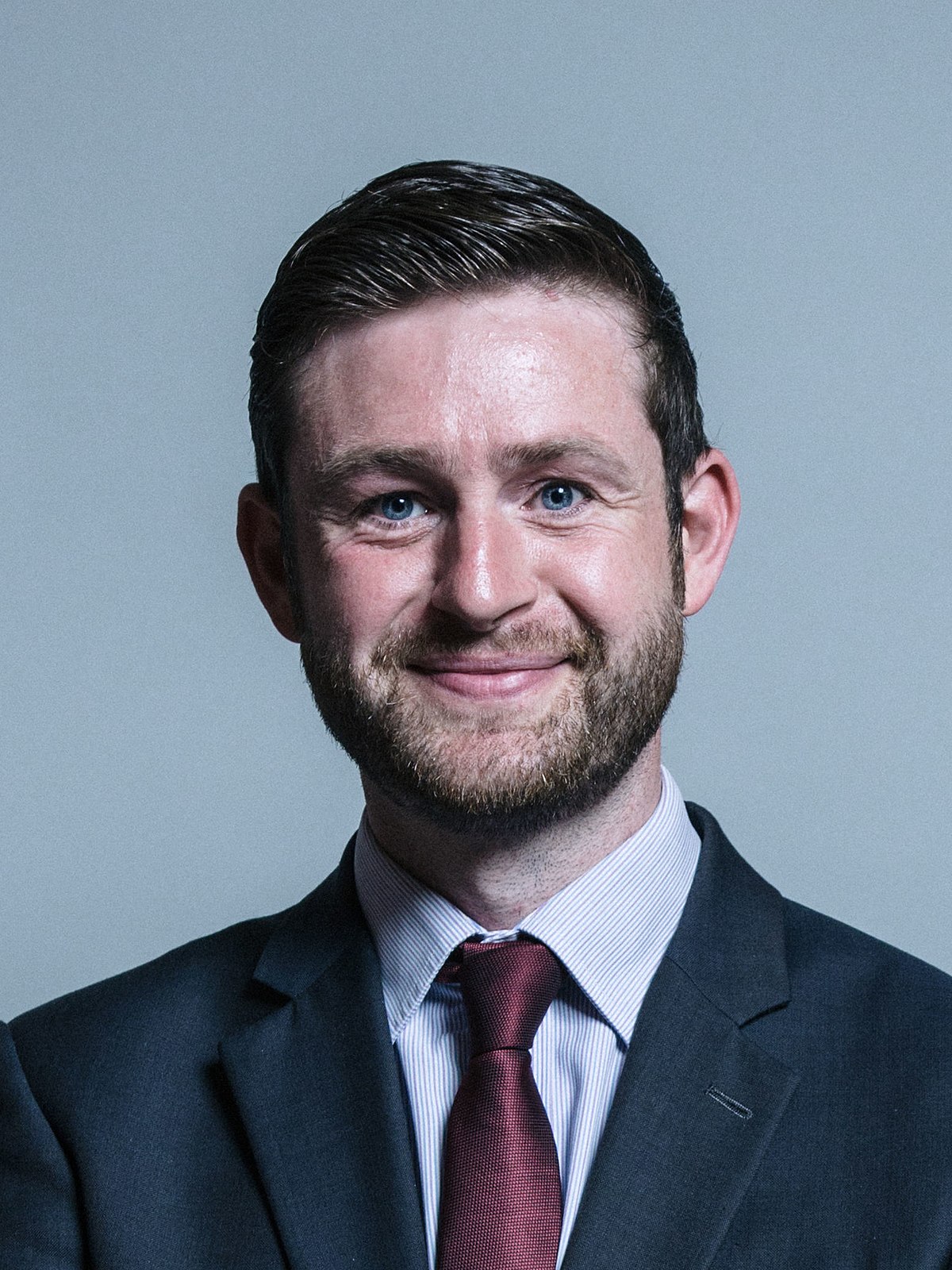
    Jim McMahon – 2021 Comments on the Aviation Sector

    The comments made by Jim McMahon, the Shadow Transport Secretary, on 1 January 2021.

    This piecemeal approach from the Government appears to do very little to protect the rights of workers, who have suffered as a result of opportunistic fire and rehire policies, and leaves the taxpayer to shoulder most of the risk.

    It’s time for the Chancellor to deliver on the full package of support he promised the aviation sector months ago.

  • Boris Johnson – 2020 New Year’s Eve Message

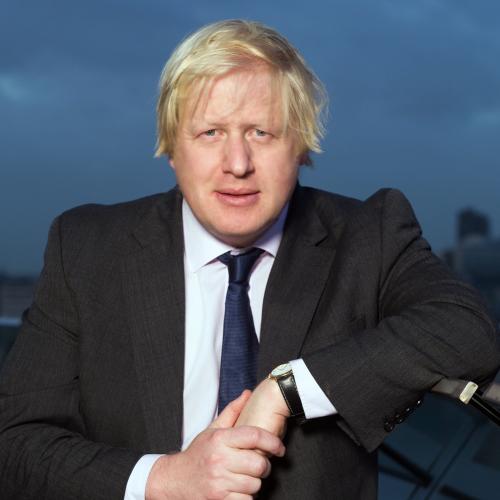
    Boris Johnson – 2020 New Year’s Eve Message

    The Prime Minister’s 2020 New Year’s Eve Message, issued on 31 December 2020.

    Well folks we are coming to the end of 2020.

    The year in which the Government was forced to tell people how to live their lives, how long to wash their hands, how many households could meet together.

    And a year in which we lost too many loved ones before their time.

    So I can imagine that there will be plenty of people who will be only too happy to say goodbye to the grimness of 2020.

    But just before we do, I want to remind you that this was also the year when we rediscovered a spirit of togetherness, of community.

    It was a year in which we banged saucepans to celebrate the courage and self-sacrifice of our NHS staff and care home workers

    A year in which working people pulled the stops out to keep the country moving in the biggest crisis we have faced for generations – shopworkers, transport staff, pharmacists, emergency services, everyone, you name it.

    We saw a renewed spirit of volunteering, as people delivered food to the elderly and vulnerable.

    And time after time as it became necessary to fight new waves of the virus, we saw people unite in their determination, our determination, to protect the NHS and to save lives.

    Putting their lives, your lives, on hold.

    Buying precious time for medicine to provide the answers, and it has.

    In 2020 we have seen British scientists not only produce the world’s first effective treatment of the disease, but just in the last few days a beacon of hope has been lit in the laboratories of Oxford.

    A new room temperature vaccine that can be produced cheaply and at scale,

    and that offers literally a new lease of life to people in this country and around the world.

    And with every jab that goes into the arm of every elderly or vulnerable person, we are changing the odds, in favour of humanity and against Covid.

    And we know that we have a hard struggle still ahead of us for weeks and months, because we face a new variant of the disease that requires a new vigilance.

    But as the sun rises tomorrow on 2021 we have the certainty of those vaccines.

    Pioneered in a UK that is also free to do things differently, and if necessary better, than our friends in the EU.

    Free to do trade deals around the world.

    And free to turbocharge our ambition to be a science superpower.

    From biosciences to artificial intelligence,

    and with our world-leading battery and wind technology we will work with partners around the world,

    not just to tackle climate change but to create the millions of high skilled jobs this country will need not just this year – 2021 – as we bounce back from Covid, but in the years to come.

    This is an amazing moment for this country.

    We have our freedom in our hands and it is up to us to make the most of it.

    And I think it will be the overwhelming instinct of the people of this country to come together as one United Kingdom – England, Scotland, Wales and Northern Ireland working together to express our values around the world.

    Leading both the G7 and the COP 26 climate change summit in Glasgow,

    And an open, generous, outward looking, internationalist and free trading global Britain, that campaigns for 12 years of quality education for every girl in the world.

    2021 is the year we can do it,

    and I believe 2021 is above all, the year when we will eventually do those everyday things that now seem lost in the past.

    Bathed in a rosy glow of nostalgia, going to the pub, concerts, theatres, restaurants, or simply holding hands with our loved ones in the normal way.

    We are still a way off from that, there are tough weeks and months ahead.

    But we can see that illuminated sign that marks the end of the journey, and even more important, we can see with growing clarity how we are going to get there.

    And that is what gives me such confidence about 2021.

    Happy New Year!
  • Liz Truss – 2021 Statement on Ghana-UK Trade Deal

    Liz Truss – 2021 Statement on Ghana-UK Trade Deal

    The statement made by Liz Truss, the Secretary of State for International Trade, on 1 January 2021.

    Today we are pleased to announce that we have reached a consensus on the main elements of a new trade agreement. This provides the basis to replicate, the effects of the existing trade relationship between the UK and Ghana – a relationship which is underpinned by our strong people to people connections and has driven economic growth, created jobs, and inspired creativity and innovation in both our countries.

    The intention is for the Agreement to provide duty free and quota free access for Ghana and the same preferential tariff reductions for British exporters as provided by the arrangement that is currently in force. We intend over the next few weeks to finalise the text of the Agreement to reflect progress made in relation to rules of origin, cumulation arrangements, time bound commitments, provisions for development cooperation and commitments to human rights and good governance.

    We re-affirm our shared ambition to further strengthen our partnership in the future and to work with the West African partners to make progress towards a regional agreement.

  • Andrew Adonis – 2020 Speech on the Future Relationship with the EU Bill

    Andrew Adonis – 2020 Speech on the Future Relationship with the EU Bill

    The speech made by Andrew Adonis in the House of Lords on 30 December 2020.

    I am sure it is much better to say exactly what we think about public affairs and this is certainly not a time when it is worth anyone’s while to court political popularity. I will therefore begin by saying what everybody would like to ignore or forget, but which must be stated, that

    “we have sustained a total and unmitigated defeat”.—[Official Report, Commons, 5/10/1938; col. 360.]

    Those were Winston Churchill’s words in the House of Commons on the Munich agreement 82 years ago. Alas, they apply word for word to the Brexit agreement we are being asked to rubber-stamp today.

  • Ed Davey – 2020 Speech on the Future Relationship with the EU Bill

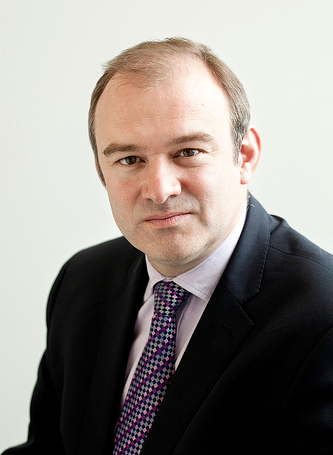
    Ed Davey – 2020 Speech on the Future Relationship with the EU Bill

    The speech made by Ed Davey, the Leader of the Liberal Democrats, in the House of Commons on 30 December 2020.

    Our country is gripped by two crises: Britain’s hospitals are overwhelmed and Britain’s economy is in the worst recession for 300 years. A responsible Government, faced with those crises for people’s health and jobs, would not pass this bad deal, for it will make British people poorer and British people less safe.

    This is not really a trade deal at all; it is a loss of trade deal. It is the first trade deal in history to put up barriers to trade. Is that really the Government’s answer to British businesses fearing for their futures and British workers fearing for their jobs? We were told that leaving the EU would cut red tape, but the deal represents the biggest increase in red tape in British history, with 23 new committees to oversee this new trade bureaucracy, 50,000 new customs officials and 400 million new forms. Some analysts estimate the cost of this new red-tape burden for British business at over £20 billion every year. This is not the frictionless trade that the Prime Minister promised.

    Jonathan Edwards

    I fully agree with the points that the right hon. Member is making. Is he concerned at reports that the lack of equivalence for sanitary and phytosanitary measures means that Welsh farmers will face more red tape exporting to the EU than New Zealand farmers?

    Ed Davey

    I completely agree with the hon. Gentleman; he is absolutely right. The more businesses see this, the more they will be very disappointed. These reels of red tape will put more jobs at risk at a time when so many are already being lost to covid, and all these new trade barriers will raise prices in the shops at a time when so many families are already struggling to make ends meet. From the failure to agree a good deal for Britain’s services sector—80% of our economy—to the failure to agree a stable deal that investors will trust, this is a lousy deal for Britain’s economic future.

    The Conservatives can no longer claim to be the party of business, and with this deal they can no longer claim to be the party of law and order, for our police will no longer have real-time, immediate access to critical European crime-fighting databases such as Schengen II. Such sources of key information about criminals and crimes are used every single day by our police; in one year alone, they are used over 600 million times, often in the heat of an investigation. Thanks to the Prime Minister’s deal, British police will lose that privileged access and criminals will escape.

    There are so many things wrong with this deal, from its failings on the environment to the broken promises for our young people on Erasmus, yet the irony is that, for a deal that is supposed to restore parliamentary sovereignty, our Parliament has been given only hours to scrutinise it while the European Parliament has days. And business has just days to adjust to this deal. The Liberal Democrats called on the Prime Minister to negotiate a grace period to help businesses adjust, forgetting, of course, that this Government no longer care about business.

    The Government leave us no choice but to vote against this deal today. Perhaps that will not surprise too many people—the Liberal Democrats are, after all, a proud pro-European party who fought hard against Brexit—but we have genuinely looked at this post-Brexit trade deal to assess whether it is a good basis for the future relationship between the UK and the EU, and it is not. To those who argue that a vote against this deal is a vote for no deal, I say this: the Liberal Democrats led the charge against no deal when this Prime Minister was selling the virtues of no deal.

    Today, the question is simple: is this a good deal for the British people? It is a deal that costs jobs, increases red tape, hits our service-based economy, undermines our police and damages our young people’s future. It is a bad deal, and the Liberal Democrats will vote against it.

  • Liam Fox – 2020 Speech on the Future Relationship with the EU Bill

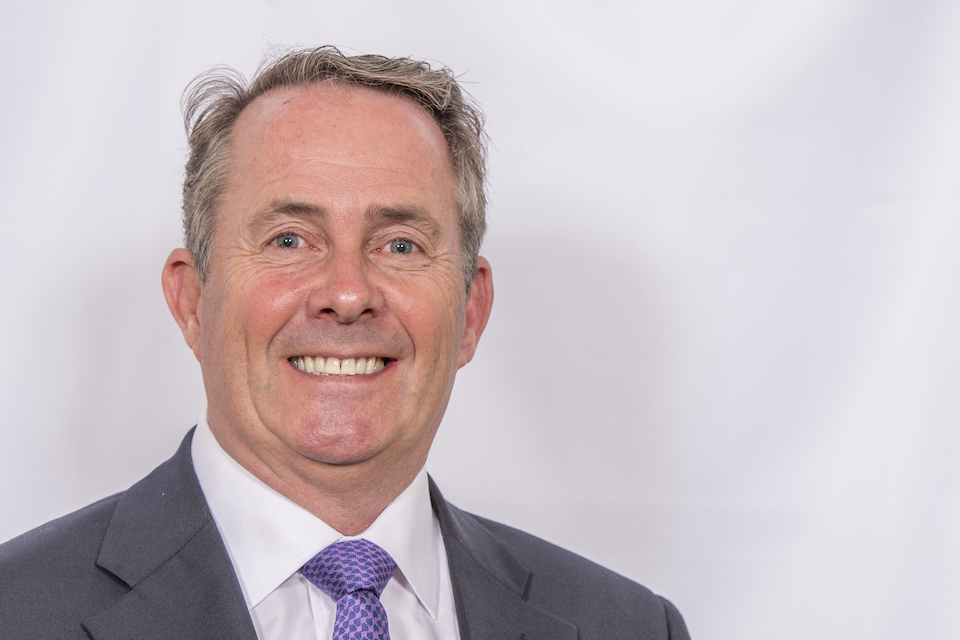
    Liam Fox – 2020 Speech on the Future Relationship with the EU Bill

    The speech made by Liam Fox, the Conservative MP for North Somerset, in the House of Commons on 30 December 2020.

    Those of us who voted and campaigned to leave the European Union did so for a number of reasons. I was always a constitutional leaver. For me, the test of this Bill is: does it return the sovereignty that we sought? The answer is yes. Why? Because there is no subjugation to EU law or EU jurisprudence, no direct effect and no direct application. Retention of any of those would have been incompatible with a sovereign state. In fact, from our accession to the European Community through various EU treaties, all those elements were incompatible with the concept that those who live under the law should be able to determine those who make the law. That is what we have regained in this process.

    The second test for me is: does this allow us to have a genuinely independent trade policy? Let us remember that we were told that it would take more than 10 years to reach a free trade agreement with the European Union and that it would be impossible to roll over all the EU agreements that we had. I stood at the Dispatch Box and listened to the Opposition incessantly telling us that. I congratulate Ministers and officials under Crawford Falconer at the Department for International Trade for all they have achieved, and I especially congratulate David Frost on landing one of the world’s biggest, if not the biggest, trade agreements in 11 months—a world record—which, again, we were told was not possible.

    When we voted to leave the European Union, we also voted to leave the single market, although for some of us the single market is also the single anti-market, with many of the restrictions and protectionisms that it encompasses. If we want to access the single market, there has to be a price to be paid. If we want to diverge from the rules of the single market, there has to be a price to be paid. Does this agreement provide effective mechanisms for us to do those things? My answer, again, is yes.

    Mr David Davis (Haltemprice and Howden) (Con)

    Does my right hon. Friend agree that the mechanisms that this treaty has found are every bit as good as the mechanisms in the Canada treaty, for example, and all other treaties that reflect these tensions in free trade agreements?

    Dr Fox

    My right hon. Friend is absolutely right, and not only are they effective mechanisms, but they keep us in line with the best international practice that exists, which of course enables us to move forward with greater predictability. On that point, there are a number of specific elements to welcome. The first is the acceptance of the concept—

    Jonathan Edwards

    Will the right hon. Member give way?

    Dr Fox

    I will not, I am afraid.

    The first element is the concept of non-regression as a means of ensuring minimum standards. We accept that the maintenance of those high standards has fixed costs in international commerce, which is why we will always need to compete at the high end of the quality market globally in goods and services. As the Prime Minister rightly pointed out, we cannot ever become a bargain basement economy because the fixed costs we have are simply too high and, quite rightly, the British people would not allow us to abandon the standards we have. It means that we will have to move forward with the natural innovation and creativity of the British people expanding our export culture, because the bottom line is that without more exports and without more actual trade, any trade agreement is simply a piece of paper. It is upon the natural innovation of the British people that our prosperity will be built in the future.

    The second element, to which my right hon. Friend the Member for Haltemprice and Howden (Mr Davis) alluded, is the fact that the concept in dispute resolution of international arbitration is done without the European Court of Justice, which brings us in line with international trends and practices. That takes us to the third element: the mechanism of determining divergence. If there is no ability to determine to diverge, we are not sovereign. If there were not a price to be paid for divergence, the EU would never have reached the agreement with us. What would have been unacceptable is the concept of dynamic alignment—automatically taking EU rules over which we had no control into our law—but what is acceptable is penalties for divergence, which are clearly set out. They are proportionate, and there is a requirement to show harm, rather than their simply being put into law. The most important element of all in this is that it is we who will weigh up the costs and benefits of any potential disalignment. It is our choice—that is one of the key elements that we have in the future.

    Today opens up a new chapter in our politics. It is the choice of maintaining and strengthening an independent United Kingdom; or of the new ranks of the rejoiners, who would have us thrust back into European accession politics all over again, consuming all our political time and energy, which is a future that I believe the British public will reject. There are things that we still have to sort out—the future of Gibraltar is one of the important ones, as is seeing further details on services, including financial services—but this is a historic day in our democracy. We have delivered on the referendum and our election promises. If, for the Opposition, those are not reasons to be cheerful, they are at least reasons of which we should all be proud.

  • Kevin Brennan – 2020 Speech on the Future Relationship with the EU Bill

    Kevin Brennan – 2020 Speech on the Future Relationship with the EU Bill

    The speech made by Kevin Brennan, the Labour MP for Cardiff West, in the House of Commons on 30 December 2020.

    I understand completely the exasperation of people that, four and a half years after the Brexit referendum, we are still debating this subject, and I understand the desire to move on. I also accept the proposition that a thin deal is better than no deal, but this is not only a thin deal; it is a bad deal. A far better deal could and should have been negotiated by the Government and still could be.

    In the nearly 20 years that I have spent in this House—15 of them on the Front Bench—there have been many occasions when I have voted for a proposition with reservations; that is the nature of parliamentary and party politics. But there are occasions when that proposition is too damaging to support. I accept that there is a valid argument at this stage, as laid out by my right hon. and learned Friend the Leader of the Opposition, to move on and for the Opposition to build on this bad deal. I also accept that in politics, many decisions—perhaps most—are not between what is right and what is clearly identifiable as wrong but are on a continuum between what is unpalatable and what is unacceptable. Clearly, no deal is unacceptable. This bad deal is certainly unpalatable and, in places, unacceptable because of the ideological approach taken to negotiations by this awful right-wing shambles of a Tory Government who are determined to set Britain on a path that will damage it culturally and economically.

    While I understand the desire to move on, I simply do not understand why it is necessary for those who believe that this is a bad deal to vote for it and dip their fingertips in the indelible ink of this abject failure of national ambition. The deadline we are up against today is an entirely artificial one, sustained only so that the Prime Minister can say that he has met his own political timetable. The truth is that the transition period could have been extended or the deal could have been introduced on a provisional basis to allow the House to thoroughly scrutinise it line by line, rather than follow the “take it or leave it by lunchtime” timetable that the Government have artificially manufactured today.

    My right hon. and learned Friend the Member for Holborn and St Pancras (Keir Starmer) was right to talk about the red tape for manufacturing in this deal, checks for farmers, burdensome regulation on businesses and the fact that the consequences of the deal will be economically damaging. In addition, the Government have chosen to end the Erasmus educational programme for young people, there is no proper recognition of professional qualifications and they will remove work permit-free access across the EU for touring musicians, who have already been unable to work for the last year due to covid. In the last few days, that issue alone has triggered a petition to Parliament of more than 200,000 signatures. Less than a year ago, the hon. Member for Selby and Ainsty (Nigel Adams), who was at the time the Minister for Sport, Media and Creative Industries, said in Westminster Hall:

    “It is essential that free movement is protected for artists post 2020.”—[Official Report, 21 January 2020; Vol. 670, c. 56WH.]

    That is just one example of the failure of the Government to deliver even on their own woefully inadequate promises in relation to this deal. This is a thin deal. It is a failure, even on the Government’s own terms. In short, it is a bad deal, and I will not be voting for it.


  • Cheryl Gillan – 2020 Speech on the Future Relationship with the EU Bill

    Cheryl Gillan – 2020 Speech on the Future Relationship with the EU Bill

    The speech made by Cheryl Gillan, the Conservative MP for Chesham and Amersham, in the House of Commons on 30 December 2020.

    It is a pleasure to follow the right hon. Member for Leeds Central (Hilary Benn). I do not always agree with him, but I recognise the detailed and sterling work he has done on the Brexit Select Committee and am glad that he is voting for the Bill today.

    I also welcome the fantastic news on the Oxford-AstraZeneca vaccine, which along with the Bill gives us a double reason for celebration. I add my congratulations and plaudits to the Prime Minister and all our negotiators on their steadfastness in bringing home this deal.

    Make no mistake, it took guts and determination both to leave the EU and, finally, to deliver this result. It may not be perfect. I, too, for example, share the reservations expressed by my right hon. Friend the Member for Maidenhead (Mrs May) about the position of our services industry, which needs urgent resolution on, for example, what the equivalence rules will look like.

    The deal has been hard won and delivers zero tariffs and zero quotas, which brings a huge sigh of relief to many businesses and industries across the country. At the same time, it allows the UK once again to control its destiny through its own elected representatives and its own courts—the independence and control over our affairs that I and many others voted for in the referendum.

    This is not a precipitative end to our relationship, but the controlled departure that we were all hoping for. Our participation in programmes such as Horizon Europe and EU Space Surveillance and Tracking indicates our recognition that there are things we can do better together across Europe, but now without having to be subject to a regime that we could not change or, at the very least, even influence.

    There will be many other things that we can do better, such as the Turing scheme, which is going to offer 35,000 UK students worldwide opportunities and will replace Erasmus. When we pass this legislation today, we will be in a golden position to create a great future for the United Kingdom—a future that the people of Wales, Scotland, Northern Ireland and England will grasp with both hands. The trade deals and continuity agreements that we have already signed with 62 countries are testament to that, and we must make a great deal of fuss about the work that has gone into those signings, which will mean so much for our country in the future.

    To those who continue to wage a war of attrition against this reborn independence and look backwards towards membership of the EU, I hope they, too, will now move on and develop the guts and determination of our Prime Minister to back our own Union and contribute positively to its future success. I believe that the UK’s future is bright, working alongside Europe, but finally, after today, not subjugated by it.

    It is with great pleasure that I support this Bill.

  • Michael Fallon – 2017 Comments on Diversity in the Armed Forces

    Michael Fallon – 2017 Comments on Diversity in the Armed Forces

    The comments made by Michael Fallon, the then Secretary of State for Defence, on 26 October 2017.

    We are working hard to ensure the Armed Forces, like our cadets, better represent the society they serve but there is still much more to do. We want more sailors, soldiers and airmen to come from minority and ethnic communities. More diverse armed forces are a stronger armed forces; that has to start amongst the junior ranks and work all the way up to chief of the defence staff.