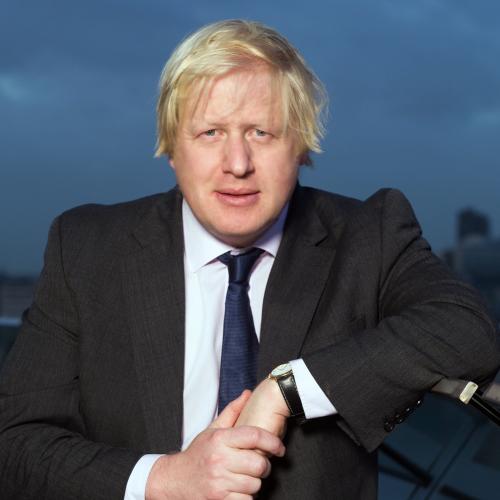
The interview on the BBC’s Andrew Marr Show with Boris Johnson, the Prime Minister, on 3 January 2021.
ANDREW MARR:
I’m joined now live in the studio by the Prime Minister, Boris Johnson. Mr Johnson, welcome. Can I start with a very straightforward question? Should parents of primary school children in England send them to school tomorrow morning?
BORIS JOHNSON:
Yes, absolutely they should in the areas where schools are open. What we’re doing, clearly, is grappling with a new variant of the virus which is surging particularly in London and the south east, and that’s why we’ve had to take exceptional measures for some parts to close primary schools, keep primary schools closed temporarily. Not something anybody wants to do. We’ve really fought very hard throughout this pandemic across the country to keep schools open. There are lots of reasons for that. Schools are safe. Very, very important to stress that and that the threats, the risk to kids, to young people is really very, very, very small. Indeed, as the scientists continually attest, the risk to staff is very small. But of course the benefits of education are so huge, overwhelmingly we want to keep our young people, keep children in education because that’s the best thing for them. So that’s why we’ve worked so hard to do it. So I’d advise all parents thinking about what to do, look at where your area is: overwhelmingly you’ll be in a part of the country where primary schools tomorrow will be open.
ANDREW MARR:
The reason I ask is that SAGE told you on the 22nd December [2020] that we couldn’t keep on top of this new variant while keeping schools open.
BORIS JOHNSON:
Well, actually what they said was that we needed to take tougher measures. Sir Mark Walport, you just talked to, agreed and I agree with that.
ANDREW MARR:
How likely is it schools will be able to stay open, given where we are?
BORIS JOHNSON:
The issue, the evidence is not clear. Because we’re looking at Tier 4 and what happens in Tier 4 areas. We need to see whether those extra steps that we’ve all taken in Tier 4 areas are going to work in driving the virus down.
ANDREW MARR:
If they don’t work you may close primary schools?
BORIS JOHNSON:
I mean, Andrew, we’ve got to keep things under constant review. But we will be driven not by any political considerations, but entirely by the public health question.
ANDREW MARR:
The public health suggestion was that you will have to close schools to get on top of this new variant?
BORIS JOHNSON:
Well, there are different views, obviously, that are offered. It’s worth stressing that other public health experts also point to the long term damage to children and young people from being kept out of school, the social cost, the danger and threat to mental health, the many other factors that you have to remember, particularly deprivation for families in their communities. You’ve got to think very, very hard about the consequences for families of closing schools.
ANDREW MARR:
I absolutely understand that. So are you going to take legal action against a council like Brighton, for instance, which is just unilaterally closing its primary schools?
BORIS JOHNSON:
Well, we’ll work very hard with authorities across the country to get our message across, that we think schools are safe. Schools are safe, there’s absolutely no doubt.
ANDREW MARR:
Would you condemn them for closing the schools?
BORIS JOHNSON:
Look, I understand people’s frustrations, I understand people’s anxieties, but there is no doubt in my mind that schools are safe and that education is a priority. If you think about the history of the pandemic, we’ve kept schools going for a long, long time in areas where the pandemic has really been at very high levels. If you think about what they did in the north west – and yet – well, the evidence actually is that they were able to do that and to get the virus under control. So the question now is can we do that in these Tier 4 areas? Can we bring the virus under control and keep schools open? What I can tell you, Andrew, is that we’ll keep this under constant review but we’ll be driven by public health considerations and by the massive importance of education to children.
ANDREW MARR:
A lot of parents are very worried and very confused, partly because, for instance, in London, in Greenwich, your Education Secretary was threatening legal action to keep schools open, then three days later ordered them to be closed. When a council like Brighton says schools may close, Birmingham is saying much the same thing, in Greater Manchester, Andy Burnham has said this is a decision that now must be taken by local authorities. There is a sense that up and down the country local authorities, and some schools, have given up on the government on this and have taken matters into their own hands.
BORIS JOHNSON:
I don’t think that’s the case, but obviously we’re going to work with local authorities, work with schools and those responsible up and down the country. Our advice remains the same, which is that for public health reasons we think, in the large majority of the country, large parts of the country, it is sensible to continue to keep schools open, primary schools. As you know, secondary schools come back a bit later.
The second thing is that we are going to be ramping up testing across the whole of the system. I don’t think people have focused enough on this, if I may just for a second, one of the things we didn’t have when we went into the first lockdown, where we sadly did have to close schools, was we didn’t have this huge number of lateral flow tests. We now have tens, hundreds of millions of lateral flow tests, which I believe and hope can be used, deployed, particularly in secondary schools to assist the return of schools. And it’s not that the return will be safe – the schools are safe – the issue is how can you stop schools being places where the virus can circulate and then spread into all the other households? Daily lateral flow testing, or weekly lateral flow testing in schools, I believe, can make a huge difference.
ANDREW MARR:
So let’s talk about right now. I ask you again, what is your message to those councils around England who are saying that schools can close and should close? What’s your message to them now?
BORIS JOHNSON:
My message to such councils is that they should be guided by the public health advice, which at the moment is that schools are safe in those areas where we’re not being driven by the new variant to close them, and that the priority has got to be children’s education. But obviously we want to work with them and we’re very humble in the face of the impact of this new variant of the virus. Let’s face it, we face a very, very difficult few weeks and months until the vaccine comes on stream.
ANDREW MARR:
I ask you whether you can guarantee that schools will open on 18th January. You can’t say ‘yes’ can you?
BORIS JOHNSON:
Well, obviously we’re going to continue to assess the impact of the Tier 4 measures, the Tier 3 measures. If you think about it, where we got to before Christmas if you remember was [interrupted]
ANDREW MARR:
I’m going to come to that.
BORIS JOHNSON:
was that the Tier 3 measures had actually been pretty effective in dealing with the old variant of the virus, and you were
seeing – you remember what had happened in the north west, there was real progress that had been made. Then we saw this very stubborn strain in this stubborn epidemic, in Kent and parts of London, and people were saying, ‘what’s all that about? Are they doing things differently? Are they failing to follow the guidance?’ And that wasn’t it.
ANDREW MARR:
We will get to that.
BORIS JOHNSON:
If you recall what happened, we became aware of this new variant. Since then – that’s why schools [interrupted]
ANDREW MARR:
If you can’t guarantee that schools are going to open later this month isn’t it now the right time to accept that GCSE and A Level exams are going to have to stop this year?
BORIS JOHNSON:
First of all, we think that in principle it’s a good thing to keep schools open if we can.
ANDREW MARR:
But in practise they may have to close and you may have to stop the exams.
BORIS JOHNSON:
We’ve got to be realistic. We’ve got to be realistic about the pace at which this new variant has spread and is spreading. We’ve got to be realistic about the impact that it’s having on our NHS, as you’ve heard all morning and we’ve got to be humble in the face of this virus. We have some things that are already working for us. We have a vaccine, two vaccines already, or three, that we’ll be able to use soon.
ANDREW MARR:
Three?
BORIS JOHNSON:
Well, we’ve got the Moderna coming.
ANDREW MARR:
Moderna. Okay.
BORIS JOHNSON:
So you know, we can see the way ahead, we can see what’s coming down the track in terms of a route forward for our country. We can see how we’re going to get out of this with great clarity now, we can see how the vaccines can really, really help us to beat this. But we do have a tough period ahead.