Blog

  • Nadine Dorries – 2021 Comments on Impact Start-Ups

    Nadine Dorries – 2021 Comments on Impact Start-Ups

    The comments made by Nadine Dorries, the Secretary of State for Digital, Culture, Media and Sport, on 29 November 2021.

    From world-class AI discovering new treatments for Covid-19 to green energy solutions paving the way to a net-zero future, UK tech is transforming the world for the better.

    Our ‘impact’ startups are raising investment with nearly £2 billion in funding this year to help fight some of the most pressing problems we face as a planet.

    We want to harness the power of technology to make greener, healthier and safer choices and today I’m hosting the first Future Tech Forum in London to discuss how we can make that happen through future governance, policy and cooperation.

  • Nadine Dorries – 2021 Speech at the Future Tech Forum

    Nadine Dorries – 2021 Speech at the Future Tech Forum

    The speech made by Nadine Dorries, the Secretary of State for Digital, Culture, Media and Sport, on 29 November 2021.

    Good morning everyone.

    It’s an absolute pleasure to welcome you all to London, to the inaugural Future Tech Forum.

    It’s the first major summit I’ve hosted since becoming Digital Secretary in September and what better place to be hosting a discussion about the future of tech, than in the Science Museum?

    As you wander around this building over the next couple of days, you will spot “NeXTcube” – the computer that Tim Berners-Lee was sitting at when he designed the World Wide Web. With his invention in 1989, Berners-Lee set off a chain of events that have led us all here today.

    Because digital technology has fundamentally changed our way of life. In fact, the entire infrastructure of the global economy – and modern society – is now built around tech. The five biggest tech companies are now worth almost $10 trillion – more than the next 27 most valuable U.S. companies put together. Amazon is the third biggest employer on the planet. Apple’s stock is worth more than Belgium’s entire wealth.

    These companies track who we are, and what we like, and where we go and what we buy. They are an ever-present fixture of our daily lives. And they’ve done a huge amount to improve our existence. They connect us with friends and family. They’ve revolutionised working life. And given that the economies of some of these tech companies are the size of countries it’s great to see them tackling country-sized challenges like looking at tackling global welfare and development – as you’ll see in the first session with Microsoft today.

    Meanwhile, the pace of technological change is astounding. We’ve got doctors performing surgery in a room miles away from their patient, armed with a joystick and some 3D equipment. Groundbreaking companies are exploring wild ways to manipulate biology – like reviving the smell of extinct flowers to create new perfumes.

    At the same time, AI is everywhere – and getting more sophisticated by the day. Almost all experts think that within this century we’ll see a situation where machines are more intelligent than humans. In the long history of humanity, we are now officially living in the Digital Age. So it’s no wonder that governments all over the world are racing to set the rules for this new era.

    Because if there’s anything we’ve learnt over the last 20 years, it’s that without the right governance and values built in from the start, tech can create some very serious problems. Problems that are hard to fix once they’ve happened.

    Algorithms can send dangerous misinformation and poisonous abuse all over the world in a matter of seconds. Authoritarian governments can use tech to track, to intimidate, and to repress. News services can be blocked with the flick of a switch, and competitors crowded out with the tweak of an algorithm.

    All of this has ramifications: for our privacy, and prosperity and for society as a whole.

    And so I’m gathering you all here today to start a new and frank conversation about the future of tech: About how we can work together to harness its incredible potentially, particularly when it comes to tackling the biggest challenges we face, like climate change while protecting people from the darker side of the Digital Age.

    It’s on us, as like-minded partners, to make sure the tech revolution is a democratic one. And together, we’ll be discussing a number of challenges over the next two days.

    Like: How do we get the governance of tech right from the start, rather than playing catch-up? What are the issues we need to think about now, before the adoption of new and emerging tech becomes widespread? How do we ensure new technologies reflect our liberal and democratic values? And where do we need international solutions – given tech is global in its very nature – and how do we deliver them? Every country in the world is grappling with these very same questions but the UK is leading the way in answering many of them.

    The most obvious example is our Online Safety Bill, which we introduced in Parliament in July. That Bill is a truly groundbreaking piece of legislation. We’ll be going further than any other country to regulate social media platforms like Facebook, Twitter and TikTok.

    I know that the world will be watching what we do, and looking to follow our lead in many cases. We’ve got a 10-year plan to become a global AI superpower, through our National AI Strategy. We’ve broken yet more ground with a new, pro-competition Digital Markets Unit, to oversee the world’s most powerful tech companies.

    We’re at the cutting edge of deepening Digital Trade, and I’m particularly pleased to welcome colleagues from Singapore here today, with whom we’re negotiating a ground-breaking Digital Economy Agreement.

    And in a year of international leadership for the UK, we have used our presidency of the G7 to draw a number of lines in the sand about the future of tech: We agreed that as we tackle illegal and harmful content online, we should do so in a way that also protects fundamental democratic rights, like freedom of speech.

    We agreed to work together on digital technical standards, and to promote the trusted and free flow of data. We agreed to accelerate the use of digital technologies to boost trade. And finally, we agreed to secure critical digital infrastructure, like our telecoms networks. I want to build on that work over the next two days, as our G7 leadership comes to a close and that’s why I’m delighted that so many people have travelled from all over the world to be here today.

    We’ve got representatives from every corner of the planet – from the Republic of Korea to Kenya, Finland and the United States And I’m very excited about the UK’s new Digital Trade Network, which is going to make the most of fast-growing tech markets in the Asia Pacific region.

    But we know that governments can’t meet these challenges alone. We’ve got to change the existing model, and bring together government, industry and academia to write the next chapter of tech together. To work together in a way that is more collaborative, more frank and more honest than it has perhaps been so in the past.

    So the Future Tech Forum is bringing together the widest group of thought leaders from across government, industry and academia.

    As the Prime Minister said when he announced this summit in his speech to the UN General Assembly in 2019, we have pulled together the broadest possible coalition to take on this task. And if we get these questions right, the potential benefits for our countries are enormous. So as I officially open the Future Tech Forum, I’d like to finish by saying that I think we’re facing a fundamental choice about our future:

    Is tech going to be a force for good, or a force for bad? We’re all here today because we are determined to make it the former. So without further ado, let’s get things underway with the first session, on tech and democracy.

    I’m delighted to welcome to the stage:

    Former Danish Prime Minister and NATO Secretary General Anders Fogh Rasmussen

    Microsoft Vice President John Frank

    And last but by no means least, my colleague Julia Lopez, the Minister for Media, Data and Digital Infrastructure.

  • Alex Chalk – 2021 Comments on Sentencing of Murderers of Luke O’Connell

    Alex Chalk – 2021 Comments on Sentencing of Murderers of Luke O’Connell

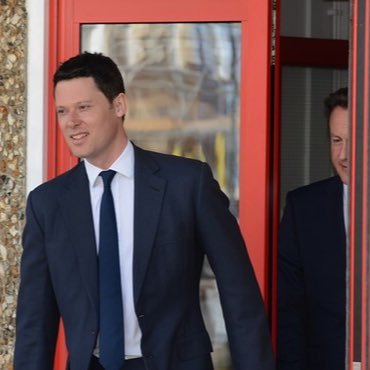
    The comments made by Alex Chalk, the Solicitor General, on 29 November 2021.

    The violent actions of these men cost Luke O’Connell his life. My thoughts remain with Luke’s family and friends who have suffered an unimaginable loss. I hope the Court’s decision to increase these sentences acts as a warning to those who commit such violent crimes, that they can expect to spend a very long time in prison.

  • Vicky Ford – 2021 Comments on UK Aid in Chad

    Vicky Ford – 2021 Comments on UK Aid in Chad

    The comments made by Vicky Ford, the UK Minister for Africa, on 29 November 2021.

    We have ensured money recovered from corrupt deals has gone into providing life-saving support to more than 150,000 vulnerable people in Chad. Working with our partners around the world, the UK will always stand against corruption.

  • Boris Johnson – 2021 Statement on Covid-19 Changes

    Boris Johnson – 2021 Statement on Covid-19 Changes

    The statement made by Boris Johnson, the Prime Minister, on 27 November 2021.

    Good afternoon.

    The UK’s plan against Covid has been working.

    We’ve had the fastest vaccine roll-out in Europe, and now the fastest booster campaign in Europe, with almost 16.8 million boosters in people’s arms, and though case numbers have remained relatively high, we’re seen falling hospitalisations and falling numbers of deaths.

    But on Wednesday we received news of a new variant – the so-called Omicron Variant – I want to express my deep gratitude to scientists in South Africa who identified this new variant and shared this information widely and immediately.

    This variant is spreading around the world, with 2 cases so far identified here in the UK.

    As always, and I must stress this, as always with a new variant, there are many things that we just cannot know at this early stage.

    But our scientists are learning more hour by hour, and it does appear that Omicron spreads very rapidly, and can be spread between people who are double vaccinated.

    There is also a very extensive mutation which means it diverges quite significantly from previous configurations of the virus, and as result, it might – at least in part – reduce the protection of our vaccines over time.

    So we need to take targeted and proportionate measures now as a precaution while we find out more.

    First, we need to slow down the seeding of this variant in our country.

    We need to buy time for our scientists to understand exactly what we are dealing with.

    And for us to get more people vaccinated and – above all – to get more people boosted.

    As well as to help our NHS prepare in what is an already challenging winter.

    So yesterday we took steps to protect the UK against the variant coming here from southern African countries – and earlier today added four more countries to the red list.

    But we now need to go further and implement a proportionate testing regime for arrivals from across the whole world.

    So we are not going to stop people travelling, I want to stress that, we’re not going to stop people travelling, but we will require anyone who enters the UK to take a PCR test by the end of the second day after their arrival, and to self-isolate until they have a negative result.

    Second, we need to slow down the spread of this variant here in the UK.

    Because measures at the border can only ever minimise and delay the arrival of a new variant, rather than stop it altogether.

    So in addition to the measures we are already taking to locate those who have been in countries of concern over the last ten days, we will require all contacts of those who test positive – with a suspected case of Omicron – to self-isolate for ten days, regardless of your vaccination status.

    We will also go further in asking all of you to help contain the spread of this variant, by tightening up the rules on face coverings in shops and on public transport.

    And third – and most importantly – we need to bolster our protections against this new variant.

    We don’t yet exactly know how effective our vaccines will be against Omicron, but we have good reasons for believing they will provide at least some measure of protection.

    And if you are boosted – your response is likely to be stronger.

    So it’s more vital than ever that people get their jabs, and we get those boosters into arms as fast as possible.

    So from today we are going to boost the booster campaign.

    We are already planning to do 6 million jabs in England alone over the next three weeks.

    And now we are looking to go further, so the Health Secretary has asked the JCVI to consider giving boosters to as wide a group as possible, as well as reducing the gap between your second dose and your booster.

    And, of course, we are speaking to our counterparts in the Devolved Administrations and will continue to coordinate with them.

    The measures that we are taking today – including on our borders and face masks – are temporary and precautionary, and we will review them in three weeks.

    At that point we should have much greater information about the continuing effectiveness of our vaccines.

    I very much hope that we will find that we continue to be in a strong position, and we can lift these measures again.

    But right now this is the responsible course of action, to slow down the seeding and the spread of this new variant, and to maximise our defences so we protect the gains we have worked so hard for and so that we can continue to save lives.

    Thank you.

  • Alex Norris – 2021 Speech on Down Syndrome

    Alex Norris – 2021 Speech on Down Syndrome

    The speech made by Alex Norris, the Labour MP for Nottingham North, in the House of Commons on 26 November 2021.

    I am grateful for the opportunity to speak for the Opposition on this very important Bill. I commend the right hon. Member for North Somerset (Dr Fox) for using his precious private Member’s Bill slot on this important matter, and I understand this is his first success in the ballot in 29 years, so roll on 2050 for the next one.

    The right hon. Gentleman said plenty that will have moved people who are watching as well as Members in the Chamber, particularly the comment that I will reflect on now and over the weekend, too. This Bill is not about a condition: it is about people, and it is not about charity; it is about empowerment. That really struck me, and it is important.

    We have heard that 47,000 people in this country, across every nation, region and constituency, are living with Down’s syndrome. They are people with hopes and dreams, who love and are loved, and they have a right to live full lives and to reach their potential. The right hon. Gentleman is taking a major step in that direction with this Bill.

    We have had brilliant contributions from colleagues on both sides of the House, and I will try to group them into themes. As this Bill is human rights legislation, as the hon. Members for North Antrim (Ian Paisley) and for Stourbridge (Suzanne Webb) and my hon. Friend the Member for Hackney South and Shoreditch (Dame Meg Hillier) said, I share the enthusiasm of the hon. Members for Dunfermline and West Fife (Douglas Chapman) and for Berwickshire, Roxburgh and Selkirk (John Lamont) that there should be a four-nations approach in the years to come.

    There were moving contributions from the hon. Members for Broxbourne (Sir Charles Walker), for Meon Valley (Mrs Drummond), for Buckingham (Greg Smith), for Carshalton and Wallington (Elliot Colburn) and for Don Valley (Nick Fletcher), who brought the debate to life by raising constituency cases. We can throw around the statistics about tens of thousands of people, but each one of them is an individual with different needs, different hopes and different dreams, and they should be treated in that way.

    Alongside the 47,000 people, there are tens of thousands of families—mums, dads, sisters, brothers and cousins—who I know will have listened to the debate. My family is one of those tens of thousands, so I am especially grateful to the right hon. Member for North Somerset for giving us the opportunity to take a leap forward in the support available for people living with Down’s syndrome.

    I was born in 1984, when life expectancy for a person with Down’s syndrome was about 25; it is now into the 60s. People with Down’s syndrome have basically gained a year every year for my entire life, which is wonderful and it shows the advances we can make when we prioritise the human rather than the condition, and when we are ambitious for everybody and do not define people by the challenges they live with. We know that, with appropriate support, people with Down’s syndrome can thrive at school, can work, can marry and can live full lives. We have to take every opportunity to remove all the barriers, to tackle stigma and to tackle the poverty of ambition that hold back progress in this area, and this Bill is a perfect opportunity to do so.

    I note that the right hon. Gentleman has secured Government support for the Bill, so its passage is likely to be smooth. Clause 1(1) provides for the Secretary of State to publish guidance to relevant authorities to make sure they meet the needs of people with Down’s syndrome, which is a powerful tool and I look forward to hearing from the Minister about what she envisages being part of that.

    Under clause 1(3) there is an expectation that the Secretary of State will consult. As other colleagues have said, that is important. It must start with individuals with lived experience, so they can tell us what change they need in their lives and what challenges they have had to negotiate. It must also apply to their families—the hon. Member for Carshalton and Wallington talked about it being a battle, which is a common theme in the stories of the families who I have spoken to and who we have heard about today. Beyond that, it is crucial that Ministers talk to clinicians, commissioners and decision makers. I am sure that the Minister will not want to be prescriptive about a consultation today, but she might set out some of its broader themes.

    The schedule to the Bill highlights four areas in which the right hon. Member for North Somerset is seeking guidance to be made. I will touch on them briefly in turn. On the national health service, it is vital that healthcare services are responsive to and ambitious for people living with Down’s syndrome so that they get world-class healthcare. We can be proud of the progress made over the last few decades, but we must make sure that we are as ambitious about mental health as we are about physical health and that the progress in physical health can be matched in mental health. I hope that the Minister reflects on that in her closing remarks.

    The Bill also references clinical commissioning groups. The Health and Care Bill is going through this place—we debated its remaining stages on Monday and Tuesday—so the commissioning landscape will change. Can the Minister tell us how the language will change to reflect the fact that the Bills are progressing at the same time?

    Kerry McCarthy (Bristol East) (Lab)

    To return to what my hon. Friend said about mental health concerns, when people with disabilities and conditions such as Down’s experience mental health problems that are not necessarily connected to their condition, treatment can be more difficult and it can be difficult to identify that they are developing mental health problems. Perhaps it is more a point for the Minister, but I hope that we can bear that in mind when we are looking at how we treat people with Down’s.

    Alex Norris

    I am grateful for that intervention. Members on both sides of the House share a commitment and an ambition to make significant advances in the mental health of the British people. We know that there are barriers for people with the most profound physical health conditions because, traditionally, we have not looked beyond those conditions to evaluate the mental health aspect. I hope that the Bill is a good opportunity to do that.

    On housing, we know that with the right support, people with Down’s syndrome can live semi-independently, so we must make sure that the right type of housing, sensitive to need, is available and distributed across the country. Has the Minister made a baseline assessment of where we are and what we might need to do better?

    Hon. Members have made important points about education. At the risk of repeating more of what the hon. Member for Carshalton and Wallington said, the points about education, health and care plans were well made and I hope that they were heard. I took from his contribution that they cannot be pro forma exercises; they must be individual exercises that meet individual needs. That is the purpose of having them.

    Linked to that, on employment, only 6% of people with a learning disability in this country are in employment. We should aspire to do much better. Work gives purpose, independence and dignity, and is part of the collective investment that we make in each other. Our ambition is for everybody to be in work who can be, irrespective of their challenges. We need a full strategic plan on the active steps that we can take to show employers the benefits of hiring staff with learning disabilities and the support that can be offered to help to facilitate that. It is important to understand that it is a win-win because, as global studies show, workplaces hiring employees who live with Down’s syndrome are happy and productive.

    The right hon. Member for North Somerset made the point about redress, which is an important and live conversation in this country. To read across, if I may, to the Cumberlege report and the impact of sodium valproate and Primodos on children who are born having been exposed to them, those families still cannot get redress—in many cases, many decades later—without an expensive, long and hard pursuit in the courts. That system is not working. The report recommended that a redress system be set up to avoid that, which has not happened as the Government have not accepted the recommendation. It should not be happening to them and it should not happen here, so I hope that, through the Bill, we can do better for people living with Down’s syndrome and for others.

    Dr Fox

    There is, of course, a great carrot for the Government in producing a workable redress system, which is that, if it is not fixed in this Chamber, it may be fixed in the other place. One way or another, however, I assure the hon. Gentleman that it will be fixed.

    Alex Norris

    I am very grateful to the right hon. Gentleman for that, although I am not sure that it was a carrot as much as a stick. However, I know that noble Lords will be taking the same interest in the Health and Care Bill, and I absolutely share his confidence in that sense.

    To finish, I look forward to seeing this Bill in its next stages, and we want gains to be made in the four areas in the schedule to the Bill. I would make the very important concluding point that, particularly in relation to local authorities, social care is distressed and under-invested in in this country, so if there are new responsibilities, there must be new investment to come with that. We will continue to make such points at future stages. This requires Government commitment, and it is good that we are hearing that today, but also the resources to sit behind it, and I hope we hear that, too.

  • Nick Fletcher – 2021 Speech on Down Syndrome

    Nick Fletcher – 2021 Speech on Down Syndrome

    The speech made by Nick Fletcher, the Conservative MP for Don Valley, in the House of Commons on 26 November 2021.

    It is a pleasure to follow my hon. Friend the Member for Gedling (Tom Randall) and to be in the Chamber for my first sitting Friday. It is a completely different experience—it is lovely to see the House being so collegiate—and it is fantastic to be supporting the Bill from my right hon. Friend the Member for North Somerset (Dr Fox). Few private Members’ Bills receive so much support and the fact that this Bill has done so is testament to how welcome it is. I have met some of the fantastic families who have campaigned on this issue and I know that the Bill is the culmination of years of work.

    Over the past few decades, we have seen significant progress in how we support those with disabilities to live fulfilling lives—notably, through the Equality Act 2010. However, the term “disabled people” refers to such a large and varied group that legislation for those with disabilities needs to be more targeted if it is going to address people’s individual needs. The Autism Act 2009 was a decade ago and it is time that we did the same for those with Down’s syndrome. This Bill will help people with Down’s syndrome and their families to receive public services that are suited to their needs in every interaction that they have with local and national government, from job-centres to social care.

    One area where that is particularly relevant is in education. The Down Syndrome Bill will allow parents to choose the best school for their children—whether it is a mainstream school or a special needs school—because, wherever their child attends, the local authority will have to ensure that the education provided is adapted to their needs. As research suggests that children with Down’s syndrome have significantly better educational outcomes in mainstream schools, the Bill could have a transformative impact for some children.

    Social care for people with Down’s syndrome is another area that will see a change because of this Bill. Although social care has often been in the news during the pandemic, the coverage has tended to focus on social care for older people. Nevertheless, a significant percentage of people who require social care are of working age and, especially in the case of people with Down’s syndrome, their needs are different from those of older people in care.

    People with Down’s syndrome are living longer than ever, which is a wonderful thing, but it does not mean that a care home for a 75-year-old man with dementia is suitable for a 45-year-old woman with Down’s syndrome. I am therefore pleased that, under the Bill, people with Down’s syndrome will be entitled to age-appropriate social care.

    The Bill will not solve all the challenges faced by people with Down’s syndrome when interacting with Government bodies, but it will hopefully be a step forward that leads to a marked improvement on the present situation. Once again, I commend my right hon. Friend the Member for North Somerset for introducing the Bill.

  • Tom Randall – 2021 Speech on Down Syndrome

    Tom Randall – 2021 Speech on Down Syndrome

    The speech made by Tom Randall, the Conservative MP for Gedling, in the House of Commons on 26 November 2021.

    Like many others, I speak in support of the Bill. I add my congratulation to those from colleagues of all parties to my right hon. Friend the Member for North Somerset (Dr Fox) on having brought the Bill to the House and his passionate speech in favour of the measures it contains. Down’s syndrome is a visible condition and the name will be familiar to very many people, but my right hon. Friend’s speech raised so much awareness of a condition of which there are so many factors that members of the public or those who have not been directly affected are not aware. This morning’s debate, like those on so many sitting Fridays, has been an educational process. We have learned something about the wider world, which is a good thing for us as politicians to do once in a while.

    There are 47,000 people in the UK with Down’s syndrome. I am grateful to my constituents who wrote to me in advance of this debate to tell me about the issues that they and their families have faced and the challenges that the condition can bring. They have told me about how the language and attitude on learning that the baby has Down’s syndrome can often be negative and discriminatory, and that young people with Down’s syndrome are more likely to be hospitalised than those without it, and for longer.

    From my research in preparation for this debate, I have learned that those with Down’s can have problems with their heart, bowel difficulties, difficulties with hearing and vision and increased risk of infection, so there is possibly an increased requirement for health services. Parents are often discouraged from sending children to mainstream schools because teachers there sometimes lack confidence and the knowledge to include children in classes alongside siblings and neighbours. Post-16 education is often a “one size fits all” approach that sees learning stall. Social care can often be inappropriate. My right hon. Friend gave the example of those in older life, and he was right to say that there is a scandal that we very much need to avoid in terms of possibly putting those with Down’s syndrome in age-inappropriate settings.

    The Bill provides the opportunity to make life-changing differences for a condition that affects so many aspects of life across the health, education, housing and social care fields. The Bill is short—only a couple of clauses—and it requires the Secretary of State to create guidance. Various authorities would be required to pay due regard to that guidance. One might argue about whether primary legislation is required for the production of guidance. We ought not to have laws for laws’ sake, but given the wide variety of bodies that the guidance will affect, the argument in favour is strong and has been articulated strongly this morning. The importance of the changes that can be brought about once the guidance is written and implemented has also been highlighted.

    There is a precedent for the Bill. We have not spoken yet of the Autism Act 2009, which shares some similarities with this Bill. I was particularly struck by the words of the National Autistic Society:

    “The…Act has brought about some great changes to the way that autistic people access support. Because of the Act, almost every council has a diagnosis pathway for adults and a specific Autism Lead. Additionally, it makes sure that every autistic person has the right to a social care assessment, something which was difficult for many autistic people more than 10 years ago.”

    It appears that that legislation has brought about some positive changes, so I am hopeful that, by supporting this Bill today, we will be able to revisit this situation in 10 years’ time and find that we have seen great strides in the way that the needs of people with Down’s syndrome have been met. The Bill certainly commands my support, as I am sure it does across the House, and I wish it well.

  • Sadiq Khan – 2021 Comments on Activating the Severe Weather Emergency Protocols

    Sadiq Khan – 2021 Comments on Activating the Severe Weather Emergency Protocols

    The comments made by Sadiq Khan, the Mayor of London, on 26 November 2021.

    Once again far too many people are facing the first cold snap of the winter on the streets of the capital, without the safe, secure accommodation that should be the basic right of every Londoner.

    Across London, we will do everything we can to protect rough sleepers in these freezing conditions. I know London’s councils and charities will also be working tirelessly over the weekend to help the most vulnerable amongst us and I thank them for their efforts.

  • Sadiq Khan – 2021 Comments on Move to Royal Docks Move

    Sadiq Khan – 2021 Comments on Move to Royal Docks Move

    The comments made by Sadiq Khan, the Mayor of London, on 24 November 2021.

    City Hall’s move to The Crystal building will usher in a new era for the Greater London Authority (GLA) and this flourishing part of East London.

    The move will save £61m over five years which will be used to help protect vital front-line services including in policing, the London Fire Brigade, and our transport network. It will also enable me to invest further in London’s economic recovery from the pandemic.