
Blog

  • John Davies – 1972 Statement on a National Coal Strike

    John Davies – 1972 Statement on a National Coal Strike

    The statement made by John Davies, the then Secretary of State for Trade and Industry, in the House of Commons on 18 January 1972.

    The issue of a national coal strike, which we are debating today, provokes inevitably depths of feeling and concern that go even beyond the serious industrial facts that are involved.

    There are many reasons for this—the character of the industry, with its ruggedness and dangers; the men who work in it and who rightly evoke our sympathy and admiration; the historical place that the industry holds in the whole evolution of British industry; the special links it has with this House; the numbers of people involved and their unity and union membership; the remarkable history of the National Union of Mineworkers; and the impact that the industry has on every section of the community, geographically, industrially, socially and domestically.

    This catalogue by no means exhausts the many reasons why the events that have recently occurred elicit a response throughout the country which is perhaps more profound and emotional than the plain industrial issues involved. But even on the level of the plain industrial issues, so much is at stake that we must try to see clearly and understand how those problems have arisen and what are the wider national issues that surround them, how they are likely to affect the life of the country and, perhaps most important of all, what their consequences may be for the industry and those who work in it.

    Perhaps it is right to consider first that last question—the consequences for the industry itself. It is necessary to look at the recent history of the industry to do this—at its prospects and problems and how it is surmounting them and at its future outlook.

    By any standards, the radical transformation which the industry has undergone in the last decade is a matter for admiration and approval. It has squared up to the realities of its competitive position and has acknowledged the need to modernise and streamline itself. It has done this with there having been a remarkable degree of understanding between management and unions. It has set about this process by making a dramatic reduction in manpower and a vast modernisation effort in plant to reduce the advantage that other newer primary fuels, such as oil and natural gas and even the nuclear generation of electricity, enjoyed.

    Successive Governments have supported this transformation by writing off accumulated losses and by affording some degree of protection through the fuel duty and other measures, recognising both the social factors involved and the security ones in comparing an indigenous source of fuel with the need to import.

    The combination of these efforts gave rise to a sustained improvement in productivity throughout the ‘sixties, though by 1969, to the dismay of those who wished to see the industry endure and prosper, that effort seemed to be running out of steam, and the last two years regretfully have seen the rate of improvement dwindle and disappear.

    After the great write off of accumulated losses in 1965 of £415 million the industry has endured further losses to the tune of £34 million, but the prospects were brighter and, with competitive fuels increasing in cost, there was hope of turning the corner into profitability.

    Despite the damaging impact of unofficial action this year, 1970–71 saw a marginal profit of £½ million and hopes were high that 1971–72 would carry that ahead into continuing surplus. Those hopes are now dashed with the expectation that the present strike will be pushing the Board into deficit at the rate of £10 million a week over and above the £20 million already arising from the last two months’ overtime ban.

    This damaging turnround in the Board’s prospects arises at a time when some of the surrounding factors are tending to reduce the critical importance of coal production as an element of security in our national fuel picture. Imported oil, it is true, has been getting substantially more expensive and that tendency may well continue, but large reserves of oil have been found round our own shores and the outlook for these secure sources of highly competitive fuel is suddenly looking rather bright.

    Gas, too, has been found in substantial quantities and coal-gas is becoming rapidly a thing of the past. Nuclear power, after the inevitable uncertainties of the early days of a revolutionary new process, will now be settling down to sustained and ever more economic power generation. [Interruption.] It will. Hon. Gentlemen opposite may laugh, but they had to be concerned with this issue when they were in office. They therefore know that I am right. This process is settling down to a sustained improvement in performance.

    Mr. Alex Eadie (Midlothian)

    The right hon. Gentleman sought to praise the miners, but now he is seeking to threaten them.

    Mr. Davies

    No, I am not.

    Mr. Eadie

    The right hon. Gentleman is. Can he produce evidence to show that there is an abundance of cheap oil or that nuclear power is not escalating in price, apart from being obsessed with technical difficulties?

    Mr. Davies

    I assure the hon. Gentleman that I am not in any way threatening the miners. I am simply seeking to establish the realities facing the industry. As for access to oil supplies, the hon. Gentleman will, bearing in mind the area from which he comes, not have failed to note the intention expressed by the B.P. Company not long ago relating to a very large resource of oil in the North Sea. That will be exploited as from now on at a high cost, and this will be available—[Interruption.]—at a very reasonable price.

    On the issue of nuclear generation, has not the hon. Gentleman realised that even at present Magnox reactors are able to produce electricity at a price well within supplies available from traditional fuels?

    Mr. Eadie

    What about A.G.R.?

    Mr. Davies

    I am referring to the Magnox reactor. The hon. Gentleman must be aware that it is producing economically. In these circumstances the future of coal depends on its ability to regain its productivity record of the ‘sixties and, above all, not to allow self-inflicted wounds to undermine its prospects for the future. It is for this reason that a crippling strike arising at this juncture is a cause of concern not just for the immediate difficulties and hardships it may occasion but for the irremediable damage it may do to all that has been so patiently and constructively achieved by a decade of harmony and collaboration.

    To the material losses there is also a risk of adding a legacy of bitterness from the strike itself—and this will increase the longer the strike endures—which will prove to be an obstacle to the resumption of the collaboration which is so essential if a renewal of productivity gain is to be achieved in the future, with all its immense importance for the competitiveness and resilience of the industry. Already we have seen signs of those actions which engender bitterness and leave an after-taste of sourness and distrust.

    When, for instance, I read of refusals to comply with the union’s own advice on the maintenance of safety measures, I am deeply distressed, not only by the immediate incident, but by its deeper and more enduring effect on the resumption of the joint endeavours that are so much needed for the future.

    Mr. Dennis Skinner (Bolsover)

    On this question of safety—

    Mr. Davies

    In speaking of safety measures I would wish to acknowledge the remarkable and untiring efforts of management, staff and officials in keeping the pits in working order at the present time. They are putting in long hours in an arduous and difficult task, and the capacity of the industry to get back again into production will in due course owe a great debt of gratitude to them.

    Mr. Skinner

    There has been a lot of clap-trap about so-called safety measures. In my opinion what the Board is really concerned about—and perhaps the Minister will be able to say whether this is true—is that there is £100 million worth of equipment down the pits belonging to the Board and private interests. The difference between 1926 and now is that instead of the equipment down the pits belonging to the men, it belongs to some other people. It is not really a question of safety. What the Board is really asking miners to do is to move the chocks along. It has nothing to do with safety. The object is to safeguard the money of private interests.

    Mr. Speaker

    Frequently there are complaints about the length of Front Bench speeches. It is interventions which frequently make them longer.

    Mr. Davies

    The plant to which the hon. Gentleman has referred in the pits is at the basis of the future of the industry, and the work that is involved in safeguarding it is important not just from the point of not suffering an unreasonable degree of waste, but also from the point of ensuring that there is continuing activity within the pits for the men to return to.

    With so much at stake, it is necessary to realise fully the events which have brought the industry to this unhappy pass. The union’s claim was presented in mid-September, and called for very large increases in pay ranging up to £9 a week which, if accorded, would have added about one-third to the Board’s wages bill, and would have added about 15 per cent. to existing price levels. Negotiations went on into mid-October, with the board advancing its offers from £1·60 a week for all, to £1·80 a week for the lowest paid surface workers, and £1·75 for other workers. That was rejected by the union which, on 21st October, withdrew from all consultative machinery, called for an overtime ban from 1st November, and in accordance with its rules instituted a ballot of its members with a view to calling a national strike.

    That ballot commenced a month later, and on 2nd December the result was announced which gave the executive discretion to call a national strike by a vote of 58·8 per cent. in favour, a proportion which, in parenthesis, I should point out would not have been sufficient before July of last year to give such discretion—[Interruption.] In the intervening period a resolution was passed to reduce the requisite number in favour from 65 per cent. to 55 per cent.

    Throughout the remainder of December and early January further efforts were made by the Board to find a formula acceptable to the union, but it failed. Almost on the very eve of the strike the Chairman of the National Coal Board made a last-minute attempt to reach a settlement and met the full executive of the N.U.M. at its headquarters. At that meeting every effort was made to avert the strike which was clearly in nobody’s interest. The Board advanced its offer still further to £2 a week for the lower paid and £1·90 for the others, together with an additional 5 days holidays, and including a special productivity arrangement.

    It should be noted that the last offer was never the subject of a ballot, and it is at least open to question whether, with the narrow majority giving the executive discretion to call a strike at the lower level, there would still have been the requisite majority not merely to give discretion but actually to implement a strike at the higher. [HON. MEMBERS:” Rubbish.”] I say that it is at least open to question.

    In the face of the rejection of its latest offer and the firm intention of the union’s executive to proceed with the strike, as notified, on 9th January the Board withdrew its offer on the grounds that the financial situation of the Board must inevitably be damaged by the strike, that it could not expect therefore to be in a position to sustain the latest offer from such a worsened position, and that when the parties resumed their contact—as they inevitably must—the situation would have to be approached in the new conditions which would then be prevailing.

    The Board estimated that its latest offer amounted to slightly less than 8 per cent. of its wages bill, and that was equivalent to pre-empting a 2 cwt.—almost 5 per cent.—increase in productivity. Before the final rupture came the Board on 5th January proposed to submit the dispute to the National Reference Tribunal, but the N.U.M. would not agree. A similar plea by the Board last week was again rejected. However, I understand that earlier today the T.U.C. approached both sides in an endeavour to bring them together and that the N.C.B. and the N.U.M. have now agreed to take part in a meeting tomorrow. I hope that that initiative will lead to useful results. There was a murmur, why did we not do something? I recall to hon. Gentlemen opposite that my right hon. Friend said earlier at Question Time that an endeavour was made but it was refused by the N.U.M. A few facts are worth establishing about pay levels in the industry.

    First, the nearly 8 per cent. final offer of the Board, on top of last year’s 12 per cent. gives an overall increase materially in excess of the movement of living costs over the period involved. Second, the cost of the final offer would have been about £31 million, and that has to be set against an accumulated deficit of £34 million, a break-even in 1970–71, and a hoped-for surplus in 1971–72 already undermined by the overtime ban.

    Within the increase the lowest paid workers would have had an 11 per cent. advance to add to the 20 per cent. they received in November 1970. Most face workers would have been on £31·90 had the final offer been accepted, thus exceeding substantially the parity of £30 already attained under the National Power Loading agreement, and involving for about 69,000 workers increases of up to £2.77½ per week, to which the £1.90 of the offer would have been added. The T.U.C.’s target of a £20 minimum wage would have been attained for the industry, lifting mineworkers in this respect from sixteenth to sixth place in the league table of minimum rates and placing them on the same level as dockers.

    I have seen and heard references in the Press and elsewhere to cases of individuals taking home as little as £13. The Board has circulated to Members information which shows how misleading those reports are. When cases have been investigated it has often been found that deductions for rent and National Savings were comprised within the figures to arrive at the figure for take-home pay.[HON. MEMBERS: “Rubbish.”] It is absolutely exact. I need not repeat what the House will already have read, but it is worth stressing that the take-home pay of an adult married face worker with no children would have been just under £24 had this offer been accepted.

    Mr. Bob Brown (Newcastle-upon-Tyne, West)

    Can the right hon. Gentleman deny that there are miners with families qualifying for the Family Income Supplement?

    Mr. Davies

    I am not able to deny it, but that is because I do not have those facts before me. I will readily and willingly look into that question.

    The Board has worked out—[Interruption.] Hon. Members opposite ask for facts. I am seeking simply to state the facts. The Board has worked out that average adult earnings for the week ending 9th October, 1971, were in excess of £30, including allowances in kind amounting to some £2.

    Mr. Peter Hardy (Rother Valley)

    The right hon. Gentleman has given figures for October. Will he now give figures for a period in November or December when the overtime ban was operating? The wages in the period he has quoted resulted from miners working many hours of overtime.

    Mr. Davies

    That is all entirely irrelevant to the question of the real pay in the industry. The industry is working to a certain pattern of overtime the suppression of which has caused the industry grievous damage, as I have already said. The fact is that the average earnings in October, when normal working was being pursued, was at this substantial level.

    It has been suggested that the Government should step in and by some means compensate the Board to enable it to make a higher settlement than its own financial position and prospects make possible. However, against the facts I have mentioned about the offer and the level of pay in the industry, such a step would have been manifestly irresponsible. The final offer compares favourably with many recent settlements in both public and private sectors, and to subsidise an increase in it would be flying in the face of all the efforts that the Government are making to contain inflation and reduce the damaging rise in prices. [Interruption.] Hon. Members opposite are never hesitant about demanding the containment of prices, yet they are never prepared to meet the requirements for doing so. The efforts that the Government are making have had, and are continuing to have, a considerable measure of success.

    Sir Gerald Nabarro (Worcestershire, South)

    Will my right hon. Friend make it perfectly clear that, if the miners’ wage demand were conceded in full, it would lead to a very large increase in the retail price of coal, all of which would render the product entirely uncompetitive and cause a large part of the existing market for coal to disappear?

    Mr. Davies

    I have said that the effect of acceding to the total proposal of the National Union of Mineworkers would have been to increase coal prices by 15 per cent. which, as my hon. Friend rightly says, would have put coal rightly out of the field of competition.

    So here we are witnessing a damaging strike liable to cause great inconvenience, and even hardship, to the community and great damage to the industry itself.

    Mr. Charles Loughlin (Gloucestershire, West)

    Will the right hon. Gentleman give way?

    Mr. Davies

    No, I will not.

    Mr. Loughlin

    Then why did the right hon. Gentleman give way to the hon. Member for Worcestershire, South (Sir G. Nabarro)?

    Mr. Speaker

    Order.

    Mr. Loughlin

    Will the Secretary of State give way now?

    Mr. Davies

    No, I am not giving way.

    Mr. Loughlin

    As the right hon. Gentleman gave way to the hon. Member for Worcestershire, South, he should give way to someone on this side.

    Mr. Speaker

    Order.

    Mr. Loughlin

    On a point of order, Mr. Speaker—

    Mr. Speaker

    Order. I have already said that there is always a great deal of complaint about the length of Front Bench speeches. Continual interventions simply protract Front Bench speeches. I want to be able to call a large number of Opposition Members who wish to speak. I ask the hon. Member for Gloucestershire, West (Mr. Loughlin) not to protract the proceedings.

    Mr. Loughlin

    On a point of order, Mr. Speaker. I am very sorry that you should think that I am protracting the debate, or at any rate the right hon. Gentleman’s speech. However, if the right hon. Gentleman is prepared to give way to a very favourable intervention from one of his hon. Friends it is abject cowardice on the part of the right hon. Gentleman if he will not give way to what may be a not so favourable intervention.

    Mr. Speaker

    The hon. Gentleman is on a rather bad and unfair point, because the Secretary of State had already given way to two very hostile interventions.

    Mr. Davies

    I hate to disappoint the hon. Member for Gloucestershire, West (Mr. Loughlin) but, as you say, Mr. Speaker, I have given way on a number of occasions and not by any means always to amicable interventions either.

    So here we are witnessing a damaging strike liable to cause great inconvenience, and even hardship, to the community and great damage to the industry itself, for causes which, on the statement of facts I have listed, do not seem to justify the action which has been taken. At present the impact on the community as a whole is slight and patchy. Stocks are reasonably high throughout the country, but there are bound to be difficulties for some firms and in some places. It would be some weeks before there begins to be real difficulty. The steel industry is likely to be among the first to be hit, with all the damaging effect that that will have on production, exports and employment.

    My hon. Friend the Minister for Industry took immediate action to enjoin economy on distributors and fuel users alike the day after the strike started. In case further measures had to be taken, the Government are keeping the situation continually under review.

    I earnestly hope, however, that matters will not deteriorate in such a way as to make further action necessary. The very future of the industry and of the employment it provides is at stake. It would be tragic if, with the prospect of a better future for coal in view, irreparable damage were now done, with all the unhappy consequences—industrial, personal and social—that would inescapably ensue.
  • Harold Gurden – 1972 Speech on Home Ownership and Right to Buy

    Harold Gurden – 1972 Speech on Home Ownership and Right to Buy

    The speech made by Harold Gurden, the then Conservative MP for Birmingham Selly Oak, in the House of Commons on 18 January 1972.

    I beg to move,

    That leave be given to bring in a Bill to extend to the tenants of dwellings owned by local authorities and other housing bodies the right to acquire the ownership or leasehold of their homes.

    Public ownership of housing, extended as it has been over the years under both parties, with additional controls on building and other housing regulations, in the opinion of many people and many experts, has accentuated the housing shortage. Many of these regulations were designed to cure the housing shortage, but some of us believe that they have only made matters worse. The object of this Bill is to “denationalise” family homes. However much one believes in nationalisation as a principle, surely the family home should be exempt.

    This is nationalisation in a most discriminatory form—against only the lower wage earners and the workers of this country, because the better-off can and do own their own homes. Few people, and fewer politicians, ever declare themselves opposed to the principle of a property-owning democracy. My own party has made this a very important part of its policy. Yet we have all allowed public authorities to deny nearly half Britain’s families the right to buy their homes.

    These are the homes provided by the taxpayers and ratepayers by means of subsidy. It is true that some local authorities in control of council houses permit tenants to buy their homes, but they are not in the main enthusiastic about it and many local authorities do not allow tenants to do so. There are now millions of families in this category, and in future they may never be allowed to buy their own homes. This will affect families from one generation to the next.

    This situation is clearly a class discrimination if ever there was one. It applies only to the lower income groups. Nearly all the higher income groups own their own homes. The tenant families and the working classes under both parties have had to accept constantly rising rents, and the Housing Finance Bill uses the Labour Party’s fair rent principle to increase the rents only partly to cover the cost to the tenant. So unless these tenants have the right freely to buy their own homes, they can never peg the cost of their home against inflation. The best way for a householder to insure himself against rising rents is to buy his home: it is better than a rise in wages.

    Also to be considered is the pride of ownership in one’s own home, the incentives that there are to improve one’s property and enhance its value. The Government’s improvement grants are freely available and are used mostly by home owners. It is easy for most of us to recognise property which is owner-occupied as we go about the country. In Birmingham, in my own constituency in particular, urban deterioration is a serious problem, but was made less acute by home ownership. It is or should be an essential part of our policy to create home ownership if we are to defeat urban deterioration.

    Another consideration is the mobility of labour. In our large cities, many unemployed are unable even to consider taking a job at the other side of the town, for the sole reason that they are municipal tenants and do not find it easy to move home. Changing a tenancy is far too slow and uncertain. If a job is offered to an unemployed man at the other side of a city as large as Birmingham, he has to think twice about accepting. I believe that many of our unemployed would not be restricted in their choice of job if they could sell their home and buy another.
    I have carried out some research on this matter and the best estimate that I can make is that about 10 per cent. of the people in the home owner belt are mobile and do change their homes in any one year, whereas only about 2 per cent. of the people in council-owned properties move.

    This leads one to assume that the security of tenure of having a municipal house is the main incentive, rather than employment. A man can easily get social security and unemployment pay, but he cannot easily get another house. This Bill is based on the Leasehold Reform Act, which was supported by both parties, to ensure specifically the right for people to own their own homes. The Bill carries this principle one stage further.

    My hon. Friend the Member for Bristol, North-West (Mr. McLaren) initiated a debate just before the recess which was very valuable and saves me having to mention many of the facts of the situation which we should be considering and which I hope will be considered in debate.

    Why should city councillors prevent home ownership? I am told that, in Bristol, an alderman voted against the city council allowing tenants to buy their homes, and after that vote went to the local authority and bought his own municipal house, before the city council could change the rules—

    Mr. Charles Pannell (Leeds, West)

    On a point of order. This cannot be in order, surely, in initiating a Ten-Minute Rule Bill, which has overstayed its time.

    Mr. Speaker

    These are matters for me.

    Mr. Gurden

    All I ask today is the right to debate this matter in the House. Any criticisms of the Bill—of its principle or any matters relating to it—can be debated at a later stage to the benefit of millions of people in this country.

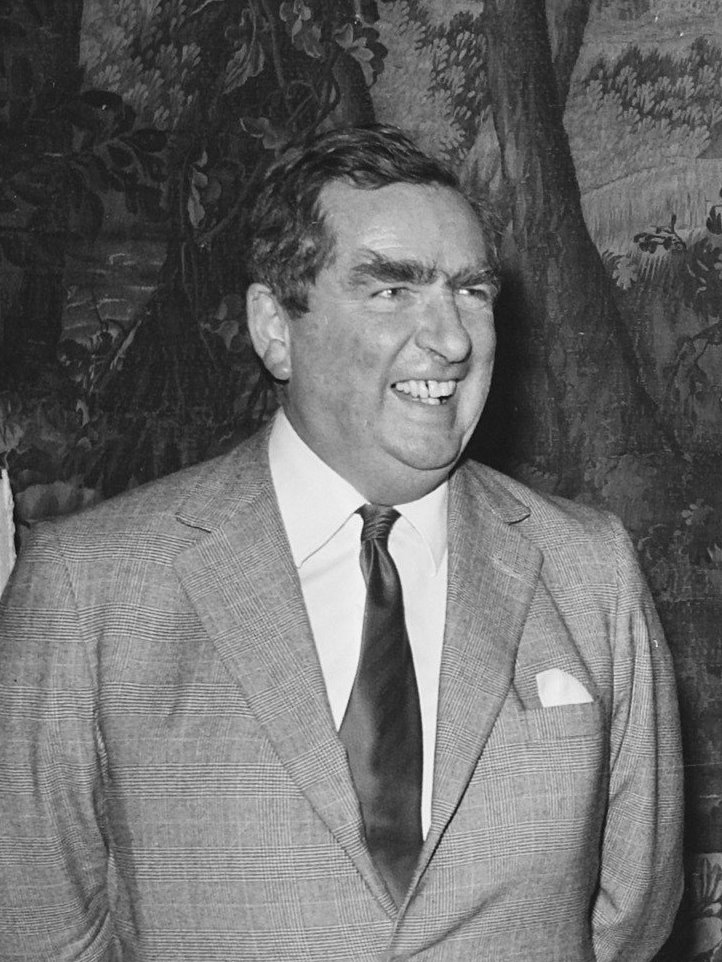
  • Denis Healey – 1972 Speech on India and Pakistan

    Denis Healey – 1972 Speech on India and Pakistan

    The speech made by Denis Healey, the then Shadow Foreign Secretary, in the House of Commons on 18 January 1972.

    First, I should like to join in welcoming, as the Foreign Secretary did, the wise statesmanship of President Bhutto in releasing Sheikh Mujibur Rahman and sharing in his wish for close and friendly relations with the new Government of Bangladesh. I think that the whole House will want to take this opportunity to wish the people of the new State a peaceful and prosperous future after the tragic ordeal through which they have passed in recent years.

    I should like to ask the Foreign Secretary two questions. First, many of us will be disappointed that the Government do not feel in a position to give diplomatic recognition to the new Government of Bangladesh. Will the right hon. Gentleman assure the House that the real reason is that he is seeking to arrange for the largest possible number of European and Commonwealth Governments to give diplomatic recognition at the same time and that this is well understood by Sheikh Mujibur himself?

    Secondly, on the question of economic aid, the Foreign Secretary will recognise that the scale of aid required for the new State will dwarf in magnitude even that required to deal with the problem of the refugees in India not so long ago. Will he assure the House that he will meet what I am certain is the unanimous wish that Britain should take the lead in organising international support of the new State as we took the lead, under the right hon. Gentleman’s initiative, in dealing with the earlier problem?

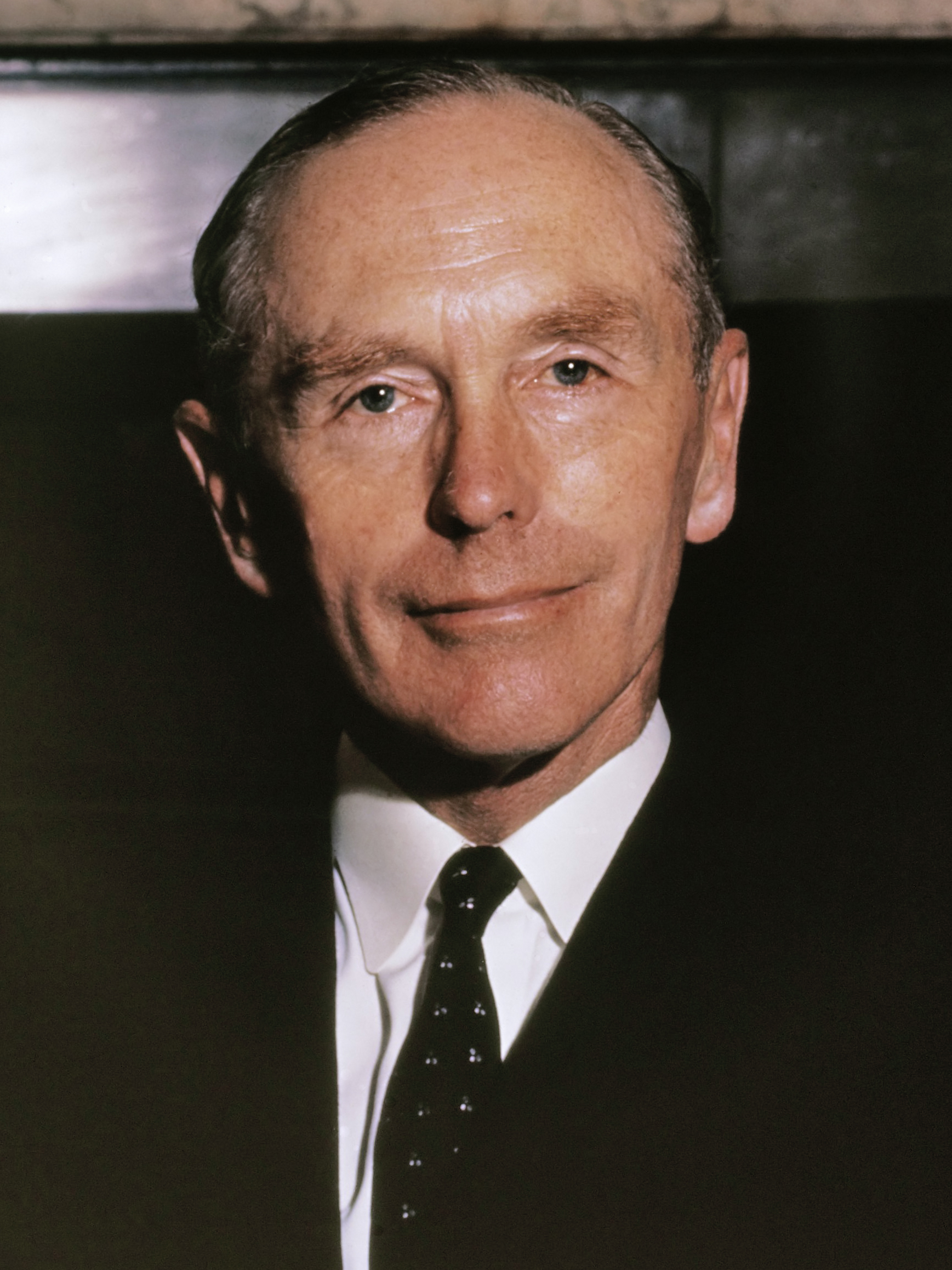
  • Alec Douglas-Home – 1972 Statement on India and Pakistan

    Alec Douglas-Home – 1972 Statement on India and Pakistan

    The statement made by Alec Douglas-Home, the then Foreign Secretary, in the House of Commons on 18 January 1972.

    With your permission, Mr. Speaker, and that of the House, I wish to make a statement.

    Since the House rose, the hostilities between India and Pakistan have ended. On 21st December the United Nations Security Council adopted a resolution demanding the strict observance of this cease-fire and the withdrawal of armed forces as soon as practicable. We played a full part in the negotiations leading up to this resolution, and we voted for it.

    A new pattern of relationships is now emerging. In Pakistan, President Bhutto has taken over the Government In congratulating him on this appointment my right hon. Friend the Prime Minister has made clear our wish for close and friendly relations. One of President Bhutto’s first deeds was to release Sheikh Mujibur Rahman without conditions. This was a most statesmanlike act.

    In the East, normal life is returning and the refugees are beginning to go back to their homes. There are reports that well over 1 million have already done so . Since Sheikh Mujib’s return a new Government has been set up composed of those who were elected in the general election of December, 1970.

    On his way home, Sheikh Mujib passed through London and we were glad to welcome him. He paid a private courtesy call on my right hon. Friend the Prime Minister and expressed his desire for close co-operation and friendship between his people and this country. As he was anxious to return to Dacca as quickly as possible, a Royal Air Force aircraft was put at his disposal.

    Sheikh Mujib also expressed his wish to remain on good terms with Pakistan, but made it clear that there could be no question of a formal link. President Bhutto, for his part, has proposed further discussions between the East and the West.

    The new Government in Dacca appears to be firmly established. The Indian Army is still in the East, but Sheikh Mujib has made it clear that this is by his will and that the soldiers will be with drawn when he deems it necessary.

    I am keeping the question of recognition under close consideration and am in touch with a number of Commonwealth and other Governments. I hope to be able to make another statement on this question in the near future.

    British lives and property have been affected by the war. As I informed the House on 13th December, seven United Kingdom citizens were killed in a British ship in Karachi. Since the end of hostilities we have come to know that three United Kingdom citizens were killed in an attack on a Pakistan vessel in which they were serving. British property suffered some damage, including the tea estates in the East. But the British firms affected in both the East and the West are anxious to resume operations and assist in the task of rehabilitation.

    Many problems remain. In the East the authorities are faced with an immense task of reconstruction. We shall want to play a full part in helping with these problems. We are trying, through the United Nations and other agencies, to establish the needs and priorities, and we discussed the question with Sheikh Mujib when he was in London. There still remains unspent about £1 million of our contribution to the United Nations for emergency relief. I am happy to announce that we have now decided to provide a further £1 million for relief in the area. In the West we have also told President Bhutto of our willingness to do what we can to help. The possibility of new aid is one of the questions which we shall be discussing with the President of the World Bank when he is in London this week.

    I am sure that all Members will agree that, whatever the rights and wrongs of the events which led up to this tragic conflict, the need now is to help the parties concerned to work together to solve the many problems of the subcontinent.

  • Sajid Javid – 2021 Comments on Supporting Other Countries with Vaccines

    Sajid Javid – 2021 Comments on Supporting Other Countries with Vaccines

    The comments made by Sajid Javid, the Secretary of State for Health and Social Care, on 30 December 2021.

    The global pandemic has challenged health systems around the world and the best way to overcome this awful disease is to unite and stand side by side with our international partners.

    By supporting countries with the UK’s ground breaking science and research into the spread of variants, improving access to oxygen and scaling up testing we will help those most in need chart their course out of the pandemic.

    I am proud that we have already delivered over 30 million vaccines to our friends abroad. The UK, as a global leader, is helping other countries most in need. No one is safe until everyone is safe.

  • Peter Mills – 1972 Speech on North Sea Gas

    Peter Mills – 1972 Speech on North Sea Gas

    The speech made by Peter Mills, the then Conservative MP for Torrington, in the House of Commons on 17 January 1972.

    I wish to bring to the attention of the House some of the problems that have been faced by some of my constituents in North Devon and Crediton in connection with the conversion to North Sea gas.

    I welcome the change to natural gas and I acknowledge that benefit will accrue from the change. However, many unnecessary problems have arisen, and I air this issue because, while it may be too late to help some of my constituents, others may benefit from the mistakes that have been made. It is to be hoped that the gas board will profit from the mistakes it has made, even though it is a nationalised industry.

    I could quote many examples. I have received scores of telephone calls, letters and visits from constituents. Their representations have been passed to the gas board.

    The Chairman of the Northam Urban District Council says this:

    “I feel that it should be brought to your notice that a large number of people in my District are enraged at the incompetent preparations for our conversion to Natural Gas. Wrong parts were delivered and in many cases no parts arrived at all, and as a result many dwellings are without proper cooking and heating facilities for a week.”

    Even now some dwellings are unconverted in spite of continual requests for help. Many empty flats, chalets and caravans were completed first, leaving those who needed it, the priority ones, last.

    “In consequence considerable hardship has been caused. This is in marked contrast to the confident assurances given to my Council when one of your publicity officers addressed us some weeks ago.”

    I come to some individual cases. There is a Mr. Bawden, of Penqueen Place, Crediton. His gas fire had been condemned. He was told that up to 18 months ago it could have been converted, but not now. Unfortunately for him, he is 71 years old and a pensioner, and he cannot afford a new gas fire.

    There are some old people living in an old people’s home at 21 Aysha Gardens, Westward Ho. These are bungalows built six years ago, but the inhabitants are told that structural alterations are necessary before even a start can be made on the conversions. The estimated cost is £35 for each bungalow. These people cannot afford that.

    Another series of cases is from the Northam Residents’ Association. The association criticises the gas board and the operation very severely. It talks about the initial survey and says that some people were visited six times and others were left out altogether. It seems to be the root of the problem that in this very large area in North Devon the board failed to carry out the survey adequately and properly. My complaint is; why did the board start on this conversion before it had done the initial survey properly? It is no excuse to say that it could not get into various houses and, therefore, had problems later. Why start?

    Another rather pathetic case is an elderly man I have known for some time, a Mr. Lewis of Bideford. He thanks me that through my representations the board has at least called on him. But he has been informed that unless he is prepared to pay £52·50 nothing can be done. This is in contradiction, he says, to the brochures and to what I have told him—that in these cases the board will provide something. But it will not; it is £52 or he does not get his water heater. He has been without hot water for 12 weeks. It is an appalling situation.

    I could go on and on, but the worst case of all, with a lack of any sympathy or feeling by the gas board, astounds me. I received a letter from a home help concerning two elderly ladies. One of the ladies is 91; the other is 76.

    “Since November 15th, when the conversion to natural gas was commenced in this area, they have been without heating of any sort in their bedroom, and in this cold, wet weather it is a real hardship.”

    The home help says that this is especially so for the older lady.

    “Several different men have called, but nothing at all gets done, and I think it is disgusting to leave these two elderly people in this state for so long.”

    Can there be a worse case? It is appalling. So there are frustrated and angry people in my constituency.

    What annoys me even more is that on many occasions the gas board employees do not even bother to reply to the free phone which one is invited to ring to get some action. These things must not be allowed to happen again. It is true that the board, so it says, will convert where it can and will help by supplying a reconditioned appliance, as my hon. Friend says in his letter. However, the cases I have quoted prove that this is not always so, for some reason. It costs some people money. I suppose that the trade-in value of an old appliance is not very high and another appliance must be found, and for elderly people this is expensive. I understand, too, that portable gas fires cause a problem, and new ones must be bought.

    Then there is the problem with flues which are not up to standard. I mentioned the cost of renovating the flues in the old people’s home. Those running the home were quite happy to go on as they were before conversion. Conversion has been a very expensive business for them.
    I am sure that salesmen have brought pressure to bear on some people. After all, one way of exerting pressure is to create worry by saying, “We could do it, but there are problems, and it would be better to buy a new gas stove.” In this way they sell a new appliance. Old people, through reading about some of the problems arising from North Sea gas, are concerned and give in.

    Whatever the board says, I believe that some people have to pay. It is expensive, and pensioners can ill afford it. This is why I have written to my hon. Friend the Under-Secretary of State for Health and Social Security, because further help must be given in some cases. Today I have received a reply from the Supplementary Benefits Commission which repeats the same story, that the board will always convert or will provide another appliance. That just is not true, as some elderly people know to their cost.

    Something must be done to ensure that this nonsense does not continue in the South-West or elsewhere.

    First, the South-Western Gas Consultative Council must not whitewash matters, as I believe it does at present. The council stands between the consumer and the board, and it must point out firmly and critically the faults the board makes. The Secretary of the council has been particularly helpful to me since I have been in contact with him and problems have been dealt with quickly.

    Second, I believe that the council must advertise so as to make it quite clear, through the medium of the local Press, what people are entitled to.

    Third, the survey must be done well and the conversion operation should not begin until the survey is completed. It is ludicrous to have a survey if it is not carried to completion and if the board does not find out what are the needs in each house.

    Fourth, letters from the board, particularly letters to the aged, must be more helpful. Some of the letters I have seen show a complete lack of any feeling of sympathy towards the elderly. I hope that the board will heed this and will be more helpful, rather than worry people.

    Fifth, the free phone must operate, or the entry should be taken from the telephone directory. What is the use of having a free phone if it does not work?

    Sixth, there must be a better performance by the private contractors, who have been doing most of this work. Perhaps showing the fault lies in lack of supervision by the board, but there is fault.

    Seventh, next, there should be more generous help for the retired and the elderly. After all, they did not ask for this conversion, and it creates problems.

    Lastly, because of the problems in North Devon and Crediton I believe that there should be an inquiry by the gas board into the reasons for these problems and why they have been so acute. All sorts of excuses have been made, such as the survey and the unusually high number of old appliances. Fair enough; but why start before one has the proper spares and all the facilities necessary to do the job?

    I believe that my hon. Friend the Member for Dorset, North (Mr. David James) wishes to say a few words, so I shall say no more. The gas board has made a mess in North Devon and in Crediton, and the lesson should be learned so that this can never happen again.

  • Denis Healey – 1972 Speech on Malta

    Denis Healey – 1972 Speech on Malta

    The speech made by Denis Healey, the then Shadow Foreign Secretary, in the House of Commons on 17 January 1972.

    While thanking the Foreign Secretary for his statement and welcoming the signs that negotiations may now be resumed, and even more the statement by the noble Lord the Secretary of State for Defence that there is now a 50 per cent. chance of solution, may I say that many on this side of the House will have been surprised by the sour and ungracious tone in which the right hon. Gentleman referred to the contributions which have already been and may yet be made by our N.A.T.O. allies? We on this side of the House agree that there should be no increase in the British contribution. Indeed, if any money is available to create jobs, we believe that it should be used to create jobs in Britain rather than in Malta. But now that the other N.A.T.O. countries are clearly prepared to make a financial contribution commensurate with their interest in Malta as members of the Alliance, will the right hon. Gentleman tell us why the Government were so angry and embarrassed last week when the Americans finally came forward with a contribution, why they attempted to conceal this offer, which was made at least 12 days ago, from the Maltese Government, and why it took the rather improbable alliance of the Secretary-General of N.A.T.O. and my hon. Friend the Member for Barking (Mr. Driberg) to get communications restored?

    The Foreign Secretary has rightly stated a point which was pressed on the House by myself as Secretary of State for Defence and hotly contested by the Conservative Party some years ago, that Britain’s and N.A.T.O.’s interest in Malta is not so much to have forces there ourselves as to prevent the Russians having a base there. Will the Foreign Secretary recognise in the course of the negotiations that a solution is much more likely if it de-emphasises the political and military alignment of Malta with N.A.T.O. and concentrates rather on eliminating the possible use of the base by Soviet forces? An agreement along these lines is more likely to receive the continued support of the Maltese people as well as being compatible with progress towards conciliation between the West and Russia in the Mediterranean.

    Sir Alec Douglas-Home

    The right hon. Gentleman has got this wrong. So far from concealing any offer made by an ally towards a solution with Malta, we have been pressing our allies month by month to raise some extra money over and above what we ourselves are willing to subscribe. Therefore, the right hon. Gentleman really has got his facts wrong on this matter.

    There are to be further talks, so I do not want to go further into the finances now. However, there is this important question of aid in the future which I have no doubt would be available from allied countries. This would be of enormous value to Malta if Mr. Mintoff would take it in that form.

    Mr. Healey

    The right hon. Gentleman must not seek to present the facts other than as they were—[HON. MEMBERS: “Oh.”] Is the Foreign Secretary denying that the American Government made this offer of an increased financial contribution at least as long ago as 8th January, that the British Government declared themselves extremely annoyed when the Maltese Government were informed of this offer by the American Government, that it took several days of persuasion by the Secretary-General of N.A.T.O. to convince the British Government that they must start negotiating again with the Maltese Government, and that the attempt to establish these negotiations did not in fact begin until Friday and Saturday of last week?

  • Alec Douglas-Home – 1972 Statement on Malta

    Alec Douglas-Home – 1972 Statement on Malta

    The statement made by Alec Douglas-Home, the then Foreign Secretary, in the House of Commons on 17 January 1972.

    With your permission, Mr. Speaker, and that of the House, I wish to make a statement on recent developments concerning our defence arrangements with Malta.

    The position when the House rose for the recess was that the Malta Government had been offered £9½ million per annum in return for a satisfactory new defence arrangement. At the Chequers meeting in September, it had been agreed that the Malta Government would receive a six-month interim payment on the basis of that offer. Accordingly, the British Government had made a payment of £4¾ million on 30th September for the period up to the end of March.

    Over Christmas, Mr. Mintoff demanded immediate payment of another £4¼ million, for the next three months, as the only basis on which he could permit the continued presence of British forces in Malta after 31st December. The British Government, of course, could not accept this demand, and they announced on 29th December that they were setting in hand preparations for the withdrawal of British forces in Malta, though they remained ready to continue to talk. The decision to withdraw was one which the Government took with the greatest regret. But throughout their negotiations with Mr. Mintoff they had made clear that they would not seek to maintain British forces in Malta against the wishes of the Malta Government.

    Mr. Mintoff subsequently extended his deadline for the withdrawal of our forces until 15th January. Since there were suggestions that the Malta Government might contemplate taking measures against our remaining forces after that date, my right hon. Friend the Prime Minister sent messages to Mr. Mintoff concerning the withdrawal. He made clear that we wished the withdrawal to be as orderly, amicable and expeditious as possible, though it would be physically impracticable to complete it by 15th January. He assured Mr. Mintoff of our sincere wish that any harm done to our relations by the failure to reach agreement on a defence arrangement and our consequent withdrawal should be as little and as short-lived as possible.

    In the circumstances, the Government decided that every effort should be made to withdraw at least the families of our forces before 15th January. A special airlift was mounted for this purpose, and the House will wish to congratulate those responsible for the efficiency of the arrangements that were made, not least for the reception of the families in this country. The other stages of the withdrawal are proceeding according to plan. The reconnaissance aircraft that were based in Malta have already been redeployed elsewhere; and the forces which remain in Malta will be fully engaged from now on in the massive task of removing the large quantity of equipment and stores which we have there, as well as ensuring an orderly and phased handover of installations to the Maltese authorities.

    Throughout the course of our exchanges with the Malta Government we have kept in the closest touch with our N.A.T.O. allies in view of their interest in the continued denial of Malta’s strategic facilities to a potential enemy and in the use of these facilities to support N.A.T.O.’s southern flank. As the House knows, the retention of British forces in Malta is nowadays in the interests of the Alliance as a whole rather than of this country alone. The financial offer therefore, which has been available to the Malta Government since September, was made by the British Government on behalf of N.A.T.O. This offer, of a basic annual figure at a level closely approaching £10 million, was fair and, indeed, generous. Moreover, the Maltese economy would have continued to benefit from the local expenditure of the British forces—recently running at about £13 million per annum—and some of Britain’s N.A.T.O. allies subsequently offered to contribute a substantial additional amount of bilateral economic support totalling £7 million spread over a period. The British Government have for some time made clear that for their part they do not contemplate increasing their own contribution to this offer, in view of all the other costs of maintaining a British military presence in Malta which fall on the British Government anyway. On the other hand, we have, of course, no objection to any of our allies offering further contributions to Malta in return for a satisfactory new defence agreement, if they judge this to be necessary in the interests of the Alliance.

    The latest development is that, by mutual arrangement and through the good offices of the Italian Government, meetings were held in Rome last Saturday attended by the Prime Minister of Malta, the Italian Foreign Minister, the Secretary-General of N.A.T.O. and my right hon. and noble Friend the Defence Secretary. Some progress was made, and after the meetings Mr. Mintoff announced the removal of the deadline of 15th January. A further Ministerial meeting is expected to take place in Rome later this week, and official-level talks in Valletta are also being resumed immediately.

    Since the talks are continuing, I would not wish to go into detail about them. The British Government for their part will continue, in close consultation with their allies, to do all they can to ensure that a satisfactory agreement, beneficial to both sides, is reached. But the gap which remains is still wide, and the process of orderly withdrawal will continue unless and until it becomes clear that such an agreement can be reached.

  • Maggie Throup – 2021 Comments on AstraZeneca Vaccine Anniversary

    Maggie Throup – 2021 Comments on AstraZeneca Vaccine Anniversary

    The comments made by Maggie Throup, the Vaccines Minister, on 30 December 2021.

    One year on, the Oxford-AstraZeneca vaccine has played a crucial part in our fight against COVID-19, saving the lives of the most vulnerable and helping to reduce the spread of the virus.

    It’s a remarkable example of British innovation and scientific excellence – please take advantage and get your vaccines as soon as you can to protect yourself this winter.

  • Sajid Javid – 2021 Comments on AstraZeneca Vaccine Anniversary

    Sajid Javid – 2021 Comments on AstraZeneca Vaccine Anniversary

    The comments made by Sajid Javid, the Secretary of State for Health and Social Care, on 30 December 2021.

    Today marks one year since the UK made history by being the first country in the world to approve the Oxford-AstraZeneca vaccine – a UK-made and government-funded vaccine which has been absolutely pivotal in helping to save millions of lives around the world.

    I’m incredibly proud of the role the UK has played in developing, researching and manufacturing ground-breaking vaccines and treatments during the pandemic.

    Vaccines are the best way to protect people from COVID-19 and I’m urging everybody to play their part in this national mission – roll up your sleeves and get your jabs.