Blog

  • Kate Green – 2021 Comments on The Childhood Commission Review

    Kate Green – 2021 Comments on The Childhood Commission Review

    The comments made by Kate Green, the Shadow Secretary of State for Education, on 16 March 2021.

    Over the last decade the Conservatives have overseen record numbers of children being pushed into poverty, a worsening mental health crisis and an 18 month gap in learning between disadvantaged children and their peers at GCSE.

    This picture has to change, yet there was no mention of children in the Chancellor’s Budget and the Government has committed a measly 43p per child per day to support their recovery.

    Labour launched our Bright Future Taskforce last week to help children to recover from the impacts of the pandemic and ensure all children can reach their potential. Alongside the Children’s Commissioner’s ‘Big Ask’ I hope this will deliver a step change for children.

  • Jess Phillips – 2021 Comments on Women Being Victims of Violent Crimes

    Jess Phillips – 2021 Comments on Women Being Victims of Violent Crimes

    The comments made by Jess Phillips, the Shadow Domestic Violence and Safeguarding Minister, on 16 March 2021.

    These figures underline that violence is not a rare occurrence but the sad reality for too many women and girls across the country.

    We need a step change not just in the criminal justice system but throughout society – and that needs real Government backing.

    The Tories need to stop wasting time on gimmicks and get serious about tackling the epidemic of violence women and girls are facing.

    This legislation is the equivalent of a get out of jail free card – it should be called the Abusers Charter.

  • Priti Patel – 2021 Statement on Sarah Everard

    Priti Patel – 2021 Statement on Sarah Everard

    The statement made by Priti Patel, the Home Secretary, in the House of Commons on 15 March 2021.

    With permission, Mr Speaker, I should like to make a statement on the tragic death of Sarah Everard and the events of Saturday evening. I would like to begin by saying that my thoughts and prayers are with Sarah’s family and friends at this unbearable time. I know that every Member of this House will join me in offering her loved ones our deepest sympathies. While this is a horrific case, which has rightly prompted debate and questions about wider issues, we must remember that a young woman has lost her life and that a family is grieving.

    Let me turn to this weekend’s events. I have already said that some of the footage circulating online of Clapham common is upsetting. While the police are rightly operationally independent, I asked the Metropolitan police for a report into what had happened. This Government back our police in fighting crime and keeping the public safe, but in the interests of providing greater assurance and ensuring public confidence, I have asked Her Majesty’s inspectorate of constabulary to conduct a full, independent lessons-learned review. The Metropolitan Police Commissioner has welcomed this and I will await the report and, of course, update the House in due course.

    I would like to take a moment to acknowledge why Sarah’s death has upset so many. My heartache and that of others can be summed up in just five words, “She was just walking home.” While the specific circumstances of Sarah’s disappearance are thankfully uncommon, what has happened has reminded women everywhere of the steps that we take each day without a second thought to keep ourselves safe. It has rightly ignited anger at the danger posed to women by predatory men, an anger I feel as strongly as anyone. Accounts shared online in the wake of Sarah’s disappearance are so powerful because every single one of us can relate to them. Too many of us have walked home from school or work alone only to hear footsteps uncomfortably close behind us. Too many of us have pretended to be on the phone to a friend to scare someone off. Too many of us have clutched our keys in our fist in case we need to defend ourselves. And that is not okay.

    Women and girls must feel safe while walking our streets. That is why we have continued to take action. Our landmark Domestic Abuse Bill is on track to receive Royal Assent by the end of April, and this will transform our collective response to that abhorrent crime. It builds on other measures that we have introduced, including the controlling or coercive behaviour offence and the domestic violence disclosure scheme, known as Clare’s law, which enables individuals to ask the police whether their partner has a violent or abusive past. We have also introduced new preventative tools and powers to tackle crimes including stalking, female genital mutilation and so-called upskirting, but we can never be complacent. That is why throughout the passage of the Domestic Abuse Bill, we have accepted amendments from hon. Members from political parties across the House.

    The Bill now includes a new offence of non-fatal strangulation, outlaws threats to disclose intimate images and extends the controlling or coercive behaviour offence to cover post-separation abuse. This is in addition to the Bill’s existing measures, which include a new statutory definition of domestic abuse that recognises the many forms that abuse can take—psychological, physical, emotional, economic and sexual—and, of course, the impact of abuse on children, as well as new rules to prevent victims from having to go through the pain of being cross-examined by their abusers in family and civil courts.

    We all know that action is needed to improve the outcomes for rape cases, and we are currently developing robust actions as part of our end-to-end review of rape to reverse the decline in outcomes in recent years. At the end of last year, in December, I launched the first ever public survey of women and girls to hear their views on how we can better tackle these gendered crimes. On Friday, in the wake of the outpouring of grief, I reopened that survey. I can tell the House that as of 11 am today, the Home Office had received 78,000 responses since 6 pm on Friday. That is completely unprecedented, and considerably more than the 18,000 responses received over the entire 10-week period when the survey was previously open. I am listening to women and girls up and down the country, and their views will help to shape a new strategy on tackling violence against women and girls, which I will bring forward to the House later this year.

    The Police, Crime, Sentencing and Courts Bill, which we will shortly be debating, will end the halfway release of those convicted for sexual offences such as rape. Instead, under our law, vile criminals responsible for these terrible crimes will spend at least two thirds of their time behind bars. Our new law will extend the scope of the Sexual Offences Act 2003 with regard to the abuse of positions of trust—something that predominantly affects young girls—and it will introduce Kay’s law, which will encourage the police to impose pre-charge bail with appropriate conditions where it is necessary and proportionate to do so. We hope that that will provide reassurance and additional protection for alleged victims in high harm cases such as domestic abuse. I note that the Opposition will be voting against these crucial measures to support victims of violent crimes, including young women and girls.

    The Government are providing an extra £40 million to help victims during the pandemic and beyond. Last month we launched a new Government advertising campaign, #ItStillMatters, to raise awareness of sexual violence services and ensure that victims know where to get help.

    Over the past year, during the coronavirus pandemic, the police have been faced with an unenviable and immensely difficult task—one that, for the most part, they have approached with skill and professionalism—of helping to enforce regulations, as determined by Parliament, with one crucial objective in mind: to save lives. On 6 January, this House approved those changes by 524 votes to 16. Sadly, as of Sunday 14 March, more than 125,500 lives have been lost to this horrible virus. It is for that reason that I continue to urge everyone, for as long as these regulations are in place, not to participate in large gatherings or attend protests. The right to protest is the cornerstone of our democracy, but the Government’s duty remains to prevent more lives from being lost during the pandemic.

    There will undoubtedly be more discussions of these vital issues in the days and weeks to come, but we cannot and must not forget that a family is grieving. I know that the thoughts and prayers of the whole House are with Sarah’s loved ones at this truly terrible time.

  • Kate Green – 2021 Comments on Funding for Breakfast Clubs

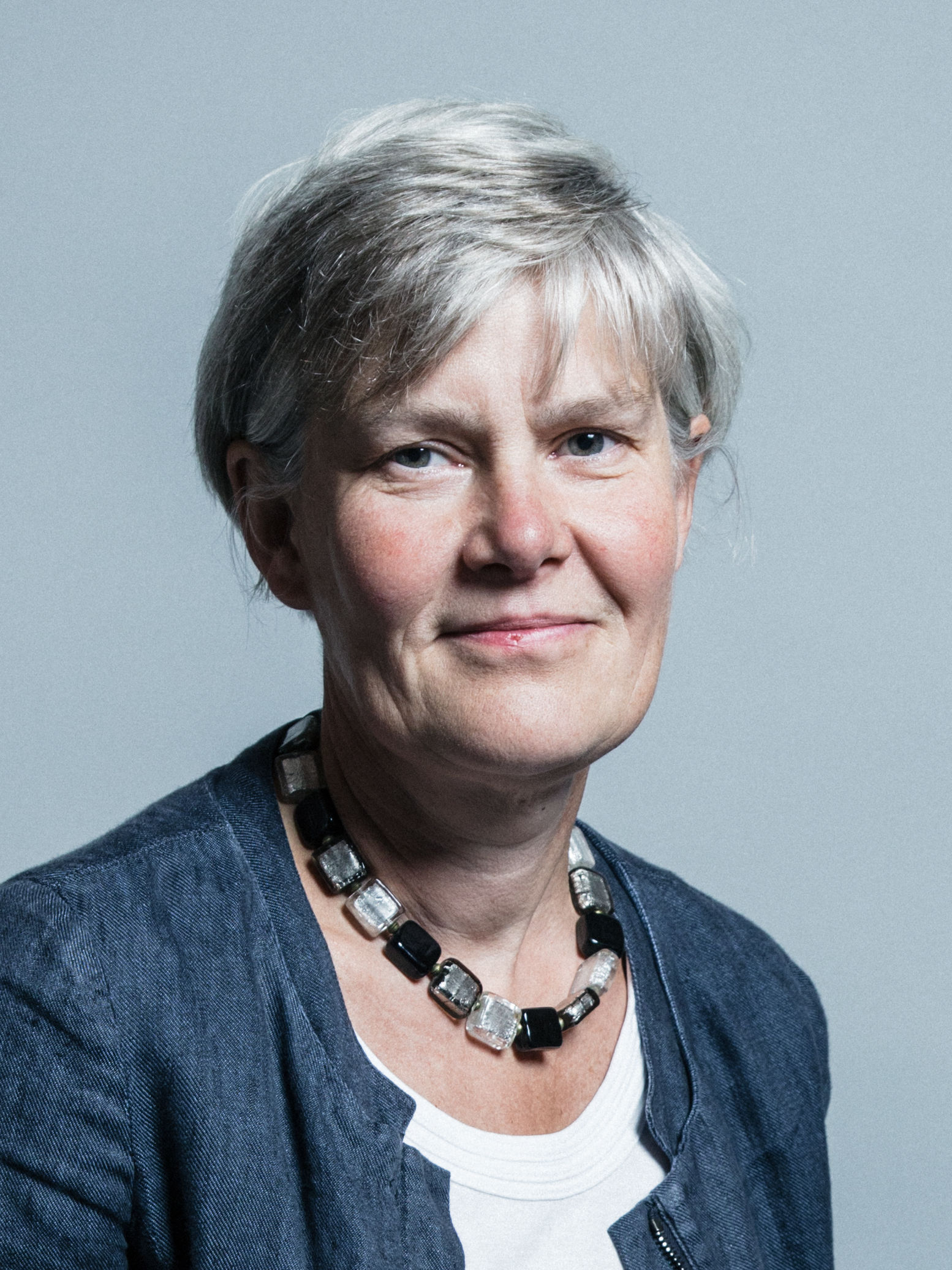
    Kate Green – 2021 Comments on Funding for Breakfast Clubs

    The comments made by Kate Green, the Shadow Secretary of State for Education, on 15 March 2021.

    This is a pitiful response to Labour’s call for a universal breakfast club offer for every child. This funding is likely to provide breakfast club support to just four per cent of children which is simply not good enough.

    Labour is calling for breakfast clubs to be available to support every child to recover the learning and social development they have lost during the pandemic.

    From providing a measly 43p per child per day for educational catch-up to offering no additional funding for schools in the Budget, the Conservatives have shown they are simply not ambitious about children’s recovery from this pandemic.

  • Jeremy Corbyn – 2014 Comments on Military Base in Bahrain

    Jeremy Corbyn – 2014 Comments on Military Base in Bahrain

    The comments made by Jeremy Corbyn, the Labour MP for Islington North, on 7 December 2014.

    Absolutely shocking! Britain to establish first permanent Middle Eastern military base for 43 years in Bahrain.

  • Jeremy Corbyn – 2014 Comments on European Union Response to Migrants in Mediterranean

    Jeremy Corbyn – 2014 Comments on European Union Response to Migrants in Mediterranean

    The comments made by Jeremy Corbyn, the Labour MP for Islington North, on 28 October 2014.

    On CNN on need for human response to 3000 deaths already in Mediterranean this year. EU putting up barriers not saving lives of victims.

  • Christopher Chope – 2021 Speech on the British Library

    Christopher Chope – 2021 Speech on the British Library

    The speech made by Chris Chope, the Conservative MP for Christchurch, in the House of Commons on 15 March 2021.

    New clause 1 provides that the Act expires at the end of a period of five years beginning from the day on which it is passed, otherwise known as a sunset clause. I have tabled this new clause because I think it is particularly apposite in relation to this subject.

    When the Government, or the Department for Digital, Culture, Media and Sport, first contemplated the idea that the British Library might be given the power to borrow, which it does not have at the moment, the report said that there would be an opportunity to have a full debate about the pros and cons of so doing, and I am not sure that that debate has ever really taken place. I am also not sure that the British Library board is that keen to exercise these powers. The reason for that may well be associated with the fact that borrowing incurs future costs, and those costs then have to be budgeted for from a grant in aid. It is well established that many of what are described as “arm’s length authorities”, which are the subject of grant in aid from the Department for Digital, Culture, Media and Sport, believe that it is better to rely on grant in aid, where they know where they stand, than to go down the route of borrowing.

    My concern is that the Bill could be used as a means whereby the Government cut their grant in aid to the British Library board and, if the board whinges, tell it to borrow the money instead. Given that our national debts are at record levels, it seems to me that such an attitude would be completely out of place. If the Bill becomes law, however, there is no guarantee that that will not happen—that it will not be used as an excuse to ramp up costs for future generations: “Spend now, pay later”. The grant in aid process is designed to ensure that the British Library board can receive funding sufficient to enable it to do its work during the course of the year.

    My background interest in this comes from the fact that I was the Minister responsible for the Property Services Agency. One of the biggest projects on its books was the construction of the new British Library. That whole process and the way in which it was funded should be the subject of a treatise.

    The grant in aid process was used to fund the construction project each year; there would be an agreement between the Government, the Department and the British Library about how much money could be spent on it in any given year. But no limit was put on the overall costs. It was only when the then Prime Minister Margaret Thatcher got to hear about that that she decided that we could not carry on just funding the capital project of the British Library on a year-by-year, hand-to-mouth basis. We needed to say that that could not go on indefinitely and that there should be a finite sum of money for the project—and that would be that.

    I do not know whether you have been round the British Library, Madam Deputy Speaker, but it is almost in two halves: part of it is adorned with fantastic panelling and money-no-object interiors, but I can only describe the second part as rather more utilitarian. That is a direct consequence of the then Prime Minister’s having said that there had been an abuse of the grant in aid process. I still have the trowel used in the British Library topping-out ceremony—as we would expect for such an extravagant project, it is made of finest silver and came from Garrard, I think. But that is by the by.

    Just as the grant in aid was abused before Margaret Thatcher got a grip on it, I fear that the power to borrow could also be abused if we do not keep a tight rein on it. A five-year sunset clause would enable that assessment to be made, so that at the end of five years, if it had been a great success, it could be renewed, and if not, there would not be any need to renew it. Effectively, it would give this House the opportunity of policing what had actually happened under the powers being granted in this primary legislation. I go back to the point that we are not even sure that the British Library really wants these powers, and certainly it does not want these powers if the consequence is a reduction in its grant in aid.

    Amendment 1 is designed to limit the amount of borrowing in any calendar year to £1 million. That is an off-the-cuff, arbitrary sum of money, but it seemed to be a reasonable sum for starters, in the absence of any other evidence as to what the British Library needs to borrow and for what purpose it needs to carry out those borrowings. I have tabled this more as a probing amendment, rather than one that I expect to be accepted just like that by the Government. This is quite a short point—and, indeed, it is a short Bill—but in the context of the national situation of public borrowing, it takes on a totemic significance greater than it might have had when the Bill was introduced last year.

    I hope that those introductory remarks in support of my new clause will engender not only a debate but an opportunity for the Under-Secretary of State for Digital, Culture, Media and Sport, my hon. Friend the Member for Boston and Skegness (Matt Warman), who I am pleased to see in his place, to respond and to share with the House his vision for the British Library and how much he thinks that vision is dependent upon the British Library Board having the borrowing powers set out in the Bill.

    I would be interested to know whether the Minister has any idea of how much the British Library Board is thinking of borrowing. The explanatory notes make it clear that the board would not just be able to borrow willy-nilly; it would have to get approval for so doing from the Department. My understanding is that, at the moment, there is a sum of £60 million available for borrowing for all the arm’s length bodies that the Department sponsors. Would the British Library Board’s borrowings be subject to that limit, or would they be in addition to it? In the spirit of the need to ensure that we scrutinise these proposed pieces of legislation, I would be grateful if we could get some response on those issues.

  • Dominic Raab – 2021 Comments on Government Jobs Moving to Scotland

    Dominic Raab – 2021 Comments on Government Jobs Moving to Scotland

    The comments made by Dominic Raab, the Foreign Secretary, on 15 March 2021.

    There can be no clearer demonstration of our commitment to our joint HQ in East Kilbride than today’s announcement that an extra 500 Foreign Commonwealth and Development Office jobs are coming to Scotland. This will ensure the Civil Service represents all parts of the UK and will be a boost to the Scottish Economy.

    Staff at Abercrombie House are at the forefront of delivering the UK’s diplomatic clout, as we prepare to host the G7 and COP26, while supporting the delivery of our £10billion aid budget to continue helping the world’s poorest people.

  • Michael Gove – 2021 Comments on Government Jobs Moving to Scotland

    Michael Gove – 2021 Comments on Government Jobs Moving to Scotland

    The comments made by Michael Gove, the Chancellor of the Duchy of Lancaster, on 15 March 2021.

    The Cabinet Office’s new HQ in Glasgow will co-locate the engine room of the UK Government in Scotland, bringing decision makers closer to the communities they serve and ensuring closer collaboration between Scotland’s two governments as we tackle the COVID-19 pandemic together and work to build a sustainable recovery.

    Not only will this bring new jobs and investment to Scotland, it will strengthen the diversity of the UK Civil Service, ending the Westminster knows best approach to policy making and ensuring Scottish voices shape everything we do.

    The road to recovery from the pandemic will be tough, but with all four nations pulling together we can ensure we build back a stronger, fairer and greener United Kingdom.

  • Dominic Raab – 2021 Statement on Mathias Cormann

    Dominic Raab – 2021 Statement on Mathias Cormann

    The statement made by Dominic Raab, the Foreign Secretary, on 15 March 2021.

    My congratulations to Mathias Cormann on his selection as the next OECD Secretary General. As the UK holds the Presidency of the G7 and hosts COP26 later this year, our close partnership with the OECD will be vital to building back better from this pandemic.

    I look forward to working closely together to support the global economy to recover from COVID, and step up the fight to tackle climate change.