Blog

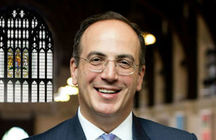
  • Michael Ellis – 2022 Speech on Lord Lebedev Joining the House of Lords

    Michael Ellis – 2022 Speech on Lord Lebedev Joining the House of Lords

    The speech made by Michael Ellis, the Paymaster General, in the House of Commons on 29 March 2022.

    Let me first address the situation in Ukraine. President Volodymyr Zelensky has spoken of the Prime Minister and people of the United Kingdom as being among his greatest allies, and the Kremlin has spoken of the United Kingdom as a leading opponent. I am proud of that position, and we will continue to support Ukraine—as I know will the whole House—and the courageous people of that sovereign and independent country.

    The motion before the House calls on the Government to release advice provided by or to the House of Lords Appointments Commission, and relevant communications thereto. The Government regret today’s motion for any number of reasons—I will come on to those—but particularly because, for the first time in many decades there is a war in Europe, and there are many pressing domestic concerns and issues. It is somewhat surprising that the Opposition have brought forward for discussion this afternoon an ad hominem attack on a single individual.

    Although Parliament has unlimited power to call for papers, persons and records, historically the House has exercised restraint in the use of that power, and for good reason. That the motion seeks not to show restraint is, in my submission, unfortunate. I accept that Parliament has a vital scrutiny role and should use its power to facilitate it, but that does not extend to making use of the procedures of this place to single out an individual by making unsavoury and ad hominem attacks of the kind we have heard and will be hearing this afternoon.

    Several hon. Members rose—

    Michael Ellis

    Before I give way, which I will be happy to do, may I gently point out to the Opposition that—and I say this in all candour—they ought to be careful of intolerant messaging? Not all Russians are our enemy. Many British citizens of Russian extraction came to this country with a view to an opposition to President Putin. People cancelling Tchaikovsky concerts is not appropriate, and Labour seeking to whip up anti-Russian feeling or casting all persons of Russian extraction in a negative light is wrong.

    Furthermore, the disclosure of the information sought here today would undermine the very role of the House of Lords Appointments Commission. Labour is asking for something that would break the appointments process in the House of Lords. It would chip away at the careful vetting procedures and the exchange of information that necessarily has to be discreet.

    Matt Western (Warwick and Leamington) (Lab)

    Will the Minister give way?

    Michael Ellis

    If I may, I will just finish this thought.

    Let us not forget that the commission of which we are speaking is independent, expert, advisory, and cross-party, with Labour, Liberal and Conservative members, and it was set up by Tony Blair and the Labour party in the year 2000—more than 20 years ago.

    Stephen Kinnock (Aberavon) (Lab)

    On the Minister’s point about Labour being Russophobic, I lived and worked in Russia for three years as director of the British Council in St Petersburg, and we worked every day with ordinary Russians—good people—who want that country to be a normal country connected to the rest of the world. The people we are talking about today are not ordinary Russians. We are talking about a former KGB spy and the woman who was married to a former deputy Finance Minister who has given millions of pounds to the Conservative party. I humbly ask the Minister to withdraw the comment about Russophobia. We have no problem with the Russian people; we have a big problem with what he is talking about today.

    Michael Ellis

    No, I do not accept what the hon. Gentleman says. In fact, the noble Lord who is the subject of this debate is not a Conservative party donor and never has been, so the hon. Gentleman is quite wrong on all those fronts. The motion before the House today is what I have said it is.

    Shaun Bailey

    Further to the point of the right hon. Member for Exeter (Mr Bradshaw), I wonder whether my right hon. Friend and learned Friend could give me his thoughts on this tweet that has just come through, which contains this from the Leader of the Opposition:

    “Congratulations on your elevation to the House of Lords. All best wishes, Keir”?

    Is what is good for the goose good for the gander? What does the Minister think about that?

    Michael Ellis

    It has been mentioned that Lord Lebedev has been tweeting this afternoon, and I understand that he has tweeted in the past few minutes that the Leader of the Opposition congratulated him on his appointment as a peer. That must be rather embarrassing for the Labour party.

    Matt Western

    I sometimes think that the Minister must be the Derek Underwood of the Front Bench in that he is the nightwatchman defending the indefensible.

    As my hon. Friend the Member for Aberavon (Stephen Kinnock) just said, we are clearly talking about someone with huge influence who has worked closely with the Prime Minister and collaborated in delivering certain election victories for him as the Mayor of London.

    Michael Ellis

    Lord Lebedev is a British citizen of Russian extraction who, I understand, had his primary and secondary education in this country. I see no logic in the Labour party’s assessment.

    In order to put this issue in its true context, it is necessary to remind hon. Members of the process for nominations for peerages. The power to confer a peerage, with the entitlement to sit in the House of Lords, is vested in Her Majesty the Queen and is exercised on the advice of the Prime Minister. It is a long-established feature of our constitutional arrangements. The Prime Minister is ultimately responsible to Parliament, as he is in all matters, and to the people of the country for any nominations he makes.

    Two events have served to shape that process. First, the House of Lords Act 1999 ended the right of hereditary peers to pass membership of the other place down through their families. Secondly, the House of Lords Appointments Commission was created in May 2000—under Labour, which now wishes to break it—and it recommends individuals for appointment as non-party political life peers, such as those on the Cross Benches, and has political representation from the three parties within its members. The vetting process is at the heart of its work. The commission seeks to ensure the highest standards of propriety, and I include party political nominees within that.

    It does not apply in the instant case, but it should not be a matter of opprobrium that somebody be a party political supporter. Labour has hundreds of peers in the House of Lords. The Liberal Democrats have some 83 peers despite them having barely enough Members of Parliament to fill a minicab. There is nothing wrong with having a political affiliation.

    The House of Lords Appointments Commission seeks advice from a number of sources during its deliberations. Any time we ask any independent advisory body to obtain advice, and it does so discreetly and in confidence, if we seek to break that process, said body will not be able to function. Once all the evidence has been considered, the commission will either advise the Prime Minister that it has no concerns about an appointment or will draw its concerns to the Prime Minister’s attention. It is a long-standing position that it is for the Prime Minister of the day to recommend appointments to the House of Lords. For that reason, the Prime Minister continues to place great weight on the commission’s careful and considered advice before making any recommendations. That arrangement has served successive Prime Ministers of both parties but, as in other areas, they must carefully balance a range of evidence.

    Layla Moran (Oxford West and Abingdon) (LD)

    I am grateful to the Minister for giving way to a Liberal Democrat, few as we are. Nevertheless, I draw his attention to another tweet from Lord Lebedev:

    “Openness and transparency are pillars of our democratic system, so I welcome the call for security advice about me…to be released. I have nothing to hide.”

    The Minister is highlighting the fact that the appointment was questioned by that commission, so I do not see his argument, because it sounds like there were concerns. If Lord Lebedev has nothing to hide and the commission made its recommendation, that prompts the question: what do the Government have to hide?

    Michael Ellis

    I thank the hon. Lady for asking that question. This is not about any one individual. The Opposition are seeking it to be about one individual who cannot answer for himself in this House, which is wrong. The Government are seeking to protect the system, so even if Lord Lebedev has said that he does not mind, it is not, with the greatest respect, only about him; this is about protecting the system, because the House of Lords Appointments Commission would not be able to function.

    The Leader of the Opposition wrote to the commission earlier this month and received a reply a week or two ago, which I believe is in the public domain, in which it outlined the process and did not highlight any problems. The reality is that the Government are seeking to protect a system that has worked well for 22 years, so I ask the House to bear that in mind.

    Stewart Hosie (Dundee East) (SNP)

    The Minister has said that the House of Lords Appointments Commission takes a variety of information from a variety of sources and organisations. That is perfectly reasonable. Is he suggesting, however, that the opinions or information of the intelligence services should somehow be of less importance than information from another body?

    Michael Ellis

    No, I am not suggesting anything of the sort. In fact, I have no personal knowledge of those from whom the commission obtains its information. It is for the commission, which has Labour, Conservative and Liberal Democrat and independent members, to make its own judgments, and we heard from the commission in the letter I mentioned, which I think was from Lord Bew.

    Duncan Baker (North Norfolk) (Con)

    Quite rightly, we should be concerned about Russian money coming into our political system, but my right hon. and learned Friend at the Dispatch Box is right in what he says. We really should point out who the Prime Minister was who let the fox into the chicken coup. Who was it, for instance, in 2003 when Roman Abramovich bought Chelsea football club? It was none other than the new Labour Prime Minister, Tony Blair.

    Michael Ellis

    Yes, well, I will leave the House to draw its own conclusions about that.

    I have to say that the individual who is the subject of this debate is a British citizen. He happens to be of Russian extraction. I understand that he has been in this country since primary school age. It is important to emphasise that this is about British people whose ancestry and heritage should not be relevant. As the owner of a regional newspaper, I understand that the London Evening Standard has raised £300,000 for its Ukraine appeal, £3 million for its AIDSfree campaign, and £13 million for its Dispossessed fund for persons in poverty in London and the Grenfell tragedy. I think that is something to be applauded.

    Lee Anderson (Ashfield) (Con)

    Let us just get this right: this Lord Lebedev is educated here at primary school and senior school, he does not donate to political parties, he donates to charities and he is a good citizen. That lot over there on the Opposition Benches do not want to be involved in democracy. Is it the case that they just do not like foreign names? [Interruption.]

    Michael Ellis

    Well, I will invite the House to draw its own conclusion. [Interruption.]

    Madam Deputy Speaker (Dame Eleanor Laing)

    Order. I did say at the beginning that we must have good temper in this debate. Shouting at the Minister or anyone else does not help.

    Shaun Bailey

    On a point of order, Madam Deputy Speaker. In a bit of chuntering from the hon. Member for Twickenham (Munira Wilson), she referred to this as the most xenophobic Conservative party. Can I just say to the hon. Lady that I am certainly not a xenophobe and I take real exception to that? I invite her to withdraw those comments. [Interruption.]

    Madam Deputy Speaker

    Let me make this absolutely clear: nobody in this Chamber is calling anybody xenophobic. If anybody has used phrases like that, stop it now. I am not having it repeated. I am taking it that these things have not been said, because it would be better if they have not. Now, let us keep this at the right level. There is no need for superlative insults to go from one side to the other.

    Michael Ellis

    To return to where I started, there are so many issues that affect people’s lives that we could be debating today, for example: my right hon. Friend the Chancellor of the Exchequer’s income tax cuts, the first in 16 years; the 5p cut in fuel duty; or my right hon. Friend the Education Secretary’s plans to make sure that any child who falls behind in English or maths gets the support they need to get back on track. I find it surprising, at the very least, that the Opposition have chosen this particular motion, one that, at best, would compromise the ability of an independent body, which is respected for its independence, to fulfil its mandate simply to make a short-term political point. At worst, it would be negligent of the long-term consequences to the key role of the House of Lords in scrutinising the Executive and being a revising Chamber, and the valued expertise and specialist knowledge and experience of its Members.

    Debbie Abrahams (Oldham East and Saddleworth) (Lab)

    I think lots of my colleagues would say that we have tabled the motion because it gets to the heart of who we are as a country and a democracy. Given the Prime Minister’s long-term relationship with the Lebedev family, what does the Minister think it looks like not to have published the Intelligence and Security Committee report before the 2019 general election?

    Michael Ellis

    That is not relevant to this debate. I will tell the hon. Lady what this debate looks like: it looks like the Labour party is focusing on an individual because of who he is. It is doing so unfairly and improperly, and it is seeking to break a process. The reality, as we have heard, is that Labour Members have also supported this individual, socialised with him and sent him messages of support. There is nothing wrong with that. I do not criticise Labour Members if they have sent supportive text messages to Lord Lebedev. I do not criticise anyone in this House for doing so. As the owner of newspapers, no doubt he interacts with a large number of individuals, even though he is a Cross Bencher. What I criticise, and what I urge the House to exercise with considerable caution, is how it looks to attack an individual because of his heritage or because of his extraction. That is the key point.

    The other key point to make here is that confidentiality in respect of the process ensures that it operates in the interests of the Labour party and the Conservative party, and that the process of appointing peers of this realm is a fair and dutiful one. The probity and the confidence of the system would be compromised if we broke it. If we said that henceforth we cannot ask people to send in confidence their opinions of individuals whom the Leader of the Opposition or the Conservative party have put forward for a peerage, anyone would know in future that if they wrote to the commission in confidence it could then be out in the public domain. They would not do it and that would damage the process. I would have thought that is rather obvious.

    The Government believe that to ensure the ability of the commission to conduct robust vetting and to provide advice that is not compromised, the process should continue to be conducted confidentially, with disclosure at the discretion of the Prime Minister, who is ultimately responsible for making recommendations to Her Majesty on appointments to the Lords, or of the commission, as a body independent of Government and responsible for the vetting of nominations.

    Before I sit, I would like to address, if I may, the use today of the Humble Address procedure. The House itself has recognised the need for this process to be used responsibly. The Government response to the Public Administration and Constitutional Affairs Committee’s 15th report said:

    “The Government therefore agrees with PACAC that this device should not be used irresponsibly or over-used.”

    The Procedure Committee observed in its May 2019 report:

    “The House, by its practice, has observed limitations on the power: it does not use the power to call for papers which Ministers do not have the authority to obtain, nor does it use it to obtain papers of a personal nature.”

    That is a fundamental point. Today’s motion is a breach of that process. It demonstrates why the motion is unwise and irresponsible. Motions such as the one before us today crystallise the potential tension between the use of the Humble Address procedure and the responsibility of Ministers not to release information where disclosure would not be in the public interest. We have heard it said that the particular peer himself does not mind whether that information is released, but I submit that that is irrelevant. What we seek to do is protect the process, more than the individual, and that verifies that. The responsibility of Ministers, which I take very seriously, is carefully to balance and weigh up the need for the transparency and openness that we all try to achieve against the equally important, long-standing and competing principle in respect of data protection legislation, which the motion challenges. The Government reiterated, in our response to the Procedure Committee report, the principle of restraint and caution in recognition of the importance of ensuring that the wider public interest is protected.

    Matt Western

    I thank the Minister for giving way a second time; he is being generous. I am sure we all agree how critical transparency is to our democracy. Would that in part of the process there had been any transparency in the origin or source of Lord Lebedev’s wealth, which is particularly pertinent today and has been for the past five weeks since the Russian invasion of Ukraine. The Minister may refer to a message texted to Lord Lebedev 18 months ago, but that was before the Russian invasion of Ukraine.

    Michael Ellis

    Were the hon. Gentleman to look into the matter, he would find that Lord Lebedev has, through his newspapers, publicly criticised the Putin invasion of Ukraine, as one would expect him to do. He has done so on the record.

    The motion provides a saving in respect of national security considerations, in that it would allow for the redaction of material

    “for the purposes of national security.”

    For that reason, I shall not dwell on the national security considerations in depth. I remind the House that Ministers do not comment on national security issues; nevertheless, I stress that weighty public issues are in play that should not be treated lightly.

    As I say, when we balance a commitment to transparency against the protection of information when disclosure is not in the public interest, national security is one consideration that the Government must weigh up. Rather than engage in insinuation and speculation—I am afraid that is what has been happening—in respect of matters of national security that must be handled with care and caution, I emphasise that it is and always will be Her Majesty’s Government’s absolute priority to protect the United Kingdom against foreign interference.

    It is easy for those in the media or on the Opposition Benches to cast aspersions and invite people to draw assumptions. We cannot answer points about national security in detail, but I emphasise that we in the Government will always give absolute priority to the protection of the United Kingdom from foreign interference. As proof of that, I remind the House that, as announced in the Queen’s Speech, we will introduce new legislation to provide the security services and law enforcement agencies with the tools they need to disrupt state threats.

    In conclusion, the passing of the motion would have long-term and damaging consequences for the system of appointments to the peerage. It would breach the principles of confidentiality that underpin the process; impugn the reputation of an independent body and damage its ability to undertake its role; and impact on the right of individuals not to have their private lives splashed across the media at the whim of the Opposition Front-Bench team.

    Sarah Owen (Luton North) (Lab)

    If the motion is as potentially damaging as the Minister says it is, why will Government Members not vote against it this afternoon?

    Michael Ellis

    It is quite normal practice to ignore Opposition motions; they are given the careful attention they deserve. That is common practice.

    The Government regret the fact that the official Opposition have sought to use the procedures of the House to call for the release of information which, if released, would have lasting consequences and undermine the established system of appointments to the peerage. That system has served successive Governments and it is vital to preserving the commission’s ability to undertake its role.

    Shaun Bailey

    In her speech, the right hon. Member for Ashton-under-Lyne (Angela Rayner) articulated quite an interesting point. I tried to prise an answer out of her in my intervention, when I asked about the idea of the commission perhaps having a veto. Whether or not we disagree with that idea, does my right hon. and learned Friend not find it interesting that the Labour party will not state its definitive position on that? What is his opinion of that? Perhaps it is because Labour wants to use the existing system at some future point to benefit itself.

    Michael Ellis

    I have the feeling it will be a very long time before the Labour party is in a position to do that from the Government Benches.

    The broader point is that the privacy rights of individuals need to be protected. The information shared to facilitate the vetting process is and must be handled carefully. It would be unwelcome for this House to set a precedent that such information is released, because, as I have said, to do so could deter individuals from putting themselves forward for such positions. I urge the House to reflect on whether the motion before us accords with the principle of restraint that Parliament has characteristically applied to the use of its powers. The passing of the motion would risk compromising the ability of an independent body to perform its role and, constitutionally, would impede the role of the Prime Minister in advising the sovereign on appointments. The process is necessarily confidential and the Government think it is unwise for the House to call for such information.
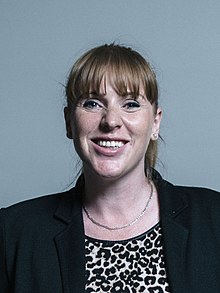
  • Angela Rayner – 2022 Speech on Lord Lebedev Joining the House of Lords

    Angela Rayner – 2022 Speech on Lord Lebedev Joining the House of Lords

    The speech made by Angela Rayner, the Deputy Leader of the Labour Party, on 29 March 2022.

    Thank you, Madam Deputy Speaker, and I heard you loud and clear.

    I beg to move,

    That, given the concerns raised about the appropriateness of, and process for, appointing Lord Lebedev as a member of the House of Lords and the role of the Prime Minister in that process, an humble Address be presented to Her Majesty that she will be graciously pleased to give directions that there be laid before this House, no later than 28 April,

    (a) any document held by the Cabinet Office or the Prime Minister’s Office containing or relating to advice from, or provided to, the House of Lords Appointments Commission concerning the appointment of Evgeny Alexandrovich Lebedev as a Member of the House of Lords; and

    (b) the minutes of, submissions relevant to and electronic communications relating to, any meeting within the Cabinet Office or the Prime Minister’s Office at which the appointment of Lord Lebedev, or advice relating to that appointment, was discussed in a form which may contain redactions, but such redactions shall be solely for the purposes of national security.

    May I start by noting the latest news from Ukraine? I know the whole House will be united in our outrage at the atrocities that have been reported, our deepest sympathy to the victims, and our ongoing support and our solidarity with the people of Ukraine. We will be united, too, in the message that we send to Putin. We will not waver in standing firm against his aggression, and the unity in this House reflects that in the country and among the constituents whom we represent.

    It is all the more important, in that context, that we make sure that we do all we can to protect our country’s security and our people’s safety. This Government’s ultimate responsibility to this House is to keep people safe, and it is all the more important that we stand up for the fundamental values of democracy in stark contrast to authoritarian regimes and dictatorships such as that in the Kremlin today. That is why we are here today—to defend our country’s security and its democracy, and to hold our Government to the highest standards in doing the same.

    Every Minister has a fundamental duty to protect the people of this country and to prioritise their safety above all else. We have tabled this motion because serious questions have been asked about whether the current Prime Minister upheld that duty to the standard that we would expect, and because those questions have not been answered with the transparency that we would expect.

    We must get to the facts of the case. An investigation by The Sunday Times found that, on 17 March 2020, British intelligence warned the House of Lords Appointments Commission against granting a peerage to the Prime Minister’s close friend, now the Lord Lebedev of Hampton and Siberia. The commission concluded it could not support his nomination. Forty-eight hours later, the Prime Minister visited Lebedev at his home in London. Details of that meeting have never been released to the public, and questions remain about whether the security services knew about this meeting, or whether their assessments show that the Kremlin was keeping tabs on these activities.

    In July 2020, Lebedev’s appointment as a peer was announced, so the question is this: what changed between the security warning and the appointment? The British public have a right to know if, and how, an individual of apparent concern to our intelligence services was granted a seat at the heart of Parliament by personal order of the Prime Minister, and whether the Prime Minister was aware of that security advice, but chose to ignore it, overrule it or even demand that it be changed.

    This is not the first time concerns have been raised about Lebedev by the British security services. As long as a decade ago, Sir John Sawers, the head of MI6, made it clear that he did not deem Lebedev a suitable person to meet. It remains unclear if the Prime Minister—then Foreign Secretary—was made aware of these security concerns, but his deeply concerning links to Putin are well known. He has been open about them on Twitter, where he has promoted the worst conspiracy theories and defences of Vladimir Putin, and raised questions over the murder of Alexander Litvinenko, the Kremlin critic poisoned in a London hotel.

    Lebedev’s father and business partner is a former KGB spy turned billionaire oligarch, who continues to fill his coffers with investments in occupied Crimea and in Russian munitions. We have heard worrying reports about the existence of a private back channel between our Prime Minister and President Putin, facilitated by Lebedev. Can the Minister shed light on this deeply concerning allegation and rule out the existence of such a back channel? As the bombing of Ukraine and the tragedy continue and the threat from Russia in the west intensifies, does the Minister think this appointment, in apparent opposition to the security services, was appropriate?

    The Cabinet Office plays a central role in the vetting process of Lords appointments. In Lord Lebedev’s case, Cabinet Office security officials were responsible for relaying the intelligence and guidance to the House of Lords Appointments Commission that formed the basis of its objections to his appointment. However, reports by The Sunday Times and a written statement by the then chief of staff to the Prime Minister allege that he “cut a deal” to provide the appointments commission with a “sanitised” version of the advice.

    Could the Minister outline how, when and why the guidance changed after communication with the Prime Minister, and could he confirm whether the Cabinet Office had sight of security advice warnings against the appointment of Lord Lebedev? This is a matter of national security, and there can be no delay in getting transparency in this case. There are also serious questions about whether the Prime Minister put his personal interests before the public interest in this case. The Prime Minister’s apparent cavalier disregard for those serious security warnings speaks to a wider culture at the heart of this Government where the rules do not apply when it comes to appointing friends and donors to public office.

    If the Prime Minister himself is willing to overrule British intelligence agencies, this raises serious questions about appointments more generally, and specifically in the House of Lords. Appointments to the Lords should be made based on integrity and contribution to our country. They are not some free pass. They are not a golden ticket for Prime Ministers to grant to their mates, like a membership of some posh London boys club, or a way to say thanks to billionaire mates after years of wining and dining, and champagne receptions and holidaying, not to mention the favourable headlines. But seriously, appointment to this Parliament should be on the basis of dedication, integrity and contribution to public life in Britain.

    Jamie Stone (Caithness, Sutherland and Easter Ross) (LD)

    Clearly, I represent a far-flung part of the United Kingdom, and there are good and hard-working citizens who give their entire working lives for such communities. In the past, this has been recognised by means of an honour—Order of the British Empire, British Empire Medal or whatever. Can I suggest to the right hon. Lady and to everyone in this place that the Lebedev peerage cheapens the whole system of honours and reduces its value to those people who genuinely deserve to be recognised in civil society?

    Angela Rayner

    Absolutely. I fully agree with the hon. Member’s contribution. During the pandemic, we saw such dedication by our key workers, with doctors and nurses putting their lives on the line to save the lives of others.

    Instead, we see reports that the Prime Minister parachuted his close friend Lord Lebedev into the heart of the UK’s Parliament, a man with whom the Prime Minister has enjoyed a decade-long courtship, which included a stay at the oligarch’s castle in 2018, where he is reported to have attended a party over the course of a weekend, with all his flights and accommodation paid for by Lebedev. An investigation by The Guardian revealed that during his stay, the Prime Minister, who was then Foreign Secretary, is reported to have met Alexander Lebedev, the former KGB agent and father of Lord Lebedev. The party took place just days after the Prime Minister—then Foreign Secretary—attended a NATO meeting to discuss the response to the Salisbury poisoning, in which the nerve agent Novichok was used in an assassination attempt on the Skripals. Immediately following the meeting in which Putin’s deadly attack on British soil was discussed, the Prime Minister reportedly ditched his security protection to attend the Lebedev party, where a former KGB agent was in attendance. The Prime Minister seems more interested in attending parties with his Russian billionaire mates than listening to the concerns of the British security services.

    Culture is set from the top. Appointments matter. Politicians come and go, but Lord Lebedev will be a permanent fixture of our Parliament in the other place for decades. There is a serious precedent to be set in this case about how Parliament chooses to appoint those who represent us. It also raises serious questions about the relaxed vetting process of Lords appointments, creating a security risk at the heart of our democracy. This must be taken seriously, and for that reason I ask the Minister this: will there be a review of the House of Lords appointment process?

    We must ensure that a robust vetting system is in place that safeguards our democracy and ensures transparency for the public. Indeed, the Lord Speaker recently called for a more rigorous appointment process for peers. We have a Prime Minister who appears willing to jeopardise the security of the British public for the sake of a personal friendship. The culture is set from the top, and in this case it raises much wider concerns about public appointments. It is time for the Prime Minister to come clean today about whether and why he interfered with British intelligence to award a peerage to his close personal friend. The full Cabinet Office guidance about a peerage for Mr Lebedev, which was mysteriously airbrushed, must now be published in the national interest. The Prime Minister claims that that advice cannot be published because it will undermine confidence in the appointments process. Well, it is a bit late for that. This is about his actions. He has run roughshod over the integrity of the process, and put his own interests before those of Britain.

    Mr Ben Bradshaw (Exeter) (Lab)

    I am sorry to intervene on my right hon. Friend and I hope speak later in the debate, but I thought she should be aware that since this debate started, Lord Lebedev has been tweeting furiously, implying the inappropriateness of this House to even have this debate. That from a Member of the other place is completely unacceptable and, if I may advise Lord Lebedev, extremely unwise.

    Madam Deputy Speaker (Dame Eleanor Laing)

    If what the right hon. Gentleman says is correct—I have no reason to doubt him although I have not seen the content of the tweets—let me say that if it was inappropriate for any debate to be occurring in this Chamber, it would not be occurring.

    Hon. Members

    Hear, hear.

    Angela Rayner

    Thank you, Madam Deputy Speaker. Woe betide anyone who tells Madam Deputy Speaker what is or is not appropriate for debate in this Chamber.

    By his actions the Prime Minister has run roughshod over the integrity of the process, and put his own interests before those of Britain. The suggestion that questions of suitability are for the Prime Minister alone will not cut it. When it is a clear as day that he so flagrantly disregarded advice and intervened in this process, I suggest that it is he who has undermined that process time and again.

    Shaun Bailey (West Bromwich West) (Con)

    I thank the right hon. Lady for giving way and apologise for interrupting her. Is it the Labour party’s position that the House of Lords Appointments Commission should have a veto? Given that it is part of her shadow portfolio, I am keen to understand. She is talking about the Prime Minister’s role in this, but does she believe that the House of Lords Appointments Commission should have that veto?

    Angela Rayner

    The hon. Gentleman makes a point, but the point I am making is that security advice was given, and the commission made a recommendation. If the Prime Minister overrides that advice, surely we should have a reason and transparency about why he went against the advice of the security services and the commission. That is very important and a robust way of dealing with things.

    Munira Wilson (Twickenham) (LD)

    According to allegations in The Sunday Times, the Prime Minister went to visit the now Lord Lebedev about the advice he had been given by security services, and to assure him that he wanted to give him this peerage, at a time when coronavirus was raging, businesses were being asked to close, and schools were about to be asked to shut. That was a priority for the Prime Minister when the rest of us were having to put our entire lives on hold. Does the right hon. Lady think that is an appropriate priority for the Prime Minister in the middle of a national and global crisis?

    Angela Rayner

    The hon. Lady makes a good point, and no, I do not think that is a good priority. I cannot get into concerns about what the Prime Minister thought was appropriate under his own lockdown rules during this debate, because it is not on the motion.

    These dangerous links to Putin’s oligarchs threaten our national security, but today we can take a step to defend it. There can be no better answer to the aggression of a dictator than to show that in a democracy, our leaders answer to the country they serve. The Minister should stop hiding behind the excuses and denials that we have heard about why we cannot have this transparency. I urge the House: let us get to the facts behind this whole murky business, publish the advice, and come clean with the British people. I commend the motion to the House.

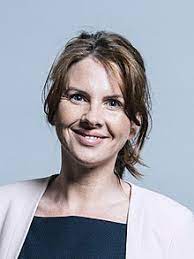
  • Vicky Ford – 2022 Comments on Supporting Free Trade in Africa

    Vicky Ford – 2022 Comments on Supporting Free Trade in Africa

    The comments made by Vicky Ford, the Minister for Africa, on 29 March 2022.

    Closer integration between African economies boosts growth across the continent creates opportunities and helps lift people out of poverty.

    The UK is a committed partner in this mission. This UK funding will promote long-term partnerships between African countries and support a more prosperous, greener continent.

    I am delighted to be supporting the AfCFTA Secretariat and its Member States to deliver freer and fairer trade systems in Africa.

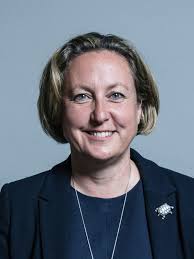
  • Anne-Marie Trevelyan – 2022 Comments on Supporting Free Trade in Africa

    Anne-Marie Trevelyan – 2022 Comments on Supporting Free Trade in Africa

    The comments made by Anne-Marie Trevelyan, the Secretary of State for International Trade, on 29 March 2022.

    As an independent free trading nation, the UK strongly supports the AfCFTA – the largest free trade area in the world.

    We’re keen to see continued momentum on outstanding negotiations, and on practical implementation of the agreement on the ground.

    This new aid programme shows that trade is a force for good, and will lead to increased trade, investment, and prosperity for both Africa and the UK.

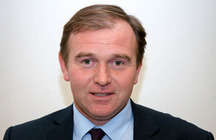
  • George Eustice – 2022 Comments on New Farming Practices

    George Eustice – 2022 Comments on New Farming Practices

    The comments made by George Eustice, the Environment Secretary, on 30 March 2022.

    The significant rise in the cost of fertiliser is a reminder that we need to reduce our dependence on manufacturing processes dependent on gas. Many of the challenges we face in agriculture will require a fusion of new technology with conventional principles of good farm husbandry. The measures we have announced today are not the whole solution but will help farmers manage their nitrogen needs in the year ahead.

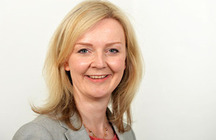
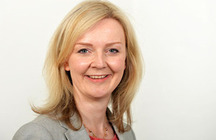
  • Liz Truss – 2022 Comments on Withdrawing UK Judges from Hong Kong Court of Appeal

    Liz Truss – 2022 Comments on Withdrawing UK Judges from Hong Kong Court of Appeal

    The comments made by Liz Truss, the Foreign Secretary, on 30 March 2022.

    We have seen a systematic erosion of liberty and democracy in Hong Kong. Since the National Security Law was imposed, authorities have cracked down on free speech, the free press and free association.

    The situation has reached a tipping point where it is no longer tenable for British judges to sit on Hong Kong’s leading court, and would risk legitimising oppression.

    I welcome and wholeheartedly support the decision to withdraw British judges from the court.

  • Dominic Raab – 2022 Comments on Withdrawing UK Judges from Hong Kong Court of Appeal

    Dominic Raab – 2022 Comments on Withdrawing UK Judges from Hong Kong Court of Appeal

    The comments made by Dominic Raab, the Justice Secretary, on 30 March 2022.

    Since 2020 and the introduction of the national security law, our assessment of the situation in Hong Kong is that it has shifted too far from the freedoms that we hold dear – making free expression and honest critique of the state a criminal offence.

    This flies in the face of the handover agreement we have had with China since 1997 and, having discussed at length with Foreign Secretary and the President of the Supreme Court, we regretfully agree that it is no longer appropriate for serving UK judges to continue sitting in Hong Kong courts.

    I thank our judges for being a bastion of international rule of law in Hong Kong over the past 25 years.

  • Liz Truss – 2022 Statement on Ukraine

    Liz Truss – 2022 Statement on Ukraine

    The statement made by Liz Truss, the Foreign Secretary, in the House of Commons on 28 March 2022.

    With permission, I want to update the House, on behalf of my Rt Hon Friend the Prime Minister, on the NATO and G7 Leaders meetings in Brussels last week.

    Together with our allies, we agreed to keep the pressure up on Putin to end his appalling war in Ukraine: through tougher sanctions to debilitate the Russian economy; supplying weapons to Ukraine and boosting NATO’s Eastern Flank; providing humanitarian aid and dealing with the wider consequences of this crisis; and supporting Ukraine in any negotiations they undertake.

    Strength is the only thing Putin understands.

    Our sanctions are pushing back the Russian economy by years.

    We owe it to the brave Ukrainians to keep up our tough approach to get peace. We owe it to ourselves to stand with them for the cause of freedom and democracy in Europe and across the world.

    It is vital we step up this pressure.

    We cannot wait for more appalling atrocities to be committed in Ukraine. We know that the impact of sanctions degrades over time.

    That is why we need to act now.

    Next week, NATO Foreign Ministers will meet to follow up on the statements of Leaders, and I will be pressing allies over the next week for all of us to do more.

    On oil and gas, the UK has already committed to end imports of Russian oil by the end of this year.

    We must agree a clear timetable with our partners across the G7 to end dependence on Russian oil and gas permanently.

    On banks, we’ve already sanctioned 16 major Russian banks. We have hit Gazprombank and we have placed a clearing prohibition on Sberbank, Russia’s largest bank. We want to see others adopt these sanctions and go further.

    On individuals, we’ve cracked down on oligarchs like Roman Abramovich. Last week we sanctioned the despicable Wagner Group of mercenaries.

    On ports, Britain has banned entry to all of our ports by Russian vessels. I will be lobbying partners across the G7 to join us in stopping Russian ships.

    We must maximise the flow of weapons that are being supplied to Ukraine under the UN Charter of self-defence.

    The UK was the first European country to start sending lethal aid to Ukraine.

    We are more than doubling our support with a further 6,000 missiles, including NLAWs and Javelin anti-tank weapons.

    And we are now equipping our Ukrainian friends with anti-aircraft Starstreak missiles.

    We are also strengthening NATO’s Eastern Flank, deploying troops to Bulgaria, and doubling the numbers in Poland and Estonia.

    We are coordinating deliveries with our allies and we want others to join us in getting Ukraine what it needs.

    The UK is providing £220 million in humanitarian support to help the people of Ukraine, from shelters to heaters to medicine.

    Today we announced our partnership with Australia to fly out more relief, including blankets, cooking equipment and power generators.

    And we are getting supplies directly into Ukraine’s encircled cities with £2 million of canned food, water and dried food.

    As refugees come into countries like Poland, we are working with the UNHCR so they are informed about the UK’s Homes for Ukraine scheme.

    This scheme has already got over 150,000 applications, thanks to the generosity of the British public.

    We know Putin is not serious about talks. He is still wantonly bombing innocent citizens across Ukraine. And that is why we need to do more to ensure he loses and we force him to think again.

    We must not just stop Putin in Ukraine, but we must also look to the long-term.

    We need to ensure that any future talks don’t end up selling Ukraine out or repeating the mistakes of the past. We remember the uneasy settlement in 2014, which failed to give Ukraine lasting security. Putin just came back for more.

    That is why we cannot allow him to win from this appalling aggression and why this Government is determined Putin’s regime should be held to account at the International Criminal Court.

    We will work to restore Ukraine’s territorial integrity and sovereignty.

    We have set up a negotiations unit to ensure the strongest possible support is available to the Ukrainians, alongside our international partners.

    We have played a leading role alongside our G7 allies in driving the response to Putin’s war. And I want to ensure that unity continues.

    Sanctions were put on by the G7 in unison and they shouldn’t be removed as long as Putin continues with his war and he still has troops in Ukraine.

    That is not all. We need to ensure that Putin can never act in this aggressive way again.

    Any long-term settlement needs to include a clear sanctions snapback which would be triggered automatically by any Russian aggression.

    In the aftermath of Putin’s war, Ukraine will need our help to build back.

    In these exceptional circumstances, we have a duty to step up with a new reconstruction plan for rebuilding Ukraine. And we will work with the international community to do this.

    At this defining moment, the free world has shown a united response.

    Putin is not making the progress he craves. And he is still not serious about talks.

    President Zelenskyy and the Ukrainian people know that everybody in the United Kingdom stands firm with them.

    We were the first European country to recognise Ukraine’s independence from the Soviet Union. Thirty years on, we are the first to strengthen their defences against Putin’s invasion, and lead the way in our support.

    Over the next week, I will be working to drive forward progress in unison with our allies.

    Together, we can secure a lasting peace, which restores Ukraine’s sovereignty. Together, we can ensure Putin fails and Ukraine prevails.

    I commend this statement to the House.


  • Trudy Harrison – 2022 Speech on the A5 in the Midlands

    Trudy Harrison – 2022 Speech on the A5 in the Midlands

    The speech made by Trudy Harrison, the Parliamentary Under-Secretary of State for Transport, in Westminster Hall on 23 March 2022.

    It is a pleasure to serve under your chairmanship, Mr Hosie. My hon. Friend the Member for Rugby (Mark Pawsey) is a passionate advocate for his constituency. I congratulate him on securing this important debate, on working with local leaders and colleagues in the House and on articulating so clearly the need to increase capacity and to make other improvements on the A5 in the midlands.

    I do not think there has ever before been such a comprehensive discussion of the need to improve roads. We have discussed the issue economically, environmentally, socially and culturally—even a song has been written about this road. I am sure we all appreciated the rendition from the shadow spokesperson, the hon. Member for Wythenshawe and Sale East (Mike Kane). My hon. Friend the Member for Rugby set out why improvements to the A5 are so important to his constituents and to the wider area. It is good that Members are working together.

    As we know, the A5 is an ancient road of 252 miles, yet just 15% of it is dualled. We heard the rationale for improving that percentage. Significant housing development proposed in north Warwickshire, Hinckley, Tamworth, Bosworth and Nuneaton and Bedworth, including sites in the immediate vicinity of the A5, add to the reasons why the road needs to be improved. The average daily traffic figure on the A5—21,338—-is considerable.

    The A5 is part of a strategic east-west corridor running from London to Holyhead in Anglesey. As we have heard this afternoon, it links towns across the midlands, including Milton Keynes, Rugby, Lutterworth, Hinckley, Nuneaton and Tamworth. Indeed, my hon. Friend the Member for Nuneaton (Mr Jones) spoke to me at length yesterday about the need to improve the road, and he specifically mentioned the areas that most concern him: the Dodwells island connecting to the A47, the Longshoot junction and the Woodford Lane junction. He talked to me about the closures on the M6 and their impact on the A5. As we have heard today, rat runs are created in local communities when there are problems on the A5.

    The A5 is a core artery bisecting the golden triangle of logistics distribution centres, supermarkets and high street stores in the midlands. Spanning from Northamptonshire, up the M1 to East Midlands airport and as far west as the Tamworth area, the golden triangle is bustling with big logistics names. As well as being in proximity to the huge distribution centres of supermarkets and high street stores—with Daventry in the south, Leicester in the north-east and Birmingham in the west—the corridor remains a key artery for communities in the midlands and for jobs in major employment sites such as Magna Park and the MIRA enterprise zone, which I had the pleasure of visiting thanks to the invitation from my hon. Friend the Member for Bosworth (Dr Evans). I saw for myself the innovation happening there. As we decarbonise the transport system and think about the future of self-driving vehicles, automation and connected vehicles, the site will become even more essential to the transition. As he articulated so well, the work being done by the midlands engine is critical to the economic, social and environmental prospects of this country.

    The Government recognise the role that the A5 plays. It is a key piece of infrastructure that supports and provides resilience to nearby locations, which is why we are spending £24 billion on our motorways and trunk A roads in England in the five years between 2020 and 2025, as part of the second road investment strategy. RIS2 builds on the £17.6 billon in the first RIS, covering 2015 to 2020—a then record. Of that £24 billion, £12 billion is being spent on the operation, maintenance and renewal of existing networks, including beginning multi-road period programmes of structural renewals and concrete road surface replacement.

    More than £10 billion is being spent on improving the performance of the network, supporting the Government’s levelling-up agenda and underpinning national and regional growth. The core principle of our strategy is to create a road network that is safe, accessible and reliable for all users, and that meets the needs of those living alongside the network. Although investment has an important role in achieving that, the road investment strategy also includes challenging performance targets that must be met. I recognise the frustration of my hon. Friends, the business community and residents that the A5 Dodwells to Longshoot widening scheme commitment in RIS1 was not started in road period 1 and was instead incorporated into proposals in RIS2 for a more extensive improvement to the corridor.

    My hon. Friend the Member for Bosworth raised the challenge of Britain’s most bashed bridge. National Highways is in discussions with the developer about the possibility of lowering the carriageway in the vicinity of the low bridge. The discussions are ongoing, and I know he needs no encouragement from me to do what he does best, along with colleagues in the A5 area: to continue engaging with National Highways on this important matter.

    In championing the need for improvements, the work of the A5 partnership has been exemplary, and I reassure hon. Members that this work will continue to be fully considered by officials within the Department and National Highways as part of the canon of evidence for developing our third road investment strategy, RIS3, which will cover 2025 to 2030. It includes informing decision making on the proposed A5 Hinckley to Tamworth scheme—one of 33 schemes in the pipeline that are currently being developed for possible delivery in RIS3. The likely cost of the scheme is substantial, in excess of £1 billion in all likelihood. As my hon. Friend will appreciate, with such large sums involved, investment decisions need to be taken in the round to ensure we maximise value for taxpayers.

    My hon. Friends have set out the importance of this road improvement for the economic viability and social happiness of the area. Individual pipeline schemes will be considered alongside future operations, maintenance and renewal priorities and how we respond to environmental pressures and opportunities, planning for a future of connected autonomous vehicles as well as small-scale improvements. In practice, those decisions will not be made until the final road investment strategy is set in 2024.

    Mark Pawsey

    One of our key asks is that this 53-mile section of road is looked at as a whole, rather than in individual pieces. There is a marvellous precedent in the midlands with the work being done on the A46—plans are coming forward for the final roundabout in my constituency—which will provide a continuous road from the M5 in the south-west at Evesham all the way through to the M69 and then the M1 at Leicester, providing a south-west to north-east link. That road has been looked at as a whole and will be a complete, uninterrupted road. Can we have the same for the A5?

    Trudy Harrison

    I am sure my colleague in the other place, Baroness Vere the roads Minister, will be listening to this debate. I reiterate how effectively my hon. Friend the Member for Rugby is championing this cause, and he is being taken seriously. Also, this is not all we are doing for the A5. As I am sure hon. Members are aware, National Highways has committed to delivering another scheme for the A5. The Dordon to Atherstone scheme is set to deliver improvements that will unlock the potential for 4,000 homes. National Highways will deliver that scheme, and the design of the improvements can be tied into the wider options being considered for the route. National Highways will also be completing safety improvements to the A5 Northampton Road this month.

    I appreciate hon. Members’ concerns about the current operation of the A5 and its impacts on proposed growth in the region. My hon. Friends and I agree that efficient, reliable transport is a catalyst for enterprise and enables growth. Better connectivity means greater economic opportunity and all the benefits it delivers for communities.

    I know that my hon. Friend for Rugby and other hon. Friends who advocate for improvements on the A5 are passionate about investment in the midlands for their constituents, and I recognise it is in everyone’s interest to mitigate the barriers to growth. That is why the Department is working closely with National Highways to fully understand congestion issues along the length of the A5 and how its key congestion pinch points can potentially be mitigated, including the A43-A5 Tove roundabout, the A5-A426 Gibbet Hill roundabout and junction 1 of the M69. I assure hon. Members that National Highways will continue to work closely with the local highway authorities and stakeholders to understand and deliver improvements where they are needed, so that the region’s potential can be truly realised.

    As we look to the future of the network, National Highways has just finished the formal evidence-gathering phase of the third round of route strategies, which will inform its assessment of the current performance of the network and its needs. Those strategies provide an important input, alongside strategic studies and other evidence-gathering mechanisms, in informing decisions about further investment on the strategic road network beyond 2025. The route strategies review performance, pressures and opportunities on every part of the network, and provide a significant opportunity to consider the needs of the A5 corridor and, in particular, reinforce the case for improving the Hinckley to Tamworth section. The input of Midlands Connect and the A5 Partnership was an important contribution to that process and, as we have heard, the input from my hon. Friend the Member for Rugby and his colleagues was an important contribution to the series of roundtable meetings that the roads Minister, Baroness Vere, hosted in the autumn.

    I thank my hon. Friend once again for the work he does with Midlands Connect and the A5 Partnership to ensure the overwhelming support for improvements is well represented within Government. I welcome the integrated approach with local community leaders, sub-national transport bodies and transport authorities to demonstrate a united front on the need for investment, which is essential for building the case for improvements along this stretch of the strategic road network. The formal window for feedback through the route strategies feedback tool came to a close at the end of December 2021. It is vital for National Highways to understand and prioritise the issues that matter most for users of the road network. I encourage my hon. Friend to continue making the case for investment in the strategic roads that matter most, and the important engagement that is already under way with National Highways across all these issues is making a tremendous difference.

    I conclude by thanking my hon. Friends the Members for Rugby and for Bosworth for this debate. In preparation, I learned much about the 252 miles of the A5 and I hope they are satisfied with my response to their concerns. We recognise the vital importance of the A5 in supporting all aspects of the regional and national economy, and the concerns and views that have been expressed will be dealt with as matters of the utmost importance when considering how to improve the A5 now and in the future.

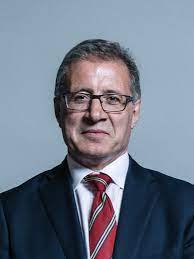
  • Mark Pawsey – 2022 Speech on the A5 in the Midlands

    Mark Pawsey – 2022 Speech on the A5 in the Midlands

    The speech made by Mark Pawsey, the Conservative MP in Rugby, in Westminster Hall on 23 March 2022.

    I beg to move,

    That this House has considered the matter of increasing capacity and other improvements to the A5 in the midlands.

    It is a pleasure to serve under your chairmanship, Mr Hosie, on an important day here in Westminster, and to be able to highlight a vital issue for residents and businesses in my constituency and in the broader west midlands region. By way of introduction, the A5 is one of the UK’s oldest roads and a strategic route operated by National Highways. It connects London to north Wales and runs through large parts of central England, and I wish to focus on that part of the road.

    For many years, various groups have been involved in campaigning about the state of the road, including colleagues from neighbouring constituencies, many of whom are present today; leaders of our local councils; businesses, both large and small, throughout the west midlands; and Midlands Connect, which researches, develops and progresses transport projects to provide the best social, economic and environmental benefits to the midlands. We also have an overarching group called the A5 Transport Partnership.

    In recent years, all those groups have been lobbying central Government for funding to improve the strategic 53-mile corridor of the A5 running from the M1 at junction 18 in Warwickshire—close to and then bordering my constituency—all the way through to the M5 at junction 12 in Staffordshire. That strategic corridor through the west midlands not only connects the M1 and the M6, but intersects the M42 and the M69.

    Those motorways in the centre of England are four of the country’s busiest motorways, and the A5 corridor is home to almost 3 million people, supporting 1.3 million jobs and serving several large cities and towns, such as Tamworth, Nuneaton, Cannock and Hinckley, as well as my constituency of Rugby. It also supports major employment sites including Magna Park and the MIRA enterprise zone.

    Given its strategic importance at the centre of England, this section of the A5 sits at the heart of what is known as the logistics golden triangle, around the districts of Rugby, Daventry, Harborough, Hinckley and Bosworth. With that golden triangle, the corridor creates £22 billion in gross value added annually, which is approximately 10% of the total GVA of the area covered by Midlands Connect, the organisation entrusted by central Government to help identify research on the most important transport investments.

    I intend to show that, with the improvements we all believe to be necessary, this corridor of the A5 has the potential to provide an alternative route to our existing congested motorways, while simultaneously supporting housing and employment growth.

    Theo Clarke (Stafford) (Con)

    I thank my hon. Friend for highlighting the importance of the A5 to residents and businesses in Staffordshire and across the midlands. Having campaigned with my neighbour, my right hon. Friend the Member for South Staffordshire (Sir Gavin Williamson), and with the Government against the building of the West Midlands Interchange, which is at the A5 roundabout near Gailey in Staffordshire, does my hon. Friend agree that it is important that we protect our environment and our green belt, as well as tackle congestion on the A5 and other Staffordshire roads?

    Mark Pawsey

    My hon. Friend is right. The environmental benefits are important, but I want to focus on the one that we would achieve by having less congestion, with car engines running for less time, and on the efficiencies and economies that can be provided to our local area as a consequence of a more efficient and effective A5.

    Let me turn to the growth that is forecast for the area around the A5. Local councils within the corridor anticipate that, over the next 15 to 20 years, their local plans will bring forward 103,00 new homes, 16,000 new jobs and a further 524 hectares of employment land, which need a road. By investing in the A5 and improving its performance and resilience, we believe that the central Government have the opportunity to unlock the growth aspirations and priorities of the region.

    Alberto Costa (South Leicestershire) (Con)

    I congratulate my hon. Friend and neighbouring MP on securing this important debate on the A5. He makes some salient points about the level of economic growth along the A5 by comparison with other parts of the country. Does he agree, however, that without sufficient investment, such as the long-awaited dualling of the A5, we risk missing out on a huge amount of economic growth?

    Mark Pawsey

    My hon. Friend anticipates my point. He is exactly right: we need to have an efficient road that enables growth to take place. One of the challenges of the A5 is that it is dualled in parts, but single carriageway in others. There currently appears to be no consistent approach to an upgrade, and we need that upgrade in order to achieve our local councils’ ambitious objectives for the area.

    As part of the wider strategic road network, the A5 currently carries 23,000 vehicles a day on its busiest section, so it is a pretty hefty road. Sadly, however, and despite its increasing importance and usage, the A5 in the midlands has not seen a proportionate increase in funding to provide resilience and capacity. As my hon. Friend the Member for South Leicestershire (Alberto Costa) points out, if that is provided, it will enable the A5 to spearhead and safeguard sustained growth in the region.

    The fear is that, if neglected, the A5 will act as a barrier to growth rather than an instrument of it. With investment, we believe the A5 can become a significant corridor for growth by enabling greater east-west connectivity, providing access to the M6 toll road, and supporting north-south movements through its strategic interchanges with other regionally important motorways, as I have already mentioned.

    In its November 2018 A5 strategy document, the A5 Transport Partnership outlined three key strategic interventions that it argued would be required to unlock the potential of the area served by the A5, and they are relevant today. The first priority is to make improvements between the M42 and M69—a combination of online and offline dualling to deliver the first phase of the A5 expressway, providing expansion of the MIRA site, which sits between Nuneaton and Hinckley, and works associated with the construction of HS2 at junction 10 of the M42. That is the first priority.

    The second priority is the part between the M69 to M1 and M42 to M6. Again, it would be a combination of online and offline dualling, but this time to deliver the second and third phases of the A5 expressway. A third objective is to make better use of the M6 toll road. Those of us who have used the M6 toll road will know that it is not to capacity. If we can improve the size, we can get more traffic off the M6 and on to the toll road. In addition to those key priorities, improvements are needed to enhance the A5’s connectivity to the wider strategic road network. I know there are proposals for a new junction 20A on the M1, to bring relief to junction 20 at Leicester, which is the junction between the M1 and M69. That will provide additional growth opportunities.

    Ministers are aware of the need for investment, given that one of the third road investment strategy pipeline projects is the upgrade between junction 1 on the M69 and junction 10 on the M42, and I hope that the debate will further press the case to bring that scheme forward. By securing this much-needed upgrade of the A5, we can help deliver growth around the corridor route, support network resilience, ensure greater sustainability and safety, and manage the impact of freight on the road.

    My hon. Friend the Member for South Leicestershire made some remarks about the economics, which I want to focus on. The 53-mile section between the M1 and the M6 plays a significant role in supporting the sub-regional economies of Warwickshire, Leicestershire, Coventry, Staffordshire and west Northamptonshire, and the economic performance of the A5 is strong when looked at in the light of the broader west midlands economy. As I mentioned, a number of important economic centres along that corridor will be subject to further expansion in coming years.

    The MIRA enterprise zone is expanding; Magna Park in Leicestershire, in my hon. Friend’s constituency, is expanding; DIRFT 3 in Northamptonshire, which sits on the border of my constituency, is currently the subject of substantial construction; and Kingswood Lakeside Employment Park in Staffordshire—which I believe is close to my hon. Friend the Member for Stafford (Theo Clarke)’s constituency—is coming forward. In my constituency, we have a substantial residential development at Houlton and the Rugby Gateway mixed-use development. I hope I am building a case for why it is imperative that the A5 is upgraded, to ensure that its present constraints do not curtail this planned growth or act as a barrier to continuing inward investment.

    It is worth pointing out that unemployment levels along this corridor of the A5 are currently lower than the UK average, and with the expansion of the economic hubs I have just referred to and the further employment opportunities that will bring, that situation will only improve. As well as supporting local economies, the road has a wider role in providing connectivity to other economic centres, such as the Oxford-Milton Keynes-Cambridge growth corridor. When we combine the housing growth with the economic growth and the increased employment opportunities, it is clear that the A5 will come under significant further pressure over the coming years.

    Dr Luke Evans (Bosworth) (Con)

    My hon. Friend is making a fantastic case for why the A5 is so important. Does he agree that one of the principal problems with the A5 are the boundaries of the districts, councils and administrations that it borders? That makes things hard, because people always see the A5 as a periphery. We have heard talk about the west midlands, the east midlands, Leicestershire and Northamptonshire, and that is part of the problem. It is so important that my hon. Friend has secured this debate to make sure the Government realise we can release this stricture across the centre of the UK between Wales, England and London, and that doing so would make a huge difference economically, but also to the daily lives of the people we represent.

    Mark Pawsey

    My hon. Friend is right. The road sits as the boundary—it is the boundary of my constituency, the boundary of Warwickshire, and a regional boundary—but the local authorities have come together pretty effectively to press this case. It would have been very easy for each authority to have tried to do its own thing, but as it is, a range of bodies, including those in the private sector, have come together to argue the case for improvement. The Government have been clear that they recognise investment in infrastructure is needed to improve productivity and economic growth. When it comes to the A5, I hope the Minister will be able to say positive words that will lead to action.

    I will also say a word or two about the importance of the logistics sector. As I have mentioned, Rugby is part of the golden triangle, and my constituency has certainly benefited from its geographical location at the centre of England. It contains several large logistics businesses, which has driven economic growth in Rugby, provided many employment opportunities, and helped my constituency become one of the fastest-growing towns in the country. Rugby is home to such household names in the logistics industry as DHL and Hermes, and just over two years ago, Amazon took the decision to invest in Rugby by building one of its fulfilment centres on the outskirts of the town, near the A5 and its junction with the M6.

    As well as the numerous employment sites in my constituency that benefit from the A5, there are numerous other large and strategic employment sites in B8 use, logistics and distribution along the route. I have already mentioned DIRFT, Magna Park and Kingswood Lake, but I will now also mention Sketchley Meadows in Hinckley and Birch Coppice in Tamworth. Previously, I have outlined the importance of the MIRA Technology Park, an enterprise zone that is of course vital to the resurgence of the automotive industry in the midlands; indeed, that manufacturing sector is synonymous with the west midlands.

    All the sites that I have referred to are of strategic importance, with many in line for expansion as our region continues to attract investors who are either keen to locate in the west midlands or keen to develop their businesses in the west midlands further. I regularly hear from developers keen to invest along the corridor.

    However, a real worry is that growth in investment will be inhibited unless we now take the decision to invest in our strategic transport network. We are fortunate in our location at the centre of England to have generally excellent access to the motorway network, but without further investment to build network capacity and resilience, there is a real danger that we will miss the opportunity to rev up the midlands engine in the way that we would all like.

    Alberto Costa

    My hon. Friend makes some excellent points about the importance of this trunk road, which provides an alternative route to already congested motorways, for example. Does he agree that the A5 must also have improved capacity to ensure that overflow traffic is taken out of the many rural villages around it?

    Mark Pawsey

    My hon. Friend no doubt has constituents who will have experience of that overflow traffic in exactly the same way that I do. I will talk a little later on about how the A5 acts as a relief valve for the M6, but if people cannot move along the A5 in the way that they need to, the danger is that they will seek alternative routes that take them off the trunk road network.

    I have already mentioned that the local councils are coming together, demonstrating their desire to grow and develop their employment and housing offer. By investing in this road, central Government can help those councils to meet their growth needs by facilitating a safe, reliable, efficient and resilient A5.

    With that bit of resilience in mind, I will talk about the importance of keeping the traffic moving, to which my hon. Friend just referred. We know that there are often many planned and unplanned incidents on the M6, and that when the M6 comes to a halt many vehicles turn to the A5. Indeed, over the last 36 hours, there have been a dozen or so different lane closures on the M6 due to either maintenance work or incidents on the road.

    In those circumstances, when traffic migrates from the M6, the A5 struggles to cope in certain situations and creaks under the weight of the additional traffic. That is often compounded by operational issues on the A5 itself, which in turn creates significant problems on local roads, as my hon. Friend has just referred to, with traffic dispersing because drivers seek alternative local routes.

    One of the reasons for the lack of resilience, and it is the core of our call to the Minister today, is the variation in the standard of the road along the corridor. It is, in parts, recently constructed dual carriageway, with a great road surface that enables the road to work well. However, in other parts it is a windy A road, a single carriageway with double yellow lines, where the traffic really slows down. It is that variability that is at the heart of the challenge facing the road’s users. That situation is aggravated, as the Minister may know, because the road is constrained by old canal and railway bridges. That creates congestion and slows down journey speeds, impacting businesses and commuters, and even impeding emergency vehicles. Along with my colleagues here today, I am arguing that what we really need is the complete dualling of the road between the M1 junction 18 and the M6. That is our long-term objective.

    On safety, one of the key objectives of National Highways is to reduce casualties on our roads. Sadly, the pressures on the A5, along with the development I mentioned, mean that the road has become a barrier to road users safely accessing economic hubs and other parts of the road network. I spoke about how that has impacted on congestion when incidents occur on other strategic roads but the safety of the road itself is impacted. Many of the junctions—be they roundabouts or road turnings—were not designed to cope with the levels of traffic that they are experiencing. We know that as congestion increases, so does the risk of collision. It can be caused by driver frustration or the limited safety provisions on the single carriageway sections of the road.

    Along the corridor, that is, the 53 miles between the M1 and the M6, about a quarter of collisions occur during evening peak hours. Significantly, data demonstrates that the nature of the road, which is of a mixed standard, moving from dual to single carriageway sections with a large number of roundabouts, contributes to the number of collisions. Indeed, across all sections of the road, approximately 40% of the accidents that lead to personal injuries occur at roundabouts, compared with a national average of 10%. That is based on data provided by the police.

    The historically fragmented nature of the A5, both through its construction and its inconsistency, can be seen as the heart of the issues with the road. Further or full dualling of the A5 will improve the overall capacity and resilience of the road while improving its safety and performance.

    Alberto Costa

    My hon. Friend is being generous in giving way. Given what he has said, does he agree that we need safety improvements on the A5 for the road to cope with greater capacity? In my constituency, for instance, High Cross and Smockington Hollow junctions are notorious accident blackspots, so I am grateful that he has mentioned the safety issues on the A5.

    Mark Pawsey

    I thank my hon. Friend for that contribution. We do want to make the road safer as it is a horrible road for drivers to negotiate.

    I also want to talk about sustainability. As part of the wider picture, improving the highways infrastructure should involving cycling and pedestrian routes and the use of public transport. In my constituency, both Rugby Borough Council and Warwickshire County Council are committed to investing in and further developing sustainable transport infrastructure with a view to reducing the congestion on our roads, encouraging healthy living and improving air quality. Those ambitions are shared by both central Government and local councils.

    Public transport along the A5 by bus remains extremely limited. I have spoken about the new housing and commercial developments on the road and they are not accessible by public transport. I cycle, and I certainly would not want to ride my bike along the A5. At no point along the part of the road that I am particularly concerned about are there any cycleways, creating further issues around access. All in all, that drives people to use their cars to access sites along the A5, adding to levels of traffic and congestion on the road. By looking at sustainability, we can move traffic from the road. We really ought to consider sustainability when the new developments take place.

    To conclude, I hope the debate has reinforced the message that I and my colleagues have been sending to Ministers over many years. Without an upgrade of the A5 in the midlands, economic growth will be restricted in our area. I hope that I have been able to show that in many ways the corridor has become a victim of the growth near it, with piecemeal improvements and developments made along it. It has not been considered in its entirety, which is what we would like to see. It should be treated as the strategic road that it is. Historically, any improvements have been fragmented in delivery and we now need an upgrade that looks at the A5 in its entirety—at the whole picture—and acts to unlock the potential throughout the corridor.

    Our role as midlands MPs is to make certain that the funding to upgrade the A5 provides us with a consistent standard of dual carriageway between the M1 and M6. I hope that I have shown that the road experiences significant peak-hour congestion and will support major growth over the next decades, based on plans that have already been adopted and are emerging from the local councils along the corridor route. Without that action, growth in the midlands will be inhibited and lost.

    The Minister will be aware that the midlands engine is revving up and is more than ready to play its part, but it needs the transport infrastructure to match that ambition and drive. I hope that in response to the debate the Minister will be able to reassure residents and businesses that the Government understand and recognise the necessity of an upgrade of the 53-mile corridor from the M1 junction 18 in Warwickshire to the M5 at junction 12 in Staffordshire, and that they are listening and will be ready to act.