Blog

  • CONSTITUENCY RESULT : Chippenham

    Candidates by vote share
    Candidate name Party Gender Number of votes Share (%) Change vs. 2017 for party (percentage points)
    Michelle Donelan Conservative Female 30,994 54.3% -0.4
    Helen Belcher Liberal Democrat Female 19,706 34.5% +8.9
    Martha Anachury Labour Female 6,399 11.2% -8.5


    Election statistics
    Majority
    Votes 11,288
    Percent 19.8%
    Rank (1 = highest %) 368
    Turnout
    Constituency 73.9%
    Region 72.0%
    UK 67.3%
    Constituency in 2017 74.8%
    Size of electorate 77,221
    Valid votes cast 57,099
  • CONSTITUENCY RESULT : Chingford and Woodford Green

    Candidate name Party Gender Number of votes Share (%) Change vs. 2017 for party (percentage points)
    Iain Duncan Smith Conservative Male 23,481 48.5% -0.7
    Faiza Shaheen Labour Female 22,219 45.9% +1.9
    Geoff Seeff Liberal Democrat Male 2,744 5.7% +1.3


    Election statistics
    Majority
    Votes 1,262
    Percent 2.6%
    Rank (1 = highest %) 617
    Turnout
    Constituency 74.1%
    Region 67.5%
    UK 67.3%
    Constituency in 2017 71.2%
    Size of electorate 65,393
    Valid votes cast 48,444
  • CONSTITUENCY RESULT : Chichester

    Candidate name Party Gender Number of votes Share (%) Change vs. 2017 for party (percentage points)
    Gillian Keegan Conservative Female 35,402 57.8% -2.3
    Kate O’Kelly Liberal Democrat Female 13,912 22.7% +11.5
    Jay Morton Labour Female 9,069 14.8% -7.6
    Heather Barrie Green Female 2,527 4.1% +0.8
    Adam Brown Libertarian Party Male 224 0.4% 0.0
    Andrew Emerson Patria Male 109 0.2% +0.0


    Election statistics
    Majority
    Votes 21,490
    Percent 35.1%
    Rank (1 = highest %) 185
    Turnout
    Constituency 71.6%
    Region 70.2%
    UK 67.3%
    Constituency in 2017 70.5%
    Size of electorate 85,499
    Valid votes cast 61,243
  • CONSTITUENCY RESULT : Chesham and Amersham

    Candidate name Party Gender Number of votes Share (%) Change vs. 2017 for party (percentage points)
    Cheryl Gillan Conservative Female 30,850 55.4% -5.3
    Dan Gallagher Liberal Democrat Male 14,627 26.3% +13.3
    Matt Turmaine Labour Male 7,166 12.9% -7.7
    Alan Booth Green Male 3,042 5.5% +2.5


    Election statistics
    Majority
    Votes 16,223
    Percent 29.1%
    Rank (1 = highest %) 260
    Turnout
    Constituency 76.8%
    Region 70.2%
    UK 67.3%
    Constituency in 2017 77.1%
    Size of electorate 72,542
    Valid votes cast 55,685
  • CONSTITUENCY RESULT : Cheltenham

    Candidate name Party Gender Number of votes Share (%) Change vs. 2017 for party (percentage points)
    Alex Chalk Conservative Male 28,486 48.0% +1.3
    Max Wilkinson Liberal Democrat Male 27,505 46.3% +4.2
    George Penny Labour Male 2,921 4.9% -4.6
    George Ridgeon Monster Raving Loony Party Male 445 0.7% 0.0


    Election statistics
    Majority
    Votes 981
    Percent 1.7%
    Rank (1 = highest %) 627
    Turnout
    Constituency 73.2%
    Region 72.0%
    UK 67.3%
    Constituency in 2017 72.3%
    Size of electorate 81,044
    Valid votes cast 59,357
  • CONSTITUENCY RESULT : Chelsea and Fulham

    Candidate name Party Gender Number of votes Share (%) Change vs. 2017 for party (percentage points)
    Greg Hands Conservative Male 23,345 49.9% -2.8
    Nicola Horlick Liberal Democrat Female 12,104 25.9% +14.9
    Matt Uberoi Labour Male 10,872 23.2% -10.0
    Sam Morland Animal Welfare Party Male 500 1.1% 0.0


    Election statistics
    Majority
    Votes 11,241
    Percent 24.0%
    Rank (1 = highest %) 320
    Turnout
    Constituency 69.8%
    Region 67.5%
    UK 67.3%
    Constituency in 2017 66.1%
    Size of electorate 67,110
    Valid votes cast 46,821
  • CONSTITUENCY RESULT : Chelmsford

    Candidate name Party Gender Number of votes Share (%) Change vs. 2017 for party (percentage points)
    Vicky Ford Conservative Female 31,934 55.9% +2.2
    Marie Goldman Liberal Democrat Female 14,313 25.1% +12.9
    Penny Richards Labour Female 10,295 18.0% -11.8
    Mark Lawrence Monster Raving Loony Party Male 580 1.0% 0.0


    Election statistics
    Majority
    Votes 17,621
    Percent 30.8%
    Rank (1 = highest %) 239
    Turnout
    Constituency 71.1%
    Region 68.2%
    UK 67.3%
    Constituency in 2017 70.2%
    Size of electorate 80,394
    Valid votes cast 57,122
  • CONSTITUENCY RESULT : Cheadle

    Candidate name Party Gender Number of votes Share (%) Change vs. 2017 for party (percentage points)
    Mary Robinson Conservative Female 25,694 46.0% +1.4
    Tom Morrison Liberal Democrat Male 23,358 41.8% +5.5
    Zahid Chauhan Labour Male 6,851 12.3% -6.8


    Election statistics
    Majority
    Votes 2,336
    Percent 4.2%
    Rank (1 = highest %) 594
    Turnout
    Constituency 75.0%
    Region 65.6%
    UK 67.3%
    Constituency in 2017 74.3%
    Size of electorate 74,577
    Valid votes cast 55,903
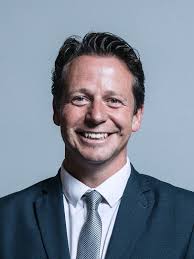
  • Nigel Huddleston – 2021 Statement on Sports Broadcasting

    Nigel Huddleston – 2021 Statement on Sports Broadcasting

    The statement made by Nigel Huddleston, the Parliamentary Under-Secretary of State for Digital, Culture, Media and Sport, in the House of Commons on 13 May 2021.

    The Department for Digital, Culture, Media and Sport (DCMS) has written to the Premier League and to Sky, BT, Amazon and the BBC, as the current holders of broadcast rights to the Premier League in the UK, to inform them that the Secretary of State for Business, Energy and Industrial Strategy (BEIS) is “minded to” make an exclusion order under the Competition Act 1998, allowing the Premier League to renew its current broadcast agreements with current UK broadcast partners for an additional three-year period starting 2022-23, without conducting the normal tender process.

    In order to remain consistent with past commitments to competition authorities and to avoid a potential breach of competition law, and absent covid-19, the Premier League would normally have re-tendered its domestic broadcast rights in early 2021 at the midpoint of the current three-year cycle and would have concluded sales by now. However, covid-19 has had a significant impact on the value of broadcast rights for football across Europe. Under an auction, it is plausible that the value of the Premier League’s domestic rights could drop.

    The football pyramid receives the majority of its funding via the Premier League’s broadcast revenue. The Premier League and its clubs have already experienced financial losses totalling over £1.5 billion due to the impact of the pandemic, with further losses projected into next season. The wider football pyramid, from the championship through to women’s football and the grassroots, has also suffered financial losses due to the pandemic.

    The Government have been clear that football has the resources to support itself financially to deal with the consequences of the covid-19 pandemic. To provide financial stability for the football pyramid, the Premier League has therefore requested that the Government make an exclusion order allowing it to renew its current broadcast agreements for an additional three years, on the same commercial and licence terms, with current UK broadcast partners, without conducting a tender process.

    Under paragraph 7 of schedule 3 to the Competition Act 1998, the Secretary of State for Business, Energy and Industrial Strategy has the power to exclude, via a so-called “exclusion order”, certain agreements from the application of UK competition law where there are “exceptional and compelling reasons of public policy” to do so.

    If such an exclusion order is made, the Premier League has committed to:

    guaranteeing existing levels of financial support for the football pyramid for four years from 2021-22 to the end of the 2024-25 season. This includes solidarity payments, parachute payments, youth development funding and funding for grassroots football at existing levels, worth over £1.5 billion over the three-year rights cycle.

    maintaining at least this level of funding even if its international broadcast rights decrease in value when they are re-tendered individually over the next year into 2022, and to increase the level of funding if its international broadcast rights exceed their current value; and

    providing a further minimum £100 million in solidarity and good causes funding to the end of the 2024-25 season, in roughly equal shares, to the National League, women’s football, league one and two clubs, grassroots football and cross-game initiatives. This would make a significant financial contribution, including doubling the support for the non-league system, and providing crucial financial support for the women’s game.

    The Secretary of State for BEIS and DCMS Ministers have considered the impact of covid on the English football pyramid and are minded to agree the Government should act to enable the Premier League to provide financial stability to protect the pyramid following heavily disrupted seasons due to covid, for the following reasons:

    Football clubs are a central part of local communities across the country. They provide a focal point, but also huge social and health impacts via outreach and wellbeing programmes and fundamentally provide economic value to local areas through jobs, income and tourism. There is therefore public policy value in preserving football clubs for their fans as consumers and local residents.

    There is inherent value in the football league pyramid. As our national game, football holds a unique cultural position, and the preservation of a meritocratic, fair system through the football pyramid has a public policy benefit in its own right.

    There is public policy value in having a healthy football system. It is a source of international reputation, attracts fans globally and is a major source of exports for the United Kingdom. The strength of the Premier League is one of the UK’s soft power levers for the United Kingdom to attract investment, so having a financially stable system enables that.

    As the football pyramid receives a majority of its funding from the Premier League, a reduction in the value of domestic broadcast rights would negatively affect the ability of the Premier League and its clubs to continue to directly and indirectly support the football pyramid in England in the current climate. This would compound the impact of the wider financial losses each level of the pyramid has experienced due to covid, with a real prospect that some clubs and facilities could cease to exist.

    An exclusion order allowing the continuation of previously competitively tendered rights for another three years would support all of football following covid. It would help to promote the domestic game after heavily disrupted seasons due to covid by enabling the Premier League to commit to its solidarity payments, parachute payments, and funding for grassroots football at existing levels, worth a minimum of £1.5 billion to the football pyramid over three years.

    An exclusion order would also enable the Premier League to release at least £100 million of new funding for particularly vulnerable areas of the sport. This would make a significant financial contribution, including doubling the support for the non-league system, and providing crucial financial support for the women’s game.

    The Government are in the process of a fan-led review of football governance, and the Premier League is undertaking a strategic review. The proposed exclusion order would not preclude those reviews from acting to change the distribution of broadcast revenue, but it would provide a level of certainty for the wider football pyramid and a minimum level of funding to maintain stability to 2024-25.

    On advice from my Department, the Secretary of State for BEIS is satisfied that the Premier League’s funding commitments as set out above would provide vital financial stability for the English football pyramid, allowing football to support itself financially, and that renewing the Premier League’s domestic broadcasting rights for a limited period of three years only will help to minimise any possible detrimental effects on the broadcasting market and consumers.

    On balance, the Secretary of State for BEIS is minded to conclude that there are exceptional and compelling reasons of public policy to make the proposed exclusion order, but would like to consider any representations from interested parties before a final decision is taken. Written representations should be sent to plbroadcastingexclusionorder@dcms.gov.uk by 5 pm on Friday 28 May 2021.

    An exclusion order, if made, should be seen as a temporary measure in response to the pandemic. The Government are content that this request by the Premier League was not made as a result of the recently proposed European super league.

    Ministers at my Department will keep Parliament updated on progress with this case. A copy of the “minded to” letter will be placed in the Library of both Houses.
  • Jesse Norman – 2021 Statement on E-Commerce and VAT Changes

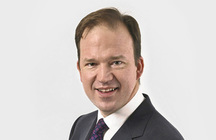
    Jesse Norman – 2021 Statement on E-Commerce and VAT Changes

    The statement made by Jesse Norman, the Financial Secretary to the Treasury, in the House of Commons on 13 May 2021.

    The Government will be introducing changes to simplify the way VAT is administered for some goods sold between Northern Ireland and the EU, and some low-value imports into Northern Ireland from 1 July 2021 (otherwise known as e-commerce VAT changes). This mirrors an WSEU-wide reform, which the UK is implementing in Northern Ireland in line with the obligations set out under the Northern Ireland protocol, where EU VAT rules with respect to goods will continue to apply in Northern Ireland. However, Northern Ireland is, and will remain, part of the UK’s VAT system.

    The overall aim of the e-commerce VAT changes is to facilitate the declaration and payment of VAT for (a) sales of goods to consumers between Northern Ireland and the EU; and (b) low-value goods, where they are in consignments valued up to £135 (€150), supplied to consumers in Northern Ireland from non-EU countries, including from Great Britain. The changes will affect businesses and online marketplaces that are involved in these transactions. The consumer experience overall will not change.

    On 1 January 2021, the UK introduced a set of new VAT rules for the imports of low-value goods into Northern Ireland from outside the UK and the EU. The EU’s e-commerce reforms mirror many of those changes. Therefore, the Government consider that there will only be minimal changes for businesses selling imported goods to customers in Northern Ireland.

    From a UK perspective, the e-commerce changes mean that:

    A new single EU-wide distance selling threshold of £8,818 (€10,000) will be introduced for the sales of goods and services in the EU. The threshold will only apply to supplies of EU-located goods to and from Northern Ireland, which means that, EU suppliers who exceed the threshold will have to register for VAT in the United Kingdom if they wish to sell goods to consumers in Northern Ireland;

    Online marketplaces will be liable for collecting and accounting for VAT on goods supplied in Northern Ireland, under certain circumstances; and

    Low-value consignment relief, which relieves import VAT on consignments of goods of up to £15, will be removed fully in Northern Ireland and across the EU.

    Alongside these changes, two new IT systems will be introduced: one for accounting and collecting VAT on sales of goods between Northern Ireland and the EU—the one-stop shop; and the other for accounting and collecting VAT on imports of non-excise goods from non-EU countries, where they are in consignments that do not exceed £135 (€150) in value—the import one-stop shop. Both systems are designed to reduce burdens on business and facilitate the collection of VAT on sales of goods across Northern Ireland and the EU; and are optional for businesses and online marketplaces to use.

    The UK will be taking a phased approach to the introduction of these IT systems. HMRC have today published guidance on gov.uk setting out what this will mean for businesses. However, in many cases, if businesses and online marketplaces opt not to register to use these systems, there will be no change in how they declare and pay for VAT on their sales of goods to consumers in Northern Ireland and EU member states.

    The Government will legislate for these changes shortly.