Blog

  • CONSTITUENCY RESULT : Holborn and St Pancras

    Candidate name Party Gender Number of votes Share (%) Change vs. 2017 for party (percentage points)
    Keir Starmer Labour Male 36,641 64.5% -5.6
    Alexandra Hayward Conservative Female 8,878 15.6% -2.7
    Matthew Kirk Liberal Democrat Male 7,314 12.9% +6.1
    Kirsten de Keyser Green Female 2,746 4.8% +1.5
    Hector Birchwood Brexit Party Male 1,032 1.8% 0.0
    Mohammad Bhatti UK Independence Party Male 138 0.2% -1.0
    Thomas Scripps Socialist Equality Party Male 37 0.1% 0.0


    Election statistics
    Majority
    Votes 27,763
    Percent 48.9%
    Rank (1 = highest %) 42
    Turnout
    Constituency 66.0%
    Region 67.5%
    UK 67.3%
    Constituency in 2017 67.0%
    Size of electorate 86,061
    Valid votes cast 56,786
  • CONSTITUENCY RESULT : Hitchin and Harpenden

    Candidate name Party Gender Number of votes Share (%) Change vs. 2017 for party (percentage points)
    Bim Afolami Conservative Male 27,719 47.1% -6.0
    Sam Collins Liberal Democrat Male 20,824 35.4% +24.8
    Kay Tart Labour Female 9,959 16.9% -15.7
    Sid Cordle Christian Peoples Alliance Party Male 268 0.5% +0.0
    Peter Marshall Advance Together Male 101 0.2% 0.0


    Election statistics
    Majority
    Votes 6,895
    Percent 11.7%
    Rank (1 = highest %) 477
    Turnout
    Constituency 77.1%
    Region 68.2%
    UK 67.3%
    Constituency in 2017 77.4%
    Size of electorate 76,323
    Valid votes cast 58,871
  • CONSTITUENCY RESULT : High Peak

    Candidate name Party Gender Number of votes Share (%) Change vs. 2017 for party (percentage points)
    Robert Largan Conservative Male 24,844 45.9% +0.5
    Ruth George Labour Female 24,254 44.8% -4.9
    David Lomax Liberal Democrat Male 2,750 5.1% +0.1
    Alan Graves Brexit Party Male 1,177 2.2% 0.0
    Robert Hodgetts-Haley Green Male 1,148 2.1% 0.0


    Election statistics
    Majority
    Votes 590
    Percent 1.1%
    Rank (1 = highest %) 637
    Turnout
    Constituency 72.9%
    Region 67.2%
    UK 67.3%
    Constituency in 2017 73.5%
    Size of electorate 74,265
    Valid votes cast 54,173
  • CONSTITUENCY RESULT : Heywood and Middleton

    Candidate name Party Gender Number of votes Share (%) Change vs. 2017 for party (percentage points)
    Chris Clarkson Conservative Male 20,453 43.1% +5.0
    Liz McInnes Labour Female 19,790 41.7% -11.6
    Colin Lambert Brexit Party Male 3,952 8.3% 0.0
    Anthony Smith Liberal Democrat Male 2,073 4.4% +2.2
    Nigel Ainsworth-Barnes Green Male 1,220 2.6% 0.0


    Election statistics
    Majority
    Votes 663
    Percent 1.4%
    Rank (1 = highest %) 631
    Turnout
    Constituency 59.2%
    Region 65.6%
    UK 67.3%
    Constituency in 2017 62.4%
    Size of electorate 80,162
    Valid votes cast 47,488
  • CONSTITUENCY RESULT : Hertsmere

    Candidate name Party Gender Number of votes Share (%) Change vs. 2017 for party (percentage points)
    Oliver Dowden Conservative Male 32,651 62.5% +1.4
    Holly Kal-Weiss Labour Female 11,338 21.7% -6.9
    Stephen Barrett Liberal Democrat Male 6,561 12.6% +7.2
    John Humphries Green Male 1,653 3.2% +1.3


    Election statistics
    Majority
    Votes 21,313
    Percent 40.8%
    Rank (1 = highest %) 114
    Turnout
    Constituency 70.6%
    Region 68.2%
    UK 67.3%
    Constituency in 2017 71.0%
    Size of electorate 73,971
    Valid votes cast 52,203
  • CONSTITUENCY RESULT : Hertford and Stortford

    Candidate name Party Gender Number of votes Share (%) Change vs. 2017 for party (percentage points)
    Julie Marson Conservative Female 33,712 56.1% -4.2
    Chris Vince Labour Male 14,092 23.4% -5.1
    Chris Lucas Liberal Democrat Male 8,596 14.3% +6.2
    Lucy Downes Green Female 2,705 4.5% +1.5
    Alistair Lindsay UK Independence Party Male 681 1.1% 0.0
    Brian Percival Independent Male 308 0.5% 0.0


    Election statistics
    Majority
    Votes 19,620
    Percent 32.6%
    Rank (1 = highest %) 221
    Turnout
    Constituency 73.5%
    Region 68.2%
    UK 67.3%
    Constituency in 2017 72.9%
    Size of electorate 81,765
    Valid votes cast 60,094
  • Max Madden – 1985 Speech on Rail Services in Bradford

    Max Madden – 1985 Speech on Rail Services in Bradford

    The speech made by Max Madden, the then Labour MP for West Bradford, in the House of Commons on 26 November 1985.

    I am pleased to have this opportunity to discuss Bradford’s rail services. To understand the mounting concern in Bradford about rail services it is necessary to explain the city’s unemployment crisis, the efforts that are being made to regenerate the city’s economy and the city’s anxiety about resources being deployed with a wrong sense of direction and priority.

    The jobs crisis is massive. During the period 1961 to 1978, manufacturing industry in Bradford lost 54,000 jobs, 45,000 of them in textiles alone. Between 1978 and 1981 a further 23,000 jobs in manufacturing industry were lost, 16,000 of them in textiles. The rate of unemployment has increased from 2 per cent. in 1974 to 16 per cent. in 1985, and 35,000 men and women are desperately looking for work. Wage levels remain well below the regional and national averages. The result is that millions of pounds have been taken out of the pockets of the men and women of Bradford and the rates revenue of the local authority has rapidly diminished.

    Car ownership in Bradford is very low. Only half of the families in the district own a car. There is substantial poverty and extensive deprivation. But the people of Bradford have a gritty independence. They want to help themselves. However, they are rapidly coming to the conclusion that although the Government have offered support to enable the people of Bradford to help themselves their help is inadequate.

    It is not being provided with the sense of urgency and commitment that the people of Bradford believe to be necessary. We have seen the city council, which is the city’s largest employer, losing millions in rate support grant and paying millions to the Government in rate penalty. We have seen the university, the city’s second biggest employer, suffering extensive cuts in 1981 and having to pay for substantial redundancies, and we have seen other unacceptable consequences as a result of those cuts, which are estimated to have taken another £6 million out of the local economy. All these pressures have led to extensive efforts being made by the city employers and others to diversify, to compensate for the losses experienced by manufacturing industry, by expansion of the service employment, especially in tourism.

    Transport services are obviously of vital importance to the city, and this concern led Bradford council and British Rail to enter a joint review of inter-city services and to issue a joint report recently. The report highlighted the importance of transport, particularly rail services to Bradford, and the extensive and mounting concern about the future of our rail services in the city.

    The chamber of commerce, trade unions, including the Transport and General Workers Union, by which I am sponsored, the Confederation of British Industry and many others, have stressed the importance that they attach to improving the transport services. The CBI, at its annual conference recently in Harrogate, devoted a considerable amount of time urging the Government to spend more on public works of all sorts, and there were numerous references to the need to improve transport services.

    Bradford should have one of the best rail services in Britain, and should not be condemned to having one of the worst. Bradfordians using public transport, including rail services to work, business or pleasure are entitled to services that are reasonably priced, comfortable and convenient. Sadly, this is not the case today, and unless the Government intervene, the prospects are that Bradfordians will be asked to pay higher fares for an increasingly third class service.

    It would be ludicrous for the line between Bradford and Leeds not to be electrified when the line between Leeds and the east coast main line is to be electrified, we hope by 1989. The investment for that electrification amounts to more than £300 million. The Government must find a way to give British Rail the £4 million that it needs to electrify the Bradford to Leeds line. The Government must ensure that British Rail expands the direct inter-city service between Bradford and London, which is now worse than it was 20 years ago.

    The joint report prepared by Bradford city council and BR, commenting on inter-city services, said that 10 years ago there were five through trains from Bradford to London, and six in the opposite direction. Now, there are three in each direction, all via Leeds.

    “It is unfortunate … that the Inter City service to and from London is worse in 1985 than it was in 1965. Industrialists comment about the length of time it takes to get from London to Bradford when a change has to be made at Leeds. They also criticise the scruffy, slow and often crowded nature of the link between Leeds and Bradford. Conferences are being, and have been lost because of the declining rail service between Bradford and London. Most tourists come by coach or car … Journey time, comfort and convenience by rail from London particularly, are important for many new and developing industries. At the present time, Bradford is at a great disadvantage. Decision makers and investors will not be attracted to Bradford if it becomes the largest city in the country without an Inter City rail service, or if it retains the worst Inter City rail service of any of the top six metropolitan districts in the country.”

    That is a succinct description of the concern in Bradford about rail services and particularly about the inter-city service.

    Over the years, the declining rail service has had spinoff effects on other services. The Bradford post and telecom advisory committee wrote recently to a senior executive at the Post Office expressing concern that Bradford had been excluded from the new dedicated intercity transport service, which will be operating between the main cities of this country. The letter said:

    “We have recently reached the stage where the 19.43 Bradford/Kings Cross train has been withdrawn and vans are having to be sent to Sheffield and York to catch trains there. This means that the evening posting time has had to be advanced in some districts by at least half an hour. This causes tremendous inconvenience to the business community who would normally be posting between 5.00 and 5.30 pm and who how have to get their mail to the Post Office before 5.00 pm.

    We find it difficult to understand why Bradford has been excluded from the new service, yet Leeds with a far better transport network has been included. Surely it would be preferable to include in the dedicated service those large cities which are suffering from a poor network.”

    I raised the issue recently with a Department of Trade and Industry Minister and I regret very much that he gave me a dismissive and off-hand reply, saying that he was not prepared to raise the matter with the chairman of the Post Office.

    The Government must take action to ensure that local rail services are maintained. The usual spiral of deteriorating services, leading to fewer passengers, trains being axed and lines being closed, must not be allowed.

    There is also mounting concern about services to Keighley and Ilkley, and it is a genuine based anxiety. Clear assurances must be given by the Government. They must take action to ensure that those services are not only maintained, but improved.

    The Government must recognise the vital importance of all transport services and do everything possible to find the money necessary to maintain and improve Bradford’s services. The city council has suggested that we need an interdepartmental Government task force, representing the Departments of Transport, the Environment and Trade and Industry to ensure a joint Government approach so that our transport services, particularly the rail services, can be defended and improved.

    Ministers visit Bradford fairly frequently, but not many travel by train and few experience the overcrowded, uncomfortable and inconvenient arrangements suffered by most passengers on trains from Leeds to Bradford. I urge the Under-Secretary to come to Bradford to meet the city council and discuss its proposals for ensuring that the Leeds-Bradford line is electrified, and its proposals for maintaining and improving the inter-city service. Such a visit would be welcomed by the council and would give the Minister some experience of conditions for passengers between London and Bradford.

    Good transport, including a good modern rail service, is central to Bradford’s efforts in providing new jobs, encouraging existing firms to expand or new firms to come to Bradford and in attracting visitors to the city.

    I end by quoting a good editorial in the Bradford Telegraph and Argus on 5 November:

    “If short-term, cost-cutting economic factors are the sole consideration in deciding whether or not to keep open the nation’s main transport arteries, we are likely to end up with a few highly prosperous major cities, such as Leeds, surrounded by vast areas of neglect such as Bradford.

    We believe it is time for the Government to take a longer-term, social view, before cities like ours are allowed to sink further into decline.” That view is generally held in Bradford, and the Minister can help to dispel it tonight. He can only hope to do so by promising action and cash. We are told that BR cannot electrify the line between Bradford and Leeds because of the stringent financial controls imposed by the Government, and that BR must show a proper rate of return on any investment made to proceed with that investment.

    For those reasons and arguments, to give hope to Bradford, to give positive and practical help to back up the self-help it is already involved in, to try to overcome the unemployment crisis, and to help our efforts to revive our economy, I appeal to the Minister tonight to give clear assurances that he places the highest priority on ensuring that our rail and transport services are saved. That is what the people of Bradford want to hear. I hope that he can give those assurances in his reply.

  • Dennis Skinner – 1985 Comments on the National Coal Board

    Dennis Skinner – 1985 Comments on the National Coal Board

    The comments made by Dennis Skinner, the then Labour MP for Bolsover, the 18 November 1985.

    I beg to ask leave to move the Adjournment of the House, under Standing Order No. 10, for the purpose of discussing a specific and important matter that should have urgent consideration, namely,

    “bribery by National Coal Board officials.”

    Those officials tried to woo certain trade union leaders in the National Union of Mineworkers into the Union of Democratic Miners. They were using taxpayers’ money in the process. This matter is specific because on 9 November the deputy chairman of the National Coal Board, James Cowan, and Kevin Hunt, the industrial relations director, approached Jack Jones, the general secretary of the Leicestershire miners. By and large, the Leicestershire coalfield was not engaged in the 1984–85 strike.

    During the course of the conversation, which took place at Blackpool at the National Coal Board brass band championships, Hunt and Cowan asked Jack Jones about leading his men into the Union of Democratic Miners and coming out of the National Union of Mineworkers.

    They said to him, “One of the ways in which we can facilitate this matter is by taking care of your pension, Jack, and making sure that we will provide you with a car in order to do your union business.” That is bribery on a grand scale and it is strange that it comes at a time when the Government and the Coal Board are calling upon the National Union of Mineworkers to sign a document with the aim of improving efficiency in the coalfields so as to save money. Yet they are prepared to use money to try to smash the National Union of Mineworkers and to set up a bosses’ union in Leicestershire.

    It is specific because it is also alleged that the practice has already taken place in respect of other officials in other areas. It is a very urgent matter because bribery and treating, in the legal sense, constitutes a criminal act. Therefore, it is necessary for the House to debate the matter in full so that the appropriate action can be taken.

    As you have not found time, Mr. Speaker, for the two other applications, I ask you to look very kindly at this one.

  • John Heddle – 1985 Speech on Public Telephone Boxes

    John Heddle – 1985 Speech on Public Telephone Boxes

    The speech made by John Heddle, the then Conservative MP for Mid-Staffordshire, on 15 November 1985.

    I am grateful for the opportunity to raise a subject which affects the constituencies of all hon. Members. The Order Paper gives the title of the debate as “public call box services”, but really I wish to discuss the condition and unworkability of public phone boxes.

    I am grateful to my hon. Friend the Under-Secretary of State for Trade and Industry for attending to hear what I have to say. He serves his west midlands constituency of Coventry, South-West as hard and effectively as I try to serve mine.

    Incidents of vandalism and unworkability of telephone boxes, even in rural Mid-Staffordshire, which encompasses a cathedral city and two small residential towns, are horrifyingly high. Between one in two and two in three public phone boxes on housing estates, in town centres and in villages do not work. The main causes are sheer, wanton vandalism and mindless, senseless hooliganism.

    Throughout the nation, there are 76,500 red telephone boxes. They are part of our national scene, yet, despite the fact that British Telecom provides a magnificent service to its customers and makes a welcome and healthy profit for its subscribers and shareholders, the public telephone service makes a loss of £77·4 million. Part of that loss must be attributable to the fact that the service is not adequately monitored.

    There are 10,600 public phone boxes in London. Last year, there were on average 5,000 acts of vandalism to public phone boxes each month and the cost of repairing phone boxes in London was £1 million. A survey carried out for the Daily Mail earlier this year showed that only 37 of 100 London phone boxes worked. In Newcastle, nine of 25 boxes worked, in Glasgow and Liverpool 10 of 25 boxes were in operation and even in Birmingham only 14 of the 25 phone boxes inspected—56 per cent.—were in operation.

    My anxiety is for people who live on housing estates and cannot afford private telephones. I think particularly of elderly people to whom the public phone box down the road may be a lifeline.

    When television came into our lives a few years ago, we used to see a picture of the mast at Sutton Coldfield round which we saw the sign:
    “Nation shall speak … unto nation.”

    For my elderly constituents, the public phone box enables family to speak unto family.

    How will an elderly person who wants to contact a doctor late at night be persuaded to go out and make an urgent call, perhaps even a 999 call? The chances are that such a person would not find a phone box that worked. Even if he or she did, the light would probably be smashed, the glass would probably be broken and the door would probably be off its hinges. If, by chance, the prospective caller does not know the number that he wants to dial, the chance of finding a directory in the phone box will be about one in a thousand.

    I know that British Telecom has done its best to encourage the public to take a responsible attitude. I shall quote from a magazine which Sir George Jefferson’s own office sent me today. It sets out the initiative which British Telecom has introduced, which is known as “Watch a box”. One passage reads:

    “The Chairman, Sir George Jefferson, took the initiative when he decided to check out a payphone on his way to work each day—now everyone wants to join in. The entire management board in BTL North West has elected to watch a box, while in BTL South West staff at all levels are taking part in a scheme run in conjunction with their area newspaper Connection.

    Whether they are walking the dog or travelling to and from work, staff have been asked, through the newspaper, to drop in and check out a payphone.

    If the payphone is not working, has been damaged or the notices or lighting are defective, then they can ring in on a special number to report the problem.”

    I do not think that that goes to the heart of the problem. There must be a partnership between local offices of British Telecom, local councils and local police forces. The telephone boxes should be inspected regularly and monitored at irregular times of the day and night with a view to trying to catch the vandals red-handed in the red telephone boxes. When caught, they should be brought to account in the courts. The fines meted out to them by the justices should be realistic and should dissuade them from ever embarking on a career of vandalism which might lead to worse crime in future.

    I ask my hon. Friend the Under-Secretary of State to use his influence with his ministerial colleagues. I suggest that he urges his ministerial colleagues in the Home Office to issue a directive to magistrates to ensure that when the vandals are caught the fines meted out to them by the magistrate bear a direct relationship to the cost of making good the wanton damage. The fine should be two, four or five times the cost of making good the damage. That will go some way to reducing the horrendous deficit of £77·4 million which the public part of British Telecom has to bear.

    It is no good British Telecom saying, “We have the problem under control.” I shall quote from an article which appeared in British Business on 2 August. Part of it read:

    “British Telecom claim that their new telephone kiosks will improve the situation. They point out that during 1984 there were more than 5,000 cases of damage to payphones every month in London alone, affecting almost half of London’s 10,650 payphone boxes, costing £1 million a year to repair. The new payphones are apparently much less vulnerable to vandalism. The extra degree of lighting will be a deterrent to vandals who are discouraged by high visibility.”

    I do not believe that to be so. A vandal will vandalise light or dark, day or night. The article continues:

    “The open-plan design and robust materials—stainless steel or anodised aluminium—will be difficult to damage.”

    If he is so minded, a vandal will damage. Even if he does not damage the telephone system itself, he will inflict damage on the casing or the red boxes.

    There is the idea that we should do away with the red boxes, which are so much part of our national life. Instead, we shall see installed a sort of Cape Canaveral cone into which my elderly constituents, for example, can make their calls after struggling down the street at the dead of night or in the heart of winter. The cones will not provide the shelter that the red boxes afford.

    I am grateful to my hon. Friend the Under-Secretary of State for being in his place to answer the debate. I hope that he will take on board some of my comments, which I hope also will be considered to be constructive. If he does, I believe that his constituents and mine will be eternally grateful.

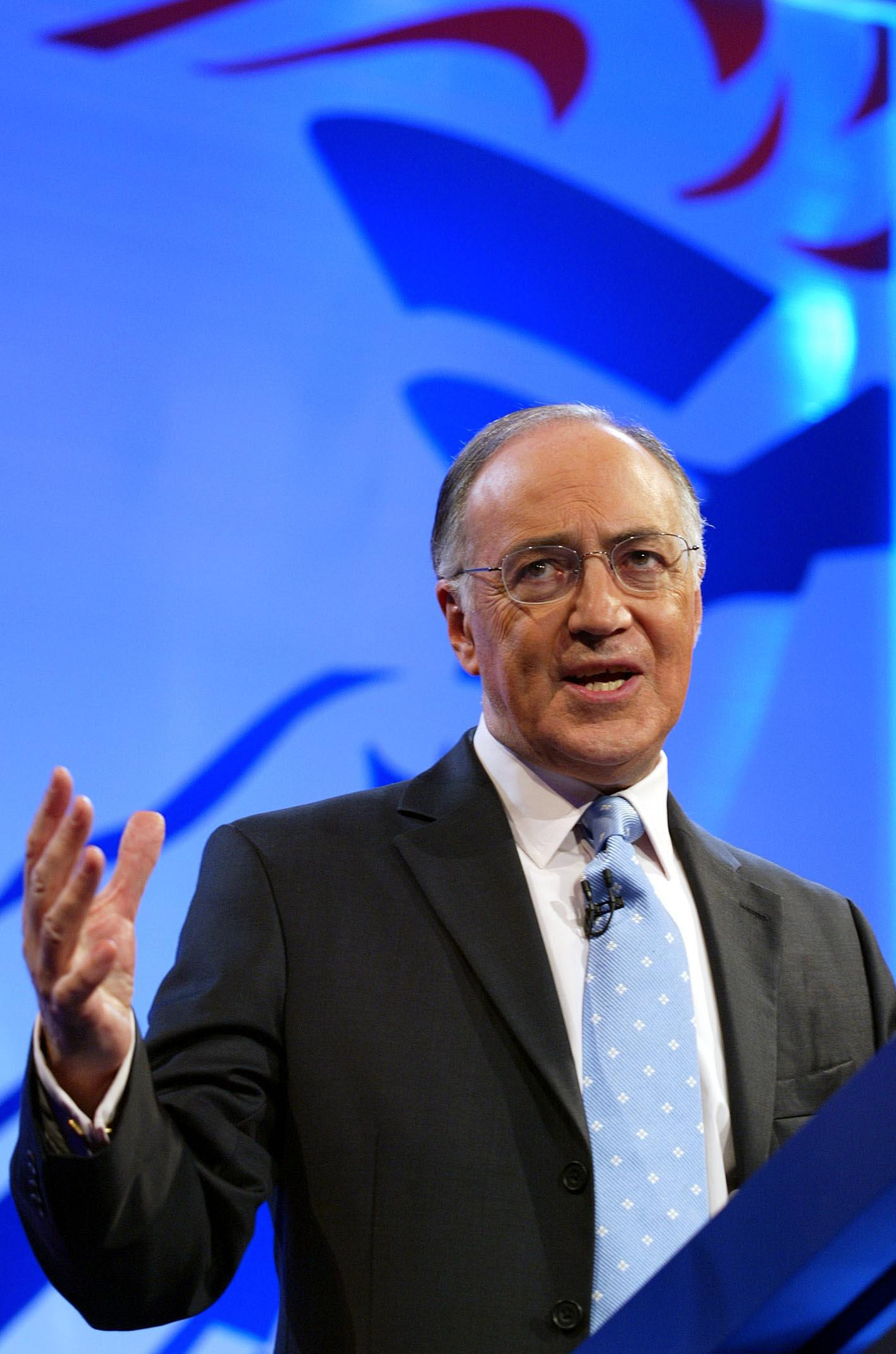
  • Michael Howard – 1985 Statement on Merger of Scottish and Newcastle Breweries and Matthew Brown

    Michael Howard – 1985 Statement on Merger of Scottish and Newcastle Breweries and Matthew Brown

    The statement made by Michael Howard, the then Parliamentary Under-Secretary of State for Trade and Industry, in the House of Commons 13 November 1985.

    With permission, Mr. Speaker, I should like to make a statement on the report of the Monopolies and Mergers Commission on Scottish and Newcastle Breweries and Matthew Brown which was published on 12 November. The Commission has concluded that, while the merger could not be expected materially to benefit the public interest, there are not sufficient grounds for concluding that the proposed merger may be expected to operate against the public interest. In the absence of an adverse public interest finding by the Commission, my right hon. and learned Friend the Secretary of State has no powers under the Fair Trading Act 1973 to intervene to prevent that merger, or to impose any conditions on it.

    Following press reports at the end of last week, it has been suggested that there may have been a leak of confidential information in advance of the report’s publication. An investigation is under way to establish whether there has been a leak.

    My attention has been drawn to the existence of a letter from my right hon. Friend the Secretary of State for Scotland, about which he has written to the hon. Member for Blackburn (Mr. Straw). That, together with all other material which may be relevant, will be considered in the context of the investigation.

    Mr. John Smith (Monklands, East)

    Is the Minister aware that this is an extremely serious matter because it reflects on the capacity of the Government and agencies responsible to them to hold commercially confidential information until the appropriate time for a public announcement? In those circumstances should not the Secretary of State for Trade and Industry who is responsible for the whole Department have come to the House to make the statement, instead of a relatively recently appointed junior Minister?

    Is the Minister aware that it is a little more serious than information “perhaps” having been leaked? It is well known that on 8 November, some days before the public announcement was made, newspapers carried stories predicting, not what the result of the Commission might be, but the result in terms which showed clearly that they knew the contents of the report, particularly the recommendation to which reference has been made.

    Is the Minister further aware that there was a significant movement of shares, whereby the shares of the company in question moved from 478p to 520p—an increase of 42p—on the information being made available fairly widely through the press? As a result of that, is it not clear that an investigation in considerable depth should be held—I welcome the fact that an investigation is being undertaken—with a full disclosure of what it reveals? Will the Minister guarantee that that will be done?

    Furthermore, should not the Government consider whether Ministers and officials, whether of Departments or agencies responsible to them, fully understand the important rules which exist about commercial confidentiality, and should they not take urgent steps to ensure that if those rules are understood, they are also enforced? It is disgraceful that a Government are unable to hold commercially confidential information as they are expected to. If they cannot do so, they are breaching an important trust to the British people.

    Mr. Howard

    It is of course a serious matter, and a serious investigation will take place. Of course that investigation will be in depth, as the right hon. and learned Gentleman suggests. All the matters to which he has referred will be carefully and fully investigated in that inquiry. It has not, however, been the practice of this or previous Governments to publish reports of internal inquiries and I therefore cannot give him the guarantee of publication which he requests.

    Mr. D. N. Campbell-Savours (Workington)

    Is not the most remarkable aspect of this affair the letter which the Minister sent to me yesterday in which he said:

    “Although Matthew Brown have no present intention of closing the Carlisle and Workington breweries, the jobs there could not be regarded as totally secure in the longer term even if Matthew Brown were to remain independent.”

    Is the Minister aware that that is simply not true? I have correspondence in my possession from Matthew Brown giving me almost indefinite assurances about the future of the brewery in my constituency.

    Since Matthew Brown made £7 million profit last year, until the takeover was approved by the Monopolies and Mergers Commission, the brewery at Workington was as safe as the Bank of England and the hundreds of jobs directly and indirectly dependent on that industry were absolutely secure.

    Is it not clear that the Minister himself has given the green light to Scottish and Newcastle to close my brewery? He is encouraging Scottish and Newcastle to take that decision. Should he not resign because he has acted irresponsibly?

    Finally, may we have an assurance from the Secretary of State for Scotland who leaked—and it was his leak which led to speculation on the Stock Exchange and the rise of 50p in the price of these shares, whereby City slickers have lined their pockets? It is for him, too, to resign. He has offended the House, he has undermined the Monopolies and Mergers Commission and he has done a disservice to the company Matthew Brown which has made an honourable contribution historically to my constituency.

    Mr. David Maclean (Penrith and the Border)

    Mr. Speaker, on a more reasonable note may I ask my hon. and learned Friend—

    Mr. Campbell-Savours

    Answer.

    Mr. Speaker

    I must say to the hon. Gentleman that the question was a bit long so I was taken in myself. I apologise and call the Minister to answer.

    Mr. Howard

    In the letter which I wrote to the hon. Member for Workington, I did not express any personal views, but I recited the conclusions reached by the Monopolies and Mergers Commission. That report has been published and is available for all to see. I invite those who wish to test the hon. Gentleman’s wild allegations to refer to that report.

    Mr. Maclean

    May I say in all reasonableness that many of my constituents believe that the conclusions by the Monopolies and Mergers Commission are at variance with the evidence presented to it? In view of the inquiry that my hon. and learned Friend announced today, does he agree that it is better to put the whole matter on ice and to have a fresh submission to the Monopolies and Mergers Commission?

    Mr. Howard

    No, Sir. The commission’s report is available and I do not wish to make any further comment on it.

    Mr. Jack Straw (Blackburn)

    Will the Minister explain why he skated so gingerly over the letter which the Secretary of State for Scotland wrote to a member of the public in Leyland, Lancashire, last Friday, four days before the publication of the report, in which he disclosed the contents of the Commission’s report and the Government’s decision upon it? I do not impugn the integrity or the honour of the Secretary of State, but does not the fact that he sent that letter disclose a degree of incompetence and carelessness within the Scottish Office and the Department of Trade and Industry which is unacceptable when handling market-sensitive information?

    May I press the Minister on the nature of the investigation and its publication? There have been few examples of market-sensitive information being leaked, but when that has happened it has sometimes led to a full tribunal. Therefore, the precedents for the widest possible inquiry, including into share profiteering, are very good. I urge the hon. and learned Gentleman to ensure that the investigation is wide and that its results are published.

    Mr. Howard

    The letter to which the hon. Gentleman referred will be considered in the investigation. It will be a thorough one, and as wide as is necessary to discover the facts. Unlike the hon. Member for Blackburn (Mr. Straw), I would not wish today to prejudge or anticipate the results of that inquiry.

    Mr. Ron Lewis (Carlisle)

    Is the Minister aware that there is very strong opposition in Cumbria, among all the political groups, to the decision to allow a takeover? Cumbria’s unemployment problem is grim, and despite everything that the Minister has said today we expect that in less than two years the breweries will be closed. Will he stand on the sidelines and act as Pontius Pilate, or will he do something about it?

    Mr. Howard

    All those matters were drawn to the attention of the commission, which is an independent body. As I said at the outset, my right hon. and learned Friend the Secretary of State for Trade and Industry has no power to intervene to prevent a proposed merger under the Act in the light of the conclusion of the commission in its report.

    Mr. Nicholas Winterton (Macclesfield)

    While I warmly welcome the internal inquiry that will look into the unfortunate leak, may I support the request made by my hon. Friend the Member for Penrith and the Border (Mr. Maclean), bearing in mind the mass speculation from which many people—nothing to do with the brewery, but the city slickers described, quite rightly, by the hon. Member for Workington (Mr. Campbell-Savours)—have made a great deal of money?

    Will my hon. and learned Friend consider setting aside the conclusion in the report of the Monopolies and Mergers Commission, and ask it to consider the matter again? Will he bear in mind the fact that many Conservative Members are deeply unhappy about and strongly opposed to a decision that will undoubtedly wipe out an important private brewery in the north-west of England?

    Mr. Howard

    I recognise the unhappiness to which my hon. Friend referred. However, the legislation pursuant to which the commission operates has been in existence for some considerable time, under Government of all political complexions. In this instance, it has been operated in the usual scrupulous manner, with all the procedures being properly followed. The Secretary of State has no power to intervene, for the reasons that I have given.

    Mr. Robert Maclennan (Caithness and Sutherland)

    Does the Minister recognise that, now that the finger of suspicion has been pointed at a Cabinet Minister, a number of public authorities and civil servants, it would be wholly inappropriate merely to conduct an internal inquiry, however wide-ranging? Is it not now necessary to ensure that a completely objective inquiry is conducted, by someone outside the public service?

    Mr. Howard

    No, I do not accept for one moment that a thorough internal investigation will not be objective. It will identify and ascertain all relevant facts relating to the matter.

    Mr. Ivan Lawrence (Burton)

    Is my hon. and learned Friend aware that there is widespread concern that smaller breweries are being swallowed by larger breweries, a process which may not be in the public interest?

    If the Government do not have powers to overrule the decision of the Monopolies and Mergers Commission, will my hon. and learned Friend seriously consider taking powers to give the Government of the day some right to take action if, in the political of social interest, it is thought necessary to do so?

    Mr. Howard

    I do not think that it would be wise to consider that aspect of the matter in the light of one case. However, it is my right hon. and learned Friend’s intention to review competition policy generally next year. These matters will be taken into account in the context of that review.

    Mr. Dennis Skinner (Bolsover)

    Is the Minister aware that the mass of the public will view this matter as one where a Minister has managed to tip off certain favoured people with information to which the remainder of the population is not privy? [HON. MEMBERS: “Disgraceful.”] As a result, will not many people make a financial killing? The Minister then comes to the Dispatch Box and blithely says that, instead of a proper public inquiry, the matter will be dealt with either by self-regulation or an internal inquiry.

    I put it to the Minister that, if someone in a betting shop had managed to land a big coup on the basis of backing a string of winners after they had passed the post, that would be a matter for the Attorney-General, the fraud squad and all the rest. Why does that not apply also to people in the City?

    Mr. Howard

    The investigation into the facts of the matter will be thorough. I have nothing to add to what I have already said.

    Mr. Piers Merchant (Newcastle upon Tyne, Central)

    Is my hon. and learned Friend aware that, despite the views of some hon. Members, there are areas in which the findings of the Monopolies and Mergers Commission will be welcome? They include Newcastle, where people have wide experience of the Scottish and Newcastle operation and are aware that its reputation and expertise will enable it to run Matthew Brown efficiently and effectively.

    Mr. Howard

    I note what my hon. Friend said. No doubt many representations to that effect were put before the commission.

    Mr. John Ryman (Blyth Valley)

    I wonder whether I could ask the Minister to give a sensible reply to my question? Although it is true that the Secretary of State cannot interfere with the recommendation of the Monopolies and Mergers Commission, does the hon. and learned Gentleman agree that the Secretary of State is under no obligation to accept that recommendation? He can accept or reject it.

    Mr. Howard

    No, the hon. Gentleman has not accurately summarised the effect of the legislation or the powers of my right hon. and learned Friend. Where the commission concludes that a merger is not likely to be against the public interest, my right hon. and learned Friend has no power under the Act to prevent it from taking place.