Blog

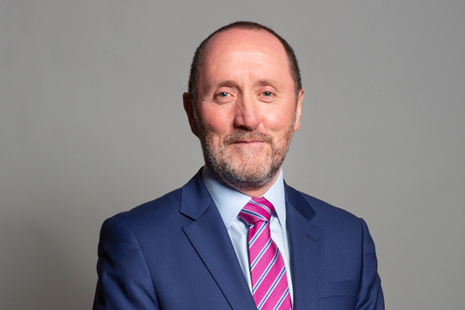
  • Sadiq Khan – 2021 Comments on Bringing Hounslow Housing into Council Ownership

    Sadiq Khan – 2021 Comments on Bringing Hounslow Housing into Council Ownership

    The comments made by Sadiq Khan, the Mayor of London, on 21 December 2021.

    I’m determined to continue increasing the number of council homes for Londoners and I’m delighted that Hounslow has committed to using investment from City Hall to bring so many properties back into council ownership. This will enable Hounslow to provide good quality and genuinely affordable homes to more than 500 families in London.

    London has a wonderful tradition of helping those in need, and I’m proud Hounslow will use some of the funding to help house vulnerable care leavers and Afghan refugees.

    Hounslow joins Islington in taking swift, bold action to help deliver the homes Londoners so desperately need. I’m hopeful that other boroughs will look to them and submit their own proposals. We also need to see ambition from Ministers to replicate the ‘Right to Buy-back’ scheme nationally, giving councils and housing associations the support they need to purchase much-needed homes.

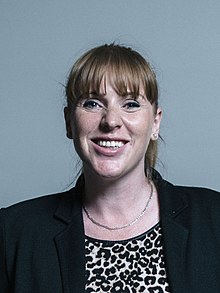
  • Angela Rayner – 2021 Comments on Omicron

    Angela Rayner – 2021 Comments on Omicron

    The comments made by Angela Rayner, the Deputy Leader of the Labour Party, on 21 December 2021.

    Dithering and delay have caused disruption throughout this pandemic but we cannot see that happen again.

    It is vital that we have as much information as possible about the impact of Omicron and how this Government plans to mitigate those impacts. It would be an irresponsible dereliction of duty to not have contingency planning in place.

    The public have a right to know that the Government is taking this seriously.

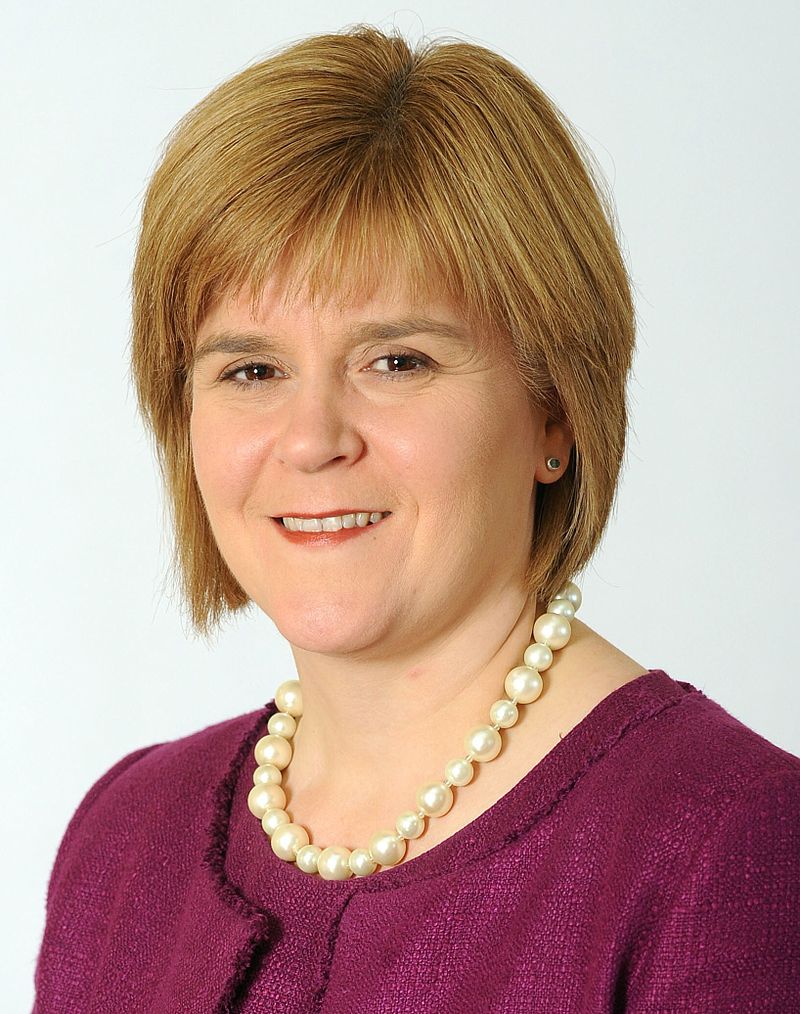
  • Nicola Sturgeon – 2021 Speech to the Nation

    Nicola Sturgeon – 2021 Speech to the Nation

    The speech made by Nicola Sturgeon, the Scottish First Minister, on 14 December 2021.

    The last two years have been the toughest most of us can remember.

    I can never thank you enough for the sacrifices you have made.

    This winter, just as we thought we had turned a corner in the pandemic, the emergence of Omicron struck us a cruel blow.

    Omicron is much more transmissible than previous strains, and it is now spreading very quickly.

    We anticipate a steep and rapid rise in cases.

    We don’t know yet if Omicron’s impact on individual health is milder than variants like Delta.

    Some have suggested it might be, and let’s hope so. But there is not yet strong or consistent evidence of that.

    And even if it is the case, the challenge Omicron poses is real.

    When we are facing, as we may be, thousands upon thousands of cases per day – perhaps as high as 15,000 or more – even if just one in every hundred of those cases needs hospital care, the burden on the health service quickly becomes impossible.

    Omicron can do this through sheer weight of numbers. More people infected will lead to more people with serious illness and, tragically, more people will die.

    We are also already seeing an impact across the economy, and on public services.

    Staff absence caused by COVID means trains without drivers, classrooms without teachers, wards without nurses and businesses without workers.

    That’s why this is not a choice between protecting health and protecting the economy.

    If we don’t act now to protect health, Omicron will inflict untold damage on businesses and critical services across Scotland.

    That’s why we must act to slow it down, as we speed up vaccination.

    Getting boosters into arms as quickly as possible is our top priority.

    Vaccination is our best defence. And boosters give us much more protection against Omicron than just one or two doses.

    So our plan is, before New Year, to offer every eligible adult the chance to book an appointment.

    If you are over 30, you can already book online.

    From tomorrow over 18s can do so too.

    Our mission is to get the overwhelming majority of people boosted before the bells.

    In January, we will catch up with anyone who couldn’t be done before Hogmanay.

    My thanks to everyone doing truly heroic work to get jags in arms as fast as possible – and to everyone rolling up their sleeve to protect themselves and others.

    Boosters are how we will beat this.

    But in this race between the virus and vaccines, as we speed up their delivery, we also need to slow down the virus.

    Put simply, that means all of us having fewer contacts with fewer people – and making sure those we do have are safer.

    To help workers and customers to do that, we are putting a legal requirement on businesses to take reasonable steps to reduce transmission on their premises.

    So in supermarkets, for example, you will see the return of some of the measures that were in place at the start of the pandemic.

    And we are asking employers to do even more to support working from home.

    We know this is worrying news for business – especially in the hospitality trade which is being hard hit as people rightly follow advice to defer Christmas parties.

    So today, we have put in place a package of financial support to help them.

    And we are making more money available to ensure eligible people can claim isolation payments. No one should find themselves unable to afford to do the right thing, to protect themselves and others from COVID.

    The reality, however, is that our resources are limited. The UK government holds the purse strings, and only they can put in place critical support such as furlough.

    Alongside the Welsh and Northern Irish governments, we are hoping they will do more.

    My biggest request today is to all of you.

    Please believe me when I say I would not be asking you to sacrifice more, if I did not think it essential for the health and well-being of all of us.

    We are not banning household mixing in law, as we had to do before. We know the impact of this on mental health.

    And I am not asking you to cancel or change your plans for Christmas Day, Boxing Day, or whenever you have your main festive celebration.

    But in the run up to, and in the aftermath of Christmas, I am asking – I am appealing – to everyone to cut down as far as possible our contacts with people in other households.

    My key request to all of you today is – as far as you can, please minimise your indoor social interactions with other households at this time.

    And, if you do plan on socialising – either at home or in indoor public places – please limit the number of households represented in your group to a maximum of three. And test before you go.

    We are asking this because Omicron is so infectious. Our experience says if it gets into a group of people, it will infect many of them. So limiting numbers helps us restrict its spread.

    Speaking to you in these terms is the last thing I wanted to be doing a few days before Christmas.

    We’ve all had enough of this.

    But the threat from Omicron is severe. And we must respond seriously.

    This is another difficult juncture in the course of the pandemic – but vaccines and home testing do put us in a better position than last year.

    And wearying though all this is, we are not powerless.

    So let’s pull together and look after each other again.

    We know what we need to do.

    Keep windows open.

    Wash our hands.

    Wear face coverings.

    Limit our contacts.

    Test before we go anywhere.

    And get vaccinated.

    Thank you – for everything.

    And in sending you my Christmas wishes, let me more than anything wish for all of us a happier and brighter new year.

  • Kit Malthouse – 2021 Comments on Sobriety Tags

    Kit Malthouse – 2021 Comments on Sobriety Tags

    The comments made by Kit Malthouse, the Crime, Policing and Probation Minister, on 20 December 2021.

    Alcohol-fuelled violence ruins too many lives and families and creates mayhem in our town centres. It is a sad reality that over Christmas we see a worrying spike in domestic abuse and crimes fuelled by drink.

    Sobriety tags have already brought enormous benefit helping offenders change their ways and the Probation Service to clamp down on this behaviour and protect victims from further violence.

  • Julia Lopez – 2021 Comments on New Cyber Laws

    Julia Lopez – 2021 Comments on New Cyber Laws

    The comments made by Julia Lopez, the Minister for Media, Data and Digital Infrastructure, on 20 December 2021.

    Every day hackers attempt to break into people’s smart devices. Most of us assume if a product is for sale, it’s safe and secure. Yet many are not, putting too many of us at risk of fraud and theft.

    Our Bill will put a firewall around everyday tech from phones and thermostats to dishwashers, baby monitors and doorbells, and see huge fines for those who fall foul of tough new security standards.

  • Eddie Hughes – 2021 Comments on Tackling Homelessness

    Eddie Hughes – 2021 Comments on Tackling Homelessness

    The comments made by Eddie Hughes, the Minister for Rough Sleeping, on 21 December 2021.

    I have seen first-hand the devastation of those who come face to face with homelessness, and my heart goes out to anyone in this situation.

    The support we are announcing today is going directly to communities that need it most.

    It will help thousands of people across England, with councils able to prevent homelessness before it occurs and put a roof over the heads of those who have lost their homes.

  • Grant Shapps – 2021 Comments on Integrated Rail Plan

    Grant Shapps – 2021 Comments on Integrated Rail Plan

    The comments made by Grant Shapps, the Secretary of State for Transport, on 21 December 2021.

    Last month, I promised we would get on with delivering the Integrated Rail Plan by Christmas and that’s exactly what we’re doing.

    Today marks the beginning of a transformation of rail journeys for the Midlands and the North, where we will slash journey times and build better connections between towns, cities and everywhere in between.

    Under our plans, people won’t have to wait 2 decades for better services. This unprecedented investment will deliver better railways sooner.

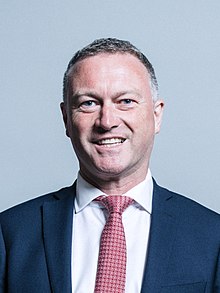
  • Steve Reed – 2021 Comments on Dominic Raab Defending Rule Breaking

    Steve Reed – 2021 Comments on Dominic Raab Defending Rule Breaking

    The comments made by Steve Reed, the Shadow Justice Secretary, on 21 December 2021.

    Dominic Raab has spent hours this month taking the public for fools instead of dealing with the massive problems the Conservatives have created in the justice system.

    Raab and this high-tax, soft-on-crime Conservative Government should be tackling the courts backlog and raising the pitifully low conviction rate for rape in this country.

    It is yet another slap in the face of the British public, who will rightly think that it is one rule for Boris Johnson and this Government, and another rule for everyone else.

    Raab needs to stop wasting time defending the indefensible and start doing his job.

  • Tom Pursglove – 2021 Speech on Animal Testing

    Tom Pursglove – 2021 Speech on Animal Testing

    The speech made by Tom Pursglove, the Parliamentary Under-Secretary of State for the Home Department, in the House of Commons on 16 December 2021.

    I thank the hon. Member for Rutherglen and Hamilton West (Margaret Ferrier) for securing this important debate and for her kind festive wishes, which are very much reciprocated to her and her family. I am grateful to her and to all colleagues who have raised concerns about this issue in previous debates and in correspondence with Ministers and in various questions for those contributions.

    I have the privilege of closing today’s debate on behalf of the Minister responsible for animals in science. In so doing, I would like to thank the Under-Secretary of State for Business, Energy and Industrial Strategy, my hon. Friend the Member for Mid Norfolk (George Freeman), for closing a Westminster Hall debate on this subject on 25 October. He provided a thorough account of the Government’s position on that occasion, and I hope that I can build on his commentary in my remarks today.

    This is an evocative topic. The strength of feeling it generates is entirely understandable and I do not seek to minimise that in any way; I am exceptionally mindful of it. What we absolutely must do when discussing this issue is ensure that our discussions are rooted firmly in the evidence. The use of animals in science lies at the intersection of two important public goods: the benefits to humans, animals and the environment from the use of animals in science; and the UK’s proud history of support for the highest possible standards of animal welfare. I note the hon. Lady’s point that the UK ought to be a world leader. I argue that one of the important contributions that have we made, including when we were a member of the European Union, was that the European directive for the protection of animals used in science was built upon and developed directly on the back of the Animals (Scientific Procedures) Act 1986, so UK legislation was very much at the forefront when it came to shaping safeguards and regulation in this policy space.

    The balance between those two public goods is reflected in the UK’s robust regulation of the use of animals in science through a dedicated Act and our strength in science and innovation. The Animals (Scientific Procedures) Act, which I have mentioned, specifies that animals can be used in science only for specific limited purposes where there are no alternatives, and provides protection for these animals through the legal requirement to apply the principles known as the 3Rs—replacement, reduction and refinement. The Government are committed to maintaining robust regulatory standards, and to investing in alternatives to animals. I agree with the hon. Lady that that is very much something that the British people want to see happen, which is why we, as a Government, are committed to the three Rs. When we are considering the ongoing need for the use of animals in science, it is essential to look at the impact that would result if it were not possible. Animal testing and research play a vital role in the understanding of how biological systems work in health and disease. They support the development of new medicines and cutting-edge medical technologies, for humans and animals, and they support the safety and sustainability of our environment. From new vaccines and medicines to transplant procedures, anaesthetics and blood transfusions, animal research has helped us to make life-changing discoveries and advances with enormous benefits for society. Indeed, the development of the covid-19 vaccine, like that of all vaccines, was made possible at least in part because of the use of animals in research.

    Animal testing is required by all global medicines regulators, including the UK’s Medicines and Healthcare products Regulatory Agency. That testing is essential to protect human health and safety. Without the testing of potential medicines on animals, the development, registration and marketing of new, safe, and effective medicines would not be possible.

    Although much research can be done with non-animal models, there are still purposes for which it is essential to use live animals, as the complexity of whole biological systems cannot always be replicated with the use of validated non-animal methodologies. That is especially the case when the safety of humans and animals needs to be ensured. Ours is a nation that rightly gives strong support to animal welfare, and I think it fair to say that it is a country of animal lovers, but let us not confuse the issues. I will be clear: animals are only ever used in science when there is a legally permissible purpose that is for the benefit of humans, animals themselves, or the environment. We authorise the use of animals only when the harms caused to the animals are justified by the likely expected benefits, and when there are no non-animal alternatives. We issue licences only when pain, suffering, distress and lasting harm have been minimised to the degree needed to meet the scientific research objectives. There are, of course, various levels and layers of safeguards in respect of this work.

    There are three commonly cited but incorrect statements about the use of animals in science. The first is that the use of animals in science is not necessary because all the benefits can be achieved through the use of non-animal methodologies. The second is that the use of animals in science is not valid or useful primarily because data acquired from animal testing cannot predict the experience of humans or other animals. The third is that many potential medicines fail during development, and that this demonstrates that animal testing is not useful or necessary in drug development.

    Let me deal first with the claim that there are alternatives to using animals for all purposes. Although scientific progress has meant that many scientific objectives can be achieved without the use of animals, there are still areas in which that is not possible. One example is the assessment of what is described as the “reproductive toxicity” of a chemical or potential new medicine. That means understanding whether a chemical causes abnormalities in fertility, abnormal development of offspring, or even problems with the fertility of the offspring of those exposed to such a chemical. Although some initial screening tests for that purpose can be performed without the use of animals, animal tests are still necessary for the assessments. Such tests have prevented the further development or marketing of substances that would have had significant negative impacts on fertility or developing embryos.

    Let me now deal with the second point. Animal models are constantly improving to become more accurate and predictive, and scientists understand progressively more about which biological systems in which animals offer the most scientifically valid results. Improvements in the understanding of the genomes of animals and humans have been critical to ensuring that scientific research in animals is understood and applied appropriately. Data from animal experiments are constantly fed into computer models that analyse their predictivity and enable scientists to use animal models in increasingly smarter and more predictable ways.

    As for the third claim—that many drugs fail during development, and that this shows that animal testing is not useful or necessary—although it is correct to assert that there is a high attrition rate in drug development, there are many reasons why drugs that are assessed as potentially effective and safe in animals do not progress to the market, including commercial reasons. Although there are always some effects in humans that cannot be accurately predicted in animals, animal studies are successfully used to characterise toxic effects of potential medicines with respect to the target organs that may be affected, and to understand how such effects vary with the dose of the substance administered. Additional information can be obtained about whether toxic effects seen can be reversed. This information allows for the identification of factors that can be monitored to assess adverse effects from potential new medicines in their first clinical trials and to establish the first dose that can safely be given in these studies. This is a critical part of protecting the safety of the participants in these studies.

    Results from animal studies are therefore used as the basis for extrapolation to indicate and manage possible risks to humans. Thus, animal testing is considered not in a stand-alone context but as part of an integrated set of evidence from a variety of sources, including non-animal testing. Should animal testing not occur, more potential medicines would not progress to market, resources would be spent on potential medicines that would have been excluded through animal testing and the risk to humans in clinical trials would be considerably higher.

    I commend the hon. Lady for the passion with which she speaks on these matters and the constructive approach and tone that she has taken in this debate, and which I know she will continue to take in raising these matters. I can assure her that the UK aims to be a world leader in the development of, and access to, new and innovative treatments and technologies. We must continue to protect the health of humans, animals and the environment. To achieve these important outcomes, we will continue—until such time as alternatives are achieved for all purposes—to need to use animals in science, but it is right that robust checks and balances should be in place. Importantly, while achieving these outcomes is critical, this Government also remain committed to robust regulation of the use of animals in science through enforcement of the Animals (Scientific Procedures) Act, and to the funding, development and promotion of non-animal alternatives. That is something I know all of us in this House and in our country want to see delivered.

    In closing, Mr Deputy Speaker, I should like to thank you, Mr Speaker and the terrific team of Deputy Speakers for everything that you do. I should also like to thank the Clerks, the staff of the House and of course the Doorkeepers. As the final Minister to speak at the Dispatch Box this year, I also want to say an enormous thank you to the officials who have been working tirelessly across Government, particularly during the challenges of the pandemic, which is of course ongoing. I also want to thank those in my private office and my parliamentary staff, without whom I could not do the work that I do. As a Home Office Minister, I would also like to thank and send my best wishes to our emergency services workers and all those working on the frontline this Christmas and new year. And perhaps most importantly for me, I want to thank the good people of Corby and east Northamptonshire, without whom I would not be here.

  • Margaret Ferrier – 2021 Speech on Animal Testing

    Margaret Ferrier – 2021 Speech on Animal Testing

    The speech made by Margaret Ferrier, the Independent MP for Rutherglen and Hamilton West, in the House of Commons on 16 December 2021.

    Thank you, Mr Deputy Speaker, for the opportunity to speak today on this issue and for granting this important debate.

    I have said many times, and in many debates in this House, how passionately I feel about animal welfare. I know I am not alone among my colleagues in that respect, and I know I am not alone in my constituency. We are a nation of animal lovers, and that is why animal rights consistently sits in the top ranking of issues I am contacted about. It was only two months ago that my constituency broke into the top 10 for the number of signatories to an e-petition that prompted a Westminster Hall debate on this very issue. We, as a nation, care.

    Looking to the future of testing on animals, there are several angles of the argument we need to consider. First, does the scientific evidence support continued animal experimentation? Next, on the morality of testing, can we justify knowingly submitting animals to suffering in the name of science? There is also the international context to consider. Are we willing to go from a world leader on animal rights to merely following the law? I will do my best to cover those questions today.

    It will come, I hope, as no surprise that public opinion overwhelmingly supports the replacement of animal experiments with human-relevant techniques. Now would be a good time to reflect on that fact as it is, after all, the public who elect us to this place, and it is both our responsibility and greatest privilege to represent their views here. In February, YouGov polled the UK in partnership with Cruelty Free International. That polling found that 68% of people support phasing out animal testing in favour of alternatives. In Scotland, 79% of adults found it unacceptable that animal testing continued while other methods were available. In September, further polling found 65% of respondents wanted to see a binding plan in place to phase out experiments. Two thirds wanted a target date for the end of testing. And if that does not convince you, Mr Deputy Speaker, I will appeal to the politically minded among us. Almost 70% have a favourable view of MPs who support the phasing out of animal testing. Now is the time to step up.

    Let me turn to the first of the questions I posed earlier, on the scientific argument for testing. In October’s debate, the Under-Secretary of State for Business, Energy and Industrial Strategy, the hon. Member for Mid Norfolk (George Freeman), set out the justification for testing. I have great respect for the Minister and do not doubt his passion for these matters, but in my opinion the argument was hinged on a flawed principle. First, that animal testing is

    “vital for identifying benefits for humans, animals, and the environment.”—[Official Report, 25 October 2021; Vol. 702, c. 41WH.]

    I will make no comment about the contradiction there of animals suffering for the benefit of other animals. That it is the legal framework in which we currently work.

    Let us look at the first point: that animal testing is a necessary evil. Some 92% of drugs that show promise in animal trials fail to reach the market, most commonly because of poor efficacy or safety that was not picked up in animal trials. For treatments for complex and poorly understood conditions, failure following success with animal trials is almost a certainty. For example, on Alzheimer’s, the chief science officer of the Alzheimer’s Drug Discovery Foundation has said:

    ‘We’ve cured mice engineered with this disease over 500 times. The mouse models don’t translate into humans.”

    We would be forgiven for assuming that animal testing is only used as a last resort. We hear all the time that animal experiments are used only where there is no alternative, and it is true that that is the intent of the law. The duty is currently on the researcher applying for a license to prove there is no alternative to animal testing. Not only are applications not approved by experts in the subject matter, but analysis of Home Office documents show that this is treated as a tick-box exercise by some researchers. There are no rigorous checks and balances in place. There is the continued approval of mice testing for Botox products, despite the availability of approved non-animal methods, and the fact that most products are used for cosmetic purposes.

    Dogs have a special protection in legislation and are allowed to be tested on only if there are no alternative suitable species. Last year, however, 4,340 licensed procedures were carried out on dogs in Great Britain. Dogs are mostly used for repeat dose toxicity testing, where they are given daily doses of test substances for about four weeks, sometimes longer. Once the experiment is over, the dogs are put to sleep so that researchers can examine the effects of the substance on their internal organs. Although continued research and development into viable and reliable human-relevant methods remains essential, and progress must be made at pace, there are existing methods available. I question, then, why 3 million animal experiments were carried out in 2020. In fact, no application for animal experiment was refused by the Home Office last year. In one specific case, a simple one-word answer was provided to justify why there was no alternative to animal testing. Perhaps that is why, in my recent pursuit of information on Scotland-specific animal research data and unnecessary animal deaths at testing facilities, the Home Office has been so reluctant to provide any meaningful responses at all.

    How can we recognise the sentience of animals and not recognise the hypocrisy of allowing them to suffer in the name of medicine, when those medicines are not even reaching the market? How can that be justified? Not by the existing legislative framework, to start with. Although it may be legally permissible, it is not morally permissible. It is time for the Government to commit to a reform of the animal testing law. Although they acknowledge that, actions speak louder than words, as the old adage goes. If they do not do this, the UK risks falling behind our international partners.

    We have heard this Government’s exclamations about how Brexit presents opportunities untold. Whether that is true remains to be seen, but I ask them to seize this moment: let us make this issue one of those opportunities to cement ourselves once more as a world leader. The European Parliament recently voted in favour of an action plan to accelerate the move away from animal testing across the bloc. It backed the establishment of a high-level group to work with member states to draw up an ambitious plan, with concrete actions. Germany has committed to a plan to support innovation through animal-free research. The Netherlands has initiated its transition programme for innovation without the use of animals, in order to become a front runner in this area. The US Environmental Protection Agency has released its first update to its plan for reducing animal testing, with concrete steps towards its goals and metrics to monitor progress. We must be proactive here.

    So where do we start? Funding is crucial. Current funding through NC3Rs is not enough if we are to replace animal testing. Its annual budget is about £10 million. By comparison, it is estimated that in 2019 the Medical Research Council and the National Institute for Health Research together provided £1.8 billion in funding for UK medical research, and medical research charities provided £1.9 billion. NC3Rs does not even focus solely on animal experiment replacement. The Chancellor’s autumn Budget committed £5 billion to health research. I encourage the Minister today to commit some of this funding to the development of human-relevant science.

    In tandem with funding, a clear and ambitious strategy is essential. That means a joined-up approach across Government and stakeholders. We can see the approach the international community is starting to take. Some good suggestions from animal charities that I have heard include the use of target setting, as we have seen with our climate change commitments, and the immediate discontinuation of funding for projects using animal experiments in areas that have proven poor translation rates to human trials. Research techniques need the space to continue modernising. Continuing to rely on outdated principles, legislated for half a century ago, is stifling development. If we look back into history at all the advances made in medicine and technology, we see that they are filled with methods and practices that were seen as innovative and state-of-the-art at the time, but that we would not dream of using now. That is precisely where animal testing should lie: necessary in the past maybe, but necessary no more—it is not ethical.

    I also agree with calls for a dedicated Minister with the sole portfolio of accelerating animal-free science. At the moment, lines of responsibility for these issues are too muddy. They are divided up between the Home Office and the Department for Business, Energy and Industrial Strategy and, even then, there is overlap with a number of other Departments. The Home Secretary has statutory duties to support the development of non-animal testing, but it is often overlooked, which, when we think about the knock-on effect on drugs, economic policy and public health, is difficult to accept. Stakeholders say it is difficult for them to know which Minister they should be engaging with—a clear sign of how low this is sitting on the list of priorities. It must be addressed urgently.

    I mentioned earlier my own difficulties in obtaining specific animal testing data from the Home Office, where the responsibility for this policy is supposed to lie. When I tabled a written parliamentary question asking for the number of unnecessary animal deaths at licensed testing facilities, the answer was:

    “No such estimate can be made”.

    When I followed up to ask what plans there were to record this information in future, the answer was that

    “the Home Office does not hold information on, nor has plans to record future deaths of animals that occur at licensed scientific testing facilities.”

    That demonstrates the urgent need for better oversight. How can we accurately assess the legitimacy of animal testing and the associated suffering and death if the Ministers responsible do not even register the full necessary data?

    In conclusion, I thank the charities that work so hard for change in this area, and I thank them for the information that they have made available to aid this discussion. They are Cruelty Free International, Animal Free Research UK, OneKind and People for the Ethical Treatment of Animals.

    I reckon the Minister and I are the last two in the Commons today, or among the last three. I thank him for taking the time to respond to my Adjournment debate, and wish him a very happy Christmas break.