Blog

  • Denis Healey – 1972 Speech on India and Pakistan

    Denis Healey – 1972 Speech on India and Pakistan

    The speech made by Denis Healey, the then Shadow Foreign Secretary, in the House of Commons on 18 January 1972.

    First, I should like to join in welcoming, as the Foreign Secretary did, the wise statesmanship of President Bhutto in releasing Sheikh Mujibur Rahman and sharing in his wish for close and friendly relations with the new Government of Bangladesh. I think that the whole House will want to take this opportunity to wish the people of the new State a peaceful and prosperous future after the tragic ordeal through which they have passed in recent years.

    I should like to ask the Foreign Secretary two questions. First, many of us will be disappointed that the Government do not feel in a position to give diplomatic recognition to the new Government of Bangladesh. Will the right hon. Gentleman assure the House that the real reason is that he is seeking to arrange for the largest possible number of European and Commonwealth Governments to give diplomatic recognition at the same time and that this is well understood by Sheikh Mujibur himself?

    Secondly, on the question of economic aid, the Foreign Secretary will recognise that the scale of aid required for the new State will dwarf in magnitude even that required to deal with the problem of the refugees in India not so long ago. Will he assure the House that he will meet what I am certain is the unanimous wish that Britain should take the lead in organising international support of the new State as we took the lead, under the right hon. Gentleman’s initiative, in dealing with the earlier problem?

  • Alec Douglas-Home – 1972 Statement on India and Pakistan

    Alec Douglas-Home – 1972 Statement on India and Pakistan

    The statement made by Alec Douglas-Home, the then Foreign Secretary, in the House of Commons on 18 January 1972.

    With your permission, Mr. Speaker, and that of the House, I wish to make a statement.

    Since the House rose, the hostilities between India and Pakistan have ended. On 21st December the United Nations Security Council adopted a resolution demanding the strict observance of this cease-fire and the withdrawal of armed forces as soon as practicable. We played a full part in the negotiations leading up to this resolution, and we voted for it.

    A new pattern of relationships is now emerging. In Pakistan, President Bhutto has taken over the Government In congratulating him on this appointment my right hon. Friend the Prime Minister has made clear our wish for close and friendly relations. One of President Bhutto’s first deeds was to release Sheikh Mujibur Rahman without conditions. This was a most statesmanlike act.

    In the East, normal life is returning and the refugees are beginning to go back to their homes. There are reports that well over 1 million have already done so . Since Sheikh Mujib’s return a new Government has been set up composed of those who were elected in the general election of December, 1970.

    On his way home, Sheikh Mujib passed through London and we were glad to welcome him. He paid a private courtesy call on my right hon. Friend the Prime Minister and expressed his desire for close co-operation and friendship between his people and this country. As he was anxious to return to Dacca as quickly as possible, a Royal Air Force aircraft was put at his disposal.

    Sheikh Mujib also expressed his wish to remain on good terms with Pakistan, but made it clear that there could be no question of a formal link. President Bhutto, for his part, has proposed further discussions between the East and the West.

    The new Government in Dacca appears to be firmly established. The Indian Army is still in the East, but Sheikh Mujib has made it clear that this is by his will and that the soldiers will be with drawn when he deems it necessary.

    I am keeping the question of recognition under close consideration and am in touch with a number of Commonwealth and other Governments. I hope to be able to make another statement on this question in the near future.

    British lives and property have been affected by the war. As I informed the House on 13th December, seven United Kingdom citizens were killed in a British ship in Karachi. Since the end of hostilities we have come to know that three United Kingdom citizens were killed in an attack on a Pakistan vessel in which they were serving. British property suffered some damage, including the tea estates in the East. But the British firms affected in both the East and the West are anxious to resume operations and assist in the task of rehabilitation.

    Many problems remain. In the East the authorities are faced with an immense task of reconstruction. We shall want to play a full part in helping with these problems. We are trying, through the United Nations and other agencies, to establish the needs and priorities, and we discussed the question with Sheikh Mujib when he was in London. There still remains unspent about £1 million of our contribution to the United Nations for emergency relief. I am happy to announce that we have now decided to provide a further £1 million for relief in the area. In the West we have also told President Bhutto of our willingness to do what we can to help. The possibility of new aid is one of the questions which we shall be discussing with the President of the World Bank when he is in London this week.

    I am sure that all Members will agree that, whatever the rights and wrongs of the events which led up to this tragic conflict, the need now is to help the parties concerned to work together to solve the many problems of the subcontinent.

  • Sajid Javid – 2021 Comments on Supporting Other Countries with Vaccines

    Sajid Javid – 2021 Comments on Supporting Other Countries with Vaccines

    The comments made by Sajid Javid, the Secretary of State for Health and Social Care, on 30 December 2021.

    The global pandemic has challenged health systems around the world and the best way to overcome this awful disease is to unite and stand side by side with our international partners.

    By supporting countries with the UK’s ground breaking science and research into the spread of variants, improving access to oxygen and scaling up testing we will help those most in need chart their course out of the pandemic.

    I am proud that we have already delivered over 30 million vaccines to our friends abroad. The UK, as a global leader, is helping other countries most in need. No one is safe until everyone is safe.

  • Peter Mills – 1972 Speech on North Sea Gas

    Peter Mills – 1972 Speech on North Sea Gas

    The speech made by Peter Mills, the then Conservative MP for Torrington, in the House of Commons on 17 January 1972.

    I wish to bring to the attention of the House some of the problems that have been faced by some of my constituents in North Devon and Crediton in connection with the conversion to North Sea gas.

    I welcome the change to natural gas and I acknowledge that benefit will accrue from the change. However, many unnecessary problems have arisen, and I air this issue because, while it may be too late to help some of my constituents, others may benefit from the mistakes that have been made. It is to be hoped that the gas board will profit from the mistakes it has made, even though it is a nationalised industry.

    I could quote many examples. I have received scores of telephone calls, letters and visits from constituents. Their representations have been passed to the gas board.

    The Chairman of the Northam Urban District Council says this:

    “I feel that it should be brought to your notice that a large number of people in my District are enraged at the incompetent preparations for our conversion to Natural Gas. Wrong parts were delivered and in many cases no parts arrived at all, and as a result many dwellings are without proper cooking and heating facilities for a week.”

    Even now some dwellings are unconverted in spite of continual requests for help. Many empty flats, chalets and caravans were completed first, leaving those who needed it, the priority ones, last.

    “In consequence considerable hardship has been caused. This is in marked contrast to the confident assurances given to my Council when one of your publicity officers addressed us some weeks ago.”

    I come to some individual cases. There is a Mr. Bawden, of Penqueen Place, Crediton. His gas fire had been condemned. He was told that up to 18 months ago it could have been converted, but not now. Unfortunately for him, he is 71 years old and a pensioner, and he cannot afford a new gas fire.

    There are some old people living in an old people’s home at 21 Aysha Gardens, Westward Ho. These are bungalows built six years ago, but the inhabitants are told that structural alterations are necessary before even a start can be made on the conversions. The estimated cost is £35 for each bungalow. These people cannot afford that.

    Another series of cases is from the Northam Residents’ Association. The association criticises the gas board and the operation very severely. It talks about the initial survey and says that some people were visited six times and others were left out altogether. It seems to be the root of the problem that in this very large area in North Devon the board failed to carry out the survey adequately and properly. My complaint is; why did the board start on this conversion before it had done the initial survey properly? It is no excuse to say that it could not get into various houses and, therefore, had problems later. Why start?

    Another rather pathetic case is an elderly man I have known for some time, a Mr. Lewis of Bideford. He thanks me that through my representations the board has at least called on him. But he has been informed that unless he is prepared to pay £52·50 nothing can be done. This is in contradiction, he says, to the brochures and to what I have told him—that in these cases the board will provide something. But it will not; it is £52 or he does not get his water heater. He has been without hot water for 12 weeks. It is an appalling situation.

    I could go on and on, but the worst case of all, with a lack of any sympathy or feeling by the gas board, astounds me. I received a letter from a home help concerning two elderly ladies. One of the ladies is 91; the other is 76.

    “Since November 15th, when the conversion to natural gas was commenced in this area, they have been without heating of any sort in their bedroom, and in this cold, wet weather it is a real hardship.”

    The home help says that this is especially so for the older lady.

    “Several different men have called, but nothing at all gets done, and I think it is disgusting to leave these two elderly people in this state for so long.”

    Can there be a worse case? It is appalling. So there are frustrated and angry people in my constituency.

    What annoys me even more is that on many occasions the gas board employees do not even bother to reply to the free phone which one is invited to ring to get some action. These things must not be allowed to happen again. It is true that the board, so it says, will convert where it can and will help by supplying a reconditioned appliance, as my hon. Friend says in his letter. However, the cases I have quoted prove that this is not always so, for some reason. It costs some people money. I suppose that the trade-in value of an old appliance is not very high and another appliance must be found, and for elderly people this is expensive. I understand, too, that portable gas fires cause a problem, and new ones must be bought.

    Then there is the problem with flues which are not up to standard. I mentioned the cost of renovating the flues in the old people’s home. Those running the home were quite happy to go on as they were before conversion. Conversion has been a very expensive business for them.
    I am sure that salesmen have brought pressure to bear on some people. After all, one way of exerting pressure is to create worry by saying, “We could do it, but there are problems, and it would be better to buy a new gas stove.” In this way they sell a new appliance. Old people, through reading about some of the problems arising from North Sea gas, are concerned and give in.

    Whatever the board says, I believe that some people have to pay. It is expensive, and pensioners can ill afford it. This is why I have written to my hon. Friend the Under-Secretary of State for Health and Social Security, because further help must be given in some cases. Today I have received a reply from the Supplementary Benefits Commission which repeats the same story, that the board will always convert or will provide another appliance. That just is not true, as some elderly people know to their cost.

    Something must be done to ensure that this nonsense does not continue in the South-West or elsewhere.

    First, the South-Western Gas Consultative Council must not whitewash matters, as I believe it does at present. The council stands between the consumer and the board, and it must point out firmly and critically the faults the board makes. The Secretary of the council has been particularly helpful to me since I have been in contact with him and problems have been dealt with quickly.

    Second, I believe that the council must advertise so as to make it quite clear, through the medium of the local Press, what people are entitled to.

    Third, the survey must be done well and the conversion operation should not begin until the survey is completed. It is ludicrous to have a survey if it is not carried to completion and if the board does not find out what are the needs in each house.

    Fourth, letters from the board, particularly letters to the aged, must be more helpful. Some of the letters I have seen show a complete lack of any feeling of sympathy towards the elderly. I hope that the board will heed this and will be more helpful, rather than worry people.

    Fifth, the free phone must operate, or the entry should be taken from the telephone directory. What is the use of having a free phone if it does not work?

    Sixth, there must be a better performance by the private contractors, who have been doing most of this work. Perhaps showing the fault lies in lack of supervision by the board, but there is fault.

    Seventh, next, there should be more generous help for the retired and the elderly. After all, they did not ask for this conversion, and it creates problems.

    Lastly, because of the problems in North Devon and Crediton I believe that there should be an inquiry by the gas board into the reasons for these problems and why they have been so acute. All sorts of excuses have been made, such as the survey and the unusually high number of old appliances. Fair enough; but why start before one has the proper spares and all the facilities necessary to do the job?

    I believe that my hon. Friend the Member for Dorset, North (Mr. David James) wishes to say a few words, so I shall say no more. The gas board has made a mess in North Devon and in Crediton, and the lesson should be learned so that this can never happen again.
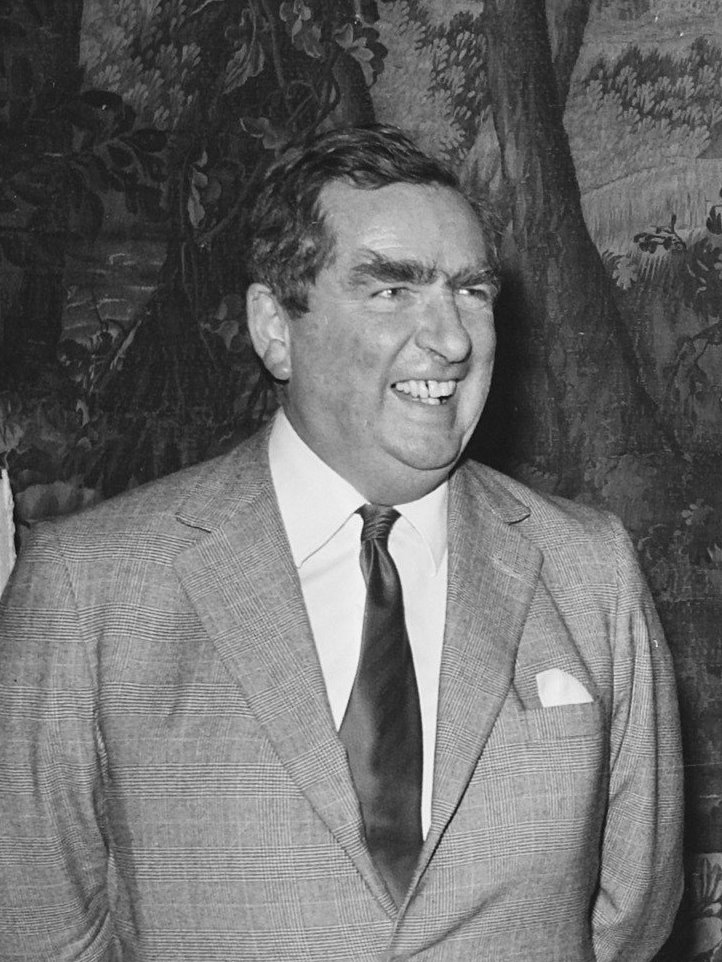
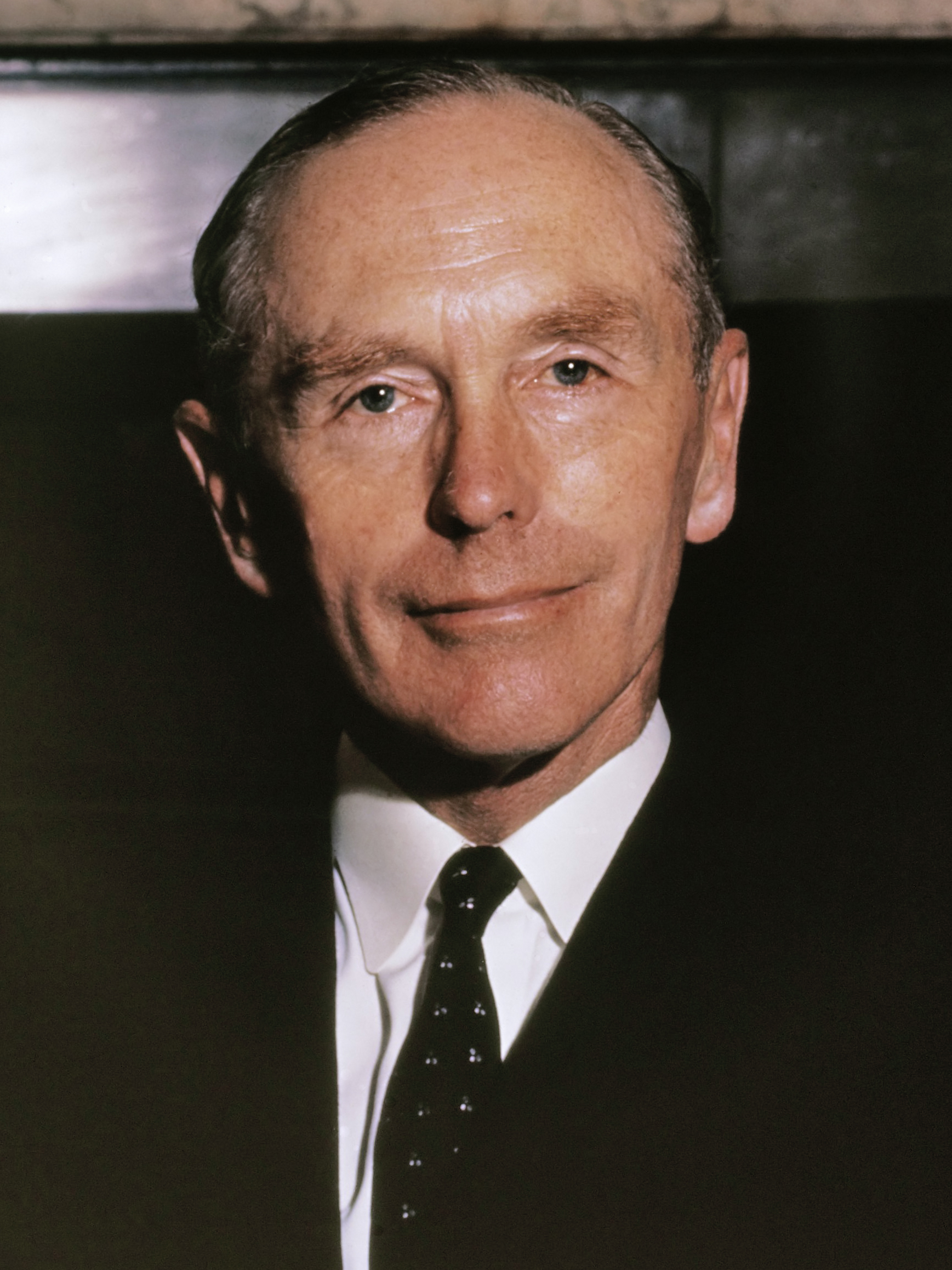
  • Denis Healey – 1972 Speech on Malta

    Denis Healey – 1972 Speech on Malta

    The speech made by Denis Healey, the then Shadow Foreign Secretary, in the House of Commons on 17 January 1972.

    While thanking the Foreign Secretary for his statement and welcoming the signs that negotiations may now be resumed, and even more the statement by the noble Lord the Secretary of State for Defence that there is now a 50 per cent. chance of solution, may I say that many on this side of the House will have been surprised by the sour and ungracious tone in which the right hon. Gentleman referred to the contributions which have already been and may yet be made by our N.A.T.O. allies? We on this side of the House agree that there should be no increase in the British contribution. Indeed, if any money is available to create jobs, we believe that it should be used to create jobs in Britain rather than in Malta. But now that the other N.A.T.O. countries are clearly prepared to make a financial contribution commensurate with their interest in Malta as members of the Alliance, will the right hon. Gentleman tell us why the Government were so angry and embarrassed last week when the Americans finally came forward with a contribution, why they attempted to conceal this offer, which was made at least 12 days ago, from the Maltese Government, and why it took the rather improbable alliance of the Secretary-General of N.A.T.O. and my hon. Friend the Member for Barking (Mr. Driberg) to get communications restored?

    The Foreign Secretary has rightly stated a point which was pressed on the House by myself as Secretary of State for Defence and hotly contested by the Conservative Party some years ago, that Britain’s and N.A.T.O.’s interest in Malta is not so much to have forces there ourselves as to prevent the Russians having a base there. Will the Foreign Secretary recognise in the course of the negotiations that a solution is much more likely if it de-emphasises the political and military alignment of Malta with N.A.T.O. and concentrates rather on eliminating the possible use of the base by Soviet forces? An agreement along these lines is more likely to receive the continued support of the Maltese people as well as being compatible with progress towards conciliation between the West and Russia in the Mediterranean.

    Sir Alec Douglas-Home

    The right hon. Gentleman has got this wrong. So far from concealing any offer made by an ally towards a solution with Malta, we have been pressing our allies month by month to raise some extra money over and above what we ourselves are willing to subscribe. Therefore, the right hon. Gentleman really has got his facts wrong on this matter.

    There are to be further talks, so I do not want to go further into the finances now. However, there is this important question of aid in the future which I have no doubt would be available from allied countries. This would be of enormous value to Malta if Mr. Mintoff would take it in that form.

    Mr. Healey

    The right hon. Gentleman must not seek to present the facts other than as they were—[HON. MEMBERS: “Oh.”] Is the Foreign Secretary denying that the American Government made this offer of an increased financial contribution at least as long ago as 8th January, that the British Government declared themselves extremely annoyed when the Maltese Government were informed of this offer by the American Government, that it took several days of persuasion by the Secretary-General of N.A.T.O. to convince the British Government that they must start negotiating again with the Maltese Government, and that the attempt to establish these negotiations did not in fact begin until Friday and Saturday of last week?

  • Alec Douglas-Home – 1972 Statement on Malta

    Alec Douglas-Home – 1972 Statement on Malta

    The statement made by Alec Douglas-Home, the then Foreign Secretary, in the House of Commons on 17 January 1972.

    With your permission, Mr. Speaker, and that of the House, I wish to make a statement on recent developments concerning our defence arrangements with Malta.

    The position when the House rose for the recess was that the Malta Government had been offered £9½ million per annum in return for a satisfactory new defence arrangement. At the Chequers meeting in September, it had been agreed that the Malta Government would receive a six-month interim payment on the basis of that offer. Accordingly, the British Government had made a payment of £4¾ million on 30th September for the period up to the end of March.

    Over Christmas, Mr. Mintoff demanded immediate payment of another £4¼ million, for the next three months, as the only basis on which he could permit the continued presence of British forces in Malta after 31st December. The British Government, of course, could not accept this demand, and they announced on 29th December that they were setting in hand preparations for the withdrawal of British forces in Malta, though they remained ready to continue to talk. The decision to withdraw was one which the Government took with the greatest regret. But throughout their negotiations with Mr. Mintoff they had made clear that they would not seek to maintain British forces in Malta against the wishes of the Malta Government.

    Mr. Mintoff subsequently extended his deadline for the withdrawal of our forces until 15th January. Since there were suggestions that the Malta Government might contemplate taking measures against our remaining forces after that date, my right hon. Friend the Prime Minister sent messages to Mr. Mintoff concerning the withdrawal. He made clear that we wished the withdrawal to be as orderly, amicable and expeditious as possible, though it would be physically impracticable to complete it by 15th January. He assured Mr. Mintoff of our sincere wish that any harm done to our relations by the failure to reach agreement on a defence arrangement and our consequent withdrawal should be as little and as short-lived as possible.

    In the circumstances, the Government decided that every effort should be made to withdraw at least the families of our forces before 15th January. A special airlift was mounted for this purpose, and the House will wish to congratulate those responsible for the efficiency of the arrangements that were made, not least for the reception of the families in this country. The other stages of the withdrawal are proceeding according to plan. The reconnaissance aircraft that were based in Malta have already been redeployed elsewhere; and the forces which remain in Malta will be fully engaged from now on in the massive task of removing the large quantity of equipment and stores which we have there, as well as ensuring an orderly and phased handover of installations to the Maltese authorities.

    Throughout the course of our exchanges with the Malta Government we have kept in the closest touch with our N.A.T.O. allies in view of their interest in the continued denial of Malta’s strategic facilities to a potential enemy and in the use of these facilities to support N.A.T.O.’s southern flank. As the House knows, the retention of British forces in Malta is nowadays in the interests of the Alliance as a whole rather than of this country alone. The financial offer therefore, which has been available to the Malta Government since September, was made by the British Government on behalf of N.A.T.O. This offer, of a basic annual figure at a level closely approaching £10 million, was fair and, indeed, generous. Moreover, the Maltese economy would have continued to benefit from the local expenditure of the British forces—recently running at about £13 million per annum—and some of Britain’s N.A.T.O. allies subsequently offered to contribute a substantial additional amount of bilateral economic support totalling £7 million spread over a period. The British Government have for some time made clear that for their part they do not contemplate increasing their own contribution to this offer, in view of all the other costs of maintaining a British military presence in Malta which fall on the British Government anyway. On the other hand, we have, of course, no objection to any of our allies offering further contributions to Malta in return for a satisfactory new defence agreement, if they judge this to be necessary in the interests of the Alliance.

    The latest development is that, by mutual arrangement and through the good offices of the Italian Government, meetings were held in Rome last Saturday attended by the Prime Minister of Malta, the Italian Foreign Minister, the Secretary-General of N.A.T.O. and my right hon. and noble Friend the Defence Secretary. Some progress was made, and after the meetings Mr. Mintoff announced the removal of the deadline of 15th January. A further Ministerial meeting is expected to take place in Rome later this week, and official-level talks in Valletta are also being resumed immediately.

    Since the talks are continuing, I would not wish to go into detail about them. The British Government for their part will continue, in close consultation with their allies, to do all they can to ensure that a satisfactory agreement, beneficial to both sides, is reached. But the gap which remains is still wide, and the process of orderly withdrawal will continue unless and until it becomes clear that such an agreement can be reached.

  • Maggie Throup – 2021 Comments on AstraZeneca Vaccine Anniversary

    Maggie Throup – 2021 Comments on AstraZeneca Vaccine Anniversary

    The comments made by Maggie Throup, the Vaccines Minister, on 30 December 2021.

    One year on, the Oxford-AstraZeneca vaccine has played a crucial part in our fight against COVID-19, saving the lives of the most vulnerable and helping to reduce the spread of the virus.

    It’s a remarkable example of British innovation and scientific excellence – please take advantage and get your vaccines as soon as you can to protect yourself this winter.

  • Sajid Javid – 2021 Comments on AstraZeneca Vaccine Anniversary

    Sajid Javid – 2021 Comments on AstraZeneca Vaccine Anniversary

    The comments made by Sajid Javid, the Secretary of State for Health and Social Care, on 30 December 2021.

    Today marks one year since the UK made history by being the first country in the world to approve the Oxford-AstraZeneca vaccine – a UK-made and government-funded vaccine which has been absolutely pivotal in helping to save millions of lives around the world.

    I’m incredibly proud of the role the UK has played in developing, researching and manufacturing ground-breaking vaccines and treatments during the pandemic.

    Vaccines are the best way to protect people from COVID-19 and I’m urging everybody to play their part in this national mission – roll up your sleeves and get your jabs.

  • Boris Johnson – 2021 Comments on AstraZeneca Vaccine Anniversary

    Boris Johnson – 2021 Comments on AstraZeneca Vaccine Anniversary

    The comments made by Boris Johnson, the Prime Minister, on 30 December 2021.

    Our fight against COVID-19 in the UK and around the world would not have been possible without the Oxford-AstraZeneca vaccine.

    Developed by brilliant scientists at Oxford and delivered on a not-for-profit basis thanks to AstraZeneca, this vaccine has provided 50 million doses to the British public and over 2.5 billion to more than 170 other countries.

    We can all be incredibly proud of – and grateful for – a jab that has saved many millions of lives.

  • Sadiq Khan – 2021 Comments on Reducing Crime in London

    Sadiq Khan – 2021 Comments on Reducing Crime in London

    The comments made by Sadiq Khan, the Mayor of London, on 29 December 2021.

    Tackling violence and making our communities safer is my top priority. Over the past four years and before the pandemic we’ve seen youth violence, knife crime and gun crime come down, but it’s clear that there is much more to do. Every death from violent crime is heart-breaking, devastating families and communities.

    We know the challenges of the pandemic have exacerbated the causes of crime and violence and that’s why this investment is so important and so timely. This new funding package of almost £50 million will provide dedicated funding for local authorities now and allow them to work together to tackle complex problems across borough boundaries and support local communities to tackle violence and reduce offending where they are.

    I am more determined than ever to be tough on crime by investing in our police – ensuring record numbers of officers on our streets, as well as being tough on the causes of crime by providing sustained investment to deliver positive opportunities for young Londoners who need it most.