Blog

  • Tom Pursglove – 2022 Statement on Outdoor Marriages and Civil Partnerships

    Tom Pursglove – 2022 Statement on Outdoor Marriages and Civil Partnerships

    The statement made by Tom Pursglove, the Parliamentary Under-Secretary of State for the Home Department, in the House of Commons on 6 January 2022.

    On 20 December, the Government launched a public consultation on outdoor weddings and civil partnerships. This consultation sets out, and seeks views on, the Government’s proposals to continue to permit outdoor civil marriages and civil partnerships on approved premises, and to permit outdoor religious marriages in the grounds of places of worship.

    Since 1 July 2021, couples have been able to have their civil marriage and civil partnership proceedings in the open air, in the grounds of buildings such as stately homes and hotels which are approved or became approved for these civil ceremonies. Previously, these proceedings could only take place indoors or otherwise within permanently immovable structures. These outdoor ceremonies were made possible because the Government laid a statutory instrument (SI) putting in place these flexibilities, in order to give couples more choice of setting, and to support the wedding and civil partnership sector. However, that SI has effect only until the end of 5 April 2022.

    We are now proposing to lay a further SI so that these outdoor civil marriage and civil partnership proceedings can continue beyond 5 April 2022 indefinitely, and to extend the policy of permitting outdoor ceremonies to religious marriages using a separate legislative reform order. Together, these proposals would ensure that the provision for outdoor marriages and civil partnerships on approved premises continues indefinitely and would extend similar arrangements to religious weddings in the grounds of places of worship. The proposals would enable couples to have a greater choice in relation to the location of their ceremonies, and for approved premises and religious bodies to have more flexibility in the locations for ceremonies, should they choose to offer it. No religious group would be obliged to provide outdoor ceremonies, and existing protections to safeguard religious freedoms would remain in place.

    The consultation can be found here: https://consult.justice.gov.uk/digital-communications/outdoor-marriages-civil-partnerships

    A copy of the consultation paper will be deposited in the Libraries of both Houses.

  • Victoria Prentis – 2022 Statement on the Annual Fisheries Negotiations

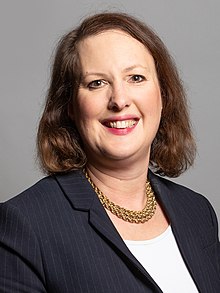
    Victoria Prentis – 2022 Statement on the Annual Fisheries Negotiations

    The statement made by Victoria Prentis, the Minister for Farming, Fisheries and Food, in the House of Commons on 6 January 2022.

    The UK and EU have now reached an agreement on fishing opportunities for the 2022 fishing year. This is the second time the UK has entered into bilateral negotiations with the EU as an independent coastal state, following the signing of the trade and co-operation agreement (TCA) between the UK and EU in 2020.

    In its second year negotiating as a coastal state, the UK has also successfully concluded the UK-EU-Norway trilateral negotiations and UK-Norway bilateral negotiations. Both agreements mark the start of new fisheries arrangements in the North sea and a strong willingness from all parties to collaborate closely in the future.

    The UK Government have worked closely with Scottish Government, Welsh Government and Northern Ireland Executive, and the outcomes secured by the UK will enable us to improve the sustainable management of our fish stocks in support of the whole of the UK fishing industry in the short and long term.

    Collectively from the EU-UK bilateral, EU-UK-Norway trilateral, and coastal states negotiations, the UK has secured agreement on the total allowable catches—TACs—for 86 stocks.

    UK-EU Agreement

    The agreement we have reached with the EU covers 69 UK-EU TACs, resulting in a total value of fishing opportunities for the UK in 2022 of approximately 140,000 tonnes, worth around £313 million, based on historic landing prices.

    Guided by best available scientific advice as part of sustainable fisheries management, the UK and EU agreed reductions across a number of TACs, meaning that overall the UK will have around 12,000 tonnes less quota compared with 2021 from these negotiations. However, even with this reduction, the UK has around 28,000 tonnes more quota from these negotiations than it would have received with its previous shares as an EU member state. This is estimated to be worth around £45 million based on historic landing prices.

    As in previous years, the UK negotiated this year’s TACs taking account of sustainability principles. A full assessment of the number of individual TACs set consistent with International Council for the Exploration of the Sea (ICES) advice on catch opportunities will be published shortly and after the conclusion of all the UK’s annual fisheries negotiations and the setting of consultative TACs.

    On exchanges of quota with the EU, the UK and EU agreed to the continuation of the interim exchange mechanism which has operated successfully since July 2021, enabling voluntary exchanges between the UK and member states. This will continue until the Specialised Committee on Fisheries (SCF) can agree a permanent mechanism, as required by the TCA. The UK and EU agreed to hold a final round of exchanges on 21 January 2022 to allow for the wrapping up of this year’s exchanges.

    On non-quota stocks (NQS) the UK and EU resolved the outstanding provisional historic baseline tonnage figures, this includes the removal of catches from Crown dependency waters.

    The revised baseline figures are 12,365 tonnes for UK vessels in EU waters, and 33,023 tonnes for EU vessels in UK waters. It was also agreed to hold further technical discussions from January 2022 to ensure that future data exchanges on NQS uptake are robust and accurate.

    Exceptionally, the UK and EU agreed not to apply the NQS tonnage limits provided for in the TCA for 2022. We will closely monitor uptake data and in the event either party reaches 80% of their total a discussion will be held in the SCF to consider next steps.

    The UK and EU also committed to work at pace to develop multi-year strategies for shared NQS as set out under the TCA, with the aim of developing the first of these by 31 July 2022. Both parties confirmed our shared priority to ensure the sustainable management of NQS stocks from 2023 onwards.

    The UK and EU agreed to roll forward the previously agreed measures for seabass. In addition, it was agreed that further adjustments would be introduced in 2022. These include an increase in the annual limits for landings of bass from hook and lines and fixed gillnets, as well as an amendment to the commercial trawl/seine flexibility.

    Finally, the UK and EU agreed to prioritise and handle NQS, seabass (including the ICES assessment tool), stock without ICES advice, inter-annual quota flexibility and other topics through the Specialised Committee on Fisheries.

    UK-EU-Norway Trilateral Negotiations

    The UK reached an agreement with Norway and the European Union on catch limits for 2022 for six jointly managed stocks in the North sea. The catch limits agreed for 2022 are worth over £184 million to the UK fishing industry.

    The agreement demonstrates the parties’ continued commitment to the sustainable management and long-term viability of cod, haddock, plaice, whiting, herring, and saithe stocks in the North sea. Alongside the total allowable catches—TACs—for 2022, the agreement puts in place a process to review the distribution and management of shared stocks which are important for the whole UK catch sector.

    UK-Norway Bilateral Negotiations

    The agreement reached with Norway includes reciprocal access to each other’s waters. The UK will gain access to 30,000 tonnes of whitefish stocks such as cod, haddock and hake. There will also be access to fish pelagic stock: the UK industry will be able to fish its full quota of Atlanto-Scandian herring in Norwegian waters, and up to 17,000 tonnes should it swap in additional quota from the EU in 2022. In return, Norway will be able to fish up to 17,000 tonnes of North sea herring in UK waters. This is less than a third of the level of access for North sea herring enjoyed by Norway while the UK was a member of the European Union. We also agreed some quota exchange, estimated to be worth just over £5 million. This includes bringing in stocks such as North sea whiting, hake and anglerfish, and Arctic cod.

    The agreement puts in place a process which ensures that the fishing arrangements do not have detrimental consequences for fish stocks and the wider marine environment. The mutual access will also allow respective fleets more flexibility to target the stocks in the best condition throughout the fishing year, supporting a more sustainable and economically viable fishing industry.

    In parallel to the conclusion of these negotiations, Norway has allocated to the UK 6,550 tonnes of cod around Svalbard. This means the UK can fish over 7,000 tonnes of cod in the Arctic in 2022, estimated to be worth around £16 million, and 1,500 tonnes more than in 2021.

    UK-Faroe Island Negotiations

    Bilateral fisheries negotiations between the UK and Faroes are ongoing. Both parties are pursuing a pragmatic and well-balanced agreement. The UK’s overriding priority is to ensure that the deal is in the best interests of the UK industry and protects the marine environment, promoting sustainable stock management.

    Regional Fisheries Management Organisations (RFMOs)

    The UK is a contracting party to five RFMOs and played a central role in negotiations in 2021 in securing a number of important new RFMO measures for 2022 and beyond. These include a new rebuilding plan for North Atlantic shortfin mako shark in the International Commission for the Conservation for Atlantic Tunas (ICCAT), a new management measure for yellowfin tuna in the Indian Ocean Tuna Commission (IOTC), an interim measure for the Greenland salmon fishery in the North Atlantic Salmon Conservation Organisation (NASCO), new “area closures” to protect vulnerable marine ecosystems in the Northwest Atlantic Fisheries Organisation (NAFO), and a measure to protect juvenile haddock at the North East Atlantic Fisheries Commission (NEAFC). The UK also confirmed its 2022 shares in the four ICCAT stocks negotiated with the EU under the TCA.

    The UK will build on these successes in 2022 and beyond, working to achieve rapid progress on our priority objectives for RFMOs both in terms of fishing opportunities where appropriate, and furthering our marine conservation priorities.

    Multilateral “Coastal State” Negotiations

    On mackerel, blue whiting and Atlanto-Scandian herring, the UK and other coastal states (the parties responsible for a stock’s management due to it being distributed in their waters) agreed to set the global TACs for 2022 in line with the advice provided by ICES.

    We have also agreed to discuss sharing arrangements for each stock in 2022. The UK will chair discussions on mackerel and Atlanto-Scandian herring.

  • Bernard Jenkin – 2022 Speech on Russia’s Grand Strategy

    Bernard Jenkin – 2022 Speech on Russia’s Grand Strategy

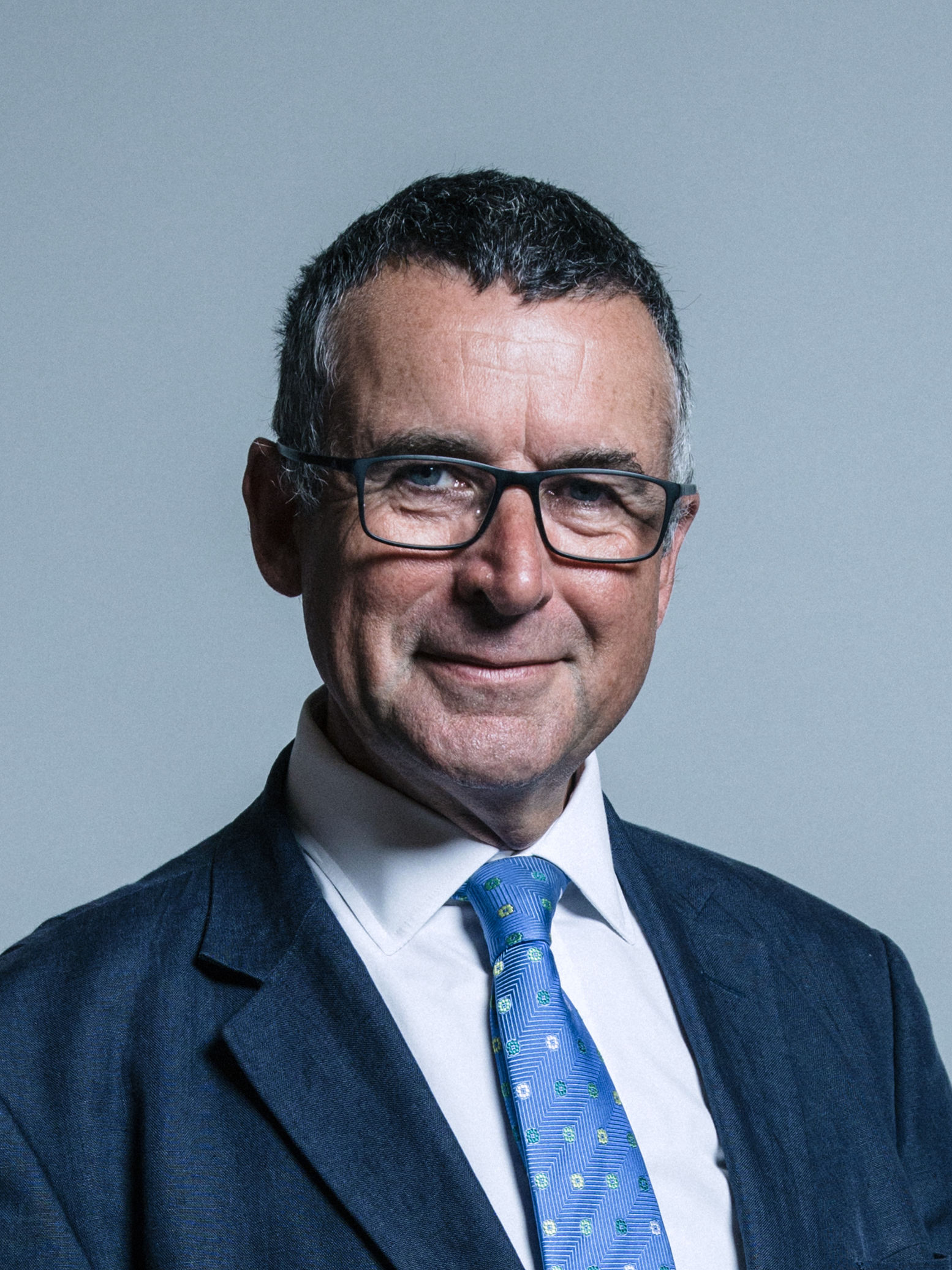
    The speech made by Bernard Jenkin, the Conservative MP for Harwich and North Essex, in the House of Commons on 6 January 2022.

    I beg to move,

    That this House has considered Russia’s grand strategy.

    Thank you, Madam Deputy Speaker, for safeguarding a touch more than the three hours that we were promised for this most important debate. I am very grateful to the Backbench Business Committee for providing time for it at this most crucial moment, with developments in Ukraine and elsewhere.

    The term “grand strategy” may seem something of a relic from previous centuries, and one that became irrelevant with the end of the cold war, but to think so would be to ignore what is happening in today’s world. There are many Governments around the world today who practise grand strategy, but sadly very few are allies of the west. Most are despotic regimes that are constantly challenging the rules-based international order on which western security and the global trading system depend. The most immediately threatening of such powers is, undoubtedly, Russia.

    Today’s Russia has inherited an admirably precise and uniformly understood meaning of the term “strategy”. “Politika”, meaning policy, stands at the top of a hierarchy of terms and describes the goal to be achieved; “strategiya” describes how the goal is to be achieved. Military strategy is merely a subset of global, national or grand strategy.

    So what is the goal behind Russia’s grand strategy? Putin’s goal is nothing less than to demonstrate the end of US global hegemony and establish Russia on an equal footing with the US; to change Russia’s status within Europe and become the pre-eminent power; to put Russia in a position to permanently influence Europe and drive a wedge between Europe and the USA; and to re-establish Russia’s de facto control over as much of the former Soviet Union and its sphere of influence as possible. As the strategy succeeds, Putin also intends to leverage China’s power and influence in Russia’s own interests. China, incidentally, will be watching how we defend Ukraine as it considers its options for Taiwan.

    On 17 December, the Russian Foreign Ministry unveiled the texts of two proposed new treaties: a US-Russia treaty and a NATO-Russia treaty. Moscow’s purported objective is to obtain

    “legal security guarantees from the United States and NATO”.

    Moscow has requested that the United States and its NATO allies meet the Russian demands without delay.

    This is, in fact, a Russian ultimatum. Putin is demanding that the US and NATO should agree that NATO will never again admit new members, even such neutral countries as Sweden, Finland and Austria, which have always been in the western zone of influence; that NATO should be forbidden from having any military presence in the former Warsaw pact countries that have already joined NATO; and that the US should withdraw all its nuclear forces from Europe, meaning that the only missiles threatening European cities would be Russian ones. The ultimatum is premised on a fundamental lie, which Putin has promulgated since he attended the Bucharest NATO summit in 2008 as an invited guest. That lie is that NATO represents a threat to Russian national security.

    As Deputy Foreign Minister Sergei Ryabkov explained:

    “The two texts are not written according to the principle of a menu, where you can choose one or the other, they complement each other and should be considered as a whole.”

    He described the NATO-Russia text as a kind of parallel guarantee, because

    “the Russian Foreign Ministry is fully aware that the White House may not meet its obligations, and therefore there is a separate draft treaty for NATO countries.”

    Putin’s intention is to bind NATO through the United States, and bind the United States through NATO. There is nothing to negotiate; they just have to accept everything as a whole.

    Russian media are already triumphant, proclaiming:

    “The world before, and the world after, December 17, 2021 are completely different worlds… If until now the United States held the whole world at gunpoint, now it finds itself under the threat of Russian military forces. A new era is opening”.

    Daniel Kawczynski (Shrewsbury and Atcham) (Con)

    My hon. Friend talks about Russian grand strategy and Russian grand design. I am sure that he will come on to talk about the way in which the Russians are using gas and energy to manipulate and coerce our key NATO partners in central and eastern Europe, such as Poland, with the Nord Stream 2 pipeline. Does he agree that it is a disappointment that our own Government have not imposed sanctions on the companies involved in the construction of that pipeline?

    Sir Bernard Jenkin

    I will not comment on that particular suggestion, but I will be coming to the question of gas.

    This ultimatum is, in fact, Russian blackmail, directed at both the Americans and the Europeans. If the west does to accept the Russian ultimatum, they will have to face what Deputy Foreign Minister Alexander Grushko calls

    “a military and technical alternative”.

    What does he mean by that? Let me quote him further:

    “The Europeans must also think about whether they want to avoid making their continent the scene of a military confrontation. They have a choice. Either they take seriously what is put on the table, or they face a military-technical alternative.”

    After the publication of the draft treaty, the possibility of a pre-emptive strike against NATO targets—similar to those that Israel inflicted on Iran—was confirmed by the Deputy Minister of Defence, Andrei Kartapolov. He said:

    “Our partners must understand that the longer they drag out the examination of our proposals and the adoption of real measures to create these guarantees, the greater the likelihood that they will suffer a pre-emptive strike.”

    Apparently to make things clear, Russia fired a “salvo” of Zircon hypersonic missiles on 24 December, after which Dmitry Peskov, the Kremlin spokesman, commented:

    “Well, I hope that the notes”—

    of 17 December—

    “will be more convincing”.

    We should be clear that Russia’s development of hypersonic weapons is already a unilateral escalation in a new arms race which is outside any existing arms limitation agreements. The Russian editorialist Vladimir Mozhegov commented:

    “The Zircon simply does its job: it methodically shoots huge, clumsy aircraft carriers like a gun at cans.”

    An article in the digital newspaper Svpressa was eloquently titled “Putin’s ultimatum: Russia, if you will, will bury all of Europe and two-thirds of the United States in 30 minutes”.

    How have we reached this crisis, with the west in general, and NATO in particular, so ill prepared to face down such provocation, when Putin’s malign intent has been evident in his actions for a decade and a half? Since the collapse of the Soviet Union, the west has too easily dismissed today’s Russia as a mere shadow of the former Soviet Union. Yes, it has an economy no greater than Italy’s; it has no ideological equivalent of communism, which so dominated left-wing thinking throughout most of the 20th century; it has very few if any real allies; and much of the rhetoric that emerges is bluster, reflecting weakness rather than strength. Nevertheless, we should not dismiss what Russia has done since 2008 and what Russia is capable of doing with its vast arsenal of new weaponry, and nor should we take a complacent view of Russia’s future intentions. After all, just months after the Bucharest summit in 2008, where he was welcomed as a guest, Putin seized Georgian sovereign territory in Abkhazia and South Ossetia. In 2014 he illegally annexed the Crimea. His aggression was rewarded, because we have tolerated these illegal invasions.

    Many western leaders, and the bulk of the western public, have failed to understand that Ukraine is merely a component of a long-running hybrid warfare campaign against the west. They fail to appreciate the extent and nature of Russia’s campaign or the range of weapons used.

    Dr Andrew Murrison (South West Wiltshire) (Con)

    I am following carefully what my hon. Friend has to say and agree with so much of it. Does he agree that the current Russian intervention in Kazakhstan is part of a piece? This is Putin running true to form. Although theoretically it is at the invitation of a Government that this country recognises, nevertheless it is likely to be classic Putin and expand into a long-term intervention, on the flimsy pretext that that country has a significant ethnic Russian population or one that speaks Russian.

    Sir Bernard Jenkin

    Indeed, and I will be explaining how these apparently disparate events are integrated in Russia’s grand strategy.

    Beneath the cloak of this military noise and aggressive disinformation, in recent months—Kazakhstan is another example—Russia has been testing the west’s response with a succession of lower-level provocations, and I am afraid that we have signally failed to convince the Russians that we mind very much or are going to do very much about them. They have rigged the elections in Belarus, continued cyber-attacks on NATO allies, particularly in the Baltic states, and demonstrated the ability to destroy a satellite in orbit with a missile, bringing space into the arms race. They continue to develop whole new ranges of military equipment, including tanks with intelligent armour, fleets of ice breakers, new generations of submarines, including a new class of ballistic missile submarine, and the first hypersonic missiles.

    They have carried out targeted assassinations and attempted assassinations in NATO countries using illegal chemical weapons, provoked a migration crisis in Belarus to destabilise Ukraine, and brought Armenia back under Russian control, snuffing out the democratic movement there. They have claimed sovereignty over 1.2 million square miles of Arctic seabed, including the north pole, which together contain huge oil and gas and mineral reserves. This followed the reopening of the northern sea route, with Chinese co-operation and support from France and Germany, which also hope to benefit. Meanwhile, the UK has expressed no intention of getting involved.

    Alec Shelbrooke (Elmet and Rothwell) (Con)

    My hon. Friend is making an excellent speech. He has just outlined some weapons that Russia has developed, but does he agree that the recklessness with which it has done so makes them even worse? The nuclear-powered Poseidon torpedo is cooled by seawater, and they feel that some of their hypersonic missiles are cooled by the air, so they have no concerns whatsoever about radioactive contamination from the delivery systems, let alone the payloads.

    Sir Bernard Jenkin

    My right hon. Friend is completely right. They are ruthless about pursuing what they regard as their own interests and disregard any other risk. Indeed, they are very far from being risk-averse, and the west has been far too risk-averse to compete with that. I will come to that later, but I thank my right hon. Friend for reminding us about the Poseidon torpedo, which is a nuclear-tipped torpedo—another escalation in the arms race.

    Russia has also been rearming the Serbs in the western Balkans, including the Serb armed forces and the police in the Serb enclave of Bosnia, with the intention of destabilising the fragile peace that NATO achieved 30 years ago. Russia has stepped up its activity and influence in north and central Africa and has even started giving support to Catalan separatists in Spain. Russia uses its diaspora of super-rich Russian kleptocrats to influence western leaders and exploit centres such as the City of London to launder vast wealth for its expatriate clients.

    Following the shaming chairmanship of Gazprom assumed by the former German Chancellor Gerhard Schröder, so Russia has now recruited former French Prime Minister François Fillon to become a board director of the massive Russian petrochemicals company Sibur, with its headquarters in Moscow. The Russians must have contempt for us for being so gullible and corruptible. Our unilateral withdrawal from Kabul also vindicates their narrative that the west is weak, pointing out that we failed to stand by our moral principles or our friends.

    Closer to home, look at how Gazprom has gradually and quietly reduced the gas supply to Europe, running down Europe’s gas reserves and causing prices to spike, leading to quadrupling gas and electricity prices in the UK. If Putin now chokes off the supply, it would take time and investment to put in place the necessary alternatives, which the Russians will seek to frustrate, as they already have in Algeria. Algeria was in a position to increase its supply of gas to EU, depending on the existing pipeline being upgraded, but a successful Russian influence campaign aimed at Germany and France prevented that from happening. Gazprom is enjoying its best ever year, so Putin can not only threaten western Europe’s energy supplies, but get the west to fund his war against the west.

    Moreover, as gas supplies to Germany through Ukraine seem less reliable, so Germany continues to support Nord Stream 2, the pipeline that will bypass Ukraine, strengthening Russia’s hold over both countries immeasurably. At least we have the option of re-exploiting our gas reserves in the North sea. For as long as we require gas in our energy mix, we should be generating our own, not relying on imported gas from Europe.

    John Spellar (Warley) (Lab)

    The hon. Gentleman’s last statement will be very much welcomed by workers in the gas and oil industry, but was it not also remiss of the Government a few years ago not to continue with the gas storage facility in the North sea, which would have provided us with some resilience? We should also have been working with other countries to build up their reserves, to diminish the ability of the Kremlin and Gazprom to blackmail us.

    Sir Bernard Jenkin

    All I can say is, do not start me on the lamentable incoherence of 20 years of UK energy policy, because it is a disgrace, and something that we could have done so much better and that this Government are starting to repair, but it will take some time.

    Daniel Kawczynski

    Will my hon. Friend give way?

    Sir Bernard Jenkin

    I have already given way to my hon. Friend, so I hope he will forgive me if I do not take up more time.

    The constantly high level of Russian military activity in and around Ukraine and the attention being drawn to it have enabled the Kremlin to mount a huge disinformation campaign, designed to persuade the Russian people and the west that NATO is Russia’s major concern, that somehow NATO is a needless provocation—I am looking at my right hon. Friend the Member for Gainsborough (Sir Edward Leigh), because I cannot believe how wrong he is on this—and that Russian activity is just a response to a supposed threat from NATO. That is complete rubbish.

    The only reason the west is a threat to the regime in Russia is who we are and what we represent. We are free peoples, who are vastly more prosperous than most Russians, liberal in outlook, relatively uncorrupted and democratic. The Russian narrative is nothing but a mixture of regime insecurity and self-induced paranoia. Putin feels that Ukraine becoming visibly and irrevocably part of the western liberal democratic family would show the Russian population that that path was also open to Russia as an alternative to Putinism. Let us remind ourselves that Russia’s war against Ukraine in 2014 was provoked not by Ukraine attempting to join NATO, but by its proposed association agreement with the EU.

    It is crucial to understand that Russia’s hybrid campaign is conducted like a war, with a warlike strategic headquarters at the National Defence Management Centre at the old army staff HQ, where all the elements of the Russian state are represented in a permanent warlike council, re-analysing, reassessing and revising plans and tactics. The whole concept of strategy, as understood and practised by Putin and his colleagues, is as something completely interactive with what their opponents are doing. It is not a detailed blueprint to be followed. It is primarily a measure-countermeasure activity; a research-based operation, based on real empiricism; an organically evolving struggle; a continual experiment, where the weapons are refined and even created during the battle; and where stratagems and tactics must be constantly adapted; and plans constantly rewritten to take account of our actions and reactions, ideally pre-empting or manipulating them. It is also highly opportunistic, which means that they are thinking constantly about creating and exploiting new opportunities.

    To guide such constant and rapid adaptation, the strategy process must include feedback loops and learning processes. To enable that, what the Russians call the hybrid warfare battlefield is, as they describe it, “instrumented.” It is monitored constantly by military and civilian analysts in Russia and abroad, by embassy staff, journalists, intelligence officers and other collaborators, all of whom feed their observations and contributions to those implementing the hybrid warfare operations.

    Meanwhile, western Governments such as ours still operate on the basis that we face no warlike challenges or campaigns. We entirely lack the capacity or even the will to carry out strategic analysis, assessment and adequate foresight on the necessary scale. We lack the strategic imagination that would offer us opportunities to pre-empt or disrupt the Russian strategy. We have no coherent body of skills and knowledge to give us analogous capacity to compete with Russian grand strategy. Our heads are in the sand. So much of domestic politics is about distracting trivia, while Russia and others, such as China, are crumbling the foundations of our global security.

    Why does this matter? It matters because our interests, the global trading system on which our prosperity depends and the rules-based international order which underpins our peace and security are at stake. We are outside the EU. We can dispense with the illusion that an EU common defence and security policy could ever have substituted for our own vigilance and commitment. We must acknowledge that while the United States of America is still the greatest superpower, it has become something of an absentee landlord in NATO, tending to regard European security issues as regional, rather than a direct threat to US interests. Part of UK national strategy must be to re-engage the US fully, but that will be hard post-Trump. He has left terrible scars on US politics, and the Biden Administration are frozen by a hostile Congress, leading to bitter political paralysis. Nevertheless, the priority must be to reunite NATO.

    Having initially refused to have a summit, President Biden has now provisionally agreed to a meeting with Putin on 9 and 10 January—this weekend—to negotiate what? We all want dialogue, and the right hon. Member for Tottenham (Mr Lammy) speaking from the Opposition Front Bench earlier said we want dialogue, but it should not be to discuss the Russian agenda. Being forced to the table to negotiate that way would be appeasement. It would be rewarding threats of aggression, which is no different from giving way to aggression itself. What further concessions can the west offer without looking like appeasers? The Geneva meetings have to signal a dramatic shift in the west’s attitude and resolve, or they will be hailed as a Russian victory.

    Some are now comparing the present decade to the 1930s prelude to world war two, where we eventually found we were very alone. If we want to avoid that, the UK needs to rediscover what in the past it has done so well, but it means an end to muddling through and hoping for the best. We cannot abdicate our own national strategy to NATO or the US. It means creating our own machinery of government and a culture in our Government that can match the capability and determination of our adversaries in every field of activity.

    Dr Julian Lewis (New Forest East) (Con)

    My hon. Friend is making a brilliant speech, and thereby shortening the one that I will make very considerably. He has made the comparison with the run-up to the second world war. One of the key final shocks in that catalogue of disaster was the unexpected Nazi-Soviet pact. Would the equivalent to that be some form of Chinese move against Taiwan, which would so distract the United States as to be the last piece of the jigsaw in the picture that he is painting of a Russian plan to dominate the European continent?

    Sir Bernard Jenkin

    I have no doubt that Russia and China are not allies, but they know how to help each other, and I think my right hon. Friend’s warning is very timely. As I said earlier, how we deal with Ukraine will reflect how Russia regards Taiwan and, I suppose, vice versa.

    I was talking about the need to create our machinery of government and our culture in Government that can match the kind of strategic decision making that takes place in Moscow. I can assure the House that there are people inside and outside Whitehall who are seized of this challenge, and Members will be hearing more from us in the months ahead.

    Madam Deputy Speaker (Dame Eleanor Laing)

    I hope we can manage this afternoon’s business without a formal time limit. If everyone speaks for between eight and nine minutes, we will do so. If people speak for significantly more than eight minutes, I will have to impose a time limit.

    John Spellar (Warley) (Lab)

    As we made clear earlier, there is considerable concern about the rapidly deteriorating situation in Ukraine, particularly on its frontier. In today’s debate, as has been well introduced by the hon. Member for Harwich and North Essex (Sir Bernard Jenkin), we need to look at that on a much broader spectrum—basically one of a revanchist Russia that is seeking to rewrite the end of the cold war. It is seeking to recreate the Soviet Union; to increase its influence, if not its direct acquisition—I do not think it would rule that out, however—of the former Soviet Republics; and to establish hegemony over the former countries of the Warsaw pact, as well as to keep Finland in a state of neutrality and to have considerable influence in the western Balkans. That is very clear. Most of those countries are members of NATO and of the EU, and some of them are members of both. I think that explains the Kremlin’s enormous hostility to both those institutions, as it seeks to do everything it can to undermine them.

    We need to recognise the nature of that threat, to which the hon. Gentleman drew attention very effectively. It is not just a military threat. We talk about the 100,000 troops on the border, and that is significant, although there might be a tendency to overestimate the efficacy of much of Russia’s equipment. Although Russia may be making advances and developments in hypersonics and so on, quite a lot of its other equipment—we see this particularly with its surface fleet—is distinctly substandard. We need a strong evaluation of that, and that would be much easier had Whitehall not dispersed so much of its Russia-watching capability after the fall of the Berlin wall, leaving a great gap. There may be some attempts to recreate that, but I do not think we have anything like the ability we once had to observe and understand what is going on.

    That is also tied to integration. The hon. Member described very well the integrating mechanisms within the system—it is very reminiscent of the Soviet system during the cold war—to integrate all areas: cultural life, political life and industrial espionage, so that they work together in a co-ordinated way. If I asked the Minister where in Whitehall was the UK’s integration along those lines—I am not aware of it—I think he would be hard pressed to put his finger on it. What frustrates me enormously is that in the past, we had quite a good record on this. During the second world war, the Political Warfare Executive—headed up, interestingly enough, by Richard Crossman, subsequently a Labour Member of Parliament and Labour Minister—pulled together journalistic and psychological expertise, and it had an extremely effective record.

    Sir Bernard Jenkin

    I want very briefly to relay two conversations that I have had about strategic thinking in Government. One was with a person who is now the former Prime Minister, who said, “Oh, Bernard thinks we should have a strategy, but I think we should remain flexible,” completely misunderstanding what strategy is. The second was with a Minister who is now serving in a very senior capacity in this Government, and who said, “What is our strategy? We think we have to work with NATO.” In this country, we are so far behind understanding what strategy is that we have a very great task in front of us.
  • Liz Truss – 2022 Statement on Russia and Ukraine

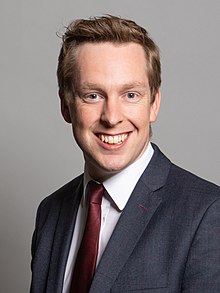
    Liz Truss – 2022 Statement on Russia and Ukraine

    The statement made by Liz Truss, the Foreign Secretary, on 7 January 2022.

    Russia’s military build-up on the border of Ukraine and in illegally-annexed Crimea is unacceptable. There is no justification for its aggressive and unprovoked stance towards Ukraine. We stand with our NATO allies in urging Russia to end its malign activity and adhere to international agreements it freely signed up to.

    We will defend democracy in eastern Europe and around the world. Our support for Ukraine’s sovereignty and territorial integrity is unwavering. We are clear that any Russian incursion would be a massive strategic mistake, for which there would be a severe cost.

    The Russian Government needs to de-escalate, pursue diplomatic channels and abide by its commitments on the transparency of military activities. We will be discussing this at the NATO-Russia Council next week.

  • Liz Truss – 2022 Quad Statement on Sudan

    Liz Truss – 2022 Quad Statement on Sudan

    The joint statement issued by the UK, the United States, the UAE and Saudi Arabia, on 8 January 2022.

    The Quad (Saudi Arabia, United Arab Emirates, the United Kingdom, and the United States of America) welcome the announcement that the UN Interim Transition Assistance Mission to Sudan is facilitating discussions to resolve Sudan’s political crisis.

    We strongly support this UN-facilitated, Sudanese-led dialogue initiative. We urge all Sudanese political actors to seize this opportunity to restore the country’s transition to civilian democracy, in line with the 2019 Constitutional Declaration. We look forward to this being a results–oriented process that will guide the country towards democratic elections, in line with the Sudanese people’s manifest aspirations for freedom, democracy, peace, justice and prosperity.

  • Maggie Throup – 2022 Comments on the NHS Food Scanner App

    Maggie Throup – 2022 Comments on the NHS Food Scanner App

    The comments made by Maggie Throup, the Public Health Minister, on 10 January 2022.

    We know that families have felt a lot of pressure throughout the pandemic which has drastically changed habits and routines

    The new year is a good time for making resolutions, not just for ourselves, but for our families. Finding ways to improve their health is one of the best resolutions any of us could make.

    By downloading the free NHS Food Scanner App, families can swap out foods from the weekly shop for healthier alternatives and avoid items high in salt, sugar and saturated fat.

  • Robin Walker – 2022 Speech on Antisemitism at Bristol University

    Robin Walker – 2022 Speech on Antisemitism at Bristol University

    The speech made by Robin Walker, the Minister for School Standards, in response to a speech made by Christian Wakeford, in the House of Commons on 6 January 2022.

    I congratulate my hon. Friend the Member for Bury South (Christian Wakeford) on securing this debate on antisemitism at the University of Bristol. I echo his comment that it is profoundly troubling that we should have to have this debate at all. It feels especially poignant given that Holocaust Memorial Day is just a few weeks away. I should point out that I am responding to the debate on behalf of the Minister for Higher and Further Education, my right hon. Friend the Member for Chippenham (Michelle Donelan), who is isolating pending the outcome of a PCR test. I wish her well with that.

    I would like to begin by stating that there is no place for antisemitism in our society. The Government are clear that racism and religious hatred of any kind should not be tolerated. Universities and other higher education providers should be at the forefront of tackling antisemitism, and must make sure that higher education is a genuinely fulfilling and welcoming experience for everyone. Colleagues may be aware that in November, within just a few weeks of his appointment, the Secretary of State for Education visited Auschwitz, which demonstrated his resolve to learn the terrible lessons of the holocaust and to eradicate antisemitism from our education system. During his visit, he warned that if universities failed to consider the views of Jewish students, the risk was “obvious”, adding that antisemitism is not simply a historic debate; it is a present danger and a scourge that exists, sadly, on our campuses. We must do more to stamp out antisemitism and ensure that Jewish students and staff feel welcome on all our campuses.

    Eliminating antisemitism from our society, including our world-leading university sector, is one of our key priorities. We have been clear that we expect providers to take a zero-tolerance approach to antisemitism in all its forms. The Government have taken decisive and long-standing action to tackle antisemitism in higher education. The working definition of antisemitism developed by the IHRA is one important tool for identifying and tackling antisemitism. Adopting it sends a strong signal that higher education providers take the issue seriously.

    Christian Wakeford

    Getting from where we were a couple of years ago to where we are now with regard to the number of institutions that have adopted IHRA is something we should be proud of. However, adopting IHRA is clearly just a badge. What can the Minister and the Department do to make sure that adoption is only part of the journey and that the definition is truly enforced as well?

    Mr Walker

    My hon. Friend pre-empts some of the comments I am about to make. I absolutely recognise that it is only a step on the journey and not the destination itself.

    In October 2020, the previous Secretary of State wrote to all higher education providers, urging them to adopt the IHRA definition. He wrote again in May 2021, emphasising the importance of adopting the definition in the light of increased antisemitic incidences following the conflict in the middle east.

    To support that, in the previous Secretary of State’s strategic guidance letter to the Office for Students last year, he specifically emphasised the importance of work on the IHRA definition and asked the Office for Students to undertake a package of work aiming to increase adoption levels across the sector. Last month, in response, the OfS published a list of providers that have adopted the definition along with case studies of where it is being used most effectively. I am pleased to see the progress made—my hon. Friend commented on this—with a marked increase in the number of providers adopting the definition from about 30 to more than 200, including the vast majority of universities.

    Although that progress has been made, we are acutely aware that adoption of the definition is just a first step towards eradicating antisemitism in higher education. The Community Security Trust recently published statistics indicating that there is still much work to do. Some worrying examples were cited that demonstrate how much more needs to be done.

    Dr Offord

    I am grateful that the Minister raised the CST and the figures that it published, which I have in front of me. He will be aware that of the about 8,500 Jewish students at UK universities, about one in five suffers antisemitic abuse.

    Mr Walker

    Which is clearly far too many. I was going to say that while I welcome the fact that the CST found that the vast majority of Jewish students have a strongly positive experience at university, it is deeply troubling to hear that there were about 111 antisemitic incidents in the sector in the 2020-21 academic year. To see a number of high-profile universities, including Bristol, named by the CST as providers with high numbers of incidents shows that there is still much more work to do—even at providers that have embraced the IHRA definition.

    Those worrying statistics follow the CST report on campus antisemitism between 2018 and 2020 that named six cities with five or more recorded incidents throughout the period, of which Bristol was one. It is even more concerning that many of the institutions named by the CST had already adopted the IHRA definition. I take this opportunity to echo the comments made in the debate and wholeheartedly express my support and that of my right hon. Friend the Minister for Higher and Further Education for the work done by the CST. I recognise how it provides invaluable assistance to the UK Jewish community, including in schools, for which I am responsible, and I know that the Minister for Higher and Further Education and the Secretary of State are looking forward to welcoming the CST to the summit that they are leading later this month focused on tackling antisemitism in universities.

    We know from the statistics mentioned that while our work to increase adoption of the IHRA definition is important, it is not enough on its own. That is why the Government have provided, via the Office for Students, £4.7 million to support 119 projects with a particular focus on harassment and hate crime, including 11 projects targeted at tackling religion-based hate crime. Those projects concluded in spring 2020, and an independent evaluation showed that they led to increased collaboration between the sector and external partners such as charities or community organisations aiming to tackle religious hatred.

    In relation to steps that the OfS is taking on tackling antisemitism, as well as publishing on 10 November the list of providers that have adopted the IHRA definition, it has published supportive guidance for providers. In 2019, Universities UK published a briefing note on tackling antisemitism, with which my right hon. Friend the Minister for Higher and Further Education has urged all providers to engage seriously. The OfS is also undertaking an impact evaluation on its statement of expectations on harassment and hate crime, which was published in April 2021. That work will take place from January to August. As part of the OfS’s next steps, it will consider options for connecting the statement of expectations to its conditions for registration.

    My hon. Friend the Member for Bury South raised the important question of how the Higher Education (Freedom of Speech) Bill will apply in this context. The Bill will strengthen existing freedom of speech duties and introduce clear consequences for where these duties are breached. Recent incidents such as those at the London School of Economics show the importance of the work in this area. I am absolutely clear that the Bill does not give a green light to antisemitism and holocaust denial. In particular, any attempt to deny the scale or occurrence of the holocaust is morally reprehensible and has no basis in fact. I am categorical that nothing in the Bill in any way encourages higher education providers or student unions to invite antisemites, including holocaust deniers, to speak on campus. The strengthened protections for freedom of speech are likely to support students from minority backgrounds, who, on a number of occasions, have had their speech shut down by others.

    The Bill provides for the appointment of a director for freedom of speech and academic freedom to the OfS board, with responsibility for overseeing its free speech functions, including championing freedom of speech and recommending redress via a new complaints scheme where speech is unlawfully restricted. This will place an appropriate focus on these fundamental rights.

    The Bill will protect the freedom of speech of Jewish students, staff and visiting speakers, which has at times been under threat, as we saw recently with incidents in our universities. It will stop universities using security costs as a spurious attempt to cancel mainstream speakers, such as has been the case when a society attempted to invite the Israeli ambassador, and it will mean that universities and student unions have to take genuine action against those who use violence or threats of violence to shut down speech, including that of Jewish students.

    In addition to the Bill, there needs to be cultural change, and we welcome initiatives by universities, academics and students to drive this, but as we have seen historically on issues such as gender equality, race discrimination and human rights, cultural change occurs more readily when backed by appropriate legislation.

    Christian Wakeford

    Will the Minister give way?

    Mr Walker

    I will give way, but I am happy to commit to the meeting my hon. Friend has asked for, which my right hon. Friend the Minister for Higher and Further Education has offered to hold.

    Christian Wakeford

    I appreciate the offer of a meeting. Obviously, I will raise this in the meeting, but I will also raise it during this debate. Cultural change can only happen with open dialogue, training and transparency, so will the Minister commit to writing to the university to request details of the provider and what is actually being covered, as well as the assurance that this is meaningful training about how to tackle antisemitism?

    Mr Walker

    I think I can probably make that commitment on behalf of my right hon. Friend the Minister for Higher and Further Education, but I will certainly make sure that the Department follows up on it.

    I did want to address specifically the case of Professor Miller at the University of Bristol. Universities are of course independent and autonomous organisations. Accordingly, the Government have not intervened directly in this case. I also understand that there are ongoing legal proceedings in relation to the case, so for that reason I cannot address all the specifics that my hon. Friend raised. However, my right hon. Friend the Minister for Higher and Further Education has said publicly on a number of occasions that the views of Professor Miller, in particular his accusations against Jewish students, are ill-founded and wholly reprehensible, and the Government wholeheartedly reject them.

    My right hon. Friend met representatives of the University of Bristol in May 2021 not to intervene in its investigation, but to seek their reassurance that the university recognises its obligations to protect Jewish students from harassment and hate crime, and to support them if they feel in any way threatened. She also wrote to the university twice to ensure that it was supporting Jewish students and staff who may have felt threatened at the time. We of course welcome the university completing a full investigation into the conduct of Professor Miller, but we expect that future instances there or elsewhere should be dealt with in a much swifter and more decisive manner.

    Tackling antisemitism is a priority for me, for my right hon. Friend the Minister for Higher and Further Education and for the Government. We are keen to hear from Jewish groups about what more can be done to make Jewish students and staff feel safe on campus. The Secretary of State and Ministers will continue to work closely with Lord Mann, the independent adviser to the Government on antisemitism, and also meet regularly with Jewish stakeholder groups.

    As I mentioned earlier, later this month, my right hon. Friends the Secretary of State for Education and the Minister for Higher and Further Education will be leading a summit specifically focused on tackling antisemitism in higher education. My right hon. Friend the Secretary of State has said that he intends to bring together key stakeholders from the sector to examine what more can be done to make Jewish students and staff feel safe on campus. This event will encourage discussion about what more can be done to eradicate the scourge that is antisemitism, and to agree concrete actions that providers can take to keep their Jewish students safe from it.

    My hon. Friend asked specifically about antisemitism training at the University of Bristol. As I say, I am happy to make the commitment that the Department will write to the university again. I urge the university and other providers truly to engage with the communities that suffer from these abhorrent behaviours and to work with them to increase awareness of the impact of antisemitism and how it can be tackled most effectively.

    My ministerial colleagues have worked closely with the Union of Jewish Students, which provides training on how to recognise and tackle antisemitism. I urge the University of Bristol to consider how it can learn more from those who are directly affected, and I know the UJS would be keen to support such work. My hon. Friend asked whether the UJS can be part of a meeting with him, the CST and my right hon. Friend the Minister for Higher and Further Education; as I mentioned earlier, she is happy to commit to that.

    Our HE sector has enormous capacity to change lives for the better. I know that universities are serious in their commitment to tackling antisemitism, but there remains work to be done, as this debate has demonstrated. For our part, we will continue to work across Government to ensure that racism and religious hatred of any kind are not tolerated anywhere, including in our world-leading universities.

  • Christian Wakeford – 2022 Speech on Antisemitism at Bristol University

    Christian Wakeford – 2022 Speech on Antisemitism at Bristol University

    The speech made by Christian Wakeford, the Conservative MP for Bury South, in the House of Commons on 6 January 2022.

    It is profoundly troubling that in 2022 I have to rise and publicly speak about the hatred being directed towards Jewish students on university campuses. What should also be alarming to colleagues in this House and all those in wider society is the amount of parliamentary time that has been dedicated to the issue over the previous two years. I have sat through comments in this Chamber, read parliamentary questions and responses, heard evidence at the Select Committee on Education and led a Westminster Hall debate highlighting the concerns of Jewish students across our country.

    Most Jewish students will enjoy an incident-free and happy time on campus, but I have heard testimony from many Jewish students and their families. When embarking on university careers, Jewish students and staff should feel safe, secure and supported. When issues arise, procedures should be in place and complaints investigated and acted on. Tragically, in many instances, that is not the case.

    I have chosen to focus this debate on Bristol University because of the fact that it has shown a consistent disregard for the welfare of its Jewish students and, indeed, for Members of this House. Many will know about the abhorrent and racist views of Professor David Miller. However, there have been other instances of troubling behaviour that have not been addressed. Just yesterday, a Jewish academic shared on Twitter a screenshot of the university’s equality, diversity and inclusion training on religion and belief. The scenario explained that the best candidate for the job was Jewish and would therefore need to leave early on Fridays for shabbats, when there was a team meeting. If the participant answered the scenario by saying that there should be a flexible approach to hire the best candidate, they were told:

    “Might not be a good idea.”

    Essentially, this training is teaching participants not to hire an observant Jew.

    The actions of David Miller will be familiar to most. Members will have read the numerous newspaper articles and heard the exasperation of Jewish students who were left exhausted and frustrated when raising these serious issues with the university authorities. To give some context, Professor Miller taught political sociology at the University of Bristol. He abused his position to extol dangerous antisemitic conspiracy theories to his impressionable students.

    Miller conducted a module called “Harms of the Powerful”, including a PowerPoint slide with a fanciful diagram featuring a web of Jewish organisations placed under or subservient to the Israeli Government. The topic of the week in his February 2019 lecture was Islamophobia, and the slide was part of Professor Miller’s explanation of his theory that the Zionist movement is part of a global network that promotes and encourages hatred of Muslims and of Islam. The PowerPoint presentation he used included mainstream UK Jewish organisations and leaders in that diagram, implying that they were part of an alleged Islamophobic network.

    One Jewish student present put it like this:

    “As a Jewish student I felt uncomfortable and intimidated in his class. I know and understand what he says is false, it is clear however that a number of students in the class believe him, just because he is an academic”.

    The same student said:

    “I fear that if he found out that I was Jewish this would negatively affect my experience throughout this unit”.

    A different Jewish student in his class stated:

    “I don’t think it is right that I should have to sit in a lecture or seminar in fear. Fear that he will offend me personally or for fear that he is going to spread hatred and misinformation to other students who, in turn, can pass on these false ideas”.

    The Community Security Trust, which monitors hate crime on behalf of the Jewish community, submitted a complaint to the university in March 2019. It was informed that

    “the University does not have a formal process for responding to complaints from third parties”.

    The university insisted that to look into matters further, a complaint would have to be submitted by a named individual. The students who had made contact with the CST insisted on their anonymity being preserved. As a result, Bristol University falsely asserted that it had received no complaints. That is clearly not the case.

    Andrew Percy (Brigg and Goole) (Con)

    I thank my hon. Friend for raising the case of antisemitic racist Professor Miller, because that is what he is and what many of his supporters are. We should never shy away from calling him out as what he is, which is an antisemitic racist.

    It is not just students who have problems, as my hon. Friend will be aware. I am one of the co-chairs of the all-party parliamentary group against antisemitism, of which he is a vice-chair. More than 100 parliamentarians from seven parties have written to Bristol University. The APPG has written numerous times, and although we have had responses, they have been lacking in detail and in the information that we have asked for. Most recently, we asked the university to share with us the details of the training that it says it is offering on antisemitism. It is not good enough. The students should never have been put in such a position, but when 100 parliamentarians from seven parties are also ignored, that really tells us that Bristol is not putting the emphasis it should put on this important issue. It is frankly a disgrace.

    Christian Wakeford

    I find it hard to disagree with a single word that my hon. Friend says. It is an absolute disgrace that for more than two years, such antisemitic racist views were allowed to continue. What is more abhorrent is that even when she came in front of the Select Committee on Education, a representative of the university tried to hide behind the fact of having had a conversation and a dialogue with the Bristol Jewish Society—JSoc—as if that were the solution to all the problems. Again, that is not the case.

    It is appalling that students felt that they had to choose whether to complain against an academic teaching racist conspiracy theory because they would inevitably face a backlash. The University of Bristol Jewish Society submitted its own complaint. In responding, the academic charged with reviewing the matter wrote in June 2019 that the internationally agreed definition of antisemitism, which the university later adopted,

    “is a somewhat controversial definition, with some believing that it is imprecise and can be used to conflate criticism of the policies of the Israeli government and of Zionism with antisemitism”.

    Instead, he decided to use

    “a simpler and, I hope, less controversial definition of antisemitism as hostility towards Jews as Jews”.

    He then ruled, regarding Professor Miller’s lecture, that

    “I cannot find any evidence in the material before me that these views are underlain by hostility to Jews as Jews…I am unable, therefore, to find grounds upon which Professor Miller should be subjected to disciplinary action”.

    That is completely contrary to the International Holocaust Remembrance Alliance’s definition of antisemitism. It subsequently transpired that the person charged with investigating the matter was a close colleague who was notorious for holding similar political views to Professor Miller’s.

    In 2019, the then Member for Bassetlaw, now Lord Mann, wrote to the university on behalf of the all-party parliamentary group against antisemitism, asking it to review its disciplinary processes and consult antisemitism experts, but the institution refused. Following Bristol’s adoption of the IHRA’s definition in December 2019, a further complaint was made by CST, following further appalling, untrue and potentially dangerous allegations about the organisations, but this too was treated with utter disdain. The complaint followed Miller’s comments in an online meeting in which he described CST as

    “people who must only be faced and defeated”.

    CST is an organisation that looks after children going to school and people going about their daily worship and their daily Jewish life. To describe it as an organisation that must be defeated is absolutely abhorrent.

    Dr Matthew Offord (Hendon) (Con)

    I am grateful to the hon. Member for securing this important Adjournment debate. As someone whose constituency contains the Community Security Trust, I am shocked by some of the comments made by Professor Miller. He claims that CST is actually controlled by the Israeli Government, but I can assure the whole House that that is certainly not the case. One thing that CST does, certainly in the London Borough of Barnet, is keep our citizens safe.

    Christian Wakeford

    I completely agree. I have had the fortunate privilege of working very closely with CST since my election. For those who look after the safety of the community to be treated with utter disdain is absolutely appalling.

    When challenged on his comments by Jewish News, Professor Miller said that CST

    “is an organisation that exists to run point for a hostile foreign government in the UK…This is a straightforward story of influence-peddling by a foreign state.”

    Dr Julian Lewis (New Forest East) (Con)

    I seem to recall that the previous title of CST was the Defence Department of the Board of Deputies of British Jews, so if CST is being accused of being an agent of the Israeli Government, presumably the accuser is saying the same about the Board of Deputies of British Jews. That gets pretty close to antisemitism in my book.

    Christian Wakeford

    Again, it would be remiss of me not to highlight the PowerPoint document in which not only the Board of Deputies but the Jewish representative councils, the Jewish Leadership Council and so many different community organisations were all highlighted as being part of a Zionist conspiracy, which is a blatant falsehood.

    That comment alone from Professor Miller is blatantly antisemitic. Once again, the response from the university was underwhelming, emphasising that CST was an external organisation. It paid no regard to the fact CST was clearly not a third party and was in fact the injured party, given that the comments made were directly addressed to the organisation.

    Andrew Percy

    I am sorry to labour the point, but it is such an important point because that argument is an antisemitic trope that is used against anybody who dares to call this issue out or question it. It has been used against the APPG. We have been accused of being in the pay of Zionists, and videos have been produced accusing the group’s members of being on the take from the Israeli Government or paid for by Zionists. That is a regular occurrence and something that these people use time and time again against anybody who dares to question them: to accuse them of being in the pay of a foreign Government or some other shady characters in the background. It is pure and simple antisemitism. This has to stop, and I hope that the Minister will listen and contact Bristol University himself to demand that it shares with him the training materials that it is providing on this issue.

    Christian Wakeford

    I completely agree. Not only is it antisemitic, but the conspiracy theories alone are dangerous. They are false and inaccurate and, again, fuel the racist ideology that Professor Miller extols.

    Seemingly encouraged by the lack of an official response to the complaints, Professor Miller carried on articulating his problematic views. He claimed that an interfaith cookery class was looking to normalise Zionism among Muslims. He also argued that

    “Britain is in the grip of an assault on its public sphere by the state of Israel and its advocates”,

    and called BBC’s Emma Barnett

    “one of the most energetic Zionist campaigners in British public life”.

    On the abuse of Jewish students on campus, he claimed:

    “There is a real question of abuse here—of Jewish students on British campuses being used as political pawns by a violent, racist foreign regime engaged in ethnic cleansing”.

    Again, this is not accurate. It is not true and it is dangerous.

    One would have thought any one of those ridiculous theories would be enough for instant dismissal, but the lack of action emboldened Professor Miller. Even a letter signed by 700 academics, which stated that they

    “believe that Prof. Miller’s depiction of Jewish students as Israeli-directed agents of a campaign of censorship is false, outrageous, and breaks all academic norms regarding the acceptable treatment of students”,

    was ignored.

    Professor Miller also had the audacity to criticise the Jewish Society and Jewish students for calling out antisemitism. Miller personally attacked the Jewish Society president, which led to a sustained campaign of abuse being launched online. In February 2021, the Union of Jewish Students once again had to release a number of statements, following further comments by Miller discussing some imagined global Zionist conspiracy involving Jewish students. It took until March 2021 for an investigation to be launched. Even after the outrage and a number of mentions in both Houses of Parliament, Miller was allowed back on campus, to the disgust of the Union of Jewish Students and its members.

    As my hon. Friend the Member for Brigg and Goole (Andrew Percy) said, the leadership of the APPG continued to demand action from the university, in February and March 2021, when over 100 cross-party Members of both Houses intervened, and again in May and August. Each time our concerns were ignored, and Miller later suggested that the APPG, too, was part of an Israeli conspiracy.

    The highest echelons of the university were well aware of Miller’s hateful views, and an unproductive meeting was held with the vice-chancellor and Jewish students. This was 165 days since Professor Miller had attacked Jewish students, and no guarantees were given on timescales or when the university would fulfil its basic duty of care to its Jewish students. Only on 1 October was news received that he would no longer be employed by the university. Giving evidence to the Select Committee on Education later that month, Professor Jessop mentioned that several training programmes were being run at the university, including on inclusion, Islamophobia and antisemitism. A letter from the APPG in October asking for details of the training was ignored.

    The ordeal seemed to have drawn to a close, although a subsequent petition was signed by 460 people, mainly academics, highlighting this deep-rooted problem. Bristol University and Professor Miller are responsible for bringing antisemitism into a mainstream university campus, and they should be thoroughly ashamed. The fact that Bristol University took so long to act as Miller, a racist, peddled baseless conspiracy theories about his own students will be a permanent stain on its reputation. Initially, it stood by Miller’s teaching instead of protecting Jewish students from suspicion and discrimination. The fact that Bristol University did not act to protect Jewish students who were subjected to his disgusting conspiracy theories is a disgrace. This is a case study of how not to deal with legitimate complaints of antisemitism by concerned students who were deliberately targeted by one of its academics.

    Andrew Percy

    I am sorry to intervene again, but it is important to state that one of the defences used by the university was free speech. We are all cognisant of and protectors of free speech in this place, but free speech does not extend to racist language or the peddling of racist myths. It is shameful that the university used that as a defence. I hope that it will, in listening to this debate, reflect on that. Freedom of speech does not give us the ability and freedom to make racist comments or make Jewish students—or any student of any minority group—feel unsafe on campus. It was shameful that it used that as a defence.

    Christian Wakeford

    I completely agree. Freedom of speech is something we all treasure and hold dearly. However, freedom of speech should never include incitement to racial hatred, which is what was the case.

    I have two substantive questions for the Minister. First, any improvement at Bristol University will involve training. Will he undertake to write to the university to find out what training is being undertaken, who has provided it and what quality assurance has been applied? Secondly, the Higher Education (Freedom of Speech) Bill, as the Antisemitism Policy Trust pointed out, risks failing the Miller test by giving academics recourse to the courts when expressing themselves within their area of expertise—and we know how Miller describes that. Will he meet again with me the trust, the CST, the UJS and others on how the Bill can be amended to prevent that from happening?

    I hope now that at the very least any institution planning to employ Professor Miller cannot say that it was not aware of his racism, and that Jewish students across the country will hear this debate and know that we will always stand with them and by them in the fight against anti-Jewish racism. That is what he is guilty of.

  • Michelle Mone – 2022 Comments on Allegations of Sending WhatsApp Messages Concerning PPE Medpro

    Michelle Mone – 2022 Comments on Allegations of Sending WhatsApp Messages Concerning PPE Medpro

    The comments made by the legal team of Michelle Mone, a member of the House of Lords, on 8 January 2022 in response to allegations made by the Guardian Newspaper.

    It is not possible to comment on unknown and unattributable WhatsApp messages allegedly sent 19 months ago.

  • Angela Rayner – 2022 Comments on Fresh Reports of Downing Street Lockdown Gatherings

    Angela Rayner – 2022 Comments on Fresh Reports of Downing Street Lockdown Gatherings

    The comments made by Angela Rayner, the Deputy Leader of the Labour Party, on 8 January 2022.

    The culture of total disregard for the rules seems to have been embedded into life in Downing Street from the very start of the pandemic.

    When much of the country was struggling with empty shelves and a total lockdown with no meeting with others allowed, it seems No.10 were hosting parties from the very start.

    Boris Johnson and his team are taking the country for fools. We need the report from Sue Gray’s independent investigation as soon as possible and Boris Johnson needs to face the consequences of his actions.