Blog

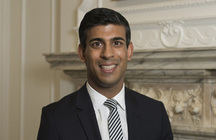
  • Rishi Sunak – 2022 Statement on the Energy Price Cap

    Rishi Sunak – 2022 Statement on the Energy Price Cap

    The statement made by Rishi Sunak, the Chancellor of the Exchequer, in the House of Commons on 3 February 2022.

    Mr Speaker,

    The UK’s economic recovery has been quicker and stronger than forecast.

    In the depths of the pandemic, our economy was expected to return to its pre-crisis level at the end of 2022.

    Instead, it got there in November 2021 – a full year earlier.

    Unemployment was expected to peak at nearly 12%.

    Instead, it peaked at 5.2% and has now fallen to just over 4% – saving more than 2 million jobs.

    And with the fastest growing economy in the G7 this year…

    Over 400,000 more people on payrolls than before the pandemic…

    And business investment rising…it’s no wonder Mr Speaker, that borrowing is set to fall from £320bn last year…

    …the highest ever peacetime level…

    …to £46bn by the end of this Parliament.

    As we emerge from the depths of the worst recession in 300 years, we should be proud of our economic record.

    The economy is stronger because of the plan we put in place; because of the actions we took to protect families and businesses.

    And that plan is working.

    But for all the progress we are making – the job is not yet done.

    Right now, I know the number one issue on people’s minds is the rising cost of living.

    It is the independent Bank of England’s role to deliver low and stable inflation – and the Governor will set out their latest judgements at midday today.

    And just as the government stood behind the British people through the pandemic…

    …so we will help people deal with one of the biggest costs they now face – energy.

    The energy regulator, OFGEM, announced this morning that the energy price cap will rise in April to £1,971 – an increase of £693 for the average household.

    Without government action, this would be incredibly tough for millions of hardworking families.

    So the government is going to step in to directly help people manage those extra costs.

    Mr Speaker,

    Before I set out the steps we are taking, let me explain what’s happening to energy prices, and why.

    People’s energy bills are rising because it is more expensive for the companies who supply our energy to buy oil, coal, and gas.

    Of the £693 increase in the April price cap, around 80% comes from wholesale energy prices.

    Over the last year, the price of gas alone has quadrupled.

    And because over 85% of homes in Britain are heated with a gas boiler, and around 40% of our electricity comes from gas, this is hitting households hard.

    The reasons gas prices are soaring are global.

    Across Europe and Asia, a long, cold winter last year depleted gas stores.

    Disruption to other energy sources like nuclear and wind left us relying more than usual on gas during the summer months.

    Surging demand in the world’s manufacturing centres in Asia…

    …at the same time as countries like China are moving away from coal…

    …is further increasing demand for gas.

    And concerns about a possible Russian incursion into Ukraine are putting further pressure on wholesale gas markets.

    And so prices are rising.

    Mr Speaker,

    The price cap has meant that the impact of soaring gas prices has so far fallen mainly on energy companies.

    So much so, that some suppliers who couldn’t afford to meet those extra costs have gone out of business as a result.

    It is not sustainable to keep holding the price of energy artificially low.

    For me to stand here and pretend we don’t have to adjust to paying higher prices would be wrong and dishonest.

    But what we can do is take the sting out of a significant price shock for millions of families…

    …by making sure the increase in prices is smaller initially and spread over a longer period.

    Mr Speaker,

    Without government intervention, the increase in the price cap would leave the average household having to find an extra £693.

    The actions I’m announcing today will provide, to the vast majority of households, just over half that amount – £350.

    In total, the government is going to help around 28 million households this year.

    Taken together, this is a plan to help with the cost of living worth around £9bn.

    We’re delivering that support in three different ways.

    First, we will spread the worst of the extra costs of this year’s energy price shock over time.

    This year, all domestic electricity customers will receive an upfront discount on their bills worth £200.

    Energy suppliers will apply the discount on people’s bills from October.

    With the government meeting the cost in full.

    That discount will be automatically repaid from people’s bills in equal £40 instalments over the next five years.

    This is the right way to support people while staying on track with our plans to repair the public finances.

    And because we are taking a fiscally responsible approach, we can also provide more help, faster, to those who need it most – the second part of our plan.

    We’re going to give people a £150 Council Tax rebate to help with the cost of energy, in April – and this discount won’t need to be repaid.

    And I do want to be clear with the House that we are deliberately not just giving support to people on benefits.

    Lots of people on middle incomes are struggling right now, too – so I’ve decided to provide the council tax rebate to households in Bands A to D.

    This means around 80% of all homes in England will benefit.

    And the third part of our plan will provide local authorities with a discretionary fund of nearly £150m…

    …to help those lower income households who happen to live in higher Council Tax properties…

    …and households in bands A-D who are exempt from Council Tax.

    We’re also confirming today that we’ll go ahead with existing plans to expand eligibility for the Warm Home Discount by almost a third…

    …so that 3m vulnerable households will now benefit from that scheme.

    And that’s not all we’re doing to help vulnerable households.

    We’re providing £3bn over this Parliament to help more than half a million lower income homes become more energy efficient, saving them on average £290 per year.

    Increasing the National Living Wage to £9.50 an hour in April, a pay rise of over £1,000 for 2 million low paid workers.

    And providing an effective tax cut for those on Universal Credit, allowing almost 2 million households to keep an average of £1,000 per year.

    The payment through energy suppliers will apply across England, Wales and Scotland.

    Energy policy is devolved in Northern Ireland, with a different regulator, and the government does not have the legal powers to intervene.

    So we will make sure the Executive is funded to do something similar, with around £150m for Northern Ireland through the Barnett formula next year.

    And because the Council Tax system is England only, total Barnett consequentials of around £565m will be provided to the devolved administrations in the usual way.

    Mr Speaker,

    I know that some in this House have argued for a VAT cut on energy.

    However, that policy would disproportionately benefit wealthier households.

    There would also be no guarantee that suppliers would pass on the discounts to all customers.

    And we should be honest with ourselves: this would become a permanent Government subsidy on everyone’s bills.

    A permanent subsidy worth £2.5 billion every year – at a time when we are trying to rebuild the public finances.

    Instead, our plan allows us to provide more generous support, faster, to those who need it most, providing 28m households with at least £200, and the vast majority receiving £350.

    It is fair, it is targeted, it is proportionate – it is the right way to help people with the spike in energy costs.

    Mr Speaker,

    Today’s announcements are just one part of the government’s plan to tackle this country’s most pressing economic challenges.

    A plan for growth – with record investments in infrastructure, innovation and skills.

    A plan to restore the public finances – with debt falling by the end of this Parliament.

    A plan to cut waiting lists and back the NHS with £29bn over three years and a permanent new source of funding.

    And, with the measures I’ve announced today – a plan to help with the rising cost of energy with £350 more in the pockets of tens of millions of hard working families.

    That’s our plan to build a stronger economy – not just today but for the long term.

    And I commend it to this House.
  • Ed Miliband – 2022 Statement on a Windfall Tax for Oil and Gas Producers

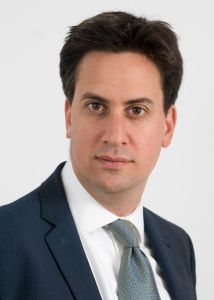
    Ed Miliband – 2022 Statement on a Windfall Tax for Oil and Gas Producers

    The statement made by Ed Miliband, the Labour MP for Doncaster North, in the House of Commons on 1 February 2022.

    I beg to move,

    That this House notes the cost-of-living crisis hitting families across the country and that the energy price cap is predicted to rise by 50 per cent from April; recognises that rocketing energy prices are hitting businesses as well as household budgets; calls on the Government to introduce a windfall tax on the profits of North Sea oil and gas producers; and further calls on the Government to use that windfall tax to help fund a package of support for families and businesses facing the energy price crisis.

    In the last few days, we have often heard the Government say that they are desperate to talk about the biggest issues facing the country. Conservative Member after Conservative Member has lined up to say that there is nothing they would rather do than end the distractions and talk about the burning issues facing people. I have to say, Madam Deputy Speaker, where are they all? Where are they? Today, we are giving them—[Interruption.] There are a few of them, but not very many. Today, we are giving them and the House the chance to talk about those issues, and there is no bigger issue facing families than the energy price crisis. For months, we have waited for the Government to tell us what it is that they are going to do and there has been silence. Today, we are making a generous offer to focus on what really matters and to give them the chance to support the principle of a windfall tax on the oil and gas companies to help to address the energy crisis.

    Let me set out the case. In just six days’ time, we will know the scale of the price cap increase to be announced by Ofgem. It is expected, on the latest gas prices, that there will be a £600 increase in the cap, on top of the £120 increase we have already seen. April’s increase alone is expected to drag 1.5 million more families into fuel poverty. Let us be absolutely clear what that means. Consider a recent Citizens Advice case of a man in his 60s from Devon who had given up his job as an engineer when he was diagnosed with spinal cancer. He had been claiming universal credit but cannot work and recently saw that drop by £20 a week. He told Citizens Advice:

    “I don’t buy the things I need to buy. I’m constantly looking at the bank account. I put things off as I can’t afford the petrol to drive. I feel isolated and stressed, but what can I do? I’m living in one room to keep the heat down as low as I possibly can, but everything is just mounting up. It’s direct debit after direct debit.”

    I have had similar cases in Doncaster. This is the reality facing millions in our country, and that is before the price cap has actually gone up. It is against the backdrop of inflation running at nearly 6% and the national insurance rise on top. So people are facing very difficult times. Businesses, too, are facing great difficulty as a result of what is happening.

    Dr Rupa Huq (Ealing Central and Acton) (Lab)

    Does not my right hon. Friend agree that the Government’s version of the energy price cap, along with “use it or lose it” penalties on developers, banning letting fees for tenants and gender pay gap reporting, have his fingerprints all over them from our 2015 Labour manifesto, but that, unfortunately, they have made the schoolboy error of copying homework incorrectly? That is why we now need a windfall tax to rectify those errors. In a parallel universe—the Miliverse—this was done right, but sadly it has been done all wrong by them!

    Edward Miliband

    I thank my hon. Friend for that intervention. I am old enough to remember when an energy price cap was living in a “Marxist universe” and now it is Government policy.

    The Federation for Small Businesses reports that 45% of members are seeing soaring costs from higher energy bills. Meanwhile, the Energy Intensive Users Group, representing vital industries such as steel and pharmaceuticals, has called repeatedly for “immediate action”.

    This is an economic crisis plain and simple. What is extraordinary is that the Government, months into the crisis, have not produced a single solution. Where is the solution? There can be no greater evidence of a Government paralysed by inaction. Millions of families who want reassurance are instead subject to the spectacle of a rule-breaking Prime Minister still too distracted by trying to save his own skin.

    Our case today is that millions of struggling families should not be left to face this situation alone and that we should do all we can to act. It is right to look to those benefiting from this crisis to make a contribution.

    John Redwood (Wokingham) (Con)

    I am glad the right hon. Gentleman is highlighting this issue. Does he agree that gas prices are a lot dearer in Europe and the UK than they are in America because we are short of gas here? Would it not therefore be a good idea for us to get more gas out of our North sea to ease the squeeze?

    Edward Miliband

    The right hon. Gentleman and I differ somewhat on this. The real problem is that we have not gone far enough or fast enough on the green transition. The more we are subject to the volatility of fossil fuels—the prices are set internationally—the more we are at risk of the kind of crisis we are seeing at the moment.

    If there is one principle that should get us through these tough times, it is that those with the broadest shoulders should bear the greatest burden. Britain’s families and businesses are facing the toughest times, but that is not true of everyone. For the oil and gas sector, the price spike has been a bonanza—a trebling of prices today compared with a year ago. Let us be clear about the effect that is having on oil and gas company profits.

    Listen to Bernard Looney, the chief executive of BP. He says this: the rise in prices is a “cash machine” for his company. Those were his words—a “cash machine”. Let those words ring in the ears of right hon. and hon. Members in this House. Let us be clear about who is on the other side of the cash machine: the British people. In other words, it is an ATM from which the oil and gas companies collect billions and into which the British people pay—people like the man in Devon who could only afford to heat one room. He is one of the millions paying into the cash machine for BP.

    Once the companies are withdrawing the cash from the cash machine, where is the unexpected windfall going? Let us not fall for the argument that may be made in this debate—that it is somehow going into investment or workers in the oil and gas sector. [Interruption.] The hon. Member for West Aberdeenshire and Kincardine (Andrew Bowie) says from a sedentary position that it is. Let me tell him that he is wrong. All the evidence is that the companies are so flush with cash that billions are being used to inflate the share price in buybacks from shareholders. BP did a share buyback of over £1 billion in August, but it was so overwhelmed with cash that it did another worth nearly £1 billion in November. Shell has done the same, with a £1.1 billion share buyback in December. But that is not enough: it says it will do another one, worth £4 billion, at pace, in 2022.

    This is simply a redistribution of wealth from the energy bills of the British people—those who can least afford it—to the shareholders of those companies. The question before us, then, is one that has confronted previous Governments: should we do something about the situation or say that it is wrong to take account of the windfall in the tax decisions that we make? I say that it is not wrong to take account of it—it is fair and it is right and it is principled.

    Tim Loughton (East Worthing and Shoreham) (Con)

    The right hon. Gentleman is setting out the problem, but the trouble is that his solutions do not add up. Does he acknowledge that last year Shell and BP, the two largest oil and gas producers, posted a £26.9 billion and £22.5 billion loss respectively? How much would his windfall tax get from those situations? Does he also acknowledge that the biggest investments in renewable energy—not least hydrogen, into which hundreds of billions are being invested—come from companies such as BP and Shell, which we need to continue investing in alternative non-fossil fuels?

    Edward Miliband

    I will answer all the hon. Gentleman’s points. We would raise £1.2 billion from the windfall tax. I will come to this later in my speech, but the tax position is incredibly generous for companies, including Shell and BP. He says that their money is going into renewables, but I am afraid that he is not correct. Shell’s near-term plans involve investment of just £2 billion to £3 billion in low carbon activities and £8 billion on upstream fossil fuel production. It is just greenwash to say that these companies have somehow moved out of fossil fuels and into renewables. The truth is that when profits have risen by billions and billions and when billions are being paid out in share buybacks, it is not credible that somehow a one-off tax rise, taking just a small proportion of the windfall profits that these companies did not expect, will somehow lead to a collapse in investment.

    There is a clear consensus that a windfall tax is the right thing to do. An overwhelming majority of people support it—including, I might point out to Government Members, three quarters of Conservative voters. I do not know what Conservative Members are waiting for: they should support a windfall tax because some of the people who vote for them—or used to vote for them, anyway—also support it. Leading charities have endorsed it and some Conservative Members, including the right hon. Member for Harlow (Robert Halfon) and the former business Minister the right hon. Member for Kingswood (Chris Skidmore), have supported it too.

    Of course the oil and gas companies do not want the windfall tax to happen. Let us take their arguments head on. As I have said, the argument that the tax will lead to a collapse in investment is not credible given what the companies are doing with this windfall, and it also misunderstands the long-term basis of these companies’ investment plans. I should also point out that the companies would keep a significant proportion of the windfall, even under our proposals. It is an unexpected, unearned windfall, half of which they would keep.

    Secondly, as I said to the hon. Member for East Worthing and Shoreham (Tim Loughton), the proposal comes against a backdrop of the incredibly generous tax position in the UK, which meant that BP and Shell actually paid no net tax at all between 2018 and 2020.

    Thirdly, there is a wider context. [Interruption.] The hon. Member for East Worthing and Shoreham is muttering, from a sedentary position, that those companies are not making profits. Actually, they are forecast to make near-record profits this year, as the hon. Gentleman will see if he looks at what outside analysts are saying.

    As I was saying, there is a wider context. The oil and gas sector provides important employment for our country and communities. We need a phased transition, but, as I said to the hon. Gentleman, the long-term answer to this crisis is not more reliance on fossil fuels. Indeed, the Business Secretary himself has said:

    “the UK is still too reliant on fossil fuels.”—[Official Report, 20 September 2021; Vol. 701, c. 95.]

    The answer must be instead to go further and faster on renewables, nuclear and other zero-carbon alternatives, but that is not what the fossil fuel companies are doing with their profits.

    Matt Western (Warwick and Leamington) (Lab)

    My right hon. Friend is making a powerful speech. He has identified the immediate issue of energy poverty and crisis that we have in this country. Those of us who are old enough to have lived through the 1970s and 1980s recall how the Norwegians used the wealth generated from the North sea to create sovereign wealth funds. Should we not be thinking about that? Could we perhaps not just use the windfall tax, but deploy such funds in the way that my hon. Friend is describing, to invest in renewables and invest in our country?

    Edward Miliband

    My hon. Friend has made a powerful point.

    Labour has come up with a clear and costed plan. We plan, by levying the windfall tax, to reduce VAT to zero, to increase the warm homes discount from £150 to £400, and to extend it from the 2.2 million families who currently receive it to 9 million. On top of that, we have set aside £600 million to help our businesses out. This is in stark contrast with what is being proposed by the Conservatives—the Government of the day, who, six days before the announcement of the rise in the price cap, seem to have nothing to say. What is their explanation for why they are not acting? It is very hard to find the explanation, although perhaps we will hear one today. The one person who has ventured to provide one is the Education Secretary, who has said:

    “A windfall tax on oil and gas companies that are already struggling in the North Sea is never going to cut it.”

    Even the oil and gas companies do not describe themselves as struggling. They say that this is a cash machine. I have to ask what planet the Government are living on. Does it not say everything about them that it is the struggles of companies making billions from an expected windfall that stir them, not the struggles of the British people? How dare they leave families in the lurch because of their refusal to stand up to vested interests in the oil and gas sector?

    Alan Brown (Kilmarnock and Loudoun) (SNP)

    In 1998, when Labour was in power, oil prices bottomed out at $12 a barrel. By 2008, the price had risen to nearly $100 a barrel. What did Labour do with that money? It is regrettable that it did not create an oil sovereign fund, as Norway did.

    Edward Miliband

    I am very proud of the investments that the last Labour Government made in our public services.

    Alexander Stafford (Rother Valley) (Con)

    Will the right hon. Gentleman give way?

    Edward Miliband

    No, I am going to make progress.

    The truth is—we cannot get away from it—that the Conservatives are a party bankrolled to the tune of nearly £5 million by oil and gas interests since 2016. Bankrolled by oil and gas executives, they cannot act on behalf of the British people.

    Let me end by saying this. The British people are fed up with what they have seen from the Government in recent months. They want a Government who are on their side. They want a Government who will act for them. That is why we need a windfall tax. It is a test of whose side they are on, and whose side we are all on in this House—on the side of gas and oil companies making billions of profits, or on the side of millions of struggling families. We know whose side we are on. If this Government were truly on the side of the British people, they would act, and that is why I urge Members on both sides of the House to vote for our motion tonight.

  • Kwasi Kwarteng – 2022 Statement on the Advanced Research and Invention Agency

    Kwasi Kwarteng – 2022 Statement on the Advanced Research and Invention Agency

    The statement made by Kwasi Kwarteng, the Secretary of State for Business, Energy  and Industrial Strategy, in the House of Commons on 1 February 2022.

    The leadership of the Advanced Research and Invention Agency (ARIA) has been the subject of much Parliamentary interest. Today, I am delighted to update the House that I have appointed Dr Peter Highnam as the agency’s first Chief Executive Officer and re-commenced the search for ARIA’s first Chair.

    ARIA, the Government’s new science funding body, will focus solely on finding and funding ground-breaking research projects with the potential to transform the lives of people in the UK, and around the world.

    This announcement comes at an opportune moment, as the legislation to create ARIA enters the final stages of its passage through Parliament, ahead of the agency becoming fully operational later this year.

    Dr Peter Highnam will play a pivotal role in ARIA’s formative years by defining the agency’s vision, recruiting its first programme managers, and establishing its organisational culture. He will take post on 3 May 2022 for a fixed term of five years.

    Dr Peter Highnam brings a wealth of experience to the role, as he has served as Deputy Director at the Defence Advanced Research Projects Agency (DARPA) since February 2018, and as acting director on two occasions. He has previously held positions as the Director of Research at the National Geospatial-Intelligence Agency, and as Director of the Intelligence Advanced Research Projects Activity. Born in the UK, Dr Peter Highnam holds a PhD in Computer Science from Carnegie Mellon University. He obtained his master’s degree at the University of Bristol, and his undergraduate degree at the University of Manchester.

    The appointment has been made in accordance with the Governance Code on Public Appointments, following a fair and open competition overseen by an Advisory Assessment Panel.

    To support Dr Peter Highnam, I am re-launching the campaign to find ARIA’s first Chair. Once appointed, ARIA’s Chair will have the unique opportunity to be a trusted counsel for Dr Peter Highnam as he leads the agency through its fledgling years.

  • Jeremy Quin – 2022 Statement on the Defence Space Strategy

    Jeremy Quin – 2022 Statement on the Defence Space Strategy

    The statement made by Jeremy Quin, the Minister for Defence Procurement, in the House of Commons on 1 February 2022.

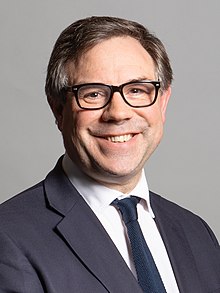
    Today I am pleased to publish the defence space strategy. This strategy sets out a vision for the Ministry of Defence as a global actor in the space domain. It articulates how the MOD will deliver the national space strategy’s “protect and defend” goal through capabilities, operations and the growth of a space workforce. It also emphasises the value of alliances and partnerships in pursuit of a safe and secure space domain. I am placing a copy of the DSS in the Library of the House.

    The DSS explains how the MOD has apportioned its spending review 2020 allocation for space capabilities and activity: £1.4 billion over 10 years, in addition to the £5 billion over 10 years already allocated to our future Skynet satellite communications capability.

    The DSS also reinforces all four of the 2021 integrated review’s objectives to: strengthen security and defence at home and overseas; build resilience; sustain strategic advantage through science and technology; and shape the international order of the future.

    Attachments can be viewed online at: http://www.parliament.uk/business/publications/written-questions-answers-statements/written-statement/Commons/2022-02-01/HCWS576/

  • Amanda Milling – 2022 Statement on the Myanmar Coup Anniversary

    Amanda Milling – 2022 Statement on the Myanmar Coup Anniversary

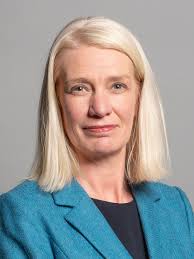
    The statement made by Amanda Milling, the Minister for Asia, in the House of Commons on 1 February 2022.

    One year since the military seized power in Myanmar, it is clear they miscalculated. They did not reckon with the courage and tenacity of the people of Myanmar to resist their brutal takeover. However, the coup has plunged the country into a deep crisis. Over 14 million people are in humanitarian need, mass displacement is increasing, democratic gains have been reversed, and violence is escalating across the country. It is clear that the military has no interest in seriously addressing these issues

    The UK is appalled by the brutal actions of the military regime, who continue to commit atrocities, with credible reports of torture, sexual violence and mass killings. We call on the military to immediately release the thousands of people it has detained arbitrarily, including Aung San Suu Kyi.

    We continue to stand with the people of Myanmar who have rejected the military junta. We are clear in our support for all those working to restore democracy in Myanmar, including the National Unity Government.

    We are using our global leadership role to bring the international community together, including at the UN Security Council and through the G7, to condemn the military’s actions. This included an unprecedented Security Council Presidential Statement on the coup on 10 March and a Security Council meeting to mark the anniversary of the coup on 28 January.

    We have announced nine tranches of sanctions targeting the military leadership, and key military revenue streams. This includes three designations yesterday of individuals responsible for subverting democracy and the rule of law. We are working closely with partners in the US, Canada and the EU to identify further targets.

    We are committed to preventing the flow of arms to Myanmar and worked to secure a UN General Assembly Resolution to this end. We will continue to put pressure on those who sell arms to the military.

    Since the coup we have provided £49.4 million to support those in need of humanitarian assistance, deliver health and education for the most vulnerable and protect civic space. Our humanitarian programmes have reached over 600,000 people, including with water, sanitation, and life-saving food.

    We remain committed to supporting efforts to hold perpetrators to account. We have provided additional funding to the independent investigative mechanism for Myanmar and established the Myanmar witness programme to collect and preserve evidence of serious human rights violations and abuses. We are closely monitoring the risks of further atrocities against ethnic and religious minorities, including the Rohingya.

    We recognise the important role ASEAN is playing in resolving the crisis and we reaffirm our support for the ASEAN five-point consensus, which the military must implement immediately.

    The UK, and the wider international community, has sent a clear message to the military regime. They must immediately end the violence, uphold human rights, protect civilians, and remove obstacles to a comprehensive health and humanitarian response.

  • Boris Johnson – 2022 Comments on the 2022 Levelling Up White Paper

    Boris Johnson – 2022 Comments on the 2022 Levelling Up White Paper

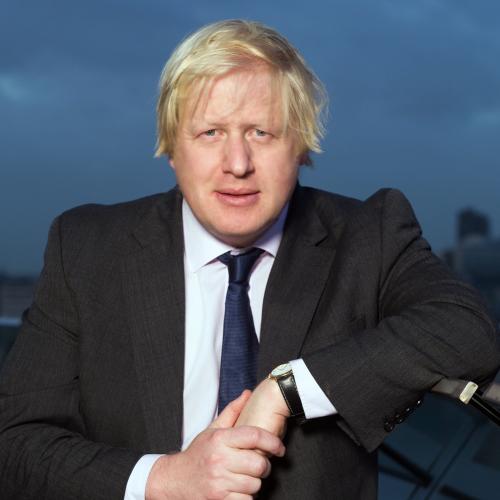
    The comments made by Boris Johnson, the Prime Minister, on 2 February 2022.

    From day one, the defining mission of this government has been to level up this country, to break the link between geography and destiny so that no matter where you live you have access to the same opportunities.

    The challenges we face have been embedded over generations and cannot be dug out overnight, but this White Paper is the next crucial step.

    It is a vision for the future that will see public spending on R&D increased in every part of the country; transport connectivity improving; faster broadband in every community; life expectancies rising; violent crime falling; schools improving; and private sector investment being unleashed.

    It is the most comprehensive, ambitious plan of its kind that this country has ever seen and it will ensure that the government continues to rise to the challenge and deliver for the people of the UK.

  • Michael Gove – 2022 Comments on the 2022 Levelling Up White Paper

    Michael Gove – 2022 Comments on the 2022 Levelling Up White Paper

    The comments made by Michael Gove, the Secretary of State for Levelling Up, on 2 February 2022.

    The United Kingdom is an unparalleled success story. We have one of the world’s biggest and most dynamic economies. Ours is the world’s most spoken language. We have produced more Nobel Prize winners than any country other than America.

    But not everyone shares equally in the UK’s success. For decades, too many communities have been overlooked and undervalued. As some areas have flourished, others have been left in a cycle of decline. The UK has been like a jet firing on only one engine.

    Levelling Up and this White Paper is about ending this historic injustice and calling time on the postcode lottery.

    This will not be an easy task, and it won’t happen overnight, but our 12 new national levelling up missions will drive real change in towns and cities across the UK, so that where you live will no longer determine how far you can go.

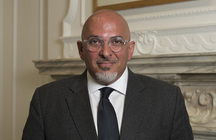
  • Nadhim Zahawi – 2022 Comments on Education Investment Areas

    Nadhim Zahawi – 2022 Comments on Education Investment Areas

    The comments made by Nadhim Zahawi, the Secretary of State for Education, on 1 February 2022.

    The most valuable resource on the planet is the human resource. Investing in people to get on in life and receive the best possible education is core to the mission of this government, and we are determined to help people gain the knowledge and skills needed to unleash their potential.

    This white paper sets out our blueprint for putting skills, schools and families at the heart of levelling up. It focuses on putting great schools in every part of the country, training that sets you up for success in a high-skilled, well-paid career and ensuring no one misses out on opportunities simply because of where they live or their family background.

    Raising our expectations and aspirations for children, as well as creating a high-skilled workforce, will end the brain drain that sees too many people leaving communities in order to succeed. These plans will help create a level playing field and boost the economy, both locally and nationally.

  • Boris Johnson – 2022 Press Conference in Kyiv

    Boris Johnson – 2022 Press Conference in Kyiv

    The press conference given by Boris Johnson, the Prime Minister, in Kiev on 1 February 2022.

    Thank you very much President Zelenskyy and thank you for welcoming us all to your Mariyinski palace here, it’s absolutely fantastic to be back in Kyiv and to see the excitement, the buzz of this capital which has changed a lot since I was last here five years ago, in many interesting and positive ways.

    But we have to face a grim reality which is that as we stand here today Volodmyr, more than 100,000 Russian troops are gathering on your border in perhaps the biggest demonstration of hostility towards Ukraine in our lifetimes.

    And the potential deployment dwarves the 30,000 troops Russia sent to invade Crimea in 2014. Since that time of course, as everybody knows, more than 13,000 Ukrainians have been killed and Ukraine has been plunged into nearly a decade of war.

    It goes without saying that a further Russian invasion of Ukraine would be a political disaster, a humanitarian disaster, in my view would also be, for Russia, for the world, a military disaster as well. And the potential invasion completely flies in the face of President Putin’s claims to be acting in the interest of the Ukrainian people.

    The UK and other countries will be judged, by the people of the Ukraine and the world, on how we respond and how we help.

    Since 2015 the UK has trained over 22,000 Ukrainian military personnel and provided £2.2 million worth of non-lethal military equipment to Ukraine.

    Two weeks ago we sent anti-tank weaponry to strengthen Ukraine’s defences further.

    Today I have announced a further £88 million of UK funding to support good governance and energy independence in Ukraine. This will bolster your efforts Volodmyr, and those of others to build a free and prosperous Ukrainian society, free of malign influences.

    Alongside other countries we are also preparing a package of sanctions and other measures to be enacted the moment the first Russian toe-cap crosses further into Ukrainian territory.

    And we have done all this and prepared all this, not as a show of hostility towards Russia, but as a demonstration that we will always stand up for freedom, democracy and Ukrainian sovereignty in the face of aggression.

    In recent days I have spoken to the leaders of the United States, France, Germany, Italy, the NATO Secretary General and others – all agree on the fundamental importance of supporting Ukraine’s self-determination.

    Because the people of Ukraine have the inalienable right to choose how they are governed and indeed which organisations they aspire to join.

    And as your friend and partner, the UK will always uphold that right.

    It is vital that Russia steps back and chooses a path of diplomacy and I believe that is still possible.

    We are keen to engage in dialogue, of course we are, we have the sanctions ready, we’re providing military support and we will also intensify our economic co-operation.

    Because we are a firm and enduring ally of Ukraine and a supporter of Ukraine’s territorial sovereignty and integrity.

    Thank you all very much.

  • Boris Johnson – 2022 Comments on Trip to Kyiv

    Boris Johnson – 2022 Comments on Trip to Kyiv

    The comments made by Boris Johnson, the Prime Minister, on 1 February 2022.

    It is the right of every Ukrainian to determine how they are governed. As a friend and a democratic partner, the UK will continue to uphold Ukraine’s sovereignty in the face of those who seek to destroy it.

    We urge Russia to step back and engage in dialogue to find a diplomatic resolution and avoid further bloodshed.