Blog

  • David Lammy and Rachel Reeves – 2022 Joint Letter on Ukraine

    David Lammy and Rachel Reeves – 2022 Joint Letter on Ukraine

    The joint letter send by David Lammy, the Shadow Foreign Secretary, and Rachel Reeves, the Shadow Chancellor of the Exchequer, to Liz Truss, the Foreign Secretary and Rishi Sunak, the Chancellor of the Exchequer, on 7 February 2022.

    Dear Foreign Secretary and Chancellor,

    Re: The Ukraine crisis and illicit finance

    Since the crisis on Ukraine’s borders began, we have been clear in our robust support for Ukraine’s sovereignty and our opposition to Russian aggression. We have supported the government’s diplomatic efforts and the practical defensive support provided to Ukraine.

    We believe however that there is much more that can be turn to address the UK’s openness to suspect Russian money.

    This week in the House of Commons, the government outlined its plans to bring forward new legislation to enable a robust and extensive package of economic sanctions against Russia in the event of any incursion or attack on Ukraine. We believe such sanctions must be broad, severe and comprehensive.

    However, these sanctions are all conditional on Russia’s actions. Their purpose is to form a serious deterrent, which, when matched by unified action across the West, will make President Putin think again.

    There is much more we must do irrespective of the decisions made by President Putin; measures it should not have taken an army threatening Ukraine to put in place and which we have repeatedly urged the government to take.

    For years, the Labour Party have raised the alarm about the role of dirty money in the UK and the lack of action from the Conservative government. Despite repeated warnings, the government has been asleep at the wheel and needlessly left our defences down at home.

    London is the destination of choice for the world’s kleptocrats. It is home to the services and enablers who help corrupt elites to hide their ill-gotten wealth. Britain has a completely deficient system of corporate registration that permits layers of secrecy to obscure the proceeds of corruption and crime. It is shameful that Britain is repeatedly described as the money-laundering capital of the world.

    Now this openness to illicit finance has begun to damage our diplomatic efforts, with the Biden administration being warned that the widespread presence of suspect Russian money in the UK could jeopardise Britain’s response to this crisis.

    We welcome the Prime Minister’s answer at Prime Minister’s Questions this week committing the government to bring forward an Economic Crime Bill in the third session of parliament. I hope the government recognises that had we already legislated for this then the UK would be in a stronger position to address dirty money from Russia.

    This is not simply a matter of targeting some individuals or entities through sanctions but about fixing a broken system – Britain’s openness to fraud and money laundering, inadequate regulation of political donations, lax mechanisms of corporate governance, and weakness to foreign interference.

    We believe we must take a broad range of robust steps to address these deficiencies and the Conservatives must do more including with the donations it receives. We would therefore be grateful if you address the following questions:

    When will the government undertake comprehensive reform of Companies House to prevent fraud at home and abuse from abroad?

    On what date will the government bring forward the Register of Overseas Entities Bill it has promised for years?

    Will the government bring forward a Foreign Agent Registration law?

    Where are the new counter-espionage laws, announced in the Queen’s Speech but still delayed?

    When will the government reform the Tier 1 so-called ‘Golden Visas’?

    Where is the replacement to the outdated Computer Misuse Act, as recommended by the Russia Report?

    Where is the additional resource and power for the Electoral Commission, which will strengthen our democracy’s defence from overseas governments and interests?

    Why does the government’s Election Bill make these problems worse by enabling limitless political donations from donors based overseas?

    Donors who have made money from Russia or have alleged links to the Putin regime have given £1.93m to either the Conservative Party or individual Conservative associations since Boris Johnson took power in July 2019. Will the Conservative Party agree to return it?

    Will the government reform the rules on political donations to defend our democracy from overseas interests using loopholes to influence British politics?

    These steps to strengthen our national security and democracy at home are not distinct from sanctions or diplomacy abroad – they must form part of a unified and coherent response.

    We can’t stand up to Russia’s aggression abroad while ignoring Russian-linked corruption at home.

    It is in our national and economic interests for the government to address the challenges of hostile influence and interference which the government’s inaction and behaviour have regrettably permitted.

  • Robert Courts – 2022 Comments on Shore Power

    Robert Courts – 2022 Comments on Shore Power

    The comments made by Robert Courts, Maritime Minister, on 7 February 2022.

    Climate change is one of the biggest challenges this generation faces, and we will continue to lead international efforts to decarbonise the maritime sector.

    Shore power will end the outdated practice of ships keeping their engines running while anchored in port, reducing the poisonous fumes entering the air and ensuring we meet our net zero 2050 goals.

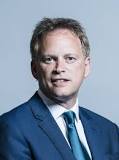
  • Grant Shapps – 2022 Statement on TFL Funding Extension

    Grant Shapps – 2022 Statement on TFL Funding Extension

    The statement made by Grant Shapps, the Secretary of State for Transport, in the House of Commons on 7 February 2022.

    Following my statement to the House on 5 January 2022, I am updating the House on an interim extension of the current Transport for London (TfL) funding settlement that was due to expire on 4 February 2022 by 2 weeks to 18 February 2022. This has been agreed by the Mayor of London.

    Since the start of the pandemic, we have supported the transport network in London with over £4.5 billion funding through extraordinary funding settlements for TfL.

    We have recognised the reliance of London’s transport network on fare revenue and government continues our commitment to mitigating loss of fare revenue because of the pandemic.

    Government is committed to supporting London’s transport network as we have since the start of the pandemic and is in discussions with TfL on a fourth funding settlement.

    This short extension will enable us to finalise the terms of a robust settlement for this period, ensuring TfL and the Mayor take steps to move towards financial sustainability.

    In this extension, government will continue to ensure the provisions of the existing agreement are delivered while providing continued certainty to Londoners as we move out of Plan B restrictions.

    Support to TfL has always been on the condition that TfL reaches financial sustainability as soon as possible and with a target date of April 2023, and government continues to press the Mayor of London and TfL to take the decisions needed to put the organisation on a sustainable footing.

    I will update the House at my earliest opportunity on the details of the fourth funding settlement.

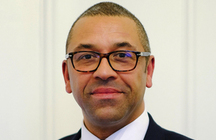
  • James Cleverly – 2022 Speech on Anti-corruption Sanctions in Kazakhstan

    James Cleverly – 2022 Speech on Anti-corruption Sanctions in Kazakhstan

    The speech made by James Cleverly, the Minister for the Middle East, North Africa and North America, in the House of Commons on 3 February 2022.

    I am grateful to the right hon. Member for Barking (Dame Margaret Hodge) for securing the debate and I pay tribute to the work that she has done on these complex issues both in her former role as a Select Committee Chair and as chair of the all-party group on anti-corruption and responsible tax. As my noble Friend Lord Ahmad, the Minister with responsibility for south and central Asia, is in the other place, it is my pleasure to respond on behalf of the Government.

    This month, the UK celebrated 30 years of diplomatic relations with Kazakhstan, our largest partner in central Asia. Over the years, we have built a strong partnership in areas such as oil and gas investment, education and financial services, as well as promoting human rights and democratic values. We have had real success in encouraging a more open business environment in Kazakhstan, including through the Astana International Financial Centre.

    Hon. Members—though few are here—will have witnessed the violent clashes that took place in January after initially peaceful protests in western Kazakhstan over increased fuel prices. As the right hon. Lady said, the latest estimates are that more than 200 people died during those clashes. There were reports of organised attacks on property and law enforcement officers, and almost 10,000 people were detained. I am sure that she will join me and others in roundly condemning the violence and loss of life.

    My noble Friend Lord Ahmad has been engaged intensively on these issues, speaking to senior Kazakh contacts last month, including President Tokayev’s special representative on 14 January. In each of these calls, the Minister has underlined the importance of Kazakhstan respecting its international human rights commitments. President Tokayev has called what happened an “attempted coup” and we are urgently seeking further information about that very serious development. We welcome the President’s decision to establish an investigative commission to ascertain what led to these unprecedented events and loss of life. We support the Kazakh authorities’ commitment that this will be an effective and transparent investigation and have encouraged them to consider international and independent expertise.

    In his public remarks, the President was clear that the original peaceful protests were based on legitimate grievances about the socioeconomic situation and that urgent economic reform is needed. We support that message and we seek opportunities, with our international partners, to support those reforms.

    President Tokayev has also been critical of an existing social system that has seen economic growth largely benefit a small number of very rich people in society, as the right hon. Lady highlighted. We are well aware of reports on the alleged acquisition of assets by wealthy members of elite Kazakh society, including of substantial property holdings here in the UK. It is, of course, the role of law enforcement agencies to investigate any specific allegations of wrongdoing, as she said.

    As a leading financial services centre, the UK can, unfortunately, be the destination for the proceeds of corruption, despite findings from the Financial Action Task Force that the UK has one of the strongest systems to combat money laundering and terrorist financing of more than 60 countries assessed to date. Consequently, the integrated review of security, defence, development and foreign policy committed to take stronger action to bear down on illicit finance, including by bolstering the National Economic Crime Centre and working with our closest allies, such as the United States, to maximise our collective impact against this common threat.

    The recent spending review has put new resources behind that commitment: £42 million for economic crime reform from now until 2025. That is in addition to £63 million for Companies House reform and the introduction of the economic crime (anti-money laundering) levy, which will raise around £100 million per year from the private sector, to combat economic crime from 2023. These additional resources will significantly enhance our ability to tackle transnational corruption and illicit finance.

    Since 2006, the Foreign, Commonwealth and Development Office has funded the National Crime Agency’s international corruption unit, a world-renowned law enforcement capability focused on investigating corruption from developing countries with UK links. Since funding started in 2006, ICU investigations have resulted in the conviction of 30 people and companies for corruption offences. It has also frozen, confiscated or returned to developing countries more than £1.1 billion-worth of stolen assets.

    In addition, the UK leads and hosts the International Anti-Corruption Coordination Centre, which brings together specialist law enforcement officers from multiple agencies around the world to tackle allegations of grand corruption. The IACCC significantly enhances our ability to investigate complex, multi-jurisdictional corruption cases. Since its launch in 2017, it has provided support on 88 investigations.

    In 2019, the UK launched its economic crime plan that provides a joined-up public and private sector response to economic crime. The success of our public-private partnership is perfectly demonstrated by the work of the joint money laundering intelligence taskforce, a mechanism that enables law enforcement and the financial sector to work more closely together to detect, prevent and disrupt money laundering and economic crime. To date, the joint money laundering intelligence taskforce has helped more than 600 law enforcement investigations. This has directly contributed to over 150 arrests and the seizure of more than £34 million in illicit funds.

    Finally, in April last year, the UK launched the global anti-corruption sanctions regime, which the right hon. Lady mentioned in her remarks. This allows the Government to impose asset freezes and travel bans on those involved in serious corruption around the world, and it sends a message that the UK will not tolerate those individuals, or their ill-gotten gains, in our country. The regime does not target countries, but instead targets those individuals or organisations that are responsible. We believe that this is a strong, personal deterrent and it has been used so far to sanction 27 individuals in 10 different countries.

    Collectively, these investments significantly enhance our ability to bring corrupt actors to justice. They also send a clear message that we will use the full force of our capabilities to bear down on those who seek to use the UK as a destination for their illegitimate wealth.

    Criminals, corrupt elites and individuals who threaten our security are not welcome in the UK.

    Dame Margaret Hodge

    I am extremely grateful to the Minister, but he has given me a very general response. I named more than 20 individuals, many of whom are members of the same family. Will he undertake to investigate the circumstances that I briefly outlined, and undertake that, if I am correct, those individuals will face sanctions under the new regime?

    James Cleverly

    The right hon. Lady will, I am sure, understand that it can sometimes be counterproductive to go into details about what future sanctions designations the UK Government might undertake, but I can absolutely assure her that my officials, and indeed the House, will have taken note of the individuals she highlighted in her speech.

    In relation to Kazakhstan, or indeed any other country, our law enforcement agencies continue to monitor and, if necessary, investigate particular cases where circumstances require. We know that corruption and illicit finance can have a devastating impact on states and citizens by undermining democracy, bankrolling authoritarian agendas, and enabling serious and organised crime. The UK has shown, on the world stage, that it has both the means and the will to promote responsible financial behaviour. We have shown that we stand ready to take action, domestically and internationally, wherever necessary. I am sure you will agree, Madam Deputy Speaker, that we must now stand together to show that corruption has no place in this country.

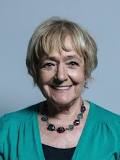
  • Margaret Hodge – 2022 Speech on Anti-corruption Sanctions in Kazakhstan

    Margaret Hodge – 2022 Speech on Anti-corruption Sanctions in Kazakhstan

    The speech made by Margaret Hodge, the Labour MP for Barking, in the House of Commons on 3 February 2022.

    I thank Mr Speaker for granting this debate and the Minister for joining us. I also thank a host of civil society experts who have helped me—too many to name—but I give special thanks to Professor John Heathershaw of Exeter University, Adam Hug of the Foreign Policy Centre and Sue Hawley of Spotlight on Corruption.

    Earlier this week, the Foreign Secretary announced welcome moves to toughen up the sanctions regime against Russia, but we should not be waiting for a potential military crisis before we act against illicit finance at home and corruption overseas. We should act and use the powers we have now.

    Today, I want to shine a light on foreign corruption in another state, not simply because that is important in itself, but because I want to highlight the UK’s role in facilitating shameful wrongdoing. Put simply, Britain enables kleptocracy. My ask of the Government is twofold. First, they should act proactively by sanctioning wrongdoers in Kazakhstan. Secondly, now that they have committed to tabling an economic crime Bill in the next Session, they must ensure the Bill’s provisions are fit for purpose, tough, effective and appropriate so that Britain can show by what we do that we are seriously committed to fighting the scourge of dirty money.

    It is 30 years since Kazakhstan, a multi-ethnic, resource-rich central Asian state, emerged from the disintegration of the Soviet Union. In those years, Kazakhstan has, by some indicators, been a success. Its GDP growth has outstripped that of many of its neighbours, including Russia. Living standards are higher and until the 2010s Kazakhstan appeared to enjoy political stability.

    But there is another side to the Kazakhstan story. The country is ruled by a kleptocratic elite that has grown rich off the back of money stolen from its people. Until 2019, its autocratic dictator was Nursultan Nazarbayev. In Kazakhstan, just 162 people own 55% of the wealth—mostly members of Nazarbayev’s family or close associates. The country has a poor human rights record and little media freedom.

    As early as 2006, Jonathan Winer, former Deputy Assistant Secretary of State for International Law Enforcement in the Clinton Administration, said:

    “I can’t think of a leader in the free world as notoriously corrupt as Nazarbayev… We’ve know about his corruption for at least 15 years”.

    Yet in Britain, we turned a blind eye, ignored the corruption and helped the Kazakh regime launder and spend its dirty money.

    Three examples confirm my view. Between 2008 and 2015, we issued 205 Kazakh kleptocrats with golden visas to settle with their dirty money in the UK, which was the fifth most common country for users of the Tier 1 Investor scheme. A recent Chatham House report reveals that the Kazakh elite owns over half a billion pounds of property in the UK. Around £330 million of that belongs to Nazarbayev’s extended family, including Sunninghill Park, allegedly bought by Nazarbayev’s son-in-law for £15 million—£3 million over the asking price. The Organised Crime and Corruption Reporting Project has revealed how Nazarbayev secretly controls four charitable foundations with at least $7.8 billion-worth of assets, invested in everything from hotels to banks. This global fortune is part-owned through a UK listed holding company set up in 2020—Jusan Technologies.

    We have opened our borders, our property market and our financial structures to the Kazakh ruling class, enabling them to launder their illicit wealth and spend it. Worse, we do not even enforce our existing laws against any of this wrongdoing.

    Why does this matter now? Because the fault lines of the corrupt Kazakh political elite have exploded. Protests, initially triggered by the soaring costs of liquidised petroleum gas, quickly developed into a national movement against the governing regime. The response from the new President, Tokayev, allegedly handpicked for the job by Nazarbayev, was initially to distance himself from the old regime. He then requested support from Russia, which sent in troops. Finally, on 7 January, he deployed the military against the protesters, with a “shoot to kill without warning” order. Protesters, most of whom were peaceful citizens, were gunned down without so much as a warning shot. According to some experts, this shocking, violent suppression has left 225 dead, 4,500 injured and 10,000 arrested.

    That terrible loss of life in Kazakhstan should lead to a moment of reflection for us in Britain. We are complicit in what is happening in Kazakhstan. Our lack of transparency over foreign property ownership, our lax regulatory regime and our weak enforcement agencies have all aided and abetted the Kazakh elite.

    Yet it is not too late for us to act. The Government have put in place a new regime of anti-corruption sanctions to complement our Magnitsky sanctions. They allow us to designate foreign, corrupt actors, freeze their UK assets, stop them entering Britain and limit their access to our financial or legal enablers. Sanctions are powerful tools, but, Minister, they must be used. That is why the Government should impose sanctions on the Kazakh oligarchs, who have systematically robbed their people to line their own pockets. The recent violence demonstrates the true cost of kleptocracy. It is surely up to us, in the UK, the jurisdiction that has done so much to facilitate corruption in Kazakhstan, to act and hold these individuals to account.

    Our all-party group on anti-corruption and responsible tax is co-operating with representatives from legislatures in Europe and America. We have formed the Inter-Parliamentary Alliance against Kleptocracy, and together we are urging Governments in the UK, the US and the EU to issue sanctions against the kleptocrats of Kazakhstan. Today, I am calling for action from the UK to designate anti-corruption sanctions against the following individuals, whom I shall name, all of whom are allegedly involved in asset seizure and bribery. The details I will provide are limited because of time, but every story is shocking.

    There is Timur Kulibayev, his wife Dinаra Nazarbayeva —the daughter of Nazarbayev—and their associate Arvind Tiku. Evidence suggests that Kulibayev abused his position to accrue vast wealth. In 2020, the Financial Times showed that Kulibayev benefited from a secret scheme to divert profits from big state pipeline contracts. He has faced money laundering and bribery investigations in other jurisdictions. His worth, according to Forbes, is $2.9 billion, and he owns at least £60 million of real estate here in the UK.

    There is Dariga Nazarbayeva and her rumoured husband Kairat Sharipbayev. Dariga is Nazarbayev’s eldest daughter. Her empire, estimated by Forbes at $595 million, is hidden in an incredibly complex system of offshore companies, foundations and trusts. Three of her London properties were subject to a failed unexplained wealth order, but investigators at Source Material allege that Nazarbayeva may have misled the UK High Court. Meanwhile, Sharipbayev is allegedly one of the beneficiaries of a $334 million fraud at Kazakh bank Bank RBK, which has been labelled

    “the bank of the Nazarbayev family”.

    There is Nurali Aliyev, son of Dariga and grandson of the former ruler. Aliyev was appointed deputy chairman of a private Kazakh bank called Nurbank—after the grandfather—at the age of 21, and chairman at 22. UK court documents show he received a $65 million loan from a bank in 2008, through a company which then made a further loan. According to Nurali’s lawyers, he used some of those funds to purchase a £39.5 million house in Bishops Avenue.

    There is Karim Massimov, and his associate Aigul Nuriyeva. Massimov is a former Prime Minister of Kazakhstan who has been subject to bribery allegations, including from UK listed companies, as reported in the FT. He was also implicated in allegations of bribery by Airbus for the purchase of 45 helicopters. Nuriyeva is a Kazakh banker and alleged proxy for Massimov, who is himself implicated in major bribery scandals totalling $64 million with the Swedish telecoms company Teli.

    Vladimir Kim is Kazakhstan’s richest man, worth some $4.3 billion. He chaired Kazakhmys plc, the first Kazakh company to list on the London Stock Exchange. A Global Witness report claimed that Kim acted as a proxy owner, and that Nazarbayev actually controlled the company. In 2017, Kim’s daughter Kamila, then 18, bought three flats worth $60 million in Knightsbridge. His associate, Eduard Ogay, is co-owner of Kazakhmys—sorry if I am pronouncing these names wrongly—and is alleged to have given bribes to the country’s Prime Minister.

    Kenes Rakishev is a mysteriously wealthy Kazakh businessman worth up to $1.6 billion, with close ties to the political elite, and a close associate of the head of the Chechen Republic, who has been sanctioned by the US.

    Sauat Mynbayev was Minister for energy and mineral resources, yet he secretly co-owned a Bermuda-based company worth $3 billion, which won public contracts in Kazakhstan despite the obvious conflicts of interest with his ministerial role. His wife and son own property in the UK.

    Alexander Mashkevich, Patokh Chodiev and an associate who died were known as the “Trio”, renowned for their ownership of Eurasian Natural Resources Corporation, a Kazakh-based mining company also listed on the London Stock Exchange. In 2013, the Serious Fraud Office launched a criminal investigation into the company, following allegations of bribery to African political figures.

    Bulat Utemuratov is a former chief of staff to Nazarbayev. A US diplomatic cable reported allegations that Utemuratov was the President’s “personal financial manager” and his own website assesses his personal wealth at $3.9 billion.

    Bolat Nazarbayev is Nursultan Nazarbayev’s very wealthy brother. In 2008, he purchased a £20 million apartment in Manhattan’s ultra-exclusive Plaza Hotel. He is accused of involvement in armed groups that helped to spark the January violence.

    Akhmetzhan Yesimov, chairman of the sovereign wealth fund, allegedly abused his position to give his former son-in-law, Galimzhan Yessenov, related party loans through secretive British Virgin Islands companies to buy a UK entity called Kazphosphate. Yessenov is now one of Kazakhstan’s richest men.

    Kairat Boranbayev’s daughter married Nazarbayev’s grandson—it is all in the family. He held a number of positions, including one involved in the notoriously corrupt transit of gas from Turkmenistan. He owns a £25.4 million mansion in an exclusive gated community in Virginia Water, a £60 million flat in One Hyde Park, and three luxury apartments, worth more than £15 million, in Knightsbridge.

    Then there is Alexander Klebanov and his son Yakov. Alexander has an estimated wealth of $374 million and chairs the Central Asian Electric Power Corporation. The two act as financial proxies for the former president’s family, and are thought to have helped Dariga Nazarbayeva to avoid the unexplained wealth order.

    Nurlan Nigmatulin, Baurzhan Baibek and Marat Beketayev are senior figures in the ruling Nur Otan party and are close associates of Nazarbayev. They are embedded in supporting corruption and allegedly responsible for human rights abuses.

    A UK High Court has highlighted how Aliya Nazarbayeva, Nazarbayev’s youngest daughter, moved over $300 million out of the country through complex offshore structures, including in the BVI. Aidan Karibzhanov is accused by his former wife of having profited from his position as a banker by selling the Kazakhstan national telecoms company and, I quote,

    “privatization of public assets resulting in huge profits to politically connected insiders at the expense of the state”.

    Kairat Satybaldy and Samat Abish are Nazarbayev’s nephews, enjoying significant wealth through offshore structures. Both are key players in Nazarbayev’s inner circle, involved in the current power struggle that is undermining peace and security.

    I have named those people. Imposing sanctions on this corrupt elite will not of itself root out evil practices or lead to a radical democratic transformation in Kazakhstan, but it will demonstrate that we mean what we say when we commit to fighting dirty money and corruption. The cost of inaction is high. The reputation of London and our financial services sector is already sullied, with the UK seen as the jurisdiction of choice for dirty money. With swift action, we can begin to restore the idea of a good global Britain and demonstrate to our allies that we will not provide a safe haven for kleptocrats or oligarchs.

    I ask the Minister whether he will consider the individuals I have named and impose sanctions on those who have stolen from their country, laundered their money here, used UK structures to hide their ill-gotten gains, used the golden visa route to gain entry to the UK or committed human rights abuses. Will he act now? Only by strengthening transparency, legislating for tougher regulations and ensuring consistent, strong enforcement will we be able to hold our heads up high again as a trusted jurisdiction that lives by the highest standards. We must finally turn the warm words of successive Governments into firm actions in the promised economic crime Bill. Will the Minister confirm that the Bill will be considered this year? If the Government fail yet again on these two fronts, the only ones who will be delighted are people such as the criminal kleptocrats from Kazakhstan who will be laughing all the way to the bank.
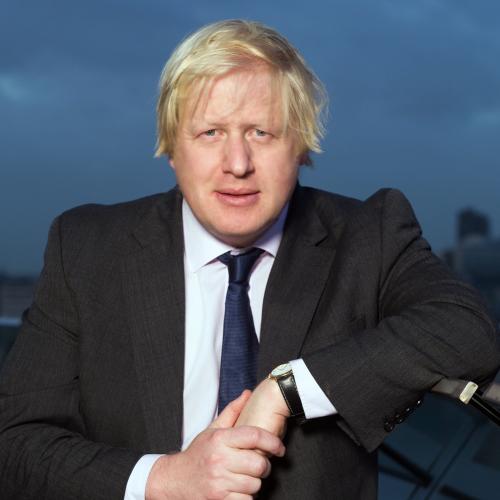
  • Boris Johnson – 2022 Comments on Resignations of Staff

    Boris Johnson – 2022 Comments on Resignations of Staff

    The comments made by Boris Johnson, the Prime Minister, on 5 February 2022.

    This week I promised change, so that we can get on with the job the British public elected us to do. We need to continue our recovery from the pandemic, help hundreds of thousands more people into work, and deliver our ambitious agenda to level up the entire country, improving people’s opportunities regardless of where they’re from.

    The changes I’m announcing to my senior team today will improve how No 10 operates, strengthen the role of my Cabinet and backbench colleagues, and accelerate our defining mission to level up the country.

  • Mark Tami – 2022 Speech on the Glue Traps Bill

    Mark Tami – 2022 Speech on the Glue Traps Bill

    The speech made by Mark Tami, the Labour MP for Alyn and Deeside, in the House of Commons on 4 February 2022.

    First, I would like to put on record my thanks to the hon. Member for Wolverhampton North East (Jane Stevenson) for bringing in this Bill. Particularly as she is a new Member, I hope she will get the Bill through. That would be more than I have done in 20 years in this House, so she will have done incredibly well.

    Following other Members, I feel I must very quickly, before I upset you, Madam Deputy Speaker, mention Muffin, Bobby and Mrs Skittles, who are my cats. I would advise Members to look at the House calendar, because Mrs Skittles features in this month’s photograph. That was organised by the late David Amess, who organised the competition for many years. We certainly miss him in this place.

    My amendments cover two key areas. The first area looks at where a trap is laid and an animal other than a rodent is caught. At present, the wording in the Bill is:

    “A person who sets a glue trap in England for the purpose of catching a rodent commits an offence.”

    I am sure Members of the House are well aware that it is not just rodents that are caught in glue traps—even though that practice, to me, is barbaric in itself. Birds are caught too. They are also probably aware of the tragic situation in which a pet cat was trapped for some time on a glue trap or a number of glue traps and had to be put down. I hope this provision is not a loophole; I am looking at the Minister. I am sure, as we have heard previously, that that is covered in other legislation and that there is not a problem with any loophole in this Bill. Clearly, if people look to get around the legislation by claiming that they are laying traps for a different purpose, that defeats what we are trying to achieve.

    The second area looks at dealing with regulation. Pest control is not a very well regulated industry, and the concern I and a number of others have is that we cannot have a situation in which anybody can designate themselves as a pest controller. I would certainly want some assurances that that is not the case, so that a porter in a hotel or a restaurant—or the owner, or anybody else—could not suddenly describe themselves as a pest controller and have access to glue traps. It is important that the industry is regulated, or at the very least that there are some assurances that this is a person’s profession rather than something they have just decided to do for a period of time.

    I would like those assurances, and if I receive them I will wish the Bill swift progress and will not push the amendments to a vote.

    Jane Stevenson (Wolverhampton North East) (Con)

    I want to speak briefly to the amendments, as it gives me a chance to thank the right hon. Member for Alyn and Deeside (Mark Tami) for all his work on glue traps. He has tabled an early-day motion on these barbaric traps and we share the aim of stopping the cruelty and suffering that, sadly, they cause. I want to reassure him: I have also been contacted by animal welfare charities and believe that clause 1(2) closes the loophole:

    “A person who sets a glue trap in England in a manner which gives rise to a risk that a rodent will become caught in the glue trap commits an offence.”

    I cannot think of a location where a trap could be set even if someone said they were setting it for parrots or for cats; I cannot think of an occasion when another animal could be in a place that could be guaranteed to be free of rodent access. For that reason I did not think that the amendments were necessary, but I appreciate the right hon. Gentleman’s efforts.

    The other points the right hon. Gentleman raises in the amendments give me the chance again to plead with the Minister to make the licensing enforcement regime watertight. I share the concern that people given licences should have to prove a very high level of competence in the ability to dispatch quickly and humanely any animal stuck on a glue trap. I thank the right hon. Gentleman again for his contributions.

    The Minister for Farming, Fisheries and Food (Victoria Prentis)

    I hope I will be able to reassure the right hon. Member for Alyn and Deeside (Mark Tami), and indeed Muffin, Bobby and Mrs Skittles along the way.

    I understand the concern expressed through the amendments on glue traps, as we do want to prevent other small vertebrate animals and indeed birds from falling victim to the traps. The Bill already addresses that in its current wording, however, so the amendments are unnecessary.

    The Bill refers specifically to rodents as they are the primary target of glue traps, which are marketed with catching rodents in mind; however, it would not be a defence for a user to claim that a trap had been set to catch a vertebrate that was not a rodent. If a trap is set in a manner which gives rise to a risk that a rodent will become caught, that is an offence regardless of the intent. It does not matter what was the target or intended target of the trap; if a trap is set outdoors to catch another vertebrate animal, that in itself is an offence, so other vertebrate animals at risk from a glue trap would still be protected by this Bill. It is also important to note that it is already an offence under the Wildlife and Countryside Act 1981 to set a glue trap in any place where a wild bird could be caught.

    Again, I understand the reasoning behind amendments 4 and 5, but the Bill already covers what they seek to address. They might also create difficulties for a future licensing regime. The Bill is drafted to allow a range of licences to be granted in order to ensure that the Secretary of State has the flexibility to grant the most suitable type of licence for the intended use or pest controller. The precise details of the licensing regime will only be worked out following extensive discussions with stakeholders, who will include pest controllers, animal welfare organisations and the licensing body. We do not want to prejudge the outcome of these discussions; however, whatever the form of licence granted, the Bill makes it explicit that licences can only be issued to pest controllers on an exceptional basis.

    The Bill sets out clear limits on the Secretary of State’s power to grant licences to ensure that any licence can only be granted once the Secretary of State is satisfied that the licence is necessary to preserve public health or safety and there is no other satisfactory solution available to meet this purpose. It would not be appropriate further to restrict the type of licence that could be granted, as that might need to reflect a number of variables such as their intended use, the pest controller to whom the licence is to be granted, and the measures that can be taken to safeguard the welfare of any rodents or other animals that might be caught in a licensed glue trap.

    Finally, I turn to amendment 6. Again, I fully understand what the right hon. Member for Alyn and Deeside is trying to get at in the amendment, but I think it is unnecessary, as it would not change the effect of clause 2 and his concerns will be addressed through the licensing regime. The amendment seeks to ensure that the definition of pest controller is worded to apply to a business that provides a pest control service. The current wording—

    “a person…who, in the course of a business, provides a service which consists of, or involves, pest control”—

    amounts to the same thing. I know that he is concerned that a restaurant owner could class themselves as a pest controller. However, we cannot see that a court would agree with that interpretation; indeed, no one would like to think of a restaurant business providing its customers with a service that included pest control.

    Concerns have been raised about the training of those who are granted pest control licences. The Bill will allow licences to be granted only to those pest controllers who can demonstrate the relevant training or competence. We plan for the licensing regime to require that, and we plan to engage with stakeholders in the pest control industry and in animal welfare organisations on how to implement that effectively. I believe these amendments to be unnecessary.

    Mark Tami

    Having heard what the Minister has said, I beg to ask leave to withdraw the amendment.

  • Brandon Lewis – 2022 Statement on the Resignation of Paul Givan

    Brandon Lewis – 2022 Statement on the Resignation of Paul Givan

    The statement made by Brandon Lewis, the Secretary of State for Northern Ireland, in the House of Commons on 4 February 2022.

    I wish to inform the House that Paul Givan has resigned as the First Minister of the Northern Ireland Executive. This decision is extremely disappointing and I want to make it clear that the Government want to see a return to ministerial roles immediately, to ensure the necessary delivery of public services for the citizens of Northern Ireland.

    The Government’s priority is for a strong, functioning Executive delivering a better, more prosperous, shared future for the people of Northern Ireland. We want to continue to build on the Belfast (Good Friday) agreement’s promise of a stable, co-operative power-sharing Executive, built on respectful relationships with a shared commitment to serve all the people of Northern Ireland.

    The last two years since the New Decade, New Approach agreement restored devolved Government in Northern Ireland have demonstrated the potential that can be unlocked when the political parties in Northern Ireland work together. We must not return to a state of political deadlock and inertia.

    The Government recognise the impact that the Ireland/Northern Ireland protocol is having on the ground, and we have been clear for some time that the protocol has been causing a serious unbalancing of the delicate and hard-won political stability in Northern Ireland. We remain fully committed to fixing the problems with the protocol and to protecting the Belfast (Good Friday) agreement in all its dimensions.

    I have spoken to Northern Ireland party leaders and the Irish Government, to encourage a return to stable devolved Government in Northern Ireland. The Government hope that Northern Ireland’s political leaders will quickly take the necessary steps to restore the stability in the devolved institutions that the people of Northern Ireland deserve. In addition, the Northern Ireland (Ministers, Elections and Petition of Concern) Bill currently before Parliament will aid and underpin stability.

  • Maria Caulfield – 2022 Statement on the Essex Mental Health Inquiry

    Maria Caulfield – 2022 Statement on the Essex Mental Health Inquiry

    The statement made by Maria Caulfield, the Parliamentary Under-Secretary of State for Health and Social Care, in the House of Commons on 4 February 2022.

    It is normal practice, when a Government Department proposes to undertake a contingent liability in excess of £300,000 for which there is no specific statutory authority, for the Minister concerned to present a departmental minute to Parliament giving particulars of the liability created and explaining the circumstances; and to refrain from incurring the liability until 14 parliamentary sitting days after the issue of the minute, except in cases of special urgency.

    I have today laid a departmental minute proposing to provide an indemnity that is necessary in respect of a Department of Health and Social Care established non-statutory, independent inquiry into the care and treatment pathways and the circumstances and practices surrounding the deaths of mental health inpatients in Essex.

    The Essex Mental Health Independent Inquiry has been established to investigate deaths which took place in mental health inpatient facilities across NHS Trusts in Essex between 1 January 2000 and 31 December 2020. It will draw conclusions in relation to the safety and quality of care provided locally and nationally to mental health inpatients.

    In January 2021, the Minister of State for Patient Safety, Suicide Prevention and Mental Health announced the establishment of the inquiry—HCWS729, 21 January 2021—to be chaired by Dr Geraldine Strathdee CBE. The indemnity will cover the entire duration of the inquiry’s work, from January 2021 until when the inquiry submits its final report, expected in 2023, and for an unlimited period after that date. However, we believe there is a low risk of the indemnity being called upon beyond five years of the inquiry having reported. The indemnity will cover the chair and all other members of the inquiry team, against any liability, including any legal or other associated costs, arising from any act done, or omission made, honestly and in good faith, when carrying out activities for the purposes of the inquiry in accordance with its terms of reference.

    The indemnity will only apply to acts done or omissions made during the course of the inquiry and will exclude personal criminal liability, negligence or reckless acts. There will be no cap placed upon the indemnity, so the maximum exposure is strictly unlimited. However, any losses are not expected to exceed a value of £3 million based upon the best estimate currently available at this stage of the inquiry’s work. If the liability is called, provision for any payment will be sought through the normal supply procedure.

    The Treasury has approved the proposal in principle. If, during the period of 14 parliamentary sitting days beginning on the date on which this minute was laid before Parliament, a Member signifies an objection by giving notice of a parliamentary question or by otherwise raising the matter in Parliament, final approval to proceed with incurring the liability will be withheld pending an examination of the objection.

  • Chris Philp – 2022 Statement on Modernising Communications Offences

    Chris Philp – 2022 Statement on Modernising Communications Offences

    The statement made by Chris Philp, the Parliamentary Under-Secretary of State for Digital, Culture, Media and Sport, in the House of Commons on 4 February 2022.

    I wish to inform the House that the Government will be accepting the recommended harm-based communications offence, false communications offence and threatening communications offence, as laid out in the Law Commission’s “Modernising Communications Offences” report, published in July 2021.

    The offences will be brought into law through the online safety Bill, which we are committed to introducing to Parliament as soon as possible.

    These new offences will help ensure that the criminal law is focused on the most harmful behaviour while protecting freedom of expression. The current offences are sufficiently broad in scope that they could constitute a disproportionate interference in the right to freedom of expression. The new offences will protect freedom of expression and, in the case of the harm-based offence by increasing the threshold of harm to serious distress, will ensure that communications that individuals find offensive, such as the expression of a view they do not like or agree with, will not be caught. In addition, the court cannot find someone guilty of the harm-based offence or false communications offence if they have a reasonable excuse. A reasonable excuse would include if the communication was or was intended as a contribution to the public interest.

    We have also accepted the Law Commission’s recommendation to include a press exemption within the general harm-based communications offence and the knowingly false communications offence. While we do not expect the new offences will capture communication made by the media, including this press exemption demonstrates the Government’s commitment to upholding media freedom.

    The Government will repeal the existing communication offences, including section 1 of the Malicious Communications Act 1988 and sections 127(1) and (2) of the Communications Act 2003, as recommended by the Law Commission.

    Alongside the online safety regulatory framework, the offences will help deliver the Government’s objective of making the UK the safest place to be online.

    In addition, as the Prime Minister has indicated, we welcome the recommended offence on cyber-flashing and are carefully considering it.

    The report recommends a further three offences. The Department for Digital, Culture, Media and Sport and the Ministry of Justice are carefully considering the remaining offences and accompanying recommendations, including the hoax calls offence, an offence for encouraging or assisting self-harm and an offence for epilepsy trolling. We will continue to assess these offences and issue a full response to the Law Commission later this year.

    I would like to express my sincere thanks for all the work that the Commission has carried out as part of this review over the past four years.