Blog

  • Sajid Javid – 2022 Comments on Visit to East of England Health Facilities

    Sajid Javid – 2022 Comments on Visit to East of England Health Facilities

    The comments made by Sajid Javid, the Secretary of State for Health and Social Care, on 14 February 2022.

    It’s been incredible to see first-hand the astonishing work being carried out by health and social care staff across the East of England, and I’ve enjoyed speaking to local residents and hearing what they would like from our healthcare services as we recover from COVID-19.

    As we continue on the road to recovery, I want to thank everyone in Clacton, Romford, Rochford and the wider region who’ve shared their thoughts and experiences with me and who have given me the opportunity to talk about my mission to reform services so they better serve their needs.

    We know integrated care can help boost recovery times, reduce waiting lists and level up the health of the nation and I was proud to see local services working together in the East of England to achieve this.

  • Edward Argar – 2022 Speech on Ambulance Services

    Edward Argar – 2022 Speech on Ambulance Services

    The speech made by Edward Argar, the Minister for Health, in the House of Commons on 10 February 2022.

    Reflecting the rest of the week, Mr Deputy Speaker.

    I am grateful to the hon. Member for Ellesmere Port and Neston (Justin Madders) for securing this important debate. In the same spirit, this is rather nice; it is like déjà vu: he used to shadow me at that Dispatch Box and in Committee. It is a pleasure to respond to his debate on this occasion.

    However, I must say that responding to the hon. Gentleman is a pleasure slightly tempered by caution on my part, because I know the depths of his expertise on this subject after his many years shadowing the Minister for Health—I think he shadowed my predecessors as well. He has great depth of knowledge in this space. He is and has been a notable advocate for our ambulance service and what it needs, and he looks forensically into those issues. I also know that he is a diligent reader of The BMJ, the Health Service Journal and various other excellent trade and specialist publications. It is a genuine pleasure to respond to him on this extremely important issue. It is a shame that the way in which the House allocates debates means that this is the last debate of the day, so there are few Members in the Chamber for it, because it is important. However, those we have in the Chamber are quality, and I look both at the shadow Minister—sorry, the former shadow Minister—and the hon. Member for City of Chester (Christian Matheson).

    As the hon. Member for Ellesmere Port and Neston highlighted, ambulance services have faced extraordinary pressures during the pandemic. I am sure that the House will join me and the shadow Minister—the former shadow Minister; by force of habit, I keep calling him the shadow Minister. The hon. Gentleman and I have not always agreed, but we have been as one in paying tribute to all those who work in our ambulance services up and down the country. They have done an amazing job over the past two years, during the pandemic, to the very best of their ability. Of course, they do that amazing job day in, day out; irrespective of pandemics, they always do everything they can to support those who need them.

    The hon. Gentleman rightly highlights that the pandemic has placed significant demands on the service. In January 2022, it answered more than 800,000 calls. That is an increase of 11% on January 2020 and is one of the factors placing significant pressures on ambulance services, the wider NHS and the A&E departments to which they will take people when they feel that there is a clinical need. Although 999 calls tend to highlight the demand related to more serious medical conditions, many ambulance services are also responsible for 111 calls, which, in December last year, saw an increase of 15.5% compared with December 2019.

    I use those statistics to illustrate the demand pressures, but I understand that behind those numbers, in every case, lies a human story—someone in need of care, someone worried and anxious, with friends and family anxious for them—so before I seek to go into the reasons, statistics and our plans and support, I want to say that I am sorry for patients who have suffered the impact of those service pressures. I want to be very clear that patients should expect and receive the highest standards of service and care.

    The hon. Gentleman highlighted some specific examples, including the case of Bina Patel. He is right that the right hon. Member for Ashton-under-Lyne (Angela Rayner) has raised that with me. I have asked for full information because I want to get back to her with as full an answer as I can, and I hope that he can convey that to her, if he speaks to her before I do. I am fully aware of her correspondence raising this on behalf of the family.

    Let me turn to ambulance response times and the reasons sitting behind some of the pressures. The ambulance service is facing a range of challenges that are impacting on its performance. The hon. Gentleman will be familiar with many of them, including the impact, still, of infection prevention and control measures not only in the ambulance service but particularly in A&E departments and wider acute clinical settings. Higher instances of delays in the handover of ambulance patients into A&E as a result of some of those factors, which I will turn to, are therefore leading to ambulances waiting for longer in queues and not being as swiftly out and about on the road and able to respond to calls. So there are knock-on effects there.

    One of the key challenges, which the hon. Gentleman will be very familiar with, remains the question of flow through an A&E and through a hospital. I am referring to the flow of patients out of ambulances into the A&E, who are then able to be treated in the A&E and discharged, hopefully, or who are then, in some cases, able to be admitted to a bed in a hospital ward. To do that, we have to see discharges continue of patients who no longer meet the criteria to reside because they have recovered sufficiently, and the national discharge taskforce has done a huge amount of work on addressing that challenge.

    In recent months, we have seen the combined pressures of winter—the hon. Gentleman and I are familiar with those on an annual basis—and the impact of the omicron variant on the number of hospitalisations, which have not been as high as many feared and predicted, thankfully, but which have still had a significant impact on hospital beds. The combination of those factors, coupled with a high level of workforce sickness absence rates, including through positive covid tests—particularly over recent months with omicron—has created pressures that we would not expect to be systemic or built into the system. That partly reflects longer term pressures, and I will move on to what we are doing to address those, but a large element of it is down to the specific circumstances of the past winter.

    The hon. Gentleman touched on the support in place to improve services, and asked what we are going to do about it, and what is being done to address these issues. He is true to form from when he shadowed me, as he will always set out the challenge and ask me what I am going to do or am doing about it, rightly holding the Government to account. Because of the pressures I mentioned we have put in place strong support to improve ambulance response times, including a £55 million investment in staffing capacity to manage winter pressures to the end of March. All trusts are receiving part of that funding, which will increase call handling and operational response capacity, boosting staff numbers by around 700.

    NHS England has strengthened its health and wellbeing support for ambulance trusts, recognising the pressure of the job on those working in the ambulance services, with £1.75 million being invested to support the wellbeing of frontline ambulance staff during the current pressures. NHS England and Improvement is undertaking targeted support for the most challenged hospitals, to improve their patient handover processes, helping ambulances to get swiftly back out on the road. That is focused on the most challenged hospital sites where delays are predominantly concentrated, with the 29 acute trusts operating those sites being responsible for more than 60% of the 60 million-plus handover delays nationally. That is targeted support for trusts that have particular challenges, either from the current situation or where there are underlying issues that we need to resolve.

    There is capital investment of £4.4 million to keep an additional 154 ambulances on the road this winter, and a £75 million investment in NHS 111 to boost staff numbers by just over 1,000, boosting call taking and clinical advice capacity that will better help patients at home, and better help triage those who genuinely need an ambulance and those who can be treated safely in a different context. There is continuous central monitoring and support for ambulance trusts from NHS England’s national ambulance co-ordination centre, and we have also made significant long-term investments in the ambulance workforce. The number of NHS ambulance staff and support staff has increased by 38% since July 2010.

    More broadly, alongside the ambitious plan set out by the Government earlier this week, showing how we will invest the significant additional resources in outcomes for patients, just over a year ago we invested £450 million in A and E departments, to help mitigate the impact through increased capacity of infection prevention and control measures. I have regular direct meetings about discharge rates, and what we can do further to improve the flow of patients through hospital trusts within NHS England, with members of the taskforce on that.

    I am pleased to reassure the hon. Gentleman that those measures have had an impact, and we are seeing improvements in response times from the peak of the pressures in December. Performance data for January, published today, shows significant improvement against all response time categories. Performance for category 1 calls—the most serious calls, classified as life-threatening—has largely been maintained at around nine minutes on average over the past several months, and improved to eight minutes and 31 seconds in the latest figures. That is despite a 19% increase in the number of incidents in that category compared with December 2019. Average responses to category 2 calls improved by more than 15 minutes compared with December, and the 90th centile responses to category 3 calls by more than two hours.

    We recognise that that is welcome progress, as I am sure the hon. Gentleman would agree, but there is much further to go to recover fully from the pandemic’s impact on response times and to sustain that improvement. We welcome the service’s hard work and dedication and pay tribute to it for making those changes and delivering the significant improvements on which I am updating the hon. Gentleman.

    Justin Madders

    As always, the Minister is being courteous and comprehensive in his response. Will he comment on the concern expressed earlier about patients being told, when visited by the service, that they needed to go to hospital but should find their own way there? That is extremely worrying, and we should be clear that it is not what we expect to happen.

    Edward Argar

    I am grateful to the hon. Gentleman—I keep feeling tempted to say shadow Minister; he is a shadow Minister but he is no longer my shadow—for that point. He is right that when people ring 999 they should be given the appropriate clinical advice on whether they need to go to hospital, and if they do, an ambulance should be sent. I suspect that in individual cases a call handler may have made a tough clinical decision about the fastest way to get someone to hospital given the availability of ambulances, but the hon. Gentleman is right that if someone rings 999 and their condition is clinically deemed to require an ambulance and swift transfer to hospital, they should be able to expect an ambulance to come, assist them and take them to hospital.

    At a time when the NHS is facing unprecedented demand, ambulance services are absorbing some of the increase in pressure. They are treating more people over the phone and finding other ways to reduce pressure in a clinically safe way. With clinical support in control rooms, the ambulance service is closing around 11% of 999 calls with clinical advice over the phone. That is far more than the 6.5% achieved in January 2020 and saves valuable ambulance resources for response to genuinely more urgent clinical needs.

    Let me say a little about North West Ambulance Service, if that is helpful to the hon. Gentleman—I know that he and the hon. Member for City of Chester take a close interest in their local ambulance service. Our support and investment has benefited the North West Ambulance Service. The hon. Member for Ellesmere Port and Neston’s local trust received £6.2 million of funding, which it has used to increase its workforce for operational and contact centre teams. The trust is also engaged with regional NHS England and Improvement and commissioning teams to develop a six-point winter plan that seeks to address six key areas throughout the winter period. As it starts to get a little warmer and the daffodils start to come out, it is tempting for people to think that winter has passed, but winter pressures in the NHS can continue into late February and occasionally a bit beyond. I wanted to add that caveat.

    Three systems-led initiatives focus on the reduction of hospital handover times, the improvement of pathways for patients with mental health presentations and ensuring that alternatives to emergency departments—including access to primary care and other non-emergency-department pathways—are available to North West Ambulance Service in a timely and responsive manner.

    Hospital handover delays continue to challenge the North West Ambulance Service footprint. Through its Every Minute Matters collaboration, which began three years ago, the trust has been working with other hospital trusts on improvements by working with senior leadership teams in hospital trusts to ensure there is a shared understanding of the risks of handover delays and a lack of ambulance resources to respond to patients in the community, to revisit action cards for operational commanders and, crucially, to recognise and thank staff for their continued reporting of delays and willingness to highlight problems to their managers or to the trust.

    The trust’s strategic winter plan has been activated and includes details of the measures in place to handle winter pressures and mitigate the effects of increased demand and a loss of capacity. The plan is comprehensive and covers a wide range of topics and details on the preparation for various scenarios. It includes several continuous improvement initiatives for support during the winter period.

    In summary, North West Ambulance Service is increasing its double-crewed ambulance capacity in line with winter funding arrangements, reducing conveyance to emergency departments and reducing the number of lost operational hours caused by day-to-day operational challenges. The trust has already seen significant improvements in the number of patients managed effectively through telephone advice, which helps free up ambulances to be deployed to where they are most needed. The trust has recruited additional paramedics and emergency medical technicians and upskilled its ambulance care assistants to blue light driving standard, thereby enabling the trust to deploy 269 additional frontline staff by the end of December.

    I close by reiterating the Government’s commitment to support the ambulance service. We retain regular contact with ambulance services, trusts and those delivering on the frontline to help to ensure that patients and the ambulance service receive the care and support that they need. I am grateful to the hon. Member for Ellesmere Port and Neston for bringing this matter to the House.

  • Justin Madders – 2022 Speech on Ambulance Services

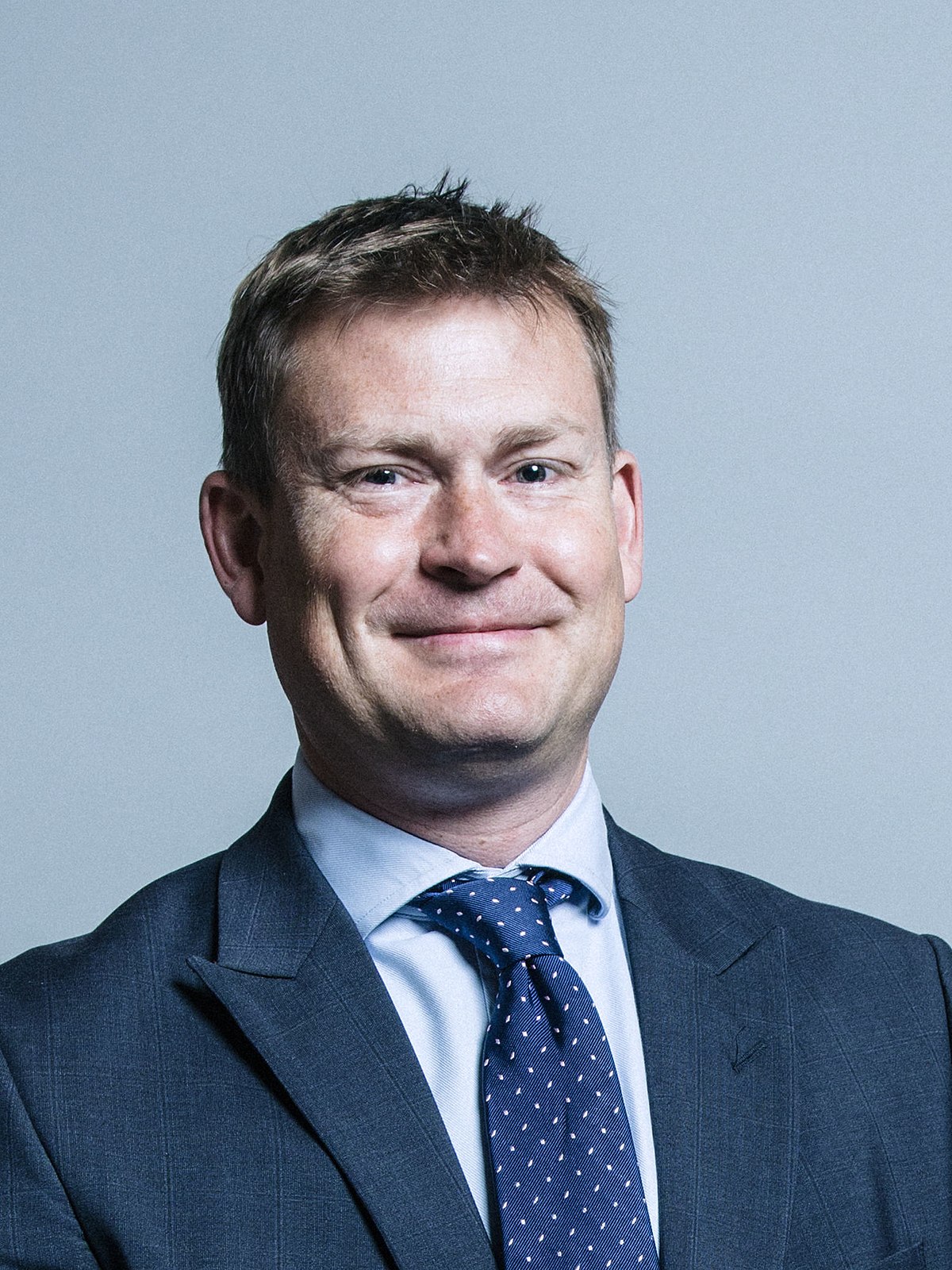
    Justin Madders – 2022 Speech on Ambulance Services

    The speech made by Justin Madders, the Labour MP for Ellesmere Port and Neston, in the House of Commons on 10 February 2022.

    I am pleased to see the Minister for Health, the hon. Member for Charnwood (Edward Argar), in his place. He and I have debated many issues on health and social care over the last couple of years, and ambulance services have perhaps not had the attention that we would have liked. I know the Minister has had an extremely busy week, possibly because of the new trend for Ministers having multiple jobs, so I am grateful that he is here to deal with the points that will be raised.

    It is an important and timely debate. We are regularly seeing images of long delays, with ambulances stacking up outside hospitals for long periods of time. Those images demonstrate wider difficulties throughout the whole system, but on an individual level they mean that patients are not getting the care they need as quickly as they should. The blame for that does not lie with the staff—the paramedics, the first responders and the call handlers—all of whom do a magnificent job in very demanding circumstances. We say thank you for their service, not just in the last couple of years but throughout their time in the NHS.

    Despite their efforts, we are in a crisis. Last week ambulance waiting figures outside hospitals reached their highest level in five years. The latest NHS figures show that record numbers of patients in England—over 150,000 of them—have waited in the back of an ambulance for at least half an hour so far this winter, because emergency departments are too busy to admit them. That is the equivalent of one in every five patients—that is the scale of the challenge that we are facing. Those figures sound extraordinary because they are. They are 14% higher than the previous highest total for the number of patients forced to wait during the same period, with the previous high being in the winter of 2019-20.

    As awful as those headline figures sound, the figures for the number of ambulances waiting more than 60 minutes are even worse: they are up 82% compared with the last two winters. These are exceptional and concerning statistics.

    In my constituency, the British Heart Foundation has told me that it is concerned about reports from the North West Ambulance Service that patient flow in and out of emergency departments is currently very slow, with ambulances being held for long periods, which has the knock-on effect, of course, of causing higher category 1 and category 2 stacks. Worryingly, we have heard reports of delays of up to four hours in these queues.

    I am sure these figures, as shocking as they are, will not surprise hon. Members who, like me, have probably had many emails of concern and complaint from worried constituents. Behind these statistics are tens of thousands of seriously unwell people in dire need of help. As the chief executive of the Patients Association said:

    “Going to A&E can be frightening. To then be stuck in an ambulance unable to get immediate medical help once you get there must add to the trauma of an emergency visit.”

    I think we can all understand where they are coming from. The Royal College of Nursing’s director for England also points out:

    “Having to wait outside in an ambulance because A&E is already dangerously overcrowded is distressing, not just for patients but also for staff, who can’t provide proper care.”

    It must be so frustrating for those staff, knowing there are other urgent calls they could be going to, that they cannot leave their current patient because the hospital is already at capacity.

    I agree with those comments. Not only does having an ambulance stuck outside A&E as it waits to offload a patient mean that it is unable to answer 999 calls, which leads to slower response times, but it means we lose ambulance hours. We lost 8,133 ambulance hours in the last week of January due to crews having to wait outside busy A&Es. That is an incredible statistic.

    As NHS Providers points out:

    “safety risk is being borne increasingly by ambulance services.”

    We know that people are dying in the back of ambulances or soon after their admission to hospital because of these long waits. We heard from ambulance chiefs in November that 160,000 patients come to harm each year because ambulances are backed up outside hospitals.

    The shocking report from the Association of Ambulance Chief Executives, which is based on NHS figures, did not report how many patients die each year because of ambulances stuck outside hospitals, but it did say:

    “We know that some patients have sadly died whilst waiting outside ED”—

    emergency departments—

    “or shortly after eventual admission to ED following a wait. Others have died while waiting for an ambulance response in the community.”

    The report acknowledges that, whether or not those deaths were inevitable

    “this is not the level of care or experience we would wish for anyone in their last moments.”

    The report also highlights that around 12,000 patients suffered serious harm because of delays, sometimes with a risk of permanent disability. In the same month, more than 40,000 people in England who called 999 with a category 2 condition such as a stroke or heart attack waited more than one hour and 40 minutes for an ambulance. Of course, the NHS target is to reach them within 18 minutes.

    Just last week, NHS figures revealed that thousands of people are dying because ambulances are taking too long to answer emergency calls. The official statistics show that only three of England’s 32 ambulance services are reaching a majority of immediately life threatening call-outs within eight minutes. In fact, the latest available NHS England data for December 2021 shows that the average ambulance response time for category 2 emergencies —suspected heart attack and stroke patients—is 53 minutes and 21 seconds: three times the 18-minute target. Those are incredibly worrying figures.

    The British Heart Foundation also reports that there were 5,800 excess deaths from heart and circulatory diseases in England during the first year of the pandemic alone. Although it acknowledges that these excess deaths were driven by a multitude of factors across the entire patient pathway, it also says it is very plausible that some of the deaths could have been prevented if these people had been able to access urgent and emergency care in a timely manner. If we are to avoid more preventable deaths and disability from heart conditions, it is vital that the most critically ill patients can access the care that they need when they need it.

    Perhaps the Minister will be able to say what action has been taken to address the dangerous impact on emergency heart attack and stroke care and the victims whose lives are being put at risk, what conclusions the Department has reached as to why so many trusts are failing to reach the targets that have been set for them, and what steps are being taken to reduce waiting times for responses to 999 call-outs and ambulance waits. We know that these delays matter. If 90% of 999 calls were answered in time, 3,000 more heart attack victims could be saved each year.

    I have reeled off a lot of statistics. Now I want to give a couple of constituency examples to show what this means for people who have experienced long waits. Thankfully neither case ended in tragedy, but these were clearly difficult and distressing times for those involved.

    One constituent told me that she had waited more than 10 hours for an ambulance, having first called 111 at about 10.15 am, when she was advised to call 999. When she called 999, it took a few minutes for the call to be answered. The call handler confirmed that an ambulance would be coming, before asking if it was OK for her to hang up and go on to the next call. About an hour later, having seen no sign of the ambulance, my constituent called 111 again and was told to call 999, but was then told that the ambulance waiting time was about eight hours. At 2.30 pm she was forced to call 999 again, as her husband’s condition was becoming noticeably worse. By that stage he could not move or talk because he was in so much pain. The call handler took the details again, but advised my constituent only to call if the condition worsened further.

    Another three hours passed, with my constituent’s husband in absolute agony. When she decided to call again at 5.30 pm, she waited more than five minutes for the call to be answered. The call handler asked if the patient was breathing, and said that an ambulance could only be sent if a patient was not breathing, as it was a busy day, although he did also confirm that the request for an ambulance had been prioritised after her call at 2.30 pm—which, by that stage, was three hours earlier.

    The ambulance eventually arrived at 8.45 pm, 10 and a half hours after the initial call. Unsurprisingly, my constituent told me that the paramedics were lovely and could see immediately that her husband needed to go to hospital. When he arrived there, he was scanned and treated, and operated on within 24 hours. It was clear that he needed urgent medical treatment; in fact, he probably needed more treatment than he would have needed had he been seen at the right time. However, in the long run, no serious harm has come to him.

    That is just one example of a person who waited longer than they should have. It was not an isolated incident; we know that this is happening week in, week out throughout the country. Another constituent told me that he called an ambulance after his wife collapsed at home. They are both pensioners. My constituent called 999 at 11.45 am, and was told that an ambulance would not be able to attend for at least nine hours. He cancelled the call.

    The Minister will no doubt be aware of the tragic case of Bina Patel, which has received considerable media coverage, and has been raised by my right hon. Friend the Member for Ashton-under-Lyne (Angela Rayner). Anyone who has heard the calls that were made requesting an ambulance, and the clearly urgent nature of those calls, cannot fail to be concerned about what is happening in our ambulance services. As I have tried to emphasise, these are not one-off incidents; they are part of a wider pattern, and symptomatic of a system unable to cope with the demands placed on it.

    Targets are not being met and people are being put at risk or worse, but NHS England’s response is a proposed new standard contract which contains a “watering down” of several waiting-time targets, with standards lower than those that were in place before the pandemic. The proposals include scrapping the “zero tolerance” 30-minute standard for delays in handover from ambulance to A&E and setting it at 60 minutes, and introducing the additional targets that 95% of handovers must take place within 30 minutes and 65% within 15 minutes. I do wonder how performance can be improved if targets are loosened. The pandemic should not be used as a cover for this, as performance across the system was getting worse before the pandemic. Indeed, it is nearly seven years since the normal targets were met. By scrapping standards for delays in handover, the Government are trying to normalise those longer waiting times. My hon. Friend the Member for Ilford North (Wes Streeting) asked the Secretary of State earlier this month whether he really thought it should take an hour just to be transferred from an ambulance into a hospital. It should not take that long. Does anyone really think it is acceptable for people ringing 999 to be told they must make their own way to hospital?

    I am sure the Minister is aware of reports in the Health Service Journal last month that several trusts, most notably the North East Ambulance Service NHS Foundation Trust, advised people calling 999 with symptoms of a heart attack or stroke to take a taxi or a lift with family or friends rather than waiting for an ambulance. I am sure the Minister will want to comment that that is not what we want to be hearing from our ambulance services.

    The British Heart Foundation told me that it recently reviewed two calls to its heart helpline that highlighted instances where patients with suspected heart attacks called 999 and paramedics did attend, but then asked both to have their family drive them to hospital for further tests because the ambulance services in their area were under so much pressure. Neither person actually went to A&E, which is most unfortunate: one did not want to bother their family and the other thought that, if the ambulance was not taking them, their situation must not be urgent enough, which of course was not the case.

    In short, those two patients did not access the care they needed because of the message being sent out about the burden they were placing on the system. That is completely wrong and certainly not the message we should be giving people who are clearly in urgent need of treatment.

    A recovery plan has been announced this week, which, if we are honest, does not really address the issues of the wider NHS and social care pressures. It does not have any real plan for this particular area. The recovery plan, such as it is, is one part of the much wider system overhaul that is needed.

    The Secretary of State said this week that approximately 10 million people represent missing referrals who did not come forward for treatment during the pandemic. I am afraid they may well end up becoming urgent referrals because they have not been through treatment and been spotted and helped at an earlier stage. I do not know whether the Government have given any thought to whether those 10 million missing referrals will lead to increased pressure on emergency services and A&E attendances.

    What about those people whose care was not managed to target? The British Heart Foundation estimates that up to 1,865,000 people with high blood pressure were not managed to target last year, which could mean more than 11,000 additional heart attacks and more than 16,000 additional strokes across England over the next three years if those patients do not get support. Of course, that will again increase pressure on urgent and emergency care services in the longer term.

    I appreciate there is quite a lot of ground to cover here, but when the Minister responds I would be interested to hear his analysis of the situation, whether he believes the examples I have given are part of a wider pattern of concern or isolated incidents, and what he believes must be done to put the ambulance service on a sustainable, safe footing for the long term. Are those images that we have seen of ambulances queuing up outside hospitals a temporary feature of a very difficult winter, problems with the ambulance service in particular, or symptoms of a wider health and social care system that is under incredible pressure?

  • Gillian Keegan – 2022 Statement on the Mental Health Strategy

    Gillian Keegan – 2022 Statement on the Mental Health Strategy

    The statement made by Gillian Keegan, the Minister for Care and Mental Health, in the House of Commons on 10 February 2022.

    This week, the UK has marked Children’s Mental Health Week with the theme of “growing together.” I am grateful for the brilliant work of our vibrant voluntary and community sector, who are encouraging children and young people to take action to look after their mental health and learn how they can support others.

    Across the country, we are talking more about our mental health and wellbeing than ever before. Thanks to the trailblazing courage of campaigners in the public eye, and thousands of quiet conversations in homes, schools and workplaces, more and more people now feel comfortable opening up about their mental health.

    Over 4 million people have used our Every Mind Matters resources to make a tailored mind plan to help them take active steps to look after their wellbeing. Initiatives like “Thriving at Work” have driven improvements to workplace wellbeing. The NHS is offering care and support to more people with mental illnesses than ever before, backed by record levels of investment, workforce expansion and the advancing mental health equalities strategy. And we are reforming the Mental Health Act to improve care for people who are acutely unwell and to address ethnic disparities in detention rates.

    Since March 2020, the wide-ranging effects of the pandemic and the impacts on mental health have fostered a strong spirit of innovation in the NHS and collaboration across Government. The Government published a cross-Government covid-19 mental health and wellbeing recovery action plan for 2021-22 in March 2021, backed by an additional £500 million. As part of this additional investment, we are accelerating the roll-out of mental health support teams in schools and colleges so that an estimated 3 million children and young people (around 35% of pupils in England) will be covered by these teams by 2023.

    But I know there is much more to do. That is why I am announcing my intention to develop a new long-term, cross-Government mental health strategy in the coming year.

    The Government will launch a public discussion paper this spring to inform the development of the strategy. This will set us up for a wide-ranging and ambitious conversation about potential ways to improve the nation’s mental health and wellbeing over the coming decade, both within and beyond Government and the NHS. We will be engaging widely, especially with people with experience of mental ill-health, to develop the strategy and build consensus. I will be calling on all parts of society—including teachers, businesses, voluntary organisations, and health and social care leaders—to set out their proposals for how we can shift the dial on mental health.

    Alongside this, preventing suicides is a key priority for this Government. I am acutely aware that suicide prevention requires specific, co-ordinated action and national focus, and I am committed to working with the sector over the coming year to review our 2012 suicide prevention strategy for England. I am today announcing around an additional £1.5 million to top up our existing £4 million grant fund, which will help support the suicide prevention voluntary and community sector to meet the needs of people at risk of suicide or in crisis.

  • Nadine Dorries – 2022 Statement on News UK Undertakings

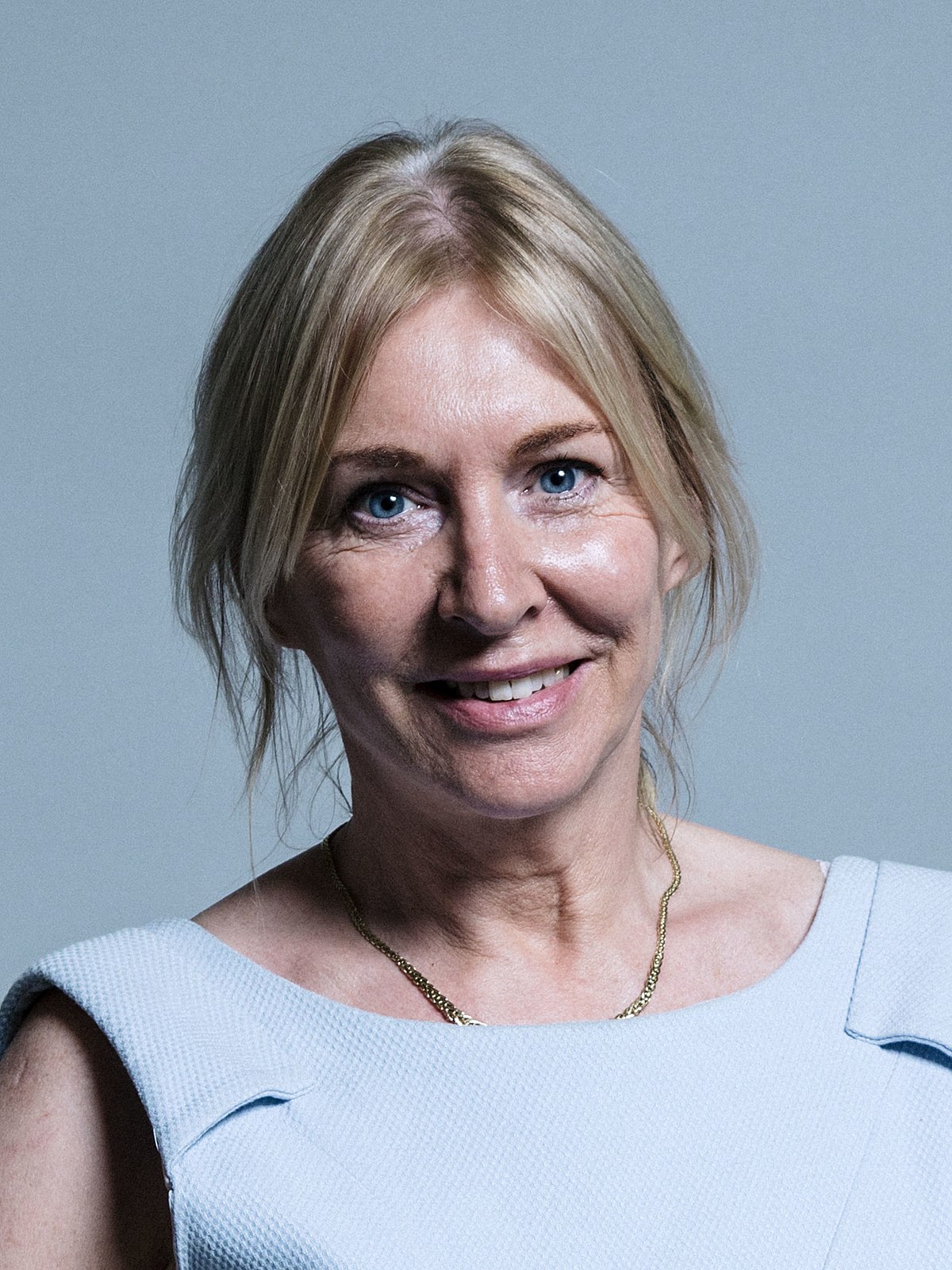
    Nadine Dorries – 2022 Statement on News UK Undertakings

    The statement made by Nadine Dorries, the Secretary of State for Digital, Culture, Media and Sport, in the House of Commons on 10 February 2022.

    On 1 February 2021 News UK submitted an application requesting the Secretary of State to release in full the undertakings accepted in 2019. The 2019 undertakings were accepted in lieu of the conditions put in place when the newspapers were acquired by News International in 1981.

    The conditions included provisions relating to the continued publication of The Times and The Sunday Times as separate newspapers, to the number and power of the independent national directors of Times Newspapers Holdings Ltd, and to editorial control over the journalists working for, and political comment and opinion published in, each of newspapers.

    The undertakings accepted in 2019 made changes to the conditions, to allow for sharing of journalistic resources between the two publications and to strengthen the arrangements relating to the independent national directors. News UK now seeks the release of the undertakings in their entirety.

    On 24 June DCMS issued a public “invitation to comment”, which included a redacted copy of the application, and the written views received from the editors and independent national directors. On 30 July, DCMS requested Ofcom and the Competition and Markets Authority to advise by 24 September on the public interest considerations and changes to market circumstances relevant to the case, respectively. The CMA’s report concludes that releasing the undertakings would have a significantly positive impact on News UK’s financial position and ability to adapt to changing market conditions. Ofcom’s report concludes that the impact on media plurality of releasing the undertakings is likely to be limited and that, on balance, releasing the undertakings is unlikely to operate against the public interest needs for free expression of opinion and accuracy of news.

    On 25 November, acting in a quasi-judicial capacity, I announced that, having taken into account the reports and all relevant information submitted to the Department, I was minded to grant the request by News UK and release the undertakings. I consulted publicly on this minded-to decision and did not receive any further evidence relevant to my decision. I therefore confirm that I am satisfied that there has been a material change of circumstances since the acceptance of the undertakings in 2019 and that, having considered the public interest considerations applying to newspapers, the undertakings are no longer appropriate or necessary for the purpose they were intended to achieve and so should be released.

    In accordance with the Enterprise Act 2002, I have taken a final decision to approve the application and will notify News UK that the undertakings relating to The Times and The Sunday Times are to be released.

  • Ben Wallace – 2022 Statement on Ukraine

    Ben Wallace – 2022 Statement on Ukraine

    The statement made by Ben Wallace, the Secretary of State for Defence, in the House of Commons on 10 February 2022.

    Further to my commitment to keep this House informed on the security situation in Ukraine, I am today providing an update on the package of defensive equipment the UK is sending to Ukraine.

    I can today announce that, in response to a request from the Ukrainian Government, we are providing additional defensive equipment including body armour, helmets and combat boots. The first shipments arrived in Kyiv this week. They are a purely defensive capability and pose no threat to Russia. This package, requested by the Ukrainians, complements the training and capabilities that Ukraine already has and those that are being provided by the UK and other allies in Europe and the United States.

    The UK Ministry of Defence has a long-standing relationship with our Ukrainian counterparts. We unequivocally support Ukraine’s sovereignty and territorial integrity, and we will continue to support them through diplomacy and by providing defensive capabilities to Ukraine, focusing on areas where the Ukrainians seek our assistance.

  • John Glen – 2022 Speech to TheCityUK Annual Dinner

    John Glen – 2022 Speech to TheCityUK Annual Dinner

    The speech made by John Glen, the Economic Secretary to the Treasury, on 10 February 2022.

    Good evening everyone.       Thank you to Miles and Sir Adrian for those words of welcome.

    I’ll also echo that tribute to Sir Adrian as he comes to the end of his term as Chair of The City UK’s Leadership Council.

    Over the years we’ve worked together, I’ve seen how you’ve been a tireless advocate for financial services, as well as a galvanising force…encouraging the industry to use its full strength to change society for the better.

    So, thank you for all you’ve done and I wish you the very best for the future.

    And may I say it’s a pleasure to speak to you all tonight. Naturally it’s even more of a joy to do so in person instead of from behind a computer screen.

    When I saw The City UK dinner was going to be held in Leicester Square this year, I couldn’t help but take a moment to reflect on this place’s history.       While today we think of the Square largely as a location for film premieres…back in the 18th century it was something of an artists’ enclave.

    In fact, Sir Joshua Reynolds and William Hogarth both had homes here.   While Sir Joshua painted portraits of near photographic quality of his aristocratic subjects…

    Hogarth specialised in depicting, the let’s say, rather less refined side of London life.

    No-one escaped his piercing satirical gaze – and I’m afraid to say that included politicians.

    And I’ll leave it to you to decide whether any of my Westminster colleagues would have given him any inspiration…

    But I do think the fact that these two extraordinary artists, with such different styles and approaches, could be found living so close to one another at roughly the same time…illustrates in microcosm, the originality, ingenuity and diversity of thought that has for so long been a characteristic of this country…

    …and that is ingrained in our cultural and commercial life to this very day.

    And financial services is no exception, because there can be no doubt that creativity and dynamism is in your DNA.

    You’re integral to this country’s prosperity and economic well-being.

    But more than that, you’re also masters of innovation.

    As I’ve said before, financial services is so much more than skyscrapers and the Square Mile.

    From levelling up to the journey to net zero – you have a part in overcoming some of the biggest challenges facing this country and the world.

    Equally, you have an important role in helping this country seize the opportunities that will emerge over the years ahead.

    That’s why, the Chancellor and I have been very much focused on ensuring your industry doesn’t only shine, now we’re outside the EU…but is at the vanguard of a new era of economic growth for this country.

    New Chapter update   

    As you might recall at Mansion House last year, the Chancellor set out his vision for turning the UK into the most dynamic financial services sector on the planet.

    A sector that is open, at the forefront of technology, a global leader in green finance and that is competitive.

    We’re fast turning this vision into reality. Over the past months we’ve implemented a whole host of measures:

    We’re achieving our goal of a more open sector, with the ground-breaking mutual recognition agreement we’re negotiating with Switzerland – in fact a fortnight ago I was pleased to meet with His Excellency Ambassador Leitner, who is here tonight, to keep up the momentum. And we’ve also signed an agreement in principle on a Digital Economy Deal with Singapore.

    Our ambition had been, of course, to reach a comprehensive set of mutual decisions with the EU, but this has not happened.

    Nonetheless, as I’ve said in the past, the EU will never have cause to deny us access to its markets because of poor regulatory standards.

    We’re also moving apace on our work to put the UK financial services at the forefront of technology. We’ve announced a series of policies that will make our fintech industry the most advanced in the world, including new visas, so businesses can attract and secure the very best of global talent.

    And while all this work is underway, my Treasury team has been busy preparing the legislation we need to change the rulebook we inherited from the EU.

    I’m told that between the Chancellor’s Mansion House Speech and the end of this quarter we will have published no less than 30 consultation and review documents, covering the whole spectrum of financial services. Though, having reviewed them all, it feels at least double that!

    To maintain our impetus here – from this Summer – we’re going to publish an annual review of UK financial services competitiveness, with the City of London Corporation.

    This will monitor progress across a host of metrics – and will reflect feedback from businesses on what’s going right and where we can make improvements.

    Of course, much thanks must go to you all for supporting our work.

    Because whether you’ve shared your thoughts on access to cash, payments or on capital markets, it’s your informed contributions that are helping us to maintain our world-leading edge.

    Future Regulatory Framework Review

    However, tonight, I want to shine a light on a specific policy area:  Our efforts to develop a regulatory framework for life outside the EU.

    In November we set out a series of major proposals, explaining how we would do this. The consultation closed yesterday and I am pleased to say there were over 100 hundred responses – which the Treasury will be considering in detail.

    And I want to briefly talk about three key areas of focus for us in this space.

    Regulatory independence and accountability  

    First, I’ll turn to independence and accountability.

    In the almost four years I’ve been in this job, I’ve seen the world of financial services change dramatically.

    There’s been the growth of AI, the take-off of quantum computing, while the cryptoasset industry has hugely expanded. And the attitudes of consumers and businesses’ alike towards Green Finance have transformed.

    Clearly, in future, the way we regulate needs to adapt to reflect this rapid pace of change.

    As I’ve said previously, this doesn’t mean endlessly tweaking rules, or making changes for the sake of it.

    But we should also remember that better regulation gives us a competitive advantage in itself. Therefore, we shouldn’t hesitate to remove or reform those rules that aren’t working.

    In addition, we should empower our regulators to act creatively and purposely, when necessary, within a framework and guardrails set by government and Parliament.

    Regulatory independence must, of course, be at the heart of this model.

    But it is critical that this independence is balanced with clear accountability, appropriate democratic input and transparent oversight.

    Quite frankly it wouldn’t make sense for the UK to take back control of our regulatory framework, simply to replace the European Commission with regulatory bodies that are not subject to suitably democratic scrutiny or primed and proactive – ready to address evolving market needs.

    And that’s why, in our consultation, we proposed enhanced mechanisms to support Parliament in its role of holding the regulators to account.

    As the regulators take on their new responsibilities, we believe their relationship with the Treasury must be strengthened too.

    This is something that will help make sure that wider public policy considerations are factored into decision-making, where this is appropriate and consistent with their regulatory independence.

    In addition, to complement the regulators’ existing consultation requirements, we’ve proposed extra measures to boost transparency. These will ensure our regulators are informed by a diverse range of voices, allowing for greater consideration of any proposed reform’s potential costs and benefits.

     Competitiveness   

    Secondly, as well as giving our regulators more rule-making powers, we’ve also proposed providing them with a new secondary objective.

    This will require them to advance long-term UK economic growth and competitiveness, including for the financial sector.

    Our focus on competitiveness and long-term growth is nothing new.

    When we were part of the European Union Ministers and MEP colleagues would regularly bang the drum in Brussels for the EU to consider these issues.

    There were many long hours at EU Summits, seeking to restrain regulations which risked stifling innovation or adversely impacting our financial markets.

    Our views didn’t always win out. But we did succeed in making sure these factors were at least properly considered.

    Now, as the regulators take on responsibility for setting rules once we repeal retained EU law, we think it’s right that their objectives reflect financial services’ critical role in supporting the economy.

    I should point out that many of our global counterparts, like Australia, Hong Kong, Singapore, and Switzerland have embedded similar approaches in their frameworks.

    However, I am very clear that this new objective must not conflict with the regulators’ primary focus: the need to ensure safe and sound firms, well-functioning markets and to protect consumers and promote competition.

    Because make no mistake. The UK will never compromise on standards or our reputation as a global financial centre.

    Our competitiveness is based on strong regulators, high standards, and reliable interventions.

    That’s why we have taken a balanced approach and chosen to introduce this new objective as secondary.

    This provides clarity – you might say a clear hierarchy – when there may be a tension between regulators’ various objectives.

    Agility

    The Chancellor and I believe that transferring responsibility for rule-making for retained EU law to our regulators should enable a newfound nimbleness, that will ultimately benefit financial services.

    And this brings me to my third point – agility.

    Our proposed approach will enable our regulators to become increasingly responsive, with greater capacity to respond quickly to new challenges and effectively tailor rules to better fit an evolving markets’ needs.

    Let me give some examples:

    First, this new agility will allow a reduction in the regulatory burden faced by smaller banks and building societies – institutions that are a mainstay of our financial system but pose less systemic risk.

    Right now, the PRA is developing Strong and Simple – its new regime that will introduce a more proportionate regulation for these organisations.

    Second, this newfound nimbleness will also support the work underway to reform our wholesale capital markets regime, so that these regulations work for our sophisticated financial sector.

    Third, greater agility for our regulators will help us take forward the recommendations from the Listings Review, carried out by Lord Hill, who I’m delighted to see here tonight.

    This will enhance our position for IPOs, attract the world’s most innovative and successful businesses, and help firms access the finance they need to grow.

    And finally, this nimbleness will allow us to build on the success of our world-leading asset-management industry:

    Our UK Funds Regime Review has already supported the introduction of the Long Term Asset Fund and reforms to the tax treatment of asset holding companies and Real Estate Investment Trusts.

    And this morning, we made more progress when we set our intention to take forward proposals that will build an even stronger asset management sector.

    Concluding Remarks   

    Ladies and Gentlemen…

    As I’ve outlined tonight, we’re at the cusp of a new future for your industry.

    But we know that if that future is going to fulfil its true promise we need to act swiftly. So, we are doing just that, as we focus on adding colour, detail and life to our plan for financial services.

    I can assure you that there will be no complacency. My work will never be complete.

    Be under no illusion. These are genuinely transformative changes. They will remodel the way we regulate and govern our world leading financial services sector. They will cement our reputation as one of the safest and most competitive places for this industry on the planet. And ultimately, they will propel our sector ahead of its global peers.

    But, of course, we cannot do all this without you. As I said earlier, your wisdom and insight is going to be critical, so please do continue the conversation with me and my Treasury team.

    So it only remains for me to thank you for listening to me tonight and for all you do for this country.

    Thank you very much.

  • Boris Johnson – 2022 Speech to One Ocean Summit

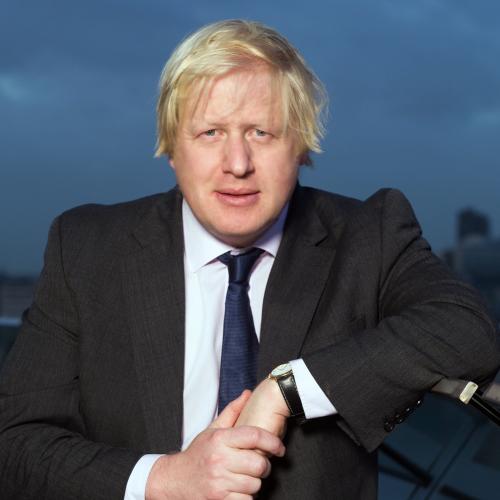
    Boris Johnson – 2022 Speech to One Ocean Summit

    The speech made by Boris Johnson, the Prime Minister, on 11 February 2022.

    Standing on a Cornish beach with President Macron last summer, one could not help but be struck by the majesty of the ocean before us, and its importance to all our lives.

    Because the nations of the world are not separated by seas and oceans – we are bound together by them.

    Whatever our stage of development, whatever our system of government, the same briny waters lap at all our shores.

    And we all have a duty to help them thrive.

    It’s a duty the UK takes extremely seriously.

    It’s why we’ve committed half a billion pounds to help developing nations protect their seas and coasts.

    Why we’ve thrown a Blue Belt around 2.5 million square miles of ocean.

    And why, I can announce today, the UK will be joining the High Ambition Coalition on Biodiversity beyond National Jurisdiction.

    Because it’s vital that we all step up and meet our obligations to the marine environment under the Convention on the Law of the Sea.

    And that won’t happen unless we agree a treaty to protect the vast expanse of water

    – something like 60 per cent of it –

    that falls beyond the borders of any one nation.

    At COP26, I stressed the need for the world to raise its ambitions with respect to our oceans.

    So I’m delighted that President Macron has convened this summit.

    And I hope it kicks off a year in which the world comes together in support of the seas that surround us, the flora and fauna within, and everyone around the world whose livelihoods depend on thriving, clean, and sustainable oceans.

  • Nigel Huddleston – 2022 Comments on Providing Free Holidays to 800 Families

    Nigel Huddleston – 2022 Comments on Providing Free Holidays to 800 Families

    The comments made by Nigel Huddleston, the Tourism Minister, on 12 February 2022.

    Holidays provide a vital opportunity for people to reset, spend quality time together and improve their mental wellbeing. But for many families taking a break can be impossible.

    Following the challenges of the Covid-19 pandemic, we are helping families facing particularly tough times to have a much-needed break while supporting our brilliant tourism and hospitality sector.

  • Jonathan Reynolds – 2022 Speech on the Labour Party and Business

    Jonathan Reynolds – 2022 Speech on the Labour Party and Business

    The speech made by Jonathan Reynolds, the Shadow Business Secretary, on 10 February 2022.

    Good morning, and thank you all for making the time to come here today.

    There is a lot of talk at the moment about the Government falling apart.

    But, we know on our side, that the test of whether there is a Labour Government after the next election, rests not on the dysfunction of the Government, but on the positive agenda we will put forward.

    That is what I want to talk to you about today.

    Can I thank you Bob for those kind words of introduction, and UK Finance for hosting us today.

    To be appointed as Labour’s Business Spokesperson is a job I have always wanted, and I intend to make the absolute most of it.

    I loved my time working as the Shadow Economic Secretary and the relationships that I built doing that.

    But this job is also a personal one for me.

    I’ve grown up and lived in the places that felt the big industrial changes of the 1980s and 90s.

    I’m talking about Sunderland, where I was born and went to school, and Tameside in Manchester, where I’ve lived my adult life and which I represent in Parliament.

    But many of you are from or know places like these.

    I don’t like the phrase ‘Red Wall’, but there’s a reason that term has been so widely adopted

    It encompasses an important feeling held by many

    That they have lost out to industrial change.

    But whatever phrase you want to use, the challenge for any Government in areas like Sunderland or Tameside or in any part of the country is how to create and keep good jobs in the area.

    How to build industries that will last into the future and succeed across the world

    And I think that the personal experience and knowledge that I have, is an asset in trying to do that.

    Business needs, and deserves, a partner in Government that can deliver those opportunities

    That is not what we’re getting from the Government at the moment.

    Where they have failed to show leadership, Labour is ready

    What I what to set out to you today, are our plans for that partnership with business

    the political economy a future Labour Government would adopt;

    and why we believe these are essential to the next Labour Government achieving its goals.

    I want to start with a candid recognition that Labour’s relationship with business hasn’t been as good as it should have been over the last decade.

    Labour’s good relationship with business was once known as the ‘the prawn cocktail offensive’.

    Many of you have told me that in the last few years, you felt it was just plain ‘offensive’.

    I understand that.

    But let me tell you how I see things.

    82% of all the jobs in this country are in the private sector.

    Unless any political party has a clear plan for making sure successful businesses are founded, and growing, in every part of the country, they won’t be a successful government.

    At any time in the last 11 years that I have been an MP for, if anyone contacted me to say they might potentially be looking to bring jobs, and growth and opportunities to my constituency, I would drop everything and try make that happen.

    My approach as Business Secretary, would be no different on a national level to that local ambition.

    That’s what I mean when I say Labour is now a pro-business, pro-worker, political party.

    A real example of that approach by the way, can be found in the life and tributes paid to my late friend Jack Dromey.

    Jack was my Pensions spokesperson when I shadowed the DWP.

    Jack fought for good jobs and working conditions his whole life, but he was also a champion of British manufacturing, British engineering and British industry as a whole.

    The most moving tributes to him, came not just from the trade unions and the TUC., but also from trade bodies and business leaders.

    And we miss him a great deal.

    Let me be clear, wanting businesses to succeed does not mean accepting, or cosying up, to people nobody should want to get cosy too.

    I was a member of the Business Select Committee when we did an investigation into Sports Direct.

    It got a lot of attention at the time and rightly so.

    I will never accept the exploitation or abuse of working people.

    But I know the vast majority of businesses don’t accept these things either.

    The overwhelming majority of successful businesses are successful because they care about their workforce, their customers, and the communities they are part of.

    So when I say that a future Labour Government believes a strong relationship with business is essential,

    It’s not positioning,

    It’s not messaging,

    Its not moving away from traditional Labour values of fairness and equality –

    it’s a recognition of what is really required to deliver those values in practice.

    But I also want to say something else.

    Which is that being pro-business does not mean you’re for the status quo.

    That somehow you don’t have ambitions to change things, to shake things up.

    I’m not happy with our performance as a country.

    Far from it.

    I think this country needs a significant change of direction to deliver the kind of living standards and public services we all rightly expect.

    The state of the economy, right now, under the Conservatives is as alarming as it possibly could be.

    Almost every economic indicator is heading in the wrong direction.

    Growth is weak;

    Productivity is appalling;

    Inflation is high;

    Poverty and inequality are rising;

    And for most workers the promise of rising wages post-Brexit has simply not happened.

    The only way to higher wages, is better productivity. It was facile of the Government to believe it could get there, simply by restricting freedom of movement.

    We’ve left the Single Market, increasing costs for a lot of UK businesses, with little by way of mitigation.

    And we can’t move on as quickly as we should, because the Government claims it didn’t understand what its own deal meant for Northern Ireland.

    And in response to these significant issues, the Prime Minister doesn’t even feel the need to do some basic preparation, before he makes a keynote speech to the CBI.

    So the status quo should satisfy nobody.

    I believe the UK needs big reforms to turn this position around.

    And my offer to businesses is work with us on this reform agenda to do exactly that.

    Thanks to my colleagues in the shadow cabinet, we have already started this work.

    Firstly, Rachel Reeves’ pledge to replace business rates not only means a fairer split between bricks and clicks, but that we will use the proceeds from an increase in the Digital Services Tax, and then the global minimum corporation tax agreement, to make business taxation fairer, more transparent, and more supportive of investment and entrepreneurship.

    This is especially true for smaller businesses, of which more will be exempt entirely due to our proposed rise in the threshold for small business rates relief.

    Secondly, our climate investment pledge means we can offer to partner with businesses to deliver net zero.

    A great example of this is our plan for Green Steel, where we would provide the capital investment to make steel produced in the UK greener and more competitive with the rest of the world.

    This to me is what sound industrial policy looks like.

    Not picking winners

    but the public and private sectors working together to meet clear public policy objectives in a transparent, cost-effective way.

    This is the political economy a Labour Government would operate.

    My aspiration is that the next Labour manifesto will be packed with pledges on science, investment, rates reform, skills, and infrastructure that will provide the foundation for a new era of prosperity and national success.

    And that means taking a longer view than just one Parliament or election cycle.

    It means embedding a new consensus in our law and corporate governance that ensures businesses have the certainty they need to invest for the long term.

    That means bringing back an Industrial Strategy, and giving it a solid, statutory, institutional footing so businesses know the fundamentals will continue from one Govt to the next.

    It means increasing R&D spend to 3% of GDP

    And it means ensuring the balance is right between returning value to shareholders and businesses being able to invest for long term success.

    To conclude, I believe the view of business I’ve just outlined is rooted in Labour’s values

    And I believe those values are shared by business

    At the start of the year Keir laid out his contract with the British people, based on: security, prosperity, respect.

    Business provides security, for individuals and families and the communities they are part of.

    Business generates prosperity, and it could generate a lot more with a better government.

    That’s why you, and the people you employ, will always have my respect.

    Already, in the first few weeks of this job, I’ve been able to get out and see some incredible things we are doing in the UK.

    Electric cars in Sunderland, new innovative glass products in St Helens, Hydrogen being made in Sheffield.

    Things that are truly world class, and genuinely exciting for the future.

    With success like that, there is no reason why the UK should be looking at forecasts of anaemic growth, poor productivity, and ever higher taxes on working people.

    I believe we can do better.

    And our best days are ahead of us.

    And I look forward to our partnership to make that happen.

    Thank you.