Blog

  • PRESS RELEASE : Volodymyr Zelenskyy met with the heads of governments of Poland, the Czech Republic and Slovenia in Kyiv

    PRESS RELEASE : Volodymyr Zelenskyy met with the heads of governments of Poland, the Czech Republic and Slovenia in Kyiv

    The press release issued by the President of Ukraine on 16 March 2022.

    President of Ukraine Volodymyr Zelenskyy met with Prime Minister of Poland Mateusz Morawiecki, Deputy Prime Minister of Poland Jarosław Kaczyński, Prime Minister of the Czech Republic Petr Fiala and Prime Minister of Slovenia Janez Janša who arrived in Kyiv.

    The President of Ukraine thanked the heads of government of Poland, the Czech Republic and Slovenia for the support their countries provide to Ukraine, as well as for their personal visit to Kyiv.

    “At a time when many ambassadors have left Ukraine in connection with the full-scale invasion of the Russian Federation, these dignitaries, leaders of their beautiful independent European states, fear nothing, care for our fate more, and they are here to support us. This is a great courageous, correct and friendly step. And I am sure that with such friends, with such countries, with such neighbors and partners, we will really be able to win,” Volodymyr Zelenskyy told reporters after the meeting.

    The President noted that the talks focused on security guarantees for Ukraine, strengthening sanctions against the aggressor state, as well as the prospects of Ukraine’s membership in the European Union.

    The interlocutors also touched upon plans to rebuild our country after the end of hostilities. In this context, international assistance in replenishing the relevant reconstruction funds already established by the Ukrainian government is important.

    “We know for sure that everything we are discussing will reach the positive goal for our country, our security and our future,” the President stressed.

  • PRESS RELEASE : Research shows Londoners are worst affected by soaring inflation

    PRESS RELEASE : Research shows Londoners are worst affected by soaring inflation

    The press release issued by the Mayor of London on 22 August 2022.

    • New City Hall analysis shows Londoners are experiencing higher inflation for local goods and services than the average across the UK
    • Local food and rental asking prices driving London’s underlying inflation
    • Low-paid Londoners face double threat of slow pay rises and rising inflation

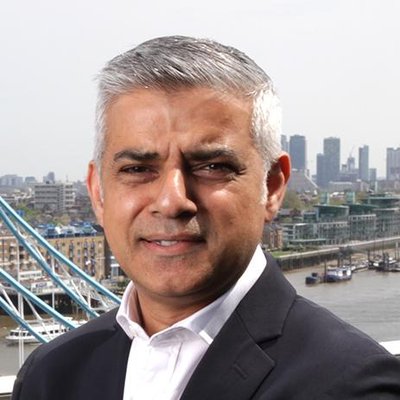
    The Mayor of London, Sadiq Khan, has warned that low paid Londoners are being hit harder by the cost of living crisis than other parts of the UK, as new City Hall research suggests that London is experiencing faster underlying inflation in some areas.

    The UK’s rate of inflation jumped to 10.1 per cent in July, the first time it has registered a double-digit annual increase in more than four decades, and Bank of England projections point to inflation accelerating further later this year. However, over the last six months, underlying inflation for local prices in London has consistently been found to track 1.5 percentage points higher than the national figure.

    Rising local food costs is one of the key pressures pushing the capital’s underlying inflation above the national average. This will affect Londoners on the lowest incomes the hardest as they spend a larger proportion of their income on food.

    London rental prices are also a major factor: the Rightmove Rental Price Tracker (1) indicates asking rents for new rentals in London are growing faster than anywhere else in the UK, up as much as 15.8 per cent annually in the last three months. This inflationary pressure will only grow as more people renew or move out of contracts that may have been kept at a lower price for longer due to the pandemic.

    However, Londoners spend less on energy compared to their counterparts in the rest of the UK due to warmer weather and smaller property sizes due to high housing costs, though they are of course still severely affected by inflation.

    Meanwhile, London continues to see an uneven pattern of pay growth, with mostly high-paying jobs seeing the fastest wage growth, and lower-paying sectors seeing slower growth. Whilst sectors such as finance, ICT and science and technology have seen median pay grow by more than 17 per cent in London since 2019, sectors with low median pay have seen much smaller pay rises, which will likely be rendered as pay cuts in real terms when inflation is accounted for (Table 1).

    Research from YouGov published last week (2) found 20 per cent of lower-income Londoners have regularly or occasionally gone without food or essential items or relied on outside support in the last six months. The number of Londoners being hit by the rising cost of living is also going up every month, with nearly a third saying they are ‘just about managing’ and almost one in five ‘financially struggling’.

    Those being hit the hardest and most likely to say they are financially struggling are Asian and Black Londoners, those with an income of less than £20,000, renters and Deaf and Disabled Londoners.

    Sadiq has suggested a range of measures the Government should implement now to ease the cost of living crisis for Londoners.

    These include:

    • The introduction of an energy ‘Lifeline Tariff’ for the most vulnerable Londoners, providing the minimum energy needed for a household to function for free, with any charges kicking in only once a minimum use threshold had been met. This would be a major step towards helping ensure people would not need to choose between heating and eating this winter.
    • Introducing a two-year rent freeze for London’s 2.4m private renters, which would act as a first step towards devolving full rent control powers to cool London’s overheated private rental sector. City Hall analysis shows a rent freeze in the capital over two years would save renters an average of £2,988.
    • Extending the provision of healthy free school meals to all primary school children during term-time with free meal vouchers available for those in most need during the school holidays. As well as helping all families with the cost of living, research shows that making free school meals universal helps reduce stigma and therefore boosts take up among families who need them most.
    • Restoring the £20 Universal Credit uplift, which Ministers removed in September last year, pushing 130,000 more Londoners into poverty. The Mayor is also calling for all benefits to be raised in line with inflation and all caps to be removed to help cut poverty in London and across the UK.

    The Mayor of London, Sadiq Khan said: “This new report shows in black and white that millions of low paid Londoners are living on the front line of the cost of living crisis.

    “I’m doing all I can to support Londoners, but we need the Government to step up. This must include doing more on energy bills to ensure no one has to make the choice this winter of heating their home or eating, increasing benefits in line with inflation, and giving me the power to implement rent controls in London.

    “Whoever becomes the next Prime Minister must make tackling the cost of living for Londoners – and people across the country – their top priority.”

  • PRESS RELEASE : Mayor launches new nature trails to connect Londoners to green spaces

    PRESS RELEASE : Mayor launches new nature trails to connect Londoners to green spaces

    The press release issued by the Mayor of London on 23 August 2022.

    ·         Four new London Nature Trails provide walking routes to connect natural spaces in the city’s most built up areas

    The Mayor of London, Sadiq Khan, has launched four new London Nature Trails for Londoners to enjoy over the August bank holiday weekend.

    The new walking routes connect natural spaces in the city’s most built up areas via green “corridors”, such as waterways and tree-lined streets to promote the health and wellbeing benefits of spending time in nature. The Covid-19 lockdown highlighted how vital it is for Londoners to have access to green spaces for good health and wellbeing. These walking routes will connect Londoners to nature on their doorstep and will also help to address the inequalities in access to green space across our city.

    The four new London Nature Trails are –

    o    Wanstead to Royal Docks (East London)

    o    Brockley to Bermondsey (South London)

    o    Swiss Cottage to Kings Cross (Central London)

    o    Wembley Stadium to Burnt Oak (North London)

    Nature sites along the route include Camley Street Natural Park (Camden), Stave Hill Ecological Park (Southwark), Welsh Harp Open Space (Brent) and Bow Creek Ecology Park (Newham). The trails also pass landmarks such as the new City Hall in the Royal Docks, the Covid-19 memorial at the London Blossom Garden at Queen Elizabeth Olympic Park, Wembley Stadium, ZSL London Zoo, the Thames and many more.

    To launch the new routes, free nature activities will take place across the city this Bank Holiday weekend as part of the Mayor’s Let’s Do London campaign – which has been encouraging people back to the capital following the devastating impact of COVID-19 on the tourism industry

    These include bug house building, nature hunts and sculpture workshops. Full details on the routes and free activities can be found at www.footways.london/london-nature-trails

    The Mayor of London, Sadiq Khan said: 

    “The recent heatwaves, wildfires and flash-flooding we’ve experienced shows how vulnerable London is to the climate emergency. I’m doing all I can to support London’s green spaces and help improve the resilience of areas in our city.

     Every Londoner should have access to quality green spaces that are proven to help our health and well-being.

    “I encourage all Londoners living near one of the new nature trails to get out and enjoy the routes. These new trails will show Londoners that even in built up areas, there are hidden gems to be explored and are a key part of my vision of a safer, fairer, greener and more prosperous city for all Londoners.”

    Emma Griffin, Co-founder of Footways said:

    “Walking is the best way to see London, enjoy its wildlife and be healthy. We’ve carefully designed these walking routes to follow London’s natural corridors – its canals, rivers, parks, woodlands and nature reserves. We’ve also picked out some interesting cultural and historical features to discover on the way. So whether you want a full-day activity, or choose a section for a shorter walk, you’re guaranteed to see something new and feel great.”

  • PRESS RELEASE : UNESCO Day for Remembering the Transatlantic Slave Trade and Abolition

    PRESS RELEASE : UNESCO Day for Remembering the Transatlantic Slave Trade and Abolition

    The press release issued by the Mayor of London on 23 August 2022.

    City Hall will tonight (Tuesday 23) hold an event to commemorate the UNESCO International Day for Remembrance of the Transatlantic Slave Trade and its Abolition.

    The fifth annual event, and the first to be held at City Hall’s new location at the Royal Docks, will remember the victims of the Transatlantic slave trade, reflect on its legacy, and honour those freedom fighters who fought for its abolition.

    This year’s overarching theme is ‘decolonisation’ and will consider how we can best decolonise our history and ensure that the Transatlantic slave trade and its devastating, wide-ranging and ongoing impact is never forgotten.

    This year’s event is in partnership with Sankofa Day and will be hosted by broadcaster Eddie Nestor MBE. The event will include speeches from Dr Debbie Weekes Bernard, Deputy Mayor for Communities and Social Justice; Dr Onkar Sahota, Chair of the London Assembly; and Gabriela Ramos, Assistant Director General of Social and Human Sciences at UNESCO.

    The keynote speech will be given by Professor Verene Shepherd, Fellow of the Cambridge Commonwealth Society and Hon. Fellow, Jesus College, Cambridge. Prof. Shepherd is the first Jamaican/CARICOM citizen and the first Black woman of African descent in the African diaspora to chair the United Nations’ Committee on the Elimination of Racial Discrimination.

    Other speakers and performers include Brixton born Irish-Jamaican spoken word artist Ragz-CV, the London Youth Assembly, music by jazz band Tomorrows Warriors, the South African Cultural Gospel Choir UK, and an art exhibition by Deanio X.

    The event has been planned in conjunction with the Windrush Foundation, Slavery Remembrance, and Wanda Nation and will be broadcast online from 6pm.

    The Mayor of London, Sadiq Khan, said: “It is hugely important to remember and honour the millions who suffered as a result of the Transatlantic slave trade and the impact this has had on generations of Black communities here in London and worldwide. By bringing Londoners together for this event we provide an opportunity to reflect on the injustices of the slave trade, while learning about and celebrating all those who resisted and helped bring about change. We will also pay tribute to grassroots Black activist movements in present day and the work they are doing to improve our society.”

    Deputy Mayor for Communities and Social Justice, Dr Debbie Weekes Bernard, said: “This event provides a significant opportunity for Londoners of all backgrounds to come together and learn about how the history of the capital connects to histories of enslavement. The impact of Transatlantic slavery shaped the London we live in today, so it is crucial that we deepen our understanding of the legacy and effects of this appalling practice. We must take the time to remember the millions who suffered and died, celebrate those who fought to bring about abolition, and acknowledge the lasting injustices that tragically continue to affect Black Londoners today.”

    Director of the Windrush Foundation, Arthur Torrington CBE, said: “This is an annual commemoration that focusses on more than 12 million Africans who were trafficked and enslaved in the West Indies, Americas, and Europe from the 16th century. On 23 August, we come together and celebrate the men and women who resisted and campaigned for its abolition. Also, we vow to fight against all forms of racism and enslavement.”

  • PRESS RELEASE : Mayor encourages Londoners to rediscover their capital

    PRESS RELEASE : Mayor encourages Londoners to rediscover their capital

    The press release issued by the Mayor of London on 25 August 2022.

    • Love London is the latest chapter of the Mayor’s Let’s Do London campaign and highlights some of the many unique things to love about life in the capital
    • A takeover of the world-famous Piccadilly Lights, along with posters, cinema, radio, and social media adverts will carry a love letter to the city as people are invited to ‘make a date with London’
    • New film, art and nature trails are part of the Mayor’s campaign to encourage Londoners to make the most of the many fantastic free and discounted things to enjoy in the city

    The Mayor of London, Sadiq Khan, has today encouraged Londoners to discover their city anew as his tourism campaign sends a love letter to the capital.

    Emotive adverts will be running across the Tube network, on posters and billboards, in cinemas, on the radio and all over social media in the coming months to promote some of the most exceptional aspects of life in the capital. There was also a 10-minute takeover of the famous Piccadilly Lights advertising boards yesterday morning encouraging people to ‘make a date with London’.

    New film, art and nature trails have been created to help Londoners see their city with fresh eyes. In collaboration with Film London, ‘London film locations to love’ highlights 10 famous movie scenes that can be recreated, including from the multi-award winning features Four Weddings and a Funeral, Paddington, and Rocks. A Summer Art Trail, in partnership with TfL, Somerset House, Heart of London and North Bank BIDs, shows off the best contemporary public art and culture, such as Art on the Underground, Zarah Hussain’s Pop Geometry at St James’s Market and ‘This Bright Land’ at Somerset House. Not only that but four brand new nature trails will now provide scenic walking routes to connect natural spaces in some of the city’s most built up areas.

    A new photography competition is also being launched in partnership with Time Out to encourage Londoners to share what they love about London, with the winners set to receive one of five exclusive experiences in the city and their photo featured on Piccadilly Lights.

    The promotions are part of Love London – the latest chapter of the Mayor’s Let’s Do London campaign which has been encouraging people from London, the rest of the UK and around the world to visit Britain’s capital following the devastating impact of COVID-19 on its retail, cultural, hospitality and leisure industries.

    Last year, the biggest domestic tourism campaign the capital had ever seen generated an additional £81m in expenditure and 330,000 more overnight visitors to the city giving the capital’s economy a much-needed boost. Earlier this year, the Mayor extended this campaign with a £7m investment to encourage international tourists back to London.

    This summer, after a poll by City Hall showed that 40 per cent of Londoners don’t know of ways to enjoy London for free, the Mayor has been highlighting the wide range of free and cut-price events and activities available. He has also partnered with Art Fund to offer discounted access to museums and galleries while Transport for London has teamed up with Official London Theatre’s annual Kids Week initiative to release thousands more ‘kids go free’ tickets for a range of top West End shows.

    2022 has already been an exceptional year for major events in the capital with The Queen’s Platinum Jubilee celebrations and the 50th Anniversary of Pride in London, and this Bank Holiday weekend will see the return of the world-renowned Notting Hill Carnival. Throughout September there are a range of free events and activities, including the Greenwich + Docklands Festival, Open House Festival, Totally Thames Festival, the 20th anniversary of the London Design Festival,  the inaugural Sculpture Week London and a range of events as part of Lewisham’s year as the London Borough of Culture.

    The Mayor of London, Sadiq Khan, said: “There is so much to love about London with our incredible cultural attractions, world-class shops, bars and restaurants, and, most importantly of all, the fantastic people who live here.

    “That’s why London is the greatest city in the world and I’m proud my Let’s Do London campaign is encouraging everyone to enjoy the many varied and unique experiences our city has to offer.

     “I’m delighted that my tourism campaign has already generated tens of millions of pounds for our economy and attracted hundreds of thousands to our city and I want to encourage even more people to make the most of our capital as we build a better London for everyone.”

    Director Richard Curtis said: “I’m delighted to support the Mayor’s Let’s do London campaign. London is such a great city to film in – things you write become twice as good because of wonderful places you can set your scenes.  I hope people will enjoy visiting the locations, remembering the scenes and relishing our great city.”

    Adrian Wootton, Chief Executive of Film London and the British Film Commission, said: “London’s history, dynamism and unique cultural mix have inspired spellbinding films and TV shows throughout the years. And these productions have in turn led visitors from all over the world to spend time discovering our city. Screen tourism is becoming an essential part of London’s industry, with films like Notting Hill, Rocks and Paddington showcasing the city’s myriad locations and effectively providing global advertising that money just can’t buy. I’m delighted to extend this invitation to Londoners and visitors alike to come, re-live and re-love London all over again.”

    Zarah Hussain, artist and winner of the Art of London Brighter Future R&D grant, said: “London is an amazing, multi-cultural city with people from all over the world and those visiting the Brighter Future exhibition will be able to discover and enjoy bright, colourful art on some of our busiest streets”

    Harry Hill, comedian and judge of Art of London’s Brighter Future programme, said: “It’s been a pleasure working with these artists and seeing our visions of a ‘Brighter Future’ come to life through art. Join my quirky art tour, Harry Hill’s Alien Art Adventure to discover more about the wonderful works we’ve unveiled across the West End.”

    Laura Citron, CEO of London & Partners which runs Visit London said: “London is buzzing with energy again and its fantastic to see Londoners and visitors from across the UK rediscovering their capital city. From art trails, exhibitions and festivals to our parks and theatre shows – there is something for everyone to enjoy in London these next few months, no matter their budget. Londoners play an important part in helping their city’s tourism and hospitality businesses bounce back by embracing the bars, restaurants and cultural attractions on their doorstep. There has never been a better time for Londoners to fall in love with the city they call home.”

    Bernard Donoghue OBE , Director, Association of Leading Visitor Attractions (ALVA), said: “London just felt less ‘Londony’ when our amazing museums, galleries and theatres were closed; London’s diverse culture and amazingly rich cultural offering is what makes this city great. Exploring what we have on our doorstep, and beyond, the different villages and markets, nature trails and urban safari adventures that make up London is the perfect way to make a date with London. And you don’t even have to dress up, come as you are.”

  • Sadiq Khan – 2022 Comments on GCSE Results

    Sadiq Khan – 2022 Comments on GCSE Results

    The comments made by Sadiq Khan, the Mayor of London, on 25 August 2022.

    Congratulations to everyone across the capital who is receiving their GCSE results today. The last two years have been incredibly challenging for our schools, but students and teachers have worked very hard in the face of such adversity. I hope that you’ve got the grades you were expecting today, but if things haven’t gone to plan, please remember there is no single route to success and you should seek advice on the many different options available.

  • Sadiq Khan – 2022 Comments on the Transatlantic Slave Trade

    Sadiq Khan – 2022 Comments on the Transatlantic Slave Trade

    The comments made by Sadiq Khan, the Mayor of London, on 23 August 2022.

    It is hugely important to remember and honour the millions who suffered as a result of the Transatlantic slave trade and the impact this has had on generations of Black communities here in London and worldwide. By bringing Londoners together for this event we provide an opportunity to reflect on the injustices of the slave trade, while learning about and celebrating all those who resisted and helped bring about change. We will also pay tribute to grassroots Black activist movements in present day and the work they are doing to improve our society.

  • Michael Ancram – 2003 Speech on Zimbabwe

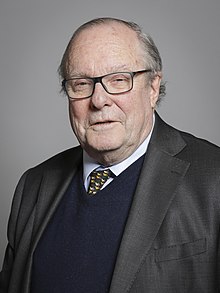
    Michael Ancram – 2003 Speech on Zimbabwe

    The speech made by Michael Ancram in the House of Commons on 1 April 2003.

    I congratulate HF on securing this important debate and on the way he has introduced it. It is a crucial debate because of what is happening now in Zimbabwe and why.

    It is however wrong that once again it is a member of the opposition who raises the question of Zimbabwe within this House. It should have been debated on the floor of the House. We have used an opposition day once to do so. Not so the Government.

    For them Zimbabwe is a problem to be swept under the carpet. Two years ago the PM boasted that he had a moral duty to act. Instead he has walked timidly by on the other side.

    The Government are still walking by. They connived in the technical arrangement which allowed the French to invite Mugabe to visit Paris in February. They have done nothing since to bring genuine pressure on Mugabe. They have never explained what the Prime Minister meant by his 2001 declared ‘moral duty to act’. Presumably the thespian interpretation of the word!

    I went to Zimbabwe last July. I experienced the sense of betrayal by the British. No surprise that Amnesty International says “there seems to be no limit to how far the [Zimbabwean] government will go to suppress opposition and to maintain its power”. No surprise that the very courageous MDC MP Roy Bennett, no stranger himself to beatings and imprisonment, states “we feel forgotten by the rest of the world. Mugabe is getting away with murder, torture and rape, and no-one is taking a blind bit of notice”. It is unbelievable that our Government is still doing nothing.

    The horrors in Zimbabwe are getting worse. Over the last two weeks there has been a massive increase in state sponsored violence and intimidation. No coincidence that this upsurge comes at the same time that the world’s media are concentrating on Iraq and the two by-elections which thank goodness the MDC held. The smoke of even a distant war has provided a cover behind which Mugabe’s brutality has grown and flourished. The by-elections yesterday, although fantastic victories for the MDC, were marred by government vote-rigging and vicious intimidation.

    While won by the MDC, Mutable gave notice by his brutal attempts to steal these contests that he is determined by any means to achieve the five parliamentary gains he needs constitutionally to entrench his vile dictatorship. No wonder he describes himself as the African Hitler.

    Levels of government-sponsored violence have spiralled since the Iraq war began. On top of the ethnic cleansing of hundreds of thousands of black farm workers, and the state provoked and politically directed mass starvation, there are now the false prosecutions, the murders, the official use of sexual assault and rape as a weapon of intimidation, and the ever increasingly vicious beatings.

    The violent government reaction to the Stay-away two weeks ago has signaled the end of even the last vestiges of human rights in Zimbabwe. People are angry, they are hungry and they are at the end of their tether.

    If the international community does not act, I fear we will see the law-abiding , decent, peace loving people of Zimbabwe, black and whites alike, taking the law into their own hands. All the ingredients for an enormous humanitarian disaster are present. It would be a conflagration from which we would not be able to walk away.

    Zimbabwe is at the front line of the food crisis. The World Food Programme estimates that 7.2 million people are vulnerable. Food production has dropped to about one-third of previous years’ levels. Thirty-four percent of the adult population are now infected with HIV/AIDS.

    And then there is the oppression. The main opposition leader Morgan Tsvangerai and his MDC have reached the limit of what they can do to force the government to change. Since the recent strikes at least 1000 people have been arrested, assaulted and hounded from their homes.

    And what is our Government’s response? The Noble Baroness Amos said last week, “the United Kingdom Government are working with our EU partners on a statement condemning the action which has been taken”. Working on statements of condemnation! Mugabe’s thugs are working not on a statement. They are ‘working-over’ the opposition. The time for words is long past. We need to see action.

    The US has just signed a new and broad sanctions order. Will we now toughen up EU sanctions? Presumably the Government got some promises in return for their supine surrender to France over Mugabe’s recent visit to Paris? We need harsh sanctions which include the families of the regime and its financial backers and which freeze the assets of all these people as well as banning travel.

    Over and above that the problem of Zimbabwe needs urgently to be internationalized. We need UN action as well. The Minister the noble Baroness Amos asserted last week that Zimbabwe does not pose a challenge to international peace and security, remains a domestic issue and that the UN cannot intervene.

    I totally disagree.

    Given its geographical position, the impact of Zimbabwe’s escalating crisis will extend way beyond its borders:

    The crisis will destabilise Zimbabwe’s immediate neighbours, particularly South Africa, Botswana, Malawi and Mozambique by driving thousands of refugees into these countries.

    University of Zimbabwe political scientist Masipula Sithole says: ‘Given its pivotal position, Zimbabwe has the potential to destabilize SADC both economically and politically on a much wider scale.’ If that is not the definition of an international problem I don’t know what is.

    I would like to see a UN Security Council Resolution with good precedent condemning what is happening in Zimbabwe and calling for international monitoring of humanitarian aid and its distribution. That would be a start, and if the Resolution is firm enough it could also deal with refugees and ethnic cleansing as well.

    Will the Government table such a Resolution?

    The SADC, and especially the region’s economic powerhouse South Africa, should take more resolute action. Morgan Tsvangerai last week stated that the MAC is willing to enter into talks to discuss how to solve Zimbabwe’s political and economic crisis.

    The signs are not hopeful. Following last week’s strike, President Mugabe called the MDC a terrorist organization and vowed that it would be crushed.

    Nevertheless this is a moment for renewed vigour. Even President Mbeki of South Africa, which holds the key to pressurizing Mugabe and Zimbabwe, is now condemning the violent crackdown in Zimbabwe. The openings are there.

    Our Prime Minister last year talked about “a coalition to give Africa hope.” Where is that new coalition?

    The Government must act. To stand idly by and watch genocide, ethnic cleansing, mass rape, starvation, torture and to do nothing is, if it ever was, no longer an option. Go to the UN, get a Resolution; go to the SADC, strike a new alliance; go back to the EU, toughen the sanctions; and give back hope to the people of Zimbabwe.

    We acted in Kosovo because of unacceptable flouting of human rights, because of ethnic cleansing, because of rape camps and torture chambers and hideous levels of violence. What in those terms in Zimbabwe is the difference? The Foreign Secretary may be paralysed by the post-colonial guilt to which he referred in his interview with the New Statesman before Christmas. It does not mean that the rest of us need be.

    The oppressed and persecuted people of Zimbabwe, most of them black, see nothing post-colonial in asking us to intervene, rather a moral obligation. They cannot understand why the British Government does not.

    The Government can act. Even at this desperately late hour it must. The time for walking by on the other side is over.

  • Iain Duncan Smith – 2003 Speech in Response to the Budget

    Iain Duncan Smith – 2003 Speech in Response to the Budget

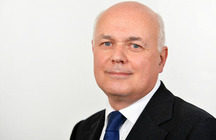
    The speech made by Iain Duncan Smith, the then Leader of the Opposition, in the House of Commons on 9 April 2003.

    On behalf of the whole House, I congratulate the Chancellor on his happy announcement last weekend. I can assure him . children are a great blessing.

    Mr Deputy Speaker, over the past six years we have come to learn that the Chancellor’s Budget speeches are characterised as much by what they conceal as what they disclose.

    He prefers to let the damaging detail, the fine print, leak out over the days and weeks that follow.

    Today, nonetheless, despite all the Chancellor’s bombast and bravado, we learnt a lot.

    We learnt that the Chancellor has got his forecasts wrong. Again.

    We learnt that borrowing is up. Again.

    We learnt that taxes are up. And will stay up – from this week, a typical family is another £568 a year worse off.

    And we learnt that the Chancellor has no intention of being candid with this House or with the British people.

    Just look at today’s Red Book.

    1. On page 235 we see the savings ratio this year is forecast to be even lower than it was last year.

    2. On page 241 – we see that manufacturing output fell last year by 4 per cent, and that the Chancellor’s forecast for this year has been slashed.

    3. And on page 238 – we see that business investment, forecast last April to grow this year by up to 6 per cent, is now forecast to fall.

    We didn’t hear any of those details from the Chancellor today.

    The Chancellor who promised us prudence has now given us higher borrowing and higher taxes at the same time.

    His Budget message to the British people is. Higher taxes – that’s pain today.

    Higher borrowing – that’s more pain tomorrow.

    This is the Chancellor who has put up taxes…on pay and on jobs..on homes and on homeowners..on mortgages and on marriages..on petrol and on pensions.

    The Government is taking an extra five and a half thousand pounds per household per year.. an extra £44 a week in tax for every man, woman and child.

    The Chancellor’s excuse was that this money would make our public services world class.

    Instead. .we have a million people on hospital waiting lists. .a crime is committed every five seconds..and thousands of children are leaving school without a single GCSE.

    More tax, more spend, more waste – that is the sum of the Chancellor’s approach.

    This was the Government that promised: “We have no plans to increase tax at all.”

    And: “Our proposals do not involve raising taxes.”

    And even: “We want people to pay lower taxes.”

    And now, 53 tax rises later.This week, when people receive their pay packets, they will find that their take home pay has fallen for the first time in twenty years.

    Now they know what this Chancellor really stands for.

    Promises, promises, promises.

    Every year he makes them and every year he breaks them.

    And just as he has broken his promises to individuals, so has he broken his promises to business.

    In 1998, the Chancellor promised “major changes” to help business.

    In ’99, he promised tax cuts for business.

    In 2000, he promised incentives for business.

    In 2001, he promised more good news for business.

    Today we see what his promises are worth.

    An £8 billion tax on jobs.

    That’s the cost of his National Insurance hike.

    It’s hitting business. And it’s hitting them hard!

    So hard, say the British Chambers of Commerce, that one in five firms may cut jobs as a result.

    In fact, this Chancellor has been so hard on business that, since 1997, he has taken an extra £47 billion from them in tax.

    No wonder he didn’t tell the House today about the real cost of his policies.

    He didn’t say insolvencies are at their worst level for a decade.

    Or that analysts say that another 70,000 firms will go bust over the next three years.

    And he didn’t say that manufacturing has lost 300 jobs every single day since Labour came to power.

    And he didn’t say that manufacturing output and investment are both now lower than when he delivered his first Budget.

    And just as he has broken his promises to business, so he has broken his promises to hard-working families.

    Since 1997 council tax has gone up by 60 per cent, adding more than £400 to a typical bill.

    Just look at the Red Book – council tax up by £8 billion since Labour came to power.

    Stamp duty increases have added over £5000 to the cost of the average detached home in the South East.

    The abolition of mortgage tax relief has cost homeowners over £200 a year.

    The abolition of the Married Couples’ Allowance has cost families £300 a year.

    Higher petrol taxes have cost the average motorist another £300 a year.

    In short, the Government’s tax take has now risen by 50 per cent since he became Chancellor.

    Mr Deputy Speaker, of all those who have been hit by the Chancellor, there is one group who will be hurt more than most.

    The savers of today are the pensioners of tomorrow.

    And he has blighted their old age, their retirement . . . what should have been their golden years.

    In 1997, he promised, “to encourage personal savings”.

    In 2001, he promised, “to reward savers, pensioners and hard working families”.

    Promises, promises, promises.

    But under him, saving has halved.

    When Labour took office in 1997 the savings ratio was 10 per cent.

    Today it is 4.75 per cent. It’s there in the Red Book.

    So he’s destroyed savings.

    And his so-called “reform” to the pensions system has hit future pensioners with a £5 billion a year tax. .it has created a pensions crisis..and, perhaps most damaging of all.someone retiring today will do so on half the income they would have received in 1997 – – Half.

    And he hasn’t just let down future pensioners.

    Because this was the man who promised to end the means test for pensioners.

    But under him, the proportion of pensioner households subject to a means test is up by 50 per cent.

    I want to turn now, Mr Deputy Speaker, to the financial impact of war in Iraq.

    We support the Government in their waging of this war and we naturally support its full and proper funding.

    But the Chancellor should be warned. He cannot get away with using this war to get him off the hook for his long-term mismanagement of the economy.

    And he can’t get away with blaming Europe for his problems.

    He simply cannot blame his flawed and missed forecasts solely on world events.

    Last April, the Chancellor delivered his forecasts for the coming year to the House.

    And he got them wrong.

    He got his forecasts for growth wrong.

    His excuse, in other words.

    He got his forecasts for tax revenues – wrong.

    And he got his forecasts for borrowing – wrong.

    In November, the Chancellor admitted that his central growth forecast for 2002 – two and a quarter per cent – was wrong.

    He conceded that tax revenues had failed to meet his projections.

    He announced that borrowing would have to rise – by £20 billion in just two years.

    And then he blamed everything on the fact that world trade and world GDP growth had not been as fast as he had forecast..was not that the Chancellor had failed Britain….but that the World had failed the Chancellor.

    Now, that’s a serious charge, Mr Deputy Speaker.

    So I went back to last year’s Red Book.

    And when you look at it, you see that.

    At the time he delivered his Pre-Budget Report in November.

    The only forecasts that were right were his forecasts for world trade and his forecasts for world growth.

    So, he blamed the world for getting it wrong, but actually that was the only forecast he got right.

    Today, the Chancellor had to admit he has got his growth forecast wrong yet again.

    So his growth forecasts were wrong and his assumptions for tax revenues were wrong as well.

    The result is that his projections for borrowing are wrong.

    Now, the Chancellor sprinted through his borrowing figures, so let me recap.

    Last April, the Chancellor predicted that he would have to borrow £13 billion this financial year.

    Today, he admitted he would actually have to borrow £27 billion.

    And that only takes us to the end of this financial year.

    Look at the longer term picture.

    Just two Budgets ago, the Chancellor told the House that he would need to borrow £35 billion between 2002 and 2006.

    Today, he admitted that the true figure for total borrowing over that period is actually £98 billion.

    So in just two years, his medium term borrowing requirements have risen by £63 billion.

    That’s an extra £2600 per household.

    But borrowing is not something the Chancellor can do indefinitely.

    More and more borrowing will mean higher and higher taxes.

    Throughout, independent forecasters have long been warning him that he was far too optimistic.

    They questioned his revised predictions.

    Some called them, “overly optimistic” and “rose-tinted”.

    And we know what the independent experts think now.

    78 per cent of them think that, by 2006, the Chancellor will have to raise taxes by between five and eight billion pounds.

    And these are the experts on the Treasury’s own panel.

    But you won’t hear this from the Chancellor.

    Mr Deputy Speaker, the Chancellor’s broken promises and missed forecasts might be more palatable if we were seeing real reform of our public services.

    But the facts speak for themselves.

    Take health: A million people on NHS waiting lists. Hospital admissions down, not up. And, last year, three hundred thousand people forced to pay for their own operations – a figure that has trebled since 1997.

    Or education. 50,000 children play truant every day one in four leaves primary school unable to read, write and count properly and more than 30,000 children leave school each year without a single GCSE.

    Mr Deputy Speaker, this Government has tested to destruction the theory that more and more money alone can transform our public services.

    They have talked about reform, but they have delivered none.

    Today, he could have delivered.

    Six years of spin and spending can’t hide the fact that our public services are just not good enough.

    They don’t simply need more money, they need a new approach.

    An approach based on giving power back to people, so they feel in control of their lives – whether they are nurses and teachers or patients and parents.

    Mr Deputy Speaker, the Chancellor has just delivered his seventh Budget.

    Six years.

    Seven speeches.

    Promises, promises, promises.

    He promised . . .

    Prudent Budgets . . Fair Budgets. . . Budgets for enterprise. . . Budgets for the public services.

    And he hasn’t delivered any of it.

    He has got it wrong because he puts systems and initiatives, targets and schemes, before real people and real results.

    He has got it wrong because he thinks he knows better than the people of this country how they should be living their lives.

    He has got it wrong because he is driven not by the facts – which are staring him in the face – but by an ideology that has gripped his mind and will not let it go.

    His sole mission is to prove that the old ways still work.

    Never mind the evidence, never mind the consequences.

    So it’s just more failing policies and more downgraded forecasts from a discredited Chancellor.

    Last week, before it was too late, he could have scrapped his tax on jobs and pay.

    He could have stopped punishing people who work hard and save hard. Security and independence, for the young and the old, for hard-working families and individuals, for those who create jobs and those who need them, for those who pay for our public services and for those who rely on them.

    He could have delivered a fair deal for all of them.

    But he didn’t.

    He never will.

    And it’s the British people, Mr Deputy Speaker, who will pay the price.

    More taxes, more spending and public services that simply aren’t good enough.

    The message of this Budget is clear.

    For the British people – it’s pain today. And as borrowing spirals while the Chancellor blocks real reform, today’s Budget means more pain tomorrow.


  • Iain Duncan Smith – 2003 Speech at Toynbee Hall

    Iain Duncan Smith – 2003 Speech at Toynbee Hall

    The speech made by Iain Duncan Smith, the then Leader of the Opposition, on 29 April 2003.

    Thank you very much, Luke, for again inviting me to speak at Toynbee Hall.

    I pay sincere tribute to the dedication to London’s East End of all your staff and all of Toynbee’s many volunteers.

    Toynbee Hall’s national reputation for social policy is deeply rooted in your commitment to innovative community service.

    The Barnetts, Atlee, Beveridge and other Toynbee greats would – I am sure – be very proud of Toynbee Hall’s work today.

    And I know I speak for all of us here when I say a special thank you to your inspirational President, Jack Profumo.

    It was nearly six months ago – when on my visit to you – I named five new giants stalking Britain.

    Five key social challenges facing our people:

    Rising crime;

    Failing schools;

    Substandard healthcare;

    Child poverty; and

    Insecurity in old age.

    Those five giants already affect or threaten every community in Britain.

    Defeating them isn’t just a moral obligation.

    Turning the tide on crime and public service failure is in everyone’s interest.

    Not just because none of us are immune from the damaging effects of social decline.

    But also because unless we come together as a nation – in order to advance the interests of everyone – we forfeit the right to call ourselves civilised.

    People from minority communities, our poorest citizens and the very young and very old remain Britain’s most vulnerable – they are hurt most by the giants.

    In the past some Conservatives gave the false impression that poverty had been overcome.

    During my leadership I’ve made it clear that that’s not my belief.

    Last year, David Willetts gave a speech entitled ‘The Reality of Poverty’.

    In it he surveyed the complex material and relational dimensions of twenty-first century poverty.

    He noted that fighting poverty wouldn’t be cheap but it couldn’t be just about money.

    Communities stay poor because of crime, community breakdown and the disempowerment that can be passed from one generation to the next.

    He and other shadow cabinet ministers held a number of investigative One Nation Hearings in hard-pressed areas.

    And I told last spring’s party forum that restoring hope in places like Glasgow’s Easterhouse estate was a personal commitment.

    In recent months the Conservative Party has begun the process of unveiling policies that underpin our determination to restore that hope.

    Take education.

    Far too many inner city schools are failing.

    And when they fail – one of a young person’s best hopes of a better future is lost, perhaps forever.

    Damian Green has proposed a system of state scholarships to provide children from inner city areas with an escape route from failure.

    State scholarships will give parents a chance to send their child to a good school.

    One more suited to their child’s needs and their own values.

    This system of scholarships will, I hope, encourage higher standards in existing schools.

    But it will also encourage – and pay for – the establishment of new schools that serve children’s diverse needs.

    If education is a springboard out of poverty; then crime can entrap children in it.

    Oliver Letwin’s innovative policies will cut the conveyor belt to crime for tens of thousands of young people.

    A greater emphasis on early intervention – including parent support services – will stop the conveyor belt at its earlier stages.

    And the Conservative commitment to fund 20,000 new drug rehabilitation places will give other young people a chance to find freedom from addiction.

    I’ve sat with parents of drug users who – already devastated by their child’s drug habit – are close to being broken by the failure of the current system to provide rehab.

    That has to change.

    Another change we must make is to the level of policing on Britain’s streets.

    The 40,000 extra neighbourhood police officers Conservatives are committed to provide are not just a sign of our commitment to beat crime.

    They’re a symbol of our commitment to restore community and reclaim it from the gangs that imprison people in their homes.

    Through commitments like these on education and crime – and other policies focusing on better healthcare and housing – Conservatives will reverse the decline in Britain’s public services.

    Our policies are built on the rock of successful models throughout Europe and in Australia and America.

    We build, too, on what local Conservative councils are already achieving.

    Last year it was Conservative councils that received the most star awards for the quality of their social service provision for vulnerable people.

    Conservative councils run schools with the lowest levels of truancy and the best exam results.

    Local Conservatives are more committed to provision of street lighting and CCTV.

    By this time on Friday I hope more Conservative councillors will have been elected to deliver such practical compassion.

    Labour’s record on public service reform has failed the whole nation but the poor have suffered most.

    The revitalisation of Britain’s public services is vital and urgent but – on its own – it won’t be enough to reduce child poverty and other forms of social injustice.

    Progress will need to be underpinned by a strong, job-creating economy.

    Success will also depend upon a stronger, cohesive society.

    A society of which we can all feel proud.

    And by society I do not mean the state.

    The free institutions of society – like families, charities, local schools and other people-sized institutions – provide diverse, innovative and face-to-face care that state bureaucracies cannot match.

    It’s these associations within society that give me the greatest hope that even the worst effects of the Five Giants can be overcome.

    Since I named the Five Giants I’ve travelled to almost every part of Britain.

    The Five Giants are at least as menacing as I feared.

    Too much of what I have seen has made me conclude that society is being hollowed out from within.

    In Glasgow, Jim Doherty and Janis Dobbie of the Gallowgate Family Support Group, showed me around Parkhead Cross.

    It’s a neighbourhood in the grip of drug abuse and the havoc it wreaks.

    At night criminal gangs rule the streets.

    Two of Jim’s own sons have become addicts.

    He can’t understand the failure of government to provide proper rehab for his children and the children of the other families who flock to the Gallowgate Support Group.

    He told me “We have already lost our children’s generation to drugs.

    The battle we’re fighting now is to save our grandchildren.”

    Jim’s words – Jim’s challenge – affected me deeply.

    If Britain doesn’t act to save his grandchildren my generation of politicians will have failed.

    And we will certainly fail if we don’t do something about the state monoculture.

    The state is already too pervasive on many of the poorest communities -crowding out any and all alternatives to its own bureaucratic agencies and its metropolitan worldview.

    Beneath an artificial plantation of conifers nothing grows.

    All light is absorbed by the dense and impenetrable canopy far above the soil.

    The five giants won’t be defeated if government acts as if the work and values of groups like Jim Doherty’s don’t matter.

    Government must become an active and enthusiastic servant of society’s many poverty-fighting and community-building groups.

    In natural woodland, trees are spaced apart – allowing light and rain to nourish a diversity of plants and wildlife.

    An enriching and highly-interdependent ecosystem develops.

    It’s still like that in parts of Britain.

    For a very long time the people-sized institutions of society have lacked political champions.

    Their vital role has been taken for granted – or worse still dismissed – by big state and free market fundamentalists.

    That must change.

    Government can and must do much more to unlock Britain’s social capital.

    Soon, I’ll be publishing a Green Paper that will investigate how the next Conservative government will do that.

    It will contain proposals that are themselves as ambitious as the aspiration to serve of our nation’s volunteers, charities and social entrepreneurs.

    It will applaud the work of faith-based groups like Manchester’s Message Trust and Cardiff’s Care for the Family that have impressed me so profoundly.

    The government is wedded to the idea that more government spending and control is the answer to today’s challenges.

    But this government is not unlocking the potential of Britain’s social capital.

    It is not helping the people who have the ideas and values to rebuild their communities.

    Luke – on behalf of Toynbee Hall – has been one of a large number of voluntary sector representatives who have kindly contributed to the formulation of the Conservative Green Paper.

    That Green Paper will be a next stage in my party’s continuing commitment to offer a fair deal for Britain’s most vulnerable communities.

    I look forward to as many of you here as possible helping us to first develop – and then deliver – that fair deal.

    It’s time for politicians to help people rebuild their communities.

    And to return hope to neighbourhoods where – today – there is none.