Blog

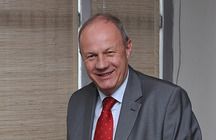
  • Damian Green – 2002 Speech on Labour Party and Education

    Damian Green – 2002 Speech on Labour Party and Education

    The speech made by Damian Green, the then Shadow Secretary of State for Education, in the House of Commons on 21 May 2002.

    As we pass the fifth anniversary of this Government’s arrival in power, the threadbare nature of their claim to have made improvements in education is increasingly apparent. Today, the Opposition will pay particular attention to their failures on truancy and discipline because they lie at the heart of so many other failures.

    Without effective discipline, there can be no effective teaching. Without regular and willing attendance, there can be no effective learning. If the Government cannot solve this crisis, they will be doomed to fail to solve the other crises in our school system, such as demoralised teachers, the widening gap in standards between the best and worst schools and, in particular, the Government’s complete failure to give effective support to schools in our inner cities.

    It is clear that the Liberal Democrats are not in a position to take anything away from today’s debate, but I hope that the Government will take away one message: the underlying, basic problems of truancy and discipline will not be solved by the usual gimmicks that the Department for Education and Skills loves so much. Grabbing the headlines for a morning may delude Ministers into thinking that they have done something effective, but it does not delude teachers, parents and pupils.

    Let us take this morning’s headline-grabber by the Government, which is on drugs in schools. I do not suppose that there is anyone in the House who does not want tough measures to eliminate drugs from schools and to warn children about the dangers of drugs, but the Government are sending very mixed messages about their attitude to drugs in our society.

    This morning, the Department for Education and Skills announced a crackdown and that it would be tougher on drugs, yet for months the Home Office has been espousing a softer line on drugs. That is a mixed message; nobody can know what the Government really want.

    Quite apart from the mixed message on drugs, the Government are sending a mixed message about exclusions. Today, the Secretary of State and her colleagues have been talking tough. They are to insist that head teachers exclude pupils who are caught drug dealing. There will be no appeal; such pupils will be straight out on their first offence.

    That is a very tough message, but I seem to remember that four years ago the Government sent out exactly the opposite message. They were instructing head teachers to exclude fewer pupils.

    The confusion does not only date back four years. If the Secretary of State had made an honest U-turn, we would have applauded it, because today’s policy is better than yesterday’s policy. Unfortunately for the Government, I have taken the trouble to read the amendment that they have tabled to our motion.

    Before the Minister for Lifelong Learning becomes too excited, I shall quote it. It is fascinating. I assume that it was written yesterday, presumably at the same time as the Department was writing its press releases on how exclusions need to be increased.

    The amendment boasts: “exclusions have fallen by approximately 28 per cent.” since 1996-97. At the press conference this morning, the Government said that a rise in exclusions is a good thing; yesterday, as their amendment shows, they said that a fall in exclusions is a good thing. There is a central confusion. The Government cannot know what they are talking about. It is clear that head teachers across Britain do not know which message the Government are trying to send. The reason is that the Government do not know. All they know is that they must say something tough about drugs.

    The Department for Education and Skills is always one of the most willing Departments to say, “You want an announcement, we’ll make it. Never mind the policy, coherence or implementation, we’ll write the press release for you.”

    Not even the Secretary of State for Transport, Local Government and the Regions would have the gall to say that that central confusion over the attitude to exclusion shows consistency of purpose. I pay tribute to the Secretary of State for Education and Skills by saying that she is a considerably more honest and straightforward politician than her right hon. Friend.

    Everyone in the House and outside it and everyone connected with education hopes that the Government’s new policy on drugs in schools will work, but we are right to be suspicious and sceptical that a Government who rely on spin and announcements rather than substance will not drive through an effective anti-drugs policy.

    Let me turn to truancy. Again, there is no difference between the two sides of the House. We all agree that truancy deprives children of their best chance in life and that the Government have a duty—which they share, most notably with parents but also with schools—to ensure that children attend school. Let us look at the facts of what has happened since the Government came to power.

    In the 1998 comprehensive spending review, the Government promised to cut school truancy drastically. They said that they would reduce the percentage of half-days missed a year through unauthorised absence from 0.7 per cent. to 0.5 per cent. That was a clear and unambiguous promise, but the result is complete failure. There has been no reduction in the percentage of half-days missed through unauthorised absence, which remains 0.7 per cent. In secondary schools, where the problem is most serious, it has risen since 1997 from 1 per cent. to 1.1 per cent.

    I have taken those figures from the Department’s own survey of pupil absence and truancy, but Ofsted too revealed growing problems.

    Unsatisfactory attendance is up from 22 to 30 per cent. in primary schools, and from 29 to 37 per cent. in inspected secondary schools. Those are not abstract figures on the number of children missing school. Truancy Call, a charity that tries to deal with the problem of truancy, estimates that, on a typical school day, 50,000 children are truanting, their life chances disappearing. Most schools, it says, do not have the time or resources to undertake first-day contact with those children. [Interruption.] The Minister for Lifelong Learning says that she does not believe it. I do not know who else she is going to try to call a liar. Stephen Clarke, the director of Truancy Call, is extremely respected in the field.

    Perhaps the hon. Lady will believe the previous head of Ofsted, who was appointed by the Government. Mike Tomlinson said:

    “Statistics suggest that there are 10,000 children who should be in school but are not.”

    Does the hon. Lady want to disagree with Mike Tomlinson as well? He found that statistic worrying and continued:

    “I wonder about what they are up to when they are not in school.”

    He is right to worry, as we know what too many of those children are doing when they are not in school; they are climbing on the conveyor belt of crime, which will damage their lives and communities, particularly in the inner cities.

    I shall cite someone whom even the hon. Lady will believe—the Secretary of State, who said that official figures showed that 40 per cent. of street crime, 25 per cent. of burglaries, 20 per cent. of criminal damage and a third of car thefts are carried out by 10 to 16-year-olds at times when they should be in school. By any standard, that is a catalogue of failure by the Government, who have not met promises that they made in their early, happier days in office.

    The Government have noticed that they have got a problem and have recently introduced a series of measures to reduce truancy. They announced that they want to put policemen in schools; they have half-announced that they are thinking of taking away child benefit from parents of persistent truants; and they announced £66 million to tackle truancy in the recent Budget.

    Having policemen in schools is a sensible idea, and I welcome the Government’s initiative. If head teachers want that, it is perfectly reasonable. I would be fascinated to know what the Secretary of State has to say about taking child benefit away from the parents of persistent truants, as the initiative appeared to emanate from the Prime Minister and No. 10, and volunteers in the Cabinet were called on to support it.

    It was notable that every other Cabinet Minister took a smart step backwards, leaving the right hon. Lady out at the front to defend the policy. I therefore hope that she will tell us later whether she still thinks that it is a good idea and, if so, when the Government propose to introduce it. I am afraid that if she cannot give us a date by which the Government are willing to do so, we will conclude once again that the announcement was made just to grab the headlines.

    The third issue is the £66 million to tackle truancy in schools across Britain. What the Government have not told us is that the means by which they are funding that—the increase in national insurance contributions—will take £150 million out of school budgets, year after year. The Budget therefore did not put money into schools but took it away.

    The Government are coming up with tough-sounding gimmicks. They know as well as everyone now—notably Mrs. Patricia Amos, who has been sent to jail—that an extremely tough range of measures is already available in the criminal law to stop truanting. It is clear that when Governments and courts have powers that can end up with a parent being jailed for allowing children to truant persistently, even tougher new measures are not necessarily needed. The Government already have all the tough measures that they could want to deter parents from allowing their children to truant.

    The Government are trying to pretend that those tough measures are not available, but their cover has been blown by the jailing of Mrs. Amos. That shows how tough the measures already on the statute book are. I hope that they work, and that every parent with a child who persistently truants looks at Mrs. Amos being sent to jail and thinks, “I don’t want to go that way. I’m going to do something about my child now.”

    The underlying problem is that the children who are let down most badly by the Government’s failure on truancy are those who are most vulnerable and least able to defend themselves. Many of those children, as we know, live in our inner cities and therefore attend inner-city schools. The figures are terrifying. Between 2000 and 2001, in several inner-city areas, truancy rose by as much as 16 times the national average.

    At the same time, GCSE standards—a strongly related issue—are far below the national average in such areas. Growth in truancy has persisted throughout England, where it has increased by an average of 1.7 per cent. in recent times, and the average proportion of pupils achieving the good GCSE score of five grades of A* to C is 50 per cent.

    It is terrifying to compare with those averages the figures for some of our inner-city areas. In Hackney, truancy is up 27 per cent. and the average GCSE score—the proportion achieving five or more A* to C grades—is 33.5 per cent. In Liverpool, truancy is up 26.2 per cent. and the average GCSE score is 35.1 per cent. In Sheffield, which was run until so recently by the Liberal Democrats, truancy is up 24 per cent. and the average GCSE score is 41.9 per cent. In Leicester, truancy is up 21.7 per cent. and the average GCSE score is 36.9 per cent.

    Those figures tell a stark story. The Government are failing our inner-city children; their rhetoric is not matched by action. They are tough on truants and on the parents of truants, but they are soft on the causes of truancy. Let us consider what they could be doing. The basic challenge on which they have failed is that of making every day at school relevant to every pupil.

    If pupils think that nothing that they do at school will be relevant, useful or interesting, they will start bunking off. Clearly, the long-term policy must be to reduce the number of regular truants to the hard core. There will always be a hard core, but we need to reduce truancy so that only that hard core remains. I am glad that Government Front Benchers agree; perhaps they will adopt the policy that I am about to put to them.

    The first and most widespread thing that the Government should do is make a radical improvement in the provision of vocational education in our education system. The first and most important radical change that should be made is that of rewriting the Green Paper in English, instead of the current jargon. The Green Paper is not remotely adequate to cope with the crisis in vocational education.

    The Government do not need Green Papers; they need to do what we do and learn from some other countries. Let me tell them about the experience in Holland and Germany. In Holland, for example, I visited classes in which 13-year-olds were rewiring rooms and plastering real brick walls.

    They were non-academic children in a non-academic stream—the sort of children who are failed by the school system far too often in this country and go out truanting. They were doing something at school that they could see was relevant, which they enjoyed and which they were good at. That was what got them into school, made them do the other lessons and allowed them to leave school having worked on a balanced curriculum and learned something useful, instead of taking the path of truancy and then crime to which far too many of our young people are condemned by the inaction and complacency of the Government.

    The problem is not new and is not even one of the past 20 years; it a problem of the past 140 years. Let me break the habit of a lifetime and quote Lord Callaghan, who rejected 25 years ago the idea that we should fit “a so-called inferior group of children with just enough learning to earn their living in the factory”. He was right that children who need a vocational education need more than that. That is pure common sense, and I am surprised that Government Front Benchers are so exercised by it.

    If those children are looking to the world of work, that is what we should prepare them for, by providing both the basic academic tools and proper vocational training when they are still willing to learn. Too often, the tragedy is that we wait too long, and by the time we seek to engage children who would benefit from a vocational education in proper vocational training, it is too late—they have got out of the habit of learning and into the habit of truanting. In five years, the Government have done nothing to help that dangerous lost generation.

    Whatever the situation that they inherited, what they have done has been relatively worst in its effects on inner cities. They have let down all children, but they have particularly let down those in the inner cities. I hope that she will reflect on that in her calmer moments. If she wants to talk about initiatives, I remember that education action zones were one of the great initiatives launched by the Secretary of State’s predecessor and junked by the right hon. Lady as soon as she had the chance.

    Let me move on to the wider problem of discipline.

    One reason why disciplinary problems in schools have increased under this Government is precisely that the authority has been taken away from head teachers to exclude those whom they want to exclude. Teachers, not only heads, are unhappy with the situation. The Government always get cross when I quote the National Union of Teachers at them, so let me quote the Association of Teachers and Lecturers instead. It says that in the past year it received 120 complaints from teachers about physical abuse at school and that assaults on teachers rose fivefold between 1998 and 2001. That is terrible.

    If the ATL is another trade union to which the Government do not want to listen, perhaps they will listen to Ofsted. It points out that the poor behaviour of a minority of pupils is cited as the major reason for teachers leaving the profession. If that is true, it is a great shame that the Government have spent much of their first five years in office encouraging the undermining of head teachers’ authority and therefore encouraging the increase in violence in schools.

    It is extraordinary that, although the Government have so much information at their disposal, they do not bother to collect facts about the scale of violence in schools.

    My colleagues and I have asked the Government for some weeks for the number of teachers who are assaulted each year, the number who are assaulted by pupils and the number of assaults on pupils by pupils. The Government do not know the answer.

    The Secretary of State says, “Oh no”. I refer her to written answers from her colleagues that state that they do not collect that information. Why do not the Government collect it? They know that matters are getting worse and are trying to disguise the fact rather than dealing with it.
    We propose giving power over exclusions back where it belongs — with heads and governors. If they have the power to discipline children, discipline in schools will improve. That would send clear signals to unruly pupils and irresponsible and potentially violent parents that they cannot get away with their behaviour any longer. The Government have spent too long undermining heads and teachers; it is about time that they got behind them.

    The Government’s never-ending stream of initiatives has failed to tackle the two fundamental crises in our schools. Until they use something more substantial than summits, press conferences and initiatives, our most vulnerable children will never receive the education that they deserve. That stands as an indictment against the Government for five wasted years. They are betraying the hopes of a generation of children. They will not be forgiven and they do not deserve to be forgiven.
  • Iain Duncan Smith – 2002 Speech at Hackney Community College

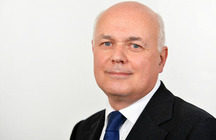
    Iain Duncan Smith – 2002 Speech at Hackney Community College

    The speech made by Iain Duncan Smith, the then Leader of the Opposition, on 21 May 2002.

    I am delighted to be here at the Hackney Community College. Your mission statement talks of ‘working in partnership, widening participation, raising standards and achievement, to meet the needs of the communities we serve’. The hard work of students and staff here have made that statement a reality. Today I want to talk about how that reality can be spread to other inner city areas up and down the country.

    Three months ago I visited Glasgow’s Easterhouse estate.

    This weekend I went back and spent some more time with the residents there who help their own neighbours.

    A breakfast club run by church volunteers provides more than nourishment before school. One of the children who uses the club never knows if his mum or dad are even going to be at home.

    But in a life where nothing else is reliable he does know that every morning the same person who provides him with breakfast will also listen to his worries and encourage him.

    A positive role model has entered his life for the first time and has offered him the hope of escape from a life of deprivation.

    Yet he is not a target that someone was asked to hit nor is he a statistic that will show up in an Annual Report.

    He is just one child among many who someone took responsibility for and made a difference.

    That is why at Harrogate I rededicated my party to look more deeply into the social challenges facing our country’s most vulnerable communities and particularly the young in those communities.

    How can we involve more fathers in the lives of their children?

    How can we crack down on youth crime and the problems of drugs, to salvage young lives and to improve the communities they live in?

    And most of all, how can we create schools that teach basic standards, and respect for themselves and for other people?

    I remember when I finally decided I wanted to enter politics. I was on active service overseeing Rhodesia’s transition to a democracy.

    We visited a village after the guerrilla fighters had been brought in from the bush.

    A little boy was digging a hole in the riverbed looking for water to wash in. His friends were laughing and playing nearby.

    Their future was about to change for the better.

    It struck me that these simple things that gave those children such pleasure had been impossible during the war.

    Politicians gave them new opportunities, but twenty years later under a corrupt political process their country had slipped back into chaos.

    To understand the power of politics, you also have to understand its limitations.

    I entered politics to help make a difference, but that difference cannot be left in the hands of politicians alone.

    I joined the Conservative Party precisely because it understands these things.

    We have always worked to help people take back control of their own lives, we don’t try and live their lives for them.

    Because of that people too often think the Conservative Party only believes in money; that we are content for the most vulnerable in our society to sink or swim.

    That must change. And under my leadership the Conservative Party is changing.

    Learning from the voluntary sector

    To truly help the vulnerable, we must learn the lessons from those who are already doing the most to help them.

    They work in areas and with people who have been forgotten. Their local roots and independence allow them to get results that governments cannot even imagine.

    Because of the depth of their personal commitment they have the authority to help people who want to change, they don’t simply help people and hope they’ll change.

    You can call it ‘tough love’, but these groups are agents of change, not just another agency of the state.

    And often as not they are provoked into action by the failure of the state.

    I visited Faversham a couple of months ago and met two mothers who had set up a drug rehabilitation centre. One of them had turned her own son into the Police.

    He had become a one-man crime wave, stealing from her and her neighbours and dealing to other children to feed his own addiction.

    These two women had overcome the indifference of the police and the hostility of local officials to take control of their own situation.

    How can politics help people like this without undermining what they do?

    Voluntary groups want to be free to respond to the personal needs of local people rather than become enslaved by the artificial requirements of politicians.

    This Government offered the voluntary sector a partnership, but that partnership has turned into a takeover.

    Instead of forcing the voluntary sector to think and act like the state, politicians should have the humility to learn from what these groups do best.

    They help the vulnerable with care, commitment and innovation, virtues which we must allow to flourish in our public services too.

    The status quo

    The way we organise our public services belongs to a bygone era.

    In the 21st Century we are still running our public services and trying to make them accountable in the same ways we did after the Second World War.

    But since then we have lived through the Cold War, the development of nuclear weapons and the information revolution, the fall of the Berlin Wall and the rise of the internet.

    Imagine what our living standards would be like today if we still ran our economy the way Clement Attlee did?

    Now imagine how much better our quality of life could be if we no longer ran our public services the way Clement Attlee did.

    At the beginning of a new century, no other major country runs their schools or their hospitals the way we do. That is why the quality of our public services is failing to keep pace with rising expectations and living standards.

    For the past five years Labour has spent its time centralising our public services with targets and ten-year plans. It has drowned individual initiative in directives and dogma.

    But central control is delivering neither fairness nor efficiency.

    It is going to fall to the Conservatives to address these issues. We will have to re-examine the entire relationship between central government and the people it is supposed to represent.

    We will have to challenge every principle except one: that people should be helped according to their needs.

    We should challenge the idea that uniformity is more important than quality. That nobody minds receiving a poor service as long as nobody else is getting a better one.

    But poor public services are not fair. They hit the vulnerable the hardest.

    A Health Service in crisis affects the elderly disproportionately.

    A society that turns a blind eye to violent crime and the drug culture condemns many council estates to fear and despair.

    Bad schools keep poor families poor.

    In some of our inner cities, as many as one in ten pupils leave schools without a single GCSE and truancy is rocketing. Compare this with places like Redbridge or Buckinghamshire where more than 90% of children gain five or more GCSEs.

    As our country grows richer those who can, seek to buy their way out of failure, but they cannot avoid the consequences of failure for those who are left behind.

    For generations too many experts have told us all it is unfair to expect children from inner cities to strive for the same standards as everybody else. I say it is unfair to expect anything less.

    The most important thing to me personally, my mission for the Conservative Party, is to provide equal opportunity in our schools for all children – particularly the most vulnerable – wherever they live, however much their parents earn.

    There is nothing compassionate about leaving the most vulnerable in our society to suffer simply because we decree that everybody should be treated the same regardless of their needs.

    Uniformity doesn’t lead to social cohesion it only breeds social division.

    When systems become more important than people and theory matters more than results, this country has lost its way.

    Everywhere else around us services are tailored to our individual needs. We have more choice and more access to information, we are used to our views being taken seriously.

    This is almost impossible in today’s public services.

    The second thing we need to challenge is the idea that centralised politics and centralised public services are what hold our nation together.

    In fact they are in danger of tearing it apart.

    Take the case of Rose Addis, the 94 year old mother of my constituent, who was left unattended in her local Accident and Emergency ward.

    All the family wanted was an apology. The hospital authorities dismissed their concerns. The family went to the press. The Health Secretary rubbished their story on national radio. The family came to me in despair and I raised the case in Prime Minister’s Questions.

    What followed was a 72-hour political row that dominated the national news. The entire political and NHS establishment came crashing down on Mrs Addis. She was even accused of being a racist all because she wanted a simple apology.

    This one case encapsulates most of what is wrong with the post-War welfare state.

    A vulnerable lady did not get the quality of care she deserved. The hospital was too rigid even to offer an apology.

    The lines of political accountability were so centralised that the Health Secretary, the Leader of the Opposition and the Prime Minister became involved to try and resolve a single case.

    Ultimately this degree of centralisation diminishes our democracy.

    Because Central Government is responsible for everything, it tries to run everything, and because it tries to run everything it ends up running most things badly.

    So it relies on spin to pretend that things are better than they are.

    Detailed target setting, leads to failure, this leads to lies and the setting of new detailed targets. The vicious circle is complete.

    As a result our political culture becomes debased and our public services become demoralised.

    People are crying out to be heard. They want to have a say in the direction their communities take, they want more control over their own lives.

    We must listen to them and we must learn to trust them by placing responsibility for results back where it belongs.

    Better schools and hospitals, more responsive local government, means giving teachers, doctors, nurses and councillors the power to do their jobs and making them accountable for what they do.

    That is what happens in every other walk of life, it is also what happens in every other country whose standards of public services exceed our own.

    Rudolph Giuliani turned crime around in New York because he had the authority to do so, because that is what the voters elected him as Mayor to do, and because he knew that that was how he would ultimately be judged.

    In Stockholm, the county government introduced a choice of family doctor and a choice of hospital for its citizens because Sweden gives different parts of the country the right to run healthcare differently.

    In Holland it takes as few as 50 parents to set up a new independent school, where the Government pays for children to be taught within a slimmed down national curriculum.

    Trusting people is the modern way, followed by countries across the world including those who are considered more egalitarian than Britain.

    What all these nations have in common is that they have put quality before uniformity, people before ideology. It is time for us to do the same.

    Conservatives are rightly suspicious of blueprints. It is that kind of approach that has taken so much power away from people in the past.

    The Government’s plans for regional assemblies will not drive power down from Whitehall they will strip power from local communities. They mean more centralisation, not less.

    And yet I have been struck by the diversity of solutions on offer as I and my Shadow Cabinet colleagues have travelled around Britain and Europe.

    Kent County Council is running a scheme it has initiated with the Treasury, where it is taking responsibility for getting people off welfare and back into work in return for a share of the benefit savings.

    We need to look at our benefit system as a whole. The entire impetus for welfare reform in the United States came from individual states and cities taking charge of welfare programmes from the Federal Government.

    People say that Britain is too small to have the laboratories of democracy that the United States has. But it isn’t a question of size, it is a matter of identity. Switzerland is a very small country. Yet it retains a vibrant and vital local tradition through its cantons.

    People who want a European superstate say that Britain is too small to be a country. With the fourth largest economy in the world, British people are entitled to treat this with derision.

    There will be areas where we want to decentralise directly to people who receive services and other areas where we want to make services more locally accountable. The two need not be incompatible.

    In the end if you want to spread best practice, you have to be prepared to allow best practice by encouraging people to do different things in different places in order to learn what works.

    Parties say they want to decentralise in Opposition, but too often they change their tune in Government. The present administration is more guilty of this than nearly all of its predecessors.

    That is because the way we conduct politics in this country has remained unchanged for more than fifty years. The buck always stops with central government.

    But central government is not delivering the goods any more, nor are nationalised, uniform public services. People in this country know that and we have to be honest enough to say it.

    Our nation is the natural level of allegiance, that is why we believe that control over our armed forces and the power to control our economy.

    But that does not mean the most appropriate level for organising and holding to account every last public service is national.

    If we are to strengthen our nation and our society we have to learn from the modern world and recognise that it is organisations operating on a human scale that succeed.

    The way to revive our politics, the way to improve our schools and hospitals, the way to make our streets safer is to trust the people who can really make a difference.

    It is not just about helping people and hoping they will change; it is about helping people who want to change.

    It is about supporting people who are trying to assert some control over their own lives, seeking help because they want a better life for themselves and their families.

    Education is the key to that opportunity.

    We want future generations to believe in our laws, we want them to contribute to our prosperity and to play their full part in our country’s future.

    But they need something from us: a passion and a commitment to equal opportunity in our schools for all our children.

    The path back to a stronger, more decent society begins in the classroom. It begins in places like this.

    In your example lies our nation’s future.

  • Theresa May – 2002 Speech at Welsh Conservative Party Conference

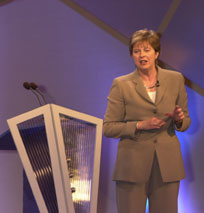
    Theresa May – 2002 Speech at Welsh Conservative Party Conference

    The speech made by Theresa May on 25 May 2002.

    The theme of this conference is making life better for Wales.

    Today, I want to talk about why we are the Party fit for that purpose.

    We are the Party that recognises the value of community.

    We are the Party that wants to push power down to people, not take it away from them.

    We are the Party in politics today which knows that we need to change the way we think about public services if we are to give the public the schools, hospitals and railways they deserve.

    We are changing as a Party – not who we are or what we believe, but how we express what we believe.

    We stand by our Conservative principles – freedom, responsibility and choice.

    But we are looking at how we apply these to the 21st Century.

    And to do this, we are learning from local people.

    My Shadow Cabinet colleagues and I have been travelling throughout Britain to see how people are making a difference in their own communities.

    We all know that people no longer hold politicians in high regard. They have seen too many broken promises to believe much of what we say.

    So in many communities they are rejecting politics and finding different ways of improving their quality of life.

    They are building neighbourhoods.

    Our challenge now is to support these local neighbourhoods and to support local people who want to help themselves.

    Too often, politics acts as a barrier to community.

    For five years we have been governed by a party which sees community as a threat. Labour have been the most centralising government for decades.

    But they haven’t simply centralised power and decision-making in Whitehall – they’ve actually put it in the hands of just a few people.

    I know this better than anyone.

    I have the task of trying to root the truth out of anything Stephen Byers says.

    We all know that he has great difficulties in remembering quite what he’s said to whom and what people have said to him. It doesn’t matter whether it’s the Chairman of BMW, the rail regulator, the chairman of Railtrack or his own press officer.

    So it’s little wonder the Prime Minister has taken his responsibilities from him and given them to an unelected adviser – Lord Birt.

    He’s not elected. He’s not accountable. His only record on transport is running up a massive taxi bill at the BBC. Yet the Prime Minister would rather he decided transport policy than his own Transport Secretary.

    This is an example of how Labour works.

    They put power in the hands of the few – not the many.

    They take decisions behind closed doors. They dictate to people through centralised plans and national targets. They think they know best.

    They don’t trust you to take your own decisions.

    Here in Wales, they said that devolution would bring power closer to the people – but do people here in North Wales feel any better off because there’s an Assembly in Cardiff?

    For too long we have allowed Labour to claim the mantle of devolution.

    We need to reclaim that mantle. Today, it is we Conservatives who believe in a genuine devolution of power.

    It’s not about local politicians. It’s about local people.

    Because the Labour LibDem coalition has not delivered real devolution. But let’s be clear about why.

    It’s not because they couldn’t make life better in Wales if they wanted to. It’s not because they need greater powers or more money.

    It’s because Labour and Liberal Democrat politicians simply don’t know how to deliver better services to people in Wales.

    It’s because they think politicians and the state run things better than people and communities.

    They have increased centralised control over public services.

    On education, housing and social services they dictate policies from the centre.

    They cream off resources that are meant to go to schools.

    They offer councils financial incentives, but only if they sign-up to what they want.

    They believe uniform policies work better than local initiatives.

    Today, I have seen first-hand how this approach impacts upon vulnerable people.

    Earlier this morning, Nigel Evans and I visited a care home here in the town – in fact, as we speak Nigel is still there. We heard from elderly residents who thought they had found a long-term home. It is a community in itself. The residents know their neighbours; the residents know the staff; and the staff know the residents.

    But a politician somewhere has decided that it has to close. It may not have been the intention of the decision they took, but by imposing centrally decided standards on care homes while failing to back them up with resources, they have condemned the residents of plas-y-dre to an uncertain, and perhaps an unhappy future.

    This is the politics of last century.

    So what a relief that we have such a strong team of Conservative AMs in Cardiff.

    A group who have worked to try and make the Assembly deliver the better quality of life the people of Wales were promised.

    A group who are on their side.

    What would the Assembly be without a Conservative group who recognise that people want decent public services not decadent politicians’ palaces?

    And a group who are being straight-forward and honest with people about what they can achieve in Wales.

    I would of course love to see a Conservative victory at next year’s elections.

    A Conservative led Assembly would put to rest the myth that the only problem with it is that it doesn’t have enough power.

    And we will fight every seat vigorously to achieve that success.

    Half of our candidates are already chosen. Soon we will have our full team in place.

    But it’s not just about having the right team – it’s about having the right policies.

    Later this afternoon you will hear more about the policies our Conservative Assembly Members will be putting forward to the people of Wales next year. Nearer the time they will publish their full manifesto.

    But it is important that in building these policies we have been talking to the people who matter.

    On education, we’ve been talking to parents and teachers. We’ve been finding out about their concerns. We know what they want, and we know how to deliver it.

    They want local schools to have the freedom, the flexibility and the finance to deliver world-class education. So we need to stop politicians and bureaucrats dipping into their budgets by ring-fencing the money they are given.

    On health, we’ve spoken to doctors, nurses and patients. They think Jane Hutt’s plans to replace 5 health bodies with 37 different organisations are mad. 80 per cent of NHS managers have already said such a reorganisation won’t achieve better health care. So we should take the politicians out of the NHS and let doctors, nurses and patients decide the best way to organise themselves.

    On transport, we recognise that the best way to improve public transport is not to tax the motorist off the road. For many people in Wales the car isn’t a luxury – it’s a necessity. So we need to improve the road and rail links throughout Wales. Anyone trying to get here to Llandudno will testify to that.

    None of these things can be solved by money alone.

    You don’t improve schools, hospitals or the transport system by simply throwing more money at it. Unless you are also prepared to think about how you spend the money, unless you are prepared to consider changing the systems you are spending it on, then all the money in the world won’t deliver the world-class public services people want.

    And the tragedy is that when public services fail it is vulnerable people who suffer the most.

    It’s the vulnerable who are suffering most as a result of our failing health service. It’s ok if you can afford to buy your way out of it. If you can afford to travel to France or South Africa to receive treatment then the spiralling waiting lists need not affect you. But why should people have to spend their life savings to save their own life?

    It’s ok if you can afford to send your children to private schools. People should of course have that right. But what happens to the children whose parents can’t afford it? What happens to the community where one child is well educated while the next one isn’t?

    How do you build social cohesion when your quality of life depends more on what you have in your pocket than on what you bring to your community?

    That’s why this week Iain Duncan Smith said that his most important priority – and our Party’s most important priority – is to ensure equality of opportunity in our schools for all children, wherever they live, however much their parents earn.

    In the past, we have allowed ourselves to be portrayed as a Party which only cares about money. People felt we were prepared to let vulnerable people suffer.

    It was of course a caricature, but people believed it.

    But under Iain Duncan Smith the Party is changing.

    It’s changing to focus on improving public services; changing to be more representative in our constitution of the society we seek to represent in our politics; changing to give support to our communities and to their people.

    And people are responding to that change.

    That’s why here in Wales people are joining us from all areas of the political spectrum.

    That’s why former Liberal Democrat candidates and councillors now sit under the Conservative umbrella; and why a former organiser for Plaid Cymru is your Assembly candidate here in Conwy.

    And haven’t we seen Plaid’s true colours in the past week? At least people in Merthyr and elsewhere can now see through their false promises and platitudes and recognise the true nature of the party underneath.

    It is clear that we are the only credible opposition in Wales.

    In the Assembly, Nick Bourne and his team are the only Members standing up for the interests of all the people of Wales.

    Jonathan Evans is our strong voice in Europe. He has already shown that he can lead where Labour and Liberal Democrat politicians – to their shame – try not to follow.

    And you can take it from me – the Welsh Conservative voice is heard loud and clear around the Shadow Cabinet table from Nigel Evans.

    We are all united in one aim.

    We want to give power back to local people. We want to push power down; support community and voluntary groups who seek to help themselves; support local councils who want to be free to innovate and try new ways of doing things.

    That’s the message I’m giving to local councillors as I travel around England. Our commitment in Wales is no different.

    Conservatives believe in local people whoever, and wherever, they are.

    It is not always about winning votes for the Conservative Party.

    There are some areas of Wales where a Conservative is seen as an outsider. These are the areas we have to reach.

    It is often in these areas that people need help the most.

    It is often here that the schools, hospitals and transport systems are worst.

    But many of them have one very important thing – community spirit. We can harness this for the good, or dampen it to everyone’s detriment.

    We have made our choice, and Iain Duncan Smith is leading the way.

    So over the next year we have to go into these areas and reach out to these people. Show them that we are on their side. Tell them what a Conservative administration and a Conservative government will do for them.

    Tell them that we trust them to run their own lives, but that we are ready to help where we can.

    This is what devolution is really about.

    People not politicians.

    Communities not committees.

    Pushing power down, not pulling power up.

    We have listened and learned. We are changing. We know that people deserve better than they have had in the past, and much better than what they are getting now.

    It is as true in Wales as it is in Westminster.

    It is the message we shall pursue up until next year’s elections and beyond.

    It is how Conservatives will make life better in Wales.


  • PRESS RELEASE : Ukraine is ready to hold negotiations with Russia to save the lives of millions of people – President

    PRESS RELEASE : Ukraine is ready to hold negotiations with Russia to save the lives of millions of people – President

    The press release issued by the President of Ukraine on 23 April 2022.

    Ukraine is ready to negotiate with the Russian Federation to end the war, as a diplomatic path will save the lives of millions of people. This was stated by President of Ukraine Volodymyr Zelenskyy during a press conference for international and Ukrainian media in Kyiv.

    The Head of State stressed that from the very beginning of Russia’s aggression, he insisted on holding direct talks with Russia, as any format of dialogue through mediators is ineffective.

    “I want to stop the war, to end it. There is a diplomatic path, there is a military path. So any mentally healthy person always chooses the diplomatic path, because he or she knows: even if it is difficult, it can prevent the loss of thousands, tens of thousands, and with such neighbors – hundreds of thousands and maybe even millions of lives. There may be losses of millions of people. We don’t want that, and any leader, whether he wants it personally or not, has no right to cancel the diplomatic path,” Volodymyr Zelenskyy is convinced.

    The President noted that today Ukraine’s international partners, including the European Union, the United States and Canada, saw Russia’s reluctance to hold peace talks.

    “Today the trust of our partners in us is at the highest level. And there is simply no trust in Russia. Today these are antonyms – “Russia” and “trust”,” the Head of State noted.

    Volodymyr Zelenskyy stressed that Ukrainians have shown their fearlessness in the fight against the aggressor, so he is not afraid to negotiate with Russia.

    “The leader has no right to be afraid when it comes to our state and our independence,” the President said.

    At the same time, Volodymyr Zelenskyy stated that if our people in Mariupol are killed, if a pseudo-referendum on pseudo-republics is announced in the temporarily occupied territories in the Kherson and Zaporizhzhia regions, Ukraine will withdraw from the negotiation process.

    “I believe that this (holding a pseudo-referendum – ed.) will not benefit the diplomatic settlement of this situation. This will definitely hinder the end of the war through diplomacy. This is definitely the wrong move by Russia. This means that everything that happened before, all those meetings of diplomatic groups – it’s all fiction and political theater,” said the President.

    The President also called on the citizens of Ukraine in the temporarily occupied territories of the Kherson and Zaporizhzhia regions not to help the occupiers.

  • PRESS RELEASE : The key to successfully resisting Russian aggression is the heroism of the Ukrainian army and effective sanctions, which are being worked on by an international group of experts – Andriy Yermak

    PRESS RELEASE : The key to successfully resisting Russian aggression is the heroism of the Ukrainian army and effective sanctions, which are being worked on by an international group of experts – Andriy Yermak

    The press release issued by the President of Ukraine on 23 April 2022.

    Head of the Office of the President of Ukraine Andriy Yermak notes that the heroic resistance of the Armed Forces and Ukrainian society, as well as strong and effective international sanctions, which the “sanctions” group of experts is working on, are important for ending Russia’s aggressive war against Ukraine. This is stated in his op-ed for NV.

    “Russia’s blitzkrieg against Ukraine has failed. The heroic efforts of our Armed Forces and society thwarted the Kremlin’s plans. Numerous aggravations on the frontline await us. Russian troops will keep trying to advance deep into Ukraine. However, the turning point has taken place, and now it is quite obvious that this war will no longer follow the Kremlin’s plan,” Andriy Yermak stressed.

    The Head of the Office of the President noted that Ukraine is receiving more and more military-technical, humanitarian and financial assistance.

    “Our troops receive effective weapons, and their range is steadily growing, and by joint efforts the issue of lend-lease is moving from the abstract-theoretical to the practical plane,” he wrote.

    Also, according to Andriy Yermak, thanks to the efforts of the Ukrainian authorities and foreign partners, the banking system is functioning stably. Utilities operate in the territories free from the occupiers, and the food situation is under control.

    The Head of the Office of the President noted that the key to successfully resisting Russian aggression is not only the resilience, valor and motivation of Ukrainians and professional command, but also the second frontline – international sanctions. Due to the long-term effect, they should make it difficult for Moscow to pursue an aggressive policy in the future. This is one of the elements of guaranteeing our security, at least until the legally binding mechanisms of the new security architecture start working.

    He explained the need to force Russia to focus on overcoming its internal problems. At the same time, we must not forget about the pressure on Russian oligarchs who must also be punished for supporting and financing the aggression. That is why President of Ukraine Volodymyr Zelenskyy a few weeks ago initiated the creation of a “sanctions” international group of experts, which is working to assess the effectiveness of sanctions, find ways to optimize them and increase efficiency. The group chaired by the Head of the Office of the President and the well-known American diplomat Michael McFaul has already presented an Action Plan to strengthen sanctions.

    In particular, Ukraine submitted to the European Energy Community a proposal to impose a full oil and gas embargo on Russia. This item in the Plan proposed by experts is number one, because, according to the results of three quarters of last year, energy accounted for 34.5% of Russian budget revenues.

    The Plan also offers to include Russia in the FATF blacklist along with Iran and the DPRK, impose comprehensive sanctions against Russian and Belarusian banking institutions, trade restrictions on their goods, and expand transport and insurance-related restrictions.

    Another line of pressure is recognizing Russia and Belarus as states – sponsors of terrorism, and the Russian army and political parties as terrorist organizations.

    Andriy Yermak also noted the importance of introducing a mechanism of secondary sanctions against those individuals and companies who try to make money by providing services to circumvent primary sanctions.


  • PRESS RELEASE : ‘Leave no Child Alone’ campaign to improve protection for children without parental care is being launched with the support of the Office of the President of Ukraine

    PRESS RELEASE : ‘Leave no Child Alone’ campaign to improve protection for children without parental care is being launched with the support of the Office of the President of Ukraine

    The press release issued by the President of Ukraine on 21 April 2022.

    The United Nations Children’s Fund (UNICEF) in Ukraine together with the Office of the President, Adviser – President’s Commissioner for Children’s Rights and Children’s Rehabilitation, and the Ministry of Social Policy are launching a nationwide information campaign “Leave no Child Alone: Instructions for Care” on April 21.

    The goal of the campaign is to draw public attention to the violation of children’s rights during the war and to provide comprehensive information on how to solve these problems. In particular, it concerns the rights of children left without parental care due to the war and in need of care and a temporary home. The campaign will provide information on how to properly support and protect the rights of children left without parental care, as well as provide instructions on the temporary shelter for children in the family.

    “Today, the number of children deprived of parental care and being at risk is growing. First, these are children from regions where active hostilities and bombing of residential areas are taking place. The chat bot @dytyna_ne_sama_bot (“Child not alone”) is a tool which can help people give a temporary shelter in their family to a child who got lost or is left without parental care,” said Maryna Lazebna, Minister of Social Policy in Ukraine.

    The campaign will scale-up access to the Telegram chatbot ‘@dytyna_ne_sama_bot’ (Leave no Child Alone), which provides opportunities for Ukrainian families and international organizations to submit an application to children’s services to provide temporary care for children in need. Over 15,000 Ukrainian families and more than 500 organizations from abroad have already submitted their applications through the chatbot. The chatbot also contains instructions for those who have lost or found a child.

    “Even before the war, nearly 17,000 children in Ukraine were up for adoption. Orphans and children deprived of parental care need to grow up in a home and family environment instead of upbringing in institutional care facilities. With each bombing, the number of these children is increasing. We are planning to improve the adoption process and will digitize some of its components, which will be launched immediately after the war. Currently a large number of families are able and willing to help these children – they need additional information and latest updates on the process,” said Dariya Herasymchuk, Advisor to the President of Ukraine on the Rights of the Child and Child Rehabilitation.

    The Ministry of Social Policy will launch a new webpage with specific guidance on the protection of child rights during wartime. UNICEF is providing technical support for the content development and management of the page.

    “Every child in Ukraine needs assistance, as this horrific war continues, but children without parental care are particularly at risk of exploitation and abuse,” said UNICEF Ukraine Representative Murat Sahin.

    “This campaign unites all our efforts to best protect children across the country,” Sahin added.

    The three-month campaign integrates digital content and outdoor advertising, as well as national and international media engagement. The campaign also features prominent Ukrainians and opinion leaders.

  • PRESS RELEASE : President – We really want to save the lives of our people, and this requires heavy weapons and equipment

    PRESS RELEASE : President – We really want to save the lives of our people, and this requires heavy weapons and equipment

    The press release issued by the President of Ukraine on 21 April 2022.

    Ukraine needs heavy weapons to protect the lives of its citizens and to counter the Russian army, which has a numerical advantage in personnel and equipment. This was stated by President of Ukraine Volodymyr Zelenskyy during a meeting with media representatives following the negotiations with Prime Minister of Spain Pedro Sánchez and Prime Minister of Denmark Mette Frederiksen in Kyiv.

    The Head of State stressed that in negotiations with all foreign partners, the issue of providing Ukraine with heavy weapons is a priority for him.

    “The issue of weaponry is the most important. Yes, we also talked about finances that can support our pensioners, about social support where partners can help us. Because the economy in times of war is not about the economy. This is about plugging holes. This is a difficult story. But without weapons there will be nothing: no economy, no pensions, no salaries. Because there will be no one to protect. So far, we are raising the issue so that there is something to protect our population with,” Volodymyr Zelenskyy said.

    The President thanked the Prime Ministers of Spain and Denmark for the weapons that have already arrived and are yet to be delivered.

    The President stressed that the timely provision of the necessary weapons will save the lives of citizens, which is a priority for Ukraine.

    “We really want to save lives, to this end we need this equipment, which is lacking,” he said.

    According to Volodymyr Zelenskyy, there are two ways to liberate civilians and servicemen from Mariupol, which has been blocked by Russian troops: military and diplomatic. The implementation of the military way requires weapons, which are currently insufficient, and the help of our partners.

    People can be liberated more quickly through diplomacy, and Ukraine has offered several options, including with the participation of mediators, as well as in the format of exchanging the wounded, but Russia does not agree to this, the President said.

  • PRESS RELEASE : Volodymyr Zelenskyy discussed with the Prime Ministers of Denmark and Spain the issues of strengthening defense capabilities, rebuilding and supporting Ukraine’s integration into the EU

    PRESS RELEASE : Volodymyr Zelenskyy discussed with the Prime Ministers of Denmark and Spain the issues of strengthening defense capabilities, rebuilding and supporting Ukraine’s integration into the EU

    The press release issued by the President of Ukraine on 21 April 2022.

    President of Ukraine Volodymyr Zelenskyy met with Prime Minister of the Kingdom of Spain Pedro Sánchez and Prime Minister of the Kingdom of Denmark Mette Frederiksen who are on a visit to our country.

    The Ukrainian President noted that the joint visit of the heads of government of European states is an important signal of solidarity and support for the Ukrainian people and the unity of Ukraine with the EU states in the fight against Russian aggression.

    During the meeting in Kyiv, the interlocutors discussed in detail the possibilities of strengthening Ukraine’s armed response to the aggressor, rebuilding our state after winning the war and future membership in the European Union.

    “We have crucial difficult days ahead, a crucial battle for our state, for our land, for the Ukrainian Donbas. We are doing everything we can so that our defenders can defend our land and protect their own lives very effectively. Ukraine’s needs have been explained to our guests today. We are waiting for the prompt aid from them,” Volodymyr Zelenskyy said at a meeting with media representatives following talks with the Prime Ministers of Spain and Denmark.

    The President thanked both countries for their assistance in strengthening the capabilities of Ukraine’s defense forces.

    Also during the talks, the parties agreed to continue to work actively to increase sanctions pressure on Russia.

    “This pressure must increase until the aggression on the part of the Russian Federation is terminated. And I really want all these sanctions to be profound and really effective, so that the Russian Federation really feels it. If there is a disconnection from SWIFT, do it to all banks. Don’t just raise the issue of restricting energy supplies from Russia to Europe, but specifically impose an embargo on oil and gas,” said Volodymyr Zelenskyy.

    In addition, the President of Ukraine discussed with Pedro Sánchez and Mette Frederiksen the strengthening of financial support and specific projects of the post-war reconstruction of our state, the patronage of which could be undertaken by Denmark and Spain.

    “So that every person from one state or another feels that he or she has made a great, historical contribution to the reconstruction of Ukraine,” the President said.

    The parties paid special attention to Ukraine’s movement towards membership in the European Union.

    “Ukraine, we believe, deserves faster accession to the EU. We really count on your support, on the support of your teams, your people and communities. We consider ourselves equal, not better than you, but definitely equal. And we really want to be in alliance with partners and friends who are here today and who help us,” the President stressed.

    For her part, Mette Frederiksen noted that Denmark has provided substantial political, financial and sanctions assistance to Ukraine from the very beginning, as well as the necessary equipment and weapons. She announced a new contribution to Ukrainian defense and security in the amount of DKK 600,000.

    The Prime Minister noted the importance of demining the de-occupied territories and restoring the work of utilities so that people could return to normal life as soon as possible.

    Mette Frederiksen said that during the current visit she visited Borodyanka in the Kyiv region and saw with her own eyes what was happening there during the Russian occupation. She expressed support for the Ukrainian people.

    The Prime Minister of Denmark emphasized the support of the International Criminal Court for the documentation of all crimes committed by Russia against Ukraine, as well as the support of affected families who deserve justice. “We must ensure that all those responsible for crimes are punished,” she added.

    The Prime Minister of Denmark informed that her country officially confirmed the consent to the offer put forward by Volodymyr Zelenskyy during the speech in the Danish Parliament concerning the participation in the reconstruction of Mykolaiv.

    “Putin tried to divide us – to sow discord between Europe and Ukraine. He was defeated in this. What happened in the last month is undoubtedly an expression of extraordinary solidarity with Ukraine, which has in fact become part of Europe. The EU and global partners have imposed unprecedented sanctions on Russia, and together we will do even more,” said Mette Frederiksen.

    Pedro Sánchez also assured that Spain and its people support Ukraine in defending freedom and European democratic values, strongly condemn Russia’s actions and stand against this unjust war.

    He stressed that Spain will fully support Ukraine on its path to EU membership.

    “We support, Mr. President, your intention to join the European family. You have the right to choose your destiny and you have a very legitimate reason to do so by joining the common European home,” said Pedro Sánchez, addressing Volodymyr Zelenskyy.

    He condemned the atrocities committed by the occupiers in Ukraine which cannot go unpunished. Pedro Sánchez said that Spain would assist in the investigation of crimes by sending a group of experts of various kinds, including forensic experts.

    “We want Putin to bear responsibility for his crimes, for the crimes of his country. We will help Ukraine, the Ukrainian people until we achieve our goal – freedom and peace for Ukraine,” the Spanish Prime Minister assured.

    Pedro Sánchez reminded that in recent weeks, Spain has provided assistance to Ukraine’s medical system, military equipment and weapons. Spain has contributed € 120 million to the European Peace Fund and supported the humanitarian package with a € 31 million contribution. The funds will be directed primarily to the needs of women and children.

    He assured that assistance will be further provided. The Prime Minister of Spain said that a new cargo of 200 tons of ammunition and other materiel is already arriving in Ukraine.

    Pedro Sánchez also said that Spain aims to restore the work of its embassy in Ukraine.

  • PRESS RELEASE : Mykhailo Podolyak – The return of Ukrainians deported to Russia will be another war – a war for our citizens

    PRESS RELEASE : Mykhailo Podolyak – The return of Ukrainians deported to Russia will be another war – a war for our citizens

    The press release issued by the President of Ukraine on 21 April 2022.

    Adviser to the Head of the President’s Office Mykhailo Podolyak is convinced that Russia will hinder the return of Ukrainian citizens forcibly deported from the temporarily occupied territories of Ukraine or places of active hostilities, so their return will be another frontline for our country after the active phase of the war.

    “This is a difficult procedure that will require intermediary countries or international institutions that will allow us to bring people back. I’d like to note that this will also be a war. After the war, there will be a war to take our people back,” Mykhailo Podolyak said during the United News TV marathon.

    According to him, Russia, which has a historical tradition and practice of so-called resettlement of nations in order to separate them from their homeland, will never acknowledge that people were forcibly deported or forced to do so by conditions created by Russians.

    “They will not tell us objective information that, for example, of the 100,000 deported from Mariupol, Volnovakha and other regions of the Donetsk region, only 5% wanted to go to Russia, and the rest were forcibly deported there,” said the Adviser to the Head of the Office of the President.

    According to Mykhailo Podolyak, the Russians will continue to try to convince the world community that this migration was voluntary.

    “In terms of propaganda, the Russians will lie to the whole world that these people wanted to go from Ukraine to such a large and prosperous country, that they feel “comfortable” living in Tomsk and so on,” he said.

    “Ukrainians who lived in beautiful cities, had an opportunity to travel the world, build a career, study in good educational institutions, chose these ruined, useless and worthless cities of the Russian Federation as their place of residence?” added the Adviser to the Head of the President’s Office.

    Regarding the possibility of returning deported citizens of Ukraine, Mykhailo Podolyak noted that first of all it will be necessary to clarify who was deported to Russia, how and under what conditions, who agreed and who was deported by force. After that, it will be necessary to compile legally verified lists and hand them over to the Russian side.

    Mykhailo Podolyak is convinced that these people should be visited by mediators or representatives of international organizations who will be trustworthy so that citizens can communicate openly with them and will not be afraid to say that they want to return to their country.

    “This is a whole legally sound procedure for us to take them back,” the Adviser to the Head of the President’s Office summed up.

    As for the prospects of agreeing on humanitarian corridors for the evacuation of civilians from the city of Mariupol, which is under constant fire from the occupiers, the Ukrainian side is in constant contact with Russia on this issue, but unfortunately Russia rejects or agrees and then does not keep the word.

    “There was an attempt by a third party – Turkey, which tried to take part in taking people from Mariupol. They wanted to do it through the waters of the Sea of Azov, and offered other options. But the Russians are waging war against us not in terms of hostilities – they are waging a genocidal war. They believe that it is possible to kill and keep the corridors closed for the delivery of medicines or food. Unfortunately, they are using Syrian tactics,” he said, adding that Russia is waging an inhumane war against civilians.

    However, Ukraine will continue to demand the opening of humanitarian corridors, a temporary ceasefire and the involvement of a third party as a guarantor or mediator, Mykhailo Podolyak said.

    “The world watches this war live, and it is unclear what reputation the Russian Federation is counting on. What do they want in historical terms? They will be called the Nazi state of the Russian Federation in history textbooks,” said the Adviser to the Head of the Office of the President of Ukraine.

  • PRESS RELEASE : The war can be finished with direct negotiations between the Presidents of Ukraine and Russia, and the positions of the Ukrainian side at these negotiations must be strong – Mykhailo Podolyak

    PRESS RELEASE : The war can be finished with direct negotiations between the Presidents of Ukraine and Russia, and the positions of the Ukrainian side at these negotiations must be strong – Mykhailo Podolyak

    The press release issued by the President of Ukraine on 21 April 2022.

    Russia’s aggressive war against Ukraine can be finished with direct negotiations between the two heads of state, and the Ukrainian side’s position in these negotiations must be strong, well-thought-out and legally sound. This was stated by Adviser to the Head of the Office of the President of Ukraine Mykhailo Podolyak during the United News TV marathon.

    “This is what the team of lawyers, consultants and the negotiating group from the Ukrainian side are working on today. Accordingly, we hope that the positions of President Volodymyr Zelenskyy will be extremely strong in these talks,” he said.

    Mykhailo Podolyak expressed conviction that the Head of the Ukrainian state will be able to convey key, fundamental things for Ukraine to the counterpart from the aggressor country during the talks.

    At the same time, according to the Adviser to the Head of the President’s Office, we need to wait for the situation in the east of our country to develop and assess how substantive the offensive fervor shown by the Russian side will be.

    “They have enough resources, enough missiles, they unfortunately continue to bomb our cities. They still have manpower and equipment that they do not mind destroying in our fields. Therefore, let’s wait a while, and then we will be able to talk about the positions of the parties, first of all the President of Ukraine, at future bilateral meetings,” Mykhailo Podolyak said.

    According to him, in the next week and a half it will be clear how things will develop.

    “The Armed Forces of Ukraine have no choice but to gain tactical victories in the east of the country today. It is fundamentally important for us to remain free, not live in the camp,” said Mykhailo Podolyak adding that, unfortunately, the Ukrainian servicemen are paying a high price for this – giving their lives.