Blog

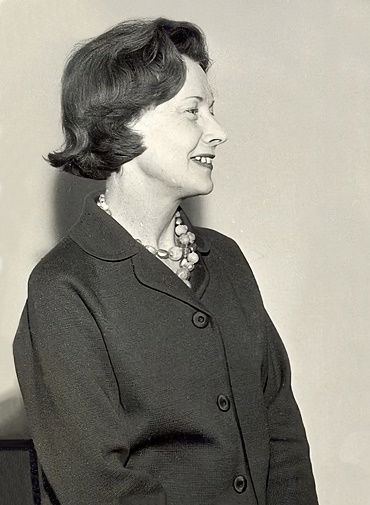
  • Barbara Castle – 1966 Speech on the 70 MPH Speed Limit on Motorways

    Barbara Castle – 1966 Speech on the 70 MPH Speed Limit on Motorways

    The speech made by Barbara Castle, the then Minister of Transport, in the House of Commons on 23 February 1966.

    The right hon. Gentleman the Member for Rushcliffe (Sir M. Redmayne) began by saying that he believed a number of people among those outside this House were surprised that the Opposition should pray against these Regulations right in the middle of the experiment. I am one of those who were surprised that he should pray against the Regulations, but I think that the one thing that this debate has revealed quite clearly is that the Opposition are now completely opposed to this experiment—

    Mr. Timothy Kitson (Richmond, Yorks)

    What about the other side?

    Mrs. Castle

    No voice has been raised from this side opposing the experiment.

    I am deeply shocked by the opposition that has been expressed. I should have thought that the whole question of road safety was of such importance that our motorists and drivers would have been prepared to wait for at least four months in order to see whether some of the surmises that have been ventilated, or some of the points made, were actually sustained by the result of systematic observation of driver behaviour, the question of bunching-up, and so on, and until the results of that systematic observation—which must be more important than any isolated example of personal observation—have been received in my Department, have been studied by the Road Research Laboratory, and have been reported on fully to the House.

    It was interesting to hear some of the points made by the right hon. Gentleman, but it became clear that what we were having was open hostility to this experiment—

    Sir M. Redmayne

    The Minister must understand. What other opportunity have we to express these views? This is our only Parliamentary opportunity until she comes to the stage of considering the end of her experiment.

    Mrs. Castle

    I have explained to the House—I did so at the last Question Time—that the material will be made available by the middle of March, and that I shall before the end of the experiment on 13th April, give a full report to the House on my decision, and the reasons for it. I should have thought that it was little to ask that we should wait for this information to be obtained.

    The opposition that is now being voiced has not been voiced at any time when consideration was undertaken as to whether there should be this experiment—on the contrary. This idea that we should experiment on speed limits in order to meet various developments is nothing new. This experiment was not a whim just cooked up by Her Majesty’s Government. It is the result of study over the years of what has happened in this country and in other countries on motorways and other high-speed roads, and study of certain recent developments.

    I was interested to see that as long ago as 1st July, 1964, a couple of hon. Members—one from each side of the House—asked the then Parliamentary Secretary to the Ministry of Transport whether he would impose a 100 m.p.h. experimental speed limit on the motorways. The Parliamentary Secretary replied: No. We are keeping under review the possibility of a speed limit on motorways. If we do introduce one it will be lower than 100 miles per hour.”—[OFFICIAL REPORT, 1st July, 1964; Vol. 697, col. 215.] We also had the experiment of a 50 m.p.h. speed limit at weekends, which was carried out between 1961 and 1964.

    We have had this evidence from other countries of the effects of either a speed limit or of its removal. The American figures that we have used have been queried. I would say to the right hon. Gentleman that the American report to which he refers covers high-speed roads, if not actual motorways.

    Sir M. Redmayne indicated dissent.

    Mrs. Castle

    I am sorry, but that is the position. I also point out that there has been experience from other countries. Germany tried an experimental speed limit in a certain period on a section of the Frankfurt-Mannheim autobahn. The speed limit was lifted, but not because it did not have the result of reducing accidents. On the contrary, the effect of removing the speed limit was a sudden and dramatic increase in the number of accidents. The number increased by 35 per cent. and the numbers of those killed and injured by 43 per cent. and this for an average traffic increase of only 9 per cent. Because of that there has been a growing feeling in this country that it is worth having an experiment to see whether speed is a major contributory factor in the level of accidents.

    It will not be my advice which will decide the issue, but the evidence we shall get. Therefore, I do not want to give arguments in advance of the result of the experiment. I have a completely open mind about it, but I have not an open mind about the desirability of having an experiment. We all know that this matter was brought to a head by that terrifying series of multiple crashes last November on the motorways. There were three accidents involving 65 vehicles, five were killed and 30 injured. I say categorically that everybody in that situation was prepared to try any experiment that might contribute to avoiding a recurrence of that kind of horror on our roads.

    My right hon. Friend the Member for Hamilton (Mr. Tom Fraser), who was then Minister, would have been under fierce attack from the House if he had not examined every possibility of preventing that kind of terrifying accident from recurring. Then the voices of all who have a right to be consulted on this issue were overwhelmingly in favour of this experiment. My hon. Friend the Parliamentary Secretary met the Lancashire and Staffordshire police on 8th November, three days after the accidents when the country was still reeling with the horror of those multiple crashes. They were strongly of the view that excessive speed was responsible for those accidents and in favour of an experimental speed limit on motorways.

    Mr. Antony Buck (Colchester)

    Will the hon. Lady say what assistance there would be in having a 70 m.p.h. speed limit to prevent accidents in thick fog? That I fail to see.

    Mrs. Castle

    This all arose from the incidence of fog. The arguments which the police and others advanced was that if we are travelling into an area of hazard it is important that the speed differential should be reduced so that there can be quicker reaction. I have not the time to go into the technicalities. I am merely reporting to the House that the police of Lancashire and Staffordshire, were overwhelmingly in favour, arising from that experience, of an experimental speed limit on motorways and suggested 70 m.p.h. on the basis of American experience.
    A few days later my right hon. Friend the Member for Hamilton met chief constables and others, including representatives of the motoring organisations. The general consensus of their views was that this experiment ought to be tried in the interests of safety on the roads.

    Mr. R. Gresham Cooke (Twickenham) rose—

    Mrs. Castle

    I am sorry, but I have only two or three minutes left and I shall be criticised if I do not reply to some of the points which have been made.

    I turn to questions put to me by the hon. Member for Chippenham (Mr. Awdry). He asked for an assurance that no speed limit would be made permanent before the full report on the experimental period had been published and debated. There is nothing to hide. I am not trying to prove a particular line of argument except to justify the experiment.

    I want to tell the House quite frankly the position as I see it. It might well be that the Road Research Laboratory, which is collating the data on accidents which the police are giving it direct every week, might report to me in due course that it did not think that the experimental period was long enough for it to form a valid view. This would depend on whether or not the accident figures showed a substantial reduction, whether there was a substantial effect or a strong indication of the trend of accidents. It might say that the evidence was inconclusive. If it said that, it would then be for me to judge whether, in the light of other evidence from the police of driver behaviour and all the other information coming in, the experiment should be continued for a further period.

    If I decided that it was desirable to continue the experiment, I should have to lay a fresh Statutory Instrument before the House which could then be prayed against. But before I did so I would report to the House fully what the findings of the Road Research Laboratory were and the reasons for the conclusion which I had reached. It would be only if the evidence were conclusive enough that I would even consider making the Regulations permanent.

    When I make my report to the House I shall give the House as fully as is possible all the figures of the casualties and all other relevant evidence from the Road Research Laboratory’s provisional assessments, which will be available to me in the middle of March, and from the other sources that I have mentioned—police observation of driver behaviour, traffic flow and the rest. Therefore, there is no intention of trying to impose either the continuation of the experimental period or any permanent speed limit behind the back of the House—indeed this would not be possible because the House could pray against the Statutory Instrument—and this is certainly not my desire.

    I remain profoundly convinced that my right hon. Friend the Member for Hamilton was very wise in fulfilling his public duty to the road users of this country by introducing the experiment. He ought to be congratulated and supported. I also have reached no conclusion, and I shall not until I have the evidence on which to do so.
  • Clive Bossom – 1966 Speech on Abolishing 70 Miles Per Hour Speed Limit

    Clive Bossom – 1966 Speech on Abolishing 70 Miles Per Hour Speed Limit

    The speech made by Clive Bossom, the then Conservative MP for Leominster, in the House of Commons on 23 February 1966.

    I wish to make my position clear at the beginning of my speech. I was wholly opposed to the 70 m.p.h. speed limit on the motorways, and for the same reason as was put forward by Mr. Wilfred Andrews, Chairman of the R.A.C., who pointed out yesterday that it can be proved that the great majority of accidents in this country occur at speeds below 40 m.p.h.

    So far, no evidence has been produced in relation to the 70 m.p.h. limit. The Ministry, in its wisdom, instituted this experiment. I am never against experiments if they are going to cut down the loss of life or improve road safety. However, very begrudgingly, I was willing to let it have a fair trial if it went on until only 13th April. Most people said at the time that the decision was ill-considered and far too hurried. Most hon. Members have received a large postbag of letters from motoring clubs and other organisations expressing unanimous disapproval of what they consider yet another restriction on the motorist.

    At Question Time on 9th February, the Minister was unable to give me any assurance that she would remove this restriction on 13th April. I hope that she will state tonight what information she is asking for, and whether conclusions will be based on full scientific assessment or just on “hunches”. If the conclusions and statistics are not satisfactory—and many of us believe that the Road Research Laboratory, the police and the motoring organisations will not have enough time to form definite conclusions by 13th April—what is the Minister planning to do in that case? We must know that tonight.

    We have had many arguments tonight about “overtaking”, “bunching” which caused the multiple crashes. The hon. Member for Meriden (Mr. Rowland) mentioned America. Driving on high speed roads in America at a constant speed in nose to tail queues, I found, in the end, led to lack of concentration. Many accidents there occur because of drowsiness and boredom caused by driving at constant speeds. What we must bring home to the Minister is that it is no good having speed limits which are hard or nearly impossible to enforce—and this limit will be one such. Motorists will soon realise that that law cannot be fully enforced, and will gradually take little or no notice of it. This will harm relationships between public and police, which is something we do not want.

    I ask the Minister to take a long, close and scientific look into this question before she makes up her mind. She must not continue to impose the restriction, even experimentally, unless there is clear evidence to justify it.

  • Daniel Awdry – 1966 Speech on Abolishing 70 Miles Per Hour Speed Limit

    Daniel Awdry – 1966 Speech on Abolishing 70 Miles Per Hour Speed Limit

    The speech made by Daniel Awdry, the then Conservative MP for Chippenham, in the House of Commons on 23 February 1966.

    I wish to make only three points on the subject of motorways, but I should like to say at the beginning that I really do believe that this experiment is totally misconceived. I realise that there is a need for some restriction on motorways in conditions of fog—we all realise that—but that really does not justify the total restriction in good weather conditions.

    My first point is on the question of danger. As a result of this restriction there will be a tendency for drivers to drive up to the limit of 70 m.p.h., and that will produce bunching. My right hon. Friend fully developed this point and I do not wish to enlarge upon it, because other Members probably wish to speak, but the real trouble with bunching is that when an accident does occur more vehicles are involved and the accident is far worse. I speak with some experience because I drive quite regularly on the M.4 motorway. This bunching, I believe, will cause great difficulties, because people will tend to try to pass a line of traffic on the inside.

    My second point relates to the experiment itself. I ask the Minister to give us tonight an assurance that no permanent regulations will be imposed till a full report of the results of this experiment has been published, and all the interested organisations have been given an opportunity to comment on it. I myself very much doubt whether a short experiment of this kind is capable of giving a conclusive result one way or another, and I ask the Minister to give us one further assurance, that she does not intend to extend the period of the experiment before she publishes the report.

    My third point is on a slightly different aspect. Obviously, motorways were built to enable people to drive more quickly. This step will restrict the fastest cars of our country to half their maximum capacity and speed. I believe that this will discourage the development by the motor industry of new, high-performance models, and this is a field in which we have a very substantial export success. This is a serious point: a permanent limit of this kind would have an adverse effect on vehicle design.

    I have received a number of letters, as has my right hon. Friend, and all the letters I have received unanimously condemn these Regulations, which I personally believe to be a step in the wrong direction.

  • Martin Redmayne – 1966 Speech on Abolishing 70 Miles Per Hour Speed Limit

    Martin Redmayne – 1966 Speech on Abolishing 70 Miles Per Hour Speed Limit

    The speech made by Martin Redmayne, the then Conservative MP for Rushcliffe, in the House of Commons on 23 February 1966.

    I beg to move, That an humble Address be presented to Her Majesty, praying that the Motorways Traffic (Temporary Speed Limit) (England) Regulations 1965 (S.I., 1965, No. 2063) dated 3rd December, 1965, a copy of which was laid before this House on 16th December, 1965, be annulled. I hope that it may be convenient, Mr. Speaker, to discuss at the same time the three other Motions standing in my name and the names of some of my hon. Friends: That an humble Address be presented to Her Majesty, praying that the Motorways Traffic (Temporary Speed Limit) (Scotland) Regulations 1965 (S.I., 1965, No. 2078), dated 9th December, 1965, a copy of which was laid before this House on 16th December, 1965, be annulled. That an humble Address be presented to Her Majesty, praying that the Motorways Traffic (Temporary Speed Limit) (Wales) Regulations 1965 (S.I., 1965, No. 2083), dated 9th December, 1965, a copy of which was laid before this House on 16th December, 1965, be annulled. and That an humble Address be presented to Her Majesty, praying that the Traffic Signs (Motorways Speed Limits) Regulations, 1965 (S.I., 1965, No. 2085), dated 9th December, 1965, a copy of which was laid before this House on 16th December, 1965, be annulled.

    Mr. Speaker

    If the House has no objection, so be it.

    Sir M. Redmayne

    We have little time and I shall try to be brief on a subject on which I would have a good deal to say. I want to devote my time almost wholly to the speed limit on the motorways because I believe that it is here that the limit is most subject to criticism. Some people outside have expressed surprise that we should pray against these Orders during the course of the experiment. They fail to realise that the procedures of the House compel us to do so and before the end of this week if we are not to lose our only opportunity of contributing a corporate view before the Minister makes up her mind whether or not to impose a permanent limit.

    We shall not seek to divide the House, because it is pointless to do so in the middle of a review, but I make it clear that we reserve our position at a later stage. It is also worth noting that the general speed limit on roads other than motorways does not appear before the House at all. That is how it is laid down in the Act and if necessary we shall have to seek remedies for that if we wish as a later stage to debate the limits as a whole.

    I hope the House will forgive me if a lot of what I say is in the first person, because I constantly drive on the M.1 and the M.4 and have driven on the M.6 since the limit was imposed. In using the first person I am repeating also views put to me in much correspondence on the subject. The letters I have received on the subject have been most moderately expressed and most clearly argued when they have been against the limit. I particularly want to put that on record because it has been suggested that those against the limit are in some sense irresponsible.

    I want to enumerate flatly and without embroidery a number of dangers which have become common on the M.1. It is my impression that the speeds in the slower lane have increased since the speed limit was put on and certainly the centre lane driving seems now to be seldom more than five miles an hour slower than in the fast lane. I think that is a smaller differentiation than used to exist.

    In the fast lane, few seem to travel over 70 miles an hour but they do travel at that speed and are noticeably frustrated if held up by someone whose speed drops even by a mile or two. Therefore two situations arise. First, one finds that more drivers stick to the outside lane than used to and this also applies in the case of a 40 m.p.h. limit. It is a feature of limiting speed. Some drivers appear to think, it seems to me, that they can go into the outside lane merely because they have as much right to be there as anyone else and some also seem to take the view that there is no need for them to look behind in their reflecting mirrors because, if they are travelling at 70 m.p.h. legally they cannot be overtaken.

    Secondly, since the differentiation in speed between the outside and the centre lanes is now so much less than it used to be, the available space to move into the centre lane from the outside is both less and is harder to find because, as those driving on the motorways know, in looking for a space to move into the centre lane one cannot accelerate beyond 70 because, if one does so, one is breaking the law.

    The result of this is a strong tendency for traffic to bunch and quite frequently one finds oneself in bunches of cars three abreast in the three lanes and six or so deep, all travelling at near enough the same speed. This happens two or three times in a journey between London and Nottingham, for example, and two or three times is enough. This happens in winter traffic and it will happen very much more when we get to the holiday traffic in the summer if the limit is continued. All the time these cars tread on each other’s heels much more than they used to and it is only those who break the law who can ease the pressure.

    But there are other dangers. We all know that cross-winds are very tricky on the motorways and the more vehicles are abreast, the more risk of danger there is and in wet weather—and this is a point which must be taken into consideration—vehicle spray, at all times a menace on the motorways, in these conditions of compulsory bunching is positively dangerous.

    Even if there is no bunching, the dangers arising from reduced differentials of speed are still considerable. Before the limit, both passing and regaining one’s position on the motorway were long-term operations—a long swing out and a long swing in—and this is much safer for all concerned. But the same manoeuvre now that we have the lower differentials of speed is in nearly every case too quickly out and too quickly back. This is very often accompanied—and I have seen this time and time again—by a reduction of speed as soon as the centre lane is regained, because the man passing has so often gone up to 72 or 73 m.p.h. and at once conscientiously comes back to 70 m.p.h., with the result that he immediately pancakes with the car behind.

    There is a very good film put out by the right hon. Lady’s Ministry showing how passing on the motorway should be done, and it makes the very point that the driver should look first for the car which is coming up fast from behind and let it go. But now, for the majority of drivers on the motorways, nothing comes up fast. Everything creeps up and I say flatly that it is often infernally difficult to know what is safe and what is not.

    Equally, I dislike intensely driving with another car running at the same speed as myself tucked away behind my right or my left shoulder. It does not matter how many mirrors one has—and I have as many as anybody else—in certain conditions there is always a point at which it is far too hard to see that car, not passing one, but just sitting there hoping to slip through if one slows down a little and he can ease his way past.

    I do not like the hooting which one now finds going on, nor the flashing of lights. I do not like to see cars passing others on the inside, or creeping up on the inside, and this is happening all the time. Most of all I dislike those who obstruct others with a self-conscious virtue and I believe that speedometer watching for the purpose of keeping within the 70 m.p.h. limit when the eyes of the driver should be on the road is itself dangerous.

    There is no question but that a man drives best at his car’s best cruising speed and today many are driving less well and less safely only because the limit forces them below their natural cruising speed, or in the case of others—and I am sure that this is so—because of the existence of the limit they are persuaded to cruise up to that speed.

    What one wants is for drivers on the motorway to have nothing to do except look far ahead and see where trouble is coming, both so that they can avoid it and so that they can help others behind them to avoid it—and that is enormously important. Some of the multiple crashes which we have had and perhaps because of which the limit was imposed—I am talking about crashes in clear weather and not in the fog—occurred because drivers were not looking far enough ahead and did not have the sense to slow up ahead of trouble, or the sense to keep touching their brakes so as to keep their lights flashing as they were slowing. Unless this kind of technique is adopted, there will be no safety and in these conditions the danger is greater than before.

    Instead of that we get motorists sweating along because they are worrying about the cars immediately in front of them, immediately behind and lurking on their flanks. This cannot be safe. I am going to say nothing about speed as such, nothing about the need to manufacture fast cars for the export trade, and nothing about the motorways being built for speed. All of these subjects tend to be emotive arguments and I want to keep on a practical basis.

    All I want to try to do is to put the arguments of the ordinary motorist driving an ordinarily fast car. If this debate were to go on long enough—but it will not—someone would be sure to say that speed is a killer. It is not speed that kills; it is foolhardiness, impatience, bad temper. All of these killing faults are as common at low speeds as at high speeds.

    I want to deal with the advertisements which the previous Minister of Transport used to launch the limit. In those advertisements the National Opinion Poll was quoted as showing 60 per cent. of motorists in favour of the limit and 38 per cent. against. I am not elaborating the arguments, but I doubt very much whether 60 per cent. of motorists drive at over 70 m.p.h. anyhow, and they are automatically in favour of the limit. Equally, I know that 40 per cent. of motorists do not drive over 70 m.p.h. as a matter of habit and that in the 38 per cent. there is a very large proportion of sensible people who consider that it is perfectly reasonable and safe for the others to be allowed to drive at those speeds if they wish to do so.

    Since I am going to refer to the American survey, which is another part of these advertisements, I would point out that in the survey the number of drivers habitually driving at 70 m.p.h. in America—and, after all, this limit has been largely based on American experience—is only 5 per cent. In these advertisements there is a statement which runs as follows: There is evidence that the average casualty rate for drivers exceeding 70 m.p.h. is about three times that for drivers travelling between 65 m.p.h. and 70 m.p.h. I put a Question down to the Minister asking on what information this statement was based and I was told that it was based on an American publication called “Accidents on Main Rural Highways.” There is now a copy in the Library. I say quite baldly that, in that the advertisement makes this statement, it is an outstanding example of the selective use of statistics, particularly in respect of motorways in this country because it says that the survey undertaken was expressly confined to two-and four-lane roads of the non-freeway type. In other words, it was confined to ordinary roads as we know them. It also says that the design speed of those roads was never more than 70 m.p.h. and mostly 55 m.p.h. or 60 m.p.h., sometimes as low as 45 m.p.h. Thus it gives no useful information about motorways of the kind we have which are designed for much higher speeds.

    It also shows that the rate of accidents on four-lane highways, the largest road with which it deals, is considerably lower than on two-lane, and one understands that. It permits the obvious assumption that the accident rate on six-lane motorways of high speed design would have been shown to be lower still, as it is in this country.

    With direct reference to this figure of three times the accident rate mentioned in the advertisement I want to say that, having studied the report, both its graphs and tables, if the Minister wishes to advertise that the injury rate per 100 million miles over 70 m.p.h. is three times that at 65–70 m.p.h., she, or her predecessor, should in all honesty have made it clear that the injury rate at speeds of 30 m.p.h. to 40 m.p.h. is also three times as much as 65 m.p.h. to 70 m.p.h. It is an inverse curve. At lower speeds still, the injury rate is very much higher. If it is put in straight figures taken from the report it is shown that by day, of a sample total of 2,151 drivers, the number injured at speeds over 73 m.p.h. is 68, or 3.5 cent. The number injured at speeds between 63 and 72 m.p.h. is shown as 180, or about 9 per cent., and the remainder of the sample, numbering 1,900 injured persons, were all travelling below 63 m.p.h. and the majority considerably below. This was, therefore, a peculiar use of a random statistic taken from a report which reached very different conclusions.

    That is all I want to say about motorways. As to other roads, much of these arguments equally apply.

    Mr. Deputy Speaker (Sir Samuel Storey)

    The right hon. Gentleman cannot deal with other roads on this Prayer.

    Sir M. Redmayne

    Thank you, Mr. Deputy Speaker. That will save the time of the House. I have said enough even in that one sentence to make my point and I can return to it on some other Parliamentary occasion.

    My remaining comments refer to the 30 m.p.h. advisory limit. It has been little used since it was enforced, and that is a good thing, because conditions have not made it necessary. When it was used, I was rather surprised that so much comment was made of the fact that drivers were on occasion driving faster than 30 m.p.h. Newspaper comments pointed out how many vehicles swept past their reporters who were driving at 30 m.p.h. Clearly, they misapprehend the purpose of the Order, as is clearly set out in Regulation 4, that a driver shall obey the flashing signs and drive at a speed which does not exceed 30 miles per hour and is safe having regard to any hazard which he may encounter until it is safe for him to drive at a greater speed. That is clearly set down. It means simply that having had warning of a hazard, if the hazard is observed the driver can therefore judge what speed is safe, or if, for example, the hazard is fog and the fog is sufficiently clear for him to drive at more than 30 m.p.h., he is at liberty to do so with reasonable caution So much for that point. It needs to be made clear.

    On previous occasions, I have put to the Minister a different suggestion about how the fog hazard could be met: that was, by a chain of lights down the centre divide. I should like to draw the attention of the House and of the Minister to a very good article by Raymond Baxter in the Autocar of 31st December describing a chain of low voltage lights, which were an improvement on what we talked about previously, which would achieve a desirable form of fog lighting in getting the driver’s eyes away from over-concentration upon a close object—probably another car’s rear light or the shadow of his own headlights in the fog—and keeping them searching out into the fog at a distance which would give him a reasonable chance of avoiding trouble.

    We are highly critical of the 70 m.p.h. speed limit on the motorways. We believe that it will be proved that other roads should be treated on their merits. That is what I was not allowed to say, Mr. Deputy Speaker, but now, thanks to you, I have said it. Thirdly, we suggest that the advisory 30 m.p.h. limit should be interpreted as laid down in the Order and not in the advertisement, because the advertisement says nothing about the driver’s judgment in the matter.

    We all know that the point has been made that the Minister is not a motorist, and I would not dream of making a point of that, except this. I ask her to be sure that when she makes up her mind, she is advised by those who are best able to give her expert, sane, unprejudiced advice—thousands of sensible people, of whom I am only the spokesman.

  • Jo Churchill – 2022 Comments on Fly-Tipping

    Jo Churchill – 2022 Comments on Fly-Tipping

    The comments made by Jo Churchill, the Environment Minister, on 11 April 2022.

    When it comes to fly-tipping, enough is enough. These appalling incidents cost us £392 million a year and it is time to put a stop to them.

    I want to make sure that recycling and the correct disposal of rubbish is free, accessible and easy for householders. No one should be tempted to fly tip or turn to waste criminals and rogue operators.

    Furthermore, the funding that we have announced for Local Authorities today will help them trial innovative new projects to put a stop to fly tipping. We will learn from the successes – and replicate them.

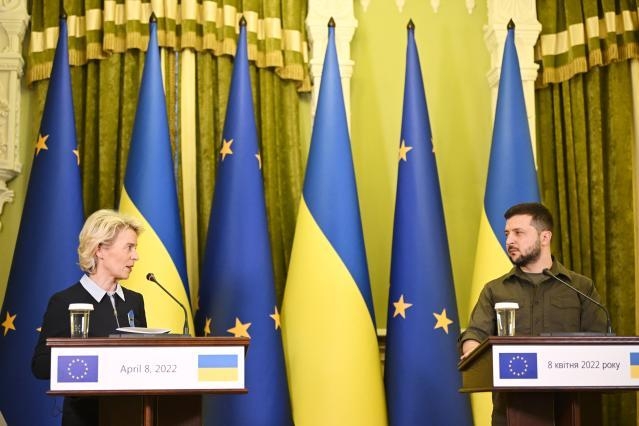
  • Ursula von der Leyen – 2022 Statement by Ursula von der Leyen with Ukrainian President Zelenskyy

    Ursula von der Leyen – 2022 Statement by Ursula von der Leyen with Ukrainian President Zelenskyy

    The statement made by Ursula von der Leyen, the President of the European Commission, in Kyiv on 8 April 2022.

    Thank you, dear Volodymyr,

    Let me start by saying that the missile attack this morning on a train station used for evacuations of civilians is despicable. I am appalled by the loss of life and I offer my deep condolences to the families of the victims and all of those who lost loved ones.

    It was important to start my visit in Bucha today. Because in Bucha our humanity was shattered. And it is right and just that the world voted to suspend Russia from the Human Rights Council. This war is a challenge for the entire international community. And this is a decisive moment. Will heinous devastation win or humanity prevail? Will the right of might dominate or is it the rule of law? Will there be constant conflict and struggle or a future of common prosperity?

    Your fight is our fight. I am here with you in Kyiv today to tell you that Europe is on your side. This is the message, dear Volodymyr, I want to bring to the Ukrainian people today.

    We just discussed how to step it up Europe’s support. Let me be clear: We can never match the sacrifice of the Ukrainian people. But we are mobilising our economic power to make Putin pay a heavy price. We have imposed five waves of unprecedented sanctions against Russia. And we are already preparing the next wave. We are now moving into a system of rolling sanctions. And these sanctions are biting hard. Exports in goods to Russia have fallen almost 71%. Inflation is around 20% – and rising. Businesses confidence in Russia is at its lowest level since 1995. And the best and brightest minds are leaving the country, together with more than 700 private companies. On top of this, Member States have already frozen EUR 225 billion of private Russian assets in the EU since the beginning of the war. Russia will decent in economic, financial and technological decay. While Ukraine is marching towards a European future.

    We stand with you as you defend your country. This is my second point. Ukrainian people are holding up the torch of freedom for all of us. The European Union is sending weapons to your country. We have allocated EUR 1 billion from the European Peace Facility to support the Ukrainian Armed Forces. And more will come. I am grateful the High Representative will now propose another EUR 500 million. In addition, EU Member States are delivering military equipment on an unprecedented scale. Slovakia is a shining example for that. With this we support the brave Ukrainian soldiers, fighting for Ukraine´s freedom. And for everyone’s freedom.

    Third, we are strengthening our financial help for Ukraine. Today, we are delivering on EUR 1 billion of support. This sum consists of three different financial packages. As we speak, we are transferring EUR 120 million in budget support. We will make available the EUR 330 million from our emergency package now. Both are grants. And we are accelerating the second half of the macro-financial assistance package with EUR 600 million.

    Fourth, we are with Ukrainians as they seek refuge within our borders. And I promise you: We will take good care of them until it is safe to return home. Home to a free and prosperous Ukraine. We make sure, that they have access to housing, schools, medical care and work. The brave people of Ukraine deserve nothing less. Together with Prime Minister, Justin Trudeau, of Canada we are convening a pledging event in Warsaw tomorrow. We call our campaign ‘Stand up for Ukraine’. We will mobilise support for people fleeing the war inside and outside Ukraine. This campaign is yet another proof that Ukraine´s cause today is the world´s cause.

    Finally, we are with you as you dream of Europe. Dear Volodymyr, my message today is clear: Ukraine belongs in the European family. We have heard your request, loud and clear. And today, we are here to give you a first, positive answer. In this envelope, dear Volodymyr, there is an important step towards EU membership. This questionnaire is the basis for our discussion in the coming months. This is where your path towards the European Union begins. We will be at your disposal 24 hours a day, 7 days a week to work on this common basis. Ukraine is a friend, we know this very well. Ukraine shares our values. And due to our association agreement, Ukraine is already closely aligned with our Union. So we will accelerate this process as much as we can, while ensuring that all conditions are respected.

    On the first day of your mandate, dear Volodymyr, you said: ‘We have chosen Europe as our direction. But Europe’, you said, ‘Europe is not somewhere else. Europe is here in our mind. And when Europe is in our mind, then Europe will come to our country too.’

    Today, more than ever, Europe is here. Europe is with you.

    Slava Ukraini.

  • Ursula von der Leyen – 2022 Q&A at Stand Up for Ukraine

    Ursula von der Leyen – 2022 Q&A at Stand Up for Ukraine

    The statement made by Ursula von der Leyen, the President of the European Commission, on 9 April 2022.

    It is wonderful to be here with you, Hugh, with you, Mr President, with you, Justin. It is wonderful to have you here. Indeed, I was yesterday in Kyiv and I visited Bucha. And there are no words for the horror I have seen in Bucha, the ugly face of Putin’s army terrorising people. And I have so much admiration for our brave Ukrainian friends fighting against this. They are fighting our war. It is our fight that they are in. Because it is not only Ukraine fighting for its sovereignty and integrity, but they are also fighting for the question whether humanity will prevail or whether heinous devastation will be the result. It is the question whether democracy will be stronger or if it is autocracy that will dominate. It is the question whether there is the right of might dominating or whether it is the rule of law.

    And therefore, this is the reason why, together with Justin Trudeau, with Hugh Evans – and thank you very much Mr President, for hosting it here – we said that they stand up for our freedom, so we stand up for Ukraine. This is the reason why we are here today. And we want to rally the world for refugees, inside and outside Ukraine, to support them. So I hope that many, many people will join.

    I want to thank Global Citizen for really activating and mobilising so many artists, sports people and celebrities. Mr President, I want to thank you for hosting us, because this is the country that is hosting two million refugees from Ukraine. So many people are here, who support. Thank you very much for that and let us have a fantastic result for Ukraine.

    Interventions

    Q1 Europe has come together in an unprecedented way to support those coming from Ukraine to the bloc. You have activated the [EU Civil] Protection Mechanism and offered direct support to Ukraine itself. Can you tell us a little bit more about those efforts to date, as you stand in solidarity with Ukraine?

    President von der Leyen: Yes, indeed, there are four million people, that fled Ukraine, right now in the European Union, and there are six and a half million people within Ukraine who fled the war and they need help. They need urgently help. Here, in the European Union, it means that we have immediately triggered the protection for them that gives them citizens’ rights. So from day one: access to schools, to housing, to healthcare, and of course to the labour market. But of course, they need much, much more. They need support. The Member States are doing an outstanding job. It is phenomenal. The NGOs are working on the ground. The communities, the local communities, are outstanding in receiving the refugees. But as I said, more is needed. And any pledge will help a refugee, here, in the European Union. But also, and this is so important: Any pledge will help a person that is internally displaced, so who has lost their home because of the bombing and shelling of Putin’s army within Ukraine. Yesterday, when I spoke with President Zelenskyy, he urged me again to, first of all, ask for pledges for Ukraine refugees in Ukraine but also to be very clear for those who had to flee Ukraine, that they are welcome here. It is wonderful to have them here and we want to give them shelter and support, and help as much as possible. But President Zelenskyy was also hoping that, pretty soon, you might be able to come back and help rebuild the country. What I want to say is that Europe stands by your side. And I know that Justin Trudeau – I have spoken with him many, many times about it – is fully determined, also with Canada. We stand by your side, be it now in the times of war; be it with the refugees; but most importantly, after this war has been won by Ukraine, for the time for reconstruction and rebuilding the country. So our motto is really: Slava Ukraini.

    Q2 We know that conflict is one of the greatest threats to education. And according to UNICEF, more than 350,000 children in Ukraine have already lost access to education. So Madam President, my question to you is this: How do we ensure that this does not become the last issue that gets funded and that we do not end up with a generation of displaced youth with a lost education and compromised health?

    President von der Leyen: Yes, indeed, this is one of the most pressing questions because many, many of the refugees are young children and they need immediately access to schools. And of course, children need other children, so they need to be with their peer groups. And therefore, the pledging here is also about supporting the Member States who have refugees and children. I was travelling to Kyiv with the Slovak Prime Minister, and he told me that, in the last four weeks, they got 700 children that need immediately access to kindergarten, for example. Also, you need teachers, you need classrooms, very practical things, very down-to-earth. And therefore, it is so necessary that we support them in that but also in health issues. The normal access to healthcare is important, but we have, for example, many that come that are not vaccinated, not only against COVID-19 but also the basic vaccinations that you normally get in your childhood. So this has to be done. Or there are many that come that have other diseases which are normally not so present in the population. So the access to healthcare is eminent and extremely important. All these are topics where the Member States are really doing a great job and doing their utmost to accommodate. But the more support they get the better. And then, there is a last point. I just wanted to refer to Arina’s last comment. Arina, you are so right. Arina wanted to tell us, rightly so, that of course, we are now speaking about the refugees. But we also have to be very clear towards Putin that this cannot be, this aggression. And therefore, we are imposing heavy sanctions on Putin and his war machine to really dry out that – economic sanctions, financial sanctions. And Arina is right, what we have to do is get rid of the fossil fuel dependency from Russia. This is for us so important. So, we got out of coal. We are looking into oil. And Arina, what we have to do is not only diversify away from the Russian fossil fuel but we also need massive investment in renewables. This is not only good for a strategic investment in independence but it is, of course, also good for our climate and for our planet. So, many, many tasks to look at. And I just wanted to support you on that point, Arina, it is a very important one.

    Q3 Many across the globe, are becoming increasingly aware of the wider impacts of this conflict on the global food supply. In fact, their estimates are of up to 500 million people potentially facing food insecurity as a result. So with that in mind, what actions can the EU and the European Community take to prioritise this issue and basically prevent or certainly minimise a global food crisis?

    President von der Leyen: Yes, indeed, besides the incredible human suffering that this war brings along and the unbelievable atrocities that we see, there are knock-on effects, for example on global food security. Ukraine is basically the wheat chamber of the world. And now, it is becoming more and more difficult for the farmers in Ukraine to sow and to have the next harvest. And if you see the figures of how many countries, in the global south for example, are dependent on the export of wheat from Ukraine, it is a very, very serious problem. And it is even more serious because, yesterday, the Prime Minister, Denys Shmyhal, told me in Kyiv that Putin’s army is now systematically bombing warehouses, where grain and wheat is stored. Or for example, Ukraine needs to export the wheat by ships, usually, so he is blocking these ships in the Black Sea, therefore increasing the pressure on the food system. So the first thing that we have offered is: ‘Listen, Ukraine, then take the land route and we will create so-called green corridors, so that these transports for wheat can go along through different borders – it is a longer land route, but at least get the wheat out and get some income in, without any difficulties through these green lanes. We do everything possible to support the Ukrainian farmers who need everything to sow, that they can do their work under very difficult circumstances because of their safety. But they are willing to risk their lives, really, to produce the wheat that the world needs. We are giving now EUR 2.5 billion into the global food security, but I know that more will be needed. Because if I look at the numbers, I mean, Ukraine is a major part of the World Food Programme, for example. So this is one of the ugly knock-on effects of this horrible war and one more reason to do everything to end this war.

    Closing remarks by President von der Leyen at the global pledging event ‘Stand Up For Ukraine’

    Thank you so much, Isha, thank you very much for a splendid moderation, thank you very much. And many, many thanks to you, Hugh, at Global Citizen for, again, standing up for those, who need a strong voice. Those, who we often do not see, do not hear and mobilising, rallying the world, and pushing us politicians hard and the leaders hard. That is your job and it is wonderful to see that.

    And Justin, many, many thanks for being a fantastic co-host. It would not have been possible without you. And thank you for your determination, whenever I meet you in our G7 meetings, for example, your intensity of your beliefs and the strength with which you are fighting for the refugees and their needs – I really want to thank you for that.

    And when I look into this room here, I know that there are many refugees here in the room. And looking into your eyes and thinking about your thoughts and the fears that you might have, I just want to tell you that we stand by you. I want to thank the citizens, the many, many people who just opened their hearts and their minds, and their doors and want to help you and comfort you. Because they know that the question how we act today might one day also be a question where they need help, and then hope to find citizens that open their minds and hearts and doors for them. And therefore, thank you all for stepping up for Ukraine.

    I am very curious what the pledges will bring, and you have seen many, many European Leaders that have pledged for their country. We always speak of Team Europe, these are the 27 Member States and the European Commission. So we will see what the 27 Member States have pledged. But I can only announce today, for the European Commission, that we want to pledge EUR 1 billion, EUR 600 million of those will go to Ukraine, to the Ukrainian authorities, and partially to the United Nations, so that the Ukrainian authorities, who know exactly who is in need, can distribute that. And EUR 400 million will go to the frontline states that are doing such an outstanding job and helping the refugees that are coming.

    And the final tally: The world has finally pledged EUR 9.1 billion through this campaign. And, in addition, the Commission, working with EBRD, adds another EUR 1 billion for the IDPs in Ukraine. This is fantastic, so EUR 10.1 billion. And if you say that in dollars, it is even more.

  • Volodymyr Zelenskyy – 2022 Statement on the Situation in Ukraine (09/04/2022)

    Volodymyr Zelenskyy – 2022 Statement on the Situation in Ukraine (09/04/2022)

    The statement made by Volodymyr Zelenskyy, the President of Ukraine, on 9 April 2022.

    Free people of a brave country!

    Today, it was a great honor for me to welcome in our capital, on Bankova Street, a sincere friend of Ukraine – Prime Minister of the United Kingdom Boris Johnson on your behalf, on behalf of all Ukrainians.

    His visit to our country demonstrates as clearly as possible – there are no obstacles to freedom. There are no obstacles to leadership. Boris was among those who did not hesitate for a moment whether to support Ukraine. The leadership of the United Kingdom in providing our country with the necessary assistance, especially in terms of defense, as well as the leadership in sanctions policy will remain forever in history. In the history of the defense of democracy, in the history of the defense of Europe. Ukraine will always be grateful to Boris and Britain for this.

    Today Boris arrived in Kyiv with a new package of financial and defense support for Ukraine. We also discussed new sanctions that are needed to force Russia to seek peace.

    The task of our anti-war coalition is quite clear – to end this war started by Russia as soon as possible. To liberate our land from invaders. And to guarantee the security of Ukraine and, consequently, the security of democracy and freedom of the nations of Eastern Europe.

    That is why it is not just the moral duty of all democracies, all the forces of Europe – to support Ukraine’s desire for peace.

    This is, in fact, a strategy of defense for every civilized state. To put pressure on Russia as much as possible to restore peace and security as soon as possible. To restore the power of international law as soon as possible and to prevent the catastrophe caused by the application of the law of force. The catastrophe that will inevitably hit everyone. Because Russian aggression was not intended to be limited to Ukraine alone. To the destruction of our freedom and our lives alone. The whole European project is a target for Russia.

    I was pleased to hear today from Austrian Chancellor Karl Nehammer an assurance that for the Austrian state to force Russia to seek peace is as fundamental as for other responsible states.

    I also heard the promise that Austria, together with its partners in the European Union, will continue its sanctions policy against Russia until the full restoration of real security in our region takes place. Until Russia withdraws all its troops from the Ukrainian sovereign territory.

    In response to my question, the Austrian Chancellor also supported a clear prospect of Ukraine’s accession to the European Union as soon as possible.

    I would also like to thank Mr. Nehammer for handing over fire engines and rescue vehicles, as well as other equipment to Ukraine, and for helping with fuel.

    There is also important news today from President of the European Commission Mrs. Ursula von der Leyen and Prime Minister of Canada Justin Trudeau. As part of their global Stand Up For Ukraine campaign, they have raised more than $ 10 billion to help our people. To help Ukrainians who were forced to leave their homes because of Russia’s war against Ukraine. I am grateful to everyone who joined the fundraising!

    That is, today was a really fruitful day for Ukraine. For our diplomacy.

    And this is the 45th day of our defense against the Russian invasion. Could Moscow think that such events would take place in Kyiv on the 45th day after their invasion? No, they couldn’t even imagine it. And we made it a reality.

    All of us, together – every Ukrainian who on February 24 and forever chose courage. Chose Ukraine. Chose freedom and the future.

    In all international negotiations, in all contacts with world leaders during these 45 days, I always raise three topics. The first is concrete assistance for our defense. The second is concrete assistance for our people. The third is concrete guarantees of security for our state, which will definitely win in this confrontation.

    Of course, I do not hear specific answers to my specific questions from everyone. But there are more and more positive things for Ukraine every day.

    However, still not as much so that we can determine the exact date of the end of this war. Russia can still afford to live in illusions and bring new military forces and new equipment to our land. And it means that even more sanctions are needed. Even more weapons for our state are needed.

    By the way, Boris Johnson was very specific today in answering my questions. Well, as always. We have already decided what help the United Kingdom will provide to the post-war reconstruction of Ukraine. The British people are ready to take patronage over the restoration of Kyiv and the Kyiv region.

    The introduction of more painful restrictions on cash flows of the Russian Federation is among the priorities for our diplomacy, for all contacts with our partners. First of all this applies to the oil business. The democratic world can definitely give up Russian oil and make it toxic to all other states. Oil is one of the two sources of Russian self-confidence, their sense of impunity.

    Another source – gas – will also be shut down over time. It’s just inevitable. Not only for safety, but also for environmental reasons.

    But Ukraine does not have time to wait. Freedom does not have time to wait. When tyranny launches aggression against everything that keeps peace in Europe, action must be taken immediately. It is necessary to act in a principled fashion. And the oil embargo should be the first step. At the level of all democracies, the whole civilized world. Then Russia will feel it. Then it will be an argument for them – to seek peace, to stop pointless violence.

    And another piece of news for today. Long-awaited for many of our people. One of our main shrines will return to Ukraine. One of the most revered shrines of Sophia of Kyiv. The icon of St. Mykola Mokryi (Wet), the first miraculous icon of Russia.

    We’ve been working for a long time to get it back. It was taken out of Ukraine during World War II. And in due time it will be at home – in St. Sophia. I am grateful to the hierarchs, clergy and faithful of the Ukrainian Orthodox Church of the United States for this decision. I want the return of this shrine to be an important symbol for all of us. A fundamental symbol. A symbol that we will return all ours to Ukraine. Everything Ukrainian.

    We will bring all our people back.

    And we will definitely restore justice – restore our complete control over our land.

    I am grateful to all our friends!

    I am grateful to all our heroes!

    Glory to Ukraine!

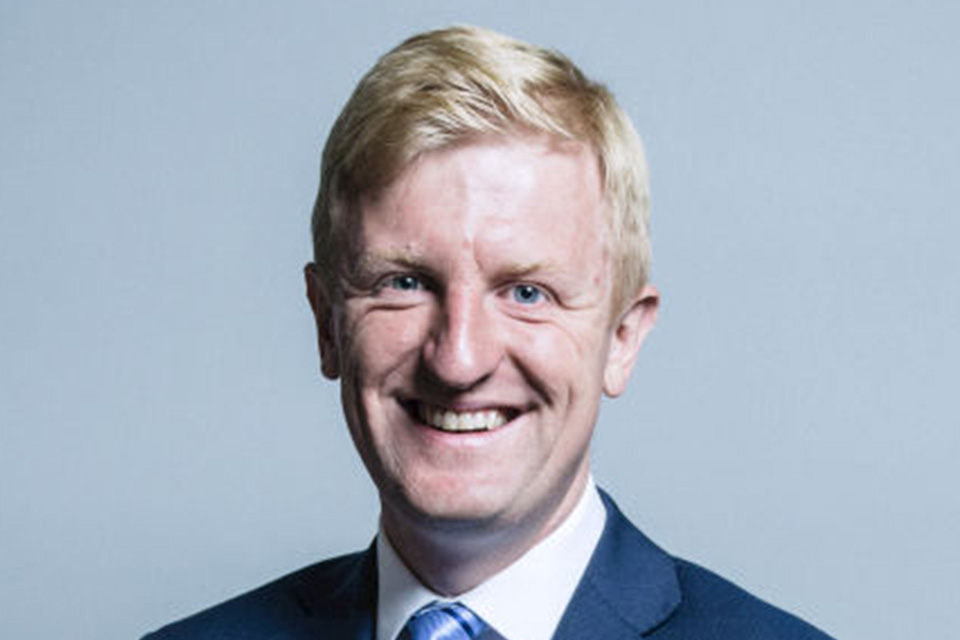
  • Oliver Dowden – 2022 Speech to Conservative Spring Conference

    Oliver Dowden – 2022 Speech to Conservative Spring Conference

    The speech made by Oliver Dowden, the Chairman of the Conservative Party, in Blackpool on 18 March 2022.

    Well isn’t it fantastic to be back in Blackpool!

    Our first conference here for fifteen years.

    It was here in 1946 that Anthony Eden first spoke of the ‘property owning democracy.’

    It was here in 1975 that Margaret Thatcher first spoke as our party leader.

    And then again in 1979 for the first time as our Prime Minister.

    Conservative memories made.

    Conservative missions defined.

    And it’s a mark of what our party has achieved that we can proudly say for the first time since 1997:

    This town now has two Conservative MPs!

    Paul Maynard and Scott Benton are working with the government to transform a place failed by Labour

    the party that left this town behind for decades.

    And like hardworking Conservatives across the country they’re bringing growth, prosperity and opportunity.

    A new Town Deal for Blackpool worth tens of millions of pounds.

    Making good on our promises and getting on with the job.

    That is our mission. I’m proud to be bringing Party Conference back to its spiritual home and bringing millions to the local economy.

    When Conservatives say we back business, we deliver.

    So, to everyone who made this happen: thank you!

    Of all the moments of history our party has made in Blackpool,

    the one I want to focus on today is Margaret Thatcher’s speech here in October 1989.

    As the Iron Curtain was about to lift she stood here and told the Winter Gardens:

    ‘The torch of freedom that is now the symbol of our Party

    became the beacon that has shed its light

    across the Iron Curtain into the East.

    Today that beacon shines more strongly

    than at any time this century.’

    Conference in March 2022 we must ask this:

    Does the torch of freedom shine as strongly in Europe today?

    Could Mrs Thatcher have foreseen that the Conservative Party would meet here in Blackpool more than thirty years later,

    with the precious freedom of Europe

    once again under threat from Russia?

    A generation of Conservatives understood the threat of tyranny and their opposition to it defined their Conservatism.

    So whilst much has changed about our party, this much remains the same:

    It is Conservatives who always carry the torch of freedom.

    And once again it is a Conservative Prime Minister who is leading the world’s response to the crisis in Ukraine.

    We were the first European country to arm Ukraine with lethal aid.

    We have imposed the biggest package of sanctions in the history of the United Kingdom.

    And we are the largest donor of humanitarian aid.

    As I walk with my children through the calm suburbia of Hertfordshire, its values so derided by the left,

    I actually reflect on the great fortune we have to live in a nation defined by stability, security… and, yes, Conservatism.

    For me, the privet hedges of suburbia are the privet hedges of a free people.

    And I will make it my mission as Chairman to defend those values and those freedoms.

    Right now, I am proud that Conservatives, like so many Britons up and down the country are playing their part to support the people of Ukraine in their hour of need.

    Donating what they can, preparing their spare rooms, and organising their communities to give the brave Ukranians the warmest of welcomes.

    Just as 50 years ago this October, the British people under a conservative government welcomed tens of thousands of Ugandan Asians fleeing Idi Amin’s brutal dictatorship.

    And half a century later, our nation reaps the rewards with the prosperity they have generated and the public service they have freely given.

    Dolar Popat, Mohammed Sheikh and Jitesh Gadhia are now Conservative peers in the House of Lords.

    Shailesh Vara is in the House of Commons.

    And our Home Secretary Priti Patel is part of the most diverse Cabinet in history.

    Now this government has relentlessly focused on dealing with the Ukraine crisis.

    But we must be just as relentless in dealing with its longer term consequences.

    We must confront the fact that the combination of Covid and the Ukraine crisis are placing significant pressure on inflation and the cost of living.

    We need to level with the British people about the causes of this and demonstrate the same resolve in dealing with it as we did with breaking the Brexit deadlock, as we did with investing in our game changing vaccine, and as we did in reopening our economy.

    And we must confront the mistakes of the past.

    Today we face Russian aggression, hampered by our lack of energy independence.

    Our reliance today on Russian oil and gas was a course set by Labour governments who neglected to invest in new nuclear power.

    Ed Miliband spent 10 years blocking it, when we could now be relying on it.

    So it falls to the Conservatives to deliver energy independence for the first time in a generation.

    Phasing out the import of Russian oil by the end of the year, exploring options to end our import of Russian gas.

    Of course that means investing massively in our offshore wind capacity and other renewables; but it must also mean developing new nuclear projects, and re-incentivising new oil and gas exploration in this country as we transition.

    Because the British people want to see a bit of conservative pragmatism, not net zero dogma.

    We are conservatives.

    We exist to conserve.

    We will get to net zero.

    We will save the planet.

    We just don’t want Vladimir Putin taking it over while we are doing it.

    And we know the alternative.

    Next week marks two years of Sir Keir Starmer as Labour leader.

    And in that time he has really managed to stamp his personality on his party:
    dull, uninspiring and bereft of ideas.

    Some in his party believe that he is not “real Labour”.

    Well, I can see what they mean.

    Certainly he has more faith than any Liberal Democrat that Ed Davey is the path to government.

    But let’s not be complacent about the threat that Starmer’s party still poses.

    Let’s remind people of his sincerity in campaigning to have Jeremy Corbyn – that NATO opposing Putin apologist – installed as the nation’s Prime Minister.

    And let us thank Boris Johnson for making sure that fate never befell our nation.

    But the danger has not passed.

    The Corbynistas are still there.

    Starmer can’t resist kowtowing to the cancel culture brigade because his base are the cancel culture brigade.

    He’s frightened to defend women’s rights or to protect our heritage from vandals because he fears he would then be cancelled.

    He won’t argue against state handouts because his Party don’t believe in rolling back the vast Covid state at all.

    And he can’t even get his MPs to vote for measures to stop self-righteous activists blocking roads because the gluers and lockers-on are his own Labour councillors!

    Starmer would have left us in Brexit limbo

    He would have left us in the European Medicines Agency.

    And he would have left us in lockdown.

    And that is why we cannot let them into office.

    I’ve had the pleasure of fighting many elections, both inside and outside the party machine.

    And you know as well I do that it’s never been plain sailing.

    Of course we face a tough path through the locals and onto the next General Election.

    We will be seeking a fifth Conservative win.

    A feat never achieved before.

    And the challenge starts this May.

    Thanks to your hard work, we go in defending results that defied expectations in 2017 and 2018.

    But at a time when people are worrying about the cost of living we need to be reminding people that the best way to tackle the cost of living locally

    is to elect Conservative councils that cost less and deliver more.

    And it is that message: delivery today, delivery tomorrow, and delivery the day after

    that will carry us through the Local Elections and onto the General Election

    And when that General Election comes, it’s going to look much more like the campaign of 2015 than that of 2019.

    So we’re going to have to fight this one seat by seat, promise delivered by promise delivered, doorstep by doorstep.

    And from May, we will begin our two year election campaign with the launch of our target seat strategy, building on the experience of the 40:40 campaign in 2015, building capacity, developing profiles, and framing the choice.

    And to implement this, we have a great team:

    I’ve appointed Tony Lee as our new director of campaigning

    the man who masterminded Andy Street’s campaign.

    I’ve recruited more than a dozen new campaign managers embedded across the country and working in critical defence areas today.

    And I’ve just opened our new Leeds HQ.

    Which means that when people call to speak to Conservative central office, the next question we’ll ask is “which one?”

    But we all know that people matter more than the party machine.

    And that’s why we need to attract the very best candidates.

    Our diversity challenge is not some leftie tick box exercise that dumps people into one category or another.

    It’s our way of finding talent from all over the country and from all walks of life.

    Our new candidates must match the new conservative party.

    The Party of Darlington and Doncaster –

    as well as Devon and Dorset.

    The party of mill towns and mining towns –

    as well as the metropolis.

    So today I’m announcing that we are reopening the candidates list for the next General Election with a big, open call for candidates.

    We don’t mind what job you do, what you look like, how old you are or where you are from.

    We’re just looking for people with real political conviction who instinctively share conservative values.

    We’re looking for people with judgement, with integrity, and with wide ranging life experiences.

    And for the first time, candidates will be put through a new process, a process that matches the best in class from organisations and businesses around the world to give us the most representative and best candidates we’ve ever had.

    Let us contrast that depth and breadth of our talent against the out of touch Islington elites of the modern Labour Party.

    I’m proud to be a comprehensively educated boy from Watford who now gets to chair the Conservative Party.

    I’m proud to be the son of a factory worker who gets to sit around the Cabinet table.

    I’m proud to represent a constituency where people get up early each day and work hard to provide for themselves and their families.

    And I’m proud of our party.

    A party with men and women from all walks of life, bound by common conservative values who believe in our country, our history, our traditions and the great role we have played in the world.

    Those are the values of the British people.

    They are the values of the Conservative Party.

    Our instincts are their instincts.

    Our values are their values.

    Blackpool conferences have been the launchpad for many Conservative election victories.

    So let’s make today the start of yet another great journey.

    Let’s get on with the job.

  • Sajid Javid – 2022 Speech to Conservative Spring Conference

    Sajid Javid – 2022 Speech to Conservative Spring Conference

    The speech made by Sajid Javid, the Secretary of State for Health and Social Care, in Blackpool on 18 March 2022.

    Thank you for that welcome.

    I’m delighted to be with you for the new – and improved – Spring Conference.

    Even in the company of old friends,

    I know that our hearts and minds are with the people of Ukraine.

    We meet in the shadow of a global crisis

    as the storm clouds of war darken European soil once more.

    It’s difficult to express the sorrow – and the anger – that I feel

    hearing reports of mass graves in Mariupol,

    and the murder of pregnant women sheltering in maternity hospitals.

    Make no mistake:

    Vladimir Putin is a war criminal

    and a threat to free people everywhere.

    He must be held to account.

    In the face of such evil we must do what we can

    to stand with the people of Ukraine

    and support President Zelensky as he defends his home.

    I’ve placed my Department and the NHS at his service,

    flying in almost two million life-saving medical supplies

    and helping deploy an advance party of medical personnel to Romania and Moldova.

    The British People have shown extraordinary compassion,

    demonstrated by the welcome they gave 21 Ukrainian children with cancer

    when they arrived in Birmingham 5 days ago.

    It’s that kind of support

    and strength of feeling

    that prompted a British-Ukrainian man to stop me in my constituency last week

    and ask me to tell the Prime Minister that in Ukraine, he’s a hero.

    Putin’s disastrous invasion isn’t the only global crisis we’ve faced in recent times.

    This is the first time we’ve seen each other at Spring Conference, face-to-face, in 3 years.

    It’s because of the choices we’ve made

    and the extraordinary efforts of the British people

    that we are able to do so with no rules or restrictions –

    having resolved together,

    as one Nation,

    to rely on common sense

    and personal responsibility instead.

    As we learn to live with Covid

    and plan a future beyond the pandemic,

    we do so as the most open country in Europe.

    The choices we had to make were rarely easy.

    We decided to open up last summer in the face of bitter opposition

    and Keir Starmer’s campaign to keep our country under lockdown.

    This winter we rejected Labour’s demand for new restrictions,

    bolstering our defences with a record-breaking booster programme instead.

    As we lead the world in learning to live with Covid,

    we have a great deal to be proud of

    and a strong track record to defend.

    That doesn’t mean we can afford to be complacent.

    The pandemic has already consumed two years of government.

    So this year’s slogan could hardly be more appropriate:

    We’ve got to get on with the job.

    Blackpool is a suitable place to land that message.

    One of my first speeches as Health Secretary was delivered at a Community Centre

    not 10 minutes from this hall.

    I spoke about my determination to end the disease of disparity

    and ensure everyone has the opportunity to live a healthy life.

    Covid brought these disparities into sharp focus,

    and in many cases made them worse.

    We promised real change in 2019.

    If we want to win again,

    it’s critical the scale of our ambition matches the size of this challenge,

    and that the radicalism of our solutions

    measures up to the urgency of this moment.

    Healthier communities get richer…

    and richer communities get healthier,

    we cannot level up our economy without levelling up in health.

    In this country we’re fortunate to enjoy freedom from catastrophic medical bills,

    and the certainty of knowing that the NHS

    – and the exceptional people who work there –

    will be there for us in a crisis.

    Yet even before the pandemic our healthcare system faced long term challenges:

    changing demographics and disease,

    the injustice of health disparities,

    and unsustainable finances.

    Our health budget is already larger than the GDP of Greece,

    yet this decade is likely to see the fastest pace of ageing of any from the 1960s to the 2060s,

    with many more people facing multiple long term conditions.

    I remember a 16 year old William Hague telling Tory Party Conference

    ‘It’s alright for you, half of you won’t be here in 30 or 40 years’ time.’

    Well Conference, I’m afraid to say:

    It isn’t alright for you, because, with any luck,

    most of you will be here in 30 or 40 years’ time!

    The truth is that we’ve come to a crossroads.

    We must choose between endlessly putting in more and more money

    and reforming how we do healthcare.

    Between increasing waiting lists and rising taxes,

    or a healthcare revolution.

    I’m sometimes asked if Conservatives have given up on public service reform.

    Whether we’ve become some soggy social democratic party.

    I’m here to tell you that’s nonsense.

    Last week I set out a vision for comprehensive healthcare reform,

    building on our Adult Social Care Reform White Paper,

    and our plan to tackle the Covid backlog.

    The principles underpinning that agenda are simple.

    I want to prioritise prevention,

    and redesign services around patients.

    I want better performance standards,

    and freedom for front-line innovators.

    I want to put power where it belongs,

    back in the hands of patients.

    Prevention, personalisation, performance and people.

    This is how we will reform the NHS

    and bring about the biggest transfer of power and funding in decades.

    From an ever-expanding state

    to individuals,

    their families,

    and the community.

    That starts with a new emphasis on prevention.

    The NHS spends 40 per cent of its budget treating preventable conditions.

    We spend too much time on the symptoms of ill health,

    And too little time addressing the causes.

    There is no small state which isn’t a ‘pre-emptive state’.

    I want to shift our healthcare system to a new way of operating,

    One that’s about helping the whole population to stay healthy,

    not just treating those who show up asking for help.

    We need to put power back in the hands of patients and their loved ones.

    That’s why I will significantly expand the number of people with personal health budgets,

    and drive a radical acceleration in the use of personalised care.

    I will introduce a new Right to Choose for long-waiters

    because I’m interested in choice for all

    – not just the privileged few.

    Finally, any reform agenda requires a relentless focus on performance.

    When it comes to delivering affordable drugs,

    Or accessible care,

    the NHS ranks amongst the best in the world.

    In areas like cancer survival rates

    and cardiovascular disease

    we know the NHS must do better.

    That’s why I’m committed to improving leadership and management in the NHS and social care,

    starting with General Sir Gordon Messenger’s Review,

    and why later this year I will launch a new Mental Health Plan,

    a new Digital Health and Care Plan,

    and a new 10 Year Cancer Plan.

    We have come so far as a country,

    now the freest in Europe.

    We will always be the party of opening things up,

    not closing things down.

    But we have so much more to do.

    It’s our mission to deliver recovery and reform,

    with determination and purpose.

    So let’s go forward together.

    Let’s deliver for the British people.

    Let’s get on with the job.