Blog

  • Vicky Ford – 2022 Speech at the UK-Nigeria 7th Economic and Development Forum

    Vicky Ford – 2022 Speech at the UK-Nigeria 7th Economic and Development Forum

    The speech made by Vicky Ford, the Minister for Africa, at Lancaster House in London on 27 April 2022.

    Good evening Your Excellency, Honourable Ministers, members of the Nigerian delegation, colleagues and friends. It is a great pleasure to host you tonight in this beautiful, historic setting.

    Thank you to Guinness Nigeria for supporting this event. I was fascinated to learn that Nigeria was home to the first Guinness brewery outside of Britain, and this is now the world’s second-largest market for Guinness. And as someone who was born and raised in Northern Ireland I’ve drunk a lot of Guinness. So well done Guinness. Do you have any on tap? It’s a fantastic example of the strong trading links between our countries!

    And tonight, we celebrate those links, and our shared commitment to boosting trade and investment between our countries. It was wonderful to see the benefits of our close collaboration first-hand when I visited Nigeria in February.

    I spent three busy days in Abuja and Lagos, meeting federal ministers, governors and business leaders.

    And we discussed the huge opportunities that Nigeria has to offer to the UK, as Africa’s largest economy.

    During my visit, I was delighted to announce a £74 million loan to First Bank, through British International Investment. That will help to support female entrepreneurs and small businesses in Nigeria.

    But we also marked the UK’s first investment of £10m to support low carbon energy investment. I know there are investors in low carbon energy in this room. We will continue to support Nigeria’s ambitions to transition to renewable energy, while working to turbocharge our digital partnership.

    In Lagos, I saw for myself the enormous potential in this area when I visited the UK-supported Digi-Girls project. This is enabling women and girls to access digital skills, and I also met with tech entrepreneurs and creative industry leaders, to learn more about those sectors. They are truly vibrant sectors in Nigeria.

    I am delighted to see in this room this evening the people who can take these opportunities to the next level.
    Through business partnerships we can take our trade and investment partnership to scale, make the energy transition happen, and create jobs in Nigeria and in the UK.

    It was great to meet Your Excellency this morning ahead of the Economic Development Forum, when we discussed these shared ambitions. Both of our Governments, and the UK team in Nigeria, stand shoulder to shoulder with business leaders in turning these ambitions into a reality.

    Thank you so much.

  • Liz Truss – 2022 Mansion House Speech

    Liz Truss – 2022 Mansion House Speech

    The speech made by Liz Truss, the Foreign Secretary, at the Mansion House in London on 27 April 2022.

    My Lord Mayor, Your Excellencies, Ladies and gentlemen.

    According to some, this was destined to be the era of authoritarianism.

    Three years ago Vladimir Putin said Western liberalism was dead.

    Last year President Xi argued that the west is declining.

    In April 2022 things look very different.

    Recent months have shown the deep resilience of the human spirit and of free societies

    Faced with appalling barbarism and war crimes, which we’d hoped had been consigned to history, the free world has united behind Ukraine in its brave fight for freedom and self-determination.

    Those who think they can win through oppression, coercion or invasion are being proved wrong by this new stand on global security – one that not only seeks to deter, but also ensures that aggressors fail.

    We cannot be complacent – the fate of Ukraine hangs in the balance.

    But let’s be clear – if Putin succeeds there will be untold further misery across Europe and terrible consequences across the globe.

    We would never feel safe again.

    So we must be prepared for the long haul. We’ve got to double down on our support for Ukraine. And we must also follow through on the unity shown in the crisis. We must reboot, recast and remodel our approach.

    My vision is a world where free nations are assertive and in the ascendant.

    Where freedom and democracy are strengthened through a network of economic and security partnerships.

    Where aggressors are contained and forced to take a better path.

    This is the long term prize: a new era of peace, security of prosperity.

    Let’s be honest. The architecture that was designed to guarantee peace and prosperity has failed Ukraine.

    The economic and security structures that were developed after the Second World War and the Cold War have been bent out of shape so far, they have enabled rather than contained aggression.

    Russia is able to block any effective action at the UN Security Council. Putin sees his veto as a green light to barbarism.

    He’s walked away from the NATO-Russia Founding Act and the Treaty on Conventional Armed Forces in Europe. He’s violated multiple measures on arms control.

    The G20 can’t function as an effective economic body while Russia remains at the table.

    The Soviet Union used to regularly use their UN veto, but, for all the many evils they inflicted, even they behaved with some kind of rationality on the world stage.

    They were able to stick to deals when they saw risks to strategic stability, as they did with the Anti-Ballistic Missile Treaty.

    They would de-escalate when they were confronted and called out, as with the Cuban Missile Crisis 60 years ago.

    And they had their eye on their global reputation.

    None of these factors apply to Putin.

    We are dealing with a desperate rogue operator with no interest in international norms.

    This is at a time when the world economy had never been more open to Russia.

    During the Cold War western allies fuelled each other’s prosperity, and we restricted flows of trade, investment and technology to the USSR.

    In the 1990s these constraints were removed but it didn’t lead to the expected gains in economic openness and democracy.

    We took progress for granted instead of applying the necessary carrots and sticks.

    And leaders like Putin spurned the opportunity to change because they feared losing control. Instead they took the money from oil and gas and used it to consolidate power and gain leverage abroad.

    Wandel durch handel – the assumption that economic integration drives political change – didn’t work.

    We now need a new approach, one that melds hard security and economic security, one that builds stronger global alliances and where free nations are more assertive and self-confident, one that recognises geopolitics is back.

    Britain has always stood up to bullies.

    We have always been risk takers.

    So we are prepared be bold, using our strength in security and diplomacy, our economic heft, and our will and agility to lead the way.

    We are already stepping up in Ukraine.

    The war in Ukraine is our war – it is everyone’s war because Ukraine’s victory is a strategic imperative for all of us.

    Heavy weapons, tanks, aeroplanes – digging deep into our inventories, ramping up production. We need to do all of this.

    Our sanctions have already seen Russia facing its first external debt default for a century. We need to go further.

    There must be nowhere for Putin to fund this appalling war. That means cutting off oil and gas imports once and for all.

    At the same time, we need to deliver support to the Ukrainian people. It means helping refugees, it means delivery of food, medicine, and other essentials, and it means keeping the economy afloat.

    It also means holding the Putin regime to account for the appalling crimes that have been committed.

    And, when the guns finally fall silent in Ukraine, it means making sure Kyiv has the resources it needs to maintain security, deter further attacks, and rebuild.

    That’s why we are working on our joint commission with Poland to ensure Ukraine is equipped with NATO-standard weapons.

    And it’s why we are determined to work with the US, with the EU and other allies on a new Marshall Plan for the country.

    Ukraine deserves nothing less than a landmark international effort to rebuild their towns and cities, regenerate their industries, and secure their freedom for the long term.

    We are doubling down.

    We will keep going further and faster to push Russia out of the whole of Ukraine.

    And this has to be a catalyst for wider change.

    We must also apply this tough stance to the threats that are emerging beyond Ukraine.

    Our new approach is based on three areas: military strength, economic security and deeper global alliances.

    Firstly, we need to strengthen our collective defence.

    In the words of President Zelenskyy: “Freedom must be better armed than tyranny.”

    Ahead of the NATO summit in Madrid, we need to lift our sights.

    We have long argued that NATO needs to be flexible, agile and integrated.

    The Eastern Flank must be strengthened, and we must support crucial states like Poland. That’s why we are increasing our troop presence and we’re deepening our defence cooperation.

    We also have to learn the lessons of Ukraine.

    The UK sent weapons and trained Ukrainian troops long before the war started.

    But the world should have done more to deter the invasion. We will never make that same mistake again.

    Some argue we shouldn’t provide heavy weapons for fear of provoking something worse.

    But my view, is that Inaction would be the greatest provocation. This is a time for courage not for caution.

    And we must ensure that, alongside Ukraine, the Western Balkans and countries like Moldova and Georgia have the resilience and the capabilities to maintain their sovereignty and freedom.

    NATO’s open door policy is sacrosanct.

    If Finland and Sweden choose to join in response to Russia’s aggression, we must integrate them as soon as possible.

    And we reject the false choice between stronger traditional defence and modern capabilities. We need to defend ourselves against attacks in space and cyberspace as well as by land, air and sea.

    We also reject the false choice between Euro-Atlantic security and Indo-Pacific security. In the modern world we need both.

    We need a global NATO.

    By that I don’t mean extending the membership to those from other regions.

    I mean that NATO must have a global outlook, ready to tackle global threats.

    We need to pre-empt threats in the Indo-Pacific, working with our allies like Japan and Australia to ensure the Pacific is protected.

    And we must ensure that democracies like Taiwan are able to defend themselves.

    All of this will require resources.

    We are correcting a generation of underinvestment.

    That’s why the Prime Minister has announced the biggest investment in our Armed Forces since the Cold War. We recognised Russia as the most acute threat in our Integrated Review, adopting the same vigilance as NATO’s Eastern Allies.

    Others are now also stepping up as well. But we all need to go further.

    Spending 2% on defence must be a floor, not a ceiling.

    There is no substitute for hard military power, backed by intelligence and diplomacy.

    Secondly, we need to recognise the growing role that the economy plays in security.

    In the UK we are now using all of our economic levers – trade, sanctions, investment and development policy – in a much more assertive way.

    We recognise that growth from cheap gas and money syphoned from kleptocracies is growth built on sand. It’s not the same as real, sustained growth from higher productivity and greater innovation.

    Free trade and free markets are the most powerful engine of human progress. We will always champion economic freedom.

    But free trade must be fair – and that means playing by the rules.

    For too long many have been naïve about the geopolitical power of economics. Aggressors treat it as a tool of foreign policy – using patronage, investment and debt as a means to exert control and coerce.

    They are ruthless in their approach. Our response won’t mirror their malign tactics, but we will match them in our resolve.

    It’s time to wise up.

    Access to the global economy must depend on playing by the rules.

    There can be no more free passes.

    We are showing this with the Russia-Ukraine conflict – Russia’s pass has been rescinded.

    We are hitting them with every element of economic policy.

    We have raised tariffs on Russian goods. We’ve cut them off from WTO terms. We’ve banned their ships from our ports, we’ve banned their planes from our airports.

    We have sanctioned more individuals and organisations than any other nation, hitting Russia’s banks, oligarchs, defence companies, Central Bank reserves, and oil and gas supplies.

    We’re cutting off the funding for Putin’s war effort.

    We are also cutting investment ties with Russia – banning all new outward investment and ending the investor visa.

    At the same time, we are removing all import tariffs for Ukraine, and we’re supporting the Ukrainian economy with loan guarantees, fiscal support and investment.

    We are showing that economic access is no longer a given. It has to be earned.

    Countries must play by the rules.

    And that includes China.

    Beijing has not condemned Russian aggression or its war crimes. Russian exports to China rose by almost a third in the first quarter of this year.

    They have sought to coerce Lithuania. They are commenting on who should or shouldn’t be a member of NATO. And they are rapidly building a military capable of projecting power deep into areas of European strategic interest.

    But China is not impervious.

    By talking about the rise of China as inevitable we are doing China’s work for it.

    In fact, their rise isn’t inevitable. They will not continue to rise if they don’t play by the rules.

    China needs trade with the G7. We represent half of the global economy. And we have choices.

    We have shown with Russia the kind of choices we’re prepared to make when international rules are violated.

    And we’ve shown that we’re prepared to prioritise security and respect for sovereignty over short-term economic gain. Not least because we know that the cost of not acting is higher.

    The fact is that most of the world does respect sovereignty. It is only a few pariahs and outliers that don’t.

    So we are working more closely with allies and friends – old and new.

    And the same assertive approach that can constrain our rivals, can be a powerful driver of prosperity and security.

    That’s why we’re building new trade links, including working on Free Trade Agreements with countries like India and Indonesia and joining the CPTPP.

    We’re sharing our expertise in science and tech, signing new partnerships around the world. And we’re providing a better offer on development, with investment to low-income countries that comes without malign strings attached.

    By being tough and united, by working together and expanding trade, we can deprive aggressors of their leverage and we can reduce strategic dependence.

    We can help each other to weather the storm of soaring food and energy prices. At the World Bank last week we secured $170 billion to help low income countries deal with these challenges.

    And we are getting ahead in other possible areas of strategic dependence.

    Whether it is minerals or rare earth metals, we are joining forces to prevent future problems before they emerge.

    This is how we will strengthen our shared economic security.

    That brings onto the final point, which is that our prosperity and security must be built on a network of strong partnerships.

    This is what I have described as the Network of Liberty.

    The fundamental principle is that no matter the challenges, we should not turn inward and pursue autarky.

    We should reach out and embrace new partnerships, what the Dutch and others have called “open autonomy.”

    In a world where malign actors are trying to undermine multilateral institutions, we know that bilateral and plurilateral groups will play a greater role.

    Partnerships like NATO, the G7 and the Commonwealth are vital.

    We should keep strengthening our NATO alliance with bonds around the world, like the UK-led Joint Expeditionary Force, the 5 Eyes, and the AUKUS partnership we have with the US and Australia.

    And we want to keep growing our ties with countries like Japan, India and Indonesia.

    We also should build on the strong core that we have in the G7.

    During the UK’s Presidency last year I was pleased to bring friends like Australia, Korea, India, South Africa and ASEAN to the table.

    The G7 should act as an economic NATO, collectively defending our prosperity.

    If the economy of a partner is being targeted by an aggressive regime we should act to support them. All for one and one for all.

    And to the 141 countries, from all continents, who voted to condemn Russia’s actions in the UN.

    I hear your voice.

    I share your outrage at Russia’s illegal war.

    I share your fundamental belief in sovereignty, in fair play and the rule of law.

    So let’s work together. Let’s forge deeper bonds. Let’s be better traders, investors, and partners than the aggressors.

    The UK is prepared to do things differently, to think differently, and to work differently with you to get things done.

    There is huge strength in collective action.

    And let me be clear, this also applies to alliances that the UK is not part of.

    We support the Indo-Pacific quad.

    We support an outward-looking EU and we’re working closely together on Ukraine.

    We support ASEAN, the African Union, and the US-Mexico-Canada trade agreement.

    We reject the old ideas of hierarchical systems, exclusive groups and spheres of influence.

    We want to see a network of partnerships stretching around the world, standing up for sovereignty and self-determination, and building shared prosperity.

    The UK will be an active and agile part of this network.

    Excellencies, ladies and gentlemen,

    Geopolitics is back.

    After the Cold War we all thought that peace, stability and prosperity would spread inexorably around the globe.

    We thought that we’d learned the lessons of history and that the march of progress would continue unchallenged.

    We were wrong. But this is no counsel of despair.

    In the face of rising aggression we do have the power to act, and we need to act now.

    We must be assertive. Aggressors are looking at what has happened in Ukraine. We need to make sure that they get the right message.

    Together we have tremendous strength. Let’s use it to forge a better, more secure world and a stronger global economy.

    This will take the energies of all the people in this room and beyond. It will be hard. But we have to step up and take responsibility.

    The aggressors are prepared to be bold – we must be bolder.

    That is how we will ensure that Ukraine’s sovereignty is restored.

    That is how we will ensure that aggression and coercion fail.

    That is how, across the globe, we will win this new era for peace, security and prosperity.

    Thank you.
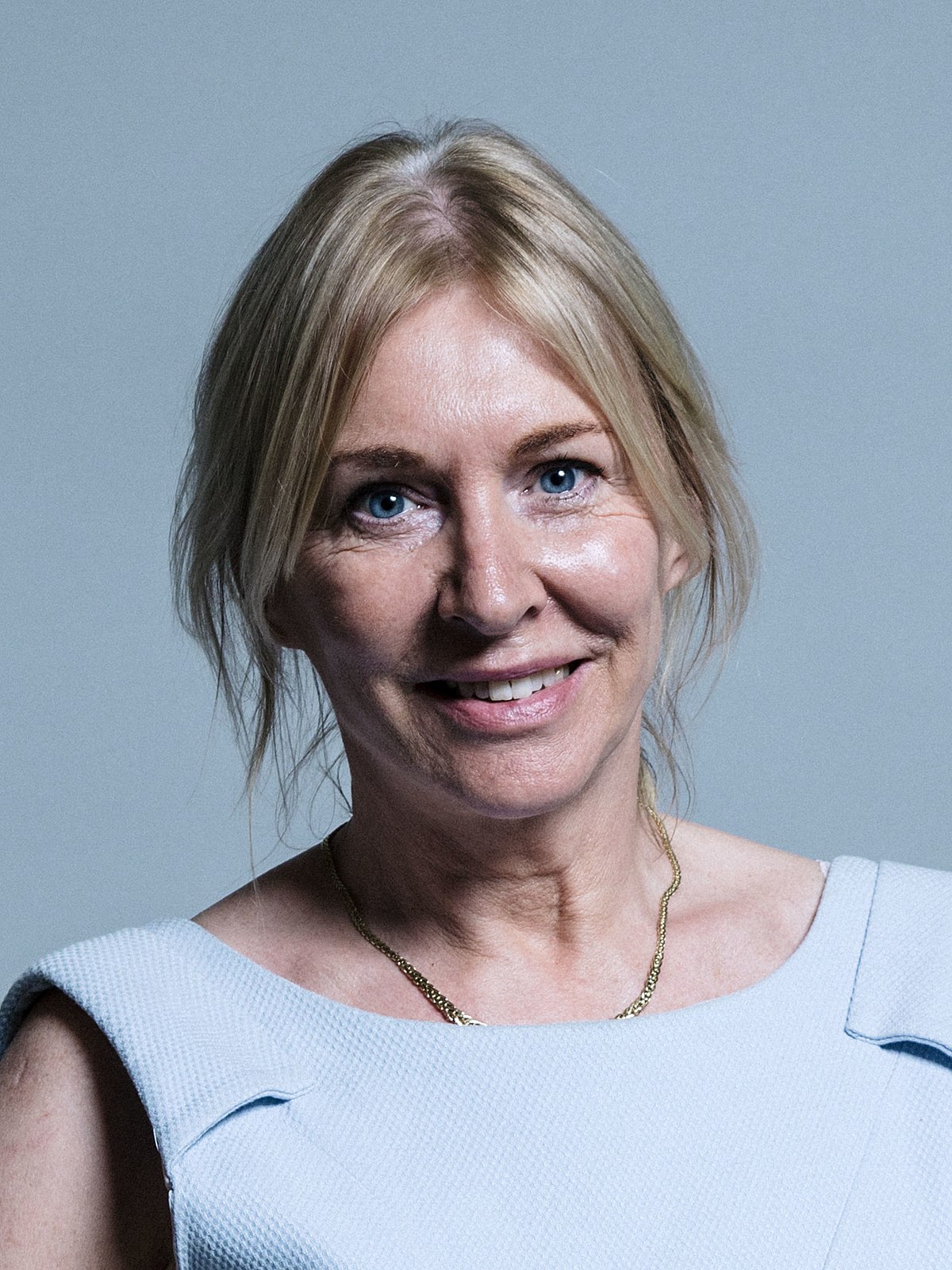
  • Nadine Dorries – 2022 Comments on the Broadcasting Bill

    Nadine Dorries – 2022 Comments on the Broadcasting Bill

    The comments made by Nadine Dorries, the Secretary of State for Digital, Culture, Media and Sport, on 28 April 2022.

    The UK’s TV and radio industries are world-renowned for their creativity, driven by exceptional talent that is delivering groundbreaking public service programming.

    Set against the backdrop of the digital transformation of our viewing habits, today’s plans will revamp decades-old laws to help our public service broadcasters compete in the internet age and usher in a new golden age for British TV and radio. This will provide jobs and growth in the future along with the content we all love.

  • Chloe Smith – 2022 Comments on the British Sign Language Bill

    Chloe Smith – 2022 Comments on the British Sign Language Bill

    The comments made by Chloe Smith, the Minister for Disabled People, on 27 April 2022.

    Today is a momentous day and I truly hope it will transform the lives of D/deaf people across the country.

    The BSL Bill will help remove barriers faced by the D/deaf community in daily life and is a further welcome step towards a more inclusive and accessible society.

    I am so grateful to the efforts of Rosie Cooper MP and the wonderful campaigners who have brought the BSL Bill to the point of passing into law and I’m proud to have played a small part in its journey.

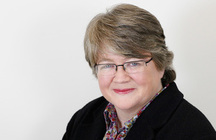
  • Therese Coffey – 2022 Statement on Completing the Move to Universal Credit

    Therese Coffey – 2022 Statement on Completing the Move to Universal Credit

    The statement made by Therese Coffey, the Secretary of State for Work and Pensions, in the House of Commons on 25 April 2022.

    In 2012, Parliament voted to end legacy benefits and replace them with a single modern benefit system, universal credit. The UC system stood up to the challenges of the pandemic and ensured that support was provided for a significant number of new claimants with varying needs across the country. As the rest of Government and society returns to business as usual, it is appropriate to resume the process to complete the move to UC by 2024.

    There are around 2.6 million households receiving legacy benefits and tax credits who need to move across to UC. The natural migration process, where claimants experience a change in circumstances and consequently move to UC, has largely continued throughout the last two years. The voluntary migration process has also been available throughout. We are taking steps to increase people’s awareness of the fact that they could be better off financially if they were receiving universal credit, including through the publication of our document “Completing the Move to Universal Credit” today on www.gov.uk. I will place copies in the Libraries of both Houses.

    In that document, we set out our analysis which estimates that 1.4 million (55%) of those on legacy benefits or tax credits would receive a higher entitlement on UC than on legacy benefits and would benefit from moving voluntarily, rather than waiting for a managed migration. This is particularly the case for tax credit claimants, with our analysis estimating that around two thirds of them would benefit. That is why we have included information on UC in this year’s renewal forms for current tax credit recipients. It is important for current recipients to satisfy themselves that they would be better off on UC using independent benefit calculators before moving voluntarily, as once the claim is made recipients cannot revert to tax credits or legacy benefits, nor receive any transitional protection payments. More information is included in the document.

    For those claimants who do not choose to move and have not migrated naturally, we will manage their migration to UC. Parliament committed to providing transitional financial protection to those who are moved on to UC through the managed migration process. While many households will be better off financially on UC, for those with a lower calculated award in UC than in their legacy benefits, transitional protection will be provided for eligible households. This means they will see no difference in their entitlement at the point they are moved to UC, provided there is no change in their circumstances during the migration process.

    Before the pandemic, the Department had started testing processes for managed migration in a pilot based in Harrogate. In 2020, the pilot was stopped to handle the significant increase in new claims for UC resulting from the pandemic. During this pilot there was proactive engagement with 80 people, 38 of whom were moved to UC. Thirty-five claimants were better off and only three people required transitional protection. The remainder of moves were not completed before the pilot was stopped. This pilot only involved claimants that the Department had an existing relationship with. No claimants on working tax credits were approached directly to commence a move to UC.

    The pilot provided valuable insights. First, while claimants will likely look for support from organisations they already know, such as a local authority, we are no longer assuming that all engagement needs to be managed by that organisation. Secondly, claimants can and will move autonomously, but some may need more support, particularly on digital access. The pandemic reinforced the importance of claimants being able to manage their own claims online and the strength of this system. Thirdly, claimants can successfully choose a date for their claim, factoring in other income and expenditure points during the month. Finally, the pilot allowed the Department to understand the processes and tools required to complete a managed move, such as those needed to calculate transitional protection.

    As I have said to the House previously, we are not resuming the Harrogate pilot. We have learned from that experience and our wider experience over the last two years. As we complete the move to UC, I am absolutely committed to making this a responsible and safe transition. Next month, we will be starting a multi-site approach across the country with a small number of claimants—approximately 500 initially—being brought into the mandatory migration process. We will continue to develop our processes and systems to scale the migration process and complete by 2024.

    We are resuming under existing regulations, although I intend to bring forward to Parliament amendments to the UC transitional provisions regulations, following their consideration by the Social Security Advisory Committee.

    Universal credit is a dynamic welfare system fit for the 21st century. As part of our levelling-up agenda to support the British public, we will continue to help people into work and to progress in work, taking advantage of the recent reduction in the taper rate and boost to work allowances.

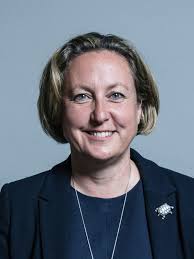
  • Anne-Marie Trevelyan – 2022 Statement on Trade with Ukraine

    Anne-Marie Trevelyan – 2022 Statement on Trade with Ukraine

    The statement made by Anne-Marie Trevelyan, the Secretary of State for International Trade, in the House of Commons on 25 April 2022.

    On Thursday 21 April, I met His Excellency, Vadym Prystaiko, Ukraine’s Ambassador to the United Kingdom, where we reached an agreement in principle that the UK will liberalise all tariffs on imports of Ukrainian origin under the UK-Ukraine political, free trade and strategic partnership agreement. This follows the commitment made by the Prime Minister in Kyiv that the UK would step up our economic support. This agreement in principle is in direct response to a request from the Government of Ukraine and is part of the UK’s commitment to their economic stability. Both countries are now completing the necessary processes to rapidly bring this into force.

    The UK Government offered this policy on a non-reciprocal basis, with no expectation or ask of the Ukrainian Government in return. However, the Government of Ukraine has confirmed that their preference is to match our approach and they will fully liberalise their tariffs under the FTA with the UK, in order to maximise the economic benefit for Ukraine and to help secure their economic future.

    Key details include:

    Liberalising all tariffs under the Free Trade Agreement to zero on all goods originating from Ukraine which will provide economic support in their hour of need.

    Our analysis shows that the average tariff on imports from Ukraine not already fully liberalised is currently around 22%. Removing these tariffs provides broad and deep support for the people of Ukraine.

    In the unlikely event of a surge of Ukrainian imports into the UK market, I have put in place a broad safeguard mechanism to protect domestic industry.

    These changes will be for an initial period of 12 months but include a simple process to agree an extension with Ukraine.

    The Government will shortly lay a statutory instrument to amend our domestic legislation accordingly.

    This approach is leading the world in how we support Ukraine, and I will encourage trade ministers in other countries to follow our direction. With that in mind, I will soon convene Trade Ministers from the G20 and other nations to continue the international effort to put pressure on Putin and support Ukraine.

    On Thursday 21 April, we announced that the UK will bolster its sanctions against Russia by expanding the list of products facing import bans and increasing tariffs. With these new measures, the UK will be imposing import tariffs and bans on over £1 billion-worth of Russian goods. The new sanctions will include import bans on silver and high-end products from Russia including caviar, and tariff increases of 35 percentage points on a range of products from Russia and Belarus, including diamonds and rubber. These new measures follow on from the tariff increases imposed on goods from Russia and Belarus on 25 March, and a ban on the import of many iron and steel products from Russia on 14 April. Legislation will be laid in due course to implement these measures. We encourage all importers that use Russian imports to source alternative supplies. As with all sanctions, these measures will be kept under review.

    Today, we also announce additional sanctions to continue putting pressure on Putin’s regime. These sanctions include expanding our existing strong export prohibitions and closing loopholes to ensure that the UK is not selling Russia products and technology which could be used to repress the heroic people of Ukraine.

    As I made clear to Ambassador Prystaiko, the UK will do everything in its power to support Ukraine’s fight against Putin’s brutal and unprovoked invasion and ensure its long-term security and prosperity. We stand unwaveringly with Ukraine in this ongoing fight and will tirelessly work to ensure Ukraine survives and thrives as a free and sovereign nation.

  • Vicky Ford – 2022 Statement on the Room to Run Guarantee

    Vicky Ford – 2022 Statement on the Room to Run Guarantee

    The statement made by Vicky Ford, the Minister for Africa, in the House of Commons on 25 April 2022.

    It is normal practice, when a Government Department proposes to undertake a contingent liability in excess of £300,000 for which there is no specific statutory authority, for the Minister concerned to present a departmental minute to Parliament giving particulars of the liability created and explaining the circumstances; and to refrain from incurring the liability until 14 parliamentary sitting days after the issue of the statement, except in cases of special urgency.

    I have today laid a departmental minute outlining details of a new liability, the Room to Run Guarantee, which FCDO plans to undertake in order to guarantee a US$1.6 billion—£1.23 billion at the current exchange rate—portfolio of African Development Bank loans.

    The African Development Bank (AfDB) is Africa’s premier regional financial institution. It is a well respected multilateral development bank which lends to 50 countries and the private sector within Africa. The UK is a long-term AfDB shareholder.

    The UK is creating this new liability for two reasons. First, to meet a clear climate financing need. Africa has large and growing financing needs for clean and green development. It is estimated that $3 trillion is needed to implement Africa’s climate strategies over the next 10 years. Secondly, to support the AfDB. The economic impact of the pandemic has constrained AfDB’s capacity to lend to member countries. This guarantee would allow the AfDB to continue to prudently increase its lending capacity at an important time.

    The liability is expected to last for up to 15 years. FCDO would only pay official development assistance if a default occurs and if first loss cover provided by the African Trade Insurance Agency (ATI) is exhausted. The departmental minute sets this out in detail.

    HM Treasury has approved the proposal. If, during the period of 14 parliamentary sitting days beginning on the date on which this minute was laid before Parliament, a Member signifies an objection by giving notice of a parliamentary question or by otherwise raising the matter in Parliament, final approval to proceed with incurring the liability will be withheld pending an examination of the objection.

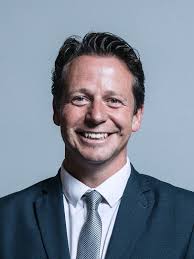
  • Nigel Huddleston – 2022 Statement on Government Response to Football Governance Review

    Nigel Huddleston – 2022 Statement on Government Response to Football Governance Review

    The statement made by Nigel Huddleston, the Parliamentary Under-Secretary of State for Digital, Culture, Media and Sport, in the House of Commons on 25 April 2022.

    I wish to inform the House that the Government have today published their response to the recommendations made by the Independent Fan Led Review of Football Governance.

    The Government’s response focuses on responding to the review’s 10 strategic recommendations. We accept or support all of the 10 strategic recommendations in our response, which sets out the Government’s planned reform of football. The sum total of our plans amount to significant reform with an independent regulator focused on financial sustainability, and a strengthened approach to ownership of football clubs and their governance.

    The Government build on the case for reform set out in the review. We believe that there are two key problems in English football. First, there is significant risk of financial failure among clubs, and secondly, the cultural heritage of English football is at risk of harm. We have identified that these two problems have three root causes: the structure and dynamics of the market create incentives for financial overreach, inadequate corporate governance often affords unchecked decision-making power, and the existing regulation is ineffective. Without reform these financial failures will persist, and the economic and social costs would be substantial. Therefore, the Government believe that there is a need to intervene in football to secure the future of the game.

    The issues highlighted in the review are complex and our reforms need detailed and considered analysis to ensure the sustainability of the sector long term. As a result, we have committed to publishing a White Paper in the summer which will set out further details on the implementation of reform.

    In response to the strategic recommendations, the Government response sets out a vision for the reform of English football:

    An independent regulator for football will be established. The response sets out the proposed objective, scope and powers of the regulator, and that it would oversee a licensing regime of the top five leagues.

    The regulator will have a focus on financial regulation. The financial regulation regime will take a holistic approach, bringing together the Owners’ and Directors’ test, corporate governance and equality, and diversity and inclusion as part of one regime.

    The current Owners’ and Directors’ tests do not go far enough in assessing suitability for ownership of clubs. The response sets out that the tests should be strengthened by enhancing due diligence to check source of funds and the strength of business and financial plans, and that an integrity-style test will be introduced. The forthcoming White Paper will provide further details on how the enhanced tests will work, and what will be in scope of the integrity test.

    We believe that football needs a new approach to corporate governance, proposing a new model to be designed and overseen by the regulator. Football also needs to take further action on diversity and inclusion through their own plans for action. Further consideration will be given to ensure the model is proportionate and appropriate for football.

    We agree with the review that supporters should be properly consulted by clubs, but we propose to share details in the White Paper on a more flexible approach to supporter engagement by making a minimum level of fan engagement a condition of the regulator licence. We have also committed to share details in the White Paper on the regulator implementing a licence condition which requires clubs to have a mechanism for fans to consent to changes to key items of club heritage.

    On financial distributions in the football pyramid, we agree that more could be done by the Premier League to enhance financial flows through the wider football pyramid, and ideally this would be through a football-led solution. We have committed to revisit whether backstop powers are needed for the regulator to implement a new distribution agreement, if a solution is not found before the White Paper.

    We agree with the review on the importance of football clubs to local communities, and set out that the position on “existing provisions”—which applies to football stadiums—in the national planning policy framework will be retained in the revised NPPF, in conjunction with Department for Levelling Up, Housing and Communities colleagues.

    Finally, in response to the review’s recommendations regarding alcohol and football, we are committing to review the Sporting Events (Control of Alcohol etc.) Act 1985, in conjunction with Home Office colleagues.

    The Government are fully committed to reforming football governance to enable a long-term, sustainable future for the game. Accepting or supporting all the strategic recommendations in the review is the next step to doing exactly this, and will represent a wholesale change in the way football is governed in England.

    We recognise the scale of change that is required, and the impact that our proposals will have within football and more broadly. That is why we are setting a strategic direction in reforming football for the better, but taking some time to consider the details of exactly how we will enact these changes. We will set out even more information on the precise implementation of our reforms in a White Paper which we will publish this summer, and are committing to implementing the reforms as soon as possible.

  • Edward Argar – 2022 Statement on Lords Amendment 29B of the Health and Care Bill

    Edward Argar – 2022 Statement on Lords Amendment 29B of the Health and Care Bill

    The statement made by Edward Argar, the Minister for Health, in the House of Commons on 25 April 2022.

    The Lords amendments before the House today relate to the NHS workforce, reconfigurations, modern slavery and the adult social care cap. In respect of amendments 30B and 108B on reconfigurations, I am grateful for the constructive debate on these issue across both Houses. This House has twice voted strongly in favour of the ability for the Secretary of State to call in reconfiguration proposals when needed, and it remains a key principle that decisions on how services are delivered should be subject to ministerial oversight. However, my right hon. Friend the Secretary of State and I have listened carefully to the debates throughout the Bill’s passage, and as a result we have proposed a series of amendments to minimise bureaucracy and ensure transparency.

    The first set of changes would mean that the NHS had to notify the Secretary of State only about those reconfiguration proposals that were deemed notifiable, which we will define through regulations. We intend to align that definition with the existing duty on NHS commissioners to consult local authorities where there is a substantial development of variation in the health service. We also propose to remove the requirement for commissioners and providers to inform Ministers of

    “circumstances that are likely to result in the need for the reconfiguration of NHS services”.

    Taken together, these changes will mean that the NHS will need to notify the Secretary of State only about proposals that are substantive and of great importance to people.

    Secondly, we will give local authorities, NHS commissioners and anyone else the Secretary of State considers appropriate a right to make representations to the Secretary of State when he has called in a proposal for reconsideration. We expect this to include any relevant provider. The Secretary of State will be required to publish a summary of the representations he receives, and we will set out in statutory guidance further detail on how local bodies, including providers, will be engaged.

    Thirdly, transparency is vital to ensure that these powers are always used by Ministers in the clear interest of the people we all serve. We will therefore require the Secretary of State to provide the reasons for his decisions and directions when he makes them. Finally, we have heard throughout these debates that it is vital that decisions are made expeditiously and expediently in order to give certainty to local bodies so that reconfigurations can be made quickly to improve the quality of services received by patients. We are therefore introducing a requirement that, once a reconfiguration proposal has been called in, the Secretary of State must make any decisions within six months. We believe that this set of changes addresses the key concerns raised in this House and the other place, and I commend it to the House.

    I turn to Lords amendment 48B, and the Government’s amendment in lieu, on modern slavery. We share the strength of feeling expressed in both Houses on ensuring that the NHS is in no way inadvertently linked with modern slavery and human trafficking through its supply chain. That is why the Government brought forward an amendment in the first round of ping-pong to create a duty on the Secretary of State to undertake a thorough review of NHS supply chains. I am pleased to announce today that we are going further. The Government’s amendment in lieu of Lords amendment 48B will require the Secretary of State to make regulations with a view to eradicating the use by the NHS in England of goods or services tainted by slavery or human trafficking. The regulations can set out steps the NHS should be taking to assess the level of risk associated with individual suppliers, and the basis on which the NHS should exclude them from a tendering process.

    I particularly commend my right hon. Friend the Member for Chingford and Woodford Green (Sir Iain Duncan Smith) for his consistent and vocal campaigning on this issue. I am delighted that he has confirmed his support for the amendment in lieu. I look forward to working further with him and his supporters to bring these measures forward.

    Ms Nusrat Ghani (Wealden) (Con)

    I congratulate the Minister and the Department on taking this extraordinary step. The public may believe that we already do not use slave-made goods, but unfortunately we do. It is remarkable that the Department has taken this step, and it is incredibly important that we look at Xinjiang in particular, where Sir Geoffrey Nice QC determined there has been a genocide, as there was in Bosnia. The sanctioned MPs and all our colleagues in the inter-parliamentary alliance on China will work with the Department to ensure we have no Uyghur slave-made products in our NHS.

    Edward Argar

    I paid tribute to my right hon. Friend the Member for Chingford and Woodford Green, but my hon. Friend the Member for Wealden (Ms Ghani) has also taken a keen interest in this issue. The Secretary of State and I will continue to work closely with others across Government to ensure that our measures to eradicate modern slavery in NHS supply chains are effective and targeted, and reflect best practice.

    On Lords amendment 29B, the Government are committed to improving workforce planning and are already taking the steps needed to ensure that we have record numbers of staff working in the NHS. In July 2021, the Department commissioned Health Education England to work with partners on reviewing the long-term strategic trends for the health and regulated social care workforce over the next 15 years. We anticipate the publication of that work in the coming weeks.

    Jim Shannon (Strangford) (DUP)

    Will the Minister give way?

    Edward Argar

    Very briefly, as I am conscious that we have limited time.

    Jim Shannon

    If the right hon. Member for South West Surrey (Jeremy Hunt) were to pursue the matter, my party and I would be minded to support him. Although I understand from the figures in the press today that there are significant numbers of new nurses coming into the NHS, there is still a large shortfall. Will the Minister confirm for Hansard in the Chamber today that every step is being taken to recruit the nurses needed to address the issue of workforce safety?

    Edward Argar

    The hon. Gentleman is right to highlight the work we are already doing, which I will address in a moment, and the number of nurses we have recruited. I believe we have now recruited 29,000 or so en route to our target of 50,000 more nurses by the end of this Parliament.

    Sir Robert Neill (Bromley and Chislehurst) (Con)

    Will my hon. Friend give way?

    Edward Argar

    I will make a little progress, if I may—a few more paragraphs—as I am very conscious of allowing time for Back-Bench colleagues to speak.

    Building on this work, we recently commissioned NHS England to develop a workforce strategy. We will set out the key conclusions of that work in due course. In addition, we have committed ourselves to merging Health Education England with NHS England to bring together responsibility for service, financial and workforce planning in one organisation. We will continue to grow and invest in the workforce. There are record numbers of staff, including nurses, working in the NHS.

    Sir Robert Neill

    I am grateful to the Minister for giving way. He will know of my interest as chair of the all-party parliamentary group on stroke, and he will be aware of the particular concern of the Stroke Association and others about the number of qualified therapists to provide the therapy people need after a stroke. Will he commit himself to that being part of the workforce strategy and to moving swiftly? This is already a pressing problem for stroke survivors who are not getting the care they need.

    Edward Argar

    I reassure my hon. Friend that my right hon. Friend the Secretary of State has made it clear that he wishes the whole health and care workforce landscape to be considered by Health Education England.

    The growth in our workforce comes on the back of our record investment in the NHS, which is helping to deliver our manifesto commitments, as I said to the hon. Member for Strangford (Jim Shannon), including our commitment to 50,000 more nurses by the end of the Parliament. The spending review settlement will also underpin funding for the biggest ever intake of undergraduate medical students and nurses.

    Although I might not be able to say anything sufficient to fully convince my right hon. Friend the Member for South West Surrey (Jeremy Hunt), I put on record my gratitude to him not only for the insight, expertise and knowledge he has brought to our debates on this issue but for the typical courtesy he has displayed throughout our interactions and conversations. I do not know what he will say in a moment, but I have tried to pre-empt him. I hope that he may be tempted to stick with it.

    I hope that the House will recognise that the Government are already doing substantial work to improve workforce planning, and that placing a requirement such as Lords amendment 29B on the statute book is therefore unnecessary.

    Kim Leadbeater (Batley and Spen) (Lab)

    Will the Minister give way?

    Edward Argar

    Very briefly, but I am sensitive to Madam Deputy Speaker’s instruction to be brief.

    Kim Leadbeater

    I thank the Minister for giving way. More than 100 organisations, including the Royal College of General Practitioners and the British Medical Association, have expressed their support for Lords amendment 29B. Does he agree that the only way to ensure that we recruit and retain the talented staff that our NHS and social care sector desperately need is through a long-term workforce plan in consultation with the experts in the field, such as health and care employers, unions and integrated care boards?

    Edward Argar

    That is exactly what we are doing through the work commissioned by my right hon. Friend the Secretary of State, which is why Lords amendment 29B is unnecessary.

    Steve Brine (Winchester) (Con)

    Will the Minister give way?

    Edward Argar

    I fear that I cannot, but my hon. Friend may catch me during my winding-up speech. I want to make progress, as about 10 Back-Bench colleagues wish to speak.

    Finally, on the adult social care cap, the Government have announced our plan for a sustainable social care system. It is fair, affordable and designed to end the pain of unpredictable care costs by capping the amount anyone needs to pay at £86,000. Without clause 140 there would be a fundamental unfairness: two people living in different parts of the country, contributing the same amount, would progress towards the cap at different rates based on differences in the amount their local authority is paying. We are committed to levelling up and must ensure that people in different parts of the country are benefiting to the same extent, and our provisions support this. Amendments 80A to 80N also make crucial changes to support the operation of charging reform, as these changes were lost by the removal of clause 140 in the other place.

    Lords amendments 80P and 80Q insert a regulation-making power to amend how

    “costs accrued in meeting eligible needs”

    is determined in section 15 of the Care Act 2014. However, if regulations were made using this power, they would result in anyone entering the care system under the age of 40 receiving free personal care up to that age. As local authority contributions would count towards the cap under these changes, a 35-year-old with average care costs would reach the cap and not have to pay anything towards the cost of their care, yet a person who enters care the day after their 40th birthday would need to contribute towards the £86,000 cap over their lifetime. We believe this is unfair. Our plan already includes a more generous means test that means more people will be eligible for state support towards the cost of care earlier, enabling them to keep more of their income.

    The changes introduced in the other place also threaten the affordability of our reforms. Lords amendments 80, 80P and 80Q would clearly affect financial arrangements to be made by this House and, as such, have financial privilege. These new Lords amendments would cost the taxpayer more than £1 billion a year by 2027-28. Ultimately, this would mean we need to make the same level of savings elsewhere, making the system less generous for other users. I hope I have been able to provide some reassurance that we believe our approach is still the right one, and I ask the House to disagree with the other place’s amendments.

    Finally, I put on record my gratitude to my hon. Friend the Member for Aberconwy (Robin Millar) and the noble Baroness Morgan of Cotes for their constructive and positive engagement during the Bill’s passage on ways to strengthen co-operation between the UK Government, the UK Statistics Authority, the Office for National Statistics and the devolved Administrations, and for their passion for strengthening the Union. I am pleased we are taking forward that work, albeit outside this Bill. I am stimulated by their important work.

    We have sought throughout the passage of the Bill to be pragmatic and to listen to this House and the other place in either accepting their amendments or addressing them in lieu. I hope the House recognises that this approach continues to characterise our work, save where we sadly cannot agree with the other place in respect of its amendments on both the workforce and social care caps.

  • Lindsay Hoyle – 2022 Statement on Government Leaking Football Governance News to Media

    Lindsay Hoyle – 2022 Statement on Government Leaking Football Governance News to Media

    The statement made by Lindsay Hoyle, the Speaker of the House of Commons, in the House on 25 April 2022.

    Before I call the Minister to make a statement on the Government’s response to the fan-led review of football governance, I must put on record my disappointment that the Government have apparently already trailed their response extensively to the media. It seems to me that we have a courteous Minister, but somehow Downing Street seems to ignore him and decides to put everything that the House should hear first out to the media. It is not satisfactory. It is discourteous, not only to the House but to the hon. Member for Chatham and Aylesford (Tracey Crouch), who has put in so much work in this area. It is very disappointing that anybody could believe that she should be cut out. When she catches my eye, she will be given more time to put her case about all the hard work that she has done.

    This might just be a lesson for the Government to stop being discourteous. Think about the people who get elected—those on both sides of the House. I do not blame the Minister, as I know that Downing Street loves getting these messages out on a Sunday night, but why has it not recognised that even the Prime Minister is a Member of this House? It might be good for us all to hear things first. As I say, the hon. Member for Chatham and Aylesford would not normally be given extra time, but I reassure her and the House that more time will be given to her.