Blog

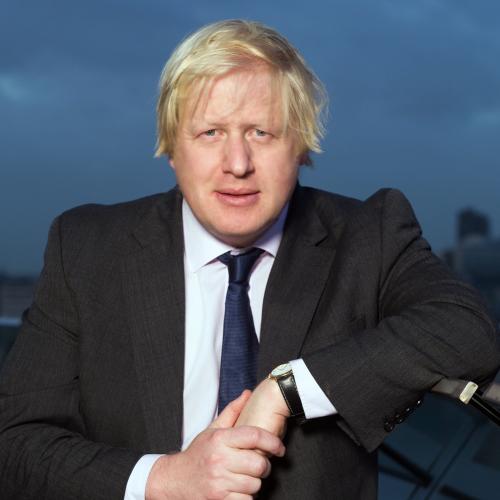
  • Boris Johnson – 2022 Speech to the Ukrainian Parliament

    Boris Johnson – 2022 Speech to the Ukrainian Parliament

    The speech made by Boris Johnson, the Prime Minister, to the Ukrainian Parliament on 3 May 2022.

    President Zelenskyy, Mr Chairman, members of the Verkhovna Rada.

    It is a big honour for me to address you at this crucial moment in history and I salute the courage with which you are meeting, the way you have continued to meet, in spite of a barbaric onslaught on your freedoms.

    Day after day missiles and bombs continue to rain on the innocent people of Ukraine.

    In the south and the east of your wonderful country, Putin continues with his grotesque and illegal campaign to take and hold Ukrainian soil.

    And his soldiers no longer have the excuse of not knowing what they are doing.

    They are committing war crimes, and their atrocities emerge wherever they are forced to retreat – as we’ve seen at Bucha, at Irpin at Hostomel and many other places.

    We in the UK will do whatever we can to hold them to account for these war crimes and in this moment of uncertainty, of continuing fear and doubt I have one message for you today:

    Ukraine will win.

    Ukraine will be free.

    And I tell you why I believe you will succeed, members of the Rada.

    When they came to me last year, and they said that the evidence was now overwhelming that Putin was planning an invasion and we could see his Battalion Tactical Groups – well over 100 of them – gathering on the border I also, I remember a sense of horror but also of puzzlement.

    Because I had been to Kyiv on previous visits – and I actually met some of you and I had stood in the Maidan and seen the tributes to those who had given their lives to protect Ukraine against Russian aggression and I’ve wandered the lovely streets of your capital and I’ve seen enough about Ukrainian freedom to know that the Kremlin was making a fundamental miscalculation, a terrible mistake and I told anyone I knew, anyone who would listen that Ukraine would fight and Ukraine would be right and yet there were some who believed the Kremlin propaganda that Russian armour would be like an irresistible force going like a knife through butter, and that Kyiv would fall within days

    Do you remember they said that? And people rang Volodymyr and offered him safe passage out of the country, and he said – no thanks and that this Rada of yours would have to be reformed outside Ukraine maybe in Poland or even in London perhaps and I refused to believe it.

    And today you have proved them completely wrong, every one of those military experts who said Ukraine would fall.

    Your farmers kidnapped Russian tanks with their tractors.

    Your pensioners told Russian soldiers to hop as we say, although they may have used more colourful language.

    Even in the parts of Ukraine that were temporarily captured, your populations, your indomitable populations turned out to protest, day after day.

    And though your soldiers were always outnumbered – three to one it is now – they fought with the energy and courage of lions.

    You have beaten them back from Kyiv.

    You have exploded the myth of Putin’s invincibility and you have written one of the most glorious chapters in military history and in the life of your country.

    The so-called irresistible force of Putin’s war machine has broken on the immovable object of Ukrainian patriotism and love of country

    This is Ukraine’s finest hour, that will be remembered and recounted for generations to come.

    Your children and grandchildren will say that Ukrainians taught the world that the brute force of an aggressor counts for nothing against the moral force of a people determined to be free.

    They will say that Ukrainians proved by their tenacity and sacrifice that tanks and guns cannot suppress a nation fighting for its independence, and that is why I believe that Ukraine will win

    You have proved the old saying – it’s not the size of the dog in the fight, it’s the size of the fight in the dog – which is an old English saying, I’m not sure how well that translates in Ukrainian but you get what I’m trying to say.

    And as you turned the Russian army back from the gates of Kyiv, you not only accomplished the greatest feat of arms of the 21st century, you achieved something deeper and perhaps equally significant.

    You exposed Putin’s historic folly, the gigantic error that only an autocrat can make.

    Because when a leader rules by fear, rigs elections, jails critics, gags the media, and listens just to sycophants, when there is no limit on his power = that is when he makes catastrophic mistakes.

    And it is precisely because we understand this danger in Britain and in Ukraine – precisely because we are democracies, and because we have a free media, the rule of law, free elections and robust parliaments, such as your own, we know that these are the best protections against the perils of arbitrary power.

    When an autocrat deliberately destroys these institutions,he might look as though he is strong and some people might even believe it, but he is sowing the seeds of catastrophe, for himself and for his country, because there will be nothing to prevent him committing another terrible mistake Putin’s mistake was to invade Ukraine, and the carcasses of Russian armour littering your fields and streets are monuments not only to his folly, but to the dangers of autocracy itself.

    What he has done is an advertisement for democracy.

    On a day when Putin thought he would be in charge of Kyiv, I had the honour of being able to visit your wonderful city, and I saw the defiance of the people of Ukraine,

    I know so much about the terrible price that Ukrainians have paid and are paying for your heroism.

    Today, at least one Ukrainian in every four has been driven from their homes, and it is a horrifying fact that two thirds of all Ukrainian children are now refugees, whether inside the country or elsewhere.

    So no outsider like me can speak lightly about how the conflict could be settled, if only Ukraine would relinquish this or that piece or territory or we find some compromise for Vladimir Putin.

    We know what happens to the people left in the in clutches of this invader.

    And we who are your friends must be humble about what happened in in 2014, because Ukraine was invaded before for the first time, when Crimea was taken from Ukraine and the war in the Donbas began.

    The truth is that we were too slow to grasp what was really happening and we collectively failed to impose the sanctions then that we should have put on Vladimir Putin.

    We cannot make the same mistake again.

    And it is precisely because of your valour your courage your sacrifice that Ukrainians now control your own destiny: you are the masters of your fate, and no-one can or should impose anything on Ukrainians.

    We in the UK will be guided by you and we are proud to be your friends,

    I am proud to say our Ambassador, Melinda Simmons, is back in Kyiv to reopen our embassy.

    In January of course– just before Putin launched his onslaught – we sent you planeloads of anti-tank missiles, the NLAWS which I think have become popular in Kyiv, and we have intensified that vital effort, working with dozens of countries, helping to coordinate this ever- bigger supply line, dispatching thousands of weapons of many kinds, including tanks now and armoured vehicles.

    In the coming weeks, we in the UK will send you Brimstone anti-ship missiles and Stormer anti-aircraft systems.

    We are providing armoured vehicles to evacuate civilians from areas under attack and protect officials – what Volodymyr mentioned to me in our most recent call – while they maintain critical infrastructure.

    And I can announce today from the UK government a new package of support totalling £300 million, including radars to pinpoint the artillery bombarding your cities, heavy lift drones to supply your forces, and thousands of night vision devices.

    We will carry on supplying Ukraine, alongside your other friends, with weapons, funding and humanitarian aid, until we have achieved our long-term goal, which must be so to fortify Ukraine that no-one will ever dare to attack you again.

    Here in the UK, in my country, you will see Ukrainian flags flying from church spires and in shop windows.

    You see Ukrainian ribbons on the lapels of people up and down the country.

    There are many reasons your country has evoked such astonishing sympathy in the British people.

    It is a conflict that has no moral ambiguities or no grey areas.

    This is about the right of Ukrainians to protect themselves against Putin’s violent and murderous aggression.

    It is about Ukraine’s right to independence and national self-determination, against Putin’s deranged imperialist revanchism.

    It is about Ukrainian democracy against Putin’s tyranny.

    It is about freedom versus oppression.

    It is about right versus wrong.

    It is about good versus evil and that is why Ukraine must win and when we look at the heroism of the Ukrainian people and the bravery of your leader Volodomyr Zelenskyy – we know that Ukraine will win and we in the UK will do everything we can to restore a free sovereign and independent Ukraine.

    Thank you all very much for listening to me today, and slava Ukraini!
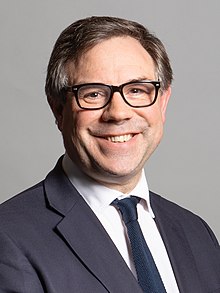
  • Jeremy Quin – 2022 Speech at SupportNET 22

    Jeremy Quin – 2022 Speech at SupportNET 22

    The speech made by Jeremy Quin, the Minister for Defence Procurement, on 28 April 2022.

    Two years ago I was relatively new in post and I regret I wasn’t able to join you on that occasion but now I know it was referred to as a Support Net superspreader event and therefore perhaps I regret it a little less.

    It is great, in happier circumstances, for us all to be together in the same room.

    Last year I joined you virtually and I recall quoting then from the Chinese philosopher Sun Tzu, who you will all be familiar, who said the line between success and failure is of course logistics.

    This year, I don’t feel I need to delve 2,000 years into Chinese literature to make the same point. We’ve been seeing it daily on our television screens.

    Those pictures of the 40-mile Russian convoy sat stuck on the road to Kyiv have become some of the defining images of Putin’s war.

    Indeed, Russia’s failure in almost all of its initial objectives may be found to be deeply rooted in the logistics and supply mistakes, amongst others, that they have been making.

    Expensive equipment is getting literally bogged down because it relied, in part, on failing old tyres which have been unmonitored.

    Russian soldiers have been relying on cheap handheld radios because theirs don’t work.

    And, if reports are to be believed, they’ve even resorted to scavenging and looting because their rations are not just weeks or months but years out of date.

    Napoleon, who learned a few things about logistics of the cold climate as you’ll recall, famously talked about an army marching on its stomach.

    And it’s fair to say that the UK has a good track record when it comes to Defence logistics and support networks.

    And we’ll be reminded in this, the 40th anniversary year of the Falklands War, that we succeeded in maintaining an 8000-mile-long supply chain that ultimately led us to victory.

    And just last year, we utilised every asset of Defence to carry out the biggest peacetime airlift in history from Kabul.

    But in this new era of rising threats – where war in Europe is no longer a distant memory but a stark reality – we cannot afford to take our eye off the ball.

    Last year, I spoke about the publication of our Integrated Review and the Defence Command Paper, which constituted the biggest review of our Defence since the end of the Cold War.

    Those two documents recognised the importance of getting logistics right.

    Not simply by reorganising the Army into more self-sufficient Brigade Combat Teams able to meet demand by drawing on their own dedicated logistics and combat support units.

    But by investing in modernising and transforming engineering and logistical support systems to improve the availability and sustainment of our capabilities, our equipment and our people across all the domains.

    Indeed, the Defence Support organisation was created to pursue these common goals.

    They are making sure that no British serviceperson suffers that Russian ration fiasco.

    In fact, today I can reveal that we have been trialling new, nutritionally balanced ration packs, which show a 23% increase in performance for Commando Forces – despite being smaller and lighter to carry. Napoleon no doubt would have approved.

    But this is only a small element in the start of the transformation in logistics that we’re looking for. From my perspective, I want to see and succeed in meeting four key objectives.

    First, we must strengthen our strategic base.

    In other words, the infrastructure and systems upon which we depend to store our stock and to process complex transactions that supply materiel to the front line.

    Over the past year, our Agile Stance Campaign Plan has been probing the fragilities in our supply lines and fixing them.

    I’m glad to say we’re now seeing accelerated investment in sites like Longtown on the Scottish borders, the development of a Supply Chain Strategy that will enable improved agility and resilience, and an enhanced focus on Supply Chain Resilience.

    But I know the people here in this room are likely to have plenty more enterprising and innovative solutions to some of the challenges we face. And I’m very keen to hear from you.

    How do we increase scalability and production through the lifetime of a platform?

    To what extent can we be standardising parts across Defence so that they will always be available, rather than buying our whole stock of wheelnuts for tanks up front and then storing them somewhere indefinitely?

    Can we change commercial agreements so that industry holds the financial liabilities for maintaining stock levels? Would that incentivise industry to design around off-the-shelf solutions more readily?

    My second objective touches directly on the theme of today’s conference – improving the readiness and availability of our equipment.

    Whether that’s through more resilient designs for future platforms, or better through-life management. Here too there are critical questions to consider around contracting for availability.

    For example, should we have contracts which ensure kit is ready for a set number of days in a year?

    How do we best work together to ensure that our bottom-line availability requirements are always met?

    Involving industry contractually in the numbers and maintenance required from the outset for our equipment.

    The Army and Navy are already starting to integrate these ideas. The former’s Land Integrated Operating Service specifically addresses support contracts and seeks better equipment availability and through-life management.

    While the Naval Enterprise Support Strategy is about reducing the amount of time vessels spend in maintenance by working with an agile, global supply chain and support network.

    My third aim is about rapidity in the digital world. Our Command Paper tasks us with creating a digital spine that underpins everything else in our transformed Defence network.

    But that spine needs to be able to exploit data through a common digital architecture, spanning factory to foxhole, to ensure agile, flexible support that is suited to the demands.

    And it needs to ensure the interoperability of every platform we use throughout our organisation, and those of our allies too.

    It might sound simple, but the magnitude of the task is simply daunting when you consider the number of organisations tied into this common digital framework and the security implications of that.

    It is another area where we are looking to draw on your expertise.

    What is the best way to ensure every new platform we invest in can be plugged into the same digital spine for decades to come?

    How can we exploit the Business Modernisation for Support programme to fundamentally revolutionise our processes, enabling those in support to generate your own part of the digital spine?

    My fourth and, you’ll be pleased to hear, my final point is about sustainability and resilience.

    The imperative for energy security has been underlined in recent weeks as nations scramble to reduce their reliance on Russian oil and gas.

    This is not just a major concern for the cost of living in our country; it also has a direct effect on Defence procurement.

    The platforms we procure today will likely be around in 20 years’ time, by which time our current reliance on hydrocarbons will have been reduced in favour of electric, hydrogen and other energy solutions.

    But we must be ready for this change while recognising there are real operational benefits to becoming more sustainable that go well beyond earning plaudits for being socially responsible.

    Consider that an armoured vehicle which can run silently and recharge itself from the sun – what an enticing prospect for Defence.

    If we don’t have a long logistical tail, we will be far less vulnerable to future threats.

    We are already seeing successes with the launch of our Prometheus programme of solar farms on Army land, as well as the development of the world’s first biofuel for fighter jets.

    The massive price hikes we’ve seen for hydrocarbons show the enhanced resilience on which we can benefit in this renewable space.

    As I’ve already intimidated, we can’t achieve these four Rs – real estate, readiness, rapidity and resilience without working together.

    We need partners who are ready to work with us on defining new patterns that achieve our joint objectives. Partners committed to skills development and innovation.

    Partners who will help us identify problems and join forces in finding solutions.

    I am determined to get this partnership with all of you in this room right.

    Last year I spoke about how we are using the Defence and Security Industrial Strategy to reform relationships with the sector.

    Since then, we have made progress, by strengthening our Defence Suppliers Forum and setting up new working groups for SMEs.

    By using our National Security Technology and Innovation Exchange to give industry and academia the world-class facilities they need to succeed.

    And by establishing Regional Defence and Security Clusters to promote skills sharing and foster collaborations between higher tier Defence suppliers and SMEs across the country.

    But I do want you to tell me what more we can do.

    So the ball is being thrown back into your court.

    I’ve spoken about our aims, our ideas and some of the frictions involved. But I want your take on how we take this symbiotic relationship between Government and industry to the next level.

    Be in no doubt, in this more dangerous age, we are only too aware of your value, and we’re determined to have your back because we know that when the chips are down, you will have ours.

  • Michael Ellis – 2022 Comments on the UK Resilience Forum

    Michael Ellis – 2022 Comments on the UK Resilience Forum

    The comments made by Michael Ellis, the Minister for the Cabinet Office, on 4 May 2022.

    Continuing to bolster the UK’s resilience from domestic and global threats is vital, and the Forum provides space for a range of crucial organisations and partners to provide insight so we can ensure our emergency preparedness remains effective and aligned.

    We continue to identify key challenges on the horizon in order to effectively pivot resources to tackle risks, and to prioritise preparedness accordingly, working collaboratively to protect the UK.

  • Chris Loder – 2022 Speech on the Future of Rail

    Chris Loder – 2022 Speech on the Future of Rail

    The speech made by Chris Loder, the Conservative MP for West Dorset, in Westminster Hall on 26 April 2022.

    Thank you for calling me, Sir Charles. Well, with three minutes I will just get to the point, if I may.

    I appreciate the comments of the hon. Member for Ealing Central and Acton (Dr Huq). I should just say that the RMT does not quite agree with her about the London Mayor. I respectfully make that point, because the RMT has itself said that it is the London Mayor who is causing the logjam, and ultimately that has a considerable impact on the finances available. I represent a constituency that I am afraid has a three-hourly train service frequency, and when I see Transport for London getting such considerable amounts of money, it is a matter of great concern to me. That is money going to support the good people of London, rather than to support the Heart of Wessex line. I know that my hon. Friend the Minister is well aware of my strong views on that point.

    I will move on to the future of rail. I spent 20 years working for the railways before being elected to Parliament. I am not sure whether there are any Opposition Members present who used to be members of the RMT. I was once a member and should give it a big shout-out for its policy briefing, which was very interesting and for which I am grateful. The railways are very important for the future of this country. I appreciate that lots of people have strong views on where the new GB Railways HQ should be, although personally I do not think that will make much of a difference to the future capability of the railway; what will make an enormous difference is where the Government look to invest. The Government have supported the railway to the tune of £14 billion during the worst time of the pandemic. They have kept thousands of people in jobs, and they have done so to ensure that the future of our railways is extremely good and supports the future of our country.

    It is really important that we also consider the wider things that the railways have to change going forward. The railways have been marvellous in lots of ways, but the fact that it can take 12 months to change a timetable is not acceptable in the current day and age. Why is it that we have a timetable that is the same on a Monday as it is on a Friday, when we know that the demands are very different? There are fundamental changes that need to happen in order for our railways to excel.

    I am conscious of time and am grateful for the opportunity to speak in this debate. As a final point, it is really important that we remember it is not all about the cities; it is about connecting the rural areas as well—areas such as West Dorset and other parts of the country that would greatly benefit from that in the future.

  • Rupa Huq – 2022 Speech on the Future of Rail

    Rupa Huq – 2022 Speech on the Future of Rail

    The speech made by Rupa Huq, the Labour MP for Ealing Central and Acton, in Westminster Hall on 26 April 2022.

    Ealing and Acton would not be here without the railways. Both have stations underground, overground—not wombling free—east, west, south, broadway, common, central. They are in “that there London”, so people might be thinking, “You’re all right, Jack,” but I want to counter this misperception that has grown up around the Government’s levelling up rhetoric. It is in the suburbs of London that we feel this most acutely. Our trains are full and getting fuller, fares are rising faster than wages, and west London, the sub-region with Heathrow, is a key driver of our national economy, but it needs transport fit for purpose, not just to and from central London but between the suburban bits.

    An obvious solution would be breathing life into the old Beeching line, the west London orbital. There is Ealing, the centre of west London, and to the north Brent Cross, with lots of jobs, and to the south, Brentford, but good luck to anyone trying to get between any of those three. There is the super-development opportunity area of Old Oak, which has promised 24,000 dwellings and jobs, jobs, jobs. Again, this proposal could link them all, but there is no chance in sight, because the Government will not commit long-term funding to TfL.

    Instead, we have the ignominious situation of cap-in-hand, eleventh-hour settlements, being marched to the top of the hill and down again. We are pretty much the only capital city on earth—I am not counting Singapore—where there is no central Government subsidy. We need reliability, predictability and all those things. When the current Prime Minister was Mayor of London, he was bequeathed a load of goodies from his Labour predecessor: the bikes that bear his name, the TfL rail Overground—it used to be quite scary when it was the Silverlink; it is brilliant now—the DLR extension and bus investment. But for Sadiq Khan—bless his cotton socks—the cupboard is bare.

    Chris Loder (West Dorset) (Con)

    I congratulate the hon. Member for York Central (Rachael Maskell) on securing the debate. I have been listening intently to what the hon. Member for Ealing Central and Acton (Dr Huq) said about the finances for TfL. Does she agree that if the National Union of Rail, Maritime and Transport did not strike so often in London and bring the whole of London to a standstill, the TfL finances might be in a better position?

    Dr Huq

    The hon. Gentleman is falling into the Tory trope of union bashing. I am a proud trade unionist, and the unions are there to better the conditions of their members. We do not want exploitation, do we? Is he going to be shoving kids up chimneys next? I fear the track he is going down. This issue is a bit of a smoke screen. We need long-term funding and a dependable model for London, which we used to have. Every other London Mayor had that, but in 2016 George Osborne suddenly cut the support grant. I think that had something to do with the complexion of City Hall, but—[Interruption.] I am not going to give way, because I do not get any extra time.

    With covid giving way to a cost of living crisis, what did we see from the Chancellor? A cut in fuel duty and a 3.8% rise in fares, and I am not counting that gimmicky video—that thing, whatever it was—about the 1% of journeys where someone can get a cheap fare, going to the right place on the right day. That is not going to affect any of my constituents.

    Meanwhile, we can only marvel at what they are doing outre-Manche in the rest of Europe. Look at Austria’s climate ticket. In Germany, there is a €9 a month regional transport ticket. In this country, no one between 25 and 65, which is probably most of the people here, is eligible for a national railcard, which is available elsewhere. I urge the Minister to look at something like that.

    In conclusion, the future of rail should include projects that complete vaguely on time. I have an Oyster card holder that says, “Crossrail—new for 2018”. Ha! The future of rail would have considerate construction. HS2 goes through my seat and has made life a misery for the residents of Wells House Road, NW10. The future of rail would also have a visionary Government that could think long term, rather than say, “It’s all Sadiq Khan’s fault,” any time a London MP stands up to say anything, when we know that our London Mayor is doing a fantastic job against the odds. The country cannot be levelled up by levelling down London. The new Piccadilly line trains, due in 2025, are being built in Yorkshire. Level up London and the whole country benefits. Let us get Ealing, Acton and Chiswick back on the rails. Now that’s what I really call levelling up.

  • Andrew Jones – 2022 Speech on the Future of Rail

    Andrew Jones – 2022 Speech on the Future of Rail

    The speech made by Andrew Jones, the Conservative MP for Harrogate and Knaresborough, in Westminster Hall on 26 April 2022.

    It is always a pleasure to serve under your chairmanship, Sir Charles.

    I congratulate the hon. Member for York Central (Rachael Maskell) on securing this debate. She spoke very well about why the headquarters of Great British Railways should be located in York, and about the opportunities that transport investment delivers for levelling up and decarbonising for the future. I want to support that argument.

    Lots of Members will put forward the case for their areas. Some of those cases are, quite frankly, a bit on the thin side. I understand why they are doing it, but I believe that the correct way to approach this question is to look at the criteria that the decision makers in this competition have set.

    Let me start by suggesting what the challenges for rail are, and how they influence what Great British Railways needs. The rail industry is a huge success. The pre-pandemic data, which I use for obvious reasons, tells us that it had 1.8 billion passenger journeys per year and 140,000-plus services per week—more than ever before. The question for Ministers and the industry is how to cope with the growth. The answer has been, through a variety of mechanisms, to increase capacity with new lines, improve existing lines, and provide new rolling stock and better signalling. The pandemic has clearly changed things, and it is too early to see how the trends will settle, but we can see that demand is returning already, although the commuting sector is still weak. The long-term problems have not gone away, and Great British Railways will need to address them.

    The Government have published six criteria for judging the bids, and a critical element is the opportunity for Great British Railways. That is the third of the listed criteria, and I will focus on it for a few moments. It is against that criterion that York emerges head and shoulders above the others as the strongest bid. The question is: how do we deliver the future? The digital signalling, the planning of line enhancements, the new systems of power to drive the industry as the sector decarbonises, the expertise, the skills, the wider rail ecosystem with companies based in York and beyond in Yorkshire, the partnerships with academic institutions—they are all in place in York now, ready to be expanded and play a greater role.

    Let me give one small example. The UK has been developing a series of rail operating centres—12 in total—that will control all the country’s signalling. They have been operating for some years and have taken on more services over time. York hosts one now, and it is in fact the largest of them all. It was part of a Network Rail campus, and it includes a workforce development centre, so York is already at the heart of the digital rail future.

    The other criteria against which the bids will be judged are again met by the qualities of York: connectivity north-south and east-west is excellent; it is centrally located, half way between London and Edinburgh; the railway heritage is obviously second to none; and it hosts one of the major rail museums of the world. I know that the Science Museum Group has already made an important representation to the Minister in the bid process in favour of York. Public support has been demonstrated by the work undertaken locally by political representatives, not least in this debate. York is Yorkshire’s choice.

    The hon. Member for York Central did not mention that in Yorkshire we are famous for liking value. [Interruption.] That is not really a joke, but a truth. We are famous for liking value, and with the York Central development we have an enterprise zone, with much of the land already in Network Rail ownership, so there is a ready-made value solution.

    The last criterion is levelling up. Some of the most left-behind communities in the country are within a short journey time from York. The halo effect, building upon the current cluster, would have the positive effect of providing opportunity across these communities. Looking at the criteria as a whole and seeing what York can deliver, I see the York bid as being head and shoulders above the others, which is why I support it. I am grateful for the opportunity to share my views this afternoon and to support this bid.

  • Rachael Maskell – 2022 Speech on the Future of Rail

    Rachael Maskell – 2022 Speech on the Future of Rail

    The speech made by Rachael Maskell, the Labour MP for York Central, in Westminster Hall on 26 April 2022.

    I beg to move,

    That this House has considered the future of rail.

    It is a pleasure to serve with you in the Chair, Sir Charles. On 27 September 1825, as Stephenson’s Locomotion powered its way up out of Shildon towards Stockton, the eyes of the world marvelled at the height of British engineering. As we prepare for rail’s bicentenary against the backdrop of a different set of challenges, the excellence of British engineering can once again capture the imagination of what can be achieved and ignite a new transport revolution.

    Today, I will set out why consolidation and intersection with other forms of transport and energy technologies is essential if Britain is once again to lead the transport revolution, and why it is vital that the Government invest in this unique global rail supercluster for rail’s bicentenary. I am ambitious for rail and I am ambitious for Britain.

    It will not be lost on anyone in this debate that York is where that revolution will occur. After all, York made the railways and the railways made York. The partnership between York University and Leeds University centres the future of digital and advanced rail, including the Institute for High Speed Rail and System Integration at Leeds University, bringing together the very best of transport, academia and digital technologies with the 13 leading rail education providers in the region, including the Institute of Technology at York College, which I visited recently.

    We love our steam trains; whether it is the Mallard or the Flying Scotsman that fills people with greatest pride, our rail heritage is a natural draw for anyone across the network. Today, York has over 100 rail companies, which are at the forefront of engineering, operations, software development, timetabling and planning, providing over 5,500 of York’s top jobs and 9,500 jobs in the surrounding region, and consolidating York’s rail cluster, which is the largest outside London and now eager to take us forward once more.

    Sir Greg Knight (East Yorkshire) (Con)

    I congratulate the hon. Lady on securing this excellent debate. Does she agree that there is not a good case, but an overwhelming case, to make York the headquarters of Great British Railways?

    Rachael Maskell

    I thank the right hon. Gentleman for his intervention. Where else can Great British Railways locate itself but in York if it is to level up the whole country? That really must be the argument we make.

    The York Rail Innovation Community already oversees the intersection of rail businesses and innovations, enabling the northern rail economy to generate over £42 billion, according to the University of Leeds. It draws on the University of York’s Institute for Safe Autonomy, bringing new technologies and robotics together, and opening up a new conversation for the future of rail and the future of transportation, and modernising how we think about rail and transport. The institute’s £12 million programme leads global research to provide industry, regulators and researchers with guidance on assuring and regulating robotics and autonomous systems, including those on rail. York’s work is setting global standards and ensuring that such systems are safe.

    Taking the search for answers into applied testbeds, such as the advanced rail test facilities, widens possibilities and the collaborations between York, Leeds, Sheffield, Huddersfield and Hull. This is not just a rail cluster, but a transport cluster. Interlink that with the new headquarters of Active Travel England, and we will have end-to-end connectivity and endless possibilities. Now that the Government are seeing such enthusiasm for BioYorkshire, Yorkshire’s green new deal and advancing a new generation of fuels, including links to the Teesside and Humber energy clusters, even more future technologies open up, with new innovations between transport and energy clusters.

    The electric vehicle revolution is too slow, too expensive, with too little infrastructure and too few people engaged, and it is not sustainable enough. We need travelling by train to be competitive with travelling by road. Pricing matters. Rail advancement will be far more efficient, faster, cleaner and greener, if we are to decarbonise and claim the climate dividend to keep the target of 1.5 degrees alive. That must be our bicentenary challenge.

    As a nation, there are significant challenges we need to address. Post pandemic, the trains need to see patronage restored and advanced, better timetabling and intermodal end-to-end connectivity, not least connectivity from main lines to improved branch lines, to consolidate opportunity. The very best industry expertise across the railways in York is ready to rise to the challenge. With fuel prices escalating, the Government must seize the moment to achieve a sustained and sustainable modal shift.

    Although the integrated rail plan came as a bitter blow to us in Yorkshire, centring Great British Railways’ future on driving up patronage, accessibility, connectivity and reliability across the towns and cities of our region will address some of the Williams-Shapps plans. I know other colleagues will reinforce the point and urge the door not to be closed on our ambition.

    Karl Turner (Kingston upon Hull East) (Lab)

    I congratulate my hon. Friend on securing this important debate. Entire sections of the transport infrastructure, especially in the north, are just not up to the job. A good example is the Hull to Selby route. We have been begging and pleading for years for that rail line to be electrified. Does my hon. Friend agree that it is about time the Government got their finger out?

    Rachael Maskell

    My hon. Friend is always to the point in expressing the frustration of his constituents, and detailing the opportunity that electrification of the Hull to Selby line would draw to the whole region.

    Imran Hussain (Bradford East) (Lab)

    My hon. Friend is making an excellent speech. The problem in the north is much greater, because most of the north suffers from the situation identified by my hon. Friend the Member for Kingston upon Hull East (Karl Turner); we lose the economic benefits that would be brought by electrification. If the Government are serious in their levelling-up rhetoric, the people of the north need to see that. The Government need to take action.

    Rachael Maskell

    My hon. Friend is right. I know his frustrations for Bradford, and the opportunity he wants to bring to his constituents and his city through greater connectivity.

    The reason for this debate is to lift the sights of the Minister beyond York and Yorkshire, and beyond even our railway nation. The UK could once again take pride of place in marketing the very best in railway planning, operations and engineering globally. If we are looking for a reason for global Britain, the operational and engineering expertise grown in our rail cluster in York, mixing the intermodal intersections with the next generation of energy, could be globally marketable and transformative. Already students from 120 countries study in Yorkshire. Global companies already understand the power of what is happening in York. Bosch has just made a significant investment in the city, building partnerships and integrating with other high-tech initiatives. The Government must invest if we are to move forward over the next 200 years of rail.

    York also stables the Network Rail trackside repair fleet. My recent visit to Holgate engineering works showed me how the most advanced trackside safety developments are being integrated into the fleet, with robotics, digital and high-end scanning equipment filling these yellow mechanical engines. That will give the UK the reputation for having the safest railway anywhere in the world. Again, that will be priceless when exporting our safety capability.

    York’s Rail Operating Centre—the largest in the UK—has tech that mirrors that of a spaceship. Every inch of the network is mapped live, overseen and monitored across a series a sophisticated digital tools, which enhances rail operations. It is preparing us for the future, playing a key role in plans to introduce the next generation of digital signalling on the east coast and beyond. Network Rail’s training centre for professional development is already in the city and helping to take this revolution forward, with more than 1,000 Network Rail staff already working in York.

    Every time I meet York’s engineers, excitement for the next development greets me. My thinking is transformed, my mind left marvelling. This is what we can do when we build a sustained rail cluster. When the network’s guiding mind is anchored and embedded in the midst of such developments, and the sparks of each rail entrepreneur are joined together, the future of our rail is set ablaze. That is why I am calling for investment for the rail bicentenary. The Minister will see its return.

    As for freight—perhaps the most challenging but neglected area of the network—investment in innovation has never been more needed. High Speed 2 and Northern Powerhouse Rail were partially about freeing up track for freight. That argument got lost as the debate turned to speed and costs. Our freight capability is woeful. Now coal remains in the ground, and while the likes of Drax see biofuels slowly chug their way from Liverpool docks to Selby, investment is urgently needed to drive freight forward.

    Bill Esterson (Sefton Central) (Lab)

    I thank my hon. Friend for her speech. She mentioned the port of Liverpool; trading goods through the port of Liverpool has expanded dramatically, but it has put far more freight into lorries in an area with some of the worst air quality in the country. The Government’s answer is to build another road, which will increase roadside emissions and go through a much-loved country park. Through her, may I make a plea to the Minister that it be reconsidered and that rail be seen as the option not just to address those short-term challenges, but because the long-term success of our freight transport depends on massive investment in rail?

    Rachael Maskell

    To harness the opportunity provided by the bicentenary of British Rail, investment in the freight industry will be the gamechanger for our logistics and transport.

    Those living in Kent are constantly reminded of the challenges of road haulage. However, the last couple of years have exposed the risks that the logistics industry is facing. Short-term fixes do not address the twin challenges of climate and workforce. As motorways turn into motels, a modal shift from road to rail for freight must be a priority. Cutting emissions, addressing the skills shortage and moving goods reliably is not only good for the climate, but better for business, which can become more dependable, meeting just-in-time demands that are essential in logistics. Moving goods from road to rail must be the rail cluster’s bicentenary challenge and the Minister’s focus. If we get the engineering, logistics, planning and operations right on freight, we can be confident of export demand for another product from global Britain: not just capability, but know-how, too. That is the prize for the industry.

    The brilliant minds that serve our industry are the people who, at the height of the pandemic, got on our trains, repaired our tracks and advanced the network. Some, such as Belly Mujinga, gave their lives. We truly honour our transport workers and their unions—ASLEF, the National Union of Rail, Maritime and Transport Workers, the Transport Salaried Staffs’ Association and Unite—who have worked tirelessly to keep staff and us safe, and to keep people in work.

    We have difficult months ahead, but the Government must guarantee job security and good wages as staff work to rebuild the future of the industry to be even better than before. We need to enable all—from the station porter and train cleaner, to ticket office staff, trackside engineers, operators, designers, controllers, electricians and train drivers—to know that they are valued in our rail family, as they keep us safe and take our industry forward. Although consolidation of York’s rail cluster will level up our city, address the low-wage economy and accelerate inward investment for York and the region, it is what York’s rail cluster can deliver for levelling up across the whole country that excites our city the most. We believe that can be achieved only if Great British Railways is anchored in York and if investment in the sector’s research and development powers that opportunity.

    York has the very best of our rail past and present, but in politics we cannot change the past; it is the future that is placed in our hands. I look at the girls and boys in my city, who are all mesmerised by our rail story. The National Rail Museum’s new galleries will give them the first taste of rail engineering and spark their ambition to be the planners, operators and engineers of the future as they embark on their science, technology, engineering and maths journey. Our collective ambition will realise the potential power of York’s rail intersectional clusters to deliver the very best rail future—all delivered on the site of the old British Rail carriage works, adjacent to just about the best-connected station in the country.

    Great British Railways will be no add-on in York; it will anchor Britain’s rail future, ignite Britain’s rail ambition and deliver the next chapter of our Great British Railways revolution like no other place can. The bicentenary of rail gives the Minister the opportunity to invest in the future of passenger and freight. That will be the pride of my city, and that is our offer to the future of rail.

  • Nadine Dorries – 2022 Comments on Russian Troll Farms

    Nadine Dorries – 2022 Comments on Russian Troll Farms

    The comments made by Nadine Dorries, the Secretary of State for Digital, Culture, Media and Sport, on 2 May 2022.

    These are insidious attempts by Putin and his propaganda machine to deceive the world about the brutality he’s inflicting on the people of Ukraine. This evidence will help us to more effectively identify and remove Russian disinformation and follows our decisive action to block anyone from doing business with Kremlin-controlled outlets RT and Sputnik.

  • Liz Truss – 2022 Comments on Russian Troll Farms

    Liz Truss – 2022 Comments on Russian Troll Farms

    The comments made by Liz Truss, the Foreign Secretary, on 2 May 2022.

    We cannot allow the Kremlin and its shady troll farms to invade our online spaces with their lies about Putin’s illegal war. The UK Government has alerted international partners and will continue to work closely with allies and media platforms to undermine Russian information operations.

  • Dominic Raab – 2022 Comments on Magistrates Being Given Greater Sentencing Powers

    Dominic Raab – 2022 Comments on Magistrates Being Given Greater Sentencing Powers

    The comments made by Dominic Raab, the Deputy Prime Minister, on 2 May 2022.

    We are doing everything in our power to bring down the court backlog, and doubling the sentencing powers of magistrates will create more capacity in the Crown Court to hear the most serious cases.

    Together with an extra 30 Nightingale courtrooms currently open, digital hearings and allowing the Crown Court to hear as many cases as possible for another financial year, we will deliver swifter and more effective justice for victims.