Blog

  • Priti Patel – 2022 Comments on the National Security Bill

    Priti Patel – 2022 Comments on the National Security Bill

    The comments made by Priti Patel, the Home Secretary, on 11 May 2022.

    The British public should be in no doubt of my determination to keep them and our country safe from those who would seek to do us harm.

    The threat of hostile activity from states targeting our democracy, economy and the values we hold dear is real and ever-evolving – which is why the modernising measures included in the National Security Bill are so essential.

    These tougher laws and more powerful tools for our world class police and intelligence agencies, will be critical to help those on the front line deal with the threats we are constantly facing.

  • Boris Johnson – 2022 Comments on Supporting Sweden and Finland

    Boris Johnson – 2022 Comments on Supporting Sweden and Finland

    The comments made by Boris Johnson, the Prime Minister, on 11 May 2022.

    We are steadfast and unequivocal in our support to both Sweden and Finland and the signing of these security declarations is a symbol of the everlasting assurance between our nations.

    These are not a short term stop gap, but a long term commitment to bolster military ties and global stability, and fortify Europe’s defences for generations to come.

  • Steve Barclay – 2022 Speech at Cyber UK

    Steve Barclay – 2022 Speech at Cyber UK

    The speech made by Steve Barclay, the Chancellor of the Duchy of Lancaster, on 11 May 2022.

    Thank you, Lindy. Good morning colleagues.

    Across the Cabinet Office and No10 we see the range of threats that our country faces.

    Core to our defence is the work of you Lindy, and your colleagues at the National Cyber Security Centre. So firstly a huge thank you to you, but also to all those in the room who do so much to keep us safe.

    And it is these threats that I want to talk about this morning – particularly in the context of Russia’s brutal invasion of Ukraine.

    But also the huge opportunity that cyber in the UK currently presents, including setting out the whole of society approach that is integral to tackling those threats but also achieving the UK’s potential and indeed building on the comments of Sir Jeremy yesterday.

    Much progress to protect us from the risk of internet-based attacks has been made since the launch of the UK’s first National Cyber Strategy, with cyber experts thwarting 2.7 million online scams last year alone – more than four times that of 2020.

    The NCSC has said that it believes that Russia continues to pose a significant and enduring cyber threat to the UK.

    And yesterday, the UK – along with the EU, the US and other allies – said that Russia was responsible for a series of cyberattacks mounted since the invasion of Ukraine.

    Their impact has been felt across Europe, in disrupted access to online services and even in the operation of wind farms.

    And Russia has said it sees the UK’s support for Ukraine as ‘unprecedented hostile actions’ – and as Avril Haines said yesterday, Putin is preparing for a long conflict.

    So we must all, therefore, consider the likely long-term threat, so that we are as prepared as we possibly can be.

    And the greatest cyber threat to the UK – one now deemed severe enough to pose a national security threat – is from ransomware attacks.

    Should the UK face an attack on the scale previously inflicted on Ukraine’s critical national infrastructure sites, businesses and the public should not expect to receive advance warning.

    Preparedness is therefore essential.

    And our defences must be in place: ready for whatever comes in whatever way.

    This is why the work, Lindy, of the NCSC is so important.

    And I am sure many of you here today have had the benefit of their knowledge and free resources.

    But it is crucial that we spread the word wider.

    I was delighted to learn that the NCSC’s cyber advice for businesses was accessed over 100,000 times after Tony Danker, the director general of the CBI, and I wrote a piece for The Times.

    And that 3,000 schools have accessed the NCSC’s new cyber defence tools for schools in the first week after its release.

    But of course there is no room for complacency.

    Every member of the public has their part to play; every company in a supply chain can make sure they are not the weakest link.

    Because making sure we are ready, as Sir Jeremy said yesterday, is a whole of society effort.

    And that is one reason why the conference CyberUK is a calendar highlight – an opportunity to channel the expertise, enthusiasm and enterprise across government and business.

    But also a great opportunity to shine a light on the national success story that digital and cyber has become.

    Thanks to our work together, I am determined that the UK will be the world leader for innovation, gaining a digital education, and indeed having an open, safe and reliable internet.

    And this allows us to take full advantage of the broader social and economic opportunities of the digital age, which is at the core of our National Cyber Strategy.

    And make no mistake: the record £2.6 billion of Government funding is a statement of our intent.

    As the Prime Minister has said: ‘We want the UK to regain its status as a science superpower, and in doing so to level up.’

    Cyber is key to this mission.

    It is no accident that we are here today in the heart of Cyber Wales’s Ecosystem.

    Having previously met in Glasgow.

    And next year we will be off to Belfast.

    Evidence of the Union working to benefit the whole of the United Kingdom.

    I also note, as many in the room will be aware, that today is the 25th anniversary of the supercomputer Deep Blue beating the chess champion Garry Kasparov – in a man versus machine contest that indeed astonished the world.

    Now back then, Deep Blue was a project costing $100million. The computer weighed 1.4 tons with two, six-foot five-inch black towers.

    Compare that today, to the mobile phones in our pockets matching it for processing power.

    Such is the speed of progress, digital technology has already grown to touch every aspect of our lives.

    Democratising threats, but also playing an important part in our future growth, with the potential for huge economic gains.

    Look at what the cyber security sector alone contributed to the UK economy last year: generating £10.1 billion in revenue and it attracted more than a billion pounds in investment.

    Thanks to 6,000 new jobs being created, over 52,000 people are now employed in cyber security and – I think importantly – more than half of them are outside London and the South East.

    So as well as Wales, cyber security clusters are flourishing in Scotland, Northern Ireland, in the North West and in the East Midlands.

    But we want to see more start-ups – like the new collaboration between NCSC and the five tech companies to develop low-cost ways to tackle ransomware attacks which is testimony to the UK being the best place for innovation outside Silicon Valley.

    As the country builds back from the pandemic, the cyber skills revolution will help fuel growth, equip people to build and switch into new careers.

    And to stay working where they grew up, spreading opportunity all around the UK.

    Through our CyberFirst bursary programme, more than 100 students receive £4,000 and eight weeks paid training or development work with government and industry; leading to a full-time role when they graduate.

    And now those working in cyber– including indeed people here today – will have the chance to become chartered professionals, as the UK Cyber Security Council has been granted its Royal Charter in recognition of the invaluable work it is doing to raise standards and ensure good career pathways.

    Of course, investment in business and skills is immensely important to the economy and jobs. But it is also essential to help us preserve the UK’s core values of democracy and free speech – as we are doing through our Online Harms Bill.

    From my conversations with heads of schools, business leaders and chief executives, the message of the need to keep people safe online is indeed landing and it’s spreading; with key sectors stepping up to do their bit.

    In schools, we now have more than 1,500 teachers signed up to deliver our Cyber Explorers programme, seeding their enthusiasm in younger students for maintaining a safe and resilient cyber space: and I’m indeed looking forward to meeting pupils from St Joseph’s School here in Newport to hear their experiences of the CyberFirst Girls Competition.

    We also have the National Cyber Force combining the hard and soft power from our military and intelligence services to counter the threats that we face.

    And Government has been working with partners across the sector on legislation in order to help keep us safe online.

    We’re protecting consumers by enforcing minimum standards in connected products, through the Product Security and Telecommunications Infrastructure Bill – so the ‘Internet of Things’ doesn’t become the ‘Internet of Threats’.

    Telecoms operators that fail to meet security standards will face heavier Ofcom fines under the Telecommunications Security Act.

    And just yesterday the Data Reform Bill, in the Queen’s Speech will ensure that personal data is protected to a higher standard, and enable stronger action against organisations for a breach.

    Together this legislation will play a significant role, but we also alongside it require a global approach.

    In these uncertain times, international allies are essential: in intelligence-sharing, shaping the governance of cyberspace, and deterring irresponsible behaviour and ensuring cyberspace remains free, open, peaceful and secure.

    The road to free and resilient cyberspace runs through our friends in Warsaw and Bucharest all the way to Kyiv.

    And the UK was among the first states to set out how the rules-based international order extends to cyberspace – and it’s something my colleague Suella Braverman, the Attorney General, will be saying more about at Chatham House next week.

    Last year, when I launched the National Cyber Strategy, we said that Ransomware had become the most significant cyber threat facing the UK. It is therefore imperative that we continue to prepare for the future, and learn from past attacks – at home and indeed abroad.

    We must not drop our guard, underestimate the threat or take our eye off the ball when it comes to our cyber defences across society.

    In the run-up to the Ukraine invasion, Russia unleashed deliberate and malicious attacks against Ukraine.

    The Ukrainian financial sector was targeted by distributed denial of service attacks that took websites offline.

    With the UK government declaring the Russian Main Intelligence Directorate, the GRU, as being involved.

    Since then, evolving intelligence about Moscow exploring options for cyberattacks prompted last month’s joint advisory from the UK and our Five Eyes allies – that Russia’s invasion of Ukraine could expose organisations within and beyond the region to increased malicious cyber activity.

    Some UK citizens have already felt the impact of cyberattacks.

    And some authorities estimate that in 2020, ransomware attacks may have cost the UK economy a minimum of £615 million.

    Over the past year, the National Crime Agency has received on average one report from victims of a Russia-based group responsible for ransomware attacks in the week. One report a week. Indeed, some authorities have estimated that over the last year global ransomware payments are up 144%, and the average demand is $2.2 million.

    But the number of incidents – and indeed their economic cost to the UK – is likely to be much higher. Law enforcement teams believe that most attacks go unreported: perhaps through embarrassment or a reluctance to admit that money has indeed changed hands.

    So, I would encourage any organisation that suffers an attack to come forward, report it to Action Fraud who run our 24/7 cyber reporting line.

    By doing so, you will help us to strengthen our individual and collective resilience as we learn from each other.

    In one attack in the UK, the National Crime Agency alerted a public sector organisation to an ongoing breach of its systems. Within hours, the NCA had identified the compromised services and located the exfiltrated data, which it later managed to take down; so that no personal information got out.

    What we learned is that our controls quickly spotted the incident and our reaction was swift.

    And we were then able to share useful evidence with industries so they can learn and prepare for similar attacks.

    The government is stress-testing its own defences, too.

    The more complete our security picture, the better we would handle any attack.

    And in the context of our most capable adversaries becoming more sophisticated, I can announce that we have agreed support for the next decade of UK cryptographic capabilities – nothing less than the entire ecosystem that keeps government safe – recognising the vital national importance of our sensitive sovereign Crypt-Key technology.

    Now, computer professionals tell me there is only one sure-fire way to know a computer is never hacked. Never connect it to the internet.

    But – let’s be realistic. That’s not an option.

    Which is why we have to work together.

    Through the NCSC’s world-leading tools and advice.

    Through acting with international allies.

    Through legislation.

    Through protecting our own government systems.

    But most importantly through harnessing our collective strengths and acting as one, building, as Sir Jeremy set out yesterday, a whole of society response.

    This is at the heart of the National Cyber Strategy, treating the cyber domain as no longer being a niche concern simply for the IT team – but as a wide-ranging grand initiative.

    Being a responsible, durable, effective cyber power cannot be achieved by government alone.

    So we want to work with industry, universities, schools and individual citizens getting involved.

    Working together. As a whole society.

    Thank you very much.

  • Vicky Ford – 2022 Comments on Africa and the Green Revolution

    Vicky Ford – 2022 Comments on Africa and the Green Revolution

    The comments made by Vicky Ford, the Minister for Africa, on 11 May 2022.

    I am delighted to have made my first visit to Côte d’Ivoire and to be the first UK Minister to attend a UN Convention to Combat Desertification COP event.

    I’ve seen the breadth of partnership between governments to improve the lives of those most affected by the disastrous impact climate change is having on agriculture.

    This includes the impressive progress accelerating the deployment of clean energy technologies across the agriculture sector, delivering the Agriculture Breakthrough agreed by leaders at COP26 in Glasgow.

    I congratulate the Ivorian government on their leadership in hosting this important event, and look forward to continuing conversations on our shared interests.

  • Michael Gove – 2022 Comments on the New Deal for Renters

    Michael Gove – 2022 Comments on the New Deal for Renters

    The comments made by Michael Gove, the Levelling Up and Housing Secretary, on 10 May 2022.

    Too many renters are living in damp, unsafe and cold homes, powerless to put it right, and under the threat of sudden eviction.

    The New Deal for renters announced today will help to end this injustice, improving conditions and rights for millions of renters.

    This is all part of our plan to level up communities and improve the life chances of people from all corners of the country.

  • Penny Mordaunt – 2022 Speech to Belgian Trade Delegation

    Penny Mordaunt – 2022 Speech to Belgian Trade Delegation

    The speech made by Penny Mordaunt, the Minister for Trade Policy, at The Athenaeum Club on 10 May 2022.

    It’s an honour to welcome Her Royal Highness Princess Astrid, Her Excellency the Minister, and the Belgian delegation here to London.

    I would like to thank the Federation of Enterprises in Belgium and the CBI for all the good work you are doing and for inviting me today.

    Our nations are longstanding allies with a partnership built upon our shared values of free trade, security, and democracy.

    We are both founding members of NATO, and now more than ever we must be united in our commitment to European security.

    But security is more than just defence, ensuring our economic stability is vital.

    The ability for our nations to capitalise and seize new opportunities is one which cannot be taken for granted. We must work together to protect our businesses, consumers, and sectors.

    I appreciate that for many businesses the last few years have caused difficulty and uncertainty. I want to reassure you that the UK is as open as ever and committed to supporting your firms.

    While I appreciate Brexit was not to everyone’s liking, it does highlight certain qualities that are helpful to business. Knowing that the government does what the people tell it to do. Whatever you think of Brexit, it helped to reinforce the belief that governments are the servants of the people. Never the other way around.

    So change has come to our trading relationships. It has happened and we are adjusting. Change offers unprecedented opportunities for fresh thinking in business. Change is the fuel that entrepreneurial companies need.

    Whilst the UK has set a new path, we’re committed to close trading ties with Belgium and the rest of Europe. We remain strong friends and allies. After the Ukrainian war, now more than ever, we respect each other’s commitment to democracy.

    A relationship based on zero tariffs and zero quotas under the Trade and Cooperation Agreement.

    A relationship we are building on through meaningful engagement to make sure the deal delivers on its promise of free, fair, and plentiful trade.

    The £900 million that Belgian firms invested in the UK over the past year alone, is testament to the work we have already done.

    However, we must not be complacent.

    The UK is committed to the continued modernisation of its relationship with the EU, ensuring we maximise our collective potential – as evidenced through the UK’s £180 million investment to build a Single Trade Window; streamlining traders’ interactions with border agencies.

    A second opportunity I would like to speak to is shared priorities…

    We have never been closer in our common purpose.

    Both our nations are rising to the existential challenge of our age – climate change in the long-term, and rising energy costs in the short-term. I believe these two challenges are two sides of the same coin. Reducing carbon and reducing costs walk hand in hand. When we re-use, re-cycle and reduce we save money as well as protect our environment.

    Of course, this will take close cooperation. But I believe we, in partnership, can be successful.

    Belgium and the UK are world leaders in this regard with you committing to increasing offshore wind generation to 8 Gigawatts by 2030 and the UK setting an ambitious target to quadruple our solar and wind power generation over the next decade.

    I also welcome the current joint ventures in wind technology between our countries and recognise there are many further opportunities for collaboration including in hydrogen, carbon capture and electric cars.

    But to guarantee success, our governments must continue to provide the connections and infrastructure that enables world-class talent to deliver.

    The MoU on energy cooperation signed earlier this year is working towards exactly that.

    The final point I want to highlight is the UK’s role as a gateway to the world.

    Belgium can and should see the UK as a means to access global opportunities – from the US to the Indo-Pacific.

    By operating in the UK, Belgian businesses will be able to benefit from the network of Free Trade Agreements we are now signing outside of the EU.

    The UK has already agreed deals with Australia and New Zealand. One of the Bills announced in the Queens speech today will bring those deals into effect.

    We are on track to join the Comprehensive and Progressive Trans-Pacific Partnership by the end of year. And I’m driving forward trade talks between the UK and 20 individual US states, slashing bureaucracy, and strengthening our ties with the world’s largest economy.

    All these agreements will benefit Belgian businesses who invest in, and trade with, the UK.

    As economic competition intensifies worldwide, we must clear the path to trade between our nations. We must remove unnecessary obstacles to growth and ensure we provide our businesses with the necessary tools to succeed.

    Because it is businesses, not governments, that deliver prosperity.

    It is businesses, not governments, that create sustainable jobs and drive innovation.

    And it is businesses, not governments, that forge the trade and investment ties which bring nations together.

    So, let’s set more innovative British and Belgian firms free to trade and invest between our markets.

    Change can be the opportunity they’ve been waiting for.

    Thank you.

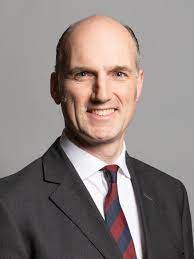
  • Leo Docherty – 2022 Statement on UK Military Support for Ukraine

    Leo Docherty – 2022 Statement on UK Military Support for Ukraine

    The statement made by Leo Docherty, the Minister for Defence People and Veterans, in the House of Commons on 10 May 2022.

    The United Kingdom strongly condemns the appalling, unprovoked attack President Putin has launched on the people of Ukraine. We continue to stand with Ukraine and continue to support its right to be a sovereign, independent and democratic nation.

    The United Kingdom and our allies and partners are responding decisively to provide military and humanitarian assistance. This includes weapons that help Ukraine’s heroic efforts to defend itself. We have sent more than 6,900 new anti-tank missiles, known as NLAWs—next-generation light anti-tank weapons—a further consignment of Javelin anti-tank missiles, eight air defence systems, including Starstreak anti-air missiles, 1,360 anti-structure munitions and 4.5 tonnes of plastic explosives.

    As Ukraine steadies itself for the next attack, the UK is stepping up efforts to help its defence. As we announced on 26 April, we will be sending 300 more missiles, anti-tank systems, innovative loitering munitions, armoured fighting vehicles and anti-ship systems to stop shelling from Russian ships.

    The United Kingdom has confirmed £1.3 billion of new funding for military operations and aid to Ukraine. This includes the £300 million the Prime Minister announced on 3 May for electronic warfare equipment, a counter-battery radar system, GPS jamming equipment and thousands of night-vision devices.

    The Ministry of Defence retains the humanitarian assistance taskforce at readiness; its headquarters are at 48-hours readiness, and the remainder of the force can move with five days’ notice, should its assistance be requested. The UK has pledged £220 million of humanitarian aid for Ukraine, which includes granting in kind to the Ukraine armed forces more than 64,000 items of medical equipment from the MOD’s own supplies. We are ensuring that the UK and our security interests are secured and supporting our many allies and partners, especially Ukraine.

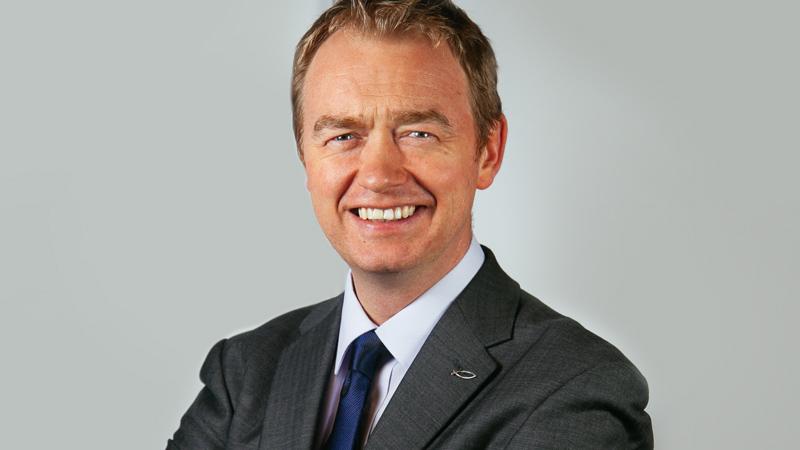
  • Tim Farron – 2022 Loyal Address Speech

    Tim Farron – 2022 Loyal Address Speech

    The speech made by Tim Farron, the Liberal Democrat MP for Westmorland and Lonsdale, in the House of Commons on 10 May 2022.

    This really does feel like a Queen’s Speech from a Government who have run out of ideas and are not capable of dealing with the very serious times in which they find themselves. It is an awful lot of press releases and no plan. We desperately need a plan.

    I heard reference in the Queen’s Speech to Bills that might be introduced to deal with the cost of living crisis. We do not need parliamentary Bills to drive down people’s household bills. We need action that could be taken today. The Government could decide to use one of the rare Brexit benefits and reduce VAT today. They could decide in the next day or three to do what we have been calling on them to do for some time—bring about the windfall tax on the energy companies that have made profits that are unearned, unnecessary and unexpected, and give that money to people who desperately need it. They could give it to people across my constituency in Cumbria and across the rest of the country who literally cannot afford to put food on the table and pay their rent, their mortgage and their bills. No amount of smart-alec culture war ruses will pay anybody’s children’s food bills. This is what we are seeing from a Government who have lost touch with any idea they ever had of what it is to be serious about governing at a serious time.

    As you might imagine, Mr Deputy Speaker, I want to talk specifically about rural communities and particularly issues of agriculture and housing. There is nothing for us in this Queen’s Speech—nothing that remembers the rural communities of this country, particularly in England, which have so very obviously been neglected and taken for granted by this Government.

    Let us look at farming. I make a plea to all hon. Members in the House who do not represent rural constituencies that rural communities should matter to them, for two principal reasons. First, if they eat, they should be grateful to the farmers who live in my constituency—and indeed yours, Mr Deputy Speaker—and who put the food on our table. No country serious about its own security would be in any way reckless about its lack of food security.

    We should also care because our farmers are on the frontline of tackling climate change and providing environmental restoration. Some 70% of England’s land mass is farmed, so if we care about tackling climate change and the biodiversity crisis, the reality is that the greenest thing that any Government can do is keep Britain’s farmers farming. They are the only people who will make even the greatest plans come to fruition, because the greatest plans in the world will remain just plans in a drawer without farmers to introduce them.

    The Government are making a disastrous mess of the transition from the old farm payment system to the new system. If I had been asked a few years ago to list potential advantages of the UK leaving the European Union, I would have given a very small list, but being outside the common agricultural policy would have been on that list. Yet again, here is a potential benefit that the Government have grasped and are miserably failing on, as they botch the transition from the old basic payment scheme to the new environmental land management schemes.

    In my constituency, every single farmer has lost at least 5% of their basic payments and will lose at least 20% this year. All of the hundreds of farms that I represent are in that position. This year, 13 of the farms that I represent—a tiny proportion, little more than 1%—will be getting anything from the new sustainable farming incentive. The Government’s botched transition to the new scheme is costing farmers thousands of pounds a year, with nothing to replace it. So what will happen? Farmers will either go bust or go backwards. We will lose hundreds and hundreds of small to medium-sized family farms right across our country, many of them tenanted, costing us in biodiversity and food production. If they do not go bust, they will go backwards and give up on doing any environmental work whatever; they will just get more stock, because that is the only way that they can keep food on their own table.

    The Government are making not just accidental mistakes with farm transition, but deliberate ones. Parts of the landscape recovery and local nature recovery schemes give a clear incentive for landowners—and, indeed, investment companies that want to become landowners—to get huge tracts of land, evict tenant farmers and get massive cheques from the Government for doing nothing and letting the valleys go to seed. These are outrageous, state-sponsored lakeland clearances; we must not stand for them. There is nothing in this Queen’s Speech that gives any clue that the Government understand the damage that they are about to do.

    There is nothing for the uplands. Our upland communities in the Lake district, in the dales and in places such as Cornwall and Devon, Northumberland and North Yorkshire have enormous cultural significance, yet nothing in the farm payment scheme recognises that. The tourism economy of the Lake district and Cumbria is worth £3.5 billion a year under normal circumstances, yet there is nothing to compensate the people who create the backdrop that makes so many people come to visit our beautiful part of the world. That is why I am calling for a cultural landscape payment as part of the new farm payment system: to make sure that we value and reward our upland farmers.

    It is absolutely ridiculous that we have a farm payment scheme—a Government agricultural policy—that has a strategic aim of reducing our capacity to feed ourselves and actively taking land out of food production. That is not only stupid when we are trying to protect ourselves in a grave international situation, but immoral, because it means that we will now be fishing in markets where developing countries are seeking their grain and their commodities. We are pushing up the prices for the poorest people in the world because we have a wrong-headed farm payment system that is taking land out of food production. That is stupid and immoral.

    Let me now say something about housing, and the impact of the last two years on the housing crisis in rural communities. This has become a catastrophe. We have too few houses that are lived in permanently, and communities are dying as a consequence. During the pandemic, 80% of house sales in my community have gone to the second-home market, and at the same time there has been a 32% increase in the number of properties that have gone into the holiday-let market. In Devon, this has meant a 70% reduction in the long-term private rented sector.

    What do those two developments mean? First, there is excessive second-home ownership. No one wants to be beastly about second-home owners—we want to be generous and welcoming to people who wish to spend their time in our communities; it is nothing personal—but the fact is that this has a massive impact on the communities that I am privileged to serve in Cumbria. It means that communities are hollowed out of full-time occupation, so they lose the school, they lose the post office, they lose the pub—they lose community itself. Secondly, there is the huge and very speedy transition from long-term lets to vast numbers of holiday lets. What does that mean? It means that people who have lived in an area for years are expelled —evicted through the section 21 notices that the Government said they would abolish and have not. That was not in the Queen’s Speech, and it should have been.

    These people who are being ejected from their communities are people in work and with children at local schools. They have nowhere else to go in a place like the lakes or the dales, so they have to leave altogether, uprooting their kids and leaving their work. That is outrageous. The impact on our communities is devastating, and the Government are doing pretty much nothing about it.

    One proposal in the Queen’s Speech has been floated—for the Government to borrow something of the Welsh Government’s proposals to double council tax on second homes. I thought “great” when I first read about that, but now I have seen the detail, and it is rubbish. What will happen is that council tax will be doubled for a second-home owner who never goes to their home. That is a tiny minority of second-home owners. The proposal takes no account of the fact that, for instance, 90% of second homes bought in my constituency are bought for investment and then let out for 70 days a year. What does that mean? It means that this not a second home; the owner is a small business, and this is a holiday let. It means that the small business will pay no council tax and no business rates either, and that people in Kendal, Penrith, Appleby and Ambleside who are going to food banks are subsidising wealthy people with second, third and fourth homes. The Government, who know that for sure, having undoubtedly listened to their own Back Benchers representing rural communities. have chosen to do nothing meaningful to tackle the outrage.

    Let me finally say something about planning. If we want to tackle the second-home crisis, the holiday-let crisis and the affordable-housing crisis, we should change planning law to make second homes and holiday lets different categories of planning use so that national parks and councils can just put a lid on it. That would be the easiest and most straightforward thing to do. Why have the Government not chosen to do it? We talk about building more houses, but the problem in areas such as mine is that while those who build houses will sell them, we are building for demand and not for need, and it is time to build for need.

    Earlier today, I was talking to some of my local councillors—Jenny Boak, Pete Endsor and Sue Sanderson, who represent Grange & Cartmel. Just outside Cartmel, in Haggs Lane, 39 properties are to be built, only eight of them affordable. Why? Because the Government do not give planning authorities the power to say to developers, “Get knotted unless you are going to build for local people and families and make those places affordable.” So I am angry, not just on behalf of my community but on behalf of communities across rural areas of our great country, that there is so little, if anything at all, for us in this Queen’s Speech.

    It seems to me, looking at it from the inside in Cumbria, that this Conservative Government are doing to rural communities in this decade what a Conservative Government did to urban communities in the north in the 1980s. The difference is that Margaret Thatcher had a plan—I will give her due for that—while this Government, shambolically, through neglect and through taking rural communities for granted, are devastating those communities. They will not be excused for that, and they will not get away with it. We have seen the results of last week’s elections in Cumbria and Somerset, and I hope we will soon see the result of an election in Devon. We will see that rural Britain will not be taken for granted.

  • Paul Maynard – 2022 Loyal Address Speech

    Paul Maynard – 2022 Loyal Address Speech

    The speech made by Paul Maynard, the Conservative MP for Blackpool North and Cleveleys, in the House of Commons on 10 May 2022.

    It is a pleasure to speak in this debate and to follow the hon. Member for Harrow West (Gareth Thomas). He always speaks with great insight and I always find him worth listening to. I am sure he would agree that, after local elections, whichever party is represented, when a councillor loses their seat, we should have some sympathy. Whether in Harrow, or anywhere else in the country, those councillors were all engaged in public service, just as we are, and they will be disappointed that they have ceased to serve the public. Whether in Harrow, where Labour lost seats, or in other parts of the country where the Conservative party lost seats, we should think of those diligent public servants who have lost their chance to serve.

    It is also a pleasure to follow my hon. Friend the Member for Waveney (Peter Aldous), a fellow coastal MP. There is nothing he said in his analysis of the needs of his constituents with which I would disagree one scintilla, and he has saved me from making many points.

    It has taken me 12 years to work out that the best time to speak in a debate on the Queen’s Speech is on the day of the speech itself. I get 10 minutes, not just the three we normally get on the day after the speech, or the day after that, so I will make the most of them. I normally do not like the day of the Queen’s Speech debate. For me it is a matinee pantomime of “yah boo sucks” and, in my view, often, those early debates, when we are all crammed in the Chamber, show the House at its worst. Today, it seems a little different. It might have been the slightly low-wattage contribution from the Leader of the Opposition. Perhaps it is more likely to be down to the seriousness of the times with which we are confronted, whether in Ukraine or domestically in our constituencies, as the people we represent face a cost of living crisis and a challenge to their financial security day in, day out, at every moment.

    I often hear a cry from politicians, the media and constituents that what the Government are doing is not enough. At the moment I am not quite sure what “enough” would look like. The Government cannot craft a solution whereby global costs rise but no one feels the consequences in the UK. But that does not mean that nothing can or should be done. The inflationary pressures that we currently face are largely external: the rising cost of foreign oil and gas; the disruption to global supply chains caused by covid, which lingers on and reoccurs in China thanks to its zero-covid strategy. We cannot change China’s approach to covid—only harsh economic realty will do that. What does matter, however, is the speed and agility of our domestic response here in the UK, and I say candidly to all Conservative MPs gathered here this evening—all one of them—[Interruption.] I mean the Back Benchers, not those on the Front Bench. I say to them that we have to stop campaigning like it is 2016, and start governing like it is 2022. None of my constituents who live in eight of the 10 poorest neighbourhoods in the country give one fig about what box I crossed in a referendum six years ago. They want to know what I, and the Government I am supporting, are doing to tackle the cost of living crisis at the moment.

    Some argue that the answer is to increase public spending left, right and centre, and to put more money into the economy, but in my view that would have an inflationary impact. At the risk of sounding unfashionably Thatcherite to what is at times rather a left-ish Government, I argue that we have to drive inflation out by controlling the money supply, not fuel it by responding to the front pages of tabloid newspapers. That is not inconsistent with protecting the most vulnerable in our society. Nothing will have a worse impact on my constituents than rampaging inflation. It harms the most vulnerable in society; it harms the poorest the most. That is why inflation is our biggest enemy, as many have said today.

    I therefore welcome a number of the proposed Bills, particularly the financial services Bill, which is a chance to tackle some of the small print of the cost of living crisis. In particular, I welcome the provisions on access to cash—an issue that I have not shut up about in this place for the past two years. I will scrutinise the detail, and if I am not satisfied, amendments will be tabled. I also want much faster action on the regulation of buy now, pay later products—an issue on which I and the hon. Member for Walthamstow (Stella Creasy) have campaigned for many years. I know the Government’s consultation closed on 6 January, and they are cogitating and contemplating what to do next, but things are changing rapidly in that sector and we hear ever more common stories of people using buy now, pay later products to pay for groceries. This is no longer about buying discretionary items or clothing during lockdown; this is about people using buy now, pay later products for the essentials—for energy or for food. The importance of getting regulation in place is massive, and it must happen now.

    I very much welcome the pilots that the Government are introducing for no-interest loans, which are being undertaken on behalf of the Government by Fair4All and Toynbee Hall. That must move so much more urgently. The idea has been floating around the Government for years, and it cannot be just a curiosity for policy wonks. It has to be an urgent priority for the Government to help move people away from loan sharks who charge extortionate interest rates. No-interest loans must be the way forward. I also hope to see interim provisions in the financial services Bill to improve the regulation of funeral plan providers. We have seen the collapse of Safe Hands, and I am sure many hon. Members have been contacted by constituents who now face great uncertainty over how the funerals of their loved ones will be paid for. The Government have to step in, but I am not hearing much from them.

    Having learned the delights of amending legislation for the first time in the previous parliamentary Session, by trying to amend the Building Safety Bill, I now have a taste for it. I am looking forward to having a go with the financial services Bill, as well as the Online Safety Bill, which I am getting a bit nervous about because no one seems able to define “harm”. Let me help them by offering one definition of harm, which is physical harm.

    In the few minutes I have left I want to speak about a campaign by a young man called Zach Eagling, who has epilepsy, as do I. At times, rather unpleasant and cruel people seem to think it is a good idea to send over social media flashing images that are designed to trigger epileptic fits in those with epilepsy. To me, that is a form of online harm—who could disagree? The Joint Committee on the Draft Online Safety Bill agreed and argued that such a clause should go in, as did the Law Commission, but as of yet there is no such a clause. If we are struggling to define “harm”, let us start with physical harm, because that can be quantified. It could be fatal to force an epileptic fit, which could occur in any circumstance, and the outcome cannot be guaranteed.

    I would have loved to have seen other Bills in the Queen’s Speech, including private Members’ Bills that I have promoted in recent years. Why was abolition of the House of Lords not in the Queen’s speech, for heaven’s sake? The compulsory introduction of the optional preferential vote—a tentative step towards proportional representation—was also not in the Queen’s speech. Whatever came over the Government? My favourite —once again, this is aimed at the Front-Bench—is an annual review of ministerial competence undertaken by an outside body to assist the Prime Minister in making decisions on who should be appointed to Government. I am sure that the Under-Secretary of State for Environment, Food and Rural Affairs, my hon. Friend the Member for Bury St Edmunds (Jo Churchill), who is on the Front Bench, would pass with flying colours, but it is incumbent on the Government in a cost of living crisis, when our constituents are under such immense pressure, to do their best to have the very best people working on these intractable and difficult problems.

    It is not simply a matter of finding a switch, as I think the hon. Member for Bristol South (Karin Smyth) mentioned. We can pull all the switches we like, but there are some fundamentals in our society that must also change. That is what the Conservative party should be doing: not looking back to 2016 but looking forward to a brighter Conservative future.

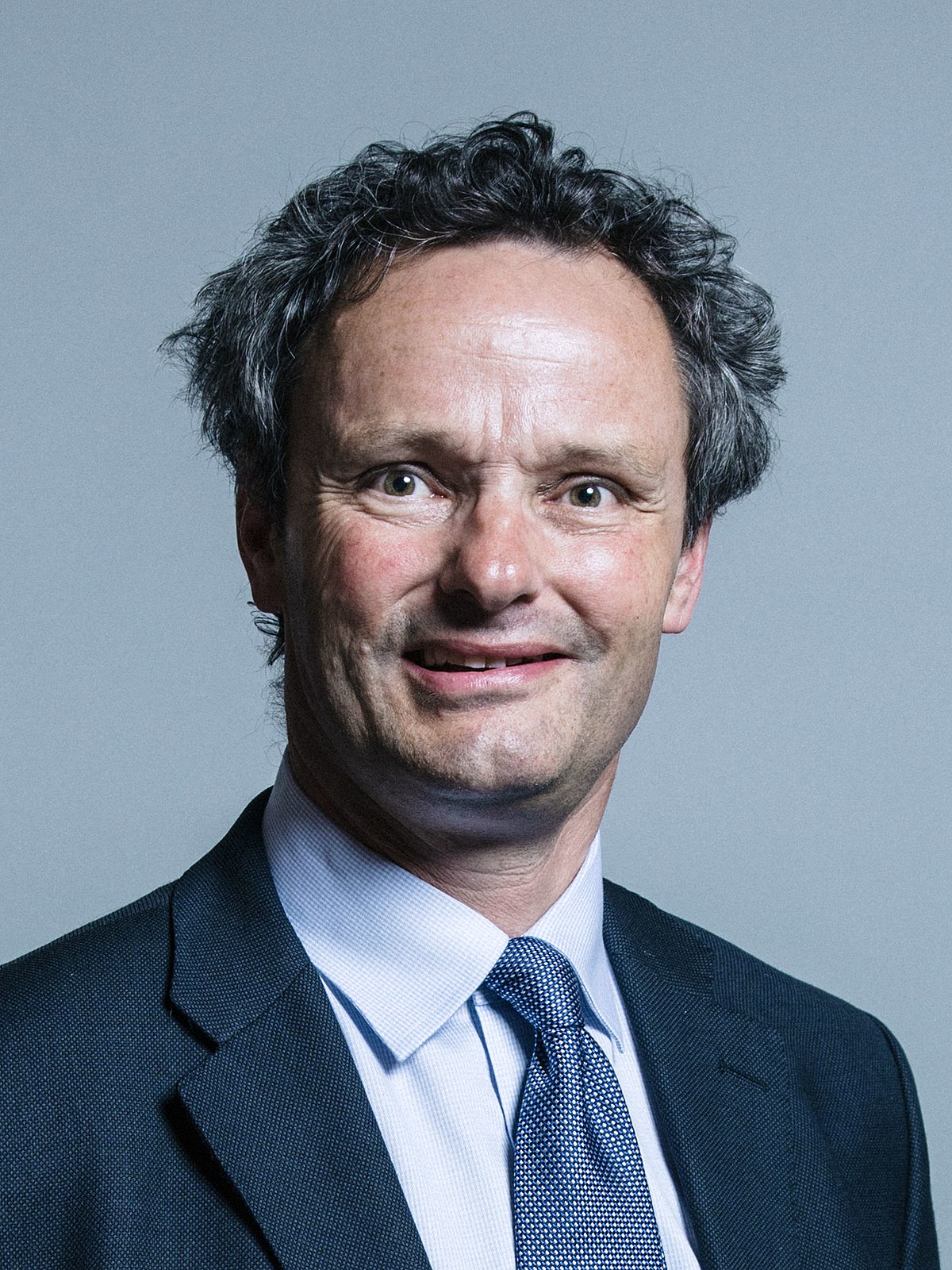
  • Peter Aldous – 2022 Loyal Address Speech

    Peter Aldous – 2022 Loyal Address Speech

    The speech made by Peter Aldous, the Conservative MP for Waveney, in the House of Commons on 10 May 2022.

    I will try my best, Mr Deputy Speaker. It is a pleasure to follow the hon. Member for Newport East (Jessica Morden). I congratulate my hon. Friend the Member for Southend West (Anna Firth) on her maiden speech and the hon. Member for East Dunbartonshire (Amy Callaghan).

    I also pay tribute to my predecessor as MP for Waveney, Bob Blizzard, who sadly passed away at the end of last week. He was a formidable political opponent, he held passionate beliefs and he was a staunch advocate for Waveney. My condolences are with his family and friends at this sad time.

    This Queen’s Speech was delivered against one of the most challenging backdrops in the past century: the war in Europe, following quickly on from the covid-19 pandemic, has exacerbated the challenges that people and businesses were already facing. Soaring energy and food prices, rising interest rates, and slowing economic growth are putting enormous pressure on budgets for families and businesses. The programme for government for the next Session cannot, on its own, address all the challenges that we will face over the next two years, but there must be a clear statement of intent and a decisive direction of travel.

    There is a need to focus on the issues that matter to people on a daily basis, such as the cost of living, the ability to pay one’s bills without spiralling into debt, and the opportunity to have a well-paid and secure job with good prospects of career progression. We do not know what lies ahead in these increasingly uncertain times, so it is important that the Government are flexible. Where there is a need to bring in measures to address a particular pressing need, they must do so without delay.

    I shall briefly highlight four issues, two of which are specifically covered in proposed Bills and two of which are not. First and foremost, on the need to address the cost of living crisis, the Government have brought in some measures to help to support families and businesses, but more targeted assistance is required to enable people to get through the coming year, which many are facing with fear and trepidation with the expectation of inflation at 10% and Ofgem’s increase in the energy cap looming in the autumn.

    In Suffolk, 135,000 people already live in poverty. A survey in the Lowestoft Journal showed that 41% of people are in debt, and Citizens Advice, local councils and local charities are already working in overdrive to assist, advise and support people. Poverty among pensioners needs a particular focus due to prevailing high inflation, with the state pension and defined benefit and defined contribution private pensions all exposed. There may well be a need for review and reform, and I urge the Government not to hold back in introducing such measures.

    Secondly, it is vital that people around the UK have the opportunity to secure a good job with good prospects for career advancement and the opportunity to realise their full potential. The schools Bill and the levelling up and regeneration Bill should help to secure that ambition. For a long time, Suffolk has received a poor education funding settlement and we must use this opportunity to address that inequality.

    There must also be a focus on improving early years and special educational needs education. Although the Skills and Post-16 Education Act 2022, which was passed in the last Session, provides the framework for improving the further education sector, that sector remains poorly funded given the vital role that it plays in preparing people for the workplace, helping to improve the UK’s overall economic performance and eliminating the productivity gap. There may well be a need for fiscal support to encourage businesses to invest in people and skills. Last week, the Learning and Work Institute recommended that smaller businesses should be able to deduct 230% of the cost of accredited training from their tax liability.

    Turning to the long-awaited levelling up and regeneration Bill, I acknowledge the enormous amount of work that the Secretary of State for Levelling Up, Housing and Communities and the Under-Secretary of State for Levelling Up, Housing and Communities, my hon. Friend the Member for Harborough (Neil O’Brien), have carried out in the relatively short period since their appointment in September to lay the groundwork in the White Paper that was published at the beginning of February. I urge them not to forget coastal communities. All around the UK, including in Waveney and Lowestoft, they are in many respects the forgotten powerhouse of the UK economy. They have a vital role to play in powering the nation as we embrace renewable energy; feeding the nation through sustainable and responsible stewardship of our fisheries; promoting global trade through our network of ports, large and small; and providing holidays at home rather than abroad.

    Thirdly, on energy, the Energy Act 2013 was good legislation that played an important role in promoting renewable energy, particularly offshore wind, in which the UK is now a world leader. There is a temptation to leave well alone a regulatory framework that has worked well, but we have new challenges that must be tackled, particularly if we are to meet the 2050 net zero target. It is therefore right to build on the foundations that were laid nine years ago.

    I briefly highlight some of the challenges that we need to address. We must promote and incentivise further investment on the UK continental shelf to add to last year’s North sea transition deal so as to ensure that that unique UK asset continues to play a lead role in powering the nation, generating rewarding and well-paid jobs, and ensuring a smooth transition to a net zero energy supply. A windfall tax would jeopardise that work, but there is a need for the major oil and gas companies to do more, following the good work of many innovative and smaller businesses. With regard to offshore wind, we need a framework that builds on the success of the last decade and that promotes investment in interconnectors and battery storage to absorb surplus wind, as well as facilitating the development of a modern onshore transmission network.

    Nuclear power is very much part of the Government’s energy strategy. The Nuclear Energy (Financing) Act 2022, which was passed in the last Session, provides the framework for Sizewell C to proceed if the development consent order is issued. That enormous national infrastructure project, located close to my constituency, can play a vital role in levelling up and regenerating local economies; providing jobs during construction; and leaving a legacy of skills that bring lasting benefits to places such as Lowestoft and Waveney. EDF is committed to that strategy, but it is vital that the national Government provide the framework to ensure that it delivers those benefits by working with local businesses, colleges, charities and councils.

    Hydrogen is the new kid on the block that presents boundless opportunities. Even at this stage, however, we do not quite know what precise direction it will take or the full scale of what it can deliver. Although the UK hydrogen strategy was published only last August, there is an urgent need for a route map if it is to realise its full potential. Community energy has an important role to play and we must remove the regulatory obstacles that prevent local communities from promoting their own projects.

    An area of energy policy where we have not succeeded in recent years is the promotion of energy saving by retrofitting our homes and business premises. The green deal did not work and the green homes grant scheme was too low in ambition and lacked the capacity to have a significant impact. In the short term, to address the challenge of fuel poverty, we should look at extending the warm home discount, the home upgrade grant and the energy company obligation.

    The Government must also produce a scheme that will deliver meaningful and significant enhancement of our whole building stock. That will probably require fiscal incentives, and local government will have an important role to play in overseeing and ensuring workforce planning, training and delivery. We need to revamp the strategy for the roll out of smart meters, which, I am afraid, has stalled.

    The fourth and final issue that I will raise is the NHS. Although no Bill directly addresses our health service, and one might argue that there is no need for one as we only recently finished debating the Health and Care Act 2022, which has just received Royal Assent, this subject is of critical importance and concern to our constituents. People are worried that they cannot see their doctor; the Government need to work with GPs to address that concern.

    NHS dentistry is the No. 1 item in my inbox. There are dental deserts all around the country, and urgent attention is required if these are not to merge into one area of Sahara proportions. There is a backlog of operations, many of them time-critical, that needs to be significantly and immediately reduced. My right hon. Friend the Secretary of State is very much aware of these challenges, and regardless of whether or not there is specific legislation, they must be given the highest priority and attention.

    In conclusion, there is a great deal to do and there are a great many challenges to confront, the like of which we have not seen during our lifetimes. We can get through this crisis, and the Government do need to have in mind the need to bring together a nation that has been divided first by Brexit and then by covid.