Blog

  • Angela Eagle – 2022 Speech on the Cost of Living Crisis

    Angela Eagle – 2022 Speech on the Cost of Living Crisis

    The speech made by Angela Eagle, the Labour MP for Wallasey, in the House of Commons on 17 May 2022.

    Can we judge this Queen’s Speech to be successful in addressing the cost of living crisis? The Governor of the Bank of England warned at the Treasury Committee yesterday of an “apocalyptic” situation with food supplies and therefore with rising prices. The Bank of England’s Monetary Policy Committee’s May report warned that inflation would soon reach 10%. It also signalled lower growth than previously predicted, with a contraction in quarter 4 of this year. It also expects higher unemployment. It predicts that inflation will not return to its target of 2% for nearly three years. The squeeze in what the economists call real incomes, which take account of inflation, is the most ferocious we have seen in generations, not least because the rapid rise in inflation is being driven by soaring prices for necessities: food and energy.

    These higher costs cannot be avoided or easily minimised and, as my right hon. Friend the Member for East Ham (Stephen Timms) pointed out in his effective speech, it is well known that they cause most hardship to the poorest, who are least able to cope and have no savings. Despite what some Government Ministers seem to think, the poorest have little practical opportunity to increase their hours or their pay, at least in the short term.

    Thus, after 13 years of Conservative rule, we see soaring poverty levels, millions relying on food banks just to get by, and the lowest level of benefits since Lloyd George was Prime Minister. It means that the social safety net created to prevent destitution has been deliberately shredded by this Government, leaving many to cope with the intensifying cost of living squeeze without effective help. And we have a Tory Chancellor who has said that it would be “silly” to add any extra help until the autumn.

    Against that background, the Government’s abject refusal to alleviate suffering and use the powers at their disposal to assist those in real need is a disgraceful dereliction of their duty. Their indifference to real suffering will not be forgotten; it will be remembered as the hard times get even tougher for millions of our fellow citizens.

    Labour has suggested a one-off windfall tax on the huge unearned profits currently flooding the energy companies’ coffers, which would help alleviate some of the suffering, yet the Government refuse to enact it. Instead, we have a hotchpotch of a Queen’s Speech, with 38 Bills with no focus and no connection to the realities millions of people in this country are facing. It shows just how out of touch the Government are that they prefer to press ahead with new, repressive laws against “noisy” protests while ignoring the collapse in law enforcement and prosecution levels on their watch, hoping we will forget the shamefully low numbers of crimes that are currently prosecuted and the even lower numbers which result in convictions.

    This Government have let fraud run riot even as they under-resource and fragment any serious police response to it, while millions of our fellow citizens fall victim to scams and con merchants. This is a Government who prefer to campaign than to govern, and a Government who think that policy delivery is issuing a press release. We have a weak Primer Minister who runs No. 10 like he ran the Spectator office—as one long, chaotic, bacchanalian, irresponsible party.

    So we have today’s threat to legislate to tear up the Northern Ireland protocol, and damn the consequences for the Good Friday agreement, or for our international reputation as a country whose word can be relied upon and that respects the rule of law. This is the Northern Ireland protocol that the Prime Minister negotiated, which he hailed as an “oven-ready” triumph, and which he asserted in the 2019 general election “got Brexit done.” Only this Government could be so irresponsible as to contemplate starting a trade war with the EU in the middle of the most ferocious cost of living crisis in generations. No previous UK Government have ever regarded breaking international treaties and breaking their own solemn undertakings as a negotiating tactic, sullying our international reputation in the process, and our country will rue the day that this one did.

    This is a Government who look after their own, allowing a bonanza in dodgy covid contracts for their mates, and passing laws to wreck independent judicial oversight and clamp down on protests. The sooner they are gone, the better.

  • Theresa Villiers – 2022 Speech on the Cost of Living Crisis

    Theresa Villiers – 2022 Speech on the Cost of Living Crisis

    The speech made by Theresa Villiers, the Conservative MP for Chipping Barnet, in the House of Commons on 17 May 2022.

    There is much to welcome in the Queen’s Speech programme, but I want first to highlight a very serious concern about clauses 83 and 84 of the Levelling-up and Regeneration Bill, which could massively erode local decision making on planning. I hope that Ministers will think again about awarding themselves the power to override local development management policies, which provide such important protection against over-development.

    The main theme I want to cover today is the broader economic theme and how we ensure that we have a sustainable way to help people with the cost of living. Crucial to that is the regulatory reform envisaged in legislation such as the Brexit freedoms Bill, the financial services and markets Bill and the data reform Bill. As inflation returns to the global economy at levels not seen for 30 years, it is imperative that we have a clear, long-term economic plan to grow the economy, raise living standards, repair the public finances after covid and bring down taxes. This is the best and most sustainable way to help people with rising household bills.

    Of course, like everyone else in the Chamber, I know how urgent it is that we help people with rising household bills, which is why I very much welcome the Chancellor’s £22 billion intervention. Raising the national insurance threshold is one of the biggest personal tax cuts in decades. Increasing the amount people can earn before benefits are withdrawn has put £1,000 in the pockets of low-income families, and of course the 5p fuel tax cut can help everyone.

    In addition to this, we need a convincing programme to grow our economy out of the traumas being inflicted on us by the global rise in energy prices. That is why the regulatory reform in the Queen’s speech is crucial. I was one of the members of the taskforce on innovation, growth and regulatory reform established by the Prime Minister. Our report set out a substantial list of regulatory improvements to boost the economy and create thousands of well-paid jobs, especially in high-tech sectors such as bioscience. This kind of reform—only possible because of Brexit—is one of the most effective ways to grow our economy. It is the sustainable long-term way to ensure we have the Goldilocks combination of sound public finances, money to fund our public services and lower taxes.

    Put simply, supply-side reforms to set enterprise and innovation free are the means by which we can make the numbers add up. We cannot spend our way out of an inflation crisis and we certainly should not borrow our way out of an inflation crisis, but we can grow our way out of this inflation crisis. None of these reforms needs to jeopardise safety, consumer protection or the environment. As set out in the TIGRR report, we need regulation that is more modern, more flexible, more proportionate and more targeted. We need new rules that are rooted in our common law tradition, can be piloted and tested, and can be amended if they turn out to have unintended consequences, so that we deliver the regulatory outcomes and high standards we want, but at a lower cost and with far less of a burden on business and industry.

    Regaining the right to make our own decisions on regulation is one of the key benefits of leaving the European Union. For six years as a Member of the European Parliament, I saw at first hand how the EU legislative process works. It is slow, it is cumbersome and it gets so bogged down in political horse-trading between countries that it is no wonder it often produces such poor results. I was one of just a handful of Conservatives to vote three times against the first version of the withdrawal agreement. I did that because I did not want us locked forever in the regulatory orbit of the EU. Now we are free of that gravitational pull, we must use the opportunities it gives us. Otherwise, all those years of Brexit rows and divisions will have been for nothing.

    Only when we have charted our own course on regulation can we truly say that we have got Brexit done, so now is the time to get on and do this—for our whole country, too, and that means significant changes to the Northern Ireland protocol. Now is the time to set out a clear plan for growth that will deliver the high-wage jobs, the opportunities and the lower taxes that our constituents want to help them with the cost of living and the inflation crisis we face in this country and across the global economy.

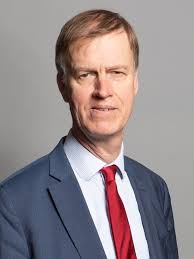
  • Stephen Timms – 2022 Speech on the Cost of Living Crisis

    Stephen Timms – 2022 Speech on the Cost of Living Crisis

    The speech made by Stephen Timms, the Labour MP for East Ham, in the House of Commons on 17 May 2022.

    I am pleased to follow the right hon. Member for Central Devon (Mel Stride), who chairs the Treasury Committee. I agree with much of what he said.

    Cost of living rises affect everybody. The Work and Pensions Committee focuses on families with the lowest incomes who depend on social security. The prospects for them at the moment are bleak. The Committee argued—unanimously, cross-party—against the removal of the £20 a week uplift in universal credit last October. The Government went ahead anyway and cut the main benefit rate to the lowest real-terms level for more than 30 years. As a proportion of average earnings, it is lower now than when Lloyd George introduced unemployment benefit in 1911. Benefits are at a historically low level and no Minister can justify that—we have asked.

    We now have a massive cost of living surge. Citizens Advice reports that a single unemployed person spent 15% of their benefit on energy bills two years ago. It is now 25% and it will be 50%—just on energy—when the cap goes up again in October. How can people pay their other bills, which are also going up? National Energy Action told the Select Committee that, after last month’s energy price rises, 6.5 million UK households are in fuel poverty. It is a disaster for families with long-term health problems; being cold at home makes respiratory and circulatory problems much worse.

    The Gracious Speech provided no help at all to people dependent on benefits. At the Liaison Committee, I asked the Prime Minister why the spring statement did nothing. His answer was that

    “we want to support people into work wherever possible”,

    but a large number of people cannot work and they have to survive too. Surely, the Government must now respond to the immense pressure on those families.

    Mike Brewer of the Resolution Foundation pointed out to our Committee the obvious problem with benefits going up by 3.1%, as they did last month, when inflation is 8% and rising. He proposed revisiting uprating, immediately for universal credit, as the Chancellor confirmed that he could and as he did at the beginning of the pandemic, and in October for those benefits needing longer—there are some of those, as he has pointed out to the House. That must surely now be done.

    Universal credit was raised by £20 a week before, so the Chancellor should do it again. I agree with the Chair of the Treasury Committee, who has just reaffirmed the case for an interim uprating, about which he pressed the Prime Minister at the Liaison Committee. The Prime Minister said that he would look at it. It is urgent.

    Crisis highlighted that local housing allowance rates have been frozen for two years in a row. Average rents went up by 8.3% just in the last three months of last year. Families on the breadline face an average £372 deficit between the local housing allowance and the cheapest rents in their area. In research just published, Lloyds Bank Foundation reports that 44% of universal credit recipients are having money deducted, averaging £78 a month—nearly a fifth of what single over-25s can claim. Deductions are for advance repayments, old tax credit overpayments, energy or rent arrears. The foundation says that that is

    “driving impoverishment and further debt, particularly hitting the most vulnerable.”

    We need major changes, especially to the five-week wait for a first regular universal credit payment, which forces people to take out an advance.

    Pensioner poverty is now surging. We know that, in 2019-20, 850,000 families entitled to pension credit did not claim it. We need real vigour behind raising take-up. The Department for Work and Pensions should have a take-up target for pension credit and a plan to deliver it. In 2010-11, the DWP trialled automatic payments of pension credit, and it should do that again.

    The least well-off in our society need urgent help. As Sir John Major said yesterday:

    “Everyone needs to believe that The State cares about them”,

    too. There is no time to lose.

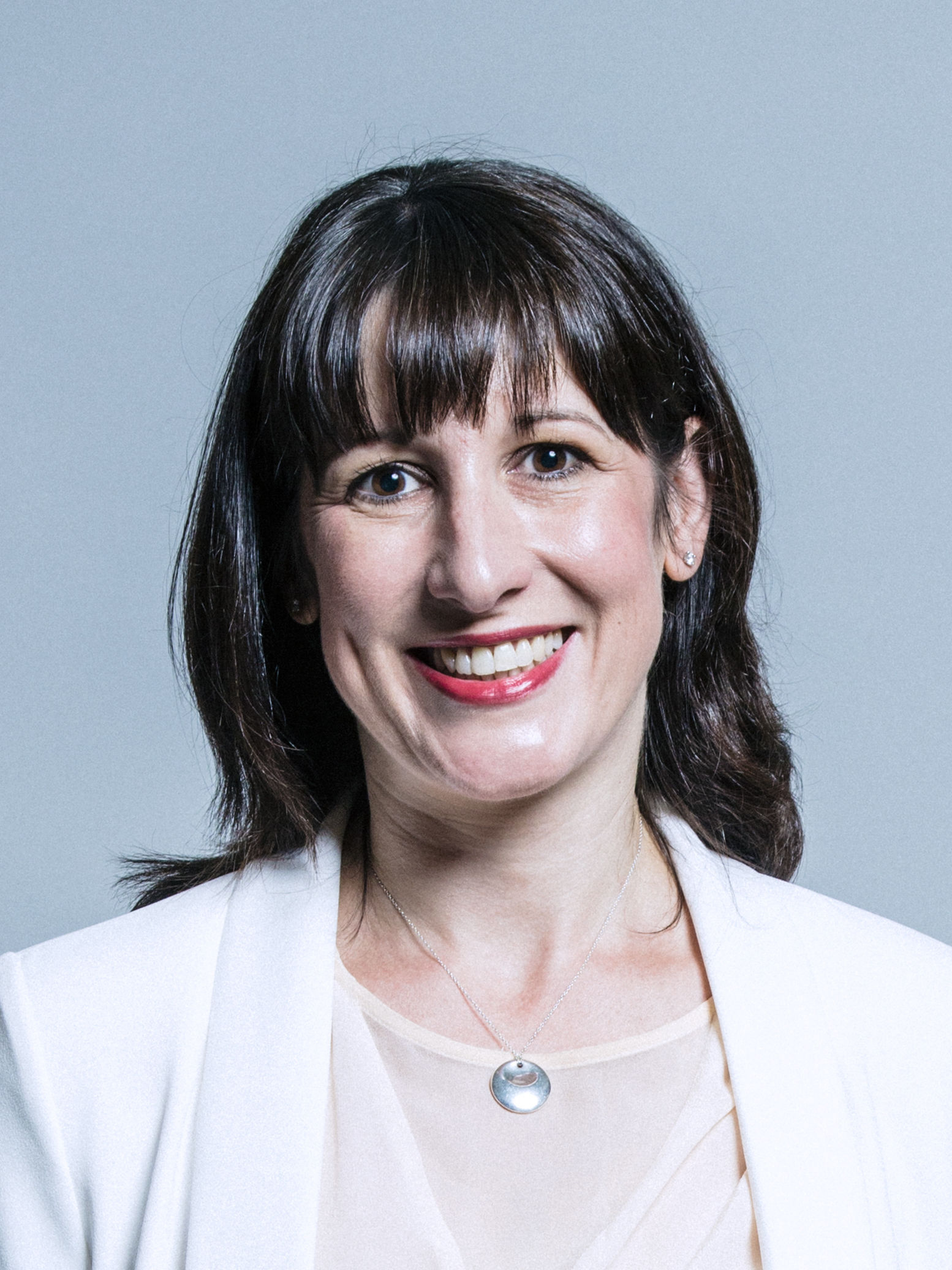
  • Rachel Reeves – 2022 Comments on Government Voting Against Windfall Tax

    Rachel Reeves – 2022 Comments on Government Voting Against Windfall Tax

    The comments made by Rachel Reeves on Twitter on 17 May 2022.

    Tonight, every Conservative MP who voted against a windfall tax on oil and gas producer profits, has sent a clear message. They will not put working people first, and they have no answer on the cost of living crisis.

  • Mel Stride – 2022 Speech on the Cost of Living Crisis

    Mel Stride – 2022 Speech on the Cost of Living Crisis

    The speech made by Mel Stride, the Conservative MP for Central Devon, in the House of Commons on 17 May 2022.

    I rise to very much welcome this debate, which addresses one of the great challenges of our time: the cost of living. Right at the centre of that lies the rate of inflation, which many Members have referenced in the debate so far, and that responsibility is with the Bank of England. In very recent times, the Bank has come in for a good deal of criticism for apparently not having got on top of that rate of inflation. It is currently above 7% and will rise to 10% in the autumn, before falling back again next year. That is well detached from its target of 2%, so the question arises: is the Bank of England culpable for having missed that target to that extent? I want to speak—partially, at least—in defence of the Bank of England, which is one of the most important independent institutions in our country, and to make the following observations.

    First, as the Chancellor has already pointed out, the level of inflation across the world is elevated. There are some exceptions to that, but most leading economies are facing very high levels of inflation. In fact, the United States, Spain and Germany have higher rates of inflation than we do in the United Kingdom, and our rate is broadly similar to that across the eurozone.

    My second point is about what one can expect from monetary policy under the current circumstances. The main drivers of inflation are a war in Ukraine; surging energy prices; surging food prices; some of the effects of the unlocking of the economy and its rapid growth, and supply chain bottlenecks that developed as a consequence; and then what played out in the labour market as the economy opened up. Very few of those factors are amenable to being controlled through interest rates and monetary policy. Of course, it takes time for monetary policy to take effect. If interest rates are put up, it typically takes about a year or more, through the transmission mechanism, to have an effect on demand and to start to bear down on inflation.

    For about 80% of the rise in inflation above the 2% target, therefore, we should not hold the Bank of England particularly culpable. The notions of those people—some of whom are on my side of the House—who have called into question the independence of the Bank of England as a consequence of high inflation are misplaced. We should firmly defend the Bank of England in that respect.

    There is one area, the other perhaps 20% of the growth in inflation, which relates to what has happened in the labour market, where the Bank is at least partially culpable, because it was slow to establish the fact that the market was getting overheated. What appeared to be isolated areas, such as among HGV drivers and other pools of labour in the labour market, soon spilled over into a more general price increase across labour. The danger now is that we will have a wage-price spiral in which wages chase prices and, in turn, drive up wages further. There is a real danger that we are in a position where future expectations of inflation have become substantially de-anchored from that 2%, which will be a challenge in the medium and longer term.

    Overall, however, it is extremely important that we have confidence in the Bank of England, imperfect though it is, and even though it is presiding over a situation in which there are high levels of price increases.

    Stephen Timms

    I agree with the right hon. Gentleman about the independence of the Bank of England. At the Liaison Committee in March, he suggested to the Prime Minister that there should be a one-off uprating of benefits, given that inflation is much higher than the 3.1% by which uprating was applied. I agree with him about that and I wonder whether he stands by that suggestion.

    Mel Stride

    I thank the right hon. Gentleman for that intervention, and I do indeed stand by that. I still believe that it is possible, in a relatively fiscally neutral manner, which would not require a fiscal loosening across the period of the Office for Budget Responsibility forecasts, to smooth the way in which benefits are indexed. It seems particularly regrettable that benefits such as universal credit are tagged to a 3.1% increase, which goes back to what inflation was in September, given that we are now facing 8%, 9% or 10%-plus inflation. There is the possibility of smoothing that out, so that on the way up it becomes less painful for people, and some of it will be taken back as it all comes out in the wash for everyone down the line. I am happy to continue to work with him with that in mind.

    That brings me to other fiscal measures that can be taken to ease things for our struggling constituents. We have heard about a windfall tax in great detail today, which I would support. Although I would not be as partisan as the way in which the right hon. Member for Doncaster North (Edward Miliband) made his case earlier at the Dispatch Box, I think the arguments that he has put forward are largely sensible. I am pleased that in turn the Chancellor has indicated that the door is at least partially open, albeit caveated on the investment performance of the companies concerned.

    Unlike the Opposition, I think that it is important to look at the size of the civil service and to have an ambition to get it back to its size in about 2016 before a number of these different crises struck and we had to gear up the numbers involved. If we were to do that, it would be possible to save a total of £3.5 billion a year, which would be a useful amount to have.

    I am sorry, Madam Deputy Speaker, but I have completely run out of time. I had much to say, as I know many other hon. Members will.

  • Alan Brown – 2022 Speech on the Cost of Living Crisis

    Alan Brown – 2022 Speech on the Cost of Living Crisis

    The speech made by Alan Brown, the SNP MP for Kilmarnock and Loudoun, in the House of Commons on 17 May 2022.

    I would like to say it is a pleasure to follow the Chancellor, but we have just heard 16 minutes of platitudes and no new ideas. He said that Opposition Members are causing people more worry. What is causing people more worry is not having enough money in their pockets to pay their bills. It is nothing to do with what we say here; it is what they see in reality.

    The Chancellor mentioned yet again his £9 billion support package for energy bills, but he did not say that only a third of that is money from the Treasury that will not be clawed back. Two thirds of that £9 billion will be added to our energy bills and recovered through our bills, so he is making bills higher for some while providing crumbs of support to the most vulnerable. He mentioned growing the economy while ducking the fact that, after the past five years, the economy had already started to contract in March. Then, for good measure, we heard some bluster about Labour’s past record, as if to hide the issues. What that tells us is that Westminster has not been working for a very long time.

    It is a dereliction of his duty as Chancellor to have no new measures and no new finances associated with the Queen’s Speech to address the Tory cost of living crisis. The stark reality is that the longer nothing is done, the more people will plunge into fuel and food poverty. The April 2022 price cap is 75% higher than just a year ago. National Energy Action estimates that up to 6.5 million households could now go into fuel poverty. That underlines why more action is needed by the Chancellor. The October increase coming could see up to 40% of households becoming fuel-poor. National Energy Action previously estimated that about 10,000 premature deaths a year arise from fuel poverty. How many more premature deaths are likely to occur with these increasing fuel costs? They have such an impact that people die early through fuel poverty. How can any Minister who claims to have compassion stand by and do nothing? Even the British Chambers of Commerce has asked for an emergency Budget. Companies such as Scottish Power are calling for £1,000 of support for energy bills, and yet the Chancellor has insisted that taking measures now would be silly. Why is he so out of touch with reality when even businesses are telling us what is required?

    Looking back to April 2020 and the onset of the covid crisis, the Government increased universal credit by £1,040 to help people to live, but back then home energy bills were 75% cheaper and petrol was 50% cheaper, and we are now dealing with food inflation and with general inflation rising to 10%. If that £20 a week uplift was required for people to live two years ago, surely the Chancellor must recognise that he needs to reinstate that uplift and do so quickly. Even Asda chairman and Tory peer Stuart Rose backs reinstating the £20 per week uplift to universal credit, so it really is time for the Chancellor to listen. People on universal credit are more likely to be on prepayment meters and are therefore further penalised with a higher energy tariff. Those people will be forced to self-disconnect this winter, as they simply will not have the funds to put in the meter. They do not have a dilemma about whether to turn the heating on; they do not have the choice.

    Yesterday I was at a meeting with Ewan McCall of the Wise Group. He and others within the Wise Group deal with people who are on the frontline of fuel poverty. A survey of nearly 300 people in Glasgow found that 24% were self-disconnecting or rationing their heating. There are really heartrending individual stories behind this: people reliant on candles and using hot water bottles, reduced to living in misery. The Wise Group, like others, provides fantastic help with turnaround, but it can only do so much. Other groups such as the Trussell Trust, which does fantastic work with food banks, have confirmed that ever more people are reliant on their services.

    Rather than action, we have had the bizarre admission from the BEIS Secretary that his Department’s nuclear power policy will increase our energy bills. It is economic madness—and, unfortunately, madness cheered on and encouraged by Labour. It should come as no surprise that new nuclear will add to our bills. With an upper estimate of £63 billion for the capital and finance costs for one new nuclear power station, it is crazy to proceed when the costs of renewable energy are ever falling. So-called small modular reactors are neither small nor cheap, at circa £2 billion per new station. Rolls-Royce does not want a contract for just one small modular reactor; it wants a contract for 12 to 15. The Government should be focusing on providing cheaper dispatchable energy and agreeing a minimum electricity price for the proposed pumped storage hydro scheme at Coire Glas and the proposed extension at Cruachan Dam. Those can be delivered much quicker and at a fraction of the costs of nuclear. Indeed, the £1.7 billion that the Chancellor has used to buy a stake in Sizewell C would pay for Coire Glas to be built outright.

    One obvious way to reduce bills and emissions is to increase energy efficiency measures massively. The Scottish Government rightly treat that as a national infrastructure programme and spend four times more on it per capita than the UK Government. The Green Alliance estimates that retrofitting 11 million homes will reduce peak heat demand by 40%. Shamefully, instead of showing increased ambition, the UK Government have not even brought forward the regulations for ECO4, yet the programme was supposed to have started on 1 April and is part of the £9 billion package the Chancellor keeps bragging about.

    This Government are trapping more children in poverty who are therefore destined to have fewer opportunities and to be less likely to have positive outcomes in life. The Child Poverty Action Group estimates that there are currently 4 million children in poverty and says that the legacy of this Queen’s Speech will be even more children going into poverty. Yet at a stroke, overnight, the Chancellor could lift 250,000 children out of poverty by scrapping the two-child limit for universal credit. When he knows that he has at his disposal the power to take 250,000 children out of poverty overnight, why does he not act and scrap the cap? Why are Tory Back Benchers not calling for the two-child limit to be scrapped altogether? Instead we hear demands for tax cuts which the Chancellor has promised are coming, but which will disproportionately help the richest and not the poor.

    Another decision taken by this Government is not to uprate benefits even close to the rate of inflation. That is a conscious decision, and as others have said, blaming the IT system is a piece of nonsense. The Chancellor is hiding behind weak excuses. There is something far wrong if the Government’s IT system is so poor that they cannot press a button to provide a percentage uplift.

    We have heard one new policy announcement, which is making 91,000 civil servants redundant during this crisis. It beggars belief that the Government use the slogan “Making work pay” while wanting to sack 91,000 people. Unfortunately, many who are working know that work does not pay. The number of people who are in work and in poverty is increasing, and no amount of bluster will change that statistic. The Government could help by making the minimum wage equivalent to the real living wage. At a stroke, that would take more people out of poverty, and it would not cost the Government any money, so why do they not do that?

    There is talk about balancing the books, and another cohort on whom the Government have balanced the books is pensioners. Scrapping the triple lock is costing pensioners more than £500 a year during this crisis. If inflation is running at 10% when the next uprating assessment is undertaken for pensions, will the Chancellor stand by the pledge to reinstate the triple lock? Will he actually increase pensions by 10%, if that is what inflation is telling us? It would be good if he could confirm that. Okay, he is just staring into space.

    The topic of pensions takes me to the Women Against State Pension Inequality Campaign and the millions of women still awaiting compensation. The recent Parliamentary and Health Service Ombudsman report has highlighted and confirmed that there was clear “maladministration” in how the Department for Work and Pensions delivered—or failed to deliver—the news of the increased pension age for millions of women. Some form of compensation would not only be at least a nod towards justice, but put money in people’s pockets at this time of need.

    I met two representatives from Ayrshire WASPI on Friday, and they highlighted that fair compensation in Ayrshire will be about £150 million for 15,000 women. That money would then be spent locally on services and goods in a real form of levelling up. Even then, much of that money would return to the Government in various taxes. Sadly, by the end of this calendar year, more than 220,000 women across the UK will have died waiting for justice in the seven years since the WASPI Campaign began. Thousands more women will die waiting unless the DWP and the Treasury sit down with campaigners to agree fair, fast compensation. I put it to those on the Front Bench: how acceptable is it just to sit back and let people die, instead of providing them with justice and the compensation they deserve?

    Returning to the issue of the Treasury and how to pay for support, we agree with Labour on the principle of a windfall tax. However, it should not just be a cash raid on the North sea; rather, it should be a wider pandemic profit levy. Tax Justice UK has identified that just six companies made an excess profit of £16 billion in the financial year 2020-21. A 10% additional levy on them would realise £1.6 billion for the Treasury. A much wider pandemic profit levy of 10% across the board would raise even more money.

    The right hon. Member for Doncaster North (Edward Miliband) said that companies should not profit from circumstance and from just being there. On that principle, he should agree that a pandemic profit levy makes more sense, because that would affect companies that benefited from the covid situation just by virtue of being there. That levy would also target the companies that made excessive profits from personal protective equipment contracts awarded to them directly by the Government.

    There is no doubt that things have moved with the oil and gas sector. As the right hon. Gentleman pointed out, the chief executive of BP has said that investment would not be at risk. If we look at the reality of it, Shell and BP combined are on course to reach £40 billion in profit this year, so there must be some loose change there for the taking. It is interesting that the Tesco chairman wants a windfall tax on oil and gas, so I am sure he would also welcome a windfall tax on Tesco and other companies that benefited during the pandemic.

    David Duguid (Banff and Buchan) (Con)

    I genuinely thank the hon. Member for giving way. It is two or three short months since I welcomed his stance against Labour’s calls for a windfall tax, but putting that aside, he quoted Bernard Looney, the chief executive of BP. Is he aware that, as well as saying that currently committed investments would not be at risk from a windfall tax, Bernard Looney has also said that future investments could be?

    Alan Brown

    At the end of the day, there is so much excess profit here that something needs to be done. We need to have a serious conversation about it. Interestingly, in front of the Business, Energy and Industrial Strategy Committee, the chief executive of Centrica spoke about the record profits it is making and about how it pays much more tax in Norway than here. He confirmed that a tax regime can be balanced and that he is quite happy paying more if it is a stable regime. We could have a serious debate about a tax regime that realises more money for the Treasury, especially in this time of need.

    That takes us to the Treasury. The Chancellor has generated his own windfall. As our energy bills have nearly doubled, so has the VAT intake to the Treasury. As petrol prices have soared, so have the VAT returns to the Treasury. Indeed, the duty cut he was bragging about is actually a loan paid for by the extra VAT that was already getting raked in. As we have heard, there is now a real risk that that duty cut is being gouged out by greedy petrol companies and not being passed on to consumers. That is another thing on which the Chancellor needs to get a grip. Oil and gas revenues have increased by £3.5 billion in the past couple of years, and I have a funny feeling that in the autumn statement, the Chancellor will predict even greater income from oil and gas revenues. That income alone should be getting recirculated and used to support people.

    The Scottish Government are doing what they can to mitigate the crisis, but we cannot make decisions a normal country can make. The Scottish Government introduced the game-changing child payment and doubled it to £20 a week, and it will increase to £25 a week later this year. That could lift 50,000 children out of relative poverty, but it cannot have the positive impact it otherwise would have had due to Tory cuts. That also demonstrates the lack of real options for Scotland within the current constitutional settlement. We cannot make decisions a normal country can make. It is not in our gift to change VAT on energy bills. Whatever the views are on a windfall tax, we cannot do that. We do not have control over fuel duty or VAT either. We have limited borrowing powers. We are locked into bad decisions by the UK Government on the race for nuclear—encouraged by Labour—on money on nuclear weapons, and on being taken out of the EU, and we are short-changed in funding from the UK Government in relation to that.

    As a country, we are energy-rich, yet we have citizens living in fuel poverty. We have exported oil and gas for years, but we do not even have an oil and gas fund. It is time for a different direction. We have had 315 years of the so-called most successful Union ever, yet we have a Government whose slogan is “level up” and “we know best”. If the Union is so successful, we should not need a slogan about levelling up. It is time for independence and time we made decisions for ourselves.

  • Guy Opperman – 2022 Speech on Child Maintenance Arrears

    Guy Opperman – 2022 Speech on Child Maintenance Arrears

    The speech made by Guy Opperman, the Parliamentary Under-Secretary of State for Work and Pensions, in the House of Commons on 17 May 2022.

    What an honour and a privilege it is to speak in this very important debate, which relates to every single constituency in the country. My hon. Friend the Member for Crewe and Nantwich (Dr Mullan) should be congratulated on raising a really important issue that has great relevance up and down the land, and every constituency Member will benefit from the fact that he has brought forward this issue in an Adjournment debate. I congratulate him doubly because, as I understand it, this is his first ever Adjournment debate. Obviously, no Member can have an Adjournment debate, as you know, Madam Deputy Speaker, without being blessed by an intervention from the hon. Member for Strangford (Jim Shannon), who I know has supporters in the Gallery and, frankly, across the House of Commons.

    Madam Deputy Speaker (Dame Eleanor Laing)

    It is not an absolute rule.

    Guy Opperman

    It is not, Madam Deputy Speaker, but it is an honour for my hon. Friend to be blessed by such an intervention.

    My hon. Friend knows, because we have discussed this before, that I am not the Minister with direct responsibility for this issue in the Department for Work and Pensions; that is the noble Baroness Stedman-Scott. I have already informed the hon. Member for Motherwell and Wishaw (Marion Fellows), who has a Westminster Hall debate on the subject, that another Minister will be responding to that debate. As she knows, I have long booked that day off—I have a birthday—so the Under-Secretary of State for Work and Pensions, my hon. Friend the Member for Macclesfield (David Rutley), will be responding to her debate on Thursday.

    I want to deal with a number of key points at the outset. First, my hon. Friend the Member for Crewe and Nantwich asks whether there can be a meeting very shortly between him and the Minister concerned. I have spoken to the noble Baroness tonight, and she has assured me that on Monday or Tuesday, subject to the demands of his diary and hers, they will meet either in the House of Lords or in the Department for Work and Pensions to take this matter forward.

    We should not forget that the purpose of the Child Maintenance Service is to facilitate the payment of child maintenance from one separated parent to another when the parents are unable to reach agreement on how to care for their children following separation, but the interests of the child are at the heart of this policy. The key issue my hon. Friend raises today—this is a perfectly legitimate point that any Member would genuinely want to grasp—is the desire to get the best outcome for the child, namely the payment of the sums to support the child. There is also a desire, as he rightly outlined, to punish the parent who is not participating in the payment. However, the public policy point that always has to be grappled with is that it is very important that the punishment of the offending parent does not impact on their ability to make the payment for the child, because the most important thing is that the child is supported. There are balances to be struck, and that is the really difficult issue that the Child Maintenance Service has to grapple with at every single stage.

    Jim Shannon

    The Minister is absolutely right about the importance of the child, but the system sometimes falls down, as the hon. Member for Crewe and Nantwich (Dr Mullan) mentioned. One of the ways it falls down is in consistency in the officers who look after each case; they often change. Is there any way that that could be looked at, so that each case is looked after by one officer, rather than three, four, five or six?

    Guy Opperman

    The hon. Gentleman has forestalled one of the issues that I was going to raise. I remember the debate secured by the hon. Member for Motherwell and Wishaw on 21 January 2021, in which there was discussion of how the CMS was managing during covid. It was a struggle, to be perfectly blunt; all such services were struggling to provide assistance during the pandemic, and there were complications. I would like to think that all colleagues accept that the Child Maintenance Service has improved as covid has disappeared, as people have been able to return to work, and as consistency has returned because people are no longer getting ill, having to shield and having all the problems that follow.

    The hon. Member for Strangford raised the issue of numbers. There are approximately 4,000 staff working for the Child Maintenance Service in the United Kingdom. That is a lot of people who are addressing this problem on an ongoing basis. I take the criticism, and the constructive criticism, about consistency in dealing with a case. In every MP’s office up and down the country—whether on this issue, on passports, on the Driver and Vehicle Licensing Agency or on any public services—there are desires and hopes for consistency, so that people can build up a relationship with a particular individual. Clearly individuals working in the public sector are free to move on to other things, but the criticism is legitimately made, and I take it on board; I am certain that the noble Baroness does, too.

    My hon. Friend the Member for Crewe and Nantwich talked about collections in his outstanding speech. Collections are increasing. The criticism can be made that they are not increasing enough, but despite the difficulties of the pandemic, CMS collections have continued to increase; they rose by 8% between 2018 to 2021, and in 2021 some 71% of paying parents who used the collect and pay service were complaint.

    In the quarter ending December 2021, a total of £46.6 million was paid through the collect and pay service; in addition, £210 million was due to be paid through direct pay arrangements. As a result of child maintenance payments, between 2018-19 and 2020-21—the most recent period for which there are statistics—the households of some 140,000 children were taken out of the category of low-income households. That goes to the point made by the hon. Member for Strangford and emphasises the desperate importance of this issue. It is particularly relevant in a cost of living crisis. Those payments are made both through family-based arrangements and the CMS.

    The main point of the speech by my hon. Friend the Member for Crewe and Nantwich was about enforcement, and I turn to that now. When a parent fails to support their child and fails to fulfil their financial responsibilities, a number of options cut in. If arrears have begun to accrue, the CMS aims to take immediate action to re-establish compliance. For example, £3 million was collected between October and December 2021 through CMS civil enforcement action.

    There are other enforcement powers, too. If a non-compliant paying parent is employed, the service will first attempt to deduct the maintenance and any arrears directly from their earnings. That is done by a deductions from earnings order or request; employers are obliged by law to take that action. This represents a quick and efficient way of going directly to the source of income to obtain the money. We learn these lessons from those who are the best at this: the taxman, who basically goes to earnings directly and ensures that they get immediate recovery.

    Marion Fellows

    That works in the civilian world, but not always with certain military people. There are real issues with chasing them for child payments.

    Guy Opperman

    I will reveal the product of a conversation I had earlier with the hon. Lady. I take note of her point, and if she gives me details of specific examples, particularly if there are regiments where this is a problem, I and the Department will be most interested to know about them. Of course, it would be best if we could respond to them before her important Westminster Hall debate on Thursday.

    Where earnings cannot be accessed directly and there is a solely-held bank account—an absent father or mother has a bank account in their name—deductions can be taken directly from that account, and administrative methods can then be used to take control of goods, passports and other things on an ongoing basis.

    My hon. Friend the Member for Crewe and Nantwich talked about sanctions. We clearly use them only as a last resort, but a paying parent found guilty in court of wilful refusal to pay, or of culpable neglect in relation to payment of arrears, may be prevented from holding or obtaining a driving licence for up to two years, or alternatively may be committed to prison. As I indicated, we have also got the power to disqualify non-compliant parents from having a passport. Those are pretty serious penalties, but I take the point that that is not a direct penalty for the offending behaviour.

    Dr Mullan

    The important point is that those powers tend to be at the end of an extensive, long-winded process, but people get very good at dropping in and out of it and, as a result, are no worse off. They can play the game all the way to the end and then say, “Okay, fine. I’ve got some money that I’ll give you.” They give money for a couple of months and then drop back out. They are no worse off as a result—they have not paid an extra penny in maintenance or served any punishment. It is about tackling that wider behaviour. That is not to say that the powers are not used effectively on occasion—as the Minister said, the deduction orders work well for some people—but a contingent of people are playing the system and not getting punished for it.

    Guy Opperman

    My hon. Friend makes a totally fair point. As always, a way forward is to take up specific examples with the CMS and Ministers directly, and I urge him to go to the Minister next week with those specific examples so that she and the director of the Child Maintenance Service can be challenged on why a particular individual is not being pursued in a particular way. Although there is the public policy thing, I keep coming back to how, ultimately, one is trying to encourage payments to be made. That is the difficult bit that one must address.

    I want to touch briefly on sanctions, because these are pretty major powers. Between January 2020 and December 2021, the CMS initiated almost 6,000 sanctions against paying parents, so there are not one or two examples but thousands. While the majority of those do not involve the courts as compliance is achieved, between 2020 and 2021, £3.5 million of child maintenance was collected from paying parents undergoing sanctions actions. The trigger of a sanction producing payment does work, albeit I accept that in individual examples there are not sufficient amounts. I mentioned prison sentences, and in that period there were 249 prison sentences and a multitude of driving licence suspensions.

    I come finally to curfews. My hon. Friend raised a number of points in respect of the curfew policy, and it is very much the case that we are proceeding with that. He was right to raise it with the Secretary of State, and she agrees with it. We are required by law to consult on it, and I want to give him the specific dates and how he, his constituents and fellow colleagues in the House can get involved. First, he—and his constituents through him—can feed into the consultation process prior to it happening. A public consultation on the power is intended to run from 13 June to 22 July, with the aim of its being published on 12 October. The order will then be commenced, subject to the approval of Parliament—it must pass through this place. He therefore has two windows: the first to influence the consultation before 13 June; and, secondly, he, his constituents and other colleagues can feed into the consultation in the normal way. [Interruption.] I need to face the front of the House. I apologise, Madam Deputy Speaker. I meant no discourtesy to you—I was attempting not to be discourteous to my hon. Friend—and I accept the implied criticism.

    It is very important that representations are made in that way, and that there is the opportunity for my hon. Friend’s constituents to ensure that the extra power is a strong enforcement power and that there are more options, so that they can use the right lever to obtain compliance. The existing sanctions clearly disrupt a paying person’s earnings and that is the key conflict with the desire to get money to the children. The benefit of the power is that it is likely to disrupt a paying person’s lifestyle, rather than their earning capacity. Given that curfew orders will not affect employment or the ability to earn, we feel that that is the right way forward.

    I thank my hon. Friend for raising this important matter. I hope that I have addressed some of the points he considers important. I want to finish on one key outside point. We are in very difficult times with the pandemic having ended, but more particularly with international breakdown and the war in Ukraine. The Government’s priorities are: growing the economy to address the cost of living; making streets safer; funding the NHS; and providing the leadership we need in challenging times. One of those bits of leadership, unquestionably, is ensuring that the Child Maintenance Service, particularly in challenging times, is genuinely performing to the best of its possible ability, getting the best outcomes for individual children and the constituents who we all serve. This reform and the work we are taking forward, I hope, will get that outcome.

  • Kieran Mullan – 2022 Speech on Child Maintenance Arrears

    Kieran Mullan – 2022 Speech on Child Maintenance Arrears

    The speech made by Kieran Mullan, the Conservative MP for Crewe and Nantwich, in the House of Commons on 17 May 2022.

    I am grateful to have this opportunity to talk about this incredibly important issue. While the topic is very broad, my speech is very focused.

    I am seeking to encourage the Government to move forward rapidly and robustly with proposals for home detention for people who do not pay child maintenance—something I have concentrated on campaigning for in my short time in the House. When discussing this issue, we are talking about the most important building block in our society: the need for parents take responsibility for their own children. The overwhelming majority of parents do exactly that. Whether together or separated, they take care of their financial responsibilities. My parents are divorced, and that had no bearing whatsoever on both of them continuing to look after me and my siblings. But sadly, not every parent does.

    As a Conservative, I am of course wary of the state’s unnecessary involvement in family life. It is disheartening that the Government have to be involved in this issue at all, and whatever failings I might go on to talk about, the people who most deserve our frustration, unlike campaigners who put all their effort and energy into blaming the Government for everything, are the people not living up to their responsibilities. Unsurprisingly, that sort of campaign does not get brand endorsements and social media favour.

    One thing we all agree on in this place is that part of the role of the state is to penalise the worst kinds of behaviour when that behaviour is beyond the pale. We do that most commonly in criminal law, but we also have civil law. In both, we right wrongs and punish people who behave in a way that the rest of society has decided we will not accept. Let me be clear: people who do not contribute to the upkeep of their own children when they could are the lowest of the low, but there is absolutely no system of punishment for that. Do we really think that, as unacceptable as it is, graffitiing a wall or vandalising a park bench is a graver offence than having children and refusing to contribute to their upkeep? I think the latter is one of the most deplorable things someone can do, but absolutely nothing is done to punish people for it—nothing. We fine people who do not send their children to school. We punish that, but not failing to support them.

    In a completely perverse contrast, if someone has the much more onerous responsibility of having primary custody of their children and they neglect them, they are punished. What kind of contrast is that? What kind of message does that send?

    For all the tough talk about sanctions, which I expect the Minister will cover, all they are aimed at is recovering moneys owed to children. How is that narrow approach working? Certainly there has been some improvement, as described by a recent National Audit Office report. The Department collected a record £54 million in the quarter ending September 2021. The percentage of paying parents contributing more than 90% of ongoing maintenance due in a quarter increased from under one third in March 2016 to around half in September 2021.

    Jim Shannon (Strangford) (DUP)

    I thank the hon. Gentleman for bringing this debate forward. Child maintenance arrears are a massive issue in my constituency, as they are in his. Does he not agree that with the cost of living crisis, single-parent families are under more pressure? There are 20,000 children in Northern Ireland alone whose cases are with the Child Maintenance Service’s advisers, and they deserve an up-to-date, functional service to ensure that payments are adequate, correct and timely.

    Dr Mullan

    I thank the hon. Gentleman for raising that issue. My focus today is on the need to change regulations, but I accept the wider concern about the functioning and efficiency of the agency. I will go on to talk about his point about the cost of living crisis. Figures suggest that 16% of children who are not in receipt of maintenance payments would be lifted out of poverty if they were, and that shows the level of concern we are trying to address.

    We have seen some improvements. The NAO found that the internal processes for moving towards enforcing compliance were better, but the bigger picture is not positive. Of separated families who have a Government-mediated arrangement in place, the NAO found that only one in three see it paid in full, so two in three are not getting the payments in full to which they are entitled. Sometimes, the sums people are expected to pay are incredibly small. At the end of September 2021, total cumulative arrears under the current child maintenance scheme were £436 million. That amount is increasing at roughly £1 million a week, and the total will hit £1 billion by 2031. That is a huge amount of money that is not being paid by non-residential parents, and we have a responsibility to hold to account and punish individuals who behave in this deplorable manner.

    Marion Fellows (Motherwell and Wishaw) (SNP)

    Does the hon. Gentleman agree that it is the children who suffer most? The way that the Child Maintenance Service is writing off arrears means that these children will be permanently disadvantaged, with no more holidays and no more of the things that most children would take for granted.

    Dr Mullan

    The hon. Member pre-empts the exact point I was going to go on to make, which is that between December 2018 and March 2021, the predecessor agency wrote off about £2.6 billion of owed maintenance. That is the Government stepping in and legally excusing a parent of their responsibilities to their child. Whether or not it is realistic to recover it, morally I am not sure the Government should be doing that in a child and parent relationship. That is not a success in my book.

    As of September 2021, 38,000 paying parents with an ongoing arrangement had not paid any maintenance for more than three months, and 22,000 had not paid for more than six months. That is tens of thousands of individuals happy to let other people pick up their most fundamental responsibility of providing for their child. All too often, it is strangers picking up the pieces through the tax system. In theory, the Department has some tough powers, including imprisonment, but the figures I have quoted clearly show that they are not working. Imprisoning someone, although perhaps morally warranted, stops them being able to earn and is not a practical solution to use at the scale needed to tackle the tens of thousands of non-payers. Those delinquent individuals have learned that if they just start paying a bit again, the whole system resets.

    The Department’s civil enforcements are restricted to the collection of arrears at the time when a liability order is granted and cannot be used to enforce ongoing maintenance, which is another reason why an element of punishment would serve a wider purpose. It is not surprising that the evidence shows that overall, maintenance arrears continue to build up, even when the Department begins enforcement action. The NAO found that on average, parents had arrears of £2,200 before the enforcement action began and £2,600 afterwards. As if it were not bad enough that taxpayers have to top up the income of less well-off families when one parent is not contributing, we have to put time, money and effort into chasing up payments with no consequences for those who are not paying.

    Taking stronger steps is broadly supported. According to a survey by Mumsnet and Gingerbread, 93% of parents believe that those who regularly avoid paying child maintenance should face more serious penalties. Not only would punishment be morally warranted, but I expect that it would have a powerful effect on compliance and put people off not paying in the first place. As I said, tougher restrictions to ensure that people are paying their child maintenance could lift 60% of children not in receipt of payments out of poverty. With the cost of living crisis, there is no better time to tackle the issue.

    A change needs to be made to the system to ensure that the continuous rise in non-payments is tackled, and that is where home curfew can play a role. When the Government originally introduced enforcement measures, they crafted the legal framework to introduce home curfew measures but the powers were never enacted. I am not clear why, but I have campaigned for some time for those powers to be put to use, so I was delighted that, earlier this year, the Secretary of State announced plans to do exactly that. I hope that today’s debate helps to encourage the Government to make progress towards that commitment.

    I would welcome the opportunity for my constituents to contribute to a consultation; perhaps the Minister could meet me and some of them as plans are developed. It will be no surprise to him that I think it is important that we use this power not just as a mechanism to encourage payments but to punish. If we could meet ahead of the consultation so that we can ensure that that is part of the proposals, it would be appreciated.

    Home curfew could remain in place for the designated period regardless of whether a parent started to pay—for example, for three months. I imagine that spending three months at home every night, pondering their responsibilities, would be a powerful reality check. People need to understand that we as a society do not find non-payment acceptable and that they will be punished for not paying for the upkeep of their children.

    On a related note, not earning any money should be accepted as an excuse for not paying maintenance only when there has been a genuine attempt to find work, which should be determined in the same way that the Department assesses that as part of the wider work of the welfare state. If someone has responsibility for children, they should be out there doing everything they can to find a job. If they are not doing that, they should not be out socialising of an evening.

    Importantly, unlike imprisonment, home curfew can be used in a way that does not prevent a person from looking for a job and earning, as it can be tailored to their circumstances. It would typically be an evening and overnight curfew to allow people to find and take work during the day, but it could be switched around for people who find night work.

    I sound a note of caution. As constituency MPs, we have all had cases of people for whom the administration of maintenance by CMS has gone wrong. Of course, if we are seeking powers to restrict someone’s liberty, we need to ensure that the cases are watertight, but we know that tens of thousands of people are not paying and would be fair targets of this policy.

    I understand that home detention equipment is available, so we can make the change work. I would welcome people who are not paying having to explain why they have an ankle tag and cannot go to the pub in the evening. I have no doubt that many would say that they are guilty of a minor crime before admitting that they do not pay for their own kids, which tells us all we need to know about how badly we have got it wrong.

    I acknowledge that there are many loving parents who would and do contribute to the care of their children but who are prevented from seeing them by the parent who has primary custody. When I first raised the issue of home detention for non-payers, many such parents contacted me and were clearly distressed. I make it clear that I am in no way minimising that and I fully support every parent in exercising their clear legal right to secure access to their children. Of course, it is abhorrent for any parent not to act in good faith when it comes to access, but two wrongs do not make a right and, as with every MP, I have to choose what I campaign on.

    I am clear that every child deserves parents who step up and look after them and that no taxpayer should be left filling the void when they do not. On behalf of a society that I believe wants to see tougher action, the Government need to proceed at speed to secure it.

  • Priti Patel – 2022 Statement on the Ratification of the Istanbul Convention

    Priti Patel – 2022 Statement on the Ratification of the Istanbul Convention

    The statement made by Priti Patel, the Home Secretary, in the House of Commons on 17 May 2022.

    Tackling violence against women and girls—VAWG—is a Government priority and these crimes have no place in our society. Last July, we published our new cross-Government “Tackling violence against women and girls strategy” to help ensure that women and girls are safe everywhere—at home, online and on the streets. We are committed to radically changing how we end VAWG with a whole-system approach focusing on prioritising prevention, supporting survivors and pursuing perpetrators. And in March we published the first ever dedicated and complementary “Tackling Domestic Abuse Plan”, which seeks to transform the whole of society’s response to domestic abuse.

    The Council of Europe convention on combating violence against women and domestic violence, commonly known as the Istanbul convention, is a gold-standard international charter for the protection of women and girls. This Government were proud to sign it in 2012, to signal our strong commitment to tackling VAWG. The Government have always remained committed to ratifying the convention and since signing it we have worked to significantly strengthen our legislative framework and have introduced a wide range of tools to protect victims better. Our measures to protect women and girls from violence are some of the most robust in the world, and in some respects we go further than the convention requires.

    The Government are now satisfied that they have the legislative framework and other necessary measures in place to meet the requirements of the convention. I am therefore now pleased to confirm, as required by section 1(3)(a) of the Preventing and Combating Violence Against Women and Domestic Violence (Ratification of Convention) Act 2017, that the UK is compliant with the Istanbul convention and in a position to seek Parliament’s approval to ratify it. Ratification will send a strong message to women and girls in this country that the Government are committed to ensuring their safety and to ending VAWG. It will also send an equally strong message to our partners internationally which confirms that the UK remains at the forefront of tackling VAWG across the globe.

    I am pleased also to confirm that the Government are today laying the text of the Istanbul convention in the form of a Command Paper in both Houses, alongside an explanatory memorandum. If no objections are raised to ratification of the convention in either House within the next 21 joint sitting days, the Government will arrange to deposit their instrument of ratification. In line with the requirement under section 1(3)(b) of the 2017 Act, I can therefore confirm that I would expect the UK to have ratified the convention by 31 July 2022.

    Article 78(2) of the convention allows countries to make a reservation on certain provisions of the convention. This means that the country will not be bound by that particular provision. The Government have decided to make reservations on two of those provisions. We will be applying a reservation on part of article 44, which relates to the prosecution of UK residents for committing acts in another country which are crimes in UK law but not under the law of that other country, and which reflects the provisions of the Sexual Offences Act 2003 and the Domestic Abuse Act 2021. We will also be applying a reservation on article 59, which relates to migrant victims, to enable us to ratify the convention before the evaluation of the Support for Migrant Victims scheme concludes, at which point we will consider the policy issues involved substantively, and whether that reservation should continue. Further detail on the reservations is contained within the explanatory memorandum published today.

    I know that ratifying this convention will send a strong message about the UK’s commitment to tackling domestic abuse and violence against women and girls, and will help us to continue to lead the way in tackling these terrible crimes.

  • Kit Malthouse – 2022 Statement on Extracting Data from Electronic Devices

    Kit Malthouse – 2022 Statement on Extracting Data from Electronic Devices

    The statement made by Kit Malthouse, the Minister for Crime and Policing, in the House of Commons on 17 May 2022.

    Following the successful passage of the Police, Crime, Sentencing and Courts Act 2022, I am pleased to announce that today I am launching a public consultation on the draft code of practice for the extraction of information from electronic devices.

    It is vital that victims feel confident in coming forward to report crime, but we know that fear of intrusive demands for information can deter victims from reporting offences or from continuing to support investigations. The powers in chapter 3 of part 2 of the Act therefore strengthen the law to ensure that there is a consistent approach to requesting information from phones and other electronic devices which puts respect for an individual’s privacy at the centre of every investigation.

    This code of practice will be a vital tool in ensuring that all use of these powers is lawful and that the powers are used only where it is necessary and proportionate. The draft code makes it clear that the powers must be used only as a last resort. This will ensure that all those who are asked to voluntarily provide their devices and give agreement to the extraction of information, are given all the necessary information to enable them to make the decision that is right for them.

    All authorised persons have a duty to have regard to the code when exercising, or deciding whether to exercise, the power. The code will also be admissible in evidence in criminal or civil proceedings and failure to act in accordance with it may be taken into account by the court.

    Those who have an interest in the use of these powers and the protection of privacy for complainants are strongly encouraged to respond to the consultation, and I welcome the views of all colleagues on this important guidance.

    I will arrange for a copy of the consultation and draft code to be placed in the Libraries of both Houses.