Blog

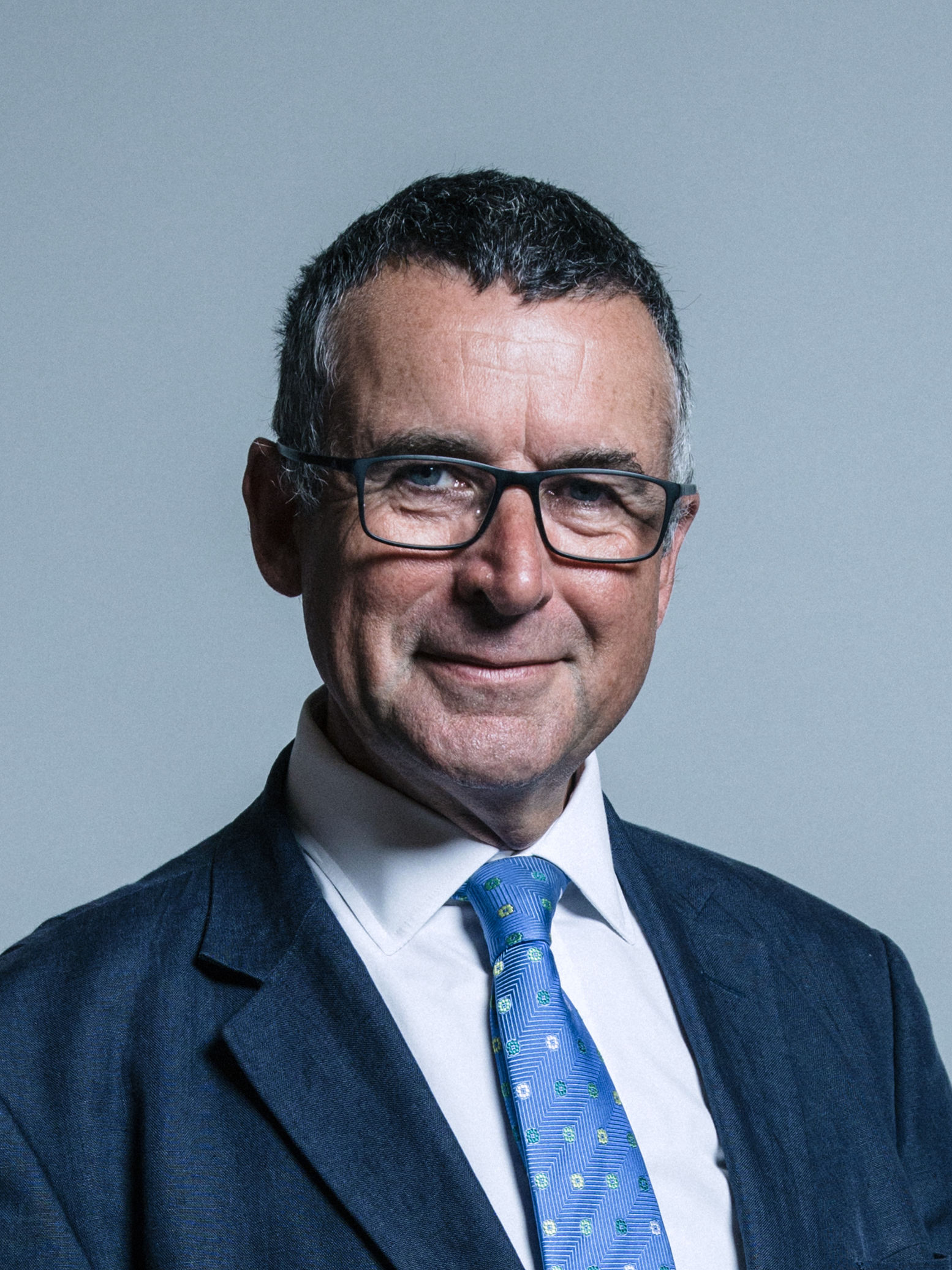
  • Bernard Jenkin – 2022 Speech on Fifth Anniversary of Grenfell Tower Fire

    Bernard Jenkin – 2022 Speech on Fifth Anniversary of Grenfell Tower Fire

    The speech made by Bernard Jenkin, the Conservative MP for Harwich and North Essex, in the House of Commons on 16 June 2022.

    I can only agree with the hon. Member for Westminster North (Ms Buck) about the complacency that infused the entire safety system and the emergency planning. I hope that the Moore-Bick inquiry will address that point in the fullness of time, although it is taking so long, which is what I want to address today. If my comments today have a theme—I appreciate that this is possibly controversial—it is about learning, not necessarily blaming. There may be people to blame, but we need to learn.

    It is terrible for survivors and for victims’ families and friends that we are here five years on, but there is still no closure or resolution for them. As every hon. Member knows, people come to see us after a terrible accident or mistake with the words—echoed by the hon. Member for Leeds East (Richard Burgon), who so capably opened the debate, and by my hon. Friend the Member for Kensington (Felicity Buchan)—“I just want to make sure that nothing like this ever happens again.”

    The living victims of Grenfell still feel as far as ever from that confidence, and I dedicate my speech to them.

    I will set out the two main recommendations made in the submission to the Grenfell inquiry that I co-authored with the right hon. Nick Raynsford, former MP for Greenwich and Woolwich and a former Minister for housing and for fire and rescue services, who is now chair of CICAIR, the Construction Industry Council Approved Inspectors Register; Kevin Savage, a leading figure in the building control profession; and Keith Conradi, current chief investigator of the health services safety investigations body, which arose from a recommendation from the Public Administration Committee, which I chaired, and previously chief investigator of the air accident investigation branch of the Department for Transport, who therefore brings a wealth of expertise to the panel of drafters of our submission on the question of safety systems and safety management, and accident investigation. The inquiry has not yet published our submission, but has given me permission to place copies in the Library. I hope right hon. and hon. Members will find it helpful.

    Our submission is addressed not to who should be blamed but to some of what should be learned. The remit of the inquiry includes “the scope and adequacy” of the relevant regulations, legislation and guidance. The Building Safety Act reflects in large part the recommendations of the review commissioned by the Government from Dame Judith Hackitt, called “Building a Safer Future”. I thank her and Peter Baker, the chief inspector of buildings, who leads the new building safety regulator; they have both been extremely helpful with our submission, although they may not agree with all of it. We have presented our submission to Ministers, but they are, naturally, awaiting the outcome of the Grenfell inquiry before responding formally.

    The Building Safety Act establishes the new building safety regulator based in the Health and Safety Executive. It is responsible for a wide range of activities, including overseeing the safety and performance of all buildings and taking responsibility for control and approval of higher-risk buildings—currently defined as buildings of a height of 18 metres or more, or comprising more than six storeys. It also deals with residents’ complaints, oversees a new competence regime for people working on buildings, advises on the need for changes to building regulations, and oversees and reports on the performance of building control bodies.

    We looked carefully at the Hackitt review recommendations and how they have been interpreted by the Government. We recommend, first, that there should be a new, independent building safety investigation body. The interim Hackitt review did not consider how future fires should be investigated, and this seems to me to be a gap in the thinking so far. Under the new regime, investigations will still be carried out by the Health and Safety Executive or by new public inquiries. The length of time that the Grenfell inquiry is taking is yet another example of how public inquiries are likely to leave survivors and their families feeling betrayed for far too long, even though I am certain that, in the end, the Moore-Bick inquiry will be of great value.

    There is also a problem that we discovered after Ladbroke Grove: investigations conducted by the regulator can turn out to be conflicted, because the cause of the failure might be a failure of Health and Safety Executive oversight and its regulation. That is not a criticism of the Health and Safety Executive; it is a criticism of the system. The Health and Safety Executive, of which the new building safety regulator is a part, should be precluded from any possibility of having to investigate itself, because it is inherently conflicted. Many, including my right hon. Friend the Member for Hemel Hempstead (Sir Mike Penning), feel that the inquiry into the Buncefield fire was conflicted for exactly that reason, with the result that the inquiry was less authoritative than an independent investigation would have been.

    Our proposal for an independent building safety investigator is based on the Rail Accident Investigation Branch of the Department for Transport, which in turn is based on the AAIB—the air accident body. That is what the Cullen inquiry recommended following the Ladbroke Grove rail crash. In rail and other sectors, including aviation, this approach is much quicker, much less costly and more effective than public inquiries, because these bodies acquire a permanent body of expertise and experience.

    Like a public inquiry, an accident investigation body establishes the causes of a major incident, but these independent bodies seek not to find who to blame, but to learn from failure for the future. In the case of Grenfell, there may well still be people to blame and to prosecute, but people who make mistakes are very often blameless because they are part of a defective system or failing safety culture. There are many instances of aviation accidents where pilot error has been a contributory factor but the pilot is not blamed for that failure. We have all watched the wonderful film “Sully” about such a failure. These independent bodies make safety recommendations to regulators and to the Government, who are accountable for ensuring that they are implemented.

    The hon. Member for Leeds East complained about delayed prosecutions having to defer to the judicial inquiry. Unlike with a public inquiry, the regulator may still conduct a parallel investigation to the safety investigator’s to establish responsibility and, if necessary, to prosecute those at fault, as the Civil Aviation Authority prosecuted the pilot in the Shoreham air crash. The crucial point is that the regulator cannot force the accident investigation branch to reveal witness statements except by High Court intervention. That is essential in accident investigation, because it creates a safe space for those giving their account in which they can talk freely and be completely candid, whether or not they think they are to blame. That speeds the whole process of investigation and engages survivors and their families and the bereaved. There is no safe space for candour under the Building Safety Act, and this must change.

    Our second principal proposal concerns building control. We propose a new regulatory system for building control. We propose that approved inspectors, who are the private sector, and local authority building control, which is the public sector, should both be regulated on an equal basis, as in any other safety-critical profession. There is currently no licence regime or register for local authority building control and no dedicated independent scrutiny or regulation of its service, yet the failure of local authority building control appears to be one of the factors that led to the Grenfell disaster. Ironically, the proposals that have been brought forward seem to treat the private sector with more suspicion than the public sector, even though it seems that the public sector is what failed in the case of Grenfell.

    Building control bodies are responsible for checking building work to verify that it complies with building regulations. Building control work can be carried out either by private firms, known as approved inspectors, or by local authority in-house building control bodies, which have a statutory duty to provide building control services in their area. To be approved to provide building control services in the private sector, authorised inspectors, unlike local authorities, must be licensed by CICAIR. Approved inspectors are subject to a code of conduct, regular auditing and a complaints and disciplinary regime leading to suspension of their licence if they are acting improperly or seriously underperforming. Local authorities opposed being subject to the same oversight and inspection regime. There is no credible case for accepting that.

    Those are the two recommendations that we submitted to the inquiry. I have not spoken to the Under-Secretary of State for Levelling Up, Housing and Communities, the hon. Member for Walsall North (Eddie Hughes), who is in his place on the Treasury Bench, so I do not expect him to respond in detail to these proposals. I thought it would be helpful to the House if I laid them out. I repeat that the full text of our submission is now in the House of Commons Library. I hope that right hon. and hon. Members will take an interest in it.
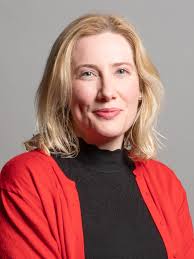
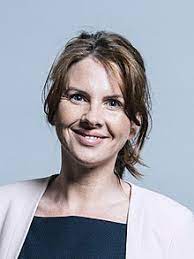
  • Karen Buck – 2022 Speech on Fifth Anniversary of Grenfell Tower Fire

    Karen Buck – 2022 Speech on Fifth Anniversary of Grenfell Tower Fire

    The speech made by Karen Buck, the Labour MP for Westminster North, in the House of Commons on 16 June 2022.

    I congratulate my hon. Friend the Member for Leeds East (Richard Burgon) on securing this debate. It is a pleasure to follow the hon. Member for Kensington (Felicity Buchan), whose constituency includes the area of Grenfell Tower. Of course, for 13 years I represented the constituency of Regent’s Park and Kensington North, including Grenfell Tower, and I knew it and the people living in it well. When the phone calls began in the middle of that fateful night five years ago, it was a personal horror to me as well.

    The inferno engulfed Grenfell Tower just days after the 2017 general election. Parliament had not reconvened, but Ministers and MPs gathered in Westminster Hall for a special meeting, for which an official parliamentary record could not be provided. The newly elected Member for Kensington in 2017, Emma Dent Coad, was plunged into probably the most challenging set of circumstances that almost any newly elected Member of Parliament has had to face outside of wartime. She went on to make the case over the following two years, and she continues to do so outside this House. We should commend her for coping so well with that extraordinary challenge.

    Sarah Jones

    I believe that Emma Dent Coad is with us today, watching from the Public Gallery. I also came to Parliament in 2017, and this has absolutely been the defining issue of my entire five years. What happened was such a huge thing for those of us who were new, and I can only imagine how she managed to cope with the challenges she faced.

    Ms Buck

    I thank my hon. Friend and agree very strongly with her.

    That gathering of parliamentarians, which is not on the parliamentary record, was very intense indeed. We pressed Ministers very hard for answers. In addition to the obvious shock that everybody was still feeling, there was an absolutely overwhelming demand for urgency not only in response to the catastrophe that happened in north Kensington but in relation to the wider lessons, which I will come to in a moment.

    In the days that followed, including the day on which we gathered, it became immediately obvious that there was a failure of epic proportions on the part of the state, and particularly the local council in Kensington, and those of us who went to the Grenfell area to offer support in the immediate aftermath could see that. During that parliamentary debate, I asked what we were going to do, immediately and urgently, to deal with the homelessness crisis faced by hundreds of people. That quickly became a larger number, because over the following days there was an evacuation of residents from the Lancaster West estate surrounding Grenfell Tower. Having been the Member of Parliament for that area, I knew well the sheer scale of the homelessness diaspora resulting from Kensington council’s behaviour, and indeed of the wider homelessness problems in London.

    In the immediate aftermath of the fire, people were sleeping rough. How was that allowed to happen? We discussed the issue, yet it was allowed to happen. It is important that we remember that five years on, because the way in which the institutions of the state failed the survivors, the relatives and the wider community set a tone for the whole of the following five years. Understandably, that fed into a deep and profound sense that they could not rely on the institutions of the state to offer them support and justice. One of the things that we have to do today is recognise that epic failure and collectively apologise for it. I am ashamed. Anybody who went down to north Kensington over those following days could not believe their eyes in seeing a failure on that scale.

    Homelessness was one of the first issues raised, but it took months—it took years—for the housing needs of Grenfell survivors, relatives and the community to be dealt with, even though they were recognised within hours of the fire. The second immediate issue raised in Parliament on that day was the need for justice—the need for those responsible to be held to account for what had happened. We did not immediately know exactly who was responsible—which components of the system, from building design and maintenance to the emergency response—but people knew that there was a need for justice.

    I do not think anybody would now say that the passage of five years means that justice has been served. That is not in any way a criticism of the inquiry, which has been profoundly rigorous in going about its work, but justice delayed is justice denied. Five years is far too long for the community to wait for justice. Urgency was the prevailing tone in the immediate aftermath of the fire, but five years on, the promise of urgency and the commitment to urgency have been denied. The community has been let down profoundly as a consequence.

    Building safety has been a dominant theme in Parliament in the intervening five years, but we need to reflect again on emergency planning. The fact that it failed so catastrophically in Kensington tells us something quite profound, which we continue to raise in other contexts: there is an institutional belief that these kinds of things cannot happen here. There is a complacency about risks that should have been shattered comprehensively, forever, by what happened five years ago, but it has not. Again and again, we see the expectation that we should drive towards a deregulatory approach to services and a de minimis public sector, even though the capacity of the public sector, which failed so badly on that day, is so essential to ensuring that such things cannot happen again.

    Within days and weeks of Grenfell, it became quickly apparent that hundreds of thousands of people across the country were living in buildings where such things could happen again—in some cases, they still are. That possibility has dominated our discussions in this Chamber. Ten days after Grenfell, I had to attend a meeting of desperate and frightened residents of a six-block, 22-storey estate in north Westminster that overlooked Grenfell Tower and had been covered with the same form of cladding. In many ways, they have been the fortunate ones: they went through terminal upheaval as the cladding was removed over the following winter. However, 10,000 buildings continue to be covered with some form of cladding. The people in them live with that risk. In many cases, they also live with the reality that they face financial ruin and are trapped, unable to move.

    I completely recognise that the Government have taken some steps in their legislative programme to implement proposals on fire safety and building safety, but so little has been done compared with what is needed.

    Marsha De Cordova (Battersea) (Lab)

    My hon. Friend is making an excellent speech. I have been in this place for only five years; the Grenfell fire and its aftermath have been a defining part of my term. A number of buildings in my constituency are still wrapped in unsafe cladding. Despite many years of promises that leaseholders would never have to foot the bill for fire safety and remediation work, and despite the Fire Safety Act and the Building Safety Act, leaseholders are still being burdened with thousands of pounds of debt to pay for all the fire safety and remediation work to be completed.

    Ms Buck

    I totally agree. So many people still live with the fear, the risk and the stress of having to contribute financially. As we have said again and again, so many of the people who bear the burden of cost and risk are the very last people in the chain of responsibility to have had anything to do with the circumstances in which they are trapped.

    Five years on, as the inquiry continues its work, the Home Office’s decision not to implement the inquiry’s recommendation

    “that the owner…of every high-rise residential building be required…to prepare personal emergency evacuation plans”

    sends out the worst possible signal, particularly to survivors and to the north Kensington community, who are looking to the inquiry for answers on the long road to justice.

    This is the fifth anniversary of an avoidable tragedy of epic proportions—a tale of corporate malfeasance, incompetence, indifference and institutional inertia, even after the Lakanal House fire had given us all the signals that Government action was needed. Like my hon. Friend the Member for Leeds East, I pay tribute to Peter Apps and Inside Housing for years of painstaking work in following the inquiry, reporting on it and giving us the information that we need to follow what would otherwise be a very complex story.

    The chains of reporting by Peter Apps make salutary reading for every Member of this House, because they lay so bare what has gone wrong. For example, contractors and developers knew that the cladding system would fail. As Peter Apps has reported:

    “In an email exchange…designers of the tower’s cladding system wrote: ‘There is no point in “fire stopping”. As we all know; the ACM will be gone rather quickly in a fire!’”

    It is worth reading the dozens of reports that have been put on record in the inquiry, which give us revelations of that kind.

    Five years on, I pay tribute to the survivors, the relatives, their representatives, the mosques, the churches, the community and Grenfell United, who have done such extraordinary work, in the aftermath of this tragedy, to hold the community together and support people, their dignity and their campaign for justice. But five years on, there is not yet justice.

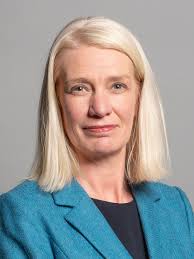
  • Felicity Buchan – 2022 Speech on Fifth Anniversary of Grenfell Tower Fire

    Felicity Buchan – 2022 Speech on Fifth Anniversary of Grenfell Tower Fire

    The speech made by Felicity Buchan, the Conservative MP for Kensington, in the House of Commons on 16 June 2022.

    The last few days have been very intense, emotional and difficult for my constituents as we remember the 72 men, women and children who lost their lives so horrifically and so needlessly. You will never be forgotten.

    It has been my great privilege over the course of the last few years to get to know many of the bereaved and survivors. They have borne so much with so much dignity. It was humbling to spend time with them at Westminster Abbey on the anniversary on Tuesday, and a few days before that at Al-Manaar mosque in north Kensington in my constituency. Their individual accounts of what happened to them that evening are truly harrowing. I do not think that any of us can imagine the pain, anguish and suffering that people went through that night, or indeed the pain and anguish that relatives, friends and the community continue to suffer from.

    On the morning of the anniversary, I went to Grenfell Tower. It was 7 o’clock in the morning, but there were already students from the neighbouring Kensington Aldridge Academy there, paying their respects. KAA, as it is known, lost five students in the tragedy. In total, 18 children died, their lives cut horrifically short.

    We will never be able to right the wrongs of the past, but we can ensure that there is a lasting legacy from Grenfell. I am very clear that that legacy must be that everyone has a right to be safe in their homes, and that the voices of all residents and all communities need to be heard.

    Last week we had a debate on building safety and social housing. I will not repeat the remarks that I made then, but I did say that I had been very frustrated over the last five years at the speed at which many of the changes were being implemented. There is no question but that we have made progress. We have enacted the Building Safety Act 2022 and the Fire Safety Act 2021, and lots of developers have said that they will contribute towards the cost of remediation. However, there is a lot more to be done, and it needs to be done quickly.

    One of the first things that I did when I got to this place was to give a speech on Grenfell. It was January 2020, following my election in December 2019. I called then for all the recommendations of the Grenfell inquiry to be implemented, and to be implemented at speed, and I reiterate that call today.

    What we collectively need to do is to ensure that a tragedy of this kind can never be allowed to happen again, and I am determined that I will do what I can to ensure that such a tragedy does not happen again.

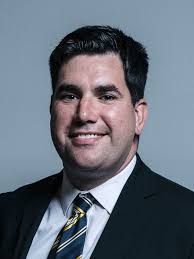
  • Richard Burgon – 2022 Statement on Fifth Anniversary of Grenfell Tower Fire

    Richard Burgon – 2022 Statement on Fifth Anniversary of Grenfell Tower Fire

    The statement made by Richard Burgon, the Labour MP for Leeds East, in the House of Commons on 16 June 2022.

    I beg to move,

    That this House has considered the fifth anniversary of the Grenfell Tower fire.

    I thank the Backbench Business Committee for granting the debate, and I especially thank those MPs from across the House, including Back-Bench MPs from the governing party and all the Opposition parties, who supported its application. It is essential that we have a moment like this in the House to remember the events at Grenfell, to mark the worst domestic fire in living memory, to commemorate the 72 people killed and to acknowledge all those whose lives were changed for the worse that day. Such a debate is an important moment of reflection. It should also be an opportunity for the House to show that it is learning the lessons of that atrocity by taking the action needed to prevent it from ever happening again.

    I ask the Government for an annual debate in Government time when the House can receive and debate reports on progress made on the Grenfell fire inquiry recommendations and to discuss changes to our justice system and the changes that must be made to make homes safe if we are to show that lessons are truly being learned. If we allow the memory of Grenfell to slip away, there is a real risk that the changes needed to prevent another Grenfell will slip away with it.

    I want to focus on two areas: the need for justice for all those killed, for the survivors, for the bereaved families and for the wider community; and the changes that we need to ensure that it never happens again. Five years on from the fire, it is clear that bereaved families and survivors feel deeply let down by our justice system, and they have every right to do so. They are rightly asking, “Where are the criminal charges? Why are those who made the decisions that turned Grenfell into a deathtrap still walking free, and why, five years on, have those who ignored residents’ warnings not been held to account?”

    The deep sense of injustice goes all the way back to day one of the atrocity. Hours after the fire, a public inquiry was announced, even though families had wanted the criminal investigation to go first. I remind the House that, while bereaved and affected families were mourning their loved ones, seeking a new place to live and trying to continue to bring up their children and look after their parents, they had to launch a public campaign over the nature of the public inquiry to stop it from being done to them rather than with them. They were initially refused the simplest of demands for the public inquiry to be led by a broad-based panel; a demand to help them have trust in it. There had to be protests, marches and petitions signed by more than 150,000 people to get the House to even debate such an inquiry panel before it was belatedly granted.

    As shadow Justice Secretary during the fire and its aftermath, I was privileged to work with the families as they campaigned for that simple demand, but I remember feeling sick to my stomach that their energies had to go into fighting for something that should be a basic right.

    From the very outset, the confidence of the survivors and bereaved family members in the justice system was damaged and it is clear that it has not been repaired. As Grenfell United said this week:

    “For 5 years we’ve had to endure a justice system that protects the powerful. A system that prevents justice. Whilst this system exists, we face the same unachievable battle as the many before us. From Aberfan, to Hillsborough, justice has been denied & #Grenfell is no different. They left us to search for answers, they mocked us publicly. Now, they stand in the way of justice. We must pave a new way forward. We must hold those responsible to account.”

    We know that this experience of our justice system is not a one-off. Hillsborough and Bloody Sunday are just two examples of when the state blocked the truth and justice for years, sowing distrust and undermining justice.

    Going forward, one way to show that lessons have been learnt would be to make changes, so that families do not have to fight for years more than necessary in inquiries to get justice. For many, the history of inquiries in this country often gives the impression that they are there to slow down justice and deny justice. We should implement the Hillsborough law, backed by the Grenfell families, as a matter of the utmost urgency. It would not address all the issues that led to such appalling treatment of the Grenfell families, but it would ensure that in future the scales of justice are not so tilted against ordinary families and in favour of public authorities who hold all power. But of course, true justice will only be done when those responsible, be they politicians, officials or company decision makers, are fully held to account, including through the criminal courts.

    We have heard a lot in recent days about ensuring that this atrocity never happens again, but the Grenfell families believe that, five years on, another Grenfell is a very real possibility. Already at the inquiry there has been a mountain of evidence of how profits were prioritised over safety, how privatisation and deregulation watered down building standards, and how cuts and austerity contributed. All that must be tackled if the words “never again” are not just platitudes from politicians. The lessons from the inquiry must be implemented in full, however uncomfortable that is for the Government. But there are already deep concerns that lessons will be ignored and that they already are being ignored.

    The Government, so far, have failed to implement a single recommendation directed at them from the first phase of the inquiry. Worse still, they are actively rejecting some of the recommendations. One key recommendation from the inquiry’s first phase was to make it mandatory for owners of high-rise flats to arrange personal emergency evacuation plans, known as PEEPs, for disabled people. Of the 37 disabled people living at Grenfell, 15 lost their lives—41%—yet the Home Office recently rejected that recommendation. It is a total scandal that once again profits seem to be being put before life, with the Government labelling this recommendation impractical and too costly. That breaks a previous Government promise to implement the recommendations in full. What is the point of an inquiry if the recommendations are then rejected?

    Peter Apps, the journalist who has perhaps best covered housing and fire safety in the aftermath of Grenfell, says that that happened after the Home Office had one-to-one conversations with building owners and ignored its own consultation responses. No wonder Edward Daffarn, a Grenfell resident who warned of a catastrophic fire months before it happened, says that the Government are playing Russian roulette with people’s lives.

    Sarah Jones (Croydon Central) (Lab)

    I thank my hon. Friend for giving way. I am sorry that I will not be able to make a speech in this debate as I will be in Committee.

    Does my hon. Friend agree that it was quite extraordinary that plans for people with disabilities to leave in the event of a fire were not already in place and legally required in the first place? It is even more extraordinary that, with the evidence that emerged during the inquiry that such plans were needed, the Government, having said repeatedly in this House that they would implement the findings of the Grenfell inquiry in full, are now backtracking and putting at risk our most vulnerable people, which we find quite unacceptable.

    Richard Burgon

    My hon. Friend makes a very important point. I hope that after this debate the Government will revisit their position and their rejection of that important recommendation from the first phase of the inquiry.

    That is not the only concern about fire safety measures not being addressed. Government officials did not heed coroner advice after the Lakanal House fire killed six people in 2009. It was followed by an even more deadly fire. We cannot allow the same to happen after Grenfell. Yet as David Badillo, the first of many firefighters who went into Grenfell Tower, wrote this week:

    “Apparently 72 lost lives is not enough. There is still no requirement for a second staircase in high rises. No requirement to fit fire alarms in all high rises. No national strategy on how to evacuate high rises.”

    The figure revealed this week by the Fire Brigades Union, of 221 firefighter positions cut since Grenfell, represents a serious failure to change course after the loss of 11,000 firefighter roles between 2010 and 2017. Of course, a failure to sufficiently address the housing safety crisis is another reason why we have to take with a healthy dose of scepticism claims that lessons have so far been learned. Even on the ground in Kensington and Chelsea the situation is not yet resolved. Three Grenfell households are still to be rehoused, while 50 more have replacement homes unsuitable for their needs in numerous ways. After five years, it is unacceptable that people are still being treated as second-class citizens.

    More widely, hundreds of thousands, if not millions, of people are still at risk in unsafe housing. Work is still to be completed on 111 buildings that are over 18 metres tall and have exactly the type of aluminium composite material—ACM—cladding identified by the Grenfell inquiry as a leading cause of the 2017 atrocity. Some 640,000 people are still living in buildings with that exact type of cladding. But that is just the tip of the iceberg. Last week, after accessing Government figures, LBC reported that almost 10,000 buildings in England are unsafe due to dangerous cladding and other associated fire risks. Those shocking figures include at least 903 buildings over 18 metres tall with cladding systems that need to be removed. A study last year estimated that between 6,000 and 8,900 mid-rise residential buildings, between 11 metres and 18 metres in height, require remediation, partial remediation or mitigation works.

    As well as the danger to their lives, as End Our Cladding Scandal has so well documented, there are the financial costs, with many living in unsafe homes that they cannot sell and facing bankruptcy because their house has plummeted in value. This is affecting their physical health and their mental health. Surely, five years on from Grenfell, one of its legacies should be an end to all unsafe homes.

    I want to conclude with the words of the families in a statement made this week:

    “We don’t want our 72 to be remembered for what happened, but for what changed.”

    Those are their words. We need more than the apologies of politicians. We need more than an inquiry. We need to see justice properly done and we need real change to the practices, cultures and policies that led to so many people needlessly losing their lives five years ago.

  • Trudy Harrison – 2022 Statement on the Government’s Future of Freight Strategy

    Trudy Harrison – 2022 Statement on the Government’s Future of Freight Strategy

    The statement made by Trudy Harrison, the Parliamentary Under-Secretary of State for Transport, in the House of Commons on 15 June 2022.

    As a proud, free-trading nation, moving goods domestically and abroad has always been the backbone of the United Kingdom’s economy. Throughout the pandemic and in our work to deliver Brexit and a global Britain we have been reminded of the vital role that the freight and logistics sector has supporting the supply chains that maintain our economic wellbeing. Across Government we have worked collectively, and collaboratively with industry to mitigate disruption to our supply chains. We have delivered unprecedented action with 33 measures to help the sector tackle the shortage of HGV drivers. This included making more driving test slots available than needed and introducing bootcamps, which has seen the number of available HGV drivers stabilise. We also provided vital support to ferry and freight operators to weather the start of the pandemic. This, alongside other actions, has led to sector reports of pressures easing following global challenges on the supply chain, and supported this highly effective and adaptable sector to maintain the smooth flow of goods into, out of and across the country.

    It is now important that we look to ensure that the sector is ready to grasp opportunities in the medium and long-term. The future of freight is the first time that the UK Government has developed a long-term cross-modal plan for the freight and logistics sector. The plan is a collaboration with industry and we have engaged stakeholders extensively in its development, including through the freight council. It sets out how the UK Government and industry have agreed to work more closely together, and with the devolved Administrations, to deliver a world-class, seamless flow of freight across our roads, railways, seas, skies and waterways.

    The vision set out in the plan is for a freight and logistics sector that is cost-efficient, reliable, resilient, environmentally sustainable and valued by society for its role in supporting our way of life. The plan is also clear on the importance of the sector to achieving some of the Government’s strategic priorities. The sector is ideally placed to support levelling up, driving economic activity across all corners of the UK and providing secure employment, for example in ports and distribution centres sited in levelling up priority areas, and opportunities in all our communities. The plan also supports our efforts to strengthen the Union improving connectivity across the United Kingdom.

    The plan focuses on five priority areas of challenge identified with industry. It is the start of a long-term collaboration which will raise the status of freight within Government. It sets out Government and industry commitment to collaborate on a number of actions:

    The National Freight Network: We will identify a National Freight Network (NFN) across road, rail, maritime, aviation, inland waterway and warehouse infrastructure. Our long-term aim will be to remove the barriers which prevent the seamless flow of freight.

    Transition to Net Zero: We want to support the entire sector in its transition to net zero. We will launch the freight energy forum with industry, focused on collaborating with industry to assess future energy and fuel needs and paths to providing the requisite infrastructure.

    Planning: We will further embed freight in planning, transport and design policy and guidance, and ensure freight is represented in planning reform. We will publish a call for evidence with industry to support this work.

    People & Skills: We will expand awareness of the sector and freight careers amongst the public, particularly through the industry-led and Government-backed generation logistics communication campaign. This will maximise the impact of cross-Government employment and skills programmes for the freight sector.

    Data & Technology: We will maximise opportunities for uptake of innovative technology and digitalisation, including through delivery of a dedicated cross-modal £7 million freight innovation fund.

    Moving goods efficiently has underpinned Britain’s historical growth, prosperity and global influence. In today’s increasingly interconnected and competitive global economy, we require a world beating freight and logistics sector that will deliver the greener, fairer, and stronger economy we need. A sector that will help build a truly global Britain.

    I will place a copy of “Future of freight: a long-term plan” in the Libraries of both Houses.

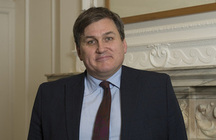
  • Kit Malthouse – 2022 Statement on Drugs Strategy Guidance

    Kit Malthouse – 2022 Statement on Drugs Strategy Guidance

    The statement made by Kit Malthouse, the Minister for Crime and Policing, in the House of Commons on 15 June 2022.

    As the cross-Government Minister with responsibility for combating drugs, I am pleased to announce today the publication of guidance for local partners helping to deliver the commitments and ambitions laid out in the 10-year drugs strategy by this Government in December.

    This is an important next step in the ambitious whole-of-Government plan to cut crime and save lives, and sets out a framework to help local partners reduce drug-related harm and monitor their progress.

    Drugs can have devastating effects on individuals, families and neighbourhoods, and the cost to society is nearly £20 billion a year in England alone. Drug-related deaths are at the highest levels recorded, and drug use is associated with nearly half of all homicides and acquisitive crimes such as robberies, burglaries, and thefts. The drivers behind drug-related harm are clearly complex and cut across the responsibilities of a range of different organisations.

    As a result, dedicated funding of nearly £90 million was announced with the strategy in December, taking the investment in combating drugs to £3 billion over three years across enforcement, treatment and recovery, and demand reduction.

    Now, as the focus turns to implementation and delivery, local partners such as local authorities, public health services, police forces, prisons, and probation services are being asked to step up and fulfil their collective role as the engine room of this drugs strategy. It is these local delivery partners that are best placed to address the needs of their local communities.

    The new guidance provides an important framework for how local partners in England should work together to reduce drug-related harm and drive join-up across sectors and a framework for Combating Drugs Partnerships. A single senior responsible owner (SRO) in each locality will chair these partnerships and be responsible for reporting to central government on local cross-cutting delivery against the national combating drugs outcomes framework, alongside their own specific organisational objectives.

    The outcomes and metrics included in the framework aim to provide a clear line of sight between action and the impact experienced by individuals, families, and neighbourhoods across the country and in local areas. This is how delivery of the commitments and ambitions of the 10-year drugs strategy to level up the country will be most effectively monitored. The potential benefits are significant and wide-ranging, including improving people’s safety, productivity and wider health and well-being.

    I look forward to confirmation of the partnerships and working with the local SROs.

    While this guidance is aimed primarily at partners in England, we have referenced Wales where it touches on reserved matters. More broadly we will continue to work with the devolved Administrations to embed collaboration on these issues.

    The guidance will be available on gov.uk and placed in the Libraries of both Houses.

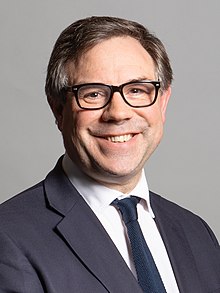
  • Jeremy Quin – 2022 Statement on Defence AI

    Jeremy Quin – 2022 Statement on Defence AI

    The statement made by Jeremy Quin, the Minister for Defence Procurement, in the House of Commons on 15 June 2022.

    Today I am pleased to publish the Defence Artificial Intelligence (AI) strategy. This strategy sets out our ambitious plans to harness responsibly the game-changing potential of these ubiquitous, enabling technologies to rapidly modernise the UK’s armed forces and secure our military edge. Our vision is that, in terms of AI, the Ministry of Defence (MOD) will be the world’s most effective, efficient, trusted and influential defence organisation for our size.

    The strategy articulates how we will transform the culture of defence to become truly “AI ready”, developing the skills, technical enablers and research and development programmes to dramatically accelerate the adoption of AI-enabled systems and capabilities. In doing so we will champion and strengthen the UK’s industrial and academic base to secure national strategic advantage in AI technologies, supporting the Government’s wider ambitions for the UK to become a science and technology superpower by 2030. The strategy also sets out how we will address the global security policy challenges associated with the use of AI in a defence context, from geostrategic technological competition to counter proliferation and strategic deterrence.

    We recognise that getting right the ethics of military AI is a particularly important requirement. That is why, alongside the strategy, we are also publishing a policy document: “Ambitious, Safe and Responsible – Our approach to the delivery of AI-enabled capability in Defence”. This document sets out the robust controls framework that will be applied for all AI-enabled military capabilities, throughout system lifecycles, providing assurance to the public and our partners that our use of these systems will always be in line with UK values, standards and legal obligations.

    We have engaged extensively with partners across Government, civil society and our allies in developing these approaches, and will continue to do so over the coming months.

    I am placing copies of both documents in the Library of the House.

    Attachments can be viewed online at: https://questions-statements.parliament.uk/written-statements/detail/2022-06-15/HCWS101

  • Amanda Milling – 2022 Speech on Syria

    Amanda Milling – 2022 Speech on Syria

    The speech made by Amanda Milling, the Minister for Asia and the Middle East, in the House of Commons on 15 June 2022.

    Can I say how grateful I am to the hon. Member for Wirral South (Alison McGovern) for securing this very timely debate? I pay tribute to her for her work as chair of the all-party parliamentary friends of Syria group, and for her passion for Syria, as evidenced in her speech.

    I also want to pay tribute to the legacy of Jo Cox and her commitment to the people of Syria, noting, as the hon. Member mentioned, that it is the anniversary of her horrific murder tomorrow and the fact that Sir David Amess chaired the last debate on this subject. As she said, they are both sorely missed by this House.

    Bashar al-Assad and his allies, including Russia, have inflicted terrible suffering on Syrians for over 11 years now. Children born in Syria in the last decade have been subjected to terrible violence, hunger and deprivation. The UK Government continue to call for an end to this suffering through full implementation of United Nations Security Council resolution 2254, a nationwide ceasefire and progress towards an inclusive, representative political process.

    Much of what we have seen play out in Syria, such as the crushing of dissent, attacks on civilian targets and a brutal conflict that has displaced millions, is now being replayed in Ukraine. Peace is a necessity for Syria, its people and us all.

    Syria’s conflict has killed more than half a million people, displaced 60% of the population, and collapsed the Syrian economy. Under Assad’s regime people have faced arbitrary detention, brutal torture and indiscriminate attacks. There is clear evidence that Assad has used chemical weapons against his own people on at least eight occasions, and has the capability to conduct further attacks. Russia continues to shield Assad from accountability for his crimes, through disinformation and false narratives. Along with Iran, Russia has provided significant military support to the Syrian regime. The conflict has also created space for Daesh and other extreme groups to operate in, which continues to pose one of the most significant global terrorist threats, including to UK citizens.

    The UK has responded to the situation in Syria by delivering our largest ever commitment to a single humanitarian crisis to date. We have committed a total of £3.8 billion since 2012, including up to £150 million pledged this year. Even so, aid is struggling to keep pace with the growing need in the region as the conflict continues. Today more than 14 million people are in need of assistance. Access issues and politicisation are complicating delivery, putting those in need at further risk. As the hon. Lady said, in July the UN Security Council will hold a crucial vote to renew the UN’s mandate to deliver aid cross-border into Syria. Russian cruelty in the past three years has blocked that in the Security Council, and reduced UN access to a single border crossing. I visited Turkey last week to see first hand the importance of that issue, and to raise awareness. We are calling on all Security Council members to renew resolution 2585 and to provide cross-border aid at next month’s vote. We thank our allies and partners for their continued support.

    The UK also supports efforts to maintain the current ceasefire in north-west Syria, including Turkey’s efforts to protect civilians. We will continue to support Syria’s neighbours, so that they can meet the needs of Syrians seeking refuge. As they are so often, women and girls are the worst affected by the conflict. They also face horrific gender-based violence, including sexual violence. Support for women and girls is at the heart of UK foreign and development policy, through three innovation pilots that seek to prevent violence by targeting the widespread inequality that denies women ownership of land and access to economic resources and opportunities. We continue to push for a more robust global response to gender-based violence. The conflict is also denying Syria’s children their basic human right to education, impacting a whole generation of young people. Since 2018, the UK-funded Syria education programme has reached more than half a million children, supporting 85% of children in lower primary school to be enrolled in schools in the north-west.

    Just as we are consistent with aid, so will we continue to hold Assad’s regime and its backers to account, including by sanctioning those close to him, and through our support for international law. There can be no impunity for violations of international, humanitarian and human rights law. Since 2012 the Government have contributed more than £40 million to gather evidence and help victims of human rights abuses and violations, including through the UN. We welcome the release of any detainees, but the regime has denied independent verification of its recent amnesty on prisoners, and there are still 130,000 who remain unaccounted for.

    Our position on the regime’s abhorrent use of chemical weapons during this conflict is well known. The UK has full confidence in the Organisation for the Prohibition of Chemical Weapons and its investigations, which have attributed multiple attacks to the Assad regime. We will continue to push Assad to comply with the Chemical Weapons Convention.

    On the point raised by my right hon. Friend the Member for Clwyd West (Mr Jones) about Daesh, threats from terrorist and extremist groups rooted in Syria remain. The UK is a leading member of the global coalition against Daesh. We remain committed to ensuring it cannot resurge in the region, working with the coalition and our regional allies.

    I also want to pick up on the hon. Lady’s comment about civil society. We recognise the contribution of Syrians in the UK. The Government support and work closely with Syrian civilian society, especially in terms of upholding human rights.

    In conclusion, the UK is committed to supporting the people of Syria. They have not been forgotten. We are clear that the UN-led political process, led by special envoy Pederson, is the only pathway to bring the peace that Syrians need and deserve. The Assad regime craves legitimacy, but continues to bring suffering and oppression to its people, and to stall the political process as it pursues self-preservation over genuine political reform. Until the regime participates in that process in good faith, we will not engage with Assad and will discourage others from doing so. Meanwhile, the UK will continue to deliver lifesaving and life-sustaining humanitarian assistance to protect women and girls, and to hold the regime and its backers to account.

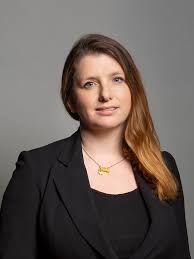
  • Alison McGovern – 2022 Speech on Syria

    Alison McGovern – 2022 Speech on Syria

    The speech made by Alison McGovern, the Labour MP for Wirral South, in the House of Commons on 15 June 2022.

    Madam Deputy Speaker, I begin my contribution this evening by, through you, thanking Mr Speaker for allowing me the time for this debate. It is more than poignant to rise in this House this evening, the night before the sixth anniversary of the murder of Jo Cox MP. Having requested a debate on Syria, which I did for a little while, it must have been fated that a slot would be available this week, given Jo’s incredible contribution to raising the alarm in this House and beyond about the terrible events occurring in Syria. She warned that if we did not stand for our principles in the face of those who would trash the rights of civilians in wartime, it would change our world, and not for the better, and she was right.

    To compound the distress, the last time I led a debate on Syria in Westminster Hall, it was chaired expertly by Sir David Amess. Words simply cannot express how much we all miss them both and how indebted we are to their families for the great contribution and sacrifice Sir David and Jo both made. We think of their families tonight and wish them strength and love.

    The argument I wish to make to the Minister this evening is that by turning away from conflicts such as that in Syria, we allow the world to be a more dangerous place. It should be obvious to everyone in this House that the situation that Syrian civilians have faced over the past decade—with human rights utterly obliterated at the hands of the Syrian regime, aided by Russia—is now echoed in the brutality that the Ukrainians have seen at the hands of the Russians.

    The Minister’s fellow Foreign, Commonwealth and Development Office Minister, the right hon. Member for Braintree (James Cleverly), said:

    “Russia’s actions in Ukraine will be familiar to millions of Syrians who have suffered at the hands of the Assad regime, with Moscow’s backing. In both countries, Russia has been responsible for violations of international humanitarian and international human rights law.”

    A person could be forgiven for wondering whether those words mean anything any more. When Bashar al-Assad’s regime, shielded by Russia, is responsible for chemical weapons use, arbitrary detention, torture and indiscriminate attacks on civilians, what do those words really mean? When Ukrainians see cities destroyed and siege tactics used yet again to starve people into submission, what do those words mean?

    Our country has been central to the crafting of international humanitarian and human rights laws. The rights of non-combatants in the face of aggression are meant to mean something, as are the right to be treated in a hospital without bombs falling on the very doctors trying to help and the rights of refugees. Demonstrating that our words—whether articulated through the UN declaration of human rights, or the promises rightly made in the sustainable development goals by a Conservative Government and supported in every corner of this House—are not empty, but full of meaning for starving Syrians or starving people anywhere shows that we care for others in this world, but also that we are always prepared to stand up for our beliefs in the face of aggression.

    Jim Shannon (Strangford) (DUP)

    I commend the hon. Lady for securing this debate; I spoke to her earlier. I understand that 9.3 million Syrians have become food insecure since 2020 and more than 80% of Syrians are living below the poverty line. Does she agree that we have a duty of care to do more to help those victims of war and terror? Our Government have met their obligations in the past, and hopefully they will do so even more in future.

    Alison McGovern

    The hon. Gentleman pre-empts what I am about to say and makes the point well. It would be good if the Minister could update the House on the diplomatic approach that we will take. If we in this House turn away from our principles, we lose sight not just of the Syrian people, but of ourselves. We honour our history, our culture and our interests by standing up for our values and their implementation. As I mentioned, the then Minister for the Middle East and North Africa, the right hon. Member for Braintree, said:

    “The best thing for the UK to do is to ensure that the violence stops”.—[Official Report, 24 February 2020; Vol. 672, c. 28.]

    As I said, it would helpful if the Minister could use this opportunity to update the House on the current strategy.

    Mr David Jones (Clwyd West) (Con)

    I congratulate the hon. Lady on securing the debate. She will probably be aware that there has been a resurgence of Daesh activity in northern and eastern Syria. In relation to the point that she has just made, does that not also underline the need for the United Kingdom and its allies to pay close attention to what is happening today in Syria?

    Alison McGovern

    The right hon. Gentleman is exactly right. Where we take away our focus and shift our eyes, we leave a vacuum. Whether it is Daesh or any other form of terrorism around the world, if we are not involved in the world—not that we can do everything, but if we are not doing all we can to prevent the rise of terrorism—in the end, the House will have to pay attention to it. It is far better to have a plan and a strategy for dealing with it.

    As the hon. Member for Strangford (Jim Shannon) mentioned, we know that many millions of people—in fact, most of the Syrian population; I think it is even worse than he said—are facing acute food insecurity. The number is 51% higher than in 2019. Record numbers of people need humanitarian assistance, and food prices have risen by more than 800%. That is mainly attributed to ongoing fuel shortages, increasing global food prices, inflation, and, of course, the Ukraine crisis. Against that backdrop, the World Food Programme has been forced to reduce food rations in all areas of Syria due to funding constraints. We face the perfect storm. If the Minister can, will she touch on the steps that the UK Government are taking, as a permanent member of the UN Security Council, to ensure the renewal of resolution 2585 before it expires shortly on 10 July 2022 and ensure that the crucial crossing point at Bab al-Hawa remains open for the delivery of humanitarian assistance?

    As well as there being a huge number of internally displaced people, many of whom are suffering in the most dreadful humanitarian conditions, the Syrian refugee population is now the largest in the world at 6.8 million. I appreciate that some of this is the Home Office’s responsibility, but will the Minister update the House on international discussions about support for that population and on the UK’s view of the future for Syrian refugees in the world?

    It is ludicrous to expect the burden of supporting that number of people to continually fall on just a few countries. In response to a public outcry, the Conservative Government previously created a specific scheme to help to support Syrian refugees, but that is over now and in the past. We need to learn the lessons of the Homes for Ukraine scheme and our response in that case, so I would be grateful if the Minister could indicate the direction that we might be taking.

    Speaking personally, I am inspired by the Syrians I meet in the United Kingdom. I think of the Syrians who work in the NHS in Merseyside as doctors. My hon. Friend the Member for Batley and Spen (Kim Leadbeater) also mentioned to me Razan Alsous, a Syrian refugee she knows who has created a great business with Yorkshire squeaky cheese, and a fellow Syrian restaurateur, Khaled Deakin, who is creating a mobile restaurant in Exeter. Refugees bring their contribution, and they make our country strong, not weak.

    I want to finish by asking the Minister about Syrian civil society here in the UK, because the route to peace and democracy in Syria will be very long. While at times it will seem that the British Government can do very little to bring about change in Syria, we do now have so many British Syrians and Syrian civilians here in the UK who will be an indispensable asset in building the first steps on the long path towards a different future for Syria. Could the Minister say what work the Foreign Office is currently undertaking to engage with Syrians in the UK and British Syrians? There are many issues where the perspective of our fellow community members in the UK who have a deep connection to Syria may well be of huge benefit and insight. I am sure the Minister will herself have learned a great deal from speaking with them and understanding their priorities, not least in working towards justice and putting down a path for prosecution for the horrific crimes committed against civilians in Syria.

    Finally, I want to say something about this House, because we are often reactive when it comes to such crises. When an emergency happens in the case of Syria or of Ukraine, we all want our say, and that is only right in a democracy, but these crises and conflicts have a sustained impact on the world around us, be it in Syria or any other conflict that has seen such abysmal treatment of our fellow human beings. We in this House must have the persistence and seriousness of purpose to give effect to our values and to defend our interests, and the moral discipline to see things through to the end. News cycles can move on; we must not.

    Jo described Syria as “our generation’s test”, but when you fail a test, you learn your lesson, and we must do that not just for the Syrians, who deserve better from us all, but for every victim of every conflict wherever they may be, so that we may see them not as a victim of some foreign war, but very much as the business of this House.

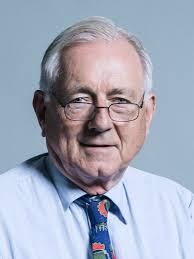
  • Peter Bottomley – 1975 Maiden Speech in the House of Commons

    Peter Bottomley – 1975 Maiden Speech in the House of Commons

    The maiden speech made by Peter Bottomley, the then Conservative MP for Woolwich West, in the House of Commons on 21 July 1975.

    I am sorry that I cannot say I have come here having defeated someone who put forward at the Woolwich, West by-election a policy such as we see in the third amendment on the Order Paper today, However, I prefer to leave most of the comments of the hon. Member for Liverpool, Walton (Mr. Heffer) for others to answer, because I wish to start on a note of agreement among everyone.

    I wish to say to the Prime Minister, in whose private office my predecessor worked, to Bill Hamling’s close friends, to his family and to all hon. Members on both sides of the House, as well as to all those on both sides of the political fence in West Woolwich, that I regard it as a great privilege to follow in this place someone who was so well loved and respected both in the House and in the country.

    I hope that in my first speech I shall not have to compete with someone who 10½years ago was interrupted a dozen times—or by a dozen people in the same interruption—having brought it upon himself, perhaps, by referring to you, Mr. Speaker, in a previous capacity. However, having won a record election, and having voted twice for the Government on my first day here—I suppose that I must regard that as a mark of distinction, if not of incompetence—and having discovered myself in the same Lobby with the hon. Member for Bolsover (Mr. Skinner) on my second day, I cannot imagine that anything that will happen in the remainder of this Parliament will greatly surprise me.

    I represent a very sensible place, sensible not only because the electorate elected me but sensible also because they had Bill Hamling as their Member before me. It is an area where people take their political duties seriously. They have a high turn-out at local government elections. They are generally well served by their council, of either political complexion. Incidentally, I think that it is likely to change again fairly soon.

    Woolwich, West is an area where most people are desperately concerned, as they showed by their behaviour last month, about the future of our country. They are worried about their children’s education. They are concerned about our Armed Services, because it is a place where the military and the Military Academy hold a high place in their hearts and in their employment. I believe that most of my constituents are concerned also that the lesson of the referendum and the lesson of their by-election are taken more to heart beyond the confines of Westminster than has been the case so far.

    On another occasion I hope to be able to raise such matters as the question of the Rochester Way and the future of Colfe’s Grammar School, but today I shall direct myself to the White Paper “The Attack on Inflation”. The White Paper modestly does not acknowledge the influence of the Government party during 3½ years in opposition and 17 months in Government. Neither does it acknowledge that it was the Labour Party which pulled the trigger of inflation several times over and the trigger of unemployment. One cannot entirely blame the Government for that, since it was the Liberal voters who gave them the gun when they could not make a firm choice between our two major political parties in February last year.

    Over the past five years—I am broadening the time span deliberately—we have seen a redistribution of incomes and of spending, partly from those who save to put something by for their old age to those who spend as they go, and I cannot believe that anyone would regard that as desirable. We have seen a redistribution of income and spending from individuals to local authorities and to the central Government. This has reached a point now when, deliberately or otherwise, families are discouraged, or in some cases virtually forbidden, from spending the marginal increase in pounds in their pocket on things which matter most to them.

    In housing, for example, we see that people cannot make the small jump from £5 a week on rent to £7 in order to get a better home for themselves, and certainly not to £17 or £25 for a private mortgage. In education, people cannot move from paying a small cost—or nothing, because it comes through local authority expenditure—to £15 a week for a private school. Moreover, we see that our direct grant schools are likely soon to suffer even more. Anyone who is really interested in the use of resources and who believes in Samuel Brittan’s theories of participation without politics ought to realise that, instead of getting rid of our direct grant secondary schools, we should be working towards direct grant primary schools, upon which most people’s initial concern for their children’s education centres and which set the foundations of all education. Much the same applies also to medicine.

    Over the past five years—this topic was not mentioned by the hon. Member for Walton, and neither was it touched on by the Chancellor of the Exchequer—there has been a redistribution of income from families with children to households with all income earners, whether just one adult or three or four. I have not been able to gather information from the Central Statistical Office, and neither do I have such information as the hon. Gentleman had in terms of the proportion of gross national product going to people earning wages and salaries, but, according to my coarse arithmetic, £2,500 million a year has been redistributed away from people with children and has been given to people at work without family responsibilities.

    It is difficult to be precise about these figures because the Government do not have them, so one is working to some extent in the dark, and I acknowledge the help of the valuable work done by my hon. Friend the Member for Kensington (Sir B. Rhys Williams), who managed to get some figures out of the Secretary of State for Prices and Consumer Protection.

    Paragraphs 33 and 34 of the White Paper talk of family budgets and food subsidies, but they do nothing to acknowledge that transfer of £2,500 million. There are hon. Members on the Government side who share my concern for people with children, but we have not yet heard that concern expressed in the debate, partly because the debate so far has been taken up by hon. Members like me who are almost strangers here themselves or by those who put down amendments which ignore the influence of five years’ inflation on families with children.

    The £6 flat-limit increase will again redistribute more resources away from families with children. It was said during my election campaign that I was in favour of motherhood and against inflation. Indeed I am. I am concerned also about industrial relations and conditions at work. But it must be emphasised that half our population—14 million children and 13.5 million parents—are, apparently, totally ignored by the House most of the time, and I think it suitable, therefore, to concentrate most of my speech on them.

    The Government cannot find time for a proper debate on the Finer proposals for one-parent families, whose circumstances are even worse than those of two-parent families, which are bad enough. They cannot find time for a proper debate, and they also tell us that they cannot find the money to implement more of the Finer proposals. Yet the White Paper implies that the public sector will find £1,500 million for up to £6 increases for 5 million people, and the way they seem to be approaching the matter is that that £1,500 million will be balanced by £4,500 million in the private sector, making £6,000 million in all—over £.100 for every man, woman and child in the country. This will inevitably have its repercussions in terms of unemployment and price increases. Yet the Government tell us that we cannot instead have that £100 a year for an interim family allowance for the first child. Would it not be better to introduce a £2 a week interim allowance and hold back on adults, in view of the way in which our society has been treating families and children over the past five years?

    I wish to put to the authors of the White Paper a few short questions, and I am willing to wait until tomorrow evening for the answers. During their discussions with the TUC—apparently the principal body to be consulted—how far did the Government consider representations about the position of the family? Under this Government, there has been a massive transfer of resources from children to adults—or, as it was well put a week or so ago in the debate on the Child Benefit Bill, from the butcher to the betting shop, vividly illustrating that if it is not in the mother’s purse one cannot be sure where the money is spent. Again, according to my coarse arithmetic we have a Government prepared to allow this same redistribution to continue under their White Paper proposals.

    These are important issues, especially when we have a Government who apparently cannot contemplate even a six-month limited pay freeze for people at work but who are prepared to announce a 24-month pay freeze for mothers at home. During the Report stage of the Child Benefit Bill we were told that it was impossible to do anything more for familly allowances, or to bring family allowances and child tax allowances together before April 1977, and we could not be sure that it would happen even then. Certainly we were not told whether the total benefit would be higher or would be the same as the existing value of benefits.

    Thus, 7 million mothers are told that there is no more for them for 24 months —I am referring here to the period April 1975 to April 1977—yet in the first three months of this period there has been a 10 per cent. price increase. They are 10 per cent. worse off already.

    The monthly price increases have dropped from 4 per cent. to 2 per cent. and we are told that they are to come down to 1 per cent., but even supposing that over the next 21 months they rise by only 1 per cent. a month, and adding on the 10 per cent. by which these people are already worse off, the result is that they are 31 per cent. worse off. But this is the only pay freeze, the only total income restraint that the Government are willing to put forward—a 30 per cent. reduction for those who have children. This is a 30 per cent. reduction while we wait for the child tax credit scheme or the child endowment scheme, apparently delayed by high alumina cement in Newcastle.

    If the House of Commons allows the Government to get away with this, we shall not be doing our job, not always the job of governing but of controlling the Government—although it is a great pleasure to be sent here to arrange the income tax of other people. If the Government care about families, they ought not to listen only to the political voice of organised labour, which is considered by many not to be the voice of the people, but rather the result of an inexpert ventriloquist manipulating ever more reluctant dummies. I speak as a dummy myself who, as a member of a trade union, has not attended any debate in four years, although I go to my branch meetings regularly, where the subject has been the social contract or the referendum. Yet we are all aware that the view of the people is supposed to come, according to Labour Members, from the leaders of the trade union movement. That view is also held by many commentators in the newspapers too.

    I have two leading trade union leaders living in Eltham, which shows what a good area I represent. Whenever a trade union leader says that he will not allow a drop in his members’ living standards —and we know that our living standards have to come down—if attention is paid to him it must mean that others must suffer an even greater drop, and they include workers without a job—and there are more and more of those—and pensioners who do not have a union, and the 14 million children who have no votes in parliamentary elections or in electing delegates to the TUC.

    To change the subject slightly, I should like to refer to the £6 limit. I want to know whether the Government have considered not just having a £6 overall limit for 12 months but whether they are willing to consider paying some attention to what has happened to any particular group of workers over the past 17 months. It seems particularly relevant to what people get over the next 12 months to know whether they have had 30 per cent. or 10 per cent. over the last 17 months.

    I want to put forward one or two simple suggestions to accompany the White Paper. If the Government are in touch with the economic facts of life and if they wish to undo the damage that has been done by politicians through the ages, I hope that their publicity machine—and that includes Ministers as well as the people they hire to put advertisements and editorials in the newspapers—will start talking openly about the unemployment and inflationary implications of their present proposals and the unemployment and inflationary consequences of their previous proposals. We could then see what has been the effect of the last 17 months and judge what will be the effect of the next 12 months, or the effect of the four years before the Government came in if hon. Members want to take a longer period.

    I hope that both in office and in Opposition right hon. Gentlemen on the Government side will explain the economic facts of life to their most Marxist and flat-earth supporters. By this I mean that if the terms of trade move against us or if the price of oil moves against us, no amount of price increases or pay increases will compensate for our becoming worse off. The present round of inflation was set off by external price increases. If as politicians we face the economic facts of life, we shall avoid trying to pour water uphill when we are in Opposition and accepting that it will dribble down our necks when we are in Government, and we shall find that we have a more sophisticated electorate who will take politicians more seriously.

    It is important that we all accept that unions have a proper job to do in representing people at work, not in providing management and not in providing politicians. If that happened, we should have to have another set of unions, one to represent people at work and another lot to provide politicians to represent the people in the House of Commons. When my constituents want to put forward their political views and ideas, they do so through me and I do not see why two of them should be privileged in being represented also through the TUC, or why the unions should be able to influence the Government when they move away from dealing with the terms and conditions of employment into subjects such as the level of defence spending and other issues about which my constituents in Eltham feel very strongly.

    It is even more important for Government supporters and certainly for members of the Government themselves to repeat the frequently forgotten first law of economics—that whether one is dealing in fantasies or goods and services, one cannot consume or benefit by anything until it has been produced. In the last year we have been paying ourselves increases 20 times greater than the increase in production, and that makes one wonder whether universal education for two generations has had the desired effect on this country, certainly on this country’s politicians.

    I should like to touch on three subjects to which I hope to be able to return but which are now relevant to the White Paper. The first is that we must look more and more at the value we are getting for our resources. A small example is that of education in primary schools. All primary schools in London have the same staff-pupil ratio and the same resources, but in some schools the standards are so good that if a child’s name is not put down at the age of three he will not be able to get a place, while at other schools a child can simply walk in at the age of five. In education debates hon. Members do not talk about the education system becoming more responsive to the expressed wishes of parents, and they do not ask why some teachers manage to get better results with limited resources. When there are cash limits, we need to look at the value obtained as well as at the level of money allocated.

    The second topic is housing. When local authorities are restricted in the amount they can lend on mortgage or to the improving of homes, is it not perfectly obvious to everyone that this is a chance to provide massive opportunities for the sale of council homes so that people can, if they wish, pay out of their own pockets and thereby leave more money in the local authority’s pocket or the Government’s pocket, so that they may buy their own home and not find when they retire, as they do under the present system, that they are condemned to pay the same rent in retirement as when they were in work, although left with only 20 per cent. or 40 per cent. of their working income, which means that they probably have to live on supplementary benefit? This seems a good opportunity both to combat inflation and to make people better off.

    Thirdly, the Government should make a gesture by declaring a 5 per cent. cutback in the amount of office space used by the Government, 5 per cent. a year for the next five years. This would completely change the investment outlook of those who look after investment funds and insurance funds. The consequential adjustment of investment decisions combined with a belated recognition of the value of profits would lead to more investment in manufacturing industry, which is what this country needs.

    Last of all I come to a problem which faces the politically uncommitted—I have met many of them over the last months —which is shared by many Christians, people who want to take a responsible interest in politics and who feel that they cannot opt out of an imperfect system, but who find it impossible to identify wholly with one set of political prejudices, beliefs or principles. We can all unite in the belief that we have to defend community life from the totalitarian view, which provides repression for every expression of the human spirit. Fascism was defeated in part because of a debate held 35 years ago. Marxism has equal dangers—Eastern Europe is a bleak proof of that. Out of power it attempts every ruse and every act of social violence to poison the unity and freedom of our community life.

    I have found in a previous debate some comfort during this battle against inflation and those who directly or indirectly support it. It comes from reading the words of a previous Labour leader. Instead of quoting, I shall merely refer to them. Hon. Members will find the reference in column 1094 of Hansard for 7th May 1940.