Blog

  • Rachael Maskell – 2022 Speech on the Sharing Economy and Short-Term Letting

    Rachael Maskell – 2022 Speech on the Sharing Economy and Short-Term Letting

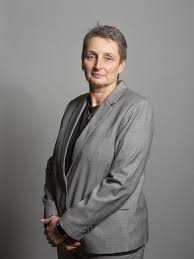
    The speech made by Rachael Maskell, the Labour MP for York Central, in the House of Commons on 16 June 2022.

    I congratulate the hon. Member for Cities of London and Westminster (Nickie Aiken) and my hon. Friend the Member for Westminster North (Ms Buck) on their speeches today. I want to take the debate outside Westminster and highlight the impact this issue is having elsewhere in the country.

    Members in all parts of the House know that this industry is growing at a rapid pace in tourist destinations. York, the most visited place outside London, is certainly experiencing many of the problems that have been described this afternoon, and on a matching scale, although our city is slightly smaller. We know that in York there are about 2,000 Airbnbs already, predominantly in my constituency, but they are increasingly becoming an issue on the outskirts of the city and in the more rural villages. In the city centre, we often find streets—family streets—where there are five or six Airbnbs, and it is having a serious impact. Everywhere I go across my constituency, I have constituents come up to me to talk about Airbnbs and holiday lets—or, as they are increasingly being called, party houses. They are not in keeping with the character of our city. There is a clash of cultures between families, who just want to get on with everyday living, and the predominantly weekend culture of parties, which in the summer never stops.

    We are not seeing this just in existing properties in the city. Increasingly, we are seeing it in new developments in York. Developers are putting predominantly luxury accommodation in the city, but many of the properties are being bought as investment assets. That is an issue we all have with what is happening in parts of the property market. Of course, if they are vacant, suddenly the lights go on and people think, “Why don’t we turn this into a short-term holiday let?” We are seeing an increase in that in the new estates.

    I certainly had concerns about this in relation to proposals for the York Central development. It is an incredible development, with 2,500 homes proposed for the site. In my discussions with Homes England, there was a recognition that this could become a party city right in the middle of York, because local people will not be able to afford to live in those luxury homes. They will therefore end up just going straight into the hands of the companies that are running the Airbnbs. Also, the numbers in the new developments go into the Government’s housing numbers, so the Government are ticking off their lists and saying they are achieving their housing targets, but those houses are actually just switching over to become Airbnbs. They are part of what I call the extraction economy—not the shared economy—because people are taking that property and wealth out of our city, and nobody gains. In fact, everybody loses. That is why it is important that the Government get a grip of this now and bring forward the legislation that is needed to regulate this area.

    Ultimately, these are homes that we desperately need. We have all spoken about the shortage of housing in our constituencies, the fact that social housing waiting lists are rising sharply and the availability of property to buy is just not there. Every single time a property comes on to the housing market, in come these owners of Airbnb, cash in hand, hoovering up the properties ahead of people who have saved meticulously for their mortgage. And they are offering over the market price for those properties. I heard of one incident in York where they offered £70,000 more than the market price for the property. As a result, local people were not able to move in. I speak to young couples and families—as we know, people are now much older before they can even think about purchasing a home—and they are saying that they save and save and try to enter the market, but every time they are beaten to the post by people who then turn the properties into Airbnbs.

    Ms Buck

    My hon. Friend has probably seen the advertising—for a while there was advertising on the London underground—saying how much more money people could get by taking advantage of short-term lets. This is creating a powerful incentive to do exactly what she is describing.

    Rachael Maskell

    My hon. Friend is absolutely right.

    The average rental price in York is extortionate—not compared with London but certainly compared with elsewhere in the north—at £945 a month for private rented accommodation. On Airbnb, that same property could go for £700 for a weekend. As a result we are seeing a frenzy among landlords who are saying, “Actually, I could get a lot more money out of an Airbnb property, so I’m going to issue a section 21 notice, evict my current tenants and then turn the property over to an Airbnb.” As a student city, we have more than 40,000 students in York, but many of the homes in the student areas are also turning themselves over to Airbnb. This means that we have a shortage of student accommodation as well as local people not being able to get into housing. The impact on the housing in the city is escalating.

    Some of these places are being marketed not just as holiday lets; they are deliberately being marketed for stage and hen parties. This is becoming an issue that impacts not only on our city centre, because those parties are being taken out into the community. I have one cul-de-sac in the Groves in York where there are three of these Airbnbs in a little courtyard, and they advertise for 30 people to go and spend their weekend there. It is at the end of a family residential street, and people in my community have told me that the noise goes on all night. These are working people; they are working shifts and have jobs to do. Their children are going to school and perhaps sitting exams at this time of year, but they are having sleepless nights. On top of that, they are trying to shelter their children from the profane language. People are half-clad in the streets. Women do not feel safe down some of the back alleys in the Groves, where a lot of children play. It is turning these wonderful little communities in York into nightmares.

    People do not feel safe in their own home anymore. In fact, I heard from one family who put their house on the market and moved out of the city, which was the only way they could escape the party houses that were increasingly in their area. They wrote to me about the impact it was having.

    With the increase in Airbnbs, we are seeing the disappearance of York’s ability to house its own local community, which is having a severe impact on the local economy. We have heard about the tourism sector, but traditional B&Bs are losing out because they follow all the rules, pay their duty, follow health and safety and all the other things. They are in direct competition and, of course, they are covering their costs, so they are being pushed out. Guest houses are the same.

    We are therefore seeing deregulation of the whole visitor economy, which does not benefit the location and has serious implications for local businesses. I challenge those who say this is good for the economy, because what we are seeing is an extraction economy. Many people purchasing houses in York are not from York. They are from London and the south-east predominantly, so they are seeing the opportunity as a holiday destination. They have no connection to those communities, so they are taking out of those communities, not feeding into them.

    When I hear the expectation that there is going to be a 30% a year rise in the number of Airbnb properties over the next decade, according to Airbnb’s own research, it fills me with terror, so it is important that we get on top of this issue now. That increase is going to make it far worse, year by year, across our communities, and it will fuel our housing crisis even more, which will give the Minister the biggest headache of all. We are standing up to say we need this to be addressed.

    I know the Minister has an interest in social housing, but we are seeing these people go cash in hand, along the same line as right to buy, and say, “If you buy your home and go through that process, we will be back to give you even more money in exchange for your property.” That is why it needs to be regulated, and regulated tightly.

    Airbnb is having a profound impact on our community and services in the city. This is not particularly thought about, but our economy is now struggling to recruit the people it needs. Airbnb is escalating and fuelling the housing crisis, which is impacting on care workers and NHS staff being able to find property in the city. It is impacting on the hospitality sector. Of course, the people coming to our city often use those services and want hospitality venues to be open, but the sector cannot recruit staff. The people who would have been in those properties cannot afford to live in the city anymore, so they are being pushed out. Airbnb is having a negative impact not just on the housing environment but on the local economy. The deregulated system is not working.

    We have heard about the impact on children and the community. When section 21 notices are issued, children have to leave their school and go elsewhere. That is having a negative impact across the area.

    We have heard about people’s weekends of misery. When Friday comes, they do not know who will come off the train with their trolley bags and wander up the street. They do not know whether they are going to have a peaceful weekend or a party to endure and, of course, the other antisocial behaviour that goes with it. Some of the things I have heard are quite horrific. This is not what our city is about and it is not what my local people want our city to be about in the future. That is why we need to address this.

    As the hon. Member for Cities of London and Westminster mentioned, there is also a loss of local revenue involved here. York is losing about £2 million in council tax, and many of these escape under the bar in terms of being a “small business” so they are not paying small business rates. Across the country we do not have the 90-day limit either, so we are talking about this loss throughout the year, along with the implications it is having. This has escalated in York during the pandemic. York has been seen as this fantastic place, two hours away from London and an amazing city to live in, with good schools and all the rest of it, but people have then realised, “Ah, but it is also a really good destination for staycation.” That has been incredible for our recovery, and I am not knocking it at all, but people have also seen the chance, over the lockdown period and particularly since, to come to invest in Airbnbs. That is why we are seeing this sudden growth in the city, which has taken it by shock and surprise, and has had that negative impact there.

    I know that the Government have been on a path to look at a registration scheme on Airbnbs. I do not knock them for that, but the world has changed rapidly. I just say to them that we need to move on from that now and look at a full licensing scheme. A registration scheme would simply have serious deficiencies. We have heard about the benefits of a licensing scheme in Lisbon, and Scotland is introducing one. I also point the Minister towards what has happened in Nice, which has a stringent licensing scheme, but one that works incredibly well for those residents. A licensing scheme could help local government have sufficiency in resourcing to support this.

    Both hon. Members have mentioned having a different class of housing so that a separate revenue could be charged from that, but we could also look at doubling council tax or even at having a multiplier on council tax, at the local authority’s discretion. This could be one way of looking at how we can build that revenue back into the local area. Of course these people will then pay for those services—currently they are not—such as refuge collection and even parking schemes, which have an impact on areas. We could also limit housing, and we have heard from hon. Members how advantageous that would be to a local area as well. Nice has not only a strict fines regime to deal with significant antisocial behaviour, but the right to remove licences and to grant licences. It is looking at how it can place conditions on licensed properties. There would be real advantage, not in the Government holding those powers, but in giving them to local communities, through their local authority. It would make landlords themselves have more responsibility as well for the properties that they let, including through a third party—an agency—and it would bring in greater controls.

    Finally, let me look at the speed with which we need to bring this in. The Levelling-up and Regeneration Bill is before Parliament, and it talks about opportunities associated with things such as second property reform. As we have heard, for many people we are talking not just about a second property, but a third, fourth and so on. I have heard that some have more than 100 properties; this is a very highly organised industry. It would seem appropriate that the Government could table an amendment or new clause to that Bill to look at this issue and address the matters before us. If we do not act now, the housing issues that the Minister and his team are trying to resolve, which are complex and growing, are going to just get worse and worse. Therefore, I would really welcome more discussion with the Government about how we are going to move this rapidly into legislation to end this nightmare for our residents. Given the number of Members from across the House and their communities that this has an impact on, may I suggest to the Minister that he holds a roundtable with us so that we can discuss these issues at length? I think that across the House we all share the view of what we need to achieve, and I am sure that we can find the right solutions for government and for our communities.


  • Karen Buck – 2022 Speech on the Sharing Economy and Short-Term Letting

    Karen Buck – 2022 Speech on the Sharing Economy and Short-Term Letting

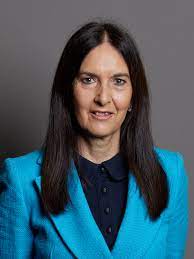
    The speech made by Karen Buck, the Labour MP for Westminster North, in the House of Commons on 16 June 2022.

    I congratulate the hon. Member for Cities of London and Westminster (Nickie Aiken). As the Member for the other part of the borough of Westminster, I apologise for covering some of the same ground in respect of locality.

    Having set up the all-party parliamentary group on the short lets sector, I am conscious that the issues that the hon. Member describes are having an increasing impact on cities, coastal communities and popular tourist areas across the country. Although it is always deeply unedifying to stand up in Parliament and say “I told you so,” I have to say that we told the Government so. During the passage of the Deregulation Act 2015, we warned that the changes allowing the 90-day limit in London would be likely to lead to an explosion in short lets and a very detrimental impact on communities—and that is exactly what has happened.

    I remember saying in debates on the Deregulation Bill and on two subsequent ten-minute rule Bills—the Short and Holiday-Let Accommodation (Notification of Local Authorities) Bill and the Short and Holiday-Let Accommodation (Registration) Bill—that residential communities are being turned into unlicensed and unmanaged branches of the hospitality industry. The hon. Member has made many of the same points; I will not repeat them, but let me very briefly reinforce them.

    As the hon. Member says, nobody is proposing any kind of ban. The sharing economy concept is a strong one. It is a smart and popular idea for people to let out a spare room or let out their home for a couple of weeks when they go on holiday or work abroad: it generates money in communities, generates money for the people who let the properties, and is clearly popular with the people who rent them. The digital economy has created enormous opportunities, and that is one of them.

    However, the implementation has changed fundamentally since the original concept: it is now a highly commercial enterprise, as the figures show. A report in 2020—I have cited it previously, but I cite it again—found that just one sixth of the revenue of Airbnb, which is a major player in the field, came from the kind of home-sharing let that was its original concept. As the hon. Member says, we can track the huge shift to whole-property rentals, which has been very significant in London and across the whole country. Research by Tom Simcock of Edge Hill University has found a 423% increase in lettings by “multi-hosts”, owners of multiple properties. That gives an indication of how deeply and increasingly commercialised the sector is.

    The impact is felt in the loss of residential property; the hon. Member made that point, and I endorse it. The clear indication is that it is financially advantageous to landlords to move out of the lettings market and into the short-let market, where they can make substantially more income and enjoy significant tax advantages in doing so. All over our borough of Westminster, properties where people could once live are being used just for the holiday industry. That has all kinds of impacts on people in housing need, and on communities.

    There is also an impact on the management of antisocial behaviour and nuisance, ranging from noise to rubbish. If people were staying in hotels or in registered hospitality, there would be commercial arrangements for waste collection and they would be making a contribution. None of that applies in this instance.

    This morning, entirely by coincidence, I received an email from a constituent on Harrow Road—not the heart of the west end, but the very north of my constituency, at the poorer end. I was told that five identified properties were now being let as short lets; people were coming and going with their luggage all through the day and night, and it was causing concerns about security. It is not necessarily that people choose to behave badly, or that they are acting in an especially antisocial way, but when people are on holiday they act differently. They do not have the same constraints as residents on the hours they keep or the way they act, and they certainly do not have the same sense of responsibility for security. It causes a great deal of anxiety.

    It has been said, and I will repeat, that local authorities have their hands tied behind their back when it comes to enforcing against short lettings. Finding properties that are legally let under the short let arrangements but have to be acted on when they breach the 90-day rule is asking local authorities—cash-strapped local authorities—to do the almost impossible. They do not know who is letting. They would have to monitor everything to find that out and then be able to prove that the letting exceeded the 90-day limit. It is completely unreasonable to ask them to do that.

    Landlords, particularly the commercial landlords that see the advantages of short let arrangements, are driving a coach and horses through the legislation. This is leading to enormous strains in local communities and a great deal of anger among neighbours, who turn to the local authority to help with enforcement but find that the local authority does not have the capacity to do so. Also, not unreasonably, the hospitality industry, which has had a terrible couple of years with covid, feels that there is not a level playing field, given its members’ responsibilities in terms of health and safety and taxation. They are being undercut, not by individuals letting out a spare room, but by major players in the corporate hospitality sector exploiting a loophole.

    It is essential that the Government wake up to this problem. It is spreading across the country and the implications are profound. The Government can act very quickly, without excessive regulation, just to make sure that people who let out these properties are licensed to do so and that we know who they are. If we know who they are, we are in a better position to act when they breach the rules. We have been asking for this for seven years. It is a cross-party issue—cross-party in the local authority, Westminster, and cross-party in Parliament. The Minister must wake up and act to protect communities and to protect us against the loss of valuable residential property before it is too late.

  • Nickie Aiken – 2022 Speech on the Sharing Economy and Short-Term Letting

    Nickie Aiken – 2022 Speech on the Sharing Economy and Short-Term Letting

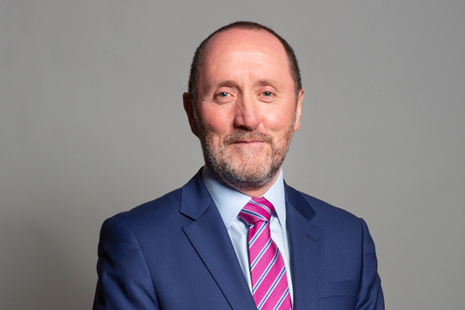
    The speech made by Nickie Aiken, the Conservative MP for the Cities of London and Westminster, in the House of Commons on 16 June 2022.

    I beg to move,

    That this House has considered short-term letting and the sharing economy.

    I have called this debate to once again draw attention to the negative impact on our neighbourhoods up and down the country caused by the abuse of short-term lettings. Short-term lettings are when property is let on a nightly or weekly basis usually for leisure and tourism purposes. We are seeing them pop up on a variety of platforms, including Airbnb, Booking.com, Tripadvisor and Expedia. Since the Deregulation Act 2015, we have seen an increasing number of properties, which would otherwise have been rented out on a long-term basis, being turned into basically holiday accommodation. Between 2015 and 2020, the number of Airbnb listings in London alone grew by 378%. Research by London Councils found that by 2019, there were more than 73,000 listings for short-term lets in London across six of the largest online letting platforms. That is equivalent to one in every 50 homes in the capital.

    Felicity Buchan (Kensington) (Con)

    Does my hon. Friend agree that one issue with short-term lets is that they take housing stock out of the market? I have the neighbouring constituency of Kensington, and in the tourist areas, particularly around the South Kensington museums, there are streets that are almost exclusively Airbnbs. Many of those are one or two-bedroom properties, and that is aggravating the housing crisis because young people who would typically buy those properties simply cannot get access to them.

    Nickie Aiken

    My hon. Friend is absolutely right. With the explosion in the number of short-term lettings, a whole host of problems associated with such lettings have become more widespread across our neighbourhoods. I shall highlight a number of the issues we are seeing, which include increased pressure on housing stock, leading to higher property and rent prices—that is what my hon. Friend referred to. They also include a rise in associated antisocial behaviour, noise complaints and dumped rubbish, and an increasingly unfair playing field in the accommodation sector, which is placing more and more pressure on hotels and private bed-and-breakfast businesses.

    Since coming into force, the Deregulation Act 2015 introduced several changes that were designed to free businesses from the burdens caused by regulation and existing laws, including relaxing planning permission in London for short-term lets. When the Bill was going through Parliament, Westminster City Council predicted that homes would be, en masse, turned into lettings for tourists. We knew that those lettings would soon basically be turned into mini hotels, without any of the oversight or regulation that genuine hotels have to adhere to. That is why it was a relief in some contexts to see short-term lettings in London limited to just 90 nights per year under the Deregulation Act, following a sustained lobbying campaign by Westminster City Council. That was not enough, however, and sadly our worst fears have come to fruition.

    Without the right tools to enforce the Act our biggest concerns have become a reality for many local people, and many landlords involved in short-term lettings are ignoring the law. Research from 2019 estimated that 23% of 11,200 Airbnb listings in London alone were occupied for more than 90 nights in that year. With the number of short-term lettings skyrocketing, it is clear that we need urgently to get a grip of the situation, because it is becoming unsustainable.

    This is obviously not just a London issue. As my hon. Friend the Member for North Devon (Selaine Saxby) recently highlighted, 4,000 homes have come out of private rent in Devon since 2016, and 11,000 have joined the short-term holiday listings. I know from speaking to colleagues across the country that we are seeing that trend up and down the United Kingdom, particularly in places such as Cumbria and the south-west. This issue affects our whole country, and although problems such as strain on housing availability and the cost to local authorities may be the same nationwide, the diverse nature of the issue means that there will be no one-size-fits-all approach to resolving the problem. What we need, in my humble opinion, is for local authorities to be given the powers to do what they feel is right for their unique areas. For example, here in Westminster we need a licensing scheme much like those seen in other countries. Such schemes are generally set at a local level and ensure that standards are adhered to and that the market is not overwhelmed.

    We see key examples around the world. In Lisbon, the city council has implemented containment zones that limit the amount of short-term let accommodation within them. In Barcelona, landlords are required to have their properties inspected and approved before they can be let out. Closer to home, the Scottish Government have legislated for local authorities to introduce a short-term lets licensing scheme by October. It will be interesting to see how that works when it is implemented, and how successful it is.

    While such schemes differ from one another, they all suit their local needs, seeking to balance the sharing economy with the rights and amenity of local residents. That is what we should strive for across the UK, balancing tourism with the desire and need of locals to have a comfortable and quiet neighbourhood.

    We also see examples around the world where that has been taken further. In Atlanta in the United States, a tight licensing regime has been introduced with strict conditions. For example, hosts in that city have to hold a permit and pay an annual $150 fee. They face a $500 fine if a tenant violates city rules. They may have a maximum of two properties, one of which must be the host’s permanent residence. That is probably what we need for London.

    Across the world, we see that there is a full spectrum of examples and solutions, and it is about finding what works best in a local authority area. As it stands, the spirit of the Deregulation Act is not being met. We are seeing not the rise of individuals opening their spare rooms or their homes while they are on holiday, as the Government had hoped would happen under the Act, but a gradual increase in commercial businesses snatching up properties for the short-term letting market. Here in Westminster, 64% of hosts on Airbnb have at least two listings.

    Andy Slaughter (Hammersmith) (Lab)

    The hon. Lady is right to emphasise both the scale and the commercial nature of the problem; a lot of people think it is marginal when, in fact, in some areas it is endemic. Last week, I talked to a local headteacher who said that her school’s intake had been affected by a local mansion flat area changing from being long-term accommodation for homeless families into luxury accommodation with a substantial proportion of short-term lets, changing the character and demographics of the entire area. That is why the Government need to act.

    Nickie Aiken

    I do not often agree with the hon. Gentleman, but I certainly do on this.

    We are aware that, in Westminster and across central London, landlords can often skirt around the 90-night rule by posting their property on multiple sites or re-registering it in a location a few metres away. In turn, I am deeply worried that we are witnessing a hollowing out of central London, as the hon. Member for Hammersmith (Andy Slaughter) referred to regarding his local area, as properties convert all too easily from homes to holiday lets.

    At the start of 2022, the number of properties listed to rent across London was 35% lower than in pre-pandemic times. As I am sure hon. Members will appreciate, the housing market in my constituency and across the capital is already squeezed on both affordability and availability. We currently have over 4,000 households on the Westminster social housing waiting list in the same area that has 7,230 available properties on Airbnb. The average house price in the two cities has risen by £32,000 a year over the past 25 years. The most troubling issue is that, according to SpareRoom, average rents have now risen in the capital by 13% in the last year alone. That is why I find it increasingly frustrating that, while I can easily find plenty of examples of hosts with 50 or even 100 properties available, I cannot find a home to rent on a long-term basis in my constituency in the same areas.

    The dramatic increase in the number of properties converting to the holiday accommodation market and away from the private rented sector is ensuring that people are forced out of central London. It is getting so bad that I fear the only realistic possibility of the young finding a property in central London is by playing Monopoly. I do not mean to be flippant, but it is getting that bad. For those lucky enough to be able to find a property, there is an increasing likelihood that they will still find themselves living close to short-term letting properties, no matter where they are. As I am sure it is for many of my colleagues, that is reflected in my mailbag by constituents who find themselves having to live next door to short-term letting properties.

    Felicity Buchan

    Does my hon. Friend agree that there are other attendant problems with short-term lets, such as antisocial behaviour, properties being taken over essentially for large parties, rubbish being put out on the wrong day and littering the street, and, sometimes, a lack of respect for the neighbourhood?

    Nickie Aiken

    My hon. Friend is absolutely right. One of my constituents from Pimlico who wrote to me recently shares that view:

    “There has repeatedly been antisocial behaviour in the Airbnb-type flats in Tachbrook Street. The residents have no interest in the wellbeing of their neighbours. The flats are without doubt let throughout the year and the 90-day rule is completely ignored.”

    Post-pandemic complaints have increased in my constituency, with noise, rowdy parties, serious overcrowding, dumped rubbish and even sex work occurring within nightly let properties. From Mayfair to Marylebone and from Hyde Park to Covent Garden, no neighbourhood in Westminster is now free from the short-term let blight.

    On the ground, we have seen some pretty clear signals that short-term lets are increasingly causing social damage to our neighbourhoods. A YouGov study from 2019 found that 40% of Londoners felt that such accommodation was having a negative impact on the local sense of community. Worryingly, it also showed that one in five Londoners, when asked, felt that short-term lets had had a negative impact on safety in their local area. If these properties were rented out for just a few days a year, this issue might be manageable. However, as mentioned earlier, we know that is not the case. Local authorities lack the tools necessary to enforce the 90-night rule. As such, complaints are rising and communities are suffering.

    On antisocial behaviour, yes, the police and local authorities have powers to tackle it with antisocial behaviour and noise orders, but we do not always have the information needed to identify those involved. Of course, it is very hard for us to make general statements about what we would or would not think was a good idea, because this is a complex issue, but as I said earlier it is about flexibility. It is about giving local authorities the tools they need to protect their local areas. We have to be practical when it comes to enforcement measures. Right now, what continues to frustrate me, and I know thousands of my constituents, including councillors and officials in my local council, is that enforcement is virtually impossible, particularly when we do not know who is undertaking the antisocial behaviour. The lack of data makes it extremely hard for local authorities to identify them and then begin enforcement action.

    We need a change in the law to allow local authorities to fine landlords of properties that violate the rules, such as those on dumping rubbish. At the moment, responsibility lies with the tenant, not the landlord, even though the tenant will be long gone after having rented the property for a couple of nights—they have dumped the rubbish and they have gone. What we need is exactly what the former leader of Westminster City Council, Councillor Rachael Robathan, called for in response to more than 2,000 breaches of short-term letting rules—namely, to allow councils to go after the landlord rather than the short-term letter. That would help resolve the issue.

    The issue of tax compliance is also of concern. As the home sharing phenomenon becomes more mainstream, an important taxation revenue stream needs to be captured. As it stands, it is possible for landlords to hide their activities from Her Majesty’s Revenue and Customs and to perhaps not tell the truth on their self-assessment forms. If local authorities were able to collect data on what properties are being let out on a short-term basis, HMRC could access that data and ensure that no one was able to avoid paying tax on any money raised.

    In 2018, the Government issued a call for evidence on the role of online platforms in ensuring tax compliance by their users, but there do not appear to have been any major developments since then. Ensuring proper compliance would go some way to levelling up the playing field with other parts of the tourism economy. As highlighted by UK Hospitality:

    “Between the short-term lets, hotel and B&B sectors, a regulatory mismatch has also occurred in terms of health and safety and taxation.”

    I appreciate that there is a degree of self-regulation in the industry, but that is not enough. While hotels and B&B businesses must go through all sorts of checks and regulations to ensure the safety and wellbeing of their guests, the same oversight does not exist for short-term letting. For example, while Airbnb insists on things such as insurance indemnity, proper fire precautions and safety certificates for gas and electricity, I have met Airbnb hosts who have not once been asked by a platform to prove that they meet those requirements. If we were able to collect tax receipts from short-term lets, that could and should help in the enforcement of laws. It is not just about tax collection; we also need to make sure that landlords are on the same playing field as bona fide hotels and B&B businesses.

    I want to make it very clear that I am not against short-term letting. I absolutely recognise the many positives. As an Airbnb user in the past, I have benefited from being able to rent a home while on holiday. Short-term letting has provided and does provide an innovative and imaginative competition to the accommodation industry. However, the bottom line is that those positive impacts are paired with negative impacts, including lower health and safety standards; unfair competition for other hospitality providers; general economic issues such as mixed tax revenues and less availability of long-term rentals; increased rents and house prices; and pricing ordinary local people out of their area’s housing and rental markets. That is happening not just in central London but across the UK. In many cases, neighbourhoods have changed, with issues including antisocial behaviour, overcrowding of properties and transient communities.

    A sustainable approach, hopefully in the form of evidence-based, data-driven regulation and policy making, should address some of those issues. As I said earlier, there is no easy fix, no one-size-fits-all approach, but there are certainly stepping stones that we need to introduce. I hope that the Minister will pay serious attention not just to what I have said but, more importantly, to what we will hear later in this debate from Members of all political parties.

  • Eddie Hughes – 2022 Speech on Fifth Anniversary of Grenfell Tower Fire

    Eddie Hughes – 2022 Speech on Fifth Anniversary of Grenfell Tower Fire

    The speech made by Eddie Hughes, the Parliamentary Under-Secretary of State for Levelling Up, Housing and Communities, in the House of Commons on 16 June 2022.

    I thank right hon. and hon. Members on both sides of the House for their moving and thought-provoking contributions in today’s debate. I know that I speak for all Members when I say that the 72 men, women and children who senselessly lost their lives at Grenfell will never be forgotten. It is entirely right that the House has met again just two days after the fifth anniversary of that national tragedy to honour their memory and to discuss our collective duty to ensure that such a tragedy is never repeated and that no one ever has to go through what residents of Grenfell Tower were forced to go through on that night or what the bereaved and survivors have had to endure over the last few years.

    As a Minister in the Department for Levelling Up, Housing and Communities, I feel an acute responsibility to do the right thing by the Grenfell community, and I know that feeling is shared on both sides of this House and in the other place. For those directly affected by that national tragedy, life has never been, or ever will be, the same again. The tributes paid this week by the survivors and their families to the victims have brought that fact into the sharpest possible light. As Members have rightly highlighted in their moving tributes today, and in last week’s debate led by my right hon. Friend the Secretary of State, the community has consistently shown incredible bravery, resilience and courage in the face of unimaginable loss.

    Until the Grenfell Tower inquiry concludes and the police investigation finishes, the search for justice will continue. Five years on, the bereaved are still waiting for at least some sense of closure from that terrible night. Sir Martin and his counsels have been working diligently in pursuit of the truth, and they have already laid bare the opportunities missed by the Government and others, as well as exposing cut corners and wrongdoing on the part of several other organisations. We now need to ensure that we take seriously all the inquiry’s recommendations when it concludes.

    I reiterate my humble appreciation of the way in which the bereaved and survivors have stoically campaigned for justice and reform. Their dignity and strength continues to inspire us all. They have been let down. No words and no apology could possibly make up for these failings, but I echo the comments made by my right hon. Friend the Secretary of State in the debate last week when he said that we are sorry. For my part, I am sorry.

    We are committed to making things right by fixing the building safety regime that badly failed those at Grenfell on that night through the Building Safety Act, by implementing the toughest and most stringent fire safety standards through the Fire Safety Act, and by putting residents at the heart of a reformed social housing sector through our Social Housing (Regulation) Bill. We are not naive about the scale of the challenges that remain and, as has been rightly pointed out in this debate, we still have a long way to go on several issues.

    I do not want to cover the same ground as last week’s debate, but I will mention some of the comments and contributions that were made today. In congratulating the hon. Member for Leeds East (Richard Burgon) on securing this debate, I acknowledge that he and I agree on almost nothing politically, but we are united in our determination to ensure that a tragic event like Grenfell Tower genuinely never happens again. He called for an annual debate, as did the hon. Member for City of Durham (Mary Kelly Foy), and my understanding is that the Secretary of State committed to that during the debate last week.

    The hon. Member for Hammersmith (Andy Slaughter) asked why the debate did not take place on the anniversary of that terrible event. Clearly, partly, that was because the Grenfell bereaved and survivors could attend the debate last week. They were invited to, and they did—there were two rows of them in the Gallery—and the Secretary of State and I met them before the debate. It would have been inappropriate for us to have it on the same day that they were holding events in other areas to commemorate it.

    Touching briefly on the technical point that the hon. Gentleman made with regard to electrical surveys that will be carried out and whether properties of other tenures will be caught up in that, we are going to consult so that we can understand some of the complexities he described where there are multiple tenures in a single building as to what would be the most appropriate position to take.

    I thank my hon. Friend the Member for Kensington (Felicity Buchan) for her support—I am incredibly grateful to her. I have recently done a lot of engagement with the Secretary of State. We have held a number of town hall meetings giving the opportunity for people to come in, for several hours if necessary, to speak to me and the Secretary of State to discuss their concerns and make their case.

    I thank my hon. Friend the Member for Harwich and North Essex (Sir Bernard Jenkin) for putting on record his recommendations, which I am sure will be given serious consideration.

    Sir Bernard Jenkin

    Will my hon. Friend undertake to arrange a meeting between Keith Conradi, Nick Raynsford and me and the Secretary of State? We have not met the current Secretary of State, and we met a Lords Minister who has now changed, so we feel that we need more engagement with Ministers about this. I would be very grateful if he could undertake to arrange that meeting.

    Eddie Hughes

    I would be very happy to speak to the Secretary of State’s diary secretary on my hon. Friend’s behalf.

    The hon. Member for Rutherglen and Hamilton West (Margaret Ferrier) made an important point about the memorial that may follow on-site. The Grenfell Tower Memorial Commission will ensure that the bereaved, survivors and, indeed, north Kensington residents lead decision making on the long-term future of the site.

    Members have mentioned the pace of justice, and I recognise the importance of that to the families seeking justice who have already had to wait so long. The police, the CPS and the inquiry must rightly remain independent from Government. The police are keeping families updated and over the weekend issued a public update on their progress. It is also important that those affected by the tragedy can fully participate in the inquiry. As such, we have made a fund for legal expenses available to witnesses and to the building safety review’s core participants.

    Of the 46 recommendations made in phase 1 of the report, 15 were directed to the Government. The majority have been addressed by the laying of the Fire Safety (England) Regulations 2022 and by the Building Safety Act. The remainder are being considered by a Home Office consultation that runs until 10 August. I urge all Members to contribute to that, not least because it will include reference to PEEPs—personal emergency evacuation plans—and it would be good to get contributions from Members across the House.

    With regard to the pace of remediation, the building safety reset announced by the Secretary of State in January is galvanising activity across the board. The industry is gearing up to play its part, and over 45 developers have now pledged to remediate unsafe buildings that they developed. We are working rapidly to turn those pledges into legally binding contracts, and our goal is to get these out of the door before summer recess. In many cases, developers who made a pledge are getting on with it, contacting building owners and leaseholders and lining up surveyors to carry out assessments and prioritise work. For the 11-to-18 metre remediation scheme, in signing the pledge, developers have committed to working at pace with Government to finalise arrangements and commence remediation or mitigation work, as necessary, as soon as possible. We will announce further details of the launch of the 11-to-18 metre remediation fund shortly.

    Jeremy Corbyn

    I am interested in what the Minister says about the remedial works being done. What compensation will be made available to people who, as I outlined, have paid unbelievably excessive levels of insurance, through no fault of their own, and are seriously out of pocket and unable to continue doing so?

    Eddie Hughes

    I cannot speak to compensation, but I can say that the Department is in regular touch with the financial services industry to talk to it about the cost of insurance products and to do everything to ensure that it takes a balanced and proportionate approach so that those costs come down.

    On the comments made by the hon. Member for Greenwich and Woolwich (Matthew Pennycook) on the work of the regulator, I ask him to meet the Housing Minister to discuss this in detail, because we are very keen to see progress made on a cross-party basis.

    As a Parliament, we cannot and will not ever forget the events of 14 June 2017. The moving tributes of the past few days commemorating the lives lost and indeed lives shattered have brought home the responsibility for all of us to do right by the victims. I am certain I speak for every Member of the House when I say that we must never go back to where we were before this tragedy. Our job as parliamentarians is to make sure we never do. The magnitude of what happened at Grenfell Tower demands that we all try to find a way to put politics aside, and I believe we are already making progress in that direction.

    When we one day look back at what followed the tragedy, one of the defining parts of the post-Grenfell era will be what we did to replace a broken building safety system with one of the most rigorous and robust building safety regimes in the world. But the job is not done—we know we still have a long way to go—so we must redouble our efforts to finish the job we started and deliver justice for the survivors of the tragedy, forcing the industry to take collective responsibility for the safety defects it created. As Members of this House we can rightly expect that we will all be judged not by our words, but by our actions to fulfil our promise of making sure that everyone lives somewhere safe and secure and that they can be truly proud to call home. That will be our ultimate tribute.

    Richard Burgon

    I thank all hon. and right hon. Members who have contributed to this very important debate. I am glad that the Government have committed to an annual debate on this in Government time.

    I hear the Minister say that he and the Government will take seriously every recommendation from the inquiry, but I would like the Government to commit to implement every single recommendation, not just to take them seriously. I would like the Government to revisit their decision and overturn their rejection of personal evacuation plans. I would like the Government to help all people hit by the cladding crisis and surely, as we have heard from other Members, the cladding companies should pay. We need a commitment that no one in this country will live in a fire-unsafe home, and we do need the urgent implementation of the Hillsborough law, because the duty of candour from public authorities is so important.

    Along with other Members, I was on the very moving memorial walk the other night, and we sensed the unity. I want to pay tribute to Councillor Emma Dent Coad, who has continued to pursue this injustice and advocate for local residents in the community in which she lives.

    I want to finish with two brief quotes. One is from the journalist Peter Apps, who wrote in a recent article:

    “What has emerged is a profoundly depressing portrait of a private sector with a near psychopathic disregard for human life, and a public sector which exists to do little more than serve or imitate it.”

    However, I want the final words of this debate, fittingly, to be from the families, the bereaved and the survivors of Grenfell United, who said:

    “We must pave a new way forward. We must hold those responsible to account.”

  • Matthew Pennycook – 2022 Speech on Fifth Anniversary of Grenfell Tower Fire

    Matthew Pennycook – 2022 Speech on Fifth Anniversary of Grenfell Tower Fire

    The speech made by Matthew Pennycock, the Labour MP for Greenwich and Woolwich, in the House of Commons on 16 June 2022.

    It is a privilege to respond for the Opposition in this important and timely debate. I commend my hon. Friend the Member for Leeds East (Richard Burgon) for securing it and the Backbench Business Committee for granting it. In so doing, they have given the House not only the opportunity to appropriately mark the fifth anniversary of the Grenfell Tower fire, but a chance for us to properly reflect on its aftermath and what could be, but is not yet its legacy.

    It has been an excellent debate, and I thank all those Members who have taken part. We have had a series of incredibly well-informed and powerful contributions. On behalf of those on the Opposition Benches, I put on record once again the admiration we feel for the survivors and the bereaved, and for the wider Grenfell community. In the face of unimaginable loss, their pursuit of justice for their families and neighbours and their dedication to securing wider change command enormous respect.

    The events of 14 June 2017 were, as many have said today, horrific. The fear that the residents of Grenfell Tower must have felt on that night is inconceivable. The loss of 72 innocent men, women and children is something we must never forget. The fire is frequently referred to as a tragedy. I personally have never been convinced that is quite the right word to describe the horror of Grenfell, because labelling it as such implies that it happened not only unexpectedly, but entirely by chance, yet we know that what happened could have been avoided. It could have been avoided if shortcuts were not taken when it came to safety, if the countless reckless and unforgivable decisions made by some of those within the product manufacturing and construction industry were not taken, and if repeated warnings, including those expressed, as so many Members have said, by the residents of Grenfell Tower themselves, had not gone unheeded. But they were, and it is the survivors, the bereaved and the community who must forever live with the consequences.

    Doing so is made all the more difficult by the knowledge that those guilty of wrongdoing have not yet been punished. Many Members have rightly raised that point in the debate. While we can never fully appreciate the grief that those who were directly affected have experienced, I can understand the fury that they must feel as they watch the Grenfell Tower inquiry continue day after day to relentlessly expose a catalogue of malpractice and negligence. While we recognise the need to await the conclusion of the inquiry before it is determined precisely what steps must be taken, I can understand the frustration that they evidently feel—it was palpable on the silent walk on Tuesday—that the prospect of justice feels more distant than ever.

    When it comes to the question of justice, it is our responsibility as Members of this House to recognise that the fire at Grenfell Tower was not simply the result of pernicious industry practice; it was also the product of state failure—the failure of successive Governments in presiding over a deficient regulatory regime and ignoring repeated warnings about the potentially lethal implication of that fact. The Government have a duty to ensure that everyone lives in a safe home. Sadly, while there has undeniably been progress toward that end over the past five years—and a quicker pace of progress over the past nine months, for which I give the Minister and his colleagues due credit—this debate has highlighted the serious concerns that remain.

    Time does not permit me to respond to all the pertinent issues that have been raised during this debate, from the failure of the Government to implement all the recommendations from phase 1 of the inquiry, to the ongoing impact of the building safety crisis on blameless leaseholders in privately owned buildings and on social landlords. I therefore want to use the time I have left to pick up two particular issues raised in the debate that are incredibly important for how we go forward: the functioning of the new building safety regime, which was raised in considerable detail by the hon. Member for Harwich and North Essex (Sir Bernard Jenkin); and the extent to which the wider post-Grenfell building safety crisis has been comprehensively resolved.

    When it comes to the new building safety arrangements, the Building Safety Act comes into force in 12 days’ time, but the practical implementation of the new arrangements is just as important as what the legislation itself provides for, and in that respect, we have real concerns about whether the new regime will be able to function effectively. In particular, we remain unconvinced that the new Building Safety Regulator, which the Act makes responsible for all aspects of the new framework, has what it needs to perform all the complex tasks assigned to it.

    Take the issue of indemnity insurance for approved inspectors. The Minister will be aware that as a consequence of a late Government amendment to the Bill, the current Government-approved scheme comes to an end next month, yet there is no sign of an appropriate alternative arrangement being put in place to protect the public and the public interest. Indemnity insurance may seem like an incredibly technical matter, but it is nevertheless integral to the proper functioning of the new regime, and on this and a number of other pressing issues it simply is not good enough for the Government to pass the buck to the new regulator without providing it with the necessary support, as is clearly the case.

    The Government will have to do more in the months ahead to ensure that the regulator can carry out its functions effectively, not least because the second phase of the Grenfell inquiry will almost certainly produce recommendations that place additional pressures on it. When he responds, can the Minister update the House on what more his Department is prepared to do to assist the regulator to discharge the duties the 2022 Act places on it?

    Sir Bernard Jenkin

    I would go further than the hon. Member. The concept behind the architecture in the Building Safety Act is still not adequate. There are conflicts of interest for building control surveyors, and there is the complete lacuna of independent incident investigation. Would he undertake to allow Nick Raynsford, Keith Conradi and me to come and brief the Opposition Front-Bench team on this matter, so that they understand our submission to the Grenfell inquiry fully?

    Matthew Pennycook

    I am more than happy to meet the hon. Member and the other individuals he cites. I agree that there are gaps and deficiencies in the new regime, and I agree in particular that there is a conflict of interest with the Health and Safety Executive being the body that investigates major incidents. If those incidents were in in-scope buildings, it would be investigating the regulator that sits inside it, but there are also conflicts in building control, as he rightly raises.

    When it comes to the wider building safety crisis, alongside its impact on blameless leaseholders, the overall pace of remediation is arguably the most pressing concern we face. It is agonisingly slow. In the debate that took place last week on social housing and building safety, the Secretary of State openly admitted what has been patently obvious for some time to any Member dealing with cladding casework, namely that the building safety fund

    “has not been discharging funds at the rate, at the pace and in the way that it should”.—[Official Report, 9 June 2022; Vol. 715, c. 974.]

    Despite Members from across the House having repeatedly expressed concerns about that fact with Ministers over a considerable time, little has seemingly been done to expedite the processing of applications.

    The result is that of the 3,462 non-ACM-clad privately owned buildings over 18 metres that have made applications to the fund, remediation works have begun on only 259 and have been completed on just 30. Can the Minister tell us what is being done to expedite decisions on those applications not yet determined? As one would expect, given that it was established earlier and its scope is far more limited, better progress has been made in remediating ACM-clad buildings via the building safety programme, with 78% having been completed, but five years on from the Grenfell fire, how can it be the case that 55 residential buildings still have deadly Grenfell-style ACM cladding on them, and 16 of those have not even begun to remove or replace it?

    Of course, in both those cases, the figures I have cited relate only to high-rise buildings over 18 meters. By its own estimate and published figures, the Department believes that there are likely to be between 6,220 and 8,890 mid-rise residential buildings that require full or partial remediation or mitigation to alleviate life safety fire risks. I suspect that the real numbers are far higher.

    The bottom line is that if the Government do not accelerate markedly the pace of remediation across the board, we are likely to find ourselves marking the 10th or even 15th anniversary of the Grenfell fire while still bemoaning the fact that some unsafe buildings require fixing. It is essential that the Government continue to be urged to address those failures and the others that have been raised in the debate, because honouring the lives of the 72 involves not just commemoration, but the building of a fitting legacy, as other hon. Members have said.

    As Grenfell United made clear in the statement it released on Tuesday to mark the fifth anniversary, the survivors, the bereaved and the community want those who were lost to be remembered not for what happened, but for what changed. Not enough has changed over the last five years and it is beholden on the Government to go faster and, in many cases, further so that everyone has a secure, decent, affordable and safe home in which to live.

  • Mhairi Black – 2022 Speech on Fifth Anniversary of Grenfell Tower Fire

    Mhairi Black – 2022 Speech on Fifth Anniversary of Grenfell Tower Fire

    The speech made by Mhairi Black, the SNP MP for Paisley and Renfrewshire South, in the House of Commons on 16 June 2022.

    I start by echoing the sentiments of everybody in this debate. Everyone has spoken respectfully and it has been quite humbling to sit and listen to the memories of people, and I am not just thinking of the survivors themselves.

    The truth is that the inquiry so far makes really quite difficult reading, because it lays bare the level of incompetence, cronyism and indifference shown at both a corporate and governmental level. It is becoming clear that the manufacturers who made the cladding knew it was flammable, but ignored the tests proving it. There are claims that fire tests were rigged to look better and texts from employees seemingly openly joking about the mistruths their companies told. Overall, the inquiry is littered with evidence of a complete lack of knowledge, experience and regard for safety among those responsible for the tower’s refurbishment.

    As if residents living in a highly flammable building was not bad enough, we now also know that the organisation responsible for maintaining the building also utterly failed in its duty to do so. With a backlog of hundreds of incomplete maintenance jobs arising specifically from fire risk, it failed to repair and inspect fire doors. As a result, on that fateful night, smoke and fire ran rampant throughout the place.

    For years, residents repeatedly complained about how unfit the building was, and specifically about the risks of fires. Yet they were ignored and palmed off time and again. It has been said by a few hon. Members, particularly the hon. Members for Hammersmith (Andy Slaughter) and for City of Durham (Mary Kelly Foy), and by the survivors themselves, that had the residents been majority white and wealthy the response would have been completely different—and they are absolutely right. The fact that that is held as an open fact that everyone is aware of, whether we talk about it or not, shows just how deeply embedded the problem is.

    As the hon. Member for Westminster North (Ms Buck) said, the treatment of survivors after the disaster is grotesque in itself. At every single stage, from when the fire first started right through the five years until now, those people have been failed at every single turn by the very people who should be helping them.

    The reason often given, which is quoted throughout the inquiry, is cutting costs; I think it was the hon. Member for City of Durham who made that point. Time and again, we see the company saying that flammable material was used because it was cheaper—it was to cut costs. Because of cost cutting, the council inspector responsible for ensuring the safety of the project had 130 other projects to keep an eye on at the same time. Our emergency services are stretched beyond their limit in the name of cutting costs.

    If someone told me that this fire happened in 1917, and that we were here as a memorial to remember the tragedy that instigated health and safety laws, I could believe that—but it did not. It happened in 2017. We are supposed to have health and safety. We are supposed to have standards. Yet, five years on, it seems that nobody, particularly in Government, is actually that bothered by it. There has been no accountability, and the companies are still receiving profits from this entire saga.

    Right now, we have half a million people still living in a building with some form of unsafe cladding. Officials still do not know how many buildings of four storeys or more could be at risk. The Government are yet to implement the majority of the recommendations from phase 1 of the inquiry, and as we have heard they have already rejected the idea that building owners should be responsible for evacuation plans for disabled people.

    While I accept, and I truly do, the warm wishes and the real desire to never see this kind of tragedy happen again—I do appreciate the sentiment—no matter how well-intentioned they are, words and platitudes do absolutely nothing. This tragedy started long before any fire. As the hon. Member for Hammersmith has said, if we are to be serious about this, and if we are to respect those who lost their lives, what is required is action, because it is action that makes the difference. We should take that action, learn from history, as we are supposed to, and reflect and respond, because otherwise—I agree with the hon. Member—as things stand, I fear there is every chance this will happen again.

  • Margaret Ferrier – 2022 Speech on Fifth Anniversary of Grenfell Tower Fire

    Margaret Ferrier – 2022 Speech on Fifth Anniversary of Grenfell Tower Fire

    The speech made by Margaret Ferrier, the Independent MP for Rutherglen and Hamilton West, in the House of Commons on 16 June 2022.

    I congratulate the hon. Member for Leeds East (Richard Burgon) on securing today’s debate and on circulating the briefings to help ensure that Members were well prepared to speak.

    Tuesday marked five years since the tragedy at Grenfell Tower, and I want, first and foremost, to pay tribute to the 72 people whose lives were lost—men, women and children who were taken from their family, friends and neighbours far too soon and in the worst way. For those who knew them and loved them, their grief will never leave them. The trauma suffered by the survivors also weighs heavy here today. I cannot even begin to imagine how difficult this anniversary is for them every year, with the painful memories and emotions with which they have to live. On this anniversary, I have been keeping the survivors, the victims and their loved ones in my thoughts, and I am sure that the people of Rutherglen and Hamilton West have been doing the same.

    What is so striking about the events of 14 June 2017 is the way that it resonated with so many of us, and the way that it still does today, half a decade on. London immediately entered a collective mourning for its lost residents. The entire United Kingdom mourned, and, as inquiries and investigations began, we all realised that the UK was sitting on a ticking time bomb. The disaster could have happened in any number of similar buildings across the nation.

    Late last year, Channel 4 aired a documentary on the events at Grenfell, which was deeply emotional. I spoke in Westminster Hall not long after it aired, and I will reiterate today one of the key messages that I took away from the programme. It was desperately sad to understand that residents in Grenfell Tower felt that this had happened precisely because they were living in social housing.

    They felt unseen and unheard, overlooked until the very worst happened, because of the outdated stigma that exists around council housing and the people who might live there. Having learned what we now know, the fact that it was social housing was a huge contributing factor in why costs were cut and existing concerns were not addressed.

    As I have said before, social housing is one of the great privileges of living in the UK and it should see investment reflective of that. No one should have to live in a home with potential safety risks just because it is a council property. While the Building Safety Act is a necessary milestone in improving the building safety system, the job is not done. There is work still to do and, for so many, justice to be done.

    Grenfell Tower and the surrounding community were just like many areas of London and indeed the UK: dynamic, talented, culturally diverse and economically deprived. As Imran Khan pointed out at the Westminster Abbey memorial this week, 85% of those who died that night were people of colour. That is not an accident or coincidence; it is symbolic of the many levels of discrimination that the UK still grapples with. It is important to recognise that fact, to think about all the reasons behind it and to acknowledge it so that we do not see it repeated.

    Imran Khan also said that many of the survivors and the families of victims have told him personally they have little faith in the public inquiry or the political appetite to act on its findings. They despair at the inquiry’s reluctance to face head-on so many aspects of this tragedy that are crucial to understanding what happened: the impact of race, class and disability. Even that service at Westminster Abbey faced criticism from some families of the victims for its lack of inclusivity of families from different cultures or faiths.

    On Monday, The Times published a short note, penned by Natasha Elcock of Grenfell United, Kamran Mallick of Disability Rights UK, and Sarah Rennie and Georgie Hulme of CladDAG, in which they highlighted that 40% of disabled residents died that night. None had evacuation plans. The note pointed to the Government’s refusal to place a legal duty on building owners to provide personal emergency evacuation plans for disabled residents following the inquiry. That shows lack of regard for disabled people. What message does that send?

    I hope the Minister will respond to that point in his closing speech, and I hope that it will be a substantial response. This is 2022, and the world has moved on from the times when a disabled person was seen as less important. They are just as entitled to respect as anyone else, and to peace of mind in the safety of their homes.

    Grenfell Tower still stands, a looming presence, a husk of the building it once was both physically and sentimentally. It represents something much larger than its physical size—the ignored red flags and warning signs predating the tragedy by years, the awfulness of that summer night in 2017, and the inequality and injustice that led to the fire.

    The failure to look at similar tragedies and learn from them is one of the hardest pills to swallow. In fire after fire, we know that cladding was the contributing factor. The Garnock Court fire in Irvine in 1999 was a moment of realisation in Scotland and led to the immediate removal of that cladding on all buildings. There were also the fires in Knowsley Heights in Merseyside in 1991 and Lakanal House in London in 2009. The all-party parliamentary group on fire safety and rescue raised concerns in this area for years with a number of Ministers, but they fell on deaf ears.

    I take this opportunity to pay tribute to our late colleague and chair of the APPG Sir David Amess, who was a vocal advocate for fire safety and championed the cause regularly in this Chamber. The APPG, of which I am a co-vice chair and which is chaired by the hon. Member for Harrow East (Bob Blackman), has today provided a statement setting out its position on current policy. I hope the Government will take note of the points made and consider them closely.

    Nothing will ever bring back those lost. Nothing will ever erase the pain for those who loved them. But the Government cannot ever allow this to happen again. Whatever recommendations are made, they must be implemented whatever the cost. In memory of the 72 victims of Grenfell Tower, whatever happens to the building now must be agreed with the survivors and the bereaved. It should be a fitting tribute, a memorial that keeps in clear focus the events of that dreadful night so that it is never, ever forgotten.

  • Kate Osborne – 2022 Speech on Fifth Anniversary of Grenfell Tower Fire

    Kate Osborne – 2022 Speech on Fifth Anniversary of Grenfell Tower Fire

    The speech made by Kate Osborne, the Labour MP for Jarrow, in the House of Commons on 16 June 2022.

    It is always a pleasure to follow my right hon. Friend the Member for Islington North (Jeremy Corbyn). I congratulate my hon. Friend the Member for Leeds East (Richard Burgon) on securing this debate and extend my welcome to Emma Dent Coad, who I know is in the Public Gallery today.

    I wish to open my contribution by paying tribute to the family and friends of the victims and survivors of the Grenfell Tower fire, the residents of north Kensington and members of the emergency services.

    This week, as we know, marks five years since this horrific event—one of the worst disasters in modern times. The disaster unfolded in north Kensington and left the community traumatised and 72 people dead. We need truth and accountability to ensure justice for the 72 people who tragically died five years ago, and their families.

    As with many of this Government’s policies, their response showed the disregard that they have for working class lives. We should never forget that the right hon. Member for North East Somerset (Mr Rees-Mogg) accused the 72 people who died at Grenfell of lacking common sense. The Grenfell Tower fire shows the way that working class communities are treated in this country. Residents had warned about health and safety issues for years, and were ignored. Grenfell Tower would not have happened to wealthy Londoners. It happened to mainly migrant and black Londoners and now, five years on, we have seen no accountability from those responsible for this horrific tragedy—or to call it what it was, social murder.

    In the five years since Grenfell, the chief executives of the four biggest building companies linked to the fire have collectively received £50 million in pay, bonuses, shares and dividends—a point that was also made by my hon. Friend the Member for Hammersmith (Andy Slaughter)—yet the people and families who still live in buildings with flammable cladding are being asked to pay for its removal themselves. That cannot be right. This Government are failing to protect people. Their own statistics show that less than 1% of those who have applied to the Government’s 2020 building safety fund for buildings 18 metres or higher have had their dangerous cladding removed. That is not just dangerous, but a disgraceful indictment of this Government. This disaster has shown us, in the worst possible way, the deadly nature of Britain’s housing stock—a housing stock built against a backdrop of deregulation, where a culture of chasing profits and cutting corners was, and still is, prioritised over building safety and people’s lives.

    In this place today, we have to question how such a disaster was allowed to unfold, and remind ourselves that political rhetoric such as “cutting red tape” has real world consequences. Over the past 40 years, the dominant ideology of deregulation and allowing market forces to decide what is in the best interests of this country has not worked, with devastating consequences. At the forefront of this economic failure is the housing sector, with the fire at Grenfell Tower being the worst example of what happens when the interests of the market are put first and people’s lives a distant second. This is a rotten political culture that puts profit over people, that outsources work to companies that carry out these deadly construction decisions without oversight, that has a Government who are slashing local authority budgets, making them less able to monitor rogue landlords and homes that are unfit to live in, and that forces cuts on our emergency services. It is this rotten culture that leads to disasters like the Grenfell Tower fire.

    I stand with the FBU in its call for the Grenfell inquiry to recommend reversing the disastrous deregulation that led to this fire, and insist on investment in our fire and rescue service and the implementation of the recommendations that have already been made. I also stand with the FBU and the victims and survivors in their call for contractors and senior politicians to be held accountable for the part that they played.

    In the face of the injustice and struggle that has besieged the survivors and the family and friends of the victims at Grenfell Tower and the wider north Kensington community, I would like to pass on from the people of the Jarrow constituency our solidarity in their fight for justice. History will remember your strength and determination to make sure that such a disaster can never happen again.

  • Jeremy Corbyn – 2022 Speech on Fifth Anniversary of Grenfell Tower Fire

    Jeremy Corbyn – 2022 Speech on Fifth Anniversary of Grenfell Tower Fire

    The speech made by Jeremy Corbyn, the Independent MP for Islington North, in the House of Commons on 16 June 2022.

    I welcome this debate and the work done by many Members of Parliament to bring it forward and by the hon. Member for Leeds East (Richard Burgon) in particular to secure it. We had a debate in Government time in 2019, after the general election had been announced, and the Prime Minister spoke for the Government on the issue of Grenfell; it seems a bit strange that we now have to rely on Back-Bench Members to get a debate on the fifth anniversary of Grenfell. This debate should have been held in Government time.

    The fire was obviously appalling in every conceivable way. I went to Grenfell the day after the fire and met many of the firefighters and others who had risked everything to try to save life. Their trauma was palpable, as was the trauma of police officers, local people and many other community groups that, as my friends have pointed out, came forward to help and support people and to provide food and comfort for them. The horror has not gone away. The trauma of losing loved ones—children, parents—has not gone away and will never go away. We should pay tribute to all those who did so much to help and provide support.

    In particular, we should pay tribute to the firefighters who risked everything to try to save life. I remember just like it was two minutes ago their telling me, “We work to save life; it is not our job to carry dead bodies out of buildings.” They knew they had to do it and they did it. I have been on a number of the silent walks, and it was interesting that at the walk on Tuesday evening the silence was broken, as we walked under the bridge in Ladbroke Grove, to cheer and applaud the firefighters for the work they have done. That was absolutely the right thing to do because the firefighters are the absolute heroes of the occasion.

    Tuesday’s silent walk was silent, dignified and very respectful, and it was very moving, for that and many other reasons. But Ministers and local authorities should not take that silence as some kind of consent to what has happened. Underneath that silence there was a wave of anger through the crowd. Five years on, nobody has been prosecuted. Five years on, people are still suffering the trauma. Five years on, people feel they have not had the support that they should have had. The speeches at the end of the silent march indicated all that. People from Grenfell United spoke, but I think the most powerful speech was by Lowkey—he is from the area, in the area, of the area and part of the area—who gave the strong message that the people of Grenfell will not tolerate another five years of silent marches and waiting for something to happen.

    The only regulation that appears to have come out—the one that deals with those with disabilities—has not been properly implemented. Let me quote from an article written by Emma Dent Coad, the former Member of Parliament for Kensington. We should thank her for the huge amount of work that she did, just a few weeks after being elected to this place, to represent her people. Now, as a councillor and leader of the Labour group on Kensington and Chelsea London Borough Council, she is still doing great work. She wrote in Tribune that

    “the Fire Brigades Union have serious concerns about the government’s refusal to implement the Grenfell Tower Inquiry Phase 1 recommendations in relation to Personal Emergency Evacuation Plans”.

    She went on to say that it appears that somebody thinks people with disabilities are “a nuisance” that would get in the way of dealing with a fire rescue. A disproportionate number of people with disabilities died in Grenfell Tower. Saving life has to be an absolute priority, and those with mobility problems should have the highest possible priority in being helped and saved.

    I am sure that, eventually, the inquiry will show the many failings of the Royal Borough of Kensington and Chelsea, but I hope it will also recognise the strength of the community support that, as other Members have pointed out, came from churches, synagogues, mosques and temples. All came and did everything they could to provide support.

    After Grenfell, there were concerns throughout the country about flammable cladding around buildings. I am sure that every Member of this House has been contacted by residents who live in high-rise blocks wishing to express their concerns. My own local authority immediately inspected every single block and building in the borough and took remedial action where it was required on local authority-owned property. Generally speaking, across the country the response of local government to the cladding dangers has been far better and far more efficient than that of the private sector, and has shown far more concern about it.

    Many people in this country are now either very frightened or very frustrated by the situation in which they find themselves. As the hon. Member for Leeds East pointed out, 10,000 buildings around the country have cladding that needs to be dealt with. Many people live in private sector leasehold or shared ownership properties and thought they had bought or moved into a place that was safe, but the regulations now indicate that it is not. As a result, they are being saddled with very large bills and cannot move on, move out or do anything else. The Government seem incapable, unable or unwilling to bring some comfort to those people’s lives.

    I have in my constituency many fairly new developments where the cladding has been deemed unsafe. It was not deemed unsafe when the buildings were constructed, but it now is. Let me quote a letter from residents who live in Drayton Park in my constituency:

    “We need your support to push the developer Galliard homes to carry out what they have recently pledged the government to do in terms of removing inflammable materials and providing us with the EWS1 fire safety certificate. They have not confirmed to us what exactly they are going to do”.

    The letter goes on to point out that the insurance costs for the whole building have increased from £81,084 in 2016-17—pre-Grenfell—to £233,367 in 2021-22 and now £403,000 for 2022-23. The fire insurance for the individual writing on behalf of the residents has gone up to £600 per year. He cannot afford that and he cannot afford to remortgage, either. He is not alone in feeling completely stuck because of the situation he is in through no fault of his own and which is not of his own making.

    At the very least, we require Government action to deal with the issue of dangerous cladding on buildings and, if necessary, to pay for it and get the money back from the developers, the builders or the owners of the freehold, as appropriate. The worst thing is not to be able to give some comfort and security to people who live in those buildings.

    I spent some time in another building called Highbury Gardens, where the same issue has arisen. Many young people who moved in, bought leases on those flats and had children now want to move. They want a bigger place—they have more children and so on. That is all part of normal life, but those people are completely and utterly stuck. They cannot sub-let their flat. They cannot rent it. They cannot move. They cannot do anything, and this has gone on and on and on. Meanwhile, their insurance costs have become very, very high indeed.

    I hope that this debate will serve as an opportunity. I look forward to the Minister’s reply in which he can bring both some news for us on the progress of the Grenfell inquiry and what will come out of that, and some comfort to those people living in blocks of flats where, apparently, there is dangerous cladding.

    I will conclude by quoting from Emma Dent Coad’s article that was published in Tribune on the anniversary of Grenfell. She said:

    “While we suffer under a government with zero strategic vision, or indeed any vision whatsoever aside from its own survival, we must work towards a future where specialisms, professional organisations and industry do not compete, but work together positively. Only by listening to each other, between those categories”,

    can we look at the failure of fire safety

    “and the ongoing neglect of people with disabilities and social housing residents”.

    Surely, if anything, Grenfell was a wake-up call to the two Britains that exist—those who have, and those who live in social housing that is badly maintained, not very well looked after and badly designed, who are the ones who have suffered.

    The silent walk for Grenfell shows the unity of a community of people of all backgrounds, all ethnic groups and all languages coming together, wanting to see real justice within our society. We owe it to them. I do not want to be here in five years’ time, on the 10th anniversary of Grenfell, and say that we are going through the same thing. I do not think that there will be silent walks for another five years. By that time, people will be extremely angry, and those walks will become extremely loud and very noisy. Do not underestimate the anger and the frustration of the people of Grenfell for the way that they were treated then and for what has happened to them since.

  • Andy Slaughter – 2022 Speech on Fifth Anniversary of Grenfell Tower Fire

    Andy Slaughter – 2022 Speech on Fifth Anniversary of Grenfell Tower Fire

    The speech made by Andy Slaughter, the Labour MP for Hammersmith, in the House of Commons on 16 June 2022.

    When I think of Grenfell, which I often do, I think first of the people who died; not just that they died—72 people, including 18 children—but how they died. I forced myself to read the accounts of what happened—the phone calls made that night, the people waiting for rescue that never came. It is harrowing. They are well documented, partly through the inquiry and partly through what the families themselves have done. I cannot look at the pictures of the building in flames, but nevertheless I cannot get them out of my head because they were everywhere when the fire happened.

    Next, I think of all the thousands of people whose lives were changed by the fire: the survivors and their families, and the wider community. It was a very mixed community in Grenfell, with many people of middle eastern and north African descent, often second and third generation, who had settled in the area and had wider families not only across Kensington but in my constituency of Hammersmith and that of my hon. Friend the Member for Westminster North (Ms Buck), who spoke so well earlier. These are big, close communities and this has had an effect on the whole area, and indeed the whole of London and beyond.

    I also think of the scandal of the negligence that has been revealed, in its infinite complexity, leading up to this one event. The breadth and depth of the mistakes that were made and the things that went wrong are affecting hundreds of thousands, if not millions, of people across this country. Too many people have insulted all these groups of people by the way in which they have responded over the last five years. That includes the Government, the building industry and other industries involved, local authorities and other social landlords, and private landlords. Everybody has failed on a catastrophic level by causing the problems that now have to be dealt with, but the Government bear a particular responsibility, not only because they created the climate that enabled much of this negligence to happen but because they have not stepped up to the plate in tackling it.

    When I say that people have been insulted, I mean, for example, why did we not have a full-day debate in Government time on the anniversary? I pay tribute to my hon. Friend the Member for Leeds East (Richard Burgon) for securing this debate, but it is a Backbench Business debate on a Thursday afternoon, and I think that a full-day debate on the anniversary is the very least that could have been done. People have also been insulted by the response in terms of rehousing—or failure to rehouse—people from Grenfell and the surrounding damaged properties. People have been waiting for years in temporary accommodation or hotels. Other examples include the lack of a proper memorial and the pace at which the inquiry has gone. None of this shows respect, in my view, and at the end of it, people have not been held to account.

    Also, we have not what I would call a permissive response from the Government, and that is what I want to spend most of my speech talking about. The Government have been asking experts to tell them the full extent of the problems, and then responding. Every step of the way, everything has had to be dragged out, whether it is money, concessions or legislation, in order to get only a very little distance down the road to where we need to be. Let me just run through some of those issues on which we are failing.

    We know a lot about cladding and insulation, but determining the types of cladding that have been banned—whether they have been banned in the sense of being removed from existing buildings or not being allowed to be put on to new buildings—and what types of buildings are affected has been done in a very slow and erratic manner, and the most recent changes are pretty de minimis, frankly. The Government have now decided that hotels, hostels and boarding houses over 18 metres should be included in the ban, but what about residential and other buildings that are under 18 metres—and indeed, under 11 metres? What about other buildings that might be at risk, possibly because of their function or because of the people who live in them or go to school in them, such as hospitals or hotels? There is no comprehensive response.

    Sir Bernard Jenkin

    The hon. Gentleman is completely right in what he is saying. The 18-metre limit is a completely arbitrary distinction. Far more people die in fires in low-rise buildings, especially houses of multiple occupation, than in high-rise buildings. The 18-metre limit is a media-driven preoccupation, and I could even say that the preoccupation with cladding is a media-driven preoccupation. This whole process has been driven by public pressure, not real risk assessment, which is what we need. That is why we are proposing the reform of building control.

    Andy Slaughter

    I very much thank the hon. Gentleman for his intervention; he has put it very clearly and succinctly. I started with cladding and insulation—I have quite a long list—because that is where we have seen some activity. As I said, it is not the correct activity and it has not been done quickly, comprehensively or logically enough, but there has been a focus on cladding, then on cladding and insulation, and then on other matters that relate to cladding. It has spread out very gradually and slowly from there, but I just make the point that when we drill down, we find that there is still a long way to go, and it is impossible not to conclude that the reasons for that are partly financial and partly that the Government are overwhelmed and do not have the support they need.

    Sir Bernard Jenkin

    I thank the hon. Gentleman for giving way again. I guarantee that owing to the panic to designate certain buildings unsafe because of their cladding, a vast amount of cladding has been removed, at vast expense, that it was probably not necessary to remove, perhaps because it was installed differently or it did not have an air gap or it was associated with flammable windows. There are all kinds of reasons that have not been taken into account because there was a blanket categorisation of cladding and height. That was understandable very early in the crisis, but it is not understandable five years on.

    Andy Slaughter

    Again, I entirely agree. Every month, more comes to light. That is true in my constituency, as I am sure it is in other Members’ constituencies. I am dealing with one case at the moment where the cladding is not flammable but there are no fire breaks behind it. That cladding still has to come down, at huge cost. These things are interrelated. The solutions that have been suggested are really inadequate. We are an outlier—in a bad way—in terms of international practice, because the standards that we were enforcing and those that we are now enforcing are not of the best.

    Another example is the design of buildings. It is only in the last few weeks or months that the issue of single staircases in new build high-rise blocks has really taken hold, and planning authorities have begun to look at that. Directly abutting Grenfell Tower and the Lancaster West estate in Kensington and Chelsea are my constituency and two major opportunity areas: the White City opportunity area and the Old Oak and Park Royal Development Corporation. I mention that because high-rise buildings are mushrooming across that area. How high are they? In the Old Oak and Park Royal Development Corporation area, which is just outside my constituency to the west, in the constituency of my hon. Friend the Member for Ealing Central and Acton (Dr Huq), there is one 55-storey block already being built and three more in planning at the moment. So four buildings over 50 storeys high with a single staircase are being planned.

    In my constituency, there were similar applications for 46-storey blocks, and I am pleased to say that some of those developers are now lowering the heights, perhaps by 10 storeys, and putting in additional staircases. But this has involved catching things in the nick of time, and some single staircase blocks are still being built now. Why is this important? It is important because of the failure of the stay-put policy. It is not just a question of design and how the buildings are constructed. Almost every high-rise residential building in the UK in recent decades has been built on the basis of the stay-put policy.

    Office buildings with more than five storeys are required to have a second staircase, but a 55-storey residential block can be built with a single staircase because we rely on stay-put. Well, stay-put is undoubtedly a cause of the number of fatalities at Grenfell. More pragmatically, people will not stay put any more—I have encountered this with fires in my constituency since Grenfell—and I do not blame them. If we do not have a stay-put policy, we need evacuation plans, we probably need alarm systems and we definitely need a second staircase if we are to evacuate buildings. The excuse for having a single staircase is that everyone will stay in their flat while the fire service deals with the issue. Sometimes that works, but who would now rely on it working?

    Personal emergency evacuation plans have been in the news again recently. They simply are not being done, and the Government do not intend to implement them. Yet, as the Mayor of London said in his briefing, 41% of disabled people in Grenfell Tower died in the fire.

    Jeremy Corbyn (Islington North) (Ind)

    I am alarmed by what my hon. Friend says about a 55-storey building having a single staircase, which I believe would make it impossible both to fight a fire and get people out. Why was the building given permission, and who authorised it? Was there a fire assessment in advance of permission being granted?

    Andy Slaughter

    Most of these buildings are in the planning process, and some have been withdrawn and resubmitted, as I hope is the case with this one. Fifty-five storeys and a single staircase is the proposal as things stand. There are many other examples across west London and the country, not necessarily of that height but 40, 30 or even 20 storeys. Grenfell Tower had 24 storeys, so we are talking about buildings of more than twice that size.

    Marsha De Cordova

    My hon. Friend alluded to the number of disabled people in Grenfell Tower. If the recommendation on personal emergency evacuation plans is not implemented, and the Government have chosen to reject it, what impact will it have on the many disabled people living in high-rise buildings? What trust and confidence does it give them if their Government are choosing to reject such an important recommendation to ensure they are safe and secure in their homes? The Government are saying these people’s lives do not matter by saying they do not need personal emergency evacuation plans.

    Andy Slaughter

    I could not agree more. The truth is that the Government have put it in the “too difficult” column, along with other things. It is not that they have an argument for why they do not need such plans; it is because they are saying, “Well, it will be too difficult, too expensive or take too much time, and we have other things to do.” That is extraordinary. I have long-term concerns about disabled people, or indeed young families, living in high-rise blocks, which are unsuitable accommodation. There is a much wider debate about the type of housing we build in this country, but this issue seems to be glaringly obvious.

    Sir Bernard Jenkin

    The Government can be forgiven for one reason, which is that there is no systemic safety risk management in the building sector that differentiates between different forms of safety mitigation. In the Manchester airport fire, in which an aircraft caught fire on the runway and many people died, the initial reaction was that there had to be better evacuation from burning aircraft, but nothing changed. One or two extra over-wing exits were built into aircraft, but nothing fundamentally changed. The problem was that the probability of a fire was much too high, and that is what had to be addressed. Until we have a totally comprehensive safety management system, which does not yet exist in building control, we will never have the safe buildings we want.

    Andy Slaughter

    I agree that we need safer systems and that we need to plan. There has been a free-for-all for too long in the building industry, where there has been a gold rush to acquire sites and build whatever it can get away with—the envelope has been continually pushed.

    I slightly disagree with the hon. Gentleman because a lot can be done. My local authority has done about 1,000 PEEPs. Anyone can ask for one. They are not proactively given but, nevertheless, they are quite effective in assessing people’s needs, providing equipment, linking people with neighbours and making sure they have proper notifications, alarm systems and things of that nature. A lot can be done, and it would save a lot of lives. It just needs to be institutionalised across the board.

    I will speed up a little. I have mentioned cladding and insulation, design, construction and the height and use of buildings, but I have a couple of other points. One is the cause of fires, and the predominant cause is electrical safety malfunctions. We see that in everything from lithium batteries to white goods. The Grenfell fire was caused by a fridge-freezer. There is a lack of electrical safety all the way down the line from manufacture to retail.

    The Minister will be pleased to hear me speak favourably of his Social Housing (Regulation) Bill, which makes provision for five-yearly electrical checks on social housing in the same way as for private rented housing. That is important, although I am not quite sure what it means. Does it mean checks on appliances, wiring or systems?

    Secondly, there seems to be a lacuna because a single block could contain different types of flats. The first flat could be rented out by the local authority, and such flats are not covered at the moment but will be in the future, as I understand it. The second flat could be a private flat rented out by the leaseholder, which is already covered, and the third flat might be owned by a resident leaseholder who does not have any checks at all, as far as I can see. There is inconsistency and a failure to nail down what the problems are.

    Regulation has failed. Desktop surveys are another horror we have encountered, but they are still happening. In their most recent announcement, the Government said they will rely on the discredited BS 8414 test, so regulation is still not working properly. Management and maintenance is not working properly, and it certainly did not work in Kensington and Chelsea through either the council or the tenant management organisation. Even simple things such as fitting door closers and making sure fire doors are of an adequate standard are still not being done.

    A lot has rightly been said about how non-cladding costs are still falling on leaseholders, but they are also falling on social landlords. The National Housing Federation and my hon. Friend the Member for Sheffield South East (Mr Betts), the Chair of the Levelling Up, Housing and Communities Committee, have made this point time and again, but the Government never respond—perhaps they will today. If we require social landlords to bear the extraordinarily high costs, billions of pounds, of remedying defects in the buildings they own, that money will simply come out of their capital resources, whether borrowing, balances or rents, that would otherwise go towards maintaining their existing properties and building new properties. There is a crisis in the social housing market, as even fewer social homes will be built over the coming years because the money has to be diverted into fire safety.

    Sir Bernard Jenkin

    Will the hon. Gentleman give way?

    Andy Slaughter

    I will allow one more intervention. I appreciate the hon. Gentleman’s speech arrived late, so I am letting him deliver it paragraph by paragraph.

    Sir Bernard Jenkin

    The point I wanted to make is that this is partly a problem of building control. In particular in relation to high-rise buildings, the problem is that the Building Safety Regulator will draw on established building control bodies to carry out its function. The Select Committee pointed out that this creates a new conflict of interest, because the BSR both regulates and then carries out the building control inspections. The danger is that we do too much defensive regulation, which costs a great deal of money and is not of public benefit, and then we do not do the right regulation, which actually mitigates the biggest risks. All that gets lost in the wash in the present system.

    Andy Slaughter

    I appreciate the hon. Gentleman’s comments, because he is going through the practical steps that need to be taken rather more methodically than I am. I accept his concentration on getting the regulation right, but it is not the only thing we have to get right. As I began my speech by saying, this is a real crisis across the whole industry, government, the regulation and the tone that has been set. I hope that, coming out of things such as the Hackitt review, that will change, but I do not see sufficient change yet. The progress has been glacial on correcting the many, many defects. Nobody says that it is easy; its complexity and extent mean that it will be very difficult. However, I do not see that sense of urgency, because hundreds of thousands of people still live in unsafe buildings.

    I pay tribute to the all-party group on fire safety and rescue, of which I am a member. I pay a particular tribute to the late Sir David Amess, its chair for many years. It warned about many of these problems time and again. It is not right to say that the Government have not been warned. Unfortunately, they ignored much of this. There has not been justice for the Grenfell families. We know which companies were responsible—Rydon, Arconic, Celotex, Kingspan and many, many others. These companies continue to manufacture and make great profits, and, as far as I know, they have not paid a penny in compensation. I would like to know what the Government are doing about that and what is happening in terms of civil damages for the people who suffered as a result of Grenfell, and I would like all this to happen a little more quickly.

    My hon. Friend the Member for Westminster North mentioned Peter Apps and Inside Housing. They have done a fantastic job and, frankly, the Minister could do a lot worse than simply reading through the articles it has published in the past few weeks. The one that sits most firmly in my mind is the one that asks, “Could it happen again?” I know it is well intentioned but, “We must never let this happen again” has become a cliché. I would rather the Minister focused on that article and read it. It is a long article, but it goes through, step by step, all the problems that there are with high-rise buildings, and even not so high-rise buildings, in this country, which mean that Grenfell could happen again, any day. It could happen again and we have to come to terms with that.

    I have not done this for some time, because of the covid emergency, but I recently took part in the silent walk, which was an incredibly moving event. I know that my right hon. Friend the Member for Islington North (Jeremy Corbyn), my hon. Friend the Member for Westminster North, the sponsor of the debate, my hon. Friend the Member for Leeds East (Richard Burgon), the shadow Minister, the shadow Secretary of State and others were there to witness the thousands of people who monthly walk through the streets in absolute silence around Grenfell Tower not only to remember people, but so that the Government know they are not going away. Somebody else who is not going away is the former Member for Kensington, who is in the Gallery and who of course was there with most of the Kensington Labour councillors on Tuesday. I know that she continues to take just as strong and powerful an interest in this as she did when she was the Member of Parliament for the area.

    Let me conclude by saying to the Minister that I hope he will come on the silent walk one month. I hope he will talk directly—[Interruption.] I think he should listen. I am happy to wait until he has finished his conversation, Mr Deputy Speaker. I was addressing my comment directly to him. I was saying that I hope he will visit Grenfell and the families. I hope he will come on the silent walk. I hope he will understand not just the absolute thirst for justice, but the fact that what they want to come out of the terrible events that happened to them is that, sooner rather than later, everybody living in a high-rise block in this country, be it social housing, private housing or whatever, can feel safe when they go to sleep at night and feel safe for their children. Is that honestly too much to ask? It is not what we are getting from the Government’s policies at present.