
Blog

  • PRESS RELEASE : Gibb – thousands of children behind in the 3 Rs by age 7 [September 2011]

    PRESS RELEASE : Gibb – thousands of children behind in the 3 Rs by age 7 [September 2011]

    The press release issued by the Department for Education on 29 September 2011.

    Teacher assessment scores published today show that thousands of 7-year-olds have fallen behind in the 3Rs after just three years of school.

    Schools Minister Nick Gibb said although many children were well taught and making the grade in the key subjects of reading, writing and maths, too many were struggling.

    The provisional statistics show that:

    • More than 83,000 seven-year-olds have a reading age no better than a five-year-old.
    • Almost 106,000 cannot write to the level expected of a seven-year-old.
    • More than 58,000 fail to make the grade in maths.
    • There is a marked difference between the poorest children and the rest.
      • Only 73 per cent of all pupils on free school meals achieve the expected standard in reading, compared to 88 per cent not on free school meals.
      • Only 56 per cent of white British boys eligible for free school meals achieved the expected level in writing, compared with 81 per cent overall.
    • Overall there has been a flat-lining over the last five years in basic attainment in all subjects.
      • The proportion of seven-year-olds achieving at least the expected level is the same as 2007 in maths, and one percentage point up in reading and in writing.
      • The proportion working above the expected level is the same as 2007 in reading and in writing, and down two percentage points in maths.

    Key figures

    2009 2010  2011
    Boys Girls All Boys  Girls All Boys  Girls All
    Reading
     Level 2 or above 80 88 84 81 89 85 82 89 85
     Level 3 or above 22 30 26 22 30 26 22 30 26
     Writing
     Level 2 or above 75 87 81 75 87 81 76 87 81
     Level 3 or above   9 16 12   8 16 12   9 17 13
     Speaking and Listening
     Level 2 or above  84  90  87  84  90  87  84  91 87
     Level 3 or above  18  25 21  18  25  21  18  25 21
     Maths
     Level 2 or above  88  91  89 88  91  89 88  91  90
     Level 3 or above  23  19  21  23  18  20  23  18  20
     Science
     Level 2or above  87  91  89  87  90  89  87  90  89
     Level 3 or above  23  21  22  22  20  21  21  19  20

    2011 data is provisional.

    Schools Minister Nick Gibb said:

    These figures show that many children are doing well. But it is worrying that there are still so many who are behind just three years into their school careers.

    Success in later life is founded on an understanding of the 3Rs in the first few years of school. Problems must be identified at a young age and rectified before it is too late.

    For instance, in reading, it is the method of systematic synthetic phonics which is proven to help all pupils improve, especially the weakest. That is why from next summer teachers will check how six-year-olds are reading, and will then be able to give extra help to those who need it so they become strong readers.

    He added:

    The overriding objective of the government is to close the attainment gap between those from poorer and wealthier backgrounds.

    Today’s Key Stage 1 figures revealing that a third of boys eligible for free school meals are not reaching the expected level in reading, demonstrates the scale of the challenge and why tackling poor reading is such an urgent priority.

    Our focus on improving the teaching of reading in reception and Year 1 of primary school, with an emphasis on systematic synthetic phonics, and the age six reading check are all designed to improve reading, particularly among children from poorer backgrounds.

    Level 2 or above: percentage of pupils on free school meals compared with all other pupils

    2011
    FSM pupils All other pupils Attainment gap
    Reading                 73                      88                    15
    Writing                 67                      85                    18
    Mathematics                 81                      92                    11

    Percentage of boys on free school meals achieving Level 2 or above

    2007 2008 2009 2010 2011
    Reading 63 63 65 66  67
    Writing 56 56 58 59 59
    Maths 78 77 77 77 78
    Science 75 75 75 76 76

     Local authority data

    In Tower Hamlets, in inner-city east London, more than 47 per cent of pupils are eligible for free school meals, two-and-a-half times above the national average – yet 85 per cent achieve at least the expected level in reading.

    The top local authorities for percentage of pupils achieving Level 2 or above in reading are:

    • Rutland, and Windsor and Maidenhead (92 per cent)
    • Richmond-upon-Thames, Solihull, Bath and North East Somerset, Wokingham, and West Berkshire (91 per cent)
    • Kingston-upon-Thames, and Northumberland (90 per cent)

    The top local authorities for percentage of pupils achieving Level 2 or above in writing are:

    • Rutland (91 per cent)
    • Windsor and Maidenhead (90 per cent)
    • Richmond-upon-Thames (89 per cent)
    • Bath and North East Somerset, West Berkshire, and Wokingham (88 per cent)
    • Solihull, Central Bedfordshire and Northumberland (87 per cent)

    The top local authorities for percentage of pupils achieving Level 2 or above in maths are:

    • Isle of Wight, and Windsor and Maidenhead (95 per cent)
    • Wokingham, Richmond-upon-Thames, Rutland, Bath and North East Somerset, Solihull, and West Berkshire (94 per cent)
    • Surrey, Hampshire, Derbyshire and Central Bedfordshire (93 per cent)

    Progress statistics

    The Department for Education also today published statistics showing the progress made by pupils between Key Stage 1 and Key Stage 2, the end of primary school.
    They show that:

    • In English, 83 per cent of pupils made the expected progress of two levels or more. This is the same as in 2010.
    • In maths, 82 per cent made at least the expected progress. This is the same as in 2010.

    Schools Minister Nick Gibb said:

    As with basic attainment, these figures show that most pupils are making good progress – but there is more to do.

    The progress children make is vital. We want schools to be developing all pupils’ knowledge and abilities, from whatever position they start.

    Our new fair floor standards recognise the importance of progress and encourage schools to think about the performance of all their pupils, rather than focusing only on those who could help the school rise above the attainment threshold.

    For the first time this year’s performance tables will include information on progression of groups of pupils with different attainment levels so parents and others can see how children of different abilities are stretched and catered for.
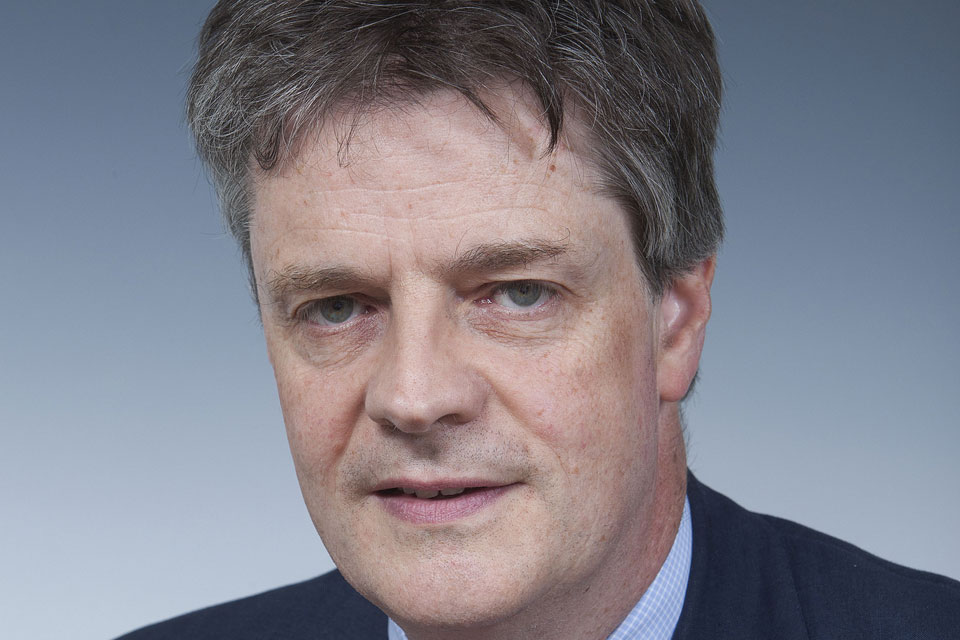
  • Jonathan Hill – 2010 Speech at the National Launch of Studio Schools

    Jonathan Hill – 2010 Speech at the National Launch of Studio Schools

    The speech made by Jonathan Hill, the then Education Minister, in London on 18 November 2010.

    Good morning everyone and thank you Geoff for that warm welcome.

    The more observant among you will by now have realised that I’m not Michael Gove, who unfortunately has been called away at the last minute. He has asked me to apologise on his behalf and to say how sorry he is not to be here. I know that he is a big fan of studio schools, a great admirer of the pioneering work done by the Young Foundation, and a keen supporter of the Studio Schools Trust, which he recently described as ‘superb’.

    But I am delighted to be here in his place because it gives me the chance – less eloquently than Michael no doubt – to put on the record my own support for the work of the Studio Schools Trust and my appreciation for what you do.

    I have been lucky enough to go to Barnfield College in Luton, shortly after it opened one of the first two studio schools in September. And last Friday I was at Futures Community College in Southend-on-Sea – not a studio school but doing something similar around practical training.

    I am the new kid on the block, but you don’t have to be a rocket scientist to get the point.

    Switched-on, positive children working hard and learning practical skills.

    Switched-on, positive employers telling me how brilliant it was for them.

    Academic and vocational teaching being offered side by side; learning tailored to pupils’ individual needs; aspirations raised, so that going to university or getting a good job becomes a realistic prospect for children in families where aspiration and expectation has been very low.

    So I want to thank them, as well as everyone at the Netherhall Learning Campus in Kirklees, the Studio Schools Trust and the Young Foundation for the enormous amount of work they’ve done to push the boundaries forward and make the argument for why we need to offer young people the chance of acquiring high-quality practical and technical skills, as well as high-quality academic qualifications.

    The challenges

    I came to this new job not having worked in education. For the last 12 years, I ran my own business. It has meant I have had – and still have – a steep learning curve, but coming to something fresh is not without advantages.

    It means you have to approach things from first principles and you have to ask lots of questions.

    Questions like: are enough of our children leaving primary school able to read and write properly?

    Are we equipping young people with the skills, knowledge and aspirations employers and universities are demanding?

    Have we got an exam and qualification system to which we have confidence? Have league tables and equivalents led to gaming of the system?

    Are we motivating and enthusing the workforce of tomorrow – so they fulfil their potential and have the confidence to succeed? Or, at the very least, know how to turn up on time, work in a team, or take direction from a manager?

    Is vocational and practical training strong enough so we can compete internationally – or even be able to fill jobs at home without having to recruit from overseas?

    How do we measure up against best practice internationally?

    To which, my answers are: no, up to a point, not really, yes, not well enough, no and it’s a very mixed picture.

    The truth is that too many young people still don’t get the right skills and qualifications for work and further study.

    Too many young people are turned off learning at an early age, fall behind and then get left behind.

    And it’s not good enough for more young people to be staying on in education if the qualifications they’re working towards aren’t valued by future employers.

    I also can’t help feeling that out of a well-intended desire to give vocational and academic skills parity of esteem – which is right – we have ended up undervaluing both.

    We’ve forced vocational and academic qualifications to have some kind of uneasy equivalence, when actually we should just be making sure that they are all high quality and do what universities and employers need. And above all that they should be tailored to what individual children need.

    So, what are we doing about it?

    The top line is that we are trying to get out of the hair of professions to allow them to get on with what they do best. To come up with ideas of their own – like studio schools – as to how they can best cater for their children.

    We also want to stop directing and prescribing quite so much, I hope leaving more space for professionals to learn from each other, forming partnerships, spreading good practice and raising standards through collaboration and the sharing of experience.

    Reform

    More specifically, we have a number of clear aims.

    First, to strengthen qualifications so they are more robust, rigorous and teach the economically valuable skills that employers demand to keep pace with the rest of the world.

    We will also give universities and employers more say over developing A levels. It’s right that those with the strongest interest in making sure young people have the right skills have a louder voice.

    Second, we’ve asked Professor Alison Wolf to lead an independent review of vocational qualifications. Alison’s review isn’t about creating yet another set of Whitehall-designed, top-down qualifications – it’s about giving colleges and schools the flexibility to offer qualifications that meet the labour market’s constantly shifting demands and higher expectations.

    Third, we want to raise the quality of careers guidance.

    Fourth, we are expanding the number of Apprenticeships.

    It’s sobering that only eight per cent of employers in England offer Apprenticeships – compared with 24 per cent in Germany. And of businesses with at least 500 employees, it’s just 30 per cent here compared with more than 90 per cent across in Germany.

    Fifth, we are trying to put the right structures in place through our wider reform programme.

    People sometimes say to me: why are you making these structural changes? Surely its teachers who make the difference? Stop messing around and concentrate on the teachers.

    I agree totally that it always comes down to people – and we will be saying more about that in our white paper to be published shortly. But the point of the structural changes is to give those people more space and it provides the opportunity for new ideas to bubble up from below.

    So we’re expanding the Academies programme and we’re ensuring that new providers including parents, community groups and businesses can come together and open new Free Schools where there’s demand – bringing outside expertise and experience into the state sector.

    That’s why we back Lord Baker, who through the Baker-Dearing Trust that he set up with the late Lord Dearing, is doing a fantastic job in pioneering a new generation of University Technical Colleges.

    They will offer high-quality technical qualifications – all as autonomous institutions, sponsored by leading local businesses and a local university.

    The JCB Academy in Staffordshire is already open – offering hard practical learning alongside academic GCSEs.

    The new UTC in Birmingham will specialise in engineering and manufacturing when it opens in 2012 – with students working with Aston University engineering staff and students, as well as local business and colleges.

    And Ken has ambitious plans to open many more in cities across the country.

    Studio schools – the way forward

    And it’s in that same spirit that we are right behind the studio schools movement and keen to see it grow, and we hope that the wider education system sits up and takes note of your distinctive philosophy and ethos.

    We think that studio schools have huge potential, and it’s not just us who think so. I gather that there is a great deal of interest from overseas.

    Studio schools have a fresh and new culture for young people at risk of dropping out elsewhere. They are all ability, have high aspirations for all pupils and make sure young people get the strong qualifications they need to get into employment or university, whether that’s GCSEs, A levels, Diplomas, BTECs or NVQs.

    But they also give them the practical skills employers demand in trades like construction, hospitality, plumbing and engineering, as well as softer skills like team working, communication, initiative and punctuality – exactly the kind of intangibles that businesses want but often can’t find in school leavers.

    Studio schools show us how to go beyond so-called ‘traditional’ teaching by using some of the most innovative teaching methods like personal mentoring and coaching, project-based learning which cuts across subjects, and rooting lessons in practical, real-life situations. And they use smaller classes to back up high-quality staff, allowing them to focus more attention on pupils who might have been at risk of falling behind or switching off.

    And one vital point: this doesn’t mean dumbing down – it’s about making sure young people are inspired and excited to invest the time and effort in their own futures.

    They mustn’t be seen as some kind of halfway house between mainstream provision and PRUs, as some sort of sticking plaster. This is exactly the kind of false label, often attached to vocational education, which we need to squash. It doesn’t do justice to the teachers teaching or the pupils learning in them. And it misses the point about the enormous potential that studio schools have.

    By bringing employers into the classroom, it’s a win-win for them and the children.

    Young people are doing real work in real business environments – the over-16s are paid a proper wage, but above all they are getting the chance to work alongside professionals on real commercial projects.

    I like the fact that employers involved in studio schools recognise that there is not much value in making noises-off about the quality of skills, while not actually working in schools directly. So it is absolutely right they are reaching out to young people directly and taking them under their wing.

    By working together, I know we can spread the word about the studio school approach. And I would urge everyone here who thinks they might be interested to talk to the Studio Schools Trust.

    Conclusion

    Today is a celebration of the launch of the first two studio schools, but I hope it also heralds more to come.

    It is extremely important that the pioneers do well, not just for the children you are teaching, but because of the role models you can be.

    Showing that it is possible to break down the long-standing divide between academic and vocational qualifications that has existed in our country for too long. Showing that it is possible to re-engage young people and get them to set their targets higher.

    And showing that we can give more young people real choice in their lives.

    I believe that studio schools can help achieve all of that.

    And I hope this is just the start of things to come.

    Thank you.

  • PRESS RELEASE : Nick Gibb responds to Independent AQA story [September 2011]

    PRESS RELEASE : Nick Gibb responds to Independent AQA story [September 2011]

    The press release issued by the Department for Education on 27 September 2011.

    Schools Minister Nick Gibb responds to today’s Independent front page on proposals by the AQA (Assessment and Qualifications Alliance) to rank all A-level students according to the schools they attend.

    Schools Minister Nick Gibb said:

    Universities are in charge of deciding their own admissions policies. But this proposal risks confusing employers, teachers and pupils by giving different values to the same A-levels and would undermine the integrity of public exams.

    All pupils who work hard and achieve high standards deserve to have their qualifications recognised. The key to widening access to university is by ensuring more young people are achieving good grades in the right subjects – regardless of background.

    That’s why we are stepping in to drive up standards in failing schools; raising teacher quality and training; strengthening exams and curriculum; and targeting investment at those who need the most support through the Pupil Premium.

  • PRESS RELEASE : Consultation launched to lift teacher restrictions [September 2011]

    PRESS RELEASE : Consultation launched to lift teacher restrictions [September 2011]

    The press release issued by the Department for Education on 22 September 2011.

    The Department for Education today launched a consultation on proposals to allow schools to appoint the talented and experienced teachers they need.

    The changes would see bureaucracy reduced so that fully qualified teachers from the United States, Canada, Australia and New Zealand and further education teachers are more easily permitted to teach in schools as qualified teachers without further training or assessment, or serving statutory induction.

    Evidence from around the world shows that the most important factor in fostering excellence in schools is the quality of its teachers.

    Currently:

    • Teachers from the European Economic Area can teach in England’s schools. But those from the US, Canada, Australia and New Zealand are not allowed to work here as qualified teachers without further training and assessment. The National Academic Recognition Information Centre (NARIC) reported in 2003 that teacher training systems in those countries are equivalent to those in the United Kingdom. Schools will be able to appoint these teachers if they cannot otherwise find the high-quality teachers they need.
    • Further education teachers with Qualified Teaching and Learning Skills (QTLS) status can only be appointed in schools as unqualified teachers on a temporary basis. Professor Alison Wolf recommended in her review of vocational education earlier this year that this restriction be lifted because it was making it more difficult for schools to provide high-quality vocational teaching. The recommendation was accepted immediately by Education Secretary Michael Gove.

    Subject to the consultation, heads will be given greater freedom to appoint teachers with the right skills, special qualifications or experience in order to provide a broad curriculum for their pupils.

    Schools Minister Nick Gibb said:

    We want to put qualified teachers from the USA, Canada, Australia and New Zealand on an equal footing with qualified teachers from the European Economic Area, who can already teach in this country without needing further qualifications.

    These are important deregulatory proposals that will make it easier for many highly talented teachers to remain in the classroom.

    Professor Alison Wolf said:

    During my Review I found no support or acceptable rationale for the current situation, which refuses recognition to QTLS in schools.

    The sooner this is changed the better; and I am delighted that the government proposes to make it easier for schools to hire the best person for the job.

    Toni Fazaeli, chief executive of the Institute for Learning (IfL), said:

    Some 5,000 further education teachers made the case for QTLS to be recognised for teaching in schools, on a par with QTS, as their contribution to the Wolf review. IfL has consistently made the case for our members’ professionalism and the professional status of QTLS to be recognised for teaching in schools’ settings as well as further education, so that young people have access to expert vocational teaching wherever they learn.

    Recognising QTLS status and certain overseas teaching qualifications will require a change in the law. Subject to the public consultation and parliamentary process, we anticipate that revised regulations will come into effect from April 2012. Until these changes are made, the existing regulations will remain in force. The consultation will close on 16 December.

    Professor Wolf’s review of vocational education.

    What we are consulting on:

    1. Teachers with Qualified Teacher Learning and Skills (QTLS) status will have qualified teacher status and will therefore be able to teach in schools as qualified teachers on a permanent basis.
    2. Teachers with QTLS status will be required to maintain their membership of the Institute for Learning (IfL).
    3. Teachers with QTLS status will not be required to complete a statutory induction period in schools.
    4. Qualified teachers from the US, Canada, Australia and New Zealand will have qualified teacher status. This means that they will be able to teach in schools as qualified teachers on a permanent basis without undertaking additional training or assessment.
    5. Qualified teachers from the US, Canada, Australia and New Zealand will not be required to complete a statutory induction period in England.
  • PRESS RELEASE : Special educational needs and disabilities green paper pathfinders [September 2011]

    PRESS RELEASE : Special educational needs and disabilities green paper pathfinders [September 2011]

    The press release issued by the Department for Education on 21 September 2011.

    The government has announced today (21 September 2011) that 20 pathfinders, covering 31 local authorities and their primary care trust (PCT) partners, will test out the main proposals in the SEN and disabilities green paper.

    The consultation on the SEN and disabilities green paper received 2,378 responses – 26 per cent were from parents and parents’ organisations.

    Children’s Minister, Sarah Teather, said:

    We’re proposing the biggest reforms in 30 years to help disabled children and those with special educational needs so we need to make sure we get them right. It’s good to see that the overall response from parents, teachers and professionals is supportive of our vision for change.

    There are some interesting responses that will help us shape future policy decisions. For example, we can see that people think there should be a greater emphasis on meeting particular needs that emerge in school, just as much as identifying development problems in the early years.

    I’m looking forward to seeing how the pathfinders progress over the next few months to test out how we can make our proposed changes a reality.

    The pathfinders will all test some core elements of reform, including:

    • a single education, health and care plan from birth to 25 years old, focusing on whether outcomes for disabled children and their parents have been improved
    • personal budgets for parents of disabled children and those with SEN so they can choose which services best suit the needs of their children
    • strong partnership between all local services and agencies working together to help disabled children and those with SEN
    • improved commissioning, particularly through links to health reforms
    • the role of voluntary and community sector organisations and parents in a new system
    • the cost of reform.

    Pathfinders will also test some optional elements, including:

    • whether a national funding framework would help parents understand what level of funding is available to support their child’s needs
    • better support to help parents through the process
    • support to vulnerable children through the new process
    • and the impact of reforms on children aged 16 to 25, or children in the early years.

    The pathfinders will receive up to £150,000 per local authority per year.

  • PRESS RELEASE : Funding for deprived pupils set to double [September 2011]

    PRESS RELEASE : Funding for deprived pupils set to double [September 2011]

    The press release issued by the Department for Education on 19 September 2011.

    The total funding available for the Pupil Premium is set to double and will rise to £1.25bn in 2012-13.

    The Pupil Premium began to be allocated to schools this year and is targeting funding at pupils from low income families who generally do not achieve as well as pupils from more advantaged backgrounds. Government funding will support them in reaching their potential and help schools reduce educational inequalities.

    Children’s Minister Sarah Teather confirmed that the total funding available for the Pupil Premium will be £1.25bn in 2012-13. This is a rise from £625m in 2011-12, and will rise again each year until 2014-15 when it will be worth £2.5bn.

    Children’s Minister Sarah Teather said:

    The amount the Government is making available through the Pupil Premium will double next year and I am delighted to announce this increase. It shows this Government’s commitment to reforming funding for schools to make it fairer for the most deprived children.

    It is our responsibility to close the gulf in achievement, where the poorest children are almost three times less likely to leave school with five good GCSEs than their richer classmates.

    This extra funding will help tackle inequality and make sure thousands of children get the extra support they need to succeed and reach their potential.

    Per pupil allocations and how the Pupil Premium will be distributed in 2012-13 has not yet been finalised. This will be announced in due course.

  • PRESS RELEASE : Government trials parenting classes for all parents of children under 5 [September 2011]

    PRESS RELEASE : Government trials parenting classes for all parents of children under 5 [September 2011]

    The press release issued by the Department for Education on 19 September 2011.

    The government today announced a trial to offer vouchers for parenting classes to mothers and fathers of children under five. This is part of plans to increase support for parents to help them communicate better with their children, encourage good behaviour, and prevent problems developing later on.

    The trial is likely to run in three or four areas of the country. The Government hopes to encourage demand for parenting classes and reduce the stigma of asking for information, advice and help with parenting.

    Around three-quarters of parents say they want more information and support to help their parenting. The vouchers will potentially benefit parents from a wide range of backgrounds, not just those who may have significant problems, like drug or alcohol abuse. Many good and able parents still need information and advice in the early years of their child’s life.

    Most parents will have accessed antenatal classes during pregnancy, which provide useful guidance and support. The trial will give parents similar access to parenting classes in the first five years of their child’s life, so that support does not stop when their baby is born but is available right through to when their child starts school.

    Children’s Minister Sarah Teather said:

    The Government should do all it can, without interfering in family life, to support parents to be the best they possibly can be.

    The first few years of a child’s life can be the toughest period for parents’ relationships. And these early years are also the most crucial for healthy child development.

    Parenting classes can be life-changing because they give parents the skills to manage challenging situations, give their children clear and firm boundaries and help them learn the consequences of their actions. This strengthens families and means children are better behaved, more respectful and can achieve more at school.

    Increasing help, advice and support before a child reaches school age also reduces the likelihood of families needing more expensive support later on. It makes moral, social and economic sense.

    The Government wants to make asking for parenting support the norm rather than the exception. The Government will work with organisations with an existing track record to test the supply and demand for universal parenting classes, as well as other products and services that support families in the earliest years of a child’s life.

    Evidence shows that parents are the single most important influence on their child’s development. They can have a lasting and positive impact on their children’s emotional, physical and intellectual development.

  • PRESS RELEASE : New phonics check will identify thousands of children needing extra reading help [September 2011]

    PRESS RELEASE : New phonics check will identify thousands of children needing extra reading help [September 2011]

    The press release issued by the Department for Education on 16 September 2011.

    Thousands of children will receive the extra support they need to become confident, fluent readers thanks to the Department for Education’s new phonics check, an independent study today reveals.

    In a pilot, 43% of teachers said they had been able to pinpoint 6-year-old pupils with reading problems of which they were not previously aware.

    Those children will now be given additional support to improve. The study of the pilot also found that:

    • the majority of teachers found most aspects of the check appropriate;
    • most pupils found the check to be a positive experience;
    • it took on average between four and nine minutes for each pupil to complete.

    The check, supported by three-quarters of parents in a survey by the National Confederation of Parent Teacher Associations, was piloted in 300 schools this summer and will be rolled out across England next year. All Year 1 pupils will be screened between 18 and 22 June 2012. The check involves teachers taking pupils through a booklet of 40 words on a one-to-one basis.

    If the pilot’s success rate is replicated when it is rolled out, thousands more teachers will be able to identify children who need extra reading help.

    In this year’s tests for pupils leaving primary school:

    • 1-in-6 11-year-olds did not reach the reading standard expected.
    • 1-in-10 boys aged 11 can read no better than a 7-year-old.

    England has also slipped down the international table for reading in primary schools. The Progress in International Reading Literacy Study (PIRLS) of 10-year-olds saw England fall from third out of 35 countries in 2001 to 15th out of 40 countries in 2006.

    Schools Minister Nick Gibb said:

    Ensuring that every child leaves primary school as a fluent and confident reader is key to raising academic standards overall and is important in closing the attainment gap between those from poorer and wealthier backgrounds. It is unacceptable that 10% of boys aged 11 can read no better than a 7-year-old.

    The new check is based on a method that is internationally proven to help children learn to read and the evidence from the pilot is clear – thousands of 6-year-olds, who would otherwise slip through the net, will get the extra reading help they need to become good readers, to flourish at secondary school and to enjoy a lifetime’s love of reading.

    This study finds that the check will be of real benefit to pupils but takes just a few minutes to carry out and is a positive experience for most children.

    High-quality academic research from across the world shows that the systematic teaching of synthetic phonics is the best way to teach children to read, especially those aged 5 to 7.

    The main findings of the study, carried out by the Centre for Education and Inclusion Research (CEIR) at Sheffield Hallam University for the Department for Education, are that:

    • 43% of pilot schools were able to identify pupils with phonics problems of which they were not already aware.
    • all aspects of the check were seen as appropriate by at least 74% of teachers.
    • Three-quarters of pilot schools said the check assessed phonic decoding ability accurately. Most schools interviewed in the pilot also plan to use the results to inform their teaching and planning.
    • Most teachers and pupils understood the purpose of the check correctly.
    • More than 90% of teachers said the content of the check was suitable on most levels.
    • 83% of teachers said the number of words was suitable; 80% said the type of vocabulary was suitable; and 74% thought the non-words used were suitable.
    • The check took on average three hours for schools to prepare for the check, and 12-and-a-half hours to administer it.
    • 65% of schools found the resources used to administer the check “straightforward” or “very straightforward” to manage.
    • 89% of pilot schools said the guidance provided to them by the Department for Education was ‘useful’ or ‘very useful’.
    • Pilot schools wanted detailed results of the check. Almost all 97% wanted pupil-level results and 88% wanted commentary on national-level results. Some 90% of schools wanted benchmarking data to help them set appropriate expectations for their pupils.
    • The experience of the check was positive for most pupils. Some 62% of pilot schools felt the experience had been positive for all pupils, while 31% said it was neither positive nor negative.
    • The check took on average between 4 and 9 minutes to complete per pupil.

    Nick Gibb added:

    Overall the report provides sufficient evidence to roll out the check nationally next year. There are also some helpful suggestions from teachers, and we will consider making some amendments to the check when it is introduced for all Year 1 pupils next summer.

    The Department for Education is also launching a catalogue of approved phonics resources for teaching pupils and training teachers. Primary schools with Key Stage 1 pupils will be able to claim up to £3,000, if they match that funding, to spend on these approved materials.

    Schools will decide which of the resources will help them to deliver high-quality phonics teaching for their pupils and will be able to buy products and training with the match-funding any time up to March 2013.

    How phonics works

    Phonics focuses on sounds rather than, for example, having children try to recognise whole words.

    In analytic phonics, words are broken down into their beginning and end parts, such as ‘str-‘ and ‘eet’, with an emphasis on ‘seeing’ the words and analogy with other words. In synthetic phonics, children start by sequencing the individual sounds in words – for example, ‘s-t-r-ee-t’, with an emphasis on blending them together. Once they have learned all these, they progress to reading books.

    The ‘synthetic’ part comes from the word ‘synthesise’, meaning to assemble or blend together. Children who learn using synthetic phonics are able to try new words working from sound alone, whereas those using analytic phonics are more dependent on having prior knowledge of families of words.

    High-quality research evidence

    In Clackmannanshire, Scotland, a seven-year study of the teaching of synthetic phonics to 300 children found they made more progress in reading and spelling than other children their age.

    A 2005 Australian report, Teaching Reading, said:

    The incontrovertible finding from the extensive body of local and international evidence-based literacy research is that for children during the early years of schooling (and subsequently if needed) to be able to link their knowledge of spoken language to their knowledge of written language, they must first master the alphabetic code – the system of grapheme-phoneme correspondences that link written words to their pronunciations. Because these are both foundational and essential skills for the development of competence in reading, writing and spelling, they must be taught explicitly, systematically, early and well.

    The US National Reading Panel report of 2006 said:

    Systematic synthetic phonics instruction had a positive and significant effect on disabled readers’ reading skills. These children improved substantially in their ability to read words and showed significant, albeit small, gains in their ability to process text as a result of systematic synthetic phonics instruction. This type of phonics instruction benefits both students with learning disabilities and low-achieving students who are not disabled. Moreover, systematic synthetic phonics instruction was significantly more effective in improving low socio-economic status (SES) children’s alphabetic knowledge and word reading skills than instructional approaches that were less focused on these initial reading skills… across all grade levels, systematic phonics instruction improved the ability of good readers to spell.

  • PRESS RELEASE : Schools Minister Nick Gibb announces that the Standards and Testing Agency will commence operating on Monday 3rd October [September 2011]

    PRESS RELEASE : Schools Minister Nick Gibb announces that the Standards and Testing Agency will commence operating on Monday 3rd October [September 2011]

    The press release issued by the Department for Education on 15 September 2011.

    Schools Minister Nick Gibb said:

    I am today announcing that the Standards and Testing Agency (STA), a new executive agency of the Department for Education, will commence operating on Monday 3rd October. The STA will be responsible for the development and delivery of all statutory assessments from early years to the end of Key Stage 3.

    This work was previously carried out by the Qualifications and Curriculum Development Agency, which – subject to the will of Parliament – will cease its final remaining functions in March 2012.

  • Nick Gibb – 2011 Speech at the Centre for Social Justice

    Nick Gibb – 2011 Speech at the Centre for Social Justice

    The speech made by Nick Gibb, the then Schools Minister, on 12 September 2011.

    It is a pleasure to be here at the launch of another important report from the Centre for Social Justice. Since the think tank was founded in 2004, by Iain Duncan Smith, it has contributed hugely to the public debate about how to tackle some of Britain’s most intractable social problems. Its seminal report, Breakthrough Britain, highlighted the central role of education in the life chances of us all and the role that poor quality schools have played in “stifling the chances of children in our poorest areas”.

    This report looks in more detail at educational exclusion, whether that be the literal exclusion of persistently poorly behaved children from school or the metaphorical educational exclusion of those attending schools that fail to deliver the type of education available to the most advantaged in society. The report makes an important contribution to the education debate and for that we are deeply indebted to the Centre for Social Justice and in particular to Adele Eastman.

    I have long taken the view that education is the only route out of poverty and a poor education is, in this modern world, a clear pathway to low income and narrow opportunities.

    And the starting point to anyone’s education is learning how to read. This country is one of the world’s highest spenders on education and yet one in five 11 year-olds leaves primary school still struggling with this basic skill. Nine per cent of 11-year-old boys leave primary school with a reading age of seven or younger. And that problem is compounded further when you look just at white boys eligible for free school meals amongst whom 60 per cent aren’t reading properly at the age of 14.

    Today’s CSJ report points out that “significant literacy and numeracy problems are found in between 50 and 76 per cent of children who are permanently excluded from school”. It also points to literacy and numeracy problems in 60 per cent of children in special schools for those with behavioural problems and in 50-60 per cent of the prison population. As Adele Eastman correctly concludes:

    “Many display challenging behaviour to hide the fact that they cannot read.”

    There is a strong body of opinion and evidence that the reason for this country’s problems with reading is the teaching method that was introduced in the 1950s known as Look and Say, that asserted that exposure to and repetition of high frequency words was the easiest way to teach children to read. But evidence from longitudinal studies such as the Clackmannanshire study by Rhona Johnston and Joyce Watson, showed that early systematic synthetic phonics was the most successful method of teaching children to read. Indeed the Clackmannanshire study of 300 pupils over seven years showed that at the end of that seven year period systematic synthetic phonics had given those children an average word reading age of 14 by the time they were 11. The multi-million dollar meta-analysis from the US, the National Reading Panel, came to similar conclusions.

    That’s why the Government is giving primary schools matched funding of up to £3,000 to buy phonics materials and training. We’re also introducing a phonic check at the end of year one of primary school to ensure that every child has mastered the basic skill of decoding words. Too many children are slipping through the net, with their struggle with reading allowed to continue without the help they need.

    The OECD’s PISA report also shows that Britain ranks 47th out of 65 countries when it comes to reading for pleasure. Four out of 10 teenagers fail to do so in this country compared to just 10 per cent in Kazakhstan, Albania, China and Thailand. So we’re also working on policies to promote greater reading for pleasure.

    Today’s CSJ report, interestingly, points to boredom as a factor. “Boredom”, the report says, “has been regularly cited as a factor in challenging behaviour and a reason for disengagement with education”. There are obviously a range of reasons why children might be bored with some lessons. Not being able to read might be a factor or the skills-based approach to history or geography.

    A report by the Centre for the Use of Research and Evidence in Education points to a significant proportion of pupils not being challenged sufficiently. In that study 8,000 children were asked whether they agreed or disagreed with the statement, “lessons are often too difficult for me”. 50 per cent disagreed and 20 per cent strongly disagreed with the statement.

    So that’s why we are reviewing the national curriculum, slimming it down so that it concentrates on the core knowledge that pupils need to be taught. We are looking at the curricula of the best performing education systems in the world to ensure that our national curriculum is on a par with the best.

    The OECD has also been looking at how some students around the world are able to overcome their socio-economic background when it comes to educational achievement. The report shows that deprived pupils from this country perform significantly less well than deprived pupils in most OECD countries – putting us 39th out of 65 countries.

    It is measured in terms of the resilience of students to their social backgrounds. In the UK just a quarter of pupils from poor backgrounds are “resilient” according to the PISA measure compared to three-quarters in Shanghai-China and Hong Kong and nearly half in Singapore. The OECD average is 31 per cent. The OECD concludes that what helps disadvantaged students to overcome their social backgrounds and achieve well in school in spending more time in class, particularly in science.

    “Among disadvantaged students, learning time in school is one of the strongest predictors of which students will outperform their peers. In practically all OECD countries … the average resilient student spends more time studying science at school – on average between one and two hours per week – than the average low-achiever.”

    That’s why the English-Baccalaureate is such an important concept. Last year only 22 per cent of all students and just 8 per cent of those eligible for FSM, were entered for the E-Bacc subjects at GCSE – English, Maths, at least two of the three sciences or the double award, history or geography and a language. Indications are that GCSE choices for this September show that figure rising to 47 per cent and while we don’t have the breakdown of that figure to show the FSM proportion, it is likely to have increased across the board.

    It is the quality of education available to those pupils from disadvantaged backgrounds that is the driving force behind all our education reforms. We want to see the attainment gap between those from wealthier and poorer backgrounds narrowing and ultimately closing.

    For example, less than 10 per cent of schools with the highest proportion of pupils eligible for FSM make languages compulsory compared to 50 per cent of schools with the lowest level of pupils eligible for FSM. Pupils on FSM are three times more likely to be persistent absentees and around three times more likely to be excluded than non FSM pupils. So again, we believe the E-Bacc policy will increase opportunity and encouragement to study languages even in areas of the greatest deprivation.

    And it’s why we are so determined to drive forward the academies programme – because academies, in some of the most challenging areas of the country – are improving their academic results at twice the pace of non-academy schools. It’s why we believe the Free School policy will make such an impact – with 24 such schools opening this month after just 16 months in office. 50 per cent of those free schools are in the most deprived 30 per cent of local areas.

    It is why we have raised the threshold when it comes to persistent absence from schools, so now being away for 15 per cent of the school year rather than 20 per cent is the new definition and ultimately we need to take that down to 10 per cent.

    And we also need to do more to make schools safe, happy and calm places where pupils are free to study and able to learn. Persistent low level disruption distracts children, it helps spread poor behaviour and it drives out talented teachers from the profession. The OECD estimates that 30 per cent of effective teaching time is lost because of poor behaviour in schools.

    We have to restore the respect for teachers and shift the balance of authority in the classroom away from the child and back to the adult. This is what pupils want as much as teachers and parents. That’s why the Education Bill going through Parliament at the moment will strengthen teachers’ powers to enforce school rules.

    It will remove the absurd 24 hours’ notice rule for detentions and it will seek to improve the quality of alternative provision for those pupils who are excluded from school by allowing Pupil Referral Units to have the same autonomy and freedoms as academies. We’re also encouraging new providers to establish alternative provision free schools and we’re piloting a new approach to exclusion in which the school will be responsible for selecting any alternative education and be held accountable for the academic results of those excluded pupils.

    Early intervention is also key which is why we’re recruiting an extra 4,200 health visitors to support parents after the birth of their children, extending free childcare for three and four year olds to 15 hours per week from the current 12.5 hours, and introducing 15 hours a week free childcare for the poorest two year olds.

    The CSJ and this Government share many objectives – the principal one being to tackle social disadvantage and to close the attainment gap between those from poorer and wealthier backgrounds. Today’s report is a welcome contribution to understanding how we deliver on those vital objectives and I look forward to working with the Centre for Social Justice on what more we can do to ensure that our joint objective becomes a reality.