Blog

  • Nigel Huddleston – 2022 Speech at the International Working Group on Women and Sport Handover

    Nigel Huddleston – 2022 Speech at the International Working Group on Women and Sport Handover

    The speech made by Nigel Huddleston, the Minister for Sport, Tourism, Heritage and Civil Society, at New Zealand House, Edgbaston Golf Club on 4 August 2022.

    Thank you to New Zealand for your generous hospitality.

    I am genuinely delighted to be able to attend today’s event which starts the official handover of the International Working Group on Women and Sport from New Zealand to the UK.

    It is great that the event could be happening at the very same time as Birmingham 2022, which – and this is worth repeating – has the largest female sport programme in the history of the Commonwealth Games and will be the first time a major multi-sport event will feature more women’s than men’s medal events and I think that is fantastic.

    I am absolutely committed to supporting women’s sport at every opportunity – pushing for greater participation, employment, commercial opportunities and visibility in the media. The fantastic success of the Lionesses this weekend shows just how far we have come.

    The UK has a strong track record and strong history of empowering women and girls through sport. There is a long way to go but we have much to be proud of in this area.

    The media profile of women’s sport is continuing to rise and recent research shows that two-thirds of UK sport fans currently follow some form of women’s sport, and half have attended an event featuring women’s athletes.

    Our domestic initiatives, like This Girl Can, are inspiring millions of women and girls to get physically active. Something that is particularly important as we recover from the pandemic.

    We have also seen the growth in audiences for women’s sport.

    Recent research published by Women’s Sport Trust shows that domestic women’s sport attracted a record British broadcast audience of nearly 33 million in 2021, the main drivers being The Hundred and the FA Women’s Super League.

    And the leadership role of certain media outlets is very important, including the BBC, which made the strategic decision to make sure that many of those matches were on BBC One, peak time. It worked. It showed that there is a mass audience for women’s sport. And that is pivotal. If the eyeballs are there, then the money and commercial opportunities start flowing. Instead of just doing that because it is the right thing to do, we will have increasing competition to hold these events and make sure these events are on TV because they are commercially viable and commercially lucrative.

    And a record crowd of more than 87,000 attended this year’s UEFA Women’s Euros final – the highest attended match at either a men’s or women’s European Championship.  I was lucky enough to attend some of the matches including the final and I can honestly say that there was a superb atmosphere. The spectators were evenly balanced and importantly, more than 100,000 children were spectators in those matches. I know the whole nation will have been inspired by the Lionesses.

    There have also been record sponsorship deals struck with women’s sports leagues, such as Barclays’ sponsorship of the Women’s Super League, the premier women’s football league in England.

    And the UK is due to host a number of high profile women’s sports events this year, including the Rugby League World Cup and the Billie Jean King Cup. Plus Birmingham 2022 of course which is going on at this moment in time.

    We are working tirelessly to make the most of these events in showcasing women’s sport, and encouraging more women and girls to get active as a result. But we recognise that we need to go further.

    The IWG is a great opportunity to build on this success and not only share the fantastic work we are doing but to learn from other countries too.

    The UK Secretariat’s vision for a ‘just and sustainable post-pandemic world where women and girls play a full and equitable role’ is something that I feel passionately about.

    It is vital that we continue to strive for greater equality and opportunity in sport.

    We have been working with our women’s sport working group in the UK, which many of you have attended, to look at some of the challenges and opportunities that exist and I am really keen that we continue to make progress as a result of these discussions.

    I would also like to commend the work of the current hosts New Zealand in sharing, promoting and supporting stories of inspiring change from around the world.

    Their development of the world’s first IWG Insight Hub as a home for the world’s best research, insight, case studies, news and interactive programmes such as training and seminars has also been ground breaking.

    I believe the IWG can be a catalyst for women’s sport as we recover from the impact of the pandemic.

    I would like to take this opportunity to thank you for the role you have all played in securing the IWG secretariat for the UK.

    It’s absolutely essential that we work collectively to share the messages behind the bid of inclusivity, equity and collaboration.

    I look forward to continuing to work with you to ensure that women’s sport continues to thrive not just in the UK but on the international stage.

  • 2019 General Election Results – Smallest to Largest Majorities by Constituency

    2019 General Election Results – Smallest to Largest Majorities by Constituency

    Individual constituency results for the 2019 General Election are available here.

    Fermanagh and South Tyrone 57
    Bury North 105
    Bedford 145
    East Dunbartonshire 149
    Kensington 150
    Caithness, Sutherland and Easter Ross 204
    Coventry North West 208
    Alyn and Deeside 213
    Dagenham and Rainham 293
    Bolton North East 378
    Coventry South 401
    Bury South 402
    Moray 513
    Weaver Vale 562
    High Peak 590
    Wimbledon 628
    Carshalton and Wallington 629
    Heywood and Middleton 663
    Stoke-On-Trent Central 670
    Gedling 679
    Blyth Valley 712
    Sheffield, Hallam 712
    Warwick and Leamington 789
    Wansbeck 814
    Gordon 819
    West Aberdeenshire and Kincardine 843
    Delyn 865
    Newport West 902
    Cheltenham 981
    Winchester 985
    Stockton North 1027
    North West Durham 1144
    Bridgend 1157
    Hemsworth 1180
    Chipping Barnet 1212
    Wolverhampton South East 1235
    Clwyd South 1239
    Kingston upon Hull East 1239
    Kirkcaldy and Cowdenbeath 1243
    Chingford and Woodford Green 1262
    Normanton, Pontefract and Castleford 1276
    North East Fife 1316
    Burnley 1352
    Chesterfield 1451
    Oldham East and Saddleworth 1499
    Warrington North 1509
    Dewsbury 1561
    West Bromwich East 1593
    South Down 1620
    Birmingham, Northfield 1640
    Wolverhampton South West 1661
    Dumfries and Galloway 1805
    Carmarthen East and Dinefwr 1809
    Belfast East 1819
    Vale Of Clwyd 1827
    Canterbury 1836
    Gower 1837
    Westmorland and Lonsdale 1934
    Belfast North 1943
    Leigh 1965
    Ynys Mon 1968
    Newport East 1992
    Warrington South 2010
    Aberconwy 2034
    Wrexham 2131
    Wentworth and Dearne 2165
    Keighley 2218
    Doncaster Central 2278
    Ayr, Carrick and Cumnock 2329
    Cheadle 2336
    Bradford South 2346
    Doncaster North 2370
    Lancaster and Fleetwood 2380
    Na h-Eileanan An Iar 2438
    Lewes 2457
    Orkney and Shetland 2507
    Derby North 2540
    Glasgow North East 2548
    Halifax 2569
    Peterborough 2580
    South Antrim 2689
    Esher and Walton 2743
    Arfon 2781
    Kingston upon Hull West and Hessle 2856
    South Cambridgeshire 2904
    Stalybridge and Hyde 2946
    Hyndburn 2951
    Sunderland Central 2964
    North Down 2968
    Wirral West 3003
    Houghton and Sunderland South 3115
    Rotherham 3121
    Eltham 3197
    Barnsley East 3217
    Worsley and Eccles South 3219
    Darlington 3294
    Guildford 3337
    Wakefield 3358
    Walsall South 3456
    Lincoln 3514
    Pudsey 3517
    Batley and Spen 3525
    Redcar 3527
    Vale Of Glamorgan 3562
    Barnsley Central 3571
    Hartlepool 3595
    Birmingham, Erdington 3601
    Don Valley 3630
    Blackpool South 3690
    Washington and Sunderland West 3723
    Torfaen 3742
    Erith and Thamesmead 3758
    Edinburgh West 3769
    Dumfriesshire, Clydesdale and Tweeddale 3781
    Angus 3795
    West Bromwich West 3799
    Stroud 3840
    East Lothian 3886
    Cities Of London and Westminster 3953
    Aberdeen South 3990
    Hastings and Rye 4043
    Wolverhampton North East 4080
    Argyll and Bute 4110
    Reading West 4117
    Banff and Buchan 4118
    Southport 4147
    Workington 4176
    Leicester West 4212
    Wycombe 4214
    Hendon 4230
    Ashton-Under-Lyne 4263
    St Ives 4280
    Sheffield South East 4289
    Eastbourne 4331
    Hazel Grove 4423
    Watford 4433
    Enfield, Southgate 4450
    Nottingham North 4490
    Ochil and South Perthshire 4498
    Southampton, Itchen 4498
    Sedgefield 4513
    Truro and Falmouth 4561
    Llanelli 4670
    Northampton South 4697
    Norwich North 4738
    Dwyfor Meirionnydd 4740
    Makerfield 4740
    North Durham 4742
    Plymouth, Sutton and Devonport 4757
    Putney 4774
    Tynemouth 4857
    Glasgow South West 4900
    Huddersfield 4937
    City Of Durham 5025
    Preseli Pembrokeshire 5062
    Colne Valley 5103
    Berwickshire, Roxburgh and Selkirk 5148
    Lanark and Hamilton East 5187
    Airdrie and Shotts 5201
    Ilford North 5218
    Rutherglen and Hamilton West 5230
    Stockton South 5260
    Bolsover 5299
    Central Ayrshire 5304
    Broxtowe 5331
    Portsmouth South 5363
    East Renfrewshire 5426
    Islwyn 5464
    Ipswich 5479
    Northampton North 5507
    Blaydon 5531
    Leeds East 5531
    Glasgow East 5566
    Glasgow North 5601
    Birmingham, Edgbaston 5614
    Coatbridge, Chryston and Bellshill 5624
    Neath 5637
    Filton and Bradley Stoke 5646
    Battersea 5668
    Bristol North West 5692
    Midlothian 5705
    Ashfield 5733
    Newcastle Upon Tyne North 5765
    Calder Valley 5774
    Barrow and Furness 5789
    Copeland 5842
    Pontypridd 5887
    Reading East 5924
    Croydon Central 5949
    Derby South 6019
    Leicester East 6019
    Wirral South 6105
    Altrincham and Sale West 6139
    City Of Chester 6164
    Denton and Reddish 6175
    Pendle 6186
    Southampton, Test 6213
    Shipley 6242
    Milton Keynes North 6255
    Motherwell and Wishaw 6268
    Stoke-On-Trent North 6286
    St Albans 6293
    Rother Valley 6318
    Ceredigion 6329
    Morecambe and Lunesdale 6354
    Scunthorpe 6451
    Glasgow Central 6474
    Enfield North 6492
    Lagan Valley 6499
    Finchley and Golders Green 6562
    Easington 6581
    South Swindon 6625
    East Antrim 6706
    East Devon 6708
    Wigan 6728
    Clwyd West 6747
    Worcester 6758
    Caerphilly 6833
    Hitchin and Harpenden 6895
    Milton Keynes South 6944
    Cardiff North 6982
    Strangford 7071
    Jarrow 7120
    Brecon and Radnorshire 7131
    Loughborough 7169
    Gateshead 7200
    Penistone and Stocksbridge 7210
    Uxbridge and South Ruislip 7210
    Great Grimsby 7331
    Wokingham 7383
    Newcastle-Under-Lyme 7446
    East Worthing and Shoreham 7474
    West Tyrone 7478
    Inverclyde 7512
    Perth and North Perthshire 7550
    Kingston upon Hull North 7593
    Bolton South East 7598
    Rushcliffe 7643
    Coventry North East 7692
    Carmarthen West and South Pembrokeshire 7745
    Richmond Park 7766
    Ogmore 7805
    Feltham and Heston 7859
    Bishop Auckland 7962
    Swansea East 7970
    Brighton, Kemptown 8061
    Brent North 8079
    Swansea West 8116
    Harrow East 8170
    Upper Bann 8210
    Carlisle 8319
    West Lancashire 8336
    Sutton and Cheam 8351
    Glasgow North West 8359
    Crawley 8360
    Middlesbrough 8395
    Crewe and Nantwich 8508
    Sheffield, Heeley 8520
    North Ayrshire and Arran 8521
    Stevenage 8562
    Blackpool North and Cleveleys 8596
    Blaenau Gwent 8647
    Harrow West 8692
    Camborne and Redruth 8700
    Luton South 8756
    Ellesmere Port and Neston 8764
    Bournemouth East 8806
    South West Surrey 8817
    Cynon Valley 8822
    Bolton West 8855
    Oxford West and Abingdon 8943
    Glasgow South 9005
    Luton North 9247
    Stirling 9254
    Hayes and Harlington 9261
    Newry and Armagh 9287
    Colchester 9423
    Ross, Skye and Lochaber 9443
    Rossendale and Darwen 9522
    Mid Ulster 9537
    West Dunbartonshire 9553
    North Tyneside 9561
    South Shields 9585
    East Londonderry 9607
    Cambridge 9639
    Rochdale 9668
    Harrogate and Knaresborough 9675
    Woking 9767
    Bristol South 9859
    Monmouth 9982
    York Outer 9985
    Wells 9991
    Stockport 10039
    Bournemouth West 10150
    Corby 10268
    Scarborough and Whitby 10270
    Gloucester 10277
    Wythenshawe and Sale East 10396
    Exeter 10403
    Edinburgh East 10417
    Inverness, Nairn, Badenoch and Strathspey 10440
    Kingston and Surbiton 10489
    Aberavon 10490
    Brentford and Isleworth 10514
    Hexham 10549
    Leeds West 10564
    South Thanet 10587
    Erewash 10606
    Merthyr Tydfil and Rhymney 10606
    Birmingham, Yardley 10659
    Paisley and Renfrewshire South 10679
    Dunfermline and West Fife 10699
    Macclesfield 10711
    Leeds North West 10749
    Westminster North 10759
    Bristol East 10794
    Romsey and Southampton North 10872
    Bromley and Chislehurst 10891
    Telford 10941
    Welwyn Hatfield 10955
    Cardiff West 10986
    Edinburgh South 11095
    Oldham West and Royton 11127
    South Ribble 11199
    Shrewsbury and Atcham 11217
    Kingswood 11220
    Chelsea and Fulham 11241
    Linlithgow and East Falkirk 11266
    Morley and Outwood 11267
    Stoke-On-Trent South 11271
    Chippenham 11288
    Rhondda 11440
    Thurrock 11482
    South East Cambridgeshire 11490
    Warley 11511
    Dudley North 11533
    Middlesbrough South and East Cleveland 11626
    Taunton Deane 11700
    Glenrothes 11757
    Paisley and Renfrewshire North 11902
    Walsall North 11965
    Edinburgh South West 11982
    Mole Valley 12041
    Halesowen and Rowley Regis 12074
    Montgomeryshire 12138
    Preston 12146
    St Helens North 12209
    Dundee West 12259
    Ealing North 12269
    Sheffield, Brightside and Hillsborough 12274
    Dover 12278
    Newcastle Upon Tyne Central 12278
    Rochford and Southend East 12286
    Bath 12322
    Croydon South 12339
    Thornbury and Yate 12369
    Birmingham, Selly Oak 12414
    Nottingham South 12568
    Wantage 12653
    Kilmarnock and Loudoun 12659
    Aberdeen North 12670
    North Antrim 12721
    Totnes 12724
    Cardiff South and Penarth 12737
    Norwich South 12760
    Edinburgh North and Leith 12808
    North East Derbyshire 12876
    Plymouth, Moor View 12897
    Cumbernauld, Kilsyth and Kirkintilloch East 12976
    Bexleyheath and Crayford 13103
    Nuneaton 13144
    Ealing Central and Acton 13300
    East Kilbride, Strathaven and Lesmahagow 13322
    Dundee East 13375
    Livingston 13435
    Rugby 13447
    York Central 13545
    Stourbridge 13571
    Slough 13640
    Bassetlaw 14013
    Henley 14053
    Harlow 14063
    West Dorset 14106
    Twickenham 14121
    Hampstead and Kilburn 14188
    Basingstoke 14198
    Beckenham 14258
    Tooting 14307
    Stafford 14377
    North Norfolk 14395
    Blackley and Broughton 14402
    South West Hertfordshire 14408
    Southend West 14459
    Burton 14496
    Hemel Hempstead 14563
    Tunbridge Wells 14645
    Belfast West 14672
    North East Somerset 14729
    North Cornwall 14752
    North Devon 14813
    Worthing West 14823
    Berwick-Upon-Tweed 14835
    Mid Dorset and North Poole 14898
    Falkirk 14948
    Gillingham and Rainham 15119
    Sefton Central 15122
    Witney 15177
    Birmingham, Perry Barr 15317
    Mid Derbyshire 15385
    Belfast South 15401
    Barking 15427
    Newcastle Upon Tyne East 15463
    Dudley South 15565
    Gravesham 15581
    Eastleigh 15607
    Beaconsfield 15712
    Portsmouth North 15780
    Forest Of Dean 15869
    Edmonton 16015
    Redditch 16036
    Newbury 16047
    Ealing, Southall 16084
    Bermondsey and Old Southwark 16126
    North Swindon 16171
    Yeovil 16181
    Sherwood 16186
    Chesham and Amersham 16223
    Mansfield 16306
    Salford and Eccles 16327
    Ruislip, Northwood and Pinner 16394
    Stretford and Urmston 16417
    Staffordshire Moorlands 16428
    Mitcham and Morden 16482
    St Austell and Newquay 16526
    Fylde 16611
    Aldershot 16698
    Kettering 16765
    Wyre and Preston North 16781
    Banbury 16813
    Amber Valley 16886
    Lewisham East 17008
    Hove 17044
    Rochester and Strood 17072
    Leeds North East 17089
    Foyle 17110
    Weston-Super-Mare 17121
    South Dorset 17153
    Cardiff Central 17179
    North Thanet 17189
    Harborough 17278
    Islington South and Finsbury 17328
    Elmet and Rothwell 17353
    Aylesbury 17373
    Derbyshire Dales 17381
    Tatton 17387
    Chorley 17392
    Nottingham East 17393
    Newton Abbot 17501
    North Somerset 17536
    Chelmsford 17621
    North Wiltshire 17626
    Great Yarmouth 17663
    Streatham 17690
    Birkenhead 17705
    Central Devon 17721
    Torbay 17749
    Oxford East 17832
    Hammersmith 17847
    Epsom and Ewell 17873
    Romford 17893
    North Warwickshire 17956
    Waveney 18002
    Bradford East 18144
    North East Hertfordshire 18189
    Mid Sussex 18197
    Runnymede and Weybridge 18270
    Blackburn 18304
    Reigate 18310
    Wallasey 18322
    Surrey Heath 18349
    Spelthorne 18393
    Ribble Valley 18439
    Eddisbury 18443
    Greenwich and Woolwich 18464
    Penrith and The Border 18519
    Chatham and Aylesford 18540
    Wellingborough 18540
    Congleton 18561
    South West Bedfordshire 18583
    The Wrekin 18726
    Maidenhead 18846
    Old Bexley and Sidcup 18952
    Halton 18975
    Poole 19116
    St Helens South and Whiston 19122
    Dartford 19160
    Somerton and Frome 19213
    Hornsey and Wood Green 19242
    Leeds Central 19270
    Sutton Coldfield 19272
    South Derbyshire 19335
    Huntingdon 19383
    Vauxhall 19612
    Hertford and Stortford 19620
    Tamworth 19634
    Hereford and South Herefordshire 19686
    East Hampshire 19696
    Salisbury 19736
    Broxbourne 19807
    Bracknell 19829
    Aldridge-Brownhills 19836
    Cannock Chase 19879
    North West Norfolk 19922
    South Basildon and East Thurrock 19922
    Brighton, Pavilion 19940
    Stone 19945
    Stratford-On-Avon 19972
    Windsor 20079
    Selby and Ainsty 20137
    Harwich and North Essex 20182
    North East Hampshire 20211
    The Cotswolds 20214
    Haltemprice and Howden 20329
    Kenilworth and Southam 20353
    North West Leicestershire 20400
    Buckingham 20411
    Basildon and Billericay 20412
    Beverley and Holderness 20448
    Suffolk Coastal 20533
    Leyton and Wanstead 20808
    Sevenoaks 20818
    Brent Central 20870
    South East Cornwall 20971
    Horsham 21127
    Solihull 21273
    South Norfolk 21275
    Hertsmere 21313
    Folkestone and Hythe 21337
    Wyre Forest 21413
    Cleethorpes 21418
    South West Devon 21430
    Chichester 21490
    Lewisham West and Penge 21543
    South West Wiltshire 21630
    Maidstone and The Weald 21772
    Havant 21792
    Newark 21816
    Broadland 21861
    Brigg and Goole 21941
    Faversham and Mid Kent 21976
    Epping Forest 22173
    Orpington 22378
    Charnwood 22397
    Tewkesbury 22410
    Bognor Regis and Littlehampton 22503
    Arundel and South Downs 22521
    Mid Norfolk 22594
    Leicester South 22675
    East Yorkshire 22787
    Meriden 22836
    South Suffolk 22897
    North Shropshire 22949
    Gainsborough 22967
    Bromsgrove 23106
    West Suffolk 23194
    Gosport 23278
    Hornchurch and Upminster 23308
    Central Suffolk and North Ipswich 23391
    Meon Valley 23555
    Lichfield 23638
    Ludlow 23648
    Skipton and Ripon 23694
    Isle Of Wight 23737
    Devizes 23993
    South Leicestershire 24004
    Ashford 24029
    East Surrey 24040
    Witham 24082
    Ilford South 24101
    Tiverton and Honiton 24239
    North East Bedfordshire 24283
    North Dorset 24301
    New Forest West 24403
    Bridgwater and West Somerset 24439
    Sittingbourne and Sheppey 24479
    West Worcestershire 24499
    Christchurch 24617
    Mid Bedfordshire 24664
    Braintree 24673
    Croydon North 24673
    Clacton 24702
    North Herefordshire 24856
    Bury St Edmunds 24988
    Torridge and West Devon 24992
    Thirsk and Malton 25154
    New Forest East 25251
    Boston and Skegness 25621
    Wealden 25655
    North West Cambridgeshire 25983
    Grantham and Stamford 26003
    Bexhill and Battle 26059
    Daventry 26080
    Fareham 26086
    Islington North 26188
    South West Norfolk 26195
    Bosworth 26278
    North West Hampshire 26308
    Castle Point 26634
    Rutland and Melton 26924
    Tonbridge and Malling 26941
    Bradford West 27019
    Liverpool, Wavertree 27085
    Richmond (Yorks) 27210
    Sheffield Central 27273
    Dulwich and West Norwood 27310
    Saffron Walden 27594
    South Northamptonshire 27761
    Holborn and St Pancras 27763
    Manchester, Withington 27905
    Mid Worcestershire 28018
    Bristol West 28219
    South Staffordshire 28250
    Birmingham, Hall Green 28508
    Birmingham, Ladywood 28582
    Birmingham, Hodge Hill 28655
    Louth and Horncastle 28868
    Poplar and Limehouse 28904
    Brentwood and Ongar 29065
    Manchester Central 29089
    Liverpool, West Derby 29984
    North East Cambridgeshire 29993
    Maldon 30041
    Tottenham 30175
    Manchester, Gorton 30339
    Liverpool, Walton 30520
    South Holland and The Deepings 30838
    Walthamstow 30862
    Rayleigh and Wickford 31000
    Garston and Halewood 31624
    West Ham 32388
    Sleaford and North Hykeham 32565
    Lewisham, Deptford 32913
    East Ham 33176
    Hackney North and Stoke Newington 33188
    Camberwell and Peckham 33780
    Hackney South and Shoreditch 33985
    Bootle 34556
    Liverpool, Riverside 37043
    Bethnal Green and Bow 37524
    Knowsley 39942
  • Anneliese Dodds – 2022 Comments on Admission by Rishi Sunak he Removed Funding from Deprived Areas

    Anneliese Dodds – 2022 Comments on Admission by Rishi Sunak he Removed Funding from Deprived Areas

    The comments made by Anneliese Dodds, the Chair of the Labour Party, on 5 August 2022.

    Proof Rishi Sunak and the Tories deliberately funnelled taxpayers’ money to rich parts of the country.

    If your school is crumbling, your hospital overflowing or your police station closing, remember who’s to blame.

  • David Cameron – 2006 Speech at the Business in the Community Annual Conference

    David Cameron – 2006 Speech at the Business in the Community Annual Conference

    The speech made by David Cameron, the then Leader of the Opposition, at the Business in the Community annual conference held on 9 May 2006.

    I’m delighted to be able to join you this morning.

    I feel very much at home with Business in the Community.

    The cause that you champion – corporate responsibility – was always very much part of my personal values when I worked in business.

    And now that I’m in politics, it’s a central part of my political values.

    I believe passionately that we’re all in this together – government, business, the voluntary sector, families and individuals.

    We have a shared responsibility for our shared future.

    And if you read my Party’s new statement of aims and values, Built to Last, you’ll see that shared responsibility is one of the two core values that define the modern Conservative Party we’re building.

    The second of our core values is trusting people.

    Today I want to explain how those two values – trusting people and sharing responsibility – relate to business in general, and specifically the work you all do as members of Business in the Community.

    I’ll start by setting out our attitude to corporate responsibility.

    In a few years time, I hope that Britain will have a Conservative Government.

    So you need to know where you stand.

    How would a future Conservative Government approach corporate responsibility?

    What kind of policy direction should you expect?

    I take the view that sharing responsibility is a positive thing.

    It’s not about annoying box ticking.

    And it certainly isn’t about nannying.

    When it comes to the role of politicians and government, it never ceases to amaze me that some people simply cannot grasp the distinction between exhortation and regulation.

    I understand the difference and it would inform my actions in government.

    Modern Conservative attitude to Corporate Social Responsibility

    So let’s start with the big picture.

    For too long, the Conservative Party has allowed itself to be painted into a corner.

    Our instinctive and healthy suspicion of excessive government intervention in business affairs has too easily been turned into a false caricature.

    For some, we have become associated with the view that the only social responsibility of business is to make as much money for shareholders as possible.

    Of course we in the Conservative Party understand that profits are the lifeblood of capitalism, the greatest wealth-creating system known to man.

    Of course we recognise that profitable companies, large and small, are vital both for our economic prosperity and for our quality of life.

    Companies provide jobs, wealth and opportunity, constantly improving the goods and services that make people’s lives easier and happier.

    Business also generates much of the tax revenue that pays for public services.

    So I have always passionately believed in the dynamism of the free market and its power to do good.

    But, equally, I’ve never believed that we can leave everything to market forces.

    I’m not prepared to turn a blind eye if the system sometimes leaves casualties in its wake.

    Unless shortcomings are addressed, the entire system risks falling into disrepute.
    If a supermarket opens a convenience store on the high street and uses its financial muscle to drive down prices until small shops are forced out of business – and then immediately puts prices up again – we need to complain.

    Or if employers are making it harder, not easier, for people to combine fulfilling work with their family life, we should speak out.

    And if the cultural impact of business activity has a negative effect on our society’s values, we need to complain.

    These are the kinds of things I mean when I say that I’m prepared to stand up to big business.

    But I will also always stand up for businesses.

    Because I know that we need successful, profitable, enterprising businesses to create wealth for individuals and the community alike.

    And I believe that it’s more than possible, indeed it’s essential, for these businesses to operate ethically and treat their employees, customers, suppliers and local communities fairly.

    This has always been the Conservative tradition.

    It was Tom King, a minister in Mrs Thatcher’s government, who convened the Sunningdale Anglo-American business conference in 1980 which led to the establishment of Business in the Community 25 years ago.

    It was Michael Heseltine who saw the potential for business to play a leading role in urban regeneration in response to inner city riots.

    And today we understand that corporate responsibility practice has developed enormously over the years…

    …now encompassing not just what companies do with the profits they make, but how they make those profits in the first place.

    Reclaiming corporate social responsibility from the left

    So I want to reclaim corporate responsibility for the political centre-right.

    If we leave this agenda to the left, we will end up with left-wing responses that are bad for business and bad for society.

    It’s the sort of thing Ronald Reagan had in mind when he lampooned the attitude of over-zealous state interventionists…

    “If it moves, tax it. If it still moves, regulate it. And if it stops moving, subsidise it.”

    You can add to that list…

    …”ban it”…

    …”control it”…

    …”develop a cross-cutting strategy for it”…

    ….and “set up multi-stakeholder workstreams to facilitate dialogue about it.”

    I suppose I should be careful here, we’ve probably got stuff like that going on in our Policy Groups…

    But for me, the right approach to corporate responsibility was captured some years ago by one of the real heroes of the corporate responsibility movement in this country, Alan Knight.

    When he was leading B&Q’s pioneering work in this area, he described corporate responsibility in the most straightforward possible way, as being a “good neighbour.”
    We all know what a good neighbour is in our personal lives.

    Someone who behaves with respect for others.

    Not leaving litter and rubbish in the street; not playing loud music in the middle of the night.

    And as well as avoiding behaviour which causes harm and annoyance, a good neighbour will occasionally go out of their way to do something friendly.

    Offering to babysit one night. Or let workmen into your house if you’re out one day.

    It’s exactly the same for business – whether you’re a small business like a pub or a newsagent, or a huge global business like Microsoft or Tesco.

    It’s only reasonable to expect that you behave responsibly.

    The difference with big businesses comes in the range of areas where they have responsibilities.

    A company like Tesco has countless ‘neighbours.’

    The communities where its stores are based. The customers who shop there. The farmers and other businesses that supply the products it sells. The people who work in its stores and offices.

    And for a company as big as Tesco, you could say that all of us are its neighbours, since Tesco affects all our lives – by helping to shape our culture, habits and lifestyles, or through the environmental impact of its carbon emissions.

    So to those – and there a few of them around – who still see corporate responsibility as socialism by the back-door…

    …I say that it’s nothing more sinister than the good manners we look for in our personal lives.

    Our approach – deregulation in exchange for more responsibility

    I know there are also still some corporate responsibility sceptics in the boardroom.

    To them I say this.

    The real world alternative to corporate responsibility is not some buccaneering, profit-maximising utopia.

    It is the dead hand of state regulation and enforcement.

    No society has ever allowed businesses to operate without consideration of wider social impacts.

    History is littered with examples of hubristic enterprises being brought up short by legislative interference.

    Increasingly – thanks to the efforts of Business in the Community and similar organisations around the world – it is understood that corporate responsibility makes good business sense.

    And the more that companies voluntarily adopt responsible business practices, the more compelling the case for a lighter touch on regulatory inspection and enforcement.

    Of course businesses understand the sense of some regulations – but it is the over-officious and bureaucratic way they are applied that often rankles and frustrates.

    This is not a party political speech but it’s worth noting that in recent years, as regulatory burdens have gone up, the UK has fallen down the international league tables of competitiveness.

    We need an alternative to the proliferation of laws, rules and regulations…

    …of statutory authorities and inspectors.

    So I want the Conservative Party to develop its own distinctive approach to corporate responsibility.

    An approach that is consistent with our passion to help make Britain’s economy more competitive.

    And an approach that is true to our core values – trusting people and sharing responsibility.

    I want to explore the potential for a new understanding between business and Government.

    With this new understanding, businesses that have publicly signed up to a commitment to responsible business practices would enjoy a lighter touch regulatory enforcement regime.

    The same rules would apply to them as to all businesses – but the presumption is that they are in conformity unless proven otherwise.

    Responsibility should be more about what business can do – and less about what business must do.

    It should be about innovation rather than regulation; opportunities rather than obligations.

    Specific issues – our working group

    I want the Conservative Party to lead the debate over what those opportunities could be in the years ahead.

    And I’m delighted to announce today the formation of our Working Group on corporate responsibility, comprising distinguished experts in the field, including Business in the Community’s very own David Grayson.

    The aim of the Group is to help us move beyond the stale battle between those campaigning for a stronger regulatory regime, applying to all companies…

    …and those who instinctively resist any regulatory encroachment.

    The point is this: corporate responsibility is not a fixed entity, but varies company by company.

    Regulation, on the other hand, tends towards requiring the same thing of everyone.

    The companies that have become leaders in corporate responsibility have manifestly not done so as the result of a regulatory regime.

    What considerations have incentivised these companies?

    How can these incentives be built upon to provide a similar spur to others?

    Business can lead change

    Companies can lead change, not just within the business community but in broader society.

    Who better than a TV company to run programmes on homelessness that can open hearts and change minds?

    Who better than Coca Cola, a firm with a better distribution network in sub-Saharan Africa than any aid agency, to get materials out to needy populations?

    Who better than Boots, an organisation that probably gets more ill people through its doors than even the NHS, to offer health education?

    They certainly helped me.

    This is the way forward.

    Exhortation not regulation

    As I have said, when it comes to getting business to behave responsibly, my bias is for exhortation not regulation.

    I am instinctively hostile to a state that seeks to impose rules and controls on business, save in circumstances where there is a clear and proven need for it.

    Compulsion should be a last resort, not a first impulse.

    But nor am I attracted to a value-neutral approach in which those in government and politics are loftily indifferent to ethically suspect business practice, regarding it as an essentially private matter.

    As well as being morally wrong, it is also foolish in practical terms.

    For if we choose to remain silent in the face of bad behaviour then we leave the field clear to those whose agenda is profoundly anti-capitalist.

    To such people every sin is proof of the inherent evil of commerce and provides a justification for their agenda of ruinous over-regulation.

    So when I see businesses behaving irresponsibly I’m going to speak out.

    And there’s one case I want to address now.
    Premature commercialisation and sexualisation

    Like many parents I talk to, I’m concerned by the impact on children of the increasingly aggressive interface of commercialisation and sexualisation.

    I have no desire to wrap kids in cotton wool.

    Growing up is about finding out what goes on in the real world

    But the protection of childhood innocence against premature sexualisation is something worth fighting for.

    Sometimes I think that our society treats adults as children, and children as adults.

    I remember a couple of years ago BHS had to withdraw a range of underwear for kids after some mums objected to the fact that padded bras and sexy knickers for the under tens were on sale.

    BHS’s initial reaction was to claim that the underwear was “harmless fun.”

    That sums up why parents are often reluctant to complain even when they feel uneasy.

    No one wants to be seen as uptight or over protective.

    ‘Relax – it’s only a bit of fun.’

    But actually, it’s not just a bit of fun – it’s harmful and creepy.

    The marketing and advertising agencies even have a term for it: KGOY – Kids Growing Older Younger.

    It may be good for business, but it’s not good for families and it’s not good for society, and we should say so.

    Business has the power to do so much good in society.

    A good society is one in which we care for our neighbours and have pride in our communities.

    A good society is one where we have time to stop and chat.

    A good society is one where work and home life exist in harmony.

    When I say that we’re all in this together, I mean that we have a shared responsibility for our shared future…

    …and that we’ll never enjoy truly meaningful lives if we cut ourselves off from each other.

    The solution to social problems like crime, drug abuse and poverty is not to insulate ourselves from their consequences.

    It is to fight them together.

    We should never subcontract to the government the job of making our country a better place to live.

    There is such a thing as society – it’s just not the same thing as the state.

    You are part of society.

    You have the power, the creativity and the enterprise to help tackle some of the most pressing social challenges we face.

    You’re already doing so much.

    I want to do all I can to help you do more…

    …and to benefit commercially from doing so.
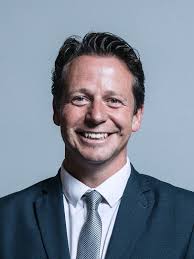
  • George Osborne – 2006 Speech to the Credit Today Conference

    George Osborne – 2006 Speech to the Credit Today Conference

    The speech made by George Osborne, the then Shadow Chancellor of the Exchequer, on 12 May 2006.

    “I am delighted to be here at the Credit Today conference, and to follow such an impressive array of speakers who have covered such broad subjects.

    I have been impressed by the focus of the credit industry on controlling risks and striking the balance between competition and responsible lending.

    That is what I want to talk about today.

    The story of the credit industry has a rich history, and is closely intertwined with the development of the modern economy that we live in.

    The first recorded loan transactions known to man date from Mesopotamian agreements etched in stone, paying interest in silver.

    And the Romans entered into contracts based on contingent liabilities.

    In early modern times, first in Holland and later in London in the sixteenth and seventeenth centuries, credit began to finance an expansion of world trade that heralded the beginning of the industrial revolution.

    To pay for the ships and crew that undertook global trade, the entrepreneurs of the day needed to borrow. Until this first expansion of credit, only kings had the gold to pay for ships. But as debt finance grew, so did the merchants who brought spices from the east, and cotton from the west, and returned with cloth.

    By the end of the seventeenth century, the Government too saw the advantage of credit, and in 1694 King William III set up the Bank of England to borrow from his people. That innovation is often credited with underpinning victory in King William’s war against France three years later.

    Since then the industry has expanded, and London has grown into the largest international financial centre in the world. Over a million people now work in the UK financial services sector, and in London, nearly one in ten is employed in finance. Financial products of all kinds, including credit, are one of our key exports.

    In recent years we have seen another expansion of credit, both private and public. Since the mid 1990s, the level of personal debt has risen in double digits each year, while inflation has remained low. And the level of private sector borrowing, on and off the balance sheet, has rocketed.

    Borrowing by households has risen to almost £1.2 trillion. That’s £40,000 for every family in Britain. A fifth of that debt is unsecured, borrowed on credit cards, personal loans, and overdrafts.

    This great expansion in credit brings both challenges and opportunities.

    Free access to credit allows people and families to plan their budgets. Gone are the days when we had to wait in turn for access to a mortgage, when the building society would tell us when we were considered responsible enough to buy our first home. With freer access to credit, young people can apply for mortgages when they choose.

    Unsecured credit helps us to manage our finances, to smooth over tricky times, and to plan when we spend. Access to credit allows us to move money over our lifetime, to spend when we need it, and earn it back later. So when we discuss the challenges that are posed by debt, we must not lose sight of the huge benefits that access to credit can bring.

    As in many markets, liberalised credit markets have boosted our freedom and boosted our economy.

    But as well as these great advantages, the expansion of credit has brought challenges. The Conservatives have been very aware of these challenges in recent years.

    There are two challenges I particularly want to talk about today. First, for some, especially vulnerable, families, too much debt can cause misery and great financial hardship. And second, high levels of debt, both public and private, make the economy more vulnerable to certain types of shock, and may put macroeconomic stability at risk.

    For families, and for the wider economy, more debt means more vulnerability.

    Most of us use our credit cards every week, and many pay off our balances at the end of each month, and we can manage our mortgage payments. But that isn’t the case for everyone.

    Just this week, the governor of the Bank of England described the rise in debt and bankruptcies as a ‘social problem that is materialising’. He is right. We are in danger of becoming credit card Britain.

    Last year, three million people had problems paying off debt. Another twelve million have kept up payments only after a struggle. 1.1 million people contacted the Citizen’s Advice Bureaux with debt-related enquiries – up 47% over the past five years. So debt is a significant problem for a small but important minority. For many of those struggling with debt problems are also the most vulnerable – often living from benefits or in badly paid jobs.

    The Financial Services Authority has spoken of a ‘financial crisis’ for 18 to 40 year olds. Average debt for 18 to 24 year olds has doubled to £15,000 since 1999. And Alliance and Leicester has found that those in their 20s pay as much on average in interest as those in their 30s and 40s, despite usually not yet having a mortgage.

    This is not a problem that is going away. As we as a nation get richer, problems with debt are getting worse. Bankruptcies have doubled in the past year. That may partly be due to a change in the law in England and Wales. But even in Scotland and Northern Ireland, where the regime has not been changed, bankruptcies have risen. Last year alone, 120,000 people were declared bankrupt – three times more than in 1997.

    Even despite the benefits of more freely available credit, we cannot ignore those whose lives are made a misery by debt.

    Like the case of a lady who built up £58,000 of unsecured debt despite telling her creditors that her only source of income was from benefits. Or the pensioner who attempted suicide after she acquired 25 personal loans and credit cards totalling £135,000 of debt over a decade. A man from Yorkshire whose only income was disability benefits accrued £40,000 in unsecured debt from several lenders. When he first applied for a card he had expressed doubts to the lender about his creditworthiness, but the lender advised him to ‘be creative’.

    We need to consider imaginative solutions to these interconnected and difficult problems.

    For policymakers who believe in markets, this leaves a difficult challenge.

    I instinctively believe in the power of business to generate wealth and opportunity, as well as the tax revenues that fund our public services and infrastructure.

    Like you I want a strong and healthy credit industry. And like you I want that industry to be responsible.

    That is what David Cameron said earlier this week when he talked about corporate responsibility.

    Every time a business behaves irresponsibly, it makes it that much harder to persuade people that business is a force for good. If the political response to corporate responsibility becomes the preserve of the left, then the response is over-regulation and yet more burdens.

    That applies in the domestic debt market too. Irresponsible lending to those unable to cope is bad for people, and it’s bad for business too. In the short term, it’s bad for the bottom line as irresponsible lending is less likely to be paid back. And in the long term, it harms the good name of business and encourages those who don’t believe in or understand business at all to interfere and impose new regulation.

    So what can we do?

    Last year the Griffith report, commissioned by the Conservatives and produced by Brian Griffith of Goldman Sachs, reported on possible solutions to the challenges we face. I am glad to say that some of those recommendations have been taken up. I might suggest four areas that we must consider in more detail.

    We must, for instance, continue the FSA’s work in financial literacy, so that all families understand the consequences of taking on debt. Well informed customers are better placed to borrow responsibly – and better financial literacy will lead in turn to even less need for regulation. Some people, for instance, believe that a higher APR is a good reason to choose a credit card. According to a survey by Norwich Union, over three quarters of people find finance complicated and around half said that complexity has put them off addressing their financial needs.

    As well as boosting financial literacy to improve the responsibility of customers, we must ensure that credit advertising and credit scoring are responsible. It is a knee-jerk reaction of an interfering Government that responds to this challenge with yet more regulation. But it is in the credit industry’s own interest to advertise responsibly.

    And we can support measures for helping families out of debt. I want to pay special tribute to the work of the Citizen’s Advice Bureaux and others in helping so many people who find themselves in difficult financial situations. Their services should be properly funded, because if they are not then it is the state that will have to pick up the bill.

    These are all step we should take. But many of the most difficult cases, like these, occur when people accumulate debt from many different lenders.

    While any one loan may be affordable, taken together, loans from many different lenders can tip a family over the edge. So responsible credit scoring should take into account not just defaults, but the financial stress of any applicant.

    But that sort of responsibility is difficult without adequate procedures for data sharing. The existing data protection legislation causes difficulties, even among lenders who want to share.

    So we should consider extending data sharing among lenders, particularly of unsecured debt, so that lenders know their clients’ full financial picture before agreeing more loans. I recognise the work that the industry and the Treasury Select Committee have done in pushing forward this agenda.

    It seems to me that data sharing doesn’t just help lenders to assess the reliability of a client. But, properly introduced, it would help to protect vulnerable clients from resorting to many different lenders, often to pay interest on other debt.

    In the past there was no need to share data. Credit was effectively rationed, through queuing. And the number of lenders was small. In 1971, there was just one credit card – the Barclaycard. Now, there are over 1,300 types of credit card, and over 70 million cards in issuance – that’s more than one for every man, woman and child in the country.

    So policy must adapt to changing circumstances.

    I acknowledge that there are concerns about data sharing. We would not want data sharing to become an unnecessary regulatory burden. But data sharing can improve the competitiveness of the credit market. Only with more accurate information about risk can lenders price risk more accurately.

    And data sharing benefits highly credit-worthy customers too, as lenders know who the low-risk customers are too.

    So I applaud the strides have already been made by some banks to share data with customers’ consent through credit rating agencies.

    We must strike the right balance, appropriate for the challenges that we now face.

    We can see that excess debt increases vulnerabilities at the personal level. And it causes vulnerabilities at the national level too.

    Over the past nine years, the ratio of debt to annual national income has doubled.

    Four fifths of the outstanding debt has been secured against housing, and has in part financed the rapid increase in house prices.

    As the debt and house values have risen in tandem, so the average homeowner’s balance sheet has not been damaged. But the mismatch between a fixed-price debt and a variable priced asset heightens exposure to a fall in house prices. With larger debts relative to income, the impact on consumption and therefore on the wider economy of a fall in house prices would be bigger.

    The remaining fifth of households’ debt, lent on credit card, personal loans, and overdrafts, usually funds consumption. Growth in the economy is at risk if it is mainly fuelled by consumption – both by individuals and by the Government – that is funded by debt.

    An economy built on borrowed money is eventually living on borrowed time.

    And on top of all the mortgages, credit cards, and bank loans, there is one man who has borrowed more than us all. The Chancellor has borrowed a further £100 billion on our behalf. He plans to borrow another £150 billion over the next three years. And that is before you add in the billions borrowed and hidden off the balance sheet.

    These twin deficits – in the public and private sectors – combined with a current account deficit of almost 4% of GDP, means that overall, Britain is borrowing from overseas to spend, and our imports are out of balance with our exports. In other words, we have a trade deficit, which over the first three months of this year was the largest on record.

    These imbalances in our economy may not reverse soon.

    Economists play a game of trying to predict when the structural imbalances will unwind with as much enthusiasm as politicians playing the game of when Tony Blair will depart. At least in our game there’s an end in sight.

    What the economists do agree on is that imbalances caused by profligate Government borrowing and high private borrowing makes our economy more vulnerable to instability, like a sharp exchange rate movement, or a fall in asset prices.

    So just as private lending should be responsible, Government must be responsible too. We must strengthen the fiscal rules, and instead of fixing the rules to fit our spending, we must fix our spending to fit the rules. We must be transparent about Government borrowing – we must share data too. In January we proposed a ‘triple lock’ on stability to do just that.

    The modern Conservative approach to debt is part of our broad economic strategy.

    To re-build the competitiveness of our economy, by entrenching stability, and encouraging growth.

    By taking long term decisions;

    by facing up to the challenges of the new global economy;

    and by trusting people, and sharing responsibility.

    We want to build an economic strategy that can make Britain the most competitive place in the world to do business, where Government doesn’t just get in the way, with rising living standards for all.

    We are at the start of a journey, as we build the ideas, and vision, and policies that will help Britain meet the challenges of the twenty first century.

    And I would like to ask for your help in travelling on that journey too. We want to work with you, listen to you, both directly and through our policy groups on economic competitiveness and social justice, and I look forward to participating in this debate and learning from it in the months and years to come.

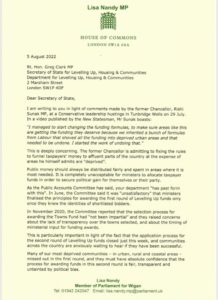
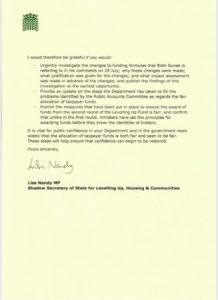
  • Lisa Nandy – 2022 Letter to Greg Clark after Rishi Sunak Admitted to Diverting Money from Deprived Areas

    Lisa Nandy – 2022 Letter to Greg Clark after Rishi Sunak Admitted to Diverting Money from Deprived Areas

    The letter sent by Lisa Nandy, Shadow Secretary of State for Levelling Up, Housing and Communities, to Greg Clark, the Secretary of State, on 6 August 2022 following the comments made by Rishi Sunak.

  • Nadhim Zahawi – 2022 Comments on August 2022 Interest Rates Rise

    Nadhim Zahawi – 2022 Comments on August 2022 Interest Rates Rise

    The comments made by Nadhim Zahawi, the Chancellor of the Exchequer, on 4 August 2022.

    I know today’s news will have been concerning for many people across the UK. I’ve spoken to Andrew Bailey, the Bank of England Governor to discuss the challenging global context and our continued focus to tackling inflation and supporting people with rising prices.

  • Lisa Nandy – 2022 Comments on Admission by Rishi Sunak he Removed Funding from Deprived Areas

    Lisa Nandy – 2022 Comments on Admission by Rishi Sunak he Removed Funding from Deprived Areas

    The comments made Lisa Nandy, the Shadow Secretary of State for Levelling Up, Housing and Communities, on 5 August 2022 following the comments made by Rishi Sunak in Tunbridge Wells.

    This is scandalous. Rishi Sunak is openly boasting that he fixed the rules to funnel taxpayers’ money to rich Tory shires. This is our money. It should be spent fairly and where it’s most needed – not used as a bribe to Tory members. Talk about showing your true colours.

  • Rishi Sunak – 2022 Comments on Taking Money from Deprived Urban Areas

    Rishi Sunak – 2022 Comments on Taking Money from Deprived Urban Areas

    The comments made by Rishi Sunak, the former Chancellor of the Exchequer, at a Conservative Party campaign event in Tunbridge Wells on 29 July 2022.

    I managed to start changing the funding formulas, to ensure that areas like this get the funding that they deserve. We inherited a bunch of formulas from Labour that shoved all the funding into deprived urban areas and that needed to be undone. I started the work of undoing that.

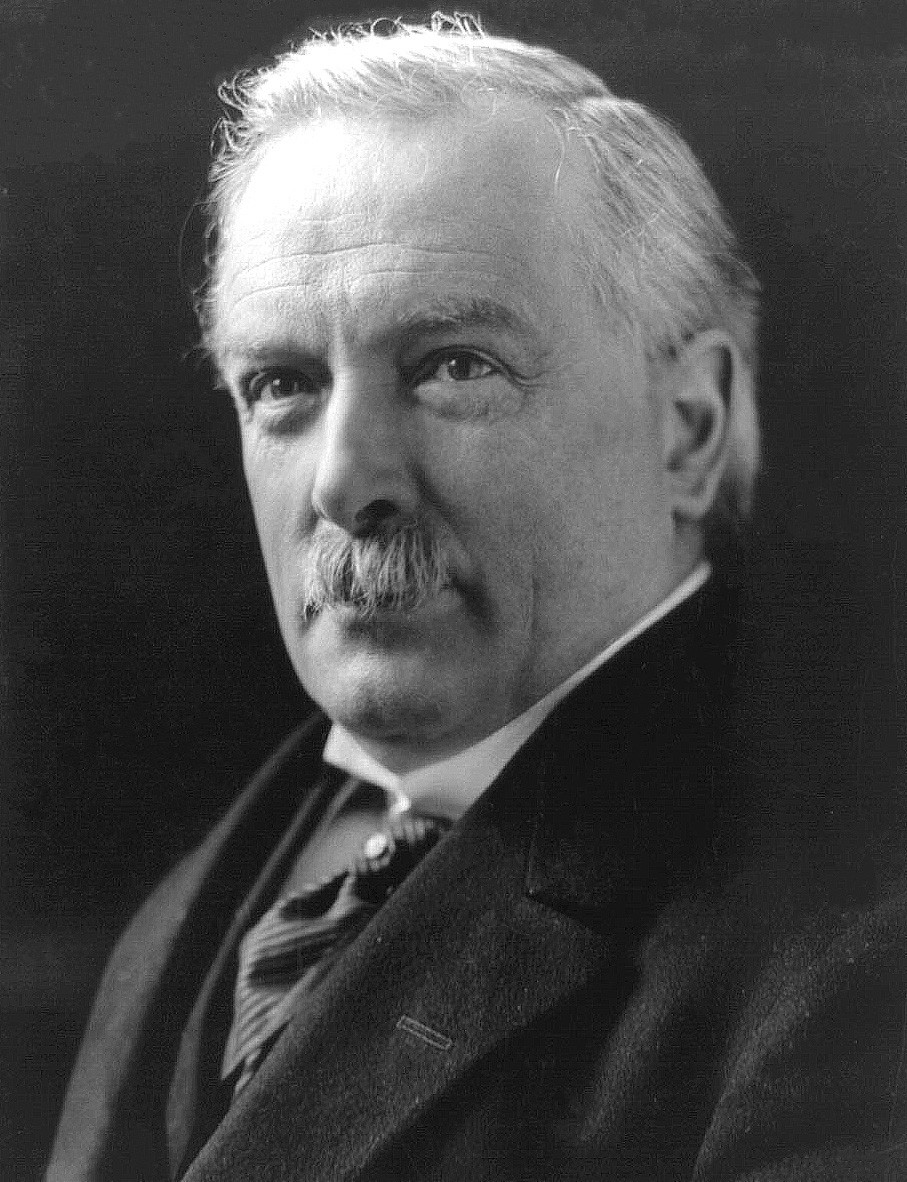
  • David Lloyd George – 1928 Speech at the National Liberal Federation

    David Lloyd George – 1928 Speech at the National Liberal Federation

    The speech made by David Lloyd George, the former Prime Minister, on 12 October 1928.

    I have to apologise for interrupting your agenda and for taking up a part of your morning conference, and I should not do so if I had not what is known in Parliamentary language as a definite matter of urgent public importance to put before you.

    We are on the eve of what may turn out to be one of the greatest and most momentous general elections in the history of the country, and there are questions which arise before the election and in reference to the conduct of the party after the election with regard to which it is well we should take counsel.

    We have had the group system in the Parliamentary affairs of this country for some time. It is difficult to predict what may happen in the future, but it looks as if it were to become an integral part of the democratic machinery of this land, at any rate, for a long time to come. Extremists to the Right and extremists to the Left will probably always have their separate organisations, and there will always be a body of sane opinion in the middle that will also seek definite expression. The problem in front of us is what will happen to us in the next Parliament if none of those groups is able to secure a definite majority that will enable them to form an Administration and to carry through their task during the lifetime of that Parliament.

    There has been a good deal of discussion on the subject. The Prime Minister, addressing a meeting in Yarmouth, issued a challenge to the Liberal Party as to what we should do if we were in a minority. Would it not be better that he should have answered that question himself? Is he not just as likely to be in a minority as any other party? If he is, will he support a Liberal Government or a Labour Government? I know which he would prefer, but he dare not say so. But we are just as entitled to ask the question of him as he is to address it to us.

    And the Socialists have been very busy discussing the same question, and rightfully so. It is a matter of growing urgency, and may become a very urgent problem in June of next year. It is right we should all be in a position to give our answer when the time comes. On the last occasion, owing to the action of Mr. Baldwin, that crisis was precipitated upon the parties without our being ready, and we had to come to our decisions in a hurry. Now we have plenty of time to think about it. Let us do so.

    Some of the Socialists are discussing it in a manner which is temperate, courteous, and fair. There are others who are exceedingly offensive. They rudely refuse invitations that were never extended to them. It will be time enough for them to answer, to refuse offensively, when they get a card from the Liberal Party with R.S.V.P. written on it. It has not been issued yet, but that does not prevent us from being alive to the importance of discussing it among ourselves, or clearing our own minds so that when the crisis arises leaders will have the mind of the party upon the subject, and will be able to come to a clear, definite decision.

    A Question that must be Faced

    During the last few weeks more particularly the leaders of the party have been meeting to discuss the matter between themselves, and what I say about it will not be the expression of my own opinion, but the collective opinion of the leaders of the party. I know it would be very easy to shirk giving the answer. There is the famous answer given by Abraham Lincoln when he was asked what he would do in a certain contingency. He did not particularly want to answer, so he said: ‘I never cross the Fox river until I come to it.’ Well, I do not think that will do now. Candidates are being asked what we mean to do in certain contingencies. Liberal electors want to know, and the general electorate of this country, especially the wavering electorate which is terrified of Socialism, want to know what Liberals will do before they make up their minds. We propose to answer them, and I am going to ask your patience even if I refer more than I am in the habit of doing to notes, because this is an important occasion, and I want not only to weigh my words, carefully, but to give as careful expression to them as possible.

    Let us review the possibilities of the next general election. I am much too old a hand to commit myself to a forecast, especially under present conditions. If it were a straight fight I would predict to you that the Tory Party would not get 200 members in the next Parliament. But it will not be a straight fight.

    There are three predictions I will make. The first is that there will be an overwhelming majority of votes recorded in condemnation of the present Government. They are in a minority of a million now. There will be many more millions against them the next time. It will be an avalanche. The next prediction I make is that there will be an enormous accession of strength to the Liberal poll; and the third is that whatever party will be in a majority it will not be the Socialists.

    Our Grotesque Electoral System

    But even if there is a sweeping reduction in the Tory poll and a doubling and trebling of the Liberal vote, that is no guarantee as to the composition of the next Parliament, and that is the new element of doubt which has been introduced. We have an anomalous, unjust, and grotesque electoral system which is a fraud and a mockery of democracy. Just look at it. In the present Parliament there is one Tory member for every nineteen thousand votes recorded at the last election. There is a Socialist member for every thirty-six thousand votes. There is a Liberal member for every seventy thousand votes. Under those conditions no one can judge what will happen with a system of that kind. In the South of England, as everybody knows, there are eleven counties, and for four hundred thousand votes recorded for the Liberals there is only one Liberal member. And if it had worked in the same sort of way in the rest of the country there is no reason why the remaining two and a half million votes should not have only four members. We were lucky enough to get forty. Really we might have got five.

    Under this system in the next general election nobody can tell which way it will work, whether for Liberals, whether for the Socialists, whether for the Conservatives. In 1923 there was one Liberal member for Manchester for every fourteen thousand Liberal votes and one Tory member for one hundred thousand votes. You never know how this special Providence will work.

    Next time the Liberals may have only a third of the members they would be entitled to in proportion to their votes, but they might have twice as many as they are entitled to. You cannot predict under those circumstances. This is not government, it is a gamble and, next time, who can tell? When that little ball stops rolling it may drop in the Liberal number. At the by-elections the Liberal strength is growing and the Conservative is waning, and the Labour strength is something in between the two. One of the most encouraging features of the last two years is that we have won five by-elections in triangular contests. The tide is rising. We were stranded on this sandbank in 1924, but the tide of sanity is rising, and next time it will enable the Liberal craft to float over the sandbanks and the reefs of the electoral system.

    They say, ‘There is a difference between a by-election and a general election.’ Don’t I know it! There will be a difference this time, and I want to tell you why. When you come to a general election the electorate will be face to face with deciding who is to govern them for the next five years; whether they are going to renew the mandate, the trust, the authority of the people who have let the country down so badly, who have done nothing to pull it through our great trade emergency, and who have thoroughly muddled the cause of peace and disarmament in the world. They will hesitate, and they will look round, and they will say, ‘What is the alternative?’ They will look at the Socialists, and one look will be enough. They will pass by on the other side. And if the Socialists were the only alternative, I honestly believe the electors of this country would say, “Well, all we can do is to put the other fellow in again and trust to Providence; a Providence that has extricated this old country very often from the muddles made by its Ministers and its statesmen, and which may help us through in spite of these muddlers”.

    The Alternative Government

    But there is another alternative, and we have got to present it – the alternative in policy, the alternative in programme, the alternative in a definite scheme of practical work to extricate the nation out of its difficulties. And I should like you to allow me one word on that. We do not dwell on our assets. We are a modest party. But I want to say this, that Liberalism can command a larger number of men of high distinction who can point to unchallenge­able success in responsible spheres of activity for their country than any other party in the State.

    I will just run over a few of the names. Lord Reading, one of the most successful leaders that this country ever had at a very critical moment. To his financial advice we owe more than I can tell you. As Viceroy in a critical moment he pulled us through very grave difficulties. There are men like Lord Beauchamp and Lord Buxton, who showed wisdom in positions demanding judgement, tact, and dexterity as Governors of some of our greatest Dominions. There is Sir Herbert Samuel, who achieved such success as the first Governor of probably the most renowned country in the world. And if you will allow me to say so, there is nothing I am prouder of than the fact that as Prime Minister I had the honour of recommending him to that post to the Crown. There is Sir John Simon, the greatest lawyer in the British Empire, who has been chosen by the present Government, who have on a second occasion shown their confidence in the Liberal leaders. In the first place, they did it for Sir Herbert Samuel and now for Sir John Simon by appointing him at the head of the Commission to decide, I should say, one of the most delicate and difficult problems of the Empire today. I had the pleasure of consulting him about this statement before he left for India, and he is in full accord. And then we have men who have held very high offices in the State, like Lord Grey, Mr. Runciman, and our Chairman (Sir Chas. Hobhouse), Mr. Macpherson, Dr. Macnamara, who was responsible for the whole present system of unemployed insurance, which, in my judgment, has saved a vast amount of suffering, and, I think, saved this country probably from revolution. And if there were testimonials required for another Liberal leader I could get a sheaf of them signed by some of the most distinguished members of the Tory Government today as to the services rendered by him to the Empire.

    There is no other party which can call together such an assembly of men for the direction of the affairs of the nation, who can show such a record of successful achievement in exalted and highly responsible positions. I challenge any of them to point to any Ministers either in the present Government or its predecessor who can show such a record. I can point to many who can claim honestly a record of failure which in its magnitude compares with the record of success of some of the gentlemen I have mentioned. So that superior people who write off the chances of Liberalism in a light-hearted way forget that these facts will be present to the minds of the electors of this country when they come to choose next time.

    That is why, as we approach the general election, in spite of one or two setbacks due to the group system, there is a growth of Liberal strength, especially the last year or two. I have never seen a horse race in my life, but I am going to do so next week for the first time. But I will tell you what I am told. There are men who can check me if I am wrong. Sometimes there is a great surprise; the horse that the knowing ones think will win is a way behind, and another horse not supposed to be in the running comes cantering in – owing to atmospheric conditions. There are certain conditions where stamina tells and the flashy ones are no good. You can see the horse at first a long way behind, nobody taking any note of him. You can see him coming along, coming along, and at last passing them one after the other, and getting past the winning-post first, to the dismay of all the experts. That is the Liberal horse. And the electioneering bookies are going to be let down pretty badly. In the last two years he has already passed the Labour horse; our figures are above it. Even in Cheltenham we left him a long way behind. Whatever happens in Tavistock, we shall have left the Labour horse behind. We will soon leave the other one behind.

    Possible Results of the Election

    So I am not one of those who say that the Liberal Party has only to consider what it will do if it is only a little handful holding the balance between the other two parties. The other parties will have to consider what they propose to do with their balancing power. And there is another factor to which I would like to call your attention, which is encouraging. The larger the number of aggregate votes which a party gets the better its proportion of members. The Tory Party had more votes than anybody, the result was that it secured one member for every nineteen thousand. The Socialists come next with one member for thirty-six thousand. We come third in our aggregate poll, and we have only got one member for every seventy thousand votes, which means that if you increase the aggregate of your votes you increase the chances of getting a larger proportion of members.

    Let us have the possibilities. There are roughly only two possibilities: either one party will have a majority over all the others or no party will have a majority, and those are the only two alternatives. There is a third possibility, or I should say certainty, and that is that one of the parties without having a majority will have a larger following than either of the other two.

    Let us say that the Liberal Party get the largest number of votes. Then we will have a Liberal Government, and we shall have Liberal measures. We shall have a Liberal spirit in administration at home and abroad. We shall have national and international peace dealt with on Liberal lines. We shall have a policy of peace and disarmament, of economy in expenditure, of development of our national resources leading to the permanent enrichment of the land, and at the end of five years the nation will bless the chance that gave them a Liberal Government.

    If Liberals have the largest party they will also form the administration and submit their policy and their programme of work to the judgment of Parliament and the country. And if they are turned out by a combination of Tories and Socialists they will know what to do. Believe me, if there is a combination of Socialists and Tories in the next Parliament it will not be the first time you have had it, either in Parliament or out of Parliament. You will not hear very much said about that, but it would be the realisation of a dream of Mr. Ramsay MacDonald, who once upon a time said he had a natural affinity for the Tories because they were gentlemen. And if there is a Liberal Government in power those gentlemen of England, Tories and Socialists together, will march arm in arm through the lobby to turn it out. I should like to see that.

    Now, these considerations can apply to any party that has a majority or is the largest party. If the Tories have a majority they will form a Tory Government, and we will have to put up with it and survive it as best we can, and if they have the largest party and will form a Government the same thing applies to the Socialists. So that therefore there is no difficulty about these things. The one difficulty is the case of deadlock.

    What if there is a Deadlock?

    What the nation wants to know is what will be the attitude of Liberalism in that event – if you had a complete deadlock in Parliament. The Socialists have already given their answer. They have made it clear that under no conditions will they associate or co-operate or enter into any compact or understanding with Liberals unless they swallow Socialism, horns, hoofs, and all. We say at once we are not there, we never shall be there, unless we cease to be Liberals. Socialists are not equally emphatic about what they will do with the Tories.

    A Socialist leader the other day said that if the Socialists entered into any compact with the Liberals, that is the straight way to Fascism. That is wrong historically. How did Fascism arise? It has its lesson for us in certain eventualities. There was a failure of the groups in the Italian Parliament, and notably of the Progressive groups, to form a Government at all. There were gaps and intervals of weeks, and that led straight to a dictatorship. Liberals have the supreme trust of safeguarding democracy, and they must see that does not happen.

    There can be no doubt as to the attitude of the Liberal Party under those circumstances. The Liberal Party may be relied upon in that case to determine its course in reference to one consideration and one only, and that is what will be best in the interests of the country. It will realise that the King’s Government must be carried on and that there must be no paralysis of the Government of this country. In the highest, and not in the blatant, sense the Liberal is a patriotic party. It does not wrap itself in the Union Jack or stick its plum puddings with little flags. Nevertheless, it is essentially a patriotic party, and when another party claims a monopoly of patriotism we regard it as a piece of impertinence. We have a special reason as Liberals for pride in Britain and her Empire. What is best, what is noblest, what is most enduring in that Empire is something that was brought into it by the efforts of three hundred years of Liberalism in its free institutions, in its free trade, in the condition of the people and the relation of one part of the Empire to another and to the Mother Country, in the very fact that our great Dominions are in the Empire at all. The pillars of British strength have been hewn out of the Liberal quarry by Liberal hands. It is a Liberal Empire, and Liberals therefore have a special responsibility to see the structure is not impaired by any friction or any partisanship on their part.

    And, whatever Parliamentary conditions may be, as far as lies in the power of the Liberal Party they will see that the King’s Government is carried on. If they cannot form a Government of their own, and if, unfortunately, the alternative should be either a Tory or a Socialist Government, although I am not so much concerned with which of these parties is in power – it is only a choice of two evils in the end – our main concern will be what they will do or fail to do. We are neither Socialists nor Tories, but Liberals, and as such are equally opposed to both, and have no particular preference for either. There are historical cases of men showing great anxiety as to the method of their execution, but if the prosperity and well-­being of this country is to fall into the hands of either of these two Governments – well, Liberals will have very little to choose between strangling prosperity with a rope of tariffs or drawing and quartering it with Socialism. And therefore our task will be to do our best to minimise the amount and circumscribe the area of the mischief which they will render and to do all in our power to extract the maximum of good out of an unpropitious situation.

    But I am not without hope that if there be a deadlock the common sense of this nation, which is, after all, the greatest democratic community in the world and the one country in the world that thoroughly understands democratic institutions, that its common sense will prevail over all party considerations, and that we shall always realise the gravity of the emergency through which the country is passing. We cannot, of course, whatever befall us, enter into any understanding, formal or informal, with another party under any circumstances to advance measures or policies in which we disbelieve and which we in our hearts know to be detrimental to the interests of our country.

    For instance, whatever Government is in power we shall resist every effort to overthrow the great fiscal system upon which the trade and commerce of this country have been built. In spite of its depression, it has the greatest international trade in the world. Other nations at Geneva admit regretfully that our policy is the right one, but they cannot get their feet out of the tariff stocks.

    We shall resist every attempt to set up what is known as a Socialist State and to substitute the nationalisation of all the means of production, distribution, and exchange for private enterprise. This we shall resist.

    The Conditions of Co-operation

    But I am not blind to the fact, and I even rejoice in it, that even if a Liberal Government as such were not obtainable next Parliament owing to the operation of our electoral system, there is a vast and fertile territory common to men of progressive minds in all parties which they could, at any rate during this interval, agree to cultivate together without abandoning any of the principles and ideals which they cherish. But under these circumstances the conditions of co-operation and understanding must be honourable to all and humiliating to none. Those who were in the 1924 Parliament know what I mean. But let me say for once and for all, as far as I am concerned – and this is the view of the Liberal leaders I have consulted – we shall decidedly and emphatically decline to admit the possibility of the experiment of 1924 which proved so disastrous. It was only justifiable as an experiment, and history may or may not say it was necessary as such. It was no fault of ours that it failed. But it cannot be repeated.

    In my judgment the Socialist leaders, by their ineptitude then, threw away the last chances they will get in this generation of forming and carrying through a Socialist Administration. They have no reasonable hope of securing a Socialist majority in our time, and I cannot see Liberals, after the unfortunate experience of the past, again taking the risk of committing the life and fortunes of their party so completely to the keeping of any other party, be it Tory or Socialist.

    A prominent Labour leader, in one of his articles the other day, made it clear what he thinks will happen. He assumes that if we are in a minority we will help the Socialists into power, but once they are there this great Government will introduce measures of such beneficence that we dare not resist them, and we shall be unwillingly chained to the Socialist chariot to the end of Parliament and then will be comfortably put away. In vain is the net spread in the sight of a bird caught in the same net before and escaping with his life, but leaving a good many of his feathers behind. That is my answer to that gentleman.

    An Independent Party

    The question of our best course to pursue in a particular juncture, or in a particular Parliamentary situation, or on a particular Parliamentary occasion must be left necessarily to consultation amongst the chosen leaders of the party at the time. You cannot dictate or decide this in advance. We must judge them at the time. It would be folly to try now to determine. We can only make our general position clear. We shall fight the general election as an independent party. We shall act together in the next Parliament as an independent party. Our main concern will be to consider the best method of advancing certain ideas and promoting certain practical measures which we regard as being essential to the well-being of the nation, the advancement of the cause of peace, the pressing of a general measure of disarmament as the only security for peace, the grappling with the national emergency with a view to the improvement of trade and employment. This will include comprehensive measures for reconditioning the country, the development of our national resources in and under the soil, the cleansing of the land of slums, the solution of the problems of transport, and measures of temperance reform. We shall claim the full and free right to censure incompetent Ministers either by speeches or by votes in the lobby, whatever the consequences may be, and whether it be Tory or Socialist or anybody else.

    And we shall certainly insist with all our strength upon the next Parliament dealing with the outrageous electoral system, which robs millions of good citizens in this country of their fair share of government. We must have a system to enable the will of the people to be fairly expressed in the House. We claim nothing but justice. Quite frankly, neither of the other two parties understands political justice. The Tories and the Socialists alike laugh when we present our case for redress – the fact that we cannot get one-fourth of representation for our voters that the Tories get, who have one man for every nineteen thousand voters, while we must have seventy thousand Liberals to return one Parliamentary representative. They know it is unfair, but they profit by it. Fair play! It is quite unknown to either where their interests are involved. They are both essentially class parties. That is their strength, that is their weakness; both fighting for class advantages and privileges. Socialists are not fighting for the working classes. They are fighting for that proportion of the working classes that vote Socialist.

    The Liberal Party will Fight to Win

    And I want to say one thing further. After my close observation of what has been going on in the country and in Parliament we must expect no quarter from either of those parties, and we do not ask for it. I can see them conspiring and intriguing, separately and together, to destroy Liberalism in Parliament and out of Parliament. I have seen it in the House of Commons these last four years. We have a small party. We are only entitled to very limited opportunities for raising discussions. I have seen the Tory Party and the Socialist Party meeting behind the Speaker’s chair to deprive our little party of the limited opportunities they have for discussion. And the meaner of the two is the Socialist. I have seen where the Socialist and Tory Whips agreed together to closure a debate on an important financial matter imposing new taxes merely to prevent Liberals from taking part in that discussion. I have given the challenge. If they deny it I will give several illustrations. I throw the challenge out here and now.

    In the country there is no doubt they are working together. Why do I say that? If you notice the seats where the Liberals in a straight fight would have an absolute certainty of winning, and both the other parties know they would win, what happens? Even although the Labour Party knows perfectly well they have no chance of getting anywhere near, they put up a candidate to wreck our chances, and the Tories return the compliment by putting candidates in places where they have no chance. In Middles­brough, in Halifax they had no chance, and the Tory Party preferred letting Labour in. Why are they playing into each other’s hands? I can see it in my own county. There is a Labour candidate in the county seat who has no chance in a straight fight, and so the Tories, who will barely escape without paying a forfeit and who have not the ghost of a chance, are putting a Tory candidate up to help him. And there can be no possible purpose except to put the Labour man in instead of the Liberal for that constituency. In my constituency Labour returns the compliment by putting up a candidate to help the Tory win that seat.

    They are playing into each other’s hands like this all over the country, and the Socialists and the Tories say, ‘Look at those Liberals; they cannot last.’ They are people who like to talk like that. They are conspiring all over the country in and out of Parliament.

    I have seen it in Tavistock, their abuse of Liberals and their respect for Labour leaders. They are combining to attack the Liberals because they think that they will then get Liberalism out of the way, and that it will then be Tory Government, Socialist Government, Socialist Government, Tory Government, and no Liberals to interfere with mismanagement, muddle, wrong policies. The country will have a choice of muddlers with no Liberals to interfere. And they say to each other, ‘Keep it up. This party will disappear.’

    They tried that game, the Tories did, with Nonconformity. No careers for them, no bench of magistrates, nor any offices in the House of Commons, no entrance to the university, and even to this very hour there are thousands of schools maintained exclu­sively out of the rates where no Nonconformist can become even a pupil teacher. What did they say? ‘Keep it up and Nonconformity will vanish.’ Its altars call for the devotion of more millions than ever. We have got the same game with Liberalism. They said: ‘Keep them out of Parliament, keep them out of office. See they do not get in. You play the game here and we will play the game there, and in some places we will play it together. We will squeeze them out.’ No they will not, ever. They do not understand the breed of Liberalism. We shall fight in the next election, we shall fight in the next Parliament. If necessary, Liberals will go on fighting one, two, three Parliaments, yea twenty, if necessary. In the end they will triumph, for their cause is the cause of right and of reason.