Blog

  • Hilary Benn – 2004 Speech on Increases in the Foreign Aid Budget

    Hilary Benn – 2004 Speech on Increases in the Foreign Aid Budget

    The speech made by Hilary Benn, the then Secretary of State for International Development, at Church House in London on 2 June 2004.

    In government, Labour has given a lead in international efforts to tackle global poverty.

    Compared with 1997, today more of our nation’s wealth is being spent on overseas aid – to directly improve the lives of millions of men and women living in poverty – with whom we share this small and fragile planet.

    The UK will spend £4.5 billion on aid by 2005/06 – a 93% increase in the aid budget since 1997. In sharp contrast to this record, the Tories are committed to a real terms cut of £229 million in the Department for International Development’s budget over two years, reducing aid to some of the world’s poorest people.

    In office, we have created a separate Department for International Development – recognised around the world as one of the most effective development agencies in the international system. We have led international action to wipe out debt for the poorest nations – relieving $70 billion worth of debt so far – with the UK providing 100% bilateral debt relief for the world’s poorest countries. And we have introduced the International Development Act which says that British aid must be used for the reduction of poverty. Our resources are now targeted on supporting the internationally agreed UN Millennium Development Goals, and by next year we will focus 90 per cent of our bilateral aid on the poorest countries in the world, including £1 billion a year to Africa.

    Since 1997, this Labour government has spent £800 million on helping children to get into school around the world; over the next four years this will rise to £1 billion going on education. The UK is now the world’s second largest bilateral donor in the global fight against HIV/AIDS, and we have committed $280 million to the Global Fund to fight AIDS, tuberculosis and malaria up to 2008.

    Labour’s increase in development assistance has helped to bring real improvements in the lives of the world’s poorest people. Kenya now has an additional 1.2 million children in school thanks to a UK grant of £10 million. Poverty in Rwanda, where the UK is the largest bilateral donor, has decreased from approximately 70 per cent in 1994 to under 60 per cent in 2002. In Uganda immunisation coverage has increased from 41 per cent to over 70 per cent. And there are many more success stories.

    Four years ago, the international community united in committing itself to the Millennium Development Goals: to halve world poverty, reduce infant and maternal mortality, and get all of the 113 million children of primary age, not in school currently, into a classroom. We must now ensure that the promises we have made on aid, trade, debt relief and sustainable development are delivered. It is my belief that international development should be an area where there is consensus between the mainstream political parties. Britain is, after all, leading the fight to tackle global poverty, and for our fight to succeed in persuading international partners abroad, our hand should be strengthened by support at home across the political spectrum.

    Despite the poor Tory record on overseas aid – in office, the Conservatives halved the aid budget as a proportion of national income from 0.51 per cent of GDP in 1979 to 0.26 per cent in 1997 – I had hoped we had seen a conversion. In 2002, the then Shadow Chancellor Michael Howard said the Tories would support measures we announced in that year’s Spending Review to increase the budget for international development.

    But the two-year cash freeze in international development announced by the current Shadow Chancellor Oliver Letwin would mean a real terms cut of £229 million in the development budget.

    So, having pledged to meet our commitments, the Conservatives have now broken that pledge, and in doing so have set their face against the growing international consensus about the need for more aid. They have committed themselves to a real terms cut in public spending which would affect help for some of the poorest people in the world.

    With typical candour John Bercow has admitted, “I cannot say to you that a freeze would not apply to the international development budget.” It would be disingenuous for the Tories to pretend a cut of this scale could come from waste or without eating deep into the international commitments we wish to make. This is especially so given Oliver Letwin’s confirmation last week that the Tories are looking to reduce public spending as a share of GDP.

    Let me illustrate the scale of the cuts the Tories would need to find.

    The first year of Conservative cuts would amount to the equivalent of eliminating the UK’s annual programmes for the Sudan (£14 million), Sierra Leone (£40 million) and Ethiopia (£57 million).

    92,000 people could be lifted out of poverty each and every year with the money the Tories want to cut.

    690,000 children in Africa could be provided with school places each year with the money the Tories want to cut.

    For each £100m spent on education in Asia, we could put an additional 2 million children in school. Spent on health in Asia, this could save the lives of another 250,000 children under 5, or avert over 50,000 maternal deaths

    The Tories must now explain where the £229 million cut from DFID’s budget over 2 years would be found.

    They must also explain why, having supported EU action to co-ordinate overseas aid as part of the Maastricht Treaty in 1992, they are now calling for withdrawal from the EU overseas aid programme.

    Europe plays an important role in our efforts to alleviate global poverty. The EU is the biggest donor in the world for humanitarian aid and the third largest donor for development assistance. The EU is a major contributor, for instance, to the Palestinians in the Occupied Territories.

    Labour believes we should continue to press for reform in the way EU aid is used: to increase the proportion spent in low-income countries and to focus aid where it can have most impact. We also want Europe’s complex and slow procedures to be further streamlined and simplified.

    With Labour, Britain has led the demand for fundamental reform of the EU’s development programmes to contribute to global poverty reduction. This is in contrast to the Tories who did nothing to improve the quality of EU aid while in government and now claim that they can withdraw the UK’s contribution to the EU’s aid programme. This isn’t possible. The Tories cannot simply unilaterally withdraw from existing treaty obligations without the agreement of the 24 other EU member states – but they have yet to identify one country that would support them. It is not credible for the Tories to pretend they can fulfil this commitment unless they plan to withdraw from the EU.

    Oliver Letwin has now placed the Tories in a position where they are reneging on a pledge to match Labour’s spending on international development. They have made what should be an issue of consensus an issue of contention, and it is the very poorest people in the world who would suffer from their cuts.

    And that’s why Labour intends to continue making international development a priority. Because it is the right thing to do. It is the moral thing to do. And because unless we tackle poverty, injustice and inequality, then we will never have a safe and secure world in which we can all live.

  • Tony Blair – 2004 Speech on Public Services

    Tony Blair – 2004 Speech on Public Services

    The speech made by Tony Blair, the then Prime Minister, on 23 June 2004.

    Over the coming three months, I will be setting out an agenda for a third term Labour Government. A major part of that agenda will be about the future of public services in health, education, law and order, transport, housing and employment. But the battle over public services is more than a battle about each individual service. The state of our public services defines the nature of our country. Our public realm is what we share together. How it develops tells us a lot about what we hold in common, the values that motivate us, the ideas that govern us.

    The New Labour Government was created out of the reform of progressive politics in Britain. For the first hundred years of our history as a party, we had been in government only intermittently.

    Our ambition was to govern in the way and manner of Labour in 1945 and the reforming Liberal Governments of the late 19th and early 20th century: to construct a broad coalition of the better off and the less advantaged to achieve progress, economic and social, in the interests of the many not the few.

    In seven years, we have delivered a stable economy, rising employment, and big reductions in unemployment and poverty. With that behind us, we have invested in our public realm. In particular, we have systematically raised the capacity and quality of our public services. Over the last few months there has been a growing recognition and acceptance that real improvement is happening.

    Now, on the basis of this clear evidence of progress, is the time to accelerate reform.

    In simple terms, we are completing the re-casting of the 1945 welfare state to end entirely the era of “one size fits all” services and put in their place modern services which maintain at their core the values of equality of access and opportunity for all; base the service round the user, a personalised service with real choice, greater individual responsibility and high standards; and ensure in so doing that we keep our public services universal, for the middle class as well as those on lower incomes, both of whom expect and demand services of quality.

    I am not talking about modest further reorganization but something quite different and more fundamental. We are proposing to put an entirely different dynamic in place to drive our public services: one where the service will be driven not by the government or by the managers but by the user – the patient, the parent, the pupil and the law abiding citizen. The service will continue to be free, but it will be a high quality consumer service to fit their needs in the same way as the best services do in other areas of life.

    This is a vision which combines choice, excellence and equality in a modern universal welfare state.

    We will contrast such a vision with that of the Conservatives whose essential anti-public service ideology is shown by their policy to subsidise a few to opt-out of public services at the expense of the many; to abandon targets for public service performance; and to cut the overall amount of public spending drastically. There are frequent gyrations in their precise policies; but unchanging in each new version is that a privileged minority can and should opt out in order to get a better service.

    By contrast, I believe the vast majority of those on centre-left now believe in the new personalised concept of public services. It is true that some still argue that people – usually other people – don’t want choice. That, for example, they just want a single excellent school and hospital on their doorstep.

    In reality, I believe people do want choice, in public services as in other services. But anyway choice isn’t an end in itself. It is one important mechanism to ensure that citizens can indeed secure good schools and health services in their communities. And choice matters as much within those institutions as between them: better choice of learning options for each pupil within secondary schools; better choice of access routes into the health service. Choice puts the levers in the hands of parents and patients so that they as citizens and consumers can be a driving force for improvement in their public services. And the choice we support is choice open to all on the basis of their equal status as citizens not on the unequal basis of their wealth.

    This is the case we will take to the British people. It is a case only possible because of our investment. Without investment in capacity and in essential standards and facilities, sustained not just for a year or two but year on year as a matter of central national purpose, there is no credibility in claims to be able to extend choice to all. They become mere words without meaning for the great majority of citizens, as demonstrated by the last government which promised these things but refused the investment in capacity and so ended up making its flagship policies on choice the assisted places scheme, a grammar school in every town, and subsidies for private health insurance; all of them opt-out policies for a small minority at the expense of the rest.

    Some propose to return to these policies. To return to choice for the few. To offer what is in effect not a right to choose but a right to charge. To constrain investment, either by directly cutting it or by siphoning it off money to subsidise those currently purchasing private provision.

    Our goal is fundamentally different and more ambitious for the people of Britain and I will set it out today.

    Let me go back to 1997 and describe our journey as a government.

    We inherited public services in a state of widespread dilapidation – a claim almost no-one would deny. This wasn’t because public services and their staff were somehow inferior; on the contrary, our health and education services had achieved about as much as it was possible to achieve on constrained budgets and decades of under-investment. The problem was too little resource, and therefore grossly inadequate capacity in terms of staff and facilities.

    This under-investment was not tackled in the Eighties and into the Nineties, even as economic conditions allowed. On the contrary, it was maintained as an act of policy and philosophy right up until 1997. So in 1997 the hospital building programme had ground to a halt, despite a £3bn repairs backlog. Capital investment was at its lowest level for a decade. Waiting lists were rising at their fastest rate ever. Nurse training places had been cut by a quarter. Training places for GPs were cut by one fifth. In education, teacher numbers had fallen by 36,000 since 1981. Funding per pupil was actually cut by over £100 between 1992 and 1997. Police numbers were down by 1,100.

    Underinvestment and chronic lack of capacity led, inevitably, to a failure to meet even basic standards. Standards not simply unmet, but undefined, for the simple reason that defining them would have demonstrated how far each public service was from achieving them.

    So there was no national expectation of success at school for young people – although nearly half of 11 year-olds were not even up to standard in the basics of literacy and numeracy and a similar proportion left school at or soon after 16 with few if any qualifications.

    There was no effective maximum waiting time either for a GP appointment or for hospital treatment – although the hospital waiting lists stood at over 1.1 million and many patients were waiting more than 18 months even for the most urgent treatment, with rates of death from cancer and heart disease amongst the highest in Europe.

    There were no national targets for reducing crime or dealing with youth offending, though crime had doubled since 1979 and it was taking four and a half months to deal with young offenders from arrest to sentence. Community penalties were not properly enforced, fines were not paid.

    And not only were none of these basic foundations in existence. Perhaps worse, there was a fatalism, cultivated assiduously by those opposed to public spending on ideological principle, that this was the natural order of things, that somehow there was a ‘British disease’ which meant we were culturally destined to have second-rate education and health and rising crime. The nation with some of the best universities in the world somehow destined to have crumbling, substandard primary and secondary schools; the nation which under Labour founded the National Health Service in the 1940s – one of the great international beacons of the post-war era – still leaving patients on trollys in corridors, with easily treatable conditions – hip and knee-joint replacements, cataracts – largely untreated because of lack of facilities.

    Our first task in 1997, within an indispensable framework of economic stability and growth, was to invest in capacity; to herald public investment in education, health and law and order as a virtue not a curse; and to define basic standards and to reform working practices so that extra resources delivered real capacity improvements service by service. We did so with confidence and optimism. With confidence that public service staff – the doctors, teachers, police officers, and the vital ancillary staff of all kinds – would rise to this challenge, with the better pay, training and incentives they needed and deserved. And with optimism that they would bring abut radical improvement – not immediately; not until the resources and reform programmes on which they depended had started to make an impact; but in a sustained fashion once the real rates of investment – rising now to 7.5% a year in health and 6% a year in education – had begun to drive reform and build capacity.

    Let me pause to say what that year on year investment means. In health, it means a budget now doubled from £33bn in 1997 to £67bn this year, and set to rise to £90bn by 2008, bringing our health spending towards the European average for the first time in a generation. This is enabling us to recruit 20,000 more doctors, 68,000 more nurses and 26,000 more therapy, scientific and technical staff. In education it means a budget nearly doubled, from £30bn to £53bn, again bringing us towards international standards with 29,000 extra teachers in our schools. In law and order it means a 25% real increase in police funding since 1999, and police numbers up 11,000. Across the public services, infrastructure being transformed – new buildings, ICT, equipment, facilities, in every locality in the country in ongoing programmes of investment. The schools capital programme, for example, up from £680m a year in 1997 to £4.5 billion a year today, enabling us to embark on a programme to bring every secondary school in the country – all 3,400 of them – up to a modern standard by 2015. A completely different physical environment for learning, transforming the potential of our teachers.

    But money alone was never going to put even the basics right. We in government never tired of saying – alongside so many public service leaders themselves, frustrated at past failure – that it had to be money tied to reform to ensure that basic standards were defined and delivered in each service. The workforce had to be modernized as it was enlarged and better paid; basic standards and practices defined and delivered; rewards tied to service improvements; a new engagement with private and voluntary sectors; and full accountability to the public which was being asked to pay for the service improvements, with proper independent inspection and assessment.

    So our policy was not simply smaller class sizes and more teachers – although we achieved both. It was also literacy and numeracy programmes, building on best existing teaching practice, to raise basic standards systematically nationwide – 84,000 more 11 year-olds a year now up to standard in maths and 60,000 in English. It was a radical recasting of the teaching profession to embed teaching assistants alongside teachers and give them a defined role – now more than 130,000 of them, double the number in 1997. It was a reform of secondary education – including Excellence in Cities and the specialist schools and academies programmes – tackling failing schools systematically and embedding higher standards and a culture of aspiration school by school. Substantial progress is now evident on all fronts: the number of failing schools is down, there is a new culture of achievement and expectation in our secondary schools, and 50,000 more 16 year olds a year now achieving five or more good GCSEs.

    Similarly, our policy in heath was not simply more doctors, nurses and new buildings – although we have achieved a step-change in all three. It was the first national system of hospital inspection. The first national maximum waiting times for GP appointments, hospital treatment and A&E. New national service frameworks for treatment of cancer and heart disease. Premature deaths from heart disease – the single biggest killer – are down by a quarter since 1997, with a third more heart operations, twice as many patients receiving immediate access to clot-busting drugs and cholesterol lowering drugs now prescribed to 1.8 million people.

    The statistics don’t of course tell the real story of lives saved and transformed.
    Take, for example, the family turning up at A & E with their elderly relative who has fallen at home.

    Before the investment and reforms now in place they would most likely have faced a long and worrying wait, probably in a shabby casualty department. They would have read the stories about ‘waiting 48 hours on a trolley in a corridor’ and expected the same.

    Today, their elderly relative will be seen and treated within 4 hours at the very most, but typically much quicker. There will be more staff in the A & E than previously and the facilities will very likely have been refurbished with play areas for children and so on.

    In law and order, too, it is a similar story of bold statistics proclaiming real change – not only the 11,000 extra police, but also 3,300 community support officers where this type of role simply didn’t exist in 1997. Overall crime, according to the British Crime Survey, down by 4 million incidents a year, with the blight of burglary down to its lowest level for over 20 years.

    This week we held a reception at No 10 for front-line staff. Many of them were people whose jobs didn’t even exist seven years ago. New Deal advisers who have helped cut youth unemployment to a few thousand nationwide. Sure Start workers. Nurse consultants. Community Support Officers. NHS Direct staff. Classroom assistants. All of them giving us the capacity to help thousands upon thousands in new ways.

    So, taking stock, we have raised capacity to a new plateau. And it is from this plateau that we can climb to the next vital stage of public reform, to design and provide truly personalized services, meeting the needs and aspirations of today’s generation for choice, quality and opportunity service by service on which to found their lives and livelihoods.

    Choice and diversity are not somehow alien to the spirit of the public services – or inconsistent with fairness.

    The reason too many of the public services we inherited were stuck in the past, in terms of choice and quality – and the two or even more tiers of service they offered – was because their funding, infrastructure and service standards were stuck in the past too.

    Back in the 1940s, the public services were top-down in their management – like so much else at the time, and this remained too entrenched thereafter. But they were every bit as good as the private sector in terms of choice and quality – if not far better, particularly after the 1944 Education Act and the founding of the NHS, which offered services and opportunities transformed from the pre-war years within a post-war economy and society governed by rationing, funding constraints, and pervasive low skills and aspirations. Aneurin Bevan said the NHS civilized the country. It extended choice, quality and opportunity in its generation: it didn’t limit them. And when it came to means rather than ends, Bevan was entirely pragmatic about how provision should be funded and structured within the new NHS, consistent with its values of equality and fairness.

    The following decades saw a growing divergence between the availability of choice – and the perception and often the reality of quality – between the public and private sectors. But on the basis of the new plateau of capacity, we can change that, whilst keeping intact the ethos of public service.

    Choice and quality will be for all – driven by extra capacity, without charges or selection by wealth.

    In health, we will set out tomorrow a new guarantee of treatment within a set time which starts from the moment a patient is referred by their GP – not the time that they get onto the queue for their operation. Every patient will have a right to be seen and treated within this period, with a choice of which provider undertakes the treatment.

    In education, we want every parent to be able to choose a good secondary school. So we are providing for every secondary school to become a specialist school, with a centre of excellence in one part of the curriculum; and to raise aspiration and achievement in areas where the education system has failed in the past, we will expand the number of academies significantly. We will also reform the curriculum so that students get a better and broader range of options for study beyond the age of 14, developing their talents and challenging them to achieve more.

    In law and order, we will re-introduce community policing for today’s age with dedicated policing teams of officers and community support officers focused on local priorities, implementing tough new powers to deal with anti-social behaviour. There will also be personalised support for every victim of crime as we introduce a new witness care service nationwide.

    The same principles will be extended across the public services. In social housing, for example, we will extend choice-based lettings – which give council and housing association tenants a new service to identify locations and properties, in place of traditional schemes where tenants were simply allocated a property on the basis of a centrally-imposed points system.

    In welfare, every person of working age able to work – wherever they live and whatever their needs – will receive personalised support, including personal advisers able to provide tailored support to help people back into work, not just registered job seekers but steadily more of the three million of working age who are otherwise economically inactive.

    As we accelerate reform on the basis of enhanced capacity, these personalized services will be made available in every community.

    Over the last seven years New Labour has time and again shown how ideas that are supposed to be irreconcilable can be brought together: social justice and economic efficiency; fairness at work and a flexible labour market; full employment and low inflation.

    It is the same with choice, excellence and equity. There is no reason except past failure why excellence need mean elitism – why there can only be good schools and universities if a majority are kept out of them; why there can only be real choice and diversity if a majority are deprived of them. With the right services, expectations and investment, we can have excellence for the great majority, with choice and equity. And we don’t base this on theory, but on what is now happening in practice.

    Consider healthcare, where we have now been trialling choice in the public services for a number of years. The evidence shows there is demand for choice and that this is not only compatible with equity but that choice itself helps to ensure equity.

    In the NHS there have been trials in elective surgery with patients offered a choice of up to four hospitals for treatment, often assisted by a Patient Care Adviser. Take-up is high.

    Half of all those offered a choice of where to have their heart operation in the nationwide cardiac scheme took up the offer. More than two thirds of patients offered a choice in the London trial took up the offer. Three quarters did so in Manchester.

    The schemes have had a dramatic effect on waiting times. In the London pilot, extending patient choice led to a decrease in waiting times of 17% (compared with a 6% fall nationally).

    The recruitment of overseas suppliers into the NHS – setting up new treatment centres extending choice – has also had a significant effect. As the FT put it a fortnight ago: ‘By introducing a clutch of overseas providers … to provide treatment centres for National Health Service patients, the government has at a stroke transformed a significant chunk of the country’s health care … exposing to scrutiny some of the myths on which private medical care is sold.’

    Greater choice and diversity are having a similarly positive effect in education and childcare. Our new under-fives provision – Sure Start, nursery places for three and four year-olds, better maternity and paternity support, a massive extension of childcare supported by tax credits – is enabling parents to choose the provision that is best for them and their children, where previously there was often no provision at all. It is also giving parents much greater flexibility in their working life, where previously they often had none, or indeed little incentive to work at all.

    In secondary education, specialist schools have shown significant improvements in results, and most secondary schools and are now exploring the best curriculum areas in which to develop real centres of excellence and boost their provision. We have made it far easier for successful and popular schools to expand where they wish to do so, including special capital grants for new premises. New secondary school curriculum options, including junior apprenticeships for 14 to 16 year-olds, are giving pupils more choice to meet their aspirations, and we will take curriculum reform further. Academies are offering a wholly new type of independent state school, serving the whole community in areas where better provision is needed, and are proving popular. I have opened two of the new academies in the past year; it is truly remarkable what is possible when investment, aspiration and inspirational leadership – not tied down by past failure – go hand in hand.

    Let me return to my starting point. With growing capacity in our public services we can now accelerate reform. We have the opportunity to develop a new generation of personalised services where equity and excellence go hand in hand – services shaped by the needs of those who use them, services with more choice extended to everyone and not just those that can afford to pay, services personal to each and fair to all.

    It is now accepted by all the political parties that the economy and public services will be the battleground at the next election. That in itself is a kind of tribute to what has been achieved. The territory over which we will fight is the territory we have laid out.

    For our part, we must fight it with a boldness no longer born out of instinct but of experience. When we have refused to accept the traditional frontiers but have gone beyond them, we have always found more fertile land.

    And there is another reason for approaching our task in this way: the world keeps changing ever faster. With the change comes new possibilities and new insecurities. It is always our job to help realise the one and overcome the other; to provide opportunity and security in this world of change; and for all, not for a few.

    Take a step back and analyse seven years of this Government. Setbacks aplenty, for sure. But also real and tangible achievement and progress for many who otherwise would have been kept down, unable to realise their potential, without much hope and with little prospect of advance. Now we have to take it further: always with an eye to the future, always maintaining the coalition of the decent and the disadvantaged that got us here, always recognising that in politics if you aren’t adventurous, you may never know failure, but neither are you likely to be acquainted with success.

    There is still much to do and we intend to do it.
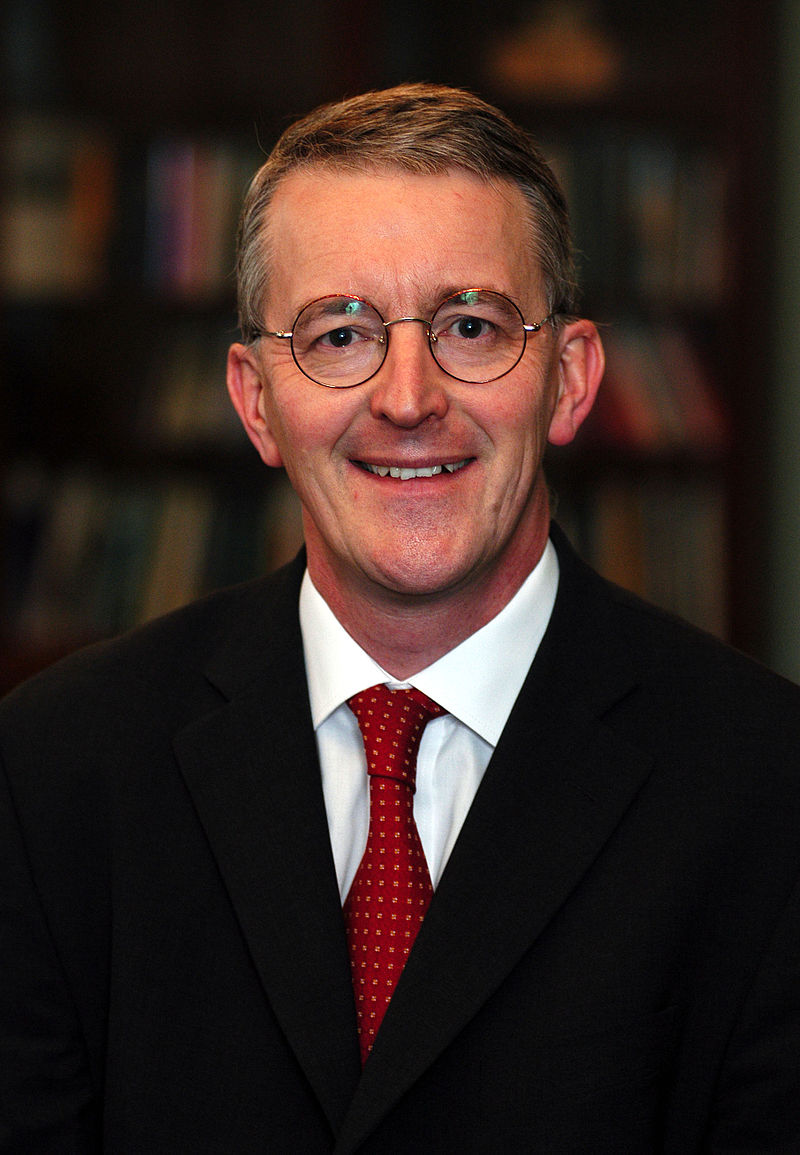
  • David Miliband – 2004 Comments on Conservative Plans for Education

    David Miliband – 2004 Comments on Conservative Plans for Education

    The comments made by David Miliband, the then Schools Minister, on 28 June 2004.

    The Tories are committed to an agenda of cuts, privatisation that would lead to lower standards in schools.

    The basic principle of Tory education policy is to cut money from state schools to subsidise private education. Their plans would take at least £1 billion out of schools to set up a bureaucratic voucher scheme and subsidise private education.

    The Tories are making no commitment to raising standards in schools and they have even admitted that they would be ‘proud’ to see standards fall under a Conservative Government.

    It is also clear that Tories continue to be at complete sixes and sevens on their plans. They cannot agree by how much taxpayers will subsidise private education. They cannot agree on the deadweight cost of their plans. They cannot say what the value of their voucher is. And they cannot say whether the voucher will be worth more for poorer families, more for children with learning difficulties, or more in areas like London, where schools’ costs are higher.

    To add to the confusion, the Tories are now saying they would abolish admission procedures, leaving heads with the task of making up selection procedures. By abolishing catchment area rules every parent who wants to send their child to their local school faces a lottery, not knowing on what basis their child will be admitted. At the same time, heads and local education authorities will have to invent criteria to make their decisions, causing chaos across the system.

    Whilst Labour’s programme of investment and reform is raising standards across the board, the Tory agenda of cuts and privatisation would lead to lower standards in our schools.

  • Ed Balls – 2008 Comments on Increased Funding for the School Food Trust

    Ed Balls – 2008 Comments on Increased Funding for the School Food Trust

    The comments made by Ed Balls, the then Secretary of State for Children, Schools and Families, on 5 February 2008.

    There are no quick, overnight solutions to improving the way we eat as a nation. I make no apology for introducing tough nutritional standards for school food – there is nothing more important than our children’s well-being. I want every young person to be able to make informed choices about healthy eating for the rest of their lives.

    The School Food Trust is at the forefront of improving take up of school dinners. It continues to make massive progress in raising school food quality and supporting local authorities and schools in changing the attitudes of parents and young people.

  • Arthur Balfour – 1903 Speech Following the Loyal Address

    Arthur Balfour – 1903 Speech Following the Loyal Address

    The speech made by Arthur Balfour, the then Prime Minister, in the House of Commons on 19 February 1903.

    I need hardly say that I do not intend, Mr. Speaker, to obtrude any legal opinions upon the House, not merely because the hour is late, but because I am incapable of giving an opinion on such a subject which is worth listening to. But I think I have gathered what it is that has influenced most of the speakers, and many of those who have listened to them, who feel that the House of Commons ought to take some action on the present occasion. I do not misinterpret the feeling of the House when I say that there is no man on either side of the House who, either in public or in private, or even to himself, has made any suggestion of suspicion as to the motives by which the Attorney General was actuated in the course that he has taken.

    There is probably no man in this House, not even those who, like myself, are entirely ignorant of the law, who doubts that the Attorney General’s advice has not only been honestly given, but has been given by a man eminently qualified to give advice upon any matter connected with the laws of this country. The third observation I think I may make with general assent is that it is not intended on this occasion to make an attack upon His Majesty’s Government. It is perfectly true, as an hon. Gentleman said opposite, that every Amendment to the Address is an attack upon the Government, and in that sense, of course, this is an attack upon the Government; but it is not an attack upon them in a matter in which they have any discretion. It is due to the Attorney General to say in the clearest manner, not only in the interests of the Attorney General but in the interest of all, that his position as the District of Public Prosecutions is a position absolutely independent of any of his colleagues. It is not in the power of the Government to direct the Attorney General to direct a prosecution. No Government would do such a thing; no Attorney General would tolerate its being done. Though it is, I believe, peculiar to the British Constitution that political officers, like the Lord Chancellor or the Attorney General, should occupy what are in fact great judicial positions, nobody doubts that in the exercise of their judicial or quasi-judicial functions they act entirely independently of their colleagues, and with a strict and sole regard to the duty they have to perform to the public. That is the position of my learned friend, and that is the position of the Government in connection with this subject.

    Now I pass to what I believe to be the animating motive of almost all the speeches we have heard tonight in favour of the Amendment. I think that motive is a feeling of deep and profound indignation at the fraudulent transactions in which Mr. Whitaker Wright has been engaged. Nobody can have even a most cursory knowledge of those transactions without being conscious that if these are things which can be done in a great commercial centre like London, in connection with a vast transaction like that of the London and Globe, and can be done with impunity, a great fault lies somewhere. The only question is where that evil lies. I venture respectfully to say that no man can have listened to the debate tonight and have weighed—I will not say the reasoned legal view of my learned friend the Attorney General, because I imagine he was precluded by the fact that there were proceedings pending in this matter from going into the details of the reasons which have influenced his judgment—but have listened to what he said, or what the Solicitor General told us of the enormous pains taken by the Law Officers of the Crown in examining this case, without admitting that the fault does not lie either with the Director or Public Prosecutions, or with those who advised him. The fault lies in the law. [An HON. MEMBER on the OPPOSITION side of the House: No, no.] Is that a lawyer or a layman? Does the hon. Gentleman imagine that it is the jury which make the law? My hon. friend below the Gangway says that in his view an offence has been committed.

    SIR ALBERT ROLLIT

    Under the Statutes of 1861 and 1862, and at Common Law.

    MR. A. J. BALFOUR

    Well, both the question of Common Law and the question of Statute Law have been critically and carefully examined by the Law Officers of the Crown, and they, rightly or wrongly, take a different view from that held by my hon. friend. Whilst all admit that if such scandalous frauds are allowed to go unpunished the fault lies somewhere, I venture to say to the House that the fault does not lie with my learned friend, but with the language of the statute. The phraseology of the statute is evidently intended to protect the shareholders in a company and the creditors of a company against fraudulent prospectuses; and it is a very grave omission in the framing of the statute that it does not provide an adequate remedy against fraud, however gross, however scandalous, which is not directed against these persons. My learned friend’s attention has been called to this defect in our law by the very scandalous and painful case of Mr. Whitaker Wright and the Globe Finance Company; and he has expressed his opinion to the Government that there ought to be an amendment to the law making such practices absolutely impossible. The Government, advised in that sense by my learned friend, entirely share his view, and think that an amendment of that kind ought to be introduced as soon as possible. I need hardly say we shall take steps to carry that view into effect.

    Meanwhile, what I ask the House to do is to make the law what it ought to be, and not to attack a judicial officer whose duty it is to administer the law as he finds it. I cannot imagine a worse precedent than that this House should constitute itself a kind of grand jury in criminal matters; that, moved by passions which in this case we all share, and which, I believe, are amply justified by the facts, we should endeavour to compel a judicial officer to do that which, in his conscience, he believes he ought not to do. Let the House reserve itself for the function for which it is fitted—the amendment of the law—bringing it into a condition to meet the needs of the community, and into harmony with the general principles of justice. I hope and believe the House will not differ from the general principle I have laid down, and will be content with the pledge I have given, that we shall endeavour to amend the law in accordance with that broad view of commercial morality so ably defended by my hon. friend. We shall do that which it is our function to do, and not set a precedent which, in this case, may only do an injury to the Government and my hon. and learned friend, but which, followed in different circumstances by the House, may inflict a real blow on the criminal jurisprudence of this country.

  • Kenneth Baker – 1968 Maiden Speech in the House of Commons

    Kenneth Baker – 1968 Maiden Speech in the House of Commons

    The maiden speech made in the House of Commons by Kenneth Baker, the then Conservative MP for Acton, on 24 April 1968.

    As this is the first occasion on which I address the House, I wish to pay tribute to the previous Member of Parliament for Acton, Mr. Bernard Floud. We were political opponents, but that did not prevent us from being good friends and he always treated me with characteristic kindness. In Acton, he was liked by people of all parties and his death came as a great shock to his many friends.

    Acton has a unique political record, because four former Members of Parliament live there. There is my hon. Friend the Member for Carlton (Mr. Holland), his predecessor whom some hon. Members may remember, Mr. Sparks, and before him, Mr. Henry Longhurst, the golfing correspondent, who won the last by-election in Acton in 1943, and also the Member who represented the constituency from 1918 to 1929, Sir Harry Brittain. It will not have escaped the attention of hon. Members that of those four, three are Conservatives, which I find a satisfactory proportion. I can assure hon. Members that the political volatility in Acton is at an end.

    I am glad to have been called to speak on the Second Reading of the Finance Bill and I want to make two comments on it. First, I believe that the Chancellor has misread the economic signs. I agree with some of the comments made by the hon. Member for Ebbw Vale (Mr. Michael Foot). I believe that the Chancellor has over-deflated the domestic economy. To take out £600 million this year and £929 million in a full year is overdoing it and I am as disturbed as the hon. Member for Ebbw Vale about the rising trend in unemployment. If this trend continues for the next two months the Chancellor will have to take urgent action to reflate the economy and mitigate the harshness of the Budget. This is, after all, the most harsh Budget we have had in peace time. In the 13 years of so-called Tory wasted rule—a period which is rapidly assuming an aura of a golden age—we never had to introduce a Budget even half as harsh.

    My second comment is that, having read the Finance Bill, I feel a tremendous sense of disappointment. I am disappointed that yet another opportunity has been lost to start the long and necessary work to revitalise and reshape our entire tax system. The most important job on the domestic front for any Government, irrespective of party, in the next five to 10 years is to reshape our tax system. Our present system is the most complicated in the world. Daedalus could not have made for King Minos a more confusing and obscure labyrinth. Each year we witness a struggle between the cleverness of Treasury officials and the cleverness of an army of private accountants. It is a struggle which is usually fought to a draw—it is a battle without honour, a war without blood and a devastating waste of human intelligence.

    Our tax laws are so complicated that in the Finance Bill 16 of the 50 pages are given to blocking up loopholes, although the Chancellor in his speech today seemed to be proud of that. But when we must spend one-third of the Finance Bill blocking up loopholes he must agree that the system which we are trying to shore up is suspect.

    The system which I would like to see is one based primarily on a sales tax whereby spending rather than earning is taxed. The system which we have at present is the one which we inherited largely from Gladstone, subject to the pressure of events over the years—mainly the pressure of two world wars—and it would be surprising if such a system were appropriate to the conditions of today. It certainly is not. I would therefore like to see a system based on a sales tax.

    The introduction of such a system would mean that direct taxation would be cut substantially but that indirect taxation would rise substantially, and also—those of us who advocate this course must face this fact—that those who are less well off in the community would be adversely affected. Thus, at the same time as introducing such a reform, I would like to see a complete reform of the social security system; and these twin reforms would, I submit represent real progress.

    It is exciting to think that we have got to the threshold of achieving these twin reforms because they are dependent so much on technological advance and the use of computers. I therefore suggest that before the right hon. Gentleman introduces any more tax changes—although it is not up to me to say whether the party opposite will have another opportunity of doing so—he should pay considerable regard to three principles which I believe should underlie any tax system.

    The first principle is simplicity. Taxes must be simple and understandable to ordinary people. Our taxes are not. Some research done at Glasgow University about 18 months ago showed that of a sample of factory floor workers and executives hardly any knew what rate of tax they paid and what their marginal rates of tax were, that rate being of particular importance, it being the rate they would pay on any increases. It would be interesting to know how many hon. Members could answer those two questions. I wager that very few of them could. But I would also wager that anybody asked those questions would feel that both rates are too high.

    A further example of complexity is provided by the Income Tax returns which are now being dropped through our letter-boxes. It has become the custom for even ordinary people to hand these returns to professional advisers because ordinary people do not know how to fill in these forms. Again, it would be interesting to know how many hon. Members fill in their own tax returns. I think that the answer would be very few. Does the Chancellor fill in his own, or is this one of the domestic duties which he pushes over to someone else at the breakfast table?

    The second principle is that of equity. Taxes must not only be fair but must be seen to be fair. I feel that there are many instances of inequity being perpetuated by the Bill. For example, it is inequitable to aggregate the income of husband and wife. I should have thought that it was unnecessary to debate the pros and cons of that in this, the 50th anniversary year of women’s suffrage. The Bill goes further because now the investment income of infants is to be aggregated with that of parents. This is inequitable. The Treasury is turning the family into a sort of financial pudding in which the separate identity of the ingredients is lost. There are cases involved in this aggregation which will lead to real injustice. I have in mind a case where money has been settled on a child as a means of compensation when one of the parents has died. I hope that in Committee the Treasury Ministers will look carefully into cases of this kind. A further example of inequity is the present Estate Duty. This tax is paid only by the miserly, the eccentric, or the unlucky. I would like to see it replaced by a legacy duty coupled, possibly, with a gift tax.

    Another example is the distinction in our tax system between earned and unearned income. There was a time when such a distinction was valid but I question whether it is still valid. Unearned income arises, after all, from capital which in one way or another has been taxed. If it has been inherited, there is Estate Duty. If it has been gained during one’s lifetime, there is Capital Gains Tax. If it has been saved out of earnings—and that is the most unlikely circumstance of all—there is Income Tax. It seems grossly unfair to penalise the income arising from this capital by a higher discriminatory rate of tax, particularly since it bears most heavily on people of modest means who have put money aside for their old age.

    The third principle which I recommend to the Treasury Ministers is that taxes should not hinder the production of wealth, which is just what our present system does. It is almost impossible for people today to save out of their incomes. Yet in the final analysis the expansion of private industry—the better machines, better factories and more employment which we all want to see—comes from private savings; but this Budget does little to encourage that. Hon. Members who have looked at the Japanese economic miracle will have seen that between 20 per cent. and 30 per cent. of incomes are saved, whereas in this country the figure is just over 5 per cent. The Bill does nothing to encourage savings, and this is a major omission.

    The Bill also does nothing to relieve the extremely high rates of personal direct taxation which, I believe, are a major disincentive in our society. Far too many of my contemporaries have already left this country for good, and still the trend goes on. About 42 per cent. of newly qualified engineers leave each year and about 23 per cent. of scientists leave upon qualification. They take this step because they cannot earn enough here and because they cannot keep a high enough proportion of what they earn. I hope that, as a matter of urgent attention, the direct taxation rate will be reduced.

    Following this Budget the British taxpayer is the most heavily burdened taxpayer in the world. The burden is too great. I feel that our position as individual taxpayers is rather like our position as a country. It was summed up well in a couplet by Robert Graves, who wrote: In the midst of life we are in debt, Here to pay and gone to borrow. That is the position in which we find ourselves as individuals and as a nation. That is our position after three and a half years of Socialist misrule. The Bill is the monument to those three and a half years and one hopes that it may be the tombstone as well.

  • Vera Baird – 2012 Speech at the Commonwealth Journalists’ Association Conference

    Vera Baird – 2012 Speech at the Commonwealth Journalists’ Association Conference

    The speech made by Vera Baird in Malta on 1 February 2012.

    The Culture, Practice and Ethics of the Press is the title of the Leveson Inquiry, set up to deal with the phone hacking scandal.

    So let us turn away from press restraint, oppressive laws, the persecution of journalists in the Commonwealth, on which you so proudly campaign, and consider the ethical issues confronting the profession in the UK, how this Inquiry came about, the issues it faces and the impact that may have on your work.

    In brief summary, in January 2007, the News of the World Royal reporter, Clive Goodman and a Private Investigator he used, Glenn Mulcaire, were convicted of phone hacking in respect of what the Metropolitan Police called “a handful” of people. It appears that it came to light because of fears that Princes William and Harry’s phones were hacked. Goodman was a “Rogue Reporter” and the matter was at an end, said the paper’s owner’s News International, though there were some footnotes.

    Firstly, the editor of the NOTW at the time, Andy Coulson, though he was clear that he hadn’t authorised hacking, fell on his sword, as the man who had overall responsibility for the conduct of the paper. He didn’t stay impaled for long, however, because, in May 2007, he was appointed as Director of Communications by the Conservative Party. If the pollsters were right, he would shortly be running the press corps at No 10 Downing Street.

    My guess is that this is what motivated the hero of this story, the Guardian’s Nick Davies, into takig the matter further. He was clearly satisfied that more people had been targeted and worried that Coulson might be a completely inappropriate person to be at the centre of government. So, he continued to investigate.

    The second footnote was interest in why Simon Hughes MP and Gordon Taylor, Chief Executive of the Professional Footballers’ Association were listed as hacking victims on the indictment against Goodman and Mulcaire when they seemed unlikely targets for a royal reporter.

    Then, Gordon Taylor sued for breach of privacy and received a settlement of £700K, when the usual level of damages would have been in the tens of thousands. People wondered what it was that the Murdochs were paying for.

    The police told some people around the original case that they may have been targeted and others began to ask the police if they had been. It gradually emerged that 4332 people were thought to have been hacked – quite a large “handful” The information came from a spreadsheet from Glenn Mulcaire that Scotland Yard had had all the time.

    There was clear need for another police inquiry and Operation Weeting was established in January 2011. A shoal of arrests following quite speedily, including a number of journalists and News International bigwigs, some of whom resigned and additionally, in about July 2011, Andy Coulson, Rebekah Brooks, and a man called Neil Wallis.

    The Commons Culture Media and Sport Select Committee started an Inquiry and, in July called Sir Paul Stevens, Commissioner of the Metropolitan Police. In questioning it became clear that the Met had appointed Neil Wallis, who had been deputy when Coulson was NOTW editor, to its press relations office. Presumably this was to ensure good relations between police and No 10. However, what was sinister was that the Met should have been investigating Coulson at the time, not cosying up to him.

    The Commissioner resigned the next day to be quickly followed by Assistant Commissioner John Yates, who had been in charge of the first inquiry with Assistant Commissioner Andy Hayman. Hayman could not resign from the police. He had already done so and got a job as a columnist with, you have guessed it, News International.

    There was little reporting of anything other than these few dramatic events about the hacking scandal as a whole. It was about the press elite making disclosures about celebrities and politicians and the public were not greatly interested. Perhaps newspapers were wary of writing critically too.

    In July 2011 the public discovered that the phone of a schoolgirl murder victim, Milly Dowler, had been hacked between her being lost to her parents and the finding of her body. It was thought at first that the hackers had deleted her messages and given her parents false hope that she was deleting them and was still alive. It now seems that the messages deleted automatically and is ironic that the huge public anger this caused was actually due to mis-reporting.

    It soon became clear that victims of the London bombings had had their phones hacked, so had relatives of soldiers killed in Afghanistan. News International was running a campaign called “Help for Heroes” at the time, in apparent support of the very people whose phones they were hacking.

    Perhaps most breathtakingly hypocritical, was the hacking of Sara Payne’s phone. She is the mother of a child murdered by a paedophile, campaigning to change the law on sex offenders, and someone who had been personally supported by Rebekah Brooks.

    In July, the Rupert and James Murdoch gave evidence to the Commons Select Committee, culminating in the throwing of a custard pie at Rupert Murdoch, shortly after he had said, clearly badly tutored by a publicity trainer “This is the humblest day of my life”. The Murdochs said that the NOTW was only 1% of their empire and anyway though shameful, this was an old story now.

    So little was it an “Old Story” that Mark Lewis, the solicitor who had got such a staggering settlement for Gordon Taylor, and consequently accumulated a host of celebrity hacking victims, found that he had been hacked, his estranged wife and two daughters followed and a plan hatched to allege that he was having an affair with a colleague at his firm. So, in the summer of 2011 when these events were at their height, News International was using dirty, perhaps unlawful, tricks to discredit someone who was crossing Murdoch.

    A few days after the Commons hearings, the Murdochs closed the 168 year old NOTW, sacking several hundred people, most of whom had nothing to do with hacking. If the plan was to give the appearance that this was the “rogue paper” the equivalent of Goodman being the sole culpable “rogue reporter” it did not work.

    David Cameron announced the Leveson Inquiry in August to look into conduct of News International but there is an important tributary story too.

    Between 2003 and 2006, Richard Thomas, the Information Commissioner, had presided over something called Operation Motorman. This investigation showed that at least one private detective, working through a spiders web of bribed insiders and despite the Data Protection Act, was supplying data from HMRC and DWP, from the Police National Computer, from the Driver and Vehicle Licensing Centre and from mobile phone companies to journalists.

    305 named journalists had paid to receive this information unlawfully, but top of the list were 952 requests through 58 journalists for the Daily Mail, 802 requests from 50 journalists at the People, followed by the Daily Mirror and the Mail on Sunday, none of which is part of the News International stable. Only fifth on the list with 228 inquiries from 23 journalists, was the NOTW.

    Here was a different kind of illegality, being used, as simply as going to a shop to buy goods, by journalists throughout the UK press world and not even principally by News International. The questions for Leveson therefore stretch beyond phone hacking and beyond News International.

    His Inquiry is currently hearing the first module of Part One of his Inquiry, looking into press relations with the public and featuring the whole hacking history. Innumerable victims have been called, from Hugh Grant to the Dowlers and more than a dozen Fleet Street editors have appeared, each regretfully accepting that the Press Complaints Commission is not strong enough but each cleaving, nonetheless, to a system of self-regulation.

    That is has gone far wider than the issue of hacking is evidenced by evidence last week from some women’s organisations, one of which I chair, about the way in which the press depicts women. They gave an example of the sexual abuse of two twelve year olds by a group of footballers which was described as “an orgy” when it was a sexual assault, capable of being seriously damaging to the girls. It featured too, stories of the sexist abuse poured upon women in public positions who are depicted as ugly and stupid while women cooks are idolised as domestic goddesses – examples of a culture of keeping women in “their place”. I relate these not for your views but to demonstrate that the Inquiry is looking at an array of ethical questions.

    A summary of the issues “in the air” in the UK at present would include:

    1. The interplay of Articles 8 and 10 of the European Convention on Human Rights.

    ARTICLE 8 provides:

    Everyone has the right to respect for his private and family life, his home and his correspondence.There shall be no interference by a public authority with the exercise of this right except such as is in accordance with the law and is necessary in a democratic society in the interests of national security, public safety or the economic well-being of the country, for the prevention of disorder or crime, for the protection of health or morals, or for the protection of the rights and freedoms of others.

    ARTICLE 10

    Everyone has the right to freedom of expression. This right shall include freedom to hold opinions and to receive and impart information and ideas without interference by public authority and regardless of frontiers. This article shall not prevent States from requiring the licensing of broadcasting, television or cinema enterprises.

    The exercise of these freedoms, since it carries with it duties and responsibilities, may be subject to such formalities, conditions, restrictions or penalties as are prescribed by law and are necessary in a democratic society, in the interests of national security, territorial integrity or public safety, for the prevention of disorder or crime, for the protection of health or morals, for the protection of the reputation or the rights of others, for preventing the disclosure of information received in confidence, or for maintaining the authority and impartiality of the judiciary.

    Clearly both are inherently conditional rights and have, additionally, to be balanced against each other on a case by case basis by the judiciary. I don’t think that it is an unrealistic generalisation to say that the judges have tended to favour privacy. There are calls from time to time for a statutory right to privacy, for its own sake and, alternatively, for such a statute in order to stop the judges from creating a right to privacy, without democratic sanction.

    2. The intense commercial competition in the newspaper world in the context of challenge from the electronic media. Increasing pressure for stories with weaker control over how they are obtained as papers cut staff and rely more on freelances.

    A cut throat approach to this has undoubtedly been led by Murdoch with his doctrine of doing whatever it takes to get a story, destroying the competition and the result justifying all.

    His politics have been brought into all his newspapers and his power and influence are well-known and have been effective for more than a decade. Tony Blair cultivated him as did Gordon Brown (with less effect) and now Cameron not only appointed Coulson but is said to ride with Rebekah Brooks, as part of “the Chipping Norton set” and there are stories about Murdoch going into No 10 by the back door so that the frequency of his meetings isn’t seen.

    People are afraid of Murdoch. The DCMS Select Committee was advised that if it started an inquiry into Murdoch it could expect intrusions into members private lives with a view to discrediting them.

    However the Daily Mail is equally ruthless and destructive now.

    There are taste issues with little apparent political content. The Daily Star, whose editor is a woman, not only objectifies women in photo after photo but has been described as “only a newspaper in the loosest sense” and its editor did have to admit to Leveson that story after story put to her by counsel to the Inquiry was completely without factual foundation.

    An important point is that these intrusions into people’s lives are extremely injurious. The damage done to the Dowler family and to others who are undermined by lies or private information, published to millions is immense.

    However, it is important to remember that phone hacking and paying police, or other officials, for information, has always been a crime and we could legislate to guarantee better media plurality if we wished, so that bias could be rectified, diversity improved and power limited.

    Perhaps the most important balancing fact is that almost the whole phone hacking scandal was disclosed, not by press regulators or police, but by the press itself, in the form of Nick Davies of the Guardian with his team, fully supported by the editor Alan Rusbridger.

    The late Hugo Young said that it was time to stop “the blackmail … that the interests of the Sun and the Guardian have anything to do with each other.” Why should investigative journalism be restrained because the redtops cannot act responsibly?

    I return to where I started, Leveson’s recommendations are bound to have an impact on the Commonwealth and your campaigns for press freedom, against oppressive legislation and to protect commonwealth journalists. It is important that CJA puts in a submission to his Inquiry so that he takes cognisance that his findings will be capable of having a deleterious effect, on the very different press in the Commonwealth, if he doesn’t frame them with care.

  • Nigel Huddleston – 2022 Speech on UK House Legacy Day

    Nigel Huddleston – 2022 Speech on UK House Legacy Day

    The speech made by Nigel Huddleston, the Minister for Sport, on 8 August 2022.

    Thank you. I’m absolutely delighted to be here today, at UK House, to join you all, on Legacy Day, to reflect on, not just what has been a truly fantastic Games, but on the array of future opportunities it presents to the region and the rest of the country.

    We’ve seen 10 incredible days of sport, cultural and business events, and it’s amazing to see the West Midlands front and centre on the world stage, something that will hopefully continue for a long time to come.

    Firstly, I wanted to offer my thanks to everyone involved in staging this incredible event and in working so hard to ensure it leaves behind a lasting legacy. Putting on the Games and harnessing the myriad benefits it can bring to the region and the UK has been a true partnership.

    It is only through collective effort that the Games has been the success that it has. My thanks to each and every one of you who has engaged in the event and the opportunities it has brought about. And a particular thanks to Andy for the vital role that he personally played in helping to secure this fantastic event.

    And let me say that this collective effort has resulted in what truly has been a Games of amazing achievements.

    The fastest Games ever delivered, four and a half years rather than the standard seven.

    An ambition to be the most sustainable Games yet, and first to strive to be carbon neutral.

    The most inclusive Games ever, with the largest ever integrated parasport programme and for the first time, more women’s medal events than men’s.

    But, beyond the event itself, I also want to reflect on the vast array of legacy opportunities that have been created, and that will continue to be created long after the closing ceremony has concluded.

    As a government, we’ve been resolutely focused on ensuring that Birmingham 2022 leaves a lasting legacy for the host city and region, and the whole of the UK.

    £778 million of public money has been invested to deliver the Games itself. This core £778 million, as well as providing for an amazing legacy itself, has enabled a further £85 million of additional funding to be unlocked from a wide range of organisations.

    The legacy of the Games ranges far and wide, with the ‘Games for Everyone’ vision embedded from the start.

    The Games has supported communities to access its opportunities and benefits, with equality, diversity and inclusion embedded in everything that partners have done.

    There has been significant new infrastructure with a new aquatics centre at Sandwell and the redevelopment of the Alexander Stadium that local communities will be able to benefit from, long after the Games is over. Plus the regeneration of Perry Barr has created 1,400 new homes.

    In addition, the Legacy programme for the Games has delivered:

    A £10 million Jobs and Skills Academy that’s made sure local residents have the skills they need to capitalise on the opportunities driven by the Games.

    More than £35 million invested by Sport England in delivering a physical activity and wellbeing legacy, supporting those who are least active to engage with sport and physical activity.

    A youth and schools engagement programme, ensuring that we’re engaging children and young people across the country in the story and excitement of the Games and the Commonwealth.

    A 6 month free-to-access Cultural Programme across the West Midlands, supported by £12 million investment from Arts Council England, the Heritage Fund and Spirit of 2012, as well as other partners.

    Ambitious sustainability commitments including, as I’ve already mentioned, an ambition to be the most sustainable Games yet and the ‘first ever carbon neutral Games’.

    And on top of this, £350 million worth of procurement opportunities, the majority of which were secured right here by firms from the West Midlands.

    And of course, the £24 million investment that we, along with the Combined Authority, have made into the Business and Tourism Programme.

    Here, at UK House, over the last 11 days, we’ve seen the power of this investment, bringing together business leaders from across the world, showcasing the West Midlands, as a place to live, work, visit and do business.

    This programme is a vital part of harnessing the positive profile generated by the Games to boost the global reputation of Birmingham, the West Midlands and the UK as a leading destination for tourism, trade and investment.

    In partnership with the West Midlands Combined Authority, the West Midlands Growth Company, the Department for International Trade and Visit Britain, as well as sponsors in our audience today, we’ve seen it deliver some incredible in opportunities.

    The opportunity to connect with Commonwealth nations and territories and other key global markets.

    The opportunity to re-establish a resilient and sustainable tourism sector in the West Midlands and, more widely, to contribute to the recovery of UK tourism as we emerge from Covid-19.

    And the opportunity to demonstrate to the world that the West Midlands and the UK are innovative, dynamic and investor-friendly.

    But this is far from the end for the Business and Tourism programme, in fact it’s only just the beginning. Building on the profile and momentum of these fantastic past two weeks we’ve rightly set ourselves some lofty ambitions. By 2027 we’re aiming to:

    Generate more than £700 million of investment, including more than £370 million in the West Midlands

    Attract 39,000 new visitors, including 12,000 to the West Midlands

    Create 1,000 new jobs, with up to 600 of these based in the West Midlands

    The drive and commitment of the Mayor and colleagues at the Combined Authority, West Midlands Growth Company, the Department for International Trade and Visit Britain has been a crucial part of ensuring the success of the programme. My thanks to them for all that they have contributed over many months and years.

    In many ways, the Business and Tourism Programme, as a partnership between national, regional and local government and with the private sector, represents devolution in action. Working together, as more than the sum of our parts, to achieve extraordinary things and level up our places.

    And on behalf of the Government, I look forward to working with the West Midlands as we explore opportunities to build on the success of the Games.

    The Games have been a fantastic experience and we’ve achieved so much.

    But as I’ve always said, this is about much more than the event itself. It’s about capitalising on the momentum of the Games to unlock the enduring benefits it can bring for the West Midlands region and its communities, and the UK as a whole.

    I look forward to seeing the fruits of our collective efforts materialise over many months and years to come. Thank you.

  • PRESS RELEASE : OIM accepts landmark first request to examine proposed law change

    PRESS RELEASE : OIM accepts landmark first request to examine proposed law change

    The press release issued by the Office for the Internal Market on 8 August 2022.

    The UK government has consulted on banning the sale of peat in England. The proposed ban, designed to address environmental concerns surrounding the use of peat in horticulture, would not apply in Wales, Scotland or Northern Ireland.

    The UK government has requested that the Office for the Internal Market (OIM) – which sits within the Competition and Markets Authority (CMA) – report on how the proposed ban may impact the effective operation of the Internal Market.

    The OIM has considered this request in line with the criteria set out in the UK Internal Market Act and the principles stated in its operational guidance and has accepted the request. It will aim to provide its analysis by February 2023.

    OIM Panel Chair, Murdoch MacLennan said:

    “This request is a significant development for the UK Internal Market and for the OIM. Since the OIM was launched less than a year ago, we have taken important steps to ensure we are ready to perform this new role and our decision to accept this request is another milestone.

    We’ll now examine any potential economic impacts the proposed ban could have on the UK Internal Market and provide our report within 6 months.”

    The OIM was launched in September 2021 and published its Overview of the UK Internal Market report in March of this year.

  • PRESS RELEASE : UK first – Welsh Senedd gives green light for 20mph legislation

    PRESS RELEASE : UK first – Welsh Senedd gives green light for 20mph legislation

    The press release issued by the Welsh Government on 12 July 2022.

    Legislation to lower the default national speed limit on residential roads and busy pedestrian streets from 30mph to 20mph has been approved by the Senedd today.

    Wales becomes the first UK nation to make the move – helping to save lives, develop safer communities, improve the quality of life and encourage more people to make more sustainable and active travel choices.

    The new slower speed limits are currently being trialled in eight communities across Wales and will be rolled out nationally in September 2023.

    The new legislation will not apply a blanket speed limit on all roads, it will simply make the default limit 20mph, leaving local authorities, who know their area best, to engage with the local community to decide which roads should remain at 30mph.

    Currently, just 2.5% of Welsh roads have a speed limit of 20mph, but from next year this is expected to increase to approximately 35%, helping to create safer roads and communities across Wales.

    Speaking after the vote, Minister for Climate Change, Julie James said:

    “I am delighted that the move to 20mph has received cross-party support across the Welsh Parliament today.

    The evidence is clear, decreasing speeds not only reduces accidents and saves lives, but helps improve people’s quality of life – making our streets and communities a safer and more welcoming place for cyclists and pedestrians, whilst helping reduce our environmental impact.

    We know this move won’t be easy – it’s as much about changing hearts and minds as it is about enforcement – but over time 20mph will become the norm, just like the restrictions we’ve introduced before on carrier bag charges and organ donation.

    Once again Wales is leading the way for other UK nations to follow.”