Blog

  • Jack Dromey – 2012 Comments on Subletting Council Houses

    Jack Dromey – 2012 Comments on Subletting Council Houses

    The comments made by Jack Dromey, the Shadow Housing Minister, on 11 January 2012.

    The subletting of council homes for financial gain prevents those in real need from getting a home and should be stopped. Labour is committed to ending this abuse and before the 2010 election we set out plans to make the unlawful subletting of social homes a criminal offence.

    However, Grant Shapps has taken his eye off the ball and is looking for someone to blame for this Government’s failures. Labour councils have been cracking down on sub-letters for years. The vast majority of people living in council houses pay their taxes and play by the rules. The real problem is that this Tory-led Government’s failed economic policies led to a catastrophic 99% collapse in the building of affordable homes in the last six months.

    Since the Government launched its housing strategy in November, we have seen the effects of this out of touch Government’s failing housing and economic policies laid bare. Housebuilding is down, homelessness is up, we have a mortgage market where people can’t get mortgages and rents are soaring in the private rented sector. These are the fundamental issues the Government needs to address.

    With millions in need of a decent home at a price they can afford, the country is gripped by a growing housing crisis. We need an increase in house building now more than ever and the Government is failing to deliver.

  • Mary Creagh – 2012 Comments on Woodlands

    Mary Creagh – 2012 Comments on Woodlands

    The comments made by Mary Creagh, the then Shadow Environment Secretary, on 11 January 2012.

    This new report [Our Forests report into woodlands and the environment] is a welcome addition to the debate about the future of our forests. Our woodlands are a precious reflection of our national heritage, and will play a pivotal role in the green economy and our low carbon future.

    The forest sell-off debacle demonstrated just how out of touch the Tory-led Government is with anyone who cares about the environment. Labour has already called on Ministers to listen to public concern and drop their remaining plans to sell 15% of England’s forests.

  • Otho Nicholson – 1928 Speech on Wireless and Cable Services

    Otho Nicholson – 1928 Speech on Wireless and Cable Services

    The speech made by Otho Nicholson, the then MP for Abbey, in the House of Commons on 21 May 1928.

    The hon. Member for East Bristol (Mr. W. Baker) who opened the Debate stated that there were six separate authorities dealing with the telegraphic and telephonic communications of the British Empire. I believe that there are really eight, and there is no single authority responsible for the co-ordination and the development of these various services to make them of the greatest commercial, strategic and political advantage to the Empire. The need for some such authority is absolute. First of all, because Empire unity depends on rapid and efficient communication between the home Government and the Dominion Governments and between the United Kingdom and our Dominions. Secondly, because there are other countries and particularly the United States of America, who are developing telephonic and telegraphic communications to such an extent that I believe they are a danger to this country if we wish to maintain control of these communications. And, thirdly, because so rapid and extensive have been these developments that the future outlook is so unstabilised that we shall be left behind unless we have unified control. We must have some unified control that is strong enough and courageous enough, should the circumstances arise to scrap the old system and introduce the new. Empire unity demands prompt and efficient telegraphic service. I believe that that is an accepted fact. We cannot regard the Dominions as vast lands thinly populated merely separated from us by thousands of miles of sea. Whether they like it or not, they are drawn into world politics, and the home Government cannot ignore them and must consult with them in all questions of international politics. To do so with promptitude and dispatch, they must have the latest and most efficient form of communication. This applies more particularly to this country than to any other country owing to the great distances which separate the home Government and the Governments of our Colonies. Therefore, I say there is not only great need for a single controlling authority but a very pressing one.

    As regards the question of other countries developing wireless telegraphic communications, the most active of which is the United States, recently concessions have been obtained for a wireless service between the Argentine and Spain by an American company, and again an American company proposes to establish a service between the Pacific and Japan and the Far East. That same company has purchased the Sayville Wireless Station, which until lately belonged to the American Government, in order to set up communication with European countries. The American company has also obtained control of the telegraph communications between America and Spain, and I believe I am right in saying that American financiers to a very large extent control the radio and telegraph companies of Germany. These developments have the approval and the support of the American Government. The American Government have set up a Federal Radio Commission for the purpose of allotting short wave lengths to American companies, to the naval and military authorities, and to others who are interested in America. Already, a very large number of these short wave lengths have been allotted, and the beam system is a system which is worked on comparatively short wave lengths. There are not more than 500 or 600 wave lengths available for the whole of the world communication and one American company has already had allotted to it, has applied for, and states that it requires at least 225 of these wave lengths. The deduction to be drawn from these facts is that we have to be very careful indeed to see that we get our proper proportion of those wave lengths.

    In view of the importance of telegraphic communications to the Empire, it ought not to be left to the individual action of eight different authorities to obtain and maintain an efficient service. This responsibility should be in the hands of a single controlling organisation of the whole Empire. In the minds of the past generation, the submarine cable was considered to be the last word in scientific invention. Only three years ago we thought that the large high-powered wireless stations were equally the last word in scientific invention, but we made a mistake. Hardly before these stations had become stabilised they were superseded by this new system known as the beam, and the beam system, I believe, will be used entirely in the future for all communications of any distance from this country. The beam system has already passed the experimental stage. It is in operation as far as the Empire is concerned between this country and Canada, South Africa, Australia and India, and these four beam circuits are carrying 30,000,000 words per year, and are capable of carrying five times that amount.

    The beam system has many advantages over the cables and the long-wave wireless stations. First of all, let us take the question of costs. Every hon. Member knows what a costly thing it is to lay down a submarine cable. We all know what an enormous amount of money the large Post Office station at Rugby costs the taxpayers of this country—a matter of £500,000. On the other hand, these beam stations can be erected for a matter of £100,000. As regards the speed, the cable is only capable of transmitting messages at a rate of approximately 45 words a minute. The large long-wave wireless stations are also limited in the speed with which they can transmit messages, probably somewhere between 20 and 30 words a minute, largely owing to the enormous current with which they have to deal. The beam system, which is dealing with a comparatively small amount of energy, is able to transmit messages at the rate of 200 words per minute, and under the most adverse conditions can keep up an average speed of 100 words per minute for the whole 24 hours. I understand that very shortly these beam stations will he capable of increasing their speed to probably something like 600 words a minute.

    One right hon. Member has already given the House the rates compared with the cables and wireless. In three cases, the rates of the beam wireless are 4d. a word less than those of the cable. It is only in regard to a Canadian service where the two rates remain the same. With regard to the question of efficiency—cables versus wireless—cables sometimes develop faults, and, when they do, it is an extremely costly business to send a ship out, first of all, to drag for the cable, and then to mend it. The normal sort of breakdown which one gets in a wireless station is one which is comparatively easy to repair—probably a burnt-out valve. If it is something larger, such as a burnt-out armature, there is probably a spare one which can quickly be put into commission. The question of secrecy is one which is always held up on behalf of the cables as opposed to wireless, and it is one with which I do not agree. We must remember that these beam stations can transmit at the present moment, as I have already said, at the rate of 200 words a minute. That in itself makes it an extremely difficult thing for anybody to intercept. There is a new invention known, I believe, as the cryptograph which automatically codes and decodes any message and is capable of altering that code every sentence—if you like, every word; if you like still more, every alternate letter. That is going to make it practically impossible for any person to decode these messages.

    There is the question of the narrowness of the beam. Unless you happen to be in the path of the beam, it is very nearly impossible to intercept these messages. May I give the House an illustration of what I mean? A little time ago messages were being sent by the beam wireless stations from South America to London, as the focus point. Messages were received in London strong enough to be automatically recorded, but those same messages were only audible on earphones to the German station which was listening for them. They were not strong enough to work the automatic machinery. With a slight adjustment of the aerial in order to widen the beam those messages were capable of being automatically recorded both in London and Berlin. No doubt in future it will be possible considerably to narrow the beam and, by doing so, increase the secrecy.

    As regards the future development of the beam, I believe that if the stations were in the hands of private enterprise, we should find that they would develop very much more quickly than they will in the hands of the State. It is possible at the present time to turn these beam stations into wireless telephony stations, and at the same time as you are sending messages on the Morse code it is possible to superimpose the human voice on the same wave. We have the same thing going on at the Post Office Rugby station, and they charge us £5 a minute for communication with America.

    The ASSISTANT POSTMASTER-GENERAL (Viscount Wolmer) The charge is now £3.

    Mr. NICHOLSON The Assistant Postmaster-General informs me that the charge has been reduced to £3 It is time that it was reduced still further. It is possible to introduce telephony to beam stations and to work it at a handsome profit £1 per minute. There is a new invention which I hope will be introduced into the beam system—an invention for the transmitting of photographs. Perhaps that does not appeal to hon. Members unless I explain that messages themselves can be photographed and facsimile messages can be sent over the wireless. In a comparatively short time we may be reading that the full 24 page issue of the “Daily Mail.” complete with picture page at the end, will be published every day simultaneously in every capital of our Dominions

    Mr. DUNCAN What about the “Daily Herald”?

    Mr. NICHOLSON The “Daily Herald” will have the same possibilities if only the Government will give facilities to their beam stations. For the purpose of development, and of watching the development of experimenting, particularly, one unified control authority is essential, on account (1) of the importance of Imperial communications, (2) of the competition for world control of wireless telegraphy communications, and (3) of the rapid development and instability of the wireless telegraph companies, at any rate, at the present time. The question which arises is whether the Post Office should be that body, and I ask myself, does the Post Office record in relation to inland telegraphs inspire confidence? One has only to read the Hardman Lever Committee’s Report where it refers to: The atmosphere of inertia and the lack of resiliency of the telegraph service, and the unsuitability of Civil Service conditions to apply to a business undertaking, to realise that, in their opinion, the Post Office are not a fit and proper body to undertake this work.

    Does the Post Office inspire confidence with regard to wireless telegraphy? I would refer the House to the history of their Rugby Station—a monument of lack of foresight on the part of the Post Office engineers. That station was put up for the express purpose, as I understood it, of communication with our Colonies at any time when we wished to do so. What do we find this station doing at the present time? Whenever I have listened to it, I have never heard it doing anything other than sending messages to ships at sea, most of them Press messages. The service which at one time it had established with Cairo has now been taken over by the beam station. Not long ago, the Post Office told us that the only way to create efficient wireless telegraph communication with the Empire was by a series of short steps, or relay stations.

    I do not believe that the Post Office has the necessary vision. One has only to refer to the question of the Pacific cable. The Pacific Cable Board is composed entirely of the representatives of Governments. They laid down a cable which cost £2,750,000, and every Government agreed to it except the Government of Canada. Not one of them except perhaps the Government of Canada realised the possibilities of the beam system. One hon. Member in this House, during the Debate on the Pacific Cable Board, referred to the Pacific cable as a very valuable asset. I think the right hon. Member for Seaham (Mr. Webb) referred to it as “the most successsful social enterprise that could possibly be imagined,” and yet to-day we are taking steps to consider what we can do to save this successful Socialistic enterprise from private enterprise competition.

    Mr. AMMON Surely, the hon. Member is mistaken. It is from Post Office competition or public competition that we are seeking to save it. The wireless system belongs to the Post Office.

    Mr. NICHOLSON I think I am right in saying that the Post Office are not the only people who own beam stations from which competition may come. I think the Marconi Company have stations, and I think the Americans are setting up short-wave stations. The Secretary of the Post Office Workers’ Union, speaking the other day at Weston-super-Mare, said that the beam service was the most astounding verdict in favour of State control as against private control. I think that is a most astounding claim. Who experimented with the beam? Was it the Government? No. It was a private individual. Who made the beam a practical service? Was it the State? No. It was a private company. Who installed the beam stations? Was it a Government Department? No. It was a private company. Who put these stations in order? Again, it was a private company, and not the Government. The State did not take any interest in the matter until it was conclusively proved that the stations were capable of carrying on an efficient service. It was then that they took them over. The beam telegraph system is a triumph of private enterprise. Finally, as against Government control and interference, I would point out that every other country has deliberately allowed the beam system to remain in the hands of private enterprise. Why should this country be handicapped by allowing these systems of communication to be taken over by the State?

  • William Burdett-Coutts – 1921 Speech on Proportional Representation

    William Burdett-Coutts – 1921 Speech on Proportional Representation

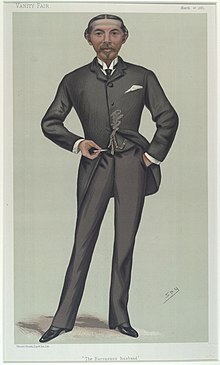
    The speech made by William Burdett-Coutts, the then Conservative MP for Abbey, in the House of Commons on 5 April 1921.

    Looking back at the record of this House in relation to this proposal and at our experience of it during the last Parliament, I cannot but admit I am surprised at its being brought forward again so soon. I am not impressed by the long list of cases in which proportional representation has been adopted. The long list recited by my hon. Friend (Mr. A. Williams) seems to be impressive, and it mentions some places which no doubt have their own importance, but I wonder if the House has examined it, because if it has, it will have found that it deals with extremely contracted electorates, in many cases minute ones, in which the election is carried on under conditions which have no possible similarity to those involving a great Parliamentary institution. To my mind, we can well put them all on one side with one exception, and that is the one case in which in the British Empire proportional representation has been applied to a popular assembly under the Constitution. I will not deal with the case of Tasmania, which is the greatest mystery to both our side of this question and to my hon. Friend. We know nothing about the progress of the scheme there. All that can be said in the ninth circular issued by proportional representation supporters in the course of last month is, that Sir John McCall said, at some time or other, that proportional representation had “come to stay.” Sir John McCall is the gentleman who, years ago, applied proportional representation to Tasmania. We are not told the date at which he made this statement. I am under the impression that he is no longer in existence, but at some time or other he said “proportional representation has come to stay.” It has stayed, because the party which got in by proportional representation is extremely likely to try and preserve it. There is no evidence at all that proportional representation is acceptable to the people of Tasmania. Indeed—although one does not like to mention evidence from private sources—I have a good deal of information to exactly the contrary effect. Therefore I think we can put Tasmania on one side and come at once to the crucial instance quoted, and that is the case of New South Wales. I look upon that as the only fair test of the application of proportional representation to a great popular assembly. What has been the result there? In the first place, the hon. John Storey and his party are in power in New South Wales. How? By the majority, the magnificent majority by quotas, which you say you are going to get by proportional representation in this country? Not at all. He is in power on the strength of a minority of one in four of the whole electorate of New South Wales. Is that a system which you want introduced into this country? Moreover there are incidental peculiarities which have shown themselves clearly in New South Wales. The election in New South Wales is carried on upon lines which absolutely deprive the elector of all freedom and of all voluntary momentum in the matter. Can anything be imagined which is so destructive of the basis upon which we want to put elections—of the freedom and spontaneity, so to speak, of the electors? Can anything be more destructive to that than the system which pervades both parties in New South Wales, and which is rendered necessary by this complicated system of preferences—that is to say, the domination of the caucus of each party, who get the whole thing into their hands. They are the “half-dozen clever men” who, Mr. Massey said, could carry any election they liked under the preference system. These half-dozen clever men sit down to work, and the calculation of the number of these preferences, in order that they may get as many men as possible of their own party in, is a most elaborate and scientific process which no elector could possibly undertake for himself. When they have done this, they make out what is called their “How to Vote” Card, and that is given out to different batches of electors; and so necessary is this, so minute is the control of the caucus, and so essential is its operation to the exercise of what should be the free right of the electors, that no elector who wants his party to succeed dare go into the polling booth in New South Wales without one of these cards. That is the one specimen—

    Lord HUGH CECIL No, it is not.

    Mr. BURDETT-COUTTS Of the application of proportional representation. The Noble Lord will have plenty of opportunity—

    Lord H. CECIL I am entitled to contradict a misstatement.

    Mr. BURDETT-COUTTS I am aware that the House of Commons likes a conversational style of speaking, but I am not sure that it likes Debate carried on by conversation. That is the one specimen, applied to English-speaking people within the ambit of British parliamentary institutions, which we can call into evidence on this occasion. I began to speak on the record of this House in relation to this subject, and I should like to remind the House of one feature in the case, which has been referred to by previous speakers, namely, the rejection of what was called minority representation in 1885. As has been mentioned, and as, I daresay, most hon. Members know, minority representation was introduced in Mr. Disraeli’s Reform Bill of 1867. It created the Birmingham Caucus under Mr. Schnadhorst. It held Birmingham for 17 years like a vice on the side of one party. It became detested by the electors, and, when it came before this House 17 years afterwards, in 1885, it had scarcely a voice in its favour. I think it only got 31 votes, and the House decided against it.

    There was one feature in that episode which I think it is worth while to recall. That House turned down minority representation—and minority representation, whatever the difference in technique between that plan and this, is the whole principle and the main object of proportional representation—because it was in touch with the practical experiment that had been made in this country. It had been able to watch what had been going on in these great cities where minority representation was in practice during that period of 17 years, and the results were such, and the effect upon the electors was such, that the House of Commons decided to abolish it altogether. And in so doing that House of Commons had in its memory, and could recall and vindicate, the advice of giant statesmen in this country, who, when it was first introduced in 1867, had denounced it in unmeasured terms, and had pointed out the results that would ensue from it. I wonder if I might recall to hon. Members a quotation which, although, perhaps, familiar to many of them, may not be within the knowledge of all: He had always been of opinion that this and other schemes, having for their object to represent minorities, were admirable schemes for bringing crochety men into the House. They were the schemes of coteries and not the politics of nations, and, if adopted, would end in discomfiture and confusion. There was another—these statesmen were on both sides. That was Mr. Disraeli.

    Mr. J. JONES A friend of Germany.

    Mr. BURDETT-COUTTS Now we will come to the other side—to Mr. John Bright. Was he a friend of Germany?

    Mr. JONES A friend of every country.

    Mr. BURDETT-COUTTS Mr. John Bright said: Every Englishman ought to know that anything which enfeebles the representative powers and lessens the vitality of the electoral system, which puts in the nominees of little cliques, here representing a majority and there a minority, but having no real influence among the people—every system like that weakens and must ultimately destroy the power and the force of your Executive Government.… A principle could hardly be devised more calculated to destroy the vitality of the elective system, and to produce stagnation, not only of the most complete, but of the most fatal character, affecting public affairs. Mr. Gladstone, Mr. Goschen, and others were not less emphatic.

    With regard to the last House, I need not remind hon. Members that the last House of Commons had many opportunities of exhaustively discussing this question—not merely the opportunity of a Friday afternoon. It was debated over and over again, and it was defeated in the House by majorities always increasing until they became overwhelming. As this present House may not like to be compared to the former House, or any other House, may I ask whether it remembers that that House cannot be said to have been opposed to change? It carried the greatest extension of the franchise known in this country for nearly 100 years, and it carried the greatest revolution in the franchise conceivable—female suffrage. When, however, it came to this proposal, after exhaustive debate, after its being tried and placed before the House in every possible form, the House turned it down decisively on every occasion. I shall have something to say about this Bill and what it contains, and one of the points to which I desire to call attention is that the Bill is compulsory. That was not the case in 1918. After the final defeat of that measure in the House of Commons, the Upper Chamber insisted upon proportional representation being introduced into the Bill, but it took the form of a commission of inquiry to go round the country and to inquire into the opinion of the electors. We who were in that House remember that the result of the inquiry held in 149 constituencies for the purpose of selecting 100 constituencies for proportional representation was a great preponderance of opinion on the part of the electorate against the scheme. Then it came back to this House, and this House gave it the coup de grâce.

    Before dealing with the Bill we are now discussing, I should like to say a word as to the spirit in which I approach this subject, vis-à-vis of hon. Members who support the Bill. I ought to have said it at the opening of my remarks, because I do not wish to be misunderstood. I am the last person to question the sincerity of their feelings, and the strength of their convictions that the change they propose will improve our Parliamentary representation, and will do away with apparent anomalies which press heavily on minds like that of my Noble Friend (Lord H. Cecil), which are animated and directed by what are called counsels of perfection. Indeed, in that respect I admire them. I even envy them. They live far above this earth, in an atmosphere filled with ideals, theories, postulates, and promises of electoral millenniums, which every now and then they hand down to us ordinary mortals on the earth like a sort of manna which, much to their amazement, for 50 years we carnal people have found peculiarly indigestible, and which only minorities can be induced to accept and to swallow without knowing what it will do to them, and I fancy with a very uneasy suspicion that if they ever become majorities it will do them no good. I hope I am not impolite to my hon. Friends in the figure of speech I have used. If I were to go for guidance in such a matter to the greatest model of oratory that ever addressed this House, I should find that Mr. John Bright spoke of the minority representation Clause in the Bill he was discussing as “an odious and infamous Clause, which ought to have come from Bedlam, or some region like that.” I would not say a thing of that sort. I have spoken only of the higher and not the nether atmosphere in which the academics live, generally presided over, I believe, by the Minister of Education, and now and then indulging in the innocent amusement of toy model elections and the even more harmless one of throwing down to the House of Commons—I mean from above—some manifesto saying, with needless verbiage, that some statement of mine “has no foundation in fact.”

    But as I myself have to live on hard ground, and cannot find any amusement in a subject like proportional representation, except possibly its name, I should like to go at once to the Bill and offer a few remarks upon it. The hon. Member who moved it said he wanted to let the light of day in upon the Bill. I will endeavour to do so by taking, in the first place, what the Bill does, and then what it does not do. The first thing it does is to commit this House for the first time, and, I suppose, once and for all, to proportional representation, with the single transferable vote and its system of first, second, third, fourth, fifth, sixth, and seventh preferences—a system so strange and complicated that I hope the House will forgive me if I say I do not believe there is one in 20 Members who understands its working, and so far removed from commonsense and practical utility that the remaining 19 have turned away from the task of trying to understand it. And also a system, the, results of which in any particular election are rendered uncertain and almost staggering to the electors by reason of the very large part played in them by the element of chance. The hon. Gentleman who moved the rejection gave one or two very striking cases of the amazing results derived from it.

    Secondly, and I make more of this, this is a compulsory Bill. The promoters hitherto, I recognise, have always been on the horns of dilemma. They must either make the Bill optional, which would represent a partial proportional representation and turn the country into a patchwork of different systems, or they must make it compulsory. They have done the latter. They have made it compulsory, as I understand it, with very few exceptions over the whole country. I want to ask the House to consider what it is we are dealing with. We are dealing with the most highly valued function that citizenship in a self-governing country possesses. The method of performing that function is intimately connected with the elector himself. It is something that is the property of the electorate, and we are dealing with that in a way which, whether it be good or whether it be bad, is a way on which we have never in any form consulted the electors of this country, except on one occasion. For this House radically to change the method of the electors exercising that great function, and to change it ex-cathedrâ without in any way or form consulting the great electorate of the country, is straining the representative character of the House of Commons. The electors have never given any opinion upon this subject, except on a single occasion, and that is an occasion which strengthens my argument. It was the occasion to which I have referred when a Royal Commission, insisted upon by the House of Lords, went round the country and tried to gather the local opinion of the electors. I pay this tribute to the House of Lords that whereas they did not go beyond their constitutional right but, in my opinion, went beyond their moral claim as a non-elective Chamber in insisting upon proportional representation being placed in a Bill dealing with a matter which is really the function of the elective branch of the Constitution, yet they did it in a form which consulted the people. It is a tribute to the fairness of that House that they did it in the form of a Commission of Inquiry all over the country, and the result of that Commission was to turn the whole proposal down.

    Now we are asked to take another course. We are asked to take a course which I consider arbitrary and illegitimate—that is, to force upon the electors of this country, without their being consulted, without their being in the least familiar with this process of proportional representation, or knowing anything about it, a new system which will throw them into confusion and which, if we look at its results in New South Wales, will turn them away from and make them dislike and distrust the polling booth as an instrument of representative government. I do not think I am exaggerating when I put it so high as this, with regard to the electorate, that there are few Members in this House who could go down to their constituencies and really explain the working of the system which is to be forced upon them. Have we any right in this House to pass such a Bill without putting the question to the usual test? Other questions involving great principles and revolutionary changes are always put to the country by being explained election after election on the platform, and even if you do not get a direct vote you get an indication of popular opinion in regard to them. I have no desire to limit the constitutional powers of Parliament with regard to its legislative or administrative functions; but I respectfully submit that, in the absence of any such normal process of consultation with the people, for this House to force this revolution in the use of the vote upon them is an abuse of its moral right.

    There is a third thing that the Bill does. It fixes arbitrarily the size of the constituencies to which proportional representation is to be applied. There are three-, four-, five-, six-, and seven-Member constituencies. I should like to comment as briefly as I can on the two ends of this structure. It has been shown in various pamphlets and documents, that in the three-Member constituency proportional representation will have exactly the same result as the minority representation of 1867. Therefore, it is a bad thing, because the results of that were so bad that it was turned down by the House of Commons after 17 years’ experience. With regard to a seven-Member constituency, why do the supporters of this Bill stop at that size? Have they forgotten that Lord Courtney, the great protagonist of proportional representation, was always of opinion, and stated it over and over again, that the larger the constituency the more effective and just would be the application of proportional representation. He defined a 15-Member constituency as the right size. Why have my hon. Friends forgotten the teachings of their great leader on this question? Simply because a 15-Member constituency would be rather too startling for the House. Therefore, they have sacrificed what is the fundamental principle of proportional representation for the sake of appearances.

    In this connection I must turn to what may be a novel point, but one that will be clear to those who look into this question. You cannot have true proportional representation without eliminating the constituencies altogether, and turning the whole country into one constituency. All the figures that have been given for years after a General Election about such and such a number of votes in the country which have been given in support of Labour, or in support of Independent Liberals, or in support of the Coalition not being proportionately represented by the seats they have gained in Parliament rest on a rotten basis, so far as any remedy promised by this scheme is concerned. It is an utterly fallacious argument. May I make the thing clear to the House by a concrete example? Supposing you take what we may call a sectional issue. We will say that it is local option or anti-vivisection. Things of that sort come up at elections and influence the electors. There are people who feel very strongly about them, and who consider them as the first subject to which Parliament ought to attend. Take the question of local option. There might be sufficient local optionists in one or two constituencies to return their candidate to Parliament, but what about the local optionists all over the country, living in other constituencies, and having votes in those constituencies, but not in sufficient numbers to enable them to get a local option representative for their constituency? How can you gather those together and give them seats in this House in proportion to their numbers without sweeping away constituencies altogether? I hope I have made the thing clear. That is why Lord Courtney said that a 15-Member constituency was the best, because he saw that he would get somewhat nearer to the ideal and a little nearer to the actual function of proportional representation by means of the 15-Member constituency. The postulate with which I started this explanation, that you cannot have true satisfactory logical proportional representation unless you turn the whole of England into one constituency, connects itself with a curious personal experience which I will venture to mention. I studied the whole subject of proportional representation carefully after my attention was first drawn to it and I came to this conclusion. But it was so surprising that I did not bring it forward. Then, one day, I came across a very remarkable vindication of it. It was this, that Thomas Hare, who invented proportional representation and the single transferable vote in the early fifties of last century, invented it with the express purpose of turning the whole of England into one constituency.

    I have no time to enumerate the many things that this Bill does not do. Nor is that necessary, because it trots out the old device of a Royal Commission. It takes out of the hands of Parliament innumerable subjects that it is qualified to deal with and is responsible for dealing with, and places them in the hands of a body of which we know nothing. It is true that the Commission has to report to this House. After that everything is to be done by Orders in Council. I speak with a long memory of this House, and I submit that this kind of legislation by a combination of Royal Commissions and Orders in Council is the very worst sort of legislation we could have.

    There is one question which I would ask my Noble Friend the Member for Hitchin (Lord R. Cecil). I have spoken over and over again of government by groups. I feel strongly on that point. Under proportional representation we shall simply have a repetition of what we see abroad—a change of ministry every six months and no stability of policy. This is a subject on which we want clear thinking. What is to be the position of groups or sections of opinion which it is hoped to get into this House? Is it party or non-party on which they base themselves? In other words, is it the argument or expectation that under their system adherents of sectional opinion, whether in groups or as individuals, should stand for Parliament under the aegis or protection of a political party or should stand on their own? That is an important question to which I should like to have an answer. We had it definitely from Mr. Holman, who was so long Premier of New South Wales, that sectional representatives have “no hope of getting in where one of the machines did not offer some sheltering niche as a refuge.” There is nothing to tell us definitely whether the supporters of proportional representation are of the same opinion. They say in one case that the candidates are “as free as air” and in another that representation of all shades of opinion and of different classes is to be got within each of the two parties. Then there is a subordinate question of some importance, whether these sectional candidates, representing sectional opinions, pledge themselves to their supporters to put their special policy forward and to give it the first position in their parliamentary career? If they get into a Parliament under the ægis of a party do they pledge themselves to force that on the party? That is an important question, but I do not think that it really affects the alternatives. The two alternatives are those which I have put.

    If these sectional groups go in under the ægis of a, political party, which will mean going in by the aid of its machine, they will have to put party first and become members of that party. But that is exactly the position in Parliament now, and there is no reason to change our whole electoral system to secure it. Every party is formed of groups, and these groups pursue the reasonable, legitimate, practical course of trying to infuse their opinions into the mass of the party and impress their policy on their leaders. But they do not, when it comes to a critical Division, threaten the leaders of their own party to go on the other side if they do not get their own way for their sectional policy. Prom all the pronouncements that I have read, which have been issued by the Proportional Representation Society, I gather that the vision that is held out to the political life of the country is that proportional representation will return representatives of minorities, independent; that it will return individuals, independent; and that anyone can get into Parliament, on his own, if he has sufficient support. If that is the case, the result undoubtedly would be government by groups, because you will have these groups of opinion not bound to either party, and Members can go to one party or another on the eve of a critical Division and say: “Give us our policy and we will vote for you, but if you do not give it to us we will throw you out.” That position would be most dangerous to the dignity and stability of Parliament. I earnestly urge the House, for reasons of the welfare of the State and the freedom of the elector, to throw out the Bill.


  • PRESS RELEASE : Keir Starmer sets out Labour’s plan to address the Tory cost of living crisis

    PRESS RELEASE : Keir Starmer sets out Labour’s plan to address the Tory cost of living crisis

    The press release issued by the Labour Party on 14 August 2022.

    Keir Starmer says Labour wouldn’t let people pay a penny more on their fuel bill this winter as party unveils plan to save typical family £1,000

    Keir Starmer said today (Monday) that Labour “wouldn’t let people pay a penny more” on their winter fuel bills as he unveiled the party’s plan to address the Tory cost of living crisis.

    The Labour leader said that the party’s plan to stop bills rising this winter would save the typical family £1,000 now, get energy costs under control for the future and help tackle inflation.

    Labour’s fully-funded £29bn plan would prevent the energy price cap rising through the winter, paid for by extra tax from oil and gas giants who are making eye-watering profits.

    The emergency package announced by Keir Starmer would reduce energy demand and lower bills in the longer term by insulating 19 million homes across the country over the next decade through Labour’s Warm Homes Plan.

    Labour originally urged the government to implement this plan a year ago. If they’d acted, they could have insulated 2 million of the coldest homes by this winter – saving the typical household an additional £1,000 every year on their energy bills.

    Freezing the price cap will bring inflation down by 4%, making future interest rate rises less likely and easing the burden on households and businesses.

    Further plans include a plan to secure our energy supply to make sure we’re protected against future shocks and build Britain’s energy independence.

    Labour would stop bills rising now, and create sustainable energy for the future – helping people get through the winter while providing the foundations for a stronger, more secure economy.

    Keir Starmer MP, Leader of the Labour Party, said:

    “Britain’s cost of living crisis is getting worse, leaving people scared about how they’ll get through the winter. Labour’s plan to save households £1,000 this winter and invest in sustainable British energy to bring bills down in the long-term is a direct response to the national economic emergency that is leaving families fearing for the future.

    “We’ve had 12 years of Tory government that has failed to prepare and refused to invest, leaving bills higher and our country less secure. This is a national emergency. It needs strong leadership and urgent action.

    “Labour’s fully-funded plan would fix the problems immediately and for the future – helping people get through the winter while providing the foundations for a stronger, more secure economy. Only Labour can give Britain the fresh start it needs.”

  • Keir Starmer – 2022 Comments on the Cost of Living Crisis

    Keir Starmer – 2022 Comments on the Cost of Living Crisis

    The comments made by Keir Starmer, the Leader of the Opposition, on 14 August 2022.

    Britain’s cost of living crisis is getting worse, leaving people scared about how they’ll get through the winter. Labour’s plan to save households £1,000 this winter and invest in sustainable British energy to bring bills down in the long-term is a direct response to the national economic emergency that is leaving families fearing for the future.

    We’ve had 12 years of Tory government that has failed to prepare and refused to invest, leaving bills higher and our country less secure. This is a national emergency. It needs strong leadership and urgent action.

    Labour’s fully-funded plan would fix the problems immediately and for the future – helping people get through the winter while providing the foundations for a stronger, more secure economy. Only Labour can give Britain the fresh start it needs.

  • PRESS RELEASE : Sinn Féin Mayor of Belfast Tina Black will hold a reception at Belfast City Hall for the Antrim camogie team

    PRESS RELEASE : Sinn Féin Mayor of Belfast Tina Black will hold a reception at Belfast City Hall for the Antrim camogie team

    The press release issued by Sinn Fein on 14 August 2022.

    Sinn Féin Mayor of Belfast Tina Black will hold a reception at Belfast City Hall for the Antrim camogie team following their Junior All-Ireland Championship win last Sunday.

    Councillor Black will step in to hold a reception after the Mayor of Causeway Coast & Glens, where many of the women and girls are from, refused to recognise their sporting success.

    Tina Black said:

    “I am delighted to extend an invitation to the Antrim camógs to Belfast City Hall following their recent all-Ireland title win.

    “This is a huge sporting achievement for the county and I am extremely proud of the effort these girls put in to bring the All-Ireland Junior Championship trophy to Antrim.

    “It’s important that we not only celebrate and recognise this success, but also promote the physical and mental benefits of sport and the contribution of Antrim GAA to the life of this city.”

  • PRESS RELEASE : New technology trialled allowing victims of domestic abuse and sexual offences to keep mobiles

    PRESS RELEASE : New technology trialled allowing victims of domestic abuse and sexual offences to keep mobiles

    The press release issued by the Greater Manchester Combined Authority on 10 August 2022.

    Greater Manchester is trialling new technology to enhance the service provided to victims of domestic abuse and sexual abuse allowing them, when appropriate, to remain in possession of their mobile phones after reporting a crime to police.

    Greater Manchester Police have purchased a number of Odyssey devices, which has been partially funded by Greater Manchester Combined Authority. The Odyssey technology allows for specially trained police officers, supported by forensic experts, to extract evidence of crime from mobile devices within a set time period.  The technology is currently being trialled as a proof of concept in the Salford district area and has been codenamed Operation Capture.

    The technology will be used in incidents involving victims and witnesses of domestic abuse, rape and sexual offences who may have evidence on their mobile devices which can be evidentially recovered at the scene and in the presence of the victim. It allows for only data relevant to the investigation to be downloaded under what is a new and innovative victim led investigative process.

    The technology has been purchased following reports from victims who say having their mobile devices taken away from them after reporting a crime left them feeling vulnerable and alone. The new technology will mean victims will no longer have to hand over their mobile devices.

    Deputy Mayor of Greater Manchester for Policing, Crime, Criminal Justice and Fire, Bev Hughes, said:

    “In Greater Manchester we want to move as quickly as possible to using technology that places a victim’s interests at the heart of the investigation. It is vital that people have confidence to report a crime to the police and feel safe after doing so.

    Odyssey also means only relevant data is extracted, removing concerns that anything unnecessary will be reviewed or used in the case. Feedback from the Crown Prosecution Service is that Odyssey can play a significant role in helping to make charging decisions.

    Odyssey is an example of how GMP is using innovative ways to support victims, and we are keen to explore other avenues of how technology can be used to better support and protect victims in the city-region.”

    Detective Chief Superintendent Michaela Kerr, Head of GMPs Public Protection Division, said:

    “We know from academic research, victim feedback and support services insights that having mobile devices taken away from victims can leave them feeling disempowered, vulnerable and dramatically impacts on their ability to access their friends, family and things that are critical to them running their day to day lives, so we want to explore new technology to remove the need to do that where possible and this is where utilising the Odyssey Software in this Proof of Concept can assist.

    We also know from our own experience and that of other forces who have used the Odyssey technology, the ability to obtain key evidence there and then at the scene leads to quicker arrests, more charges, increased victim confidence and more convictions so we are excited to be able to use this opportunity to improve how we support and protect victims moving forward. The Proof of Concept is supported and enhanced by our digital forensic experts in providing this new and innovative technology to our front-line police officers.”

    Operation Capture requires significant upskilling and training of officers to allow GMP to provide the highest level of service to the city-region. GMP and Blue Lights Digital (provider of the Odyssey Technology) are currently in the process of training in excess of 50 officers who have expressed an interest in the project. The roll out of Operation Capture is expected to go live in the third quarter of this year.

    Greater Manchester Police and GMCA are jointly committed to supporting victims in the city-region. Last year, the Navigator project was launched which saw youth workers embedded in Accident and Emergency departments across hospitals in Greater Manchester to engage with young people aged 10-25 who have been affected by violence.

    The youth workers work with the young person to help them cope and recover from their experience of violence and assist with access to local support networks to prevent the potential of further violence.  The project has now received over 300 referrals and been expanded to include referrals from NWAS and the community. A specialist Navigator has been recruited to help young people suffering from domestic violence.

    A number of support services available for victims in Greater Manchester. Greater Manchester Victim Support can be reached on 0300 303 0162.The local victim care team in Greater Manchester lines are open Monday to Friday, 9am-7pm and Saturday 9am-5pm.

    Alternatively, you can contact Victim Support via live chat and find details of a range of support services at www.gmvictims.org.uk.  The out of hours support line can be reached on 0808 1689 111.

  • PRESS RELEASE : Cheaper broadband for struggling families

    PRESS RELEASE : Cheaper broadband for struggling families

    The press release issued by Downing Street on 15 August 2022.

    Broadband bills could be cut for millions of low-income households under Government plans to encourage ‘social tariffs’.

    A new service, which will go live next week and be run by the Department for Work and Pensions (DWP), will allow internet service providers to verify – with customers’ permission – whether they are in receipt of a relevant benefit and therefore eligible for extra financial support.

    The Government has called on all broadband providers to offer and promote social tariffs – discounted broadband and mobile deals for people on Universal Credit and other benefits – with statistics showing only 1.2% of those eligible have taken advantage of such a package.

    The scheme is already supported by Virgin Media O2 who, following discussions with Government, has announced today that they will use the system to verify eligible customers signing up to their Essential Broadband tariff. The company will also waive early termination fees for those moving from existing tariffs.

    Customers on social tariffs could in some cases save over a hundred pounds a year. The new system will also simplify the process by removing the need for customers to prove their entitlement to broadband providers as regularly as every month. Social tariffs are available to eligible customers in 99% of the country following Government-led negotiations with broadband companies.

    The Government’s Cost of Living Business Tsar, David Buttress, has welcomed the new scheme and committed to continue working with industry to scale up and promote existing social tariffs, as well as encourage all providers to offer a discounted tariff.

    Cost of Living Business Tsar, David Buttress, said:

    Times are tough and families across the country are feeling the pinch, so we’re making it easier for companies to reduce phone and broadband bills for struggling families.

    Some of the biggest network operators have already committed to take advantage of this new scheme and we want to see other providers follow their lead so that everyone eligible for a social tariff can access one.

    This is just one of the ways that we’re working with businesses to offer help through our Help for Households campaign, building on the comprehensive £37 billion package of support already being provided by Government.

    Secretary of State for Work and Pensions Thérèse Coffey, said:

    It’s more important than ever that people get the financial support available to them, including cheaper broadband for benefit claimants, and this change makes these social tariffs even easier to access.

    I’d like to thank those providers leading the way in moving customers over to discount rates, and I encourage others to follow suit to help millions of households to cut bills.

    Digital Secretary Nadine Dorries, said:

    Social tariffs are vital for families struggling with bills, keeping them connected even in tough times.

    Our discussion with broadband companies led to the range of social tariffs on the market today and we’ve secured a raft of new cost-of-living commitments from them to ensure help is available for anyone that needs it.

    I urge anyone concerned about falling behind on payments to contact their supplier to see what support is available.

    Internet service providers will be required to gain customers’ consent before speaking to DWP about their eligibility. DWP will minimise the information provided, sharing nothing other than confirmation that the person is entitled to a qualifying benefit at the time of contact. This ensures that claimants’ data remains as safe as possible.

    Alongside the launch of today’s scheme, the Government’s Cost of Living Tsar, David Buttress, has also announced a further series of cost-of-living deals and discounts as part of the Government’s Help for Households campaign.

    The deals have been negotiated with some of the UK’s largest businesses and follow those already announced last month to access the full range deals.

    The new deals include:

    • A bespoke new deal with the publishing firm Scholastic, who are offering 20% off children’s books. Scholastic will also donate an additional 20% of all order values over £10 in Rewards to local schools for them to spend on books and resources to help stock libraries and classrooms.
    • A curated set of Back to School deals from Amazon, with discounts ranging from backpacks and school uniforms, including up to 30% off Clarks School Shoes, to deals on stationary essentials from BIC, Staedtler and Papermate. Amazon Fresh is also offering savings, from lunchbox essentials to laundry detergent.

    A number of other Help for Households partners, including Marks & Spencer, Primark, Shoezone, ZSL and Go-ahead have also agreed to promote their existing support schemes under the Help for Households campaign to raise awareness. For example, ZSL are offering new £3 tickets for London Zoo and Whipsnade.

    Lutz Schüler, Chief Executive Officer of Virgin Media O2, said:

    Connectivity is a lifeline people can’t go without, and as one of the first providers to have introduced a social broadband tariff in 2020, we are committed to making it as easy as possible for customers to get support with the cost-of-living crisis. We’re working to implement the API as soon as possible making it faster and easier to sign up for our social tariff as part of a comprehensive plan to boost the awareness, availability and attractiveness of Essential Broadband.

    Catherine Bell, Co-group Managing Director, Scholastic UK said:

    We’re delighted to be part of the Government’s Help for Households campaign. We recognise the pressures that the current cost of living crisis is bringing and understand that back to school can be a very expensive time for parents. We firmly believe that reading for pleasure for children is more important now than ever and through our school Book Clubs we are pleased to offer a huge range of books with a special Help for Households discount for September that parents can access via their school organiser or by visiting our Book Clubs website. Every Book Club purchase comes with the added benefit that Scholastic will donate an additional 20% of all order values over £10 in Rewards to your local school for them to spend on books and resources to help stock libraries and classrooms.

    Kathryn England, Chief Operating Officer of ZSL London Zoo said:

    The thrill and awe of a visit to ZSL London or Whipsnade Zoo is something that we want as many people as possible to experience. Our Community Access Scheme ensures that cost isn’t a barrier to that. In partnership with the UK Government’s Help for Households scheme, every day for the rest of the school summer holidays (until Sunday 4 September) we are providing additional  tickets to either London or Whipsnade Zoo, from as little as £3 per person – helping us to introduce even more people to the wonders of the animal kingdom. Our zoos help to inspire a life-long love of wildlife. Home to endangered species from all over the world, we aim to empower every person who visits our zoos to help us protect these animals. Now, more than ever, it’s so important that everyone has a better understanding of nature and the role we can all play in helping to protect our precious planet. Just visit www.zsl.org/CAS to find out more.

    The government’s Cost of Living Business Tsar is working to secure further deals under the Help for Households campaign which will be announced over the coming weeks and months.

  • Volodymyr Zelenskyy – 2022 Speech at the Conference of Defense Ministers of Northern European Countries and Ukraine

    Volodymyr Zelenskyy – 2022 Speech at the Conference of Defense Ministers of Northern European Countries and Ukraine

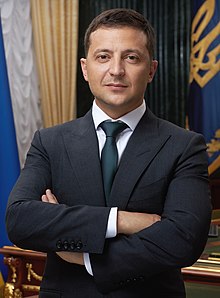
    The speech made by Volodymyr Zelenskyy, the President of Ukraine, on 11 August 2022.

    Dear Prime Minister Frederiksen!

    Dear Minister Bødskov!

    Dear attendees, dear participants of the Conference!

    I am grateful for the organization of such an important event, which is urgently needed now – and not only for Ukraine.

    To begin with, I would like to remind you of one episode of our shared history. It happened in Sweden. About 700 kilometers from Copenhagen, just over an hour by plane. One day at the Forsmark Nuclear Power Plant, radiation monitoring devices showed the presence of radiation contamination. Then everything was quickly checked and no sources of radiation were found in Forsmark.

    However, reports began to arrive from other sites in Sweden, as well as from Finland, that there was also an increased level of radiation. Concerns were also raised in Denmark – an increase in the level of radioactive substances was also recorded there.

    It became clear that an emergency had occurred, but at that time they did not know exactly where. They analyzed the nature of the pollution, the direction and velocity of the wind – and found out that somewhere in the territory from Minsk to the Black Sea, a disaster occurred.

    It was April 1986 – a day after the explosion of the nuclear reactor in Chornobyl. The Soviet authorities were silent about what happened at that time. And tried to downplay the scale of the disaster. However, it was impossible to hide it – there has already been publicity in Europe, there has already been evidence of pollution, and a discussion has already begun about how it threatens all people.

    I will not remind you now of all the details of those days. You all probably know about it. About the fire at the Chornobyl station and the efforts of those who tried to stop the unfolding of the disaster. About the diagnosis of “acute radiation syndrome” and about people who begged for salvation in terrible death agonies.

    Significant areas were contaminated. There is still an Exclusion Zone around Chornobyl, where people are not allowed to live. Hundreds of thousands of residents of different countries were affected by Chornobyl in one way or another.

    And for years after that disaster, the whole world has been thinking about how to make nuclear energy secure. For years, adherence to special standards has been monitored to ensure that such disasters do not occur.

    And for years absolutely no one could imagine that Europe could be threatened with a new disaster at a nuclear plant not because someone would violate some safety standards, but because some state would deliberately use a nuclear plant for terror.

    This is what Russia is doing now. And if the Soviet authorities tried to conceal the Chornobyl disaster and its full consequences, the Russian authorities are much more cynical and dangerous – they themselves do everything to maximize the risk of a nuclear disaster, and lie to the whole world that someone else is allegedly to blame.

    We must protect Europe from this threat. Protect all together. And probably not only Europe. Because the Zaporizhzhia nuclear power plant in Ukraine is the largest on our continent. It is the third largest in the world. Six power units!

    During the years of operation of this station, there was not a single incident that would endanger the safety of Ukrainians or all Europeans. But now the Russian occupation army is using the Zaporizhzhia nuclear power plant for terror and armed provocations.

    Russia has turned the nuclear plant into a battlefield. When the occupiers came to the Zaporizhzhia NPP, their tanks fired at it. Direct fire at the plant! Placing military equipment on the territory of the plant and even disposing of ammunition there, the Russian troops surely know that they are putting the whole of Europe at risk of a nuclear disaster.

    And of course, the Russian authorities are aware of the possible consequences when their troops fire at a nuclear plant. In particular, from MLRS.

    In August, it was already now, they damaged the plant’s communication lines with our power system, as well as radiation monitoring sensors, nitrogen-oxygen station, hydrogen pipelines and related infrastructure. Already then, Europe was a few steps away from a nuclear disaster. And now we are all in this difficult situation.

    We are convinced that it is not a coincidence that the trajectory of the cruise missiles which Russia fires at the territory of Ukraine passes over the Ukrainian nuclear power plants. All these are manifestations of Russian nuclear terrorism.

    Russia has become a terrorist state, and is actually holding nuclear plants hostage, and is blackmailing everyone with a probable disaster.

    I am sure each of you has already thought about how to act if Russia uses so-called tactical nuclear weapons. Think about this as well. Russia can cause the largest radiation accident in history at the Zaporizhzhia nuclear power plant. In terms of actual consequences, it could be even more catastrophic than Chornobyl, and in fact – the same as the use of nuclear weapons by Russia, but without a nuclear strike.

    None of us can stop the wind if it carries radiation. But together we are capable of stopping a terrorist state. And the sooner we stop Russia, the sooner Europe and the world will be able to feel safe again.

    Everything that is necessary for this is well known to you.

    Sanctions against Russia must be strengthened and not allowed to be circumvented. In response to nuclear blackmail, tough sanctions are needed against Rosatom, this is a specific thing, and the entire Russian nuclear industry, not an agreement with them.

    Constant political pressure on Russia is needed to increase the number of countries participating in the anti-war coalition, and to reduce the circle of those who are at least somehow willing to help Russia in these circumstances.

    And most importantly, we need even greater support for Ukraine with weapons and ammunition. To really stop Russia, the Armed Forces of Ukraine must have as many shells as necessary to make it tangible that Russia is not able to put pressure on the battlefield. And Ukraine needs weapons of such power, such a long range that Russia is forced to finally think about finding a peaceful solution.

    Minister of Defense of Ukraine Oleksiy Reznikov who is present among you at the Conference will definitely inform you about specific defense needs.

    The second point is finances. Russia still receives tens of billions of dollars due to trade with other countries, and Europe in particular.

    And in Ukraine, the monthly deficit of the state budget alone is about five billion dollars.

    And the destruction caused by the war is happening on the territory of Ukraine. And we cannot wait until the war is over to restore normal life.

    Our children have to go to school just like yours. Our youth, just like yours, have to study at universities. Hospitals and social infrastructure have to work in Ukraine just like yours. Therefore, Ukraine needs reconstruction. Now! Just now! And even more so on the eve of the winter season.

    We need to carry out demining. And, of course, we need to prepare the defense for winter conditions.

    Therefore, sufficient and timely financial support for our state, for the budget and for the Fast Recovery is as vital as weapons and ammunition for our army, and sanctions against Russia.

    And the state that blocks this financing for Ukraine cannot have excuses. It should remember that it is a European country and should fix this problem immediately.

    And the third point is the export to Russia, the supply of components and dual-use products to the companies of the terrorist state. Russia simply would not have a combat-ready army in modern conditions if it was not for imported parts. Electronics, optics and many other parts of foreign production are used in manufacturing missiles, drones, means of communication, armored vehicles, etc. This flow of technical assistance to Russian terror must be completely stopped!

    There must be an effective mechanism to control any supply to Russia, so as not to miss a single detail that could go to the production of weapons for shelling peaceful cities or nuclear plants.

    Ladies and Gentlemen!

    The response now needs to be full-scale, just like the war that Russia started.

    No one needs new disasters.

    It is necessary to draw conclusions from the disaster of 1986. From the decades that Russia used to prepare for this vile war against all of free Europe. From eight years of war in Donbas. And from one hundred and seventy days of terror against Ukraine after February 24.

    No silence – only the truth. No delay – only decisive action. No confusion – only confident, bold unity.

    We need maximum weapons and ammunition for our defense. Finances are needed for Ukraine in sufficient volume and without any bureaucratic blockages.

    Complete isolation of the terrorist state, primarily economic, technological, and the toughest sanctions are required.

    It is our duty to our nations, to all future generations of free people, to do everything we can to stop Russia, to ensure that it loses this war and that no other state can repeat this terror.

    And I believe that we will fulfill our duty!

    Thank you for your attention!

    I am grateful to Denmark and Great Britain for jointly organizing this Conference, which could become historic. Due to our joint efforts.

    Thank you again!

    Glory to Ukraine!