Blog

  • PRESS RELEASE : National strategy for NHS eco-sustainability

    PRESS RELEASE : National strategy for NHS eco-sustainability

    The press released issued by the Scottish Government on 16 August 2022.

    Making the service net-zero by 2040.

    A new national strategy, aiming to make the NHS environmentally sustainable, has been launched at Scotland’s first low-carbon new-build hospital.

    The Balfour Hospital, in Kirkwall, Orkney, is fully electric with air-to-water heat pumps generating all hot water and heating, and has solar panels to reduce reliance on the grid.

    The NHS Scotland Climate Emergency and Sustainability Strategy targets five crucial areas for achieving net-zero:

    buildings – ensure well insulated, efficient and using renewable heating systems
    travel – low emission, electric vehicles and making it easier for staff, patients visitor to travel to NHS sites by public transport or bicycle
    goods and services – cutting emission in the supply chain, reducing the goods and materials used as well as reducing use of single use instruments
    care – reduce the use of emissions from medicines such as metered dose inhalers or anaesthetic gases
    communities – how to support communities to adapt to climate change and encourage them to make use of the greenspace in hospital grounds
    From next year reports will be published annually setting out the progress made in implementing the strategy.

    Visiting the Balfour Hospital, Health Secretary Humza Yousaf said:

    “As we continue our efforts to push ahead with the recovery of health and social care after the challenges of the last two years, we need to think long-term about how to make services more sustainable. With such a large estate, environmental sustainability is a key part of that for the NHS, so I’m pleased to be able to launch this strategy today.

    “Our approach will help us to build on the great work which has already been done to accelerate our efforts to cut greenhouse gas emissions and become environmentally sustainable. As well as the environmental impacts, I am also very mindful of the recent increase in energy prices, and there is a clear benefit in reducing energy use and increasing efficiency in everything we do.

    “To achieve the transformational change that is necessary we need to establish a culture where resources are safeguarded and used responsibly. With that in mind I have been really impressed with what I have seen in Orkney. The team here are driving forward innovative ways to ensure they have low carbon emissions.”

    Michael Dickson, Chief Executive of NHS Orkney Chief Executive, said:

    “We have been delighted to show Mr Yousaf around the fantastic facilities we have here in Orkney. It is testament to the whole community how committed we are to building a sustainable future.

    “We are proud to be leading the way in new hospital and healthcare buildings with sustainability being at the forefront of planning.”

    Background

    NHS Scotland Climate Emergency & Sustainability Strategy is aiming to make the NHS environmentally sustainable

    NHS Orkney are further cutting emissions through their trial of an onsite treatment facility to handle low risk clinical waste, which was previously sent to the mainland for treatment.

    The Balfour’s grounds are also being used for the community’s benefits giving a space for staff, patients and the wider community to rest, relax, recover and carry out recreational gardening activities.

    NHS Scotland’s local Health Boards’ building emissions decreased by 64% between 1989/90 and 2020/21.

  • PRESS RELEASE : Summit with energy suppliers and consumers

    PRESS RELEASE : Summit with energy suppliers and consumers

    The press release issued by the Scottish Government on 16 August 2022.

    First Minister to convene roundtable on the growing cost emergency.

    The First Minister will convene an urgent summit with energy supply companies and consumer groups later this month, to discuss how advice and support for people struggling with energy bills can be improved.

    The summit will consider what collective action can be taken by government, energy companies and the third sector to help businesses and consumers access advice, and get support with debt issues.

    Scotland’s major energy suppliers including Scottish Power, OVO Energy, Centrica, Octopus and E.ON, as well as industry bodies and key consumer and poverty organisations will attend.

    The summit follows last week’s meeting of the Scottish Government Resilience Committee on the cost living crisis and will take place ahead of OfGem’s next energy price cap announcement on 26 August.

    First Minister Nicola Sturgeon said:

    “I know that this is an incredibly unsettling time for households and energy consumers across Scotland and the Scottish Government will continue to do everything we can to support those affected.

    “There is a not a single solution to this problem and government, industry and the third sector in Scotland needs to work collaboratively together to ensure the right support is in place for householders and businesses during this challenging winter. This could include improving the availability of help and advice and considering a more compassionate approach to debt management.

    “However, it remains the case that the powers and resources needed to tackle this emergency on the scale required – access to borrowing, welfare, VAT on fuel, taxation of windfall profits, regulation of the energy market – lie with the UK Government. Only the UK Government can access and make available resources on the scale required. They need to take action, now.

    “As I said last week, a first step would be to cancel the energy price cap rise this autumn.”

    Peter Kelly, Director, The Poverty Alliance said:

    “We are pleased that the First Minister will be convening this summit of energy companies, along with the Poverty Alliance and Energy Action Scotland.

    “Across the country, people are increasingly being swept up amid a rising tide of hardship. But with the energy price cap due to increase in October, that tide threatens to become a flood.

    “Households up and down Scotland are terrified of what the colder months will bring and the likelihood is that – without further action – lives and life chances will be at risk. The situation could scarcely be more urgent.

    “But it is a situation we can do something about, by taking action to protect people most at risk of poverty and deeper hardship. It is that much-needed and urgent action that we are hoping the summit can bring about.”

    Frazer Scott, CEO of Energy Action Scotland said:

    “With our colleagues at the Poverty Alliance, we welcome the First Minister’s intervention in gathering energy companies together to talk about how we can best support households struggling to afford spiralling energy bills.

    “Fuel poverty will affect over one million Scottish households this winter requiring urgent intervention focussed on targeting those most in need.

    “Cold, damp homes affect health and wellbeing and will put thousands of lives at risk as well as adding additional pressure to the NHS, making this a vital intervention for Scotland.”

    Background

    The Scottish Government estimates that 906,000 or 36% of all households will be in fuel poverty in October 2022, based on an Ofgem price cap of £2,800 and taking into account previously announced government mitigations.

    The Scottish Government’s Resilience Committee met on Thursday 11 August to discuss the cost emergency and agreed a number of actions.

    Householders can access free and impartial support through Home Energy Scotland to improve the energy efficiency of their homes. Home Energy Scotland can be contacted on their freephone number 0808 808 2282 or via the Home Energy Scotland website.

    The Scottish Government has expanded the capacity of its Home Energy Scotland advice service this year to help an extra 12,000 households a year.

    The Scottish Government has allocated almost £3 billion in this financial year that will help households face the increased cost of living. This includes the provision of services and financial support not available elsewhere in the UK that is helping to reduce everyday costs and increase incomes.

    It also includes £10 million to continue our Fuel Insecurity Fund – to help households at risk of severely rationing their energy use, or self-disconnecting entirely. This includes direct support for households using any tariff or fuel type, and is delivered via trusted third sector partners – the Fuel Bank Foundation, Advice Direct Scotland and the Scottish Federation of Housing Associations.

  • PRESS RELEASE : One year until Scotland’s deposit return scheme

    PRESS RELEASE : One year until Scotland’s deposit return scheme

    The press release issued by the Scottish Government on 16 August 2022.

    Recycling initiative will help deliver a circular economy.

    Scotland’s deposit return scheme will go live for consumers in one year’s time (16 August 2023), giving businesses and consumers an easy way to boost recycling.

    The scheme, which will be the first in the UK, will play an important part in Scotland’s journey to a circular economy. Estimates by Zero Waste Scotland suggest that the scheme will reduce emissions by an average of nearly 160,000 tonnes of carbon dioxide a year – the equivalent of 109,000 return flights from Edinburgh to New York.

    The 20p deposit will also provide an incentive to reduce littering, helping to cut the number of bottles and cans discarded in streets and green spaces.

    The scheme is being delivered by Circularity Scotland Ltd., an industry-led body representing drinks producers, retailers and trade bodies of all sizes. This business-led approach is common among many of the most successful schemes in Europe, include Denmark, Finland, and The Netherlands.

    Infrastructure for the scheme is now beginning to be rolled out across Scotland, and businesses of all sizes are being encouraged to act now to make sure they are ready for the scheme launching this time next year.

    Businesses can register with Circularity Scotland, to make sure they receive information that will help them prepare.

    The Scottish Environment Protection Agency (SEPA), who are the regulator for the scheme, has also launched a campaign that will help businesses understand their legal responsibilities and the steps they need to take to prepare.

    Circular Economy Minister Lorna Slater said:

    “Scotland is leading the way in the UK on delivering a circular economy. By putting in place a deposit return scheme, we are delivering on the public’s desire to see action on plastic and other waste, and making an important contribution to the response to the climate emergency.

    “With thousands of return points across the country, it will be as easy to return your empty bottle or can as it was to buy it in the first place. This will help to nearly double recycling rates for the containers included in the scheme, while reducing the amount of litter on our streets and cutting CO2 emissions.

    “This scheme is being delivered by industry for industry. By putting businesses in charge, we are making sure that it works for them. With one year to go until the scheme goes live for consumers, I would encourage all businesses and organisations that produce, ship or sell drinks to get involved with the scheme now.”

  • PRESS RELEASE : A meeting was held in the President’s Office with the chief prosecutor in the case of Slobodan Milošević, at which the establishment of a Special Tribunal for the crime of aggression against Ukraine was discussed

    PRESS RELEASE : A meeting was held in the President’s Office with the chief prosecutor in the case of Slobodan Milošević, at which the establishment of a Special Tribunal for the crime of aggression against Ukraine was discussed

    The press release issued by the President of Ukraine on 19 August 2022.

    Deputy Head of the Office of the President Andriy Smyrnov and Ambassador-at-Large of the Ministry of Foreign Affairs Anton Korynevych met in the Office of the President with British barrister Geoffrey Nice, who was the lead prosecutor in the case of ex-President of Serbia Slobodan Milošević at the International Criminal Tribunal for the Former Yugoslavia. The parties discussed the establishment of a Special Tribunal for the crime of aggression against Ukraine, which will organize the trial of the highest political and military leadership of the Russian Federation.

    “I consider this a completely logical initiative and fully share the need to create an international tribunal to investigate the crime of aggression by Russia’s political leadership. I’m sure it can be created quickly. And I want to wish Ukraine to move towards the creation of the court energetically, regardless of any skeptical assessments. The Milošević case says that even the highest official will sooner or later be punished for his crimes. This fully applies to Vladimir Putin as well,” said Geoffrey Nice.

    Andriy Smyrnov emphasized that the establishment of the Special Tribunal and the punishment of all members of the Security Council of Russia is key to the future system of international law.

    “If today we do not show the whole world that the crime of aggression is severely punished, if we do not bring Vladimir Putin and his entire clique to criminal responsibility, tomorrow any dictator can make territorial claims to any country in the world. And the international security system can be forever forgotten,” Andriy Smyrnov said.

    Anton Korynevych, Ambassador-at-Large of the Ministry of Foreign Affairs, noted that Russia’s attack on Ukraine is the biggest aggression and caused the largest war in Europe since the end of World War II, and therefore the creation of a Special Tribunal, which will be responsible for trial of the higher political and military leadership of the Russian Federation for committing the crime of aggression against Ukraine is an appropriate legal response to this brutal invasion.

    It bears reminding that Ukraine undertook the initiative to create a Special Tribunal, which will prosecute members of the Security Council of Russia for committing the crime of aggression against our state. Previously, the creation of such a tribunal was supported by the Parliamentary Assembly of the Council of Europe, the European Parliament, the NATO Parliamentary Assembly and the OSCE Parliamentary Assembly.

  • Iain Duncan Smith – 2003 Statement on the Hutton Inquiry

    Iain Duncan Smith – 2003 Statement on the Hutton Inquiry

    The statement made by Iain Duncan Smith, the then Leader of the Opposition, on 10 August 2003.

    All of us were deeply shocked by the tragic death of Dr Kelly. Last week our thoughts were with his widow, his family and friends, as we paid our respects to a man who served his country as a Nobel-nominated scientist and a leading expert on weapons of mass destruction.

    Now that Dr Kelly’s funeral has taken place, attention will inevitably focus on the Hutton inquiry. Lord Hutton has a reputation for independence and integrity. I have every confidence that he will establish the precise circumstances of Dr Kelly’s death and the role that the Ministry of Defence – or even Downing Street itself – played in releasing Dr Kelly’s name to the media.

    The British people yearn for honest and straightforward politics. They are sick of behind the scenes briefings, and inappropriate or insensitive statements from senior officials and Ministers. Should Lord Hutton’s inquiry be subject to any attempts at political interference, it will only reinforce the public perception that the conduct of this Government is both unacceptable and undesirable.

    Even while the Government was publicly trying to show remorse at the tragic death of Dr Kelly, this last week behind the scenes we witnessed yet more of this Government’s black arts at work. The attempt by Tom Kelly, the Prime Minister’s official spokesman, to cheapen the record of Dr Kelly off the record, even before his funeral had taken place, was appalling. We should not simply allow it to be dismissed as an unauthorised mistake. It is what 10 Downing Street has been doing for far too long. Malicious briefings are part of their culture and Tom Kelly was only presenting the agreed counter-attack briefing from Number 10. The fault line goes right to the top. It is surely Mr Blair who must apologise. After all Tom Kelly, Alistair Campbell, and all of their spin-doctors ultimately work for him.

    This latest episode of Downing Street’s unwarranted involvement in the Dr Kelly affair is why I have asked for Lord Hutton to be given a remit that allows him to examine all the circumstances surrounding the death of Dr Kelly.

    I have argued that the processes leading up to the September dossier on Iraq’s weapons of mass destruction are inseparable from the Dr Kelly’s death, and I have repeatedly made the case for as wide and open an inquiry as possible. I also still believe it would be a good thing for Lord Hutton’s inquiry to have the power to take evidence under oath. The public demand this. The Government’s credibility depends on it. I hope that Lord Hutton’s inquiry is able to deliver it.

  • Damian Green – 2003 Speech on Teacher Shortages

    Damian Green – 2003 Speech on Teacher Shortages

    The speech made by Damian Green, the then Shadow Secretary of State for Education, on 9 September 2003.

    I beg to move

    That this House notes that thousands of teaching posts have been lost in schools as a result of this year’s funding crisis; condemns the Government for failing to respond early enough to reports of these redundancies, instead seeking to lay the blame on local authorities; further condemns the Government for not using any of the Department for Education and Skills’ underspent money to alleviate this crisis; further notes that schools are having to ask parents for regular contributions to alleviate cash shortages; is concerned about the effect of these redundancies among teachers and support staff on the implementation of the Workload Agreement; and urges the Government to simplify the funding system for schools so that there will be no repeat of this year’s problems in the recruitment and retention of teachers.”

    I am sure that the House will understand, as I do, that the Secretary of State has a prior commitment at the TUC, which is why he is not with us today. I hope that he takes the opportunity to talk some of the teachers’ representatives who will no doubt be there. One reason for our calling this debate is to show that the Government are letting down not just those who rely on our public services but those who work in them. It is not only parents and children who have been hit by the Government’s school funding crisis but teachers, who are being made redundant in schools up and down the country. I am not surprised that teachers are angry—they have been betrayed by the Government’s false promises, and they will never trust them again.

    Ministers sometimes affect surprise that trust in the Government and especially the Prime Minister has disappeared. They seem puzzled that people no longer think that they are competent to run the public services. For an explanation they need look no further than the mess that they have created in our schools and their own performance in responding to this crisis since it became apparent earlier this year. This year, Ministers have provided the general public with a master-class in blunder and confusion. One moment we have protestations of innocence, while in the next breath the Government concoct a short-term and inadequate solution to the very problem that they just told the public did not exist at all.

    The history of the crisis is instructive. When questioned by the Select Committee on Education and Skills in July this year, David Normington, the permanent secretary at the Department for Education and Skills, told us when he began to feel that there were going to be problems with school funding in the year ahead. His answer to the Select Committee was that it was after the Secretary of State’s arrival

    “at the end of October and before Christmas, some time around then.”

    We now know that the Department knew before Christmas that the crisis was going to hit our schools. After Christmas, at the Secondary Heads Association conference, the Secretary of State said that there was no problem. Indeed, he had previously told the Association of Chief Education Officers that simply throwing more money at them would not solve their problems. Such a request, he said, showing less than his usual charm,

    “just floods straight over my head. I don’t listen to what you say quite frankly”.

    I am sure that the association responded in kind.

    I ought to have been apparent to the Secretary of State and other Ministers that not only was the local government settlement likely to cause difficulties but that many other matters under the direct control of the Government were going to cause problems, not least the Chancellor’s insistence on increasing employers’ national insurance contributions, which hit schools particularly hard—characteristically, 80 per cent. of a school’s budget is taken up with staff costs—and the decision to increase employers’ pension contributions, which came straight off the bottom line of school budgets. The bulk of the crisis has therefore been caused by decisions made inside government.

    I therefore agree with my hon. Friend that the Secretary of State’s apparent ignorance of the fact that the crisis was going to happen, let alone the reason why it was happening, is quite extraordinary. I can only assume that he was convinced by the announcement by the Minister for School Standards that every local education authority

    “will be getting at least 3.2 per cent. per pupil increase for next year, with further increases in the following two years. No LEA will lose out in real terms as this new system is introduced”.

    That was the Government’s formal position in the early months of this year.

    I am afraid that it is sadly characteristic of the Government that, when they are faced with a problem, their first instinct is to look not for a solution, but a scapegoat. In this case, the scapegoat was to be local education authorities. I suspect that the reason why the Government gave up on their fruitless quest for a scapegoat had nothing to do with the merits of the case, but related to the fact that many Labour-controlled authorities throughout the country were pointing out that their schools were suffering in the same way as those of Conservative-controlled authorities, which became politically unhelpful to them.

    In May, in response to many LEAs of all political colours, protests from schools and the rising number of complaints about the crisis, the Department finally announced that it would allow schools to set deficit budgets and that they would be allowed to use their capital budgets for paying teachers’ salaries. That was he first signal that the Department was beginning to accept the scale of the problem. However, I remind Ministers of what we said at the time. Allowing schools to dip into money intended for capital projects as well as their reserves risks storing up even greater problems for the future. The scale of the problems that the Government have stored up with that approach to the problem is now beginning to become clear.

    Many head teachers have said that when a school is engaged in a major capital project, it is extremely likely that it will be carried out during the summer holidays. Given the need to book builders, it is likely that arrangements will have been made for this year long before the Government gave permission for the money to be spent elsewhere. Their gesture was therefore moderately futile as well as ill timed.

    Labour Members will have a lot of explaining to do to head teachers who have been told to use their capital budgets for revenue spending.

    Let me quote Nick Christou at East Barnet school, just one of the many affected head teachers, who has had to divert £90,000 from capital projects. He said:

    “The money that I had was for repairing the roofs because they are leaking all over the place—in the maths office and textile technology room for a start. But we have to use it and run with our leaky roofs for one more year. We will just have to put buckets underneath them.”

    In Labour-controlled Ealing, schools are using between 70 and 100 per cent. of their reserves just to avoid another crisis this year. The Government’s first response merely stored up a worse crisis for years to come.

    Even once the Department and its Ministers had accepted that there was a problem, there was still an enormous gulf between the reality of life in our schools and the purported facts coming from the Government. Even in June, some in the Government were unwilling to accept the scale of the problems. On 11 June, my right hon. Friend the Leader of the Opposition asked the Prime Minister

    “how many teachers are facing redundancy right now?”

    The Prime Minister replied:

    “According to the Department for Education and Skills, there are about 500 net redundancies.”

    We now know that that answer grossly underestimated the problems that schools have been facing. As my right hon. Friend said at the time

    “The reality is that the figures for redundancies are that, this year, three times as many will face the sack as last year.” —[Official Report, 11 June 2003; Vol. 406, c. 673–74.]

    Absolutely. All that I can say to my hon. Friend is that I hope that Ministers will apologise to the head, teachers, parents and governors at her school and at many others that face similar problems.

    By midsummer, even Ministers had stopped trying to bluster their way out of the crisis. Extraordinarily, one of their partial solutions was to scrap one of their own flagship policies—the school achievement award. That was truly bizarre. Only in May, the Minister for School Standards had said:

    “It is right to reward the staff whose work helps pupils to learn and today’s awards celebrate their achievements”.

    Two months later, the Secretary of State announced that too many teachers had been allowed to go to the top pay levels too quickly. In the next month, he announced that the Government would be scrapping the policy that was, according to them, intended to
    “celebrate the work of the entire school community”.

    Clearly, 2003 is not the year to be a teacher under this Labour Government. Last week, the Secretary of State finally came close to apologising to the thousands of children facing the new school year with fewer teachers. In a webcast to welcome the new academic year, he said:

    “The government make mistakes, certainly I do, my colleagues do, and the handling of the schools’ funding last year was a good example of that which I am determined to put right this year.”

    In these circumstances, with so many teachers experiencing redundancy or facing the threat of redundancy, I am amazed that the Government have the nerve to run expensive TV advertising campaigns for teacher recruitment. There is something surreal about watching a news programme that contains an item about teachers losing their jobs just before an advert urging people to become teachers. I congratulate Ministers on their latest advert, which features large numbers of headless people. As a piece of post-modern irony commenting on the Department’s performance this year, it cannot be beaten.

    If the Secretary of State had admitted culpability when these problems first arose, and had created a real solution instead of merely putting off the inevitable, perhaps we would not be in a situation in which one school in five are asking parents to make contributions to keep the school system going and in which a survey by the Secondary Heads Association and The Times Educational Supplement found that 2,700 teaching posts had not been filled and that 700 teachers have been made redundant. Only months ago, the Prime Minister was talking of losses in the order of 500 teachers.

    The articles head line was staff cuts running into thousands”, and it gives what it calls the “critical numbers”, stating that 2,729 teachers and 1,152 support staff have not been replaced because of lack of funding. The TES goes on to say that there have been 730 teacher and 301 support staff redundancies; that there are 1,881 unfilled teacher posts; and that, of teachers appointed, 4,246—16.6 per cent.—were judged unsatisfactory by heads.

    The Minister also knows that the increase in the school population means that approximately 1,000 teachers are needed to keep pupil-teacher ratios steady and that the Government have failed to do that. Perhaps he will turn to the inside pages of The Times Educational Supplement, which paint an even bleaker picture.

    The head of the Royal Grammar school in High Wycombe has pledged £15,000 of his salary to ease his school’s budget problems. The school caretaker is offering £5 a month. In East Anglia, one comprehensive school is considering charging for textbooks. One school in London—the London Oratory, which, I dare say, is familiar to senior members of the Government—is asking parents for an increase of £5 in the monthly £30 contribution that they already make. The school made it clear that the call for extra money is a direct result of the funding cuts for many schools in southern England that the Government announced early this year. The Oratory started term last week with fewer teachers.

    Ministers appear peculiarly reluctant to accept the facts that everyone else acknowledges to constitute an accurate description of life in our schools today. Their immediate reaction to the Secondary Heads Association survey was simply to rubbish it. It was followed by a survey of local education authorities in The Guardian that showed similar results. Ministers must stop pretending that the rest of the world is out of step.

    In 55 local authorities, more than 1,000 full-time teaching posts have been lost through redundancies and schools opting not to replace teachers who leave for other reasons. If that pattern were repeated in all local education authorities, approximately 2,500 teaching posts would be lost. We have a consistent set of numbers, which everyone, except the Government, recognises.

    In the Minister’s authority, 17 teaching posts have been lost. The LEA told The Guardian:

    “Schools have set budgets by using their high levels of carry-forward balances.”

    In the Secretary of State’s authority, 11 teaching posts have been lost and French and German classes are being cut in schools, which can simply no longer afford them. The Government tell us that they want to revive language teaching in schools, yet schools are having to cut such classes because of the Government’s funding policies.

    Not only teachers but support staff are suffering. According to The Times Educational Supplement, on top of the 301 support staff who have been made redundant, 1,152 support staff have not been replaced because of lack of funding. There are also problems with cuts in the capital budget that the Government have forced on schools. One can only spend one’s capital once.

    What do Ministers say to Roland Waller, the head of Morley High in Leeds, who said:

    “We have protected staffing by cutting repairs and maintenance to the bone this year. Upgrades to classroom furniture will be virtually zero and our rolling programme of redecoration and refurnishing has been curtailed.”

    Only yesterday, Anne Welsh, the new president of the Secondary Heads Association, said that this year’s cash crisis would have repercussions for many years. She said that problems were exacerbated because

    “It is increasingly difficult to persuade young teachers to take on the responsibility of middle management roles, which is very worrying given that most in leadership positions are within 10 years of retiring.”

    We are not therefore considering a one-year crisis; it will linger in schools for years.

  • Oliver Letwin – 2003 Speech at the Police Superintendents’ Conference in Newport

    Oliver Letwin – 2003 Speech at the Police Superintendents’ Conference in Newport

    The speech made by Oliver Letwin, the then Shadow Home Secretary, in Newport, Wales on 11 September 2003.

    This is an age in which the worst insult you can hurl at someone in my profession is “politicians are all the same.”

    I’d like to use this speech to argue against that. Politicians are not all the same. If only because they belong to different parties that each have a very different vision for Britain’s public services.

    Today, I want to tell you about my party’s vision for the police service. I can’t guarantee that you’ll like it, but I can guarantee this: At the next general election you will have a genuine choice. A choice between what you have now under this Government and what you could have under a Conservative Government.

    In a nutshell, our vision is this:

    The restoration of neighbourhood policing as a fully-respected, fully-resourced function of the modern police service – of equal importance, and equal status, to any other aspect of modern policing.

    Neighbourhood policing versus conventional policing

    In other speeches I have described the difference between neighbourhood policing and conventional policing. Neighbourhood policing is sometimes called beat policing, but it is not only that. The beat is at the heart of neighbourhood policing, but this is policing with brains too – as anyone who has seen it succeed in America can tell you. That is why you will not hear me use the term “intelligence-led policing” to refer to conventional policing alone. Each form of policing is as intelligent as the other. But they gather, and then use, intelligence in different ways.

    There are, of course, overlaps, but conventional and neighbourhood policing differ in emphasis: One deals with specific crimes, the other with general disorder; one targets major offences, the other minor offences; one is reactive and remedial, the other proactive and preventative.

    These two forms of policing are complementary; they could and should form two halves of a whole in today’s police service. But they do not. Over the years, neighbourhood policing has been systematically disrespected and under-resourced.

    As a result it has declined in importance and diminished in status. Debate over beat policing degenerates into talk of “bobbies on the beat”. And by that point, it is not long before predictable and patronising references to Dixon of Dock Green are trotted out. In this way the debate is lost, dismissed as mere nostalgia for an age long gone, if, indeed, it ever existed at all.

    Cargoes

    On the principle that I might as well hang for a sheep as a lamb, I’m going to indulge in a gratuitous act of nostalgia by looking back to my school days – the days when children were still taught to memorise poems by heart. I expect many of you will recall one particular poem by John Masefield, the one that begins like this:

    Quinquireme of Nineveh from distant Ophir,

    Rowing home to haven in sunny Palestine,

    With a cargo of ivory,

    And apes and peacocks,

    Sandalwood, cedarwood, and sweet white wine.

    The next verse describes a “stately Spanish galleon” and its equally exotic cargo of “diamonds / Emeralds and amethysts / Topazes, and cinnamon, and gold moidores”.

    The final verse is in total contrast to the first two. It describes a “Dirty British coaster with a salt-caked smoke-stack” and a deeply unglamorous cargo of “Tyne coal / Road-rails, pig-lead / Firewood, iron-ware, and cheap tin trays.”

    This poem is itself about nostalgia. The gritty realities of modern life are set against the golden age of the Stately Spanish Galleon and the even more distant glamour of the Quinquireme of Nineveh.

    Gritty realities

    One could draw a parallel here with the police service. On the one hand there are the gritty realities of neighbourhood policing, while on the other there is the glamour of conventional policing – which normally goes by a more glamorous name like “intelligence-led policing” or “high-level policing”. Just as the “dirty British coaster” goes “butting through the Channel”, so neighbourhood policing concerns itself with ordinary life in ordinary places. Sure enough, the neighbourhood police officer sees past the polite façade of those lives and places, but what he sees is not the stuff of TV drama. There is no thrilling heart of darkness, just a dim reality of commonplace crimes and misdemeanours.

    The neighbourhood police officer is unlikely to encounter Mr Big on his beat. But he can stop Mr Insignificant from selling Mr Big’s heroin on street corners. Which might mean that Miss Hopeless makes something of her life. Which might mean that Old Mrs Frightened feels safe enough to venture outdoors. Which might mean that the neighbourhood regains some sense of community, the essential first step to regeneration and renewal. Not bad for a dirty British coaster.

    But Masefield’s poem isn’t just about nostalgia, it’s also about progress. The dirty British coaster was a workhorse of the industrial age, at the cutting edge of modernity. The quinquireme and the galleon were undeniably more glamorous, but it was the coaster that, quite literally, delivered the goods.

    And this is where my analogy might appear to break down. Because conventional policing is not only seen as more glamorous, but more modern too. Neighbourhood policing, on the other hand, is seen not only as dull and dirty, but out of date too – a relic from yesteryear to be patronised and disrespected.

    The attack on neighbourhood policing

    But this is a misperception, and there are two main reasons for the misperception.

    The first is technological. Pursuit vehicles, surveillance equipment, computerised databases, DNA analysis and many other applications of technology have transformed the possibilities of policing. While paying due regard to civil liberties, it is entirely right that these possibilities should be fully explored and exploited. And yet, however adept we become in the use of technology to target serious crime, there can be no substitute for human intelligence, in particular, intelligence derived from the wider community that provides the context for every crime, serious or otherwise.

    The second reason for the disdain of neighbourhood policing is ideological. To some, for whom crime is a response to a system of oppression, and for whom the police are agents of those who control the system, neighbourhood policing is seen as something to be expelled from the community. In previous decades, those who laboured under this delusion moved to weaken the police presence in our communities, in order to bring about a shift in the balance of power. As a result, the forces of law and order have lost ground in towns and cities throughout this land.

    These two tendencies of very different kinds – the enthusiasm for top-down, technology-led policing and the ideological disdain for traditional authority – have together led to a Britain in which neighbourhood policing has in general been allowed to decline. In my view, this is a calamity, because the real balance of power lies not between the police and people, but between crime and the community. The front line runs through our most disadvantaged neighbourhoods, a front line from which police have been systematically withdrawn, leaving the weakest, most vulnerable members of our society alone and defenceless against the real enemy.

    Parallel with the medical profession

    To understand the full scale of this calamity, imagine that something similar had taken place within our healthcare system. The medical profession has its equivalent of the neighbourhood police officer: a class of professionals who are based in the community, who are involved in the day-to-day lives of those in their care, who deal mainly with minor complaints, but are best placed to know when and where to call in extra resources and specialist help. These professionals are known as GPs. Most of the glamour and the fame may attach to other roles within the NHS, such as that of surgeon or consultant, but the respect in which the family doctor is held is second to none.

    Now the NHS has its problems, but imagine how much worse these would be if the role of GP healthcare had been subject to the denigration and neglect that has befallen neighbourhood policing. Imagine the fear and frustration of the public; the stress and despair of those GPs who remained in place; the deterioration of untreated minor ailments into major emergencies; the loss of local intelligence leading to massive misallocation of specialist resources; the inevitable decline in the nation’s health.

    It is not for nothing that the service provided by GP surgeries is known as primary healthcare. It is so fundamental to the functioning of the NHS as a whole that it is impossible to think about it in any other way. And indeed the primary importance of primary healthcare has never been in doubt. That is why, whatever the problems of the NHS, one thing we haven’t seen is a general decline in the nation’s health.

    However, what we certainly have seen is a general decline in law and order. And on that measure, the problems facing Britain’s police service are deeper than anything facing the National Health Service. Deep problems require deep solutions, the deepest of which would be the restoration of neighbourhood policing to its rightful place in today’s police service, in today’s Britain. We need to think about neighbourhood policing as primary policing, of primary importance to policing as a whole.

    Police numbers

    That is how my party thinks about neighbourhood policing. But what would the next Conservative Government actually do to make that vision real?

    First of all we will provide the necessary resources, by which I mean sufficient funding for an unprecedented increase in police numbers – that is an increase of 40,000 police officers.

    There’s no small print in that commitment. We will increase police numbers by 40,000 over and above the level we inherit from Labour at the next election. And to give credit were it’s due, by the next election this Government will have increased police numbers by about 5,000. It’s also true that, over the same period, they’ll have increased Home Office central staff numbers by 10,000. This may tell you something about this Government’s priorities. It may also tell you why you’ve got so much paperwork to deal with.

    So while this Government has increased police numbers by 5,000 over eight years, we will increase police numbers by 5,000 every year for eight years. That makes a total of 40,000 – an increase of almost a third. For every three police officers now, there will be four. My intention is that this significant shift in the level of resourcing should enable a quantum leap in the level of neighbourhood policing. If every one of the 40,000 extra police officers is devoted to neighbourhood policing, then that will, I believe, triple the number of police officers on the beat.

    The conveyor belt to crime

    Of course, this isn’t just a numbers game. In a moment I’m going to say something about what else is needed to restore neighbourhood policing to its rightful place. But first I need to make something else clear:

    Neighbourhood policing is essential, but it isn’t sufficient. We won’t give you the impossible job of winning the war against crime single-handed.

    This is what Sir Robert Peel said when he founded the modern police service all those years ago:

    “Police, at all times, should maintain a relationship with the public that gives reality to the historic tradition that the police are the public and the public are the police; the police being only members of the public who are paid to give full-time attention to duties which are incumbent on every citizen in the interests of community welfare and existence.”

    In other words, it is society as whole that needs to wage the war against crime – or, as another Shadow Home Secretary once said, we must be “tough on crime, tough on the causes of crime.”

    It’s a great line. But now we need some action. The next Conservative Government will start with the greatest single cause of crime – which is drug addiction. Heroin and crack cocaine addicts are responsible for one-third of all crimes in this country. And that can only get worse as the army of addicts swells by 10,000 every year. For the addict there are only two ways out: One is death, the other rehabilitation. Unbelievably, there are just 2,000 places on rehab programmes in the entire country. The system will prescribe methadone like mother’s milk, but if you want to get clean, this country won’t help you.

    That is why my Party is committed to a ten-fold increase in rehab capacity. That’s 20,000 places, enough for every hard drug addict between the ages of sixteen and twenty-four. Whether they like it or not. Because our policy will be backed up by compulsion.

    But our attack on the causes of crime goes well beyond addiction. We will implement policies at every stage to get offenders off the conveyor belt to crime. We will institute much longer but much more constructive, rehabilitative sentences for persistent young offenders, with a period of serious rehabilitation in open custody and a long period of supervision based on the C-Far model.

    We will focus more effort on helping the parents of very young, troubled children before those children have a chance to go off the rails. And Damian Green and I will shortly be making announcements on helping those excluded from school to return to the rails.

    Conclusion

    It is fashionable these days to talk about partnership. But this really is about partnership. Government must do its part by providing the resources for neighbourhood policing and for policies to get young people of the conveyor belt to crime. And the police must do their part, which in particular depends on the people in this room.

    If fully-funded, fully-respected neighbourhood policing is going to work, it’s got to work at the level of the BCU. It will be the captain of the Dirty British Coaster that delivers the goods. Not the Chief Constable on his Stately Spanish Galleon. And certainly not the landlubbing politician, running up and down the beach, trying to direct the fleet.

    You can’t steer a ship from the shore. And you can’t police a neighbourhood from Whitehall. The Home Office has got to let go. Because, sooner or later, the obsessive, centralising tendencies of the current regime will end in disaster.

    The next Conservative Government will reverse the direction of policing policy. We will push power down from the politicians and bureaucrats, through the police force hierarchies and to the police officers on the front line against crime and disorder. Each of you will be accountable, not to me, but to the neighbourhoods in your care.

    At next month’s Conservative Party conference in Blackpool, I plan to make a major announcement on how the next Conservative Government will change the relationship between the Home Office, each police force and the general public. And, as with our plans for police numbers, that change will be dramatic.

    We are determined to create the basis for a serious revival of neighbourhood policing in this country. We are determined to let the stimulus for such policing come from local populations rather than from above. And we are determined to let you get on with the job, rather than telling you how to do it.

  • Andy Burnham – 2022 Comments on Manchester Buses Coming Under Public Control

    Andy Burnham – 2022 Comments on Manchester Buses Coming Under Public Control

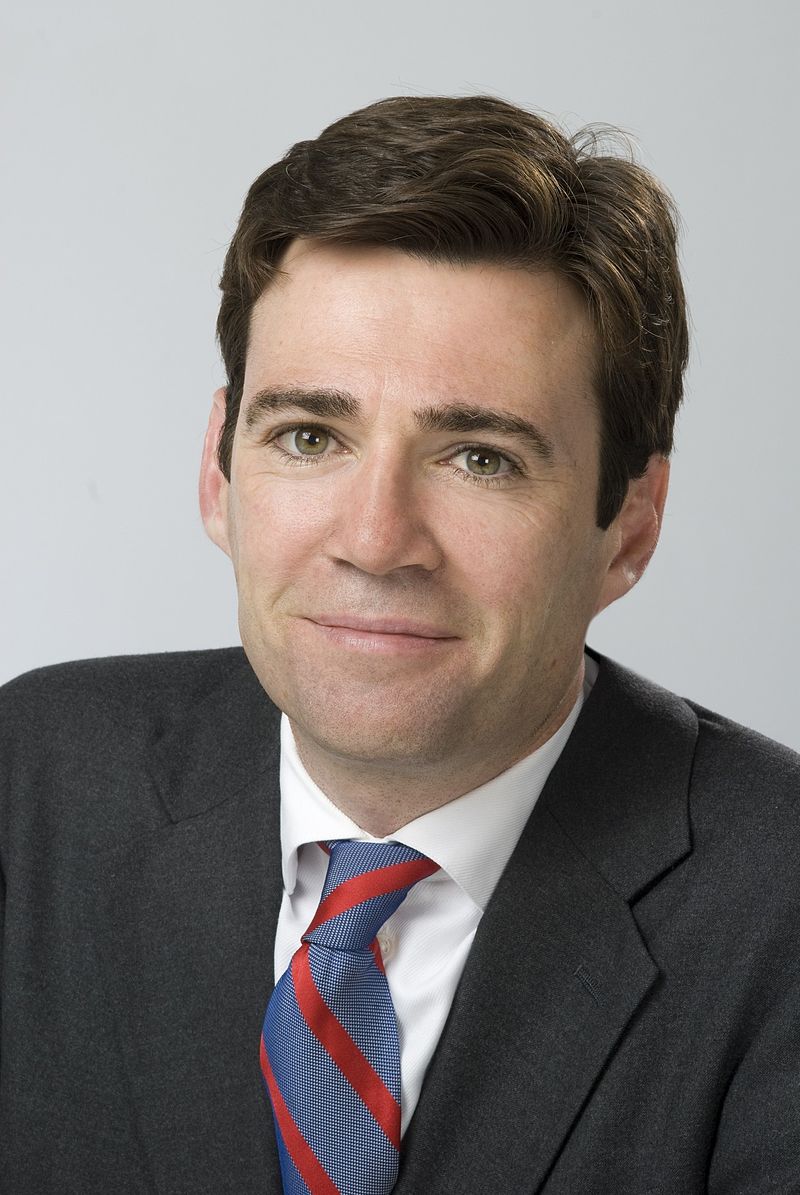
    The comments made by Andy Burnham, the Mayor of Manchester, on 17 August 2022.

    The introduction of lower, simpler fares across our bus network signifies the biggest shake-up of our bus system in close to 40 years and comes at a critical time.

    Hundreds of thousands of households across Greater Manchester are deeply worried about money, with fears of even higher bills just around the corner.

    As the most used form of public transport, with around 2.5million trips every week across the city-region, introducing lower fares for bus passengers is the best way we can help the most people with the cost of travel right now.

    Coupled with the extension of Our Pass, which provides free travel for 16 – 18-year-olds, we are taking steps to make an immediate and tangible difference to people’s lives by putting money back into their pockets.

    While this is the right thing to do, we cannot at this point guarantee that this new fare structure will be permanent. It will be reviewed annually. But the more that people use the buses, the more likely it is that we will be able to sustain it.

  • PRESS RELEASE : Greater Manchester becomes first major conurbation outside London to cap bus fares

    PRESS RELEASE : Greater Manchester becomes first major conurbation outside London to cap bus fares

    The press release issued by the Greater Manchester Combined Authority on 17 August 2022.

    Greater Manchester residents will be better off when travelling by bus from next month when new lower fares are launched.

    The plan for lower, simpler fares has been brought forward a year by Mayor Andy Burnham and Greater Manchester’s leaders to help ease the current cost-of-living crisis.

    It will save bus passengers around 50 per cent on some journeys and is the biggest change to Greater Manchester’s bus network since deregulation 36 years ago.

    With dozens of different ticket types available and costs varying by operator, it will provide certainty over the cost of travel for more than two thirds of people in the city-region concerned about the cost-of-living crisis.

    Mayor of Greater Manchester, Andy Burnham, said: “The introduction of lower, simpler fares across our bus network signifies the biggest shake-up of our bus system in close to 40 years and comes at a critical time.

    “Hundreds of thousands of households across Greater Manchester are deeply worried about money, with fears of even higher bills just around the corner.

    “As the most used form of public transport, with around 2.5million trips every week across the city-region, introducing lower fares for bus passengers is the best way we can help the most people with the cost of travel right now.

    “Coupled with the extension of Our Pass, which provides free travel for 16 – 18-year-olds, we are taking steps to make an immediate and tangible difference to people’s lives by putting money back into their pockets.

    “While this is the right thing to do, we cannot at this point guarantee that this new fare structure will be permanent. It will be reviewed annually. But the more that people use the buses, the more likely it is that we will be able to sustain it.”

    From September, Greater Manchester’s new-look bus system will be supported by a package of local and national contributions. The move to lower fares is supported by Government funding through the Bus Service Improvement Plan. However, the ending of Covid-19 funding in October means the Mayor and GM leaders have had to step in to stabilise the city-region’s bus network by finding funding to save dozens of bus routes and services that were set to be withdrawn or reduced. £135 million of local funding has also been allocated to support the transition to bus franchising.

    Given the considerable uncertainty over public transport funding going forward, the Mayor and Leaders have agreed to carry out an annual review of the new fare structure to ensure that it is financially sustainable.

    Mayor Burnham added: “Bringing our buses back under public control is an essential step towards creating the Bee Network – our vision for a London-style integrated transport system. When fully operational in 2025, we will extend the daily cap on fares to cover bus and tram. But we will only be able to make the Bee Network what we all want it to be if people support public transport by committing to use it as it improves.

    “That’s why I’m today urging everyone in Greater Manchester to Get On Board with this crucial journey for our city-region to a better transport system. You can help us build the Bee Network, keep fares permanently low and save yourself money at this difficult time by taking up this new offer.”

    From 4 September, an adult single bus ticket within Greater Manchester will cost no more than £2, with a child ticket single set to cost no more than £1. All day travel in Greater Manchester across any bus operator will cost no more than £5 for an adult and £2.50 for a child.

    Currently there are more than 25 single adult fares that cost more than £2 and over 30 single child fares that cost more than £1.

    The lower fares will also be available to Local Link customers. Local Link offers a flexible transport service for local journeys in areas where public transport services are limited.

    Cllr Amanda Chadderton, Oldham Council Leader and GMCA Lead for Equalities, Inclusion and Cohesion, said: “The impact the cost of living crisis is having on people’s finances can’t be underestimated. That’s why I’m thrilled to see these new lower fares being introduced to make a real difference to the cost of bus journeys across Greater Manchester.

    “Coupled with the Metrolink that connects towns like Oldham to other parts of Greater Manchester we have a fantastic public transport network that I encourage people to take advantage of. These lower bus fares add even more value for money when times are tough for many.

    “With energy prices set to increase even further this winter and the cost of everyday items continuing to rise our focus must be on continuing to make changes like this that will keep money in people’s pockets.”

    To ensure that as many people as possible are aware of the new clear and simple low bus fares and how to take advantage of them, the Mayor today (Wednesday, 17 August) launched the #GetOnBoard campaign – and is calling on people across Greater Manchester to support the building of the new Bee Network by switching to public transport and helping make the new fare system financially sustainable in the long term.

    Gary Nolan, Chief Executive of OneBus, the Greater Manchester Bus Operators Association, said: “Buses are relied upon by communities everywhere to get around.

    “These new lower fares add to a range of value products already available from local bus companies and System One, and will not only help all those worried about household bills, they will boost bus use and help our operators that are also struggling with significantly higher running costs.

    “This is good news for local bus companies and all who use them, and we are pleased to support it.”

    Full details of the new low fares are available via tfgm.com/get-on-board or by searching for the #GetOnBoard hashtag on social media.

  • PRESS RELEASE : Statement from the Mayor of Greater Manchester following Avanti talks

    PRESS RELEASE : Statement from the Mayor of Greater Manchester following Avanti talks

    The press release issued by the Greater Manchester Combined Authority on 17 August 2022.

    Following a meeting with the senior management of Avanti West Coast today (Wednesday 17 August), alongside the Deputy Leader of Manchester City Council, Cllr Luthfur Rahman and Transport Commissioner, Vernon Everitt, Mayor of Greater Manchester Andy Burnham said:

    “Today we met Avanti to discuss the downgrading of the timetable for its services between Greater Manchester and London.

    “We made clear to them in no uncertain terms our deep unhappiness at the way in which our city-region has been treated.

    “The severe reduction of services at this time of year is seriously detrimental to our economy. Avanti’s decision to take this action without any prior consultation or even notification shows a lack of respect for our city-region and its people, businesses and visitors.

    “We have asked Avanti to produce a recovery plan that helps passengers in the short-term but which also commits to providing more trains per hour between Greater Manchester and London as quickly as possible.

    “In the immediate term, we have asked Avanti to consider the declassification of trains – suspending first class restrictions – to make more seats available on the booking system at an affordable price.

    “We also called for much clearer communications with customers about how and when to purchase tickets and for an end to the inflammatory language which is damaging workforce relations.

    “More broadly, we asked them for a timetable to return to the previous levels of service as soon as possible and a firm commitment that we will not find ourselves in such a position ever again.

    “When we receive Avanti’s plan, we will consider whether it is acceptable for our residents and businesses and, if it isn’t, we made it clear to the company that we will ask the new Prime Minister to strip them of this contract.”