Blog

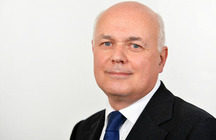
  • Iain Duncan Smith – 2003 Speech on Special Needs Schools

    Iain Duncan Smith – 2003 Speech on Special Needs Schools

    The speech made by Iain Duncan Smith, the then Leader of the Opposition, at Westminster Hall on 1 July 2003.

    I thank the Minister for Children for being here today. The subject of the debate, while not directly a party political issue, brings into question the Government’s attitude to special needs. I hope that she will be able to respond to some very serious questions that the consultation process in Waltham Forest has raised.

    I begin by declaring an interest. I am a trustee of a superb special needs school in my constituency called Whitefield, which, while originally part of the consultation process, is not directly involved. It is through that that I have come to take a very special interest in such schools.

    The schools that are directly affected by Waltham Forest council’s drive on special needs schools are Belmont Park, Brookfield House, Hawkswood, Joseph Clarke, William Morris and Whitefield, which I mentioned earlier. The timelines are very simple. I shall not go into details, as I am sure that the Minister has them already to hand. The first report from the council was, I believe, on 17 December 2002, at which time the consultation process was, essentially, mooted. A consultation process was set out, and I understand that it is finally due to conclude some time in the middle of September this year.

    I have questions about whether the consultation process is really as open and fair as it should be or whether the council and the education action forum have already reached a conclusion and are simply going through the motions. Three reasons were given for considering whether special needs education should be reordered, with the strong possibility of closure of one or more schools that deliver such education in the borough. The first reason was the Government’s position on the national standards established in the Special Educational Needs and Disability Act 2001. The second had to do with meeting the inclusion standards of the Department for Education and Skills, Ofsted and the Audit Commission, and the third was the borough’s own policy on social inclusion.

    Let me discuss my concerns about the consultation process by dealing with the Government’s position on the matter and what the borough is essentially saying about its needs. The consultation has not been as fair and as open as the council would have us believe. It received only a small number of returns on the original consultation that was sent out. I believe that more than 15,000 were sent out but not more than 1,000 were returned.

    In the meantime, there was a phenomenal reaction not only from people who have children in the schools, but most remarkably, from people who live in the borough but do not have children attending the schools and from people who live way beyond Waltham Forest but have a direct interest in the issue. A number of MPs fit into that category. Indeed, I think that the Minister’s own constituency is affected. I believe that a petition of just under 30,000 signatures was presented to the council and that more are arriving every day. I do not recall such an overwhelming passion being declared quite so clearly and openly to the council in such a short time. Sadly, the council does not necessarily seem to have paid much attention. I shall return to that matter in a moment.

    One problem with the consultation process is the fact that the costs of the integration have not been fully explained. We always hear about the savings to be made from closing a special needs school, but we do not see in detail how much it will cost to integrate children with serious physical or learning disabilities into mainstream schools. That is critical. Nowhere in the document have I seen a statement of such clarity that it would allow us to make a judgment.

    I should like to refer to a letter from Marcia Gibbs, a special educational needs adviser at the DFES, in response to Joseph Clarke school. She makes interesting points. First, she states: “Waltham Forest local authority would have to provide details of plans to support children currently attending Joseph Clarke School, including those pupils from other authorities, should it decide to make proposals for change.”

    However, none of those are included in the consultation, so how are we to make a decision about how effective the process will be? That is missing. Marcia Gibbs goes on to say: “The right of parents to make a positive choice and express a preference for a special school place will be fully maintained.”

    At the same time, however, she restates the Government’s determined advocacy of inclusion.

    My concern is that there seem to be conflicting interests even within that letter. It suggests that although the Government are determined about inclusion, there is not a clear statement to local authorities and education authorities on exactly what they need to do if they are to go down the route of the consultation process. There is only a general statement of what is required. I want to return to that issue, because I believe that it will cause the greatest problem.

    I understand that in the early part of June, the council announced, almost out of nowhere, that it was taking Brookfield school out of the process and that it was no longer under threat of closure. It said that that was because the costs of integrating those children with serious physical disabilities would be too great, but at no stage have we seen those costs. What are the costs and what calculations has the council made for schools such as Joseph Clarke or Hawkswood? Hawkswood has children with severe hearing disabilities and Joseph Clarke has children with visual impairment. My point is that at no stage has the local authority indicated anywhere what those costs are and how it has calculated them, but suddenly, out of the blue, it declares that one school is no longer relevant to the process. There is no regard to the costs. That makes us concerned about how the authority managed to arrive at those figures. Why not publish all the figures? Surely there should be guidelines stating that.

    There are questions concerning other aspects relating to the local authority. At no stage in the document or in the discussions has it entertained the idea that perhaps Waltham Forest simply does not transfer the real cost of education to other boroughs and does not reflect the true cost. It does not state what the real cost is and at no stage has it set about trying to calculate it or to say to other boroughs, “Let’s meet and discuss whether we can do a little more burden sharing.” The authority has talked generally about that, but has not said, “This is the real cost of educating a child at a special needs school in Waltham Forest. You’re paying only this much. Is there any chance that we could come to an agreement to share the burden?” At no stage has the authority attempted to do that.

    With regard to the consultation process, the document made some stark statements that I do not believe are true. I shall highlight one, although there are others. The consultation document states: “Although the borough has statemented a similar proportion of young people to other London LEAs, a rather greater proportion is educated in special schools than elsewhere.”

    The document did not give figures to back up that statement and it is not true. It is not borne out by any evidence that we can find. The percentage of statemented pupils in special schools in Waltham Forest is 42 per cent., the inner London average is 44 per cent. and the outer London average is 42 per cent. Comparing like with like in councils and boroughs that have similar problems, the figure for Hounslow is 41 per cent., Brent 43 per cent., Enfield 47 per cent., Ealing 55 per cent. and Lewisham 56 per cent.

    The document is full of statements, without any supporting evidence. No one can understand its rationale. It is almost as though the verdict is given first, followed by the evidence. It seems that minds were made up before entering the consultation process and I shall come to the reasons why in a moment.

    I quote from a letter sent by the head of pupil and student support services in Waltham Forest to a neighbouring borough, the London borough of Newham, which explains what the education authority—with EduAction—is trying to do. It states: “The transitional arrangements which would form part of the statutory notices have not yet been set out and cannot ’emerge’ until after June”, although it indicates that they have already been settled. It becomes clear what is going on from the penultimate paragraph of the letter, which states: “I would however want to take this opportunity of asking you not to put forward new admissions for the School from this point.”

    That is before decisions are supposed to have been taken. The borough is leaning on a neighbouring borough by indicating that there will not be a school or schools that can take further children, therefore it would be pointless to send them. The letter says of the Ofsted report, “we are driven by a poor LEA OFSTED inspection . . . “— which is not true. In general it is the case, yes, but most of the specific schools have reasonable, if not good, Ofsted inspections; only one is subject to special measures. It continues, stating, “re-organisation would be treated as a test of corporate governance.”

    The authority’s concern is that failure to meet the test by the Department for Education and Skills or by the Ofsted inspectors would lead to further pressure on the borough. It blames the Government and Ofsted for driving it into this position, thus indicating to Newham that the conclusion will be that it intends to shut certain schools.

    That explains my concerns about the consultation process. It is clear that the council has already arrived at its conclusions and the consultation process is, in essence, a way of covering that decision. Money is at the heart of it. The council declares itself in difficulties. It has had problems running its education policy. Ofsted was deeply critical of the education authority, as a result the company called EduAction now runs education in the borough. Throughout, the council is concerned about the money it believes it needs to run education generally and I want to explain why I have misgivings about it.

    The process should be very carefully undertaken if changes are to be made, as those involved are such special children and we cannot risk getting it wrong. There will be a dual effect on education in this and other boroughs, which will affect those pupils who are already being educated in mainstream schools. There has to be a serious rethink about how the process takes place, as once children with real special needs—learning disabilities, visual impairment, hearing impairment—are put into those schools things change dramatically. For example, about 47 per cent. to 50 per cent. of children at Joseph Clarke, a school for the visually impaired, go there because they are scarred by the difficulties they had in mainstream schooling. They are now in that school because they failed to make progress in mainstream schooling and have been hurt and damaged by that; no reference is made to that in the consultation process.

    The strength of parental support for such schools is awe-inspiring. The Joseph Clarke school asked parents for their views on the school, whether positive or negative, and 100 per cent. gave a positive response. I know of no other situation in which 100 per cent. of parents would respond to a notice from a school. Everyone knows how difficult it is to get parents to respond to requests from schools, but that is not the case at Joseph Clarke, or at the other special needs schools.

    It is important to note that special needs schools provide peripatetic services for the other schools. It is ironic that the lower number of statements in the borough is partly due to the fact that the outreach from those schools allows children to settle in mainstream schools without statements. If that service is removed, they will have to be statemented, and that will place much greater pressure on the mainstream schools. Mainstream schooling would need to be reorganised to meet those children’s needs—for example, there would need to be considerable debate on how mainstream schools could meet the Braille requirements of the visually impaired.

    I was talking recently to someone from Hawkswood school, who pointed out that teachers will often walk to the whiteboard—or blackboard, whatever they are using—and talk to the class while writing on the board. If a hearing impaired child is a lip reader, which is not always the case, once they break sight from the teacher, they have no idea what is going on in the class. How many times does a teacher go to the back of a class and explain over the heads of the children what they are looking at on the board at the front? Those are two very simple realities that most mainstream teachers would take for granted, but which they would not be able to do if their classes included hearing impaired children, because teachers must never break sight from a hearing impaired child. Such simple issues have been forgotten in this process. A huge amount of retraining of teachers would be required.

    Such examples show that there is a need to rethink this process, both nationally and locally. Dyslexia is arguably the most well known learning disability in schools. However, I have visited many mainstream schools—I am sure the Minister has also done so—that still struggle with the teaching of dyslexic children. Some of those schools are hopeless and others are good—the coverage is patchy. That problem has been known about for years, but we still struggle with it. How will we take children with much greater disabilities into those schools without a serious change in the way that mainstream schools are funded and supported?

    I believe that Waltham Forest council should stop and rethink the process. It should reconsider the options and hold an open consultation process, putting all the facts and figures on display, so that a reasoned and rational decision can be made. The way in which the council has behaved—in some cases quite rudely to parents who are concerned about what will happen to their children—has led parents and others living in the borough to lose faith in its ability to deal with the matter sensibly and rationally.

    I hope that the Minister will be able to explain some aspects of the matter to me. I do not want to make the issue a party political one, nor do I want special needs to be seen as party political. However, I believe that we need to have a proper, serious national debate about how we deal with children with special needs, and what we do about mainstream schooling. The Government, when they came to power, said that they wanted to move towards inclusion of children with special needs in mainstream schools. Superficially, that is a great idea—we would all want as many of those children as possible to be included in mainstream education. However, the devil lies in the detail of how that is done. How do we do that for children with real difficulties, and how do mainstream schools get funded? Who runs and controls that? The problem if we just have a general push for inclusion, is that cash-strapped local authorities see that as a way of putting up a shield behind which they find money that would otherwise not be there.

    Loose statements by the Secretary of State worry me. A few weeks ago he talked about the general funding of local education authorities and his concern that some of the money was not being passed down, although I gather that there has been disagreement with that. One matter on which he discussed a re-think is the way in which local authorities may be retaining that money to spend on capital, special needs or educating pupils in outside schools. He went on to say that those decisions had a major impact on the budget of individual schools. I am sure that he was not driving down and trying to say that special needs schools should therefore be closed, but my concern is that cash-strapped local authorities may see that as an opportunity to make savings and to transfer money into mainstream education, without serious consideration of the huge extra costs involved.

    How we treat children with special needs speaks volumes about us as a society and as Members of Parliament, and about the Government. It is important to think very carefully before making a major mistake. To see how disabilities are overcome and how those schools operate is not only moving but awe-inspiring and humbling. We owe it to those children, and to their parents and teachers, to think again. Waltham Forest should think again. I hope that the Government will initiate a real debate, and try to prevent councils, as an excuse for saving money, from closing special needs schools because inclusion is the order of the day.

  • Nick Bourne – 2003 Speech on the Welsh Assembly Building

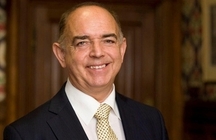
    Nick Bourne – 2003 Speech on the Welsh Assembly Building

    The speech made by Nick Bourne on 1 July 2003.

    When the Assembly voted to proceed with this building in 2000, the then First Secretary said “Often, with a major public building, nobody knows about it until the finalised design is unveiled with a fanfare of trumpets.”

    At every painful step of this project there has been no fanfare by the people of Wales.

    Alun Michael also said “I agree that we should be open and transparent about all aspects of the building, including the costs”.

    At £23m, he announced, “we now have full and robust cost estimates”

    Three years later and Rhodri Morgan insists there will “be no more cost over-runs”.

    With this project it appears there is no ceiling figure. The sky’s the limit.

    You would have thought that given the long-running fiasco over the Assembly building that finally we would have some honesty over its true cost.

    The lump sum is £41m, but the final cost does not include VAT, furnishings, computer equipment and the millions of pounds already wasted.

    The true estimate of the building is therefore thought to be somewhere around the £55m mark.

    But not even that is guaranteed.

    When pressed on the overall figure the First Minister told journalists “I just don’t know to be honest.”

    I also hear that the company who sold a desk to the Scottish Parliament for just under £1m is now keen to sell one to Rhodri Morgan. I imagine their luck will be in.

    In February 2002, Edwina Hart said that Lord Rogers had got the cost of the building wrong and that she hoped the “right professionals” would be brought in to take over the project.

    Now the Richard Rogers Partnership is back on board and the taxpayer has footed the bill for thousands of pounds in disputed fees for the design of the building.

    The dithering and mismanagement, which has plagued this Labour government and is epitomised by this project, has cost the Welsh public dear.

    As for the Liberal Democrats, well Eleanor Burnham had a point when she warned the Audit Committee in 2001 that the Assembly was in danger of being perceived to be in the same position as the Millennium Dome. She was worried that the Assembly would be seen as “a huge white elephant of complete mismanagement”.

    The final cost of the Dome rose by 90%.

    The Assembly building costs have risen by 400%.

    As the costs rose Ron Davies conceded “this is a major embarrassment for the National Assembly”.

    Ieuan Wyn Jones agreed.

    Neil Kinnock said he wondered whether anyone would chose the Assembly building as a priority.

    It is a matter of priorities.

    When the project was halted in 2001, at considerably less cost than the sum before us today, Edwina Hart said “We do have a vision, but my vision of the new Wales is about changing things for ordinary people”.

    She said, “I have to look the electorate in the eye. They talk to me about health and education and I know what their priorities are.”

    What better symbol for the future of Wales than to turn around our flagging public services.

    To reverse the miserable rise in hospital waiting lists.

    When Assembly Members vote this afternoon, remember that £50m could provide a Children’s Hospital for Wales and up to 3,000 hip operations.

  • PRESS RELEASE : PM call with the leaders of the United States, France and Germany: 21 August 2022

    PRESS RELEASE : PM call with the leaders of the United States, France and Germany: 21 August 2022

    The press release issued by Downing Street on 22 August 2022.

    The Prime Minister spoke to the leaders of the United States, France and Germany this afternoon to discuss cooperation on matters of international security and diplomacy.

    On a joint call, the Prime Minister, President Biden, President Macron and Chancellor Scholz underlined their steadfast commitment to supporting Ukraine in the face of Russia’s invasion.

    They stressed the importance of ensuring the safety and security of nuclear installations and welcomed recent discussions on enabling an IAEA mission to the Zaporizhzhia facility.

    They also discussed other shared priorities, including Iran and joint efforts to prevent nuclear proliferation and deter Iran’s destabilizing regional activities.

    The Prime Minister welcomed the opportunity to speak, and the leaders agreed their teams would continue working closely together in the coming weeks.

  • Laura Anne Jones – 2003 Speech on New Welsh Assembly Building

    Laura Anne Jones – 2003 Speech on New Welsh Assembly Building

    The speech made by Laura Anne Jones on 1 July 2003.

    It was very telling that none of the three proposers of this motion mentioned the views of the public – which are decidedly against spending untold millions on a “Palace for Politicians” in the Bay.

    The fiasco over the new Assembly building has already done a great deal of damage to the credibility of the Assembly as an institution. I have met many constituents who are disillusioned with the Assembly because it is seen to waste their money.

    I ask Members here today to vote for what their constituents would want – and not vote to satisfy their own egos – that is why we are here.

    The Labour Government in Westminster and the Assembly have “promised everything and delivered nothing.”

    – Instead of wasting time on Bills on Fox Hunting and now a new “Palace for Politicians” in the bay – surely we should be concentrating on what matters to the people – our failing public services and our dying agricultural industry.

    – Is it any wonder that Voter Apathy is so high in Wales – when we are ploughing more than £55 million into an unnecessary Debating Chamber?

    – We should be cutting waiting lists, raising educational standards, improving transport and cutting crime

    These are the problems that the people of Wales want their money to go towards solving.

    It is no wonder that they are disillusioned when you push such important issues to the sideline. It is disgusting.

    If it is anything like the Scottish Parliament, the costs for this project will escalate into hundreds of millions of pounds.

    What matters to the Welsh Conservatives is not what the Assembly looks like, but what it does for Wales.

    I strongly urge members to consider whether their constituents will think this a valuable use of public money when they cast their voted this afternoon.

  • John Finucane – 2022 Comments on Support for Irish Unity

    John Finucane – 2022 Comments on Support for Irish Unity

    The comments made by John Finucane, the Sinn Fein MP for North Belfast, on 22 August 2022.

    Yet another poll shows growing support for Irish unity across the island, particularly among young people.

    The reality is that conversation on the constitutional future of our island is to the fore of political discourse like never before.

    Planning and preparation must start now.

    The Irish government should lead those preparations by immediately establishing a Citizens’ Assembly on Irish unity to help shape the new Ireland.

    Sinn Féin will begin a people’s conversation from October. We want to hear from everybody on their views on the future.

    The onus is on the Irish government to prepare for referendums and reunification without any more delays.

  • PRESS RELEASE : President presented the “National Legend of Ukraine” award to prominent Ukrainians

    PRESS RELEASE : President presented the “National Legend of Ukraine” award to prominent Ukrainians

    The press release issued by the President of Ukraine on 22 August 2022.

    President Volodymyr Zelenskyy and First Lady Olena Zelenska took part in the ceremony of awarding prominent Ukrainians with the National Legend of Ukraine award of the Head of State.

    Congratulating the laureates, Volodymyr Zelenskyy noted that it was an honor for him today to meet each of those present – representatives of the heroic Ukrainian people.

    “This award, launched a year ago, despite its short history, has an important meaning and purpose. This is a proper tribute by the state to its talents, geniuses and heroes. Those who are among us, and we should notice them. Those who, unfortunately, are no longer with us, but we must remember them,” the President emphasized.

    “For the second year in a row, we award wonderful, talented and heroic citizens of our state with this award. But this year, its meaning has changed somewhat – we award not only legendary representatives of Ukraine in music, theater, and sports. The Russian Federation has changed the meaning of our lives, so today we award all those who every day, both inside the state and outside, protect our independence and sovereignty with their talent and their work – different, but extremely important,” he noted.

    This year, for outstanding personal merits in the establishment of independent Ukraine and strengthening of its statehood, protection of the Motherland and service to the Ukrainian people, significant contribution to the development of national education, art, sports, health care, many years of fruitful public activity, the President’s award “National Legend of Ukraine” was awarded to nine Ukrainians, posthumously to three of them.

    In particular, People’s Artist of Ukraine Maria Prymachenko was posthumously honored. The award was received by Ihor Kozhan, general director of the Andrey Sheptytsky National Museum in Lviv, where the artist’s works are currently being exhibited.

    “Her name is included in the World Encyclopedia of Art. UNESCO declared 2009 the year of Maria Prymachenko. And on May 5 of this year, her painting “The Flowers Grew Around the Fourth Block” was sold at a charity auction for almost 15 million hryvnias, which were donated to the needs of the Armed Forces of Ukraine. That is, even today, a quarter of a century after her death, Maria Prymachenko lives and actually continues to help Ukraine. And today, Ukraine finally says “thank you” to her and pays tribute to her in accordance with her contribution and merits, officially and forever recognizes that she is our great Ukrainian artist. A great Ukrainian woman. Maria Oksentiivna Prymachenko is a national legend of Ukrainian painting,” said the President.

    The award from the hands of Volodymyr Zelenskyy was received by chief of the guard of the fire and rescue unit of the Main Department of the State Emergency Service of Ukraine in the Mykolaiv region, lieutenant of the civil protection service Ihor Ivasykov. Thanks to his actions, 17 people were rescued from the rubble of the State Administration building in Mykolaiv.

    “17 lives saved. At least 17 reasons to be here today,” the Head of State emphasized.

    The “National Legend of Ukraine” award was also handed over to two doctors – neurosurgeon of the department of the Institute of Neurosurgery named after academician Romodanov of the National Academy of Medical Sciences of Ukraine Andriy Svyst and pediatrician of the Children’s Medical Center “Dobrobut” Olha Svyst.

    “A family of doctors who ended up in Bucha almost by accident at the beginning of the war. Unable to leave the city, they called friends and asked them to adopt their children – aged five and two – if they did not return. For two weeks under constant shelling, without proper equipment, they performed extremely complex operations, rescuing seriously wounded children,” said Volodymyr Zelenskyy.

    The President’s award was also presented to Anatoliy Babichev, conductor of the passenger car of the Kyiv-Passenger station of JSC “Ukrainian Railway”.

    “For nine days non-stop, his train has been evacuating people from Kostyantynivka, Kharkiv, Kramatorsk and Lyman. His wife Natalya worked in the same train, in another car. On the night of March 12-13, she died during the shelling of the train. Despite the personal tragedy, Anatoliy did not break down, he returned to service, to saving people,” the President said.

    Hanna But, a teacher at the Melitopol Vocational Agrarian Lyceum, also became a laureate of the award.

    “Despite the occupation, she raises her students to be patriots and is not afraid to tell them the truth, organized pro-Ukrainian rallies under the occupation, despite the threats and violent actions of the invaders. The video, where she, wrapped in the flag of Ukraine, demands more decisive actions from the international community, got into almost all the world’s media and social networks. Millions of people on the planet have heard: Melitopol is Ukraine,” the Head of State emphasized.

    Public figure, volunteer Tata Kepler was also honored.

    “Just like thousands of volunteers, she has been helping our army for eight years in a row. And it is impossible to calculate for sure how much important things for the lives of our soldiers, powerful people, were found and delivered during this time – first-aid kits, medical backpacks, tourniquets, body armor and other equipment. I want to thank all the volunteers of Ukraine in her person. Thank you very much,” said Volodymyr Zelenskyy.

    The award was also given to the best football player in Europe in 2004, the head coach of the Ukrainian national football team in 2016-2021, Hero of Ukraine Andriy Shevchenko .

    “Legend of Dynamo Kyiv and the national team of Ukraine. Champions League winner and Golden Ball winner. His name is included in the list of the hundred best football players in history. These and many other titles made him famous throughout the world. And now they are helping him rally the whole world to support and help Ukraine. Ambassador of the UNITED24 platform, our great athlete, great champion, our legend Andriy Shevchenko,” said the President.

    Anatoliy Solovyanenko, a leading stage master of the National Opera of Ukraine in 1963-1992, a national artist and Hero of Ukraine, was posthumously awarded the title of “National Legend of Ukraine” for his significant creative work and strengthening of the country’s cultural glory. The artist’s wife Svitlana Dmytrivna and son Anatoliy received the award.

    The head of the flight safety service – senior inspector-pilot of the Command of the Naval Forces of the Armed Forces of Ukraine, Hero of Ukraine Colonel Ihor Bedzai was posthumously awarded as well. The wife of the fallen defender Yulia Viktorivna and daughter Maria received the award.

    “Military pilot of the top class. Hero of Ukraine. Behind these titles is a whole life devoted to service for the benefit of the state. Impressive qualities and deeds. His experience is dozens of important combat missions. His students are 15 crews. His courage is ten units of aviation equipment, which he took to Mykolaiv from the blocked airfield in Saki in 2014 under extremely high risk conditions. His example is 217 warriors from Crimea who, following him, remained loyal to the oath and to Ukraine,” the Head of State said.

    According to the President, on May 7, 2022, during a search and rescue operation, Ihor Bedzai’s Mi-14 was hit by a missile from an enemy aircraft, as a result of which the colonel, defending his native land, remained in the sky forever.

    Those present at the ceremony honored the memory of those who gave their lives for Ukraine with a moment of silence.

    Volodymyr Zelenskyy noted that all those honored are the treasure of our state, and emphasized the importance of preserving their achievements, because after the victory over the enemy, talents must be passed from one generation to another.

  • PRESS RELEASE : Nigel Wilkinson MBE appointed VisitEngland Advisory Board Member

    PRESS RELEASE : Nigel Wilkinson MBE appointed VisitEngland Advisory Board Member

    The press release issued by the Department for Digital, Culture, Media and Sport on 22 August 2022.

    Nigel Wilkinson MBE

    The term of appointment will be for five years, commencing on 11 August 2022 until 10 August 2027.

    A graduate Engineer and Chartered Accountant, Nigel has been Managing Director of Windermere Lake Cruises Limited, Cumbria’s largest visitor attraction, since 2004. He is also Managing Director of Winander Leisure Limited, a director of Winander Group Holdings Limited, Lakeland Motor Museum Limited and Rushbond plc, a Yorkshire based property company. From 2007 to 2017 he was a director of Cumbria Tourism (CT), the county’s Destination Management Organisation, and was chair of the committee responsible for managing CT’s finances. Nigel joined the Board of Cumbria Local Enterprise Partnership (CLEP) in 2017 and chairs both CLEP’s Visitor Economy Sector Panel and its Finance, Audit and Resources Committee. Nigel also represents CLEP on the Lake District National Park Partnership. In late 2020 Nigel was appointed to the Tourism Industry Council, a collaboration between Government and the tourism industry focusing on improving the tourism sector including jobs, transport and deregulation.

    Nigel was appointed as a Trustee/Director of South Cumbria Rivers Trust in 2021, a charity/Trust with the principal objective to monitor, conserve and protect and, when necessary, rehabilitate and improve the biodiversity of lakes, rivers and streams South Cumbria and adjacent coastal waters for the public’s benefit. In the Queen’s Birthday 2022 Honours List Nigel was recognised with the honour of Member of the Most Excellent Order of the British Empire (MBE) for services to tourism and the economy in Cumbria. He was made an Honorary Fellow of the University of Cumbria in July 2022.

    Remuneration and Governance Code

    This appointment has been made in accordance with the Cabinet Office’s Governance Code on Public Appointments. The process is regulated by the Commissioner for Public Appointments. Nigel will be offered remuneration of £3,300 per annum. The Government’s Governance Code requires that any significant political activity undertaken by an appointee in the last five years is declared. This is defined as holding office, public speaking, making a recordable donation or candidature for election. Nigel has not declared any activity.

  • PRESS RELEASE : Funding for cadets boosted to £43 million pounds over next two years to help build the maritime sector

    PRESS RELEASE : Funding for cadets boosted to £43 million pounds over next two years to help build the maritime sector

    The press release issued by the Department for Transport on 22 August 2022.

    Eligible seafarers will now get half of their training paid – providing a real investment in the future of maritime and securing future growth.

    Previously, the subsidy was 30% but increases to 50% for all new and existing tonnage tax groups and Support for Maritime Training (SMarT) funding. This now means that maritime companies can take advantage of an extra £13m of funding to take on and train up cadets.

    The DfT and HMT have increased the subsidy on training costs for cadets and ratings – which companies can obtain as part of their tonnage tax – to 50% from the current level of 30% for all new and existing tonnage tax groups and SMarT funded seafarers.

    The new measures complement UK Government’s commitment to protecting and supporting seafarers as announced in the seafarer protections nine-point plan, which commits to improving the longer-term working conditions of seafarers as part of a wider vision to boost seafarer protections and welfare. This includes the Seafarers’ Wages Bill which will ensure that seafarers working on vessels that regularly use UK ports are paid at least an equivalent rate to the National Minimum Wage while in the UK’s territorial waters.

    This increase in training subsidies for cadets and ratings does this and emphasises UK Government’s drive to grow and support the UK’s highly skilled seafarer population to meet UK and global needs.

    The extra money means there will be up for £20 million available this year increasing to £23 million next.

    Funding for eligible seafarers is available this year and will be locked in until at least September 2024 providing an incentive and financial security for those looking to take up a career in maritime.

    The increased subsidy rate will be available to any seafarer who meets the requirements and who is studying at a Maritime and Coastguard Agency approved college for an academic qualification that leads to the issue of an UK Unlimited Certificate of Competency.

    Secretary of State Grant Shapps said:

    “Our incredible maritime sector is built by the thousands of workers who, every day, keep our shelves stacked and are responsible for 95% of all the UK’s freight.

    This funding will be critical to helping people upskill, take on a career in the sector, and help build a strong maritime sector for years to come.”

    Damien Oliver Commercial, Programmes & Maritime Business Development Director said:

    “This is an important milestone for investing in the future of maritime and our seafarers. These changes now mean that more funding is available to support seafarers with their training. We are also looking at additional support for those who have already attained a qualification so they can move onto the next one supported by further funding. We will do all we can to encourage and support people into this industry which does so much to support our every day life in the UK.

    These changes will cover an interim period from April 2022 to September 2024. A new UK training system is then scheduled to be implemented, as recommended by the 2020 Maritime Skills Commission Report.”

  • PRESS RELEASE : New guidance to improve the accountability of the Electoral Commission published

    PRESS RELEASE : New guidance to improve the accountability of the Electoral Commission published

    The press release issued by the Department for Levelling Up, Housing and Communities on 22 August 2022.

    Today (22 August 2022) the Department for Levelling Up has opened the consultation on new guidance to improve the accountability of the Electoral Commission to UK Parliament. This guidance addresses the concern raised in Lord Eric Pickles’ independent review into electoral fraud, that the current system of oversight of the Electoral Commission is not fit for purpose.

    The report also highlighted cases such as Tower Hamlets – in which the 2014 Mayoral election was declared void by corrupt and illegal practices – as evidence of vulnerabilities in our system which must be addressed.

    The Elections Act 2022 delivers the government’s manifesto commitment to protect the integrity of our democracy. As part of the Act, new guidance for the regulator will be introduced subject to the approval of the UK Parliament.

    The draft guidance in the Statement states that the Electoral Commission should support Returning Officers in ensuring the secrecy of the ballot inside polling stations. This addresses cross-party concerns about the practice of so-called “family voting” or “community voting” in some areas of the country, where it is alleged that some voters are being pressured by their spouses or partners over who to vote for inside polling booths.

    In May 2022, the independent organisation, Democracy Volunteers, asserted they had identified 5% of all voters they observed in Tower Hamlets elections were either causing, or were affected by, “family voting” and over 85% of those being affected by “family voting” were women, predominantly from Asian backgrounds.

    Levelling Up Secretary, Greg Clark, said:

    “The public rightly expects efficient and independent regulation of the electoral system. The Pickles Report was clear that the Electoral Commission needed to change.

    This is why we are improving the accountability of the Electoral Commission by giving Parliament greater visibility and scrutiny of the Commission’s work.

    This guidance is a necessary step to increase the accountability of the Electoral Commission to UK Parliament whilst respecting its operational independence.

    It is completely unacceptable for anyone’s vote to be influenced or pressured inside a polling station. Protecting the secrecy of the ballot is of the utmost importance to the health of our democracy.”

    The government in its 2019 manifesto committed to protecting the integrity of our democracy. The new draft guidance therefore requires the Commission to have regard to matters such as tackling voter fraud, supporting Returning Officers in ensuring the secrecy of the ballot inside polling stations, and supporting participation by informing the public about the franchise and electoral registration, when carrying out its relevant regulatory functions.

    The draft guidance also reflects the Pickles Report’s finding that the Commission needed to refocus on its core functions.

    The consultation – closing on 5 December 2022 – will provide the statutory consultees with the opportunity to share their views on the draft guidance. Under the Elections Act, those consultees are the Commission itself, the Speaker’s Committee on the Electoral Commission and the Levelling Up, Housing and Communities Committee.

    What happens next?

    The government will consider all responses to the consultation and make any necessary changes before submitting the draft guidance to Parliament for scrutiny. Parliamentarians will have an opportunity to share their views on the draft before deciding whether to approve or reject the draft guidance in full.

  • Kevin Foster – 2022 Comments on the Scale-Up Visa

    Kevin Foster – 2022 Comments on the Scale-Up Visa

    The comments made by Kevin Foster, the Minister for Safe and Legal Migration, on 22 August 2022.

    Rapidly growing businesses, like small enterprises, tech and financial services, need the right level of support to go to the next level. Through our Scale-up visa, we’re enabling businesses to focus on their growth and innovation by giving them more freedom to bring in the diverse skills and experience they need, making them more attractive on an international stage.

    By supporting our high-growth tech, financial services and small businesses, we are ensuring the UK remains a global hub for emerging technologies and innovation while enhancing productivity across the economy – creating jobs, growth and prosperity across Britain.