Blog

  • PRESS RELEASE : If Russian troops destroy people in Mariupol, there will be nothing to talk about with Russia – President of Ukraine

    PRESS RELEASE : If Russian troops destroy people in Mariupol, there will be nothing to talk about with Russia – President of Ukraine

    The press release issued by the President of Ukraine on 6 May 2022.

    The possible destruction of the Ukrainian military and civilians who currently remain on the territory of the Azovstal plant in Mariupol by the Russian occupiers can put an end to any diplomatic negotiations with the Russian side. This was stated by President of Ukraine Volodymyr Zelenskyy during a video meeting at the Royal Institute of International Affairs Chatham House (UK).

    “If they kill people who can now be exchanged if they are military, or released if they are civilians, or helped if they are wounded military or civilians, there will be nothing to talk about with them at the diplomatic level,” the Head of State emphasized.

    According to him, today, thanks to the efforts of Ukraine, the International Committee of the Red Cross and the United Nations, we finally managed to find a format for the evacuation of civilians from the blocked Azovstal plant.

    The President stated that Mariupol was completely destroyed.

    According to him, the blockade of the city by the Russian occupiers is a deliberate step, a manifestation of hatred and terrorism. The information and propaganda machine of the Russian Federation is primarily responsible for such cruelty, and this problem still needs to be addressed.

    “They nurtured such hatred before the full-scale war. They have been doing this for many years, and now it all results in such tortures,” the President of Ukraine summed up.

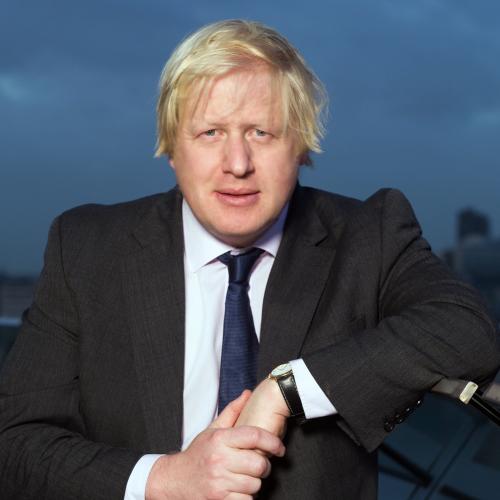
  • Boris Johnson – 2022 Comments on Gibraltar Becoming a City

    Boris Johnson – 2022 Comments on Gibraltar Becoming a City

    The comments made by Boris Johnson, the Prime Minister, on 29 August 2022.

    It is excellent to see official recognition given to the City of Gibraltar, a huge accolade to its rich history and dynamism.

    This official recognition re-affirms Gibraltar’s special status in the Realms of Her Majesty, and rightly signifies the pride that Gibraltarians feel for their community and their distinctive heritage.

  • PRESS RELEASE : Government re-affirms city status of Gibraltar

    PRESS RELEASE : Government re-affirms city status of Gibraltar

    The press release issued by the Cabinet Office on 29 August 2022.

    A full, up-to-date list of cities in the United Kingdom, its Crown Dependencies and Overseas Territories has been published.

    The UK Government will today (Monday 29 August) re-affirm the city status of Gibraltar, as granted by Queen Victoria, confirming its special status in the Realms of Her Majesty the Queen and the family of the United Kingdom, the Crown Dependencies and Overseas Territories.

    The Government has undertaken detailed research in the National Archives and established that the City of Gibraltar was granted city status by Queen Victoria in 1842 but was omitted from the list of recognised cities. A newly-published record of 81 recognised cities confirms its place among the official list.

    This status is testament to the close relationship between Gibraltar and the United Kingdom, 99% of Gibraltarians reaffirmed their commitment to British sovereignty in a referendum of 2002.

    Prime Minister Boris Johnson said:

    “It is excellent to see official recognition given to the City of Gibraltar, a huge accolade to its rich history and dynamism.

    This official recognition re-affirms Gibraltar’s special status in the Realms of Her Majesty, and rightly signifies the pride that Gibraltarians feel for their community and their distinctive heritage.”

    Chancellor of the Duchy of Lancaster Kit Malthouse said:

    “The cities in this list are incredibly rich with history and culture, and the local people of those areas are rightly very proud to see their city’s significance put to paper.

    I’m hopeful people based in these places, particularly the new cities, can reap the benefits of their home’s increased global standing and that it will attract more inward investment for local businesses.”

    In the year of the Platinum Jubilee of Queen Elizabeth II, the updated list is being published following the award of eight new grants of city status earlier this year and the award to Southend-on-Sea in honour of Sir David Amess MP.

    The full list of recognised cities from the Overseas Territories include Hamilton (Bermuda), Jamestown (Saint Helena) and Stanley (Falkland Islands) which was awarded the status as part of the Platinum Jubilee competition.

    The publication will also highlight those cities which have received the honour of Lord Mayoralty or Lord Provostship.

    Notes to editors

    Gibraltar has been British in perpetuity under the Treaty of Utrecht of 1713. When the City of Gibraltar was awarded city status in 1842, it was awarded under Diocesan Letters Patent and not under the normal City Status Letters Patent.  Therefore the City of Gibraltar never ended up on the Home Office’s official list of recognised cities.

    The UK Government would like to thank Bluemantle Pursuivant for his assistance in bring this matter to its attention.

  • PRESS RELEASE : It is inadmissible to impose sanctions with one hand, and to sign new contracts with the Russian Federation with another – Volodymyr Zelenskyy

    PRESS RELEASE : It is inadmissible to impose sanctions with one hand, and to sign new contracts with the Russian Federation with another – Volodymyr Zelenskyy

    The press release issued by the President of Ukraine on 6 May 2022.

    If you continue to pay Russia for energy, it is only a matter of time before Russian troops cross the borders of the European Union, said Ukrainian President Volodymyr Zelenskyy during a video meeting at the Royal Institute of International Affairs Chatham House (UK).

    According to the Head of State, the most important thing in any step, including sanctions policy, is transparency and honesty.

    “You shouldn’t be a little evil and a little good. It is inadmissible to impose sanctions, and with another hand to sign new contracts with Russia. This is definitely inadmissible in times of war. This is hypocrisy,” Volodymyr Zelenskyy stressed.

    According to the President of Ukraine, Russia earns a billion dollars a day on energy.

    “Don’t play. If you understand that you cannot do without this energy, then say that you will be able to do without it in two months, reach an agreement. Do not make exceptions for individual countries, act together. This is the essence of a united EU, this is the essence of the phrase “European Union”,” the President emphasized.

    According to him, the sanctions should be such that there is no need to renew them after implementation. If a decision is made to disconnect from the SWIFT system, it must be applied to the entire banking system of the Russian Federation.

    The President of Ukraine thanked the European Union, the United States and the United Kingdom for their sanctions policy. At the same time, in his opinion, sanctions against Russia should have been applied preventively.

    He expressed confidence that the European Union would eventually decide on a full embargo on Russian energy.

    “It will be difficult for everyone, but all European families will be alive. Unlike ours. But if some European leaders do not do this, they will understand later when Russian troops will be on your borders. When the first missile flies, as it was with us, you will understand,” Volodymyr Zelenskyy added, emphasizing that no Nord Stream is worth people’s lives.

    The President also drew attention to the fact that the Russian authorities are gradually implementing all their threats.

    “When politicians say they will reach Germany, it is their thoughts, their dreams. When the EU is weakened and, God forbid, Ukraine falls, they will come to Germany. It is a matter of years. Their generations will be ready for this because of information policy. And, believe me, they will justify all their shameful steps,” the Ukrainian Head of State stressed.

  • PRESS RELEASE : Volodymyr Zelenskyy and the Baltic foreign ministers discussed support for Ukraine during the Russian aggression

    PRESS RELEASE : Volodymyr Zelenskyy and the Baltic foreign ministers discussed support for Ukraine during the Russian aggression

    The press release issued by the President of Ukraine on 6 May 2022.

    President of Ukraine Volodymyr Zelenskyy met with Minister of Foreign Affairs of the Republic of Estonia Eva-Maria Liimets, Minister of Foreign Affairs of the Republic of Latvia Edgars Rinkēvičs and Minister of Foreign Affairs of the Republic of Lithuania Gabrielius Landsbergis.

    The President thanked the Baltic states for their strong support of Ukraine during the Russian invasion.

    “You are our closest and most reliable friends, because you were the first to support Ukraine from the very beginning of this war, from the very beginning of the threat from the Russian Federation. You supported us with both weapons and your actions in diplomacy. Your people, the population supported us in all aspects and in all directions,” Volodymyr Zelenskyy said.

    The President stressed that Estonia, Latvia and Lithuania are the best advocates of Ukraine both in the European Union and in the whole world.

    “Thank you for this meeting, for the support of Ukraine, for this signal to our people,” the President said, addressing the ministers.

    For their part, the Baltic Foreign Ministers underscored their support for our country’s European integration aspirations. They offered to help Ukraine rebuild the social infrastructure destroyed by the war, including schools and kindergartens.

    During the meeting, special attention was paid to the importance of increasing sanctions on the Russian Federation on the part of the EU and the entire international community. Volodymyr Zelenskyy noted the leading role of the Baltic states in this direction and stressed: “It is extremely important not only to increase sanctions pressure, but also to maintain the integrity of sanctions. They must be as effective as possible. We must not allow the aggressor to circumvent them and continue to finance the criminal war against Ukraine.”

  • PRESS RELEASE : Andriy Yermak had a video conversation with Angelina Jolie who intends to deal with humanitarian issues in Ukraine

    PRESS RELEASE : Andriy Yermak had a video conversation with Angelina Jolie who intends to deal with humanitarian issues in Ukraine

    The press release issued by the President of Ukraine on 6 May 2022.

    Head of the Office of the President of Ukraine Andriy Yermak had a video conversation with the famous American actress, Special Envoy to the United Nations High Commissioner for Refugees Angelina Jolie.

    During the preliminary conversation, the Head of the President’s Office invited Angelina Jolie to Ukraine, after which she arrived in Lviv.

    Andriy Yermak thanked the actress for her recent visit to Ukraine for humanitarian purposes, which inspired many Ukrainians and attracted the attention of Ukrainian and world media.

    “Everyone you met was very happy. It is extremely valuable when an inspiring person like you communicates with those who are having a hard time now, shares energy and feelings with them,” he said.

    For her part, Angelina Jolie thanked for the assistance in organizing and supporting her trip to Lviv. She noted that she was very touched by the communication with Ukrainians she met and volunteers who help others a lot.

    “I am deeply committed to helping them in every way possible for me, especially the children. I will do my best for children in your country,” she said.

    Andriy Yermak and Angelina Jolie discussed the need for practical steps to address the problems facing Ukrainian children due to the war, including forced relocation, parting with loved ones, physical and psychological trauma.

    The actress spoke about her readiness to cooperate with responsible persons and structures that directly take care of children’s problems in order to properly organize all the necessary activities and provide practical assistance.

    The Hollywood star said she is also very worried about the fate of children left without care, those who stay in the temporarily occupied territories or were deported.

    Andriy Yermak reminded that the First Lady of Ukraine Olena Zelenska takes great care of children’s problems and barrier-free environment.

    He also informed Angelina Jolie about the launch of the United24 project initiated by President Volodymyr Zelenskyy, which should unite people from all over the world around the desire to help Ukraine. He asked her to consider joining the initiative.

    The Head of the Office of the President invited Angelina Jolie to visit Ukraine again.

  • PRESS RELEASE : Address by President Volodymyr Zelenskyy to the participants of the Brave Ukraine Charity Event, the people of Great Britain and the people of Ukraine

    PRESS RELEASE : Address by President Volodymyr Zelenskyy to the participants of the Brave Ukraine Charity Event, the people of Great Britain and the people of Ukraine

    The press release issued by the President of Ukraine on 5 May 2022.

    Unbreakable people of the bravest country!

    Usually I address Ukrainians at this time and in the same way every night, when I summarize the events of the passing day. Every night – from the first day of this full-scale war of Russia against our state of Ukraine.

    Every night I report to the public on what has been done to protect the state. On what the Armed Forces of Ukraine managed to achieve. On how we help our people. And on what international negotiations took place.

    For example, today one of the notable news was the news of my conversation with you, Boris. Every time such negotiations take place, it is important for my country, for Ukraine. And no less important, I’m sure, for Britain. Because it is about steadfastness, courage and about the leadership that we demonstrate together – the Ukrainian and British nations. In defense of freedom. Our common freedom.

    Russian troops today, as every day during this war, have continued to bomb our cities and our people. For example, my traditional morning meeting with the military, with the leadership of the army, with government officials and diplomats was accompanied by the sound of an air-raid siren. This is our reality. Missile strikes every day.

    The day before yesterday – on the day when you, Boris, addressed our parliament, the Russian army launched 15 missile strikes at Ukraine. And this can be called a certain “Russian compliment” to your brilliant speech and our fruitful interstate cooperation. Because yesterday there were only 7 such strikes.

    Obviously, Russia is annoyed by our proximity – Ukraine and Britain. So this means that we are really strong in defending freedom in Europe.

    In general, during this war, the Russian army has used 2014 missiles against Ukraine already. 2682 appearances of Russian fighter jets in our skies have been recorded. Each of these “arrivals” is the death of our people, the destruction of our infrastructure.

    If we take only the medical infrastructure, to date, Russian troops have destroyed or damaged almost 400 health facilities. These are hospitals, maternity hospitals, outpatient clinics.

    In the temporarily occupied areas of Ukraine – in the east and south – the situation with access to medical services and medicines is just catastrophic. Even the simplest medications are missing.

    Russia has brought to Ukraine and Europe such problems that we could not have imagined a few months ago. This is in fact a complete lack of treatment for cancer patients. This is an extremely difficult or impossible access to insulin for diabetics. It’s the inability to perform surgery… It’s just a lack of antibiotics! These are the consequences of the Russian occupation for a part of our land, for a part of our people, which we must liberate from the invaders.

    And we will definitely do it. In particular, due to your support.

    Today the rescue operation from Mariupol was continued. With the assistance of the United Nations and the International Committee of the Red Cross. People are on their way to safe territory.

    More than 150 people from Azovstal and more than 300 people from Mariupol and its suburbs who were evacuated by the humanitarian corridor this week are already receiving all the help they need. Medical, document renewal, financial assistance, communication with relatives, friends and families.

    Currently, Russian shelling and assault of Azovstal do not stop. But civilians still need to be taken out – women, children. Many children who are still there. Just imagine this hell! And there are children! More than two months of constant shelling, bombing, constant death nearby…

    We expect an effective regime of silence. We are doing everything to find a solution to save our military. Heroes who defend Mariupol against the occupiers prevailing in the number of troops. There are different units there. They have many wounded. But they do not give up. They are holding positions.

    We do not give up either. Every day, the whole team is looking for an option that will ensure the safety of these people. And I am grateful to everyone who helps. To all those who offered mediation and are making efforts to save Ukrainians.

    Today I addressed the participants of the high-level donors’ conference held in Warsaw. It is also an element of our protection, an element of protection for the whole of Europe. Because it is not only on the battlefield that the fate of our state and the future of the continent is being decided now. But also in the economic field, in the field of readiness of world leaders to unite to rebuild Ukraine after this war and give stability and security to the center and east of Europe.

    We have the result. It has been announced that $ 6.5 billion has been raised at this conference. And this is good. But this is only part of what is really needed to restore normal life throughout the territory where Russia has brought the war.

    That is why we need a modern analogue of the Marshall Plan for Ukraine. Stronger participation of the free world and international institutions is needed. I spoke about this today at the conference.

    However, we call for the cooperation and support of each and everyone. Everyone for whom freedom matters. That is why United24 was launched today – a global initiative that will unite people from all over the world around the desire to help Ukraine. And I invite you to join this initiative!

    The initial component is a platform of the same name to raise funds to support our struggle. United24. Its main goal is to increase donations to Ukraine. Just a few clicks – and everyone can join the direction that they find most useful right now and for themselves.

    Because Ukraine needs up to $ 7 billion a month to cover the state budget deficit. In total, it has been calculated that already more than $ 600 billion is needed to rebuild what the Russian army destroyed. Just imagine this scale!

    That is why every manifestation of support, every sincere help to Ukraine is important. In particular, yours today.

    Ladies and Gentlemen!

    Friends!

    If everyone in the world – or at least the vast majority – were steadfast and courageous leaders as Ukraine, as Britain, I am sure we would have already ended this war and restored peace throughout our liberated territory for all our people.

    But we still have to fight. Fight. As you, Boris, said, addressing our Verkhovna Rada the day before yesterday, we are still writing one of the most victorious chapters in our history.

    And now we can assess the significance of this chapter, in particular, by the following fact: 11,672 of our defenders have already been awarded state awards for courage and effective defense of Ukraine. In a little over ten weeks. 11,672 people.

    And a few minutes before this address, I signed a decree awarding another 286 servicemen of the Armed Forces of Ukraine. It is on the shoulders of these brave warriors and their brothers-in-arms that Ukraine and, to be honest, the whole of Europe are now standing.

    And I thank you for your really effective support of this struggle.

    Bravery is rightly believed the first of human qualities as it guarantees all others.

    Thank you, Britain!

    Thank you, Boris!

    Thank you all!

    Glory to Ukraine!


  • PRESS RELEASE : President of Ukraine held an online meeting with the 43rd President of the United States George W. Bush

    PRESS RELEASE : President of Ukraine held an online meeting with the 43rd President of the United States George W. Bush

    The press release issued by the President of Ukraine on 5 May 2022.

    President of Ukraine Volodymyr Zelenskyy held a video conference with the 43rd President of the United States of America George W. Bush.

    “It is a great honor to meet you. I would like to thank the United States of America, the American people. I saw how people in the United States treat us on social networks, they take to the streets, support Ukraine with flags,” the President said.

    The 43rd President of the United States expressed his support for Volodymyr Zelenskyy and all the Ukrainian people in the fight against the aggressor.

    “Your courage is very important for further success. If you continue to do what you do, you will always have our support if you continue to fight as you do now,” said George W. Bush.

    The President of Ukraine stressed that our state feels real help and sincere support from the United States.

    “Americans are sincere, open-minded people, and I feel it. We have common values. I feel that it is from the heart,” the President said.

    The 43rd President of the United States noted the resilience of Volodymyr Zelenskyy and the people of Ukraine in resisting the invaders.

    “Your country has been invaded by forces that want to kill innocent people. And the fact that you stand firm inspires Americans,” said George W. Bush.

    For his part, the President of Ukraine recalled the tragic events that took place in the United States on September 11, 2001. He noted that at that time many Ukrainians sympathized with the American people and shared the pain of relatives and friends of the victims of the terrorist act.

    “Our conversation is important to me because you are an example of a strong leader,” said Volodymyr Zelenskyy.

    The President invited the 43rd President of the United States to visit Ukraine at his convenience.

  • Iain Duncan Smith – 2002 Speech in Bradford Launching the Local Election Campaign

    Iain Duncan Smith – 2002 Speech in Bradford Launching the Local Election Campaign

    The speech made by Iain Duncan Smith, the then Leader of the Opposition, on 15 April 2002.

    We know about the national problems of crime, health and education.

    But ultimately all of these are local problems.

    It may be your street that is no longer safe to walk down, your local hospital where an elderly relative was stuck on a trolley for hours in A&E;, your local school where teacher shortages mean your child’s class has been cancelled.

    It’s one thing to read about the state of our public services in the press, it is quite another to be confronted with them on your own doorstep.

    To deal with the day-to-day impact of failing public services, we need to move decision-making closer to the people they affect; the personal level, the family level, the community level.

    If we are to make life better particularly for the most vulnerable in our society, it is at the local level that we will need to deliver lasting improvements. That means restoring local government to its rightful place in the community.

    It means turning local government into community government, where you spend more time pursuing the paramount interests of the residents you serve and less time implementing the wishes of a distant and disdainful centralised bureaucracy.

    Trust the people

    I would be the first to acknowledge that previous Conservative Governments have at times over-centralised but I believe that this Government has centralised more than any other.

    We cannot afford to repeat that mistake if we are to deliver genuine improvements in our public services and to our quality of life.

    We have to be prepared to believe in local government as a principal strand of Party policy.

    We have to trust the people.

    Trust the public servants and small businessmen, instead of tying them up in red tape.

    Trust people with their own money, instead of clobbering them with ever higher council tax bills.

    Trust people to get on with their own lives instead of running their community from Whitehall.

    Trust local people to build communities.

    Trust the local councillors who represent those communities.

    Conservatives delivering better communities

    And the basis of that trust will lie in the results that Conservative Councils are already achieving.

    For all the red tape, Conservative councils are innovating in the best interests of their community and providing inspiring examples of how to enrich the local quality of life.

    Here in Bradford, Conservatives have shifted the emphasis on new development from building on greenfields to redeveloping brownfield sites.

    The Council stopped plans to turn school playing fields into a housing estate, and it is now bringing in millions of pounds of new investment by transferring council housing to not-for-profit landlords in the voluntary sector.

    Conservatives delivering value for money

    If you are going to trust councillors with more power, you also have to be able to trust them with the peoples’ money.

    Again, it is Conservative councils who are leading the way.

    This year, an average household in a Conservative council will pay £135 a year less on a Band D council tax bill than a Labour council and £159 a year than in a LibDem council.

    Labour and Liberal Democrat councils have the highest council taxes in England – a reflection of years of financial mismanagement. Fourteen of the councils with the top twenty highest council taxes in England are Labour-controlled. None are Conservative.

    But Conservative councils are not just delivering lower council taxes, but delivering better value for money for every penny raised. They collect more council tax and more council rents.

    They have fewer empty council houses and cleaner streets.

    The best rates of recycling are in Conservative controlled authorities.

    The worst schools are in Labour and Liberal Democrat councils.

    And it is those who rely on local services, the vulnerable, who are affected the most by the quality of the services they receive.

    The number of homeless has risen by 12,000 since 1997-98 and the numbers of people in temporary Bed & Breakfast accommodation has trebled. More available affordable housing is crucial to these people.

    It is Conservative councils have less empty council housing, and re-let vacant housing more quickly.

    And it is the social services departments of Conservative councils who are among the most innovative in protecting the vulnerable and giving the disadvantaged a better chance in life.

    Neighbourhood policing

    But if there is one thing that hits the vulnerable hardest, it is surely crime.

    In Britain today there is an imbalance of fear. People fear crime and disorder far more than our criminals fear authority.

    Crime is afflicting every neighbourhood, and we need to fight back.

    But we will not do so while policing is run from Whitehall with nothing but targets and more red tape, forcing our constables to retreat from the streets.

    We need a different approach.

    Officers need to know their neighbourhoods.

    And neighbourhood yobs need to know their police officers.

    That is what they have done in New York. The NYPD are no more than two minutes away from any crime that is reported.

    As a result they massively reduced robbery, burglary, car and violent crime.

    So we will deliver neighbourhood policing.

    Why am I so confident that we will do this?

    Because Conservative councils are already delivering it.

    Conservative-run Bexley in London have put extra money into youth services, to increase social and recreational activities for young people, and backed that up with an integrated council-police team, based at a local police station, to tackle youth disorder.

    Conservative Kent County Council have pioneered a community wardens scheme, supporting the police and providing a reassuring presence in rural areas.

    This is a genuine innovation aimed at making communities safer, something which this Labour Government has failed to do, and other Conservative councils such as Kensington and Chelsea are introducing similar ideas.

    Our councils didn’t wait for a central directive. They understood that their community wanted greater security, and they responded.

    Conclusion

    Delivery. That is the key to reviving public interest in local politics.

    Turnout in local elections has fallen to alarmingly low levels, down from 45% in London and other areas in the late 80s and early 90s to barely a quarter today.

    The Government’s solution is to suggest text messaging voting and other e-strategies to boost turnout. This misses the point.

    The problem is not that voting is too difficult, but that abstaining is too easy. Put simply, not enough is at stake.

    Where local residents can see a direct link between the way they vote and the quality of services they get, they are more likely to exercise their right to vote.

    And the truth is, it does matter how you vote in local elections, because Conservative councils can make your life better.

    We know that local residents’ daily lives are marred by problems like crime, vandalism, lack of discipline in our schools and a failing transport system.

    But Conservative councillors are working to tackle these problems.

    Conservative councils are delivering practical improvements to our streets and our public services, in rural, urban and suburban communities.

    We have a strong record of delivery; we have a strong vision of genuine community government.

    Let’s get out there and give more people the chance to enjoy the benefits of a Conservative council delivering for the local community.

  • Theresa May – 2002 Speech at the Town and Country Planning Association Conference

    Theresa May – 2002 Speech at the Town and Country Planning Association Conference

    The speech made by Theresa May on 1 May 2002.

    It is a pleasure to be with you today at this conference looking at the implications of the Government’s Planning Green Paper with of course particular reference to the structure of plans proposed and within that to the life or death of structure plans.

    In his foreword to the Planning Green Paper the Secretary of State, Stephen Byers said

    “..Some fifty years after it was first put in place the planning system is showing its age. What was once an innovative emphasis on consultation has now become a set of inflexible, legalistic and bureaucratic procedures. A system that was intended to promote development now blocks it. Business complains that the speed of decision is undermining productivity and competitiveness. People feel that they are not sufficiently involved in decisions that affect their lives…….We need a better, simpler, faster, more accessible system that serves both business and the community.”

    Similarly in the written answer announcing the Green Paper the Secretary of State said “The present planning system is too complicated, too slow and engages insufficiently with local communities. We need to make it more efficient and more accessible so that it better serves everybody with an interest in the growth and development of their community.”

    For once ladies and gentlemen, I can say that I agree with much of what Stephen Byers said.

    I believe that we have a basic problem in that too many people do not have confidence in the planning system. There are a number of reasons for that. Of course there’s the problem of those who feel that the system has prevented them from doing what they wanted to do, be it extend their house or build a major development.

    But for many individuals and communities there is a feeling that somehow the system doesn’t take account of their views or, often, of local needs. And we all know the complaints from business of the delay in decision taking, the inconsistency of approach and the uncertainty of the system. And that’s even before talking about the T5 inquiry.

    So the Government was right in that some change was needed. We need to have a planning system in which people have confidence.

    But beyond that I have real reservations about what the Government is proposing.

    And in particular I take issue with them in their view that the Green Paper delivers, simplification of the system, involvement of local communities and meets businesses needs.

    But perhaps an even more fundamental question is whether the system needs the degree of change that the Government is proposing.

    Obviously I have spent some time since the Green Paper was published talking to and hearing from people involved in the planning system – planners, consultants, developers and local groups. The general verdict on the Green Paper is that it is like the curate’s egg, good in parts.

    But perhaps the more overwhelming comment seems to be “does the system really need such fundamental change. After all we’re not so sure it’s the system that’s wrong just the way it is implemented….”

    Perhaps the Government would have done better to pay more attention to the comments made by the CBI last year in their document “Planning for productivity. A ten-point action plan”.

    That document was of course supported by the British Property Federation, the House Builders Federation and the British Chambers of Commerce.

    In their Ten point plan the CBI identified three key areas in which the system “is perceived to fail its users”. They were:-

    · the system is too slow, too often on decisions that matter

    · the process involves too many uncertainties

    · there is too much scope for poor decisions
    They reflected on the inconsistency of performance between local authorities, but their solutions did not depend on a fundamental revamp of the system. Rather they proposed a focus on “consolidating and developing what works well in the system and rationalising where it does not work well”.

    The problem not only for the Government, but also for everyone who uses or is involved on the planning system, is that the general consensus emerging is that the Green Paper does not meet the needs of business, or of local communities.

    And that is certainly our position on the Green Paper.

    The needs of business are not met in the Green Paper.

    The key issue is that, far from simplifying the system, the new structure of plans that is proposed is more complex, more bureaucratic and I suggest will lead to more delay than the current system.

    Because we are going to see national guidance, structure, local and unitary development plans being replaced by:-

    · National policy
    · Regional Spatial Strategy
    · Sub-regional planning strategies
    · County mineral and waste plans
    · Local Development Frameworks
    · Area Action Plans
    · Some Business Development Plans.

    As SPISE, Sane Planning in the South East put it “Will replacing National and regional guidance and a one or two tier Development Plan with National Policy, National Advice, Regional Plans, Sub-regional Strategies, Local development frameworks and Area Action Plans make the system more manageable or more comprehensible? Are these any more likely to be consistent with one another and reviewed more rapidly?”

    I think the answer is a clear no. The new structure will lead to a multiplicity of plans which will not only be more complex for business and individuals to navigate their way around, but will also put yet more pressure on scarce resources at local authority level.

    Far from streamlining the system, the Government is making it more bureaucratic and more complex.

    Central to the new hierarchy of plans of course is the abolition of the county structure plans and with it the role of the county councils in the planning hierarchy.

    As an MP and a former councillor I know the difficulty of persuading people that when they object to a planning application they must object on planning grounds. I think the same test should be applied to the Government’s proposals on the hierarchy of plans. Is the abolition of county structure plans being proposed on good planning grounds?

    I suspect the answer to that is no. Because I believe that the proposal to abolish the role of county councils owes less to the desire to streamline the planning system and more to the Government’s commitment to press ahead with regional government. And on that basis alone it should be given short shrift.

    As I am sure you are all aware, in 1999 under the Government’s modernising planning agenda, the then DETR commissioned a study on “Examination of the operation and effectiveness of the structure planning process”.

    The report concluded that “the statutory structure plan should be retained as the crucial link between enhanced regional planning guidance and local plans”. It also concluded that the structure plans should be redefined to reflect their strategic role and should be concerned with all matters that required integrated treatment at a sub-regional level.

    The Government’s decision to abolish the county structure plans therefore flies in the face of their own research.

    But it also ignores the key role played by county councils in delivering transport, education, waste management and social services.

    Now those reading the Local Government Chronicle might have taken some comfort from the headline in the 11 April issue that “Falconer seeks to reassure counties”.

    But a careful reading of that interview would have given no such reassurance. He said there was a role for counties. Was that because of their involvement in the issues I raised above like transport and waste management? Was it because of the importance of the involvement of elected representatives in the planning process? Was it because without the involvement of the county councils the planning process would ignore local needs and would not achieve the integration so beloved of government?

    No – it was because in his words “they have lots and lots of structural planners”. So the counties will pay for the work but won’t be making the decisions.

    We believe that the county councils should continue to be involved and to be part of the decision making process and of course the counties can provide that sub-regional level of plan.

    We do not support the Government’s proposals on regional government and we will fight to keep the county councils. But it is not only the county councils that will be affected, because it has become clear that the regional assemblies would require not only the abolition of county councils but also the re-configuration of district councils in many areas – at a potential cost of £2bn. I think there are better things the Government could be spending taxpayers’ money on than setting up a new tier of politicians and bureaucrats.

    But it is not just in making the system more complex that the needs of business are not being met. The Green Paper proposes a new stealth tax on business – a development tax – through the proposals to change the current rules on planning gain – Section 106.

    I think most people would agree that Section 106 and the whole planning gain process is not working as well as it should. Many people feel it lacks accountability and that too often local communities are left with planning gain that has little to do with the impact of a development and lots to do with what the council wants to do locally but can’t afford.

    Many would say that greater clarity and consistency would be a benefit. But the Government’s proposed tariff system would leave developers paying a tariff and on top of that possibly having to negotiate planning gain with the local authority.

    How long would it be before the Treasury saw monies raised through the tariff as an excuse to cut authorities’ revenue support grant. Then would we see authorities being deemed to be raising funds through the tariff and having grant cut regardless of whether they were in receipt of funds through the tariff or not.

    Greater clarity is needed, but also surely we need to get back to a system where the gain is clearly linked to the impact of a development.

    I said the Green Paper doesn’t meet the needs of business or local communities. Despite all the statements about local involvement in the Green Paper I believe that the proposals will lead to a reduction in the voice of local communities.

    To an extent we see that in the move on structure plans – removing the role of elected representatives and moving decisions to unelected regional planning bodies.

    But we see it most clearly in the proposals on major infrastructure projects.

    Here the proposals have been driven by experience on Terminal 5. That was not a good experience, but it might be useful to reflect that the delay was not entirely due to the length o f the planning inquiry. The minister took a time in coming to a decision as well!

    We are currently looking at how major infrastructure projects should be dealt with in the planning system, but I am sure of one thing and that is that a proposal that could lead to decisions being whipped through a committee on limited debate of the issues – even as little as an hour and a half – would cut out the voice of local communities and is the wrong way to go.

    There is a similar issue at a lower level in the proposal to delegate 90% of an authority’s planning decisions to officers. Practise of course varies. But the Government is I believe wrong to think that the one size fits all approach will work.

    Practise often varies because the nature of the applications and particularly the balance between individual applications and larger scale developments varies from authority to authority. I spoke recently to an authority which delegates more than 90% of its applications to officers, but which allows any Member to put any application on the development control committee agenda. But I also spoke recently to a council leader who said they were delegating less than 80% but that figure was about right given the sort of applications they received and their impact on the local area.

    This requirement seems to have been born out of an assumption that delegation will automatically speed up the process. There is as far as I am aware no correlation between the two. But it misses the point that the quality of the decision making is also important. Failure to address this issue could lead to yet further alienation for local people and less confidence in the system.

    Flexibility at local level on this issue must be right, so councils can reflect their particular needs and respond to the voice of their local communities.

    The question of officer delegation brings me to one issue that should underpin the Green Paper but which is referred to only briefly. This is the whole issue of the resources allocated to planning departments and the role and remit of planning officers.

    All the Green Paper proposals in the world are no good if the staff and resources are not there to implement them.

    The Green Paper sets out two approaches. The first is that in recognition of their expectation of “real improvements in performance from local government” they are going to set up the Local Planning Advisory Service, working with the Best Value Inspectorate. It seems to me that this is just another example of their obsession with centralisation. It will add to an already over-inflated inspection regime.

    It means more money going into central provision rather than local provision. The Green Paper touches its cap to the issue of resourcing, referring to the forthcoming comprehensive spending review.

    But many planning departments are finding it increasingly difficult to recruit sufficient planners – and not just in terms of numbers but also in terms of experience and expertise.

    I worry when I hear that at least one university is closing its planning school. Local authorities could well find themselves caught between a lack of basic supply and the more lucrative private sector. If the supply of planners reduces then local authorities will find it even more difficult competing with the private sector.

    But this is about more than just numbers. I get the feeling that too much of a planning officer’s job these days can be described as a mechanistic process of assessing applications – which rules does it meet or break – rather than a process of assessing the suitability of an application – too little attention is given, perforce because of numbers, to issues of design quality.

    I guess the key question is are our planners really planning or are they just processing according to rules set down by others?

    If we are to increase confidence in the system then surely there needs to be a re-invigoration of the planning profession as well.

    As a geography graduate who failed to go into planning I may not be best placed to address that question. As a politician dealing with planning issues I believe it is crucial – and you are well placed to consider that question.

    The Green Paper gives the opportunity to address this issue as well as the details of the planning system. Of one thing I am sure. The issue should not be ignored, although it is not simply a matter for Government but for the profession as well.

    Ladies and Gentlemen: I agree with the Government that there is a need to address the problems in our planning system that have led to a lack of confidence in the system for both many individuals and business.

    The Green Paper’s approach of removing the county structure plans yet increasing the hierarchy of plans, thus increasing the complexity of the system and possibly leading to more delay, removing some decision taking from local level and reducing the voice of local communities, and reducing the role of elected councillors does not address that need.

    The aim may have been laudable, but the Green Paper fails to deliver.