Blog

  • PRESS RELEASE : Andriy Yermak and Michael McFaul discussed further steps to enhance sanctions on Russia

    PRESS RELEASE : Andriy Yermak and Michael McFaul discussed further steps to enhance sanctions on Russia

    The press release issued by the President of Ukraine on 11 May 2022.

    Head of the Office of the President of Ukraine Andriy Yermak and Director of the Freeman Spogli Institute for International Studies (FSI), Former US National Security Adviser, Ambassador Michael McFaul, who are chairing the international working group on sanctions against Russia held a regular online meeting to discuss further steps to increase sanctions pressure.

    The main focus was on the institution of sanctions against the leadership of the Russian Federation and Russian oligarchs close to power. This topic will be reflected in the new work of the expert group.

    In addition, Andriy Yermak and Michael McFaul discussed Ukraine’s international security guarantees, as well as preparations for a speech by Ukrainian President Volodymyr Zelenskyy at Stanford University in late May.

  • PRESS RELEASE : Even the public mention of the possible use of nuclear weapons by the leadership of the nuclear state should be the basis for preventive sanctions – Volodymyr Zelenskyy

    PRESS RELEASE : Even the public mention of the possible use of nuclear weapons by the leadership of the nuclear state should be the basis for preventive sanctions – Volodymyr Zelenskyy

    The press release issued by the President of Ukraine on 11 May 2022.

    If the leader of a nuclear state publicly accepts the use of nuclear weapons by his country, this should be a reason for severe response and preventive sanctions, as it violates international agreements. This was emphasized by President of Ukraine Volodymyr Zelenskyy during online communication with students of leading universities in France, representatives of academia and the media.

    The Head of State reminded that he had repeatedly raised the issue of threats of using nuclear weapons by the Russian Federation, in particular at the Munich Security Conference in February this year, shortly before the start of Russia’s war against Ukraine.

    The President noted that Russia is not the only one in the world to voice such threats, and the worst thing is if it uses not only threats, but also its nuclear capabilities, as this will be a signal to everyone that this is possible.

    “Therefore, I believe that there should be preventive sanctions. If a person talks about it in the media, if he or she says it publicly and threatens to use nuclear weapons in case… Then it is not even interesting what this person says. In case of what? Such ultimata are not worth attention at all. This indicates that any agreement on the non-use of nuclear weapons has already been discredited,” Volodymyr Zelenskyy stressed.

    According to him, such discrediting occurred after Russia violated the Budapest Memorandum and after public threats to use nuclear weapons.

    The Head of State is convinced that Russian President Vladimir Putin is primarily responsible for this situation.

    “Because not everyone in Russia stands in favor of using nuclear weapons against Ukraine or the world. I’m sure of it. There are many people who support both Ukraine and the civilized way of resolving any military conflicts, and support peaceful settlement. But, unfortunately, due to the information policy, their percentage in Russia is getting smaller and smaller,” he said.

    The President of Ukraine also noted that he fully supports the approach to the need for nuclear disarmament.

    “If we do not control the violation of international law by a nuclear state, it means that we do not control the future, even the possible use of a nuclear weapon. And if we can’t do that, we need to raise the issue of abolishing the possibility of using certain weapons, the availability of these weapons in a particular state. This is the only way out,” Volodymyr Zelenskyy stressed.

  • PRESS RELEASE : The war will end when Ukraine returns everything that the aggressor took from it – President

    PRESS RELEASE : The war will end when Ukraine returns everything that the aggressor took from it – President

    The press release issued by the President of Ukraine on 11 May 2022.

    Ukraine wants to return the occupied territories, as well as to defend the freedom and human rights that the Russian aggressor is trying to take away from Ukrainian citizens. This was stated by President Volodymyr Zelenskyy during an online conversation with students of leading universities in France, representatives of academia and the media.

    “The war will end for the Ukrainian people only when we get back what’s ours. We do not need too much, because everything needs to be watched, we need only what’s ours. We want to return peace to our state, to our land,” he said.

    “We want to get our land back, because our history is tied with it, it is respect for international law,” the President stressed.

    Volodymyr Zelenskyy noted that today Ukraine is forced to fight for the right to life at the cost of the lives of its citizens.

    “When we return everything ours, we will end this war. I wish Russia would hear people like you (it doesn’t hear us), hear the leaders of the world. I wish it would be put at the negotiating table, and understand the inevitability of punishment and the great erroneousness of its steps,” the President said.

    According to the Head of State, any negotiations, including peace talks, should take place through dialogue, not ultimata.

    At the same time, Volodymyr Zelenskyy noted that the chances of ending the war through diplomacy decrease every time Russian troops commit heinous crimes against Ukrainians, as happened in Bucha and Mariupol.

  • PRESS RELEASE : Speech by President of Ukraine Volodymyr Zelenskyy to students of leading French universities

    PRESS RELEASE : Speech by President of Ukraine Volodymyr Zelenskyy to students of leading French universities

    The press release issued by the President of Ukraine on 11 May 2022.

    I am glad to greet you from our capital, from Kyiv.

    Today is the 77th day of Russia’s full-scale war against our state. And it happens 77 years after the end of the largest war in Europe – World War II.

    When that war ended, political leaders and nations sought to create a security architecture that would make it impossible to repeat the war in Europe. And when I say the word “security” now, I use it in the broad sense of the word. It is not only a military component, but also economic, political, educational, cultural and memorial.

    Europeans have done a lot to ensure that the continent always has the opportunity to resolve any issues through dialogue. Through communication. So that it is not possible for one politician, one person or a group of politicians to provoke a large-scale war again, which will take thousands or even millions of lives.

    And, by the way, the contribution of students, including French students, to such changes in Europe is extremely significant. Since May 1968, there has been no politician who would not fear that people would come to him and say: it is forbidden to forbid. But why, despite all this, all this history, do we in Europe now have no tool to stop Russian aggression, except the courage and wisdom of Ukrainian men and women who defend our state?

    How did it happen that the whole security architecture that was created in Europe after World War II did not work? And not only did not work, but to a large extent did not even try.

    77 days of brutal Russian war, which can truly be called a total war to destroy the Ukrainian people. Cities and villages in Ukraine were destroyed. You know this. There is nothing left of the city of Volnovakha in Donbas. Before this war about 20 thousand people lived there. Now it’s all ashes. The half-million city of Mariupol is now just ruins. How many people are there now? Several tens of thousands out of half a million. At least 20,000 Mariupol residents were killed by Russian strikes at the city. Unfortunately, there are many such examples in Ukraine.

    Today, 12 million people have been forced to flee the war and become internally displaced persons.

    More than 10,000 Russian military crimes have been recorded. And this is just what is legally recorded as of this day.

    How did all this become possible? And why are no global or European institutions enough now to stop this war?

    You know, I don’t want these questions to remain rhetorical. These questions really need to be answered, because these questions are actually about you and me, about Europe. About how we all live. From the Atlantic region to our cities, our communities in the Kharkiv region and in Donbas, which right now, right now, while we are here with you, are being fired upon by Russian troops from artillery, aircraft, and so on.

    I was told that the rules of our meeting today provide for my address and the opportunity for five students to ask certain questions. I think this is still an unfair regulation. Five questions are not enough to understand a person and to understand the situation. And it will look like a privilege for a few when thousands listen to us. But I understand that you and I have limited time.

    I’m also interested in asking you questions to hear what you think. So that it is really communication.

    For example, about NATO. About world security. About the architecture of this security. About the 5th article of the Treaty. For years, Europe has feared Ukraine’s accession to NATO, because if a war broke out with Russia – they said so – everyone would have to fight against it. I would rather say – for Ukraine.

    But isn’t that the point of NATO? Isn’t that all for one? And if Russia goes further, for example to the Baltic countries, Lithuania, Latvia, Estonia – any country. Will NATO fight against Russia, for example, for Latvia? Will Article 5 work then, given that most of you have never been to Latvia and may not even have ties to that country?

    There is also another aspect to this. Russia has already started a war against Ukraine, but we are not in NATO. And then why are we not in the European Union? Russia has already started a war. And you see how it fights.

    What else can you be afraid of now? And why does our common European home still have an internal division between those who were admitted and Ukraine? Which is behind the door, but at the same time fighting, defending European values, EU values: freedom and other fundamental values.

    And here is my second question to you: why did one person, Vladimir Putin, decide to start a war? It was a wrong and catastrophic decision. But why did he still approve it?

    And is there now in Europe, perhaps even in France or in any other country, a man or woman who can also start such a war against neighbors? Of course, I don’t want that for anyone. But are we protected from this? Are you protected from this?

    One more question of mine to you – why did the Russian military, when occupying the territory of Ukraine, torment people with such pleasure and so massively? Why didn’t they just shoot or capture or kill people like in war. Why did they rape, why did they torture people? Why did they cut off people’s heads, fingers, why did they break legs? Why did Russian soldiers rape children in front of their parents? How can you – already adults – explain this? In your opinion, did they have just such an order or are they just like that?

    For example, a nine-year-old girl. Or an eleven-year-old boy. What should be in the head of a Russian soldier who rapes them in front of their parents, in front of their mother? Hundreds of such crimes have been recorded. There was even a Russian soldier who raped a baby and recorded a video of it, and then showed it to everyone. And how many such cases were in the occupied territories, about which we do not know yet?

    During World War II, the Nazis committed horrific crimes against all the nations of Europe. In particular, against Ukrainians and against Russians. For 77 years, much has been done to preserve the memory of those terrible crimes, which would ensure that they will never happen again. But why did the Russian military, when they came to Ukraine, start doing what the Nazis did? How did this become possible?

    My next question to you is: when will justice be restored? Why is there still no tool in the world that can bring all war criminals to justice quickly? Exactly quickly.

    Of course, our state will do everything to bring to justice every war criminal. And I am grateful to everyone who helps us. In particular, France. But there is an aspect of time. How long will it last? When will murderers and torturers receive sentences? And how to get them for trial, if they hide in Russia and if nothing changes there?

    There are many people of the future and different professions among you, and there are lawyers among you. Let them find the answer.

    So what can we do to speed up international justice? And what punishment do these criminals deserve? Specifically which one? What could be enough punishment for raping a child or shooting cars with refugees right on the roads just for fun? There were hundreds and thousands of such cases.

    And my fifth question to you is not difficult – personal. What influences politics and what influences the decision whether to engage in politics? Are you ready to get involved in politics? Would you like your father to be President? President of a state that defends itself in war and fights not just for independence, but literally for the right to life for its people? Or President of France – a state in peace?

    I want to explain my feelings to you. The feelings when you have a double responsibility – both for the state, because you are the President, and for your family, which found itself in a very special situation.

    When I decided to run for president, my daughter (she’s now 18) was against it – totally. She was aware of how much life would change. It is a question of publicity, a question of security, certain responsibility – of the children of the President already.

    What do you think about it? And how would you feel now if you were the son or daughter of the President?

    So, as I understand, we have little time. And I would like you to give answers to my questions. And I can answer yours. It is important for this meeting of ours to be truly communication. And I would like to hear from you.

    At the end, I can ask the last question. If I get all the information from you.

    Thank you for your attention!

  • PRESS RELEASE : President of Ukraine met with the Foreign Ministers of the Netherlands and Germany

    PRESS RELEASE : President of Ukraine met with the Foreign Ministers of the Netherlands and Germany

    The press release issued by the President of Ukraine on 10 May 2022.

    President of Ukraine Volodymyr Zelenskyy met with Federal Minister for Foreign Affairs of Germany Annalena Baerbock and Minister for Foreign Affairs of the Netherlands Wopke Hoekstra who are on a visit to our country.

    The President praised the comprehensive support provided by the Netherlands and Germany to Ukraine since the beginning of the full-scale Russian invasion.

    “Personal visits to Kyiv are an important gesture of solidarity with Ukraine on the part of your states – our allies and partners,” Volodymyr Zelenskyy stressed.

    The key attention during the meeting was paid to the further practical support of Ukraine by Germany and the Netherlands in the fight against Russian aggression, in particular in the field of defense.

    “We have to win the fight for common values. It is through joint efforts with European partners, the European family, that we can win. Protect our citizens, our territories,” the President of Ukraine stressed.

    The Head of State noted the clear position of the Netherlands and Germany on strengthening EU sanctions on Russia. He expressed hope that the sixth package of EU sanctions on Russia, which contains an oil embargo, would be approved immediately.

    There was also a substantive exchange of views on Ukraine’s European integration. Volodymyr Zelenskyy thanked for the high level of public support in the Netherlands and Germany for our country’s membership in the EU and stressed that the immediate granting of candidate status will be a recognition of the contribution of Ukraine and Ukrainians to the protection of European values.

    The issues of economic support for our state in the conditions of Russian aggression were also discussed during the meeting. The President invited the Netherlands and Germany to join the reconstruction of Ukraine, in particular as part of the initiative of patronage over Ukrainian regions or sectors of the economy.

    The Head of State stressed the importance of developing an international plan for Ukraine’s post-war reconstruction, similar to the historic Marshall Plan.

  • PRESS RELEASE : Volodymyr Zelenskyy met with the Secretary General of the Council of Europe

    PRESS RELEASE : Volodymyr Zelenskyy met with the Secretary General of the Council of Europe

    The press release issued by the President of Ukraine on 9 May 2022.

    President of Ukraine Volodymyr Zelenskyy met with Secretary General of the Council of Europe Marija Pejčinović Burić.

    The President noted the rapid and effective response of the Council of Europe to Russia’s aggression against Ukraine.

    The exclusion of the aggressor country from this organization, which promotes the principles of human rights, the rule of law and democracy, testified to the unity of European states in combating tyranny and dictatorship.

    “I want to thank you for the fact that the Council of Europe became the first international organization to expel Russia for its actions,” said the President of Ukraine.

    Volodymyr Zelenskyy discussed with Marija Pejčinović Burić concrete ways to support Ukraine at this difficult time for our country. The parties discussed, among other things, initiatives to establish a group of legal experts to assist the Office of the Prosecutor General, as well as the launch of a new online platform Cities4Cities to support local communities in Ukraine.

    One of the key issues for our state is the protection of human rights in the temporarily occupied territories. In this regard, the ways of monitoring the situation by the Council of Europe were discussed.

    “All gross human rights violations by the Russian occupation administration in the temporarily occupied territories of Ukraine must be recorded and punished in the future,” the President stressed.

    The President called on the Council of Europe to make every effort to stop Russia’s illegal deportation of Ukrainian citizens from the temporarily occupied areas and combat zones, and to work with other international partners to ensure the return of Ukrainians from the aggressor’s territory.

  • Liam Fox – 2002 Speech to Conservative Spring Forum

    Liam Fox – 2002 Speech to Conservative Spring Forum

    The speech made by Liam Fox, the then Shadow Secretary of State for Health, at Conservative Spring Forum on 23 March 2002.

    Hardly a day goes by without further evidence coming to light indicating that, under Labour, the NHS is failing. Dirty hospitals with high infection rates for patients. Cancelled operations leading to rising waiting lists. A care home crisis resulting in bed blocking, with frustration for patients and demoralization for medical staff.

    Yet, despite this bleak picture under a Labour government that promised so much, the public remains ambivalent about the NHS. At the same time as rising intellectual criticism about the quality of the service, there remains a strong emotional attachment to the institution itself. There is therefore both a demand for change but a suspicion that change may threaten the aspects most prized by the public, such as a service free at the point of use for those who need it.

    Complicating the picture is the fact that some of the harshest criticism of the NHS comes from those who were previously its fiercest defenders. Often, the combination of their own unhappy experiences and an increased awareness of better healthcare overseas has persuaded them that the NHS is not the only model capable of producing the quality and security of access they seek.

    It has been a serious handicap in the health debate in the UK that the terms “healthcare” and “the NHS” have for too long been politically synonymous. Only recently have events conspired to promote change, for example a Labour Government being forced to have British patients treated on the continent because of the explicit failures of the NHS. This backdrop provides a rare opportunity to open up a better quality discourse. That debate needs to begin with a clear understanding about the origins of a peculiarly British approach.

    The National Health Service was a product of the 1940s – that is of a collectivist era. Central planning was high fashion, as was the notion that state control was the best way to achieve change. This is unsurprising. The War had seen a massive increase in state regulation, which had been tolerated in the interests of victory. Austerity and rationing were necessary and accepted concepts.

    Now, 60 years later, we find ourselves in an era of affluence which the founding fathers of the NHS would not recognize. In 2002, austerity is no longer fashionable or necessary. Yet much of the British public have been willing to tolerate just such austerity in the field of healthcare. It is almost as if inadequate provision has been accepted as a classic case of Britain “muddling through”, with the Dunkirk spirit its guiding force.

    Increasingly, the patience of patients is wearing thin. There is a growing demand for the standard of healthcare befitting the World’s fourth richest country. We are no longer a nation emerging from the ravages of a War that almost drove us to extinction. It is no longer acceptable for the public to be constrained within an NHS that does most things quite well most of the time. What is needed, and increasingly demanded, is a system that does many more things very well all the time.

    Politically, Labour has been the party most wedded to the politics of the 1940s. But even they have been forced to abandon most of their discredited ideological positions from that era.

    On the economic front, they have retreated before reality. They no longer have Cabinet Ministers whose sole responsibility is Food or Prices. The major nationalizations have been overturned. Trades union reforms and labour market liberalization have brought prosperity and individual emancipation in the economic sphere.

    In the social sphere, however, individuals are still much more at the mercy of the state. Labour fought tooth and nail against Margaret Thatcher giving council house tenants the right to buy their own homes. In education, too many children pay the price for Labour’s obsessive centralisation, while in health, Labour deny people the right to choice and diversity taken for granted in so many other countries.

    Labour supporters cling to the NHS like a comfort blanket, because, in every other facet of policy, they feel that the Labour Party has abandoned its roots. The NHS is the last remaining manifestation of the Attlee government, of the era when Labour believed they had all the answers. But the NHS was never even the Utopia Labour like to portray. Within a few years, they were retreating from their New Jerusalem, with charges for spectacles and prescriptions, thus creating the service which Tony Blair describes as “largely” free at the point of use.

    The NHS, as an institution and not merely as the expression of a set of ideals, has thus acquired a totemic identity in the eyes of Labour politicians which has little to do with healthcare. Its continued existence in its present form owes more to the complex psychological needs of a Labour Party which is no longer a socialist party in a world where socialism no longer has a place.

    The NHS has now become the fig leaf for New Labour’s vapid core. Indeed, it is just about the only thing that allows Labour activists to live with their consciences, their Party having thrown virtually every other Labour nostrum over the side of HMS Blair in search of the rhetoric to please the focus groups. Politically, the NHS is now the ventilator on the Labour Party’s own life-support machine.

    And the joint victims in this tragedy are the patients, denied the care they need, and the medical professionals, unable to provide what they have been trained to do. The NHS, under Labour’s model, pursues equality of access at the expense of excellence, and seems almost to accept mediocrity as a manifestation of social values dating from “the golden collectivist era” of the post-War world.

    So, the first problem which Labour are landed with is that the NHS is over-centralized and over-politicized.

    For Bevan, this maxim was in full accord with the ethos of the day, and entirely deliberate. He thought it vital that he should be able to hear the crash of every bedpan from his office in Whitehall. This was why he rejected the proposal from the original Beveridge Report that the existing system of mixed healthcare provision should be retained, and instead nationalised virtually the entire system overnight.

    Successive Labour Health Secretaries have followed the script for the NHS which Bevan wrote in 1948, all determined to run the Health Service from behind their Whitehall desks.

    And, despite its focus group-friendly lexicon, New Labour’s grip on the healthcare system has been similarly vice-like. Time and again, they have brought clinical and political considerations into direct conflict. Ministers have swept aside concepts of clinical priority in favour of their own insatiable PR agenda. Professional freedom is suffocated, and ethics take a back-seat, as clinicians and managers are pressurised into making the political health of the Government, rather than the health of their patients, their main consideration.

    Examples of what this means for the patient are legion. There can be no clearer illustration than Labour’s hugely discredited waiting list initiative.

    This policy has been roundly condemned in most quarters for encouraging clinical distortion, as a result of which patients with more serious conditions actually wait longer while simple, less urgent cases are dealt with more quickly to bring numbers down. It has been pointed out, quite rightly, that this abandonment of the principle of treatment being undertaken on the basis of need has undermined the entire ethical and moral principles which the NHS was supposed to embody.

    It is entirely consistent with the narcissistic nature of New Labour that they are more concerned with how things appear than how they really are.

    Waiting lists are controlled by restricting the numbers of patients who get to see their Consultant (it is only then that their official waiting time starts). Thus there is a huge rise in the waiting list for the waiting list. Patients are still waiting in pain and fear in increasing numbers. But Ministers can claim to have met their targets.

    Systematic and widespread fiddling of the figures takes place. Consultant to consultant referrals are not counted. Patients who refuse a specific date or refuse to answer letters become “administratively” removed irrespective of their real problems.

    Only recently, a GP friend told me that he had just returned from holiday only to find that his daughter had been taken off a waiting list because, while they were away, the health authority sent a letter saying, “If you don’t write back within seven days, your name will be taken off the list.” Now she has to go back to the end of the queue. What sort of system is that?

    In another hospital, the maxillofacial surgeons were forced to add patients to the waiting list and give a date of 23 December for treatment, knowing that no patient would volunteer to go in for facial surgery so close to Christmas. Those patients were therefore taken off the waiting list.

    In March last year, the British Medical Association described the situation where ‘Artificial targets imposed on an overstretched service cannot be met without resorting to ingenious massaging of the figures. It does not fool, nor does it help, patients’.

    But it is the reaction of the Blair Government to exposure by the National Audit Office of fiddled waiting list figures that is most instructive.

    As you would expect, the Prime Minister tried to understate the issue, telling the House of Commons that:

    “It is important to put this matter in perspective. Over a period of four to five years, 6,000 people were misallocated on the lists.”–[Official Report, 19 December 2001; Vol. 377, c. 281.]

    Only 6,000! They are not mere statistics; they are real people, sick people. This outrage is, in my view, one of the greatest stains on this Government’s record and it is a direct result of the mindset of New Labour.

    One of the hallmarks of Labour’s stewardship of the NHS has been their clear intent to ensure that as many party political poodles as possible are in positions of NHS authority. Against the entire ethos of public service, Labour have ensured that appointments are made not on the basis of what individuals can bring to the administration of health care, but the loyalty they will bring to their party political masters.

    When Dame Rennie Fritchie was confronted with the evidence, she concluded that there were, indeed, an unacceptably high proportion of appointments made to Labour Party supporters. In the wake of this, the so-called Independent Appointments Commission was introduced. What difference has this made? In response to recent Parliamentary Questions, the Government has revealed that the proportion of Labour Party appointees has actually increased! In fact, this is little wonder. Although the Appointments Commission itself is supposedly independent, it is appointed by the Secretary of State.

    When Labour came to power in 1997, they promised to put more money into the health service by cutting administration. In practice, quite the reverse has happened. We now have the situation where, for the first time in the NHS, the number of administrators is actually greater than the number of beds. We have the absurd situation of having 1.15 administrators for every NHS. Under Labour the number of beds has fallen by 16,000 and the number of administrators has increased by 27,000.

    This problem is made worse by the fact that the increase in administration has largely been accounted for by people whose role is to make the system still more centralised. In other words, we have reached a position in which the NHS as a whole is over-bureaucratised, but individual Trusts might well be under-managed. The main reason for this is the constant interference, in the form of Ministerial circulars, and the resulting obsession with targets in the system.

    Under New Labour, if it moves it must have a target. The predictable result of this has been the emergence of target-orientated behaviour amongst hospital managers, whose job primarily is to meet centrally-set targets, irrespective of what this means for the running of their hospitals or the impact on the patients.

    We have seen the ridiculous situation where patients have been kept in ambulances outside Accident and Emergency Departments because their waiting time does not officially begin until they are clocked in to the A and E Department itself. This enables hospitals to meet their Accident and Emergency waiting time targets. But it makes no difference to the patients themselves. Likewise, when hospital trolleys have their wheels taken off, they technically become a bed – so, by the most bizarre manipulation of their own equipment, hospitals are again able to reach the Government’s targets with no benefit whatsoever to the patients.

    Perhaps most distressing of all is the concept of redesignation of parts of hospitals. Outsiders simply cannot comprehend that corridors could be redesignated as wards, with the result that, technically, patients are not waiting in corridors. Such cynical and essentially dishonest behaviour brings shame on those who have demeaned their own professional status by doing such things and denies patients the level of care and dignity they have a right to expect.

    There can be few organisations that will rival the NHS for sheer ability to waste resources. Almost unbelievably, the Head of Controls Assurance at the NHS, Stewart Emslie, identified £9 billion of waste in the NHS in 2001 – almost 20% of the entire budget. Amongst the items of waste that he mentioned were £2 billion as a result of bed blocking, between £1-3 billion of fraud and theft, over £1 billion wasted by hospital acquired infections, £300-600 million on medication errors, £300-600 million on wasteful prescribing, £400 million on clinical negligence and £100 million on avoidable management costs.

    It is inconceivable that any Chief Executive Officer of a major company would be able to hang on to his job, given such gross and unacceptable diversion of vital resources. Yet this is a system into which, with characteristic failure to understand the root problems, Labour is simply proposing to pour further huge sums of taxpayers’ money.

    The Prime Minister told us on the BBC’s recent NHS Day that more taxpayer’s money will have to be pumped into the Health Service. He is ignoring all the evidence if he believes that this alone will be the answer to the system’s problems. Labour has already spent considerably more in real terms, but to no effect.

    A Surrey consultant, Peter Williamson, recently told Hospital Doctor:

    ‘The Government claims it is putting great sums of money into the system – but this money is seldom seen by the people inside the service’.

    Experts at the King’s Fund have highlighted how the Government’s extra funding has had little impact on activity levels. They said:

    ‘The implication is that any reduction in the waiting list in the last three years has been achieved not through treating extra patients, but through fewer people being placed on to the waiting list each year. The figures show that there has been a fall in the rate of increase in NHS activity, despite a large increase in funding for the NHS.’

    Things are so bad that, despite a 30% increase in real terms in the level of health spending over the last three years, there was actually a fall last year in the level of NHS activity.

    We do not need to look far to see that spending alone is not the answer. Wales and Northern Ireland are already above the Institute of Fiscal Studies target of 8.9% GDP and Scotland is above the Government target of 8%.

    Yet in all parts of the UK the health service is failing, even in Northern Ireland, where spending is commensurate with France. Although Wales and Northern Ireland have higher spending than England, they also have longer waiting lists.

    From a significantly higher baseline, expenditure in Scotland is rising, but things are still getting worse. For example, over the period from 1999 to 2001, there has been a marked increase in the number of people waiting for treatment, patients are waiting longer for treatment and fewer patients are being seen. And over the last year, the number and rate of nurse vacancies has also risen.

    Despite higher spending in Scotland, a third more people die of heart disease and 40% more people die of lung cancer. It is clear from across the UK that the problems of the NHS monolith cannot be solved by simply throwing in more taxpayer’s money.

    “No more for the NHS until it gets better” the Chancellor told the Sun. Did we miss something? What event has occurred to justify the billions extra about to be spent? For, rest assured, billions more will be spent while mere tinkering goes on.

    Despite endless upheaval, very little will change in the NHS. The New Labour oxymoron of “earned autonomy” means “you can do what you want but only if it’s what we tell you”. The latest legislation gives many new powers to Whitehall to control activity in the NHS. For example, the Secretary of State will set all the budgets of the new Primary Care Trusts, and can withhold funds if they fail to meet his performance criteria.

    Talk of commissioning powers and the emergence of strategic health authorities makes many wonder if Labour are simply recreating the internal market they abolished in 1997, having wasted five years and countless amounts of money in the meantime.

    Labour’s relationship with the private sector is equally dysfunctional. They have alternated between support for a monopoly provider, a full partnership and a short-term expedient. The position, of course, depends on the audience, not the analysis. What is clear, however, is that the policy will have nothing to do with choice.

    Of all the failings in Labour’s approach to health, perhaps the greatest is their failure to understand the value of individual choice.

    From the moment a patient first experiences symptoms, their route through the healthcare system will be plotted by someone else, taking no account of any preferences he or she might have. And at all stages along that route, the patient will be within a system which is State-owned and State-run.

    The fundamental and inevitable failings of such a centralised and politicised State monopoly system manifest themselves from the very outset.

    The patient’s first point of contact is with their GP. They have little, if any, choice over who this is, they will belong to a “list” and the Government will regulate and restrict the number of GPs in any one area.

    If their condition warrants it, the GP refers the patient to a consultant. Needless to say, they don’t have any choice over which hospital the consultant works at, let alone that consultant’s identity. Their time of treatment will be dictated to them, and with increasing frequency may be cancelled. If they fail to observe all the rules set they will go to the back of the queue.

    What century is this? Why is it that the consumerist culture is entirely absent from our State healthcare system? The assumption seems to be that patients exist to service the system, rather than vice versa.

    Without giving greater control to individual patients over their own medical and surgical treatment, there will never be a liberation from the unacceptable position of the State holding the whip hand.

    As in so many other areas, the problems faced by our public services can be traced back directly to the very ethos of New Labour. Like the Clinton Administration, its project is about coming to government and staying in government, not about what to do when it is in Government. Policy consequently is replaced by endless reports and reviews. It is little wonder that a senior United States official was quoted recently as saying that Tony Blair seems more concerned about finessing a problem than dealing with it. How very perceptive.

    Any given problem is exacerbated by the fact that the Government has no core beliefs at all. One minute they will call for a monopoly NHS, another a public/private partnership or even full-blown private sector involvement. What they say depends entirely on the audience.

    This is a Government of intellectual incoherence, inconsistency and incompetence, in which the Prime Minister becomes ever more detached. And in doing so, he appears to grow increasingly contemptuous of his party – it seems to exist only to glorify the cult of his personality, spawning a Ministerial culture of blame, spin and re-announcement. When things go wrong, they are happy to blame the professionals, their predecessors in government, the Third Way – anyone but themselves. If that fails, they set new targets, shift deadlines and commission new reports. They stand for nothing, but will say anything.

    The public have instinctively trusted Labour on health, but their hopes are being, and will continue to be, shattered. The NHS is not delivering what it should. Despite a huge increase in resources, the NHS actually saw the number of patients treated last year fall. Waiting lists are rising. The crisis in care homes threatens to turn care in the community to neglect in the community. The number of cancelled operations is soaring. Hospital acquired infections are at record levels. Morale continues to plummet in the caring professions.

    Labour’s response is to pour in more taxpayer’s money and tinker at the edges of the NHS. Sadly, they will not succeed. The NHS is a collectivist model in a consumerist world. It is over-centralised. It is over-politicised. It is over-bureaucratised, yet under-managed. It is obsessed with targets, but failing to meet clinical need. It is wasteful; and spending and outcomes have increasingly become disconnected. Only the dedication of its staff keeps it afloat. Labour will fail because they will not accept these things.

    Without a historic depoliticisation and decentralisation, coupled with increased choice for patients, Britain will be consigned to second-rate healthcare.

    A solution will require a Conservative prescription. Tony Blair was right on one thing ” Britain deserves better”. Five years on, it is clear that this cannot come from Labour.

    I once likened the approach of the NHS to asking Dickensian peasants to queue up for their gruel, and to say thank you because there was nothing else on offer. Like Oliver Twist patients want more. It is what they deserve. But not just more of the same.
  • Eric Pickles – 2002 Speech to Conservative Spring Forum

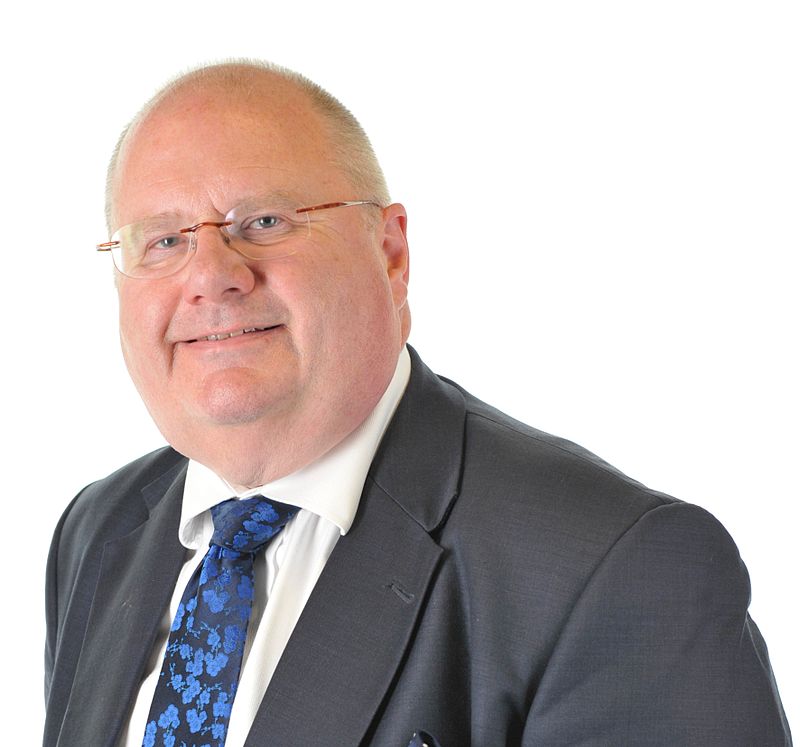
    Eric Pickles – 2002 Speech to Conservative Spring Forum

    The speech made by Eric Pickles to Conservative Spring Forum on 24 March 2002.

    Stephen Byers is a misunderstood man.

    Some think that stands for whatever is perceived to be fashionable in left wing politics, that he has betrayed his Marxist past. This is to misunderstand the man completely. I have known him a good many years and I can say he is utterly consistent in his devotion to Marxism.

    Of course it is not Karl Marx his principles are based on. It is Groucho Marx.

    Specifically Groucho’s attitude to ethics: ‘These are my principles. If you don’t like them I’ve got some others.’

    That is why Mr Byers can move from 80’s rabble-rouser, to 90’s smoothy-moderniser, from millennium-man advocate of the third way, to pronouncing the death of the third way, with the ease and the speed that the Department of Transport change their press officers.
    As Secretary of State, if your idea of long term planning is to survive the censure motion after next, it is little wonder that the Government’s transport policy is so directionless.

    I was recently asked what enthusiasm I had for the Government’s ten-year transport plan. I replied that I was so enthusiastic I was seriously thinking of ways I could enter year three onwards for the Whitbread prize for fiction.

    Labour had the opportunity to consolidate the gains made from the privatisation of Railtrack under the Conservatives. We reversed the long-standing decline in passenger numbers, investment poured in and our railways had a better safety record. Instead Byers blew it with a botched renationalisation. That will cost the travelling public dear.

    Remember a third of the promised railway investment is meant to come from private sector funding. It is frankly ridiculous for the Government to argue that that the private sector investment has not been affected following their decision to confiscate a company from its legal owners.

    Any lingering doubts remaining over future relations between private finance and Government were dispelled by the letter to the Chancellor written by over twenty top fund managers saying that Labour’s handling of Railtrack has damaged relations between the Government and the City, increased the cost to the taxpayer of public private partnerships and discouraged people from saving.

    In other words on every length of road, stretch of track, new hospital or school building – anything that needs private finance there will be a Byers premium. We will all pay more to get less

    Anybody who cares about our Railways will tell you what we need to do to make life better: get Railtrack out of administration, stop dithering over the approval of rail franchise renewal, because if you don’t there will be no new trains after 2004. Do that and we can deal with the number one problem facing our railways a lack of capacity to meet any significant increase in demand.

    Transport is full of acronyms: SPV’s, Infroco’s, NATS and, of course, PPP. Rarely does the acronym meet the reality. This is true with the PPP for the Tube. Forget Public-Private Partnership, in London PPP stands for Poor Prospects for Passengers.

    Poor prospects of seeing a new train in ten years. There are only 12 new trains in service on Tube by 2008.

    Poor prospects for projects due to start ten years into the thirty year project, with the Government offering no stability for funding.
    Poor prospects for the taxpayer: despite promises we still don’t know whether the PPP is value for money, and we still don’t know when things go wrong who will pick up the tab.

    Poor prospects for overcrowding: the PPP will make no significant improvement.

    If over Easter you decide to visit London and decide to join Londoners on a sweaty, smelly overstuffed tube carriage, ten years from now were you to repeat the journey chances are it will be the same. Chances are it is likely to be the same carriage; the only difference will be the carriage will be ten years older.

    We will inherit a terrible mess on the London Underground. To make life better we will seek to develop a series of quality contracts with Transport for London on: punctuality, reliability, cleanliness and safety (personal and public). We will ensure a no strike agreement operates on the tube. The closing down of the network has no place in the resolving of industrial and sometimes petty disputes in modern Britain.

    We are now rapidly approaching an important milestone to judge this Labour Government, laid down by no less a person than the gentle and serene Deputy Prime Minister.

    After the 1997 general election, John Prescott said, ‘I will have failed if in five years time there are not … far fewer journeys by car. It’s a tall order but I urge you to hold me to it.’

    Since 1997 traffic on all roads has consistently increased. Estimated traffic levels rose by 3% between the fourth quarter of 2000 and the same quarter of 2001 alone – according to official DTLR figures.

    We will be looking for volunteers to break this news to Mr Prescott. A fast car and an ability to duck will be an asset

    Labour and their “me too” lackeys the Liberal Democrats see the car driver as the enemy. Someone to be despised pilloried and above all taxed.

    Fuel tax is still the highest in Europe. At the last count the average UK retail price of diesel was over 20 pence per litre more expensive than any other EU country. It is worth re-emphasising that the pre-tax price of both fuels was among the cheapest in Europe, but the total amount of tax per litre was the highest of these countries

    New taxes are introduced on company cars, but ministerial cars are of course exempt. Nothing must disturb the air conditioned splendour of the New Labour elite, free from the care of the day to day bustle the rest of us face.

    Recently in a debate, I asked a Minister when was the last time he travelled on the tube during peak time and whether he enjoyed it? The question was so unexpected in its impertinence that I got the shocked response that he ” could not remember.” That would be a sad admission from any Minister, but from the Minister of Transport it was shameful.

    Much needed relief roads lie abandoned. Motorways that would take traffic away from chocked towns are neglected. The number of miles of motorway opened each year has significantly declined under the Labour Government. In 1997, the last year Conservatives were in government, Britain’s motorway network increased by 42.3 miles. In 2001, it increased by a paltry 6.1 miles.

    Talk to any of New Labour’s advocates of congestion charging after a few polite pleasantries about inter-model shift from car to public transport and they go onto the real agenda. For the truth is this: if there was even a modest shift away from the car towards buses or trains, our public transport system could not cope. There is not sufficient capacity.

    No, what Labour’s transport gurus want is a reduction of journeys, principally by people on low incomes. According to them poor people can’t have cars.

    To make life better on our roads there needs to be a bigger dose of reality and recognition that the car and the lorry are a help, and not a hindrance, to an integrated transport policy. Indeed they are vital to many people in rural areas, many elderly, disabled and parents with young children.

    Over the coming months we will look at getting the best out of our road space. At getting the best out of better lane management, better repair management, better use of technology. We will look at innovative ways of providing public transport with some of the flexibility that private transport has.

    We understand that people will not leave their car at home until personal safety is improve on buses and trains, pupils will not return to school transport until better supervision and safety provided.

    Above all we understand that we have to integrate our transport policy into the way people live their life, rather than how some cloistered transport boffin thinks they should. Our policy will be firmly grounded in reality, with a determination to repair the damage inflicted by Byers and to make our transport system better.

  • Oliver Letwin – 2002 Speech to Conservative Spring Forum

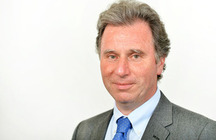
    Oliver Letwin – 2002 Speech to Conservative Spring Forum

    The speech made by Oliver Letwin to Conservative Spring Forum on 24 March 2002.

    Almost every day our newspapers and televisions carry stories of horrific crimes.

    Almost every day we hear the anguished voices of these victims of crime asking what is to be done.

    The failure to tackle crime has given rise to pessimism and despair.

    I understand that pessimism but I do not share it.

    Sometimes in life you are privileged to witness astonishing achievements. Two weeks ago I had that privilege.

    I visited a city. I met individuals who were determined to transform the life of that city by drastically cutting crime. I visited a police force whose morale was second to none.

    A city whose Mayor and Commissioner of Police had the political vision – against the prevailing consensus at the time – to put the police on every street and to ensure that they became custodians of their neighbourhoods.
    A city which has given the streets back to its citizens by dealing with every manifestation of disorder, whether it be simple graffiti, youth offending or drugs.

    That city was New York.

    New York used to be like many parts of our cities.

    Places where street crime, social disorder and violence has become the norm rather than the exception. Places where criminals are not often brought to justice. Places where the police are demoralised because of interference from politicians and bureaucrats.

    It was not always like this in Britain. Violent crimes were not unknown in 1956 when I was born. But they were not so frequent that the papers had a fresh tale of terror for every edition. It was not the case that children carried knives or that drug deals were done in the playground. Women were not dragged from their vehicles by carjackers. No one even knew what carjacking was. Indeed there was little fear of theft of any kind. When a man who later became my neighbour on the Wandsworth Road in London left money for the butcher and the baker in a drawstring bag hanging from a latch, it was not stolen and he didn’t expect it to be stolen.

    Something has changed in our society over my lifetime. When I was born, there were 68,000 police officers and less than 500,000 crimes a year. Now there are 127,000 police officers and 5 million crimes a year.

    There are those that assure us that the tide has now turned and use the survey statistics to make their case. But most people in this country do not believe the survey statistics. Most people think street crime is rising. And the statistics for reported crime suggest they are right. The Home Office itself tells us that:

    · The number of young people committing serious crimes, including murder and grievous bodily harm, has almost doubled in last seven years.
    · Gun crime has trebled in London during the past year and is soaring in other British cities.
    · Crimes involving knives have also trebled in London in the past year and they too are increasing in other British cities.

    These figures tell us something that is true about the everyday lives of millions of people: that life-shattering violence is not unthinkable, that violence has become the common currency of crime and that the fear of crime lies around every corner.

    But the public aren’t just afraid. They are angry and they have every right to be so.

    Government has many duties and the first of these is to protect the public.

    My opposite number, the Home Secretary – to do him justice – does understand that we no longer feel protected. But what is he doing in response?

    He is trying to take power to control every police force in Britain from a desk in Whitehall.

    Presumably, he imagines that efficiency will be improved by the Home Office – the Home Office, which has given us an Immigration and Nationality Department that can’t process applications faster than the average snail; an asylum system that is, by his own admission – in a state of chaos; and a youth justice system with appallingly high re-offending rates.

    He threatens to sack the Commissioner of the Metropolitan Police, and engages upon a damaging, divisive and demoralising conflict with the police service. Five thousand police officers arrive to protest outside Parliament and, for the first time in living memory, policemen begin to ask for the right to strike.

    I might have suggested to him that this is a time to pick a fight with the criminals, not with the police. But I don’t need to – because he has noticed this for himself.

    We know he has noticed, because he and the Prime Minister have held a ‘summit’. This last week. Very impressive. An initiative. Very impressive. So, of course, were the last 29 initiatives taken by Mr Blunkett since he became Home Secretary.

    Let’s hope this one will be different from the rest. Let’s hope this one will actually work.

    But I fear that the chances are slim. Why? Because Mr. Blunkett is the Newton of modern criminal justice policy. Newton told us that, for every action, there is an equal and opposite reaction.

    In Mr. Blunkett’s case, it can truly be said that, for each initiative, there is an equal and opposite initiative.

    So the day after the summit, focusing on street crime, what did the Home Secretary do? He announced that he was not able to find prison places for the people whom the police were going to arrest and the courts were going to convict.

    And he told us he had discovered a brilliant device for solving the problem. He was going to let a large additional number of existing prisoners out early on electronic tags.

    What was the message to potential criminals? Just be sure that, if you intend to engage in crime, you wait until my prisons are full. Then I guarantee you’ll be in and out in a trice!

    But perhaps we shouldn’t worry too much. Because, a few days before the summit, the Home Secretary had already made sure that not too many people would be arrested.

    What was his brilliant wheeze that week? What was that week’s ‘initiative’? It was to require every police officer to issue a report every time someone is stopped on the street.

    How will that cut bureaucracy and make the police more effective at fighting street crime? I have to admit, I don’t know. Alas, Mr. Blunkett’s junior Minister, Mr. Denham, didn’t know either when I asked him in the House of Commons.

    Thousands of police officers don’t know either.

    But I can tell you who does know. The boys in the gangs know. They know they are not likely to be stopped, because the police officer stopping them will have to spend most of the morning handing out notices to every member of the gang.

    So my message to the Home Secretary is this. “David, calm down, slow down. Your heart is in the right place. But you can’t cure street crime in this country with a thousand incoherent and conflicting initiatives. You can’t cure it by alienating the police or trying to control this all from a desk in Whitehall. Time is running out. We have a crisis of street crime on our hands. To tackle it, we need a coherent programme, calmly developed, and carefully implemented.”

    Now, you will ask me: “what is our programme?” And that is why I have been beginning to develop a coherent programme for Conservative policy on crime over the last few months.

    Back in January I delivered a speech called Beyond the Causes of Crime. It sets the agenda for everything the Conservative Party hopes to achieve on the issue of law and order.

    When the Prime Minister spoke about being tough on crime and tough on the causes of crime, he too was hoping to set an agenda, and in many ways he succeeded. But the time has come to start looking beyond the causes of crime. We think it is better to find out what causes the opposite of crime – in other words those patterns of decent, friendly, civilised behaviour that make for what I call the neighbourly society.

    We believe that the neighbourly society is the most important defence we have against crime. A neighbourly society is built upon strong and supportive relationships within families, between neighbours and throughout the wider community. A united, concerned and vigilant community not only guards against the attacks of the established criminal, but also turns young people away from the path of crime.

    But what chance does the neighbourly society have when the young learn that thuggery goes unpunished while good people live in fear? How can we expect communities to form and flourish when the streets are overrun by vandals and drug dealers? We need to understand crime and community as two opposing forces. Crime has weapons at its disposal above all, violence and the threat of violence. In the face of such a threat the peaceful community can only retreat, ceding more ground to the criminal, exposing young people to values wholly opposed to those of the neighbourly society. Thus neighbourhoods decay; the young are corrupted; people who can, get out; and people who can’t, live blighted lives. All this, because decent people are afraid.

    Crime isn’t just about the headline offences of rape and murder, or even the more common offences of mugging and burglary.

    It is about the everyday crimes, conveniently filed away under the term ‘social disorder’: graffiti, vandalism, petty theft, fly tipping, drug dealing, intimidation, bullying, racial abuse, the corrupting influence of gangs, and the underlying, but entirely viable, threat of violence against anyone who stands up to the wreckers.

    Yes, of course, people do fear the headline crimes, but in many neighbourhoods there is another kind of fear, closer to despair, born of the knowledge that we must limit our lives or become victims anyway; that the street is owned by the criminal, not by the citizen; that vandals can do what they will, even if everyone knows who they are; that thugs may torment their neighbours with only retaliation guaranteeing a decisive police response; that the gang is a stronger influence on our children than the school; that in the frontline against fear no one is on our side; that we are right to be afraid.

    I have spoken of the struggle between crime and community. It is a struggle that the community is losing and the evidence of defeat can be seen most starkly in Britain’s poorest neighbourhoods. There is something desperately wrong with our society when the people we put in the front line against fear are those least able to stand up to the thugs – the poor, the very old and the very young. They need some one to fight for them, not just holding the line against fear, but taking back the ground lost to the forces of disorder.

    Who will take on this role? We believe it must be the police.

    What we want is the kind of policing that takes back the streets from the muggers and the drug dealers and makes them safe for the decent, law-abiding people of this country. I call this neighbourhood policing and it is the foundation on which we will rebuild the neighbourly society.

    This is not just a dream. It can be done. And the reason I can be so sure is because it has been done. Not in this country, of course. But in America, where city after city has declared war on social disorder of all kinds.

    Two weeks ago, when I was in New York as the guest of the NYPD, what did I see? I saw policemen walking the streets. I saw patrol cars, which patrol small areas on a continuous, 24-hour basis. I saw the teams available to move in behind the beat-cops and the patrols to tackle crime on the street. I saw how week-by-week, street-by-street mapping of crime makes transparent where and when crime is being committed, and forces policemen at all levels – right up to Chief Constable level – to produce timely, effective strategies for dealing with street crime. I saw how the Police Department and other agencies tackle quality of life issues as well as crime. I saw a criminal justice system that is based on a sense of urgency.

    Does it work? The figures speak for themselves. Over 9 years, murder in New York has been reduced by 80%; robbery, burglary and car theft by over 70%; theft by just under 50% and rape by just under 40%. Across these crimes as a whole, the reduction is 60% since the new methods were introduced.

    You are now five times more likely to be the victim of crime in London than in New York, and twice as likely to be robbed or mugged. New York is now a noticeably safer and more pleasant place to live in than London.

    Why isn’t our government bringing about the same transformation over here? Because, true to form, they want to do the whole thing themselves. Instead of leading from the front, David Blunkett wants to run every police force in the land from his desk. It won’t work. Reform isn’t about micro-management by politicians, bureaucrats and spin-doctors, it’s about setting public service professionals free to do the job they were always meant to do. The tragedy of New Labour is that they cannot grasp this truth.

    Neighbourhood policing is critical. But it is not enough. We believe that the criminal justice system needs to change. The Commissioner of the Metropolitan Police was right. There is not much point in catching criminals, if it takes months to conduct trials and if they are bailed back onto the streets to commit more crime during those months. We need to find means of instilling a sense of urgency into our criminal justice system.

    Our prisons are another problem. 58 per cent of all prisoners are caught re-offending within two years of release. For prisoners under the age of 21, the record is much worse. 75 per cent of all young offenders sentenced to custodial sentences are caught re-offending within two years.

    These figures are simply unacceptable in a civilised society. How can we accept that a young person, once a criminal, is always a criminal? How can we accept that level of failure? How will we ever have safe streets and a neighbourly society if we continue to accept it?

    In the next few months, Conservatives will be bringing forward radical proposals for reform of the youth justice system – proposals designed to take young criminals off the conveyor belt to crime.

    But we also need radical proposals to prevent young people getting onto the conveyor belt in the first place.

    To do that, we have to have effective neighbourhood policing – and a fast, effective court system. We have to break up the gangs when they are committing crime, and we have to prove to young people that crime can and will be stopped in its tracks. We have to clean up the neighbourhoods in which graffiti, fly-tipping and vandalism have reduced the quality of life to a level where crime seems natural.

    But these things are not sufficient. We also have to build upon the work that Michael Howard began when he was Home Secretary. We have to make a reality of co-operation between the police, the schools, the local authorities, the Drug Advisory Service and other agencies, to spot the youngsters at most risk of becoming criminals, and to intervene effectively before they get onto the conveyor belt to crime.

    Nor will the state be able to do everything that needs doing.

    A great part of the heat of the day will have to be borne by volunteers, by charities, by what Douglas Hurd called ‘active citizens’. Conservatives believe in active citizenship. Many people in this hall are the active citizens, the volunteers, the people who support the charities that are preventing young people from joining the conveyor belt to crime.

    In the next few months, as we come forward with specific policy proposals on neighbourhood policing and reform of the criminal justice system, we will also bring forward specific policies on the voluntary sector, to widen and deepen voluntary effort – to lead our young people away from the conveyor belt to crime.

    Our work in this Parliament has barely begun. We have much to learn, and much to study. We are conscious of the magnitude of the task.

    But I make this pledge to you today. We will go on thinking and go on working. By the time that we come to the next election, we will go into that election with a coherent, developed, long-term programme to fight street crime in this country, and to rescue our streets for the decent citizens of this country.

    Only with such a programme can we hope to achieve a neighbourly society in Britain. Only with such a programme can we hope to achieve a Conservative Government in Britain. It is our ambition and our intention, to achieve both of these goals.

  • PRESS RELEASE : Obtaining Ukraine’s EU membership candidate status is of great importance for the Ukrainian people – President during a conversation with Ursula von der Leyen

    PRESS RELEASE : Obtaining Ukraine’s EU membership candidate status is of great importance for the Ukrainian people – President during a conversation with Ursula von der Leyen

    The press release issued by the President of Ukraine on 9 May 2022.

    President of Ukraine Volodymyr Zelenskyy held a video conference with President of the European Commission Ursula von der Leyen. During the conversation, the President announced the transfer of the second part of the completed questionnaire to obtain the status of a candidate for membership in the European Union.

    Volodymyr Zelenskyy noted that the second part of the questionnaire was passed to Head of the EU Delegation to Ukraine Matti Maasikas.

    “I think these answers are also a small victory for our team. We are waiting for the consideration and conclusions of the European Commission. I would like these conclusions to be positive. And I would like these conclusions to be provided faster thanks to you,” the President of Ukraine said.

    He stressed that obtaining Ukraine’s EU membership candidate status is of great importance for the Ukrainian people and our Armed Forces, which are defending their homeland.

    For her part, Ursula von der Leyen noted that the European Commission will work hard to review the completed questionnaire submitted by Ukraine to make a decision in June this year.

    “I am very impressed with the speed with which you prepared the answers to our questionnaire. This will encourage the European Commission to work faster,” she said.

    Volodymyr Zelenskyy thanked the European Union for its support to Ukraine.

    “I am thankful to you, Charles Michel and the European Union who are actively working against Russia’s occupation of part of our territory. Working with sanctions, diplomatically, financially, supporting our state with armaments,” he said.

    Volodymyr Zelenskyy also stressed the importance of adopting the sixth package of EU sanctions against Russia, and thanked those European countries that support the introduction of an embargo on oil and gas from the aggressor country.

    The President of the European Commission noted that the EU is working on imposing an embargo on imports of Russian oil products.

    Ursula von der Leyen stressed that today Ukraine is fighting for common European values and democracy, so the EU will continue to provide its support, including financial support. She announced the work on the creation of the Trust Fund for the reconstruction of our country.