Blog

  • PRESS RELEASE : We can’t agree on Minsk-3 because it’s a ticket to a postponed war; we need an agreement on security guarantees – Mykhailo Podolyak

    PRESS RELEASE : We can’t agree on Minsk-3 because it’s a ticket to a postponed war; we need an agreement on security guarantees – Mykhailo Podolyak

    The press release issued by the President of Ukraine on 30 May 2022.

    Any agreement between Ukraine and the Russian Federation like Minsk-3 is a postponed war that will bring much more victims and risks to the existence of our state. At the same time, concluding an agreement on security guarantees is a matter of a proper end to the war in Europe. Mykhailo Podolyak, Adviser to the Head of the Office of the President of Ukraine and a member of the Ukrainian delegation at the negotiations with Russia, said this in an interview with LB.ua.

    According to him, due to the strong Russian lobby and their own indecision, some politicians in Europe are beginning to say that Ukraine must stop fighting and make some “peace” with Russia in the current positions. So far, individual political groups are talking about this, and this does not mean that Europe will refuse to support Ukraine. But this means that today it is difficult for our country to prove the need to provide the Ukrainian army with heavy weapons.

    “Because Europe believes that we must stand where we stand today. And they directly say: God forbid, some Ukrainian projectile will hit the territory of the Russian Federation. That is, Europe is gradually starting to say strange things,” Mykhailo Podolyak said.

    “We can’t support any of the options that are being talked about. We can’t agree on Minsk-3 – that’s obvious. Because it’s a ticket to a postponed war. We cannot talk about a ceasefire before the withdrawal of Russian troops from Ukraine. It is clear that they will dig trenches, create their own fortification lines, and it will be very difficult for us to drive them out of Ukraine. We cannot agree to any ultimatum from Russia, because it will mean that they win. And any, even small victory of Russia only means escalation. Russia is an expansionist state, which offers the world one idea: we will enter any territory and take it away or destroy it,” said the Adviser to the Head of the Office of the President.

    According to him, the public opinion of the Western world is definitely on the side of Ukraine, and European politicians, to please their societies, say that they provide a lot of help to our state, but in terms of the amount we need, this is not the case at all.

    “Russia has concentrated all possible resources in the east of our country, from all its military districts. They have been conducting covert mobilization since April 1. And we are not a military state, we lived in another world, invested money in development,” he said.

    Mykhailo Podolyak is convinced that if Europe supports any pro-Russian concepts, in particular on forcing Ukraine to make territorial concessions, it will mean that Europe is dying.

    The Adviser to the Head of the President’s Office noted that the negotiation process between Ukraine and Russia is currently suspended in the political and diplomatic part, but it is continued in the humanitarian part – on the exchange of prisoners, humanitarian corridors and evacuation of people.

    “Why has the political and diplomatic part been stopped? Because negotiations are a question of inter-relation between what is happening in the real world, not only on the battlefield, but in general: sanctions, reputation, partners. Russia is inadequately looking at all this. This is a phenomenon that will also be included in textbooks,” Mykhailo Podolyak is convinced.

    At the same time, according to him, when the Russians begin to suffer significant military defeats in Ukraine, they will probably assess the reality more adequately.

    “When the pressure of sanctions works in full, they will begin to understand. When certain leaders, especially European ones, with whom they are still communicating, start talking not as Kissinger, but as anti-Kissinger. Then they will look at the situation more objectively,” said the Adviser to the Head of the Office of the President.

    He noted that President of Ukraine Volodymyr Zelenskyy, who is best informed about the economic, military situation and the psychological state of society, may decide that a certain tool, including negotiations, is needed right now.

    “This will be the decision of the Supreme Commander-in-Chief given the operational situation as of the day when he will make such a decision,” Mykhailo Podolyak explained.

    He reiterated that any so-called Minsk-3 is a war postponed for a year.

    “What does this mean for us? Many more victims and greater risks to Ukraine’s existence. Because if Russia doesn’t lose, it will accumulate weapons, prepare reserves, work on mistakes, remove generals who work very “effectively” today, take young lieutenant colonels and colonels who understand how to fight, and we will get a much bloodier war in a year. We have no chance to compromise and make concessions,” said the Adviser to the Head of the President’s Office.

    Therefore, according to him, Ukraine needs an agreement on security guarantees.

    “The issue of guarantees is a matter of the proper end of the war in Europe. That is, we return to the key thing – the willingness of the global elite to take responsibility. Because just forming an alliance is one story, and taking responsibility, for example, on the border with the Russian Federation, is another,” he said.

    Mykhailo Podolyak also said that for him personally the victory of our state would mean the following: “This is territorial integrity within the full, internationally recognized borders of Ukraine, the Iron Curtain with Russia, Russia’s worthless, completely zero reputation.”
  • PRESS RELEASE : President of Ukraine met with the Minister for Europe and Foreign Affairs of France

    PRESS RELEASE : President of Ukraine met with the Minister for Europe and Foreign Affairs of France

    The press release issued by the President of Ukraine on 30 May 2022.

    President Volodymyr Zelenskyy had a meeting with Minister for Europe and Foreign Affairs of France Catherine Colonna, who is on a visit to Ukraine.

    The President noted the importance of the visit of the Minister to Ukraine, which is another manifestation of the support for our country by the French Republic.

    “I want to thank you, France and President Emmanuel Macron for supporting Ukraine, for the constant support for our territorial integrity and sovereignty,” said Volodymyr Zelenskyy.

    The interlocutors discussed the key issues for our country’s victory: assistance in armaments, strengthening sanctions and bringing our country closer to EU membership. Special attention was paid to the issue of unblocking Ukrainian ports in order to prevent the global food crisis.

    The Head of State stressed that Ukraine counts on France’s leadership in our fight against the Russian aggressor and the protection of European values.

    During the meeting, the parties stressed the need to introduce the next, sixth package of sanctions against Russia by the EU as soon as possible.

    The President noted that Ukraine counts on the support of France for the decision of the leaders of the European Union to grant our country the status of a candidate for EU membership in June.

    “We have repeatedly heard that friendly France sees Ukraine in the European Union,” said Volodymyr Zelenskyy.

    During the discussion of Russia’s use of food security as a weapon in the war against Ukraine, the President called on French partners not to give in to the aggressor’s blackmail and pressure to mitigate the sanctions against Moscow.

    The President stressed that Ukraine counts on France’s active participation in the post-war reconstruction process.

    Volodymyr Zelenskyy thanked in particular for the financial support for our state and the assistance of the French government in the treatment of wounded Ukrainian servicemen.

  • PRESS RELEASE : Announcement of the reappointment of a non-judicial member, Diana Fawcett, of the Sentencing Council

    PRESS RELEASE : Announcement of the reappointment of a non-judicial member, Diana Fawcett, of the Sentencing Council

    The press release issued by the Ministry of Justice on 31 August 2022.

    The Lord Chancellor has announced the reappointment of Diana Fawcett as a non-judicial member of the Sentencing Council for a second tenure of 18 months.

    The Lord Chancellor in consultation with the Lord Chief Justice, has announced the reappointment of Diana Fawcett as a non-judicial member of the Sentencing Council with specific responsibility for promoting the welfare of victims of crime, for a second tenure of 18 months The re-appointment commenced on 5 April 2022 and will run until 4 October 2023.

    The SC was established by Section 118(1) of the Coroners and Justice Act 2009 (“the Act”) to promote greater transparency and consistency in sentencing whilst maintaining the independence of the judiciary. The SC’s responsibilities include: developing sentencing guidelines and monitoring their use; assessing the impact of guidelines on sentencing practice; promoting the understanding of and increasing public confidence in sentencing and the criminal justice system.

    Appointments and re-appointments are made by the Lord Chancellor, in consultation with the Lord Chief Justice, and are regulated by the Commissioner for Public Appointments. This reappointment has been made in line with the Governance Code on Public Appointments.

    Diana Fawcett

    Diana was first appointed to the Sentencing Council on 5 April 2019 for a period of three years. Diana was appointed as Director of Operations of the charity Victim Support in February 2015 becoming Chief Executive in January 2018.

    Prior to Victim Support, Diana was Director of Operations at Shelter for seven years where she was responsible for the charity’s advice and support services. She has also worked for four London boroughs and three housing associations, managing a range of housing, development and care services. She has been a trustee of Lewisham Refugee and Migrant Network a charity providing advice and support to refugees since 2014 and was chair between 2015-21.

  • PRESS RELEASE : New guidance on mitigating the impact of avian influenza in wild birds

    PRESS RELEASE : New guidance on mitigating the impact of avian influenza in wild birds

    The press release issued by the Department for Environment, Food and Rural Affairs on 31 August 2022.

    Defra and the Welsh Government have today set out practical guidance to support land managers, the public and ornithological and environmental organisations in their response to the growing threat of avian influenza to wild birds, working alongside government action to monitor the disease.

    The ‘Mitigation Strategy for Avian Influenza in Wild Birds in England and Wales’ sets out how these groups, together with the government and its delivery partners, can mitigate the impact of avian influenza on wild bird populations whilst protecting public health, the wider environment and the rural economy.

    The new guidance advises land managers on how to make natural areas safe for the public, for example by adding signage warning visitors of the risk of avian influenza and what they can do to protect themselves, and having contingency plans in place to allow them to quickly respond to outbreaks.

    The guidance sets out the government’s approach to monitoring the spread of avian influenza in wild bird populations and better understanding how the disease is distributed geographically and in which species of birds, with international best practice and the latest scientific and ornithological evidence underpinning this. It is also consistent with the government’s Notifiable avian disease control strategy for Great Britain.

    The Animal and Plant Health Agency (APHA) has been operating a year-round surveillance programme across Great Britain in found dead wild birds, which allows our world-leading researchers to better understand the latest strain and how it is spreading. During the current outbreak, over 1,500 wild birds have returned positive results from over 360 locations and 61 different species.

    An eight-strong research consortium was launched by APHA and received £1.5 million in funding to develop new strategies to tackle outbreak of avian influenza. Its world-leading researchers will help build our understanding in several key areas, including why the current virus strains have formed larger and longer outbreaks and understanding transmission and infection in different bird populations.

    Defra Biosecurity Minister Lord Benyon said:

    Our wild birds are facing exceptional pressures from avian flu this year and we have seen the tragic effect it has had – particularly on our seabird colonies.  I very much share concerns about the impact avian influenza is likely to have on breeding populations of wild birds in the future, particularly those that nest in large numbers and represent some of our rarer and much loved species.

    We are funding a world leading science programme to try and better understand how avian influenza is spreading in wild birds and today’s guidance will help land managers, ornithologists and the public manage some of the issues we are facing. We will continue to work closely with partners to consider any further action we can take.

    Welsh Government’s Minister for Climate Change Julie James said:

    Fortunately, Wales’ wild bird populations have so far escaped the mass mortalities seen in Scotland and England, but we remain extremely vigilant to the dangers of Highly Pathogenic Avian Influenza (HPAI).

    As well as working with Defra and our partners to create the cross-border Mitigation Strategy for Avian Influenza in Wild Birds in England and Wales, which is published today, we have suspended all seabird ringing and nest recording in Wales in response to confirmed cases of HPAI on Anglesey and in Ceredigion and on neighbouring Grassholm Island.

    Wales is home to the world’s largest colony of Manx shearwaters, the third largest gannet colony, as well as large colonies of other seabirds, such as auks, gulls and terns. We will continue to closely monitor the ongoing situation and urge anyone who sees a dead bird to report it and not to touch it.

    This year’s avian influenza outbreak has been the largest and longest ever on record in the UK and in many parts of Europe, with infections continuing beyond the normal winter period and now hitting wild birds and breeding colonies of seabirds that are not typically affected. Large mortalities of rare seabirds, from suspected avian influenza, have been reported at iconic sites such as Farne Islands, which is home to guillemots, puffins, and Arctic tern, and Coquet Island where the UK’s only breeding population of Roseate tern resides.

    The UK’s seabirds are an important part of our natural heritage, and their protection is a high priority for the Government, with long-term population monitoring being crucial to understanding the impact of a range of factors on our internationally significant populations of breeding seabirds. We have already built a comprehensive network of Marine Protected Areas, which include sites to protect seabirds, and our recently published Marine Wildlife Bycatch Mitigation Initiative will identify actions that can tackle one of the most significant threats facing our seabirds.

    In addition to the existing Seabird Monitoring Programme, Natural England and Natural Resources Wales have set up seabird reporting systems to collect key data on bird mortality at breeding sites and have been commissioned by Defra and the Welsh Government to assess the vulnerability of seabird species in light of the pressures they are facing. These projects will help inform future species recovery plans and identify specific actions that can be taken to support population growth.

    Defra and the Joint Nature Conservation Committee will also work with key experts to assess how conservation actions and monitoring can be improved to help populations recover. This work will continue over the coming months to react to future incidents of avian influenza in wild birds and assess whether any further action should be taken to protect these important species.

    The guidance also reasserts our approach for removing and disposing of dead wild birds. We do not recommend wild bird carcasses are removed, except in specific circumstances as set out in the Strategy. This is due to the limited evidence indicating their removal reduces the risk of transmission between birds, as the natural environment is already heavily contaminated with the virus. If removal is needed, it is the responsibility of the landowner, or local authorities in the case of public areas, to safely arrange disposal and to cover any costs associated, including disposal in compliance with relevant animal-by-products rules.

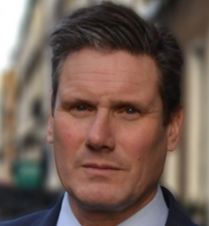
  • Keir Starmer – 2022 Comments on the Death of Mikhail Gorbachev

    Keir Starmer – 2022 Comments on the Death of Mikhail Gorbachev

    The comments made by Keir Starmer on Twitter on 30 August 2022.

    One of the great figures of the 20th Century, Mikhail Gorbachev’s pursuit of reform forged a path for diplomacy over conflict.

    He will forever be remembered as the last leader of the Soviet Union who had the courage and conviction to end the Cold War.

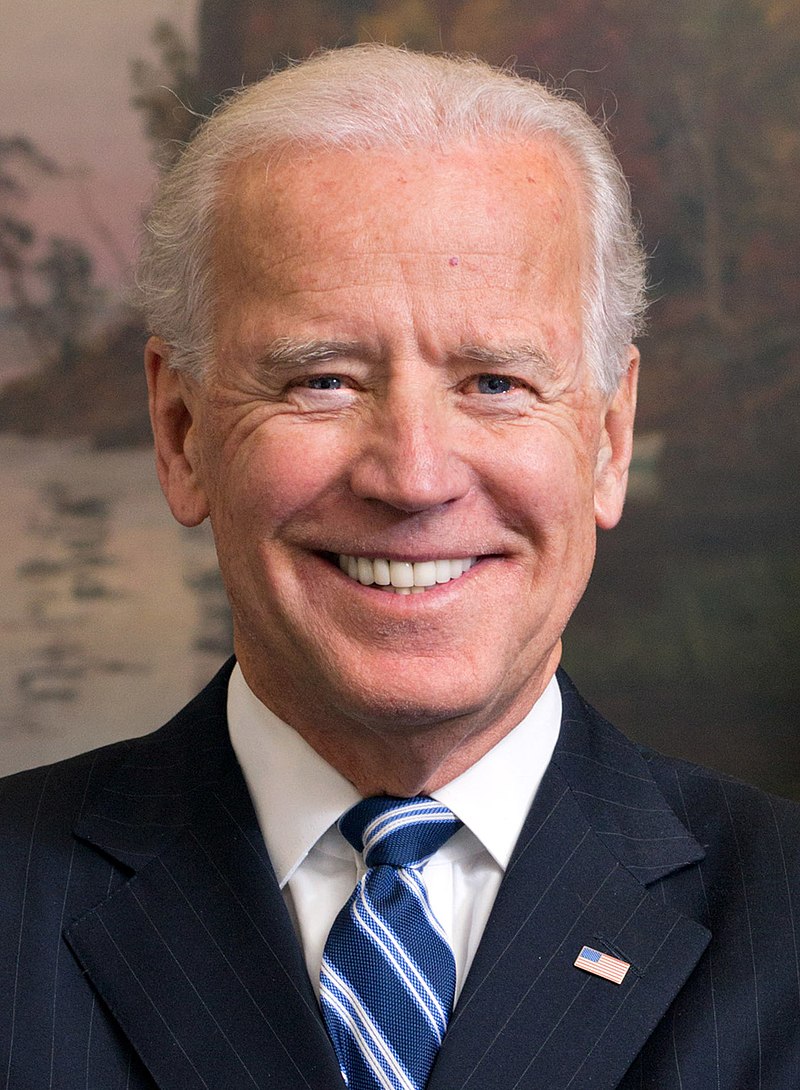
  • Joe Biden – 2022 Statement on the Death of Mikhail Gorbachev

    Joe Biden – 2022 Statement on the Death of Mikhail Gorbachev

    The statement made by Joe Biden, the President of the United States, on 30 August 2022.

    Mikhail Gorbachev was a man of remarkable vision.

    When he came to power, the Cold War had gone on for nearly 40 years and communism for even longer, with devastating consequences. Few high-level Soviet officials had the courage to admit that things needed to change. As a member of the Senate Foreign Relations Committee, I saw him do that and more. As leader of the USSR, he worked with President Reagan to reduce our two countries’ nuclear arsenals, to the relief of people worldwide praying for an end to the nuclear arms race. After decades of brutal political repression, he embraced democratic reforms. He believed in glasnost and perestroika – openness and restructuring – not as mere slogans, but as the path forward for the people of the Soviet Union after so many years of isolation and deprivation.

    These were the acts of a rare leader – one with the imagination to see that a different future was possible and the courage to risk his entire career to achieve it. The result was a safer world and greater freedom for millions of people.

    Even years after leaving office, he was still deeply engaged. When Mr. Gorbachev visited the White House in 2009, he and I spoke for a long time about our countries’ ongoing work to reduce U.S. and Russian nuclear stockpiles. It was easy to see why so many worldwide held him in such high esteem.

    We send our deepest condolences to his family and friends, and to people everywhere who benefited from his belief in a better world.

  • PRESS RELEASE : DWP announces new Pensions Ombudsman

    PRESS RELEASE : DWP announces new Pensions Ombudsman

    The press release issued by the Department for Work and Pensions on 31 August 2022.

    He will take on the new appointment from 16 January 2023. The current Pensions Ombudsman, Anthony Arter, will remain in post until 15 January 2023.

    Harris is currently a Partner in the Pensions Team at law firm CMS. He also serves as Chair of the Investment and Defined Contribution Committee of the Association of Pension Lawyers.

    Minister for Pensions Guy Opperman said:

    “I am pleased to announce Dominic Harris as the new Pensions Ombudsman and wish to express my thanks to Anthony for his service in the role. Dominic’s previous experience makes him the ideal candidate to lead the service.”

    New Pensions Ombudsman Dominic Harris said:

    “I am delighted to be appointed as the new Pensions Ombudsman. The Ombudsman has a key role to play in ensuring access to justice in the pensions arena, and I am proud to be able to continue the good work of Anthony and his team at the organisation.”

    The Pensions Ombudsman is an independent organisation set up by law to investigate complaints about pension administration. It is a Tribunal non-departmental public body of the Department for Work and Pensions (DWP).

    The role is a public appointment made by the Secretary of State for the Department for Work and Pensions.

    The main responsibilities of the Pensions Ombudsman are to:

    – investigate and determine pensions complaints

    – investigate and determine disputes concerning the Pension Protection Fund, and hear appeals against decisions made by the Financial Assistance Scheme manager

    – work with the Pensions Ombudsman Board to set the strategic direction for the organisation, and

    – build constructive and effective relationships with external and internal stakeholders, including the DWP and its ministers.

    Further information

    The appointment process has been an open competition regulated by The Office for the Commissioner of Public Appointments.

    The Pensions Ombudsman is a full-time role and the Ombudsman is entitled to an annual remuneration of £143,095, which is uprated annually.

    Two roles are fulfilled, the Pensions Ombudsman and the Pension Protection Fund Ombudsman.

    For more information about the Pensions Ombudsman visit: www.pensions-ombudsman.org.uk

  • PRESS RELEASE : Rent cap on social housing to protect millions of tenants from rising cost of living

    PRESS RELEASE : Rent cap on social housing to protect millions of tenants from rising cost of living

    The press release issued by the Department for Levelling Up, Housing and Communities on 31 August 2022.

    Under the proposals being consulted on, a cap on social housing rent increases would be put in place for the coming financial year, with options at 3%, 5% and 7% being considered.

    • Social rent cap proposed to support tenants with cost of living
    • Move could save households £300 per year and provide financial stability for 4 million families
    • Part of government’s efforts to support most vulnerable households

    consultation has been launched today (Wednesday 31 August) to invite views from social housing tenants and landlords on a proposed rent cap to understand how best to support households with the cost of living.

    Under the proposals, a cap on social housing rent increases would be put in place for the coming financial year, with options at 3%, 5% and 7% being considered.

    The move would prevent rents for council and housing association houses from rising significantly, saving tenants an average £300 per year and providing stability as inflation rises.

    The government regulates how much social housing rents can increase each year. Currently this is set at up to the consumer price index (CPI) rate plus 1% – meaning potential increases next year of 11% in line with recent Bank of England forecasts.

    The proposed new cap will help support the most vulnerable households in the face of cost-of-living pressures. This comes on top of our existing £37 billion support package, which includes a £150 council tax rebate, a £400 energy bill discount to support households over the coming months and the most vulnerable 8 million households receiving support of at least £1,200.

    Housing Secretary Greg Clark said:

    We must protect the most vulnerable households in these exceptional circumstances during the year ahead. Putting a cap on rent increases for social tenants offers security and stability to families across England.

    We know many people are worried about the months ahead. We want to hear from landlords and social tenants on how we can make this work and support the people that need it most.

    The rent cap would be temporary and would apply from 1 April 2023 to 31 March 2024. The consultation also seeks views on whether to set a limit for 2024-25. The government understands this will impact social housing landlords and is engaging fully with the sector.

    Following the consultation, a final decision will be announced later this year, to make sure social housing landlords have enough time to factor this into their rent decisions for April 2023.

    The government is also committing to reviewing social rent policy beyond 2025, via a separate consultation due to be launched next year.

    Today’s announcement is part of measures the government has put in place to support the most vulnerable households with the cost of living.

    This is in addition to the £11.5 billion investment to build more affordable, quality homes through the Affordable Homes Programme.

    Further information

    • CPI was 10.1% in July 2022. If CPI remains at or above this level in September this will permit social housing rent increases of 11.1% (or more) from 1 April 2023 to 31 March 2024.
    • The consultation launched today will run for 6 weeks closing on 12 October.
    • Following the consultation period, the Secretary of State will direct the Regulator of Social Housing on rent standards, confirming the maximum amount social housing landlords can increase rents by for 1 April 2023 to 31 March 2024.
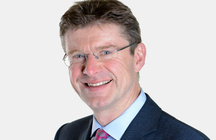
  • Greg Clark – 2022 Comments on the Social Housing Rent Cap

    Greg Clark – 2022 Comments on the Social Housing Rent Cap

    The comments made by Greg Clark, the Secretary of State for Levelling Up, Housing and Communities, on 31 August 2022.

    We must protect the most vulnerable households in these exceptional circumstances during the year ahead. Putting a cap on rent increases for social tenants offers security and stability to families across England.

    We know many people are worried about the months ahead. We want to hear from landlords and social tenants on how we can make this work and support the people that need it most.

    The rent cap would be temporary and would apply from 1 April 2023 to 31 March 2024. The consultation also seeks views on whether to set a limit for 2024-25. The government understands this will impact social housing landlords and is engaging fully with the sector.

  • PRESS RELEASE : PM praises “firepower” of new police recruits in fight against crime

    PRESS RELEASE : PM praises “firepower” of new police recruits in fight against crime

    The press release issued by 10 Downing Street on 31 August 2022.

    The Prime Minister will today (Wednesday 31st August) join new police officers working on the frontline to make our streets safer.

    After joining on operations, he will speak to officers from one of the 20 Violence Reduction Units set up by this government and see first hand the work they are doing to prevent crime in the community by intervening earlier and working closely with health and education partners.

    His visit comes as new Home Office figures will show a 90% satisfaction rate among new recruits brought in under the government’s recruitment drive, with almost 80% reporting that the job met or exceeded their expectations.

    So far, over 13,790 extra police officers have been hired across England and Wales as part of the manifesto commitment to put 20,000 additional officers on our streets.

    Prime Minister Boris Johnson said:

    “Making our streets safer has always been central to my mission to level up this country, because everyone should have the security, confidence and opportunity that comes from having a safe street and a safe home, wherever they live.

    We are cracking down on vile gangs and putting dangerous offenders behind bars for longer – and at the heart of these efforts are the 20,000 new officers who will be out on the streets providing the firepower for years to come in the fight against crime.”

    Located in the areas hardest hit by violent crime, Violence Reduction Units bring together key local partners, including health, education and policing organisations, to target the underlying causes of violence and prevent children and young people being exploited by criminal gangs – helping rid communities of the long lasting impacts of violent crime.

    Backed by £170m of government funding and combined with targeted enforcement activity, they have prevented over 49,000 violent offences in their first two years, and supported over 260,000 vulnerable young people in their second year alone.

    Since 2019 the police have removed over 72,000 knives and dangerous weapons through stop and search, surrender programmes and other targeted police action.

    The government has also significantly stepped up action against county lines gangs and launched a first of its kind Drug Strategy – backed by record investment – to deliver a whole system approach to tackling supply and demand. Since November 2019, more than 2,400 drug dealing lines have been shut down, 8,000 arrests made, and supported over 9,500 individuals at risk of exploitation.

    The government’s Police, Crime, Sentencing and Courts Act, which passed into law last year, equips the police with the powers and tools they need to crack down on crime, including through lifting restrictions on stop and search and introducing new court orders to help target known knife carriers.

    The Act has also brought in tougher sentences to keep serious sexual and violent offenders behind bars for longer, so that they pay the full price of their crimes.