Blog

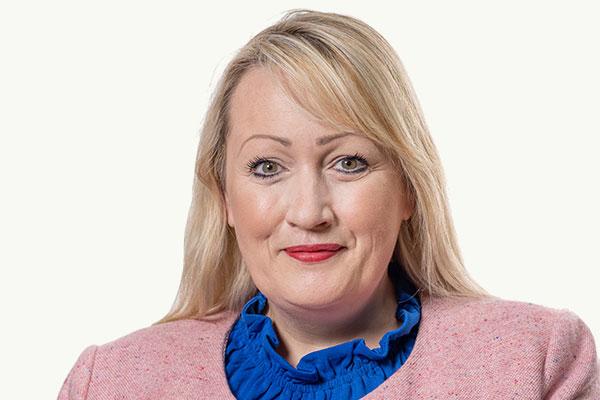
  • Andrea Jenkyns – 2022 Statement on Post-16 Level 2 and Below Qualifications

    Andrea Jenkyns – 2022 Statement on Post-16 Level 2 and Below Qualifications

    The statement made by Andrea Jenkyns, the Parliamentary Under-Secretary of State for Education, in the House of Commons on 18 October 2022.

    Today, I am pleased to announce the next stage in the Government’s review of post-16 qualifications at level 2 and below1 in England—the publication of the response to our consultation on the review of qualifications that are approved for public funding at these levels. After confirming our reforms to level 3 qualifications last year, we are now confirming our policy on qualifications at level 2 and below following our consultation which ran from 2 March to 27 April 2022.

    This is a vital next step towards reforming and revitalising technical education. Streamlining and improving post-16 education and skills is at the heart of our plan to strengthen the economy and create jobs. Students and employers will benefit from a joined-up, dynamic education system that can adapt to rapidly changing priorities.

    The current qualification landscape at level 2 and below is complex, and while many of the qualifications are likely to be excellent, it is not a consistent picture. Qualifications that are funded in future should be necessary, high quality and have a distinct purpose. Crucially, these qualifications should also support progression to successful outcomes for the students who take them, whether this is into a higher level of study, or directly into skilled employment. In a fast-moving and modern economy, it is vital that we bridge the gap between what people study and the needs of employers.

    To mirror the approach we have taken at level 3, we have grouped qualifications at level 2 and below according to their primary purpose. By clarifying the purpose of each qualification, we will enable students to see how their choice of qualification will lead to a positive outcome, whether this is to further study or directly into employment. Further education colleges, schools, other providers and careers advisers will play a key role in delivering information, advice and guidance to prospective students to ensure they are directed towards a qualification that will meet their needs.

    I would like to thank those who took the time to respond to our consultation.2 Among the 410 responses, there was strong support for the aim of simplifying the qualification landscape and improving the quality of provision, and for the groups of qualifications we proposed to fund in future. Other themes from the consultation responses included: the importance of flexibility for students studying at these levels; the potential impact of reducing qualification choice on students from disadvantaged backgrounds and with special educational needs and/or disabilities (SEND); and the need for a phased approach to the timing and sequencing of the reforms.

    The response we are publishing today confirms that we will fund all of the qualification groups proposed, proceed with setting national standards for personal, social and employability (PSE) qualifications and consulting on these, and consider updating the national standards for adult literacy and numeracy. We have made changes to allow greater flexibility, for example allowing providers to offer level 2 qualifications leading to employment to 16 to 19-year-olds in less than two years, depending on the size of the reformed qualification and how it fits alongside the other essential elements of the study programme.

    As the aim of this reform is to improve qualification provision at level 2 and below, we expect students over-represented at this level such as those from disadvantaged backgrounds or with SEND to be the biggest recipients of the benefits of these changes. We will work with the sector to explore how best to support students to progress by having flexibilities in place to ensure students with SEND can access our proposed qualification groups. We will also regularly review the mix and balance of qualifications approved to ensure we are meeting the needs of all learners.

    We have reviewed the implementation timeline and, while we want momentum, we also want to introduce these reforms at a manageable pace for schools and colleges, given the extent of change to the wider qualifications landscape, including at level 3. That is why we are making sure first reformed qualifications at level 2 and below will be available for teaching from September 2025 rather than 2024. Further reformed qualifications will be phased in for 2026, with final reforms in 2027.

    I look forward to engaging with the sector as we implement these important reforms.

  • Nadia Whittome – 2022 Speech on the Energy Prices Bill

    Nadia Whittome – 2022 Speech on the Energy Prices Bill

    The speech made by Nadia Whittome, the Labour MP for Nottingham East, in the House of Commons on 17 October 2022.

    This Government gambled with the markets and lost, and for what? To give their super-rich friends and donors massive tax cuts, and now working people are having to pay the price.

    Just five days ago, the Prime Minister argued that pensioners would suffer if her plans for a two-year energy price guarantee did not go ahead. This morning, the Chancellor cancelled that guarantee, saying that it would be

    “irresponsible to continue exposing public finances”

    and that he would take

    “whatever tough decisions are necessary”.

    Why is it that those “tough decisions” are always paid for by working-class people and not by the wealthiest?

    The United Kingdom is already one of the most unequal countries in the global north, second only to the United States in the G7, 3.9 million children live in poverty and many more are on the brink. Making the situation worse, not just in recent weeks but over the last 12 years—now that is irresponsible! The response to this crisis should be to tax the rich. If the Chancellor wants to balance the books, why does he not impose a windfall tax on the energy giants which are set to make up to £170 billion in excess profits over the next two years? Would it by any chance have something to do with the fact that the Conservative party has taken £1.3 million from fossil fuel interests since the last election? This is a Government who serve the energy corporations that are raking in massive profits and trashing our planet, and not the millions of people who cannot afford to pay their bills and rent or to buy food. We are in a rudderless boat that is sinking, the Prime Minister has no authority or credibility and, after yet another U-turn, only one thing is certain, and that is that this Government are finished.

  • PRESS RELEASE : Patients in Wales boosted by innovations in musculoskeletal health [October 2022]

    PRESS RELEASE : Patients in Wales boosted by innovations in musculoskeletal health [October 2022]

    The press release issued by the Welsh Government on 19 October 2022.

    Wellness coaches, voucher schemes, group coaching and discounted gym memberships are just a few of the ways health boards are providing support.

    The transformation across services aims to improve patient outcomes, better support those on waiting lists to manage their condition, and work toward equal access of care across Wales.

    MSK conditions can cause severe long-term bone and joint pain and include osteoarthritis, rheumatoid arthritis, back pain and osteoporosis. Currently 18% of people in Wales suffer from Osteoporosis and 974,000 people in Wales are suffering from an MSK condition.

    The Welsh Government is working on a variety of initiatives, aligned to ‘A Healthier Wales’, including earlier access to services, prehabilitation, digital tools for patients and links with community leisure groups.

    These initiatives will work with people to build MSK health and slow down the progression of existing conditions. In addition, people on waiting lists will be supported to wait well and be emotionally and physically ready for surgery.

    The Minister for Health and Social Services, Eluned Morgan will announce tomorrow [Thursday 20 October] the launch of a Fracture Liaison Service Development and Quality Assurance Group. This task force will focus on creating consistent access to services aimed at preventing secondary fractures across Wales and helping health boards to develop and deliver new ways of working to support people.

    Every health board in Wales is transforming services and the Wellness Improvement Service (WISE), run by Cwm Taf Morgannwg University Health Board is one such example. Patients are offered wellness coaches to help support evidence-based lifestyle and behavioural changes to improve their physical and mental health, reduce symptoms and understand the root cause of their health challenge. This could include group coaching in community venues or virtually and social prescribing groups as well as vouchers to spend in local businesses via GetFitWales.

    Cardiff & Vale University Health Board is working to deliver health care in local communities, by partnering with leisure centres to support people with arthritis to live well by offering discounted gym memberships.  The health board is also working with Swim Wales, to develop water-based activity programmes. The programmes will support people on orthopaedic waiting lists to escape pain and prepare them for surgery through self-guided exercises via an app.

    Innovations like these are making a real difference to people living with MSK conditions. Results of the prehabilitation programme for people waiting for knee and hip replacement surgery at Betsi Cadwaladr and Swansea Bay University Health Boards have shown significant improvements in all outcome measures for participants with pain, with function and quality of life measures improving between 17%-69%.

    Prevention and transformation are two key levers in the Welsh Government’s plan for planned care recovery to help reduce waiting times and deliver more sustainable services in the future.

    Minister for Health and Social Services, Eluned Morgan said:

    It is fantastic to see the wide range of care available to those suffering with musculoskeletal conditions. We know the physical pain MSK conditions can have as well as a debilitating effect on mental health and wellbeing, these services will make a real difference for people living and managing these conditions and their families.

    MSK health is influenceable and we can improve it by transforming services to focus on prevention and building sustainability in the system. Creating systemic change is never an easy task but by transforming the services we offer now whilst bringing down waiting lists is vital if we want to stop the waiting list growing in the future and help people to live healthier lives.

  • PRESS RELEASE : Proposals to consider changes to school uniform policies in Wales [October 2022]

    PRESS RELEASE : Proposals to consider changes to school uniform policies in Wales [October 2022]

    The press release issued by the Welsh Government on 17 October 2022.

    • New consultation on school uniforms launched
    • Cost for school items to be considered as cost-of-living crisis hits families

    The consultation will seek opinions on a variety of proposals relating to school uniform to update the statutory guidance and to further support families through the cost-of-living crisis and make uniforms more affordable.

    Options to be considered include the use of school branding and whether schools should have no logo at all, or use ‘iron on logos’ to be made available free of charge. This could give families the option to purchase uniform at cheaper costs from a retailer of their choice. It will also seek opinions on whether schools should enter into single supplier contracts.

    Views on the role of schools in uniform recycling and exchange schemes are also sought.

    Parents/carers, learners, governing bodies, headteachers, teachers and school staff, uniform suppliers and other key stakeholders are encouraged to share their views by responding to the consultation.

    Minister for Education and Welsh Language, Jeremy Miles said:

    The Welsh Government is doing everything we can to support families through this cost of living crisis.

    I know that a lot of schools work hard to keep the cost of their uniforms to a minimum.  However, there are still too many instances where families are being expected to spend eye-watering amounts just to send their children to school.

    We are launching this consultation so that we can take further action in order to support families.

    96,000 pupils are already eligible for our PDG Access Grant – the most generous support scheme in the UK – which helps with the cost of uniforms and school items. I urge families to check whether they are eligible so that they too can benefit from this vital support

    The consultation will run until 28th November 2022.

  • Rebecca Evans – 2022 Speech on Chancellor’s Statement on Medium Term Fiscal Plan

    Rebecca Evans – 2022 Speech on Chancellor’s Statement on Medium Term Fiscal Plan

    The speech made by Rebecca Evans, the Minister for Finance and Local Government in the Welsh Assembly, on 17 October 2022.

    In the wake of the ongoing turmoil caused by the mini-budget, the new Chancellor has now reversed most of the tax changes made a few short weeks ago in the hope of stabilising the financial markets and reducing the size of the hole fracturing public finances.

    The economic outlook was already challenging, as a result of EU exit, the pandemic and cost-of-living crisis.

    But the perilous situation which the UK’s public finances are now in is inexcusable. This is a direct result of the flawed and reckless measures announced in the UK Government’s mini-budget on 23 September and which were the central pillar of the Prime Minister’s leadership campaign.

    The fall-out from the mini-budget has been mayhem in the financial markets; mortgage costs have risen sharply, as has the cost of government borrowing; the Bank of England has had to take extraordinary measures to prevent a collapse in pension funds; and household budgets have been stretched even further.

    Our economy and UK finances are now in a far worse situation than they were less than a month ago as a result.

    The Chancellor’s statement today has signalled a new era of austerity.

    Those hit hardest will be the households already struggling to make ends meet. Our public services are facing cuts, and jobs could be lost. The actions announced by the Chancellor will shrink the economy and make the recession deeper and last longer – the opposite of the so-called plan for growth.

    While the Chancellor stated the UK Government’s priority in making the difficult decisions that lie ahead will always be the most vulnerable, he offered nothing of comfort to them today. The announcement of changes to energy support only creates additional uncertainty for households and businesses which are already worrying about costs.

    The UK Government has repeatedly failed to take opportunities to improve our energy security for the future and address the climate emergency. It must be more ambitious on investment in green energy and decarbonisation.

    The Chancellor must use his 31 October statement to provide reassurance that we will not see spending cuts that will affect public services, jobs, and our economy. Instead, he has a real opportunity to provide much-needed support to the most vulnerable, funded by using the UK Government’s tax levers more equitably, including taxing the windfall gains in the energy sector.

    Inflation has already significantly eroded the Welsh Government’s budget settlement to worryingly low levels. This Statement continues to fall far short of what is needed to meet the very significant challenges faced by our public services and workers. The UK Government must provide us with the additional budget flexibilities to support our response in Wales.

    While we will not be able to protect people and services from the full force of the UK Government’s actions, we will do everything we can to help households, services and businesses through this crisis.

    We will publish the Welsh Government’s Budget on 13 December and provide a considered and careful response to the crisis taking into account the full fiscal forecast provided by the Office for Budget Responsibility to provide as much certainty as possible for our public services and partners.

    While our resources are limited, and today’s announcement will do nothing to alleviate the already challenging funding position facing the Welsh Government, our priority will be to shield the most vulnerable and create a stronger, fairer and greener Wales that safeguards the wellbeing of our future generations.

  • PRESS RELEASE : A new approach to work [October 2022]

    PRESS RELEASE : A new approach to work [October 2022]

    The press release issued by the Scottish Government on 18 October 2022.

    Paper outlines plans for fairer labour market.

    A new single rate for the national minimum wage to reflect the increased cost of living, and more effective employment law to protect workers’ rights underpin plans to build a fairer labour market in an independent Scotland, according to Deputy First Minister John Swinney.

    Following publication of the paper Building a New Scotland: A stronger economy with independence, Mr Swinney said the powers of independence would allow the Scottish Government to build a fairer, more equal future for all workers. This includes new measures to improve access to flexible working and better industrial relations.

    Deputy First Minister John Swinney said:

    “Improving job security, wages and work-life balance are essential to delivering a more socially just Scotland. The UK labour market model has generated high income inequality while failing to drive productivity growth.

    “Compared to independent European countries similar to Scotland, the UK has a higher prevalence of low pay, a bigger gender pay gap, longer working hours and significantly lower statutory sick pay.

    “The Scottish Government is committed to Fair Work, but we could go much further to strengthen that agenda in an independent Scotland, developing a legal framework that more effectively addresses the workplace challenges of the 21st century. It would give us an opportunity to redesign the system to better meet the needs of Scotland’s workers and employers.”

    Specific measures proposed in the paper include:

    establishing a Scottish Fair Pay Commission to lead a new approach to setting a national minimum wage, working with employers, trade unions and government

    improving pay and conditions with a single rate minimum wage for all age groups and better access to flexible work to help parents and carers

    repealing the UK Trade Union Act 2016 as part of developing an approach to industrial relations which suits both workers and employers
    introducing a law to help workers organise co-operative buyouts or rescues when a business is up for sale or under threat

    legislating to support workers in precarious employment, and banning the practice of staff being made redundant and re-hired on reduced wages and conditions

    increasing transparency in pay reporting and data to address gender, ethnicity and disability pay gaps and building on Scottish Government work to break down barriers to employment

    The paper outlines how it would be easier for an independent Scotland to deal with labour market shocks. In responding to the global financial crisis and pandemic, other countries were able to quickly draw on existing institutions and initiatives. This could include a permanent short-time working scheme, modelled on the German Kurzarbeit programme which provides compensation for private sector workers whose hours are reduced because of economic difficulty. A scheme like this in Scotland could help retain skills, reduce long-term unemployment and the associated costs and allow for more rapid economic recovery.

    Job Security Councils, modelled on a Swedish initiative, could provide support to workers who have lost – or are at risk of losing – their jobs. These non-profit foundations led by social partners, employer representative bodies and trades unions, would help workers find new employment by providing a range of advice and high-quality retraining.

    Background

    Building a New Scotland: A stronger economy with independence is the third paper in the Building a New Scotland series which will form a prospectus to enable people to make an informed choice about Scotland’s future before any referendum on independence takes place.

    Papers to follow will include detail of provisions around social security and pensions and a more detailed paper on Scotland’s relationship with the EU.

  • Anna McMorrin – 2022 Speech on the Energy Prices Bill

    Anna McMorrin – 2022 Speech on the Energy Prices Bill

    The speech made by Anna McMorrin, the Labour MP for Cardiff North, in the House of Commons on 17 October 2022.

    It is good to be here, especially on the day on which our acting Prime Minister, the new Chancellor, took control of these chaotic finances following the mini-Budget. The results of this Government’s callous disregard for human lives will be felt—is already being felt—by households and businesses across the country. Businesses in my constituency, particularly pubs and restaurants, are writing to me; one that has had to use candlelight in the evenings has just received a bill for £24,000 and does not know how it is going to pay that bill.

    This country is in desperate need of stability, but instead we have a Prime Minister who has dragged it through chaos and mayhem in just a few short weeks, making U-turns into a hobby. In the last few months, it has been predicted that 7 million homes will be in dire fuel poverty this winter. Professor Sinha of the Institute of Health Equity said there was “no doubt” that children would die this winter. That is how serious the situation is becoming, but we are not seeing adequate action from this Government. We are seeing support for new licences and new extraction for oil and gas companies, rather than the Government’s simply investing in home-grown cheaper renewables, which is what we needed to see throughout these 12 years of incompetence in the Government’s energy policy.

    This crisis has been created by a Conservative party which is falling apart at the seams, and it must not be resolved by an increase in that party’s dependence on oil and gas. Last year, the Government made a pledge at COP26 to keep global warming below 1.5°, and they need to act on that. This is a human crisis, it is a crisis that we are seeing throughout the country, and it is a crisis that will not be resolved by the incompetence that we are seeing now.

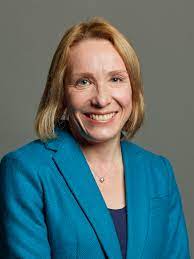
  • Helen Morgan – 2022 Speech on the Energy Prices Bill

    Helen Morgan – 2022 Speech on the Energy Prices Bill

    The speech made by Helen Morgan, the Liberal Democrat MP for North Shropshire, in the House of Commons on 17 October 2022.

    I am most concerned about what is missing from the Bill, particularly the lack of support for those in rural areas who are off the gas grid and rely on heating oil or liquefied petroleum gas. As an off-grid homeowner, I can verify that the cost of heating oil has almost doubled since this time last year, meaning that the average off-grid household is spending £1,200 more than last year to heat itself. I am afraid that £100 will not go near helping those families who are struggling to make ends meet in rural Britain. Beyond that, the scheme is confusing. It is unclear how consumers will be able to prove that they are eligible and submit a request for the grant to be applied to their electricity bills.

    However, it is not just rural off-grid households that are struggling, as I am sure a number of Members will testify this evening. Many on-grid users are also feeling the squeeze, given that £2,500 for an average household is still almost double what it was paying this time last year. Today Cornwall Energy predicted that next April bills would be more than £4,300, over 70% more than households are paying this year and more than 3.5 times more than they were paying last year. What will the Chancellor be saying to the millions of people who are worried about their energy bills next year, despite the Government’s promising them certainty. How will he help those who, while also dealing with spiralling mortgage costs, will struggle to make ends meet? The Government could have provided much more responsible assistance by extending the windfall tax on the oil and gas giants which continue to rake in extraordinary profits at the expense of British consumers, instead of botching a Budget and leaving taxpayers and mortgage holders to pay for this mess for years to come.

    The Government have also failed to take any steps to encourage reductions in energy use. Last week’s flip-flopping on the most simplest of options, a public information campaign on energy efficiency, highlights just how chaotic the plan for this winter is. The Conservatives have scrapped energy efficiency schemes, despite UK homes being the least efficient in Europe, and have reduced the standards for new homes, which means that 1 million homes have been built since 2015 to lower standards than before. Insulating homes is an important, practical step that would have helped people to help themselves. Also missing is the certainty that is needed for businesses to plan for the future. Six months of assistance is welcome, but, as with the rest of this Bill, it does not go nearly far enough. If the Prime Minister wants to promote economic growth, she must recognise that stability and certainty are vital preconditions for businesses to invest. This assistance is too little, too late: many businesses have already closed, and many more do not see how they can operate beyond the winter.

    The need for large-scale intervention to prevent many households from facing unimaginable difficulty this winter is beyond dispute, but the Government have made the choice—the wrong choice—to allow heating costs to double while refusing to properly tax the eye-watering profits of oil and gas companies.

  • PRESS RELEASE : Inspection Report Published – An inspection of the use of hotels for housing unaccompanied asylum-seeking children March – May 2022 [October 2022]

    PRESS RELEASE : Inspection Report Published – An inspection of the use of hotels for housing unaccompanied asylum-seeking children March – May 2022 [October 2022]

    The press release issued by the Home Office on 19 October 2022.

    This inspection examined the use of hotels to accommodate unaccompanied asylum-seeking children, with particular reference to the Home Office’s duty under Section 55 of the Borders, Citizenship and Immigration Act 2009 to safeguard and promote the welfare of children who are in the United Kingdom.

    Publishing the report, David Neal, the Independent Chief Inspector of Borders and Immigration (ICIBI), said:

    It is clear that the housing of these extremely vulnerable children in hotels represents a significant challenge to the Home Office, in both ethical and operational terms. This is not an area in which the Home Office should be operating. A clear cross-Government approach is required.

    The young people who spoke to inspectors all stated that they were happy and felt safe in the hotels, although the majority were keen to move on and resume their education. Inspectors found Home Office and contractor staff were, in the main, committed and engaged in their work and keen to provide the best possible environment for the young people in their care. However, this inspection did find areas of significant concern including two cases of staff who had not been Disclosure and Barring Service checked residing at hotels.

    More broadly, while the initial crisis response had transitioned to a business-as-usual operation, the practices and procedures developed by the Home Office did not represent a child-centred approach that fully acknowledged and provided for the safeguarding and wellbeing needs of the young people in the department’s care. Similarly absent was consistent and effective oversight by the Home Office of contractor activity. Guidance, processes and policies were slowly being developed but this gap in clarity led to clear shortcomings in the provision of key services for these children.

    Although staff referred to the need to end the use of hotels, there was little in the way of concrete planning for this to be achieved and no timelines provided by the Home Office.

    As we found in the inspection into the processing of migrants at Tug Haven and Western Jet Foil, a disjointed response at day one or even week one could be excused but at month 10 this is not acceptable. Senior leadership action is needed to unlock the sub-optimal ownership of this issue in order that these children and those who will keep on arriving over the next days and weeks receive a more effective service. In essence, a recognition of the enduring nature of the requirement is needed.

    I am particularly grateful for the expertise and assistance provided by Ofsted inspectors who accompanied my inspectors during the onsite phase of the inspection.

    This inspection made four time-bound recommendations. The Home Office has accepted one recommendation and partially accepted three. I welcome the news that the Home Office has moved to a sole occupancy model which means members of hotel staff, including those without DBS checks, are no longer able to sleep or reside onsite. However, it is disappointing to note that the time-bound nature of the recommendations appears to be a barrier to full acceptance, that overall the pace of implementation appears slow and that processes necessary to ensure the safeguarding of children remain ‘in development’. This approach continues to ignore the vulnerability of these children.

    This inspection report was sent to the Home Secretary for publication on 9 June 2022.

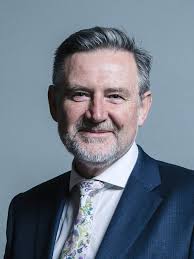
  • Barry Gardiner – 2022 Speech on the Energy Prices Bill

    Barry Gardiner – 2022 Speech on the Energy Prices Bill

    The speech made by Barry Gardiner, the Labour MP for Brent North, in the House of Commons on 17 October 2022.

    If it walks like a duck and quacks like a duck, it is a duck; and if it looks like a tax and takes money like a tax, it is a tax.

    This Bill introduces another windfall tax, not on the oil and gas producers but on the renewables producers. It is in the form of a cap on the revenues that renewable and nuclear companies can make. The electricity price is set on the basis of the wholesale gas price, and when the gas price went up companies saw an increase in the price they were paid for the electricity that they produced, although they did not have to pay the increased gas prices to produce it. When the Minister for Climate, the right hon. Member for Beverley and Holderness (Graham Stuart), told the Select Committee the other day that this was not a windfall tax, his official tried to persuade us that it was simply a reframing of the regulations, but in fact the Government are trying to force those companies into a retrospective contract for difference, and they should be honest about it.

    But look who benefits! The Government continue to allow the oil and gas companies to make excess profits from the global crisis, and also give them a way to claw back the windfall tax under the investment allowance scheme by claiming as a tax break 91p in every pound they invest in more production in the North sea. The Minister must explain why the Government are compensating these companies for the windfall tax, and also why the renewables companies—which are the ones we really need to incentivise to invest in more capacity—are being hit by this revenue cap, while not being given a similar investment allowance.

    Before the temporary windfall tax the UK levied the lowest tax take from its oil and gas producers anywhere in the world, and even with the temporary windfall tax it still taxes a full 6% below the global average. If the UK taxed these companies even at the global average, it would recover an extra £13.4 billion for the Exchequer each year. The Committee on Climate Change wrote to the previous Chancellor—when he was the previous Secretary of State for Business, Energy and Industrial Strategy but one—saying that he should support a tighter limit on production with stringent tests and a presumption against exploration. He took no notice, and the measures in this Bill are the consequences of the Government’s now being forced to protect consumers and business from their past failure to invest in renewables.

    Last year, energy prices meant that an average family was paying £1,100. After the windfall tax and the unfunded borrowing, that will now be limited to an average of £2,500. The cost would, for the two years, be £31 billion, but given the statement from—

    Madam Deputy Speaker (Dame Rosie Winterton)

    Order.