Blog

  • Timothy Kirkhope – 2002 Speech at the European Convention

    Timothy Kirkhope – 2002 Speech at the European Convention

    The speech made by Timothy Kirkhope on 21 March 2002.

    This is the second convention on which I have sat, having been on the Charter of Fundamental Rights Convention. Although I was not totally happy with the results of that Convention, it did establish a new model of negotiation which excites me and many other people too. The Guardian newspaper in Britain this morning rightly said that this Convention will be seen to have more democratic legitimacy than the secretive wrangling of national leaders as witnessed most recently at the Barcelona summit.

    We must remember that Europe is not on trial here. Europe is part of the equation, part of the democratisation of Europe. After all, the peoples of Europe want to see all the institutions, not only the European ones but also the national Parliaments themselves, look carefully at their own activities. Maybe they want to reclaim some powers from Europe. At the same time, there is a general lack of confidence in politicians that we will have to address in the work we do here.

    I want to just support you, Mr. President, in what you have said about young people. I believe that the future of Europe is not just ours. I hope I’ve got a little of a future left in Europe, but young people have a much bigger future and a bigger stake in the future of Europe. It is therefore essential for us, as part of the listening process that we are now embarking on, to make sure that young people are a significant part of the consultation process and that their aspirations for the future are listened to. I shall certainly consult very carefully with young people, Mr President. You identified it yourself and I think you hit the nail on the head, as they say, in doing so.

    My only other remark is this. When consulting civil society, it is terribly important for us to draw the boundaries of civil society as widely as possible. There are some who call themselves representatives of civil society but who actually represent narrow vested interests. In order to avoid this problem, we must consult widely as part of the listening process.

    Whatever we get at the end of this process, I hope it is a great success, and I hope we regain public confidence in our institutions.

  • Peter Ainsworth – 2002 Speech on the Environment, Challenge and Opportunity

    Peter Ainsworth – 2002 Speech on the Environment, Challenge and Opportunity

    The speech made by Peter Ainsworth on 21 March 2002.

    Given that the environment is where we all live, I’ve never understood why, historically, it has come so low down the pecking order of political priorities.

    For years it was regarded as the unique preserve of cranks, new agers and people with strange beards. The caricature, usually unfair, of the tree hugging weirdo was easy to dismiss.

    But should we have so lightly dismissed the work and warnings of poets and writers who, from the outset of the Industrial Revolution that built and sustained cities like Sheffield, began to show an acute regard for the relationship between man and nature?

    The sense that something quite serious was going wrong runs like a thread through literature, from Wordsworth to TS Eliot, from Blake to Betjeman and Philip Larkin.

    They worked from instinct, but 200 years after the start of the Industrial Revolution, science has begun to catch up with instinct and we know we have a problem.

    It was in fact Margaret Thatcher who changed the whole nature of the debate about the environment. In a speech to the Royal Society in 1988, she took many by surprise in launching a series of new initiatives to protect the local and global environment, observing that “we have no freehold on this earth, only a full repairing lease”.

    Politicians who dismiss the environment should remember that parliamentary seats can be won or lost on issues like incinerators, landfill sites, housing schemes, quarrying proposals, and flood defences.

    So let’s put paid, once and for all, to the notion that the environment is not politically important.

    We live in a time when the world has never been more connected. The internet, satellite television, mobile phones, email can put us in touch with almost anyone from almost anywhere at the press of a few buttons. These connections mean that this world has become, for mankind, a smaller place. What happened in New York on September 11th had an impact on communities as far afield as Sheffield and Sydney.

    Yet there is a big paradox, in this age of connectedness, people feel that they have never been less connected with each other where it really counts; at home or in the communities where they live and work. Indeed, the very word ‘Community’ is in danger of becoming a meaningless piece of political jargon in a country where most people live in cities and don’t even know who their neighbours are, let alone share with them a developed commitment to work together and share their ideas and experiences.

    So the age of connectedness is also an age of palpable alienation for many people. A time in which, perhaps not surprisingly, casual and violent crime is on the increase.

    What has any of this got to do with the environment?

    Well, as I have said, the environment is where we live, it is quite literally everywhere; it is the context in which we lead our lives. If we degrade the environment we degrade ourselves. Conversely, a society that invests in its environment is not only placing a proper emphasis on the quality of the lives of its citizens, but also recognising its obligations to future generations. In so doing it helps to create a more stable society and, internationally, a more secure world.

    Those of us who care about the state of society are concerned by the indifference shown by large numbers of people, especially younger people, to politicians in particular and politics in general. The fact that more 18-25 years olds voted for Will or Gareth in Pop Idol than voted for Will or Tony in the General Election tells its own story.

    One of the reasons for the profound and, ultimately, worrying disconnection between politicians and voters is that politicians have utterly failed to keep up with the changed nature of the public’s aspirations. If we begin to work on the basis that there’s more to the quality of life than the standard of living, and that the quality of our shared environment helps to determine the quality of our lives, maybe we can begin to speak a language which people will understand.

    For this to happen, Government needs to ask itself what it is there to achieve, and to understand that, without the active support of people, nothing will happen at all.
    As Iain Duncan Smith has said:

    “People’s best intentions are defeated if doing the right thing actually makes them worse off. The job of Government is to align people’s best interest with their self-interest; to make it easier for people to follow their natural inclination to care for the environment; it is about giving purpose and direction to what people are prepared to do for free”.

    In practical terms, this means for example making it easier for households first to reduce the amount of waste they generate and then to recycle more of it. The costs of doing this need to be seen against the costs of not doing it – the financial, environmental and political costs of, say, large scale waste incineration or landfill, and I don’t need to tell people in Sheffield about those.

    As you may know, the Conservatives are presently engaged in a fundamental review of policy. The development of detailed policy will come later, but this does not prevent us from articulating some basic principles from which specific ideas will evolve.

    We believe in reducing the power and the role of the state; in increasing the opportunity and choice which people can exercise in their own lives; in providing security for our citizens; and in supporting enterprise.

    How might these principles be applied to the environment?

    Firstly, we recognise that the environment is not simply a national issue; that there is a need to work with the EU and other international organisations to forge binding global commitments to meet our obligations to future generations. I am delighted by the progress made towards ratification of the Kyoto Treaty. Though there remains much to do to persuade the developing world that it is in their interest to join up, and of course the onus is now on the US to come alongside the rest of the developed world.

    Secondly, we accept that there is a role for regulation to control activities which are contributing to climate change or which threaten the local environment . But regulation should be carefully targeted, properly thought through in genuine consultation, simple and effective. There are too many complex and overlapping regulations at present; the result can be a bureaucratic nightmare which hinders compliance and gives environmental protection a bad name. Law of unexpected consequences is an every present risk. The hugely expansive shambles of fridge mountains is an object lesson in exactly how not to regulate.

    We need to establish a more mature relationship between Government and industry; one which avoids arbitrary intervention but is based instead on a recognition of mutual needs, abilities and responsibilities.

    Thirdly, we believe that there is a role for fiscal intervention in the interests of a better environment. But we must ensure that environmental taxes actually deal with environmental problems.

    A Climate Change Levy which does virtually nothing to prevent climate change but which costs manufacturing industry £ million and exports jobs to countries with lower environmental standards is obviously counter-productive.

    An Aggregates Tax which nobody, including the Treasury, understands and which simply increases imports of products made from aggregates is plainly likely to fail.

    If we are to have taxes which discourage environmentally damaging activities let’s be straight forward. For example, if we are concerned about the impact of carbon emissions on the future viability of the planet (and we should be) shouldn’t we be thinking about taxing carbon emissions and seek to persuade other countries to do the same?

    Fourthly, we need to get away from the idea that Government action, the passing of new laws and regulations, is the answer to everything.

    I went into politics because I believed in its power to make things happen, not to stop them happening.

    It is important to emphasise that I am not advocating a laissez fair approach to the environment, the stakes are far too high for that. On the contrary, I believe that we need a step change in our approach to tackling environmental problems which reflects both the urgency of the need for action and the scale of the business challenge which this presents. Instead of seeing environmental improvement as a problem, we should start to see it as an opportunity.

    That’s what companies like Shell and BP are doing. Across the world, Shell is working on the delivery of 1,000 megawatts of renewable wind energy, aiming not only to achieve major environmental benefits but also to improve security of energy supply through diversification. The company is also now investing heavily in a joint venture to develop, manufacture and market hydrogen storage units which make use of the emerging science of fuel cell technology. They claim that fuel cells, which could revolutionise the way we power vehicles, are “the power plant of the future”.

    Last week, Lord Browne of Madingley, the Chairman of BP, made a speech in Stanford, Connecticut in which he detailed how, in the last 5 years, BP has cut the level of its own CO2 emissions by 14 million tonnes. They have achieved this through efficiency and technology, and through better management of the energy they use. The result has not only been beneficial to the environment, but also beneficial to the business.

    He also drew attention to BP’s investment in renewable energy sources, where their work on photovoltaics is on track to deliver 300 megawatts of solar panels each year by 2007 – supplying five million people. The market for these products is at present very small, but it is growing at around 40% this year and, particularly given the massive scope for their use in the developing world, the potential is immense.

    I have chosen to highlight BP and Shell because they have traditionally been regarded as environmental villains. Whilst their mainstream activities still depend on the exploitation of non-renewable resources, they have seen the new market opening up for cleaner, greener technology – and they want to be part of it. They will need to be part of it if they want to retain leading positions in the energy market of the 21st Century.

    The present global market for environmental products and services is worth around $515 billion, and it is forecast to grow to nearly $700 billion by 2010. That makes it not only one of the world’s largest business sectors, but one of the fastest growing. In the UK the market is already worth £16 billion and is thought to sustain some 170,000 jobs – and they can’t all be local authority inspectors.

    I want to see more British companies playing a leading role in developing new technologies which will not only mean new high quality jobs, but also a cleaner, safer, more sustainable planet.

    In the end, it will be up to you in industry to take up this challenge. But it is Government’s job to set the framework in which you can maximise the opportunities which are out there. You will not be helped if the Government’s mind-set remains wedded to outmoded concepts of tax and regulation. Already, Germany, Austria and Denmark, for example, are moving ahead of us; and it is interesting to note that the examples I used earlier from Shell and BP involve investment in overseas markets, not in the UK. There is a real danger of Britain being left behind.

    Just as we need policies that make it easier for people to care for the environment, to align their best interest with their self interest, so we need policies which do the same for business.

    We need an approach from Government that moves beyond flailing sticks which all too often miss the target, and offers instead some carrots if we are to take advantage of 21st century technology for the benefit of the planet, and the bottom line.

    Since the dawn of the Industrial Revolution the interests of economic development and the interests of the environment have essentially been in conflict. It is a conflict we cannot allow to continue, and forging a reconciliation between these two forces is one of the great challenges to our generation of politicians, businesses and citizens. I believe not only that it can be done, but that it must be done.
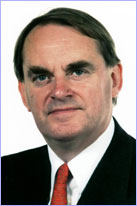

  • David Heathcoat-Amory – 2002 Speech to the European Convention

    David Heathcoat-Amory – 2002 Speech to the European Convention

    The speech made by David Heathcoat-Amory to the European Convention on 22 March 2002.

    Our prime task is to create a Europe on the firm foundations of democratic involvement and consent. If we don’t get this right everything else will fail. To do this we must be honest with ourselves: the present EU is widely regarded as remote, unaccountable and wasteful. The gap between the political class in Europe and the public has never been wider. Our task this year is to close it. This will not be done by juggling with the existing EU institutions, each seeking more powers. That would intensify the problem, not solve it. Instead we must ask a very basic question: How do people feel themselves to be democratically represented? The answer is overwhelmingly at the level of the nation state. There is no European demos which compares with this. It follows that the only solution is to transfer back to national level a substantial number of powers exercised at EU level.

    Second, the acquis commounitaire must not be exempt from our scrutiny. It runs to 5,000 pages, the supreme expression of bureaucratic man. It is also an unfair burden on the applicant countries which struggle to implement and enforce it. The acquis must be radically pruned back. The EU must find a reverse gear to match its forward gears.

    Third, we must find new decision-making mechanisms for those matters which we agree should be decided supranationally. Again there is an inescapable role here for national parliaments. To do this we must be bold and creative. It is a strength of this Convention that we can step outside the confines of the traditional debate and look for new solutions.

    Does this mean a retreat for Europe? Possibly, for some vested interests and established conventions. But for Europe as a whole it would be an advance, and an advance on secure foundations.

  • Matthew Parris – 2022 Article on Liz Truss

    Matthew Parris – 2022 Article on Liz Truss

    A paragraph from the article in The Times by Matthew Parris, published on 19 August 2022.

    Liz Truss is a planet-sized mass of overconfidence and ambition teetering upon a pinhead of a political brain. It must all come crashing down. Her biggest job has been foreign secretary. Does she join her new best friend, Tom Tugendhat, in condemning the UN security council for its criticism of illegal Israeli settlements in Palestinian territory? Does she really want to “review” (as she’s suggested) Britain’s decision not to join the Americans in moving our embassy to Jerusalem? What did she mean by saying Britain’s civil service culture “strays into antisemitism”? These explosive hip shots are only indicative.

    And now that she moves her attention to domestic politics, does she really believe that “freedom” and deregulation will help red-wall England? Mansfield isn’t being held back by big government; it’s being held together by it. What are her instincts — not the corrections she’s been forced to row back to, but her personal instincts — on help for the poor, on Theresa May’s “good that government can do”? I think we know.

  • PRESS RELEASE : Covid Alert Level Reduced to Two

    PRESS RELEASE : Covid Alert Level Reduced to Two

    The press release issued by the Department of Health and Social Care, on 31 August 2022.

    Based on UKHSA advice, the UK Chief Medical Officers and NHS England National Medical Director have recommended to Ministers the COVID Alert Level moves from Level 3 to Level 2.

    Hospitals and the wider health systems remain extremely busy overall but the summer BA.4 and BA.5 wave is subsiding and direct COVID severe illness is now a much smaller proportion of this. Severe COVID cases, direct COVID healthcare pressures, direct COVID deaths and ONS community positivity estimates have decreased. COVID remains present in the community and we may see an increase in cases with BA 4.6 and BA.2.75 circulating but do not expect this to lead to an immediate increase in hospital pressures. This will continue to be kept under review. Further COVID surges are likely so please be prepared by getting a vaccination when it is offered.

    Chief Medical Officer for England, Professor Sir Chris Whitty
    Chief Medical Officer for Northern Ireland, Professor Sir Michael McBride
    Chief Medical Officer for Scotland, Professor Sir Gregor Smith
    Deputy Chief Medical Officer for Wales, Professor Chris Jones
    NHS England National Medical Director, Professor Sir Stephen Powis.

    Health and Social Care Secretary Steve Barclay and ministers from the devolved administrations have accepted the advice.

    Background

    The Covid alert levels are as follows:

    level 1: COVID-19 is present in UK, but the number of cases and transmission is low
    level 2: COVID-19 is in general circulation but direct COVID-19 healthcare pressures and transmission are declining or stable
    level 3: a COVID-19 epidemic is in general circulation
    level 4: a COVID-19 epidemic is in general circulation; transmission is high and direct COVID-19 pressure on healthcare services is widespread and substantial or rising
    level 5: as level 4 and there is a material risk of healthcare services being directly overwhelmed by COVID-19

  • PRESS RELEASE : President of Ukraine met with the Director General of the IAEA

    PRESS RELEASE : President of Ukraine met with the Director General of the IAEA

    The press release issued by the President of Ukraine on 30 August 2022.

    President of Ukraine Volodymyr Zelenskyy held a meeting with Director General of the International Atomic Energy Agency (IAEA) Rafael Grossi who will lead the agency’s mission to the Zaporizhzhia NPP.

    The Head of State highly praised the arrival of the IAEA mission, as the situation around the nuclear power plant is escalating, and Russia, whose troops are illegally stationed at the nuclear power plant, is blackmailing the world with a new nuclear disaster.

    “There are risks of incidents at the plant, failure of nuclear reactors and the disconnection of Zaporizhzhia NPP units from our network. There are Russian weapons at the plant. That is why it is a global threat,” Volodymyr Zelenskyy emphasized.

    The President of Ukraine noted that the state leadership would like the IAEA mission headed by Rafael Grossi to find an opportunity to prevent all these threats.

    “We trust your specialists,” he said.

    “Zaporizhzhia NPP is located on the territory of Ukraine. It is and will remain the property of our state. This should be an axiom for the IAEA mission,” Volodymyr Zelenskyy emphasized, adding that the plant should be returned under Ukrainian control.

    The Head of State emphasized the importance of immediate demilitarization of the Zaporizhzhia nuclear power plant.

    “The nuclear power plant is not the place where weapons and explosives should be stored. Existing risks can be eliminated only by demilitarizing the plant,” the President noted.

    During the meeting, it was emphasized that Rafael Grossi is well aware of the situation around Zaporizhzhia NPP.

    The interlocutors were also unanimous about the importance of an urgent visit of the IAEA mission to the largest nuclear power plant in Europe, since any incidents at it will not just affect Ukraine, but have global consequences.

  • PRESS RELEASE : Volodymyr Zelenskyy met with US Senators Robert Portman and Amy Klobuchar

    PRESS RELEASE : Volodymyr Zelenskyy met with US Senators Robert Portman and Amy Klobuchar

    The press release issued by the President of Ukraine on 30 August 2022.

    President Volodymyr Zelenskyy held a meeting with US Senator, co-chair of the Ukrainian Support Group in the Senate Robert Portman and US Senator, member of the Ukrainian Support Group Amy Klobuchar.

    Greeting the guests who are once again visiting our country, the Ukrainian Head of State noted: “This is an important signal of support for Ukraine and its territorial integrity. I would like to express gratitude for the bipartisan and bicameral support in the US Congress. I would like to personally thank President Biden and his administration for their constant work.”

    Volodymyr Zelenskyy informed the Senators in detail about the situation at the front. In this regard, the President of Ukraine noted the importance of security assistance coming from the United States and the need for its continuation and increase. The President also emphasized that Ukraine provides reliable control over weapons and military equipment received from foreign partners.

    Noting the leadership positions of the US in the comprehensive support of Ukraine during the counteraction to the Russian armed aggression, Volodymyr Zelenskyy emphasized the importance of intensifying financial assistance to our state. The President expressed his belief that the United States of America will continue to support Ukraine as a leader among all states that provide assistance to our country.

    Separately, the President emphasized the need to strengthen the sanctions policy against Russia.

    “These are big joint efforts. They yield results. Although they have not yet fully worked. There is a lot of work ahead. I expect that the sanctions pressure will increase. One of the elements of such pressure should be the introduction of visa restrictions for the citizens of the Russian Federation. So that the Russians feel the consequences of their own support for aggression against Ukraine,” Volodymyr Zelenskyy said.

    During the meeting, particular attention was paid to the situation at the Zaporizhzhia NPP. The President of Ukraine emphasized that Russia’s actions are a manifestation of nuclear terrorism and pose a global threat. First of all, it concerns the European continent.

    “The Zaporizhzhia NPP must be demilitarized and returned under the control of Ukraine,” the Head of State noted, adding that in this regard, high hopes are placed on the IAEA mission.

    During the meeting, the work carried out by our state was separately discussed, in particular in the format of the Group on International Security Guarantees for Ukraine, which is co-chaired by Head of the Office of the President Andriy Yermak and former Secretary General of NATO Anders Fogh Rasmussen.

    “Developing effective security guarantees is crucially important for our state today,” Volodymyr Zelenskyy emphasized.

    The interlocutors also noted the importance of the recent visit to Washington by First Lady Olena Zelenska, which contributed to raising the awareness of American society and politicians about the consequences of Russia’s full-scale war against Ukraine, as well as increasing support for our state.

    The President separately emphasized the importance and effectiveness of ongoing cooperation between Ukraine and the United States at the level of Minister of Defense of Ukraine Oleksiy Reznikov and United States Secretary of Defense Lloyd Austin, Minister of Foreign Affairs of Ukraine Dmytro Kuleba and US Secretary of State Antony Blinken, Head of the Office of the President Andriy Yermak and US National Security Advisor to the President Jacob Sullivan.

    At the end of the meeting, Volodymyr Zelenskyy presented the Order of Merit of the 1st degree to the Senators, with which they were awarded by the Decree of the Head of State of August 23, 2022 for significant personal merits in strengthening interstate cooperation, support of the state sovereignty and territorial integrity of Ukraine, significant contribution to the popularization of the Ukrainian state in the world.

  • PRESS RELEASE : Andriy Yermak emphasizes the importance of Ukraine’s fastest possible gaining of membership in the OECD Working Group, which will contribute to strengthening the trust of partners in the process of rebuilding our state

    PRESS RELEASE : Andriy Yermak emphasizes the importance of Ukraine’s fastest possible gaining of membership in the OECD Working Group, which will contribute to strengthening the trust of partners in the process of rebuilding our state

    The press release issued by the President of Ukraine on 30 August 2022.

    The Organization for Economic Cooperation and Development should become one of the key participants in the post-war reconstruction of Ukraine, and our country’s membership in the OECD Working Group on Bribery in International Business Transactions will play an important role in strengthening anti-corruption policy. This was said by Head of the Office of the President of Ukraine Andriy Yermak during an event dedicated to cooperation with the OECD.

    The event is held in the context of strengthening cooperation between Ukraine and the Organization for Economic Cooperation and Development and the desire of our country to become a member of the OECD. During the Ukraine Recovery Conference, which took place on July 4-5 in Lugano (Switzerland), the Prime Minister of Ukraine handed over to Secretary-General of the Organization for Economic Cooperation and Development Mathias Cormann our country’s application for membership in the OECD.

    A prerequisite for this is joining the Working Group on Bribery in International Business Transactions as a full member. The government of Ukraine submitted an application for joining this group on August 2 of this year.

    Andriy Yermak, who heads the group on approaching membership in the OECD Working Group on Bribery in International Business Transactions, emphasized that the Organization for Economic Cooperation and Development is a unique intergovernmental center of knowledge and a powerful player on the international arena, whose opinions and conclusions are listened to by the European Union, the IMF, the World Bank, the EBRD, the USA and the G20.

    The Head of the President’s Office noted that the OECD is participating in the development of the Recovery Plan for Ukraine.

    “The experience and capabilities of the Organization are extremely valuable, even unique for post-war reconstruction. Therefore, the OECD should be one of the key international players during the reconstruction of Ukraine,” he said.

    According to Andriy Yermak, today Ukraine is fighting for its future, and therefore transparency in relations with other states, which is the basis of trust, is of particular importance.

    “We are doing everything to increase trust in Ukraine. Every Ukrainian is fighting on his own front: the Armed Forces, volunteers, doctors, rescuers, civil servants. The entire Ukrainian nation. But we understand that trust is a phenomenon that must be nurtured all the time. And we are working on it,” said the Head of the Office of the President.

    He emphasized that post-war Ukraine should become attractive for investments, and that is why our state institutions should inspire confidence among investors.

    “It is important for us not just to rebuild Ukraine. Our goal is to build a successful and comfortable country. With a dynamic and extensive economy according to the best world standards, with improved legislation,” he noted.

    According to Andriy Yermak, our state is working on strengthening anticorruption institutions, because the fight against corruption is one of the fundamental values for Ukraine.

    “That is why the status of a candidate, and then membership in the OECD Working Group on Bribery in International Business Transactions is extremely important for us,” he emphasized.

    OECD Secretary-General Mathias Cormann, for his part, noted that the Organization for Economic Cooperation and Development stands with Ukraine and is determined to help together with international partners in the post-war reconstruction of our country.

    He emphasized that the OECD is ready to help Ukraine so that corruption risks do not stand in the way of the reconstruction process.

    The Secretary-General said that the OECD has been extremely active in cooperating with our country since 2014, in particular helping build institutions. And in the last report of the Organization, which came out in May, significant progress in Ukrainian anticorruption legislation was noted.

    Mathias Cormann emphasized the importance of efforts to increase transparency in the public sphere, in particular, in the issue of avoiding conflicts of interest and ensuring integrity. Also, according to him, it is extremely important to protect anticorruption bodies from attacks.

    The Secretary-General of the OECD noted that he was extremely pleased to receive Ukraine’s application for participation in the OECD Working Group, the process of joining which brings our country closer to the standards of the Organization and the UN Convention against Corruption.

    He emphasized that the submission of the application is a confirmation of the determination of the Ukrainian authorities to advocate anticorruption reforms and adhere to OECD standards.

  • PRESS RELEASE : Kyrylo Tymoshenko discussed the fast recovery of infrastructure facilities with the Ambassador of Great Britain

    PRESS RELEASE : Kyrylo Tymoshenko discussed the fast recovery of infrastructure facilities with the Ambassador of Great Britain

    The press release issued by the President of Ukraine on 30 August 2022.

    Deputy Head of the Office of the President of Ukraine Kyrylo Tymoshenko held a working meeting with Ambassador Extraordinary and Plenipotentiary of Great Britain to Ukraine Melinda Simmons.

    Kyrylo Tymoshenko told the Ambassador about the online platform, which contains up-to-date data on every object in Ukraine damaged by the Russian invasion.

    He emphasized that it is extremely important to rebuild social infrastructure and housing before the start of the winter period. According to him, the Fast Recovery Plan provides for the restoration of schools, kindergartens, utility networks, as well as private houses of citizens, so that they can return home as soon as possible.

    According to the Deputy Head of the President’s Office, the largest number of facilities in need of reconstruction are in the de-occupied territories of the Kyiv, Chernihiv and Sumy regions.

    “We divided the regions into four types: the first – occupied territories, the second – de-occupied territories, where there are the most problematic objects now, the third – territories affected by missile strikes and so on,” he said.

    As Kyrylo Tymoshenko noted, Ukrainians are already returning home, and the first thing they need is housing with an undamaged roof, windows and necessary utilities.

    Therefore, as he said, in parallel with the Fast Recovery Plan, a project for the construction of five-story buildings in six regions of Ukraine has been developed for people who lost their homes as a result of the Russian invasion. A square meter of such housing will cost about 700-800 US dollars.

    The Deputy Head of the President’s Office noted that, according to the data of sociological studies, about 70-80% of Ukrainians are ready to return home even despite the threat of missile strikes, if they have a place to live and in the absence of ground advance of enemy troops.

    He also emphasized that the reconstruction of at least part of the social infrastructure facilities in one or another community will encourage people to return, as they will see that restoration work is being carried out.

    For her part, Melinda Simmons noted the importance of restoring educational institutions and providing them with shelters equipped with everything necessary.

    The Ambassador also noted that Great Britain is interested in participating in the reconstruction of the rest of the housing and communal facilities and critical infrastructure of the Kyiv region that were destroyed as a result of the war.

  • PRESS RELEASE : The Yermak-Rasmussen group is finalizing the draft recommendations on future security guarantees for Ukraine

    PRESS RELEASE : The Yermak-Rasmussen group is finalizing the draft recommendations on future security guarantees for Ukraine

    The press release issued by the President of Ukraine on 29 August 2022.

    The international working group on security guarantees for Ukraine, co-chaired by Head of the Office of the President Andriy Yermak and former NATO Secretary General Anders Fogh Rasmussen, is about to complete the work on a document with recommendations on future security guarantees for our country.

    At the third meeting of the group in video conference mode, Andriy Yermak emphasized that the dream of security guarantees for Ukraine is consistently turning into a plan with clear time frames.

    “We are entering a new phase of this brutal war. Against the background of the events unfolding in the frontlines, it is time for our partners to take new decisive steps to guarantee Ukraine’s further security. These guarantees should form a new security order on the European continent and prevent a new war in its heart,” he is convinced.

    The Head of the Office of the President noted that due to the joint efforts of the group members, a high-quality comprehensive project of recommendations was created in less than two months of work.

    According to him, this document covers a wide range of guarantees: military, economic, political, sanctions. After the preparation of the final version, the document will be submitted for consideration by President of Ukraine Volodymyr Zelenskyy.

    “With its publication on the Presidential Office website, our diplomacy will receive powerful assistance in the context of negotiations with the governments of allied and partner states,” Andriy Yermak emphasized.

    The Head of the Presidential Office believes that future security guarantees should become part of legally binding documents, in particular, treaties between Ukraine and the guarantor countries.

    Anders Fogh Rasmussen said that the updated (second) draft recommendations take into account key comments received from the previous group meeting.

    “You will also be able to see that the main focus in this draft is more focused on the first part – defense guarantees, which are the basis of our recommendations,” he noted.

    At the end of the meeting, Anders Fogh Rasmussen informed the meeting participants that former Minister for European Union Affairs of Türkiye Volkan Bozkır became a new member of the group.

    Anders Fogh Rasmussen announced the transition to the Group’s work in a co-chair format with personal bilateral consultations with some members on specific issues.

    Andriy Yermak and Anders Fogh Rasmussen thanked everyone present and noted that the final version of the recommendations on security guarantees would be provided to the group members before publication.