
Blog

  • Lee Rowley – 2022 Speech on Gas Explosion in Galpin’s Road, Pollards Hill

    Lee Rowley – 2022 Speech on Gas Explosion in Galpin’s Road, Pollards Hill

    The speech made by Lee Rowley, the Parliamentary Under-Secretary of State for Levelling Up, Housing and Communities, in the House of Commons on 21 October 2022.

    The convention in debates such as this is to start by congratulating an hon. Member on securing the debate, but congratulations absolutely do not feel right at all. I am incredibly sorry —incredibly sorry—that the hon. Member for Mitcham and Morden (Siobhain McDonagh) has had to bring this debate to the House today and for the awful and tragic events that have happened to her and her community. I thank everybody present for their time and their willingness to come to this place today. On behalf of the Government, let me say how sorry I am for all of the challenges that the hon. Lady and the community have experienced in recent weeks. It has been extremely difficult to hear about this matter—that is just in the few minutes that the hon. Lady has been highlighting the incident, quite rightly, and standing up for her constituents.

    I am grateful to everybody present today and grateful to the hon. Lady for outlining the very tragic events of just a few weeks ago. I am sure that there are people in the Public Gallery who are very personally affected by this; by what happened on the day itself and, as the hon. Lady has outlined, by what has happened subsequently. I hope those issues are resolved as quickly as possible, and I will come to some of them in a moment. The hon. Lady was absolutely right to highlight the challenges, and I will try to address some of those.

    I have been a Government Minister for just over a year now, and have stood at this Dispatch Box a number of times. All debates are important, but a debate such as this, which I have the opportunity to respond to today, is one of the more important ones because of the impact, as we have heard, on individuals’ lives and on individuals’ communities. This is about the families who were affected by the really tragic events of 8 August, and I completely appreciate the challenge that the hon. Lady has outlined.

    The hon. Lady has eloquently described the events of the day in question and the circumstances that led to the explosion on Galpin’s Road. I wish to put it on record that the whole House, as you have said, Madam Deputy Speaker, sends its condolences to Sana and to the family of Sahara, who tragically lost her life. I understand that it would have been Sahara’s fifth birthday just a few weeks ago and she would have been starting school. I am incredibly sorry for what has happened, and I am very grateful to the hon. Lady for passing on so directly the message from Sana. I will absolutely take that away and we will see what the Government can do to assist in the challenges that the hon. Lady has raised on behalf of her constituents and on behalf of Sana’s family, and we will come back to her as soon as we are able to do so.

    Such an incident impacts not just one family but entire streets and neighbourhoods, as the hon. Lady outlined. Anyone who walked into the centre at the time would have seen the impact that the explosion had on the local community—500 people, 200 evacuated homes. The hon. Lady eloquently outlined the real-life consequences beyond the most tragic ones. Lives were impacted: wedding dresses not accessible, school uniforms not available, people not able to use their taxis to make a living. Whenever we see a tragedy like this, one of the few good things that comes out of it is the community’s ability to come together. The hon. Lady eloquently outlined how that happened. I want to put on record my thanks, and the Government’s thanks, to everyone who stepped in and helped during these difficult times.

    I also thank Merton Council. As a former local councillor elsewhere in London, I know that local authorities are at the absolute forefront in times of difficulty and trouble such as this, as are Members of Parliament. The work of Merton Council should be recognised. Every council has plans to set up emergency rest centres in times of need, but not every council has to implement them. Councils do not want to do that. I pass on my personal thanks to all those who helped support people at New Horizons Centre in Pollards Hill, whether to provide food, shelter, water, medicines, wash facilities or housing advice. In many ways, that help continues. I pay tribute to the emergency services. Firefighters worked tirelessly to carry out searches, tackle the explosion and make the area safe, and the paramedics and ambulance service personnel were there when people needed them.

    The community pulled together in the aftermath of the explosion, but as the hon. Member rightly pointed out, it is time for action. The community wants answers. Why did this happen? Could it have been prevented? How can we stop such a tragedy from happening again? I hope that residents here today or watching online and the hon. Lady accept that there is a limit to what I can say about some of the specifics today, as she acknowledged in her speech. However, I will do my best to try to provide some answers where I am able to in the time left.

    The Minister of State at the Department for Levelling Up, Housing and Communities, my hon. Friend the Member for Sutton and Cheam (Paul Scully), met the leader of Merton Council and the council’s chief executive on 11 August. The Minister heard at first hand Councillor Garrod’s concerns about the adequacy of gas safe inspections before and after the tragedy took place, and the role of Southern Gas Networks in preventing the explosion. Discussions between the council and SGN are ongoing. Residents have, quite rightly and understandably, been anxious about the risk of future gas leaks. I am glad that SGN has arranged further safety checks with an independent gas safe registered company.

    The gas companies involved in the transmission and distribution of gas must comply with the Gas Safety (Management) Regulations 1996—GSMR. The regulations are owned and enforced by the Health and Safety Executive. Under those provisions, where an escape is notified, the gas conveyor must attend the scene and prevent the gas escaping as soon as is reasonably practical, if that is judged to be the case. In the event of a fire or explosion, the gas conveyor must investigate the cause and source of the incident, notifying the Health and Safety Executive that such an investigation is underway.

    The hon. Lady highlighted the gas replacement programme funding. As she indicated, that is a programme of work to replace the old and deteriorating metal mains and services with plastic pipes. The majority of that is done under the iron mains risk reduction programme, regulated by the Health and Safety Executive, to decommission those iron mains within the gas distribution network. Like all programmes and projects, it takes time, but I had heard the hon. Lady’s concerns and the questions that she rightly has about where things are. I will endeavour to speak to my hon. Friend the Minister, and either he or I will come back to her.

    Under the Pipelines Safety Regulations 1996, pipeline operators have a duty to

    “ensure that a pipeline is maintained…in efficient working order and in good repair.”

    We need to understand what happened. I understand that the Metropolitan police continue to work closely with the Health and Safety Executive to work out why this tragedy occurred. We are keen to ensure that we understand what they find and what may or may not be needed subsequently.

    In the few moments that I have left, let me turn to insurance. When the Minister of State met the leader of Merton Council, they discussed support for the families who had to leave things behind and the situation at the time. I know that the council has been supporting residents to contact insurance companies, but as the hon. Member for Mitcham and Morden rightly outlined, some of them have been presented with large fees or are worried about facing large future premiums through no fault of their own. I know that Merton has been in touch with the Association of British Insurers to pass on its concerns; the ABI recognises that this has been a traumatic period for all concerned, with insurers wanting to ensure that claims are progressed, that repairs are carried out and that residents can be supported as much as possible.

    For reasons that I hope are understandable, I cannot comment on individual cases, but let me say more broadly that in such challenging times I expect every insurance company to put its customers first. It will be very clear which companies do so and which do not, and we will be watching. I am grateful that the hon. Lady has had the opportunity to put further pressure on the ones that she has discussed today. Based on this debate, we will be speaking further to insurance companies about the matter, and subsequently I will be happy to talk to the hon. Lady.

    The Minister of State has discussed with Councillor Garrod whether Merton Council’s response to the incident would be eligible under the Bellwin scheme, which leads me to the hon. Lady’s challenge about Government support. The Bellwin scheme enables the Government to consider a claim to help with some of the immediate costs following emergencies. It allows local authorities to receive help with the costs in the immediate phase of an emergency. We have been following the matter up with the council, and officials in the Department recently met a delegation from Merton to discuss a possible application under the scheme. I know that the council has a number of uninsurable costs that it incurred in the immediate response to the incident. I understand that work is under way, that Merton has formally registered its interest, and that officials in the Department stand ready to assist the council with its application.

    I have only about a minute left, so I would like to take one final opportunity to pass on my condolences to the family of Sahara, to send my best wishes to Sana and her family through their recovery, to highlight more broadly the challenges that others have faced, and to say thank you again to all the residents today for coming at such a difficult time and after such an unexpected occurrence that will have changed so many people’s lives. I hope that the Metropolitan police and the Health and Safety Executive complete their investigation quickly, with clear conclusions that ensure that a tragedy like this can be avoided in the future and that, for those who have been affected, we can resolve the impact as quickly as we can.

    Finally, I give my personal thanks and my thanks on behalf of the Government to the hon. Lady for raising the matter today. I am grateful to her for doing so. The Government will try to assist where we can. We hope that we can bring this matter to a conclusion after such tragic events, as soon as we are able to do so.
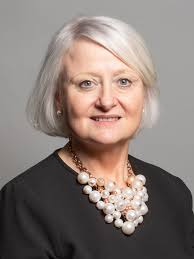

  • Siobhain McDonagh – 2022 Speech on Gas Explosion in Galpin’s Road, Pollards Hill

    Siobhain McDonagh – 2022 Speech on Gas Explosion in Galpin’s Road, Pollards Hill

    The speech made by Siobhain McDonagh, the Labour MP for Mitcham and Morden, in the House of Commons on 21 October 2022.

    Shortly after 7 am on Monday 8 August, a gas explosion caused devastation in my constituency, changing the lives of the residents of Galpin’s Road forever. Beautiful four-year-old Sahara tragically lost her life. Her brave mum, Sana, and her grieving family are watching these proceedings online. I say to them: “This debate is in memory of Sahara, and I pledge to stand with your family every step of the way on your fight for justice to come.”

    Madam Deputy Speaker, as we have just discussed, the Public Gallery is filled with Sahara’s neighbours from right along Galpin’s Road. They were asked to move out of their homes with no notice, no belongings and no idea of when they would return. Many remain evacuated to this day. Their strength and fortitude have been nothing short of remarkable in the extraordinarily difficult months since. I look up to them in the Gallery and say loud and clear that I have never been more proud to be their MP.

    There are constraints to what I can say in the debate. There is a live investigation, and I am sure that everyone in the Chamber and the Gallery recognises just how important it is that I do not say anything that could be a barrier to justice for Sahara. However, I promise all Galpin’s Road residents watching that I will raise their concerns and questions to the furthest possible point today without jeopardising the justice that they so desperately want and need.

    I will start by explaining to the Minister what happened. On the morning of Monday 8 August, a huge gas explosion shook the heart of Galpin’s Road. For over a week, residents including Sahara’s family had been reporting the smell of gas on their street. Those same residents need the investigation to confirm that their concerns had been heard, why the problem took so long to fix and whether the reporting mechanism for smelling gas is still fit for purpose. No matter how the investigation determines the tragedy to have happened, we must ensure that it never, ever happens again.

    The blast occurred shortly after 7 am, when some residents were getting ready for work. Some were still asleep. All say that it was indescribable. There was the horrifying fear of what was happening, the volume of the noise and the terrifying shaking of their homes. They fled into the street to witness the damage and rubble that the explosion had caused and to hear the streets of Pollards Hill filled with the worrying sound of emergency sirens racing to their road. Four-year-old Sahara died later that day. In the words of her grieving mum:

    “Sahara was the most incredible little girl. Our pride and our joy. Our community will always remember her.”

    The blast also hospitalised two of Sahara’s neighbours, causing severe injuries. I know that everyone involved and watching the debate will join me in praying for their full and speedy recovery. We say to their loved ones watching the debate that we will stand with them through what must be such an unimaginably worrying time.

    Over the following 24 hours, hundreds of residents from Galpin’s Road were evacuated from their homes. They were given a moment’s notice, at best grabbing scattered belongings and, at worst, leaving with just the clothes on their backs. Almost 11 weeks on, many are still unable to return.

    An evacuation point was immediately set up at the New Horizon Centre in Pollards Hill thanks to the support of Commonside Trust, led by Naomi Martin and her team. They have always been the pride of our community, and they were there for Pollards Hill in our community’s gravest hour. As residents fled to the evacuation centre, an army of staff from Merton Council were tasked with booking hundreds of hotel rooms across London for an indefinite, unknown period of time. It took a monumental effort, with the council needing to provide immediate accommodation, food, financial support, clothes and supplies to hundreds of residents.

    Support should have come from the Government. I wrote to the Secretary of State on Friday 12 August calling for financial assistance; it took seven weeks to receive a reply. This is one of an abundance of questions that I think should be considered at the very highest level. It seems to me that when a tragedy such as this happens, the local council is left on their own. Why is Government support not immediately offered? Who should pick up the support bill? Most importantly, in a disaster such as this, who should be responsible for supporting the grieving family? Given the number of stakeholders, and the volume of important information being shared with them, I believe that there should be a single point of contact to support them. The Government should have a role to play.

    Sana has asked me to share the following quote with Members today:

    “My four children and I are Victims of the gas explosion that sadly occurred on Galpin’s road. I made the phone call to SGN on 30th July 2022, to save every single resident that lives on Galpin’s Road. What did I get as a result of this phone call? I tried to help and warn of a possible gas explosion and my own daughter and in turn our family are victims of such an explosion just days later. A dead child. I am the one who lost my beloved daughter. How does that make any sense? I called that number and I’ve been sentenced to life. What I find absolutely outrageous is that 10 weeks after this horrific tragedy, my children and I are still sleeping on the floor. As if we have not been through enough, we are still homeless. Why have we not been offered housing? Because at this stage I am getting sick and tired of hearing, week after week that the police are doing their job. I need answers, not excuses.”

    I am encouraging the council to help resolve Sana’s case as a matter of urgency.

    Meanwhile, who should be responsible for providing the emergency accommodation for owner-occupiers when no one has accepted liability? The reality is that insurers were warning residents that they would be unable to pay out without being able to attend the location to assess the damage. They could not access the road because it was a crime scene. What more evidence could they possibly need when they could see the damage as the top story on the national news? The council stepped in when in many cases it clearly should have been the insurers. There needs to be clarity. I put on record my thanks to Chris Rumsey from the Association of British Insurers for taking up so many individual cases. There is clearly a systemic issue that needs fixing so that this does not happen to any other community in their time of crisis.

    I turn now to the ongoing gas pipe replacement programme around the country. The pipes under Galpin’s road are described as the M25 of gas pipes, running down a densely populated area. How can this possibly be allowed in 2022 when we have known for almost 50 years that pipes such as these represent a risk? Have people’s previous tragedies not been enough? Some context here is important. It was a 36-inch cast-iron pipe on Galpin’s road. I understand that a tragic gas explosion in Scotland led to a gas mains replacement programme across the UK. I further understand that those works are approximately two thirds of the way through and that the programme continues to upgrade and make safer the gas pipes that are deemed to be of high risk.

    There is a “but”. Under the coalition Government, the funding for that programme was cut. Many pipes that were originally set for replacement were suddenly to remain operational. While it is vital that the investigation determines whether the size and material of the pipe had any part to play in this tragedy, it must quickly be established whether this pipe was originally designated for replacement before the funding was cut by the Government. Why? Because there are other 36-inch cast-iron pipes around the country that are not set to be replaced. Will the Minister confirm that he will urgently review this matter and the funding of the programme? This should not need to wait until the investigation is complete.

    That is not the only question that residents desperately want answered. What ongoing support will be available to them? What ongoing support will be available for Sana and her family? How long will it take for the investigation to be completed? How long is it likely to be before a coroner’s inquiry? Why were Southern Gas Networks possibly tasked with removing the gas pipe in Galpin’s Road when it is part of the investigation?

    I acknowledge that this issue has been under the close watch of the Health and Safety Executive, but I share residents’ bewilderment at how evidence in an investigation could possibly be allowed to be removed by an organisation forming part of the investigation. Of course I recognise that the task of removing a gas pipe requires significant expertise, but is it really the case that no other company was able to complete the task? Surely the Minister shares my concern.

    At times of desperate sadness we see the most extraordinary generosity. I can think of few more notable examples than in my caring community in the days and weeks following the explosion. When the residents of Galpin’s Road gathered at the evacuation centre, many of them had absolutely no belongings other than the clothes on their back. Community groups and local businesses responded to the call for help by delivering food, clothes and supplies within hours.

    I am worried that I will miss somebody out, and I sincerely apologise if I do so, but I would like to put on record my gratitude to the following organisations: the Ahmadiyya Muslim Community for bringing food every lunch and dinner time; the Dons Local Action Group for van loads of supplies; the Loving Hands International nursery school for children’s toys and hot meals; the Casuarina Tree restaurant, the Golden Anchor, Aya restaurant, Domino’s, Franco Manca, Papa John’s, Pizza Hut, McDonald’s, Greggs and Krispy Kreme for sending so much hot and cold food; Uber for hundreds of free taxi journeys; the charity Kids Count for offering hundreds of bowling and cinema vouchers; and Morrisons and Sainsbury’s for offering food vouchers as residents return home.

    I am also grateful to all the selfless local residents and groups who came by with such a remarkable abundance of generosity The evacuation centre was staffed by dozens of volunteers, including from the Red Cross, who worked around the clock to ensure that the centre was open 24/7 as somewhere safe for residents to go. I know that everyone watching will share my gratitude to each and every one of them.

    It is difficult to imagine how upsetting, distressing and challenging the past few months must have been for the residents of Galpin’s Road. Behind every door is a real, personal story. There was Mr B, whose son was getting married later in August but was unable to access their wedding outfits and items for their celebrations. Mr and Mrs D could not get passports for their family holiday. Ms C desperately wanted the school uniform for her young son who was about to start secondary school. A resident who is a self-employed taxi driver could not access his car trapped in the investigation cordon, so he could not make a living. A special needs primary school pupil’s teacher contacted me, concerned that the child was falling behind on his schoolwork and putting on weight because of the takeaway food he was living on at his temporary accommodation.

    There is sadness and difficulty behind every door along the road, and there is no question but that every family has faced the most challenging few months. I do not for a second dismiss how unbelievably difficult this must have been for each and every one of them. Eventually, they will return to Galpin’s. Sahara will never come home. Many of the residents believe that the explosion could have happened anywhere on that street. They count themselves lucky to be alive. They want to know how this tragedy happened and whether it could have been prevented. Above all, they stand ready to fight for justice for the beautiful little girl that they lost as their neighbour. Madam Deputy Speaker, I will be standing with them every step of the way.

  • Chris Philp – 2022 Statement on the National Security Vetting Policy

    Chris Philp – 2022 Statement on the National Security Vetting Policy

    The statement made by Chris Philp, the Minister for the Cabinet Office and the Paymaster General, in the House of Commons on 21 October 2022.

    I am pleased to announce the introduction of a new level of national security vetting on 31 October 2022.

    Level 1B will run alongside, and in due course replace, the existing counter-terrorism check (CTC), and will allow access to sensitive materials, assets and locations, or proximity to public figures assessed to be at particular risk from national security threats, and will provide a strengthened level of assurance against these threats. The launch of level 1B follows the successful launch of the accreditation check (level 1 A) for roles in the aviation industry on 1 January 2022.

    An updated statement of the HMG personnel security and national security vetting policy, which details level 1B and updates to the appeal process, will be published within the personnel security controls on gov.uk. I have requested that a copy of the updated personnel security controls be deposited in the Libraries of both Houses.

  • PRESS RELEASE : Leading the country’s way forward with Adult Social Care in Dorset [October 2022]

    PRESS RELEASE : Leading the country’s way forward with Adult Social Care in Dorset [October 2022]

    The press release issued by Dorset Council on 21 October 2022.

    Examining how Dorset Council residents access adult social care could inform national changes to how care is provided, due to a unique partnership with the government.

    The council was selected out of 15 local authorities which bid to work with the Department of Health and Social Care. The partnership with look at how residents currently get referred into the adult social care and how their experience could be improved.

    What is discovered could be used to change the way people access social care in the future and create new ways of working for older people, people with a learning disability or mental health needs, across the country’s 151 local authorities. This could be in the form of better access via the internet to tweaking how assessments and reviews happen.

    A team from the government department’s Digital Policy Unit will be working with the adult social care and digital teams until the New Year. The team will make recommendations at the end of the 12-week partnership.

    As part of the fact-finding partnership, which includes asking questions of those who use the service, new models will be suggested and tested in a bid to find a solution for residents and the council.

    The work is part of government charging reforms programme revealed in the People at the Heart of Care which, from October 2023, changes how much residents will pay towards their care and will introduce a cap on care charges.

    As a result, how residents interact with local authorities will fundamentally change. All solutions are being considered which will allow each resident to track qualifying spend on care provision for adults aged over 18 years and hold this information in an individual care account.

    Councillor Peter Wharf, cabinet member for Adult Social Care and Health, said innovative solutions were needed for residents now and in the future.

    He said: “Dorset Council is leading the country’s response to the very difficult issue of adult social care.

    “We are at the forefront of this early work around what, and how, changes can be made to the way people interact with council to get the best option for adult social care, for them.

    “More solutions to adult social care are being found online independently by residents and families, and this could mean the resources at the council can be directed to residents who need it the most.

    “This partnership is great for an ambitious council committed to embracing technology and smart ways of working which meet the aspirations for residents to be at the heart of their own care provision. We should be proud to be making this contribution for the benefit of residents and all local authorities.”

    A Department of Health and Social Care team member, said: “After weeks of planning, we have launched our informal DHSC and Dorset Council adult social care partnership.

    “Our aspiration is to go a bit beyond the limits of the traditional discovery. We would like to co-design a model that could be re-used across multiple local authorities. Perhaps, even applied to solve an important business problem.”

    Dorset Council’s population has the highest percentage of over 65s and over 85s in the country, which creates huge challenges and pressure on resources. More than 40 per cent of the council’s total budget was spent on Adults Social Care in the 2022/23 financial year and is estimated to increase seven per cent each year.

  • Harriett Baldwin – 2022 Comments on Penny Mordaunt Becoming Prime Minister

    Harriett Baldwin – 2022 Comments on Penny Mordaunt Becoming Prime Minister

    The comments made by Harriett Baldwin, the Conservative MP for West Worcestershire, on Twitter on 22 October 2022.

    She’s calm, compassionate and capable. That’s why I’m backing Penny Mordaunt.

  • Ian Blackford – 2022 Comments on Boris Johnson Being on Holiday

    Ian Blackford – 2022 Comments on Boris Johnson Being on Holiday

    The comments made by Ian Blackford, the SNP Leader at Westminster, on Twitter on 22 October 2022.

    So this is Boris Johnson coming back from holiday two weeks after Parliament has returned. MPs are entitled to a break but during recess. His constituents have not been represented in Parliament over the last two weeks. This is who he is. It is about him, not about public service.

  • Helen Grant – 2022 Comments on Rishi Sunak Becoming Prime Minister

    Helen Grant – 2022 Comments on Rishi Sunak Becoming Prime Minister

    The comments made by Helen Grant, the Conservative MP for Maidstone and The Weald, on Twitter on 22 October 2022.

    I’m backing Rishi Sunak again. He has the economic and organisational competence and experience to bring financial stability to the UK and restore our global reputation. He’s a great communicator with vision and gravitas and he will unite the Conservatives to deliver for our great country.

  • PRESS RELEASE : Kent County Council to increase payments to those hosting Ukrainian guests [October 2022]

    PRESS RELEASE : Kent County Council to increase payments to those hosting Ukrainian guests [October 2022]

    The press release issued by Kent County Council on 20 October 2022.

    People hosting Ukrainians as part of the Kent County Council (KCC) Homes for Ukraine Scheme are set to receive more money every month as part of a county-wide increase.

    The Government continues to set host payments at £350 per accommodation, but KCC has decided to increase this to recognise not only the generosity and kindness of Kent hosts, but also the challenges they currently face from increasing costs in energy, the price of food and rising inflation.

    KCC has taken the decision to increase the payments after fears many people wouldn’t be able to afford to extend their current six-month agreements as winter approaches and the cost-of-living bites.

    The increased payments will begin at the end of October and will continue until March 2023, when the current Government scheme ends. This applies to existing hosts who are already in receipt of thank you payments, and new hosts who complete all the checks satisfactorily going forward. There is also a separate hardship fund available to those who may need extra financial support in order to continue to provide accommodation for Ukrainian guests.

    For those hosts who have supported their guests for more than 6 months, the council will also pay an additional £500 in March 2023 in recognition of their continued support during these difficult times.

    So far 3871 people have been matched with 1642 hosts in Kent, which is more than any other county in the UK. 2927 Ukrainian guests have already arrived and a further 944 are still expected, with approximately 2-3 new arrivals every day.

    Leader of Kent County Council, Roger Gough, said “The response from Kent residents to the plight of the Ukrainian people fleeing their homes has been incredible. I feel that increasing the monthly payment to hosts is only right and fair, given the huge part they have played in this humanitarian effort.

    “I hope that this extra payment to people who have so generously opened their homes to Ukrainian guests will give some reassurance in these financially challenging times.

    “I know that many of our hosts want to be able to continue to support their guests beyond the initial 6 months of the scheme but are finding it difficult to do so considering the cost-of-living pressures. I hope that this move will not only reassure current hosts, but also encourage more people in the county to sign up to the scheme. More Ukrainian guests are arriving every day, and more homes are desperately needed.

    “Unfortunately, we do not have enough new hosts to cope with the ongoing demand. We are increasing payments to thank people, to recognise the increased cost of living, to encourage more hosts to come forward but also to incentivise people to return to hosting, if they stopped because of financial hardship or concerns about increased household costs in the months ahead.”

    Many of Kent’s hosts are providing homes for more than one person, to support these households KCC is proposing to increase payments for everyone hosting but the amount people will receive will increase based on the number of guests they are hosting.

    KCC’s Homes for Ukraine scheme already takes into consideration increases based on household size. This means if you host more people, you get more money.

    The below table shows the new increase in the monthly ‘thank you’ payment amounts based on the number of guests accommodated.

    Household size New monthly thank you payment
    1 person £50 extra per month
    2 people £150 extra per month
    3 people £250 extra per month
    4 people £350 extra per month
    5 people £450 extra per month
    6 people £550 extra per month
    7 + people £650 extra per month

    KCC’s Homes for Ukraine support workers will continue to carry out visits throughout the winter months to ensure that all is well between hosts and their guests. We are constantly in touch with all hosts and are encouraging them to flag up any concerns that they have or additional support that they might need during this time.

  • PRESS RELEASE : Reports that social care charging reforms will be delayed – CCN response [October 2022]

    PRESS RELEASE : Reports that social care charging reforms will be delayed – CCN response [October 2022]

    The press release issued by the County Councils Network on 19 October 2022.

    This morning, the County Councils Network (CCN) has responded to reports in the Times that the government is considering delaying charging reforms to adult social care in England, including the introduction of a £86,000 cap on care and a more generous means-test.
    Two weeks ago, CCN called for a 12 month delay to flagship social care reforms, which were due to be implemented in October 2023, warning services face a ‘perfect storm’ of financial and workforce pressures over the next 18 months.

    Whilst county leaders welcome reports that the government is considering a delay, they warn that the funding committed next year must be retained by councils and reprioritised, not used as a saving as part of the government Medium-Term Fiscal Plan. This would help tackle the £3.7bn additional inflationary and demand costs already hitting services this year and next.

    Cllr Martin Tett, County Councils Network Spokesperson for Adult Social Care said:

    “The County Councils Network has led calls for the proposed reforms in adult social care to be delayed by a year and we welcome reports that the government is actively considering this.

    “With local authorities facing severe workforce and inflation-fuelled financial pressures, they would be impossible to implement in the timescales without making services worse and leading to longer waits for a care package for people on day one of their introduction.

    “But while the implementation of the reforms should be delayed, the funding committed next year must be retained by councils and reprioritised, not used as a saving as part of the government Medium-Term Fiscal Plan. This would help tackle the £3.7bn additional inflationary and demand costs which are impacting services this year and next. A delay to implementation will do little for care services if the government does not reprioritise earmarked funding for existing services while also delivering their promise to rebalance funding between health and care. Failure to do so will mean we will be back to square one in 12 months’ time.”

    “We understand that today’s reports may come as a disappointment to those who have urged for reform to social care for years, but we cannot run the risk of them falling at the first hurdle. Councils need time to plan and prepare, expand our workforce, and ensure that the new financial burdens facing care services are properly costed.”

    CCN’s calls for a delay to the reforms were featured across the national media including coverage on BBC News, the BBC Radio 4 Today Programme’s bulletins, in The Daily Mail, and in The Independent.

  • PRESS RELEASE : Councils call for wholescale review of planning reforms, alongside new powers in transport and net zero [October 2022]

    PRESS RELEASE : Councils call for wholescale review of planning reforms, alongside new powers in transport and net zero [October 2022]

    The press release issued by the County Councils Network on 19 October 2022.

    A wholescale review of the planning reforms is needed if the government is to achieve its targets in housebuilding and economic growth, England’s largest councils say.

    The County Councils Network (CCN) argues that strategic planning should be a major part of future proposals, likely to be put forward in a forthcoming Planning and Infrastructure Bill. This mechanism could be vital in delivering more homes, better infrastructure, and investment zones, county leaders argue.

    The call is made in a CCN’s latest chapter of its Five Point Plan for County and Unitary Councils, which is released today.

    Alongside advocacy on housing and infrastructure, the report calls for counties to be empowered through bespoke budgets in transport. The report also calls on government to move away from an overly city-focused approach on net zero, and provide county areas with an equitable share of climate change funding and policy focus.

    Text of Report (in .pdf format)

    CCN says that the current planning system is too fragmented, and for years infrastructure has not kept pace with development, leading to overcrowding on roads and public services in some parts of the country.

    If the government wants to deliver on its twin aims of housebuilding and growth, then strategic planning is a ‘win-win’. It would ensure that county councils, which are responsible for transport, infrastructure, and the delivery of investment zones work more collaboratively with district councils in their areas, which are responsible for housing and planning.

    By better joining up the system and empowering county councils by giving them a statutory role in the planning system could help local authorities ‘zoom out’ and pinpoint the best location for new homes across England’s counties, as well as ensuring that new major new development is backed by the right infrastructure – such as new roads, schools, and health centres.

    Strategic planning could also help pave the way for investment zones by ensuring that they are well connected and supported by the right infrastructure, meaning they are more likely to be welcomed by local areas and delivered.

    Currently, reforms to the planning system are currently included in the Levelling Up and Regeneration Bill, but CCN says they should be removed from that bill and reshaped proposals included in the recently announced Planning and Infrastructure Bill.

    If that bill comes forward, CCN says it should include a power in the bill to introduce strategic planning in county areas, where desired.

    Strategic planning has not been a formal part of the planning system since the late 2010s, and currently the only informal tool to encourage those councils to work together is the ‘Duty to Co-operate’ – which the previous government was looking to scrap, meaning there would be no mechanism to encourage local councils to work together.

    Today’s report includes the following recommendations:

    • The government should review strategic planning arrangements and introduce new powers to empower counties through strategic planning any forthcoming Planning and Infrastructure Bill, where desired. This would give parity to county areas and would see effective cross-boundary working to deliver strategic infrastructure and unlock growth.
    • When the government puts forward reforms to the developer contributions system – which could include the previously proposed Infrastructure Levy – it should ensure that county councils should have a statutory duty in the contributions systems, working with district and borough to set rates and negotiate contributions, enabling more of this funding to be spent on vital infrastructure
    • Any future capital funding for infrastructure projects should be amalgamated into a single pot, rather than local authorities bidding on individual pots.
    • Government must move away from an overly city-focused approach to climate change, and ensure that county areas receive a fair share of funding and policy focus. As part of this, the £1.6bn for electric vehicle infrastructure must be targeted largely at improving the situation in county areas, where there is only one publicly-available charger for every 16 miles on average.

    Cllr Roger Gough, Planning and Infrastructure Spokesperson for the County Councils Network said:

    “We welcome the prospect of the government bringing forward new proposals to reform the planning system in a forthcoming Planning and Infrastructure Bill. Over a number of years there has been far too much focus on headline housebuilding numbers, rather than on planning as a whole, and on the infrastructure that is needed to make developments viable in the long-term.

    “The new bill should contain a power to re-introduce strategic planning into the system, which would be a win-win for a government looking to build more homes and generate economic growth. By giving county councils a renewed role to work collaboratively with district councils in their area, we can come together to plan for houses in the right areas, backed by the necessary infrastructure, and ensure that investment zones get off the ground quickly.

    “The County Councils Network has long argued for a collaborative model of strategic planning and form reforms to the developer contributions system. Taken together, these easily implementable reforms could yield significant results in creating better communities and unlocking development.”