Blog

  • PRESS RELEASE : Department for Education responds to criticisms of clauses within the Education Bill [February 2011]

    PRESS RELEASE : Department for Education responds to criticisms of clauses within the Education Bill [February 2011]

    The press release issued by the Department for Education on 18 February 2011.

    Responding to a letter from the National Secular Society to the Secretary of State, shared with the media, about the protection of non-religious staff in faith schools, a Department for Education spokeswoman said:

    We are disappointed with the misleading claims from the National Secular Society (NSS). The clause highlighted by the NSS is in fact there to ensure that the statutory rights of staff are protected when a school converts to Academy status.

    The Education Bill does not reduce protections for teachers within faith schools that convert into Academies and we are confident that the Bill does not breach any domestic or European law.

    Additional background:

    A combination of provisions within the Bill, the Academies Act Commencement Order, Funding Agreements and the Equalities legislation provide protection for teachers when schools convert to academy status.

    If, as can only happen with the agreement of the Secretary of State, an academy later changes from a model similar to voluntary-controlled to voluntary-aided teachers will be protected through a transitional provision. There have been six such conversions in the since 2007.

    We consider that three main points are raised and our responses to these are as follows:

    Where a voluntary controlled or foundation school with religious character converts to Academy status, clause 58 of the Education Bill continues the protection of non-reserved teachers that existed before the conversion. The protection is afforded to such schools in the meantime by way of transitional provisions in the Academies Act 2010 (Commencement and Transitional Provisions) Order 2010. Therefore it is not right to say that teachers in such schools are not currently protected if their schools convert to Academy status. The position of future staff is also protected in the funding agreement.

    After conversion, it is possible for such an Academy to change its governance arrangements so that they reflect the maintained school voluntary aided model, in the same way that it is possible for a voluntary controlled or foundation school in the maintained sector to become a voluntary aided school. In practice this is rare – there have been 75 incidences of conversion from VC to VA model over the last 10 years.

    Just as that process requires consultation in the maintained sector, we would expect any Academy wishing to make such a change to set out their business case fully and ensure a wide and thorough consultation was carried out. The Secretary of State would only approve an amendment to the Funding Agreement or the Memorandum and Articles if he was satisfied that sufficient consultation had taken place in the case of such a change and that the responses to the consultation showed that such a change was supported. If the Secretary of State agreed to change the governance arrangements of an Academy a deed of variation would be needed to make these amendments.

    The Bill enables the Secretary of State to make an Order to disapply new section 124AA of the 1998 Act in the case of such a change, which would mean that section 124A of the 1998 Act would apply so that the school could lawfully discriminate in respect of up to 100% of its teachers on religious grounds. However, any Order made would include transitional provisions to continue the protection of existing non-reserved teachers. In the case of any change of category from voluntary controlled to voluntary aided in the maintained sector, it is secondary legislation that provides for the protection of non-reserved teachers, not primary legislation (The School Organisation (Prescribed Alterations) Regulations 2007, paragraph 55 of Schedule 3). Therefore, we do not see any need to put this on the face of primary legislation.

    The protections afforded to staff at community and secular voluntary and foundation maintained schools against discrimination on grounds of religious opinions etc. in current legislation are not applied to independent schools. Academies have existed since 2000 and we are not aware that this issue has been a problem in practice in this time. We are content to rely on the general Equality legislation in respect of such teachers.

  • PRESS RELEASE : Ukraine Recovery and Reconstruction Needs Estimated $349 Billion (€349 Billion) [September 2011]

    PRESS RELEASE : Ukraine Recovery and Reconstruction Needs Estimated $349 Billion (€349 Billion) [September 2011]

    The press release issued by the European Commission on 9 September 2022.

    In a joint assessment released today, the Government of Ukraine, the European Commission, and the World Bank, in cooperation with partners, estimate that the current cost of reconstruction and recovery in Ukraine amounts to $349 billion (€349 billion). This figure is expected to grow in the coming months as the war continues.

    The Rapid Damage and Needs Assessment (RDNA) presents the first comprehensive evaluation of war impacts across twenty different sectors following the Russian invasion. It also lays out the financing needs for a resilient, inclusive, and sustainable recovery and reconstruction and provides a roadmap for planning.

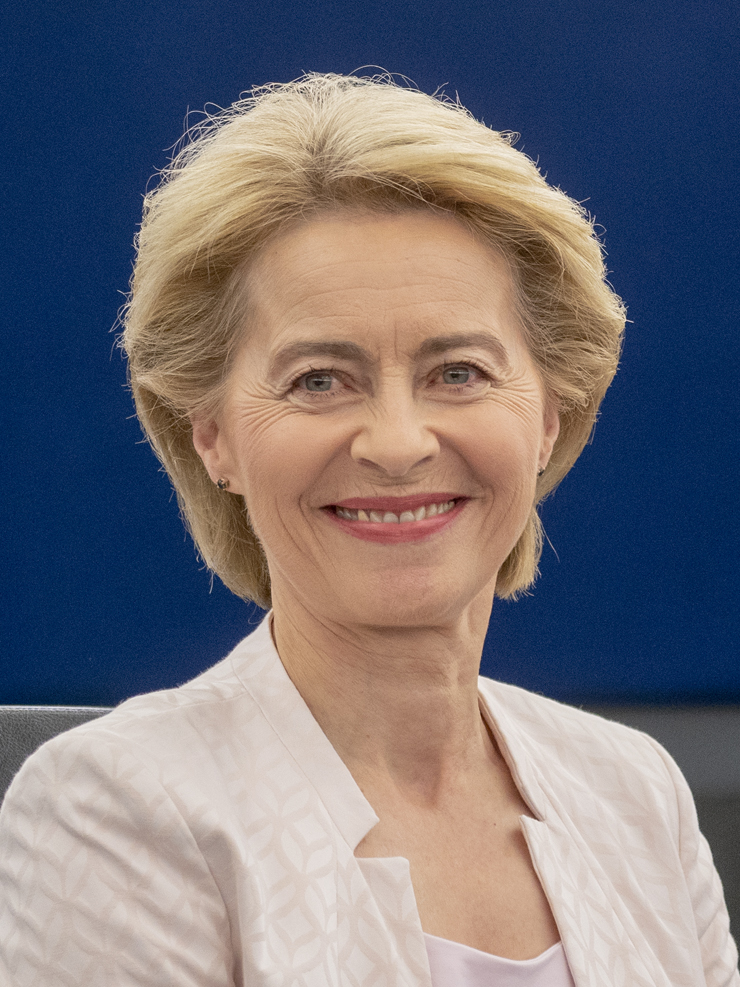
    President of the European Commission, Ursula von der Leyen, said: “Ukraine is fighting for democracy and our common values. The EU cannot match the sacrifice Ukraine is enduring but we are mobilising all our instruments to address the most immediate needs, including for housing for internally displaced populations and to repair critical infrastructure.  Since the start of Russia’s brutal and illegal war of aggression against Ukraine, the EU has mobilised 10 billion euro in financing, humanitarian, emergency and military assistance for Ukraine and another 5 billion euros in financing are in the pipeline. The EU will walk every step of the way with Ukraine to rebuild a democratic, independent and prosperous country on its path to the EU.”

    “With joint efforts, we have already started reconstruction in the de-occupied Ukrainian territories, but reconstruction requires a comprehensive approach and the mobilization of joint resources of the Ukrainian government and international partners. The assessment of the destruction and the identification of reconstruction needs creates a solid basis for the national Reconstruction Plan and is a prerequisite for effective financing. After all, only for the first stage, rapid recovery, $17 billion is needed, of which Ukraine needs $3.4 billion already this year,” said Prime Minister of Ukraine Denys Shmyhal.

    The assessment covers the impacts of the war sustained between February 24 and June 1, 2022, and found that physical damage from the war reached over US$97 billion (€97 billion). It was particularly high in the housing, transport, commerce and industry sectors. The destruction was concentrated in the Chernihivska, Donetska, Luhanska, Kharkivska, Kyivska, and Zaporizka oblasts.

    The RDNA results are preliminary, and damage and needs should be considered as minimums.

    The Russian invasion of Ukraine continues to exact a terrible toll, from significant civilian casualties and the displacement of millions of people to the widespread destruction of homes, businesses, social institutions, and economic activity,” said Anna Bjerde, World Bank Regional Vice-President for Europe and Central Asia. “The Government of Ukraine now faces the difficult task of balancing recovery with the country’s immediate needs, including core public services such as health, education and social protection, which are critical to preventing further deterioration in living conditions and poverty in Ukraine. The RDNA will help in identifying priorities for recovery while we continue to support the continuation of essential core services.”

    The report found that recovery and reconstruction needs across social, productive, and infrastructure sectors total US$349 billion (€349 billion), which is more than 1.5 times the 2021 GDP of Ukraine. Over the next 36 months the RDNA assesses that US$105 billion (€105 billion) is needed to address urgent needs such as restoring education and health systems and infrastructure, preparing for the upcoming winter through restoration of heating and energy to homes, support to agriculture, and repair of vital transport routes. The safe management of debris and explosives, including landmines, also pose a substantial cost.

    The Government of Ukraine is looking at the specific needs across the different regions ahead of the winter. Based on the highest priorities, tailored recovery and reconstruction plans are being developed to guide a program in each area.

    The World Bank and the European Commission confirmed their continued support for the Government of Ukraine. Given the ongoing war, there will be a need for future assessments of damage, loss and reconstruction/recovery needs in Ukraine.  The Swiss State Secretariat for Economic Affairs (SECO) has committed financial support for this purpose.

  • Ursula von der Leyen – 2022 Statement on Energy

    Ursula von der Leyen – 2022 Statement on Energy

    The statement made by Ursula von der Leyen, the President of the European Commission, on 7 September 2022.

    We are facing an extraordinary situation, not only because Russia is an unreliable supplier, as we have witnessed over the last days, weeks, months, but also because Russia is actively manipulating the gas market. I am deeply convinced that with our unity, our determination, our solidarity, we will prevail. And we have, over the last six months, during this war, very much increased our preparedness and we have weakened the grip that Russia had on our economy and our continent. We have done three things, as you recall: The first one was demand reduction. Demand reduction, so save gas in order to save it in the storage. We have created a joint storage, and this is really a success story, because now we are already at 82% with the joint storage in Europe. As you know, our goal was to reach 80% at the end of October. So we overshoot it, and that is good.

    The second step that we have taken was: Diversify away from Russian fossil fuels. And you know that we have stopped the import of Russian coal. We are winding down the Russian oil. And we have been working very hard to diversify away from Russia towards other reliable suppliers, like for example the United States or Norway, Azerbaijan, Algeria and others. Actually today, Norway is delivering more gas to the European Union than Russia. And we were able, if you look at the cuts that Russia has done in gas, to completely compensate so far the gas imports through other reliable suppliers.

    And of course, the third step is the most important one. This is massive investments in renewables. We have REPowerEU on the table. The renewables are cheap, they are home-grown, they make us independent. We will deploy renewables this year that are an equivalent to round about 8 billion cubic metres. So the renewables are really our energy insurance for the future.

    But we also see that the Russian manipulation of the gas market has spillover effects on the electricity market. So there is, on the one hand, the Russian manipulation, but there are also other factors during this summer. We see the effects of climate change. We see the drought. Hydropower has been reduced by 26% in the European Union, and by 46% in Portugal. And we have the fact that we have less nuclear electricity in the European Union at the moment being. And this is the reason why we are now confronted with astronomic electricity prices for households and companies, and with an enormous market volatility. Therefore, we will put forward a set of five different immediate measures.

    The first one is smart savings of electricity. What has changed over the summer, because of the elements I was just mentioning, is that we see that there is a global scarcity of energy. So whatever we do, one thing is for sure: We have to save electricity, but we have to save it in a smart way. If you look at the costs of electricity, there are peak demands. And this is what is expensive, because, in these peak demands, the expensive gas comes into the market. So what we have to do is to flatten the curve and avoid the peak demands. We will propose a mandatory target for reducing electricity use at peak hours. And we will work very closely with the Member States to achieve this.

    The second measure: We will propose a cap on the revenues of companies that are producing electricity with low costs. The low-carbon energy sources are making in these times – because they have low costs but they have high prices on the market – enormous revenues. Revenues they never calculated with; revenues they never dreamt of; and revenues they cannot reinvest to that extent. These revenues do not reflect their production costs. So, it is now time for the consumers to benefit from the low costs of low-carbon energy sources like, for example, the renewables. We will propose to re-channel these unexpected profits to the Member States so that the Member States can support the vulnerable households and vulnerable companies.

    The third measure is that the same goes, of course, for the unexpected profits of fossil fuel companies. Oil and gas companies have also made massive profits. Therefore, we will propose that there is a solidarity contribution for fossil fuel companies. Because all energy sources must help to overcome this crisis. Member States should invest these revenues to, as I said, support vulnerable households and vulnerable companies, but also to invest them in clean home-grown energy sources, as the renewables are, for example.

    The fourth point is addressing the energy utility companies that must be supported to be able to cope with the volatility of the markets. Here, it is a problem of securing futures markets. And for that, liquidity is needed. These companies are currently being requested to provide unexpected large amounts of funds now, which threatens their capacity not only to trade, but also the stability of the futures markets. It is a liquidity problem. Therefore, we will help to facilitate the liquidity support by Member States for energy companies. We will update our temporary framework and enable thus state guarantees to be delivered rapidly.

    The fifth and the last point: We aim at lowering the costs of gas. Therefore, we will propose a price cap on Russian gas. Of course, the objective is here very clear. We all know that our sanctions are deeply grinding into the Russian economy, with a heavy negative impact. But Putin is partially buffering through fossil fuel revenues. So here, the objective is: We must cut Russia’s revenues, which Putin uses to finance his atrocious war in Ukraine. And now our work of the last months really pays off. Because, at the beginning of the war, if you looked at the imported gas, 40% of it was Russian gas, since a long time. Today, we are down to 9% only.

    So these are the five measures that we will discuss with the Member States at the informal Energy Ministers Council on Friday. These are tough times, and they will not be over soon. But I am deeply convinced that, if we show the solidary, the unity and we have the determination for that, we have the economic strength, we have the political will, that then we shall overcome.

  • PRESS RELEASE : Capita appointed to administer Teachers’ Pension Scheme [February 2011]

    PRESS RELEASE : Capita appointed to administer Teachers’ Pension Scheme [February 2011]

    The press release issued by the Department for Education on 16 February 2011.

    The Department for Education has confirmed today that Capita Business Services Ltd has been selected as the preferred supplier to administer the Teachers’ Pension Scheme (TPS) from October 2011.

    The TPS is the second largest pension scheme in the country with 1.6 million members and has been administered by Capita since 1996. The new contract, worth £80 million, is for a period of seven years, with an option to extend by up to three further years.

    The contract was awarded after a fair and open competition, using the competitive dialogue procurement route, with other strong contenders involved throughout.

    Companies interested in administering the scheme had to demonstrate their ability to deliver a high quality, flexible, innovative and value for money administration service. The service requirement also supports the Coalition Government’s commitment to encourage saving for retirement and the implementation of changes to the TPS that might result from recommendations by Lord Hutton’s Independent Public Sector Pension Commission.

    Capita has offered a solution which will see the effective delivery of the services, with continuous improvement and innovation throughout the life of the contract to reflect the challenges associated with the pension environment. The Department will work with Capita to build on their achievements to date in delivering the requirements of this new contract.

    Further information

    1. The first administration outsourcing contract for seven years was awarded to Capita 1996 following a competitive procurement. In 2003 Capita Hartshead were re-appointed following another procurement competition. This contract was for seven years, with the option to extend by up to three year. In 2008, following the undertaking of an options exercise, the Department extended the contract by one year, to 30 September 2011.
    2. The Department placed a notice in the European Journal on 18 September 2009 inviting expressions of interest in the contract to administer the Teachers’ Pension Scheme.
    3. The appointment of Capita has been approved by a Project Board and the Department for Education’s Permanent Secretary, with Ministers being informed.
  • PRESS RELEASE : Schools Minister Nick Gibb responds to report on science and maths from the Royal Society [February 2011]

    PRESS RELEASE : Schools Minister Nick Gibb responds to report on science and maths from the Royal Society [February 2011]

    The press release issued by the Department for Education on 15 February 2011.

    Responding the Royal Society’s report on science and maths education, Schools Minister Nick Gibb said:

    “We echo the concerns of the Royal Society about the need to improve the teaching and take-up of science and mathematics in our schools. As other countries make vast improvements in science and maths education, the UK continues to fall down international league tables and we now languish at 27th in the world for maths, and 16th for science – falling 19 and 14 places respectively in under 10 years.

    The Schools White Paper reflects the importance this Government attaches to these subjects by exploring ways in which to attract the best graduates in science and maths into the teaching profession as well as improving continued professional development for teachers of all subjects.

    We are also seeking the advice of universities and learned societies about how the Government can strengthen science and maths in the National Curriculum and restore rigour in GCSE and A Level exams. The English Baccalaureate includes mathematics and science which will drive up participation rates and attainment in these subjects pre and post-16. We are already committed to looking at new ways to encourage the take up of science qualifications, in particular physics, at all levels.”

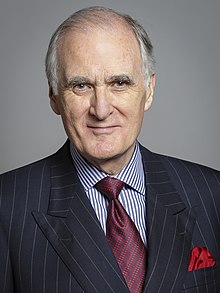
  • Jock Stirrup (Lord Stirrup) – 2022 Tribute to HM Queen Elizabeth II

    Jock Stirrup (Lord Stirrup) – 2022 Tribute to HM Queen Elizabeth II

    The tribute made by Jock Stirrup, Lord Stirrup, in the House of Lords on 9 September 2022.

    My Lords, my earliest memory goes back to the moment when I had just turned the age of two. I can be certain of the date because my parents had moved house and I clearly remember the removal men in their dustcoats delivering our furniture. The date was February 1952 and Queen Elizabeth was just acceding to the throne. So, until yesterday afternoon, my entire conscious life had been exactly coincident with the second Elizabethan age.

    That age has now ended. I have fond memories from its latter years of many meetings and discussions with the Queen, both professional and social, and I shall always be grateful for her kindness, her wisdom, her support and her great sense of fun, which I am happy to say was just as evident when I last spoke with her only a few weeks ago. Like the most reverend Primate the Archbishop of Canterbury, I also remember the winter barbecues at Sandringham, and I am proud of having been the co-producer, with my sovereign, of a particularly successful salad dressing.

    The Queen was, as the noble Lord, Lord Butler of Brockwell, observed, the head of the Armed Forces. She took an intense interest in their activities—their difficulties and challenges as well as their successes—but particularly in their people. She had formal affiliations with a great many formations and organisations, all of which valued the association highly. I think that over the next few days and weeks many stories will be told and memories exchanged, with that strange and piercing mixture of sadness and joy that I suspect we all experience today.

    I want to focus on just one incident from several years ago. One of the Queen’s military affiliations was as the honorary air commodore at RAF Marham, a station very close to Sandringham. I commanded RAF Marham over the first Gulf War. When we started to lose aircraft over Iraq, the Queen was immediately in touch, wanting to know how she could help, and in particular how she could support the families. She came and had private meetings with the next of kin of those who were missing in action. She spoke with the families more widely. She listened to them, empathised with them and made them understand how much she cared. That is just one small incident in a very long reign, but for me it epitomises it all.

    The nation has lost a Queen. The people have lost one of the best servants they have ever known in this or any other age.

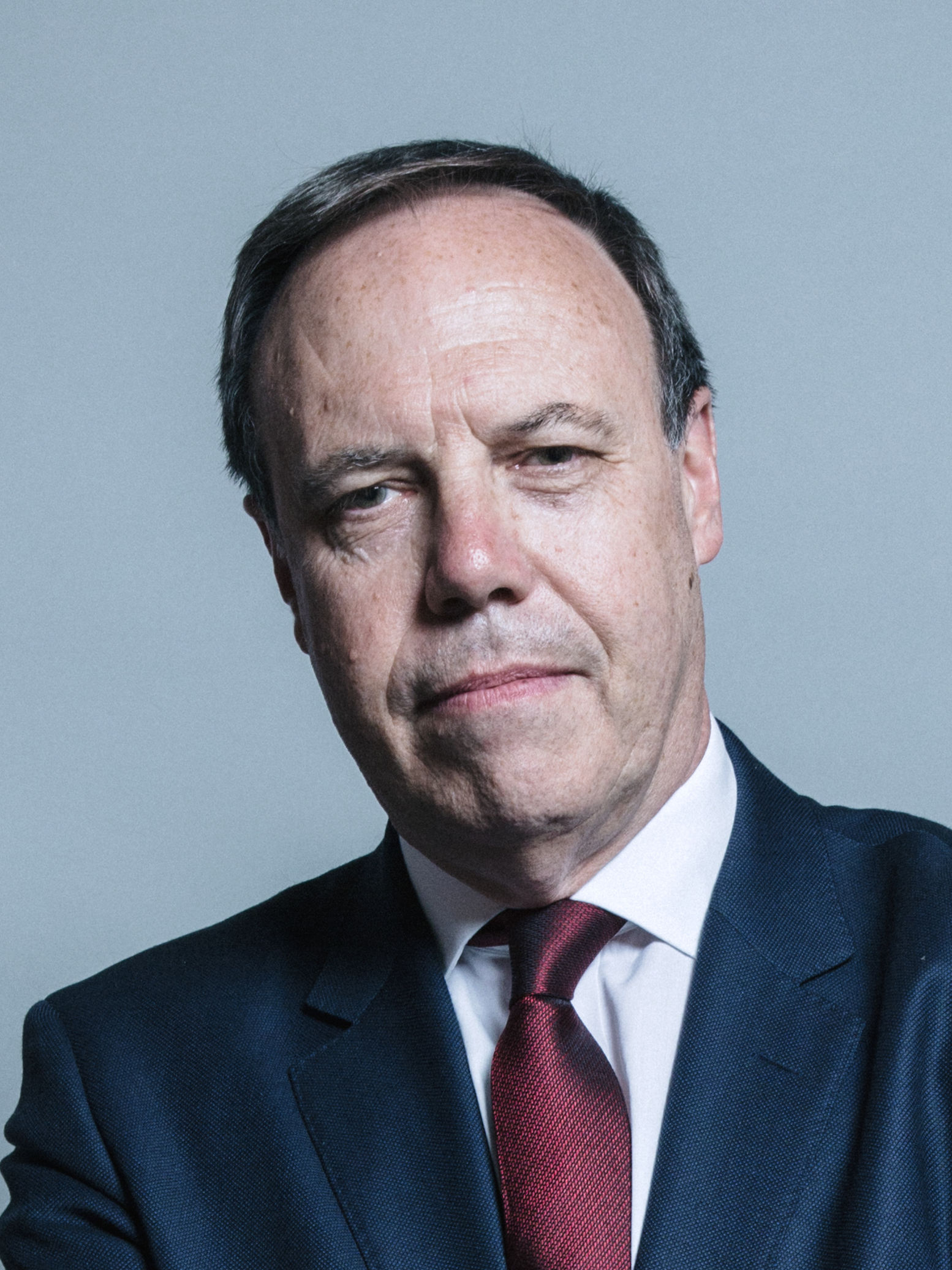
  • Nigel Dodds (Baron Dodds of Duncairn) – 2022 Tribute to HM Queen Elizabeth II

    Nigel Dodds (Baron Dodds of Duncairn) – 2022 Tribute to HM Queen Elizabeth II

    The tribute made by Nigel Dodds, Baron Dodds of Duncairn, in the House of Lords on 9 September 2022.

    My Lords, it is difficult to follow so many eloquent speeches that have already been given in the House by your Lordships this afternoon, but I rise to add few words on my own behalf and that of my noble friends in the Democratic Unionist Party, and on behalf of so many in Northern Ireland who feel the loss of Her Majesty so acutely today.

    So many words have been spoken, yet, no matter how many or how eloquently expressed, they cannot do justice to the feelings that we experienced when we heard the dreadful news yesterday afternoon on the passing of Her Majesty. That shock was palpable; as the noble Lord, Lord Purvis, said, there is a sense not just of loss but that people are lost, in a bit of a limbo and worried about what might happen going forward.

    As the noble and learned Lord, Lord Judge, said, we knew this day would come but we wished that it would not. The sense of loss is acute. Her Majesty was a constant presence in our lives and in the life of our communities, and in each of the countries of our United Kingdom she is, or was, the embodiment—a mother and grandmother of our United Kingdom. It is hard to process.

    We think today of her family and, in particular, the new King Charles III. We pray that he will know God’s blessing and guidance in the days ahead. He has to grieve and yet immediately assume the great duties, burdens and responsibilities of the monarchy. It reminds us, of course, that, at the tender age of 26, Her Majesty herself ascended to the throne while she desperately grieved his late Majesty King George VI; but she embraced her duties without hesitation, taking upon herself the mantle or duty and service.

    Those beautiful words that she spoke on her 21st birthday,

    “I declare before you all that my whole life, whether it be long or short, shall be devoted to your service”,

    have been fulfilled in the most exemplary way and with such grace. The qualities of integrity and great wisdom shone through brightly her entire life, with her great strength and stay his late Royal Highness the Duke of Edinburgh constantly at her side. What was striking to many of us was her deep Christian faith, so evident in her wonderful Christmas broadcasts. How we will miss sitting down on Christmas Day to hear the gentle words of Her Majesty speak to the entire nation. Today, as we look over decades of her service, we have been reminded in your Lordships’ House that, while many paid homage to her, she first placed her hands and her life in the hands of Christ the Lord himself. As we look back over 70 years, we are reminded of what the Bible says about life:

    “For what is your life? It is even a vapour that appears for a little time and then vanishes away.”

    But Her Majesty has left behind such a legacy and example for us all.

    People in Northern Ireland warmly welcomed every one of Her Majesty’s visits to our Province. People loved her. Even those who wish a different future for the Province held her in the highest esteem and with the greatest respect. I had the wonderful privilege, like many in this House, of meeting her on a number of occasions in different capacities. As Lord Mayor of Belfast in the late 1980s, I remember on one of Her Majesty’s visits, which were not very frequent then because of the security situation, she visited my former constituency in north Belfast. Two police officers had been badly injured the previous day in a terrorist attack, and her first words as we lined up to greet her and welcome her were to express concern and inquire after their health, which showed her compassion and deep concern for people in Northern Ireland, which was evident on many other visits that she made to the Province.

    When she returned in 2012 for the Diamond Jubilee celebrations, I remember the many tens of thousands who were able to turn out to the Stormont estate and welcome her. Her visits became more widely open to the public because of the improved security and political situation, which she warmly welcomed and of course played such an important part, in her quiet diplomatic way, in bringing about. Her visit to the Irish Republic will go down as one of the great significant milestones of Her Majesty’s reign and will be remembered as an important and significant milestone in the peace and political process.

    In Northern Ireland, like other parts of this great United Kingdom, we will never forget Her Majesty’s steadfast support for and encouragement of our people through dark days and, gladly and wonderfully, brighter days in recent times. Thank you, Ma’am. God save the King.

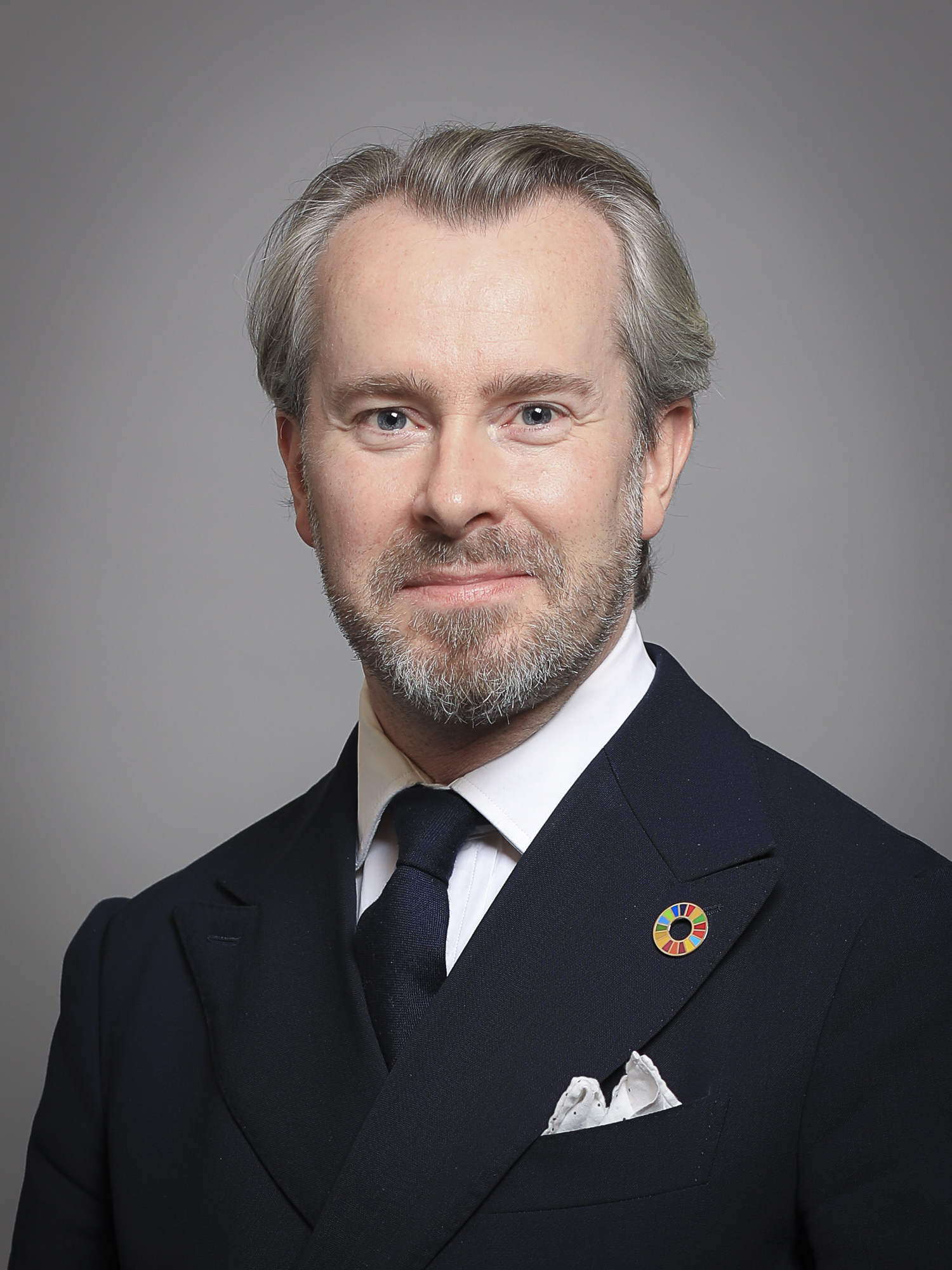
  • Jeremy Purvis (Lord Purvis of Tweed) – 2022 Tribute to HM Queen Elizabeth II

    Jeremy Purvis (Lord Purvis of Tweed) – 2022 Tribute to HM Queen Elizabeth II

    The tribute made by Jeremy Purvis, Lord Purvis of Tweed, in the House of Lords on 9 September 2022.

    I am privileged to follow the profound eloquence of the noble Baroness in her tribute and I echo many of her regards. It is to the personal, the local and the international personified by her late Majesty that we pay tribute today. As the sorrowful but necessary processes in my home country north of the border pass, she will continue in the wee dark hours over the border, on her last journey home, through my home town of Berwick. Like many noble Lords, I have memories of meeting her in my home area; they no doubt felt when they met her as I did—that she knew our area more than we knew it ourselves. It was just one of the many attributes she held that are receiving tribute today.

    Queen Elizabeth II lived for nearly a third of all the time of our union and was sovereign of it for nearly a quarter. This will never be repeated in the future story of these isles: a semi-mystical link between old and new, a shelter of calm in storms of turbulent political waters and, in the wider world, an embodiment of reliability as the tectonic shifts in how the world sees itself have moved, along with the place of our country in this transformation, from empire to Commonwealth, from military prowess to cultural influence.

    I reviewed the Motions of condolence for the late King George VI in 1952. From these Benches, Viscount Samuel quoted Prime Minister Nehru of India as saying that

    “when the relationship between England and India took a new turn and was based on friendship and free association … I was impressed by his thoughtfulness and understanding of us and our position, and we welcomed him most willingly as Head of the Commonwealth”.—[Official Report, 11/2/1952; cols. 1080-81.]

    Her late Majesty built upon this foundation and became the reason beyond all others as to why peaceful transition with complex moral dimensions on an immense scale, touching every part of the world, has been a success.

    Today, I was due to be arriving in Khartoum. Friends from there messaged me last evening, as others have from other parts of the world. I was greatly moved by the news that the pictures of her Majesty’s visit there in 1965 have been circulating widely. That country is vastly different from before and after independence—as is the world. Another Sudanese friend messaged me saying, “Her legacy in the decolonisation era will especially be remembered in our region of the world”.

    No other leader of a country in world history has ever travelled so much or met more leaders and people from more countries. As one American publication put it this morning, “Among Queen Elizabeth II’s many talents was an ability to turn the most powerful man on the planet into an overexcited fanboy—tea with the Queen outranking a nuclear arsenal”.

    At home in the Borders, where her visits were frequent and her knowledge of our equestrian common ridings was thorough—as was that of other members of the Royal Family; in fact, the Queen Consort was due to be in Galashiels yesterday—we will feel a gap as she passes through for the final time.

    Her late Majesty made me feel it that it was a remarkable stroke of good fortune to be born British, and I know the pride felt by many people who have come and made Britain their home. That pride for our history is in my heart, but there is a sense of anxiety in the pit of my stomach for the future. Many people of my parents’ generation and, indeed, my own, and I myself, feel loss, but some will feel lost. Who will be the constancy in times of churn to come? So, for our union at home and our place in the world abroad, I thank her late Majesty, and I wish the new King every success.

  • Steve House – 2022 Tribute to HM Queen Elizabeth II

    Steve House – 2022 Tribute to HM Queen Elizabeth II

    The tribute made by Steve House, the Acting Commissioner of the Metropolitan Police, on 8 September 2022.

    Tonight every member of the Metropolitan Police Service joins the nation in mourning the death of Her Majesty The Queen.

    On their behalf, I send my deepest condolences to the entire Royal Family, as well as all those who have been affected personally by Her Majesty’s death.

    I, like every officer in the Metropolitan Police Service, swore an oath to Her Majesty and for us all that is the greatest honour.

    I know Her Majesty’s lifetime of public service will continue to inspire generations to come.

  • PRESS RELEASE : Commissioner Sir Mark Rowley swears allegiance to His Majesty The King [September 2022]

    PRESS RELEASE : Commissioner Sir Mark Rowley swears allegiance to His Majesty The King [September 2022]

    The press release issued by the Metropolitan Police on 12 September 2022.

    Commissioner Sir Mark Rowley took his oath and swore allegiance to His Majesty The King at an early-morning ceremony at New Scotland Yard today (Monday, 12 September).

    Sir Mark was formally appointed to the post of Commissioner of the Metropolitan Police Service in July by Her late Majesty the Queen following a recommendation by the Home Secretary.

    He was joined by Deputy Commissioner Dame Lynne Owens who also took her oath and swore allegiance to His Majesty the King.

    Under UK law, all serving police officers must take the oath, also known as an attestation, in which they swear to “well and truly serve the King in the office of constable, with fairness, integrity, diligence and impartiality, upholding fundamental human rights and according equal respect to all people.”

    Speaking after his attestation, Sir Mark said:

    “I join the nation in sorrow at the death of Her late Majesty The Queen and share my condolences with His Majesty The King and The Royal Family. Her late Majesty’s unstinting public service, stoicism in times of turbulence and dedication to the people she served has shaped our nation immensely.

    “As your new Commissioner, I have sworn an oath to serve with fairness, integrity, diligence and impartiality.

    “In the next two weeks, I have two priorities. I will lead a Met that enables Londoners and visitors from all over the world to safely pay their respects to Her late Majesty The Queen.

    “Second, as we continue to police local communities, we will begin the journey of reform to renew policing by consent.

    “Through my leadership, I am determined to bring more trust, less crime and high standards, and build trust and confidence in our police service once more.”