Blog

  • PRESS RELEASE : Children with special educational needs and disabilities – voluntary and community organisations to play a key role in helping [November 2011]

    PRESS RELEASE : Children with special educational needs and disabilities – voluntary and community organisations to play a key role in helping [November 2011]

    The press release issued by the Department for Education on 4 November 2011.

    The Children’s Minister Sarah Teather today announced contracts involving voluntary and community organisations which will deliver the support, including the Council for Disabled Children and I CAN, the children’s communication charity.

    The Department for Education is providing funding of around £6 million a year for two years to deliver the support.

    The organisations will support the delivery of short breaks, provide greater information and help to parents, and help disabled young people and those with SEN prepare for employment, training and independent living after they leave school.

    Children’s Minister Sarah Teather said:

    We’re proposing some of the biggest reforms to special educational needs and to help disabled children and we’re testing out the best ways of doing this over the next year. But it’s important that children, young people and their families get help and support now, from organisations they trust.

    That’s why we’re funding and extending programmes that have been successful so far and that parents have told us they value – like short breaks and helping young people make the often difficult transition from school to employment or training.

    The successful contractors will provide knowledge and support on the delivery and improvement of local services and help the 20 SEN Green Paper pathfinder areas test some of the Government’s key reforms.

    The organisations and contracts are:

    • The IMPACT consortium (SERCO in partnership with the Short Breaks Network): to help local authorities deliver their legal obligations to provide short breaks and involve parents in how short breaks are provided.
    • The Council for Disabled Children: to support local parent partnership services across England that provide parents with clear information about their rights and responsibilities under SEN legislation, along with local information about options and choices to meet their child’s SEN.
    • A consortium led by the National Development Team for Inclusion: to improve outcomes for young people with SEN and disabilities. The consortium will work with local authorities, schools, young people and their femployment, training and independent living after they leave school.
    • The ES Trust with the National Children’s Bureau: to extend the successful Early Support programme to improve the quality, consistency and coordination of services for disabled children over five years old (the programme is currently designed from birth to five years old) and help develop key worker training.
    • The Early Language Consortium, led by I CAN, the children’s communication charity: to introduce Early Language Development Training for people working with children up to five years old. The training amilies to raise aspirations in secondary school and plan for will focus on the importance of early language development to improve communication and language skills for all children, particularly those with SEN.
  • PRESS RELEASE : Michael Gove article in ‘The Sun’ on adoption [November 2011]

    PRESS RELEASE : Michael Gove article in ‘The Sun’ on adoption [November 2011]

    The press release issued by the Department for Education on 4 November 2011.

    Michael Gove writing in ‘The Sun’: “Every child deserves a loving home. Yet for too many this fundamental right is just a dream.”

    Every child deserves a loving home. Yet for too many this fundamental right is just a dream.

    That is why I am backing ‘The Sun’s’ National Adoption Week campaign, in association with The British Association for Adoption and Fostering.

    I urge you to look at the photographs and read the stories of the children featured on these pages. They represent just a few of the thousands of children desperate to be adopted.

    Last year only 3,050 children found new homes by adoption, while the number in the care system rose to 65,000.

    On average it takes more than two and a half years between a child entering care and being adopted. We have to do better.

    That’s why we are tackling the politically correct attitudes and ridiculous bureaucracy that keep too many children waiting far too long.

    We’ve scrapped the edicts which say children have to be adopted by families from the same ethnic background.

    And we’ve slimmed down the guidance to help speed up the adoption process.

    We also need to make sure the system works for all children, regardless of where they live.

    In some areas, more than 20% of children in care are adopted. In others, it’s less than 5%.

    One council managed to place every single child within 12 months of their adoption decision. Another, just 43%.

    Adoption may not be the right choice for every child but this level of variation is inexcusable.

    So this week the Prime Minister and I have published new performance tables to shine a light on those who aren’t doing as well as they should.

    And we won’t stand by where children are being let down. Where councils persistently fail in their basic responsibilities, we will ask an agency or a council with a proven track record to take over their care services.

    Judges must play their part too. Delays in the family courts are paralysing the adoption process.

    Looked-after children – the vulnerable and the voiceless – desperately need our support. Their plight should matter to every one of us. There is a special reason why this issue matters so much to me. I was adopted. I was given a second chance.

    Without it, my future may well have been blighted, my opportunities limited and my chance to make a difference gone.

    To me, my parents are heroes. I will never forget, and can never adequately repay, their selfless generosity. But what I can do is reflect on how different my life might have been.

    And that is what drives me to do all that I can for those children who need heroes of their own.

  • PRESS RELEASE : Schools to be freed from over-prescriptive buildings rules [November 2011]

    PRESS RELEASE : Schools to be freed from over-prescriptive buildings rules [November 2011]

    The press release issued by the Department for Education on 3 November 2011.

    • Common sense approach to replace unnecessary regulation
    • Guidance for schools reduced to a quarter

    Schools across England are to be freed from confusing and unnecessary regulations on school buildings.

    Ministers are consulting on simplifying and reducing the regulations around school buildings, as part of the independent Capital Review recommendations, which proposed how to build and maintain school buildings better and more cost effectively. The new proposals provide strong safeguards, especially for vulnerable pupils, but free up schools to take a more common sense approach.

    The current regulations for maintained and independent schools contain some over-prescriptive and burdensome rules. This includes:

    • Complicated lighting requirements – “light fittings must not produce a glare index of more than 19”. Schools would find it impossible to know whether they meet them without getting in technical experts. However, safeguards will remain in place for children with special educational needs to ensure schools get specialist advice when required.
    • Specific requirements on the numbers of toilets and wash basins per pupils. For example, washrooms in secondary schools with three or more toilets or urinals must have two thirds the number of sinks. Under the proposed changes schools will still have to provide well planned and designed facilities but will be freed from unnecessary over-prescription.
    • Schools having to provide a space to dry pupils’ coats. Schools will instead take a common sense approach making sure there are suitable facilities.
    • Boarding schools have to have at least 0.9m between beds in dormitories and provide at least 2.3m² of living space per pupil. This over-prescription will be removed, but schools will still have to follow the relevant fire regulations and provide suitable facilities.

    Under the new proposals, the same regulations will apply to all schools. The relevant supporting guidance will also be simplified, going from 32 pages to just eight pages of clear and concise advice.

    A further 5,000 pages of other guidance on school buildings will be reduced next year, by around 75 per cent. It includes technical guidance that would be irrelevant for schools and out-of-date advice.

    Schools Minister Lord Hill said:

    Over the years, schools have been overloaded with unclear and sometimes contradictory rules on school buildings.

    Making sure we have suitable and safe school buildings is paramount. That is why are proposing to streamline the regulations, remove unnecessary duplication and free up schools to take a common sense approach. One set of clear regulations for maintained and independent schools makes it simpler for everyone.

    We are already building new schools quicker and with better value for money than ever before. These changes will help speed this up further, by simplifying the process.

    The consultation sets out a number of areas where the Government plans to remove regulations because they are irrelevant or duplicated in other pieces of legislation. For example, specific regulations about heating or ventilation are covered in the Workplace Regulations and the Building Regulations.

    The premises regulations consultation, including the proposed revised guidance, can be found on our consultations website. It closes on 26 January 2012.

  • Michael Gove – 2011 Statement on Increased Funding to Address Shortage in Pupil Places

    Michael Gove – 2011 Statement on Increased Funding to Address Shortage in Pupil Places

    The statement made by Michael Gove, the then Secretary of State for Education, in the House of Commons on 3 November 2011.

    I would like to update the House on my Department’s work to address the shortage in pupil places being experienced by some local authorities, and reduce the level of prescription and unnecessary guidance which are a feature of the school premises regulations and hamper the development of new schools.

    I would also like to inform members of my final decisions on the Building Schools for the Future (BSF) programme in the six authorities which mounted Judicial Reviews.

    In July, I announced that an extra £500 million would be made available, this year, to local authorities experiencing the greatest need in managing shortfalls in providing pupil places. This additional funding has been made available from efficiencies and savings identified in BSF projects that are continuing.

    I can announce today that over one hundred local authorities will receive a share of the funding. The allocations have been calculated using figures provided to the Department for Education by local authorities through the 2011 School Capacity and Forecast Information returns. By using the most up-to-date information available we are making sure the savings identified are being targeted to local authorities experiencing the most severe need.

    I understand the economic situation means difficult choices need to be made about how to direct funding but I urge local authorities to target resources at managing the shortfalls in pupils places wherever they are most needed, and taking into account of the views of parents. This is especially pertinent in light of the data released last week by the Office for National Statistics (ONS) showing that previous projections for population growth were underestimated and by 2020 there will be around 21 per cent more primary age children than in 2010.

    Today’s extra funding means that in 2011-12, a total of £1.3 billion will have been allocated to fund additional school places. The Government already announced an allocation of £800 million funding in December 2010, twice the previous annual level of support. The nature of this funding, (capital grant which is not ring fenced) the nature of the projects it will fund, (mainly small primary school projects) and the readiness of local authorities to get projects underway mean that this money will be spent efficiently. Further, I expect much of it to benefit small and medium-sized enterprises and to stimulate local economic activity across the country.

    I would like to reassure those local authorities whose needs were not as severe as others – and which, therefore, did not receive a share of this extra £500 million – that future capital allocations for basic need and maintenance pressures will be announced later in the year.

    I am also launching a twelve week consultation on the revision of school premises regulations. The consultation document sets out how the Government intends to deregulate and end the confusion and unnecessary bureaucracy surrounding the current requirements. A copy of the consultation document will be placed in the House Libraries.

    I am proposing to make the requirements for independent and maintained schools identical and to reduce the overall number of regulations. Some regulations are duplicated in other pieces of legislation or are simply unnecessary and I propose to remove these regulations completely. I also think that other regulations can be simplified to remove unnecessary bureaucracy and make requirements proportionate, without reducing the quality of buildings. I would welcome views on my proposals, further details of which can be found on the Department for Education’s website.

    Finally, today I am announcing my decision on the schools that are subject to the BSF Judicial Review proceedings, brought by Luton Borough Council; Nottingham City Council; Waltham Forest London Borough Council; Newham London Borough Council; Kent County Council; and Sandwell Metropolitan Borough Council.

    I announced what I was minded to do in July and have received further representations from each of the claimant authorities. I considered these carefully but I am not persuaded that I should depart from the decision which I announced I was minded to take. My final decision is, therefore, not to fund the schools in the claim but, instead, to fund, in capital grant, the value of the claimant authorities proven contractual liabilities.

  • John Hayes – 2011 Speech to the Institute for Careers Guidance Annual Conference

    John Hayes – 2011 Speech to the Institute for Careers Guidance Annual Conference

    The speech made by John Hayes, the then Education Minister, at the Thistle Hotel in Brighton on 3 November 2011.

    Good morning everyone.

    I am very pleased to be here today in one of our most fashionable, creative and enterprising cities. Given that fashion is about here and now and I’m more interested in then and when, it is the other two adjectives – creative and enterprising – which are my main themes for today.

    The National Careers Service will be launched next April, and builds on Next Step, introduced last Summer, which has been and continues to be a vital and successful Government service. Next Step has the capacity to provide guidance to 700,000 adults a year, and can handle up to 1 million telephone guidance sessions and 20 million website sessions. And over 80% of adults receiving guidance say that it influences their decision to learn or move on in employment.

    These are impressive figures. They are testament to the achievements of the careers sector, and the respect in which careers guidance is held by those who have benefitted from it. And Next Step is a landmark service, streets ahead of the provision for adults we have seen in the past. Establishing a fully integrated careers service for adults was my ambition in opposition, delivered in Government.

    Now as we plan the launch of the National Careers Service we approach a moment of immense significance. It marks the point at which the careers sector will step into the sunlight. It is the start of your renaissance.

    And to do that, the sector needs to be both creative and enterprising, just as the City of Brighton and Hove has been. From the prescribing of seawater in the 1740s to its current epithet of “Silicon Beach”, Brighton has flourished.

    Change is always a challenge, and for some people too hard to face. Perhaps that’s why we’ve heard too much talk of a “golden age” in careers guidance which is at risk. I don’t want you to have any illusions that the past was better than the future. Although the Connexions service had an impact on the lives of many young people, it was a model that simply did not work.

    Giving professional careers guidance is a specialism, which requires expertise and experience. The Connexions model stretched professional careers advisers to breaking point, requiring of them that they give expert advice on health, housing, personal finance and other matters.

    This was ineffective, and ultimately destructive: the product of a public service strategy which asked professionals to do everything at once, rather than doing what they know best.

    This was not the right model for professional careers guidance, and it will not be the model for the future.

    The launch of the National Careers Service brings a clear focus on professional, independent guidance which springs from a deep knowledge of the labour market and the specialist skills and experience of the careers adviser. Empirical, up to date, and to the point. That is what you have all called for, and that is exactly what will be delivered.

    But it depends on the commitment of every single person in this room; every professional in the sector; everyone like us who has a passion for careers guidance.

    I am sensitive to the scale of the challenge you face and know just how radical our ambitions are. But I want us to move on and up, and take bold strides forward. Yes,economic circumstances are difficult. But that must be a spur, an inspiration to even greater creativity, drive and ambition. As I said in Belfast, we simply have to do more with less; and that will be the project and the glory of the careers profession.

    I am passionate about guidance. It can set young people upon a path which will inspire and motivate them at every turn. It can help adults who have fallen on hard times turn around their lives. It deserves the highest and widest public recognition, and the prestige of a profession which is respected and admired.

    You have a chance, a golden chance, to turn your passion for guidance into a reinvigoration of the sector’s aims and ambitions. But we must move with the times. The model of the past is not the model of the future, and I want you to develop, to innovate, to reinvent where you need to reinvent, and to rise to the challenge.

    As I have said before, guidance is “the stuff of dreams”, because it clarifies and inspires. As Ruskin put it, “To see clearly is poetry, prophecy and religion, all in one.”

    The National Careers Service will bring online and helpline services for young people and adults together in one place. It will be required to hold the new, more rigorous matrix standard which I had the pleasure to launch earlier this month. It will have a redesigned website which makes information about careers and the labour market more accessible. It will provide high quality advice and guidance to adults in community locations. And it will be promoted at a national level, so that its profile and visibility are high.

    I want the National Careers Service to be the gold standard in careers guidance. It will not manage the market – the Government’s approach is to remove regulation, not increase it. But it will set a standard of quality and professionalism that all providers of guidance should seek to match.

    Alongside that, the Careers Profession Alliance is leading the renaissance of the guidance profession. Following the great work of the Careers Profession Task Force, the Alliance has set itself the target of achieving chartered status for the careers profession inside three years.

    I was delighted to share a platform today with Ruth Spellman, who is chair of the Alliance. This is not by chance, but by design. I want to stand shoulder to shoulder with the careers profession as it continues its journey, and I was pleased that Ruth spoke with authority about the steps which need to be taken.

    I applaud the ambition the Alliance have shown, and strongly support the work that Ruth and her colleagues are leading. Developing a set of professional standards which are respected and aspired to by all those providing careers advice – wherever they work and to whatever professional body they belong – is an undertaking of the utmost importance; and I urge all the parties involved onwards to success.

    I support the work on developing Higher Apprenticeships as a route for the professions, and I am sympathetic with the view that a quota of level 6 staff should be the aim. So the building blocks are in place. And we are working to a clear strategy, which will not change.

    The participation age for education and training will be raised to 18 in 2015. In line with that flagship policy, responsibility for careers guidance for young people will be devolved to the institutions of learning which know them best, and local authorities will be expected to work hard to re-engage those who have disengaged with the system. Schools will work with local authorities to identify young people who are at risk.

    The National Careers Service will provide information, advice and guidance which supports growth and social mobility, and is in tune with the labour market. Its advisers will be expert, and its reputation will be second to none.

    And underpinning this, the careers profession – and the market in high quality careers services – will continue to grow.

    We must continue to look for new and better ways of measuring and recording the positive outcomes to which guidance can lead. Government will play its part in seeking new sources of evidence; but we will continue to be challenged to justify every penny we spend, and the best evidence of success is that which you yourselves provide.

    The Alliance, its constituent bodies, and every organisation and adviser in the sector, will need to champion the quality of professional standards to which guidance is delivered, so that there is demand for professional services.

    And everyone whose business it is to engage in this noble profession – not just the National Careers Service – will need to look for the opportunities and openings which allow them to demonstrate their skill and commitment.

    I know there has been debate about the importance of face to face careers guidance for young people.

    I share the view that face to face guidance is of critical importance. Pupils and students can benefit enormously from support offered in person, which raises their aspirations and guides them onto a successful path.

    This is particularly true of those young people who do not have the social networks which can connect them to inspiring figures in different occupations; or those who come from families with a long history of unemployment; or those with learning difficulties or disabilities. You will have heard me speak before about the importance of wherewithal: many young people do not lack aspiration, but do lack the means to achieve their goals. Face to face guidance can help to move them onto the right path. This is the difference between information and advice, between data and understanding. It was Eliot after all who said “where is the knowledge lost in information.”

    Many of you have stressed the importance of ensuring that schools are able to draw on careers guidance of the highest quality. I share that view. My friends in the teaching profession have left me in no doubt that headteachers are ready to respond to the new duty to secure independent, impartial careers guidance. But they have called for support to help them take advantage of opportunity, and help others do the same.

    So today I am pleased to report that my right honourable friend Lord Hill of Oareford told the House of Lords last week that Government will bring forward statutory guidance for schools on the new legal duty. He also said that this statutory guidance will highlight to schools how they can be confident that the external support they are buying in is of the desired quality; and that the Government would consult on the guidance.

    Lord Hill also confirmed that the Government will place a clear expectation on schools that they should secure face-to-face careers guidance where it is the most suitable support, in particular for disadvantaged children, those who have special needs and those with learning difficulties or disabilities.

    These important messages in statutory guidance will be underpinned by the sharing of effective practice and evidence of what works. Headteachers need to be able to spread the word about the best, most innovative and most cost effective providers of guidance.

    And we will not stop there. The matrix standard embodies the quality I expect of all careers guidance services. As a visible national standard, it will be promoted, and should serve to help schools decide what careers guidance to secure.

    And providers in the National Careers Service will be encouraged to market their services to schools. This will provide an additional stimulus for the market in young people’s guidance to respond.

    Let me reiterate. We are moving from a past in which specialist, professional careers guidance was submerged by a model which did not work, to a future in which high quality, dynamic and responsive careers services will flourish.

    We can create a long term environment for guidance which endures. But the sector needs to seize its opportunity.

    And in Government, we will not rest on our laurels. On the contrary, we will continue to increase the reach and visibility of careers guidance.

    We will encourage careers guidance providers in the community to establish networks with other public, private and voluntary sector services. Specialist services working in partnership can have a huge impact on outcomes for individual people. So I want to build on the level of co-location which the Next Step service has already developed.

    I can confirm today that the number of Further Education colleges working with Next Step has now reached 139. Some, such as Southgate College, are exploring new models which bring together careers and job support. Here, in Brighton, Next Step South East is co-located with City College and the Whitehawk Inn community centre to deliver both support and training. We will work with the Association of Colleges, Jobcentre Plus and others to further develop those models. Following our launch in the spring, my ambition is for co-location with Job Centre Plus and colleges to exceed 250 sites across the UK by the end of next year. I can also announce that from April 2012, we will pilot new forms of co-location for the National Careers Service, including in places of worship, community centres, the charitable and voluntary sectors.

    We will help providers in the service to expand their share of business in the market, so they can take the quality of the National Careers Service offer out as widely as possible, and I want to explore how a peripatetic service can be put in place to serve rural areas like the one I represent. The National Careers Service – in towns, cities and villages across the UK.

    And we will continue to explore how we make best use of available funding to support Growth and Social Mobility – for example, by reviewing the groups which are eligible for more than one session of face to face support.

    The National Careers Service will be at the heart of the system. To play its role as part of the vision I have set out, it will need inspirational leadership, and a hotline to the profession. So I can announce today:

    that we will establish a National Council for Careers made up of key figures from the profession, to advise on the management and direction of the service as it continues to develop;

    and that in the New Year, we will publish a document confirming the policy and direction for careers guidance, which will reinforce everything I have said today.

    In Belfast, I issued a challenge, and called on you all to respond. My message has not changed. Indeed, it has got stronger, my conviction still more certain.

    This is the careers profession’s time. This is a renaissance. I love the past but I am not its captive. It will not take us forward.

    Everyone in this room, everyone out there in the sector is committed to inspiring and guiding the young people and adults of this country. We need to step up to the mark, as will the Government . In Kipling’s words “Gardens are not made by sitting in the shade.” We must continue the journey, and move into the bright sunshine. Moving forward, not holding back. Aiming high, not for ourselves, but for the lives we change through what we are and what we do.

    Thank you for listening.

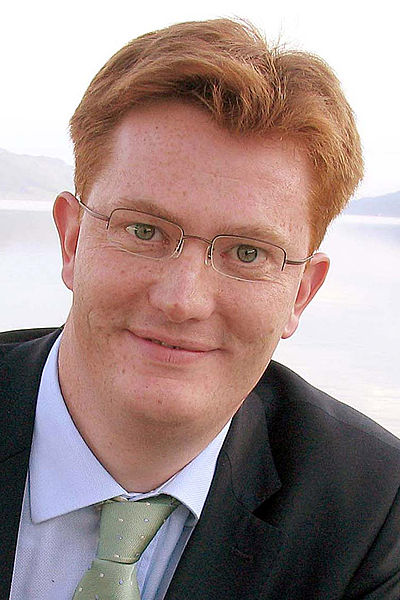
  • Danny Alexander – 2011 Speech to the House of Commons on Public Service Pensions

    Danny Alexander – 2011 Speech to the House of Commons on Public Service Pensions

    The speech made by Danny Alexander, the then Chief Secretary to the Treasury, in the House of Commons on 2 November 2011.

    I wish to update the House on progress in reform of public service pensions to set out the new offer we have made as we seek to bring this issue to a conclusion by the end of this year.

    Our objective is to put in place new schemes that are affordable, sustainable and fair – to both taxpayers and public service workers. And to put in place schemes that can be sustained for decades to come.

    It’s not easy, but it’s the right thing to. I recognise that this is a contentious area. Public service workers deserve a good pension in retirement, as a fair reward for a lifetime spent serving the public.

    That is why in June last year the Chancellor commissioned Lord Hutton, the Work and Pensions Secretary in the previous Government, to take an impartial, dispassionate look at this to bring forward proposals for reform.

    His landmark report has set the terms of the debate, and I am sure the whole house will share my gratitude for his work.

    In his interim report, he found that there was a clear justification – based on the past cost increase borne by the taxpayer for an increase in member contributions.

    We accepted that recommendation, and increases in member contributions will take place starting next year – although next year’s increase merely reflects the increase already planned by the previous Government.

    In his final report, he set out a blueprint for a new landscape of public service pensions based on retaining defined benefit schemes, but moving to a fairer career average basis, and increasing the retirement age in line with the State Pension Age to protect the taxpayer against future increases in life expectancy.

    We accepted his recommendations in full as a basis for consultation, and we have been discussing the recommendations with the trade unions.

    Those discussions started in February, and are still going on. Despite some of the public comment, significant progress has been made. And I want to pay tribute to the Minister for the Cabinet Office and the General Secretary of the TUC for their tireless work to reach common ground on reform.

    The trade unions have welcomed many of the commitments that we made at the start of this process:

    • That public sector schemes will remain defined benefit, with a guaranteed amount provided in retirement
    • That all accrued rights will be protected. Everything public servants have earned until the point of change, they will keep and will be paid out in the terms expected, at the retirement age expected. Final salary means just that – your accrued rights will be based on the final salary not at the point of change, but your final salary whenever your career ends or you choose to leave the scheme.

    No public sector worker needs to have anything to fear at all for any of the entitlements they have already built up.

    We have reached agreement the importance of transparency, equality impacts, participation rates and opt-outs, scheme governance, and high level principles to inform consultations on scheme level pensions.

    However, the central issue of the value of new schemes remains to be agreed.

    Two aims need to bet:

    First, that for most low and middle income workers, the new schemes would generate an income at retirement at least as good as the amount they receive now.

    Second, that the taxpayer needs to be properly protected from the future risks associated with further increases in life expectancy, by linking the scheme normal pension age to State Pension Age.

    In early October, we set cost ceilings to meet these tests.

    Cost ceilings based on Lord Hutton’s recommendations that generate an accruals rate of 1/65th for the new schemes.

    Scheme by scheme discussions have been taking place on this basis, since the beginning of October.

    And while the talks have been productive,  trade unions and departmental ministers have given consistent feedback about what they think needs to change.

    Last week, the Minister for the Cabinet Office and I met the TUC negotiating team who pressed for a more generous cost ceiling was needed, and explicit protections for those workers nearest to retirement.

    I have received similar feedback from the Secretaries of State for Education and Health.

    Having listened to their views, I have decided to revise the government’s offer.

    Cabinet discussed these matters yesterday, and I met the TUC this morning to set out the terms of our new offer.

    It is an offer that increases the cost ceiling and provides for generous transitional arrangements for those closest to retirement, and I have made available to Members today a document that sets out the detail.

    This generous offer should be more than sufficient to allow agreement to be reached with the unions.

    But it is an offer that is conditional upon reaching agreement.

    I hope that on the basis of this offer, the Trade Unions will devote their energy to reaching agreement not on unnecessary and damaging strike action.

    That way this offer can inform the scheme by scheme talks that will continue until the end of the year. Of course, if agreement cannot be reached we may need to re-visit our proposals, and consider whether those enhancements remain appropriate.

    I can announce today that I have decided to offer an increase to the cost ceiling. So future schemes will now be based on a pension to the value of 1/60th of average salary, accruing for each year worked. That is an 8% increase on the previous offer.

    Let me give some examples of what that means.

    A teacher with a lifetime in public service with a salary at retirement of £37,800 would receive £25,200 each year under these proposals, rather than the £19,100 they would currently earn in the final salary Teachers’ Pension Scheme.

    A nurse with a lifetime in public service and a salary at retirement of £34,200 would receive £22,800 of pension each year if these reforms were introduced, whereas under the current 1995 NHS Pension Scheme arrangements they would only get £17,300.

    Pensions that remain considerably better than available in the private sector.

    To earn the equivalent pension in the private sector, the teacher retiring on £37,800 would need a pension pot of around £675,000, the nurse retiring on £34,200, a pot of £600,000. Both would require an annual contribution of around a third of their salary.

    In addition, I have listened to the argument that those closest to retirement should not have to face any change at all.

    That is the approach that we have taken in relation to increases to the State Pension Age over the years, and I think it is fair to apply that here too.

    I can also announce that scheme negotiations will be given the flexibility, outside the cost ceiling, to deliver protection so that no-one within 10 years of retirement will see any change in when they can retire nor any decrease in the amount of pension they receive.  .

    Anyone ten years or less from retirement age on 1 April 2012 are assured that there will be no detriment to their retirement income.

    We need to be clear about the backdrop against which this offer is made.

    I fully understand that families across the country are feeling financial pressure right now. These are unprecedented and tough economic times.

    But reform is essential because the costs of public service pensions have risen dramatically over the last few decades.

    The bottom line is that we are all living longer.

    The average 60 year old today is living ten years longer now, than they did in the 1970s. That is a remarkable and welcome feat of science and healthcare. But it also means that people are living in retirement longer and claiming their pension for longer.

    As a result the costs of public service pensions have risen to £32bn a year. An increase of a third over the last 10 years. And whilst they accounted for just under 1 % of GDP in 1970, they account for around 2% of GDP today.

    More than we spend in total on police, on prisons, and the courts.

    And for the most part, it hasn’t been the public service workers footing the bill. It’s been the general taxpayer.

    We have to reform to ensure the costs of pensions are sustainable in the long term and to ensure costs and risks are fairly shared between employees and taxpayers.

    I believe this package is affordable. I believe it is also fair, not just to public sector workers, but delivers significant long term savings to taxpayers who will continue to make a significant contribution to their pensions.

    If reform along these lines is agreed, I believe that we will have a deal that can endure for at least 25 years and hopefully longer.

    People are living longer, so public sector pension reform is inevitable. But we’ve listened to the concerns of public sector workers, and come up with a deal that’s fair and affordable. The lowest paid and people ten years off retirement will be protected – and public sector pensions will still be among the very best available.

    If reform of this sort is agreed, then no party in this house will need to seek further reform of the overall package. This sustainability is an important prize.

    So I hope that the trade unions will now grasp the opportunity that this new offer represents.

    And I hope party opposite will do the right thing, put party politics aside, and support the proposals, which came from John Hutton, in the interests of securing a long term consensus on the future of public service pensions.

    It is the chance of a lifetime to secure good, high quality, and fair public service pensions.

    Yes we are asking public service workers to contribute more.

    Yes, we are asking them to work longer, along with the rest of society

    But we are offering the chance of a significantly better pension at the end of it for many low and middle income earners.

    A fairer pension, so that low income workers stop subsidising pensions of the highest earners.

    A sustainable deal, that will endure for at least 25 years.

    An affordable deal, that ensures that taxpayers are being asked to make a sensible contribution, but keeps costs sustainable and under proper control.

    That is the new offer I am putting on the table today, it is an offer that the opposition should support and the unions should agree to and I commend this statement to the House.

  • PRESS RELEASE : Parents back fairer and simpler school admissions codes [November 2011]

    PRESS RELEASE : Parents back fairer and simpler school admissions codes [November 2011]

    The press release issued by the Department for Education on 2 November 2011.

    More pupils will be able to attend the best schools in a new-look admissions system that will be fairer and simpler for all parents, Schools Minister Nick Gibb said today.

    • All 800,000 primary school places to be offered on a single day
    • Adopted children to be given special priority

    Revised school admissions and appeals codes were published today following a 12-week consultation on proposals to overhaul the current system. The existing codes were too complex, confusing and unfair for parents. They undermined parental choice and rationed places at good schools. The consultation received more than 1,300 responses, 700 from parents who broadly welcomed the changes being made to the codes.
    Today’s codes, published alongside the Department for Education’s response to the consultation, include two new proposals:

    • Streamlining the primary school place offer system by introducing a new “national offer day”. Currently different admissions authorities release primary school offers on different dates. This can confuse and frustrate parents, especially those making applications for school places in different local authorities. There is already a secondary school national offer day, on March 1 each year. The primary school day is set to be on April 16 each year, starting in 2014. A three-week consultation on the codes’ regulations, including this date, starts shortly.
    • Giving adopted children who were previously looked after (and children who leave care under a special guardianship or residence order) the same, highest priority for places as they had as looked-after children. This would benefit around 5,000 children each year. As well as providing ongoing support to children who had been in care, it could help speed up the adoption process. There is anecdotal evidence that some adoptive parents delay applying for the adoption order so they can take advantage of the priority given to children in care.

    Schools Minister Nick Gibb said:

    A new National Offer Day for primary schools – as recommended by the Chief Schools Adjudicator – will introduce clarity and consistency in the system for hundreds of thousands of parents. Receiving offers on different days is confusing and stressful, especially for parents making cross-border applications to schools in neighbouring local authorities.

    Children in care should continue to be given special priority in school admissions after they have been adopted, or leave care under a special guardianship or residence order. Many of these children have had traumatic experiences in their early lives. They don’t stop being vulnerable just because they are now in a loving home. This will also speed up some adoptions – we know that some adoption orders are delayed until a child has started school because priority currently ends when that child leaves care.

    The revised codes contain half as many of the 650 existing mandatory requirements placed on admissions authorities and are significantly slimmer, at 61 pages long compared with the current 138 pages. Almost half of respondents to the consultation said the codes met the aims of greater transparency and simplification.

    The revised codes also confirm most of the plans set out in the consultation. They:

    • Give greater freedom to good, successful schools so they can increase the number of places they offer to children in their area. More than half of all respondents to the consultation agreed with this proposal.
    • Allow schools to give some priority to children of those staff who have been employed for at least two years or who have been recruited to meet a school’s particular skills shortage. A majority of parents responding to the consultation agreed with the principle of giving priority to school staff.
    • Allow schools to take twins and other multiple-birth children, and children of armed forces personnel, into infant classes even if it takes the class over the 30-child legal limit. This was supported by 83 per cent of respondents.
    • Allow academies and Free Schools to prioritise pupils from the poorest backgrounds. Respondents supportive of this proposal said it would give more opportunities to children from low-income families.
    • Introduce a new in-year admissions process so fewer children face delays in finding a new school. Parents will apply direct to schools, rather than having to go through a local authority. More than half of respondents agreed with this proposal. In-year applications happen when a child moves to a new area.
    • Ban councils from using area-wide “lotteries” as the principal method of allocating places across a local authority area. Some 57 per cent of all respondents supported this change.
    • Cut bureaucracy by requiring admission authorities to consult on arrangements only every seven years, rather than every three years, if no changes are proposed. This was supported by more than half of all respondents.
    • Allow anyone to object to admissions arrangements. Currently only a very restricted list of people can do so. Almost three-quarters of respondents agreed with this proposal.

    Schools Minister Nick Gibb said:

    The new Admissions Codes are slimmer, less repetitive and easier to read and use. For these reasons alone they should help to reduce the stress confronting parents as they navigate the schools admissions system and find a place for their child.

    But the new codes also remove the restriction on good schools being able to expand if they wish – a freedom that will provide more good school places.

    And the new Codes help schools to attract and retain the best teachers and school support staff by allowing them to ensure their own children have a place at their school.

    All these measures and the priority we are giving to children who are adopted from the care system are all designed to help raise the standard in our schools and close the attainment gap between those from poorer and wealthier backgrounds.

    Unnecessary prescription has also been stripped out of the draft Appeals Code to reduce costs and bureaucracy for local authorities and schools. But maintaining minimum requirements will ensure fairness and transparency.

    • Parents will have at least 20 days to lodge an appeal against primary or secondary school decisions. The current 10-day limit means parents must appeal quickly but many then drop the appeal because they later get an offer at another of their preferred schools. In the last school year for which figures are available (2008/09), more than a quarter of all appeals lodged (24,550 out of 88,270) were not taken forward, wasting time and money.
    • Guidance against hearing appeals on school premises will be overturned. At the moment admission authorities sometimes have to make costly, taxpayer-funded bookings of hotels or conference rooms.
    • Admission authorities will no longer be required to advertise for lay appeal members every three years, but must ensure that panel members are independent and that they retain their independence for the duration of their service.

    The revised codes may still be amended before they are laid before Parliament on December 1 for final approval. Subject to that, the Department intends to bring them into force on February 1, 2012. Admissions for the September 2013 intake will be the first to be operated under the new codes.

  • PRESS RELEASE : All vocational qualifications to be judged against strict new rules [October 2011]

    PRESS RELEASE : All vocational qualifications to be judged against strict new rules [October 2011]

    The press release issued by the Department for Education on 27 October 2011.

    An end to schools boosting their performance table position

    Only high quality, rigorous vocational qualifications will count in performance tables, and they will be included on a one-for-one basis with academic qualifications, under new guidance announced today by the Department for Education.

    The new guidance, following a 10 week consultation, lists the characteristics vocational qualifications need to be included in the headline measures of the school performance tables.

    This will stop schools picking subjects in order to boost performance table positions, rather than choosing the right qualifications for their pupils.

    Currently all qualifications count in performance tables whether or not they include external assessment. Some qualifications are worth as much as six GCSEs.

    From 2014 only valued vocational qualifications that meet strict new criteria will be recognised in the tables. GCSEs, established iGCSEs and AS Levels will continue to be included. All these qualifications will count equally on a one-for-one basis.

    Qualifications will only count if:

    • they offer pupils proven progression into a broad range of further qualifications or careers post-16, rather than narrowing students’ options
    • they are the size of a GCSE or bigger
    • they have a substantial proportion of external assessment and require students to use knowledge across their subject
    • they have grades such as A*-G (those with simple pass or fail results will be excluded).

    Any qualification that has been taught for at least two years will also be expected to have good levels of take-up among 14-16 year olds.

    Nick Gibb, Schools Minister, said today:

    We want to be sure that the vocational qualifications taken by 14-16 year olds genuinely lead on to further education and are valued by employers. No pupil should be preparing for a vocational qualification simply to boost the school’s “GCSE or equivalent” score in the performance tables.

    These reforms introduce a systematic and fair set of rules that will determine which of the many thousands of qualifications taught in schools can be included in performance tables for 2014 onwards.

    They will lead to a boost in the quality of vocational qualifications being taken and will enhance the opportunities for young people to progress.

    The changes follow Professor Alison Wolf’s report on vocational qualifications. Her report demonstrated that the current performance table system creates perverse incentives. Schools have been tempted to teach qualifications which attract the most points in the performance tables – not the qualifications that will support young people to progress:

    • The number of so called “equivalent” qualifications taken in schools up to age 16 has exploded in recent years – from 15,000 in 2004 to 575,000 in 2010.
    • In 2009-10, 125,367 students achieved Level 1 (grades D to G) in so-called equivalent qualifications, up from 11,007 in 2003-04.
    • In 2009-10, 462,182 students achieved Level 2 (grades A* to C) in so-called equivalent qualifications, including BTECs, up from 1882 in 2003-04.

    Schools will still be free to offer any qualification approved for 14- to 16-year-olds. Teachers will still be able to use their professional judgment to offer the qualifications which they believe are right for their pupils. But only those meeting the Department’s rigorous characteristics will count in performance tables.

    In early 2012, the Department will publish the full list of qualifications that will count in performance tables in 2014.

    Awarding bodies are still able to refine their existing qualifications offer before then. For existing qualifications too new to prove progression or take-up there will be opportunities for awarding bodies to gather evidence for review. Awarding bodies whose qualifications fail the assessment and/or grading characteristics only, meeting the other characteristics, will have up to a year to redevelop them. There will be a two-year period where no brand new qualifications will be considered for inclusion in the performance tables.

  • PRESS RELEASE : Response to the IFS report on education spending [October 2011]

    PRESS RELEASE : Response to the IFS report on education spending [October 2011]

    The press release issued by the Department for Education on 25 October 2011.

    A Department spokesman said:

    The Government had to take tough decisions to reduce the deficit, but the schools’ budget is actually increasing by £3.6 billion in cash over the next four years. This protects per pupil funding levels and includes the new Pupil Premium, which provides an extra £488 for every child on Free School Meals and which will rise over the next three years.

    On top of this, we’ve increased the free entitlement to 15 hours per week for all three and four-year-olds from last September – and are now extending it all disadvantaged two-year-olds. The two year freeze on teachers’ pay also means schools are benefitting from a lower level of inflation.

    The new capital budget is higher than the average annual capital budget between 1997-98 to 2004-05. But the Government was absolutely right to look at the amount of money spent on school buildings. An independent review showed that tax-payers money was being wasted on red-tape and consultants, not on building schools. Our new plans will build schools cheaper and quicker than before.

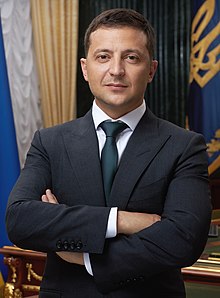
  • Volodymyr Zelenskyy – 2022 Statement on the Situation in Ukraine (15/09/2022) – 204 days

    Volodymyr Zelenskyy – 2022 Statement on the Situation in Ukraine (15/09/2022) – 204 days

    The statement made by Volodymyr Zelenskyy, the President of Ukraine, on 15 September 2022.

    Good health to you, fellow Ukrainians!

    Today in Kyiv, a new plaque dedicated to President of the European Commission Ursula von der Leyen was unveiled on the Walk of the Brave. It was really a great honor and simply a pleasure for me to take part in this unveiling, in the recognition of Mrs. Ursula’s bravery. She is one of the central figures of the European policy towards Ukraine, she is one of those thanks to whom the European space and European values are now really being protected.

    Today Mrs. Ursula has visited our country for the third time since February 24. And every time her visits open a new stage in the rapprochement of Ukraine and the European Union. We discussed all the key points in our relations. But now I want to highlight the issue of integration, the movement of our country towards full membership in the EU.

    Whatever the circumstances, we will still implement every detail of our arrangements to open the possibility of membership negotiations. Already in November, we are to fulfill the seven recommendations of the European Commission, which we received when we obtained the candidate status. The assessment by the European Commission of our progress in integration should begin as soon as possible. And next year, we should clarify the key issue: when we can start membership negotiations. The Ukrainian side will do everything for this. And as elements of rapprochement, we consider such things as the regime of the EU internal market for Ukraine, as the unification of our institutional work, for example, at customs – in joint customs control between Ukraine and EU countries. We are already working on this.

    Today I thanked Mrs. Ursula for the support already provided – macro-financial, sanctions, defense. We also discussed energy cooperation, which is extremely important for Ukraine and for every EU country on the eve of this winter, which Russia will try to use against all of us in Europe.

    I told about a new and particularly vile tactic of Russian terrorists – attacks on energy and hydrotechnical infrastructure. Just during the stay of the President of the European Commission in Ukraine, the Russian army launched new missile attacks on Kryvyi Rih, on the Kirovohrad region. In both cases – on hydrotechnical structures. The purpose of these strikes is completely clear. These are attacks on people, on the normality of life in Ukraine. The terrorist state is trying to show that it can allegedly compensate with such strikes for the cowardice and incompetence of its military, for the failure of its efforts to avoid sanctions and economic isolation.

    In response, we must show that there will always be a tough and principled reaction to every manifestation of Russian terror. That is why the eighth EU sanctions package is needed – we talked about it with Mrs. Ursula. A principled decision by the United States of America regarding the terrorist state, the legal recognition of this status is also needed, and we discussed this, by the way, recently during the visit of US Secretary of State Antony Blinken to Kyiv. We also discuss this issue during contacts with congressmen.

    Progress is needed in providing Ukraine with air defense systems. We already have agreements with certain countries, our diplomats are working with others. I want to emphasize that without providing us with a sufficient number of sufficiently effective air defense systems that will protect the Ukrainian skies, Russia will continue to feel impunity and provoke new local and global crises. Therefore, protecting Ukraine from Russian missiles is truly a basic element of global security.

    In general, supporting Ukraine with weapons, ammunition and finances is crucial for peace in Europe. The better support we have, the sooner this war will end. I talked about it with the representatives of the leading think tanks of Poland, Britain, France and the US who arrived in Kyiv. Real protection of freedom and common values of the free world is possible now only as a result of Ukraine’s victory in this war.

    I also spoke about further support for Ukraine with Canadian Prime Minister Justin Trudeau. As always, very substantive, specific. We discussed various security issues, including Russian missile strikes, defense assistance, training of our military, prospects for the developments on the battlefield, restoration of critical infrastructure before the winter period. I am grateful to Mr. Prime Minister for the support already provided to us, in particular financial, for the funds for the purchase of gas. And for understanding the steps we need to take to ruin Russia’s terrorist plans.

    An important IAEA resolution was adopted today – a resolution demanding that Russia cease all actions against the Zaporizhzhia nuclear power plant at the plant itself, at any other nuclear facility in Ukraine. Although international organizations are often limited in their ability to respond, we see that the IAEA clearly identifies the source of radiation danger, namely: the Russian military presence at the Zaporizhzhia power plant, Russian actions against the nuclear power plant. Therefore, the complete demilitarization of the plant, the immediate withdrawal of all Russian troops from there is the only thing that can ensure the implementation of this IAEA resolution. And this is also a basic element of global security. As long as Russian soldiers remain at the nuclear power plant, the world remains on the brink of a radiation disaster – worse than even Chornobyl. And it is the joint responsibility of everyone in Europe and the world – to remove the Russian presence from the territory of the ZNPP.

    Today I want to thank all the representatives of the State Emergency Service, utility services, construction workers, police officers, military personnel, representatives of local authorities, business representatives – everyone who is involved in eliminating the consequences of Russian missile terror, who helps those who suffered from the strikes. In Kryvyi Rih and the Kirovohrad region, in Kharkiv and Zaporizhzhia, in Mykolaiv and the Donetsk region – in all the cities and communities that Russia tortures with its missiles.

    The terrorist state has already used more than 3,800 different missiles against us. But no missile will bring Russia closer to its goal. There will be no subjugation of Ukraine. And each missile brings Russia closer to greater international isolation, greater economic degradation and even clearer historical condemnation.

    And finally. A mass burial site was found in Izyum, Kharkiv region. The necessary procedural actions have already begun there. There should be more information – clear, verified information – tomorrow. Tomorrow there will be Ukrainian and international journalists in Izyum. We want the world to know what is really happening and what the Russian occupation has led to. Bucha, Mariupol, now, unfortunately, Izyum… Russia leaves death everywhere. And it must be held accountable for that. The world must hold Russia to real account for this war. We will do everything for this.

    Eternal memory to all those whose lives were taken away by the occupiers! Eternal glory to everyone who fights for Ukraine!

    Glory to Ukraine!