Blog

  • PRESS RELEASE : ‘Harmful’ ICT curriculum set to be dropped to make way for rigorous computer science [January 2012]

    PRESS RELEASE : ‘Harmful’ ICT curriculum set to be dropped to make way for rigorous computer science [January 2012]

    The press release issued by the Department for Education on 11 January 2012.

    Education Secretary Michael Gove today announced he was scrapping the existing ICT curriculum. In its place, he will introduce new courses of study in Computer Science.

    The move, which is being supported by industry experts including Ian Livingstone – co-founder of Games Workshop, would give schools the freedom to create their own ICT and Computer Science curricula that equip pupils with the skills employers want.

    Other experts, including the British Computer Society and ICT professional association Naace, confirm the current National Curriculum Programme of Study is dull and unsatisfactory. Some respondents to a 2008 e-Skills study said that GCSE ICT was “so harmful, boring and/or irrelevant it should simply be scrapped”.

    Companies such as Microsoft and Google and Cambridge University are already working with technology education organisations, such as the British Computer Society, to produce free materials for schools. More are expected to follow.

    The Education Secretary also said he was keen for high-quality qualifications in Computer Science to be developed, and welcomed industry-giant IBM’s involvement.

    Education Secretary Michael Gove said in his speech today:

    As the chairman of Google, Eric Schmidt, recently lamented, we in England have allowed our education system to ignore our great heritage and we are paying the price for it.

    Our school system has not prepared children for this new world. Millions have left school over the past decade without even the basics they need for a decent job. And the current curriculum cannot prepare British students to work at the very forefront of technological change.

    The best degrees in Computer Science are among the most rigorous and respected qualifications in the world… and prepare students for immensely rewarding careers and world-changing innovations. But you’d never know that from the current ICT curriculum.

    This is why we are withdrawing it from September. Technology in schools will no longer be micro-managed by Whitehall. By withdrawing the Programme of Study, we’re giving teachers freedom over what and how to teach, revolutionising ICT as we know it.

    Universities, businesses and others will have the opportunity to devise new courses and exams. In particular, we want to see universities and businesses create new high-quality Computer Science GCSEs, and develop curricula encouraging schools to make use of the brilliant Computer Science content available on the web.

    ICT will remain a compulsory part of the National Curriculum, pending the National Curriculum review.

    He added:

    Imagine the dramatic change which could be possible in just a few years, once we remove the roadblock of the existing ICT curriculum. Instead of children bored out of their minds being taught how to use Word and Excel by bored teachers, we could have 11-year-olds able to write simple 2D computer animations using an MIT tool called Scratch. By 16, they could have an understanding of formal logic previously covered only in University courses and be writing their own Apps for smartphones.

    This is not an airy promise from an MP – this is the prediction of people like Ian Livingstone who have built world-class companies from Computer Science.

    Richard Allan, Director of Policy at Facebook in Europe, said:

    Facebook welcomes the Government’s plans to make ICT teaching in schools more interesting and relevant for young people. We need to improve our young people’s skills in this area for the UK to be truly competitive in the digital age.

    Businesses also need to play their part in helping to equip young people with the digital skills they need. Facebook recently worked with partners Apps for Good, A4e and Techlightenment to develop a programme to give young people the chance to learn how to design, code and build social applications.

    By creating space in the curriculum for teaching courses like this that are innovative and relevant for young people, government will boost the spread of skills that benefit both individuals and employers.

    The Education Secretary today also made other statements on ICT and technology in schools, including:

    • funding for new Teaching Schools to enable them to create strong networks between schools to help them develop and improve their use of technology
    • a recognition that we should look at the school curriculum in a new way, and consider how new technological platforms can help to create new curriculum materials in a much creative and collaborative way than in the past; and
    • a focus on improving Initial Teacher Training and Continual Professional Development for teachers in educational technology. The Education Secretary said that knowledge in our schools is of vital importance.

    A consultation on withdrawing the statutory Programme of Study from September 2012 will begin next week. The status of ICT within the school curriculum from 2014 onwards will continue to be considered by the National Curriculum review alongside that of all other National Curriculum subjects.

    Bill Mitchell, Director British Computer Society (BCS) Academy of Computing, said:

    It is essential we teach our children how to create digital technology and software for themselves. BCS therefore welcomes this proposal as a significant first step towards that goal.

    Good schools will now be free to teach the underpinning principles and concepts of Computer Science through imaginative and rigorous curricula such as the Computing At School curriculum, which is endorsed by both Microsoft and Google.

    Bernadette Brooks, the General Manager of Naace, said:

    Naace welcomes the extraordinary step the Secretary of State has taken. The only constant in ICT is change, and teachers will see this as their opportunity to bring innovation and creativity to their classrooms.

    To support this, Naace is working with partner associations, teachers, pupils, school leaders and commercial organisations to develop new curricula and supporting materials that will be world class. Our Key Stage 3 outline curriculum will be showcased at BETT2012 this week.
  • PRESS RELEASE : New powers for schools to beat the takeaways [December 2011]

    PRESS RELEASE : New powers for schools to beat the takeaways [December 2011]

    The press release issued by the Department for Education on 29 December 2011.

    Under new powers, schools will be able to offer price promotions on meals to particular pupils, encouraging more children to try a healthy school lunch.

    Takeaways frequently target school pupils by tempting them with cheap lunchtime deals. Previously schools were unable to do so and had to charge the same price for the same item for every pupil, unless they applied for special permission from the Government.

    The new, voluntary rules will mean schools can target pupils not eating school lunches or where uptake traditionally drops off, such at the start of secondary school. For example, schools may choose to offer:

    • £1 meal deals for pupils starting a new school to get them into the canteen
    • special prices for siblings regularly eating school lunches – helping families afford healthy food
    • cut price meals for a different year group each day to encourage them choose healthy school meals regularly.

    Children’s Minister Sarah Teather said:

    School meals beat takeaways hands down on the quality of food they serve, but up until now they have struggled to compete on price. Getting children into the school canteen is vital – the benefits of healthy school meals are clear. These new powers are an important step in tackling childhood obesity, and will mean schools can help hard-pressed families.

    No longer will schools be tied by complicated red tape, instead they will be able to use their initiative to increase take up of school meals. Already we’ve seen some great examples of pioneering schools keen to offer special deals – now others across the country will be able to follow suit.

    Judy Hargadon, Chief Executive of the Children’s Food Trust and the School Food Trust said:

    When children eat better, they do better – which is why we want to see more children able to have a healthy school meal every day, and why it’s in the interests of schools to do everything they can to boost take up. Keeping meals affordable is a crucial part of this, and many parents have told us that they’d be more likely to try school meals for their child if they were on offer at a discount.

    Price promotions do increase take up in the long-term so while a school wanting to run a really big promotion will have to invest to cover the cost, it will pay back a big return. Even on a much smaller scale, we know that many schools are keen to help families who don’t qualify for free school meals but might be struggling to find money for lunches every day. We’re particularly keen to test out how these powers can help larger families with the costs of school meals and will also be producing a guide to using the new legislation for all schools next year.

    The latest annual school food survey showed that, while the uptake of school lunches has increased across the board, there is a drop off of 6.5 percentage points between primary and secondary school.

    Research earlier this year by the School Food Trust showed that almost 6 out of 10 parents were keen to switch to school meals if they were offered price promotions.

    The changes are part of the Education Act 2011, and will come into force next year. The Act safeguards pupils not included in a special offer by preventing the school from charging more than the cost of providing the meal. Use of flexible charging is entirely optional and will involve a local decision to subsidise meals during the offer period.

  • PRESS RELEASE : Lord Hill responds to ‘The Guardian’ on academies [December 2011]

    PRESS RELEASE : Lord Hill responds to ‘The Guardian’ on academies [December 2011]

    The press release issued by the Department for Education on 23 December 2011.

    Dear Sir

    David Lammy’s letter (‘Stop this bullying over academy status’, 17 December) and Warwick Mansell’s article (‘It’s the end of state education’, 20 December) were both wrong, so far as both motives and methods are concerned.

    Our motivation is simply to raise standards for children. Eight primary schools in Haringey are below the floor standard – the highest number in London, with 5 having been below for 4 or more of the last 5 years. Ofsted have said that 5 Haringey primaries need significant improvement.

    Our support for academies is not based on an ideological whim, but evidence which started to accumulate under the Labour government. It has been backed up by independent reports from the London School of Economics and the NAO. Schools in some of the most deprived areas of the country that were once underperforming have been transformed thanks to the Academy programme, supported by passionate sponsors and fantastic teachers.

    Back in June, the Secretary of State said that the Government would be targeting underperforming primary schools. He rightly did not ‘name and shame’ local authorities or schools. Since then officials have had monthly meetings with Haringey – a total of 6 meetings. They have also met local headteachers. At all stages we have been clear that our goal is school improvement and have sought to work with the local authority – as we have done successfully in many other parts of the country.

    So perhaps it is not our stance on academies which is ideological. All we want is a lasting solution to under-performance so that children in Haringey can have the kind of opportunities that exist in neighbouring local authorities.

    Yours faithfully,

    Lord Hill

    Parliamentary Under Secretary of State for Schools

  • PRESS RELEASE : Sarah Teather on reforming Early Years [December 2011]

    PRESS RELEASE : Sarah Teather on reforming Early Years [December 2011]

    The press release issued by the Department for Education on 20 December 2011.

    Children’s Minister Sarah Teather today confirmed plans for a reformed Early Years Foundation Stage (EYFS) that reduces bureaucracy for professionals, provides earlier intervention for children facing difficulties and better prepares young children for learning in school.

    The Government today responded to the consultation on the EYFS, and confirmed changes to be introduced from September 2012.

    Children’s Minister Sarah Teather said:

    People working in the early years, teachers, parents, and other professionals are supportive of our proposals which slim down the early years foundation stage, focus on children’s healthy development and make sure they are ready to learn when they enter Year 1.

    Building on consultation feedback, our changes, including the progress check at age two, will support families to give children the best possible start in life. We want to help young children achieve to the best of their abilities so they are not falling behind before they even reach school.

    As well as learning to speak and communicate, young children also need to learn through play how to read and write and use numbers. This is a vital foundation for future success at primary school and beyond.

    People working in the early years will get additional guidance and information so they feel confident to deliver the new EYFS. And a summary of the EYFS will be available for parents so they know what their child will be learning and what they should expect from their child’s early years setting.

    Dame Clare Tickell published an independent review of the EYFS in March this year. She recommended a slimmed down Early Years Foundation Stage for 0-5-year-olds, reducing the number of early learning goals from 69 to 17 and focusing on three prime areas of learning: communication and language, physical development and personal, social and emotional development. The Government is implementing Dame Clare’s recommendations for the EYFS.

  • PRESS RELEASE : National curriculum review: initial findings [December 2011]

    PRESS RELEASE : National curriculum review: initial findings [December 2011]

    The press release issued by the Department for Education on 19 December 2011.

    Over the past year the review of the national curriculum in England has been looking at curricula in the highest performing, and fastest improving, jurisdictions internationally. Today I am publishing a set of initial findings and recommendations.

    The review team’s work has uncovered a consistent theme: these high-performing jurisdictions set materially higher expectations in terms of what they believe children can and should master at different ages. This comes as no surprise. Over the past 10 years our education system as measured by performance in the Organisation for Economic Co-operation and Development’s (OECD) Programme for International Student Assessment league tables (PISA) has deteriorated significantly. If our schools, and young people, are to become internationally competitive again we must learn from the best in the world.

    The recommendations made by the review’s expert panel set out the scale of the challenge we face, and raise fundamental questions about educational practice in this country. For example:

    • the expert panel recommend that we learn from the approach to assessment and pupil progression used in many high-performing jurisdictions, including the most successful south-east Asian education systems, which ensure that every pupil has mastered the subject content before the class moves on to tackle the next part of the curriculum. They express concern that our existing assessment model assumes that a certain proportion of young people will never be able to master crucial curriculum content, leading to an unjustified lowering of expectations
    • the international evidence shows that all successful jurisdictions expect pupils to study a broad curriculum to 16, built around a core of academic subjects. The expert panel argue that England narrows its curriculum for the majority of pupils too early
    • the evidence identifies the higher expectations of pupils in mathematics, English and science in high performing jurisdictions. For example:
      • in Singapore, pupils are expected to know all their times tables and related division facts by the end of Year 4; here our national expectation is at Year 6
      • pupils in Singapore are also expected to learn about plant and animal cells in Year 6, including how cell division forms the basis of growth, while we leave this until secondary.
      • the Canadian province of Alberta and the US state of Massachusetts both have a separate section on grammar in their curricula with clear standards which must be met.
      • Poland, a fast improving education system, has high expectations in their recommended reading, including Homer, Chekhov and Shakespeare alongside great works of Polish literature
    • the panel also recommend that we should look again at the “key stage” structure of the curriculum which they argue can lead to a lack of pace and ambition at key points in pupils education.

    It would, of course, be wrong to conclude that England should simply import systems used in other countries wholesale. But it is absolutely clear that these findings challenge fundamental tenets of our current system.

    The expert panel also raise crucial questions about the complex interaction between curriculum and qualifications in secondary schools. Evidence shows that what is taught is determined as much if not more by examinations as by the national curriculum. This means we need to consider GCSE reform alongside the development of the new curriculum.

    As the recent revelations in the Daily Telegraph have confirmed, far-reaching reform to our examinations system is vital – and must be considered in parallel with changes to the secondary curriculum. While immediate action is needed to deal with the improper practices that have been revealed, we need also to take the opportunity to ensure that deep-seated problems with how GCSEs have been developed and delivered can be addressed. We must ensure that qualifications support excellent teaching that develops in pupils a broad and deep understanding of the subject.

    In light of the far-reaching and complex nature of the expert panel recommendations, and to allow for more radical reform of both curriculum and qualifications, I have decided to change the planned timetable for the introduction of the new national curriculum. Instead of new curricula for English, mathematics, science and PE being introduced from 2013, and the remainder in 2014, the new curriculum for all subjects will be introduced in 2014.

    The longer timescale will allow for further debate with everyone interested in creating a genuinely world-class education system; teachers, governors, academics, business leaders and parents, as well as giving schools more time to prepare for a radically different and more rigorous approach.

    A detailed timetable for the conduct of the remainder of the review, as well as a refreshed remit, will be published in the New Year and copies will be placed in the Library of the House.

    Alongside this statement I am publishing a suite of documents which, taken together, provide a summary of the findings to date of the review. This suite includes:

    • the report of the review’s expert panel setting out their recommendations in relation to the framework for the new national curriculum.
    • a summary of the evidence gathered about curricula for English, mathematics and science in high performing jurisdictions.
    • a research report that looks at subject breadth in the curricula used in other education jurisdictions.
    • a summary report of the responses to the review’s call for evidence.
  • PRESS RELEASE : End for GCSE modules and spelling, punctuation and grammar marks restored to exams [December 2011]

    PRESS RELEASE : End for GCSE modules and spelling, punctuation and grammar marks restored to exams [December 2011]

    The press release issued by the Department for Education on 14 December 2011.

    Schools Minister Nick Gibb today welcomed the next steps in restoring confidence to GCSEs as rigorous and valued qualifications.

    The independent exams watchdog Ofqual has today confirmed short-term reforms to current GCSEs from September 2012.

    It follows plans outlined in last year’s White Paper to return exams to the end of each course and stop the culture of re-sits. The changes also mean that students will once again be marked on the accuracy of their spelling, punctuation and use of grammar in GCSEs in key subjects.

    The reforms effectively end modular GCSEs. They were introduced widely from 2009 but Coalition Ministers believe they have encouraged teaching to the test and prevented young people achieving a full understanding of the whole subject.

    The Government is planning to make longer-term changes to GCSE syllabuses and exam requirements to reflect the new National Curriculum – focusing on the essential knowledge in key subjects and in-depth study.

    Under the proposals:

    • Students starting two-year GCSE courses starting in September 2012 will have to sit their exams at the end of the course in summer 2014.
    • Pupils will no longer be able to re-sit individual unit exams in order to boost their marks – although they may retake the whole GCSE exam. Students will, however, be given an early opportunity to resit maths, English and English Language GCSEs every November because these are key subjects needed to progress to further study or employment.
    • Students will be marked on the accuracy of spelling, punctuation and grammar and their use of specialist terms. In the first instance, these will be those subjects that involve extended writing – English Literature, geography, history and religious studies. Five per cent of total marks in these subjects will be for spelling, punctuation and grammar. Marks assessing written communication skills already exist in English and English Language. The changes will affect externally assessed units from September 2012.

    Schools Minister Nick Gibb said:

    We are taking urgent action to restore confidence in GCSEs – the next step in our overhaul of the wider exam system.

    We want to break the constant treadmill of exams and retakes throughout students’ GCSE courses – school shouldn’t be a dreary trudge from one test to the next. Sitting and passing modules has become the be-all and end-all, instead of achieving a real, lasting understanding and love of a subject. Students shouldn’t be continually cramming to pass the next exam or re-sitting the same test again and again simply to boost their mark – then forgetting it all by moving onto the next module immediately.

    It was a mistake to abolish separate marks for spelling, punctuation and grammar in GCSEs over the last decade. Employers expect people with high grades to be able to communicate and write effectively, with precision and accuracy. It is right to restore specific assessment of these vital skills.

  • PRESS RELEASE : New studio schools to bridge gap between schools and the world of work [December 2011]

    PRESS RELEASE : New studio schools to bridge gap between schools and the world of work [December 2011]

    The press release issued by the Department for Education on 14 December 2011.

    Announcement about 12 new studio schools approved to open in 2012. 12 approved to open in 2012 – with input from employers like Glaxo, Sony, the BBC and Fulham FC.

    They join six Studio Schools that are already open. More are expected to follow in the coming years.

    Studio Schools offer academic and vocational qualifications, but teach them in a practical and project-based way. Study is combined with paid work placements with local and national employers that are involved in the school.

    Learning in this way encourages students to develop skills like punctuality, good communication, reliability and team working, whilst gaining a strong grounding in English, maths and science.

    These new schools, which are set up with the backing of local businesses and employers, are part of the Government’s drive to ensure the education system responds to demands from employers for the skills they need to grow and prosper. Employers say that ensuring our young people have these important skills should be a top education priority for the Government.

    They join a wave of other new schools – including University Technical Colleges and Free Schools – which respond directly to the demands of local people and will help to raise standards.

    The 12 Studio Schools approved include:

    The Fulham Enterprise Studio School in Hammersmith and Fulham. This project is engaged with high-profile employers, including the BBC, Fulham FC and Age UK (Hammersmith and Fulham).

    The Studio in Liverpool, which will specialise in games development and digital futures, providing pathways to employment in these significant sectors within the Merseyside region. Key employers involved include Sony and a number of small and medium sized enterprises, all of which will be assisting with developing and delivering the curriculum and in offering placements. The school also has the backing of several universities.

    The Discovery Studio School in Stoke-on-Trent, which has links with employers in the local ceramics industry including Emma Bridgewater.

    The Da Vinci Studio School of Science and Engineering in Stevenage, which will offer students the opportunity to access a curriculum based on in-demand science, technology, engineering and maths backed by employers including Glaxo.
    Schools Minister Lord Hill said:

    Studio Schools bring education and the world of work together and offer the more practical approach to learning which some children need.

    Along with teaching a rigorous academic curriculum – in a practical way – they use new approaches to make sure young people understand business basics, like punctuality and the ability to communicate with a wide range of people.

    Alongside UTCs and Free Schools, Studio Schools will give parents and children more choice. They will also involve local employers.

    Studio Schools offer a varied curriculum but have a strong academic core:

    All will offer GCSEs in English, maths and science and other GCSEs and vocational qualifications which are recognised by employers and universities.

    The majority of the new Studio Schools will offer students the opportunity to achieve the English Baccalaureate.

    Studio Schools also offer other qualifications, such as A levels, Higher Diplomas or BTECs.

    Pupils can choose to go to Studio Schools at age 14.

    Studio Schools differ from other schools in the way they deliver these qualifications, to ensure that young people are developing the skills that local employers are looking for:

    All subjects are taught through projects, often designed with employers. For example, a local hospital might commission pupils to create a campaign that addresses a local health issue. In developing this project, pupils will make links to curriculum subjects, from maths, to science, and marketing, for example. This supports pupils’ engagement by relating all their learning to the world of work.

    They typically operate longer days and outside standard school terms -giving pupils a good understanding of a working day, and the importance of good attendance and punctuality in business.

    Along with their studies pupils carry out work placements for four hours a week, with employers who work with the school. After age 16 this increases to two days a week and pupils are paid for this work.

    Each pupil has a ‘personal coach’, which seeks to replicate the role of a supportive line manager in the workplace. Coaches also help students get the most out of the curriculum and their work placements.

    For many pupils and their parents, the opportunity to combine studying for qualifications with developing skills that will give them the edge in the competitive jobs market will be very attractive. For others students, the opportunity to gain qualifications through this new approach will mean they are more engaged and perform better than in a more conventional school.

    This wave of 12 Studio Schools has input from hundreds of local and national employers. Some schools will be located alongside existing maintained schools or academies, and others will be separate academies.

    Employers increasingly tell us that they are struggling to find the skills they are looking for in school leavers. So much so, that in the most recent CBI Employer Survey (May 2010), more than two thirds of employers (70 per cent) wanted to see the new Government make the employability skills of young people its top education priority.

    David Frost CBE, Chair of the Studio Schools Trust and former Director General of the British Chambers of Commerce, commented:

    “I am delighted that the Government has approved another 12 Studio Schools, and that interest is continuing to grow as we increase our network of Studio Schools across the UK.

    “Studio Schools will play a vital role in equipping young people with the skills and experience that they need to succeed in a competitive jobs market, through combining mainstream qualifications with real experience of the world of work. Many employers are keen to help develop and shape their workforce for the future, and Studio Schools will allow them to be involved at every step of the way, from helping to design the school curriculum to providing paid work placements for students. Students are able to develop the skills and knowledge that employers are looking for.

    ‘’I look forward to working with the 12 new Studio Schools as they prepare to open in September next year.’’

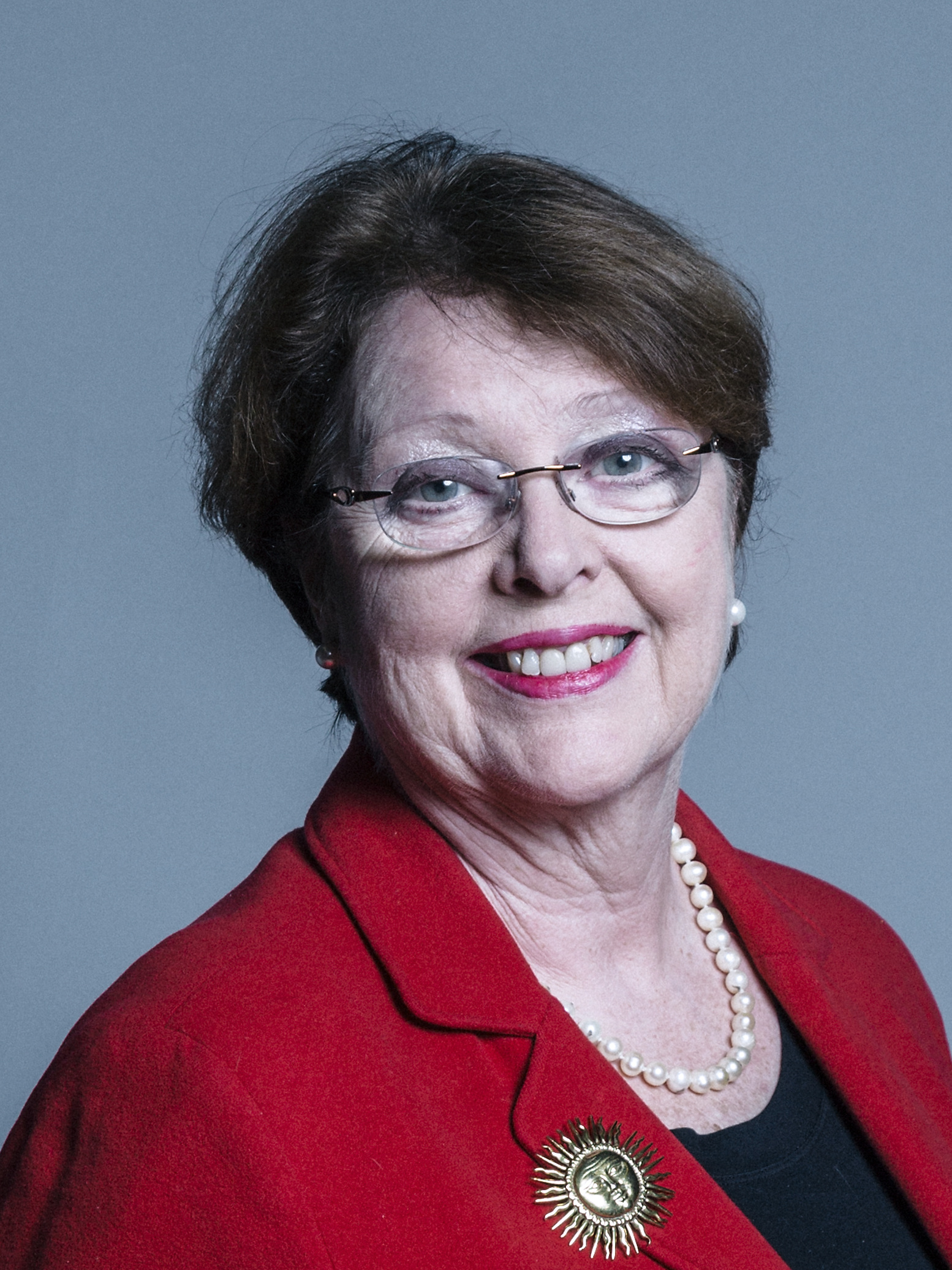
  • Glenys Thornton – 2022 Tribute to HM Queen Elizabeth II (Baroness Thornton)

    Glenys Thornton – 2022 Tribute to HM Queen Elizabeth II (Baroness Thornton)

    The tribute made by Glenys Thornton, Baroness Thornton, in the House of Lords on 9 September 2022.

    My Lords, may I begin by saying how much I appreciated the remarks of the noble Lord, Lord True, and my noble friend Lady Smith in opening this debate. They were wonderfully moving.

    Like many noble Lords, I spent yesterday evening glued to the television and exchanging messages with family and friends, and, like many other noble Lords, I was puzzled as to why I felt so discombobulated and odd. That is an experience that we all seem to have shared. Possibly it is because I was born in the year that the Queen came to the throne—I am 70 in six weeks’ time—but actually I think it is mostly because we were witnessing something seismic, a huge shift in our civic infrastructure and our life in the UK, and we all have to come to terms with that. We in this House have to work out how to support our nation in getting through this period.

    I am a member of what I like to think of as the elite group in this House who are Baronesses in Waiting. Since several Baronesses in Waiting are here and have spoken, I wonder whether we should form a former Baronesses in Waiting group—“FBIWG”, we could call it. Most of us had to be taught how to curtsey, because if you do not get it right you fall over. In my case, I was taught by a lady in waiting just before the audience that we all have to have before we can undertake the varied duties of being a Baroness in Waiting. I do not have a huge recollection of the conversation in that audience because there were several of us and it was actually a bit terrifying. However, in the course of that conversation I mentioned to Her Majesty that the week before, I had been to Poundbury on a coach trip of parliamentarians. When I said that, I saw a glimpse of a mother who was really proud of her boy. She was really proud of the work that our new Head of State was doing in Poundbury in its early days.

    The duties that we were to undertake were very varied. In my case, they included accompanying Her Majesty to Parliament for State Opening in December 2009 in an open carriage—I underline that this was in December—with Her Royal Highness Princess Anne, who I have to say I thought was going to turn blue with cold. We had other duties such as attending diplomatic balls. I am a millworker’s daughter from Bradford, so I experienced these things with wonder and perhaps some terror but, like others in this House, I also experienced the warmth and humour of Her Majesty and other members of the family, which turned those into very valued and treasured experiences.

    As our new Head of State, King Charles, said in his address tonight, he will have to leave behind many of the causes and organisations into which he has poured his time and passion for decades, from young people to the unemployed and the environment. I must say, I hope that many of those progressive causes do not fall by the wayside. I was pleased to hear His Majesty’s assurance that support for many of those businesses, charities, social enterprises and causes will be picked up and will continue.

    In his remarks, His Majesty finished on a point of hope. I think we just need to say “Onward and upward” from now on.

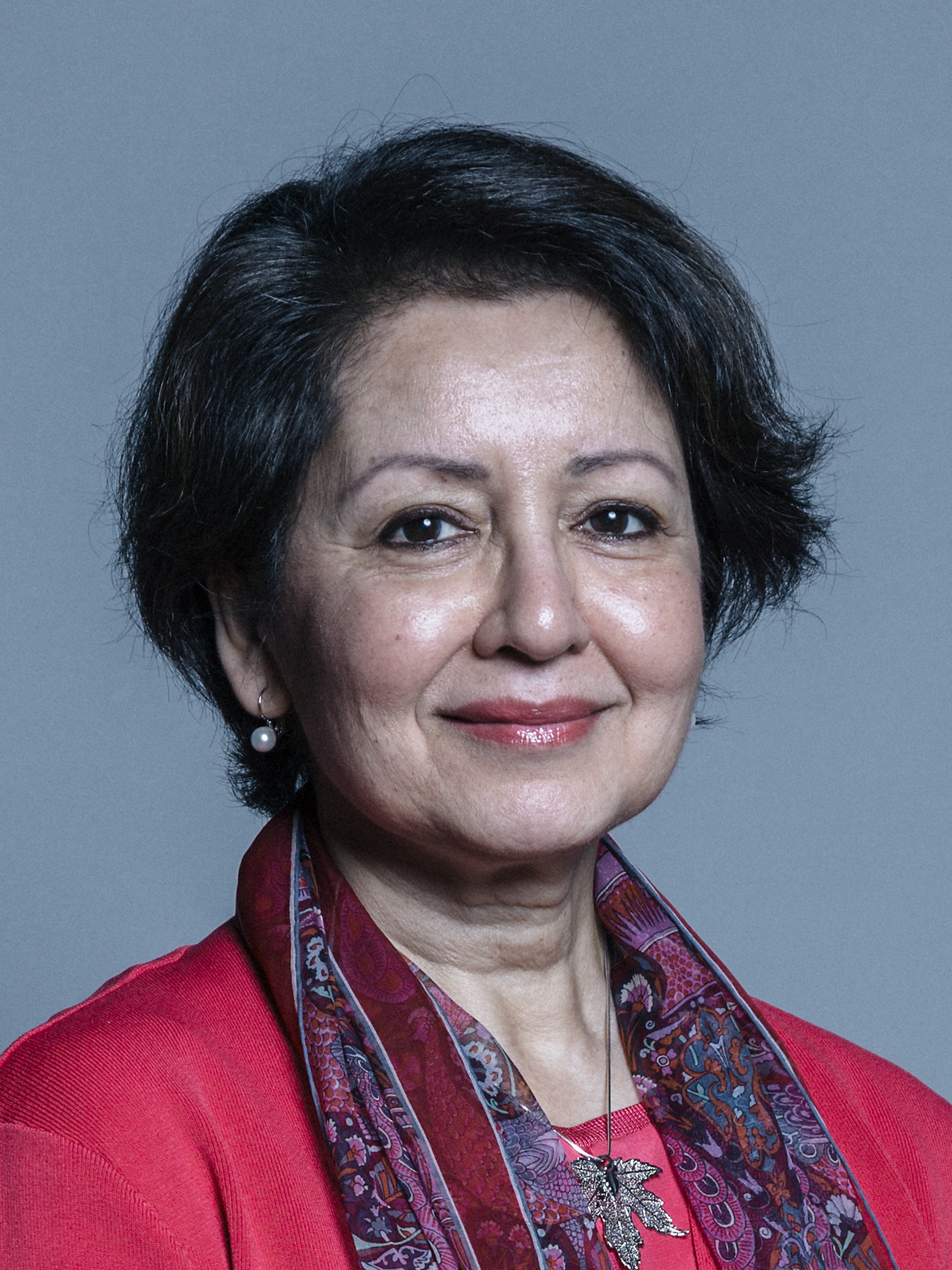
  • Shas Sheehan – 2022 Tribute to HM Queen Elizabeth II (Baroness Sheehan)

    Shas Sheehan – 2022 Tribute to HM Queen Elizabeth II (Baroness Sheehan)

    The tribute made by Shas Sheehan, Baroness Sheehan, in the House of Lords on 9 September 2022.

    My Lords, perhaps I may start by saying how much I have appreciated the quite admirable tributes from across the House that we have heard today. I add my wish to be associated with them. What a privilege and honour it was to be present in the Chamber with other noble Lords and staff as King Charles III made his first address to the nation. It was really quite a moving occasion.

    I think we can all agree that, as tributes go, this one to her late Majesty Queen Elizabeth II writes itself. She was a quite remarkable woman whose life of service and duty was lived in the full glare of public life in exemplary fashion. She dealt with the numerous challenges that arose with admirable fortitude and dignity. She was never haughty, never unkind and never condescending—although, judging by anecdotes from noble Lords today, she seems to have had ample opportunity to respond in such a way on several occasions.

    I never met her late Majesty, but I wish I had. Nevertheless, her passing has hit me hard, and it is very emotional for me and for the multitudes of her subjects from all corners of the world who also never met her but who have come to royal palaces just to be there to remember her with love and to pay their respects. I wish to speak today as one of them and on their behalf, if that is not too presumptuous. I come from an immigrant family from Pakistan as part of the Commonwealth. In us, her late Majesty inspired feelings of loyalty and respect, and our love. She garnered the gratitude of the people of the Commonwealth who came here to build a new life. In greeting leaders of all countries of the Commonwealth with respect and dignity, hers was an example to other leaders in our communities and to ordinary people in their dealings with their newly arrived, different neighbours.

    Not only that, but she took the trouble to travel extensively to Commonwealth countries and accept their hospitality. She will have known that, in many parts of the world, to be a guest is to confer a great honour on your host. We immigrants may have felt the antipathy of some towards us, but it was always a comfort to know that the Queen pointed the way to decency. It is no accident that so many of those who have wanted to be at one or other of the royal palaces are from the Commonwealth, because for them she was their champion and they loved her for it. That love seemed approved by the heavens as a rainbow shone forth over Windsor yesterday evening.

    Her faith guided her throughout her life. It was a privilege indeed to swear allegiance to a monarch who valued faith, a monarch who will be deeply missed by her family, to whom I offer my deepest condolences, particularly to King Charles and his Queen Consort, Camilla. I look forward to swearing loyal allegiance to King Charles III. God save the King.

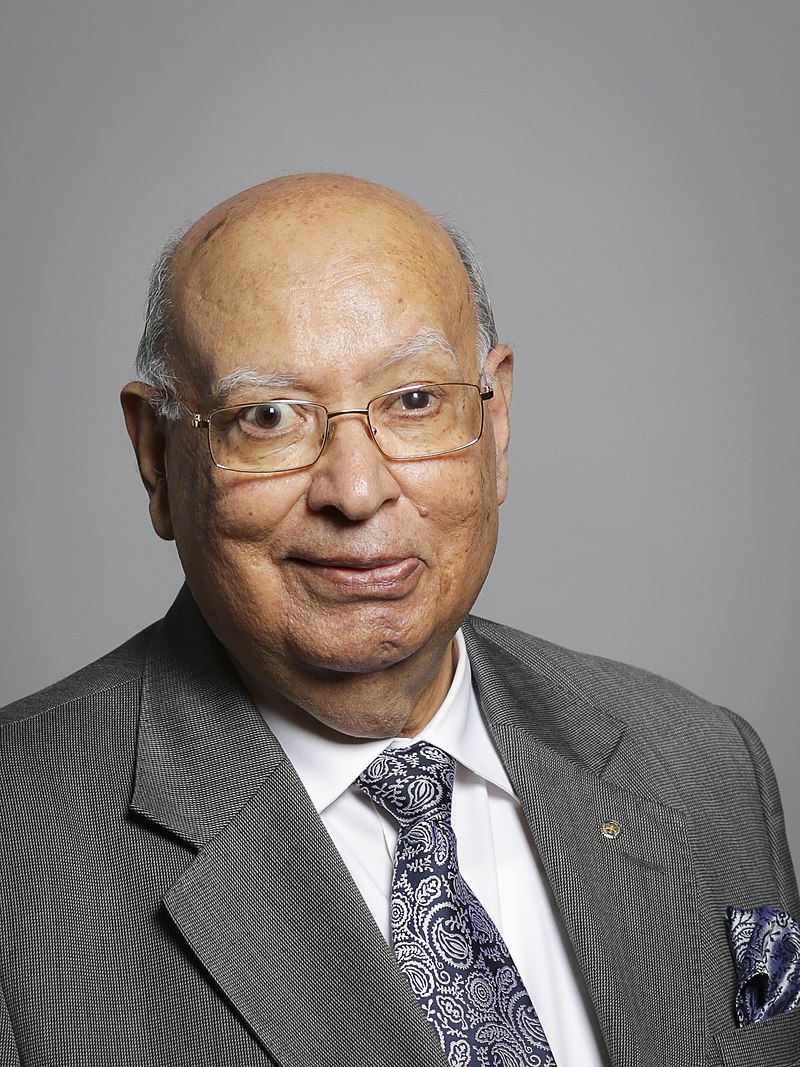
  • Raj Loomba – 2022 Tribute to HM Queen Elizabeth II (Baron Loomba)

    Raj Loomba – 2022 Tribute to HM Queen Elizabeth II (Baron Loomba)

    The tribute made by Raj Loomba, Baron Loomba, in the House of Lords on 9 September 2022.

    My Lords, Nelson Mandela once said:

    “What counts in life is not the mere fact that we have lived. It is what difference we have made to the lives of others that will determine the significance of the life we lead.”

    I was sorry to hear that the Queen died yesterday. She was an extraordinary woman who fulfilled her destiny with dedication, dignity and grace, using her power behind the scenes as a cohesive force, bringing people across the globe together with an overall perspective of future unity. In challenging times she was a rock, which our Prime Minister also mentioned yesterday in her speech. Today marks the end of an enormously long Elizabethan era.

    Like me, Her Majesty Queen Elizabeth II was born into a world where the British monarch was Emperor of India, but it fell to her, coming to the Throne five years later, to embody that transition to a post-imperial world, and there can be no greater tribute to her than the heartfelt outpouring of love and gratitude expressed by the leaders of Commonwealth countries all over the world since Her Majesty passed away on Thursday. The transition has been different for every country, but it was the Queen’s unfailing spirit of service and humility that allowed even the most painful of memories not to stand in the way of forging a new relationship.

    I had the honour to meet Her Majesty twice, once at the opening of the GLA building—I have a beautiful photograph of myself with her—and, on another occasion, at the opening of Barnardo’s new offices as I am the vice-president of Barnardo’s. I was completely taken back as both Her Majesty and the Duchess of Cornwall—now the Queen Consort—wanted to hear about my charity for widows.

    In 1997, 50 years after India gained her independence, it was my privilege to organise the British-Indian Golden Jubilee banquet in London, at which King Charles III, then of course the Prince of Wales, quoted the Vedas and expressed his thanks to India for its civilising influence on Britain. It was a moment that symbolised the transformation that had taken place from imperial power and subject nation to the familial ties of equals. The enduring strength of those ties between the world’s fifth and sixth-largest economies was illustrated again yesterday when the Prime Minister of India recalled the Queen’s warmth and kindness.

    Many tributes have alluded to the Queen’s greatness. To that, I would add my voice by saying that the greatness of Queen Elizabeth II lay not in harking back to the days of empire or in asserting dominance over others, but in the service and humility that characterised her reign and opened the door to new beginnings.

    I pay tribute to her late Majesty for the contribution she has made, which has undoubtedly made the world a better place than it would otherwise have been. It is her legacy that in an increasingly uncertain world offers hope for the future. I know that the Queen’s love for India and for the Commonwealth was fully shared by her eldest son, King Charles III, and that he will seek to build on that legacy. God save the King.