Blog

  • PRESS RELEASE : In order to defeat the aggressor, it is very important that the US remain a leader in supporting Ukraine – Volodymyr Zelenskyy during The Clinton Global Initiative [September 2022]

    PRESS RELEASE : In order to defeat the aggressor, it is very important that the US remain a leader in supporting Ukraine – Volodymyr Zelenskyy during The Clinton Global Initiative [September 2022]

    The press release issued by the President of Ukraine on 20 September 2022.

    The leadership of the United States of America in supporting Ukraine in the fight against the Russian aggressor will contribute to the further strengthening of the defense capabilities of the Ukrainian army and victory. This was stated by President Volodymyr Zelenskyy during his online participation in the meeting of The Clinton Global Initiative (CGI), a separate panel of which was devoted to Ukraine.

    During a conversation with the 42nd US President Bill Clinton, Volodymyr Zelenskyy noted that the United States of America is an indicator of democracy for the entire civilized world, to which other countries are compared. Therefore, it is important that they remain leaders in supporting Ukraine and exerting pressure on Russia.

    “When the US gives Ukraine artillery, then other countries support us and also provide it. When the US designates (the country – ed.) a sponsor of terrorism, the democracies of Europe will also support this initiative. Therefore, when you ask me how the United States can help, it is to be a leader,” the Head of State said.

    Volodymyr Zelenskyy emphasized that the world and, in particular, the US, has already done a lot to support Ukraine and strengthen our army, which resulted in the de-occupation of a number of Ukrainian territories.

    “Our troops have internal resilience – it is their love and respect for their homeland, for Ukraine. But on the battlefield, hands and eyes are not enough. Weapons are also very important. And here I want to thank both President Biden and the US Congress for the bipartisan support of Ukraine,” he said.

    The Head of State also called on the US to encourage other democratic countries to provide more assistance to Ukraine, in particular to provide the necessary weapons.

    “They have the artillery we need, the appropriate weapons. And here, politically, the United States could put pressure,” Volodymyr Zelenskyy noted and added that this issue was repeatedly discussed with congressmen, senators, as well as at the level of presidents.

    He expressed his belief that in the issue of fighting the aggressor, one cannot stand aside and not express a position clearly.

    “You cannot balance between good and evil, light and darkness. You have to choose a side. Every subject, every state is open, free. So they can choose a side, but they can’t be in the middle,” said the President and emphasized that Ukraine is fighting precisely for values – for freedom.

    The Head of State noted that the US and the world community should force Russia to sit down at the negotiating table after its troops leave the territory of Ukraine.

    Volodymyr Zelenskyy emphasized the importance of preserving the unity of the free world in matters of sanction pressure on the aggressor. This especially applies to those countries where there is Russian lobbying.

    “It is very important not to lose a united Europe, and then the combined volume of these sanctions will definitely hit both Russia’s military-industrial complex and the economy. And they will definitely feel it. But the main thing is that it should be felt not by the leaders of the Russian Federation, but by their society. And society feels it when citizens’ wallets are affected, when their rights and freedoms are restricted. And here it is very important to introduce visa restrictions for the Russian Federation. Russian society will know that it must also bear responsibility for this war. Because they elected these leaders. And they should feel the tangible price of this war,” the President said.

    According to the Head of State, the most important sanction measure that must be applied to Russia is to designate it a state – sponsor of terrorism.

    He also reminded that the Ukrainian side recently presented recommendations on security guarantees for Ukraine prepared by the international working group led by Andriy Yermak and former NATO Secretary General Anders Fogh Rasmussen. These recommendations should become the basis of the future compact on security guarantees for Ukraine, which, according to the President, could be an example of security for all states that are not members of NATO.

    Volodymyr Zelenskyy spoke in favor of such partners as the United States, Great Britain and EU countries joining the circle of guarantors of the security of our state.

    “I think it is very important that the USA become the first country to sign these security guarantees with the Ukrainian side,” he summarized.

    Established in 2005 by President Bill Clinton, the Clinton Global Initiative (CGI) convenes global leaders to create and implement solutions to the world’s most pressing challenges. This September, CGI will convene alongside the United Nations General Assembly. During this meeting, more than 1,000 attendees will come together to drive action on climate change, inclusive economic growth, health equity, the refugee crisis, and more.

  • PRESS RELEASE : President during a video meeting with the leadership of Goldman Sachs – Support Ukraine’s economy now, and you will win in the future [September 2022]

    PRESS RELEASE : President during a video meeting with the leadership of Goldman Sachs – Support Ukraine’s economy now, and you will win in the future [September 2022]

    The press release issued by the President of Ukraine on 20 September 2022.

    As Ukraine demonstrates resilience on the battlefield in the fight against the Russian aggressor, representatives of global business should demonstrate resilience in supporting the Ukrainian economy. This was stated by President Volodymyr Zelenskyy during a meeting in the format of a video conference with members of the Management Committee of one of the largest investment companies in the United States and the world, Goldman Sachs.

    The Head of State emphasized that since the beginning of the full-scale invasion by Russia, Ukrainians have demonstrated unity in society and resilience on the battlefield. The state institutions of Ukraine also withstood – the National Bank, the financial sphere did not stop working, wages and pensions were paid, other transactions were carried out, etc.

    As Volodymyr Zelenskyy noted, thanks to the reforms that took place in our country before the war, Ukraine was able to repel large-scale cyberattacks by the Russian Federation, and digital state services remained available to all citizens.

    According to the President, demonstrating this resilience to partners, the Ukrainian authorities are calling to support the economy of our country, invest and create new jobs.

    “We are real partners, and therefore we expect resilience from you as well. We ask businesses that were on the territory of Ukraine before the full-scale invasion to stay and continue to invest,” said the President.

    “Support us now – we really need it. Support our economy now, and you will win in the future,” urged the Head of State.

    According to him, despite the fact that investments during the war are risky, after the victory of Ukraine, investors will enjoy the benefits, as Ukrainians will receive a strong motivation to rebuild the country.

    “If you support our economy today, Ukraine will be very grateful to you tomorrow, and you will definitely feel it,” added Volodymyr Zelenskyy.

    The President of Ukraine emphasized that the world is more powerful than any aggressor state when it unites.

    “And we showed it. We showed that when the world is united, helps us with weapons, helps us with finances, we can oppose any colonialist power,” he emphasized.

    Volodymyr Zelenskyy stressed the importance of preserving unity in Europe, in particular on the eve of the winter period.

    The Head of State reminded that Russia provoked the energy crisis in the world long before the full-scale invasion of Ukraine, and during the war it created a food crisis by blocking the export of food through Ukrainian ports in the Black Sea. But it was thanks to the unity of the world community that the issue of grain export was resolved.

    “We united, we put pressure and ensured a food corridor. Many countries in Africa, Asia and Europe received agricultural products from us. This is what the world did when it united and exerted pressure,” the President said.

    Therefore, according to him, it is now important that the world community does not give in to the energy blackmail of the Russian Federation, maintains and increases the sanctions pressure, in particular on the energy resources of the Russian Federation.

    The Head of State emphasized: if you give in to Russia’s blackmail and make situational concessions, this will not prevent similar situations from occurring in the future. On the contrary, Russia will try to dictate its terms whenever it does not like something.

    “Today, the European Union, some states are not dealing with the issue of aid to Ukraine or the issue of the energy crisis this winter – they are dealing with the issue of their capability in the future, the independence of their children, the influence of any external entity on their territorial integrity,” Volodymyr Zelenskyy is convinced.

    He also emphasized that non-compliance by individual countries with the sanctions introduced on the Russian Federation may encourage the Russian leadership to increase blackmail and resort to escalation. Therefore, according to him, it is important to designate Russia a state – sponsor of terrorism.

    The President noted that the sanctions pressure affects Russia, particularly its economy and GDP, but ordinary Russian citizens still hardly feel the effect of strategic restrictions.

    “It is extremely important for us that they feel this. Then they will understand the price of this war unleashed by their leader. Then the entire community within Russia will begin to put pressure on its authorities. And this is also fair, because it is inadmissible that anyone in the world feels this war, primarily Ukraine, but Russia definitely does not feel it. It cannot be so. The price of war should be tangible,” the Head of State summarized.

  • PRESS RELEASE : Volodymyr Zelenskyy and CEO of BlackRock discussed how to drive investments into Ukraine [September 2022]

    PRESS RELEASE : Volodymyr Zelenskyy and CEO of BlackRock discussed how to drive investments into Ukraine [September 2022]

    The press release issued by the President of Ukraine on 19 September 2022.

    President of Ukraine Volodymyr Zelenskyy and Chairman and CEO of BlackRock, the world’s largest investment manager, Larry Fink discussed the possibilities of driving public and private investments into Ukraine.

    President of Ukraine Volodymyr Zelenskyy and Chairman and CEO of BlackRock Larry Fink met over a video conference to discuss how BlackRock Financial Markets Advisory could provide pro bono advice to the Ukrainian government on setting up a reconstruction fund in support of the recovery of the Ukrainian economy. This could include advice on the structure, investment process, governance and use of proceeds for a fund. The goal of the fund would be to create opportunity for both public and private investors to participate in reconstructing and rejuvenating the market economy in Ukraine by delivering fair and just returns to investors.

    “We’ve shown that we know how to win on the battlefield. Another important task for us is to achieve victories in the economy as well, and to be an attractive country for investors,” Volodymyr Zelenskyy said.

    The President emphasized that Ukraine is interested in attracting global capital that will create new jobs and facilitate the economy’s growth.

    “The investment attractiveness of our country is of particular importance. It’s important to me that a structure like this be successful for all parties involved. We are capable, and we want to restore a normal investment climate,” the Head of State said.

  • PRESS RELEASE : UK experts drive Peru’s ongoing response to February’s oil spill in the Pacific Ocean [September 2022]

    PRESS RELEASE : UK experts drive Peru’s ongoing response to February’s oil spill in the Pacific Ocean [September 2022]

    The press release issued by the Foreign Office on 27 September 2022.

    • Team of experts from the United Kingdom carried out the workshop “Response to marine pollution: preparedness and best practices from the United Kingdom” with Peruvian authorities.
    • More than 50 representatives from Peru’s environmental, fisheries, and coast guard sectors actively participated in the four-day workshop.

    Lima, 26th September. – Between 20 and 23 September, a team of UK-based pollution response experts from the Joint Nature Conservation Committee (JNCC) and the Centre for Environment, Fisheries and Aquaculture Science (Cefas), delivered the workshop “Marine Pollution Response: preparedness and best practise from the UK”, with Peruvian Governmental authorities.

    This 4-day workshop brought together over 50 representatives from Peruvian environment, fisheries and coastguard sectors, including officers from the Minister of Environment, the National Park Service and coastal municipalities. With the support of colleagues from British Embassy in Lima, the UK delegation shared lessons learned from historic UK incidents and discussed key legislation and preparedness principles to ensure an effective and timely response to marine pollution incidents.

    The workshop also covered a range of topics including response options, use of satellite and drone technology, socio-economic impacts of spills, evaluating impacts to marine birds and marine mammals, post-spill monitoring and hydrocarbon analysis and fingerprinting. It also included presentations from UK Deputy to the Secretary of State’s Representative for Maritime and Salvage, and sessions from oiled wildlife response organisation Aiuka.

    Bethany Graves, from the JNCC, said:

    It’s a pleasure to be here, sharing UK experience and knowledge and working closely with Peruvian Governmental agencies to explore opportunities to be better prepared. We have had an excellent week of workshops with good engagement and discussions.

    We’re grateful for the British Embassy Lima’s help in the organisation of the workshop and we are glad to see that all who attended found it useful.

    The workshop concluded with a table-top exercise in which lessons learned from the previous days were tested and cemented. After this workshop, the UK team will prepare a ‘Recommendations for better Readiness’ report to hand over in the next few months. This will include comments on Peru’s National Contingency Plan and key gaps in preparedness as identified in the workshop (and shared from Peru agencies).

    The British Ambassador to Peru, Gavin Cook added:

    The oil spill off Lima was a wake-up call. But it’s one the Peruvian government is responding to, in both managing the aftermath of the disaster and thinking longer-term. The UK is proud to be supporting this alongside our broad environmental work in Peru.

    British expertise has a huge amount to offer – especially in the use of technology – and we look forward to continuing to share best practice and drive change.

    The workshop was delivered under the Ocean Country Partnership Programme, a UK-led programme funded through the UK government’s £500 million Blue Planet Fund, which aims to help eligible countries reduce poverty, through supporting the sustainable management of their marine environment.

  • Ursula von der Leyen – 2022 Speech at Princeton University

    Ursula von der Leyen – 2022 Speech at Princeton University

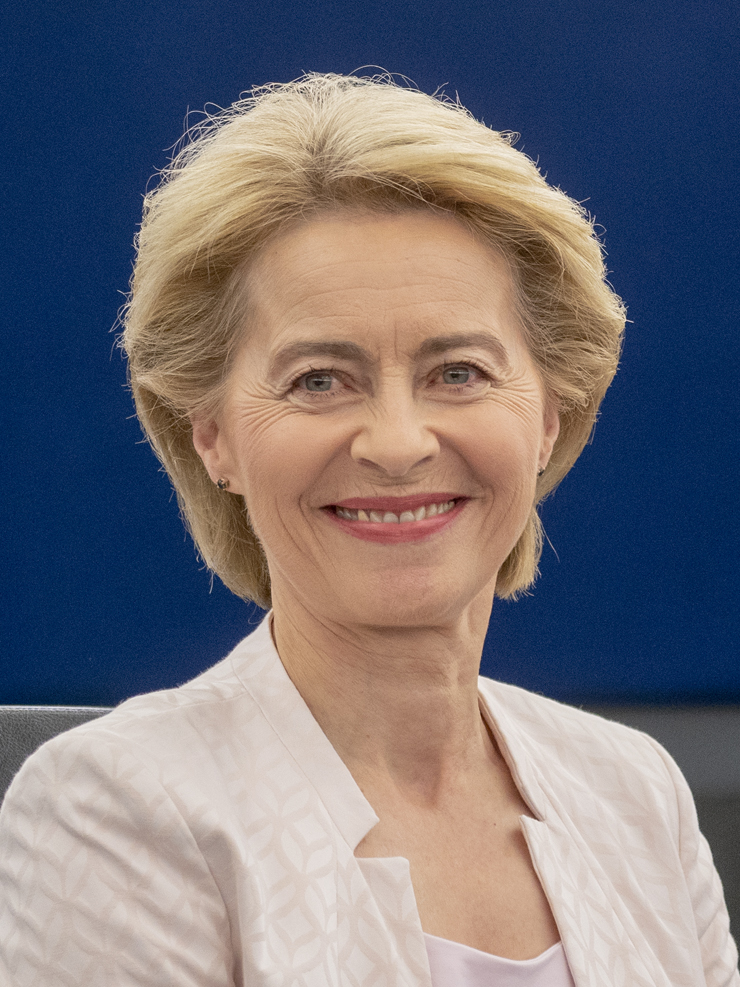
    The speech made by Ursula von der Leyen, the President of the European Commission, at Princeton University on 22 September 2022.

    Dear Dean Jamal,

    Dear Andy, Professor Moravcsik,

    Thank you very much for welcoming me back to Princeton,

    Distinguished members of the Princeton faculty and administration,

    And most importantly, dear students,

    Indeed, this is the United Nations General Assembly week right now. And you can imagine that one dominant topic was and is the war that Russia unleashed against Ukraine. It was 24 February when Russia invaded Ukraine and brought war back to Europe. I visited Kyiv for the first time since the beginning of the war round about five to six weeks after the invasion started. And I went to the town of Bucha. Before the war, Bucha was a quiet, friendly suburb on the outskirts of Kyiv. It has been occupied by Russian troops. Two days before I went to Bucha, it had been liberated by Ukrainian armed forces. When I went there, I saw mass graves; I saw the body bags lying there – men, women, children. I saw these brutal scars of missiles and bombs that had been aimed deliberately at residential areas, hospitals, schools kindergartens. So I basically saw first-hand the reality of Putin’s war.

    Last week, as you said, Andy, I was again in Kyiv and I was in Irpin, also on the outskirts of Kyiv. You still see the scars of the bombing of houses and hospitals and schools. I spoke, for example, to schoolchildren. And while we were speaking, when I visited that school, there was a missile alarm so we had to go to the shelter. And they told me that it was the third time on that day that they went to the shelter. That is their daily experience. But I also saw that life has come back to Kyiv. The streets were filled with people, the shops were open. People in Kyiv try to win their life back. The Ukrainian army is making impressive advances, liberating many towns and villages, and forcing the Russian army to retreat. Of course, I know that this all needs consolidation, but the success of the last days is lifting spirits – and not only the Ukrainian ones.

    I know that some are calling to stop the fighting. But I must say that the reality is as follows: If Russia stops fighting, the war is over. If Ukraine stops fighting, there will be no more Ukraine. Much is at stake. Not just for Ukraine – but also for Europe, for the international community and for the global order. Russia has invaded Ukraine with the goal to wipe the country from the map – that is what Putin says and writes. So Ukrainians are fighting for their survival, but they are also fighting for global values. This is not only a war that Russia has unleashed against Ukraine. This is a war on our values; this is a war on the rules-based international order. This is an attack on the UN Charter. I mean, Russia is a permanent member of the Security Council of the United Nations, we should not forget it. This is trampling on the UN Charter. And this is a war about autocracy against democracy. And I tell you: Many, many worldwide are watching very precisely what the outcome is going to be.

    From day one on, the United States and the European Union and many other friends have stood at Ukraine’s side with weapons, and it is amazing to see the bravery of the Ukrainians fighting for their survival; with funds; with hospitality, on the European Union side, for more than 8.1 million refugees in seven months; and with the toughest sanctions the world has ever seen. Let me tell you that these sanctions have only been possible because of a very, very close cooperation with our friends in the United States. As you said, I have been in politics now round about 20 years, 14 of them in the government of Angela Merkel. Never ever have I experienced such an intense, trustful and detailed cooperation with the White House. And therefore, I think the saying is right: When you face a crisis, you know who your true friends are. Since last year already – it was around Christmas or New Year when Putin had started, as you might remember, to deploy 10,000 troops to encircle Ukraine –, our teams started to work on the sanctions to align the European system with the American system. They are very different but the effect of the sanctions should be the same. And we do not want extraterritorial effects but sovereign effects from the European Union but also all the other G7 members that joined us and, of course, the United States. And this intense work over weeks then had as consequence that when the invasion started – on day two, day four, day six –, we could immediately deliver three very heavy packages of sanctions that are unfolding their effect right now. The sanctions are biting. Russia has tried everything to camouflage the effects. And as this is not a free country, you can twitch and turn around facts and figures into what you want them to be. Or you can say what you want and hide what you want. But if you look at the financial sector in Russia, it is on life support now. Russia’s industry is in tatters. It is very interesting to see the military complex, because the military complex now has a very hard time to replenish what is necessary for the armed forces. Because the updated technologies are missing, these are coming from our side and are no longer delivered, there is a ban on the exports. The spare parts are missing. So you observe now that the Russians are cannibalising their refrigerators and their dishwashers to get semiconductors they can use for the military complex. Basically, the Kremlin has put Russia’s economy on the path to oblivion. And I want to make it very clear that the sanctions are here to stay. This is the time for resolve and not for appeasement.

    The same is true for our financial support to Ukraine. So far, Europeans have provided more than EUR 19 billion in financial assistance since the beginning of the war. And that is without counting our military support. The message is: We are in it for the long haul.

    I grew up in a divided country. I was lucky. I was born in West Germany, in the western part of Europe, in a free and democratic country. I vividly remember the times of the Iron Curtain. When I was your age, student age, when we wanted to drive to the island of West Berlin that was surrounded by the GDR, I remember, still today, the feeling of being terrified when you were driving on the corridor through the death zone. Because you knew, one false move and there is no rule of law anymore to protect you. So I remember this feeling very well, what the Iron Curtain and the Wall, and the death zone were all about. I also remember, of course, in 1990 the jubilant days, when the Iron Curtain came down, when the Wall in Berlin came down, and when the countries behind the Iron Curtain broke free. Indeed, the Baltics, Poland, Romania, Hungary, Slovakia, Slovenia, Bulgaria, Czechia – you name it, so many others. Today, there is the same wind of change that is once again blowing across the continent. Because Ukraine has now applied for membership in the European Union. With their decision to apply for the candidate status in order for Ukraine to join the European Union, they have very clearly chosen the path of freedom. And with our decision to grant them candidate status, we have chosen to stand by Ukraine as long as it takes.

    This war will change Europe and the world fundamentally. Take energy, I want to speak a little bit about energy. At the beginning of the war, Europe was heavily dependent on Russian fossil fuels: coal, oil, gas. 60% of the Russian budgets’ revenues at that time was from fossil fuels. So you can imagine how important the fossil fuel export was and is. Putin has built very strategically, and later on used, our dependency to blackmail us, basically to suffocate us, with lowering – already in hindsight, I see it – the gas supply last year to the storage to make sure that we have not enough gas in the storages to make it through the winter, and slowly but surely cutting the gas supplies to one Member State after another. At the moment, he prefers to flare the gas – that is literally burning the gas – instead of delivering it, as he should, if you look at the contracts. I guess that he obviously thought that he could intimidate us and divide us. But let me tell you that just the opposite is the case. This blackmailing has really united us. And it is a turning point, because we have decided, as a European Union: We will end our reliance on Russian fossil fuels.

    Meanwhile, Europe has banned Russian coal imports completely. We have been winding down and are winding down the oil imports from Russia, down to 10% by the end of the year. Gas is interesting. Let me give you three figures: If you look at the overall global pipeline gas demand, 75% was the demand of the European Union on global pipeline gas supplies. So we are a huge client – very important. Half of it was imports from Russia. Today, we are down, on Russian imports, to 25%. One quarter is left. How are we doing this? We are diversifying away from the Russian supply towards other suppliers that are democratic friends and trustworthy. First of all, of course, our friends in the United States. I closed an agreement with President Biden on LNG imports that really, really helped us and saved us in these difficult times. It is very successful. The second point that we are doing, besides diversifying away, is saving energy. The energy that is not being used is good energy. We save it to the storage for the coming winter.

    Of course, this comes at a price. So let me tell you that we all feel that the global energy market is very tight. The whole Russian supply is missing, so we are demanding energy on the global market. Therefore, the global market is really tight. Energy prices are skyrocketing, as you will observe in Europe. This is a heavy burden on people’s and businesses’ shoulders. We are taxing now the windfall profits of electricity-producing companies to have a targeted support for vulnerable households and vulnerable businesses. We are doing all this not only because it is necessary but also because we know that this is the way to dry out Putin’s war chest. And we know that we are doing this because with energy independence and energy freedom comes greater power to defend the global rules. This is the immediate response. But there is of course a mid-term and long-term response.

    Ultimately, the best way to get rid of fossil fuels is a massive investment in renewable energy. Every kilowatt-hour that we are producing electricity from sun, from wind, from hydropower, from geothermal, from biomass, from green hydrogen – you name it – is not only good for the climate – it is also good for the climate that is the most important part – but it makes us independent. It is home-grown; it is security of energy supply; it created good jobs at home. If you look at the price today of solar and wind energy, it is cheaper by now than fossil fuels. This is why, for example, we are investing heavily in offshore wind parks. The biggest one worldwide is now starting in the North Sea. When it is ready to go, it will heath 50 million European homes throughout the whole year.

    So in sum, the era of Russian fossil fuels in Europe is coming to an end. And this is a big geopolitical shift, because if you look at the map, the demand and supply from Russia is coming to an end. This demand from the European Union will now switch towards the Global South. Because if we do it right, we are not only diversifying to other gas or fossil fuel suppliers, but we massively invest now in renewable energies, in regions where the resources are in abundance. If you look at the other side of the Mediterranean, in the European Union, it is the African continent: sun, wind, partially hydropower, in abundance. And if we invest in the infrastructure, we do not only gain freedom from the blackmail that we have experienced with Russia, but we are also fighting the right cause against climate change.

    The fight against climate change is the biggest one. And I want us – the Europe Union and the United States – to be allies in that fight. Global warming is the real crisis that is overshadowing everything. We know that climate change is man-made. The body of evidence is overwhelming. So it is us. The impact is tangible, you know it: floods, droughts, wildfires, hurricanes, tornados, melting glaciers, rising sea levels. I had yesterday a bilateral meeting with the Prime Minister of Pakistan: three-quarter of the country is inundated – climate change, it is nothing but climate change. So it is very bad. But there is a glimpse of hope, because if it is true that climate change is man-made, we can do something about it. That is the good news and the bad news. And that is what the European Green Deal is all about. When I came into office in 2019, this was the first initiative I took. Our strategy, the European Green Deal, wants to transform our economy, so that we preserve and restore nature. We need to decarbonise our economy; we need to move towards the circular economy; we need to develop a way of life and work that gives our planet a real fighting chance for the next generation, for you. So we have, as the European Union, cast in law our goals for 2030 and climate neutrality for 2050. We want to be the first climate-neutral continent by 2050. And we are the first highly industrialised continent that has put a concrete plan on the table on how we want to get there. So pieces of legislation, legal acts to make this transformational change happen.

    What are the principles? The first one is: CO2 needs a price, because nature cannot pay the price anymore. Those who emit CO2 must pay. Therefore, we have put in place an Emissions Trading System: If you want to emit CO2, you pay. If you want to avoid that, you go and innovate into clean technologies. Second principle: The transition has to be just, otherwise it will not happen. So we invest massively to support the regions that have to leapfrog forward, for example coal-abating regions that have to leapfrog forward into completely different industries. And we have a Social Climate Fund to support the small incomes and the vulnerable businesses that have no leeway to adapt to cleaner mobility, to insulated houses, to better heating systems and all that is necessary to change. The third principle is: We need massive investments in innovation and infrastructure. That is the point where NextGenerationEU comes into play. I called it NextGenerationEU because we raised EUR 800 billion on the capital markets to invest in projects that will serve the next generation. EUR 360 billion of these will go into projects of the European Green Deal. And I am very glad that the United States is matching that now. I was happy to hear that from this climate package, USD 369 billion, I think, are going into green projects, projects fighting climate change. The fourth principle is, and that follows from it, that the fight against global warming is a global one, a global task. Europe is responsible for 9% of the global emissions. We need everyone on board. Therefore, I very much welcome President Biden’s strong commitment to also become climate-neutral by 2050. And last but not least, the fifth and last principle is: We consider the European Green Deal as a huge business opportunity – our new growth strategy. If we master the turnaround, those who have innovated and developed the clean solutions will be the front-runners. They will have the first-mover advantage. Then the whole world will be asking for their technologies. This is the reason why we have to prepare now if we want to be competitive in the future.

    This brings me to one afterthought. I have been speaking about energy, I have been speaking about dependency, the European Green Deal or fighting climate change. The green transition but also the digital transition, I must say, will massively increase our needs for raw materials. Lithium for batteries; silicon metal for chips; rare earths to produce magnets, for example for electric vehicles. Demand for those raw materials and rare earths will presumably at least double until 2030. The good news is: That shows that the European Green Deal and the green transformation overall worldwide is progressing fast. The not-so-good news is: One country dominates the market. Out of the 30 critical raw materials, today 10 are mostly sourced from China. And China basically controls the global processing industry. Almost 90% of rare earths and 60% of lithium are processed in China. We have to avoid falling into the same trap and dependency as we did with oil and gas. So we have to be very careful not to replace one old dependency with a new one.

    And that brings me back to where I started: Democracy versus autocracy. Each of our democracies is very unique and different. Because ultimately, they have been shaped by our people, by our history, by our backgrounds, our cultures, our constitutions. But in the very end, democracies in all forms come down to one single point. And that is: It gives people a voice. It gives the ability to change things at the ballot box. In democracies, we even fight for the right to be against us. That is democracy. To be able to speak you mind. To change your mind, if you want to. To be free to be yourself so that if you are different from the majority, you are equal before the law. It is the accountability to all, and not only to those who have voted for you. That is democracy. A system where power is given and taken away by the citizens and framed by checks and balances. And we see what the alternative is. At the beginning of this year, Russia and China declared an ‘unlimited friendship’. And despite the fact that cracks have appeared in the last days, both continue to aim for a fundamentally different vision of the future. I believe we have to take this challenge very seriously. We need to defend the open and inclusive international order – both in the United States and the European Union, and beyond. Those who were lucky enough to be born and raised in democracies – like me – can often take the democracy just for granted. It was always there. I have always lived in a democracy. But now I realise that it is not going to be here if I do not stand up for this democracy. Those who have lived in autocracies and authoritarian regimes will know all too well how precious freedom is. In Europe, we have learnt that we must always work on improving democracy – because we know how quickly and how devastatingly history can change. We know that the opponents of democracy today are using sophisticated, new tools, modern technologies to oppress and manipulate through systematic disinformation. Disinformation is not a partisan issue, it is a societal one. Because it seeks to muddy the waters so much that truth and facts become impossible to distinguish from lies and falsehoods. So in the very end, democracy needs us – each and every one of us, explicitly. By that, I want to address you, the students, the faculty members, the administration here in this room: You have the privilege to study and work in an institution that is based on a long tradition to unveil truth through critical discourse, through evidence-based research, respect for facts and figures, the understanding of history. These are the tools and the ingredients to dismantle disinformation. You have a mission. As politicians, we have a mission, too, but you have a mission. Or in the words of Princeton’s informal motto: In the nation’s service and in the service of humanity.

    Many thanks for your attention.

  • PRESS RELEASE : Single Market – Commission committed to transparency and cooperation with Member States [September 2022]

    PRESS RELEASE : Single Market – Commission committed to transparency and cooperation with Member States [September 2022]

    The press release issued by the European Commission on 26 September 2022.

    Following the recent proposal on new rules for addressing Single Market future emergencies, the Commission is today showcasing the availibility of essential  existing tools to ensure the free movement of goods and services for  smooth functioning of the Single Market.

    First, the Commission is today publishing a report on the implementation of the Single Market Transparency Directive (STMD) showing that Member States are becoming more transparent in adopting national technical regulations for products and information society services. They have also increased cooperation among Member States and with the European Commission when adressing potential challenges from these to ensure the smooth functioning of the Single Market. This transparency principles helped to have a coordinated approach during the difficult Covid-19 pandemic ensuring the Single Market continued to deliver for citizens and businesses.

    Secondly, the Commission is today also holding a meeting of the Single Market Enforcement Task Force, a key forum for cooperation among Member States and the Commission to address concrete barriers in the Single Market. During today’s meeting, the Commission presents several best practices of Member States streamlining administrative requirements for cross border service providers. For example the use of modern electronic tools to exchange documents, and reduce the administrative burden for businesses. Member States agreed to examine the different best practices and see which could work for them.

    Today’s report on the Implementation of the Single Market Transparency Directive, which covers the period  2016-2020, shows that during this time Member States have notified a total of 3500 national draft technical product and IT service related regulations. The highest proprotion of these concerened the construction sector, followed by rules affecting agricultural products, fishery, aquaculture and other foodstuffs. At the same time, the report finds that Member States are increasingly interested in examining such draft rules, noting an almost 4-fold increase in views provided by Member States on other Member States’ notifications between 2016 and 2020. .

    Similarly, the Single Market Enforcement Task Force offers a regular forum to discuss existing barriers in the Single Market. At the meeting today, the Task Force will debrief on the results of current projects, like the prior checks and document requirements for recognition of professional qualifications, and permits for the deployment of renewable energy, which is especially important in the context of the postpandemic Single Market for services.

    Background

    Since 1998, the Single Market Transparency Directive has been a key tool to prevent barriers in the Single Market. The Directive requires Member States to notify the Commission about their drafts technical rules on products and information society services before their adoption, while allowing the Commission and other Member States to examine these in view of preventing possible barriers to the Single Market. It also gives a chance to businesses, including SMEs to examine these drafts national technical rules, make their voice heard and adapt their activities accordingly well in time. To ensure transparency, all national measures, as well as the contributions by the Comission and Member States responding to these are publically available online via the Technical Regulations Information Service (TRIS).

    The Single Market Enforcement Task Force was set up in 2020; immediately providing an essential forum to remove barriers introduced by Member States during the COVID pandemic to ensure the availability of essential medical supplies and protective equipment in Europe. In addition, the Task Force has also played an important role in addressing certain restrictions in the agri-food sector or helping to remove requirements on certain cross-border service providers.

  • PRESS RELEASE : Standing with Ukraine – Commission welcomes Joint Statement to provide affordable, accessible and transparent remittance services to Ukraine [September 2022]

    PRESS RELEASE : Standing with Ukraine – Commission welcomes Joint Statement to provide affordable, accessible and transparent remittance services to Ukraine [September 2022]

    The press release issued by the European Commission on 27 September 2022.

    d a Joint Statement by EU and Ukrainian financial institutions to provide access to affordable, accessible and transparent remittance services to Ukraine.

    Today, remittances from Ukrainians in the EU are a vital way of providing means of subsistence to their families and relatives at home. In the face of the growing humanitarian crisis triggered by Russians unprovoked aggression against Ukraine, lowering the costs of remittances could result in big savings for Ukrainians and their families. It could also help to scale up aid to the people of Ukraine.

    With todays Joint Statement, signatories commit to:

    • Affordable remittances: voluntarily lowering total fees and converging towards the 3% target in the Sustainable Development Goals and G20 Roadmap on cross border payments;
    • Transparent remittances: disclosing total fees, including transfer fees and foreign exchange margin;
    • Accessible remittances: seeking to maintain the accessibility of remittance services through a network of agents and the development of digital services.

    Mairead McGuinness, Commissioner for Financial Stability, Financial Services and the Capital Markets Union, said: Since Russians illegal invasion, the European Union has been and remains steadfast in its support of Ukraine and its people. As the war continues, so too does our support for Ukraine. The people of Ukraine are suffering the horrible consequences of war.  As President von der Leyen said in her State of the Union address, Europe’s solidarity with Ukraine will remain unshakeable. Finding practical solutions to help Ukrainians living abroad, many forced to flee as a consequence of the war, to send remittances to their loved ones at home is a very concrete example of our solidarity. I welcome that EU and Ukrainian companies active in remittances have come together to achieve this objective. We are open to, and in fact would welcome, more providers joining the statement for affordable, accessible and transparent remittance services to Ukraine.”

    Todays Joint Statement follows a roundtable meeting facilitated by the Commission and the National Bank of Ukraine with EU and Ukrainian remittance service providers, with participation of the World Bank. This initiative follows previous efforts to support Ukrainian refugees, amongst which a coordinated approach on the conversion of hryvnia banknotes by people fleeing Ukraine.

    All roundtable participants have agreed to the Joint Statement. This initiative remains open: other financial sector institutions active in the provision of remittance services in the EU and Ukraine are encouraged to join the initiative and endorse the Statement.

    Background

    The Joint Statement applies for 9 months as of today. It will then be reviewed to take into account the fast-changing situation.

  • PRESS RELEASE : Special educational needs support – families to be given personal budgets [May 2012]

    PRESS RELEASE : Special educational needs support – families to be given personal budgets [May 2012]

    The press release issued by the Department for Education on 15 May 2012.

    Health, education and care services legally required to work together

    Parents are to get a new legal right to buy in specialist special educational needs (SEN) and disabled care for their children, under plans set out today by Children’s Minister Sarah Teather.

    For the first time ever, parents will be given the power to control personal budgets for their children with severe, profound or multiple health and learning – meaning they can choose the expert support that is right for their child, instead of local authorities (LAs) being the sole provider.

    The biggest reform of SEN for 30 years will also force education, health and social care services to plan services together by law – so when their children are assessed, parents will be assured they will get full provision to address their children’s needs.

    Often it is not clear to parents, and to local services, who is responsible for delivering on the statement of special needs. Services such as speech and language therapy may appear in the statement but are funded and commissioned by local health services.

    Sarah Teather said that would stop the ‘agonising’ battle many parents fight to get the support for their families, as they are forced to go from ‘pillar to post’ between different authorities and agencies.

    She said it would end the delays children face by undergoing multiple check-ups over many months, sweeping away the current outdated, slow and complex system.

    The reforms are set out in the Government’s formal response to the public consultation on its green paper, Support and Aspiration published today.

    The main elements are:

    • Replacing SEN statements and separate learning difficulty assessments (for older children) with a single, simpler birth to 25 years assessment process and education, health and care plan from 2014. Parents with the plans would have the right to a personal budget for their support.
    • Providing statutory protections comparable to those currently associated with a statement of SEN to up to 25-years-old in further education – instead of there being a ‘cliff edge’ when it is cut off at 16, to help young people into employment and independent living.
    • LAs and health services will be required to link up services for disabled children and young people – so they are jointly planned and commissioned.
    • Requiring LAs to publish a local offer showing the support available to disabled children and young people and those with SEN, and their families.
    • Introducing mediation for disputes and trialling giving children the right to appeal if they are unhappy with their support.
    • Children would have a new legal right to seek a place at state academies and Free Schools – currently it is limited to maintained mainstream and special schools. LAs would have to name the parent’s preferred school so long it was suitable for the child.

    The consultation had a huge response – with around 2,400 formal responses giving broad support for the reforms. The changes are already being piloted in 20 local pathfinders. The interim evaluation reports are due in summer and late autumn this year with a final report in 2013.

    The Children and Families Bill announced in last week’s Queen’s Speech will now put legislation in place for the reforms.

    Children’s Minister Sarah Teather said:

    The current system is outdated and not fit for purpose. Thousands of families have had to battle for months, even years, with different agencies to get the specialist care their children need. It is unacceptable they are forced to go from pillar to post, facing agonising delays and bureaucracy to get support, therapy and equipment.

    These reforms will put parents in charge. We trust parents to do the right thing for their own child because they know what is best. The right to a personal budget will give them real choice and control of care, instead of councils and health services dictating how they get support.

    It is a huge step forward to require health, education and care services work together. The reforms will give parents better information and a comprehensive package of support that meets their needs.

    Christine Lenehan, Director of the Council for Disabled Children, the Government’s strategic partner on its SEN reforms, said:

    We are delighted that the Government continues to support disabled children and those with special educational needs. Tackling the battleground for families by ensuring joined-up local services and clear local information is to be warmly welcomed.

    The green paper response also confirms a £3 million supported internships trial will be launched in 15 further education colleges this autumn, for 16- to 25-year-olds with the most complex learning difficulties or disabilities; and the possibility for all colleges to offer supported internships from September 2013.

    The programme will provide structured study, based at an employer, which is tailored to the individual needs of the young person and will equip them with the skills they need for the workplace. This will include on-the-job training, backed by expert ‘job coaches’ to support interns and employers, and the chance to study for relevant qualifications – where appropriate.

  • PRESS RELEASE : Parents given power of veto on schools’ use of biometric information [May 2012]

    PRESS RELEASE : Parents given power of veto on schools’ use of biometric information [May 2012]

    The press release issued by the Department of Education on 15 May 2012.

    New advice to schools will make clear that they will no longer be able to use pupils’ biometric data without parental consent. The advice, launched today for consultation, comes into effect from September 2013.

    Schools Minister Nick Gibb said children’s biometric data was sensitive personal information and parents must have the right to prevent its use by schools and colleges. Pupils also have the right to refuse to participate and these provisions are explained in the guidance.

    The advice has been updated to take into account new measures in the Protection of Freedoms Act 2012, which has now gained Royal Assent. It will clearly set out to schools and colleges that use biometric recognition systems, such as fingerprint identification and facial scanning, that:

    • For all pupils in schools and colleges under 18, they must obtain the written consent of a parent before they take and process their child’s biometric data.
    • They must treat the data with appropriate care and must comply with data protection principles as set out in the Data Protection Act 1998.
    • They must provide alternative means for accessing services where a parent or pupil has refused consent.

    Frequently asked questions and optional templates for notification and consent will also be included in the advice.

    The Government has been clear that parents should have the right to prevent the use of their child’s personal data in automated biometric recognition systems. This commitment was underlined in the Coalition’s manifesto, Our programme for government.

    Schools Minister Nick Gibb said:

    Biometrics in schools is a sensitive issue. We want schools to be in no doubt of their responsibilities when it comes to young people’s personal data.

    I have heard from many angry parents after they have learned that their children’s personal data was being used by schools without their knowledge. The new legislation gives the power back to parents, as it requires parental consent before the information can be collected.

    In the age of the internet, identity and the integrity of biometric data are of increasing importance. Young people need to understand from an early age the sensitivity of such personal data. The provisions of the Protection of Freedoms Act 2012 and the accompanying advice to schools will help to reinforce that message.

    Some schools and colleges use biometric technologies such as fingerprint identification and facial scanning. These may be used to record attendance, grant access to libraries and to process cashless payments. The benefits to schools include site safety and the speed and ease of access to services.

    The consultation is aimed at proprietors, governing bodies, head teachers, principals and staff. The Department wants schools and colleges to be able to accommodate the new duties without increasing the burden on them. The consultation seeks feedback on the clarity of the Department’s advice ahead of its final publication later in the year. It runs for 12 weeks and closes on 3 August 2012.

    Further Education Minister John Hayes said:

    It is absolutely right that what we do in schools is consistent with the approach in colleges and, in that spirit, I welcome this consultation.

  • Lynda Chalker – 2022 Tribute to HM Queen Elizabeth II (Baroness Chalker of Wallasey)

    Lynda Chalker – 2022 Tribute to HM Queen Elizabeth II (Baroness Chalker of Wallasey)

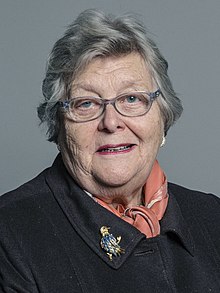
    The tribute made by Lynda Chalker, Baroness Chalker of Wallasey, in the House of Lords on 9 September 2022.

    My Lords, I rise to add my very personal thanks to our beloved late Queen Elizabeth II. Her love of this nation, all its people and all its societies, particularly in the voluntary sector—about which noble Lords have spoken already tonight—was profound. No one could ever count what she has contributed to the growth of voluntary activity in the United Kingdom. We are, in fact, much envied by many countries abroad for that. When the right reverend Prelate the Bishop of Southwark spoke about the volunteering that has to go on, I kept thinking of all those little incidents that the Queen monitored, made note of and often referred to in other circumstances in order to encourage more people to be involved in volunteering and in service. So, if there is one thing that I thank her for above all else, it is her encouragement for people to be involved with their communities.

    It was a very special privilege for me to spend numerous moments with Her Majesty during my 18 years as a Minister in three successive government departments, and indeed since that time. But it was in the Foreign Office, and then when I took on development matters as well, that I began to see her more frequently, because so many of the things in which I was involved were loves of hers and of the late Duke of Edinburgh. It was not just development; it was also the Commonwealth. Many references have been made to the Commonwealth, but there is the sheer fact that, in addition to the 56 member nations of the Commonwealth today, there is a queue of countries wishing to join the Commonwealth. We should be working hard to develop it, and I am certain that His Majesty King Charles III will want that to be a feature of our government going forward.

    Among my many contacts with Her Majesty were two particular incidents on the island of Dominica, which was looked after by Dame Eugenia Charles as Prime Minister. There is probably hardly anybody here who will remember her, but she was a very determined elderly lady. I was to be the Minister in attendance when the Queen went to meet her. Dame Eugenia was absolutely certain that the tea service she had in her cupboard, which, she pointed out to me, only she could clean—I had a slightly raised eyebrow when I looked at it, but never mind—should be used when the Queen came for tea. All went well until the tea came in. Her Majesty was offered a cup of tea, but she decided that she did not want one at that moment. Too many cups of tea on tours are something that Ministers often regret; I am sure Her Majesty regretted it many other times too. I was left to make a diplomatic bridge between the Prime Minister of Dominica, who wanted to use the tea set, and the Queen, who had not given her the tea set. Such is the life in the Foreign Office sometimes.

    On that very same Caribbean visit, on another island, I nearly fell down a hole outside a church into which we were going. I was following Her Majesty and a piece of plywood had been put down which was not a perfect fit. Needless to say, my ankle caught the edge of it. I did not go down the hole as I was saved by a policeman, as ever, but the thing that hit me really hard was that the first thing that was said to me by Her Majesty, when I got into the church in the row behind her, was, “I have sent for some ice for that ankle”. I did not even know that she knew I had nearly gone down the hole. The kindness and the thoughtfulness came up so many times in my experiences of her.

    I always remember being very encouraged by her. On one occasion, when things were not going very well in the then ODA, she said, “What is the main purpose of what you are seeking to do?” Without going into the politics of this in any way, I told her and she said, “Well, why don’t you try—?” She came up with a thoroughly practical suggestion, and if there is one other thing I remember about Her Majesty, it is what a practical lady she was in so many ways. I hope that that practical nature will be continued by His Majesty King Charles III, who I know so well as the Prince of Wales I am not sure how I am going to address him in the future; I think I am going to make mistakes, and I have been forgiven by the Queen so I hope I shall be forgiven by Prince Charles—as he was. You see how easy it is to make the mistake!

    King Charles III, we wish you a magnificent reign, we hope you will continue your mother’s best and most tremendous contributions to this country and we, as ordinary citizens, will do our best to make sure: long live King Charles III.