Blog

  • PRESS RELEASE : WW2 airman buried in the Netherlands [September 2022]

    PRESS RELEASE : WW2 airman buried in the Netherlands [September 2022]

    The press release issued by the Ministry of Defence on 29 September 2022.

    Leading Aircraftman (LAC) John Stuart Mee Bromley of No. 264 Squadron was buried at Jonkerbos War Cemetery on Wednesday 28 September at a service attended by representatives of the RAF, The British Embassy in The Netherlands and local dignitaries.

    Members of the Queen’s Colour Squadron (QCS) of the RAF bore his coffin as an RAF musician sounded the Last Post at a ceremony organised by the MOD’s Joint Casualty and Compassionate Centre (JCCC), also known as the ‘MOD War Detectives’.

    Bromley was rear gunner in a single engine, two-seater Boulton Paul Defiant fighter aircraft piloted by Pilot Officer (Plt Off) Thomas. The plane was shot down over the Netherlands near Dordrecht; Thomas bailed out and later escaped to England where he confirmed Bromley’s death.

    Bromley’s remains were discovered along with aircraft fragments which were then identified by the RAF Air Historical Branch and RAF Museum as those of a Defiant. Further research ruled out all Defiants apart from Defiant L6958 – Thomas’ and Bromley’s fighter.

    Tracey Bowers, JCCC said:

    We are grateful to the local community in the Netherlands which has taken such a keen interest in this case, and are here today to pay their respects to LAC Bromley. I reflect today on the grief and sadness that must have been felt by his mother; to lose her only child. We thank him for his service and for his ultimate sacrifice.

    John Stuart Mee Bromley was born on 17 March 1916 in Toxteth Park, Liverpool. He was baptised in the city on 15 June 1916. His mother Constance was said to be so distraught over her son’s death that a welfare officer delivered Plt Off Thomas’ confirmation of the death because a letter might be “more than she could bear”.

    The service was led by Rev (Squadron Leader) Josephine Critchley, Chaplain at RAF Honington, she said:

    It may have been over 80 years since Leading Aircraftsman Bromley lost his life; but the time is now right to formally lay his body to rest, into the everlasting peace of God. The Bible reading used in today’s ceremony reminds us that all things happen at the right time, and we go now trusting that this has been done.

    Director for the Central and Southern European Area at the CWGC, Geert Bekaert, said:

    It is an honour to be a part of this special ceremony today to finally be able to lay Leading Aircraftsman Bromley to rest. The CWGC will care for his grave at Jonkerbos War Cemetery, along with all those of his comrades, in perpetuity.

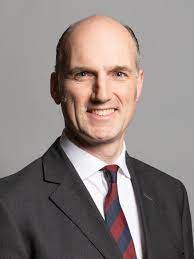
  • Leo Docherty – 2022 Speech on the Russian Sham Referenda in Ukraine

    Leo Docherty – 2022 Speech on the Russian Sham Referenda in Ukraine

    The speech made by Leo Docherty, the Minister of State at the Foreign, Commonwealth & Development Office, in Vienna on 29 September 2022.

    Vladimir Putin’s sham referenda must be seen for what they are. A brazen and desperate attempt, to justify an unprovoked and illegal land grab, of sovereign Ukrainian territory.

    They are a clear violation of international law and the UN Charter. And wholly illegitimate.

    That is why the United Kingdom will never recognise the supposed results. Nor any Russian attempt to illegally annex Ukrainian territory.

    We have seen Vladimir Putin use this playbook before, in Crimea. As then, Russia will try to claim that these latest votes were free and fair.

    But no amount of Russian lies can hide what we all see plainly: A sham. A propaganda exercise. Without a shred of legitimacy. Conducted down the barrel of a gun, by soldiers accompanying ballots door-to-door, forcing Ukrainians to vote.

    For 7 months, in an attempt to destroy Ukrainian identity, Vladimir Putin’s forces have ruthlessly used violence and torture against civilians – and forced deportations – to exert control.

    Sham referenda held under such fear and harassment can never be free, nor fair.

    As highlighted by my Foreign Secretary last week, we know Vladimir Putin planned to rig the outcomes. Russia has no choice but to fabricate the results. These regions voted overwhelmingly to join an independent Ukraine in 1991, and for President Zelenskyy in 2019.

    Earlier this week, the United Kingdom announced sanctions against those behind these bogus votes, including 33 officials and collaborators deployed by Russia to conduct them.

    This latest Russian deception, and Putin’s decision to partially mobilise Russia’s population, only serve to highlight one thing: his invasion is failing.

    His war machine is depleted. His supply of volunteers willing to fight in Ukraine has been exhausted. Partial mobilisation will only send many more thousands of innocent Russians to die in Putin’s war-of-choice. A war which he could end right now.

    Vladimir Putin’s nuclear threats are irresponsible and will not work. Ukrainians are highly motivated. The international alliance is cast-iron strong. We and our allies are clear that any use of nuclear weapons by Russia would be met with severe consequences.

    The United Kingdom’s approach will not alter. We will be steadfast in support of Ukraine – and its right to defend its sovereign territory – for as long as it takes.

    We call on all participating States to join us in unequivocally rejecting the results of these illegitimate referenda, and any Russian attempts to illegally annex Ukrainian territory.

    If we allow Russia to change sovereign borders by force, then the core principles on which the OSCE was founded – of sovereign equality; the inviolability of frontiers; and respect for territorial integrity – lie in tatters.

    And all of our borders become less secure.

    This is about freedom and security for the people of Ukraine. But also about freedom and security across Europe and the World.


  • PRESS RELEASE : WW2 burial in the Netherlands [September 2022]

    PRESS RELEASE : WW2 burial in the Netherlands [September 2022]

    The press release issued by the Ministry of Defence on 29 September 2022.

    A full military burial ceremony has been held in the Netherlands for the British and Canadian crew of an RAF Stirling BK716 which went missing in 1943 after leaving a Norfolk air base.

    The 28 September service at Jonkerbos War Cemetery was led by Rev. (Squadron Leader) Josephine Critchley, Chaplain at RAF Honington, and was attended by family members.

    Representatives of The Royal Air Force (RAF), Royal Canadian Air Force (RCAF), The British Embassy in the Netherlands and local dignitaries were present. Personnel of the Queen’s Colour Squadron (QCS) bore the coffin and laid the remains to rest with military honours.

    The ceremony was organised by the MOD’s Joint Casualty and Compassionate Centre (MOD JCCC), also known as the ‘MOD War Detectives’.

    The crew of Stirling BK716 No 218 (Gold Coast) Squadron RAF crashed on 30 March 1943 with all seven crew members on board. The crash site was later located in lake Markermeer, in the municipality of Almere, and the remains recovered in 2020 by the Joint Aircraft Recovery Team of The Netherlands MoD. Stirling BK716 took off from Downham Market on 29 March 1943 for a raid on Berlin, but shortly afterwards the crew was designated “missing believed killed”.

    Following the recovery, which happened as part of the National World War 2 Aircraft Recovery Programme of the Netherlands, and working alongside the Recovery and Identification Unit of the Royal Netherlands Army and The RAF Air Historical Branch, JCCC confirmed from the wreckage’s unique engine plate that it was that of Stirling BK716. Human remains were few, and it was impossible to assign them to individuals, but all were remembered at today’s burial.

    Flying Officer John Frederick Harris RAF Flying Officer Harry Gregory Farrington RCAF Flying Officer John Michael Campbell RAF Sergeant Charles Armstrong Bell RAF Flight Sergeant John Francis James McCaw RCAF Sergeant Ronald Kennedy RAF Sergeant Leonard Richard James Shrubsall RAF.

    Tracey Bowers, JCCC said:

    It is lovely to see so many families here today to witness this burial. We thank all the crew for their bravery in defending our freedom and allowing us to live our lives as we do today.

    Niece of RCAF Flying Officer Farrington, Margot McLeod travelled from Ontario Canada, she said:

    It’s so important for us, and for our mother, who is 96. Harry was all the family she had, so she now knows where he is. He got marreid before he died and his wife was my godmother, so she used to talk to me about Harry – I feel we knew him. Mom’s always talked about him too, and his picture hangs in her house. She keeps him so close in her heart and is so thankful that she now knows the story of what happened to him and that he has a resting place.

    The ceremony, conducted by Rev. Critchley, included poems and readings chosen and delivered by family members, and reflected how close the international crew would have been to each other.

    Barbara Bradbury, the niece of RAF Flying Officer Campbell, travelled from Auckland, New Zealand to attend the ceremony. She said:

    This ceremony has provided a lot of resolution for our family: I’m very moved by it. I grew up with the grief of knowing his plane had gone down but nothing else. I was the first person in the family to be contacted by a researcher looking for relatives and it was quite exciting to be involved, and it was outstanding to hear the plane had been discovered. John was a very creative man who did a lot of writing and made cinefilms, and now we have gone on to learn more about the other crew members of BK716.

    Rev. Critchley said:

    In life, we know not what happens when we die…as we have paid tribute to the fearlessness of the BK716 crew, what we do know is that they are at rest and at peace, in the safety of God’s love, gathered safely home.

    Director for the Central and Southern European Area at the CWGC, Geert Bekaert, said:

    It is a privilege for us to care for the lasting resting place, at Jonkerbos War Cemetery, of those who gave their lives in March 1943. Whilst it has not been possible to individually recover and identify them, the names of all seven crew members of RAF Stirling BK716 are engraved on the Air Forces Memorial at Runnymede, honoured there in perpetuity.

  • PRESS RELEASE : Russian sham referenda in Ukraine – UK statement to the OSCE [September 2022]

    PRESS RELEASE : Russian sham referenda in Ukraine – UK statement to the OSCE [September 2022]

    The press release issued by the Foreign Office on 29 September 2022.

    Minister Docherty says the UK will never recognise the results of Russia’s sham referenda, nor any attempts to illegally annex Ukrainian territory.

    Vladimir Putin’s sham referenda must be seen for what they are. A brazen and desperate attempt, to justify an unprovoked and illegal land grab, of sovereign Ukrainian territory.

    They are a clear violation of international law and the UN Charter. And wholly illegitimate.

    That is why the United Kingdom will never recognise the supposed results. Nor any Russian attempt to illegally annex Ukrainian territory.

    We have seen Vladimir Putin use this playbook before, in Crimea. As then, Russia will try to claim that these latest votes were free and fair.

    But no amount of Russian lies can hide what we all see plainly: A sham. A propaganda exercise. Without a shred of legitimacy. Conducted down the barrel of a gun, by soldiers accompanying ballots door-to-door, forcing Ukrainians to vote.

    For 7 months, in an attempt to destroy Ukrainian identity, Vladimir Putin’s forces have ruthlessly used violence and torture against civilians – and forced deportations – to exert control.

    Sham referenda held under such fear and harassment can never be free, nor fair.

    As highlighted by my Foreign Secretary last week, we know Vladimir Putin planned to rig the outcomes. Russia has no choice but to fabricate the results. These regions voted overwhelmingly to join an independent Ukraine in 1991, and for President Zelenskyy in 2019.

    Earlier this week, the United Kingdom announced sanctions against those behind these bogus votes, including 33 officials and collaborators deployed by Russia to conduct them.

    This latest Russian deception, and Putin’s decision to partially mobilise Russia’s population, only serve to highlight one thing: his invasion is failing.

    His war machine is depleted. His supply of volunteers willing to fight in Ukraine has been exhausted. Partial mobilisation will only send many more thousands of innocent Russians to die in Putin’s war-of-choice. A war which he could end right now.

    Vladimir Putin’s nuclear threats are irresponsible and will not work. Ukrainians are highly motivated. The international alliance is cast-iron strong. We and our allies are clear that any use of nuclear weapons by Russia would be met with severe consequences.

    The United Kingdom’s approach will not alter. We will be steadfast in support of Ukraine – and its right to defend its sovereign territory – for as long as it takes.

    We call on all participating States to join us in unequivocally rejecting the results of these illegitimate referenda, and any Russian attempts to illegally annex Ukrainian territory.

    If we allow Russia to change sovereign borders by force, then the core principles on which the OSCE was founded – of sovereign equality; the inviolability of frontiers; and respect for territorial integrity – lie in tatters.

    And all of our borders become less secure.

    This is about freedom and security for the people of Ukraine. But also about freedom and security across Europe and the World.

  • PRESS RELEASE : UN Human Rights Council 51 – Statement for the Interactive Dialogue on the Secretary-General’s Report on Reprisals [September 2022]

    PRESS RELEASE : UN Human Rights Council 51 – Statement for the Interactive Dialogue on the Secretary-General’s Report on Reprisals [September 2022]

    The press release issued by the Foreign Office on 29 September 2022.

    UK Human Rights Ambassador, Rita French, delivered a statement on the cases of reprisals in Venezuela, Belarus, Burundi and China, calling on them to be ceased.

    Thank you, Madame Vice President.

    The United Kingdom welcomes the Secretary General’s report and its focus on the need to address the significant problem of reprisals against individuals co-operating with the UN. We reiterate the Report’s concerns on the continued targeting of women that seek to engage in peace and security processes.

    As the #EndReprisals Campaign makes clear, the UN is the final arena in which individuals and entities promoting peace and justice can confront abuses. States present here today have a collective responsibility to ensure that the UN is a safe space for those that courageously come forward.

    Madame Vice President, when human rights defenders or other members of civil society co-operate with the UN, they are helping us to achieve our collective mission. Reprisals damage the UN, and by extension, all Member States.

    We are dismayed that cases of reprisals continue to be commonplace, including in Venezuela, Belarus and China. What makes this even more abhorrent is where reprisals take place in this Council. Members of this Council, who have been elected with the mandate that they will uphold the highest standards of human rights.

    Madame Vice-President,

    What can be done to address the chilling effect of reprisals on the valuable engagement by human rights defenders in UN processes?

  • PRESS RELEASE : Parents warned about dangers of children missing vaccines [September 2022]

    PRESS RELEASE : Parents warned about dangers of children missing vaccines [September 2022]

    The press release issued by the UK Health Security Agency on 29 September 2022.

    The UK Health Security Agency (UKHSA) is urging parents and guardians to ensure their children are up to date with all their routine childhood immunisations including polio and measles, mumps and rubella (MMR) vaccinations. This comes as new data shows vaccination coverage for young children fell last year for virtually all programmes.

    Vaccination rates have fallen over several years and additional disruption caused by the coronavirus (COVID-19) pandemic, beginning in March 2020, is likely to have caused some of the decreases in vaccine coverage seen in 2020 to 2021 and 2021 to 2022 compared to earlier years.

    It is important vaccination coverage is recovered as soon as possible to levels recommended by the World Health Organization (WHO) of 95% for all childhood immunisation programmes to help prevent the spread of avoidable serious – and sometimes deadly – diseases such as measles and polio.

    The latest vaccination statistics from UKHSA and NHS Digital for children up to 5 years of age in the UK (COVER programme) show coverage decreased for 13 out of the 14 routine vaccination programmes measured in 2021 to 2022.

    Only 89.2% of children at 24 months had completed their first dose of the MMR vaccine, which is a decrease from 90.3% in the previous year.

    Coverage for the second dose of MMR by age 5 years was also down by nearly 1%.

    Coverage for the first dose of MMR at 24 months was less than 90% in 61 (out of 149) local authorities.

    Coverage also decreased for the 6-in-1 and 5-in-1 vaccine, which protects against diphtheria, pertussis, tetanus, polio, disease caused by Haemophilus influenzae type b and hepatitis B, among children aged 12 months, 24 months, and 5 years.

    Since the introduction of the measles vaccine in 1968 it is estimated that 20 million measles cases and 4,500 deaths have been prevented in the UK.

    Measles is highly contagious so even a small decline in MMR uptake can lead to a rise in cases. Since international travel has resumed closer to pre-pandemic levels, it is more likely that measles will be brought in from countries that have higher levels of the disease and cause outbreaks.

    Measles can lead to complications such as ear infections, pneumonia, and inflammation of the brain which require hospitalisation and on rare occasions can lead to long term disability or death.

    The NHS is running a MMR catch-up campaign so some parents may be contacted directly.

    Low polio vaccination rates in parts of London have left communities vulnerable to the spread of poliovirus, which has been detected in parts of North and East London through sewage surveillance. To date, no clinical cases of polio have been identified but health services have been urged to remain vigilant to any cases of paralysis in children.

    A polio vaccination campaign, recommended by the expert immunisation committee JCVI, is under way in London for all 1- to 9-year-olds, either as a booster dose or catch-up and it’s important all parents take up this offer as soon as possible to help protect their child.

    Dr Vanessa Saliba, Consultant epidemiologist at UKHSA, said:

    Measles is highly contagious and can be dangerous, and it is extremely worrying that we are seeing levels of uptake of the MMR vaccine falling among young children. It is also vitally important that children get their polio vaccinations to help prevent the risk of paralysis.

    I would urge parents to check that all children are up to date with their vaccines, and if not to get them booked in as soon as possible to make sure they have maximum protection against what can be terrible diseases.

    Childhood vaccines also boost population immunity levels, helping prevent outbreaks, so by taking up all vaccinations for our children, we play our part in keeping these diseases confined to the past.

    Anyone who is unsure if their child is up to date with all their routine vaccinations should check their child’s red book (personal child health record) in the first instance. If you are still not sure, or if you need to bring your child up to date with their vaccines, contact your GP practice to check and book an appointment.

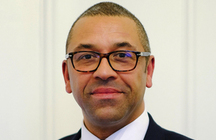
  • James Cleverly – 2022 Speech on the Indo-Pacific Tilt

    James Cleverly – 2022 Speech on the Indo-Pacific Tilt

    The speech made by James Cleverly, the Foreign Secretary, in Singapore on 29 September 2022.

    Huge thank you for giving me the opportunity to speak with you this afternoon – and it has been a bit of a whistle-stop tour, Japan, Korea and here in Singapore.

    Our High Commissioner highlighted the fact that I laid down an early marker that I was interested in international relations in my first speech in Parliament. But actually, my interest pre-dates that quite significantly.

    Because I’ve always loved maps. And I particularly loved the maps that I grew up with as a child.

    Perhaps because the maps that I looked at when I was a child had my house right in the centre. And the reason is, because I grew up just literally metres east of the Greenwich meridian.

    So, there was me, in the middle, and on one edge of the map there was the west coast of the United States of America, and on the other edge of the map were the Pacific islands. Literally on the periphery.

    So, perhaps, now, it is no surprise to you that I much prefer globes. Because, because globes remind us that there is no middle, there is no edge, there is no centre, there is no periphery. Every country is at the centre of its own world. And that we are all connected, that we all share opportunities, but we also have a duty to share the challenges.

    And I’m going to talk, in this speech perhaps more about challenges than opportunities. But I want you to understand – I am an optimist at heart. I know that the opportunities are many, and they are great.

    But the challenges that we all face are diverse, and they are significant.

    Disease, and ill health. Terrorism, and war – epitomised most recently by Russia’s brutal, illegal, and unjustified invasion of Ukraine.

    We see food insecurity, energy insecurity, economic insecurity, and of course the ongoing march of climate change. And climate change is the spectre that looms over us all and it amplifies all the challenges that we face. And these challenges cannot be solved by any one country alone, nor can they be solved by any one region alone.

    So when we look at our maps, or indeed our globes, we have a choice. We can either see a world divided, or we can seek to explore those things that bind us together. And we can choose to recognise that geography matters less – and it is our values that make us neighbours.

    We can see the countries which choose to be committed to trade and commerce, to those which stand up to oppression and coercion, those which seek to tackle climate change, those which look to innovation and technology to make the future better than the past.

    And those countries form a grid, form a network, they form partnerships. The UK is committed to overcoming the challenges that I described by reinforcing those grids, strengthening those networks, building more and deeper partnerships.

    The High Commissioner highlighted the fact that I’ve only been in the job for three weeks. Immediately prior to that, I was the Secretary of State for Education – for nine weeks. I’m hoping to outlast that appointment.

    But I tell you something, the three weeks that I’ve had have been pretty intense. But it has given me the opportunity to meet with world leaders and my foreign affairs counterparts. I’ve had the privilege of meeting world leaders and my international counterparts from across the globe.

    Firstly, sadly, at the occasion of the funeral of Her Late Majesty Queen Elizabeth II. Then in the heady, speed-dating environment that is the UN General Assembly in New York. Where more than 190 countries come together to discuss ways to strengthen global resilience, improve food security, and boost international investments.

    Now the UK is part of many networks – NATO, the Commonwealth, G7, G20 to name but a few. But we are looking to build on those pre-existing networks, to improve our partnerships. And our relationship with the Indo-Pacific is central to tackling those issues that I’ve just described, and our relationship with this region will be a driving force for a positive vision of growth and security in all our countries.

    Last year, in our Integrated Review, we set out our ‘Indo-Pacific Tilt’, underlining the strategic importance that we place as the UK upon this region. And it’s a region critical to our economy, to our security and to our ambition to support open societies.

    Let me describe the region in a couple of statistics. At least 1.7 million British citizens live across the region. Our trading relationships are worth over 250 billion dollars and they’re growing. In the decades to come it will be the crucible of solutions to many of the pressing global challenges that we face – from climate and biodiversity to maritime security and geopolitical competition linked to our rules and norms.

    Now the Integrated Review is a document. And it’s easy to put words on a page, or put lines in a speech. But I want to make it clear that we are committed to making the Indo-Pacific Tilt more than just a slogan, make it more than just rhetoric. That’s why we applied for, and secured, ASEAN Dialogue Partner status. The UK recognises the centrality of ASEAN to the region and the essential contribution it has made to peace, prosperity and security.

    And we take our responsibility to support those efforts seriously.

    This includes working with partners to ensure that other initiatives complement, rather than conflict with, the central role of ASEAN.

    We were the first European country to secure a Comprehensive Strategic Partnership with India. And we intend to be the first European country to accede to the CPTPP. It will give the region access to the UK’s world-class financial services sector as well as, as well as the world’s sixth largest economy. That’s why engagement between the UK and Indo-Pacific needs to cover the broadest spectrum of activity.

    So let me highlight the areas where we think this relationship matters.

    We all want to provide jobs for our young people and opportunities for our businesses. The UK is pursuing a low-tax, high growth economic strategy to deliver exactly this. And we are also working closely with countries in the Indo-Pacific to drive prosperity and growth through new trade opportunities.

    We have signed Free Trade Agreements with Australia and New Zealand – and we are working intensely to agree one with India soon.

    We have also signed free trade deals with Singapore, Vietnam, the Republic of Korea and Japan, and bilateral partnership agreements with the Republic of Korea and Indonesia.

    Within six months, we negotiated a Digital Economy Agreement with Singapore. It sets the standards in removing friction and increasing confidence in digital trade. And just last week, over 20 of our top tech companies were here in Singapore: and when they went home, they took with them new customers, investors and signed a number of joint ventures. And we are keen to do more. Our focus is on strengthening collaboration in science, technology, research and development – just as we have done here in Singapore.

    But we cannot talk about economic cooperation without also talking about climate. And the importance of our relationships in the region to accelerate the world’s transition to net zero. I felt that strongly in the conversations that I had at the Partners in the Blue Pacific initiative at the UN General Assembly.

    And earlier today I met the head of our new regional hub of British International Investment here in Singapore. BII, as we call it, is the UK’s development finance arm. And through it we intend to spend up to £500 million in the region over the next five years. We will work with public and private partners in the region to support quality, green infrastructure projects in Indonesia, in Vietnam, in the Philippines, in Cambodia, and in Laos. We have also committed up to £110 million to the ASEAN Catalytic Green Finance Facility, to boost renewables, to boost clean transport, and to boost other sustainable infrastructure projects.

    Secondly, our focus on defence and security. The Indo-Pacific Tilt also means recognising that security and prosperity in the Indo-Pacific are indivisible from Europe’s. We welcomed the condemnation of Russia’s violations of the UN charter and the decisions by many countries in the region – including Singapore, Japan, and the Republic of Korea – to impose sanctions on Russia for its aggression. Russia’s violation of the UN charter sets a dangerous precedent for the whole world.

    Peace and stability in this region matters in the UK. 60% of global trade passes though shipping routes here in the Indo-Pacific, so security here has a direct impact in households in the UK. And we are working with partners in the region to promote maritime security and uphold the UN Convention on the Law of the Sea. It is 40 years old this year but it still continues to play an essential role and supports ASEAN’s own security strategy.

    The UK has lots to offer as a defence partner. Our Prime Minister has committed to increase defence spending to 3% of GDP by 2030.

    Alongside the US, we are bringing world-leading submarine technology through our AUKUS partnership to support Australia’s defence and security capabilities, and this will bolster regional peace and stability.

    And the UK is working with partners across the Indo-Pacific to strengthen cyber security and secure critical national infrastructure.

    Including with ASEAN through their dedicated centre here in Singapore.

    Thirdly, partnership through our values. The UK and many Indo-Pacific countries are committed to shared values. Our commitment to sovereignty and territorial integrity, and freedom from economic coercion. Our shared beliefs in the value of democracy and open markets.

    The UK is committed to working with partners, old and new, in defence of those values. Which is why we support ASEAN’s efforts to restore peace and democracy in Myanmar. And it’s why we have worked so hard to respond robustly to Russia’s invasion of Ukraine.

    Because as I said in the Security Council chamber last week… if Ukraine’s sovereignty and territory are not respected, then no country can feel itself truly secure. This region’s commitment to those values has been on show at the United Nations in recent months, where it stood shoulder-to-shoulder with other countries around the world to condemn Russia’s invasion.

    The international rules-based system doesn’t only protect our freedoms and security. It protects fair trade, and it protects us online.

    And when we join the CPTPP, as I hope we soon will,

    we will approach this work and our membership in the spirit of cooperation, looking to protect people’s interests and freedoms.

    Now it would be impossible to give a speech in this region and not mention China. And I was pleased to meet Foreign Minister Wang Yi in New York last week. It’s important to talk even where we disagree. Actually, especially when we disagree.

    Because China is a major global actor and driver of growth. It has lifted literally millions of people out of poverty. But, the lessons I take from watching China across my lifetime, is that when China departs from global rules and norms, when it aligns itself with aggressive countries like Russia – its standing in the world suffers. Now China will always have a choice about the direction that it wants to take.

    But one thing that is certain is that the UK Government will always stand up for our sovereignty and economic security – and that of our partners.

    And no UK Government will ever turn a blind eye to repression, wherever it occurs.

    All of the achievements that I’ve outlined today are products of partnership. And the UK is working with friends and partners to address the challenges that we face but also to seize the opportunities ahead of us. And we are well on our way to becoming the European partner with the broadest, most integrated presence in the Indo-Pacific. I am here to make it clear that the Indo-Pacific Tilt is here to stay. It is permanent.

    We have gone from strategy to delivery. From economic theory to signing trade deals. From security discussions to deploying our Carrier Strike Group. From talking about our values to standing together in the face of Putin’s invasions. And if you take nothing from this speech other than what I’m about to say, then I would be comfortable with that. Because what I’m about to say, is that the UK will remain a committed, reliable partner to this region. Thank you.

  • PRESS RELEASE : Rapist Matthew Grant receives longer prison sentence following referral under the Unduly Lenient Sentence scheme [September 2022]

    PRESS RELEASE : Rapist Matthew Grant receives longer prison sentence following referral under the Unduly Lenient Sentence scheme [September 2022]

    The press release issued by the Attorney General’s Office on 29 September 2022.

    A man who violently raped a teenage victim has been ordered to serve a longer prison sentence after his case was referred to the Court of Appeal under the Unduly Lenient Sentence scheme.

    Matthew Grant, 35, repeatedly raped the 16-year-old victim over the course of a night and into the following morning. The violence used against the victim during the rapes included punches, throwing her against a wall and strangulation. Over the course of the rapes and assault the victim suffered a perforated ear drum and sustained heavy bruising all over her body.

    On 5 July 2022, Grant was sentenced to 11 years’ imprisonment at Wolverhampton Crown Court for offences including 6 counts of rape and a count of assault occasioning actual bodily harm.

    Following the sentencing, Grant’s sentence was referred to the Court of Appeal under the Unduly Lenient Sentence scheme.

    On 29 September 2022, the Court found Grant’s original sentence to be unduly lenient, and he was ordered to serve a new sentence of 13 years’ imprisonment.

    Speaking after the hearing, HM Solicitor General Michael Tomlinson MP said:

    This was a harrowing case of rape which has left the victim with lasting psychological damage.

    While no sentence can repair the harm caused by Matthew Grant’s crimes, I welcome the decision of the Court of Appeal to impose a stronger sentence which better reflects the severity of the dreadful offending which has taken place.

  • PRESS RELEASE : Exams head back to normality in 2023 [September 2022]

    PRESS RELEASE : Exams head back to normality in 2023 [September 2022]

    The press release issued by the Department for Education on 29 September 2022.

    GCSE, AS, and A level exams in England will largely return to pre-pandemic arrangements next summer as young people continue to recover from the pandemic.

    In line with the plans set out last September, Ofqual has confirmed a return to pre-pandemic grading in 2023.

    To protect students against the disruption of recent years, and in case students’ performance is slightly lower than before the pandemic, senior examiners will use the grades achieved by previous cohorts of pupils, along with prior attainment data, to inform their decisions about where to set grade boundaries.

    This mirrors the approach used in the first years of reformed GCSEs and A levels in 2017, when early cohorts were protected against the impact of changes to the qualifications and means, for example, a typical A level student who would have achieved a grade A before the pandemic will be just as likely to get an A this summer.

    The government is also confirming that students should continue to be provided with support in GCSE mathematics, physics and combined science with formulae and equation sheets, but not with advance information of exam content, as was the case last year.

    The decisions reflect the reduced levels of disruption this cohort have experienced compared to the cohorts of the previous two years. Ofqual has launched a consultation on the plans for formulae and equation sheets today.

    Education Secretary Kit Malthouse said:

    Students working towards their qualifications next year expect fairness in exams and grading arrangements, which is why we are transitioning back to pre-pandemic normality.

    Schools are doing a great job in supporting students to catch up and get back on track including through the National Tutoring Programme, which continues to provide one-to-one or small group tuition to students that need extra help.

    Chief Regulator, Dr Jo Saxton said:

    This summer was an important step back towards normality. Our plans for 2023 take us a step further, whilst also recognising the impact of Covid.

    I’ve visited schools and colleges up and down the country and I’ve seen young people’s admirable resilience and dedication. Giving the 2023 cohort some protection against any impact of Covid disruption is the right thing to do. Our approach to grading in 2023 will provide a soft landing for students as we continue the process of taking the exam system back to normal.

    Ofqual already announced earlier this year that pre-pandemic arrangements for non-exam assessment, fieldwork and practical science have been reinstated. The department confirmed at the same time that schools and colleges this year will be teaching the full content of qualifications to students taking exams in 2023.

    Arrangements for vocational and technical qualifications (VTQs) and other general qualifications were confirmed in May 2022.

    Ofqual does not expect any further adaptations to be used in VTQs. Awarding organisations are expected to take account of the approach, including in relation to grading, used in general qualifications so that students taking VTQs are not advantaged or disadvantaged in comparison.

    UCAS Chief Executive Clare Marchant said:

    We welcome today’s announcement by the Office of Qualifications and Examinations Regulation (Ofqual).

    As an independent charity, UCAS’s aim is to help students make informed decisions about their future that are right for them, whether pursuing university, college or an apprenticeship, and this early clarification means students will be able to apply with confidence in the 2023 cycle.

    Higher education admissions is becoming more competitive, with a 1/3 increase in 18-year-olds forecast to apply by 2026. This decision will support teachers and advisors in giving the best guidance to their students, as well as enable universities and colleges to make offers with certainty.

    David Hughes, Chief Executive of the Association of Colleges, said:

    The move back to a grading profile in line with pre-pandemic levels, with some protection, is the right thing to do now. It gives certainty to everyone in the system – students, parents, teachers, advisers, employers – but we also need to be alert to the ongoing impact that pandemic lockdowns have had for many young people on mental health, confidence and study skills and make sure they get the support they need.

    A series of further consultations relating to qualifications next year and in future years has also been launched today:

    • The department and Ofqual are jointly consulting on guidance to schools and colleges about gathering assessment evidence to support resilience in the general qualifications system. The guidance proposes schools and colleges gather evidence in a way that aligns with their normal arrangements for preparing students for exams, helping ensure preparedness should a scenario ever again arise where it would be unsafe or unfair for students to sit exams.
    • The department and Ofqual are both consulting on plans to remove the expectation that students engage with unfamiliar and abstract material, such as unfamiliar vocabulary, within modern foreign language (MFL) GCSE assessments from 2023 onwards. The Department’s consultation covers the curriculum, while Ofqual’s covers how it is assessed.
    • The Joint Council for Qualifications (JCQ) are consulting on the exam timetable for next summer, which seeks to maintain some of the space built into the exam timetable last year between the first and last exams in the same subject. This spacing was well received by schools and colleges in 2022 and reduces the chance of students missing all exams in a subject due to circumstances such as illness.

    The department’s decisions on next year’s arrangements reflect that schools remained open to all pupils through the last academic year, with this year’s cohort having the opportunity to benefit from time in the classroom with teachers and interventions such as the National Tutoring Programme, compared to students from the previous two cohorts.

    The government is investing nearly £5 billion to support students’ recovery from the impact of the pandemic, including £1.5 billion for tutoring programmes and almost £2 billion in direct funding, largely targeted at those that need help most.

    Over 2 million courses have now started through the National Tutoring Programme, including 1.8 million so far across an estimated 80% of schools – helping children to catch up with learning loss.

  • PRESS RELEASE : Net Zero Review calls for views of British public [September 2022]

    PRESS RELEASE : Net Zero Review calls for views of British public [September 2022]

    The press release issued by the Department for Business, Energy and Industrial Strategy on 29 September 2022.

    • Chris Skidmore MP urges the public and British businesses to speak up over how the fight against climate change is best delivered
    • comes as rapid review scrutinising delivery of the net zero commitments, aimed at boosting economic growth and energy security, launched earlier this week
    • former Energy Minister promises thorough appraisal so UK’s world-leading climate commitment is met in an economically-efficient way

    People up and down the country will have the chance to give their views on how the UK can eliminate carbon emissions in a way that grows the economy, under plans announced today (29 September) by Chris Skidmore MP.

    This is the first stage of the rapid three-month review by the former Energy Minister, examining how the country’s legally-binding net zero 2050 target can be met while also maximising growth, increasing energy security and in a way that is affordable for consumers and businesses.

    Speaking at the Business Green ‘Net Zero Festival’ in London later today, Mr Skidmore, will announce a broad month-long call for evidence aimed at the public, businesses and local authorities, giving them a chance to share their views on the green transition.

    People will have the chance to offer their views on a range of topics, on everything from how cutting people’s carbon footprint will affect their everyday lives, to how reaching net zero will be paid for and what more can be done to capitalise on it to grow the UK’s economy.

    Other topics will include:

    • the opportunities and measures needed to support the transition to net zero, in a way that also supports economic growth and job creation;
    • the challenges and obstacles to decarbonising, for households and businesses;
    • what more can be done to support consumers and businesses to cut their emissions

    Chair of the Net Zero Review, Chris Skidmore MP, said:

    Everyone in the country has a stake in the UK’s transition to net zero. It doesn’t matter if you live in Argyle or Aberystwyth, Carlyle or Canterbury, our lives will need to change, whether that means the way we travel to work, heat our homes or run our factories.

    The decisions and actions we take today will impact consumers, employees and businesses alike, in cities, town and rural communities all over the country. That’s why I want to hear the views of as many people as possible over the next month.

    I want to ensure that net zero isn’t just viewed as the right thing to do for our environment, but becomes an essential driver of economic growth – and a win-win for Britain and the world.

    While the UK’s world-leading target to reach net zero by 2050 remains in place, the review comes in response to major changes to the economic and political landscape, with Russia’s illegal invasion of Ukraine, historically high global energy prices and high inflation; all placing huge pressures on British households and businesses.

    Chris Skidmore’s rapid review aims to identify new ways to deliver the legally binding target by 2050 in a way that is pro-business and pro-growth. It will examine the most economically efficient path to reaching net zero, while maximising innovation, investment, exports and jobs.

    The UK has already managed to grow its economy by 76%, while cutting its emissions by over 44% since 1990 – decarbonising faster than any other G7 country.  Official statistics also show there are already around 400,000 jobs in low-carbon businesses and their supply chains across the UK, with turnover estimated at £41.2 billion in 2020. Both the British Energy Security Strategy and Net Zero Strategy aim to leverage an additional and unprecedented £100 billion of private investment, while supporting an additional 480,000 British jobs by 2030.

    Alongside today’s call for evidence, Mr Skidmore is touring the UK to speak to as many consumers, investors and industrial leaders as possible. He will also consult with experts in areas including energy, land use and transport to help inform his review. This includes his first roundtable events this week, with one taking place tomorrow (Friday 30 September), organised by the Aldersgate Group, with more scheduled for around the country over the coming weeks.

    He will report to the government with a set of recommendations by the end of this year to help turbocharge the UK’s transition to net zero by identifying key economic opportunities.