Blog

  • G7 – 2022 Joint Statement on the Illegal Annexation of Sovereign Ukrainian Territory

    G7 – 2022 Joint Statement on the Illegal Annexation of Sovereign Ukrainian Territory

    The joint statement by G7 Foreign Ministers on 30 September 2022.

    We, the G7 Foreign Ministers of Canada, France, Germany, Italy, Japan, the United Kingdom, the United States of America, and the High Representative of the European Union, are united in our condemnation in the strongest possible terms of Russia’s war of aggression against Ukraine and its continued violations of Ukraine’s sovereignty, territorial integrity and independence.

    President Putin’s efforts to incorporate Donetsk, Luhansk, Kherson and Zaporizhzhya regions into the territory of the Russian Federation constitute a new low point in Russia’s blatant flouting of international law, and yet another example of Russia’s unacceptable violations of Ukraine’s sovereignty, the UN Charter, and the commonly agreed principles and commitments of the Helsinki Final Act and the Paris Charter.

    We will never recognise these purported annexations, nor the sham “referenda” conducted at gunpoint.

    We reiterate our call for all countries to condemn unequivocally Russia’s war of aggression and its attempt to acquire territory by force. We call on the broader international community to reject Russia’s brutal expansionism, its efforts to deny Ukraine’s existence as an independent state, and its blatant violation of the international norms that guarantee international peace, security, and the territorial integrity and sovereignty of all states.

    We will impose further economic costs on Russia, and on individuals and entities – inside and outside of Russia – that provide political or economic support to these violations of international law. We are unwavering in our support for Ukraine’s right to defend itself against Russia’s war of aggression and its unquestionable right to reclaim its territory from Russia.

    We reiterate our condemnation of Russia’s irresponsible nuclear rhetoric. It will not distract or dissuade us from supporting Ukraine, for as long as necessary.

    Russia must immediately stop its war of aggression, withdraw all of its troops and military equipment from Ukraine, and respect Ukraine’s independence, sovereignty, and territorial integrity within its internationally recognised borders. We reaffirm that the regions of Donetsk, Luhansk, Kherson and Zaporizhzhya as well as Crimea are integral parts of Ukraine.

  • Ylva Johansson – 2022 Speech on General Visa Issuance in Relation to Russian Applicants

    Ylva Johansson – 2022 Speech on General Visa Issuance in Relation to Russian Applicants

    The speech made by Ylva Johansson, the EU Commissioner for Home Affairs, on 30 September 2022.

    Firstly I want to say – Putin cannot win, and will not win

    Every step he takes show we cannot trust him, we cannot deal with him or show weakness

    The recent ‘sham referenda’ in occupied Ukrainian and the mobilisation of Russian citizens confirm this.

    Now following the mobilisation order, we can see Russian citizen trying to enter  the EU.

    That is, from certain perspectives, understandable, they don’t want to go to war in another country that has been occupied by their leader.

    This said, avoiding the mobilisation does not necessarily equate to opposing the war as such. In addition, it cannot be excluded that Russian citizens trying to circumvent the mobilisation by getting into the EU, also constitute a threat to public policy, the internal security or the international relations of a Member State or the Union as a whole.

    That’s why, on our external borders we should be very vigilant regarding letting people from Russia in.

    We already abolished the VISA facilitation agreement, we adopted guidelines for Member States  – so already now it is very cumbersome and expensive to enter the EU from Russia as a tourist.

    Now we take one more step.

    We must ensure the security of Europe and its citizens.

    We have to keep in mind – to come to Europe is a privilege, not a fundamental right.

    We should stay open, of course, to dissidents, journalists independent from the Russian government.

    These are bravely and actively opposing the  Putin Regime.

    But we should very carefully scrutinize case by case every application.

    And we must take the geopolitical aspects into account.

    What is new in the Guidance?

    The Guidance we are adopting  today covers both Visas and the management of External Borders

    1. On Visas we have updated our previous guidance
    1. New visas
    • Stricter assessments and security over new visas
      • Schengen visas are issued for short stays of 90 days cannot cannot provide a long-term solution for Russian citizens seeking to avoid mobilisation.
      • For Schengen visas we have restricted our approach for all Russians, including for Russian citizens escaping the military mobilisation order.
      • MS should apply a strict approach assessing the justification of the journey.
      • It should be ascertained whether there are reasonable doubts as to the reliability of the statements made by the applicant or his/her intention to leave the territory of the MS before the expiry of the visa applied for.
      • This is without prejudice to the right of such individuals to seek international protection under the EU asylum laws or the possibility to apply for national long-stay visas or residence permits at EU consulates.
    • Restrictive approach of place of visa application
      • Following President Putin’s military mobilisation order, significant numbers of Russian conscripts have fled to neighbouring and other countries with the aim to avoid the Russian army. There are widespread expectations that many will seek to obtain Schengen visas in view of continuing their journey inside the EU.
      • In our guidance we make it clear that – pursuant to Article 6 of the Visa Code – applications should only be examined by the consulate of the competent MS in whose jurisdiction the applicant legally resides.
      • On this basis Member States should not accept Schengen visa applications from citizens of the Russian Federation that are present in a third country, such as for example  Georgia, Armenia, Kazakhstan, Serbia, Turkey, the United Arab Emirates etc.  for short stay or for purposes of transit.
      • Such applicants should be directed to the consulate competent for their place of residence, normally in the Russian Federation.
      • Exceptions can be made in cases of hardship and for humanitarian reasons (e.g. family visits due to sudden serious illness of a relative residing in the EU, dissidents, human rights defenders).
    • Confirms the humanitarian exceptions and clarifies its individual application
      • The Visa Code contains derogatory provisions allowing for the issuing of short stay  visas on humanitarian grounds, for reasons of national interest or because of international obligations.
      • This is relevant, for instance, in case of visa applications lodged by dissidents, independent journalists, human rights defenders and representatives of civil society organisations and their close family members, that are not controlled by the government of the Russian Federation and their close family members.
      • Member States should apply these derogatory provisions after a thorough assessment. It is therefore up to Member States, based on an individual examination, to assess if applications by Russian citizens can qualify as falling under the category “humanitarian grounds”. There is no unique set of documents that would prove that a person qualifies for a visa on humanitarian grounds, because individual circumstances differ too widely and need a case-by-case assessment.
    1. Revocation and annulment of valid visas
    • Stricter scrutiny of valid visas irrespective of the issuing Member State
      • MS should also adopt a strict approach with respect to reassessing visas already issued to any citizen of the Russian Federation, similarly to the principles applied when assessing new visa applications
      • In case there are grounds for annulment/revocation, such a decision may be taken by the border guard irrespective of the visa issuing MS. The authority should inform the issuing MS accordingly as well as affix the corresponding stamp on the visa sticker and enter the information on the annulment/revocation in the Visa Information System.  
    1. Guidelines on controls of Russian citizens at the external borders (Schengen Border Code)
    1. Coordinated and through checks at the external borders to ensure protection of the Schengen area

    Coordinated strong checks at the EU external borders protect not only security in the MS concerned, but also the integrity of the Schengen area as a whole.

    Coherent and comprehensive checks of Russian citizens

    • Border guards at all the border crossing points at the external borders should assess in a coherent fashion whether a Russian citizen crossing the EU’s external border fulfils the entry conditions into the Schengen area. This is to avoid that an applicant who has been denied entry by a Member State is admitted by another one.
    • In accordance with Article 30 of the Visa Code, the mere possession of a visa does not confer an automatic right of entry into the Schengen area.
    • If the entry of a Russian citizen is refused on the grounds that they are considered to pose a threat to the public policy or internal security of the MS entry should be refused.
    • With a view to carrying out such an individual assessment, border guards should notably conduct a thorough interview with a Russian citizen seeking to enter the Schengen area. In addition to a check on the basis of travel document data, a check using fingerprints in the Schengen Information System should be carried out, to also detect alerts on persons using false or unknown identities.
    • In this context, border guards should also take into account that allowing a Russian citizen to enter the Schengen area at a time when their country of origin is engaging in an illegal military aggression against an EU candidate country, could seriously harm the international relations of any MS with Ukraine, with another MS, or the EU as such. Therefore, the Commission recommends that border guard authorities consider the current geopolitical context when carrying out their case-by-case assessment. In light of the additional workload this reinforced scrutiny will lead to, Member States are encouraged to transfer additional staff to the border guards force located at the external borders concerned.

    However, the heightened scrutiny must not lead to denying entry to persons that have a legitimate interest to leave the Russian and should be performed in a way that preserve the right to seek asylum and prevents risks of non refoulement.

    Carriers Liability

    The carriers are obliged to immediately assume responsibility for third-country nationals who are refused entry into the territory of one of the MS. r.

    It is therefore important that carriers remain vigilant when verifying the presence of travel documents required for entry. The Member States are encouraged to offer practical support to the carriers in this regard.

    Monitoring

    The Commission will closely monitor the implementation of these new guidelines, in particular through the Blueprint Network. We will also discuss their implementation with Member States in the context of IPCR and adapt them in accordance with the evolving reality on the ground.

  • PRESS RELEASE : Minimum income – more effective support needed to fight poverty and promote employment [September 2022]

    PRESS RELEASE : Minimum income – more effective support needed to fight poverty and promote employment [September 2022]

    The press release issued by the European Commission on 28 September 2022.

    Today, the Commission calls on Member States to modernise their minimum income schemes as part of the ongoing pledge to reduce poverty and social exclusion in Europe. The proposed Council Recommendation on adequate minimum income ensuring active inclusion sets out how Member States can modernise their minimum income schemes to make them more effective, lifting people out of poverty, while promoting the labour market integration of those who can work.

    Minimum income is cash payments that help households who need it to bridge the gap to a certain income level to pay the bills and live a life in dignity. They are particularly important in times of economic downturns, helping to cushion drops in household income for people most in need, thereby contributing to sustainable and inclusive growth. They are generally complemented with in-kind benefits giving access to services and targeted incentives to access the labour market. In this way, minimum income schemes are not a passive tool but act as a springboard to improve inclusion and employment prospects. Well-designed minimum income schemes strike a balance between alleviating poverty, incentivising work and maintaining sustainable budgetary costs.

    Minimum income and social safety nets must incorporate sufficient incentives and support for beneficiaries who can work to reintegrate in the labour market. Their design should therefore also help to fully realise the potential of the green and digital transitions by supporting labour market transitions and active participation of disadvantaged people.

    The social and economic advantages of adequate and targeted social safety nets became even more important during the lockdowns linked to the COVID-19 pandemic. Adequate minimum income is highly relevant in the current context of rising energy prices and inflation following Russia’s invasion of Ukraine as income measures can be targeted to specifically benefit vulnerable groups.

    The proposal will help achieve the EU’s 2030 social targets to reduce the number of people at risk of poverty of exclusion by at least 15 million people as set in the European Pillar of Social Rights Action Plan. It will also help Member States reach the goal that at least 78% of the population aged 20 to 64 should be in employment.

    Executive Vice-President for an Economy that Works for People, Valdis Dombrovskis, said: “Social protection systems help to reduce social inequalities and differences. They ensure a dignified life for those who cannot work – and for those who can, encourage them back to a job. At a time when many people are struggling to make ends meet, it will be important this autumn for Member States to modernise their social safety nets with an active inclusion approach to help those most in need. This is how we can fight poverty and social exclusion, and help more people into work during this challenging period.

    Commissioner for Jobs and Social Rights, Nicolas Schmit, said: “Today, more than one in five people in the EU are at risk of poverty and social exclusion. Minimum income schemes exist in all Member States, but analysis shows that they are not always adequate, reach all those in need, or motivate people to return to the labour market. Against a backdrop of soaring living costs and uncertainty, we must ensure our safety nets are up to the task. We should pay particular attention to getting young people back into work also through income support, so they do not get trapped in a vicious cycle of exclusion.”

    Well-designed social safety nets to help people in need

    While minimum income exists in all Member States, their adequacy, reach, and effectiveness in supporting people vary significantly.

    Today’s proposal for a Council Recommendation offers clear guidance to Member States on how to ensure that their minimum income schemes are effective in fighting poverty and promoting active inclusion in society and labour markets.

    Member States are recommended to:

    • Improve the adequacy of income support:
    • Set the level of level of income support through a transparent and robust methodology.
    • While safeguarding incentives to work, ensure income support gradually reflects a range of adequacy criteria. Member States should achieve the adequate level of income support by the end of 2030 at the latest, while safeguarding the sustainability of public finances.
    • Annually review and adjust where necessary the level of income support.
    • Improve the coverage and take-up of minimum income:
    • Eligibility criteria should be transparent and non-discriminatory. For instance, to promote gender equality and economic independence, especially for women and young adults, Member States should facilitate the receipt of income support per person, instead of per household, without necessarily increasing the overall level of benefits per household. In addition, further measures are needed to ensure the take-up of minimum income by single-parent households, predominantly headed by women.
    • Application procedures should be accessible, simplified and accompanied by user-friendly information.
    • The decision on a minimum income application should be issued within 30 days from its submission, with the possibility of reviewing this decision.
    • Minimum income schemes should be responsive to socio-economic crises, for instance by introducing additional flexibility regarding eligibility.
    • Improve access to inclusive labour markets:
    • Activation measures should provide sufficient incentives to (re)enter the labour market, with particular attention to helping young adults.
    • Minimum income schemes should help people to find a job and keep it, for instance through inclusive education and training as well as (post)placement and mentoring support.
    • It should be possible to combine income support with earnings from work for shorter periods, for instance during probation or traineeships.
    • Improve access to enabling and essential services:
    • Beneficiaries should have effective access to quality enabling services, such as (health)care, training and education. Social inclusion services like counselling and coaching should be available to those in need.
    •  In addition, beneficiaries should have continuous effective access to essential services, such as energy.
    • Promote individualised support:
    • Member States should carry-out an individual, multi-dimensional needs assessment to identify barriers that beneficiaries face for social inclusion and/or employment and the support needed to tackle them.
    • On this basis, no later than three months from accessing minimum income, beneficiaries should receive an inclusion plan defining joint objectives, a timeline and a tailored support package to reach this.
    • Increase the effectiveness of governance of social safety nets at EU, national, regional and local level, as well as monitoring and reporting mechanisms.

    EU funding is available to support Member States in improving their minimum income schemes and social infrastructure through reforms and investments.

    Better impact assessments for fair policies

    Today, the Commission also presents a Communication on better assessing the distributional impact of Member States’ reforms. It offers guidance on how to better target policies in a transparent way, making sure that they contribute to addressing existing inequalities and taking into account the impact on different geographical areas and population groups, like women, children and low-income households. The Communication covers guidance on the policy areas, tools, indicators, timing, data and dissemination of the assessment. The guidance presented today is also relevant for Member States when designing their minimum income schemes.

    Next steps

    The Commission proposal for a Council Recommendation on adequate minimum income ensuring active inclusion will be discussed by Member States with a view to adoption by the Council. Once adopted, Member States should report to the Commission every three years on their progress on implementation. The Commission will also monitor progress in implementing this Recommendation in the context of the European Semester. The proposed instrument – a Council Recommendation – gives Member States enough leeway to determine how to best achieve the objectives of this initiative, taking into account their specific circumstances.

    Background

    Over one in five persons – or 94.5 million people in total – were at risk of poverty or social exclusion in the EU in 2021. Social safety nets play a key role in supporting these people and helping them to (re)enter the labour market if they can. However, more effective social protection systems are needed, with around 20% of jobless people at risk of poverty not being eligible to receive any income support and estimates of around 30% to 50% of the eligible population not taking up minimum income support.

    The European Pillar of Social Rights includes principle 14 on the right to adequate minimum income. To promote social inclusion and employment and ensure that no one is left behind, the Commission has presented many additional initiatives, which complement today’s proposal. This includes the proposal for a Directive on adequate minimum wages to ensure that work pays for a decent living; the European Child Guarantee to give children free and effective access to key services; and the European Care Strategy to improve the situation especially of women and people in the care sector. The Commission Recommendation for Effective Active Support to Employment (EASE) offers guidance on active labour market policies, including upskilling and reskilling. The Council Recommendation on ensuring a fair transition towards climate neutrality, sets out specific guidance to implement policies for a fair transition, with particular attention to vulnerable households. Finally, the Commission proposal for a Regulation on an emergency intervention to address high energy prices seeks to address the dramatic energy price increases by reducing consumption and sharing the exceptional profits of energy producers with those who need help the most.

  • Ursula von der Leyen – 2022 Statement on New Sanctions Against Russia

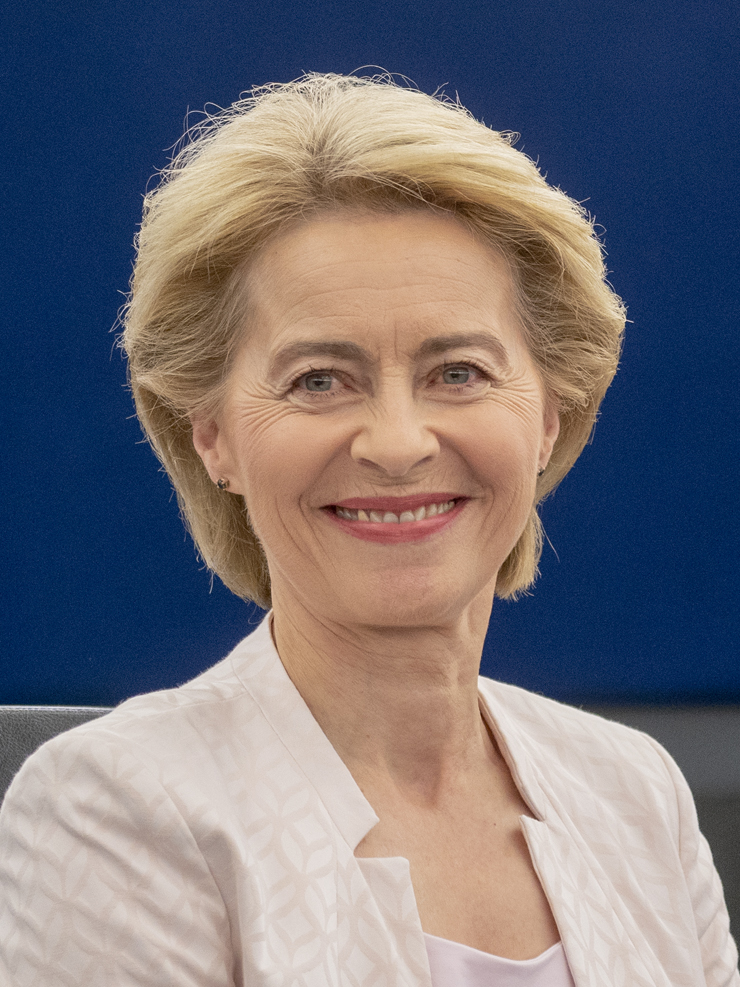
    Ursula von der Leyen – 2022 Statement on New Sanctions Against Russia

    The statement made by Ursula von der Leyen, the President of the European Commission, on 28 September 2022.

    We wanted to present together the eighth package of sanctions. Last week, Russia has escalated the invasion of Ukraine to a new level. The sham referenda organised in the territories that Russia occupied are an illegal attempt to grab land and to change international borders by force. The mobilisation and Putin’s threat to use nuclear weapons are further steps on the escalation path.

    We do not accept the sham referenda nor any kind of annexation in Ukraine. And we are determined to make the Kremlin pay for this further escalation. So today, we are together proposing a new package of biting sanctions against Russia.

    The first part concerns the listing of individuals and entities that will be presented by the HR/VP, Josep Borrell, in a moment.

    I want to focus on the second part of these sanctions that will further restrict trade. By that, we isolate and hit Russia’s economy even more. So we propose sweeping new import bans on Russian products. This will keep Russian products out of the European market and deprive Russia of an additional EUR 7 billion in revenues. We are also proposing to extend the list of products that cannot be exported to Russia anymore. The aim is here to deprive the Kremlin’s military complex of key technologies. For example, this includes additional aviation items, or electronic components and specific chemical substances. These new export bans will additionally weaken Russia’s economic base and will weaken its capacity to modernise. We will also propose additional bans on providing European services to Russia, and a prohibition for EU nationals to sit on governing bodies of Russian state-owned enterprises. Russia should not benefit from European knowledge and expertise.

    The third complex is concerning Russian oil. As you know, Russia is using the profits from the sale of fossil fuels to finance its war. Concerning Russian oil, you might recall that we have already agreed to ban seaborne Russian crude oil in the European Union as of 5 December. But we also know that certain developing countries still need some Russian oil supplies, but at low prices. Thus, the G7 has agreed in principle to introduce a price cap on Russian oil for third countries. This oil price cap will help reduce Russia’s revenues on the one hand and it will keep global energy markets stable on the other hand. Today, in this package, here, we are laying the legal basis for this oil price cap.

    And my last point that I want to focus on is: We are stepping up our efforts to crack down on circumvention of sanctions. Here, we are adding a new category. In this category, we will be able to list individuals if they circumvent our sanctions. So for example, if they buy goods in the European Union, bring them to third countries and then to Russia, this would be a circumvention of our sanctions, and those individuals could be listed. I think this will have a major deterring effect. Our sanctions have hit Putin’s system hard. They have made it more difficult for him to sustain the war. And we are increasing our efforts here and moving forward.

  • Boris Johnson – 2022 Comments Calling Vladimir Putin a Fraud

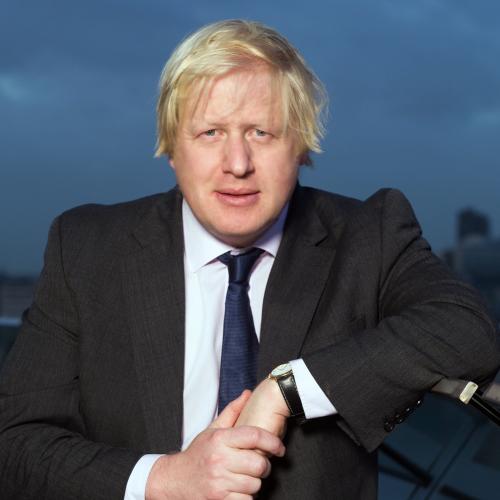
    Boris Johnson – 2022 Comments Calling Vladimir Putin a Fraud

    The comments made by Boris Johnson, the former Prime Minister, on Twitter on 30 September 2022.

    Vladimir Putin your speech is a fraud and a disgrace. The world must never accept your sham referendums or your cruel and illegal attempt to colonise Ukraine. We stand with the people of Ukraine and will support them without flinching until their country is whole and free.

  • David Hope – 2022 Tribute to HM Queen Elizabeth II (Baron Hope of Craighead)

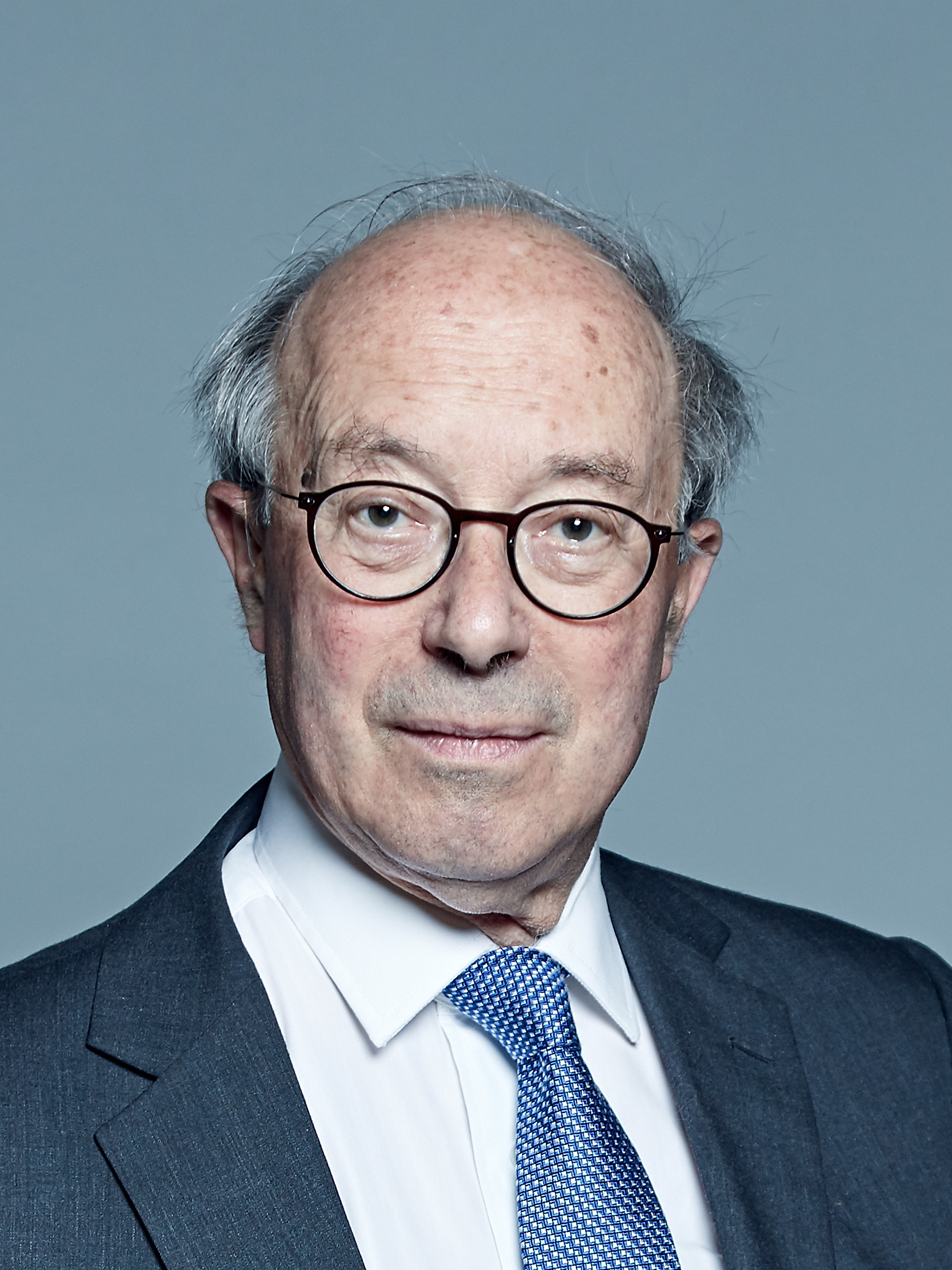
    David Hope – 2022 Tribute to HM Queen Elizabeth II (Baron Hope of Craighead)

    The tribute made by David Hope, Baron Hope of Craighead, in the House of Lords on 9 September 2022.

    My Lords, much has been rightly made of Her Majesty’s deep religious conviction. At the other end of the huge breadth of her character are her corgis and wonderful sense of humour. I draw from my own experience of her commitment to the Church of Scotland and her love of ponies, particularly the highland pony.

    When she was at Balmoral, Crathie was her parish church and she worshipped there every Sunday. When she was at Holyrood, in Edinburgh, she worshipped at the parish church of Canongate Kirk. It was not just the routine of worship that inspired her feelings about the Church of Scotland; it was a deep interest in what the Church of Scotland was all about.

    That was brought to my attention when I served for two years, at her request, as the Lord High Commissioner to the General Assembly of the Church of Scotland. My function was to represent Her Majesty at the beginning and end of a week when the Church met to discuss its affairs, and to attend the assembly every day for prayers as the week went on. I had the huge privilege of living in Holyrood Palace, effectively with the status of one below the Queen. I was known as “Your Grace” and, as soon as I went outside the door, the full national anthem was played—and no doubt there were some archers there as well.

    It was a very demanding week, but even more demanding was the request, two or three weeks later, to report to Her Majesty in an audience of half an hour what the Church had been discussing in its General Assembly. It was a formidable undertaking, but it was suggested to me that the atmosphere would be lightened a bit if I could offer Her Majesty a present. But this raised the question: what present can you possibly give a Queen that she has never received before? Among the many charities she supported is the Highland Pony Society, of which she was patron. We have seen on many occasions her love of ponies as well as horses—particularly the Highland pony, which she bred at Balmoral with great success. My wife, who has ponies, suggested that we might make a cushion on which we would embroider the portrait of a pony—and that is what we did.

    The next question is: how do you present the Queen with a cushion? I asked one of the people masterminding the audience how to do this. I asked him, “Will you hand the cushion to Her Majesty for me?” He said, “No, not at all, you must take it in yourself”. So I walked into the audience clutching a cushion under my arm, took the three steps forward, bowed and—I am afraid to say—blurted out, “Your Majesty, I have a present for you”. It was remarkable to see a lovely smile spread across her face, particularly when she saw what was on the cushion. “Ah, I must take this to Balmoral”, she said. So I felt that I had scored some success there.

    However, the second year, I had to do the same again—give her a full report on what the Church had been doing—and we wondered what we should present this time. My wife said, “Well, last time it was a cushion with the pony facing one way, and it is always known that horses become very uneasy if they are on their own. Why don’t we give her a cushion with a horse facing the other way?” So that is what we did. For the second time, I went into the audience, stepped forward three times, bowed with the cushion and handed it forward. Again, a wonderful smile spread across her face. I suspect that we spent rather more time talking about ponies than we did about the Church of Scotland—but that is another matter. This time, she thanked me for it. Later on, it was reported to me that, at the end of the day’s business, she went into lunch clutching the cushion and said to everybody around the luncheon table, “Look what I’ve got”. It was typical of her that she entered into the fun of it. From the very beginning of the presentation of the cushion, there was this huge sense of fun and enjoyment that we had this little private engagement together about ponies and cushions.

    I look back with enormous gratitude to these flashes of her sense of humour and her generous nature—which not many people are given at all, although some of us in this House have encountered it many times. I owe a particular thanks to her for appointing me to that office and for the way in which she received me when it was my turn to report on my duties. Of course we mourn her loss deeply, and we wish His Majesty King Charles III every success in the demanding life that he will now lead. I conclude my speech with the same words that have been mentioned earlier, His Majesty’s own words: “Simply, thank you”.

  • Alexander Scrymgeour – 2022 Tribute to HM Queen Elizabeth II (12th Earl of Dundee)

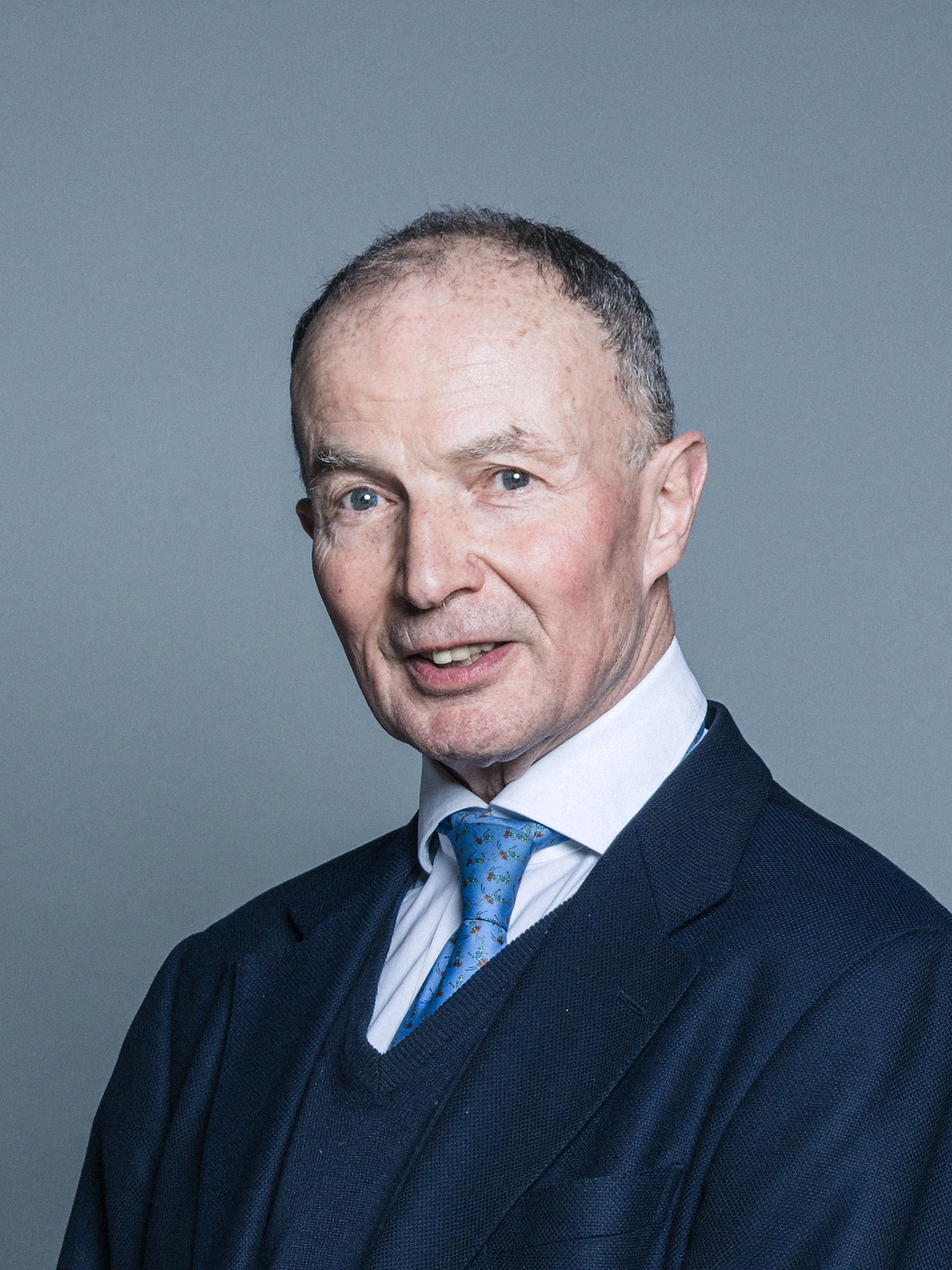
    Alexander Scrymgeour – 2022 Tribute to HM Queen Elizabeth II (12th Earl of Dundee)

    The tribute made by Alexander Scrymgeour, the 12th Earl of Dundee, in the House of Lords on 9 September 2022.

    My Lords, I pay tribute as Her Majesty’s hereditary banner-bearer for Scotland. Along with your Lordships, I send condolences to the Royal Family.

    As has been said, the Queen’s passing yesterday is already noted everywhere to have caused shock, uncertainty and even fear. Yet the corollary of that is the healing strength of what she achieved.

    Whether here in the United Kingdom, in the Commonwealth or elsewhere abroad, there are her priorities for how things should be.

    These may perhaps be summarised by her comments in London in 1969, at the 20th anniversary of Europe’s human rights institution, of which the United Kingdom remains a key member:

    “The Council of Europe provides us with a means to dismantle the barriers to communication, understanding and common effort between the European peoples. For the sake of future generations and for the peace and prosperity of our continent, we should grasp this opportunity with both hands.”

    The Queen’s humour, warm personality, astuteness and concern for others are well known across the world. The noble Baroness, Lady Finlay, referred to her corgis and love of animals—an attribute shared with St Francis. Certainly at all times, her wishes were to encourage the prescriptions of harmony within the famous prayer of St Francis.

    I join your Lordships in recognising the enormous benefits that her long reign brought to all of us, both nationally and internationally, with huge thanks; and with appreciation for her remarkable legacy that will endure.

  • Michael Farmer – 2022 Tribute to HM Queen Elizabeth II (Baron Farmer)

    Michael Farmer – 2022 Tribute to HM Queen Elizabeth II (Baron Farmer)

    The tribute made by Michael Farmer, Baron Farmer, in the House of Lords on 9 September 2022.

    My Lords, the noble and learned Lord, Lord Judge, is getting up and walking out, but I want to pick up on a point that he made in his speech earlier on, which struck a note with me. It was the point about constitutional monarchy, as we have heard from time to time during the speeches today, and how apt this place in particular is to make tributes to Her Majesty. This place, the House of Lords, is where Her Majesty sits on the Throne at the State Opening and calls in the Commons so that they can hear the Queen’s Speech. Here is the place where the constitutional monarchy is on display at its most effective, if you like, at the beginning of every parliamentary year. It struck me very much what the noble and learned Lord, Lord Judge, said, and it is certainly, for me, an honour and a privilege to be able to stand here and say what a wonderful Queen we have had.

    I want to start at the end, in a way, where many other Peers have started, with the photo, this week, leaning forwards and slightly stooped to shake the other Liz’s hand: a little old lady in a cardigan. The new Prime Minister’s dark suit was the epitome of power dressing and her height was accentuated in the foreground of the shot. Yet, despite the optics—and without any disrespect to our Prime Minister—I think, when we looked at the picture, we all knew where the real power lay in that handshake. I actually passed the photograph around our office and said, “Where is the real power?” And it was obvious.

    Soft power, which we have heard about today, was a phrase that could have been coined for the Queen—the ability to co-opt rather than coerce. She would say herself that it came primarily not from her constitutional position but from her utter dependence on God, his son Jesus Christ and the Holy Spirit, who so clearly worked through her. Interestingly, I hear that President Biden has today ordered all American flags worldwide to be flown at half-mast until after the funeral. What a display of power—for one British individual to have the American flag flying at half-mast for such a length of time.

    The Queen was a unique expression of God’s grace. In the final words of her last Christmas message, she described Jesus as

    “a man whose teachings have been handed down from generation to generation, and have been the bedrock of my faith.”

    Throughout her reign, in her Christmas messages in particular, she referred to him as her rock. In his Letter to the Galatians, St Paul lists the fruit of the Holy Spirit—a list of the essence of the character of God—as love, joy, peace, goodness, kindness, gentleness, patience, faithfulness and self-control.

    Let us think of those words. We have mentioned love today: love for her family, the people she served and the nation. We have heard anecdotes in every single speech in which she was so thoughtful and caring to those around her. As for joy, we have heard about her sense of humour—its infectiousness, her smile and her zest for life. As for peace, we have heard also of her work, her shaking that hand in Ireland. We have heard about the peaceful overtures we have seen her make publicly in her family difficulties.

    Then we have the kindness, goodness and gentleness that pervaded her. I will come back to faithfulness. As for patience and self-control, I often remember sitting in the middle of these Benches at State Opening, when the Table was removed. We were all waiting patiently; the Queen had come in and was sitting on the Throne as Black Rod had gone down to bang on the door. We were all looking at the Queen, as she looked over our heads down the Corridor, and you could hear shambling, laughing and casual chatting slowly ambling up towards us. As I looked at her, I thought “There is patience but also self-control.” There was a steeliness in her eyes which I think she was controlling.

    With all humility, coming back to faithfulness, I have made a recommendation that she should have the designation “Elizabeth the Faithful”. We have had Kings in the past, and there have been many Kings of other countries, who have had an adjective following their name to define them. This would be an epigram of her constancy, faithfulness and outworked sense of duty to God and man since she made those promises when she was so young, to make the uniqueness of her reign stand out in the sweep of history to come for future generations and in future centuries.

    Coming back to the present, I mentioned Biden earlier. Apparently Vladimir Putin has acknowledged:

    “For many decades Elizabeth II rightfully enjoyed her subjects’ love and respect as well as authority on the world stage.”

    Even those who rule in a contrary spirit recognise and respect the miracle that she was to us. Light has a habit of overcoming darkness. She is a miracle of the modern age.

    I should like to finish by talking about prayer. Noble Lords pray here at the start of every day. You could say we pray by rote, but we pray for our monarch—that God will direct and bless them, and give them wisdom, happiness and health. One must not forget all the congregations and church assemblies, in the villages and towns, that pray for the monarch. In all sorts of gatherings there are people praying for the monarch.

    I say to all who have been praying over the years that your prayers have been answered. Do believe in the power of prayer; it is heard and it does work. Look at the Queen’s life, which I have just described as a miracle. Where can the strength have come from to do what she did?

    I finish with the encouragement to carry on praying and to pray that our new King has a long and glorious life of service. As I say without any doubt, God hears and answers these prayers. We all know it would please her for us to say that we will now lift up those prayers for our gracious monarch King Charles III. May he be blessed bountifully in his reign. We will continue to be faithful in doing that.

  • PRESS RELEASE : Almost 6 million £150 Cost of Living Payments processed for disabled people [September 2022]

    PRESS RELEASE : Almost 6 million £150 Cost of Living Payments processed for disabled people [September 2022]

    The press release issued by the Department for Work and Pensions on 30 September 2022.

    This follows the government’s announcement on 20 September that those who had confirmed payment of their disability benefit for 25 May will receive the £150 automatically, with the vast majority to be paid by early October.

    The vast majority of eligible claimants who were due to receive the one-off £150 payment from the DWP by early October have now had their payment processed.

    The payment will help disabled people with the rising cost of living, acknowledging the higher costs they often face, such as for care and mobility needs.

    There will be some cases – such as those who gained entitlement to this payment at a later date or where payments were rejected due to invalid account details – who will not be paid by the beginning of October. These will be paid automatically as soon as possible.

    The £150 cost of living payments for disabled people from the government are part of a £37 billion package of support, which will see millions of low income households receive at least £1,200 this year to help cover rising costs.

    This also follows the Prime Minister’s announcement of a new Energy Price Guarantee for the next two winters, saving households on average £1,000 a year on their energy bills.

    Further information

    • The Energy Price Guarantee (EPG) will apply from 1 October and will discount the unit cost for gas and electricity use. This guarantee, which includes the temporary suspension of green levies, means that from 1 October a typical household will pay no more than £2,500 per year for each of the next two years. This is in addition to the £400 Energy Bill Support Scheme.
    • On top of the EPG and £150 Disability Cost of Living Payment, there is an extra £150 for properties in Council Tax bands A-D in England. On top of this, disabled people on low incomes may also be eligible for the other Cost of Living payments totalling up to £650 – households in receipt of a means-tested benefit received the first of the two automatic Cost of Living payments of £326 from 14 July. The second means-tested payment of £324 will be issued later this year.

    Eligibility

    • Those who receive the following disability benefits may be eligible for the one-off payment of £150 in September: Disability Living Allowance, Personal Independence Payment, Attendance Allowance, Scottish Disability Benefits (Adult Disability Payment and Child Disability Payment), Armed Forces Independence Payment, Constant Attendance Allowance and War Pension Mobility Supplement.
    • The majority of those who had confirmed payment of their disability benefit for 25 May have now been paid. For those who have still to be paid, are awaiting confirmation of their disability benefits on 25 May, or who are waiting to be assessed for eligibility to receive disability benefits, the process may take longer but payments will still be automatic.
    • You must have received a payment (or later receive a payment) of one of the qualifying benefits for 25 May 2022 to get the payment.
  • James Cleverly – 2022 Comments on Latest Sanctions Against Russia

    James Cleverly – 2022 Comments on Latest Sanctions Against Russia

    The comments made by James Cleverly, the Foreign Secretary, on 30 September 2022.

    The UK utterly condemns Putin’s announcement of the illegal annexation of Ukrainian territory. We will never recognise the results of these sham referendums or any annexation of Ukrainian territory.

    The Russian regime must be held to account for this abhorrent violation of international law. That’s why we are working with our international partners to ramp up the economic pressure through new targeted services bans.

    What happens in Ukraine matters to us all, and the UK will do everything possible to assist their fight for freedom.