Blog

  • PRESS RELEASE : Head of Office of Ukraine’s President meets with chief adviser to President of Türkiye, adviser to US President on national security issues [October 2022]

    PRESS RELEASE : Head of Office of Ukraine’s President meets with chief adviser to President of Türkiye, adviser to US President on national security issues [October 2022]

    The press release issued by the President of Ukraine on 2 October 2022.

    As part of his visit to Turkey, Head of the Office of the President of Ukraine Andriy Yermak held a tripartite meeting with Chief Adviser to the President of the The Republic of Türkiye İbrahim Kalın and National Security Adviser to the President of the United States of America Jake Sullivan.

    The parties discussed the situation at the front and the coordination of measures to respond to the latest aggressive actions of the Russian Federation.

    The head of the President’s Office emphasized the need for Ukraine to obtain reliable international security guarantees before our country becomes a member of NATO.

    Yermak recalled that the International Working Group on Security Guarantees for Ukraine, which he heads together with former NATO Secretary General Anders Fogh Rasmussen, has prepared recommendations regarding the Kyiv Security Compact, the conclusion of which should provide the Ukrainian side with effective security guarantees for this transitional period.

    The head of the Office of the President emphasized the importance of a tough reaction to Russia’s holding of so-called “referendums” on the temporarily occupied Ukrainian territories and the adoption of an illegal decision on their annexation.

    “These referendums are worthless, they do not change reality. The territorial integrity of Ukraine will be restored. This is the principled position of President Volodymyr Zelenskyy, the entire military-political leadership of Ukraine and the Ukrainian people,” the head of the President’s Office said.

    The parties discussed the continuation of security assistance to the Ukrainian Armed Forces, the urgent priority needs of the defense forces of Ukraine, and the importance of promptly receiving such support and increasing it.

    Also, during the visit, Yermak held separate meetings with İbrahim Kalın and Jake Sullivan in bilateral formats.

  • Volodymyr Zelenskyy – 2022 Statement on the Situation in Ukraine (04/10/2022)

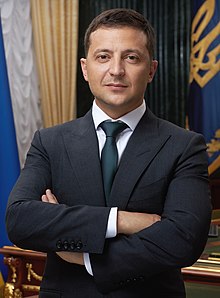
    Volodymyr Zelenskyy – 2022 Statement on the Situation in Ukraine (04/10/2022)

    The statement made by Volodymyr Zelenskyy, the President of Ukraine, on 4 October 2022.

    Ukrainians!

    Today, I will also begin my address with a message about what happened in Türkiye.

    Finally, we managed to organize a meeting of our boys, commanders from “Azovstal”, with their relatives. The meeting is in Türkiye, where our warriors stay in accordance with the agreement on their release.

    They are completely safe – with the guarantees of President of Türkiye Erdoğan. They are provided with proper conditions. And now they can see their relatives.

    They have not seen each other for many months. And now I thank everyone who made it possible for them to be with their families again.

    And we will do everything to make such a meeting possible for the families of all Ukrainians who are still in Russian captivity one day – a meeting with their relatives.

    Ukraine appreciates people. Saves people. And helps all those who need help. These are fundamental rules for our state. And it will always be so.

    A large group of our officials continues the work on providing the necessary assistance to all those released from Russian captivity. As you understand, there are a lot of issues. This is not only treatment and rehabilitation, but also a large volume of social issues, often legal. The state will certainly help solve all of them.

    At the same time, everything is being done quite intensively at various levels of government to restore normal life in the areas liberated from the occupiers.

    In total, these are more than 450 settlements in the Kharkiv region alone – those that were liberated thanks to the defense operation that began in September and is still ongoing.

    The work of transport, post office, police, normal supply of water, gas, electricity is being restored – as much as possible. The occupiers left many mined areas, many tripwires, almost all infrastructure was destroyed. The damage is colossal.

    But life is returning – it is returning wherever the occupiers were driven out. We also make social payments – pensions, salaries. In particular, to the teachers who remained loyal to Ukraine and did not switch to the curriculum of the occupiers.

    This is actually very important. Russian propagandists intimidate people in the areas still under the control of the occupiers that Ukraine will allegedly consider almost everyone who remains in the occupied territory as collaborators. Absolute nonsense.

    Our approach has always been and remains clear and fair. If a person did not serve the occupiers and did not betray Ukraine, then there is no reason to consider such a person a collaborator. These are elementary things. If the teacher remained a Ukrainian teacher and did not lie to the children about who is the enemy… Or if a person remained a Ukrainian employee of the Ukrainian utilities service and, for example, helped preserve the energy supply for people, then such a person cannot be blamed for anything.

    Hundreds of thousands of our people were in the temporarily occupied territory. Many helped our military and special services. Many simply tried to survive and waited for the return of the Ukrainian flag.

    Of course, there were those who betrayed Ukraine. But such cases are quickly established by the Security Service of Ukraine and are not massive. Russia did not meet mass support in Ukraine, and this is a fact.

    Today, the offensive movement of our army and all our defenders continued. There are new liberated settlements in several regions.

    Fierce fighting continues in many areas of the front. But the perspective of these hostilities remains obvious – more and more occupiers are trying to escape, more and more losses are being inflicted on the enemy army, and there is a growing understanding that Russia made a mistake by starting a war against Ukraine.

    Of course, there are many fanatics out there. Those who will never admit the obvious, that this is a pointless war for Russia that Russia cannot win. Because it is impossible to defeat a nation that preserves unity and knows what they are fighting for.

    The same cannot be said about the people of Russia as about the Ukrainian people. None of those who are now being sent to war after criminal mobilization will be able to explain: what is the point of this for him personally? Why should he risk his life?

    Among the dead occupiers we can already see those who were taken just a week or two ago. People were not trained for combat, they have no experience to fight in such a war. But the Russian command just needs some people – any kind – to replace the dead. And when these new ones die, more people will be sent. This is how Russia fights. That’s how it will lose as well.

    No sham referenda, announcements about annexations, conversations about the borders they invented and drew somewhere, will help them.

    There is a clear and internationally recognized border of Ukraine. There are lives we must protect. There is security we must restore. And all this will happen. We are doing all this.

    And one more thing.

    Today, Russia was ultimately removed from decision-making in world aviation. There will be no more representatives of the terrorist state in the governing body – the Council of the International Civil Aviation Organization. This is a crucially important world institution, a specialized agency of the UN, and this is a quite eloquent signal to all other international organizations.

    A state that has violated so many norms of international law cannot be kept in any international organizations as a supposedly normal participant. Russia has no place in the global community.

    I thank everyone who helps us defend freedom!

    Glory to all who fight for Ukraine!

    Glory to Ukraine!

  • Suella Braverman – 2022 Speech to Conservative Party Conference

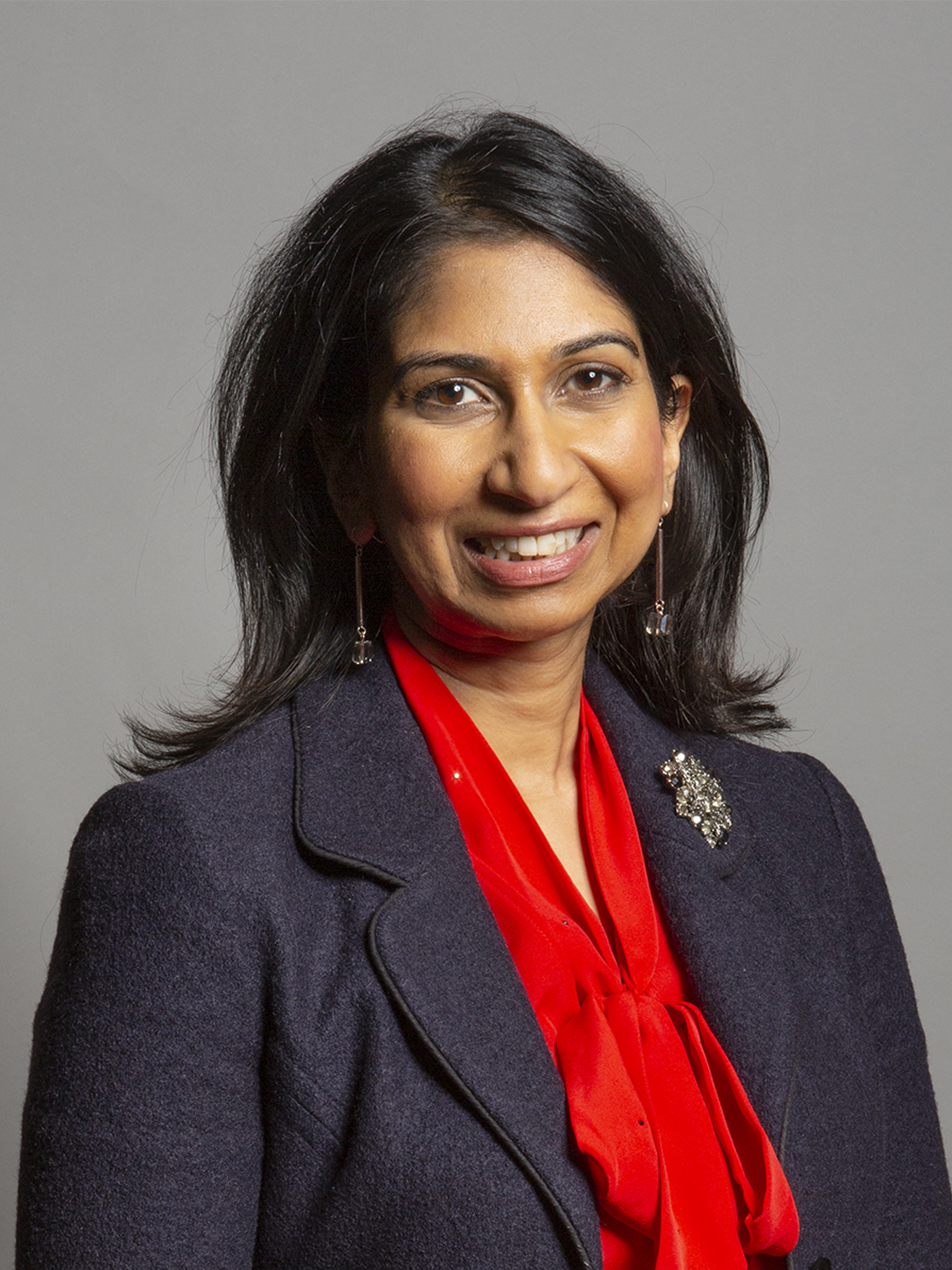
    Suella Braverman – 2022 Speech to Conservative Party Conference

    The speech made by Suella Braverman, the Home Secretary, in Birmingham on 4 October 2022.

    It is such a privilege to be here.

    Being Home Secretary is not just a tremendous honour…

    …keeping the British people safe and securing our borders are the highest duties of state.

    Our Prime Minister understands those duties.

    And so do I. We stand for the law-abiding majority of Britons.

    And in doing so, I draw on a long tradition of Conservative Home Secretaries who were willing to challenge failing orthodoxy. They refused to accept defeat.

    Michael Howard, on his first day as Home Secretary, was told that there was nothing he could do about the inevitable rise in crime.

    He disagreed – and crime fell dramatically.

    They said that Theresa May couldn’t deport Abu Qatada, the Islamist extremist. But – despite setbacks along the way – she made it happen.

    Priti Patel negotiated a ground-breaking deal with our partners in Rwanda to bring forward a new solution to the challenge of illegal migration – providing protection in Rwanda for those that need it while breaking the business model of people smugglers.

    I am grateful to Priti and Boris for the foundations that they laid.

    Serious violent crime has fallen, as has overall crime, excluding fraud and online theft.

    And we are well on the way to 20,000 additional police officers.

    But a Home Secretary can never be complacent – and some things still need fixing. I’m pleased to be working with a brilliant team of Ministers who I am so pleased to see with us today: Tom Tugendhat, Tom Pursglove, Jeremy Quin, Mims Davies and Lord Andrew Sharpe, supported by our excellent PPSes – Gareth Davies and Shaun Bailey, they all bring talent and expertise to the Home Office.

    Now, the Prime Minister and I want to see homicide, serious violence, and neighbourhood crime fall by 20 per cent.

    Some of our most committed and courageous people serve in the police. In Belfast last week, I joined police leaders to pay tribute to those officers who have died in action. Their ultimate sacrifice is one for which we owe a huge debt of gratitude.

    So, yes I am immensely proud of our police.

    Many on the left want to defund the police.

    Well I say to the militants, I say to the anarchists and the extremists: I will always back our policemen and women.

    That’s what being on the side of the law-abiding majority means.

    But we also need to be frank when things go wrong. Some police officers have fallen devastatingly short of the standards expected.

    We need to get back to common sense policing, empowering the Police to tackle the real issues facing the public – not policing pronouns on twitter or non-crime hate incidents.

    That’s why I’m pleased that Greater Manchester Police, Hampshire, Bedfordshire, and Northamptonshire and the Metropolitan Police have all promised to visit the scene of every burglary.

    But the law-abiding majority expect every force to investigate every neighbourhood crime – and so do I. Drugs, car theft, vandalism and anti-social behaviour cannot be ignored.

    Perhaps the most unsettling, unspeakable crime of all is rape.

    As an MP and as Attorney General, I have already seen first-hand how the system needs to improve. I can’t change things overnight, but I will not accept the status quo.

    Policing is a public service, and must be accountable to you the public.

    That’s why it’s right to publish league tables that show how well every force in England and Wales is doing in their fight against crime.

    You all have a right to know. And greater transparency will drive up standards.

    The modern world inevitably brings new challenges. Our National Security Bill will ensure that law enforcement and intelligence agencies have the tools they need to stay ahead of our country’s evermore sophisticated adversaries.

    Yet everything starts from getting the basics right –

    We need common sense policing. Unashamedly and unapologetically on the side of the law-abiding majority.

    That means that the mob needs to be stopped.

    The police must have all the powers that they need to stop protestors who use guerrilla tactics and bring chaos and misery to the law-abiding majority.

    It’s not a human right to vandalise property. It’s not my ‘freedom of expression’ to protest violently. No – you can’t just start a riot or glue yourself to the roads and get away with it.

    Yes, friends, as Attorney General, I had to go to court to get some of these simple truths established.

    The judges agreed with me last week in the Cout of Appeal in the Colston Statue case. And that’s why our Public Order Bill will empower our police to stop this nuisance. So whether you’re Just Stop Oil, Insulate Britain or Extinction Rebellion – you cross a line when you break the law. That’s why we will keep putting you behind bars.

    It’s very easy to say that the culture wars are a distraction.

    But make no mistake, the Left are attacking our profound, elemental values, wanting to replace them with the poison of identity politics. And when poison seeps into the public sphere, it distracts our public servants from doing their real job. That philosophy dominates the Labour Party, whatever Sir Keir Starmer pretends.

    And that’s why it is not only wrong for the police to take the knee. It is wrong for them to join in with political demonstrations; it is wrong for biologically male police officers to strip search female suspects.

    And it is not just that pandering to identity politics is a huge waste of time.

    They need to stick to catching the bad guys.

    To those who dismiss political correctness as a conservative obsession, I say this. Visit Rochdale. Visit Telford. The grooming gangs scandal is a stain on this country and it’s what happens when political correctness becomes more important than criminal justice.

    More PCs, less PC.

    My other mission is to control our borders.

    Firstly, legal migration.

    I backed Brexit because I wanted Britain to have control over our migration and to cut overall numbers. Brexit was meant to give us a say on how we determine our own migration policy.

    We should use our newfound control to deliver the kind of migration that grows our economy, for example that helps projects that have stalled or builds friendships and relationships with our allies.

    But the truth is parts of our system aren’t delivering. We need to end the abuse of the rules and cut down on those numbers that aren’t meeting the needs of our economy.

    And we mustn’t forget how to do things for ourselves. There is absolutely no reason why we can’t train up enough of our own HGV drivers, butchers, or fruit-pickers.

    The way we will build a high-skilled and high-wage economy is by encouraging business to invest in capital and domestic labour. Not relying wholly on low-skilled foreign workers.

    This isn’t just about policy or economics for me. It’s intensely personal. My parents came here in the 1960s from Kenya and Mauritius. They loved Britain from afar, as children of the Commonwealth. It was Britain that offered them security and opportunity as young adults.

    I’m not embarrassed to say that I love Britain. No Conservative is.

    It’s not racist for anyone, ethnic minority or otherwise, to want to control our borders.

    It’s not bigoted to say that we have too many asylum seekers who are abusing the system.

    It’s not xenophobic to say that mass and rapid migration places pressure on housing, public services and community relations.

    I reject the Left’s argument that it is hypocritical for someone from an ethnic minority to tell these truths.

    My parents came here through legal and controlled migration. They spoke the language, threw themselves into the community, they embraced British values. When they arrived, they signed up to be part of our shared project because the United Kingdom meant something distinct. Integration was part of the quid pro quo.

    That didn’t mean abandoning their heritage, but it did mean adopting British identity. An identity of which we should all be proud. This is the best place on earth to come and live in, but I fear that we are losing sight of the core values and the culture that made it so. The unexamined drive towards multiculturalism as an end in itself combined with the corrosive aspects of identity politics has led us astray.

    I saw this when I went to Leicester recently. A melting pot of cultures and a beacon of religious harmony. But even there, riots and civil disorder have taken place because of failures to integrate large numbers of newcomers. Such conflict has no place in the UK.

    Or when we look at the Prevent scheme, we see how cultural tensions within communities are not being handled well. The murderer of our much missed dear friend Sir David Amess, had been referred to Prevent. But it couldn’t stop him.

    We cannot as a people be cowed into fear by vocal minorities who attempt to undermine our common sense instincts. And as Home Secretary, I will make sure that Prevent is fit for purpose.

    The law-abiding majority deserve nothing less.

    And lastly we have got to stop the boats crossing the Channel. This has gone on for too long. But I have to be straight with you, there are no quick fixes.

    The problem is chronic. Organised criminal gangs are selling a lie to thousands of people.

    Many are drowning in the Channel.

    Many are leaving a safe country like France and abusing our asylum system.

    So what is our plan?

    Firstly, our work with the French has prevented about half of all crossings. I know that alone will not work. So I will work closely with the French to get more out of our partnership. Both on the French coastline and further upstream against the organised criminal gangs.

    Secondly, we need to find a way to make the Rwanda scheme work.

    Thirdly, we need to do more to get asylum-seekers out of hotels – currently costing the British taxpayer £5 million per day.

    And fourth, we cannot allow a foreign court to undermine the sovereignty of our borders.

    A few months ago, the European Court of Human Rights in Strasbourg did just that,

    By a closed process, with an unnamed judge and without any representation by the UK, a European court overrode our Supreme Court.

    As a result, our first flight to Rwanda was grounded.

    We need to take back control.

    But friends, I need to be honest with you. The Strasbourg Court is not the only problem.

    Now everyone agrees that we must fight the evil of modern slavery. I’m immensely proud of the UK’s global leadership in protecting genuine victims.

    But the hard truth is that our modern slavery laws are being abused by people gaming the system. We’ve seen a 450% increase in modern slavery claims since 2014.

    Today, the largest group of small boats migrants are from Albania – a safe country. Many of them claim to be trafficked as modern slaves. That’s despite them having paid thousands of pounds to come here, or having willingly taken a dangerous journey across the Channel.

    The truth is that many of them are not modern slaves and their claims of being trafficked are lies.

    And it’s not just illegal migrants.

    Since entering the Home Office I have seen egregious examples of convicted paedophiles and rapists trying to game the system.

    Making last minute claims of modern slavery to block their removal from our country.

    Some have even gone on to commit further crimes in the interim.

    In one case, we convicted a sex offender from South Africa who spent a year in prison.

    He was about to be deported from the UK – and lo and behold, he made a claim of modern slavery.

    Our removal was stalled – and in this time he went on to commit a further rape.

    He is now back behind bars – but when he’s released, well – it’s all so terribly predictable.

    In another case, a paedophile from Pakistan received 10 years in prison.

    But at the end of his prison sentence, he put in a spurious claim to be a modern slave.

    Even when they got through that process, he made a second claim – which blocked his removal.

    We simply can’t go on like this.

    We need to make sure that our system strikes the right balance. Our laws need to be resilient against abuse – while at the same time ensuring we help those in genuine need.

    We have got a proud history of offering sanctuary to those in need.

    From supporting thousands of BNOs fleeing persecution in Hong Kong; to welcoming nearly 20,000 Afghan nationals fleeing war and terror, to offering immediate refuge to thousands of Ukrainians fleeing Putin’s barbarism…

    …The UK, and this Conservative Government has always been there to hold out the hand of hope to those who need it most.

    But the law simply isn’t working.

    It isn’t working in the interests of the British people or people who need our help the most.

    Our laws are being abused.

    Abused by people smugglers and criminals pedalling false promises.

    Abused by people making multiple, meritless and last-minute claims.

    Abused by tactics from specialist, small boat-chasing law firms.

    This cannot continue.

    So, Conference, I will commit to you today, that I will look to bring forward legislation to make it clear that the only route to the United Kingdom is through a safe and legal route.

    And that’s so we can help support those who need our help the most, including women and girls.

    If you deliberately enter the United Kingdom illegally from a safe country, you should be swiftly returned to your home country or relocated to Rwanda that is where your asylum claim will be considered.

    UK policy on illegal migration should not be derailed by abuse of our modern slavery laws, Labour’s Human Rights Act, or orders of the Strasbourg Court.

    And we will always of course work within the bounds of international law, but we cannot allow this abuse of our system to continue.

    And of course, at the same time, we need to continue to stamp out illegal working practices.

    We already have some of the toughest penalties for those not playing by our rules, but we will redouble our efforts to go after them.

    I need to be straight with you, Conference. This won’t be easy. I cannot promise a solution immediately. We’ve all heard pledges and promises but this is a complex and entrenched problem. And there are many forces working against us.

    The Labour Party will try to stop this. The Lib Dems will go bananas. The Guardian will have a meltdown.

    As for the lawyers. Don’t get me started on the lawyers.

    And I’m a recovering lawyer.

    But what can I pledge to you is my total and undeniable and unfettered and unconditional commitment to doing whatever it takes. Despite the obstacles, I won’t give up on you and I won’t give up on the British people.

    The time for words is over. Now is the time for action. Time to put the will of the hard-working patriotic majority at the heart of all we do.

    It’s time for the police to stop virtue-signalling and start catching robbers and burglars.

    It’s time to tackle the small boats – no ifs, no buts.

    Friends, it’s time for common sense.

    I stand ready to serve you. I stand ready to deliver.

    The time is ours, the time is now.

  • Grant Shapps – 2022 Comments in Favour of 45p Tax Rate Reversal

    Grant Shapps – 2022 Comments in Favour of 45p Tax Rate Reversal

    The comments made by Grant Shapps, the Conservative MP for Welwyn Hatfield, on Twitter on 3 October 2022.

    Strongly welcome today’s 45p tax reversal. Sensible & pragmatic.

    Conservatives want lower tax, but let’s show our energy price cap + other policies are on side of consumers rather than borrowing to cut high earner taxes first.

    Chx backs down on 45p tax.

  • Nadine Dorries – 2022 Comments on Liz Truss Needing a Fresh Mandate

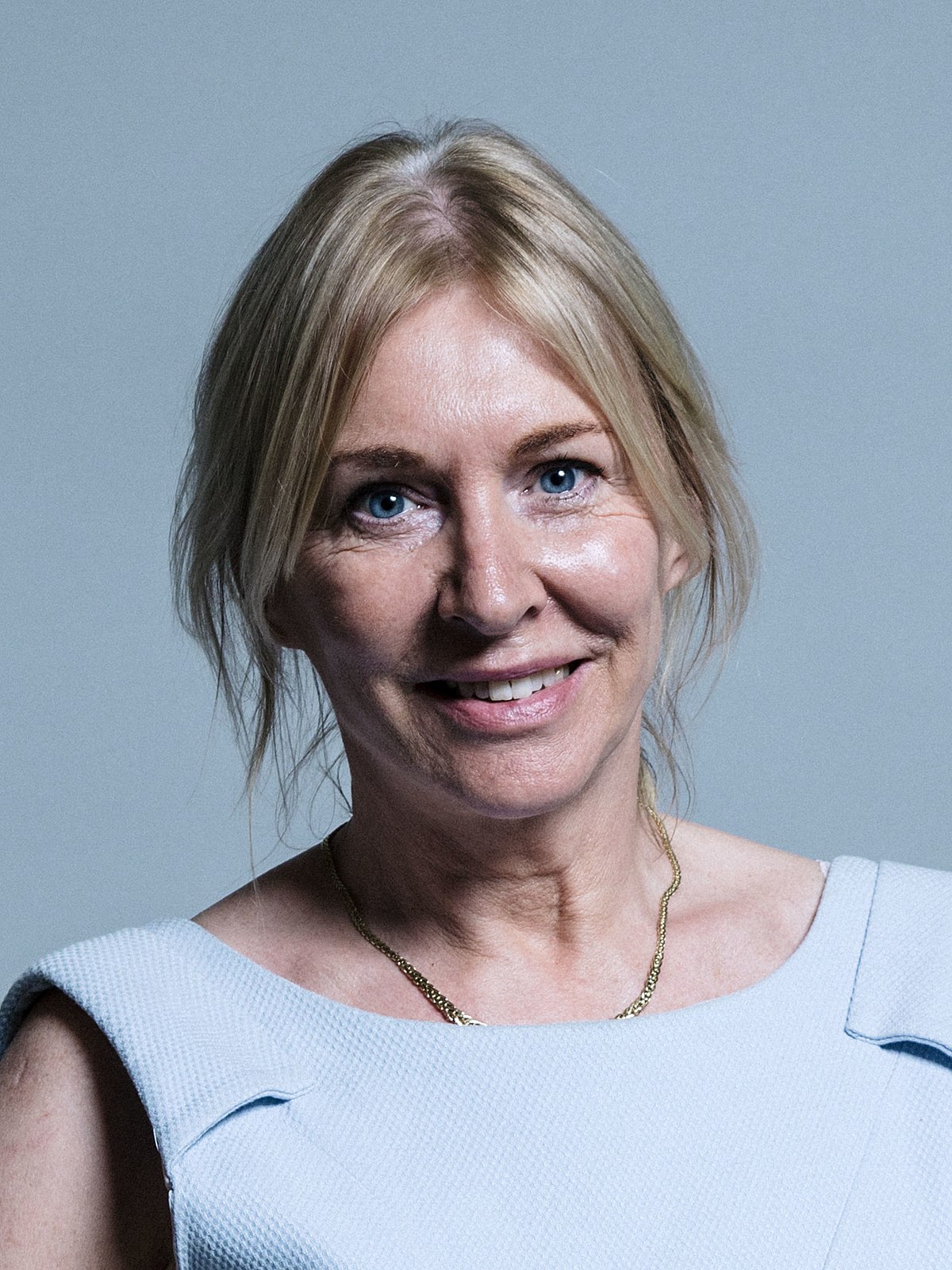
    Nadine Dorries – 2022 Comments on Liz Truss Needing a Fresh Mandate

    The comments made by Nadine Dorries, the Conservative MP for Mid Bedfordshire, on Twitter on 4 October 2022.

    We have no mandate from the people to do this.

    Conservative Gov elected on basis of a manifesto, it’s how democracy works.

    People voted in ‘19 on the policy promises we made (and for Boris).

    If we don’t want to deliver on the deal, the promises, we need a fresh mandate.

    [Dorries was responding to the below Tweet from TalkTV]

    Prime Minister Liz Truss suggests her government could start from scratch on all government policy: “We are going to have to look at things differently as we move forward.”

  • PRESS RELEASE : Teaching is now a top choice for high flying graduates [May 2012]

    PRESS RELEASE : Teaching is now a top choice for high flying graduates [May 2012]

    The press release issued by the Department for Education on 31 May 2012.

    New research, released from the Teaching Agency (TA) today, reveals that perceptions of teaching are changing for the better. 81% of final year students view the occupation as one which has real status and kudos and 72% of students felt that their friends and family would react positively if they decided to enter the profession, up six per cent from 2010.

    According to the UK Graduate Careers Survey, conducted by High Fliers Research, schools and universities have moved up to become the second most popular type of employer, with nine per cent of graduates saying they wanted to work in this area, beaten only by advertising, PR or marketing at 11%. An additional piece of research showed that well over half of final year students (58%) have considered applying for teaching, up five per cent on 2010, with students increasingly recognising it as a career for people with drive (67%) and a great option for the long term (72%).

    Despite increased recognition of the rewarding career teaching provides, misconceptions still persist when it comes to the earning potential of teachers. In fact, one in three students are being deterred from a career in teaching because of inaccurate salary perceptions, with four in five (82%) of final year university students underestimating the figure, by as much as £4000.

    Whilst over a quarter of students thought the starting salary for a teacher in the capital was £23,000, the reality is that these teachers can now expect to earn £27,000 in Inner London. Similarly, most students (61%) thought teachers outside London earned £19,000 or less, while in reality salaries are more likely to be £21,588. The average starting salary for a UK teacher is £23, 010 (1), a figure that now compares favourably with other graduate jobs which range from £17,720 to £23,335 (2).

    The research also revealed that the majority of students, 64%, do not realise the long term earning potential of teachers. Teachers are seeing their salaries rise by an average of around 30% after their first four years in the job. Experienced primary and secondary teachers, achieving the appropriate standards, can earn up to £64,000 (in London) and up to £56,000 (in other parts of the UK). Students may also be surprised to learn that the average salary for headteachers is £62,600, rising to £84,600 for secondary headteachers (3) and 700 heads are earning at least £100,000 this year following a rise in average salaries for senior staff members (4).

    The TA is calling upon graduates to take a fresh look and reflect upon the modern day realities within this valued profession.

    In addition to competitive salaries, the coalition government has introduced a number of financial incentives in the last 12 months such as tax free bursaries of up to £20,000 to attract the recruitment of top graduates to train to teach in maths, physics, chemistry or modern foreign languages.

    Lin Hinnigan, chief executive of the Teaching Agency commented:

    While it’s heartening to see the positive attributes of teaching being recognised by top graduates, it appears that some graduates are basing important career decisions on inaccurate perceptions. Teaching is increasingly a career for the most able graduates as demonstrated by its pay, benefits and prospects that compare favourably to other graduate professions. I’d urge anyone considering a career in teaching to investigate just how well the profession compares to alternative careers.

    Neil Dhanda, who earns £45,000 as Curriculum Team Leader for Modern Foreign Languages at Saint Cecilia’s school, Wandsworth, Church of England School said:

    Pay in teaching definitely compares favourably with the private sector. If you are ambitious and take up additional responsibilities, then you can expect increased financial rewards.

    Having become head of department within four years, I have first-hand experience of the progression opportunities available within the profession and as such, it’s fair to say that aspirations for moving up the career ladder are wholly realistic and achievable.

    I love my job and I think that teaching is a career which I’ll stay in for the rest of my working days; it’s varied, challenging, demanding and rewarding, I think that’s more than many would say about their chosen careers.

    To find out more about a career in teaching, please visit get into teaching.

  • PRESS RELEASE : Changes to education inspections announced [May 2012]

    PRESS RELEASE : Changes to education inspections announced [May 2012]

    The press release issued by the Department for Education on 30 May 2012.

    Ofsted today announces the results of its consultation on changes to the way it inspects schools, further education and skills, and initial teacher education. The changes, which come into effect from 1 September 2012, are intended to support headteachers and principals in their work to provide the best possible education for pupils and learners.

    Ofsted’s consultation was launched by Sir Michael Wilshaw, HMCI, in February 2012. The 12-week consultation received over 5,000 responses and the views received have directly shaped the announcements made today.

    Announcing the results of the consultation, Sir Michael Wilshaw, HMCI said:

    All schools and colleges can, and should, provide at least a good level of education. Parents and employers, children and learners, expect nothing less. That is why we are introducing these changes to the way we inspect. Inspectors will be clear about what needs to improve, and will return sooner to those that are not yet good to check their progress.

    We want to work with good headteachers and principals as they strive to provide the best education possible for pupils and learners. These new arrangements have benefited from extensive consultation and I am grateful to all those who took the time to respond.

    Sir Michael stressed that inspectors’ evaluation of the progress made by pupils and learners will be central to their judgment on whether a school is providing a good education. This means if pupils are making good progress, a school can be found good or better even where attainment is below average.

    Sir Michael confirmed that Ofsted will no longer describe schools, further education and skills providers and teacher training providers as ‘satisfactory’ where they are not providing a good level of education. From September 2012, the ‘satisfactory’ grade will be replaced with ‘requires improvement’ and inspection reports will be clear about what needs to improve.

    Ofsted will re-inspect those found to ‘require improvement’ sooner than under current inspection arrangements. Schools will have a full re-inspection within two years. Further education and skills providers found to ‘require improvement’ will be re-inspected within 12 to 18 months. Initial teacher education providers will be re-inspected normally within a year of their last inspection.

    Recent independent studies have shown that an inadequate judgment from Ofsted acts as a catalyst for improvement for schools. From September, Ofsted will work with schools found to ‘require improvement’ in much the same way as it does with schools found to be inadequate: checking action plans, monitoring progress and re-inspecting within a shorter period of time. Extending this way of working to more schools is intended to help tackle the number of coasting schools that have remained stubbornly ‘satisfactory’ over many years.

    Sir Michael confirmed that if a school has been judged to require improvement at two consecutive inspections, and is still not providing a good education at the third, Ofsted is likely to find the school to be inadequate at that inspection. This means it will be placed in ‘special measures’ unless there are exceptional circumstances. Ofsted will therefore expect schools to improve to ‘good’ within four years.

    Inspectors will continue to focus on the quality of teaching but Ofsted will be clear that it does not expect to see a particular teaching methodology. From September, only schools and further education providers with outstanding teaching will be awarded Ofsted’s ‘outstanding’ grade. It does not mean that every lesson seen during an inspection needs to be outstanding. It does, however, mean that over time teaching is enabling almost all pupils to make rapid and sustained progress.

    Sir Michael confirmed that inspectors will evaluate the robustness of performance management arrangements and consider whether there is a correlation between the quality of teaching and salary progression.

    Ofsted also announced further reductions to the notice of inspections. Currently further education and skills providers can receive up to three weeks’ notice of an inspection, and initial teacher education providers up to eight weeks. From September, the notice period for both further education and skills and initial teacher education providers will be reduced to two working days.

    Under the new arrangements, schools will receive almost no notice of an inspection with inspectors calling headteachers the afternoon before an inspection takes place. Ofsted proposed conducting school inspections without any notice but listened to headteachers’ concerns about this during the consultation. Calling the working day before an inspection will enable headteachers to make any necessary logistical arrangements including notifying parents and governors of the inspection. Parents can be reassured that inspectors are seeing schools as they really are.

  • PRESS RELEASE : 15 new university technical colleges – employers back plan [May 2012]

    PRESS RELEASE : 15 new university technical colleges – employers back plan [May 2012]

    The press release issued by the Department for Education on 29 May 2012.

    Fifteen brand new University Technical Colleges (UTCs) have today been approved to open in 2013 and 2014. They will have involvement from around 200 high-profile employers – including household names like Jaguar Land Rover, British Airways and Virgin Atlantic. They will also have significant input from world-class universities, such as Cambridge and Warwick.

    They range from a UTC specialising in aviation engineering, located close to London Heathrow Airport, to one in Warwick that will focus on delivering a business-like education – with input from over 30 employers – in engineering with digital technology. One project will also be based at the new MediaCityUK in Salford – home to much of the BBC and other media outlets.

    UTCs will create opportunities for more than 20,000 young people to train as the engineers and scientists of the future – playing a crucial role in the UK’s long-term economic growth. They will offer hands-on technical learning alongside academic GCSEs and A levels.

    The projects approved today join 17 UTCs that are already working to open this September or next. The number of UTCs in the pipeline now exceeds the Government’s ambition to create 24 by 2014.

    Schools Minister Lord Hill said:

    I am very pleased to be announcing another wave of strong UTC proposals. Right around the country there is a lot of enthusiasm from employers, universities, pupils and parents for high quality rigorous technical education. They provide more choice for children as well as helping provide the kind of highly skilled technicians our economy needs. The response from employers to UTCs speaks for itself.

    UTCs are Academies for 14-19-year-olds. Pupils choose to go to them at ages 14 or 16. They focus on providing technical education that meets the needs of modern business. Each has one or two specialisms – ranging from engineering, to manufacturing, to construction or bio-medical sciences. Students spend around 60 per cent of their time on core academic subjects, and the rest of their time learning specific technical skills and qualifications.

    All UTCs are sponsored by a local university and employers. The involvement of universities and employers means that students benefit from work placements, guest speakers, and a curriculum designed by experts in the field. Many also run longer term times and operate business hours to help prepare students for the world of work.

    The combination of a strong technical and academic education ensures that students are ready for work or further study at college or university.

    The projects approved today include:

    • Warwick UTC has involvement from the University of Warwick and Jaguar Land Rover, amongst other local stakeholders. It will offer a business-like education to 640 pupils – working to business hours – and will specialise in engineering with digital technology.
    • Heathrow Aviation Engineering UTC will specialise in aviation engineering. Its sponsors include Brunel University, BAA, British Airways, Virgin Atlantic and RAF Northolt. It will offer 600 students the opportunity to acquire the skills for an industry which contributes around £17billion to the UK economy in economic output.
    • UTC Cambridge is sponsored by Cambridge Regional College, Cambridge University Health Partners and a range of employers which are leaders in biomedical and environmental science and technologies. The UTC will specialise in these areas. It will cater for 670 students.
    • The MediaCityUK UTC will be based in the heart of the country’s first media city on Salford Quays. It will cater for 720 pupils, who will specialise in skills linked to the creative and digital industries. It will help ensure that employers at MediaCityUK and their supply chains have access to the enterprising, skilled talent pool they need to flourish. It is also important for the local area, as some neighbourhoods immediately surrounding MediaCityUK are within the top one per cent most deprived in England.
    • Elstree UTC will be based in Hertfordshire and will offer a technical education to 600 students. It will offer two specialisms: entertainment technologies and crafts, and electronic engineering and digital technologies. Elstree students will also have a longer school day than students at a traditional secondary school. Its proposed location in Elstree means it will benefit from the knowledge and expertise of high-profile entertainment and creative industries in Hertfordshire and London.
  • Nick Gibb – 2012 Speech to the Voice Conference

    Nick Gibb – 2012 Speech to the Voice Conference

    The speech made by Nick Gibb, the then Education Minister, at the Voice Conference in Manchester on 26 May 2012.

    Thank you for those kind words Philip.

    Today’s teachers operate under great scrutiny, in conditions that require significant reserves of professional and intellectual skill.

    On a day-to-day basis, they are expected to stretch gifted students and engage troubled teenagers; to inspire children discovering new subjects and to ensure that every pupil gets a firm grasp of the basics.

    I’d like to take this opportunity to thank Voice members, both teachers and support staff, for all their hard work and professionalism.

    And thank you to Voice itself for engaging with Government and putting forward the views of its members so effectively.

    In particular, I’d like to mention Voice’s approach to reform of the Teachers’ Pension Scheme, and the industrial action earlier this year and last year. Voice negotiated just as strongly as the other teaching unions – but Voice members also did everything in their power to ensure that children did not miss out on their education.

    Government objectives

    This Government’s programme of education reform is driven by three overarching objectives:

    • to close the attainment gap between children from richer and poorer backgrounds;
    • to ensure that our education system is on a par with the best in the world; and
    • to raise the professional status of teachers; trusting professionals and increasing autonomy.

    At the heart of this programme is a move away from a top-down, prescriptive model of education – with lever arch files full of guidance and painstakingly specific schemes of work – to a system that enhances and increases the independence of teachers.

    That’s why our White Paper setting out the Government’s education reform agenda was called The Importance of Teaching.

    And that’s why our whole approach is built on an inherent trust in the professionalism of teachers – removing the barriers preventing teachers from doing what they came into the profession to do.

    Importance of teaching

    International research shows that teacher quality is the single most important factor in pupil progress. As a 2007 report from McKinsey stated, “the quality of an education system cannot exceed the quality of its teachers”.

    Another McKinsey report, published last year, analysed Ofsted inspection reports and concluded:

    For every 100 schools that have good leadership and management, 93 will have good standards of student achievement. For every 100 schools that do not have good leadership and management, only one will have good standards of achievement.

    Studies in the United States have shown that a pupil taught for three consecutive years by a top 10 per cent performing teacher can make as much as two years more progress than a pupil taught for the same period by a teacher in the bottom 10 per cent of performance.

    For poorer children, the transformative effect of a good education can be even more marked.

    In June last year, PISA reported on how the education systems in different OECD countries helped children to overcome their social and economic background.

    In Shanghai three-quarters of students from poor backgrounds achieved more in their education than expected. In Singapore, nearly half did.

    In the UK, only a quarter of poor children managed to exceed expectations. Overall, this country ranked 39th out of 65 in terms of children’s ability to overcome their social and economic background..

    Autonomy

    I have long believed – perhaps because my mother was a very dedicated teacher herself – that education is the only route out of poverty. To this day, we know that there is no more effective means of helping people to get on in life.

    Over the years politicians of all hues, determined to create a more level playing field, have brought in various well-meaning, heavy-handed interventions.

    Yet the gap between children from the richest and poorest backgrounds has remained persistent, stubborn and entrenched.

    Last year, 58 per cent of pupils achieved five or more GCSEs at A* to C including English and maths – but for children on free school meals, that figure was a disappointing 34 per cent.

    Our most pressing priority in government is to support the profession in reducing the gap between richer and poorer pupils.

    And I am acutely aware that overweening government intervention can be counter-productive.

    Over and over again, international evidence shows that professional autonomy is an essential feature of every high performing state education system.

    To quote from the OECD: “In countries where schools have greater autonomy over what is taught and how students are assessed, students tend to perform better.”

    This does not, of course, mean that the Government should beat a full retreat: quite rightly, the public expects Government to take action where it identifies weakness.

    And we do need to set a clear direction in areas like phonics, where the evidence of its effectiveness is so overwhelming.

    Teachers already making a difference

    But in schools all over the country, teachers are already using our reforms to make a real difference.

    Over the last year we have seen an increase in the number of students taking maths and physics A levels, rising from 97,600 to 104,700.

    The number of students studying foreign languages has risen dramatically: 51 per cent of state secondary schools now have a majority of their pupils taking a language in Year 10, up from 36 per cent in 2010.

    And pupil absenteeism has fallen, with persistent absence dropping from 6.8 per cent last year to 6.1 per cent in 2012.

    In my view this is one of the most significant statistics of the year.

    Of those who miss between 10 per cent and 20 per cent of school, only 35 per cent manage to achieve five or more GCSEs at grade C or above including English and maths.

    And more than one in ten children who qualify for free school meals are persistently absent from school, compared to less than one in 20 of those who do not.

    These statistics show the great results which teachers are already achieving in schools. Today, I want to run through four key areas where we are working hard to give teachers even greater flexibility and freedom.

    Curriculum

    As many here will know, we are currently reforming the curriculum (with Voice’s help). We want to make it more stable and less cluttered; focused more tightly on the essential core of knowledge that every pupil should be taught.

    The new curriculum will set out the fixed reference points that are absolutely essential to a child’s education: allowing children to navigate their way from discipline to discipline, and to think critically and independently.

    As far as teachers are concerned, the great benefit of the new curriculum will be its permanence.

    Many teachers have told me how frustrating and stressful it is to work in an environment of constant change – and I know that this sense of powerlessness and uncertainty has a major impact on workforce wellbeing.

    Indeed, one of my greatest concerns about the QCDA’s 2007 reforms was that they actively promoted a state of perpetual revolution, encouraging constant change by contextualising concepts against current events – which then become obsolete almost immediately.

    This will not be true for the new curriculum.

    Core knowledge, by its very definition, does not need to be repeatedly revised to reflect changing fashions, or new current affairs.

    Instead, the new curriculum will focus on the fundamentals that will give children today (and tomorrow) the best possible start to their future.

    And I will count it as a success when teachers are able actually to laminate their lesson plans and recycle them from September to September.

    Of course, a leaner curriculum will also allow teachers far greater professional flexibility over how and what to teach.

    It will not specify how teachers should contextualise these concepts and subjects for their students. No longer will we create a whole host of hostages to fortune, doomed to become out-of-date before the ink is even dry on the page.

    Rather, we will leave it to teachers to decide how to bring these subjects and topics to life.

    Unleashing entrepreneurial spirit – Free and teaching schools

    Autonomy also gives teachers the opportunity to lead educational reform.

    In every area of the country, hundreds of outstanding schools have already been selected as Teaching Schools: leading peer- to-peer school improvement, delivering exemplary CPD, designating and brokering specialist leaders of education, carrying out valuable research and giving new and experienced teachers an opportunity to develop their professional skills throughout their careers.

    We’re also giving schools a stronger influence over the content of initial teacher training as well as the recruitment and selection of trainees, and continuing to ensure that ITT provision focuses on the quality of placements and selection.

    And, of course, perhaps the most potent symbol of teachers’ entrepreneurial spirit can be found in the very visible expansion of the academy and free school programmes.

    As we move into summer, over half (51%) of all secondary schools are now open or in the process of opening as academies, teaching over one and a quarter million children.

    There now are 1776 academies, of which over 1400 have opened since May 2010.

    The Free School programme is up and running in tandem and I am particularly keen to see teachers with entrepreneurial spirit and flair exploring its potential.

    Some of the most exciting free schools, like Bradford Science Academy, Canary Wharf College and Woodpecker Hall Primary Academy, are led by teachers – and these schools are going from strength to strength. Woodpecker has already applied to open another Free School in 2013, while the Confederation of British Teachers (which opened a free school in 2011) will open two more schools this September.

    It has always surprised me, having come from an accountancy background myself, that teachers haven’t been given the opportunity to establish practices in the same way as doctors, lawyers or accountants.

    We have now put a mechanism in place by which teachers can lead reform and I am delighted to see so many already taking advantage of it.

    Reducing bureaucracy

    As teachers step forward, using their knowledge and expertise to drive improvements, Government must step back.

    This brings me on to the third area I wanted to mention today: the reduction of red tape and paperwork.

    Two years ago, teachers in all types of schools told us that one of the biggest drains on their time was the burden of government bureaucracy, consuming far too much energy and time and sapping morale.

    That’s why the Department has removed 75 per cent of centrally-issued guidance over the last two years – some 20,000 pages.

    Behaviour and bullying guidance has been slimmed from 600 pages to 50; admissions guidance down from 160 pages to 50; health and safety guidance from 150 pages to just six.

    On top of this, we have scrapped the requirements on schools to set annual absence and performance targets; to consult on changes to the school day; and to publish school profiles.

    And we have removed a host of non-statutory requirements like the self evaluation form, replaced the bureaucratic financial management standard, stopped 10 data collections and clarified that neither the Department, nor Ofsted, require written lesson plans to be in place for every lesson.

    From September, we will be introducing further measures to remove or reduce some of the bureaucracy around teacher standards, admissions and school governance.

    I hope that these important modifications will go a long way to reducing those bureaucratic pressures on teachers that were highlighted as a major concern in the NFER report.

    Behaviour

    If we are to retain and attract the calibre of teaching talent that we need, then there is one issue in particular that I am keen to address.

    Some 52 per cent of teachers state that they have considered leaving the profession because of poor behaviour. 59 per cent believe that the standard of pupil behaviour has got worse during their careers.

    The OECD has estimated that 30 per cent of effective teaching time in schools is lost because of poor pupil behaviour.

    What is clear, I’m afraid, is that increasing numbers of children have not been set proper boundaries at home. They turn up at school aggressive, disruptive and unwilling to work; they disturb lessons for their peers, and make their teachers’ lives more difficult.

    I cannot over-emphasise the importance of the work that Philip and Voice are doing to equip teachers to handle this behaviour.

    And I am grateful for the opportunity to restate, in the strongest possible terms, my support for the profession in dealing with unruly pupils. No teacher, nursery worker or member of support staff should have to put up with aggressive, confrontational or abusive behaviour from the children in their care.

    Over the last two years, we have introduced a series of measures to support heads and teachers in managing poor behaviour; and I expect headteachers, in turn, to support their staff.

    Since the start of last month, schools have had increased search powers for items which they believe will lead to poor behaviour or disruption. We have clarified head teachers’ authority to discipline pupils for misbehaviour beyond the school gates, including bullying outside school. And we have given teachers the ability to issue no notice detentions after school.

    The new, simplified Ofsted inspection framework focuses on just four key areas of inspection – one of which is behaviour and safety.

    And in light of research showing that nearly half of serious allegations against school teachers are unsubstantiated, malicious or unfounded, we’ve given teachers faced with an accusation, a legal right to anonymity, until the point when or if they are charged with an offence.

    Finally, we have revised guidance to local authorities and schools to speed up the investigation process when a teacher or a member of staff is the subject of an allegation by a pupil.

    Conclusion

    I hope members of Voice will welcome our reforms to give teachers greater autonomy, flexibility and freedom.

    I also hope that members will take this as a sign of the exceptionally high regard in which government holds the teaching profession.

    My final words go to Philip, who has been such a great representative for Voice over these last six years, and for the profession as a whole; for the children he taught, and for the teachers he led, whilst deputy head at Old Clee Junior School.

    Philip, I know that you will be very sorely missed. It has been a great personal pleasure to work with you and I wish you all the best in your retirement.

    You campaigned hard and articulately over the years about the dangers to the teaching profession of the over-zealous attentions of government.

    And I hope you’ll agree that the move towards much greater professional autonomy for teachers is a worthy tribute to your work and campaigning during your distinguished tenure at Voice.

    Thank you.

  • PRESS RELEASE : Sarah Teather – parents should have a greater say in their children’s centre [May 2012]

    PRESS RELEASE : Sarah Teather – parents should have a greater say in their children’s centre [May 2012]

    The press release issued by the Department for Education on 24 May 2012.

    Parents and communities should be able to have a greater say in running their local children’s centre, Children’s Minister Sarah Teather said today (24 May 2012).

    The government is seeking views on how to encourage groups of parents, families and community members to get involved in the planning and delivery of early education services.

    Evidence shows that empowering parents through involving them in the planning and delivery of Sure Start services can lead to better outcomes for families.

    The government also invited expressions of interest from groups of parents who are interested in setting up their own community body so that they can bid to run their local children’s centre. The department announced it will procure an organisation to provide advice and guidance to help a number of groups to develop and test their proposals. Local authorities will still have the final say on whether bids are successful.

    Speaking at the Daycare Trust’s London Childcare Providers’ Forum, Sarah Teather said:

    It is important that children’s centres are at the heart of community life and we are committed to maintaining a strong and effective national network of centres across the country.

    I want to make sure they are delivering the best service possible to their local community. That’s why we want to hear views and new ideas on how parents and communities can help run children’s centres. I believe this will give local people more control and influence over the services they use.

    Many children’s centres already involve parents and their local community and now we want to build on this to find ways of enabling them to have a stronger voice in how they are run and what they can offer.

    The discussion paper on parental involvement was published today ahead of a new right coming into force later this year called the ‘Community right to challenge’.