
The letter sent by the Association of School and College Leaders (ASCL) to Kit Malthouse, the Secretary of State for Education, on 5 October 2022.
Blog
-
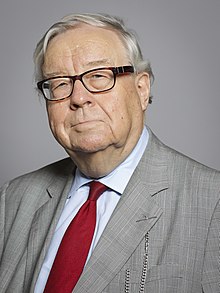
Patrick Cormack – 2022 Tribute to HM Queen Elizabeth II (Lord Cormack)
The tribute made by Patrick Cormack, Lord Cormack, in the House of Lords on 10 September 2022.
My Lords, it is always a great pleasure to follow the noble Baroness, Lady Andrews. When she was talking of her role as a receiver of distinguished foreign visitors, I immediately thought of one of the most unforgettable Members of your Lordships’ House who often did a similar job and told hilarious stories about the encounters that she had. That was, of course, Baroness Trumpington, of whom we all have such affectionate memories.
It has been an extraordinary period since Thursday lunchtime, when that difficult news came through. We all knew from the first moment that we had to expect the worst. I must say that I felt a great privilege in being a Member of your Lordships’ House yesterday. There were some very moving and splendid speeches, as there have been today. I have never, in my nearly 12 years in your Lordships’ House, nor in my 52 years in Parliament, heard better Front-Bench speeches than I heard yesterday in this House. However, the most moving moment for me was when we assembled informally in your Lordships’ Chamber to listen to the first words of our new King, who spoke with a quiet, moving dignity, suffused with deep affection for a wonderful mother.
Not being privileged to be a member of the Privy Council, I had to watch this morning’s Proclamation on television, as did most of us. The King spoke again and he used a few words that I want to dwell on for a moment:
“Even as we grieve, we give thanks.”
That is very important indeed. We are mourning the departure of a Christian monarch who believed in the afterlife. We are mourning the departure of one of the most remarkable women who ever lived, but who died in really wonderful circumstances, in the place that she loved, surrounded by people whom she loved, having just accomplished constitutional duties with panache and good humour, in instituting her last Prime Minister.
We have a lot to be thankful for. Having such a respectable bevvy of Bishops on the Benches, I appeal to them. Of course, what happens in 10 days’ time will be a great state funeral, but can it not also be designated on the service sheet as a service of thanksgiving, since that is what we will be doing? We will be not just mourning but giving thanks for someone who has done her duty better than anyone I can think of.
We have been talking of personal memories. I cannot pretend that I knew Her Majesty, but I had the very great good fortune to meet her on a number of occasions. Two stick in my memory. The first was in 2002. I was the treasurer of the CPA, the senior Opposition position in the CPA. We decided that we would have a conference of Commonwealth parliamentarians. We had an immediate affirmative answer from the Palace that Her Majesty and Prince Philip would be delighted to come, and they came. We met in Lancaster House.
I had two duties. One was to take round Prince Philip while the chairman took round the Queen. Then we all four gathered. I had the job of making a presentation to Her Majesty of a wonderful paper knife, crafted by perhaps our finest female silversmith. The knife had the mace at the end of it. She wielded it and said, “By Jove, that’s got a very good feeling.” Before the end of the day, I had a letter from her office saying that she was already using it and much enjoying it.
We were talking to her about the Commonwealth. As has been mentioned many times—particularly movingly today by the noble Lords, Lord Robertson and Lord Boateng—in a sense she lived for the Commonwealth. From going round with the two of them and talking to Commonwealth parliamentarians, I saw that there was not a country that they had not been to. They knew the intimate history of many of the people who were there and they both manifested a love for this greatest of international organisations.
My other memory is a very personal one. On 20 April 2010, I was at a farewell party at Windsor Castle for the Surveyor of the Queen’s Pictures. The Queen was there, mingling with us. Of course, the next day she was due to be 84. I said what I thought were some appropriate words and also said, “My grandson is six tomorrow and is very thrilled that he shares your birthday.” “Please give him my warmest wishes”, she said. Edward thought this was an extraordinary leg-pull when I rang him up and told him, but it was just typical of her ability to relate not only to significant Commonwealth parliamentarians but to a little boy whom she certainly never met. She cared about her family, as has been said so often.
How do we best thank her and how do we best encourage our new King? We do it, as was touched on last night in a very interesting and powerful speech by the right reverend Prelate the Bishop of Worcester, by trying to demonstrate the sort of unity for which she always stood. We have a particular responsibility in your Lordships’ House, where party politics is not as acerbic as it is in the other place. She was a person who brought others together. It is clearly the manifest desire of our new King to do the same. We must play our part in doing that.
I end on a note that I never thought I would end on this year, in emphatic agreement with Boris Johnson. He said, in some very remarkable words the other day, that he thought she should go down in history as Elizabeth the Great. I endorse that and I hope that, in due course, that will come to pass. God save the King.
-
![PRESS RELEASE : Change of British High Commissioner to Malaysia [October 2022]](https://www.ukpol.co.uk/wp-content/uploads/2020/01/fco.png)
PRESS RELEASE : Change of British High Commissioner to Malaysia [October 2022]
The press release issued by the Foreign Office on 5 October 2022.
Ms Ailsa Terry has been appointed British High Commissioner to Malaysia in succession to Mr Charles Hay MVO who will be transferring to another Diplomatic Service appointment. Ms Terry will take up her appointment during July 2023.
Curriculum vitae
Full name: Ailsa Terry
Spouse: Adam Terry
Children: Two
Year Role 2022 to Present FCDO, Director, Sanctions 2021 to 2022 FCDO, Director, G7 Presidency 2018 to 2021 Cabinet Office, Director/Deputy Director, National Security Secretariat 2014 to 2018 Brussels, United Kingdom Permanent Representation to the European Union, Counsellor to the Permanent Representative 2012 to 2014 FCO, China Department, Team Leader, Asia Pacific Directorate 2011 to 2012 FCO, Head of Operations, Middle East and North Africa Directorate 2011 Kabul, European Union Delegation, Political Adviser to the EU Special Representative to Afghanistan 2009 to 2011 Islamabad, Second Secretary (Political) 2008 to 2009 FCO, Head of Middle East and Africa Casework Team, Consular Directorate 2007 to 2008 FCO, Desk Officer, Economic and Financial Affairs, Europe Directorate 2006 to 2007 Department for Communities, Private Secretary to the Secretary of State -
PRESS RELEASE : UN Human Rights Council 51 – UK Statement for the Interactive dialogue on the report of the OHCHR on Myanmar [October 2022]
The press release issued by the Foreign Office on 5 October 2022.
The UK Human Rights Ambassador, Rita French, delivered a statement on the Myanmar regime’s access to weapons and arms.
Thank you, Mr President.
Thank you Acting High Commissioner for your report.
The United Kingdom supported the council’s Fact Finding Mission on Myanmar and its’ important work to shine a light on the military’s economic interests. We call on all States to engage with its recommendations, which remain all the more important amid today’s calamitous situation in the country.
We are committed to working with partners to target the regime’s access to finance and arms, which facilitate the most egregious human rights violations. These violations must stop.
The UK has a comprehensive arms embargo on Myanmar and we are clear that no Member State should sell arms to Myanmar; doing so exasperates conflict and instability and directly contributes to violations in the country.
Since the coup, we have announced targeted sanctions on the military leadership, and its access to revenue, arms and military equipment.
While responsible businesses have a role to play in Myanmar in job creation, poverty alleviation and standard setting, we must ensure that their work does not inadvertently support the military regime. For this reason, the UK has also strengthened its advice to UK business, encouraging enhanced due diligence to avoid inadvertent support for the military.
Madam Acting High Commissioner,
What more can the international community to do to pressure those who sell arms to the military?
Thank you.
-
PRESS RELEASE : UN Human Rights Council 51 – Enhanced Interactive Dialogue on the Democratic Republic of Congo [October 2022]
The press release issued by the Foreign Office on 5 October 2022.
The UK delivered a statement on the on-going human rights situation in the Democratic Republic of Congo.
Thank you, Madam Vice President,
The United Kingdom thanks the speakers for their presentations and we welcome the reports of the high commissioner, and the team of experts.
The UK remains deeply concerned about the human rights situation in the DRC. Recent violence by armed groups, especially the Allied Democratic Forces and M23, has led to human rights abuses, which jeopardises efforts to pursue peace and prosperity, and exacerbates the already severe humanitarian situation. All of this raises dire concerns about the protection of civilians in the conflict-affected regions.
We urge all actors to address the humanitarian impacts of the violence, ensuring the affected people, including the 5.9 million internally displaced civilians, receive the assistance they need. We welcome ongoing diplomatic efforts to pursue dialogue and de-escalation, and we reiterate our call on all armed groups to immediately cease violence and participate unconditionally in the political process.
We are deeply concerned about the recent violent protests against the UN peacekeeping mission, which resulted in the deaths of civilians and peacekeepers. We continue to offer our full support for MONUSCO’s vital work, and call on the government of DRC to help ensure the safety of MONUSCO’s personnel and hold all perpetrators of violations and abuses to account.
We will continue to support regional engagement to find a diplomatic solution to conflict in the east, and DRC’s efforts to launch a community-based Disarmament, Demobilization and Re-integration programme.
Madam Vice President,
Our question to the panel is how will the UN work with the East African Community to ensure the protection of civilians remains a priority, with any deployment of a regional force?
Thank you.
-
PRESS RELEASE : UN Human Rights Council 51 – Statement for the Interactive Dialogue with the OHCHR on technical assistance and capacity-building for South Sudan [October 2022]
The press release issued by the Foreign Office on 5 October 2022.
The UK delivered a statement on for the Interactive Dialogue with the OHCHR regarding the providing of technical assistance amid ongoing human rights issues in the country.
Thank you Madam Vice President,
The United Kingdom thanks the Director for his presentation and the continued work of the Office of the High Commissioner in South Sudan.
The UK is deeply concerned by the continuing and dire human rights situation in South Sudan. This year, hundreds of civilians have been killed or been victims of Conflict Related Sexual Violence at the hands of government and opposition forces. Horrific attacks in southern Unity State and ongoing violence in Upper Nile State are prime examples of this. There needs to be urgent action by the South Sudanese Government to protect civilians and hold perpetrators to account.
The UK commends the OHCHR and UNMISS for their continuing technical assistance, but it is clear that technical assistance alone will not lead to sustainable peace and justice without clear mechanisms for scrutiny and accountability. The Commission on Human Rights in South Sudan therefore plays a vital role in helping to hold those responsible for human rights violations and abuses to account, including through their monitoring and reporting.
The UK acknowledges the Government of South Sudan’s extension of the 2018 peace agreement and accompanying Roadmap. We call on the South Sudanese Government to implement the peace agreement, including all of Chapter V, in full and to the timelines set by their new Roadmap.
Mr Director,
What prospects do you see for the establishment as soon as possible of the truth and justice mechanisms under Chapter V, including the Hybrid Court? How can this be most effectively supported?
Thank you.
-
PRESS RELEASE : 2022 is a critical year for biodiversity and our planet – UK statement to the OSCE [October 2022]
The press release issued by the Foreign Office on 5 October 2022.
Justin Addison (UK delegation to the OSCE) says sustainable management of natural resources is essential to mitigate impacts of climate and biodiversity crises.
The protection, restoration and sustainable management of natural resources are essential to mitigate the impacts of the climate and biodiversity crises, which pose a threat to international peace and stability. This is no truer than in the case of water, which is increasingly a threat multiplier.
In 2013, there were 27 events in which water was a trigger for conflict. Four years later, this had risen to 71.
This upward trend is caused by the growing global water crisis. With only 3 percent of the earth’s water freshwater – and most of this inaccessible, degraded or unevenly distributed – scarcity is compounded by population growth, food and energy demands, and climate change. Estimates suggest that four billion people now live in areas with severe water scarcity; and that by 2030 there could be around 700 million people displaced because of water scarcity, affecting national and regional security.
We see these trends play out in our region regularly, particularly in Central Asia where tensions over scarce water resources, and unilateral water infrastructure developments, have aggravated existing disputes and contributed to new conflicts.
Accessing water continues to be a grave issue for those living in conflict zones. Russia’s deliberate targeting of civilian infrastructure has led to extensive power and water shortages, causing further suffering for the Ukrainian people. Just two weeks ago, parts of the Ukrainian city of Kryvyi Rih were flooded after Russia attacked a nearby dam.
The OECD has said that as a result of damage to water supply infrastructure in Ukraine, an estimated 1.4 million people currently have no access to safe water, and a further 4.6 million people have only limited access. To help relive Ukraine from these effects of Russia’s brutal aggression, the UK has donated 856 generators to Ukraine to power essential services, including water pumping stations.
However, there is potential for water to play a role in reducing conflict. Water historically has more often led to cooperation than conflict between countries. For example, in the period 1948-2000, co-operative events over international waters outweighed conflictual ones by two to one.
Cooperation over water can also benefit other areas, such as peace, security and prosperity through positive impacts on food security, economic stability, improved regional integration, and better trade relations.
Promoting this cooperation, states need to apply diplomatic tools such as negotiations, fact-finding missions, and the establishment of consultation platforms for existing or emerging disagreements. This is where the OSCE is well placed to play a role. We celebrate the work the OCEEA does to enhance co-operation over transboundary water resource management, and to integrate women’s voices.
Mr Chair,
2022 is a critical year for biodiversity and our planet. The UK is committed to working with the OSCE and other international partners to secure an ambitious post-2020 Global Biodiversity Framework to halt and reverse biodiversity loss by 2030. We will continue to champion protection of at least 30% of land and ocean globally.
In collaboration with others, the UK has developed a 10 Point Plan for Financing Biodiversity, launched at UNGA last month. The plan defines a clear pathway for bridging the global nature finance gap, and I invite all colleagues here to endorse the 10 point plan ahead of the biodiversity COP later this year. Further, I hope states will join the UK in taking steps to ensure all Overseas Development Assistance becomes ‘nature positive’; and supporting the full and effective implementation of the Multilateral Development Banks’ COP26 Joint Statement on Nature, People and Planet.
-
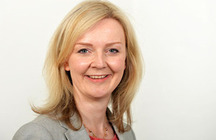
Liz Truss – 2022 Speech to Conservative Party Conference
The speech made by Liz Truss, the Prime Minister, in Birmingham on 5 October 2022.
My friends, it’s great to be here with you in Birmingham.
It’s fantastic to see the cranes across the skyline building new buildings…
…the busy trams coursing down the streets…
…and the bull standing proudly at the heart of Birmingham.
My friends, this is what a city with a Tory Mayor looks like – it’s positive, it’s enterprising, it’s successful.
And Andy Street is a human dynamo, delivering for the people of Birmingham.
And our Teesside Mayor Ben Houchen is also delivering new jobs and investment.
This is what modern Conservatism looks like.
Let’s get Tory mayors elected in London, in Manchester, in West Yorkshire and right across the country.
We gather at a vital time for the United Kingdom.
These are stormy days.
Together, we have mourned the death of Queen Elizabeth II, the rock on which modern Britain was built.
We are now in a new era under King Charles III.
We are dealing with the global economic crisis caused by Covid and by Putin’s appalling war in Ukraine.
In these tough times, we need to step up.
I am determined to get Britain moving, to get us through the tempest and put us on a stronger footing as a nation.
I am driven in this mission by my firm belief in the British people.
I believe that you know best how to spend your own money, to get on in life and realise your own ambitions.
My friends that is what Conservatism is about.
It is a belief in freedom, in fair play and the great potential of the British people.
So, I’m not going to tell you what to do, or what to think or how to live your life.
I’m not interested in how many two-for-one offers you buy at the supermarket, how you spend your spare time, or in virtue signalling.
I’m not interested in just talking about things, but actually in doing things.
What I’m interested in is your hopes and fears that you feel every day.
Can you get a good job locally?
Is it safe to walk down the high street late at night?
Can you get a doctor’s appointment?
I know how you feel because I have the same hopes and fears.
I want what you want.
I have fought to get where I am today.
I have fought to get jobs, to get pay rises and get on the housing ladder.
I have juggled my career with raising two wonderful daughters.
I know how it feels to have your potential dismissed by those who think they know better.
I remember as a young girl being presented on a plane with a “Junior Air Hostess” badge.
Meanwhile, my brothers were given “Junior Pilot” badges.
It wasn’t the only time in my life that I have been treated differently for being female or for not fitting in.
It made me angry and it made me determined.
Determined to change things so other people didn’t feel the same way.
I remember growing up in Leeds, where I saw too many children being let down.
Let down by low expectations.
Let down by a Labour council who were more interested in political correctness than they were in school standards.
But I was lucky to have been brought up in a family that cared about education.
They taught me the value of hard work and enterprise.
And I stand here today as the first Prime Minister of our country to have gone to a comprehensive school.
That taught me two things.
One is that we have huge talent across the country.
And two, that we’re not making enough of it.
This is a great country.
I’m so proud of who we are and what we stand for.
But I know that we can do better and I know that we must do better.
And that’s why I entered politics.
I want to live in a country where hard work is rewarded…
…Where women can walk home safely at night.…
…And where our children have a better future.
To deliver this, we need to get Britain moving.
We cannot have any more drift and delay at this vital time.
Let’s remember where we were when I entered Downing Street.
Average energy bills were predicted to soar above £6,000 a year.
We faced the highest tax burden that our country had had for 70 years.
And we were told that we could do nothing about it.
I did not accept that things had to be this way.
I knew that inaction would be unconscionable.
Families would have been unable to heat their homes.
Businesses would have gone bust.
Jobs would have been lost.
And we would have had worse public services, including the NHS.
I could not allow this to happen.
I refused to consign our great country to decline.
That is why I promised on entering Downing Street to act.
Now later on in my speech my friends I am going to talk about the anti-growth coalition.
But I think they arrived in the hall a bit too early, they were meant to come later on.
We will get onto them in a few minutes.
But what we did is we acted.
We made sure that the typical household energy bill shouldn’t be more than around £2,500 a year this winter and next.
We followed up with immediate action to support businesses over the winter.
We are determined to shield people from astronomically high bills.
So much so, that we are doing more in this country to protect people from the energy crisis than any other country in Europe.
Our response to the energy crisis was the biggest part of the mini-Budget.
It was the biggest part for a good reason – because we had to do it.
But it’s not the only challenge that we face.
For too long, our economy has not grown as strongly as it should have done.
I know what it is like to live somewhere that isn’t feeling the benefits of economic growth.
I grew up in Paisley and in Leeds in the 80s and 90s.
I have seen the boarded-up shops.
I have seen people left with no hope turning to drugs.
I have seen families struggling to put food on the table.
Low growth isn’t just numbers on a spreadsheet.
Low growth means lower wages, fewer opportunities and less money to spend on the things that make life better.
It means our country falling behind other countries, including those who threaten our way of life.
And it means the parts of our country that I really care about falling even further behind.
That is why we must level up our country in a Conservative way, ensuring that everywhere everyone can get on.
Conference it is wrong to invest only in places which are thriving, as economic models often have it.
We need to fund the furthest behind first.
And for too long, the political debate has been dominated by the argument about how we distribute a limited economic pie.
Instead, we need to grow the pie so that everyone gets a bigger slice.
That is why I am determined to take a new approach and break us out of this high-tax, low-growth cycle.
And that is what our plan is about: it is about getting the economy growing and rebuilding Britain through reform.
The scale of this challenge is immense:
War in Europe for the first time in a generation…
…A more uncertain world in the aftermath of Covid…
…And a global economic crisis.
That is why in Britain we need to do things differently.
We need to step up.
As the last few weeks have shown, it will be difficult.
Whenever there is change, there is disruption.
And not everyone will be in favour of change.
But everyone will benefit from the result – a growing economy and a better future.
That is what we have a clear plan to deliver.
I have three priorities for our economy: growth, growth and growth.
Growth means more money in people’s pockets it means businesses creating jobs.
Growth means people can feel secure and they can plan for their future.
Fundamentally, growth helps people fulfil their hopes and their dreams.
That is why our dynamic new Chancellor and I will be taking action in three areas.
First of all, we will lower our tax burden.
Over the summer, we had a robust debate.
The Conservative party will always be the party of low taxes.
Cutting taxes is the right thing to do morally and economically.
Morally, because the state does not spend its own money. It spends the people’s money.
Economically, because if people keep more of their own money, they are inspired to do more of what they do best.
This is what grows the economy.
When the government plays too big a role, people feel smaller.
High taxes mean you feel it’s less worthwhile working that extra hour, going for a better job or setting up your own business.
That, my friends, is why we are cutting taxes.
We have already cut Stamp Duty, helping people on the housing ladder – especially first-time buyers.
We are reversing the increase in National Insurance from next month.
We are keeping corporation tax at 19%, the lowest in the G20.
We are helping 31 million working people by cutting the basic rate of income tax.
We need to be internationally competitive, with all our tax rates attracting the best talent.
Cutting taxes helps us face this global economic crisis, putting up a sign that Britain is open for business.
The fact is that the abolition of the 45p tax rate became a distraction from the major parts of our growth plan.
That is why we are no longer proceeding with it.
I get it and I have listened.
Secondly, we will keep an iron grip on the nation’s finances.
I believe in fiscal responsibility.
I believe in getting value for the taxpayer.
I believe in sound money and the lean state.
I remember my shock opening my first paycheque to see how much money the taxman had taken out.
I know this feeling is replicated across the country.
And that’s why we must always be careful with taxpayers’ money.
It is why this Government will always be fiscally responsible.
We are in extraordinary times.
It would have been wrong not to have proceeded rapidly with our energy and tax plan.
I am clear we cannot pave the way to sustainable economic growth without fiscal responsibility.
So we will bring down debt as a proportion of our national income.
We are seeing rising interest rates worldwide in the wake of Putin’s war and Covid.
The Federal Reserve has been hiking rates in America and has signalled more rises to come.
Inflation is high across the world’s major economies.
We will do what we can as a government to support home-owners, such as cutting stamp duty.
But it is right that interest rates are independently set by the Bank of England and that politicians do not decide on this.
The Chancellor and the Governor will keep closely co-ordinating our monetary and fiscal policy.
The Chancellor and I are in lockstep on this.
Thirdly, we will drive economic reforms to build our country for a new era.
We are taking a new approach based on what has worked before.
Previously, we faced barriers to growth like militant unions, nationalised industries and outdated City regulation.
Now, we must breakdown the barriers to growth built up in our system over decades.
Decisions take too long.
Burdens on businesses are too high.
Infrastructure projects get delayed for years, and years and years.
As a result, we have seen economic growth choked off.
Houses have not been built where they are needed and wanted.
We have become averse as a nation to doing things differently.
I love business.
I love enterprise.
I love people who take responsibility, start their own businesses and invest.
They generate profits, they create new jobs and they power our success.
I want to see more of that.
That is why we will back businesses to the hilt.
We are cutting taxes and simplifying red tape to help businesses realise their ambitions.
This is what our new investment zones will do, helping us level up across the country.
We will be inspired by the great hubs of industry like Bournville, here in the West Midlands.
That is what zones in places like here and around the country will deliver.
We want to create the zones in England, Scotland, Wales and Northern Ireland.
Now is the time to harness the power of free enterprise to transform our country and ensure our greatest days lie ahead.
This is the United Kingdom at its best, working together and getting our economy growing.
And we will face down the separatists who threaten to pull apart our precious union our family.
Next year, we will host the Global Investment Summit.
This will show the world’s top investors there is nowhere better to invest than the UK.
And we are seizing the new-found freedoms outside the European Union.
We are the party who got Brexit done and we will realise on the promise of Brexit.
We are building an economy which makes the most of the huge opportunities Brexit offers.
By the end of next year, all EU-inspired red tape will be history.
Instead, we will ensure regulation is pro-business and pro-growth.
Leaving the EU gives us the chance to do things differently.
And we need more of that.
That is why over the coming weeks, my team of ministers will set out more about what we are going to do to get Britain moving.
We will make it easier to build homes, to afford childcare and to get superfast broadband.
We will help you set up your own businesses and get a mobile phone signal wherever you are in the country.
We are in tough times.
But I want you to know that day in, day out, I’m thinking about how we get this country moving.
I’m working flat out to make sure people can get through this crisis.
So let me be clear, we have your back.
That is why the Government took decisive action to tackle the energy crisis.
It is why we are pushing ahead with our plan for growth.
Economic growth makes life better and easier for everyone – and it will level up our country.
I know that is what people want to see.
Economic growth will mean we can afford great public services such as schools, the police and the NHS.
Our fantastic Deputy Prime Minister and Health Secretary will deliver for patients so they can expect a GP appointment within two weeks.
She will ensure that those who need urgent care will be seen on the same day.
And she will get ambulances out there faster and she will improve A&E.
And she will bust the Covid backlog.
That is not all and she will bolster social care so that everyone gets the care they need.
We are working to put this country on the path to long-term success.
That means ensuring we are safe and secure.
One of the reasons we are facing this global crisis is because collectively the West did not do enough.
We became complacent.
We did not spend enough on defence.
We became too dependent on authoritarian regimes for cheap goods and energy.
And we did not stand up to Russia early enough.
We will make sure this never happens again.
So we are taking decisive action to reinforce our energy security.
We are opening more gas fields in the North Sea and delivering more renewables and nuclear energy.
That is how we will protect the great British environment, deliver on our commitment to net zero and tackle climate change.
We are also taking decisive action by strengthening our borders by beefing up our Border Force and expanding the Rwanda scheme.
Our brilliant new Home Secretary will be bringing forward legislation to make sure that no European judge can overrule us.
And while she is acting meanwhile, the Labour Party has absolutely no plan to tackle illegal migration.
But my friends we cannot have security at home without security abroad.
That is why our tough Foreign and Defence Secretaries are updating the Integrated Review to make sure we can face down these threats.
It is why we are increasing defence spending to 3% of GDP by the end of the decade.
This will ensure that our Armed Forces are ready to tackle new and emerging threats.
We are working with our friends and allies to support Ukraine in the face of Putin’s brutal war.
The brave Ukrainian people aren’t just fighting for their security but for all our security.
This is a fight for freedom and democracy around the world.
Putin’s illegal annexation of Ukrainian territory is just the latest act in his campaign to subvert democracy and violate international law.
We should not give in to those who want a deal which trades away Ukrainian land.
They are proposing to pay in Ukrainian lives for the illusion of peace.
We will stand with our Ukrainian friends however long it takes.
Ukraine can win, Ukraine must win, and Ukraine will win.
I know that President Zelenskyy and the people of Ukraine will welcome our solidarity with them at this very very difficult time.
To take on Russia and other authoritarian regimes, free democracies need strong economies.
Economic growth makes us strong at home and strong abroad.
We need an economically sound and secure United Kingdom.
And that will mean challenging those who try to stop growth.
I will not allow the anti-growth coalition to hold us back.
Labour, the Lib Dems and the SNP…
…The militant unions, the vested interests dressed up as think-tanks…
…The talking heads, the Brexit deniers and Extinction Rebellion and some of the people we had in the hall earlier.
The fact is they prefer protesting to doing.
They prefer talking on Twitter to taking tough decisions.
They taxi from North London townhouses to the BBC studio to dismiss anyone challenging the status quo.
From broadcast to podcast, they peddle the same old answers.
It’s always more taxes, more regulation and more meddling.
Wrong, wrong, wrong.
We see the anti-growth coalition at work across the country.
Keir Starmer wants to put extra taxes on the companies we need to invest in our energy security.
And his sticking plaster solution will only last six months.
He has no long-term plan and no vision for Britain.
Mark Drakeford in Wales is cancelling road-building projects and refusing to build the M4 relief road.
Nicola Sturgeon won’t build new nuclear power stations in Scotland to solve the energy crisis in Scotland.
Have these people ever seen a tax rise they don’t like?
Or an industry they don’t want to control?
They don’t understand the British people.
They don’t understand aspiration.
They are prepared to leave our towns and cities facing decline.
My friends, does this anti-growth coalition have any idea who pays their wages?
It’s the people who make things in factories across our country.
It’s the people who get up at the crack of dawn to go to work.
It’s the commuters who get trains into towns and cities across our country.
I’m thinking of the white van drivers, the hairdressers, the plumbers, the accountants, the IT workers and millions of others up and down the UK.
The anti-growth coalition just doesn’t get it.
This is because they don’t face the same challenges as normal working people.
These enemies of enterprise don’t know the frustration you feel to see your road blocked by protesters, or the trains off due to a strike.
In fact, their friends on the hard Left tend to be the ones behind the disruption.
The anti-growth coalition think the people who stick themselves to trains, roads and buildings are heroes.
I say the real heroes are those who go to work, take responsibility and aspire to a better life for themselves and their family.
And I am on their side.
We will build roads, rail, energy and broadband quicker.
We will be proudly pro-growth, pro-aspiration and pro-enterprise.
That is how we will forge ahead on our long-term path to national success.
In this new era, we are taking a new approach.
My friends, we are focused on boosting growth and opportunity across our country.
This mission will be difficult but it is necessary.
We have no alternative if we want to get our economy moving again.
I am ready to make hard choices.
You can trust me to do what it takes.
The status quo is not an option.
That is why we cannot give in to the voices of decline.
We cannot give in to those who say Britain can’t grow faster.
We cannot give in to those who say we can’t do better.
We must stay the course.
We are the only party with a clear plan to get Britain moving.
We are the only party with the determination to deliver.
Together, we can unleash the full potential of our great country.
That is how we will build a new Britain for a new era.
-
![PRESS RELEASE : Teenagers could be missing out on a stash of cash [October 2022]](https://www.ukpol.co.uk/wp-content/uploads/2022/08/hmtreasury.png)
PRESS RELEASE : Teenagers could be missing out on a stash of cash [October 2022]
The press release issued by the Treasury on 5 October 2022.
Tens of thousands of teenagers in the UK who have not yet claimed their matured Child Trust Funds savings could have thousands of pounds waiting for them, reminds HM Revenue and Customs (HMRC).
Child Trust Funds are long-term savings accounts set up for every child born between 1 September 2002 and 2 January 2011. To encourage future saving and start the account, the government provided an initial deposit of at least £250.
The savings accounts mature when the child turns 18 years old. Eligible teenagers, who are aged 18 or over and have yet to access their Child Trust Fund account, could have savings waiting for them worth an average of £2,100.
If teenagers or their parents and guardians already know who their Child Trust Fund provider is, they can contact them directly. This might be a bank, building society or other savings provider.
Many eligible teenagers who have yet to claim their savings might be starting university, apprenticeships or their first job. The lump-sum amount could offer a financial boost at a time when they need it most.
Angela MacDonald, HMRC’s Second Permanent Secretary and Deputy Chief Executive, said:
Teenagers could have a pot of money waiting for them worth thousands of pounds and not even realise it. We want to help you access your savings and the money you’re entitled to.
To find out more search ‘Child Trust Fund’ on GOV.UK.
An estimated 6.3 million Child Trust Fund accounts were set up throughout the duration of the scheme, containing about £9 billion. If a parent or guardian was not able to set up an account for their child, HMRC opened a savings account on the child’s behalf.
Teenagers aged 16 or over can take control of their own Child Trust Fund if they wish, although the funds can only be withdrawn once they turn 18 years old.
Where children have a Child Trust Fund, families can still pay in up to £9,000 a year tax-free. The account matures once the child turns 18 years old and no further money can be deposited. They can either withdraw the funds from the matured Child Trust Fund account or reinvest it into another savings account.
Until the child withdraws or transfers the money, it stays in an account that no-one else has access to.
The Child Trust Fund scheme closed in January 2011 and was replaced with Junior Individual Savings Accounts (ISA).
-
Claude Lancaster – 1967 Speech on Aberfan Inquiry
The speech made by Claude Lancaster, the then Conservative MP for South Fylde, in the House of Commons on 26 October 1967.
I do not intend to comment on the speech of the hon. Member for Merthyr Tydvil (Mr. S. O. Davies) because I have a number of things to say and I know that many other hon. Members wish to speak. A fortnight ago the Annual Report on accidents at mines was published. It is a very encouraging Report. Last year, deaths from accidents totalled 160—the lowest figure ever. But Mr. Stephenson, Her Majesty’s Chief Inspector, said that in view of advances in engineering technique applied in recent years, we should not be complacent about that.
The Aberfan disaster was not reportable under the Mines and Quarries Act, 1954. Nevertheless, Mr. Stephenson says that the disaster will have a world-wide impact. I was abroad when it occurred, visiting the Trucial States. Immediately on my return, I happened to have a conversation in the Lobby with the hon. Member for Bedwellty (Mr. Finch), who has given me permission to refer to it.The hon. Gentleman asked me what I thought and I said that I knew no more about it than what I had read in the newspapers abroad. He inquired what my opinion was of the possible cause of the disaster and I replied, “I fancy that you will find that it was a trickle of water”. I shall refer to that later.
In its first-class Report, the Tribunal puts the cause of the disaster on a breakdown in communications both horizontal and vertical. I suggest another dimension —the psychological. It was endemic in the formation of the National Coal Board, which was hurriedly put together in 1947, that it should take on an over-centralised aspect. I am certain that if the right hon. Member for Easington (Mr. Shinwell) were here he would be the first to say that, with the passage of time, it needs seriously overhauling.
Unfortunately, the only important inquiry, the Fleck inquiry, did nothing to bring about any decentralisation. Indeed, the Board solidified something which was already too over centralised. The result has been that, progressively, all decisions have come to be made at Hobart House.
Hobart House is responsible for every aspect of mining, including the administration of coal production. Thus, there has arisen a tendency for the men in the regions to look to Hobart House for decisions in all sorts of directions, be they the shape of shafts or the use of props at the coal face. There was, there-for a tendency not to give the soil tips the attention that the problem deserved.
It is true that there were no regulations about coal tips before Nationalisation, but in the East Midlands there was a common practice, which I believe was fairly general throughout the coal industry—I do not think that we were any more enlightened than anybody elsewhere the control of tips was a regular feature of the day’s work. Soil tips are a necessary evil. For every ton brought out of a pit almost a quarter of that weight goes on to the coal tip. It is the difference between the run of mine coal and saleable output. It was necessary to take considerable precautions to settle on a piece of land which was not unduly soft or broken ground and had no previous encroachments and to have very careful regard to the type of debris being tipped.
As an example, a change-over from dry slag to effluent, or what is now called tailings, could have a definite effect on the angle of repose. Therefore, the matter had to be watched very carefully and, above all, it was against all tradition to site a tip either on a spring or in the vicinity of a stream.
There was normally a gang of men working on the tip and they were responsible for whatever mechanical devices were being employed. Over that gang was a man called a chargehand and among his various duties were two very important ones. One was to report any unusual movement of the tip, and certainly he had to report any signs of water emerging from the base of the tip. He made his report either to the surface manager or, in a smaller pit, to the surface foreman who in his turn reported it to the colliery manager. The colliery manager went up every three or four weeks and had a good look at the tip, decided where the tipping for the next period would occur, and drew the charge-hand’s attention to any aspect of the tip which was giving him cause for concern.
These precautions were carried out in the East Midlands not because life was at stake—at least we hoped not—but because undue spreading of the tip involved compensation to farmers for destroyed buildings and the like in the vicinity.
1933In South Wales, the need for precautions on the sides of hills with a 60 in. rainfall is all the greater. It would be presumption on my part to talk about South Wales, but it so happens that a few years after nationalisation two of my original staff went there. One was chairman of the South Wales district and the other was the chief mechanical officer. I used to go down and talk to them, so, although I never talked about tips, I have some familiarity with what went on down there.
That is all I have to say about tips in general. As has been said, it is essential that we take a fresh look at these matters and do everything possible to rectify this appalling situation, more particularly in South Wales.
I come now to Lord Robens’ part. Lord Robens has been a very distinguished Chairman of the National Coal Board. He has been there since 1961 and has proved himself a supreme salesman and a doughty fighter on behalf of the coal mining industry. I think that his greatest contribution was restoring the morale of the industry after the setback from a seller’s to a buyer’s market after the year 1958. He restored confidence to the industry. Moreover, as regards pits being closed and redundancy, he has acted with a great sense of imagination and charity.
I have had a number of discussions with Lord Robens and I have accompanied him up and down the coalfields visiting pits and the like. He is a friend of mine. Therefore, what I have to say is the more invidious.
I consider, first, that his public image has been immensely spoiled by this tragedy. He should have gone down there on the first day. Years ago, when I was first learning something about coal mining—I had no executive position—I went away on a Saturday and the colliery manager rang me that night and said that there had been an over-wind in the shaft, two men had been killed, and I must come back straight away. He was a wise old man. He said. “You must be here because you are the boss class.”Today, Lord Robens and the people around him are the boss class, and they should have been there if for no other purpose than showing their sympathy at that moment with the bereaved.
The second thing I must say about him is that he was most unwise to make any comment about the cause or otherwise of the tragedy. He is wholly untechnical. He was bound to make mistakes, and he did so. He would have been much wiser to have said nothing about it.
Thirdly, and most important, he should have gone to the Tribunal when it was set up and should have said not only, “I will put all the resources of my organisation at the disposal of the Tribunal”, but,” I have two or possibly three men I would like to nominate whose evidence you should take. It is up to you, the Tribunal, to call whom you wish, but I have two or three men I would like particularly that you should call. I think that they can give you great help.”The Tribunal, in its early days, said, and said rightly, that it wanted no delay in its proceedings, it wanted no evidence which in any way would mislead it, and it wanted a ready acknowledgement of mistakes that there had been.
There are three men I have in mind. One has been mentioned by my hon. Friend the Member for Hereford (Mr. Gibson-Watt), Mr. Kellett, the Chairman of the South-West District. I have met him. He is a man of high reputation and very well respected. Many chairmen happen to be administrative men, but he is a technical man. He was the man responsible for that district and he should have been one of the men to give evidence.
The second man who I suggest should have been called at the earliest moment is Mr. Harry Collins, who was the Director of Production and a Board Member. Mr. Sheppard, who was called, was not a Board member. Mr. Harry Collins is a man of great experience who has held a number of very high posts. If the right hon. Member for Easington (Mr. Shinwell) were here he would confirm that when Mr. Collins was in charge of our coal production in Germany after the war he gained the confidence of the German coal mining industry, which is not an easy thing to do. He gained it because he was a man of great competence himself and they responded to him. I went to Essen on two occasions to spend some little while with him and I also was most impressed with the reputation that he gained for himself.
If an additional witness was required the Deputy Chairman of the Coal Board, Sir Humphrey Brown, could have been called. He gained his reputation originally in the old Manchester collieries as a planner. He made a good name for himself when he was Chairman of the West Midlands Division and he is the foremost technician on the Coal Board.
What, in fact, happened? Mr. Sheppard became the spokesman for the Coal Board. It is not for me to question Mr. Sheppard’s competence, but I cannot feel that he can look back on his evidence with any feeling of satisfaction whatever. After all, the Chief Inspector of Mines in the South-West Area said of his evidence that it was “astonishing”. Additionally to that, the Tribunal said that nothing it had heard in evidence at Aberfan in any way confirmed a single syllable of the minute of the statement of the Coal Board committee set up by Mr. Sheppard.
None of the stipulations which the tribunal made—that there should be no delay, that there should be no attempt to confuse the issue and that there should be a ready acceptance of responsibility—was met either by Mr. Sheppard or, I am sorry to say, by Lord Robens in his evidence. Indeed, as we have already heard from my hon. Friend the Member for Hereford, counsel for the Coal Board had to ask the Tribunal to ignore Lord Roben’s contribution to the Tribunal’s considerations as being of no value.
Can anybody imagine that either Mr. Kellett or Mr. Collins would agree to that approach? The Coal Board put forward a statement denying blame for what had occurred at any level. These two men would not have lent their names to such a statement. These two men would not have delayed proceedings or mystified the Tribunal, and these two men would have been the first to acknowledge what had gone wrong, because they would have been only too clear about what had gone wrong.
It has been suggested that this was a very complex geological problem; it was not. Tips are not complex geological problems and advice about the movement of earth and the science of soil mechanics was available from any private engineering firm. If any hon. Member would like to see something comparable to Aberfan he can do so within five miles of Parliament at Dawson Hill, in South-East Camberwell, where very much the same thing has happened. The corporation had been tipping rubbish for a generation; there was water and about 40 houses were swept away, luckily with no loss of life, and three streets have been at risk at the bottom of the hill. In the light of what had happened at Aberfan, Southwark Council very sensibly called in a geological concern—and I must declare an interest, because I have worked with that concern for the last 20 years—and the council has put the matter right in a reasonably short time.
However, in the Press and elsewhere it has been suggested that there were imponderables and the like about the tip at Aberfan. There are not such things about tips, which do not represent a complicated geological problem. They represent a problem which the average colliery manager can perfectly well handle and in which he is perfectly well versed.
I join with my hon. Friend in saying that we must ask the Minister to give us the reasons why Mr. Kellett and Mr. Collins were not called. I am sure that the Minister has read the typescript of the evidence and must be appalled by the evidence put forward by Mr. Sheppard and Lord Robens. I do not think that either wilfully set out to mislead the Tribunal and I am sure that they are both honourable men. It was because of the standard of their competence, because they were second-class men in the sense of their technical or general abilities. They went there on behalf of the Coal Board and yet the Tribunal had firmly put responsibility not on the lower or middle echelons of men whom eventually it condemned in its final report, but squarely on the Coal Board, and it was up to the Coal Board to give every assistance it could and to send its best men. It did not do so.
I find myself in the position of not agreeing with my hon. Friend. Lord Robens has done a fine job. He has served the State in a number of distinguished positions. He did the honourable thing by resigning. I feel that the Minister should not have asked him to take back his resignation. I know that the right hon. Gentleman may produce all sorts of reasons, but the underlying position still remains that he ought not to have asked him to take back his resignation.
Aberfan will not be quickly forgotten I can assure the Minister that the Tribunal’s Reports will have been read in Pennsylvania, in Lens, in Brussels, in the Ruhr and in the Donbas. In a strange way the mining world is quite small and follows what happens up and down the mining world very closely. Unless we do what I have suggested, it will be said that we have dropped our standards. For me this is a sad day, because my heart is in the coal industry, but this is something which we shall not forget for many a long day.