Blog

  • Brian Paddick – 2022 Tribute to HM Queen Elizabeth II (Baron Paddick)

    Brian Paddick – 2022 Tribute to HM Queen Elizabeth II (Baron Paddick)

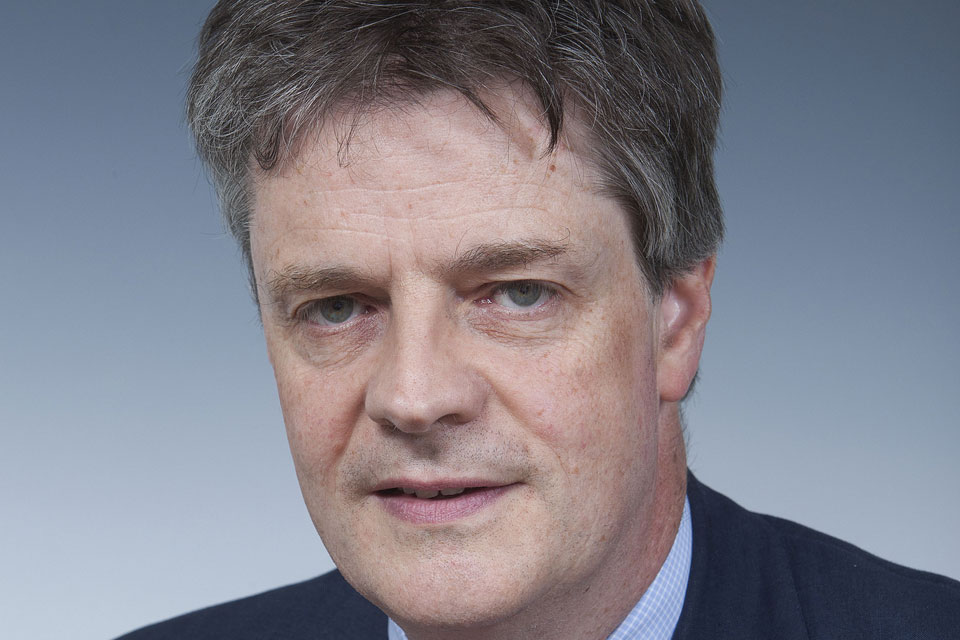
    The tribute made by Brian Paddick, Baron Paddick, in the House of Lords on 10 September 2022.

    My Lords, I have been trying to make sense of all this, as someone who never met Her late Majesty. My mother was seven years older than Her Royal Highness Queen Elizabeth II, but when I lost my own personal life anchor, when my mother died, I felt that I still had Her Majesty the Queen.

    Her late Majesty was the safest of a safe pair of hands. She was the most reliable of the people upon whom we relied; she was the greatest example of duty and dedication. I was concerned in recent years that the Queen could not possibly continue to the very end without having to abdicate as old age took its toll, yet she served to the very end—something that I feel sure she would have been very happy to achieve. Our Lord Jesus Christ is sometimes described as the servant king. Her late Majesty was surely the servant Queen. May she rest in peace.

    The work of this House has been disrupted, normal life is interrupted, and all this feels very destabilising—but we have a new monarch and a new life anchor. If Liz Truss was anxious about having a difficult act to follow, spare a thought for His Royal Highness King Charles III. Our thoughts are with His Majesty and other members of the Royal Family at this time of loss and grief. In his address to the nation yesterday, His Majesty the King showed every sign that he can and will be our new source of stability during these turbulent times. Long may he reign.

    What would my mother have said? Being of the same generation, I can hear Her late Majesty saying the same: “All very unfortunate, but you’ll just have to get on with it”. And we will, with God’s help, and the leadership of our King.

  • Charles Wellesley – 2022 Tribute to HM Queen Elizabeth II (9th Duke of Wellington)

    Charles Wellesley – 2022 Tribute to HM Queen Elizabeth II (9th Duke of Wellington)

    The tribute made by Charles Wellesley, 9th Duke of Wellington, in the House of Lords on 10 September 2022.

    My Lords, I apologise for rising out of order—forgive me—and I also apologise for not being here yesterday, but I have read in Hansard so many moving speeches, and have heard so many today. As the noble and learned Lord, Lord Judge, said yesterday, it is difficult to know what to add. I simply want to pay my own tribute to a remarkable lady who I have known since I was quite young. I am old enough to remember watching from a balcony at Apsley House the passage of the Coronation procession.

    My family have the honour and legal obligation of presenting a tricoloured flag to the sovereign at Windsor Castle on or before 18 June—Waterloo Day—in every year. It has therefore been my incredible privilege, on eight occasions since the death of my father, to present the flag to Her Majesty. The last time, in June, she was as alert, funny and informed as ever, so it was really a shock to me and my family that she died so suddenly on Thursday. I pay tribute to her incredible kindness, simplicity, humanity and humour, and her interest in everything. I feel so fortunate to have known her.

    I was very struck yesterday to receive from the mayor of our local town in southern Spain a letter sending condolences to the Royal Family and the British people, in translation describing the Queen as a lady of global importance, not just for the United Kingdom but for the whole of Europe. This is from a village in the hills in Andalucía; her impact was indeed universal.

    Her Majesty would have been so pleased to know that she was to be succeeded by someone with such qualities and interests as our new King. May she rest in peace—and we now say, as so many have, God save the King, and may he also have a long life.

  • Christopher Bellamy – 2022 Tribute to HM Queen Elizabeth II (Baron Bellamy)

    Christopher Bellamy – 2022 Tribute to HM Queen Elizabeth II (Baron Bellamy)

    The tribute made by Christopher Bellamy, Baron Bellamy, in the House of Lords on 10 September 2022.

    My Lords, when I had the great honour to be introduced in this House on 14 June this year, little did I imagine that mine would be the very last Letters Patent to be issued by Her late Majesty in connection with a government appointment. Two more distinguished Cross-Benchers—more distinguished than I—were created in June and July, but I believe that I am the most junior Member of this House to make my humble tribute.

    Like some others of your Lordships, I have a clear memory of the day that Her late Majesty came to the Throne. When my father picked me up, aged five, from school to say that the King had died, it was clear that he was very deeply affected, even in those days of the stiff upper lip. For that generation, the premature death of their shy but steadfast sovereign who had led them through so much was perhaps even more dreadful. At least we now know how they must have felt. With her adored father as a central inspiration, Her late Majesty was able to build much more widely on his example.

    Much has rightly been made of the Commonwealth and, as the noble Lord, Lord Alton, has just referred to, Her Majesty made her famous declaration in 1947 where she pledged her service. It is perhaps worth noting that what she pledged to serve was “our … imperial family”. At that time, on her 21st birthday, only four countries of the then empire—the old dominions—were de facto, if not technically de jure, independent, although India and Pakistan achieved dominion status very shortly thereafter. What we have since seen, as has been mentioned already, particularly by the noble Lord, Lord Addington, is a transformation utterly unique in history from an imperial family to a family of 56 independent nations in voluntary association not only with the former imperial power but with each other and their former imperial sovereign.

    As during her reign the imperial power waned and eventually vanished altogether, together with the imperial idea, so Her Majesty’s moral stature rose in almost inverse proportion. That tells us something about the nature of true power and the strength of eternal human value. While some regimes may prefer grandiose display, Her Majesty very much had the common touch. Almost everyone she ever met, and many who she never met, from whatever station in life, instinctively felt that she was on their side.

    For me and, I would hope, most of this nation, the self-deprecating, understated humour of the marmalade sandwich is surely the most powerful statement of human values, even if a subtle statement, that any monarch could ever make. Her whole life represented an effective answer to aggression and intolerance everywhere. I am sure that His Majesty the King will follow that example. Long live the King.

  • Jonathan Hill – 2010 Speech to the Church of England Academy Family Conference

    Jonathan Hill – 2010 Speech to the Church of England Academy Family Conference

    The speech made by Jonathan Hill, the then Education Minister, on 16 November 2010.

    I am delighted to be here this morning and particularly pleased to have the chance to thank you all – and the National Society generally – for the wonderful contribution you make to education in this country.

    Now I am sure that ministers of all parties come along and start their speeches like that, but for what it is worth, I say it as someone who likes choice and variety; is drawn to a patchwork quilt of provision rather than some neat and tidy – and soulless – uniformity, and; is instinctively mistrustful of the state.

    All of which makes me a natural fan of Church of England schools, even before citing any evidence that Church of England schools get excellent results and are extremely popular with parents.

    And yet – somewhat to my surprise – I find myself having to stick up for faith schools. It is something I am very happy to do, but it is perhaps indicative of how secularist parts of society have become.

    It is also all the more extraordinary when one reflects on what the National Society has done for children in this country since its foundation in 1811.

    It is astonishing to think that, in the forty years to 1851, the Church of England established 17,000 schools in parishes up and down the land. Free Schools, eat your heart out.

    Decades before the state stepped in, in 1870, it was the Church that taught the poor and needy to read and write – spreading knowledge and enlightenment where before there had been ignorance.

    I know it is the same moral purpose which drives you today.

    Like us, you worry about the gap in achievement between rich and poor, and are anxious to extend opportunity to those in poorest areas.

    And I am sure that it was because of that great moral purpose – and in keeping with your historic mission – that the Church of England was among the first to recognise the importance, and potential, of the Academies programme and, of course, became one of the first sponsors.

    Academies

    Now, academies are a subject close to my heart. On my second day in the House of Lords, I had to introduce the Academies Bill and, for two rather crazy months, I did little else but think and, I’m sad to say, dream about the Bill.

    Some people accused us of rushing it through, of reaching for the legislative lever too quickly – but my view was, and is, that it was vital to give schools the chance to have these freedoms on behalf of their children as soon as possible.

    Children only get one crack at education and we have to give them the best possible chance to succeed. So, yes, the Secretary of State and I were impatient to get on with doing so.

    But that brings me to an extremely important point about our overall approach. It is permissive, not coercive. Some schools might not want, ever, to go down the academy route. They might feel that their relationship with their local authority is so good that they don’t want to lose it. Or that greater freedom and control over their budgets, staffing and the curriculum aren’t going to help them give children the best possible chance to succeed.

    If that is the case, we fully respect that. We are not seeking to impose a one-size-fits-all solution on every school. If you believe in freedom, I think you should allow people to exercise it – or not – as they think fit.

    So we are also introducing greater freedom for all schools. That is why we’ve abolished the self-evaluation form, reduced the data collection burden and told Ofsted to slim down its inspection criteria. We will also be slimming down the National Curriculum, making governance simpler and financial management less onerous. All of these steps will give schools more freedom to concentrate on their core responsibilities – teaching and learning.

    Our schools white paper, to be published later this month, will set out a comprehensive reform programme for this Parliament to raise the bar for every school, close the gap between rich and poor, and ensure our education system can match the best in the world.

    When you look at the statistics you can see how urgent the need for reform is.

    Still a long way to go

    In the last ten years we have fallen behind other countries in the international league tables of school performance – falling from fourth in the world for science to fourteenth, seventh in the world for literacy to seventeenth and eighth in the world for maths to twenty-fourth.

    And at the same time, studies such as those undertaken by UNICEF and the OECD underline that we have one of the most unequal educational systems in the world, coming near bottom out of 57 for educational equity with one of the biggest gulfs between independent and state schools of any developed nation.

    The huge numbers of talented young people who still do not achieve as they should means we need to change.

    And so too does the fact that other nations have been forging ahead much faster and further when it comes to improving their education systems.

    Global race for knowledge

    Across the globe, other nations – including those with the best-performing and fastest-reforming education systems – are granting more autonomy for individual schools.

    In America, President Obama is encouraging the creation of more charter schools – the equivalent of our Free Schools and academies.

    In Canada, specifically in Alberta, schools have been given more control over budgets and power to shape their own ethos and environment. Alberta now has the best-performing state schools of any English-speaking region.

    In Sweden, the system has opened up to allow new schools to be set up by a range of providers. Results have improved, with the biggest gains of all where schools have the greatest freedoms and parents the widest choice.

    And in Singapore, often cited as an exemplar of centralism, dramatic leaps in attainment have been secured by schools where principals are exercising a progressively greater degree of operational autonomy.

    These governments have deliberately encouraged greater diversity in the schools system and, as the scope for innovation has grown, so too has their competitive advantage over other nations.

    The good news in England is that there are already some great success stories here to draw on. In the five or so years after 1988, the last Conservative Government created 15 city technology colleges. They are all-ability comprehensives, overwhelmingly located in poorer areas, but they enjoy much greater independence than other schools.

    They have also been a huge success. The proportion of pupils eligible for free school meals in CTCs who achieve five or more good GCSEs A* to C is more than twice as high as for all maintained mainstream schools.

    These results were replicated by the group of schools that were turned into academies under the last Government.

    I am delighted that so many parents and school leaders have seen how academies can improve performance, with academies securing improvements at GCSE level twice as fast as other schools and the best academy chains doing much, much better than that.

    Back in 2005, the white paper promised that all schools would, in time, be able to enjoy academy freedoms – but sadly these freedoms were curtailed. A ceiling of 400 academies was placed on the programme and primaries were refused entry.

    The Academies Act removed both of these barriers to the rapid expansion of the programme by giving all schools, including special schools, the chance to take on academy status – starting with those rated outstanding by Ofsted.

    Since the start of this school year, 144 academies have opened – more than one for every working day of the term. A further 70 are due to open in the coming months.

    Just under half of these replaced failing schools, and we will continue to challenge schools that are struggling; either they improve fast or they will have their management replaced by an academy sponsor, or an outstanding school, with a proven track record.

    That is why the Secretary of State wrote to local authorities earlier this month confirming that we want to work with them to consider whether there are schools in their areas where attainment and pupil progression are both low and where they lack the capacity to improve themselves. And we have also actively encouraged sponsors to work directly with local authorities to do so too.

    All of the schools that have converted now have the freedom to shape their own curriculum; they are at liberty to insist on tougher discipline, pay staff more, extend school hours, and develop a personal approach to every pupil.

    Crucially, all of the outstanding schools that have already converted have also said that they will use their new-found powers and freedom to support weaker schools. For instance, Seaton Academy in Cumbria is looking to employ more specialist staff to support students with additional needs. St Buryan Primary Academy in Cornwall is reducing class sizes by taking on an extra teacher. Urmston Grammar School in Manchester is looking forward to bringing back after-school services now that it has control over its own budget.

    We also have schools coming to us talking about forming clusters – clusters of primaries, or primaries and secondaries, working together to raise standards and share costs. That is why I believe the result of the Academies Act will be autonomy within a culture of collaboration, where the bonds between schools are strengthened and there is a further step-change in system-led leadership.

    It seems to me that this combination of autonomy and partnership is a very strong one, and one that is likely to appeal to the Church of England. I know that one of your concerns early on was that the Government was somehow turning its back on the moral purpose of the Academies programme and that the converting academies might become islands within the broader educational framework.

    In fact, what is happening is rather different.

    In the coming days, in the next stage of the expansion of the Academies programme, we will also explain how the next wave of schools – those that are good with outstanding features – will be able to apply for academy freedoms.

    I particularly look forward to welcoming more Church of England schools into academy status. And I’d like to say how grateful I am for the Church’s support in encouraging more of their schools to follow suit.

    At the moment, some 320 Church of England schools have registered an interest in becoming an academy, and 24 of these have so far submitted a formal application to convert.

    As we’ve worked through the conversion process with the first wave of converters, a number of practical issues have come to light – for instance, around pension or land ownership. For church schools in particular, land ownership is often complicated and there have been questions about what role the diocese will have once schools have converted to academy status.

    I completely understand these concerns and I think that the National Society has been absolutely right to want clarity. Politicians and governments come and go. The Church has been around a lot longer than any government and you are right to be sceptical about government promises. I am sceptical about government promises too. But I hope I have been clear from the outset that my intention is simply to maintain the status quo in terms of the relationship between the Church of England and the state. And I do sympathise with the National Society’s desire to get that understanding down in black and white and close any loopholes.

    So I am very pleased that we now have an agreed set of model documentation for single academy trusts, and a model funding agreement.

    We have also agreed a supplemental agreement, to be signed by the Secretary of State, which will set out the Department’s underpinning relationship with the Diocese.

    I know that some of you have faced delays while the drafting has been going on, for which I apologise, but I believe we now have a solid foundation on which Church of England schools can move forward to academy status.

    Although I have been keen to press ahead, it is important to get things right – and that I think is what we have now done.

    The Church has always played an important part in providing choice and quality in this country’s education system.

    You’ve always worked hard, often behind the scenes, collaborating with other education partners and sponsors to drive improvements.

    I very much look forward to continuing and building on our relationship with the Church and taking our collaborative partnership to the next level – because we need your energy, commitment and experience to be at the fore of school improvement if we are to achieve that shared moral purpose.

    Thank you very much.
  • PRESS RELEASE : Michael Gove letter to ‘The Independent’ [August 2012]

    PRESS RELEASE : Michael Gove letter to ‘The Independent’ [August 2012]

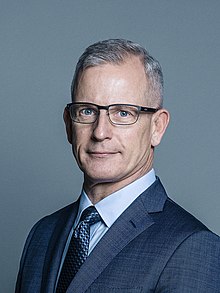
    The press release issued by the Department for Education on 1 August 2012.

    Dear Sir,

    I was disappointed to read your article on Monday about the Diaspora Free School application and the accusation that the Department of Education has been racist and sexist in its decision not to approve the school. You returned to this story again on Wednesday and this time reported that the Department for Education has been accused of ‘snubbing poorer pupils’.

    Every one of the hundreds of free school applications that we have received since 2010 has been assessed by officials who are committed to exercising impartial judgement. They run a competitive process where every application is properly tested before coming to ministers. I will approve only those applications that officials assess to have the best chance of delivering the excellent education that every child deserves. Inevitably some groups are disappointed, but we must strive to ensure we are guaranteeing the best possible approach to each child’s education and to tax payers’ money.

    Half of the first free schools to be opened and two thirds of those opening in September are in communities with higher than average levels of deprivation. Of the most recent applications; over a third of the mainstream schools to gain approval have proposed sites in the 30% most deprived areas of the country. The Marine Academy in Plymouth and the Longsight Community Primary in Manchester are just two of these and have been designed to support some of our poorest families. In the circumstances, the assertion that the Department is sexist, racist, lacks expertise or ‘snubs poorer pupils’ seems to me not to reflect the professionalism of my colleagues or the quality of so many bids.

    Yours sincerely,

    Michael Gove, Secretary of State for Education

  • PRESS RELEASE : Academies to have same freedom as free schools over teachers [July 2012]

    PRESS RELEASE : Academies to have same freedom as free schools over teachers [July 2012]

    The press release issued by the Department for Education on 27 July 2012.

    The Department for Education has today made some minor changes to the model funding agreement to be used by schools in their conversion to academy status.

    From today, head teachers in mainstream and alternative provision academies will be given greater freedom over the teachers they employ – giving them the same advantages as independent schools, free schools, studio schools and university technical colleges.

    A Department for Education spokesman said:

    Independent schools and free schools can already hire brilliant people who have not got qualified teacher status (QTS). We are extending this flexibility to all academies so more schools can hire great linguists, computer scientists, engineers and other specialists who have not worked in state schools before. We expect the vast majority of teachers will continue to have QTS. This additional flexibility will help schools improve faster. No existing teacher contract is affected by this minor change.

    The funding agreements for all new academies – which are essentially contracts between the Secretary of State and the organisation which establishes and runs the school (‘the academy trust’) – will now state that academies can employ teaching staff who they believe to be suitably qualified – without the automatic requirement for them to have qualified teacher status.

    Existing academies can request for their funding agreements to be changed to include this new freedom if they wish.

    No existing contracts for any teacher in any academy will be affected by this change.

    This policy will free up academies to employ professionals – like scientists, engineers, musicians, university professors, and experienced teachers and heads from overseas and the independent sector – who may be extremely well-qualified and are excellent teachers, but do not have QTS status.

    As with the independent sector and free schools, the vast majority of teachers employed will continue to have QTS, as it will remain the highly-respected professional status for teachers – and one that all teachers training in the state sector must continue to meet.

    This new freedom for academies will allow them to bring in professionals who will offer a wealth of knowledge and new skills for our state schools.

    Ensuring the highest quality of teaching is paramount to the success of each school. Head teachers know this, which is why we trust them to employ staff that they believe to be well-qualified for the job.

    All schools will continue to be held accountable for the quality of teaching through Ofsted inspection and the publication of school performance data.

    As with free schools, because of their unique and specialist role, SEN Coordinators and designated teachers for looked-after children will still be required to have QTS. All teachers in special academies will also still need this qualification.

    The successful independent school sector already takes the opportunity to employ teaching staff who do not hold QTS, as do a number of the first 24 free schools:

    Independent schools

    Brighton College

    Brighton college has risen from 147th among independent schools to 18th and is the only school in England to have improved its ranking every single year for 6 years. It was awarded the Sunday Times Independent School of the year.

    Richard Cairns, Head master of Brighton College, said:

    I strongly believe that teachers are born not made and I will actively seek out teachers from all walks of life who have the potential to inspire children.

    At Brighton College, this year’s Sunday Times Independent School of the Year, we have 39 teachers without formal teaching qualifications, including me!

    Some have come straight from university: our History and politics department has three recent graduates, all with Firsts from Oxford or Cambridge and all excellent teachers. Others have come from other careers: an investment analyst, a lawyer, a management consultant, a nuclear physicist and someone from the BBC.

    Once teachers are in the school, they have a reduced teaching timetable to allow them to spend time observing other good teachers and are actively mentored. By the end of the year, they are, in our view, better trained than any PGCE student.

    Sevenoaks School

    Katy Ricks, Head teacher of top independent school Sevenoaks, said:

    The key aim for heads in recruiting staff is quite simply to find the best possible person to do the job. While of course qualifications and experience will play a part in the selection process, in the end, I am seeking ability, enthusiasm and potential.

    As an untrained teacher myself, my own experience and those of my colleagues around me demonstrates clearly that good classroom practice, of course essential to being an outstanding teacher, can be learned on the job as long as there is a supportive framework within the school.

    Studio schools

    The Barnfield Federation

    The Barnfield Federation is a highly successful education group made up of Barnfield College, Barnfield South and West Academies, the country’s first studio school and Barnfield Moorlands Free School. The studio school and free school have numerous staff without QTS including drama, English and Maths teachers all with degrees.

    Sir Peter Birkett, Chief Executive of the Barnfield Federation, said:

    The removal of QTS has proven very helpful to us, we are now attracting a broader range and an increased number of applications from people who would have otherwise been denied the opportunity to teach. The removal of barriers that allow us to employ the right people is absolutely critical to our success and therefore welcomed.

    Free Schools

    Langley Free School appointed a professional actor as a drama teacher, and a professional singer for music. In an interview with The Independent, the head teacher, Jane Sculpher, speaking during the school holidays, said:

    Our drama teacher is off playing Cinderella in pantomime. The singing teacher will be away singing in Rome. They’re working at what they do. They’re not qualified teachers but they’ve been taught to degree level and are very, very able teachers.

    Batley Grammar School’s head of Geography is an Oxbridge graduate and taught at independent schools before joining Batley.

    West London Free School has appointed the former Head of Classics at a renowned independent school, as their classics teacher. They have also appointed an artist with several degrees as an art teacher, as they felt her skills and experience would be a huge benefit to the pupils at the school.

  • PRESS RELEASE : New summer schools to give pupils a flying start [July 2012]

    PRESS RELEASE : New summer schools to give pupils a flying start [July 2012]

    The press release issued by the Department for Education on 23 July 2012.

    Nearly 2,000 new summer schools will open their classroom doors today to help some of the most disadvantaged pupils in England in the step up from primary to secondary school. Around 65,000 children are expected to benefit.

    Deputy Prime Minister Nick Clegg today launched one of the first summer schools in London, to see how they are supporting those pupils most at risk from falling behind.

    Many pupils find the move to a bigger school and a more challenging curriculum daunting which can lead to a dip in their performance. Pupils who fall behind at this stage often never catch up.

    Students eligible for free school meals regularly underperform compared to their peers. At the end of primary education, just under 58% of disadvantaged pupils achieve the expected level of attainment, compared with almost 78% of other pupils. These attainment gaps often widen as pupils progress through school.

    The new summer school programme was announced by Deputy Prime Minister Nick Clegg in September 2011, secondary schools will provide extra support to disadvantaged pupils making the transition from primary school to help improve their educational attainment.

    The extra ‘brain training’ will include catch-up classes such as literacy and numeracy boosters, sessions to familiarise them with secondary school life, plus arts, music or sporting activity. The curriculum for the two weeks will be designed by individual schools to give maximum flexibility so that courses are tailored to pupils’ needs.

    Deputy Prime Minister, Nick Clegg, said:

    This is £50 million-worth of extra brain training giving tens of thousands of disadvantaged pupils a flying start at secondary school.

    It’s 2 weeks in the summer holidays where pupils can catch up on learning and get to grips with life in secondary school – in short, get in the starting blocks ready for the off in September.

    Those who struggle to make the transition are often among the poorest in society, but two weeks of activities can really help to bridge the gap.

    It’s good news for mums and dads too – no parent wants their child to be left out and fall behind. But not everyone has the luxury of taking long periods off work during the summer break.

    Summer schools will ensure pupils from disadvantaged backgrounds can start secondary school on an equal footing with their peers, setting them up to succeed.

    Headteachers have designed their summer schools to suit pupils’ needs. Activities being organised as part of the summer school programme include:

    • Extra brain training: additional intensive support in English and mathematics, both as catch up and preparation for the secondary curriculum
    • Get to know you: meeting teachers, having a tour of the school or learning more about their new curriculum, to help pupils familiarise themselves with their new environment
    • Motivation: wider enrichment activities such as arts, music and sports activities, trips to theatres and museums, visits to local higher education institutions and employers

    Children’s Minister Sarah Teather said:

    Many pupils, often those from poorer families, suffer a dip when they join secondary school. These brilliant summer schools give those children that need it a head start and the extra help they need so that they are well prepared to succeed at this crucial stage of their education career.

  • PRESS RELEASE : Radical scheme to rescue NEETs [July 2012]

    PRESS RELEASE : Radical scheme to rescue NEETs [July 2012]

    The press release issued by the Department for Education on 20 July 2012.

    A pioneering scheme to get young people who are NEET (not in education, employment or training) back on their feet kicks off today with charities and businesses given the go-ahead to prove they can turn young people’s lives around in exchange for cash. Funding worth up to £126 million is being made available to organisations across England, who will be paid by results to get 16- and 17-year-olds back into education or training.

    The programme, part of the deputy prime minister’s youth contract, is the first to use payment by results to help get NEETs re-engaged. Organisations involved have had to compete for contracts by showing they are able to get young people back on track. In return for proving they are experts in the field, they will be given freedom to tailor and provide support for disadvantaged young people in the way they know best.

    Deputy Prime Minister, Nick Clegg, said:

    Young people who have fallen through the net need tailored support to get back on track. We can’t treat them like round pegs being forced into square holes – if you’re young and have got to the point where you feel on the scrapheap, you need extra help to succeed in life.

    Disengaged young people often have complex problems that act as a barrier to getting them learning again, which the government alone can’t deal with. But very often local charities and businesses know what’s going to help them.

    That’s why we’re unlocking funding for these organisations to be as creative and innovative as they can, to do whatever it takes, to get the young people who need it most back on their feet. In exchange for this freedom, all we ask is that they get results. It’s a win-win for government, young people and the organisations involved.

    Minister for Employment, Chris Grayling, said:

    We think payment by results is the best way to ensure that we deliver the best possible support for young people.

    It means the providers have to find the very best ways to help them if they’re to be financially successful, so it’s a win-win for everyone.

    So far the youth contract has made an encouraging start, with more young people than expected finding jobs eligible for the wage subsidy.

    Children’s Minister, Tim Loughton, said:

    Today’s announcement is a significant step in offering up to 55,000 struggling 16- and 17-year-olds real practical support to make the most of staying in education sustainably or getting into jobs and training.

    The youth contract programme is bringing together real experts with experience and a track record of supporting young people to move on to the next stage of their lives.

    Organisations will receive an initial payment for taking young people on, but will only receive subsequent payments when they show progress, such as getting young people to engage with training programmes or undertake apprenticeships. The contracts on offer are worth up to £2,200 for every young person helped, with the full amount payable only if a young person is still in full-time education, training or work with training six months after re-engaging.

    Today, the government is announcing the names of the charities and businesses, with expertise in supporting young people, who have successfully bid to participate. The organisations were required to demonstrate a proven track record in getting young people into education, apprenticeships, training or work with training. Local authorities will work with successful providers to target those young people in their area who will benefit most, fitting this programme with other provision on offer locally.

    Providers are required to tailor their support to suit individuals’ needs. Participants will get a wide range of support and take part in projects, for example:

    • Being supported to apply for education and training courses and jobs, such as through practice interviews and application-writing
    • Participation in projects focusing on a range of activities, such as skills training and improving literacy and numeracy.
    • Intensive mentoring and personal support on areas such as personal finance, health and wellbeing.
    • In the north east, provider Pertemps People Development Group will provide a one-stop shop for integrated youth services with varying levels of support to help young people. This will include, for example, wake-up calls to help young people develop a routine, and bite-sized English and maths courses.
    • In Yorkshire, provider Prospects will offer highly personalised programmes to help young people build their motivation and confidence, including intensive mentoring and personal support, for example through using a Heroes to Inspire scheme in which ex-service personnel deliver motivational sessions.

    The programme, to take place over the next 3 years, will focus on at least 55,000 16- to 17-year-old NEETs with no GCSEs at A* to C, who are at the highest risk of long-term disengagement. It is intended to improve their experience and qualifications, to give them a better chance of finding work and so reduce the proportion who become unemployed in adult life.

    Evidence shows that unemployment early in life can leave a permanent scar on earning potential, with the effects on careers still evident decades later. By the age of 42, someone who had frequent periods of unemployment in their teens is likely to earn 12 to 15% less than their peers.

  • PRESS RELEASE : Repeal of the duty on Ofsted to conduct an annual Children’s Services Assessment of each local authority in England [July 2012]

    PRESS RELEASE : Repeal of the duty on Ofsted to conduct an annual Children’s Services Assessment of each local authority in England [July 2012]

    The press release issued by the Department for Education on 18 July 2012.

    Ofsted will no longer be required to produce an annual assessment of each local authority’s children’s services, following the repeal of section 138 of the Education and Inspections Act 2006.

    The local authority assessments, which were drawn from relevant findings from Ofsted’s inspection and regulation of education, care and skills, and published performance data, were abolished as part of wider changes to local authority accountability arrangements across Government. The repeal of section 138 will remove an unnecessary bureaucratic burden from both local authorities and Ofsted.

    Across local authorities there has been a concern that the children’s services assessment is a bureaucratic exercise that adds little understanding of children’s services in an area over and above the individual inspections that underlie it. It is seen to make little, if any, contribution to driving service improvement. Ending the annual children’s services assessment generates a cost saving to Ofsted of approximately £1.6 million per year.

    Following an eight-week targeted consultation exercise, the draft Legislative Reform (Annual Review of Local Authorities) Order was laid before Parliament on 10 May 2012. After scrutiny by the relevant Parliamentary committees, and a short debate in the House of Lords, the Legislative Reform Order was approved and has been signed by the Parliamentary Under-Secretary of State for Children and Families, Tim Loughton, who originally announced the Government’s intention to repeal the relevant legislation in December 2010. The repeal takes effect immediately and, as a result, Ofsted will not be undertaking a children’s services assessment process this year.

    Further Information

    The annual children’s services assessment provided, for each top tier local authority in England, a summary of the outcomes of the inspections of services and settings carried out by Ofsted during the year and an analysis of the performance data related to each authority. Ratings are awarded on a four-point scale:

    1. performs poorly
    2. performs adequately
    3. performs well
    4. performs excellently.

    The 2011 the ratings were:

    • performing poorly – 15 local authorities
    • performing adequately – 33 local authorities
    • performing well – 76 local authorities
    • performs excellently – 28 local authorities

    Ending the annual children’s services assessment will have no impact on Ofsted’s other inspection activity. Ofsted has already put in place a new, universal, child focussed inspection regime for local authority services for the protection of children. A new inspection regime for local authority fostering, adoption and looked after children’s services will be introduced early in 2013, and a new, multi-inspectorate child protection inspection framework (developed in partnership with the Care Quality Commission, Her Majesty’s Inspectorate of Constabulary, Her Majesty’s Inspectorate of Probation and Her Majesty’s Inspectorate of Prisons), which fully implements the inspection recommendations from Professor Eileen Munro’s Review of Child Protection in England, will follow in mid-2013. Ofsted launched consultation exercises on their proposals in these areas on 11 July.

  • PRESS RELEASE : Big business backs new studio schools [July 2012]

    PRESS RELEASE : Big business backs new studio schools [July 2012]

    The press release issued by the Department for Education on 18 July 2012.

    The new schools are due to open in 2013 and 2014. By September 2013 we expect 30 studio schools to be open.

    Studio schools are set up with the backing of employers, and are a key part of the government’s drive to ensure the education system gives school leavers the skills that business needs to grow and prosper.

    They offer academic and vocational qualifications but teach them in a practical way. Study is combined with work placements with local and national employers involved in the school.

    Along with university technical colleges, studio schools will increase choice for parents and pupils in communities across the country, help raise standards in vocational education and ensure young people have the skills that employers demand.

    Education Secretary Michael Gove said:

    Studio schools benefit both business and young people – they are a brilliant way for employers to become involved in helping give young people what they need to get good jobs. They are aimed at children who learn in more practical ways and offer good qualifications alongside the kind of skills employers want.

    Studio schools teach a rigorous academic and vocational curriculum in a practical way. They equip young people with the qualifications and skills to help companies prosper, and offer paid work experience.

    It is fantastic that so many successful employers are getting behind the studio school movement.

    The projects approved today include:

    The Darwen Aldridge Enterprise Studio in Blackburn, where Darwen will specialise in business administration, retail, ICT and leisure. It is led by the Aldridge Foundation, sponsors of existing academies, who will work with employers including Capita, Crown Paints, Twin Valley Homes and European Electronique to deliver a curriculum focused on entrepreneurship and tailored to local skills needs.

    The Southampton Studio School, proposed by Southampton City College, will specialise in marine and cruise industries, a major local employer. The school will offer students the opportunity to follow a range of pathways including apprenticeships and HE targeted at local skills gaps via a project based curriculum and work placements developed with the involvement of employers and other local partners, including Business Solent, Meacher’s Global Logistics, Royal Yachting Association and Southampton University Hospital NHS Trust.

    The Kajan Hospitality and Catering Studio, which has been proposed by Kajan Women’s Enterprise, a social enterprise that works with adults, children and young people in the Birmingham area. The school will specialise in cuisine and culinary skills with a focus on Caribbean catering. Partner employers include Aston Villa Football Club, Hilton Hotels and National Express.

    David Frost CBE, chair of the Studio Schools trust and former Director General of the British Chambers of Commerce, said:

    I am delighted that the government has approved another 15 studio schools, and that interest is continuing to grow as we expand our network of studio schools across England.

    Studio schools are playing a vital role in equipping young people with the skills and experience that they need to succeed in a competitive jobs market, through combining mainstream qualifications with real experience of the world of work.

    Employers are keen to help prepare young people for the workplace, and studio schools allow them to get involved in all aspects of school life – from designing the curriculum and delivering masterclasses, to providing paid work placements and mentoring students.

    With enterprise and entrepreneurialism at the core, many studio schools will run their own social enterprises, and students will run their own businesses, therefore helping to strengthen the economy and community in their local area.

    I look forward to working with the 15 new studio schools as they prepare to open.

    The 12 new studio schools yet to open but already approved include:

    • The Fulham Enterprise Studio in Hammersmith and Fulham, west London. This project involves the BBC, Virgin Media, Fulham FC and Age UK.
    • The Stoke Studio College in Stoke-on-Trent, which has links with employers in the construction industry including Kier.
    • The Da Vinci Studio School of Science and Engineering in Stevenage, Hertfordshire, which will offer students the opportunity to access a curriculum based on science, technology, engineering and maths, backed by multi-national employers.

    Studio schools offer a varied curriculum for children from age 14, but have a strong academic core:

    • All will offer GCSEs in English, maths and science and other GCSEs and vocational qualifications which are recognised by employers and universities.
    • The majority of the new studio schools will offer students the opportunity to achieve the English Baccalaureate (EBacc).
    • Studio schools also offer other qualifications, such as A levels, Higher Diplomas or BTECs.

    They differ from other schools in the way they deliver these qualifications, to ensure that young people are developing the skills that local employers are looking for:

    • All subjects are taught through projects, often designed with employers
    • They typically operate longer days and outside standard school terms – giving pupils a good understanding of a working day, and the importance of good attendance and punctuality in business
    • Along with their studies pupils carry out work placements for four hours a week, with employers who work with the school. After age 16 this increases to two days a week and pupils are paid for this work
    • Each pupil has a ‘personal coach’, which seeks to replicate the role of a supportive line manager in the workplace. Coaches also help students get the most out of the curriculum and their work placements

    For many pupils and their parents, the opportunity to combine studying for qualifications with developing skills that will give them the edge in the competitive jobs market will be very attractive. For other students, the opportunity to gain qualifications through this new approach will mean they are more engaged and perform better than in a more conventional school.

    Employers report that they are struggling to find the skills they are looking for in school leavers. In the most recent CBI employer survey (May 2010), more than two thirds of employers (70%) wanted to see the new government make the employability skills of young people its top education priority.