Blog

  • Keir Starmer – 2022 Comments on the Economy

    Keir Starmer – 2022 Comments on the Economy

    The comments made by Keir Starmer, the Leader of the Opposition, on Twitter on 16 October 2022.

    Since I set out our plans to grow the economy, the Tories have got through 4 Chancellors.

    Our Green Prosperity Plan will create a million good jobs. And we’ll deliver GB energy, a home-grown energy company.

    Labour will build the future Britain deserves.

  • Julie Smith – 2022 Speech on the Growth Plan (Baroness Smith of Newnham)

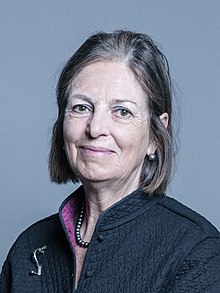
    Julie Smith – 2022 Speech on the Growth Plan (Baroness Smith of Newnham)

    The speech made by Julie Smith, Baroness Smith of Newnham, in the House of Lords on 10 October 2022.

    My Lords, I have not been watching British politics and economics for quite the 60 years that the noble Baroness, Lady Blackstone, referred to. My first memory of the British economy was during the three-day week in the early 1970s and its periodic blackouts. My father and I visited my great-uncle, who had a corner shop; I would have been about three or four, but even then I can remember him talking about the difficulties of getting in produce, as supermarkets found it so much easier to undercut. There were changes in the economy then that were not necessarily attractive; they were not necessarily times we would want to go back to. The 1970s were probably the worst time for the British economy that I and many others remember.

    When we voted for Brexit, despite the Project Fear perhaps put out by some, I did not expect that we would indeed end up in a period where there would be threats of blackouts and growth would be slipping back as much as it is.

    Lord Forsyth of Drumlean (Con)

    It has nothing to do with Brexit.

    Baroness Smith of Newnham (LD)

    The noble Lord says from a sedentary position that it has nothing to do with Brexit—

    Baroness Jones of Moulsecoomb (GP)

    Of course it does.

    Baroness Smith of Newnham (LD)

    I thank the noble Baroness. There was a suggestion by those who were arguing against Brexit that it would have catastrophic economic consequences. We will never know fully what the implications of Brexit would have been had it not been for the Covid pandemic and a whole range of other issues, but it is absolutely clear that we are in an economic situation that was unforeseen five years ago and which very clearly started at the time of Covid and was exacerbated by the war in Ukraine.

    Had I not been heckled from a sedentary position, I was going to say that today a miracle has happened—I agreed with the noble Lord, Lord Lilley. Before the Whips in my party get too worried, I say that it is over something with which I hope perhaps all Members in your Lordships’ House can agree: that we should not want a Government to fail. It must be of considerable interest to us all, as citizens of the United Kingdom and Members of your Lordships’ House, that our country should be respected globally and that our economy should be as strong as possible. I therefore do not seek to talk down the Government, however much I might like to see them defeated at the next election.

    The noble Lord, Lord Eatwell, raised the question of whether the Prime Minister had too many Ps in her PPE. I was more concerned that she had missed Politics 101: as Prime Minister, there are certain people you want to have in your Cabinet, so do not kick to the Back Benches those people who do not agree with you. The Prime Minister might like to rethink that a little bit. But did she really learn the lessons in Oxford PPE that some of the rest of us did? There seem to have been so many decisions in the last four weeks that are not about strengthening the economy; some of them stand to weaken the economy.

    The noble Lord, Lord Forsyth, is right that cheap money is no longer available, but those decisions that the Chancellor put forward two and a half weeks ago led to a set of consequences that is going to increase borrowing. Can the noble Lord, Lord Callanan, in his response tell the House what calculations the Government have made around the impact on the economy and our borrowing of the Government’s mini-Budget; the amount of borrowing the Government are having to do; the intervention of the Bank of England; and the long-term consequences this will have on young people and their mortgages, and on those who are repaying their student loans? The youngest are among those who are going to suffer most from many of these changes.

    Cutting energy prices is right. Borrowing for tax cuts most certainly was not.

  • Tessa Blackstone – 2022 Speech on the Growth Plan (Baroness Blackstone)

    Tessa Blackstone – 2022 Speech on the Growth Plan (Baroness Blackstone)

    The speech made by Tessa Blackstone, Baroness Blackstone, in the House of Lords on 10 October 2022.

    My Lords, in the 60 years I have spent either participating in or observing British politics, I have never seen such a shocking failure in government policy-making as last month’s mini-Budget. What is particularly shameful is that it was a self-inflicted failure—what the former Governor of the Bank of England described, using a tennis analogy, as “unforced errors”. It showed an inability to make sensible economic judgments and an irresponsible lack of proper consideration to what the likely outcome would be for the markets of enormous unfunded tax cuts, with no indication of how they would be paid for in the medium and longer term. It is said that hedge fund managers have described the Chancellor as “a useful idiot”. Useful to them perhaps, but what about the rest of us?

    There are a number of lessons that the Prime Minister and the Chancellor might learn from the mini-Budget fiasco. Above all, they must stop trashing the system which is set up to advise them. Doing so is arrogant as well as ill advised. They need to understand the likely consequences of their actions from good advice. They should not sack a competent Treasury Permanent Secretary with particular expertise in the way the market works on their first day in office. They should not sideline the Office for Budget Responsibility, citing the dubious excuse that there was no time for it to respond. They should consider the views of the Bank of England on maintaining financial stability, for which it is responsible, before taking actions which threaten that very stability.

    They should also demonstrate greater political nous. To propose cutting the top rate of tax for high earners against a backdrop of a cost of living crisis which will damage the lives of medium and, especially, low-income families, beggars belief. Not surprisingly, it led to a rapid, embarrassing U-turn. It has also led electors to believe that this is a Government on the side of the rich and not the poor. Did they not also think through the possible risk of higher interest rates as a consequence of their Budget? Quite apart from the damage to investment, a hike in interest rates would have big implications for the mortgage market. I am sure many Members of your Lordships’ House will feel great sympathy, as I do, for young people who have worked hard to save, found a property they want to buy and, at a stroke, have been told the mortgage that they had been promised has been cancelled.

    As an aside, it is particularly galling to hear the Prime Minister say in interviews that the increase in interest rates is a decision of the “independent Bank of England” when it is obvious that her policies forced the Bank of England to act quickly and raise rates to prevent further damage to our financial system.

    The noble Lords, Lord Newby and Lord Macpherson of Earl’s Court, and my noble friends Lady Smith and Lord Eatwell have all challenged the Government’s flawed economic ideology about how growth can be achieved. They have pointed out the past failure of trickle-down policies, especially in the context of high inflation, and the need to restore economic credibility. I hope that the Minister will say in responding why greater priority has not been given to innovation, as mentioned by my noble friend Lord Eatwell, to improving skills, which no one has mentioned, and to creating better infrastructure, as referred to by my noble friend Lord Liddle. All these are likely to be far more valuable in achieving growth than unfunded tax cuts.

    Growth is of course a highly desirable goal, but I ask the Government and the Prime Minister in particular to refrain from further slurs against the Labour Party for being anti-growth. That is nonsense. The issue between us is not whether we want growth but how to achieve it. Lastly, following what the noble Baroness, Lady Hayman, said, I ask the Government, in thinking about growth, to give further thought to the economic rewards and cost-saving potential of the green economy.

  • PRESS RELEASE : Unemployment figures – Under David Cameron, Britain’s cost of living crisis is not improving, its intensifying – Liam Byrne [September 2013]

    PRESS RELEASE : Unemployment figures – Under David Cameron, Britain’s cost of living crisis is not improving, its intensifying – Liam Byrne [September 2013]

    The press release issued by the Labour Party on 11 September 2013.

    Liam Byrne MP, Labour’s Shadow Work and Pensions Secretary, responding to Labour Market Statistics, said:

    “Today’s headline fall in unemployment is welcome, but what today’s figures expose is that while out of touch ministers are boasting, families are battling. They’re battling another fall in wages, another rise in youth unemployment and yet another rise in long term unemployment. There is simply not enough work to go round and the proof is a record high in the number of part-time workers looking for full-time jobs.

    “Real wages fell yet again by £12 a week; unemployment went up across half of Britain; the youth jobless rate rose by 9,400 and long term unemployment rose yet again. There’s now been an incredible rise of 364,000 part time workers looking for full time jobs since the election.

    “We can’t go on like this. Under David Cameron, Britain’s cost of living crisis is not improving, it’s intensifying.

    “We need a recovery that benefits everyone, not just a few at the top. That is why Labour wants to help to make work pay by introducing a lower 10p starting rate of tax, paid for by a mansion tax, and to repeat the tax on bank bonuses to pay for a compulsory jobs guarantee for young people.”

  • PRESS RELEASE : Politically-motivated fire sale of Royal Mail to fill hole left by Osborne’s failed plan – Umunna [September 2013]

    PRESS RELEASE : Politically-motivated fire sale of Royal Mail to fill hole left by Osborne’s failed plan – Umunna [September 2013]

    The press release issued by the Labour Party on 12 September 2013.

    Chuka Umunna MP, Labour’s Shadow Business Secretary, commenting on the Government’s announcement of an Initial Public Offering to the London Stock Exchange on Royal Mail, said:

    “Ministers are pushing ahead with this politically-motivated fire sale of Royal Mail to fill the hole left by George Osborne’s failed plan. This is taking place despite opposition from a huge coalition including the Conservative Bow Group, the Countryside Alliance, the National Federation of Subpostmasters, the cross party BIS Select Committee as well as Royal Mail employees themselves.

    “The Government has not addressed the huge concerns which remain on the impact the Royal Mail sale will have on consumers, businesses and communities, but ministers are ploughing on regardless.”

  • PRESS RELEASE : Right that Assad be judged by actions more than simply by words – Douglas Alexander [September 2013]

    PRESS RELEASE : Right that Assad be judged by actions more than simply by words – Douglas Alexander [September 2013]

    The press release issued by the Labour Party on 12 September 2013.

    Douglas Alexander MP, Labour’s Shadow Foreign Secretary, responding to President al-Assad’s assurances that Syria’s chemical weapons will be placed under international control, said:

    “No one should be in any doubt as to the murderous nature of the Assad regime and so it is right that Assad be judged by his actions more than simply by his words.

    “The challenge confronting Secretary Kerry and Foreign Minister Lavrov today in Geneva is to agree a means to identify, verify, secure and ultimately remove from Assad’s possession those weapons – with the final goal of destroying them altogether.

    “Their task over the coming days is to prove that a goal that is desirable, is also doable.”

  • PRESS RELEASE : 2022 Enlargement package – European Commission assesses reforms in the Western Balkans and Türkiye and recommends candidate status for Bosnia and Herzegovina [October 2022]

    PRESS RELEASE : 2022 Enlargement package – European Commission assesses reforms in the Western Balkans and Türkiye and recommends candidate status for Bosnia and Herzegovina [October 2022]

    The press release issued by the European Commission on 12 October 2022.

    Today, the European Commission adopted its 2022 Enlargement Package, providing a detailed assessment of the state of play and the progress made by the Western Balkans and Türkiye on their respective paths towards the European Union, with a particular focus on implementing fundamental reforms, as well as clear guidance on the reform priorities ahead.

    The Commission recommends that Bosnia and Herzegovina be granted candidate status by the Council, on the understanding that a number of steps are taken to reinforce democracy, functionality of state institutions, rule of law, the fight against corruption and organised crime, guarantee media freedom and migration management in the country. The Commission will continue supporting reform efforts and accelerate the integration of the Western Balkans as a whole.

    EU High Representative for Foreign Affairs and Security Policy/Vice-President of the European Commission, Josep Borrell, said: “We are recommending today to the Council to grant candidate status to Bosnia and Herzegovina. We are infusing a positive dynamic into the process and hope for the region to take the chance and follow up on it by implementing key reforms. We are not only assessing the performance of partners, but of future member states. The assessments we make now are also about the kind of Union we want for the futureAnd it is clear that we believe in the European future of our partners. Russia’s brutal invasion of Ukraine brings into strong relief the importance of EU enlargement, which takes on a new geopolitical significance. It is a long term investment into peace, prosperity and stability for our continent.”

    Presenting this year’s Package, consisting of Communication on EU enlargement policy and annual reports, Commissioner for Neighbourhood and Enlargement, Olivér Várhelyi, said: “The enlargement policy of the European Union is a geostrategic investment in our European continent’s peace, stability, security, and socio-economic growth. Our reports offer a factual and fair assessment and a clear guidance precisely to allow our partners to identify where they need to go faster in reforms to move ahead. There is no alternative, and it is in our common interest to accelerate the integration process, starting with the Western Balkans, where we have been investing for many years to bring them closer to the EU. The recommendation to grant candidate status is a historic moment for the citizens of Bosnia and Herzegovina. I urge the leaders of the country to make the most of this historic opportunity and swiftly proceed with the steps identified in our recommendation. This will restart the work on reforms and on the fulfilment of the 14 key priorities set in the Commission’s Opinion which remain key for the opening of accession negotiations.”

    Western Balkans

    In the case of Montenegro, the priority for further overall progress in negotiations remains the fulfilment of the rule of law interim benchmarks set under chapters 23 and 24. To reach this milestone, Montenegro needs to intensify its efforts to address the outstanding issues, including in the critical areas of freedom of expression and media freedom and fight against corruption and organised crime and credibility of the judiciary. This requires political stability and constructive engagement by all stakeholders, leading to the establishment of a stable government and broad political consensus in Parliament on key reforms.

    Serbia should as a matter of priority establish a government, firmly committed to the EU strategic direction and reform path. Further work and political commitment are needed to continue and deepen reforms and address shortcomings, in particular in the key areas of the judiciary, fight against corruption and organised crime, media freedom, freedom of assembly and the domestic handling of war crimes. Serbia also needs to improve as a matter of priority its alignment with EU foreign and security policy which dropped significantly. It also needs to robustly tackle all forms of disinformation.

    Albania and North Macedonia opened a new phase in their relations with the EU following the first intergovernmental conferences on accession negotiations on 19 July 2022. Albania and North Macedonia need to further intensify efforts in key areas of rule of law, the fight against corruption and the fight against organised crime. Albania also has to address property rights, minority issues and freedom of expression.

    In June 2022, the European Council expressed its readiness to grant the status of candidate country to Bosnia and Herzegovina and invited the Commission to report on the implementation of the 14 key priorities, with special attention to those that constitute a substantial set of reforms. Despite political turmoil and the general elections of 2 October, the leaders of the political parties represented in the Parliamentary Assembly of Bosnia and Herzegovina in June 2022 committed to principles for ensuring a functional Bosnia and Herzegovina that advances on the European path. Fulfilling the 14 key priorities from the Commission’s Opinion on the country’s EU membership application will allow recommending opening EU accession negotiations.

    Kosovo needs to intensify its efforts to strengthen democracy, public administration, the rule of law and to fight corruption. The Commission stands by its assessment of July 2018 that Kosovo has fulfilled all visa liberalisation benchmarks and the proposal, still pending in the Council, should be treated as a matter of urgency.

    On the normalisation of relations, while both Serbia and Kosovo have remained engaged in the Dialogue, the EU expects both sides to engage more constructively in the negotiations on the legally-binding normalisation agreement in the coming period and show flexibility in order to make rapid and concrete progress.

    Türkiye

    In the area of democracy, the rule of law and fundamental rights, Türkiye needs to reverse the negative trend as a matter of priority with addressing the weakening of effective checks and balances in the political system. Dialogue on rule of law and fundamental rights remains an integral part of the EU-Türkiye relationship. The underlying facts leading to the assessment that Türkiye’s accession negotiations have effectively come to a standstill, still hold.

    The European Council has repeatedly re-affirmed its strategic interest in a stable and secure environment in the Eastern Mediterranean and in the development of a cooperative and mutually beneficial relationship with Türkiye. However, the situation in the Eastern Mediterranean has again become tenser. Türkiye must respect the sovereignty and territorial integrity of all EU Member States.

    Türkiye’s continued policy of not aligning with restrictive measures against Russia is of concern due to the free circulation of products, including dual use goods, within the EU-Turkey Customs Union. Türkiye also needs to take decisive steps to improve alignment with EU CFSP, including EU restrictive measures, and avoid actions that go against its stated objective to join the EU.

    Türkiye remains a key partner for the European Union in essential areas of joint interest, such as migration, counterterrorism, economy, trade, energy, food security and transport. High-level dialogues and intensified engagement in these areas continued. Türkiye has facilitated dialogue between Russia and Ukraine and played a key role in the agreement on the export of grains, although it has also decided to increase trade and financial relations with Russia.

    Next steps

    It is now for the Council to consider today’s recommendations of the Commission and take decisions on the steps ahead.
  • PRESS RELEASE : Seanadóir Niall Ó Donnghaile commends ‘valuable dialogue’ with unionist community at Seanad hearing [October 2022]

    PRESS RELEASE : Seanadóir Niall Ó Donnghaile commends ‘valuable dialogue’ with unionist community at Seanad hearing [October 2022]

    The press release issued by Sinn Fein on 14 October 2022.

    Sinn Féin’s leader in the Seanad, Seanadóir Niall Ó Donnghaile, has commended participants at today’s Seanad Public Consultation Committee on the Constitutional Future of the Island of Ireland session for their respectful and diverse discussions.

    The committee heard from members of the unionist community and those who do not identify as either unionist or nationalist in the north, about their views on the future of Ireland.

    Speaking today, Seanadóir Ó Donnghaile said:

    “Today’s Seanad hearing was a very useful opportunity to hear a range of diverse views on the future of this island. I want to thank all those who took the time to join the discussion and share their views.

    “It is clear that there is appetite for respectful and inclusive dialogue on this issue, including among the unionist community, non-nationalists and those who identify as ‘other’. As someone who advocates for Irish Unity, I welcome the opportunity to engage with and hear from these perspectives.

    “Today we heard a range of views which all shared one thing in common- a desire to ensure that everyone on this island can thrive and reach their full potential in a fair and just society.

    “This was another highly valuable session of the Committee which demonstrates the strength of the Seanad’s processes in facilitating these talks. Today’s discussions should be built on in the time ahead and I look forward to these respectful conversations continuing.”

  • Peter Lilley – 2022 Speech on the Growth Plan (Baron Lilley)

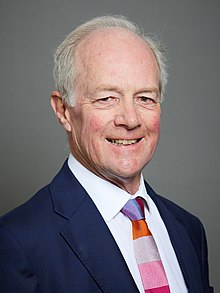
    Peter Lilley – 2022 Speech on the Growth Plan (Baron Lilley)

    The speech made by Peter Lilley, Baron Lilley, in the House of Lords on 10 October 2022.

    My Lords, it is a pleasure to follow the right reverend Prelate the Bishop of Durham; I will take his biblical injunctions to heart. I hope that he will take to heart my observation that there is no free market economist who believes in anything called “trickle-down economics”; that is a fantasy of his imagination.

    My noble friend Lord Lamont reminded me that I should perhaps begin with a declaration of interest: as a former Treasury Minister I am a registered bean counter and member of the Treasury orthodoxy, which may be why I voted for Rishi Sunak in the leadership election. However, I passionately want the Prime Minister and Chancellor to succeed, not just because I believe in their central objective; I also wanted Tony Blair and Gordon Brown to succeed, because I want our country to succeed. I am therefore rather upset by the relish that some have shown for the brief adverse market reaction to the Budget. After all, it was brief, which suggests that it was as much about misunderstanding as about the substance. Sterling is back to the level against the euro that it was before the announcement. The dollar has been equally strong against both the pound and the euro—and many other currencies—which has nothing to do with the Budget statement.

    Surely we can all agree that the Government’s priority is right. Growth is crucial. Growth, not redistribution, is the only sustainable way to increase living standards and finance improved services. If I may, I will use my four minutes to make a few reflections based on the experience of the 1980s.

    First, the impact of the deregulatory measures that we introduced then was in fact greater than we anticipated. Britain moved from being the slowest-growing major economy in Europe to the fastest. But this improvement was slower in emerging than we hoped, and reflected the cumulative effect of a whole range of often small changes. It is therefore very unlikely that the benefits of changes that this Government rightly propose will be felt before the next election. But that is no reason for giving up. The electorate is collectively far more intelligent than many cynics assume. They re-elected the Thatcher Government twice before much of the benefits of their reforms had materialised, because they gave the Government credit for tackling what were manifestly important issues.

    Secondly, in the 1980s we tackled many, although not all, of the big regulatory problems, such as scrapping exchange controls, ending the vestiges of a prices and incomes policy which gave the Government control of every single price, wage and dividend in the country, and privatising large swathes of nationalised industries. But that does not mean there is nothing left to do. We could not then tackle the issues covered by the EU’s laws and regulations. Now, thanks to Brexit, we can, so this Government are right to turn their attention to these.

    Thirdly, one area we did not tackle, which was at least partly within the scope of domestic law, was planning. There, in my experience, speeding up decision-making, so you know whether you can or cannot do something, is as important as liberalising it, and may be less contentious.

    Fourthly, we tend to forget one significant feature that the UK had in the 1980s, which was the development of North Sea oil, which simultaneously strengthened the balance of payments and generated huge tax revenues. The Government are absolutely right to license more North Sea acreage, but the only energy sources which can come on stream speedily are onshore gas and onshore wind. We must face up to the anti-growth coalition, which agitated against shale gas with arguments which, frankly, make anti-vaxxers look positively scientific. More than a million wells have been fracked in the United States without a single building falling down as a result of the micro-seismic events which follow, and without anyone being poisoned by contaminated aquifers, and gas produced domestically emits far less CO2 than importing LNG. If anyone needs to apologise for our present shortage of secure, affordable energy, it is those who objected to nuclear because it would not come on stream until 2021, to quote Nick Clegg, and who supported frankly scaremongering arguments to stop us exploiting such shale reserves as we have.

  • Paul Butler – 2022 Speech on the Growth Plan (Lord Bishop of Durham)

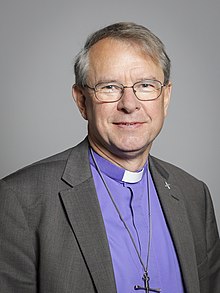
    Paul Butler – 2022 Speech on the Growth Plan (Lord Bishop of Durham)

    The speech made by Paul Butler, the Lord Bishop of Durham, in the House of Lords on 10 October 2022.

    My Lords, I congratulate my friend of more than 40 years, the right reverend Prelate the Bishop of Birmingham, on his valedictory speech. I thank him for his contributions to this House, particularly as our convenor, and pray God’s blessing for his future endeavours. I also congratulate the noble Baroness, Lady Gohir, on her excellent maiden speech.

    In Luke, chapter 16, Jesus tells of a rich man who

    “lived in luxury every day”,

    while a beggar named Lazarus lay longing to eat what fell from his table. Sat at the rich man’s gate, Lazarus was in plain sight, yet he was invisible to the rich man—a man blind to suffering and the needs of Lazarus.

    The Trussell Trust has revealed devastating statistics regarding those in poverty. In recent months, its food banks have provided 50% more parcels. Of those on universal credit, 2 million have skipped meals to meet other essential costs. These statistics continue to rise; poverty is in plain sight. Yet a policy of trickle-down economics renders those in poverty invisible. Like Lazarus waiting to eat what fell from the rich man’s table, this policy does not address urgent needs. These people cannot wait for the benefits of this economic policy to trickle down; this is especially the case for children and young people. We all get only one childhood, which shapes the rest of our lives. Children do not have time to wait for the “pie” to grow; they need meaningful investment now. God does not “trickle down” his love for us; he pours it out extravagantly. Jesus’s priority was to lift up the poor, not wait for some small advance to trickle down.

    I agree, therefore, that the rule book needs rewriting to recognise in plain sight the value of parents giving their full time to raise children and to honour carers for selfless service to the disabled and elderly—an economics that says the well-being of people and of creation matter most. It is urgent that economic policy prioritises the poor and vulnerable. Growth certainly matters, but growth must have the most vulnerable in sight. It must not be a growth of greed but of supply, sufficiency and contentment. Social security should be increased in line with inflation. A failure to do so will have devastating consequences for families across the UK—families already struggling due to policies such as the two-child limit and the benefit cap. In the north-east, two in five children live below the poverty line, making the gap between the north-east and the UK average child poverty rate greater than ever. The Government’s lack of commitment to increasing social security will further plunge children into poverty, while making levelling up an increasingly distant fantasy. What does this say about the value that this country places on caring for children?

    I acknowledge the reversal of the 45p tax cut, but for those on the lowest incomes it is, frankly, irrelevant. As Jesus proclaimed:

    “You cannot serve both God and money.”

    We must ask ourselves who we serve when developing economic policy. Is it for the benefit of a select few, or is it those who are poor and most vulnerable, those whom God expects us to protect and care for first and foremost?