Blog

  • David Frost – 2022 Speech on the Growth Plan (Lord Frost)

    David Frost – 2022 Speech on the Growth Plan (Lord Frost)

    The speech made by David Frost, Lord Frost, in the House of Lords on 10 October 2022.

    My Lords, it is a pleasure to take part in this debate and to follow the noble Baroness, Lady Fox, who is a voice of clarity and forthright speaking in this Chamber. I congratulate my noble friend Lady Neville-Rolfe on her appointment once again to the Front Bench, in the Cabinet Office.

    This country faces serious underlying problems, which my noble friend Lord Bridges and others have set out, and in my view this Government are beginning to tackle them. This will create turbulence but there is really no choice.

    My noble friend Lord Lilley referred to the achievements of the Thatcher Government in the 1980s. One of her close advisers, John Hoskyns, said:

    “It is not enough to settle for policies which cannot save us, on the grounds that they are the only ones which are politically possible or administratively convenient.”

    Unfortunately, too many of those who have opposed the Government’s growth plan seem to want to do just that, thinking that the right way forward is just more of the same: more super-zero interest rates, more public spending and more clever policies, and the whole thing run by clever officials and institutions who are very invested in how things are now. The task before us is different. It is to make politically possible what is necessary for the country to begin to recover, and I believe that this is what the Government are setting out in the growth plan. I welcome that. I have spent a lot of the last year, within and outside government, urging the Government to get more serious about low taxes, reform and change. I am very happy that they have begun to do so.

    The situation that we face as a country is difficult but it is not as bad as that which many others face. It is not as bad as for those trapped in the eurozone, who have no control over monetary policy or much else of the normal role of a Government. The report a week or so ago from Deutsche Bank researchers attracted a lot of attention in the hysteria of the last couple of weeks, pointing out that our economy might shrink slightly, by 0.5% in 2023. What attracted less attention was it saying that Germany’s economy would shrink by 3% or 4%. We must keep these things in proportion.

    We have had a productivity and growth problem since 2008—which I note in passing is the period of the deepest integration of this country in the single market and of the highest inward migration. Re-joining the single market and reversing those trends will not help our growth performance at all; it did not help then and it will not help now.

    The right way forward is set out in the growth plan: the gradual normalisation of monetary policy, which is essential if we are to solve the productivity problem. Zero interest rates harm the motor of a free market economy. The only way forward is medium-term fiscal discipline while letting fiscal policy take the strain in the short run, and supply side structural reform.

    When the economy does not grow, you get competition for static resources, which is why we have what my right honourable friend the Prime Minister called the anti-growth coalition. The fact that so many people do not like the term shows that it has captured something real about attitudes. These people’s vision of the country seems to be to keep everything as it is. They do not want change. They are happy to see our country as a shabby-genteel aristocratic family, trying to keep up appearances but not ready to go out to work.

    This will not be easy. Politicians must explain what needs to be done. However, I take inspiration again from the words of Margaret Thatcher, who said:

    “First you win the argument, then you win the election.”

    If the Government stick to their guns, I am confident that they will do both those things.

  • Claire Fox – 2022 Speech on the Growth Plan (Baroness Fox of Buckley)

    Claire Fox – 2022 Speech on the Growth Plan (Baroness Fox of Buckley)

    The speech made by Claire Fox, Baroness Fox of Buckley, in the House of Lords on 10 October 2022.

    My Lords, I am delighted to welcome the noble Baroness, Lady Gohir, and congratulate the noble Baroness, Lady Neville-Rolfe. One thing that is growing is the strong women brigade in here.

    I welcome one aspect of this debate. I want to move away from the focus on the redistribution of a shrinking national cake. The answer is to bake a bigger cake. I am glad that so many noble Lords now profess that they are pro-growth because, until recently, those of us who were arguing for economic development faced lectures that growth was unsustainable, irresponsible, damaging for the environment, a recipe for greedy consumerism and so on.

    My problem is that the measures announced in the growth plan are flimsy and insubstantial. The problems we face—here I disagree with the noble Baroness, Lady Smith of Newnham—were foreseeable, but they were denied by all sides politically. Those problems are far greater than the Government or the Opposition seem to acknowledge, even now. If only they could be fixed through the prism of cutting or increasing tax.

    I have no doubt that the mini-Budget was a trigger for the present crisis, but we need to be honest that it is not the cause of Britain’s woes. Our stagnated, unproductive economy has deep roots of many years’ standing. For more than a decade, central banks have turned to easy monetary policies and vast amounts of quantitative easing both to keep interest rates near zero and to prop up and sustain a zombie economy. This was not called out by politicians. It could not have gone on indefinitely.

    Closing down the UK economy for two years during lockdown, which received all-party support, and now the war in Ukraine have brought the UK economy’s underlying fragilities to the fore. However, the idea that tax cuts are an easy answer is pitifully inadequate—let alone those who blame Brexit; that is just pathetic.

    Without things being produced, no wealth is created to generate incomes, profits and tax revenues to pay for public spending, so production is the key. But is the idea of the tax cuts that businesspeople, corporates and wealthy capitalists will spend their untaxed windfalls productively? Why would we think that? Since the 1980s, business has not been short of funds to invest but it has not been entrepreneurial and it has not invested in innovation, better technologies or the skills revolution. Instead, corporate culture itself has become risk-averse, playing it safe and playing with financial engineering.

    A furious public are not just in terror about the short-term—their bills and mortgages—but dismayed at the lack of meat on the bone of the plans. Take the energy policy—the energy that we will need to fuel growth. There is no point in the Government loudly shouting, “Let’s frack”, and then whispering, “With local consent”, and continually reaffirming their net-zero targets. Green growth in reality means unreliable energy and eco-austerity. Let us get on with nuclear power. Let us get on with building those houses. At the moment, it is all soundbites. Never mind subsidising old industries, where is the concrete plan to invest in new sectors, with new jobs and new energy solutions? Where is the spirit of risk, courage and experimentation? We must create a new industrial revolution. That is the long-term plan that we need but it is sorely lacking, and the public need to hear more of it.

    The public are not fools. They instinctively know that there is no pain-free route out of this. We need some frank talking, and a collective approach to solving the problems, beyond party politics. A huge transformation is needed in the economy, and everybody must be involved in shaping it. The words “Growth, growth, growth” are not enough. A lot more must be done. We must be humble and recognise that we have to take a lead on this but that we need the British public onside to make it happen.

  • Colin Low – 2022 Speech on the Growth Plan (Baron Low of Dalston)

    Colin Low – 2022 Speech on the Growth Plan (Baron Low of Dalston)

    The speech made by Colin Low, Baron Low of Dalston, in the House of Lords on 10 October 2022.

    My Lords, the economy is not in a good state. The Budget and the so-called growth plan are not about to make things any better.

    The Prime Minister and the Chancellor would like us to believe that all our economic woes are the result of Putin’s war and the resultant energy price increases. They want us to focus on the energy-capping element of their economic strategy, but the truth is that, before Putin, there were already worrying signs of output constraints, labour market distortions and inflationary pressures resulting from the disruptive effects of both Brexit and the pandemic.

    Now, inflation is at almost 10%, output is still below its pre-pandemic level and wages for many, especially those in the public sector, are lagging well behind prices. Meanwhile, public services are in urgent need of resources, not just to deal with the enormous backlog built up during the pandemic but to rebuild resilience following a decade of underfunding of health, social care, education and local authority spending. Not only that but the lack of healthcare resources is almost certainly having a significant, negative impact on the labour market and, consequently, economic output.

    In these circumstances, the Budget on 24 September should have confined itself to introducing the new energy price caps, with a promise of properly considered tax and spending decisions—and funding arrangements to match—to come later in the year. Instead, the Chancellor succeeded in spooking the financial markets with the promise of massive unfunded tax cuts, thereby weakening the pound and, more importantly, pushing up the cost of government debt and raising interest rates more quickly than would otherwise have been needed.

    With mortgage rates already increasing to over 6%, mortgage payments as a proportion of household disposable income will be at their highest since 1989, just before the crash in house prices of the early 1990s—and this on top of record energy bills. No wonder consumer confidence and business confidence are weak and there is every prospect of stagnation, perhaps even recession, in the coming months. What is the Government’s response? It is tax cuts for the rich, benefit cuts for the poor and the prospect of a new round of austerity in public sector spending, all dressed up as a plan for growth.

    How, then, are we to explain the Chancellor resorting to swingeing tax cuts, worth £43 billion at the latest count, in conditions of high—and rising—interest rates and overstretched, underfunded public services? The Government’s position, at least in public, is that tax cuts will be paid for by increased economic growth, which they will also help to generate in combination with cutting red tape and easing planning regulations. The problem, however, is that almost no one—certainly not the markets—believes that these things are likely to happen. There is no evidence from either comparison across countries or past experience that lower taxes are associated with higher productivity growth and, hence, higher trend rates of growth in output. Of course, in the right circumstances, cutting taxes can stimulate demand and so raise output in the short run, but that works only when inflation is low and there is plenty of spare capacity, which is far from the case at the moment.

    As for deregulation, easing planning regulations may help a little if it is not thwarted by local opposition, including from Tory interests. However, the perennial and often counterproductive war on red tape and gimmicks such as investment zones will have a marginal impact at best.

    If we cannot rely on increased growth to fund the Chancellor’s tax cuts, there is only one option for avoiding an unsustainable spiral of increasing government debt: large-scale cuts in government spending. Perhaps it is not unduly cynical to suggest that shrinking the state may have been a secondary—even primary, in some quarters—objective of the tax-cutting strategy. That would certainly be consistent with the decision to sidestep the scrutiny of the OBR when the tax cuts were announced. In any case—

    Baroness Bloomfield of Hinton Waldrist (Con)

    The noble Lord has had quite a lot of latitude with the advisory speaking time but is now significantly over. Perhaps he could think about drawing his comments to a close.

    Lord Low of Dalston (CB)

    I am on my last sentence.

    In any case, if the tax cuts are to be sustained, substantial cuts in government spending are on the way. The paradox is that this is the opposite of what is required for a credible growth plan.

  • Sal Brinton – 2022 Speech on the Growth Plan (Baroness Brinton)

    Sal Brinton – 2022 Speech on the Growth Plan (Baroness Brinton)

    The speech made by Sal Brinton, Baroness Brinton, in the House of Lords on 10 October 2022.

    My Lords, I add my best wishes to the right reverend Prelate the Bishop of Birmingham as he leaves your Lordships’ House. He has always been thoughtful, often provoked us and made us think about what he has said, and I will miss his bluntness in some of our debates over recent years—it has been vital for all of us to hear, and I thank him for it. I also welcome the noble Baroness, Lady Gohir, to her place in the House and very much look forward to working with her in future.

    “Growth, growth, growth” as an aim is not, as we have heard from many sides of your Lordships’ House this afternoon, in itself a bad thing. The problem is the growth plan, the mini-Budget and the reference by the Chancellor and the PM to trickle-down economics—whatever the noble Baroness, Lady Noakes, says, they have made it plain that is the policy they are following. That has not been proven to have worked and, as we have heard from many others, it has not worked elsewhere. It will certainly not work within the two years that we need it to do so.

    Many of us have found the growth plan wanting and, most likely, unachievable. I shall focus in my brief contribution on the impact of the current situation, particularly in health and social care and how the plan does or does not address the growing crisis faced there. The OECD spend in the UK is 2.3 hospital beds per 100,000. In Germany, it is 12. The actual spend as a percentage of GDP is equally different. That, for many, explains why we have had problems in the NHS for years—not just since Covid but for much longer.

    Those delays are becoming unimaginable. A friend in A&E last week said that a fellow patient reported that she had been waiting to be seen in A&E longer than she had queued to see Her late Majesty’s lying-in-state. This is now commonplace. The Health Service Journal highlighted just last week that increases in inflation will force the NHS drastically to scale back services unless there is extra funding. It could have to find £20 billion in efficiency savings over the next three years because of the increased cost of goods and services that it purchases. Already, two out of three integrated care systems, only introduced by the Government on 1 July, have fallen off-track on their financial plans. Common pressures reported include the impact of inflation and Covid costs that were not funded this year.

    The mini-Budget recognises the vital role of the care sector, as does the Health Secretary’s plan for patients. However, there is no money, not least because the money from the levy has been removed. The crisis is there already. Staff cannot be recruited because they can get far more money in hospitality and retail.

    Far worse than that, however, are the energy costs that the sector faces. One small care home discovered that its energy costs would go up by 600% from October this year. A six-month extension of help from the Government for part of it is unlikely to keep that business going. Earlier, in Questions, noble Lords commented on the problems that disabled people are facing with energy costs. Many of them have high energy costs, with only £150 offered when their bills are considerably higher.

    The anti-growth coalition, to which the noble Baroness, Lady Noakes, referred, is a bizarre term. It reminds me of Humpty Dumpty, who said:

    “When I use a word … it means just what I choose it to mean—neither more nor less.”

    The PM’s definition of the anti-growth coalition now seems to include anybody, including people in her own party, who disagrees with her.

  • Sheila Noakes – 2022 Speech on the Growth Plan (Baroness Noakes)

    Sheila Noakes – 2022 Speech on the Growth Plan (Baroness Noakes)

    The speech made by Sheila Noakes, Baroness Noakes, in the House of Lords on 10 October 2022.

    My Lords, we have heard many speeches today from the anti-growth coalition, and doubtless there will be more. Noble Lords do not say that they are against growth, but they support the kind of policies that have failed to produce growth and are unlikely to allow the UK to escape from the deadly combination of slow growth, high inflation and high taxation. The Prime Minister is absolutely right to prioritise getting the UK growing again. She is also right to focus on bold supply-side measures and tax reductions. Those who set their faces against this need to explain how else the UK can achieve a paradigm shift. It will not be found in a magical green economy, as some noble Lords advocate. Net zero is costing money; it is not making money.

    The Government’s supply-side plans, such as investment zones, are exciting, and I look forward to significant regulatory reforms which will allow small businesses to concentrate on growth rather than on bureaucracy. Thank goodness we are not shackled by the EU any more.

    We also need lower tax rates, and this is nothing to do with the fantasy about trickle-down economics. It is about incentives. The right tax rates are the ones that encourage people to work, which encourage and support entrepreneurs and which attract overseas investors. That is the route to growth. Low rates are not synonymous with low tax yields, as previous Conservative Governments have shown.

    The Prime Minister is also right about refusing to look at economic policy through the lens of redistribution. That is an obsession based on the politics of envy, and it does nothing to encourage growth. It is not a coincidence that Labour Governments, with their focus on redistribution, make the kind of policy choices that leave an economic mess when they are pushed out of government.

    There is no moral high ground in redistribution. Of course we have a moral duty to support those in need, but the best route to that is a successful economy. On the flip side, it is morally wrong to impoverish everyone by holding back people with potential for success.

    I have made many speeches in your Lordships’ House regretting various debt-to-GDP percentages well below the ones now likely, and I stand by the need to get our debt down, but these are not ordinary times, and the key driver of the changes since the last Budget is the huge energy support package, which I am sure that all noble Lords support. We are not an international outlier, with our debt-to-GDP ratio among the bottom of the G7 range. I am, however, glad that my right honourable friend the Chancellor is bringing forward his medium-term fiscal plan to the end of this month. I am sure he will show the doubters that we remain the party of responsible public finances.

    Before finishing, I should like to say a few words about the Bank of England, which has let the country down. The Monetary Policy Committee kept monetary conditions too loose for too long and failed correctly to identify recent inflationary trends. Its interest-rate policy created a housing market built on high house prices and unrealistically low interest rates. That policy also sheltered zombie businesses from economic reality. Its Financial Stability Committee, aided and abetted by the Pensions Regulator, failed to spot that pension funds have pursued liability-driven investment strategies which presented a risk to financial stability, and taxpayers have had to stand behind the Bank’s support actions. I fully support Bank of England independence from the Executive, but that independence has to be underpinned by strong and effective accountability, and that is something that Parliament, especially your Lordships’ House, must work on.

  • Bryn Davies – 2022 Speech on the Growth Plan (Baron Davies of Brixton)

    Bryn Davies – 2022 Speech on the Growth Plan (Baron Davies of Brixton)

    The speech made by Bryn Davies, Baron Davies of Brixton, in the House of Lords on 10 October 2022.

    My Lords, I start by reminding the noble Lord, Lord Bridges, that his Government were in power for the 10 years he referred to and some of the guilt must attach to him and his colleagues.

    I want to ask about two of the specific proposals in the so-called plan for growth; first, on the change to the IR35 freelance rules. I find this proposal to give up on the effective enforcement of tax rules both extraordinary and wrong. The reopening of opportunities for employees to exploit tax rules does nothing for growth—the purported purpose of these proposals—let alone levelling up. It also severely undermines the wider integrity of the tax system. It should be understood that the Government are actively making mugs of the majority of independent contractors, who follow the rules and pay the tax that is due. I recognise that the whole treatment of freelance workers is a mess and needs to be sorted out, particularly the issue of employment rights. I note the conclusions of the Finance Bill Sub-Committee from two years ago but it should be understood that the Chancellor’s proposal here falls far short of the comprehensive approach that was proposed by the sub-committee.

    It is particularly extraordinary that the Chancellor should make such a proposal now, when, inevitably, on the one hand we have no idea of the eventual cost, because it depends on individual actions, while on the other we know that the Treasury has set a figure of £6 billion for the cost of this change over the next four years. That is an extra £6 billion that will have to be borrowed to pay people who are seeking to avoid paying the tax that is due. Therefore, my first question to the Minister is: why do the Government think that this reversal of policy is justified on its own terms, let alone at the current time?

    Secondly, I want to ask the Minister about the announcement of the change in the pensions regulatory charge cap. This is particularly relevant following the events of the last few days that arose directly from the investment policies of private sector pension funds. The Bank of England has stressed the significance of the problems that the whole system faced, so I ask the Minister: is this really the time to make these changes, which are intended to have the effect of reducing the liquidity of these private sector pension schemes? Does he understand that the crisis was a crisis of liquidity and not about solvency? This measure is aimed at further reducing the liquidity of these schemes. Therefore, before proceeding with these proposals, we need, at least, a far better understanding of what went wrong following the Budget and the impact that it had on the investments of pension schemes.

  • George Bridges – 2022 Speech on the Growth Plan (Baron Bridges of Headley)

    George Bridges – 2022 Speech on the Growth Plan (Baron Bridges of Headley)

    The speech made by George Bridges, Baron Bridges of Headley, in the House of Lords on 10 October 2022.

    My Lords, I start by congratulating my noble friend Lady Neville-Rolfe on her appointment. It is great to see her back on the Front Bench. I also congratulate the noble Baroness, Lady Gohir, on her excellent maiden speech. It is wonderful to see her here. I regret very much that we heard the valedictory speech of the right reverend Prelate the Bishop of Birmingham. We shall all miss him.

    We are at last waking up from the make-believe world we have lived in for a decade or so. As my noble friend Lord Forsyth said, it is a world where we became deluded into thinking that cheap money would last for ever and that inflation was safely behind bars. Far from being transitory, as we were confidently told, inflation is now running amok, seeping into the pores of our economy.

    As the noble Lord, Lord Burns, said, the Bank has questions to answer. For example, why did it take so long to kick the addiction to QE, raise rates and send an unequivocal, clear message that it will do whatever it takes, however painful, to keep prices down? It also needs to clarify how its current £65 billion bond-buying programme has nothing to do with monetary policy, as it claims, even though it seems to be using QE to do so.

    That is the first delusion that has fallen. The second has been called out by the Prime Minister. She is entirely, 100% right to say that high taxes risk snuffing out growth and enterprise. The problem is that we—this and successive Governments—have been putting taxes up: in just two years, Boris Johnson raised taxes by more than Gordon Brown did in 10.

    So this Prime Minister has my full support in calling time on higher taxes, not just corporation tax but also the dreaded IR35. But—and there is a “but”—taxes are high because spending is high, and it is getting higher still. Here we are only just beginning to wake up to reality. Before the energy package was announced, Mr Sunak said his last Budget increased total departmental spending over this Parliament by £150 billion. That is the largest increase this century.

    That is the backdrop to this debate. As we look ahead, if we want to lower taxes, as I do; if you believe that you cannot borrow your way to growth, as I do; and if you want to bring inflation down, as I do, we must all be very honest about spending. If we are not, we risk taking a gamble we cannot afford. Thanks to our living in this make-believe world for so long, borrowing is already high and risks rising higher thanks to the soaring cost of servicing our debt.

    Let me give one fact on why this is such a risk. We have the highest proportion of index-linked debt in the G7. It is 25%, which is five times what it is in Germany. Add to that the risk of rising rates and it is not surprising that the OBR forecasts that this year debt interest costs might hit a record high of £83 billion. That is getting on for double what we spend on defence—and it was forecast in March, before the impact of the last few weeks. An average RPI rate of 15% next year would boost borrowing costs to almost £130 billion, and that does not include the cost of rising rates.

    So, when my noble friend stands up, I would like him to assure us unequivocally that if we are going to proceed with tax cuts, which I would love to see, a coherent plan will be published on 31 October that sets out how our finances will be put on a sustainable, stable footing. I would also like him to assure us that we will not try to borrow our way to growth, as that is part of the make-believe world I hope we have left behind.

  • Libby Lane – 2022 Speech on the Growth Plan (Lord Bishop of Derby)

    Libby Lane – 2022 Speech on the Growth Plan (Lord Bishop of Derby)

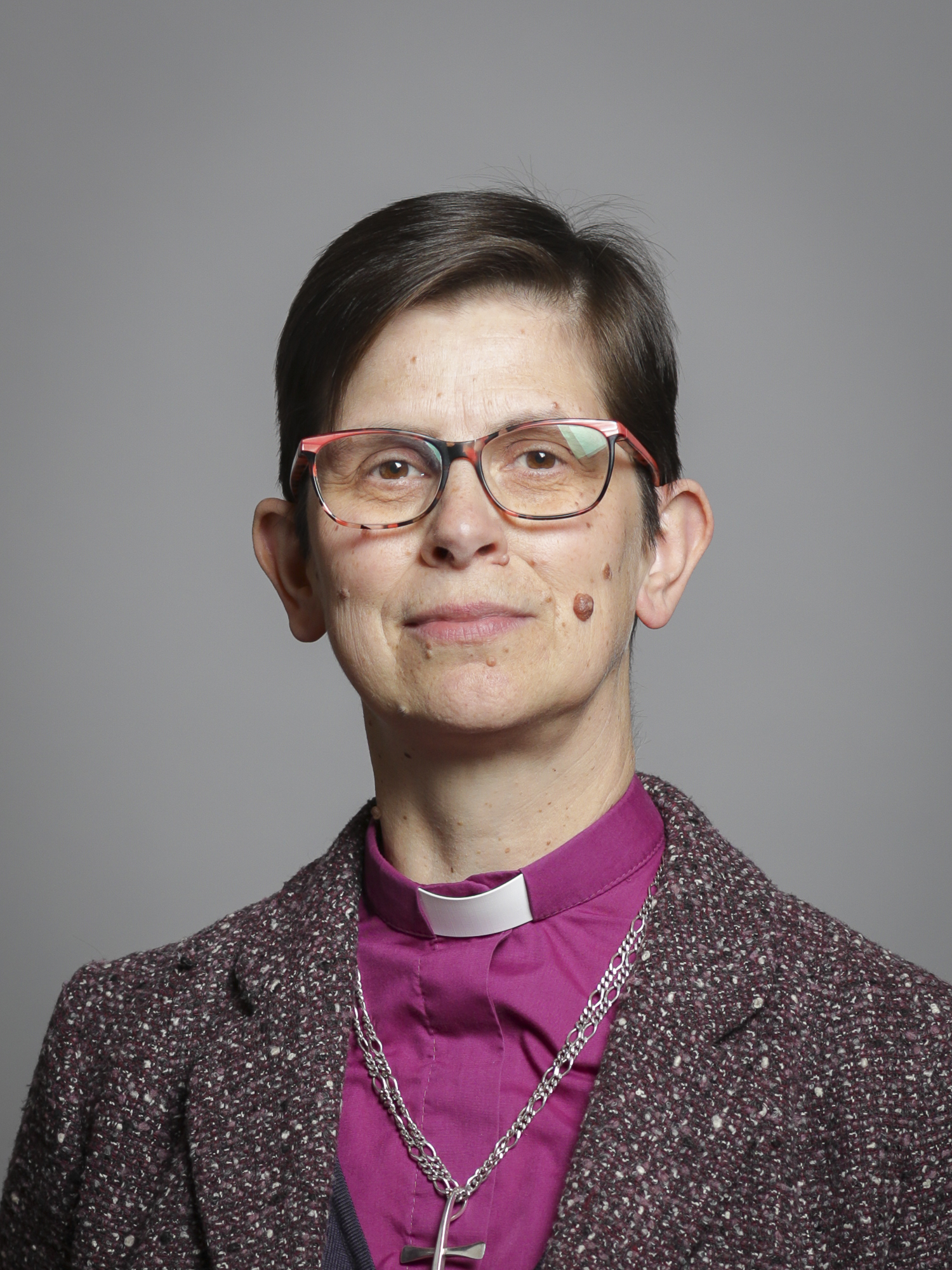
    The speech made by Libby Lane, the Lord Bishop of Derby, in the House of Lords on 10 October 2022.

    My Lords, it is a pleasure to join other noble Lords in congratulating the noble Baroness, Lady Gohir, on her maiden speech, which was delivered with such authority and clarity on matters that are close to my heart as well. I look forward to working with her in the years ahead. It is also a real privilege to pay tribute to my right reverend friend who gave his final reflection from these Benches. I am indebted to him as he has been not only an excellent Convenor of the Lords Spiritual but someone whose example has greatly influenced my ministry over many years.

    I declare an interest as vice-chair of the Children’s Society. This afternoon, I want to give voice to the unheard voices that it works with and advocates for, as we take note of the economy and the Government’s growth plan. Last month, the Children’s Society published the 2022 Good Childhood Report, which records that 85% of parents and carers, despite welcome packages of support, are worried about the increase in the cost of living as it affects their ability to care for their children.

    I too am concerned about the direct impact of economic policy on children. To ask the lowest-income families to cope with even less seems unthinkable. At a time when so many families are already struggling to put food on the table, a real-terms cut to their income would be catastrophic. Some 4.3 million children in the UK are growing up in poverty and the Children’s Society calculates that not uprating benefits would add another 200,000 to that number.

    According to a coalition of national children’s charities, one of the most direct ways of supporting the most vulnerable children would be by increasing child benefit. A £10 increase would help but, given the rate of inflation, an increase of £20 to £25 would be more realistic. On behalf of those charities, I ask the Minister whether His Majesty’s Government might reconsider their position on those benefits to directly support the welfare of children. Jesus, our scripture tells us, put a child at the heart of the kingdom of God and I urge us to do the same in our United Kingdom.

    As Bishop of Derby, I am pleased to recognise that Derby is an international centre for skilled engineering and high-tech industry which has brought to the area many highly paid and secure jobs. Some in Derby and Derbyshire will likely benefit from much of the Government’s plan for growth. However, we also face some of the starkest indices of inequality in the country.

    I finish with words from Psalm 41:

    “Blessed are those who consider the poor and needy; the Lord will deliver them in time of trouble.”

    I trust that as we take note of the economy and the Government’s growth plan we will prioritise those who are at the margins of our society to reduce further inequality, especially as it impacts our nation’s most vulnerable children.

  • Richard Denison – 2022 Speech on the Growth Plan (Lord Londesborough)

    Richard Denison – 2022 Speech on the Growth Plan (Lord Londesborough)

    The speech made by Richard Denison, Lord Londesborough, in the House of Lords on 10 October 2022.

    My Lords, first, I congratulate my noble friend Lady Gohir on her passionate and eloquent maiden speech. We look forward to hearing much more from her from the Cross Benches.

    As we have heard, the Prime Minister’s economic strategy is, “Growth, growth, growth”. This has unfortunate echoes of her predecessor who, just five months ago, trumpeted the slogan, “Jobs, jobs, jobs”, at a time of record unfilled vacancies. Single repetitive word slogans often suggest oversimplified approaches, with wilful disregard for the consequences. Indeed, the Chancellor appears to have grabbed the helm of a vessel without consulting the crew on the weather or sea conditions and slammed down the throttle with the fuel tank on reserve and oil lights flashing. I will not prolong the nautical metaphor, but you get my drift.

    Sustained economic growth requires a qualitative, not quantitative, approach, especially in a period of high inflation and supply side shortages—not least our shrinking workforce. We have economic inactivity levels not seen anywhere else in Europe, while our productivity remains in the doldrums. These are the issues that need to be addressed, and they will not be solved by tax cuts and escalating debt. If you think you can buy growth this way, the markets will find you out—indeed, they already have. Growth needs to be sustainable, balanced and, I suggest, broadly distributed. Achieving 2.5% is far from ideal if only 10% of the population benefit.

    Let us reflect for a moment on the impacts of the proposed tax cuts, especially amid a cost of living crisis. Do we give a £20,000 tax break to one person—let us say a mid-ranking City lawyer earning £500,000 a year—or a £1,000 tax break to 20 people earning the median average salary of £26,000? The cost to the Treasury is the same but I argue, as an entrepreneur and business investor, that the impact on growth will be much more significant if you reward at the margins. I do not have time to preach the theory of marginal utility but I urge the Ministers to brief both No. 10 and No. 11 on its relevance in relation to taxation and growth.

    So how do we engineer real economic growth? I have two suggestions. First, we now have a very competitive exchange rate, close to record lows against the US dollar. Remember what happened back in 1992 when we exited the ERM: sterling lost 20% of its value —a gift from the markets—and our economy grew by 3% per annum over the rest of the decade, fuelled by a boom in exports. I ask the Minister: what are the new Government’s plans to seize this opportunity?

    Secondly, we must address the UK’s anaemic productivity, which in terms of output per hour still lags both France and the US by some 15%. This is where our political system serves us very poorly. We need to stick to targeted, long-term measures to spur productivity, addressing education and skills, and the chronic underinvestment in both the public and private sectors. Would the Government consider setting up a productivity task force, or at least an advisory board, that includes those at the cutting edge of the private sector, who build businesses, create jobs, balance the books, count the beans and have first-hand experience of what drives productivity, and indeed growth?

  • PRESS RELEASE : Defence demonstrates significant progress made for women in the Armed Forces [October 2022]

    PRESS RELEASE : Defence demonstrates significant progress made for women in the Armed Forces [October 2022]

    The press release issued by the Ministry of Defence on 16 October 2022.

    Today marks the year anniversary of the recommendations made by Rt. Hon. Sarah Atherton MP in her report ‘Protecting Those Who Protect Us: Women in the Armed Forces from Recruitment to Civilian Life’. A year on, Defence have taken on these recommendations and introduced an extensive programme of work alongside the work that was already being undertaken to tackle unacceptable sexual behaviour, improve the experience for women in the Armed Forces and build trust in the Service justice System.

    Most recently Defence has launched three new measures that provide clearer direction to prevent and address incidents. These are the Zero Tolerance to Sexual Exploitation and Abuse (SEA) Policy (JSP 769), the Zero Tolerance to Unacceptable Sexual Behaviour: A Victim/Survivor Focused Approach Policy (2022DIN01-073) and the Tackling Sexual Offending in Defence Strategy. These policies will ensure that Defence continues tackle unacceptable sexual behaviour and is a place where people are proud to work and have faith in their justice system.

    In parallel to the recently published policies, a significant programme of work has been delivered across Defence and were set out in the Government’s Response to Sarah Atherton’s Inquiry. This includes training developments, transformation of the Service Complaints system, the stand-up of the Defence Serious Crime Unit HQ, delivery of improvements to uniform and equipment and the Servicewomen’s Health Improvement Sprint.

    These delivered measures include:

    Recruitment

    Defence has set a Level of Ambition to achieve a 30% inflow of women to the Armed Forces by 2030. It is recognised that 30% is a very challenging level of ambition, and one which has not yet been achieved by many of our NATO partners. In meeting this ambition, a Whole Force approach has been developed including tailored recruiting activities, women-focussed marketing campaigns and making greater use of Servicewomen as recruiters. Defence, however, recognises that recruitment alone is not enough and recognise that a greater focus on retention, behaviour and inclusion continues to be vital.

    Women’s Health

    As part of the commitment to improving the health and wellbeing for women in the Armed Forces, The Servicewomen’s Health Improvement Focus Team (SHIFT) was established to deliver the six-month Women’s Health Sprint, bringing together military and civilian skills and experiences to deliver key women’s health policies and initiatives. This includes menstruation disposal bags and a urinary support device, which are currently under procurement. Furthermore, a series of blogs on women’s health has been published by the SHIFT, with the aim of normalising the discussion of women’s health topics. These have received thousands of views and positive comments from Servicewomen, who feel like their voices are finally being heard and acted upon, and by others who welcome the opportunity to better understand and support their Servicewomen colleagues.

    Diversity & Inclusion

    A thorough training needs analysis was undertaken and a common standard introduced. Active Bystander Training continues to be an important part of the training offering, with the course being streamed 135,000 times, and we introduced a new Holistic Allies Training package in March 22.

    April 22 saw the implementation of Climate assessments across Defence and work continues to upskill our diversity and inclusion Advisers and Practitioners to better support our people

    Uniform and Equipment

    As part of the pledge to improve the uniform and equipment offerings for women in the Armed Forces the Services have all made amendments to uniform and clothing that address women’s sizing, body shape and body changes. This includes the development of the Narrow Scalable Tactical Vest (STV). Wider revisions to uniform and clothing for each of the Services is in progress and rollout will commence in Summer 2022 and complete in 2023.

    Service families

    In recognition of the requirement to support a modern and diverse workforce, the UK Armed Forces Families Strategy was launched in January 22. As part of the support to service families there are currently six pilot locations running the Wraparound Childcare (WAC) scheme, with full rollout in September 22, with almost 2000 Service children benefitting from before and after school free childcare.

    Service Complaint & Service Justice Reform

    In June this year we published the Service Complaint Reform which introduces a range of reforms and improvements to the existing Service Complaints system for Service Personnel. This is a new system that will increase efficiency; make the system more independent through the introduction of Central Admissibility Teams; improve the support available for those who engage with the process and increase trust and confidence in the system and its decision makers.

    In order to address the recommendations regarding the investigation of serious crime the Defence Serious Crime Command was established in April this year and the Defence Serious Crime Unit (DSCU) will be fully operational by December 2022.

    Defence continues to build trust in the Service Complaints System and Service Justice System through a revised approach to the publication of official statistics. This is part of a commitment to being transparent and continually seeking to develop and improve policies and support to serving personnel.

    Understanding behaviours

    We have also launched several targeted interventions to enable Defence to improve our understanding of unacceptable behaviours. These have included the implementation of recommendations from the ‘Wigston Review into Inappropriate Behaviours’ and the subsequent Gray Review. April 22 saw the implementation of Climate assessments across Defence and work continues to upskill our diversity and inclusion Advisers and Practitioners to better support our people.

    These delivered measures ensure that Defence continues to be a place where people are proud to work and have faith in their justice system. However, this is only the beginning and we are continuing to develop and improve policies to ensure our brave and dedicated serving personnel are proud to be part of the British Armed Forces.