Blog

  • Brendan Clarke-Smith – 2022 Speech on an Early General Election

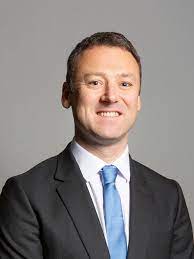
    Brendan Clarke-Smith – 2022 Speech on an Early General Election

    The speech made by Brendan Clarke-Smith, the Parliamentary Secretary at the Cabinet Office, in Westminster Hall, Houses of Parliament on 17 October 2022.

    As always, it is an absolute pleasure to serve under your chairmanship, Mr Mundell. I thank the hon. Member for Newcastle upon Tyne North (Catherine McKinnell) for bringing this debate before us.

    The nation and the world face the challenges not just of Vladimir Putin’s war in Ukraine, but of recovering from the covid-19 pandemic. Putin’s war has caused a global economic crisis, with interest rates rising around the world. I am sure that nobody in this country would like a general election more than Vladimir Putin.

    Families and businesses are feeling the impact across the country, from the cost of their supermarket shop to their energy bills, as hon. Members have mentioned. In these tough times, therefore, the Government are taking decisive action to get Britain moving.

    Owen Thompson

    I am sorry to intervene so early, but will the Minister tell us how Vladimir Putin caused mortgage rates to shoot up to such an extent?

    Brendan Clarke-Smith

    We need to look at interest rates around the world, the strength of the US dollar and inflation rates around Europe. Curbing inflation is important to us, and I will come on to that and what the Chancellor is talking about today.

    Families were facing bills of up to £6,000 this winter. Tesco, which has been mentioned a lot today, says, “Every little helps”, but we think we can do better than that, because a little is not enough for many families around the country. That is why we took such decisive action with our comprehensive package, so that families would not face that. It has substantially reduced the expected peak inflation that we might have been looking at. We have supported the families who needed it the most, have been dealing with the tax burden and have cut the national insurance contributions of 28 million people as a result.

    Global economic conditions are worsening, so we have had to adjust our programme. That is the sign of a pragmatic Government. We are still going for growth, but need to change how we approach it. The Government are committed to investment zones, speeding up road projects, standing up to Russia and increasing our energy supplies so that we are never in this situation again. We are making it easier for businesses to take advantage of Brexit freedoms, so that they may do things more easily, leading to lower costs, lower prices and of course higher wages. The Government are on the side of hard-working people who do the right thing, and it is for them that we are delivering.

    We are putting our great country on to the path of long-term success. We are taking on the anti-growth coalition, from Labour and the Lib Dems to the protestors stopping people going to work by grinding roads and rail to a halt, as we have seen outside today. The Government’s focus is on bringing economic and political stability to the country. That will lower interest rates and restore confidence in sterling. We cannot afford any drift to delay that mission. Therefore, the last thing that we need now is a general election.

    The Government have several priorities for the remainder of this Parliament. We will use the power of free enterprise and free markets to level up the country and spread opportunity. We will drive reform and rebuild our economy to unleash our country’s full potential. We will cut onerous EU regulations that smother business and investment.

    A mandate is one of the reasons we are in Westminster Hall today. The Conservative party was elected with a majority in 2019. Recently, we have been through a process of electing a leader of our party who is committed to delivering that Conservative programme in government. We face significant global events that have changed our economic circumstances. We cannot ignore the impact of covid or Putin’s deplorable war in Ukraine, which has created much of the economic hardship that has pushed up the price of energy, not just for us but for the world. The Government acted immediately to provide energy support for families who needed it the most by laying out a plan for economic growth.

    The UK, as mentioned by the hon. Member for Midlothian (Owen Thompson), is a parliamentary democracy and does not have a presidential system. Prime Ministers hold their position by virtue of their ability to command the confidence of the House of Commons. Consequently, a change in the leader of the governing party does not trigger a general election.

    The fact that a change in the leader of the governing party does not necessitate an election is well established. There is precedent among both Labour and Conservative Prime Ministers in the past. Indeed, five of the last seven Prime Ministers, including my right hon. Friends the Members for Uxbridge and South Ruislip (Boris Johnson) and for Maidenhead (Mrs May), Gordon Brown and John Major, began their tenure in office without the need for a general election.

    In many cases the next election followed several years after a Prime Minister had been in office. In the post-war era, that has become very common. Gordon Brown was in office for three years before the 2010 election, and John Major for two between 1990 and 1992. Jim Callaghan held office in the 1970s without holding an election, just as Douglas-Home held office for a year without one in the 1960s. Prior to that, Harold Macmillan was Prime Minister for two years before calling an election in 1959. Famously, Winston Churchill’s wartime Administration were in office for five years, in exceptional circumstances, without an election taking place. I could go on. Chamberlain, Lloyd George, Asquith and Balfour are all relevant examples. My point is that Prime Ministers hold their position by virtue of their ability to command the confidence of the House of Commons. There is no requirement for an incoming Prime Minister to call an election immediately on assuming office.

    Catherine West

    The Minister is very generous in giving way. He is making an important point that general elections are not always necessary. Does he agree, however, that one of the problems besetting the majority party is that before the 2019 general election, Mr Farage’s party tipped into the Tory party, and that that has resulted in it splitting in two?

    Brendan Clarke-Smith

    The hon. Member makes a good point. Of course, all political parties will at times have disagreements. One of the things that makes me such a proud Conservative is the broad church of our operation, and I believe that it is that broad church that allows many of my colleagues with differing views to come together with shared values. That is why Conservatives, who have been elected and given a mandate, can change leadership but still have a Conservative Government delivering Conservative policies.

    Earlier this year, delivering on a Conservative manifesto promise, Parliament passed legislation repealing the Fixed-term Parliaments Act 2011. It was a flawed piece of legislation, which ran counter to the core constitutional principles of our country, and I believe that it had a damaging effect on the functioning of parliamentary democracy. The Dissolution and Calling of Parliament Act 2022 returned us to tried and tested constitutional arrangements for dissolving Parliament and calling elections. It received broad agreement across the House, and I do not believe that a single Labour MP voted against its Second or Third Reading. By repealing the 2011 Act and it opaque provisions, it reaffirmed the convention that the Government hold office by virtue of their ability to command confidence in the House of Commons.

    Members are in a privileged position to put views to the Prime Minister and senior colleagues, and I encourage them to do so. We have debates, such as this one, and other appropriate forums. The Government are entitled to assume that they have the confidence of the House unless and until it is shown to be otherwise. That can be demonstrated unambiguously only by means of a formal confidence vote. Thus, the Government, under the new Prime Minister, continue to command the confidence of the Commons.

    The Prime Minister can call a general election at any time of her choosing by requesting the Dissolution of Parliament from the sovereign, which, if accepted, leads to a general election. As a result, the decision of when the next election will take place rests with the Prime Minister.

    On the appointment of the Chancellor, who is currently giving his statement on the Floor of the House, the Prime Minister asked my right hon. Friend the Member for South West Surrey (Jeremy Hunt) to assume the role. As the Prime Minister has said, he is one of the most experienced and widely respected Government Ministers and parliamentarians. The Prime Minster has asked the Chancellor to deliver the medium-term fiscal plan, and he is giving a statement to the House as I speak. That will explain the support that the Government are giving.

    The hon. Members for Pontypridd (Alex Davies-Jones) and for Newport West (Ruth Jones) mentioned the cost of living. That is very important to us; we want to get this right. We want to bring in the energy price guarantee. We have already given £400 to every household, with £1,200 going to the most vulnerable, and £150 back on council tax, along with other support. We want to help the most vulnerable in society and we want the right targeted packages. Of course, to do that, we need to have sustainable public finances and to show fiscal responsibility. The Chancellor of the Exchequer will talk about that today. We want to bring our debts down; we want to ensure that inflation is low; we want to ensure that interests rates are sensible. We do not set interest rates—the Bank of England does—but we want people to be able to afford their mortgages.

    After I had bought my first house, the financial crisis happened—that was a difficult period for homeowners. We want to help people to get through this; we are a nation of homeowners. We want to protect people, including the most vulnerable, and, of course, we want people to be able to pay their energy bills and for their food shopping.

    Fleur Anderson

    I thank the Minister for the history lesson. I think the people who signed the petition thought that we needed a new Government not because of the change of leader, but because of the policies of the new leader—that is why so many people are signing it. Mortgages are going up by an average of £500 across the country, but that figure will be a lot higher in my constituency. Those homeowners are the ones signing the petition. They are saying, “We’ve had enough of these policies. There hasn’t been any fiscal restraint; it has been really damaging. We need a change of policies.”

    The current Prime Minister lost her credibility because her Budget has been thrown out—a new one is coming—so she may need to be replaced. How many changes of Conservative party leader does the Minister think there needs to be before a general election is called?

    Brendan Clarke-Smith

    People want stability and certainty, and that is also what the markets wanted, which is why we have acted decisively. The Prime Minister has been clear and has acted pragmatically. She has appreciated when things have not worked and has changed tack as a result. That is a sign of a strong Government, and I fully support the Prime Minister in those efforts.

    The hon. Member for Midlothian said that he also wanted another independence referendum for Scotland. I would argue that Scotland has already had a referendum and that people made a choice. They want the same stability; they want to know what the future holds for them. They made their choice and they see it as being part of that stability. They worry about their interest rates and their houses, and about inflation. We want to govern for the whole Union.

    Owen Thompson

    I find this slightly perplexing. A lot of the Minister’s argument has been about the strong decisions of the Government in changing their mind, and about the ability of the Prime Minister to change her mind and take a different direction. He then makes exactly the opposite argument when it comes to Scotland and deciding the constitutional future of our nation. How can the Prime Minister and the UK Government change their mind in a matter of weeks, but the people of Scotland—despite every promise that was made eight years ago during the 2014 referendum campaign—are not allowed to make a different decision?

    Brendan Clarke-Smith

    I bring the hon. Gentleman back to the point that we are in an ever-changing world: nobody expected the covid-19 pandemic or what Vladimir Putin has done in Ukraine. I take the point that circumstances change, but people want stability—they want to be able to support their families and pay their bills—and we believe that supporting the devolved Governments, working together and protecting our Union is the best way to ensure that.

    Alex Davies-Jones

    The Minister is, of course, a Minister for the Union. As the shadow Minister, my hon. Friend the Member for Putney (Fleur Anderson), quite rightly said, neither of the First Ministers of Scotland and Wales have received a phone call or any contact from the Prime Minister since she has been in post. If the Prime Minister and the Government are so committed to the Union, when exactly will she be in in touch with the First Ministers, and why has it taken so long?

    Brendan Clarke-Smith

    Over the summer, Members will have heard the Prime Minister speaking with great passion about protecting the Union. The £18 billion of annual funding for the Welsh Government is the largest annual amount in real terms since devolution began, so those were not just words but actions. I can also point to the £121 million in levelling-up funding for 10 projects, the £790 million of investment across four Welsh cities, the £115 million for the Swansea Bay city deal, and the £500 million for the Cardiff city deal. I am sure that the Prime Minister will, in due course, contact those elected leaders to see how we can work closely together.

    The hon. Member for Putney (Fleur Anderson) mentioned the ethics adviser. I understand that the Prime Minister is considering that matter and will provide an update in due course.

    We are in extraordinarily tough times—there is a global economic crisis—and we must remember where this country was heading only a month ago. Families and businesses were fearing unaffordable energy bills higher than £6,000. Inaction would have been unthinkable and the human cost unforgivable. Businesses would have gone bust and jobs would have been lost, and that is why we took the decision to protect people and businesses from the worst energy crisis this winter.

    We were elected in 2019 on a pro-growth, pro-aspiration and pro-enterprise agenda, to be on the side of hard-working people and all those who make our country great, and that is what we will continue to do. Today we have moved to cut national insurance, putting £330 in taxpayers’ pockets, and we are delivering a clear plan to get Britain growing through bold supply-side reform. Growth requires stability, and that is what we are offering. We need to move forward and deliver for the British people. A general election risks sending us back to square one by letting the anti-growth coalition into power. We will do whatever it takes to get through the storm and emerge a stronger and better nation.

    David Mundell (in the Chair)

    I call Catherine McKinnell to wind up the debate. You have approximately one hour and forty minutes.

  • PRESS RELEASE : The normalisation of relations between Kosovo and Serbia remains vital [October 2022]

    PRESS RELEASE : The normalisation of relations between Kosovo and Serbia remains vital [October 2022]

    The press release issued by the Foreign Office on 18 October 2022.

    Statement by Fergus Eckersley, UK Political Coordinator at the UN, at the Security Council meeting on Kosovo.

    Thank you Mr President. We thank the Special Representative for her briefing. And we welcome the representatives of Kosovo and Serbia to the Security Council.

    The United Kingdom welcomes the continued progress made by the Government of Kosovo on a number of important issues, this includes:

    Its continued commitment to reform, notably important work on the rule of law, and tackling organised crime and corruption.

    It includes Kosovo’s efforts to improve support to victims of Sexual and Gender based violence, and the integration of the Istanbul Convention into its Constitution.

    And it includes its work on transitional justice, not least for survivors of conflict related sexual violence, as well as the work of the Government Commission for Missing Persons.

    Recent reports from both the EU and the OSCE also show good progress on countering terrorism, public administration reform, the rule of law, the fight against corruption and organised crime, and the protection of human and fundamental rights.

    We welcome the government’s increased engagement with minority communities. Dialogue between communities is vital for the stability of Kosovo as a multi-ethnic state, and we encourage the Kosovan government to continue such engagement.

    In particular we encourage greater outreach to Kosovo Serb political leaders and representatives to resolve outstanding issues.

    President, the normalisation of relations between Kosovo and Serbia remains vital. We reiterate our full support for the EU-facilitated Dialogue between Serbia and Kosovo.

    Now is the moment for both parties to engage in the Dialogue in good faith, honour their Dialogue commitments, and avoid actions or rhetoric that could reduce prospects for reaching a comprehensive and sustainable normalisation agreement, benefiting the people of both countries.

    The progress referred to in the Secretary-General’s report, for example on the adoption of an energy agreement roadmap, is encouraging. But we were concerned to witness the rise in tensions on 31 July over the implementation of government decisions on car number plates and ID cards. Such decisions should not be used as an excuse for blockades or violence.

    We therefore welcome the resolution of the disagreement over ID cards, facilitated through the determined efforts of the EU Special Representative and international partners. This is a clear example of what can be achieved when both parties approach the process with pragmatism.

    Finally, President, UNMIK has played a vital role in the incredible progress Kosovo has made since resolution 1244 was adopted in 1999. Conditions on the ground are of course unrecognisable from 1999, and it would be the right time now to undertake a thorough review of UNMIK’s shape and role, and of the Council’s process that we have around it.

    In the meantime the UK would like to reiterate its gratitude to the Special Representative and the mission for all of their work, and for the professional implementation of their mandate.

    Thank you.

  • PRESS RELEASE : Science Minister in Italy for first meeting with European Space Agency [October 2022]

    PRESS RELEASE : Science Minister in Italy for first meeting with European Space Agency [October 2022]

    The press release issued by the Department for Business, Energy and Industrial Strategy on 18 October 2022.

    This week (Monday 17 October), recently appointed Minister for Science and Investment Security Nusrat Ghani arrived at the European Space Agency (ESA)’s Centre for Earth Observation to meet with ESA’s Director General Josef Aschbacher, and Austrian Minister for Climate Action, Environment, Energy, Mobility and Technology, Leonore Gewessler.

    Minister Ghani was joined by UK Space Agency CEO Paul Bate for the visit, the Minister’s first trip outside the UK since being appointed in her ministerial position within the Department for Business, Energy & Industrial Strategy.

    The meeting with Dr. Aschbacher came ahead of this year’s ESA Council of Ministers (CMIN22), set to take place in November, at which member states look to invest in the next evolution of ESA missions and programmes, and at which the UK contribution to ESA will be confirmed.

    November’s Ministerial council will present an exciting opportunity to help set the future direction of ESA, and to achieve an outcome for the UK that delivers on our National Space Strategy (NSS) objectives while driving growth and supporting safety and sustainability on Earth.

    Minister for Science and Investment Security Nusrat Ghani said:

    I am proud to be representing the UK space sector as we discuss our ambitions ahead of the ESA Council of Ministers next month. There are a series of important programmes on the table, and I want to harness opportunities in space to grow the UK economy, create jobs and inspire young people into STEM careers.

    It was important to me that my first international trip was with ESA and I look forward to the Council of Ministers meeting in November and campaigning for 2025 UK Presidency.

    We’re also making new funding available now to strengthen the UK’s position as a world leader in the satellite communications market, and I look forward to seeing the results of the competition.

    Having committed £374 million per year over five years to ESA in 2019, the UK’s investment and collaboration with the agency is of significant value to the economy and domestic sector, illustrated by new UK Space Agency report findings published this week, which find that for every £1 invested, ESA will generate an overall return of £11.80 for the UK economy.

    The visit to Italy also coincided with Minister Ghani’s unveiling of a new £15 million fund for UK businesses to revolutionise satellite communications technology. The competition will prioritise customer needs, support sustainable growth and catalyse further investment into the UK space sector, which already employs 47,000 people.

    The trip was indicative of the UK’s strong commitment to the space and R&D sector both at home and across Europe. The UK’s European and global partnerships form an essential part of this government’s ambitions in the field as we begin to explore the possibility of bidding for the ESA presidency for 2025, continue to advocate for our association to the Horizon Europe research programme, and look ahead to a busy pipeline of bilateral engagements across R&D.

  • PRESS RELEASE : Mali’s actions and statements call into question its commitment to partnership with the UN [October 2022]

    PRESS RELEASE : Mali’s actions and statements call into question its commitment to partnership with the UN [October 2022]

    The press release issued by the Foreign Office on 18 October 2022.

    Statement by Ambassador James Kariuki at the UN Security Council Quarterly Briefing on Mali.

    Thank you, President, and thank you, SRSG Wane, for your insights, your leadership of MINUSMA and the hard work of your team in the toughest of circumstances. I join others in expressing our deepest condolences following the deaths of the four Chadian peacekeepers in Kidal.  I also welcome the participation of Foreign Minister Diop in our meeting and express condolences for the deaths of civilians and military losses on the Malian side.

    Mr. President, when the Council met to discuss Mali in June, we encouraged the transitional authorities to continue engaging with ECOWAS on an election timetable. Since then, agreement has been reached, sanctions lifted and some positive steps made toward elections. The peace agreement monitoring committee has also met for the first time in over a year. As these endeavours move forward, we hope the authorities will ensure inclusive processes, particularly of women and young people, while promoting dialogue.

    We understand the Malian authorities are dealing with multiple challenges. AQ and IS-affiliated groups continue to expand their territory, preying on communities and attacking military bases. The 40% increase in cases of conflict-related sexual violence reported by the Secretary-General is a shocking illustration of just how urgent it is to improve human rights protection.

    But the terror imposed by these groups must not be countered with a military response that itself fails to protect civilians and their human rights. In August, the UN Independent Expert on human rights in Mali reported violations committed by Malian forces alongside – and I quote – ‘foreign military personnel described as Russian military officials’. The malign presence of the Wagner Group can no longer be ignored or denied.

    All perpetrators of human rights abuses and violations must be held accountable. Without accountability and justice, trust cannot be rebuilt and grievances will endure. MINUSMA must be granted unrestricted access to investigate human rights allegations independently. Mali’s statement in June that the authorities would not guarantee the mission’s freedom to achieve this was deeply concerning and it is part of a pattern of actions and statements that call into question Mali’s commitment to full partnership with MINUSMA. We urge the authorities to work constructively with the mission, lifting restrictions and facilitating the vital work of peacekeepers.

    The United Kingdom remains a strong supporter of MINUSMA and its mission. The UN’s forthcoming review of MINUSMA will need to answer some fundamental questions. These include whether and how the mission can maintain a viable presence in Mali. The review should present credible options reflecting realities on the ground. We look forward to engaging with colleagues on this in the coming weeks.

  • Kemi Badenoch – 2022 Speech at the Netherlands Trade Mission in London

    Kemi Badenoch – 2022 Speech at the Netherlands Trade Mission in London

    The speech made by Kemi Badenoch, the Secretary of State for International Trade, at the Tobacco Dock in London on 18 October 2022.

    Good afternoon everyone.

    Thank you Ambassador and thank you Liesje for that excellent speech and also an extra special thank you to the Dutch government for organising this event. I think it’s going to be very successful. It’s good to see you all here.

    What I’d start off by saying is welcome to Tobacco Dock. This is a symbol of our trading past. It’s a modern building now, but I think if you can imagine 200 years ago what it would have looked like, full of barrels shipped from all over the world – some no doubt from the Netherlands.

    Today it’s great to see it filled not with barrels but with people, and more importantly with businesses who are helping to shape our shared economic future. The future of the UK and the Netherlands are aligned. Our success relies on each other’s success.

    It’s wonderful to see you all here because it’s the symbolic nature of the steady stream of Dutch firms that are making the UK their home.

    In the last year Heineken and the chemicals company DSM, have injected tens of millions of pounds into their UK operations, creating hundreds of jobs…

    And smaller Dutch firms, in some of the sectors represented here today, like the e-bike manufacturers Van Moof and Ebke, are investing on this side of the North Sea too.

    The UK and the Netherlands exchanged almost £88 billion of goods and services in the year ending March – that makes the Netherlands our fourth largest trading partner.

    And by our most recent reckoning, Dutch business make up over 10pc of this country’s foreign direct inward investment.

    But, as we’re finding today, we can achieve more.

    I want you to know that we want companies, like yours, pioneers in new forms of transport, AI and data analytics, to flourish in our country.

    Why? First, because you will help drive the growth that will support our long-term economic security for both countries.

    Second, because your ideas and expertise will maintain the UK’s place as a technological trail blazer, helping to future proof us against a changing world.

    But I must emphasise, it is not a one-way street because we have something to offer as well.

    In return we can offer you one of the best places in the world for an innovative business to call home.

    We have four of the world’s top universities.

    We have a growing, energetic talent pool…

    We’ve committed through our National Infrastructure Strategy to invest in roads, railways and internet connections – making it easier for businesses both in the UK and the Netherlands to set up and thrive.

    And we’ve created a pro ambition, pro business regulatory environment.

    We’re also looking at how we can unlock opportunities in some of your sectors today:

    For example, last year we launched our AI Strategy, which spells out how we will support the sector and harness its advances.

    I’m sure my international trade team at the back of the room will be delighted to talk more about this.

    They’re a great team. Over the last three years, they’ve helped Dutch businesses to invest in scores of projects in this country – creating over 8,000 jobs.

    Of course, today is also a reminder of the strength of the UK-Dutch relationship.

    Britain’s prosperity didn’t come about by accident.

    It was built through a commitment to democracy, free markets and strong and mutually-beneficial partnerships, like the one we share with the Netherlands.

    We are both monarchies, long-standing allies, and our friendship has lasted from the era of Erasmus to the age of AI.

    For many years now, British expats have been making each other’s country home.

    Our universities welcome students from either side of the North Sea and our academic collaborations, like the one between the Universities of York and Maastricht, are advancing knowledge in critical areas like medical technology and data science.

    The UK and the Netherlands work together to make the world a better place.

    For over six decades, our Royal Navy has prepared large numbers of Royal Dutch Navy warships so they’re ready for operations around the world.

    Today we’re together standing up for freedom by imposing economic sanctions on Russia following its invasion of Ukraine…and our businesses are collaborating on major clean energy projects that will help us keep the lights on.

    We don’t have many differences. But like any good friends, when we come across issues, we work through them.

    So, I know that there is great potential for our relationship to hit new heights.

    As two old friends with a love of enterprise, innovation and independence…we have a real opportunity to create an even deeper and more productive trading partnership, that will serve us both well in future.

    I’ve just been discussing our shared priorities with Liesje in our meeting earlier.

    And I’m looking forward to continuing the conversation about how we can make it even easier for us to cooperate.

    I’ll end by saying that this trade mission is the latest in a long list of pioneering and productive collaborations between our nations…

    In the sixteenth century, the Dutch philosopher Erasmus, discussed with the English scholar Sir Thomas More, ideas that would shape our societies.

    In the 19th century, Vincent van Gogh was inspired by his stay in London to paint ­and influenced countless artists around the world.

    And your businesses, with their amazing advances, show how together we can push forward the boundaries of progress in the 21st.

    Her late Majesty Queen Elizabeth once said that our nations are: Innovators, traders and internationalists.

    That’s been true for five centuries. And from everything I’ve seen here today, I know it is more the case now than ever before.

    So, I’ll wish you all a fantastic trade mission. And every success for the future. Thank you.

  • PRESS RELEASE : Construction begins on brand new flagship London court in the Square Mile [October 2022]

    PRESS RELEASE : Construction begins on brand new flagship London court in the Square Mile [October 2022]

    The press release issued by the Ministry of Justice on 18 October 2022.

    The construction of a state-of-the-art combined court is underway in the heart of London’s legal centre as part of Salisbury Square, a new development on Fleet Street.

    • New civic quarter will increase the number of courtrooms from 8 to 18 in the City of London
    • Lord Chancellor unveils foundation stones of new court and police station
    • The court’s foundation stone will be the first to be inscribed with ‘KC’ in over 70 years

    The Lord Chancellor and Justice Secretary, Brandon Lewis, unveiled the foundation stones at the construction site today (18 October 2022).

    The City of London Law courts will be a modern, efficient and flexible centre for London’s legal services, providing a total of 18 hearing rooms, an increase of 10 on the courts they will replace in 2026. This consists of 8 Crown, six civil and four magistrates’ courtrooms. The court will focus on high-level fraud, cyber and economic crime.

    It forms part of wider HM Courts and Tribunals Service estate investment, with £105 million spent during 2021 to 2022 to transform courts and tribunals across England and Wales.

    Lord Chancellor and Justice Secretary, Brandon Lewis, said:

    The City of London Law courts represent a vision of how justice will work in future – with modern, innovative and flexible courts in fit for purpose buildings.

    The Salisbury Square development symbolises our place as one of the leading centres for business, law and justice as we ensure that the UK remains attractive to global business and investment.

    The court’s foundation stone is the first in the courts estate to be laid under the reign of King Charles III and the first to be inscribed with ‘KC’ – ‘King’s Counsel’ – in over 70 years.

    Developed by The City of London Corporation, Salisbury Square creates a new civic quarter in the Square Mile, bringing together first-class legal and law enforcement facilities. It will generate 400 new jobs and support 2,100 more, enhancing the UK’s reputation as a global destination for business and investment. Once complete, it will see millions invested into the City of London’s economy, thanks to the global appeal of the UK’s legal services.

    Policy Chairman at the City of London Corporation, Chris Hayward, said:

    Fraud is now the most common crime in the UK, costing the economy billions every year and causing misery for businesses and individuals.

    By strengthening our capability to crack down on economic crime, we will enhance the City’s reputation as a world-leading location to do business and keep consumers across the UK safe from fraud.

    The Salisbury Square Development will play a vital role in ensuring we can adapt to the changing demands of policing and delivering justice, supporting the UK economy and helping attract international business.

    The new building will provide ease of access for all those that use the court, from legal professionals to victims. Facilities will include lifts and wide corridors that provide access for wheelchair users, helping to ensure there are as few barriers as possible for people with disabilities or limited mobility.

    The court will be fitted out with all available courtroom technology, with screens and cameras enabling courtrooms to seamlessly transmit and receive video evidence with other court locations.

    The court complex has a lifespan of 125 years – triple the design life of a typical building – and sustainability is at the core of its construction, with the new court to run on clean energy sources. It will include an all-electric heating and cooling system provided by 300 metre deep thermal piles to store summer heat below ground for reuse in the winter months. The highly insulated external facades reduce the winter energy demand whilst façade solar shading reduces the cooling required in the summer. Materials will be reclaimed from the buildings that have been demolished for reuse in the new construction.

    Designed by Eric Parry Architects, Salisbury Square also includes a new headquarters for the City of London Police, as well as a commercial building. The development will rejuvenate its historic surroundings, forming a gathering place for people to enjoy with outdoor seating and new shops, bars and restaurants.

  • PRESS RELEASE : Joint statement of the Financial Provisions Specialised Committee [18 October 2022]

    PRESS RELEASE : Joint statement of the Financial Provisions Specialised Committee [18 October 2022]

    The press release issued by the Treasury on 18 October 2022.

    The sixth meeting of the Specialised Committee on Financial Provisions (SCFP) was held today, 18 October 2022. The meeting was co-chaired by officials from the UK Government and the European Commission. This Committee is assigned by the Withdrawal Agreement Joint Committee to undertake work related to the implementation of the financial provisions in Part V of the Withdrawal Agreement.

    The UK and the EU exchanged updates on the tasks carried out under the remit of this Specialised Committee. Both parties noted the positive engagement on the annual reporting package required by the Withdrawal Agreement and the associated invoices. The fourth invoice was provided by the European Commission in September. The payment of these amounts will be made in eight monthly instalments, with the first due date set on 31 October 2022, in accordance with the terms of the Withdrawal Agreement. The European Commission will continue submitting these payment communications to the UK twice annually, in April and September, until outstanding net liabilities are extinguished.

    The UK and EU sides reaffirmed their commitment to complying with their legal obligations under the Withdrawal Agreement.

    The two sides appreciated the ongoing good cooperation in this field, and committed to continue working collaboratively on a range of implementation issues, in recognition of the mutual benefit of a smooth implementation of the financial provisions of the Withdrawal Agreement.

  • PRESS RELEASE : Three new non-executive directors appointed to the Court of the Bank of England [October 2022]

    PRESS RELEASE : Three new non-executive directors appointed to the Court of the Bank of England [October 2022]

    The press release issued by HM Treasury on 18 October 2022.

    Lord Jitesh Gadhia, Sabine Chalmers and Tom Shropshire will take up their roles at the Bank’s Court in the coming months.

    Her Late Majesty Queen Elizabeth the Second approved the appointment of three new non-executive directors (NEDs) of the Court of the Bank of England. These appointments will be made by the King.

    The new NEDs will take up their roles at the Bank’s Court in the coming months for terms lasting four years.

    The Bank’s Court acts as the governing body responsible for setting the organisation’s strategy, budget and taking key decisions on resourcing and appointments. The Court is not responsible for the matters reserved to the Bank’s main policy committees, the Monetary Policy Committee, the Financial Policy Committee and Prudential Regulation Committee.

    Jeremy Hunt, the Chancellor of the Exchequer, said:

    “I am delighted to be able to announce the appointment of Lord Jitesh Gadhia, Sabine Chalmers and Tom Shropshire. Each of them will bring immense skill and experience to the Bank’s Court.

    “I look forward to continuing to work closely with the Bank’s leadership, and remain fully committed to its independence.”

    Andrew Bailey, Governor of the Bank of England, said:

    “I am very pleased to welcome Lord Jitesh Gadhia, Sabine Chalmers and Tom Shropshire as non-executive directors of Court. Their varied experiences make them invaluable additions to Court and the running of the Bank. I look forward to working with them all.”

    David Roberts, incoming Chair of Court, said:

    “I am delighted to welcome Jitesh, Tom and Sabine to the Bank’s Court of Directors. They will bring fresh insights, deep wisdom and wide experience to help Court fulfil its role of promoting the good of the people of the United Kingdom.”

    About the appointments

    The Bank of England is the central bank of the UK. It is governed by the board of directors known as the Court of Directors. Further information can be found at the Bank of England website.

    All members of the Court are appointed by the Crown on the recommendation of the Prime Minister and the Chancellor of the Exchequer.

    All appointments to the Court are made on merit and political activity plays no part in the selection process.

    These appointments are regulated by the Commissioner for Public Appointments, who provides independent assurance that appointments are made in accordance with the Government’s Principles of Public Appointments and Governance Code.

    About Lord Jitesh Gadhia

    Lord Jitesh Gadhia has over 25 years of investment banking and financial services experience, having held senior positions at Blackstone, Barclays Capital, ABN AMRO and Baring Brothers. Lord Gadhia currently serves on the boards of Rolls-Royce Holdings plc, Taylor Wimpey plc and Compare The Market Limited. He previously served on the boards of UK Financial Investments Limited (UKFI) and UK Government Investments Limited (UKGI).

    About Sabine Chalmers

    Sabine Chalmers is general counsel, company secretary, and director of regulatory affairs at BT. Sabine was previously chief legal and corporate affairs officer and company secretary of Anheuser-Busch InBev. Sabine is currently a non-executive director at Anheuser-Busch InBev and has also served as a non-executive director at Coty.

    About Tom Shropshire

    Tom Shropshire is the general counsel and company secretary of Diageo plc. Prior to this, he was a partner at Linklaters LLP, where he was global head of the US Practice, founder and co-head of the Risk and Resilience Practice and a member of their executive committee.

    Footnotes:

    In accordance with the original Nolan principles, there is a requirement for appointees’ political activity (if any is declared) to be made public. Lord Jitesh Gadhia was appointed as a Conservative Peer in 2016 and he became a non-affiliated member of the House of Lords in February 2017. Sabine Chalmers and Tom Shropshire have confirmed they have not engaged in any political activity in the last five years.

  • PRESS RELEASE : Announcement of the UK State Visit by South African President Cyril Ramaphosa [October 2022]

    PRESS RELEASE : Announcement of the UK State Visit by South African President Cyril Ramaphosa [October 2022]

    The press release issued by the Foreign Office on 18 October 2022.

    The British High Commission in Pretoria has welcomed the news that South African President Cyril Ramaphosa will pay a State Visit to the United Kingdom to meet The King and The Queen Consort.

    This is the first invitation of a State Visit made by His Majesty King Charles III.

    British High Commissioner to South Africa, Antony Phillipson said:

    I am delighted that President Cyril Ramaphosa, accompanied by Dr Tshepo Motsepe, has accepted an invitation from His Majesty King Charles III to pay a State Visit to the United Kingdom from Tuesday, 22 November to Thursday, 24 November 2022. The King and The Queen Consort will host the State Visit at Buckingham Palace.

    This will be the first State Visit hosted by His Majesty. It reflects the importance of the relationship between South Africa and the United Kingdom. The visit will offer a chance to celebrate our modern-day partnerships delivering prosperity and security for both countries, as well as to set out how we can work together bilaterally and globally to strengthen those links for the future.

    Over the next few weeks the British High Commission will work closely with the Presidency, the Department for International Relations and Cooperation, and the South African government to finalise the details of the President’s State Visit.

    His Majesty The King has visited South Africa on a number of occasions. His Majesty’s first visit was to Pretoria, Johannesburg, Durban and Cape Town from 31 October to 5 November 1997. The King and The Queen Consort also visited Pretoria and Johannesburg from 2 to 6 November 2011. The King and Queen Consort also attended the funeral of President Nelson Mandela on 15 December 2013.

    Her Late Majesty The Queen invited President Nelson Mandela to pay a State Visit to the UK in July 1996. She also invited President Thabo Mbeki to pay a State Visit to the UK in June 2001, and President Jacob Zuma to pay a State Visit to the UK in March 2010.

    The press release from Buckingham Palace announcing the State Visit can be found here: Announcement of the State Visit by the President of South Africa (PDF156 KB2 pages).

    Further details of the State Visit programme will be announced in due course.

  • PRESS RELEASE : Second Permanent Secretary appointed at BEIS [October 2022]

    PRESS RELEASE : Second Permanent Secretary appointed at BEIS [October 2022]

    The press release issued by the Department for Business, Energy and Industrial Strategy on 18 October 2022.

    The Permanent Secretary at the Department for Business, Energy and Industrial Strategy (BEIS) has today (18 October 2022) announced, with the approval of the Prime Minister, that Clive Maxwell has been appointed as the new second Permanent Secretary at BEIS. Clive is currently Director General, High Speed Rail, at the Department for Transport.

    The second permanent secretary will provide leadership across the whole breadth of the department’s delivery portfolio, ensuring the department has the expertise and experience to deliver across a wide range of programmes, from energy support this winter to longer term investments.

    The Secretary of State, Jacob Rees-Mogg, said:

    Clive brings a wealth of experience to the new position of second permanent secretary at the department. BEIS has much to deliver for consumers and businesses, from vital support for energy bills to securing essential economic growth, and Clive will ensure this work is delivered successfully.

    Permanent Secretary, Sarah Munby, said:

    Clive is a fantastic addition to the team and will help ensure we’re successful in delivering one of the most challenging and diverse portfolios in government. His recent experience leading one of the government’s very largest delivery programmes, HS2, will be invaluable and I look forward to working with him and welcoming him to the team.

    Clive Maxwell said:

    I’m delighted and excited to be joining BEIS, and playing a part in its vital work supporting economic growth and reform of energy markets. I’m looking forward to using my experience to help the Department with one of the biggest delivery portfolios in government.