Blog

  • PRESS RELEASE : Opening remarks by Commissioner Simson and Commissioner McGuinness at the press conference on a new package of measures to fight high energy prices and ensure security of supply [October 2022]

    PRESS RELEASE : Opening remarks by Commissioner Simson and Commissioner McGuinness at the press conference on a new package of measures to fight high energy prices and ensure security of supply [October 2022]

    The press release issued by the European Commission on 18 October 2022.

    Opening remarks by Commissioner Simson and Commissioner McGuinness at the press conference on a new package of measures to fight high energy prices and ensure security of supply.

    Thank you President, good afternoon, everyone.

    The EU has been fighting the energy crisis for a year. As the crisis has evolved, we have responded together, protecting our people and businesses, directing revenues to support consumers, ensuring sufficient gas storage, reducing demand and negotiating with old and new suppliers.

    These steps have helped to bring prices down, compared to the record levels in August. But they are still high and the risk of further price hikes and gas supply disruptions for this winter is real.

    President von der Leyen has already laid out very clearly the context of today’s proposals and their main elements. Let me go into some more detail.

    First, the joint purchase of gas. This is a topic where the groundwork has already been done. In April, we put in place the Energy Platform and since then, we have created five regional task forces to better understand our gas needs and infrastructure opportunities.

    Today, we are proposing the tools to make joint purchasing possible. This is a no-regret option, as buying together gives us more leverage. On the other hand, it is not easy to implement. Gas is in the EU usually bought by companies, not Member States, let alone the Commission. We have worked very closely with EVP Vestager and her team to find a solution that is in line with the EU competition policy.

    We propose a two-step approach. First, we will aggregate the demand, pooling the gas needs of the companies willing to participate. The Commission will contract this procedure out to a service provider, who will collect the necessary data via an IT-tool.

    Following that, the companies can conclude their contracts with the suppliers. They can also form a gas purchasing consortium and buy gas together, coordinating volumes, prices, delivery points and times.

    There is a mandatory element, which is that the aggregation has to cover an amount of gas equivalent to 15% or their storage filling requirement.

    This is around 13.5 billion cubic meters of gas – equivalent to the annual gas use of Greece, Bulgaria, Croatia and Slovenia combined. Or the joint consumption of Portugal, Ireland and Finland. So, it is a meaningful amount that would be attractive to sellers and helpful in terms of refilling storage. The participating companies will be free to aggregate and purchase more than 15%, we are only setting the absolute minimum.

    But joint purchase alone will not be enough to address the level of prices we are seeing due to Russian manipulation and very tight global markets.

    We need a new price benchmark that better reflects today’s market reality, better than TTF. While TTF was a good proxy for the EU gas prices when we received large amounts of Russian pipeline gas, this is no longer the case. Now, TTF prices are pushed up by infrastructure bottlenecks and regional dynamics.

    We have therefore tasked ACER to immediately prepare a price assessment tool. Our proposal grants them the necessary powers to collect real-time information on all daily LNG transactions. Based on this, they can establish a benchmark by the end of March.

    Until then, we propose to create a market correction mechanism that could be used to limit prices when needed. We envisage it in the form of a TTF cap – a ceiling on the maximum value of the TTF Virtual Trading Point. More work is needed, in cooperation with the Member States, to develop the details. Me and my services are ready to complete this work fast and with the right safeguards, if given the mandate by the Council.

    In addition, we aim to end the excessive volatility on EU energy derivatives markets. Mairead will tell you more about this in a minute.

    As we make every effort to keep prices predictable and gas flowing to Europe, we cannot exclude a real supply crisis with a shortage of gas. For this, solidarity and demand reduction are key.

    In the worst-case scenario, all our Member States need to be supported by their neighbours and countries with LNG facilities. Solidarity rules will apply automatically even if the Member States don’t have a bilateral agreement in place. Solidarity should be non-negotiable.

    In addition to households and other protected consumers, solidarity obligation will now also apply to critical gas-fired power plants, to avoid an electricity crisis. In case of an emergency, there will be an allocation mechanism determining how gas is distributed and at what price.

    It is also absolutely critical that we continue to reduce our gas demand. In today’s proposal, we give the Member States more flexibility to do this and continue work on other fronts. For example, this Friday, I will host with IEA executive director Fatih Birol an event on helping our small and mediumsized enterprises through the crisis. Energy savings and efficiency can play a key role in this.

    Increasing our energy efficiency is also a central tenet of the Digitalisation of Energy Action Plan that the Commission adopted today. Many of the solutions touched upon there are relevant to our current situation: smart meters, remotely-controlled devices and innovative renewable solutions all make energy more affordable and accessible.

    As we fight the current crisis, we are laying the foundations of a cleaner and more modern energy system which will serve us well in the years and decades to come.

    Thank you.


    _____


    Commissioner Mairead McGuinness:

    Thank you President, and Kadri.

    Good afternoon everyone. Just to focus on the financial side of the energy issues. What we are doing today is working on the nexus between energy markets and financial markets.

    And as you know my role as Commissioner, it has financial stability at its very heart.

    So the measures we propose – and I will give you details shortly – are both targeted and time-limited.

    And they are focusing on easing the liquidity stress that some energy companies have faced in meeting their margin requirements, and on tackling the extreme price volatility on energy derivative markets.

    In doing this we worked really closely with our regulators – so ESMA and national regulators – and sought their guidance as to how we could do this, mindful of the need to address the liquidity issues, but clearly mindful of the need for financial stability.

    And I want to thank our finance ministers for their contribution, and indeed our work with the European Parliament is paramount to deliver.

    So first I want to deal with the trading side. We’re proposing a temporary measure as part of the emergency instrument: a so-called “intra-day price spike collar”.

    Now what this is about smoothing out is smoothing excessive volatility and price spikes in gas and electricity derivative markets.

    It is a price collar that limits extreme changes in a short period of time.

    And in that sense, it is not intending to prevent prices from moving upwards or indeed downwards, but rather to ensure that these movements are more incremental than what we observed at some times over the past months.

    EU trading venues for energy derivatives will have to put such a tool in place by the end of January, under the control of national and European regulators.

    But in the interim period, we will be asking EU trading venues to set up an intraday volatility tools that would broadly achieve the same result.

    My second point is on the issue of collateral.

    We know some energy market participants have experienced pressures on liquidity because of higher margin calls linked to rising energy prices.

    Usually collateral is provided in the form of cash.

    Today we are adopting a delegated act that expands the list of what these companies can use as collateral. We are doing this on a temporary basis.

    Energy firms will be allowed to use uncollateralised bank guarantees.

    And all market participants will be allowed to use public guarantees.

    Again we’re following the advice of ESMA on this, and striking the right balance between helping energy operators and maintaining financial stability.

    The third measure is also related to energy derivatives markets.

    And this is an amendment to another delegated act for energy firms using OTCs – over the counter – derivatives.

    We are raising the clearing threshold from €3 billion today to €4 billion.

    And below this €4 billion threshold, firms using over-the-counter derivatives will not have to provide margins for the bilateral trades.

    And again, this is in line with ESMA’s recommendations, reflecting the sharp price rises in energy derivatives.

    On benchmarks, I think Kadri you have covered that very well and we work together on achieving the proposal you have outlined.

    And clearly, also, to encourage when the benchmark is in place, that it is used so that it will impact derivative markets as well.

    I believe that what we are proposing today on the nexus between the financial markets and energy will make a real difference to energy operators and to energy markets.

    And in the short to medium term, that will help alleviate pressure on consumers and businesses who are experiencing energy price rises right now.

    But at the same time, we are staying vigilant when it comes to financial stability.

    Thank you.
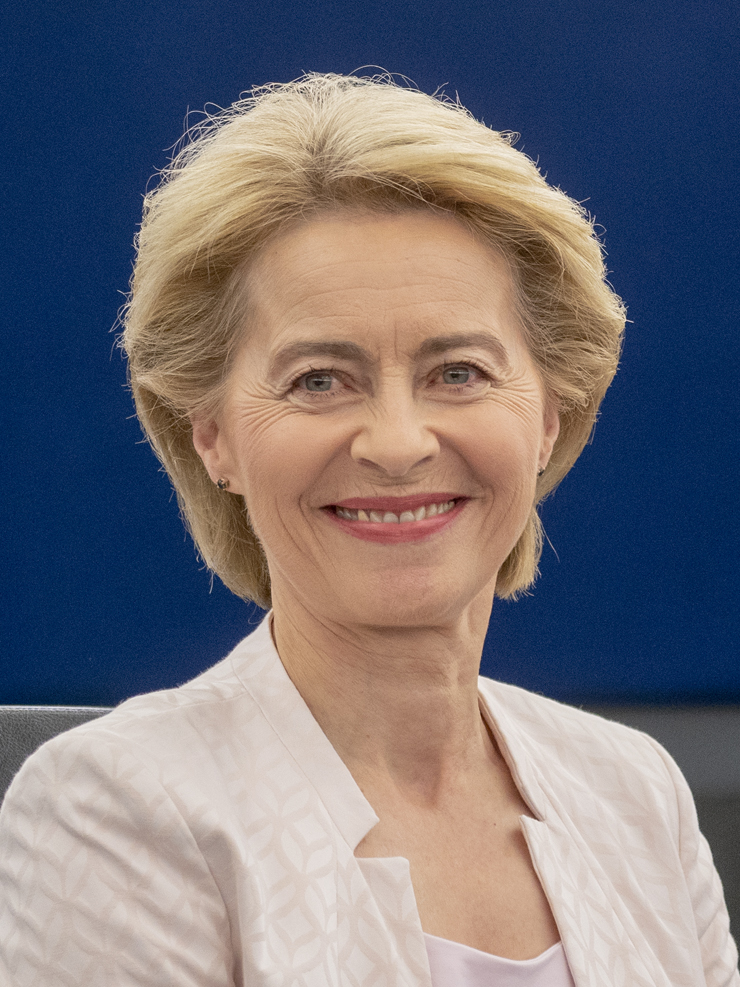
     

  • Ursula von der Leyen – 2022 Speech at the European Parliament Plenary on the preparation of the European Council meeting

    Ursula von der Leyen – 2022 Speech at the European Parliament Plenary on the preparation of the European Council meeting

    The speech made by Ursula von der Leyen, the President of the European Commission, on 19 October 2022.

    Dear Minister Bek,

    Honourable Members,

    Yesterday, we saw again Russia’s targeted attacks against civilian infrastructure. This is marking a new chapter in an already very cruel war. The international order is very clear. These are war crimes. Targeted attacks on civilian infrastructure with the clear aim to cut off men, women, children from water, electricity and heating with the winter coming – these are acts of pure terror. And we have to call it as such.

    This is the moment to stay the course. We will back Ukraine for as long as it takes. And we will protect Europeans from the other war that Putin is waging – this is his war on our energy. I know that Europeans are concerned; concerned about inflation; concerned about their energy bills; concerned about the winter. The best response to Putin’s gas blackmail is European solidarity and European unity.

    In this spirit, the Commission agreed yesterday on a strong legislative framework to address the energy crisis. Let me outline the main points to you.

    The first one is as logical as important: Instead of outbidding each other, Europeans should buy gas together. This is very simple. For this, we will purchase together gas at EU level. Aggregation of demand will be mandatory for at least 15% of the volumes needed to fill gas storages. And the companies involved may form a ‘gas purchasing consortium’. We do this because we have learnt the lesson. We literally saw in August of this year, at the height of the filling season, how Member States were outbidding each other and thus really driving up the prices. We definitely can be smarter on that one. Pooling our demand is a must.

    My next point is about sharing gas in Europe. We know that some Member States are more directly exposed than others to Russian gas. The situation is especially challenging for landlocked countries in Central Europe. But in the end, if you look at our Single Market with highly integrated supply chains, a disruption in one Member State has a massive impact on all Member States. So, sharing gas is absolutely critical. Member States have already, since five years, an obligation under EU law to conclude solidarity agreements with their neighbours in their home region. However, if you look at what has been concluded so far, of 40 possible agreements only 6 have been concluded. This is simply not enough in times of a crisis like this one. This is why we will put in place default rules for Member States. These rules will be binding, as long as Member States do not conclude individual solidarity agreements. Energy solidarity is a fundamental principle of our Treaties, so let us bring that to life, it is very simple.

    Honourable Members,

    These three measures – pooling, saving, sharing – will have a positive impact on the prices. But of course, more needs to be done to address the price spikes and to address the Russian manipulation of the energy market. Just to give you two figures: Compared to September 2021, if we look now at September 2022, Russia has cut 80% of its pipeline gas supplies. But Europe has been able to compensate all that. We have diversified towards our trusted partners, like for example Norway and the United States. We have increased the savings. And it is good, we achieved in September a reduction of 15%. We have filled our storages up to 92%. We did not give in to this blackmail. We made it. And I think we can be proud of that. We resisted. That is important. But we also see that resisting the Russian energy coercion comes at a price. European families have seen their gas bills skyrocketing. And our companies are struggling to keep up competitiveness. It is not only about the competitiveness in the Single Market – that is also important. But it is also about the global competiveness that our companies are fighting for.

    You might recall that in March, we proposed to the Council the option to cap gas prices. At that time, this did not gain any traction. But today, we are coming back to this. So what is the model? The current benchmark determining gas prices is TTF. TTF is only focused on pipeline gas. What we see now is that the market has really changed, from a pipeline gas market to a LNG market. So we need a new, a specific price benchmark for LNG. The Commission will now develop this complementary benchmark together with the European regulator. But this takes time. So in the meantime, as a stop-gap measure, we will limit prices at TTF. We call this the market correction mechanism. Yesterday, we proposed guiding principles as a first step. On this basis, we will prepare the operational mechanism in a second step. This is concerning the price cap at wholesale level.

    But gas also drives up the electricity prices. And here, the Iberian model comes into play. It really merits to be considered at EU level. There are still questions to be answered, but I want to leave no stone unturned. So let us face that, let us look at that and let us work on that.

    Honourable Members,

    We live in times of high economic uncertainty. And, as I said, I am concerned about the competitiveness of our economy – not only concerning the Single Market, but also concerning the global competitiveness of our economy. So, all our actions have to take this into account, all our actions have to take the competitiveness of our SMEs and our industry into account. This includes that we will introduce a standard competitiveness-check in our regulation. I think it is time to do that. In addition, we have to speed up investments all over Europe. If I speak about investment, it is infrastructure, it is energy efficiency and it is renewables.

    This brings me to REPowerEU. When we proposed REPowerEU in March, keep in mind that the situation was as such: There was a huge dependency on Russian gas. At that time, we anticipated that it would take several years to replace the Russian gas. Fact is today, it took us only eight months to replace two-thirds. In other words: We have massively accelerated the diversification to other suppliers of gas from abroad. But this comes at a high price. So the actual solution to maintain our competitiveness is to invest into home-grown sources of energy, especially renewables. That has to happen in all of Europe. However, only Member States with sufficient fiscal space can undertake these critical investments. This will inevitably unlevel the playing field of our Single Market.

    Therefore, we do not only need REPowerEU now, so we have to accelerate it, but we have to boost it, we have to increase its firepower. We will come with a proposal on that because it will give every Member State the same opportunity to prepare for the future. This is not only about energy, this is about our global competitiveness and it is about our sovereignty.

    Long live Europe.

    Many thanks.

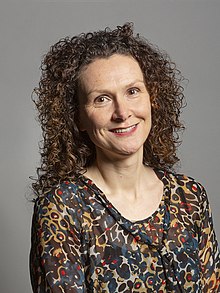
  • Wendy Chamberlain – 2022 Speech on Standards

    Wendy Chamberlain – 2022 Speech on Standards

    The speech made by Wendy Chamberlain, the Liberal Democrat MP for North East Fife, in the House of Commons on 18 October 2022.

    I rise today to speak in favour of the two amendments on the Order Paper in my name. I will confine my comments to those amendment, but first I want to echo the expressions of thanks to the Standards Committee and its Chair, the hon. Member for Rhondda (Chris Bryant), for their work. I also offer my thanks to the right hon. Member for Staffordshire Moorlands (Karen Bradley), the Chair of the Procedure Committee, who met me earlier this year in relation to this issue. I am grateful to her and her Clerks for giving me their time.

    As has been highlighted by both the Leader of the House and the shadow Leader of the House, my amendments make a straightforward change to what happens when the House votes on a motion to sanction a Member for their conduct. At the moment, a Member in that situation can vote on their own censure. Some of us might think that would never actually happen after an independent investigation has found a Member not only responsible for breaking the code of conduct but responsible for such an egregious breach that their privileges as a Member of this place should be curtailed as a result. We would like to think that there would be a sober reflection and making of amends in that situation but, sadly, we know that is not always the case.

    It is less than a year since the censure of the former Member for North Shropshire. In those two votes, the former Member voted against his own suspension. As a result, I secured a Standing Order No. 24 emergency debate on standards, as an opportunity for the House to begin repairing the potential damage that affects us all in this place when such things happen.

    It might be the former police officer in me—I have mentioned being a former police officer a few times today, as I spoke in the debate on the Public Order Bill—but it infuriates me that a Member can vote on their own suspension. It puzzles me, too. Surely, with the million rules and conventions in this place about what we can and cannot do, it should not have been allowed.

    I had a look and spoke to the Clerks, who are much appreciated by all of us as a fount of knowledge. I found that, yes, there is a convention that, although Members can speak at the start of a debate on their conduct, the expectation is that they should subsequently withdraw, with the implication being that they should not return for the vote. There is a further convention that a Member can lodge a motion objecting to another Member’s participation in a vote in which they have a financial interest in the outcome, but I think you would agree, Madam Deputy Speaker, that this is cumbersome and basically impossible with the rate of business and the number of MPs that we now have in this House.

    Importantly, they are both currently conventions, not rules. Simply put, conventions last only as long as people choose to adhere to them. When people do not, it reflects on all of us. The Conservative party potentially had the most mud stuck to them as a result of what happened last year, but this is House business and it reflects on all of us to ensure that we uphold standards in this place.

    My two amendments amend the Standing Orders to make these two conventions a rule. Members will not be able to vote on sanctions relating to proven breaches of the code of conduct by themselves. It is worth noting that the vast majority of cases considered by the Standards Commissioner are either not upheld or are rectified without further action, but there are always MPs under investigation, and I suspect there always will be. Although it has nothing to do with those individuals, it is important that we as a House are seen to be acting accordingly.

    Where cases are more serious and there is a report to the Standards Committee, and where all the appropriate procedures, including those set down in the motion itself, have been followed and the recommendations reach the Floor of the House, we must ensure that due process is done and, most importantly, seen to be done.

    Ironically, it was during Parliament Week last year that we saw the situation that the shadow Leader of the House mentioned, and it is almost Parliament Week again. When I talk to my constituents, they ask me about working here, fairness and transparency, and I genuinely think this is the best job I have ever had. It is an enormous privilege, and I think the vast majority of Members agree and want to act accordingly.

    I want to be able to tell my constituents, and I feel very encouraged that I will be able to do so, that we have taken a long, good look at ourselves and that the vast majority of us who want to maintain those high standards and hold the respect of the people we serve did something to make things better.

    I am keen that this is not seen to be a party political issue, and the hon. Members for Batley and Spen (Kim Leadbeater), for Brighton, Pavilion (Caroline Lucas), for Rutland and Melton (Alicia Kearns) and for Lancaster and Fleetwood (Cat Smith), and the right hon. Member for Dumfriesshire, Clydesdale and Tweeddale (David Mundell), all put their names to the amendments. For that reason, I hope very much that I will not need to press them to a vote. If there is an objection, I intend to do so this evening.

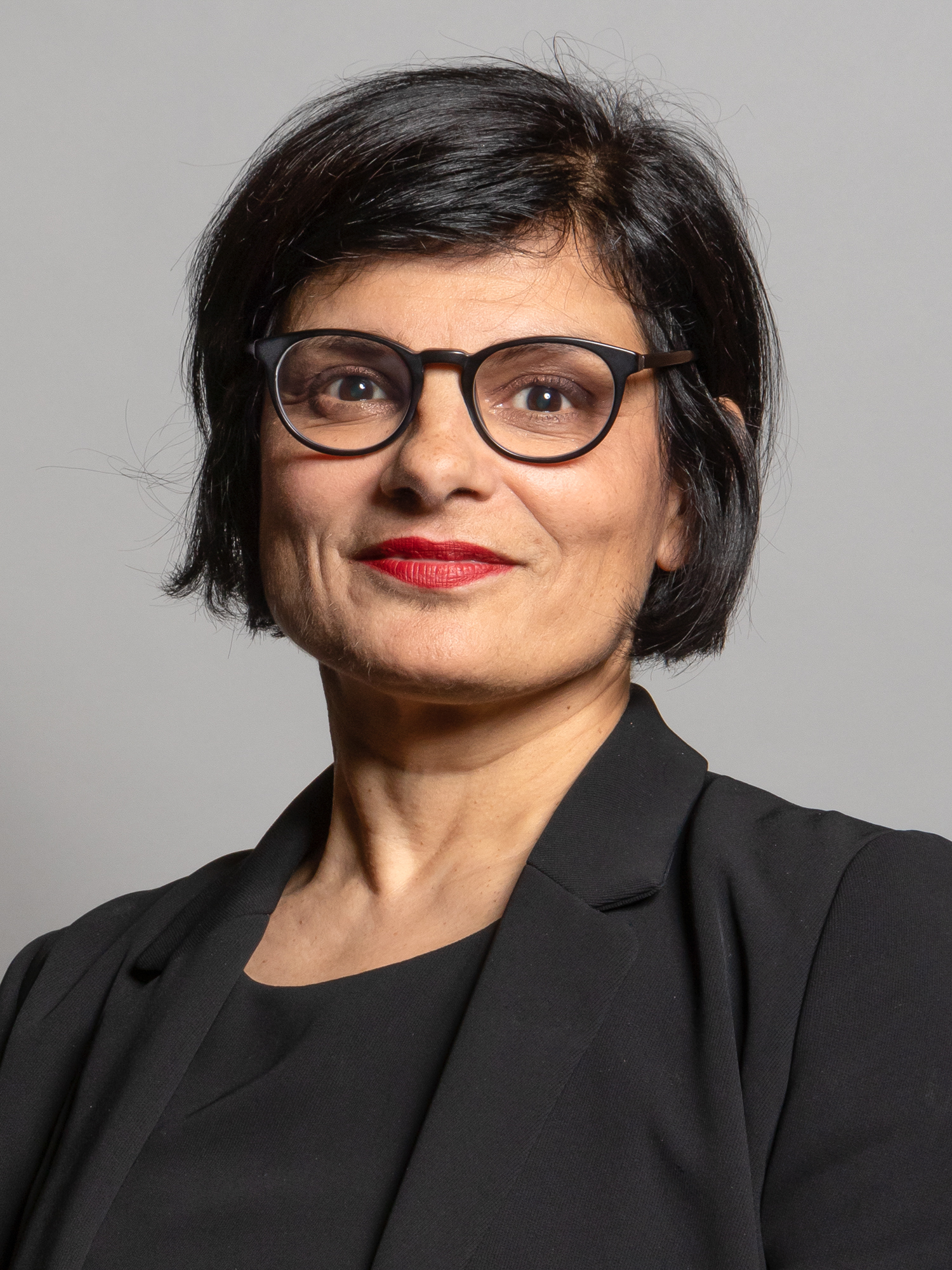
  • Thangam Debbonaire – 2022 Speech on Standards

    Thangam Debbonaire – 2022 Speech on Standards

    The speech made by Thangam Debbonaire, the Shadow Leader of the House of Commons, in the House on 18 October 2022.

    I thank the Leader of the House for tabling the motions. I also thank my hon. Friend the Member for Rhondda (Chris Bryant) and his Committee for all the hard work that they have put into their inquiries and reports on standards over many months. I really would have liked to see all that work recognised in the motion today. After months of calling on the Leader of the House and her predecessors to implement the Standards Committee’s full recommendations, I am sure that the right hon. Lady will have imagined my initial excitement when I heard the words “Members’ code of conduct” during her recent business statement, but sadly that turned to some disappointment when I found that it did not include all the Committee’s work to strengthen standards in Parliament. I understand what the right hon. Lady has said, but I will come back to that shortly.

    Let me now turn to the substance of our debate: the appeals process. Let me first place on the record my thanks and welcome for the work that Sir Ernest Ryder has done on the House’s current system for the Standards Committee. It has been helpful to have a well-respected external figure investigating whether or not our existing standards needed to be improved or strengthened. I know that the Committee made good use of Sir Ernest’s extensive experience when considering the important issues of fairness, natural justice and the right of appeal, and I note that he gave thoughtful and considered support to our standards system overall. I picked out the issues of fairness, natural justice and the right of appeal because I seem to remember those words being used in a debate on 3 or 4 November 2021 which, I am afraid, did not show the House in a good light. That is partly why we are here today.

    Sir Ernest proposed that there should be a right of appeal against both the findings of the Standards Committee and any sanctions that it imposed or recommended. It seems wholly sensible that such an appeal should be to an independent body with judicial expertise, and that leads us inevitably to the Independent Expert Panel. I am assured that its chair, the right hon. Sir Stephen Irwin, has said that the panel should be able to take on this role, and that it should be able to manage the workload without expanding the current panel size of eight. I am grateful to him for that confirmation. I assure the Leader of the House that she has my support on the motions, and that they will be supported by the Opposition.

    However, let me turn to the slightly wider but related issue of standards in general and, in particular, standards and ethics in parliamentary and governmental life. It was the well-respected former Cabinet Secretary Lord O’Donnell who said recently, “It’s always best to look at reasons why your predecessor fell and fix that.” Unfortunately, however—and I say this with disappointment and sadness, because it affects all of us in this place—everything we have heard from the current Prime Minister, not just during her leadership campaign but in the context of her lack of action since taking office, suggests so far that we are in for more of the same when it comes to trashing standards. I wanted to believe that that was not so, but the Prime Minister even refused to say that she would appoint an independent ethics adviser after the previous two had resigned—admittedly, under the previous Prime Minister—in despair.

    I am glad that the Leader of the House has said that the Government are committed to appointing one, but I want to see some urgency. It would be reassuring for the House and for the country if the Prime Minister could commit to appointing that much-needed ethics advisor.

    On parliamentary standards specifically, there should have been a lot more in the motion—namely, the rest of the recommendations, in my view. I thank the Leader of the House for her update, and she has been extremely co-operative with me and my office on this, but again we need some urgency to repair the damage that has been done by some—not all—on the Government side to the public’s view of how we conduct ourselves in this place and the surrounding neighbourhood.

    In response to my questioning on this at business questions last Thursday, the Leader of the House said:

    “It is not that we are not doing them”.—[Official Report, 13 October 2022; Vol. 720, c. 260.]

    I absolutely believe her, but does this mean that the Government will bring forward a motion to cover all the Standards Committee’s recommendations? I get that sense from what she has said, and I would like to know that that is the general direction of travel, but if not, why not? Can she tell us which ones the Government like and which ones they do not? I would be grateful if she could give us a much more specific timeframe for when they will be brought forward.

    I welcome the assurances that the Leader of the House has given, but when it comes to parliamentary standards and the Tories, I think she probably understands why the public are feeling a lack of trust. Unfortunately, it is the party that refused to fix a loophole that let one Member off the hook for a particular misdemeanour. It is the party that was prepared to change the rules retrospectively seemingly to support cash for access but not to stop sexual harassment.

    I do not kid myself that there was ever a golden age when the public saw us all as completely trustworthy and the holders of the highest standards, even though I believe that most of us in this House absolutely are. However, the public need to—and at times have been able to—trust the system of standards enforcement and sanctions around our general principles. As my hon. Friend the Member for Rhondda once told me, there have been rules on how MPs should behave honourably since 1695. Since that time, the rules have only ever gone in one direction, which is to be strengthened—that is, until some Conservative Members unfortunately sought to drag them backwards during the Owen Patterson affair, which showed all too clearly that we have, in Conservative Members, some people who seem to be willing to change the rules retrospectively if they or their mates get caught.

    Until we see a motion on the Order Paper covering all the Standards Committee’s recommendations—or some form of them—we can only assume or guess that the Government have apprehensions about bringing them forward. Banning MPs from doing paid consultancy work and increasing the transparency of Members’ interests are measures that Labour has long been calling for, and I believe that there is cross-party support for them. I have referred to the Owen Paterson affair with good reason, because that was the place where some of those concerns grew really strong.

    We will of course support the amendments tabled by the hon. Member for North East Fife (Wendy Chamberlain). It seems a great pity that they needed to be put into writing, but evidently they did—

    Wendy Chamberlain (North East Fife) (LD) indicated assent.

    Thangam Debbonaire

    I see that the hon. Member is nodding. I support the amendment and the motions, but I want to put on the record that if we were in government and I were at the other Dispatch Box, I would want to enact the Standards Committee’s recommendations as soon as possible.

    In that vein, can I urge the Leader of the House to bring forward a further motion to do the work that she has referred to? She will find that she has support from this side for any co-operative and collaborative work that she wishes to do, and even for any critical or difficult work. We stand ready to work with her. This is not a matter that should be party political, although I have made some party political points because unfortunately it has been shown to be so in the past year. I will support the motions and the amendments, and I commend the report and the inquiries of the Standards Committee to all right hon. and hon. Members.

  • Penny Mordaunt – 2022 Statement on Standards

    Penny Mordaunt – 2022 Statement on Standards

    The statement made by Penny Mordaunt, the Leader of the House of Commons, in the House on 18 October 2022.

    The House is being asked to consider the creation of an appeals process for non-Independent Complaints and Grievance Scheme cases to be heard by the Independent Expert Panel. The motion would introduce the formal appeals process that Sir Ernest Ryder recommended and proposes that the panel would hear appeals against the decisions and sanctions of the Committee on Standards. The motion also puts to the House the new procedural protocol, which would sit alongside the new appeals process.

    I am grateful to the Committee on Standards for its work reviewing the code of conduct for Members and the overall operation of the standards system in the House of Commons. Since becoming Leader of the House, I have had some discussions with the Chair of the Committee, the hon. Member for Rhondda (Chris Bryant), who I look forward to hearing from today. I assure him and the House that the Government have carefully considered his Committee’s recommendations, alongside the procedural protocol and covering report.

    I am sure that the whole House agrees that Members of Parliament must uphold the highest standards in public life and that the procedures we have in place must be fair, robust and command the respect and confidence both of Members and the wider public. I believe that today’s motion takes a positive step in the right direction.

    There are other issues that are not covered in the motions today, and I plan to seek consensus on a wider package and to come back to the House in due course, but it is good to make progress on the issues as we can.

    Before coming to the substance of today’s motion, I wish to briefly cover some areas in relation to the wider proposed package of changes from the Committee on Standards that we are not debating today. Let me be clear: I am very conscious that there is further progress to be made and the House should have the opportunity to consider the additional recommendations proposed by the Committee. I reassure the House and the Committee that we are seeking to identify solutions that can command cross-party support on those outstanding issues.

    Specifically, the Committee made recommendations on measures to improve the transparency and timeliness of ministerial declarations. The Government are clear in their views that the rules regulating Members’ interests and ministerial interests are necessarily distinct, reflecting the underlying constitutional principle of the separation of powers. There are differences between the role of an MP and that of a Minister and, reflecting that, the rules differ on what interests are permitted and how potential conflicts of interest are managed. There are clear rules regarding the registration of interests and the receipt of gifts in the ministerial code and Ministers should, and do, take their responsibilities very seriously. Nevertheless, I recognise the concerns of the Committee. Since being appointed Leader of the House, I have raised those concerns and have instructed officials to bring forward proposals for an improved system.

    I can confirm to the House that revised guidance on ministerial transparency data will be published in the coming weeks. We will also publish it on gov.uk for the first time. The guidance has been updated to more closely reflect modern working practices and Ministers’ obligations under the ministerial code.

    It is important that the Government conduct ourselves openly. I will continue to work with the Cabinet Office and across Government to ensure that we are fulfilling our obligations. In doing so, I keep very much in mind the challenge set for me by the Chair of the Committee on Standards: that a Member who attends an event such as the BAFTAs should report in a particular way, so a Minister who attends the same event should report in a similar way and their interests should be transparent to the public. I hope that the House and the Committee will support these changes; I will happily engage with the Committee should they not have the desired effect. [Interruption.] For the benefit of Hansard, the Chair of the Committee chuckled knowingly.

    The House will be aware that an appeals process is already in place within some aspects of the parliamentary standards system. Those who are subject to investigation under the Independent Complaints and Grievance Scheme have the right of appeal to the Independent Expert Panel, which is chaired by the former High Court judge Sir Stephen Irwin. The ICGS and the IEP have been an essential part of achieving positive culture change in the House and demonstrating its rigorous judicial process, its transparency of operation and the right to appeal.

    The Government have therefore welcomed Sir Ernest Ryder’s report and his timely review of the Commons standards system and its compatibility with the principles of fairness and natural justice. As we set out in a letter to the Committee on Standards, the Government supported the majority of the proposals, including the introduction of a formal appeals process. We note that the Committee has accepted all the recommendations, with a few minor modifications. I welcome the proposal that appeals be heard by an independent body with judicial expertise. We also welcome Sir Ernest’s consideration of the grounds for appeal and the acceptance that the Independent Expert Panel is the appropriate body to hear appeals.

    We propose two main amendments to the procedural protocol. First, we propose to amend paragraph 118 to allow MPs to inform their own staff in the event that they are subject to investigation by the Parliamentary Commissioner for Standards. Secondly, we propose to leave out paragraph 62 on Members recusing themselves if not present for all but a “small proportion” of evidence sessions. These amendments reflect the Government’s position, as set out in our response to the Committee; I hope that the House and the Committee will support them. The other proposed amendments are purely technical changes to ensure that the protocol works with the current version of the rules and guide.

    I wish to speak briefly about amendments (a) and (b) in the name of the hon. Member for North East Fife (Wendy Chamberlain) and others. The amendments stipulate that

    “no Member shall be eligible to participate in any division on such a motion where it relates to their own conduct.”

    That stipulation would apply both to conduct motions related to breaches of the code of conduct and to motions related to the ICGS. This is, of course, a matter for the House to consider. I note that the Committee on Standards chose not to pursue the issue in detail as part of the inquiry.

    I am aware that the Chair of the Procedure Committee, my right hon. Friend the Member for Staffordshire Moorlands (Karen Bradley), has raised the issue of Members being permitted to vote on their own suspension. My predecessor wrote in response to her that there would be benefit in the Committee’s looking into whether such changes are needed. If necessary, they could be put to the House for consideration. Hon. Members will be aware that there is a convention that Members should not participate in such votes. In our parliamentary democracy, conventions guide how we work in this place, and codification of these norms should be carefully considered; I would therefore welcome it if the matter were considered by the appropriate Committee. Subject to its approval, the Government would be happy to bring the matter back to the Floor of the House for approval in due course.

    If there is no objection from the Chair of the Committee on Standards or from other hon. Members present, I would certainly be content to support these amendments.

    Chris Bryant (Rhondda) (Lab)

    I see no reason why we should not simply put what is already a convention into, as it were, the statutes of the House—the Standing Orders. I support the motion and, looking around the Chamber and seeing other members of the Committee who are present, I think that they will as well. I think it would save us all a bit of time if we just got on with it and agreed to the amendments.

    Penny Mordaunt

    I thank the right hon. Gentleman for that helpful intervention.

    Karen Bradley (Staffordshire Moorlands) (Con)

    May I add my view, as Chair of the Procedure Committee? I feel that the amendments are absolutely fine, and we should be happy to see them passed tonight.

    Penny Mordaunt

    I thank my right hon. Friend for her support for the amendments. We are hopefully saving ourselves some time, and efficiency is always great to see. It is important to point out, however, that if Members did object and wanted the Committee to look at this, they could oppose the amendments, which are obviously subject, potentially, to a vote tonight.

    We support the work being undertaken to introduce measures to empower the standards system in Parliament, and I am committed to continuing conversations both within Government and with parliamentary colleagues to continue to introduce improvements proposed by the Committee on a cross-party basis. I assure the House that my door is always open and I am always willing to discuss these matters with all Members. I hope that the House will approve the proposed changes, and I commend them to the House.

  • Catherine West – 2022 Speech on the Chinese Consulate and Attack on Hong Kong Protesters

    Catherine West – 2022 Speech on the Chinese Consulate and Attack on Hong Kong Protesters

    The speech made by Catherine West, the Labour MP for Hornsey and Wood Green, in the House of Commons on 18 October 2022.

    I am so pleased that there is consensus across this House that freedom of expression is an important principle which we hold dear in our democracy, and it is testament to our freedoms that on countless occasions in recent years protesters have been able to express their views, whether on China, Russia, Myanmar or countless other countries.

    What we saw at the weekend in Manchester was, as the Mayor of Manchester has said, a sharp departure from this established pillar of our liberal democracy. The sight of suspected Chinese consular officials destroying posters, using violence and intimidation, and dragging a protester into the grounds of the consulate and assaulting him is deeply shocking. We all want to be clear that that behaviour is not and never will be acceptable and deserves condemnation in the strongest possible terms. We simply cannot tolerate the type of action we have seen. The principle of free expression is so important, as is the protection of Hong Kongers and others who have fled Beijing’s repression, although I note with irony that later today we will be debating a Government Bill that discusses some of the same themes.

    Labour has been consistently warning about the need to protect newly arrived Hong Kong people. May I press the Minister on what exactly will happen to consular officials who have been properly identified as involved in this incident? Can this House expect that they will be expelled from the UK?

    What discussions has the Minister had with the Home Office and Levelling Up Secretaries on a proper plan for robust and extensive support for Hong Kong people across the country to ensure that they are protected and supported in the face of ongoing surveillance and oppression? What steps will he take to ensure that the sanctity of our freedoms—specifically, the freedom of expression—is protected outside all foreign embassies and consulate grounds in the UK to avoid a repeat of this shocking behaviour? Mr Speaker, as you said yesterday, the Hong Kong community in the UK is watching, and actions must match words.

    Jesse Norman

    I thank the hon. Lady for her questions. She asked about the treatment of consular officials. Of course, I would wish to be able to give the House details of my personal views on these matters, but the fact of the matter is that we are in a process of law. I would expect that process to be diligently and effectively carried out, but, for reasons that she will understand, I cannot comment on it.

    As regards the treatment of Hong Kong visitors and arrivals to this country under the new scheme, my colleagues in the Home Office and the Levelling Up Department have taken great measures to put in place a welcome set of arrangements for them and to manage the processing in an effective and timely way. I am pleased that we have done that because we need to support Hong Kong in all the ways that I am sure she would welcome.

  • Jesse Norman – 2022 Statement on the Chinese Consulate and Attack on Hong Kong Protesters

    Jesse Norman – 2022 Statement on the Chinese Consulate and Attack on Hong Kong Protesters

    The statement made by Jesse Norman, the Minister for the Americas and Overseas Territories, in the House of Commons on 18 October 2022.

    Top of the morning to you, Mr Speaker, and thank you very much indeed for allowing us to have this urgent question on a topic of enormous importance. May I start by recognising, thanking and welcoming my hon. Friend to her position as Chair of the Foreign Affairs Committee?

    As the House will know, His Majesty’s Government are extremely concerned at the apparent scenes of violence at the consulate of the People’s Republic of China in Manchester on Sunday afternoon. Greater Manchester police had been pre-notified of the demonstration and intervened to restore order; we are grateful to them for their action. I understand that Greater Manchester police have launched an investigation to establish the facts of the incident.

    The Foreign Secretary has issued a summons to the Chinese chargé d’affaires at the Chinese embassy in London to express His Majesty’s Government’s deep concern at the incident and to demand an explanation for the actions of the consulate staff. It would be inappropriate to go into further detail until the investigation has concluded, but let me be clear that, as this House has always recognised, peaceful protest is a fundamental part of British society and our way of life. All those on our soil have the right to express their views peacefully without fear of violence. FCDO officials expressed that clearly to the Chinese embassy yesterday. We will continue to work with the Home Office and Greater Manchester police colleagues to decide on appropriate next steps.

    Alicia Kearns

    Thank you, Mr Speaker, for granting this UQ and for the personal interest you have taken in this over the last few days.

    On Sunday, peaceful protesters gathered outside the Chinese consulate to campaign for human rights in Hong Kong. What we saw was the Chinese consul-general then ripping down posters during a peaceful protest. There soon followed grievous bodily harm against Hong Kongers, one of whom was hospitalised for taking part in that peaceful protest. Some were then dragged on to consulate territory for a further beating by officials who have been recognised to be members of the Chinese Communist party. We cannot allow the CCP to import its beating of protesters and silencing of free speech, and its utter failure time and again to allow protest on British soil.

    This is a chilling escalation. We have seen continued persecution of the Uyghur, Tibetans, Hong Kongers and all those who come to our country to seek refuge. What took place on Sunday suggests they cannot seek refuge here and have their voices heard, and our job is to make sure their voices are not silenced.

    I am grateful to the Minister for confirming that the ambassador has been summoned. I am surprised the meeting has not taken place so far. Will he please confirm when it will be taking place and that he will update the House thereafter? Will he also confirm that any Chinese official involved in the beatings will be prosecuted and that, if they cannot be prosecuted, they will be expelled from this country within the week, and what the Government are doing to protect protests? That is a fundamental right and we must uphold it at home if we are to have any chance of upholding it abroad.

    Jesse Norman

    I thank my hon. Friend for her question. On the point of the summons, my understanding is that the chargé d’affaires will meet with officials this afternoon, there having already been an informal exchange of concern between the two sides. My hon. Friend will know that, precisely because of the belief in this House in the rule of law, it is up to our independent police and Crown Prosecution Service to decide first on the facts of the matter and then on whether a prosecution should be brought. But, like her, I witnessed what took place in the video on Sunday and I am sure every Member of this House feels the same level of concern as she does.

  • Tom Pursglove – 2022 Statement on Changes in Immigration Rules

    Tom Pursglove – 2022 Statement on Changes in Immigration Rules

    The statement made by Tom Pursglove, the Minister of State at the Home Office, on 18 October 2022.

    My right hon. Friend the Home Secretary is today laying before the House a statement of changes in immigration rules.

    The changes include the Afghan relocations and assistance policy (ARAP) immigration rules which clarify that the Ministry of Defence decides eligibility for an Afghan citizen, before an application for entry clearance or settlement is made to the Home Office on their, or an eligible family member’s, behalf.

    Additional ARAP family members, who were previously decided outside the immigration rules, have been brought under the rules, and the Afghan ex-gratia scheme, which closes on 30 November 2022, has been removed from the immigration rules from that date.

    As part of the new plan for immigration, the Government have made clear for the first time in primary legislation (the Nationality and Borders Act 2022) that confirmed victims of human trafficking or slavery are eligible for temporary permission to stay in the UK, and this is supported by the introduction of the appendix “Temporary permission to stay for victims of human trafficking or slavery”.

    The introduction of temporary permission to stay into the immigration rules aligns with the Government’s needs-based approach to support victims of human trafficking or slavery. Temporary permission to stay makes clear that confirmed victims, both adults and children, with psychological and physical recovery needs stemming from their human trafficking or slavery exploitation, are entitled to temporary permission to stay where it is necessary to assist with recovery from the harm caused by their exploitation, subject to the exemptions set out in section 65 of the Nationality and Borders Act 2022. These rules also specify that temporary permission to stay may be available to victims who are helping the public authorities with active investigations or criminal proceedings in the UK to bring their exploiters to justice and clarify that those seeking compensation in respect of the relevant exploitation must have made a valid application to be considered for temporary permission to stay.

    Temporary permission to stay will go live on 30 January 2023. These rules will allow for clearer decision making and are intended to make decision making a simpler and quicker process.

    The seasonal worker visa route is being expanded to include roles in the poultry sector, to support a genuine seasonal labour need in the lead-up to Christmas, not evident in other sectors. Poultry workers under occupation code 5431 (butcher) or 5433 (for example, processor) must be paid at least £25,600 each year. All other poultry workers must be paid £10.10 for each hour worked and receive at least 30 hours’ paid employment each week. These requirements are in place to discourage poor conditions often seen in the sector.

    Changes are being made which provide for the refusal and cancellation of entry clearance where a person is subject to a travel ban imposed by the UK or the UN. This will not alter whether the person can enter the UK. It will simply make it easier to achieve the same effect administratively.

    Changes are also being made in respect of the Ukraine extension scheme, which enables Ukrainian nationals who held permission to enter or stay in the UK on 18 March 2022 (or who held permission which expired on or after 1 January 2022), to continue their stay in the UK.

    These changes will extend the scheme to allow Ukrainian nationals who obtain permission to enter or stay in the UK for any period between 18 March 2022 and 16 May 2023 to apply and obtain 36 months’ permission to stay in the UK. They will also introduce a new requirement to apply to the scheme by 16 November 2023.

    Finally, we are also abolishing the requirement for a migrant to register with the police as the police registration scheme in its current form is outdated and no longer provides any public protection benefit to either the Home Office or the police.

    Since the scheme was last amended in 1998, changes to the immigration rules and the wider immigration system now mean more individuals are screened before travel to the UK and those of concern can be identified earlier in their interaction with the Home Office. The data a migrant provides to the police on registration is already captured by the Home Office at the visa application stage, and is available to the police on request, so there is no need for it to be provided twice, or for the police to hold such vast amounts of data when they have no need to do so for the majority of law-abiding migrants.

    Abolishing the requirement for a migrant to register with the police will therefore reduce the administrative burden on the police, the Home Office and migrants themselves.

    These rules have also been simplified in line with the recommendations of the Law Commission report “Simplifying the Immigration Rules” to which the Government responded on 25 March 2020. The necessary changes to the immigration rules are being laid on 18 October 2022. For the changes to the seasonal worker route—inclusion of poultry sector—these will come into effect on 18 October 2022, as there is a short time frame for workers to enter the UK to undertake work in the poultry sector. The closing date for applications for poultry work is 15 November 2022 and the workers are required to leave the UK by 31 December 2022. If the implementation date was later, the concern is workers might not apply as they could consider it not worthwhile for such a short period. This policy has already been communicated to the sector in the Department for Environment, Food and Rural Affairs food strategy, so they are prepared and working toward this change.

    The changes to simplify the process for giving effect to travel bans, changes to the Ukraine extension scheme and the abolition of the police registration scheme will come into effect on 9 November 2022, the amendments to the Afghan relocations and assistance policy (ARAP) on 30 November 2022 and the introduction of the new appendix “Temporary permission to stay for victims of human trafficking or slavery” on 30 January 2023.

  • Jeremy Quin – 2022 Statement on the Casey Review

    Jeremy Quin – 2022 Statement on the Casey Review

    The statement made by Jeremy Quin, the Minister of State at the Home Office on 18 October 2022.

    In September we saw the very best of British policing, in the planning, handling and delivery of the operation following the death of Her late Majesty, Queen Elizabeth II. It showed that, at the top of its game, British policing is world-class and I commend all of the thousands of officers and staff who made that happen. But in recent years there have been several high-profile failings. These failings substantially diminished public trust in the Metropolitan Police Service (MPS), and undermine the incredible work of the overwhelming majority of decent, hard-working, and professional, frontline police officers.

    The Metropolitan Police Service commissioned a review by Baroness Louise Casey into the culture and standards of the Metropolitan Police Service. Interim findings have now been reported to the MPS and are highly concerning. They set out a failure of the MPS to operate within the existing misconduct framework, and failures to adequately tackle instances of sexual misconduct and discrimination.

    The impetus and action to deliver change must come from within the MPS first and foremost—and the Government welcome Sir Mark Rowley’s determination to take a systematic approach to act on the findings through both robust enforcement and long-term prevention. Where there is a role for Government to support this, we will not hesitate to act. That is why I am announcing an internal review into the process of police dismissals to raise standards and confidence in policing across England and Wales.

    The Government will work closely with key policing stakeholders to examine evidence of the effectiveness of the system to remove those who are not fit to serve the public. As well as examining the overall effectiveness of dismissal arrangements, I expect the review to consider:

    the impact of the introduction of legally qualified chairs to decide misconduct cases;

    whether decisions made by misconduct panels are consistent across all 43 forces in England and Wales;

    and whether forces are making effective use of their powers to dismiss officers on probation.

    This focused review will be launched shortly and will be conducted swiftly. It will focus on key issues and will support those in policing who act with utmost professionalism, giving them confidence that their hard work and commitment will not be undone by those who bring their profession into disrepute.

  • Andrea Jenkyns – 2022 Statement on Post-16 Level 2 and Below Qualifications

    Andrea Jenkyns – 2022 Statement on Post-16 Level 2 and Below Qualifications

    The statement made by Andrea Jenkyns, the Parliamentary Under-Secretary of State for Education, in the House of Commons on 18 October 2022.

    Today, I am pleased to announce the next stage in the Government’s review of post-16 qualifications at level 2 and below1 in England—the publication of the response to our consultation on the review of qualifications that are approved for public funding at these levels. After confirming our reforms to level 3 qualifications last year, we are now confirming our policy on qualifications at level 2 and below following our consultation which ran from 2 March to 27 April 2022.

    This is a vital next step towards reforming and revitalising technical education. Streamlining and improving post-16 education and skills is at the heart of our plan to strengthen the economy and create jobs. Students and employers will benefit from a joined-up, dynamic education system that can adapt to rapidly changing priorities.

    The current qualification landscape at level 2 and below is complex, and while many of the qualifications are likely to be excellent, it is not a consistent picture. Qualifications that are funded in future should be necessary, high quality and have a distinct purpose. Crucially, these qualifications should also support progression to successful outcomes for the students who take them, whether this is into a higher level of study, or directly into skilled employment. In a fast-moving and modern economy, it is vital that we bridge the gap between what people study and the needs of employers.

    To mirror the approach we have taken at level 3, we have grouped qualifications at level 2 and below according to their primary purpose. By clarifying the purpose of each qualification, we will enable students to see how their choice of qualification will lead to a positive outcome, whether this is to further study or directly into employment. Further education colleges, schools, other providers and careers advisers will play a key role in delivering information, advice and guidance to prospective students to ensure they are directed towards a qualification that will meet their needs.

    I would like to thank those who took the time to respond to our consultation.2 Among the 410 responses, there was strong support for the aim of simplifying the qualification landscape and improving the quality of provision, and for the groups of qualifications we proposed to fund in future. Other themes from the consultation responses included: the importance of flexibility for students studying at these levels; the potential impact of reducing qualification choice on students from disadvantaged backgrounds and with special educational needs and/or disabilities (SEND); and the need for a phased approach to the timing and sequencing of the reforms.

    The response we are publishing today confirms that we will fund all of the qualification groups proposed, proceed with setting national standards for personal, social and employability (PSE) qualifications and consulting on these, and consider updating the national standards for adult literacy and numeracy. We have made changes to allow greater flexibility, for example allowing providers to offer level 2 qualifications leading to employment to 16 to 19-year-olds in less than two years, depending on the size of the reformed qualification and how it fits alongside the other essential elements of the study programme.

    As the aim of this reform is to improve qualification provision at level 2 and below, we expect students over-represented at this level such as those from disadvantaged backgrounds or with SEND to be the biggest recipients of the benefits of these changes. We will work with the sector to explore how best to support students to progress by having flexibilities in place to ensure students with SEND can access our proposed qualification groups. We will also regularly review the mix and balance of qualifications approved to ensure we are meeting the needs of all learners.

    We have reviewed the implementation timeline and, while we want momentum, we also want to introduce these reforms at a manageable pace for schools and colleges, given the extent of change to the wider qualifications landscape, including at level 3. That is why we are making sure first reformed qualifications at level 2 and below will be available for teaching from September 2025 rather than 2024. Further reformed qualifications will be phased in for 2026, with final reforms in 2027.

    I look forward to engaging with the sector as we implement these important reforms.